The Child Who Is John’s Joy – Sermon on 2 Samuel 6:12-23 and Luke 1:39-45 for Midweek Advent 3

In the name of Jesus. Amen.

We expect kings to behave differently than we do. Kings don’t walk; they strut. Kings don’t just throw on some clothes; they are robed. And kings don’t eat; they dine. Kings are dignified and distinguished. That’s why David’s wife, Michal, was so disgusted by her husband’s behavior in our Old Testament reading (2 Sam. 6:12-23). He wasn’t acting very kingly.

The Ark of the Covenant had been stolen by the Philistines and had been held for about seven months (1 Sam. 6:1). When the Israelites initially recovered the Ark, things didn’t go so well. Hundreds of years before, when God had given instructions on how to build the Ark, He commanded that the Ark have golden rings on its corners so that poles overlaid with gold could be placed through those rings (Ex. 25:12-15). The priests were instructed to carry the Ark by those poles on their shoulders (Nu. 7:9). But a guy named Uzzah and those with him put the Ark on a cart. When one of the oxen pulling the cart stumbled, Uzzah reached out to stabilize the Ark and was killed when he touched it. This made David afraid to move the Ark any further. So, the Ark stayed at the house of Obed-edom for three months (2 Sam. 6:11) while he and his whole household were blessed. That is where our Old Testament lesson picks up.

David hears how Obed-edom was blessed and decides to finish the job of bringing the Ark back to Jerusalem. This time, the proper procedure for carrying the Ark was followed to the letter (1 Ch. 15:13-15). The “proper” behavior for a king, however, was thrown out the window. King David is part of the procession, but he doesn’t wear his royal robes. Instead, David puts on a linen ephod which was a humble garment for a priest. David doesn’t stride like a king before the Ark; instead, David leaped and danced like nobody was watching.

But David’s wife, Michal, was watching, and she wasn’t at all impressed by her husband’s behavior. Instead, she sarcastically nags him for it. But God was watching David too, and God judged David’s celebration and joy to be very befitting for His king. So, God made Michal barren for the rest of her life because she mocked David’s joy.

At the beginning of our service this past Sunday, the first words of Scripture you heard in our Call to Worship were the same words from our Epistle lesson tonight (Php. 4:4-7), “Rejoice in the Lord always; again I will say, rejoice.” (And, in fact, you’ll hear those verses again in this coming Sunday’s epistle lesson.) The reason for so much rejoicing this week is, according to the text, that “the Lord is at hand.” Rejoice. You don’t have to climb up to heaven to the presence of God. No. He comes to you. He comes to bring His love, mercy, forgiveness, and grace. And this good news should make us throw away any sense pride or dignity we might think we possess in ourselves and cause our hearts to leap for joy like David.

Our problem is that we are too much like Michal and not enough like King David. Our hearts are pulled from the joy of God’s presence. Like Adam and Eve in the garden after they ate the forbidden fruit, we avoid God’s presence. Usually, it isn’t because we are afraid of punishment but because we are too busy running after worldly things that we imagine will bring joy. But when we attain those things, we don’t find joy or even fulfillment. At best, we are amused for a while and then get bored. Even though God knows this about us, He still graciously desires to dwell with us.

That is why Christ came. He draws near to save a world that is in love with sin instead of Him. God comes to remove our hearts of stone and give us new hearts of flesh so that we can truly rejoice in His presence with us.

We can learn a lot both from King David and from the pre-born John the Baptizer in our Gospel text (Lk. 1:39-45). King David was so overcome with joy that he dropped all sense of decorum a king should have and danced and leapt for joy at the return of the Ark because the Ark of the Covenant was where God promised to dwell with His people. In other words, when David brought the Ark back to Jerusalem, God was returning to His people. And in a more important way, when Mary, who was pregnant with Jesus, visited her older relative (Lk. 1:36) Elizabeth, unborn John leapt when he heard the voice of the woman carrying the world’s Savior. John leapt because something even more wonderful than the Ark had arrived at his house. Mary was, in a very real way, the new Ark of the Covenant because she carried in her womb God in human flesh.

It is absolutely true that our Roman Catholic brothers and sisters in Christ say way more about Mary than what Scripture does. But we overreact and push back against the false Roman Catholic teaching harder than we should. That isn’t good either because it ends up diminishing what Scripture says about Jesus. And if we say anything less about Jesus, our salvation is in doubt. Now, if you have any questions regarding what I’m about to say here, please let me know. I’m happy to answer them. Trust me; I’m not starting to lean toward Rome.

To have a proper understanding of Mary and her place in the story of God saving mankind, it is good to start with a Scriptural understanding of who we are and who Jesus is. So, Adam was created by God without a man or woman. Eve was created by God from a man without a woman. We are created by God from both a man and a woman. But Jesus, the God-man, is the only one who comes into human flesh solely from a woman, and that woman is Mary.

The Son of God, the second Person of the Trinity, existed from all eternity. But when He took on flesh, He did so through Mary. That means every bit of Jesus’ human nature comes from Mary. She was chosen by God to carry out a unique role in the salvation of mankind. According to our Gospel text, she is the mother of Elizabeth’s Lord and your Lord as well. God chose her to be Jesus’ earthly mother.

Now, in no way does that mean that Mary was sinless herself. We have at least one example from Scripture where Mary sins (and possibly others [Mk. 3:21, 31Jn. 2:3-47:5]). The easiest example is when Mary wrongly chides twelve-year-old Jesus when He stays in Jerusalem (Lk. 2:48). Mary sins at least twice there. First, she neglected her responsibility as a parent to protect her Son, and second, she blames Jesus for her sin, which is the same thing Adam did when he blamed God for giving him a wife who gave him the forbidden fruit. Also, no, we don’t and shouldn’t worship Mary or pray to her. But, again, we shouldn’t diminish her unique part in the story of salvation. Doing so robs us of the wonder and joy of our salvation. God became man to save us.

In our Gospel text tonight, God was drawing near not just to Jerusalem, but to the whole world through the pre-born Jesus in Mary’s womb. And that is why the unborn John the Baptizer leaps in Elizabeth’s womb. God had come to earth in order to redeem sinful mankind.

This good news brought joy to John even before he was born, but it also brought joy to Jesus Himself. Hebrews 12:2 says that enduring the cross to save mankind was the joy that was set before Jesus. God had come born of a woman, born under the Law, to redeem you who were under the Law, so that you might receive adoption as sons (Gal. 4:4-5).

So, when the hymn we sang earlier asks, “What Child is This?” the answer is enough to make our hearts leap just like King David and John the Baptizer. The Child is Christ the King, God in the flesh come to save us. The eternal Son of God comes brings forgiveness, eternal life, and joy to the world.

And right now, through His Word, He comes even nearer to you than He came to John in this Gospel text (Mt. 18:20). He comes and takes up residence in your heart. His love fills you and that love spills over to others. Jesus comes near and makes you a new creation (2 Cor. 5:17). And the day is coming soon when Jesus will come to dwell with you again. He will come from His eternal throne one final time to bring you out of this world of sin and sorrow to His eternal joys.

So, “Rejoice in the Lord always; again I will say, rejoice. The Lord is at hand.” He has come, and He is coming again. Amen.[1]The peace of God, which surpasses all understanding, will guard your hearts and minds in Christ Jesus. Amen.


[1] The idea for connecting David’s joy at the return of the Ark to the leaping of John the Baptizer was adapted from a sermon by Pr. Ralph Tausz.
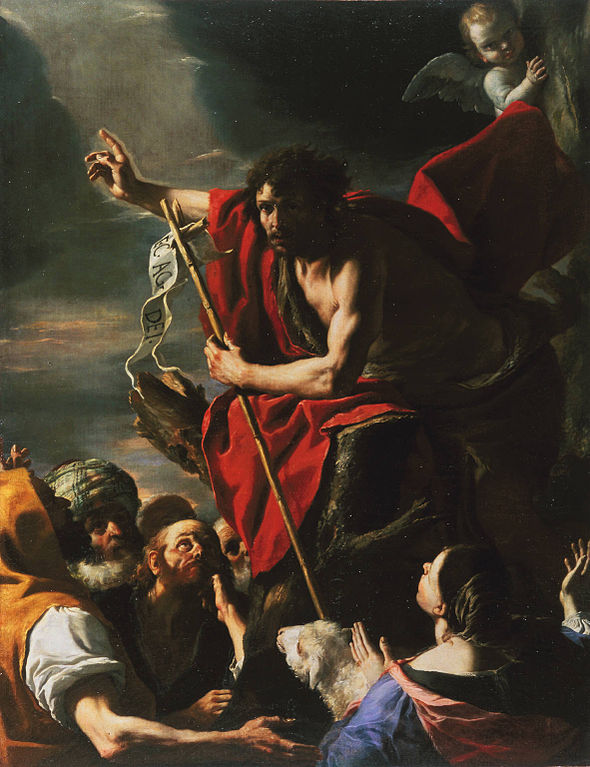
I Need to Be Baptized by You – Sermon on Matthew 3:13-17 for the Baptism of Our Lord

Listen here.

Matthew 3:13-17

13 Then Jesus came from Galilee to the Jordan to John, to be baptized by him. 14 John would have prevented him, saying, “I need to be baptized by you, and do you come to me?” 15 But Jesus answered him, “Let it be so now, for thus it is fitting for us to fulfill all righteousness.” Then he consented. 16 And when Jesus was baptized, immediately he went up from the water, and behold, the heavens were opened to him, and he saw the Spirit of God descending like a dove and coming to rest on him; 17 and behold, a voice from heaven said, “This is my beloved Son, with whom I am well pleased.”

In the name of the Father and of the Son and of the Holy Spirit. Amen.

John the Baptizer tried to prevent Jesus from being baptized, but it wasn’t the first time that John had the inclination to not baptize. A few verses before our text (Mt. 3:5-10), Matthew tells us that all Judea and all the region around the Jordan were being baptized by John. But, when many of the Pharisees and Sadducees were coming to John to be baptized, John sees them and says, John the Baptizer“You brood of vipers! Who warned you to flee from the wrath to come? Bear fruit in keeping with repentance.” The text doesn’t explicitly say it, but it appears as though John refused to baptize at least some of the Pharisees and Sadducees. But why? Why do they get a tongue-lashing and no baptism?

To get to an answer, we need to have a little background. First of all, we have to understand a little more about what baptism is because baptism isn’t something John invented on his own. The most basic meaning of the Greek word βαπτίζω (which gets translated ‘baptize’) is to wash something either by immersing it in or sprinkling it with water.[1] In the Old Testament, God had given lots of instructions to people who had become unclean to go and ceremonially wash themselves before going to the priest to be declared clean (like when a person had contact with a corpse Lev. 11:25, had a skin disease Lev. 13:6, the person who led the scapegoat into the wilderness Lev. 16:26, etc.). After becoming unclean by contact with what was unclean, that person was to wash and be declared clean, and this is the background of the baptisms going on in John’s day. They were further washings that weren’t commanded or forbidden in Scripture. Things that are neither commanded or forbidden in Scripture can be either good or bad. Scripture doesn’t command us to celebrate Christmas, but it is good and even necessary to do so. But we can make celebrating Christmas such a big deal that it becomes the only day that people come to church, which is bad.

We don’t have a lot of information about the history, but we do know that people who wanted to become part of the Jewish people would be baptized (though, these mainly appear after Christ’s ascension into heaven). But there are records outside of Scripture where baptisms did happen and were somewhat common during the time of the Old Testament and between the Testaments. However, these baptisms were all self-washings. They were a way of physically confessing your sins, turning over a new leaf, recommitting yourself to God, and making a better life for yourself. In other words, those baptisms were something people did forGod.

Now, we can’t say for sure, because Scripture doesn’t explicitly say it, but this is possibly why some of the Pharisees and Sadducees were coming to John to be baptized by him. Their thinking possibly went like this, “It is good to commit your life to God, and maybe people who are more sinful than I am will follow my example and commit their lives to God.” But here’s the problem with this attitude of the Pharisees and Sadducees, if that is correct, they weren’t coming in repentance to receive the forgiveness of their sins. And Scripture does say that John was baptizing unto repentance for the forgiveness of sins (Mk. 1:4).[2]

John was baptizing unto repentance for the forgiveness of sins, but the Pharisees in particular didn’t see themselves as having sins to confess. Remember Jesus’ parable about the Pharisee who thanked God that he was not like that rotten sinful tax collector (Lk. 18:11).

So, it is possible that these Pharisees and Sadducees who are denied baptism by John are not coming to be baptized because they have sins that need to be washed away. They are stuck in a way of thinking that they could do enough things for God that God would be pleased with how holy they were. They thought getting baptized was something more they could do to earn favor with God, so John refuses to baptize them because they aren’t repentant. The sad thing is that many Christians today have this type of view of Christian Baptism. They view Baptism as something they do for God once they have come to faith. But this is not the picture of Baptism that Jesus and the rest of the New Testament gives. Not at all!

Jesus' BaptismNow we come to our text. John is baptizing all these people. A thief comes confessing his stealing, an adulterer confesses his adultery, a liar confesses her sin, and John absolves and baptizes them. But then to the front of the line comes Jesus, and John knows Him (Lk. 1:39-45). They’re related to each other. John knows what the angel Gabriel told Mary, that this Jesus would be Son of the Most High, that He would reign over the house of God, and that His kingdom would have no end (Lk. 1:26-38). John knows the angel Gabriel told Joseph that Jesus would be the One to save His people from their sins (Mt. 1:18-25). John knows that Jesus is the sinless God in the flesh. And here He is coming to be baptized unto repentance for the forgiveness of sins? This shouldn’t be!

John recognizes that he is the sinner who needs to confess his sins and be baptized by Jesus. “I need to be baptized by You, and do You come to me?”

But Jesus reassures John, “Let it be so now, for thus it is fitting for us to fulfill all righteousness.” So, John consents and baptizes Jesus. The heavens are opened. The Holy Spirit descends like a dove and rests on Christ. And God the Father says from heaven, “This is my beloved Son, with whom I am well pleased.” Such a beautiful picture of each Person of the Holy Trinity there at our Lord’s Baptism.

What happens when Jesus is Baptized is both the opposite and the same thing that happens to you in your Baptism. In your Baptism, God washed away your sins (Tit. 3:5-6). But when Jesus was Baptized, the opposite happened. Picture it this way. Those sinners who had been baptized by John in the Jordan came to have their sins washed away. But when Jesus enters those sin-filled waters, He absorbs all those sins into Himself so that He can take them to the cross and die for them.

We say this because it is only after Jesus’ Baptism that John says Jesus is the Lamb of God who takes away the sin of the world. John can say that because of what he saw in Jesus’ Baptism. There, Jesus had all the sins of all people of all time piled upon Him. in Isaiah 53, God says that Jesus would be numbered with the transgressors (Is. 53:12) and that God would lay on Jesus the iniquity of us all (Is. 53:4-6). That happened at Jesus’ Baptism.

You know how you feel when you are caught doing something wrong. You have a physical reaction – maybe you feel a rush of heat and guilt, and you feel the weight of it. Imagine having every sin of every person of all time piled upon you. How crushing would that be for Jesus? But having the weight and burden of the sin of the world put upon Him, Jesus hears the comforting voice of His Father, “You are My Son, with You I am well pleased. You are doing what I have sent You to do.” So, Jesus’ Baptism works the opposite direction of yours. Your Baptism washes away your sins, and Jesus’ Baptism is where Jesus is loaded up with your sins.

Matthew 3_17 - Baptism of Jesus Holy Spirit DoveBut also, the same thing that happens to Jesus in his Baptism happens to you in yours. In your Baptism, you are given the gift of the Holy Spirit and are made God’s beloved child. In your Baptism, God intimately joins you to Jesus, and to His death and resurrection (Ro. 6:3-6).
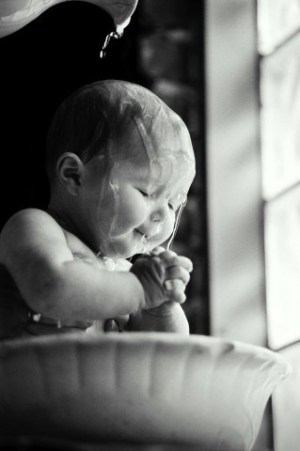
John’s question in our text, “I have need to be baptized by You, and do You come to me?” can be turned into a confession of faith. “Jesus, I need to be Baptized by You, and You have come and Baptized me.” Jesus does come to Baptize you and make you His disciple (Mt. 28:18-20). God has Baptized you through the hands of whatever pastor did the Baptism. It wasn’t the pastor doing it alone; God was Baptizing you. The pastor was simply God’s instrument to put the water upon you.

I have one final encouragement for you, and it is going to seem to come out of left field but bear with me. In Genesis 15[:1-6], God appears to old Abraham who has no children. God tells Abraham to try counting the stars and says, “So shall your offspring be.” God made a promise to Abraham and connected it to something physical that Abraham could see. And Scripture says, “Abraham believed the Lord, and He counted it to him as righteousness.”

Now, imagine every night of Abraham’s life after this. I wonder how often he would go out at night with that promise of God echoing in his ears and start counting. Imagine him trying for a while but then having to give up counting because he’d lose track. And yet, Abraham continued to believe God’s promise.

Dear saints, God has given you something even more precious in your Baptism. God connected His promise of mercy, forgiveness, and life to something physical, to water – something that you interact with daily. Baptism 2In your Baptism, God has given you the new birth of water and the Spirit (Jn. 3:5). In your Baptism, God has promised to wash away your sins (Act. 2:38-39), save you (1 Pet. 3:21), make you His child (Mt. 3:17), connect you to Jesus’ death and resurrection (Ro. 6:3-6), clothe you with Christ (Gal. 3:27), and fill you with the Holy Spirit (Tit. 3:5). So now, whenever wash your hands or take a shower, you can remember that God Himself has washed you clean and made you holy and sacred. Whenever you take a drink, you can remember that, in your Baptism, Jesus has given you to drink of the living water that wells up to eternal life (Jn. 4:10, 14).

You have need to be Baptized by God, and God has done this. Believe these promises of God. Trust them. Don’t leave them. And if you do walk away from the blessings and promises that God has given to you in your Baptism, remember that God hasn’t changed His mind. Those promises are there for you to return to because God is always faithful. He who began a good work in you in your Baptism will be faithful to bring it to completion in the day of Christ (Php. 1:6). Amen.

The peace of God, which surpasses all understanding, will guard your hearts and minds in Christ Jesus. Amen.

[1] In Mark 7:4, Mark mentions that the Pharisees had rituals for baptizing (most translations will simply say ‘washing’) they would baptize cups, pots, copper vessels, and dining couches. Unless you want to ruin it, you don’t immerse a dining couch. So, to say that Scriptures always mean immersing when they speaks about baptism is simply wrong.

[2] Scripture does make a distinction between John’s baptism and Jesus instituting Christian Baptism (especially in Mt. 3:11-12 and Act. 19:1-7). And we could spend a whole bunch of time considering the differences but let me just say this. According the Scripture, John’s baptism is a precursor to Christian Baptism. John would have repentant sinners come to him, confess their sins, and be baptized by him. And it was those very sins that Jesus would die for. So, God was granting forgiveness through John’s baptism.

Exalted – Sermon on Matthew 3:13-17 for the Baptism of Our Lord.

Listen here.

Matthew 3:13-17

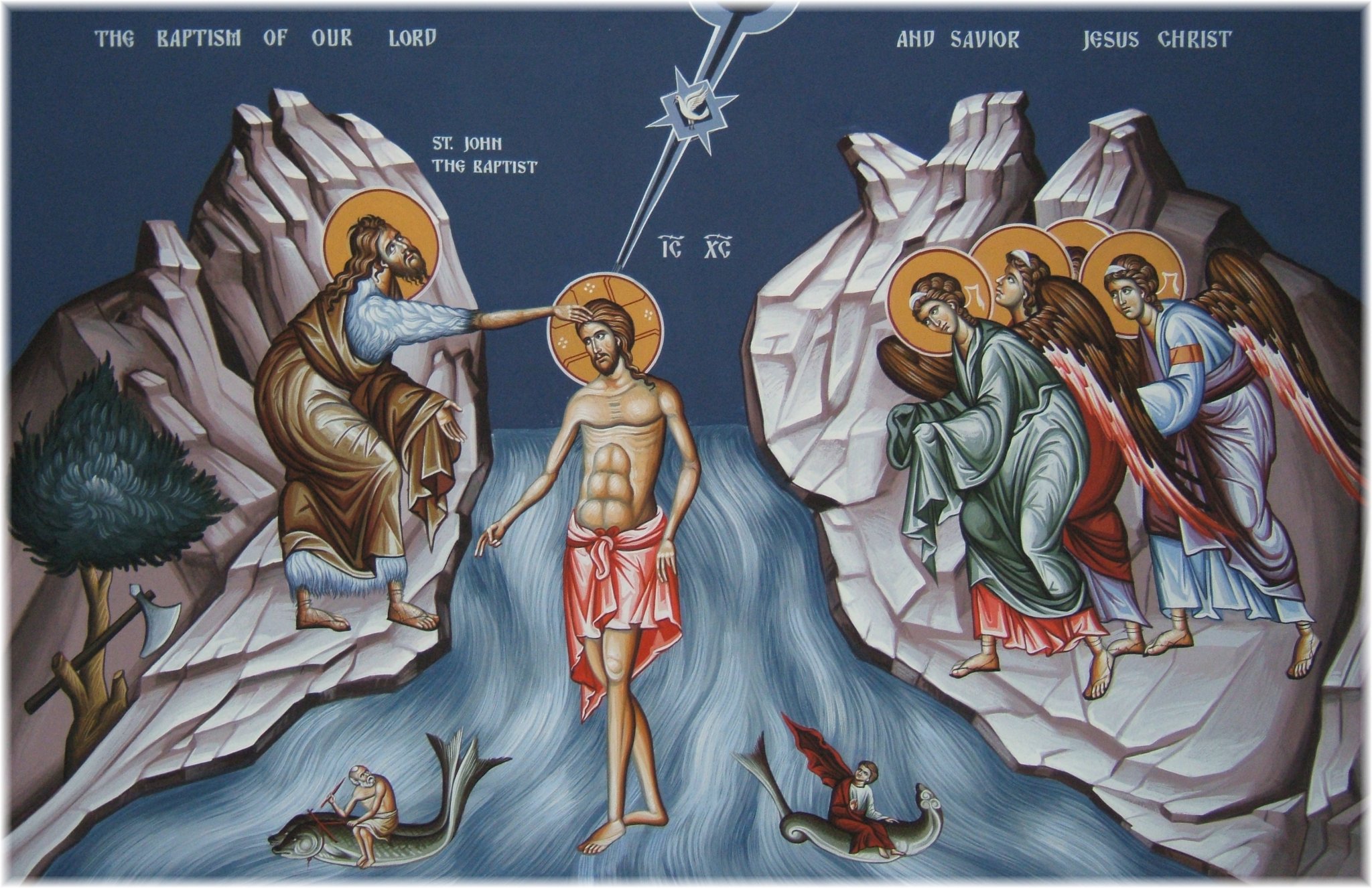
Jesus' Baptism Spirit Descends13Then Jesus came from Galilee to the Jordan to John, to be baptized by him. 14John would have prevented him, saying, “I need to be baptized by you, and do you come to me?” 15But Jesus answered him, “Let it be so now, for thus it is fitting for us to fulfill all righteousness.”Then he consented. 16And when Jesus was baptized, immediately he went up from the water, and behold, the heavens were opened to him, and he saw the Spirit of God descending like a dove and coming to rest on him; 17and behold, a voice from heaven said, “This is my beloved Son, with whom I am well pleased.”
In the name of the Father and of the Son and of the Holy Spirit. Amen.

Our texts today (both this Gospel lesson and the Old Testament lesson [Josh. 3:1-3, 7-8, 13-17]) bring us to the banks of the Jordan River. And to understand what is going on at Jesus’ baptism, we have to understand what happened in Joshua.

In that Old Testament reading, all the people of Israel are outside the land that God had promised to give to them. They had been waiting and wandering in the wilderness for forty years. Their leader, Moses, went up on a mountain to die. And Joshua, as God’s appointed man, takes over the leadership responsibilities.

Anyway, it is time to enter the Promised Land. So, God tells Joshua that He is about to exalt Joshua in the sight of all Israel so that the people will know that God is with Joshua as He had been with Moses. The priests who carry the ark of the covenant are to stand in the Jordan, and the waters of the river will be cut off from flowing so that the people can pass through on dry land. Just as God parted the waters of the Red Sea to lead God’s people out of bondage and slavery in Egypt (Ex. 14), God will lead His people through water into their own land.

The priests were carrying the ark and as soon as their feet are dipped in the brink of the Jordan (which, like our river here, floods its banks) the swollen waters stop flowing. The river stands and rises up in a heap. The people pass into the Promised Land near Jericho. And Joshua is exalted in the sight of the people just as God had promised (Josh 4:14).

So, what does this text from Joshua have to do with Jesus’ Baptism? Well, first the place is the same – the Jordan River, but there is so much more. Bear with me for a bit.

When John was out in the wilderness preaching and baptizing, he was there by the Jordan River – the place where God’s people entered their own land. Now, baptism is something that had been going on well before John ever started doing it. When someone who wasn’t a Jew converted and wanted to become part of God’s people, they would be baptized. The idea was that Israel had all gone through water to enter the Promised Land and become God’s people through their ancestors, so people who were converting would also go through water.

But remember, John was baptizing people who were already Jews. John is out there calling people back to their roots, back to the Jordan, back to where God brought them into their own land and made them a people. And they are being baptized ‘unto’ repentance (Mt. 3:11), confessing their sins, and receiving forgiveness. Sinners are going to John. They receive a baptism that is for sinners and brings about repentance.

Baptism of Christ - TheophanyTo that very place and in that very context comes Jesus Christ, our Lord. And what is He coming to do? He’s coming to be baptized!

John says, “No way! No sinner’s baptism for You.” But Jesus corrects John, and John consents. Jesus enters the waters of the Jordan. The heavens open. The Holy Spirit descends like a dove. And a voice from heaven says, “This is My beloved Son, with whom I am well pleased.”

There is a lot for us to see in those two verses (v. 16-17). But to get the whole picture, we need to hear what John has to say about this event in the Gospel of John(1:29, 32-34[it’s in your Scripture insert]). After Jesus had been baptized, John is hanging out with his disciples. He sees Jesus and points to Him saying, “Behold the Lamb of God, who takes away the sin of the world.” John goes on to say how he saw the Spirit descend on Jesus and remain on Him after He was baptized. And John testifies saying, “This is the Son of God.”

So, here is the whole picture:

When Jesus, our great High Priest, was baptized, He stepped into the Jordan River. But the waters did not part like they did for the priests carrying the ark of the covenant. Instead, the heavens opened, and God proclaimed His presence in this world. And what is Jesus, our High Priest, here to do? He is here to be the sin-bearer.

All the sins of the people who had been baptized by John are there in the Jordan River. Jesus enters those waters. And as He is baptized, Jesus sucks up all those sins into Himself like a sponge. As Isaiah wrote, “[Jesus] has borne our griefs and carried our sorrows. The Lord laid on [Jesus] the iniquity of us all” (Is. 53:4, 6, 11). That is why John can say that Jesus is the Lamb of God who takes away the sin of the world.

As God lead His people through the Jordan to exalt Joshua in the sight of the people, God led Jesus (who shares Joshua’s name), the new and greater Joshua, and exalted Him by saying, “This is My beloved Son with whom I am well pleased.” And know why it is that God is pleased with His beloved Son. It is because He, in His baptism, takes on your sin. He takes on your sin so He can carry it for you. So He can bear it to the cross for you. So He can bear God’s wrath against that sin for you. So that He can die in those sins for you. And so that, when He rises from the tomb leaving it empty, your sin is nowhere to be found.

Baptism 2Christ’s glory, His exultation is to call you and chose you who are not wise according to worldly standards, not powerful, not of noble birth. Instead, He is exalted to choose us who are foolish, weak, and despised in the world (1 Cor. 1:26-31).

Christ’s glory is to be numbered with us transgressors and to bear our sin (Is. 53:12). He has taken your shame, your pride, your lust, your iniquities and given you His righteousness.

God’s delight and pleasure is in His Beloved Son, Jesus. And that is where you are. In your Baptism, you were united and clothed with Christ (Gal. 3:27). You were buried with Christ in your Baptism so that you would be joined to His resurrection (Ro. 6:3-4). Jesus has indeed fulfilled all righteousness, and you are in that. Amen.

The peace of God, which surpasses all understanding, will guard your hearts and minds inChrist Jesus. Amen.

Comfort & Rejoicing – Sermon on Matthew 11:2-11 for the Third Sunday in Advent

Listen here.

Matthew 11:2-11

Now when John heard in prison about the deeds of the Christ, he sent word by his disciples and said to him, “Are you the one who is to come, or shall we look for another?” And Jesus answered them, “Go and tell John what you hear and see: the blind receive their sight and the lame walk, lepers are cleansed and the deaf hear, and the dead are raised up, and the poor have good news preached to them. And blessed is the one who is not offended by me.”

As they went away, Jesus began to speak to the crowds concerning John: “What did you go out into the wilderness to see? A reed shaken by the wind? What then did you go out to see? A man dressed in soft clothing? Behold, those who wear soft clothing are in kings’ houses. What then did you go out to see? A prophet? Yes, I tell you, and more than a prophet. 10 This is he of whom it is written,

“‘Behold, I send my messenger before your face,
who will prepare your way before you.’

11 Truly, I say to you, among those born of women there has arisen no one greater than John the Baptist. Yet the one who is least in the kingdom of heaven is greater than he.”

In the name of Jesus. Amen.

Here we are – just over a week away from Christmas, and now we hear John the Baptizer. He is the fore-runner. He is the voice of one crying in the wilderness, “Prepare the way of the Lord.” He came tearing down mountains as he preached the Law and raising up valleys as he preached the Gospel.

John is an interesting character. He is one of only three people I can think of – Isaac, John, and Jesus – whose birth was promised from heaven before the child was even conceived (maybe you can think of more). God sent the angel Gabriel to tell Zechariah that God would open Elizabeth, his wife’s, womb; Gabriel also said that John would be filled with the Holy Spirit before he was even born (Lk. 1:15). When Mary was pregnant with Jesus and went to visit Elizabeth, Mary greeted Elizabeth, and John leapt in Elizabeth’s womb (Lk. 1:39-41).

John the BaptizerJohn was born and grew up as a Nazarite, so his hair was never cut. Imagine his big, bushy beard and his long, tattered hair. John preached out in the wilderness wearing clothes made of camel hair and leather belt. He had a peculiar diet of locusts and wild honey (Mk. 1:6). Imagine having locust breath – probably even worse than coffee breath. Matthew summarizes John’s preaching as this message: “Repent for the kingdom of heaven is at hand” (Mt. 3:2). People would come out to the wilderness to hear him preach, and when he saw them he said, “You brood of vipers! Who warned you to flee from the wrath to come?” (Mt. 3:7). He would preach about the axe that was laid to the root of every tree that would cut down each tree that didn’t bear fruit and throw it into the fire (Mt. 3:10). So, John was a preacher of the Law. But still all the country of Judea and Jerusalem was going out to John and being baptized and confessing their sins (Mk. 1:4-5).

But John was also a preacher of the Gospel. He would point people to Jesus. He told them about the One who was coming after him, whose sandals he was unworthy to stoop down and untie (Mk. 1:7). He pointed to Jesus and said, “Behold the Lamb of God, who takes away the sin of the world!” (Jn. 1:29, 35-36). John was a wild man frantically calling people to repent and pointing them straight to Jesus.

But that is not the John we hear about today. In today’s Gospel, John is in prison. He had preached against the sin of Herod, and Herod didn’t like it. The John in today’s Gospel reading isn’t standing in the wilderness next to the Jordan River with his hair blowing in the wind as he preaches repentance and the Lamb of God. Instead, John is behind bars in a stuffy, dank, dark cell. And the last words we hear of John the Baptizer don’t even come directly from his mouth. His last recorded words in Scripture are a question brought by John’s disciples to Jesus. “Are you the One who is to come, or shall we look for another?”

Even John who, according to Jesus, was the greatest among those born of women, even John struggled with doubt. So, when you struggle with doubt (and please, notice, it I didn’t say ‘If you struggle with doubt’), when you struggle with doubt, know that you are sitting next to John. Maybe, you wouldn’t word your question the same way that John did. Maybe, your question is, “Is my spouse really going to rise again?” or, “Am I ever going to get better and be healed?” or, “Jesus, did You really die and rise again for me?” or, “Jesus do you really forgive me?” All of those questions also fall under John’s question, “Are you the One who is to come?”

It’s a simple ‘yes/no’ question. But Jesus, in typical Jesus fashion, doesn’t give a ‘yes/no’ answer. Instead, Jesus sends John’s disciples back with a message, “Go and tell John what you hear and see:the blind receive their sight and the lame walk, lepers are cleansed and the deaf hear, and the dead are raised up, and the poor have good news preached to them.And blessed is the one who is not offended by me.”

john-in-prison-with-disciplesJohn was anxious in prison knowing he was probably going to be executed for what he had preached. Probably, John was wondering if he had preached rightly. And Jesus’ response points John and you to the Scriptures. In particular, Jesus points John to Isaiah 35:4-6, and you have to hear the context of those verses because it shows how beautifully Jesus answers John’s question, “Are you the One who is to come?” Here it is Isaiah 35:4-6, “Say to those who have an anxious heart, ‘Be strong; fear not! Behold, your God will come with vengeance, with the recompense of God. He will come and save you.’ Then the eyes of the blind shall be opened, and the ears of the deaf unstopped; then shall the lame man leap like a deer, and the tongue of the mute sing for joy….”
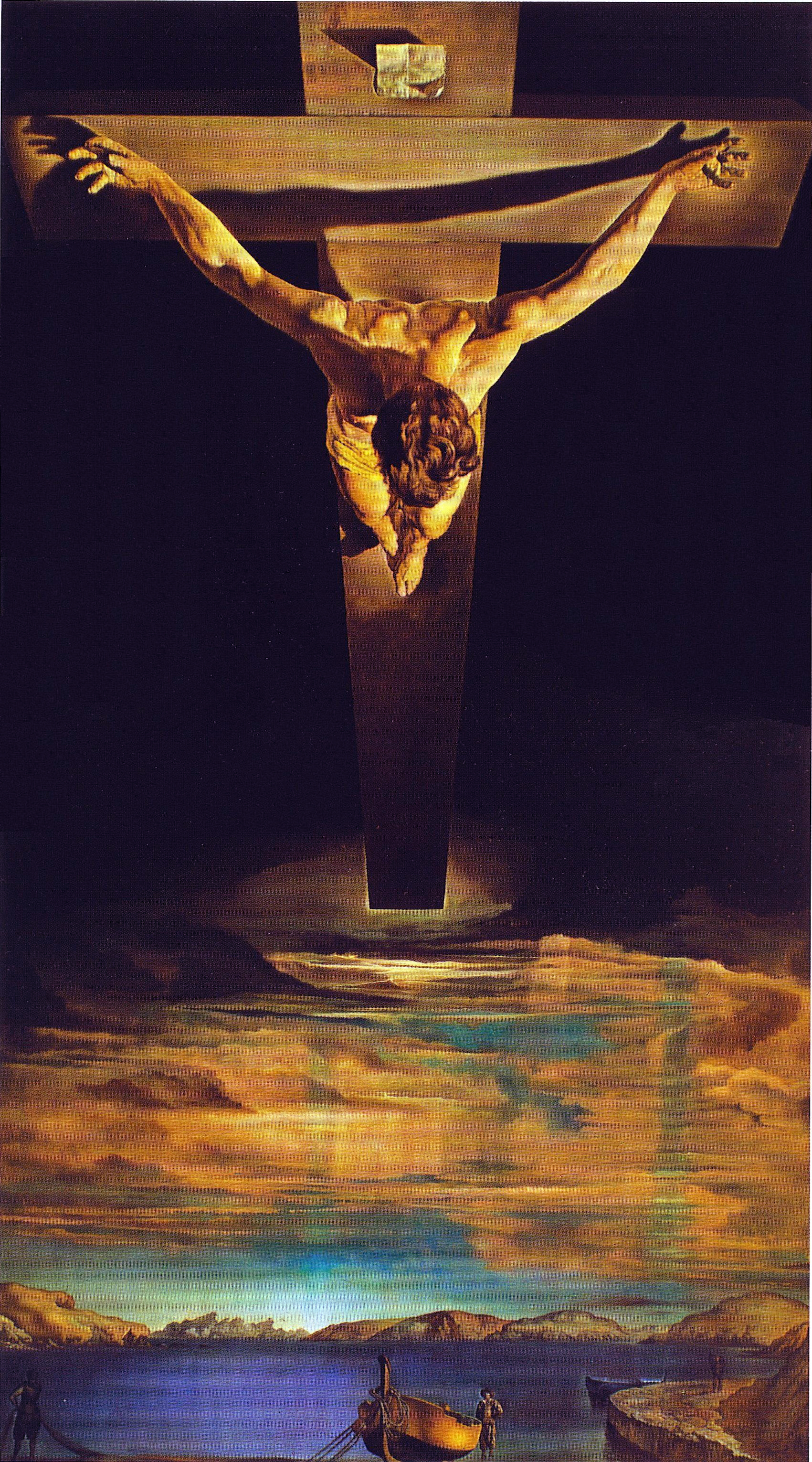
Jesus directs imprisoned, anxious, troubled, doubting John and you, to the comforting promises of Scripture because the word of the Lord endures forever (Is. 40:8). The blind seeing, the deaf hearing, the lame walking, and the mute singing are evidence that God has come, and He has come to save. The comfort is notin the signs. The signs point back to the comforting news that God has come to bring salvation to you.

This is the good news, the Gospel, that John needs to hear. This is the good news that all sinners need to hear, that you need to hear. God has come. Jesus has come and saved you. christ-of-st-john-on-the-cross-salvador-daliHe opened the eyes of the blind. Christ made the deaf hear, the lame walk, and the mute to sing. All of that means that salvation has come to you who are anxious and poor in spirit. Rejoice.

Believer, you can have joy because of the comforting message that Jesus has come. He has come and saved you. Joy is not the same as happiness. Happiness and sadness cannot coexist, but joy and sadness can. Joy is not the absence of sadness or anger. Joy is confidence and contentment that God is in control and is taking care of things. Even when everything seems dark and fading, God is in control, and He has come. He has died and risen again. He has come and saved you. Amen.

The peace of God, which surpasses all understanding, will guard your hearts and minds in Christ Jesus. Amen.