The Bearing Lamb – Sermon on John 1:19-29 for the Fourth Sunday of Advent

John 1:19–29

19 And this is the testimony of John, when the Jews sent priests and Levites from Jerusalem to ask him, “Who are you?” 20 He confessed, and did not deny, but confessed, “I am not the Christ.” 21 And they asked him, “What then? Are you Elijah?” He said, “I am not.” “Are you the Prophet?” And he answered, “No.” 22 So they said to him, “Who are you? We need to give an answer to those who sent us. What do you say about yourself?” 23 He said, “I am the voice of one crying out in the wilderness, ‘Make straight the way of the Lord,’ as the prophet Isaiah said.” 

24 (Now they had been sent from the Pharisees.) 25 They asked him, “Then why are you baptizing, if you are neither the Christ, nor Elijah, nor the Prophet?” 26 John answered them, “I baptize with water, but among you stands one you do not know, 27 even he who comes after me, the strap of whose sandal I am not worthy to untie.” 28 These things took place in Bethany across the Jordan, where John was baptizing. 

29 The next day he saw Jesus coming toward him, and said, “Behold, the Lamb of God, who takes away the sin of the world!

In the name of Jesus. Amen.

The first few verses of this text are a little frustrating. A bunch of priests and Levites come to John the Baptizer and ask him, “Who are you?” John answers with a negative statement, “I am not the Christ.” I don’t think I’ve ever had a conversation similar to this.

Imagine you’re at, say, your spouse’s company Christmas party. You don’t know many of the people there. You know a lot of names because your spouse talks about all those coworkers, but you don’t really know them. Imagine your spouse is off in a corner talking to those coworkers leaving you with the other spouses of those coworkers. Things are a little awkward, so you try to strike up a conversation with someone. You lean over and ask, “What do you do for a living?” and get the reply, “I’m not the President of the USA.” You’d probably be looking for another conversation. 

That is how John replies. But these priests and Levites have come on a mission. They’ve been sent to figure out just who John is. So, they start aiming at all sorts of targets. “Are you Elijah?” “I am not.” “Ok. Are you the prophet?” “Nope.” “Argh. Who are you? Give us something. We have to give a report.”

Finally, John opens up, “I am the voice of one crying out in the wilderness, ‘Make straight the way of the Lord,’ as the prophet Isaiah said” (Is. 40:3). There, John is doing what he was sent to do; he points people to Jesus. And John keeps talking about Jesus like an excited kid, “Among you stands One you do not know, even He who comes after me, the strap of whose sandal I am not worthy to untie.” Then, the next day, John really gets going. He sees Jesus coming toward him and says, “Behold, the Lamb of God, who takes away the sin of the world.”

That is the most beautiful sermon you could ever hear, but I want to press in on it a little bit more. The words are familiar, but just like all the words of Scripture, there is always more to learn, more glean from those simple words. Today, focus on two of those words “takes away” (in Greek is actually only one word). That translation is a bit vague and nebulous.

You might think that is referring to what Jesus does on the cross, and in a sense, that is right. Jesus brings your sins to the cross and buries them by His death. But what John the Baptizer says here is a lot more specific than our translation makes it sound.

Nearly every English translation uses the phrase, “takes away.” The word there is a common one, and in a lot of places it’s a slam dunk that it means “take away.” In Luke 6:29-30, Jesus uses this word twice. He says if someone ‘takes away’ (same word) your coat, give him your shirt as well, and if someone ‘takes away’ your goods do not demand them back. In the parable of the Sower and the Seed, Jesus talks about the seed that falls along the path and the birds come and take it away (Lk. 8:12).

But this word also can clearly mean ‘to carry’ or ‘bear’ something. Jesus uses it in that way in Mt. 16:24 where He says, “If anyone would come after Me, let him deny himself and take up (there’s the word) his cross and follow Me.” There, Jesus isn’t saying that you should first take away your cross and then follow Him. He means that you pick up your cross, that you bear the weight and load of your cross, and you follow Him. That’s the idea of what John is saying here.

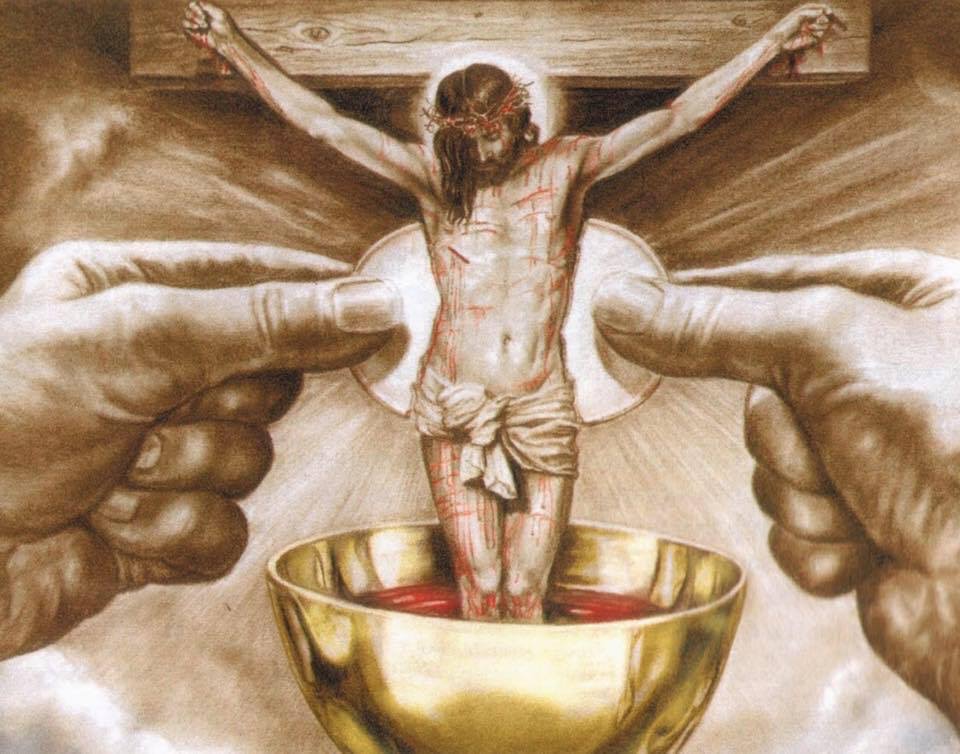
And John uses this word in the present tense. John points to Jesus and says, “Behold, the Lamb of God, who is bearing the sin of the world.” Jesus is the sin-bearing Lamb of God. For about three and a half years, starting at His Baptism and ending on Good Friday, Jesus bore and carried the weight and load of the guilt and sin of humanity.

The Bible talks about your sin and my sin in a lot of different ways: darkness, death, blindness, slavery, debt, alienation from and animosity toward God. The Bible talks about your sin being dirty, stinky, rotten. But here sin is described as heavy, as a weight bearing down on your soul (see also Heb. 12:1). The sins you and I have committed and the sins that have been committed against you, Jesus bears and carries them all.

Maybe, you remember the third verse of the hymn “It Came Upon a Midnight Clear.” 
“And ye, beneath life’s crushing load
whose forms are bending low,
who walk along the climbing way,
with painful steps and slow,
look now, for glad and golden hours
come swiftly on the wing;
O rest beside the weary road,
and hear the angels sing.” 

I just wish that verse was a little more clear about why those glad and golden hours come. They come because Jesus, the Lamb of God who bears the sin of the world, has lifted that crushing load. He has taken those sins and carried them.

That load of sin, that crushing burden, is taken from you by Christ. If you read on after our text, you’ll hear why John can say this. John saw the Spirit descend like a dove and remain on Jesus at His Baptism (Jn. 1:32). From that experience of being the one who Baptized Jesus, John knew that Jesus was the One whom God had promised would crush the serpent’s head (Gen. 3:15). John knew that Jesus was the scapegoat who would bear and carry the sins of all humanity into His grave (Lev. 16:21-22), which is now and forever empty.

John knew Isaiah’s message that God would send One who would bear our griefs, carry our sorrows, and have the iniquity of us all laid on Him (Is. 53:4-5). That One is Jesus. He is the Lamb of God who bears and carries the sins of the whole world.

This call from John is for all of you, for your hears to hear, “Behold the Lamb of God who bears the sin of the world.”

You see, your sin, my sin, all sin, has a place, a location. Sin is either on you, and you have to bear and carry its guilt for all eternity, or that sin is on Christ, the Lamb of God, who has already borne it for you. Why, why, would you keep carrying it? You can, sadly, you can continue to carry your sin. If you refuse to believe in Christ, that burden can remain on you. But that would be, frankly, foolish. Jesus has carried it for you. Believe that, and be unburdened. Through faith, your sin is on Christ, and you are saved.

Dear Iris, today you are Baptized. Today, Jesus has joined you to Himself by placing His name upon you (Mt. 28:19). Iris, Jesus, the sin-bearing Lamb of God, has lifted that burden and has now clothed you in His righteousness (Gal. 3:27), and you have been born of God (Jn. 3:3, 5). Iris, continue believing that.

Iris and all you here, know and believe that God is for you. He is on your side. Christ has done what you could not do for yourself. He has borne your sins. He bore, carried, and dealt with them once for all, for you. 

So, be unburdened, Jesus has come to save you by being the sin-bearing Lamb for you. Amen.

The peace of God, which surpasses all understanding, will guard your hearts and minds in Christ Jesus. Amen.
Coming Soon – Sermon on John 1:19-29 for the Fourth Sunday of Advent

John 1:19–29

19 And this is the testimony of John, when the Jews sent priests and Levites from Jerusalem to ask him, “Who are you?” 20 He confessed, and did not deny, but confessed, “I am not the Christ.” 21 And they asked him, “What then? Are you Elijah?” He said, “I am not.” “Are you the Prophet?” And he answered, “No.” 22 So they said to him, “Who are you? We need to give an answer to those who sent us. What do you say about yourself?” 23 He said, “I am the voice of one crying out in the wilderness, ‘Make straight the way of the Lord,’ as the prophet Isaiah said.” 

24 (Now they had been sent from the Pharisees.) 25 They asked him, “Then why are you baptizing, if you are neither the Christ, nor Elijah, nor the Prophet?” 26 John answered them, “I baptize with water, but among you stands one you do not know, 27 even he who comes after me, the strap of whose sandal I am not worthy to untie.” 28 These things took place in Bethany across the Jordan, where John was baptizing. 

29 The next day he saw Jesus coming toward him, and said, “Behold, the Lamb of God, who takes away the sin of the world!

In the name of Jesus. Amen.

My college buddies and I try to get together every year. We typically meet at a lake cabin that belongs to the family of one of the guys in our group. Sometimes, we’ll joke that the only reason we invite him is that we meet at his cabin. (He’s actually a great guy.) The majority of our time is spent sitting around a campfire. Since there are at least three eagle scouts and one borderline pyromaniac in that group, building and maintaining the fire is no problem.

We sit around those huge, burning logs sharing stories late into the night, but over the years, I’ve ended up being one of the first to go to sleep. Because I’m one of the first to bed, I’m also one of the first up and get back to the firepit in the morning. When I look at the place that was a roaring fire when I went to bed, all I can see is a pile of ash. The flames are all gone. But when I get down close to that gray ash heap, I can fell there are still hot embers underneath. All it takes to get the fire going again is a paper plate, a few twigs, and a little blowing.

Throughout the Old Testament, God had made promise after promise that the Messiah and Savior would come. Like a huge bonfire, the prophetic promises burned bright and hot. But then, God stopped sending the prophets, and the flames died down. For some 400 years, there was no word from God. By all appearances, there was nothing more than an ash heap, but under those ashes were glowing embers ready to ignite anything placed on them.

Those hot coals were detected with the old priest, Zechariah. The people of Jerusalem had heard the story of how he had seen a vision while he was serving in the Temple, and after that vision he wasn’t able to speak for nine months. The strange thing is that vision and silence coincided with his old wife, Elizabeth, getting miraculously pregnant and having a son. Zechariah was only able to speak again after his son was named John, which was reportedly the name given to him in that vision (Lk. 1:2-25, 57-80). And this John grew up to be a peculiar fellow. He lived out in the desert eating grasshoppers and wild honey.

Then, the breeze started to blow on the embers. John was out in the wilderness preaching and baptizing. He would say things that others were too shy to speak. John was calling soldiers, tax collectors, and everyone to repent (Lk. 3:7-17). The religious leaders didn’t have a problem with that call to repentance. The curious thing about this call to repent was the reason John gave, “for the kingdom of God is near.” Where did John get that idea?

John’s preaching had gotten the embers glowing from beneath the ashes, and now huge crowds of people were migrating from Jerusalem, Judea, and all around the Jordan to hear this preaching and to be baptized by John (Mt. 3:5-6). Just like sticks thrown on hot embers, flames were starting to flicker once again. And that is what got the attention of the religious big wigs in Jerusalem. So, they sent a delegation to John to ask him, “Who are you?”

John confessed, “I am not the Christ. No, I’m not Elijah. No, I’m not the prophet. I am the voice of one crying out in the wilderness, ‘Make straight the way of the Lord,’ as the prophet Isaiah said.” And John goes on to say, “There is One standing among you that you don’t know, and I’m not worthy to stoop down and untie His sandals.” The flames were growing higher and hotter.

Now, Scripture doesn’t say this for sure, but I like the idea that Jesus was present in that crowd when John says, “among you stands One you do not know,” because it was the very next day that John points to Jesus and says, “Behold the Lamb of God who takes away the sin of the world.” With that preaching, the log was thrown on the flames and a new bonfire ignited.

That new fire of Jesus’ ministry brought miracles, healing, and powerful teaching. It burned brightly scattering and dispersing the darkness of demons. But after three years of Jesus’ ministry, something happened. It looked like the fire completely collapsed and the flames appeared to go out as Jesus died on the cross, but they ignited again in His glorious resurrection. By His death and resurrection, Jesus, the Lamb of God, has taken away the sin of the world. Everyone quickly check. Are you part of this world? Ok. Then Jesus has taken away your sin.

This same Jesus is now ascended into heaven where He sits at God’s right hand interceding for you and pleading your case before God the Father. There, Christ your Savior continually reminds God the Father that the wrath and punishment you deserve has been fully paid by His holy and precious blood. With His nail-scarred hands, Jesus now points to you who trust in Him and says, “That one’s sins are removed as far as the east is from the west” (Ps. 103:12).

Yes, you live some 2,000 years after Jesus died and rose again. Sure, it might look like the light of the fire of Jesus’ ministry has been reduced to nothing more than a pile of ashes. But it’s looked like that before. And our perception can be deceiving. The embers are still there and hot. Christ is not as far away as He may seems to be. He is here. Jesus stands among you. He has promised, “Where two or three are gathered in My name, there I am among them” (Mt. 18:20). He declares to you, believer, “I am with you always, to the end of the age” (Mt. 28:20). 

Jesus has come once – born in a barn in Bethlehem. He is coming again in glory and power. And He is come now. It doesn’t matter how gray the ashes appear to be in this sinful world. The embers are glowing hot and bright underneath, ready to ignite at any moment.

Lord willing (Jam. 4:15), we will gather here again tonight to celebrate and remember the birth of our Savior, the Lamb of God who takes away the sin of the world. Celebrating the birth of Jesus helps to prepare us for His second coming. Believer, He came meek and humble when He was born in Bethlehem to be the Savior. That is why the angels could sing, “Glory to God in the highest, and on earth peace among men with whom He is pleased” (Lk. 2:14). That faith prepares you to welcome Him when He comes again in glory on the Last Day.

For those who do not have faith, Jesus’ second coming will be terrifying. There will be no angel to tell you, “Fear not for I bring you tidings of great joy” (Lk. 2:10). Because, when He comes again, He will come to judge the earth (Ps. 96:13, 98:9). You who have faith, you already know the outcome of that judgment. Jesus Himself will be your defense lawyer (1 Jn. 2:1) and judge who will declare you not guilty.

For anyone here who does not have faith in Christ, I love you too much to not tell you that – if you persist in your unbelief and sin – the outcome of your judgment on that day is certain. Jesus will say to you, “Depart from Me, you cursed, into the eternal fire prepared for the devil and his angels” (Mt. 25:41). So, quit your stubborn, self-centered, self-righteous ways. Repent of your sin, and believe in Jesus. He loves you and wants you for his own.

And for you, dear saints, Jesus is here now, and He is with you always. The day of His return is coming soon. The embers are still hot and ready to ignite. Come, Lord Jesus. Amen.

The peace of God, which surpasses all understanding, will guard your hearts and minds in Christ Jesus. Amen.

Passover to the Lord’s Supper – Sermon on Exodus 12:1-13 & Mark 14:12-28 for Maundy Thursday

In the name of Jesus. Amen.

Before God rescued His people from slavery in the land of Egypt, He gave them a meal to celebrate their deliverance – the Passover meal. They were to take a lamb and slaughter it at twilight. God told them to take some of the blood and smear that blood on doorposts and the lintel of the houses where they would eat it. They were to eat that lamb and unleavened bread quickly and dressed to travel. That night, God passed through the land of Egypt and struck dead all the firstborn of both man and beast, but He did not enter any houses where He saw the blood of the lamb on the door. That blood was a sign that shielded God’s people from death.

It’s interesting, though, God had already set apart His people so they were not troubled by the previous plagues. Scripture tells us that the flies of the fourth plague didn’t pester the Israelites (Ex. 8:22-23). In the fifth plague, the livestock of the Egyptians died, but not the livestock of God’s people (Ex. 9:4, 7). The hail of the seventh plague didn’t fall upon the Hebrews (Ex. 9:26). Same with the darkness in the ninth plague (Ex. 10:22-23). God didn’t have His people set up any sign to keep those plagues from harming them. They didn’t need to put a fly in their window or write a “Have a nice day” in chalk on their sidewalks to be spared from those plagues. But with this final plague, God had His people set themselves apart with the sign of the blood of the lamb marking their doors.

The fact that God had His people do this not only on that day but also every year afterward was to preach an annual sermon. Each year in the Passover feast, God was reminding His people and preaching to them that the blood of a lamb protected and guarded them from His wrath and death. That blood and meal reminded the people of what God had done in the past, but it was also pointing forward to another Lamb and a better blood that would protect and shield God’s people. And that Lamb is Jesus.

But then, in our Gospel lesson tonight (Mk. 14:12-26), that Passover sermon was preached for the final time. Jesus has His disciples prepare the Passover meal, and that very night, that sermon is fulfilled. It’s no longer needed. The Passover sermon is about to become obsolete because Jesus institutes the new testament of His Supper where He gives His Body and Blood for the forgiveness of sins.

One interesting thing to notice before we move on here: In both instances, both with the Passover meal and the Lord’s Supper, God gives this meal to His people before the event actually happened. Before God passed through Egypt, God gave the Passover meal. The same thing is true in the Lord’s Supper. Before Jesus goes to the cross and gives His body unto death and sheds His blood, Jesus gives the meal of His Body and Blood for the forgiveness of your sins.

Jesus had come, and He was about to do His Father’s will. The Lamb of God, who takes away the sins of the world (Jn. 1:29) and eternally protects God’s people from the plague of death (Heb. 12:24), this Lamb had come to give Himself so that His blood can shield you and death no longer has a claim on you.

The Passover meal had served its purpose. Tomorrow, Jesus will go to the cross. And to replace the Passover meal, Jesus now gives you Holy Communion. Yes, the Lord’s Supper was instituted in the context of the Passover, but it lays aside that old meal. Many people have tried to figure out at what point during the Passover meal Jesus gives Communion as its replacement. But Scripture indicates that Jesus institutes Holy Communion as a separate thing after they had finished that final Passover meal. The Gospel of Luke especially indicates that Jesus institutes His Supper after the Passover meal was finished (Lk. 22:20). 

Now, instead of the Passover meal, you are to eat the bread, which Jesus says is His body, and you are to drink the cup, which Jesus says is His blood. And you do this as a remembrance of what Christ has done for you. Yes, there is remembrance in this meal, but it also delivers exactly what Christ promises it delivers. Jesus promises that in this little meal, you receive the forgiveness of your sins. And unlike the Passover meal, which was an annual thing, Jesus says to do this often in remembrance of Him (1 Cor. 11:25).

So now, Jesus invites you – yes, you – to His altar, to His table. Jesus knows what you need, and He invites you to come and receive it. This is your entry into the Holy of Holies. Here in this meal, the time and distance between you and the cross of Jesus collapses as you participate in the feast of the Lamb who was slain from the foundation of the world (1 Pet. 1:19-20). Here, your Lord gives you everything you need as you walk out of your slavery to sin and toward the Promised Land of the new heavens and earth (Rev. 21:1). Here, your sins are forgiven. Here, the Body and Blood of Christ are given for you.

So, come. Your Brother, your Lord, and your Savior invites you. Amen.The peace of God, which surpasses all understanding, will guard your hearts and minds in Christ Jesus. Amen.