
Matthew 25:1-13
1 [Jesus says,] “Then the kingdom of heaven will be like ten virgins who took their lamps and went to meet the bridegroom. 2 Five of them were foolish, and five were wise. 3 For when the foolish took their lamps, they took no oil with them, 4 but the wise took flasks of oil with their lamps. 5 As the bridegroom was delayed, they all became drowsy and slept. 6 But at midnight there was a cry, ‘Here is the bridegroom! Come out to meet him.’ 7 Then all those virgins rose and trimmed their lamps. 8 And the foolish said to the wise, ‘Give us some of your oil, for our lamps are going out.’ 9 But the wise answered, saying, ‘Since there will not be enough for us and for you, go rather to the dealers and buy for yourselves.’ 10 And while they were going to buy, the bridegroom came, and those who were ready went in with him to the marriage feast, and the door was shut. 11Afterward the other virgins came also, saying, ‘Lord, lord, open to us.’ 12 But he answered, ‘Truly, I say to you, I do not know you.’ 13 Watch therefore, for you know neither the day nor the hour.”
In the name of Jesus. Amen.
One year ago, I preached on this text. After that service, we decorated the sanctuary for the Advent and Christmas season just like we will today. The following Sunday, Lindsay, Siobhan, and Stephanie came up to do our Advent candle lighting. After they did the readings and prayer, Lindsay went to light the first candle. The wick held the flame for a fraction of a second then went out because… there was no oil in that candle. And the wick would not hold a flame.
I bring that up for two reasons: First, whoever brings out the Advent candles today, please check the oil levels so we don’t repeat that this year. The second reason I bring that up is that this parable can seem so trivial. Last year, we were perfectly capable of having our worship service without that candle being lit. We didn’t need its light or the heat created by it. We just moved on. Not having oil seems like such a minor thing. In the parable, five girls are unable to light lamps because they didn’t have oil. Did all ten virgins need to have lit lamps? Was it really that important?
Apparently, yes. In the parable, not having oil to keep a lamp lit makes the difference between being in the feast and being left out. In fact, according to Jesus, having oil makes a person wise, while not having oil makes a person a moron. That’s literally the word Jesus uses; the word translated ‘foolish’ in our text is the Greek word μωρός where we get our word ‘moron.’
Now, we don’t know enough about wedding customs in Jesus’ day to know why it was so important for all the ten virgins to have enough oil to keep a lamp lit. The groom didn’t need those lamps to be able to see his way into the marriage feast. He had already made his way through the town to get to the location. All we know is that once the groom arrives, the lamp must be lit.
Jesus teaches that there will be a final cut off point. There is a moment when your status of being in or out will not and can not change. While the five morons are off trying to buy oil from the sellers – and remember this is at midnight, so those sellers would have closed up their shops and had probably gone to bed hours earlier – while the five morons are off on their futile errand, the groom arrives. The feast starts. The door is shut. And that door will not open again. Those who aren’t ready will be left outside forever.
The coming of the groom made a division. Those who were prepared poured oil in their lamps and went into the wedding feast with him. But the morons start scrambling around trying to find oil, and when they return, they find they are out in the darkness where there is only weeping and gnashing of teeth. And the last words they hear from their Savior, the groom, are, “I don’t know you.”
Let’s consider a few things about that door that gives entrance to the wise and excludes the morons.
First, notice that when the groom arrives, those who were ready go through that door immediately (v. 10). When Jesus returns, you won’t have to do any convincing or proving of yourself. You won’t have to go somewhere to be purified. Your worthiness to enter is established. There is nothing left for you to do. Christian, your entrance is immediate. If you die today, you will be escorted by the angels directly into Jesus’ presence where your soul will await the resurrection. And if Jesus comes before you die, you will go straight into the banquet of the eternal wedding feast.
That brings me to the second thought about the door. Remember what is behind that door. It’s a wedding feast. Wedding feasts are fun. At your wedding feast, you had family, friends, classmates, and coworkers – a bunch of people who are special and important to you – they all were in the same room mingling, eating, laughing, dancing, and celebrating with you. Your wedding reception was filled with people who will probably never be in the same room again – at least not in this life. Your cousin from Nebraska, your college roommate from California, and your boss will never be in the same room again, but at your wedding feast, they all enjoyed each other’s company. Now imagine that laughter, joy, and merriment times infinity.
The third thought about this door is that it gets shut. Normally, we think about this as a horrifying thing, and for the unbeliever it is. Absolutely, it is. For those outside there will be no entering once the door is shut. But you, Christian, are not left outside. You are inside. How do you suppose Noah and his family felt about God shutting the door and closing them in the ark as the rains came down and the floods went up? They would have felt safe and secure. It’s the same for you. When God shuts that door, He will close out any bit of danger or evil so that it will never touch you.
Finally, the door being shut means that you, Christian, will be forever with Jesus. In the parable, how many entered into the wedding feast? It wasn’t just the five wise virgins. There are six. The bridegroom is inside with them, with the five wise virgins. The groom doesn’t say, “Go on in.” No, they go in with him. It’s so obvious, but don’t miss that.
Dear saints, now is the time to fill your flasks with oil! You do not know how much you will need. The five morons knew they needed oil all along. As soon as the cry went out, that was their only focus, but it was too late. Everyone knows they need oil. Get it now. Why, why would you ever think you have enough oil?
The oil isn’t expensive – in fact it’s free! But you don’t have eternity to get the oil. There is a deadline, and you do not know when that deadline will come. Don’t procrastinate. Receive the gift of faith through the ways God has promised to give it. Go ahead and hoard it. Why would you become complacent and think you don’t need more of God’s Word, God’s mercy, God’s grace, and God’s Sacraments?
Jesus is coming. The Bridegroom said He would return to take you to where He is. But you do not know when. Today feels like a lot like yesterday, and yesterday felt like the day before. And because Jesus didn’t come yesterday or the day before, it can be easy to think that Christ is not coming today. Don’t become a moron, repent! It is easy to fall asleep. It is easy to get distracted with many things and think the time to get oil will last forever. But it won’t.
Yes, this parable is a warning. Yes, it is a call to endure and persevere because being left outside would be horrific. But. But at the same time let’s all take a deep breath and laugh because we are waiting for a party where there is gladness, peace, and joy.
When Jesus warns about His coming, He doesn’t tell a parable about ten soldiers – five wise who always kept their swords within reach and five morons who couldn’t remember where they set their weapons down. Then, the enemy attacked, and the five morons were utterly defeated. No. It’s the parable of the ten virgins waiting for a party.
Jesus is coming, and we wait for that day with expectation, hope, and joy. And, now, Jesus your Savior comes to you to meet you at this altar to have a feast of forgiveness and mercy. Communion is the closest we will get to the party before Jesus returns. It’s a foretaste of the feast to come.
So, dear saints, come. Your bridegroom is here with you now. Trim your lamps because you have the oil of salvation. Amen.
The peace of God, which surpasses all understanding, will guard your hearts and minds in Christ Jesus. Amen.
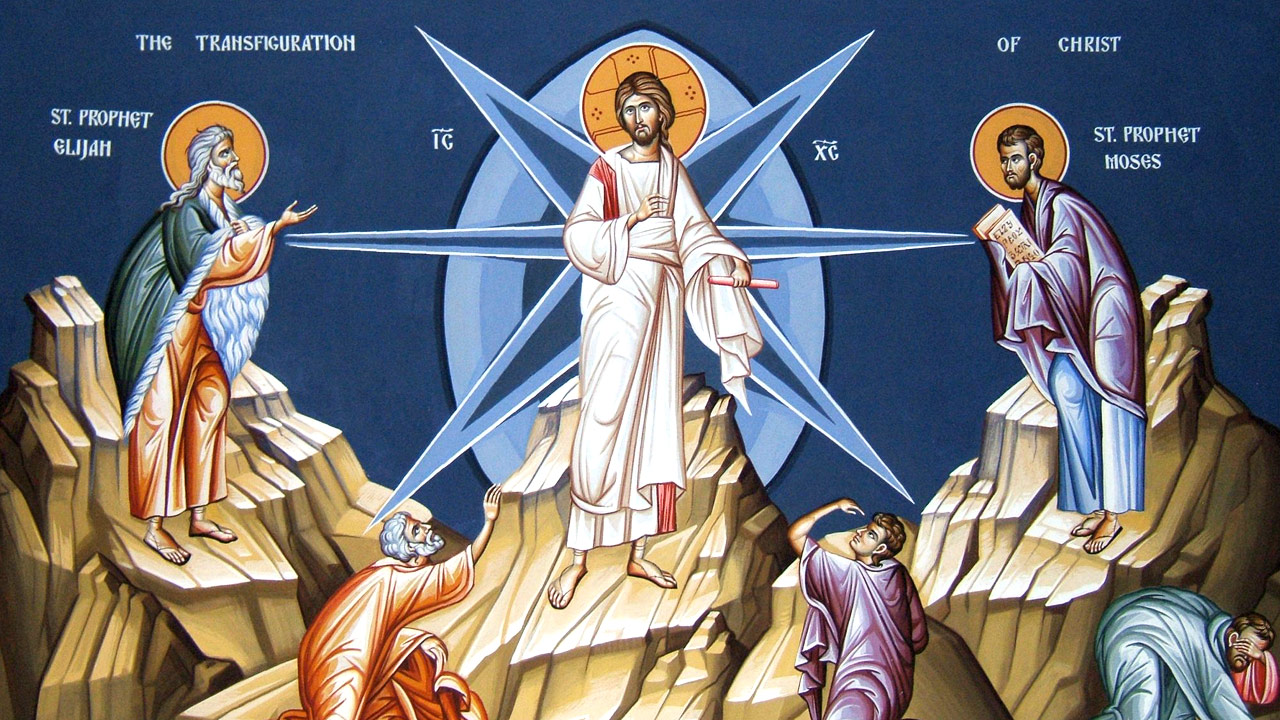 16 For we did not follow cleverly devised myths when we made known to you the power and coming of our Lord Jesus Christ, but we were eyewitnesses of his majesty. 17 For when he received honor and glory from God the Father, and the voice was borne to him by the Majestic Glory, “This is my beloved Son, with whom I am well pleased,” 18 we ourselves heard this very voice borne from heaven, for we were with him on the holy mountain. 19 And we have the prophetic word more fully confirmed, to which you will do well to pay attention as to a lamp shining in a dark place, until the day dawns and the morning star rises in your hearts, 20 knowing this first of all, that no prophecy of Scripture comes from someone’s own interpretation. 21 For no prophecy was ever produced by the will of man, but men spoke from God as they were carried along by the Holy Spirit.
 You see, it’s not just the world and things outside of you that are a dark place. Your heart also has a darkness that needs the light of God’s Word. Peter doesn’t use the normal word for ‘dark’ here. In fact, the word that gets translated here as ‘dark’ is the only time in all the Scriptures where this word gets used. When I looked Greek the word up, the first definition is ‘squalid’ which is a word I don’t think I’ve ever used in normal conversation. So, I looked up ‘squalid’ and it means this, ‘foul and repulsive from a lack of care; neglected and filthy.’
 nearsighted that he is blind, having forgotten that he was cleansed from his former sins. Therefore, brothers, be all the more diligent to confirm your calling and election, for if you practice these qualities you will never fall. For in this way there will be richly provided for you an entrance into the eternal kingdom of our Lord and Savior Jesus Christ.”
 Pastorsamwise
You must be logged in to post a comment.