Forsaken – Sermon on Mark 15:33-35 for Good Friday

Mark 15:33-35

33 And when the sixth hour had come, there was darkness over the whole land until the ninth hour. 34 And at the ninth hour Jesus cried with a loud voice, “Eloi, Eloi, lema sabachthani?” which means, “My God, my God, why have you forsaken me?” 35 And some of the bystanders hearing it said, “Behold, he is calling Elijah.”

In the name of Jesus. Amen.

On Good Friday, our Lord Jesus Christ suffered in three distinct ways. And it’s helpful to distinguish and contrast them. The three kinds of suffering are 1) physical suffering, 2) suffering the shame, and 3) the suffering of forsakenness.

We know what it is to have physical pain. We’ve all experienced it. Maybe not to the extent that Jesus did, but we’ve all had physical pain. You scrape your knee, get your finger caught in a door, or just sleep or sit wrong. Physical pain is something we naturally try to avoid. The physical pain of the cross was, without a doubt, excruciating for Jesus. But His physical pain was not what won your redemption and salvation. Physical pain was not the price that Jesus had to pay.

If Jesus’ physical pain won your salvation, then you and I have the same capacity to suffer physically as Jesus did. Plenty of people were beaten, whipped, and crucified in Jesus’ day, but their physical suffering didn’t save them.

We also know what it is to experience shame. The shame Jesus endures in His Passion is also horrible. He was spit on. The soldiers placed robes on Him, put a crown of thorns on Him, and bowed down to Him as they mocked, “Hail, King of the Jews.”

He was blindfolded and punched as people asked Him to prophesy, “Who was it that hit you?” People walked by the cross wagging their heads, saying, “You saved others. You don’t seem to be able to do anything now. You trusted in God, where is He now?” That’s the shame of the cross. And yet, the shame Jesus suffered is also not what wins your salvation. Other people have suffered similar shame.

But there’s that third suffering. It’s a hidden suffering, but it is the one that’s most profound of all. We get a glimpse of it in this fourth word of Jesus, “My God, My God, why have You forsaken Me?” That’s the greatest suffering of the cross.

In that moment, Jesus is suffering all the wrath of God over sin. He’s suffering all of God’s anger that you and I deserve. 2 Corinthians 5:21 says that Jesus, who knew no sin, was made to be sin for us, so that in Him we could become the righteousness of God.

In other words, all of the anger, all of the wrath, all of the punishment, and the separation from God that you and I deserve – it all falls on Jesus. He suffers all of that as our sins are laid on Him. In that moment, God is looking down at Jesus, and God does not see the Son whom He loves. Instead, God only sees sin and all the things that He hates and abhors.

In that moment, God the Father forsakes Jesus and pours out all of His wrath onto Christ. This why Isaiah says that Jesus is smitten, stricken by God, and afflicted (Is. 53:4). All of God’s righteous anger falls on Jesus. When Jesus says these words, “My God, My God, why have You forsaken Me?” that is what is taking place.

The most profound word of that prayer from Jesus’ lips is, “Why?”Christ doesn’t pray, “My God, My God, You have forsaken Me.” Instead, it’s, “Why? Why have You forsaken Me?” And this is a real, honest question. Several times throughout His life Jesus denies using His divine knowledge and omnipotence. This is one of those times. For those moments, even the purpose of Jesus’ suffering is hidden from Him.

This wasn’t always the case. When He was nailed to the cross, Jesus knew what He was doing there. That’s why He said, “Father, forgive them.” God can’t forgive without the cross. Jesus knew what He was doing on the cross when He told the thief, “Today you’ll be with Me in paradise.” And in just a few minutes Jesus shows that He knows again why He’s there when He says, “It is finished.”

But here, right in the middle of the crucifixion as Jesus cries out, “Why have You forsaken Me?” He temporarily denies His knowledge of what He is doing there. The point of it all is hidden from Him.

In that moment Jesus has nothing. Nothing to cling to. No hope. No comfort at all. He doesn’t have the comfort of knowing that He’ll be raised on the third day. He doesn’t have the comfort that this is happening for your salvation. In that moment, all Jesus knows is that He’s suffering all of God’s wrath against sin even though He’s done nothing wrong or sinful.

That is the suffering that wins your salvation. That suffering of being forsaken by God that Jesus is enduring here is beyond our comprehension.

We can see the beating and the whip. We can see the crown of thorns. We can see the shame and hear all the mockery. We can see the nails. But what you can’t see is the thing that matters most. The vengeance and wrath of God towards sinners is all poured out on Christ.

That’s the reason. That’s why Jesus goes to the cross. He goes there so that you will never see this wrath. So that you will never know this suffering under God’s righteous judgment. So that you will never know what it is to be forsaken by God. 

Jesus says, “My God, My God, why have You forsaken Me?” so that you never have to.

Dear saints, you will never have to say that because God will not forsake you. He has promised (Heb. 13:5-6). He will not leave you alone in your sin. He doesn’t let your sin and guilt remain because Jesus has taken it and has suffered for it in your place.

That’s the suffering that wins and accomplishes your salvation. It is a suffering that we can’t imagine. And, Christian, because of Jesus, you never will. Jesus is your substitute. He pushes you out of the way of God’s wrath so that wrath hits Him and not you.

“My God, My God, why have You forsaken Me?” As He said that, Jesus didn’t know. But, dear saints, you do. You know the answer. He was forsaken by God so that you will be not only accepted, but also loved as God’s redeemed child for all eternity. Amen.

The peace of God, which surpasses all understanding, will guard your hearts and minds in Christ Jesus. Amen. 

Serving the Body – Sermon on Romans 12:6-16 for the Second Sunday after Epiphany

Romans 12:6–16

6 Having gifts that differ according to the grace given to us, let us use them: if prophecy, in proportion to our faith; 7 if service, in our serving; the one who teaches, in his teaching; 8 the one who exhorts, in his exhortation; the one who contributes, in generosity; the one who leads, with zeal; the one who does acts of mercy, with cheerfulness. 

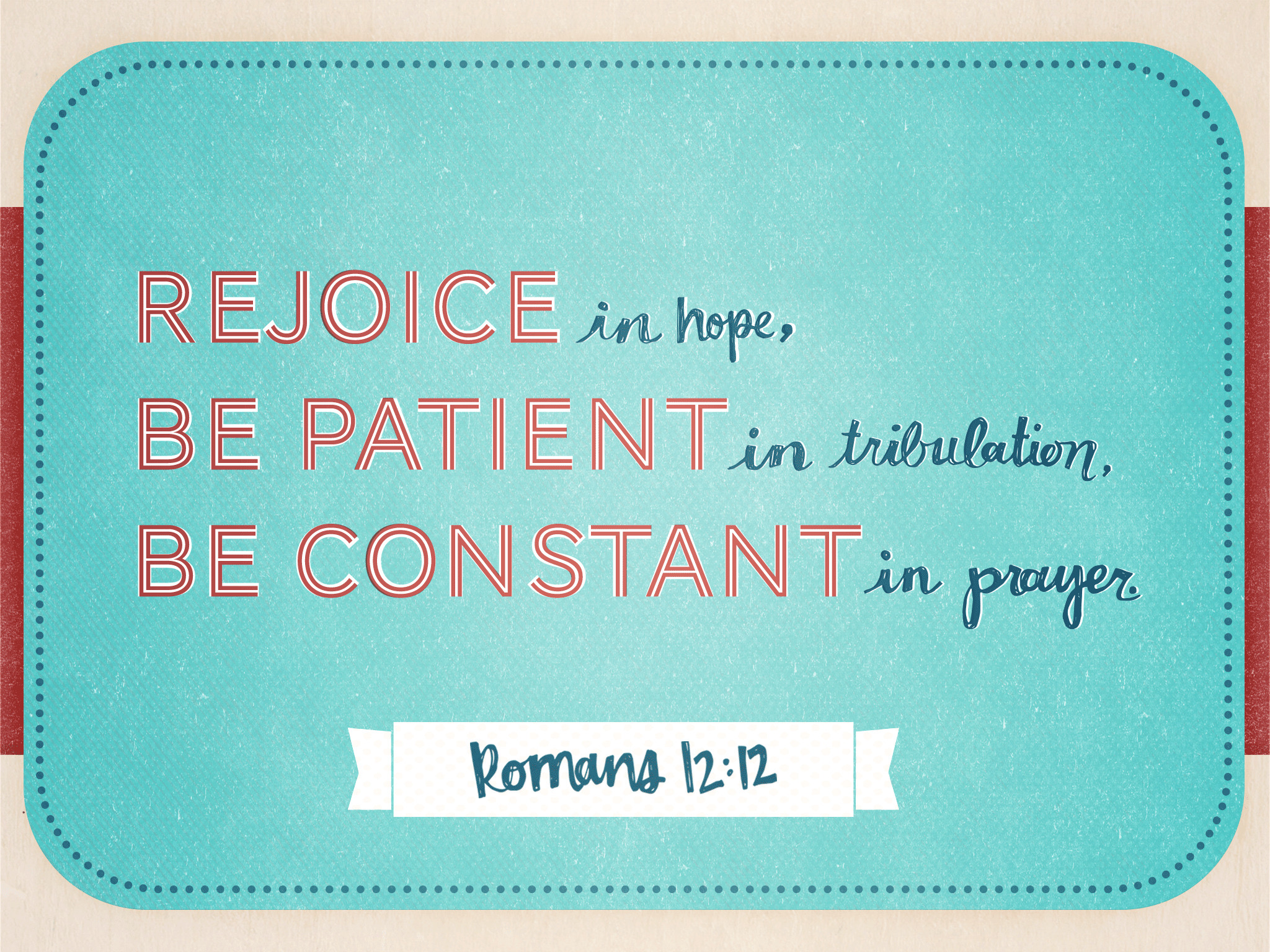
9 Let love be genuine. Abhor what is evil; hold fast to what is good. 10 Love one another with brotherly affection. Outdo one another in showing honor. 11 Do not be slothful in zeal, be fervent in spirit, serve the Lord. 12 Rejoice in hope, be patient in tribulation, be constant in prayer. 13 Contribute to the needs of the saints and seek to show hospitality. 

14 Bless those who persecute you; bless and do not curse them. 15 Rejoice with those who rejoice, weep with those who weep. 16 Live in harmony with one another. Do not be haughty, but associate with the lowly. Never be wise in your own sight.

In the name of Jesus. Amen.

When you stub a toe, your whole body reacts. Your face scrunches and grimaces in pain. Your arms and hands reach down to clasp the toe. Your throat groans, shrieks, or shouts. All of that happens naturally and instinctively. When you stub your toe, the rest of the parts of your body don’t say, “Who cares? That’s the toe’s problem.” I’ve never heard someone with knee, hip, or neck pain say, “The knee that is attached to me hurts,” or, “The neck that holds up this head hurts.” Instead, people say, “My knee hurts. My neck hurts.” And the whole body does what it can to help the part that hurts.

Dear saints, the Body of Christ is no different. When one part of the body suffers, the whole body is involved in that suffering. When one part rejoices, the whole body is involved (see also 1 Cor. 12:26). Being part of this congregation isn’t just about coming to hear the sermon. It’s about being a body, Christ’s Body. No one here is free to consider yourself separate or independent from anyone else here.

The reason I mention the Body of Christ is that today’s reading continues from last week’s. One time, Martin Luther preached on this text, and he said that starting the reading at v. 6 was the idea of someone who doesn’t understand the Bible. I think that’s an overstatement, but it is unfortunate to start at v. 6. Let me reread the final couple verses of last week’s Epistle, which lead up to this text but you didn’t hear today. Starting back at Ro. 12:4-5, “For as in one body we have many members, and the members do not all have the same function, so we, though many, are one body in Christ, and individually members one of another.” Then, our text continues, “Having gifts that differ according to the grace given to us, let us use them….”

The context of today’s text is that you are a member of a body – that’s what Christ intends for you. Yes, the whole Christian Church throughout the world and throughout time is the Body of Christ. Jesus is the One Head, and all Christians are the Body. But there’s no way this matters unless there is a local, in-person group of members. In other words, a congregation. Yes, there are Christians in Australia, Uganda, Brazil, and even Iowa. But you aren’t close enough to them geographically to do much for them. I know for a fact that there are Christians in Papua New Guinea because I know missionaries who have been there. But I haven’t met a single one of those believers. For them, I can’t do most of the things this text calls for. I can’t exhort, teach, or honor them. I can’t rejoice with them when they rejoice or weep with them when they weep. It’s just not possible.

This text wants each believer to focus on the parts of the Body of Christ that God has gathered around them. In other words, care for the people here, in this congregation. That’s why this is written to the Christian church in Rome. It’s why Paul uses the same analogy in his letter to the church in Corinth (1 Cor. 12). And God wants this same arrangement for us here and in every Christian congregation. That’s why it has been preserved for us in the Bible. God wanted this in Rome and Corinth 2,000 years ago, and He wants it here, now, among us.

And I have to say: You do a good job of this. When I teach new member classes, one of the most common things I hear is, “This place just feels like family.” So, please know that I’m not preaching this text to get on your case. I’m not rebuking you. Instead, just like a sprinter will keep training to get a faster time, there is always room for improvement.

We can improve at serving, contributing, leading, being merciful, loving, abhorring evil, holding fast to the good, honoring, and showing hospitality. Let’s consider one area where we can improve today from v. 15, “Rejoice with those who rejoice, weep with those who weep.” The reason for diving into this is that I recognize my own shortcomings in this. So, yes, your preacher today is preaching to himself. This is a, “Do as I say,” because it is what Scripture says, “not as I do,” because I fall short here.

Again, “Rejoice with those who rejoice, weep with those who weep.” First off, notice the prepositions there – with. God calls you to take on the joy and sadness of others. You aren’t called to fix people’s emotions or make them feel certain things. Instead, you join them in those emotions. As a poor example of this, think of Job’s friends; they got it half right. Job is sitting there in his horrific suffering, and his friends come to him. They were exactly right to do that. That’s where they should be. But their problem, which becomes a problem for Job, is that they try to fix everything, and they do an incredibly bad job at it.

Sure, there are times to rebuke, exhort, and encourage people. Scripture does call for that too (1 Tim. 5:20; 2 Tim. 4:2; Tit. 1:13; 2:15). But, dear saints, there are also times where you are to simply close your mouth, sit with others, cry and mourn with them if they’re sad, or jump and sing with them if they’re joyful.

This can be really hard, and for a variety of reasons. Again, we might be too quick to give advice, but another trap we easily fall into is comparing. When someone is struggling with something, it can be easy to share about a past struggle we had and make sure the other person knows how much worse we had it. Sometimes, just being there and listening to a person pour out their heart in sadness is exactly that that person needs.

As a good example of weeping with others, think about Jesus in Jn. 11. On Wednesday night, I taught through Jn. 11 where Jesus raises Lazarus from the dead. We won’t go through the whole thing, and I’m sorry to those of you who already heard this. But it’s worth hearing again. Jesus’ approach to Lazarus’ two sisters, Martha and Mary, and their grief is so interesting. Each sister talks to Jesus separately (Jn. 11:20-27, 32-34). Both of them say the same thing to Jesus when they see Him, “Lord, of You had been here, my brother wouldn’t have died.” But Jesus’ interaction with each of them is completely different.

So, the two sisters are dealing with the exact same problem – the sorrow for over the death of a brother. They both begin interacting with Jesus the exact same way. But Jesus comforts each of these sisters differently. For Martha, Jesus has words of consolation. “Your brother will rise again. I am the Resurrection and the Life” and so on (Jn. 11:23, 23, 25-26). But just a few verses later when Jesus consoles Mary, all He does is go to the tomb with her and weep with her (Jn. 11:33-35). Yes, Jesus calls Lazarus from the tomb and restores his life. But it’s that initial consoling Jesus has for each sister has a lot to teach us.

Here’s the lesson: get to know the different parts of Christ’s Body well enough so you know how to weep with them when they weep. If they’re already weeping, just be there for them. Join them in their sorrow. But when they aren’t weeping, make the effort to get to know them well enough so that, when they are weeping, you have a better idea of how to console them.

Finally, when you are weeping, know that people might not be able to do this well. But also know that Jesus does. Christ knows how to give you exactly what you need exactly when you need it. Jesus is here now. He invites you to His table to receive His Body and Blood. Here, Christ, the Great Consoler, continues to unite you as His Body and strengthen you in faith toward Him and in love toward one another. Amen.

The peace of God, which surpasses all understanding, will guard your hearts and minds in Christ Jesus. Amen.

As Christ Suffered, so Shall We

The Scripture readings for tonight’s service are
Psalm 119:65-72; Job 1:6-22; 1 Peter 4:12-19; and John 15:18-16:4.

In the name of Jesus. Amen.

Job didn’t know. In the midst of his suffering, Job didn’t have the information that we do. As servant after servant came to tell Job about the loss of his oxen, his donkeys, his sheep, his camels, and even his ten children, Job didn’t know what had happened behind the scenes. Job didn’t know about the conversation between God and that worm, Satan, where God bragged about how blameless and upright Job was. He probably didn’t know about the hedge of protection God had placed around him and all that he had (Job 1:10). And Job certainly didn’t know that God trusted Job’s faith enough to remove that hedge and allow Satan to take it all away.

The only thing Job knew was that he was suffering. He tore his robe, shaved his head, fell to the ground, and worshiped. “The Lord gave, and the Lord has taken away; blessed be the name of the Lord” (Job 1:21).

Now, pause. Stop right there. Think carefully about everything we know about Job’s suffering. His suffering came about because God had given the devil a long enough leash to take all of that away from Job. But what does Job say? “The Lord gave, and the Lord has taken away; blessed be the name of the Lord.” And Scripture clearly says, “In all this,” which includes Job’s statement that the Lord had taken away, “In all this Job did not sin or charge God with wrong.”

Well, that was “phase one” of Satan’s attack against Job. We didn’t read about “phase two” (Job. 2:1-10), but in “phase two,” nearly the same conversation plays out between God and Satan. God brags on Job and adds the fact that Job still holds his integrity even though, “you incited me against him to destroy him without reason” (Job 2:3). Satan says, “Let me go after his body and health. I’ll get Job to curse You to Your face” (Job 2:4-5). Again, God extends Satan’s leash allowing him to harm Job physically, but God still sets limits. God won’t allow Satan to kill him.

The devil strikes Job with loathsome sores from the sole of his foot to the crown of his head, leaving Job to sit in ashes while he scrapes himself with a broken piece of pottery (Job 2:7-8). Even Job’s wife, the only remaining member of his family, tells Job to curse God and die. But listen to how Job responds to her (Job 2:10), “You speak as one of the foolish women would speak. Shall we receive good from God and shall we not receive evil?”

Again, Scripture says, “In all this Job did not sin with his lips.”

Notice how neither in “phase one” nor in “phase two,” does Job even mention Satan. Use your sanctified imagination with me for just a minute here. Imagine Satan strutting around all cocky and proud after bringing all that destruction and suffering to Job. But in both phases, Job only talks about God. “The Lord gave, and the Lord has taken away …. Shall we receive good from God and shall we not receive evil?” Imagine Satan’s jaw hitting the floor as he screams out, “Don’t I get any of the credit for this?”

The devil figured he would be triumphantly standing over Job while he groveled and tapped out. But Job doesn’t even acknowledge Satan – not one bit. It’s absolutely remarkable. Job’s eyes and mind and heart are fixed squarely on God as he endures his suffering.

Throughout this series, we’ve been considering Christ’s suffering. We began by considering how Christ’s obedience led Him to suffer in your place. We contemplated how His suffering was the payment and sacrifice for your sin. We meditated on the fact that God punished Jesus in your place. And through it all we have seen that Christ’s suffering is proof that God loves you. Now, tonight, we close the series by considering your own suffering.

Job’s story gives an important insight to enduring suffering, and that insight is this: In these first two chapters where Job does not sin (Job 1:22) and holds his integrity (Job 2:3), Job doesn’t go down the black hole of trying to figure out why he is suffering. He simply recognizes his suffering and places himself squarely in God’s gracious hands.

We can get all sorts of wrong ideas about God when we ask the question, “Why am I suffering?” We can wrongly think that God is distracted with other, more important things, so maybe He forgot to care for us or is neglecting us. We can also get all sorts of wrong ideas about ourselves when we look for an answer to the “why” of our suffering. We might wrongly think that we have some unknown, unconfessed sin that has made God angry toward us.

Both of those ideas are wrong – completely wrong! You are God’s righteous, holy, blameless, and upright children through faith in Jesus. Because of Christ’s death and resurrection, God loves you and couldn’t be more pleased with you.

Just as Job didn’t know why he was suffering, you typically don’t know the “why” of your suffering. The only safe way to consider your suffering is through the lens of Jesus’ suffering. That is how Jesus orients us toward suffering. In our Gospel reading Christ says, “If the world hates you, know it hated Me first…. If they persecuted Me, they will persecute you” (Jn. 15:18, 20). Jesus will even go on to promise, “In this world you will have tribulation. But take heart; I have overcome the world” (Jn. 16:33). The only perfect person to ever live was Jesus, and He suffered in this fallen world. So, when you suffer in this world, what else did you expect?

As our Epistle reading (1 Pet. 4:12-13) said, “Beloved, do not be surprised at the fiery trial when it comes upon you to test you, as though something strange were happening to you. But rejoice insofar as you share Christ’s sufferings, that you may also rejoice and be glad when His glory is revealed.” So, tonight, I want to share four assertions about suffering to help you not be surprised but rejoice in the midst of suffering.

First: Suffering and evil are definitely related to each other, but that does not mean suffering itself is evil. The truth is suffering is good. Now, hold your eggs and rotten tomatoes just a minute. I know that is counterintuitive to say that today, but it is true. Suffering physical pain is often good because it keeps us from doing things that harm us. It is good for a criminal to suffer for their crimes. A murderer and a thief should suffer a just and fair punishment. That suffering is good because it keeps others from committing similar sins against others. Yes, punishments cause suffering, but they do that in order to prevent further and greater suffering. Also, the suffering that comes through punishment will, hopefully, lead a sinner to repentance, to faith in Christ, and to eternal life. The thief on the cross suffered for his crimes, and it led him to being in paradise with Jesus on Good Friday (Lk. 23:39-43).

The second assertion about suffering is this: Even though suffering is good, that does not mean God demands that you enjoy it. In fact, you are right to yearn, long, and hope for the end of your suffering. God sent Jesus to save and relieve us from suffering. Again, sin brought suffering into the world, and Jesus came into this world to deliver us from sin. Christ entered into our suffering to bring us into His kingdom where will be no more pain, tears, sorrow, or suffering (Rev. 21:4; Is. 25:8; 35:10).

The third assertion is this: Even suffering unjustly for doing good is good. 1 Peter spends a lot of time talking about suffering other than in our reading tonight. 1 Peter 2:20 says, if you suffer for doing good and endure, that is a gracious thing in the sight of God. 1 Peter 3:17 says that it is better to suffer for doing good, if that should be God’s will, than for doing evil. Beyond those passages, Romans 5:3-5 says that we Christians rejoice in our sufferings, knowing that suffering produces endurance which produces character which produces hope. And James 1:2-4 says to count it all joy when you suffer trials of various kinds because the testing of your faith produces steadfastness and makes you perfect and complete, lacking in nothing.

Here’s the fourth and final assertion about suffering for tonight: Comfort in suffering doesn’t and can’t come from knowing the “why” of suffering; instead, comfort in suffering comes in seeing that God has come to suffer alongside of us and for us in Christ.

The world has no comfort to offer to those who are suffering. Instead, the world tries to end suffering by eliminating the sufferer. The world sees a poor, single, pregnant woman and says, “That baby has no chance of being happy and successful. Just abort her.” The world sees a person going through terminal cancer and says, “It would be better to end that life now with doctor assisted suicide.” The world’s answers to suffering are only barbaric.

Here’s what God does to answer suffering. He sends Jesus, not to bring an end to the sufferer, but to utterly defeat suffering by suffering Himself. On the cross, Jesus takes the suffering we should get because of our sin so that He can give us what we would never deserve – forgiveness, mercy, the resurrection of our bodies, and everlasting life.

Dear saints, you have a suffering God. Jesus is rightly called the Man of Sorrows (Is. 53:3). So, when you suffer – no matter the reason – don’t look for escape in asking, “Why?” Instead, look for comfort in asking, “Who else suffers?” because right next to you in your suffering, you find your Savior who has and who will deliver you. Amen.

The peace of God, which surpasses all understanding, will guard your hearts and minds in Christ Jesus. Amen.