The Lasting Legacy of Pentecost – Sermon on Acts 2:1-21, 36 for the Day of Pentecost

Acts 2:1–21, 36

1 When the day of Pentecost arrived, they were all together in one place. 2 And suddenly there came from heaven a sound like a mighty rushing wind, and it filled the entire house where they were sitting. 3 And divided tongues as of fire appeared to them and rested on each one of them. 4 And they were all filled with the Holy Spirit and began to speak in other tongues as the Spirit gave them utterance. 

5 Now there were dwelling in Jerusalem Jews, devout men from every nation under heaven. 6 And at this sound the multitude came together, and they were bewildered, because each one was hearing them speak in his own language. 7 And they were amazed and astonished, saying, “Are not all these who are speaking Galileans? 8 And how is it that we hear, each of us in his own native language? 9 Parthians and Medes and Elamites and residents of Mesopotamia, Judea and Cappadocia, Pontus and Asia, 10 Phrygia and Pamphylia, Egypt and the parts of Libya belonging to Cyrene, and visitors from Rome, 11 both Jews and proselytes, Cretans and Arabians—we hear them telling in our own tongues the mighty works of God.” 12 And all were amazed and perplexed, saying to one another, “What does this mean?” 13 But others mocking said, “They are filled with new wine.” 

14 But Peter, standing with the eleven, lifted up his voice and addressed them: “Men of Judea and all who dwell in Jerusalem, let this be known to you, and give ear to my words. 15 For these people are not drunk, as you suppose, since it is only the third hour of the day. 16 But this is what was uttered through the prophet Joel: 

17 “ ‘And in the last days it shall be, God declares, 
that I will pour out my Spirit on all flesh, 
and your sons and your daughters shall prophesy, 
and your young men shall see visions, 
and your old men shall dream dreams; 
18 even on my male servants and female servants 
in those days I will pour out my Spirit, and they shall prophesy. 
19 And I will show wonders in the heavens above 
and signs on the earth below, 
blood, and fire, and vapor of smoke; 
20 the sun shall be turned to darkness 
and the moon to blood, 
before the day of the Lord comes, the great and magnificent day. 
21 And it shall come to pass that everyone who calls upon the name of the Lord shall be saved.’

36 Let all the house of Israel therefore know for certain that God has made him both Lord and Christ, this Jesus whom you crucified.”

In the name of Jesus. Amen.

With all the amazing things that happened on the Day of Pentecost, it’s easy to miss the most amazing thing God did when He poured out the Holy Spirit on all flesh (Act. 2:17; Joe. 2:28-29). Our attention is so quickly and easily grabbed by the wowie-zowie things, that we get distracted from the lasting gift that God bestows with this giving of the Holy Spirit. Pentecost is about the sounds, not the sights. It’s about the audible rather than the visible. The work of the Holy Spirit is not so much in what is seen as in what is heard.

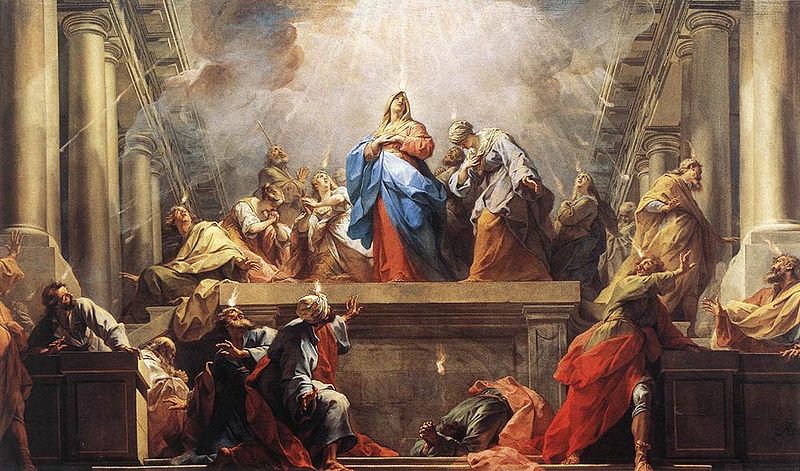
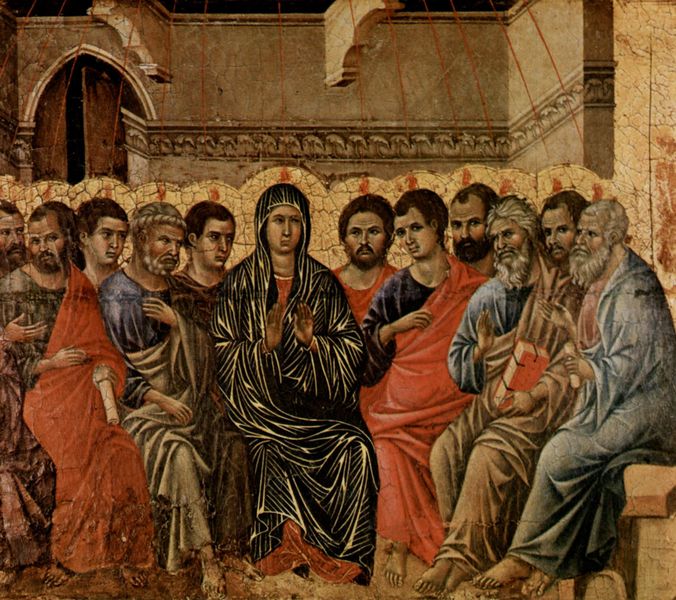
Yes, there are tongues of fire that rest on those believers, but as best as we can tell, those tongues of fire were only seen by the 120 Christian believers who had gathered together in one place (Act. 1:15). Notice, there is the sound of a mighty, rushing wind (Act. 2:2), but curtains aren’t flapping, dust isn’t flying, hats aren’t blowing down the street. It’s only the sound, and that sound fills the house where they are gathered. These 120 believers are filled with the Holy Spirit and are given the ability to speak in languages that represented every nation that existed, but they hadn’t ever learned those languages (Act. 2:5, 8-11).

It is that sound of wind that draws the bewildered multitude to the apostles (Act. 2:6). The people from all those nations weren’t drawn like moths that saw a flame; no, they were drawn by the sound. And those people heard something even more amazing. They heard those believers declaring the mighty works of God in their native languages. For some, that message led to further curiosity, “What does this mean?” But for some, it led to mocking, “They are drunk and filled with wine” (Act. 2:13).

Now, consider that accusation as I slightly modernize it. Imagine you are there in that crowd. All the people from Italy are standing around someone who’s speaking Italian, and they’re listening intently because they can understand. All the Brazilians gather around the guy speaking Portuguese. All the people from France, and 22.8% of the Canadians who speak French, are listening to someone speaking French. You hear the guy who’s speaking American,[1] and you can understand everything because it is being spoken fluently. You hear the Gospel. You are told that God came in the flesh of Jesus. You hear that He suffered, bled, died on the cross, rose again from the dead, and ascended into heaven. And you hear that Christ did all of this to forgive you of your sins and give you eternal life.

After hearing that message in American, you go over to the people who speak Portuguese (because, of course, people who speak French are rude) and you ask in one of the ‘commercial, business’ languages – either Greek, Latin, or Aramaic – what they heard. And it’s the same Gospel message. The only difference was that they heard it in Portuguese – fluent, articulate Portuguese. So, it’s clear that these Galilean hillbillies are speaking languages they didn’t know. Your conclusion would probably not be, “Oh, they must be drunk.” Getting drunk doesn’t endow a person with fluency in another language. In short, it probably wasn’t the act of speaking in other languages that elicited that accusation; instead, it was probably the content of what was being said. “You’re saying that God came to earth as a human. But He did it to die, and by that death I’m forgiven? You must be drunk.”

But the sounds of Pentecost still aren’t done. Peter stands up, and here is where we see the most amazing thing about Pentecost. Peter doesn’t stand up to perform a visible sign. He doesn’t heal the sick, cast out demons, or raise the dead. Peter stands up to speak and preach a Holy Spirit-inspired sermon to the entire crowd. That should be astounding to us.

We know Peter and what kind of man he was just fifty-three days before Pentecost. A young servant girl had simply asked Peter if he knew who Jesus was, and that led to Peter denying Jesus three times (Mk. 14:66-72). But now Peter, filled with the Holy Spirit, preaches to a crowd of over 3,000 people. And it is a bold sermon. He doesn’t hold back. He does point to Jesus with the sermon, but not with loud Gospel overtones.

I’ll just summarize his sermon. “Men of Israel, Jesus was here just a short time ago. He did all sorts of miracles, and you know about them. You know He was sent by God, yet you put Him to death. Now, we have seen Him raised from the grave. This Jesus has now ascended into heaven. He has all authority in heaven and on earth, and He will use that authority for the sake of His Church until He has put all His enemies under His feet. That’s a big problem for you because you put Him to death and are His enemy. You’re in trouble. Amen.”

It’s a sermon that would have been highly criticized in seminary because it doesn’t really contain any Gospel. How does a guy like Peter preach like that, especially because he preaching that accusation against himself? Peter knows his own guilt. The only explanation is that Peter was filled with the Holy Spirit and emboldened in a remarkable way. The sermon itself is a miracle. But then, the response to that sermon is even more miraculous.

Over 3,000 people ask, “What can we do?” Before this, the crowds had heard some amazing things and wondered what it all meant, but now? Now, they are cut to the heart (Act. 2:37), and they recognize their guilt. This is amazing because most of them probably were not present in the crowd on Good Friday crying out, “Crucify, crucify Him.” The foremost expert on the history and practices of this time, a guy named Alfred Edersheim, says that there may have been some overlap but the majority of the people there for the Day of Pentecost weren’t there for the Passover. So, Peter is addressing a crowd of hardened sinners who could have offered all sorts of excuses arguing for their innocence of Jesus’ death. But over 3,000 of them don’t. They confess and repent with a simple, “What shall we do?” (Act. 2:37).

And Peter adds a postscript to his sermon and tells them, “Repent and be baptized in the name of Jesus Christ for the forgiveness of your sins, and you will receive the gift of the Holy Spirit” (Act. 2:38). That very day, 3,000 souls were saved. 

They were given faith. They were also given and filled with the Holy Spirit. But that filling of 3,000 people with the Holy Spirit is so understated. Luke doesn’t tell us about another mightier wind that rushed even louder. No. They confess, repent, get Baptized, and are filled with the Holy Spirit. They are saved. How were they saved? Through the Holy Spirit’s work of pointing sinners to Jesus in simple preaching and through the Holy Spirit’s working through water and the Word. And through those means, the Holy Spirit creates faith.

Dear saints, that same miraculous work of the Holy Spirit through preaching continues today. In fact, that is what is happening even now. It is through God’s Word proclaimed by the mouth is this sinner that the Holy Spirit is creating, strengthening, and sustaining your faith. Right now, through God’s Word, the Holy Spirit is filling this place and pointing you to Jesus (Jn. 15:26).

Don’t think for one minute that the Holy Spirit isn’t working just because you don’t see whatever you think might be evidence of the Holy Spirit. The lasting legacy of Pentecost is that the Holy Spirit points sinners to Christ. Jesus Himself said that’s the Holy Spirit’s work (Jn. 15:26). Right here, right now, the Holy Spirit is calling, gathering, enlightening, sanctifying, and preserving you in the one true faith. He is here abundantly forgiving you of your sin. And the Holy Spirit invites you now to Jesus’ table where He will work through other means, through bread and wine which are Jesus’ Body and Blood. Come, receive, and be filled with the Holy Spirit. Amen.

The peace of God, which surpasses all understanding, will guard your hearts and minds in Christ Jesus. Amen.


[1] Yes, I know ‘American’ isn’t an official language.

A Home – Sermon on John 14:23-31 for the Day of Pentecost

John 14:23–31

23 Jesus answered him, “If anyone loves me, he will keep my word, and my Father will love him, and we will come to him and make our home with him. 24 Whoever does not love me does not keep my words. And the word that you hear is not mine but the Father’s who sent me.

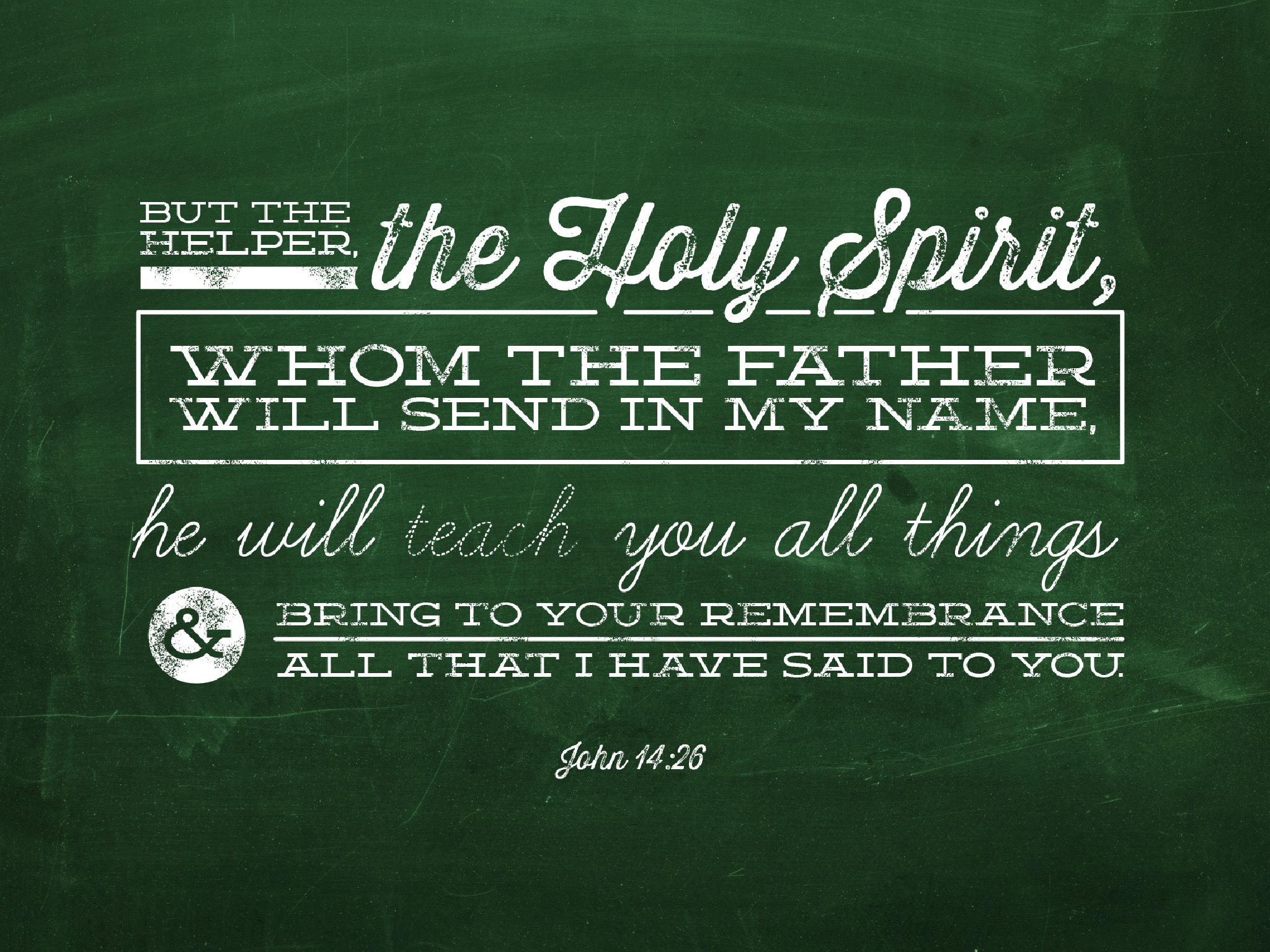
25 “These things I have spoken to you while I am still with you. 26 But the Helper, the Holy Spirit, whom the Father will send in my name, he will teach you all things and bring to your remembrance all that I have said to you. 

27 “Peace I leave with you; my peace I give to you. Not as the world gives do I give to you. Let not your hearts be troubled, neither let them be afraid. 28 You heard me say to you, ‘I am going away, and I will come to you.’ If you loved me, you would have rejoiced, because I am going to the Father, for the Father is greater than I. 29 And now I have told you before it takes place, so that when it does take place you may believe. 30 I will no longer talk much with you, for the ruler of this world is coming. He has no claim on me, 31 but I do as the Father has commanded me, so that the world may know that I love the Father. Rise, let us go from here.”

In the name of Jesus. Amen.

Different holidays are celebrated in different ways. We just celebrated Mothers’ Day a few weeks ago. Flowers, chocolates, and gifts were given. Phone calls were made. And, probably, a few household chores like washing the dishes, vacuuming, and cooking were delegated to the non-mothers out there. All those are good ways to celebrate moms which is the purpose of Mothers’ Day. I doubt many people set off fireworks while singing “Joy to the World” for Mothers’ Day. Who knows? Maybe there are a few pyromaniac moms whose favorite song is “Joy to the World.” But, in my experience, moms typically police fireworks and the last thing on their minds between explosions are the words to the third verse of “Joy to the World.”

Tomorrow is Memorial Day, and it is good to remember those who have given their lives for our country by attending Memorial Day services, placing flowers on graves, and giving thanks for the sacrifice many have made so we can enjoy the freedoms God has given us in this country (Jn. 15:13). Even the barbecues and gatherings with friends are a fitting way to spend Memorial Day. Enjoy all those things as you give thanks to God for those who gave their lives for our country. But Memorial Day is tomorrow. Today is the Day of Pentecost. What is a fitting way to celebrate and remember Pentecost?

Honestly, it’s precisely what you are doing now. Here you are – God’s people in God’s house – gathered to hear the Gospel and the mighty works of God in your native tongue. You are following precisely in the footsteps of the apostles and first Christians by doing exactly what they were doing when God poured out the Holy Spirit on the whole world.

In our reading from Acts (Act. 2:1-21, 36), we find the first Christians all gathered together in one place on a Sunday. Just like you have gathered together with your brothers and sisters in Christ on a Sunday. As those first 120 Christians (Act. 1:15) were gathered, the Holy Spirit came upon them. Right now, the Holy Spirit is coming upon you as you hear God’s Word, are reminded of all the things Jesus has said (Jn. 14:26), and are pointed to Jesus, your Savior (Jn. 15:26). Those first Christians, who received the Holy Spirit, went out and proclaimed the Gospel in the languages of the people who were in Jerusalem. Today, you will be sent out of this place to proclaim the excellencies of Jesus who has called you out of darkness and into His marvelous light (1 Pet. 2:9).

You’ve heard me say that every Sunday is a celebration of the Resurrection even though the dazzling angel isn’t sitting on the stone, and every Sunday is a celebration of Christmas even though Jesus is no longer laid in the manger while the angels sing to shepherds. Every Sunday is a celebration of Easter and Christmas, but we should probably add: every Sunday is a celebration of Pentecost. Even though we don’t have the sound of a mighty, rushing wind and the tongues of fire, all the essentials of Pentecost are present here each and every Sunday. In other words, the Holy Spirit is here pointing us to Jesus and equipping us for a life of faith because our service is filled with God’s Word.

Dear saints, the Holy Spirit is given and poured out upon you in the normal, familiar things of our service. Sure, it’s great when we have those ‘mountaintop’ experiences where we feel very close to God. We thank and praise Him for those moments, but not every day is meant to be lived in a spiritual high. Your Spirit-filled lives are spent in the normal, mundane trenches of work and home. You come here to be fed by God’s Word and strengthened in your faith in Jesus. In that, the Holy Spirit equips you for another week of faithfully carrying out your God-given callings and vocations which is where serve your neighbor.

To prove that the Holy Spirit is at work in all these things, just consider what Jesus tells us in this Gospel reading (Jn. 14:23-31). Jesus says that the Holy Spirit will teach us all things and bring to remembrance all that He has said (Jn. 14:26). Now, Jesus first said this to the apostles who were later inspired by the Holy Spirit to write the Bible. That verse, John 14:26, is how we can know without any doubt whatsoever that when we read and hear the words of Jesus recorded for us in the Scriptures, we are reading and hearing the very words of God (see also Jn. 16:13-14). As the Holy Spirit declares to you everything that Jesus has said, He makes you holy so that you are a comfortable dwelling place for God. You, dear saints, are God’s home.

In the first verse of our Gospel reading here (Jn. 14:23) Jesus says, “if anyone loves Me, he will keep My Word, and My Father will love him, and We will come to him and make Our home with him.” You know that you are commanded to love Jesus with all our heart, soul, mind, and strength (Mt. 22:37-38). Your problem is that this love is often difficult perceive. Is your love for God some emotion or feeling inside of you? Does it feel like you love God right now? How do you know if you love Him enough? What instrument should you use to measure your love for God? Well, Jesus tells you exactly how to measure your love for Him. Christ says, “If anyone loves Me, he will keep (or “guard”) My Word.”

You might not feel tremendous love for God, you might feel as though God is far away and distant, but you will still come to church to hear His Word. You will spend time meditating on His Word and contemplating what He has said. When you hear God’s Word faithfully preached, when you read and study your Bible, you are keeping and guarding Jesus’ Word. It doesn’t mean you do it perfectly. Our hearts are still full of sin. But you are here today, so you are keeping Jesus’ Word. The very fact you are present here, according to Jesus, is evidence that you love Jesus because you are keeping His Word.

Jesus says that when you keep His Word, the Father loves you. Then – this is so remarkable – the Father and Jesus will come and make their home with you. That is a good translation. We will often make a distinction between a ‘house’ and a ‘home.’ Greek does as well. A house is a building where people live. There are many houses in Grand Cities community, but only one is your home where you feel perfectly comfortable.

Dear saints, God makes His home in you. You aren’t just a house for God. You are His home.

When I was in Bible College, our choir would go on tour, and we would sometimes stay at other people’s houses. One night in California, I stayed in the house of a couple who were both eye doctors, and it was probably the nicest house I’ve ever stayed in. Everything was clean, fancy, and expensive. When I arrived there, the hosts said, “Make yourself at home.” I didn’t feel at home. I felt out of place because I was a poor college student. Another time, I stayed at a house of a rancher. When I arrived there, that couple also said, “Make yourself at home.” Part of me still wonders if my hosts said that to excuse the mess that their house was. Dirty furniture; a wet, musty towel in the corner of the bedroom; grimy dishes in the kitchen. Even though my dorm room was at least as messy as that house, I didn’t feel at home there either. There are all sorts of reasons we don’t feel ‘at home’ in other people’s houses. That is why it is so remarkable that Jesus says the almighty, all-powerful, holy God makes His home in you.

Jesus says that the Holy Spirit ignites in you a love for Him as you keep and guard Christ’s Word. And it is through that very same Word that the Holy Spirit makes you holy – He sanctifies you. Through faith, you are so holy and sanctified that the God who is holy, holy, holy (Is. 6:3) takes up residence within you, and He feels right at home.

It doesn’t matter if you think your life and heart are too messy for the King of kings and Lord of lords. He is perfectly comfortable dwelling in you because He has washed you, cleansed you, forgiven you, and filled you with the righteousness of Jesus, your Savior. Happy Pentecost. Amen.

The peace of God, which surpasses all understanding, will guard your hearts and minds in Christ Jesus. Amen.

The Holy Spirit’s Work – Sermon on Genesis 11:1-9; Acts 2:1-21; and John 14:23-31 for the Day of Pentecost

Genesis 11:1-9; Acts 2:1-21; & John 14:23-31

23 Jesus answered him, “If anyone loves me, he will keep my word, and my Father will love him, and we will come to him and make our home with him. 24 Whoever does not love me does not keep my words. And the word that you hear is not mine but the Father’s who sent me.

25 “These things I have spoken to you while I am still with you. 26 But the Helper, the Holy Spirit, whom the Father will send in my name, he will teach you all things and bring to your remembrance all that I have said to you.

27 “Peace I leave with you; my peace I give to you. Not as the world gives do I give to you. Let not your hearts be troubled, neither let them be afraid. 28 You heard me say to you, ‘I am going away, and I will come to you.’ If you loved me, you would have rejoiced, because I am going to the Father, for the Father is greater than I. 29 And now I have told you before it takes place, so that when it does take place you may believe. 30 I will no longer talk much with you, for the ruler of this world is coming. He has no claim on me, 31 but I do as the Father has commanded me, so that the world may know that I love the Father. Rise, let us go from here.”

Before I officially begin the sermon, I’d just like to ‘let you in’ a little bit on sermon preparation. There are times when preaching is similar to athletic events. For example, in competitive diving, your final score is dependent on two factors: degree of difficulty and execution. Certain dives that score only 7’s and 8’s on execution but have a high degree of difficulty will get that competitor a higher score than another competitor who scores 9’s and 10’s on a dive with a lower degree of difficulty. What I’m attempting to do in today’s sermon is, in my estimation, a high degree of difficulty. I know my execution of today’s sermon will probably only score 7’s, but I hope and pray the payoff will be worth it. I’ll need your assistance though with an attentive ear, so help a preacher out.

In the name of Jesus. Amen.

To help us get a better handle on Jesus’ remarkable teaching about the Holy Spirit in this Gospel lesson, we need to make some observations from our Old Testament (Gen. 11:1-9) and Epistle lessons (Act. 2:1-21). First, from the Old Testament lesson:

There is a theory about what the people of Babel were doing that dates back to several centuries before Jesus was born. Please know that this isn’t drawn directly from Scripture, but it does help us understand what was going on a little better. Babel wasn’t just a bunch of people who decided to live together in a big tower. Instead, the mighty man, Nimrod (Gen. 10:8-10), has gathered people and said that together they could make a name for themselves and be greater than God who had judged the world with the flood just two generations prior. In other words, they want to be their own little ‘g’ god. They figured they could build a tower so high that the true God could not drown them again. God had already promised that He would never repeat that kind of judgment, but they didn’t trust God’s promise. Instead, they are going to try and make themselves safe from God’s wrath.

Again, the Holy Spirit didn’t inspire this theory, but it is still a very good theory. First, it clearly explains what the people were trying to accomplish. They weren’t trying to build a tower to get closer to God; rather, they were trying to establish an earthly, man-made peace by shielding themselves from God and His anger over their sin. This theory also explains why God saw their plan with such hostility and put a swift end to their work. But notice how God put an end to their work. He didn’t destroy the tower with a tornado or earthquake. Instead, God came down (I love how that phrase is used twice [v. 5, 7]). God had to come down to see this great tower which was going to have its top in the heavens. And God confused their languages so that they dispersed over the face of the earth. Now, God did this as a curse, but He also did it so they wouldn’t continue to live in their sin. Even God’s punishment turns into a blessing.

Now, when we come to the day of Pentecost and giving of the Holy Spirit in the Epistle lesson, God doesn’t quite undo the curse of Babel. He doesn’t reunite all the languages of the earth and make all mankind into one nation again. Instead, God had gathered His people together to celebrate the feast of Pentecost which is also called the Feast of Weeks. God’s people had come to Jerusalem, our text says, from every nation under heaven (Act. 2:5). They would have been daily listening to God’s Word in the Temple, and the Temple had strict rules that the Bible was only read in Hebrew. It didn’t matter if some, or even, most of the people didn’t even understand Hebrew, that’s just how it was.

But then on the day of Pentecost, the Holy Spirit was poured out on the disciples. Back in Act. 1:15, we are told that the number of faithful believers was only about 120. The Holy Spirit arrived with the sound of a mighty, rushing wind, and the people from all over the world who were visiting Jerusalem for the feast were brought even closer together. They heard that sound which made them gather in one place. But the sound of the wind was not the most important thing they heard that day. The most important thing they heard is the disciples speaking the mighty works of God in their own languages (Act. 2:11).

Here’s the interesting part: for these visitors to be able to get around in Jerusalem, they would have had to be able to communicate in at least one of four languages: Hebrew, Greek, Aramaic, or Latin. But here’s the beautiful thing, the Holy Spirit didn’t limit the number of languages that proclaimed those mighty works of God. Those 120 believers were filled by the Holy Spirit in such a way that they were able to speak in every language that existed even though it would only have been necessary for Him to have the Gospel preached in only four languages. In other words, the Holy Spirit sanctifies and makes holy every language on earth to carry the Gospel of Jesus’ death and resurrection to every nation on the day of Pentecost. Now, keep all of that tucked in the back of your mind as we move to this Gospel lesson.

The night Jesus was betrayed and arrested He taught His disciples a lot of things about the Holy Spirit; chapters 14-16 of John’s Gospel is probably the fullest, clearest teaching we have about the Holy Spirit. But, basically, all of this teaching boils down to the fact that the Holy Spirit’s work is to point us sinners to Jesus (Jn. 15:26). Whenever you hear Jesus proclaimed as the Savior of sinners, you can know without a doubt that the Holy Spirit is actively working in your life.

Specifically in this text, Jesus says that the Holy Spirit will teach the disciples all things and bring to their remembrance all that Jesus has said to them (Jn. 14:26). Then, notice the first word Jesus says after that is ‘peace.’ “Peace I leave with you; my peace I give to you.” And please notice that Jesus, the eternal Son of God, gives His own peace. This means your situation, Christian, is that there is nothing to disturb your relation to God. On the cross, Jesus has won and established this peace between you and God by His death and resurrection.

The only way for this peace to be undone, you would have to do two things. First, you would need to create a time machine and travel 2,000 years back in history and go to Mt. Calvary when Jesus hung on the cross. And that would be the easy part. Second, you would have to somehow pry Jesus off of the cross and undo God’s plan of salvation that He had prepared before the foundation of the world (1 Pet. 1:19-20). So, according to Jesus, the Holy Spirit’s job is to continually proclaim to you the message of the peace that Christ has won.

Jesus goes on to say, “Not as the world gives do I give to you.” The question I have there is this: Is Jesus talking about the motivation of giving (the ‘how’ the world gives), or is He talking about the content of what He gives verses the content of what the world gives? In other words, when we sinful people give something, we always have wrong motivations. We often give and have some expectation of getting something in return. Think of the phrase, “I’ll scratch your back and you scratch mine.” The false notions of karma and luck are also related to this. Deep down, that’s always the motivation behind the world’s giving.

Or is Jesus saying that the peace He gives is different than the peace the world gives. So many times, the world will offer all sorts of ideas that they think will bring peace to this fallen, broken world. Politicians, celebrities, beauty pageant contestants, musicians, etc. all do this. But none of their policies or ideas will bring peace because they are not able to bring true peace. The only thing that can bring true peace is the atoning blood of Jesus. Now, the Holy Spirit is the one who reminds and points you to Christ’s peace which surpasses all understanding (Php. 4:7).

Over the last week, we have heard a lot of talk about how to solve the evil of mass shootings in our country. I’m not going to preach on that because mass shootings are not the problem – they are only a symptom of a spiritual and moral problem. Even if you got a giant gun magnet and got rid of every gun in the world, evil people would figure out a way to kill and harm others. A lot of politicians are saying things like, “We need to come together and fix this.” The problem is that when sinners work together, it is generally in service to evil. Babel in our Old Testament lesson is just one example, but Scripture is filled with more. Any attempt to bring about a unity that isn’t centered around the forgiveness of sins in Christ is going to turn evil quickly.

The Holy Spirit brings something better. He unites people from every tribe under heaven in the faith. He brings us together to hear the Gospel, receive forgiveness for all our sins, and places us in the Church. And that same Holy Spirit leads you to this altar, to this table, to receive the true Body and Blood of your Savior Jesus Christ. Through this meal, the Holy Spirit strengthens and empowers you to be His instrument in this dark, evil world.

Again, Jesus says, “Not as the world gives do I give to you.” All the world has to offer you is trouble and tribulation. Jesus says, “I have said these things to you, that in me you may have peace. In the world you will have tribulation. But take heart; I have overcome the world” (Jn. 16:33).

So come; receive what Christ freely gives. Let the Holy Spirit do His work in you so that He may also do His work through you as you go back out into a world full of evil. And you can do that work and navigate all that evil with confidence because the Holy Spirit will continually point you to your true peace which Christ has won for you. Amen.

The peace of God, which surpasses all understanding, will guard your hearts and minds in Christ Jesus. Amen.

Pentecost Miracles – Sermon on Acts 2:1-11 for Pentecost Sunday

Acts 2:1-11

1 When the day of Pentecost arrived, they were all together in one place. 2 And suddenly there came from heaven a sound like a mighty rushing wind, and it filled the entire house where they were sitting. 3 And divided tongues as of fire appeared to them and rested on each one of them. 4 And they were all filled with the Holy Spirit and began to speak in other tongues as the Spirit gave them utterance.
5 Now there were dwelling in Jerusalem Jews, devout men from every nation under heaven. 6 And at this sound the multitude came together, and they were bewildered, because each one was hearing them speak in his own language. 7 And they were amazed and astonished, saying, “Are not all these who are speaking Galileans? 8 And how is it that we hear, each of us in his own native language? 9 Parthians and Medes and Elamites and residents of Mesopotamia, Judea and Cappadocia, Pontus and Asia, 10 Phrygia and Pamphylia, Egypt and the parts of Libya belonging to Cyrene, and visitors from Rome, 11 both Jews and proselytes, Cretans and Arabians—we hear them telling in our own tongues the mighty works of God.” 12 And all were amazed and perplexed, saying to one another, “What does this mean?” 13 But others mocking said, “They are filled with new wine.”

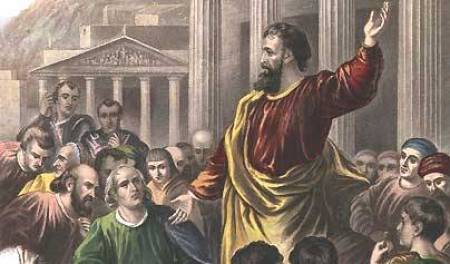
14 But Peter, standing with the eleven, lifted up his voice and addressed them: “Men of Judea and all who dwell in Jerusalem, let this be known to you, and give ear to my words. 15 For these people are not drunk, as you suppose, since it is only the third hour of the day. 16 But this is what was uttered through the prophet Joel:

17 “‘And in the last days it shall be, God declares,
that I will pour out my Spirit on all flesh,

and your sons and your daughters shall prophesy,
and your young men shall see visions,
and your old men shall dream dreams;

18 even on my male servants and female servants
in those days I will pour out my Spirit, and they shall prophesy.

19 And I will show wonders in the heavens above
and signs on the earth below,
blood, and fire, and vapor of smoke;

20 the sun shall be turned to darkness
and the moon to blood,
before the day of the Lord comes, the great and magnificent day.

21 And it shall come to pass that everyone who calls upon
the name of the Lord shall be saved.’”

In the name of Jesus. Amen.

To understand the significance of this text and what happened here in Acts 2, it is helpful for us to realize two things. First, Pentecost was already an important feast that had been instituted by God. And Second, the Holy Spirit was already at work in the world before this text. But let’s dive into each of those a little more. What was this feast, and what was the feast celebrating?

Pentecost was one of three Old Testament feasts that required a trip to Jerusalem. The other two were Passover and the Feast of Booths. Now, you won’t find the word “Pentecost” in the Old Testament. There, it’s usually called the “Feast of Weeks.” To understand why it eventually gets called “Pentecost,” we have to do a little math. (Yes, math in a sermon.) In Lev. 23:15-16, God tells the people to count seven weeks plus one more day after the Passover. So, you count seven weeks – 7×7=49 – plus one more day equals 50. And “Pentecost” means the 50th day. In the Jewish mind, the 50th day was a week of weeks plus one more day. So, the “Feast of Weeks”/Pentecost is a celebration of the 8th day.

And this is significant because when Genesis tells us about creation (Gen. 1:1-2:3), it counts out the first seven days, but that’s it. So, in the Jewish mind, the 8th day is the day outside of creation and the day of the new creation when we stop counting. The festival of Pentecost was a time of joy and rest because it was the end of the barley harvest (similar to our Thanksgiving holiday), and the focus of Pentecost was looking forward to the eternal rest God promised to His people.

Pentecost was also considered as the anniversary of the giving of the Law on Mt. Sinai. The idea was that Passover and the exodus from Egypt was the birth of the people of Israel, and then fifty days later, God gives the Law on Sinai which was understood as God’s marriage to His people, Israel. To see this, it is helpful to expand our understanding of what Ten Commandments are. (And if anyone is interested, we can have a brief Bible study after the service to cover this more thoroughly.)

In Exodus 20:1-17, God speaks to the whole congregation of Israel and gives the Ten Commandments. When you look through those verses, God says a lot of things, and if you take all the “you shalls” and “shall nots” there are more than ten. In fact, you get at least 13. But in Ex. 34:28 and Dt. 10:4, the Bible tells us that there are ten things there. But there is no place in Scripture where we are told how to number the things God gives there. God simply lets us figure it out, which is why there are different numberings of the Commandments.

The other important thing to know is that the Bible itself doesn’t call what God gives us in Ex. 20 “Commandments.” Scripture simply calls them the “Ten Words.” So, to get to the point quickly (again if you want more of an explanation, stick around after the service), the Jewish people count the first of the Ten Words as, “I am the Lord your God, who brought you out of the land of Egypt, out of the house of slavery.” The way they count the Ten Words, the first Word is a promise from God. God defines who He is – He is their God who delivers them. Then, in the other nine words, God gives the instructions about what His people are to be in this world because He is our God.

So, the Ten Words are understood as the wedding vows. God is the faithful husband, and His people are to be His faithful bride. And, again, Pentecost was a celebration of that. That is why the people have gathered in Jerusalem. They are celebrating because the harvest has ended, and they are looking to the eternal rest with God, their faithful husband.

The second thing that helps us understand what is happening here in Acts 2 is a right understanding that the Holy Spirit was already at work in the world before this first Day of Pentecost. Just a few examples:

In Gen. 1:2, we see that the Holy Spirit was involved in creation.

In Gen. 41:38, Pharaoh recognizes that the Holy Spirit had blessed Joseph with wisdom to interpret his dream and make plans to provide food during the upcoming famine.

In Ex. 31[:3] & 35[:21], God says that a guy named Bezalel is filled with the Holy Spirit to have artistic skill so he could make all the different pieces of the Tabernacle.

In Num 11:26-29, the Holy Spirit rests on two men named Eldad and Medad, and they begin to prophesy. (And I’ll give $100 to anyone who has twin boys, and names them Eldad and Medad. Those names mean, “God has loved,” and, “Love.”)

In Num. 24:2ff, the wicked prophet Balaam has the Holy Spirit come upon him so that he blesses Israel instead of cursing them like he intended. In Num. 27:18, Joshua, Moses’ successor, is said to have the Holy Spirit dwelling in him.

In Ps. 51:11, David’s great Psalm of confession, David prays that God would not take the Holy Spirit from him.

Is. 63:10, talks about how God’s people sinned and grieved the Holy Spirit.

In Lk. 1:35, Gabriel tells Mary that she will conceive Jesus when the Holy Spirit comes upon her. We could go on, but I hope you get the picture. The Holy Spirit was active in many ways before He came upon the disciples here in Act. 2.

To sum up: Pentecost was already a festival celebrating the eternal rest of the new creation and God being a husband to His people. And the Holy Spirit was already at work in many significant ways before this text in Acts 2. So, what is the big deal about Pentecost?

Now, Jesus has come. Christ has been born as a Man. He has suffered, shed His blood, and died. Jesus has risen again and ascended to the right hand of God the Father. Now, the Holy Spirit comes in full measure and is poured out upon His Church as the promised Comforter.

On the day of Pentecost, the Holy Spirit comes in ways that were seen and heard. The Spirit was visible in the fire that rested on the heads of those who were gathered. They had that fire rest upon them, but they were not burned or consumed like the burning bush where God appeared to Moses. And the Holy Spirit is audible first in the mighty rushing wind and then in the languages that the disciples spoke telling the mighty works of God (Act. 2:4, 11).

These miracles are significant. Remember, it was mandatory that all the Jewish males try to get to the Temple for Pentecost, so all sorts of pilgrims were gathered from all over the world to celebrate the harvest and rest God had given. And while those pilgrims are in the Temple, they hear the sound of the mighty rushing wind. V. 6 of our text says that the multitude gathered together because they heard the sound of that wind. This crowd knew it wasn’t just a normal storm, something extraordinary was hapening.

So, they come out of the Temple and hear not simply the wind, but they hear about the mighty works of God in Jesus in their native languages. And this is so spectacular because these people had just been in the Temple hearing God’s Word, but not in their native language. Hebrew was the language of the Temple, and it is likely that some of them didn’t even understand the Hebrew used in the Temple. Even though they were ethnically Jewish, they had been living for generations in other countries and didn’t know Hebrew at all or very well.

But that multitude who came together at the sound of the rushing wind did know more than one language. For them to get to Jerusalem, check into a hotel, and buy food, they had to know at least Greek, Aramaic, or Latin. These people couldn’t have been at the feast of Pentecost without at least a working knowledge of one of those languages. So, the Holy Spirit could have enabled the apostles to speak in only those four languages, and everyone there would have been able to understand. But the Holy Spirit is more gracious than that. Each person there heard in their native language the mighty works of God in Jesus.

So, here at Pentecost, the Holy Spirit reaches out to that entire multitude of pilgrims in a very personal way. The Temple was strict, everything had to be in Hebrew. But now people from every tongue are able to hear the mighty works of God in their mother’s tongue. The Holy Spirit sanctifies all those languages to carry the Gospel of Jesus Christ. This is so beautiful.

We heard in our Old Testament reading (Gen. 11:1-9) how God dispersed the inhabitants of the earth by confusing their language at the tower of Babel. Here at Pentecost, God reverses the curse of Babel, but not in the way we would expect. He doesn’t reunite the languages of the world into one language. Instead, God unites all people through the one message of the Gospel and blesses what once divided us. What used to divide humanity becomes a blessing and a variety of grace. And this multiplied grace continues into eternity. In Rev. 7:9-10, John sees a great multitude that no one could number from every nation, from all tribes and all peoples and all languages standing before the throne of God and before the Lamb. In heaven, the saints are equally perfected, but they aren’t erased of their personalities and histories.

If you want diversity, look to the Church united in faith in Jesus.

But as amazing as all these Pentecost miracles are – the wind, the tongues of fire, the speaking in a multitude of languages – these miracles have their limits. Some in that crowd figure the apostles are drunk, which is absurd. Drunk people have difficulty speaking their own language let alone fluently, coherently, and eloquently in other languages that they don’t even know. But even those who don’t accuse the apostles of being drunk only get to the point of asking the Lutheran question, “What does this mean?”

So, Peter stands up for the apostles and says that Joel 2 is being fulfilled in their presence. In these last days (Act. 2:17), the Holy Spirit is being poured out so that the wonders of heaven and mighty works of God in Christ Jesus are being shown to the multitude so that “everyone who calls upon the name of the Lord may be saved.”

That is the most significant miracle. The greatest miracle of all the spectacles of Pentecost is the salvation that is available to everyone despite their sin.

Peter will go on to preach a short sermon. Listen quickly to the main thrust of that sermon in the three verses that follow our text here. Peter preaches, “Men of Israel, hear these words: Jesus of Nazareth, a man attested to you by God with mighty works and wonders and signs that God did through Him in your midst, as you yourselves know – this Jesus, delivered up according to the definite plan and foreknowledge of God, you crucified and killed by the hands of lawless men. God raised Him up, loosing the pangs of death, because it was not possible for Him to be held by it” (Act. 2:22-24).

After Peter’s sermon is done, the multitude is convicted of their sin and asks, “What shall we do?” And Peter says, “Repent and be baptized every one of you in the name of Jesus Christ for the forgiveness of your sins, and you will receive the gift of the Holy Spirit for the promise is for you and your children and for everyone who is far off, everyone whom the Lord calls for Himself.” And 3,000 believe, are Baptized, and saved.

That is the real miracle of Pentecost. The Holy Spirit calls, gathers, enlightens, and sanctifies those who were responsible for the crucifixion of Jesus. The Holy Spirit used Peter to preach to them the Word of God – Law and Gospel. And the Holy Spirit causes them to repent, believe, and be saved.

And that miracle continues to this day. Whenever you hear the Word of God and are pointed to Jesus, there is Holy-Spirited, Pentecost work going on. Just last week, you heard how Jesus says we can tell when the Holy Spirit is working. In John 15:26 Jesus says, “When the Helper comes, whom I will send to you from the Father, the Spirit of truth, who proceeds from the Father, He will bear witness about Me.” Wherever and whenever Jesus is being proclaimed as the Savior of sinners, the Holy Spirit is at work.

Dear saints, the real miracle of Pentecost is still going on; in fact, it’s happening right now. You think your pastor is preaching to you, but I’m just the speaker producing the sound. When you hear the Gospel that declares that all your sins are forgiven and that you have peace with God because of the suffering and death of Jesus on the cross, it isn’t a mere human telling you this. That is the work of the Holy Spirit.

So, when you come to church with your sins, failures, and doubts, when you come stained and soiled by the godless world in which we live, the Holy Spirit enters into this place and opens the Scriptures to you. He brings to remembrance all that Jesus has said (Jn. 14:26). And by pointing you to Jesus, the Holy Spirit does His work of making you holy. That’s why He’s called the Holy Spirit. Yes, He is holy, but He is called the Holy Spirit because He makes you holy. He clothes you in the robe of Christ’s righteousness and sends you home at peace with God.

Dear saints, Pentecost happened. The Holy Spirit came that day nearly 2,000 years ago in Jerusalem, but Pentecost continues, and for that, God be praised. Amen.

The peace of God, which surpasses all understanding, will guard your hearts and minds in Christ Jesus. Amen.

Illusions & Safety – Sermon on Genesis 11:1-9 for the Day of Pentecost

Listen here.

Genesis 11:1–9

1 Now the whole earth had one language and the same words. 2 And as people migrated from the east, they found a plain in the land of Shinar and settled there. 3 And they said to one another, “Come, let us make bricks, and burn them thoroughly.” And they had brick for stone, and bitumen for mortar. 4 Then they said, “Come, let us build ourselves a city and a tower with its top in the heavens, and let us make a name for ourselves, lest we be dispersed over the face of the whole earth.” 5 And the Lord came down to see the city and the tower, which the children of man had built. 6 And the Lord said, “Behold, they are one people, and they have all one language, and this is only the beginning of what they will do. And nothing that they propose to do will now be impossible for them. 7 Come, let us go down and there confuse their language, so that they may not understand one another’s speech.” 8 So the Lord dispersed them from there over the face of all the earth, and they left off building the city. 9 Therefore its name was called Babel, because there the Lord confused the language of all the earth. And from there the Lord dispersed them over the face of all the earth.

In the name of Jesus. Amen.

In the midst of fear and anxiety over a virus, when we see a man unjustly killed in the streets of Minneapolis by an officer who is supposed to serve and protect the public, when we see a police officer killed in the line of duty in our community, when we see violent riots and evil thugs destroying property and livelihoods, it is easy to be scared and afraid. It is easy to wonder what is going to happen next. All of these things constantly remind us of our frailty and mortality. Where do we go to find refuge and safety?

We need to remember that the only safety, the only refuge, the only shelter we have is found in the arms of the God who died and rose again to deliver us from sin, death, and the devil. Our safety lies only in the God whose hands still bear the scars that set us free. Only one tower of safety exists, and that is the unshakable, unwavering, impenetrable fortress of the Christian Church.

Today is Pentecost, and we have heard how God gathers those whom He had scattered in the ruins of Babel to welcome them into the tower of the Church where they will be safe forever.

Today, we rejoice that we have been gathered together as the Body of Christ after our time of exile. It has been seventy-seven days since we last gathered together as a congregation (if Siri was correct when I asked her how many days it has been since March 15th which is when we last gathered here). The account of the Tower of Babel is a very fitting reminder that our only safety is found in the Christian Church. Every other thing that we consider safe is nothing more than an illusion. To get at why the account of the Tower of Babel teaches this, we have to go back a couple chapters before this text.

Back in Genesis 9[:18-29], Noah and his family have survived the flood and are off the ark. Scripture tells us that Noah became a man of the soil, planted a vineyard, got drunk on his wine, and fell asleep naked in a cave. Noah’s son Ham saw Noah’s nakedness and joked about it with his brothers Shem and Japheth. After learning about this, Noah curses Ham’s son, Canaan. And Ham was furious about this. Now, Ham had another son named Cush, and Cush bore Noah’s great-grandson named Nimrod. He was named Nimrod before it was an insult. Scripture tells us, that Nimrod “was the first on earth to be a mighty man” (Gen. 10:8), and Nimrod’s kingdom was Babel which we hear about in this text.

Most of the time when we hear the people of Babel talk about their plan, we think their final statement about trying to avoid being spread over the face of the earth is the singular point of rebellion against God’s command for them to fill the earth. But it appears as though there was even more defiance and hatred of God going on. Scripture also tells us that the people were building this city and tower to make a name for themselves, and they wanted their tower to have its top in the heavens.

The ancient Jewish historian Josephus has an interesting theory about what the people of Babel were trying to do. He draws this theory from other commentaries on Genesis that are much more ancient than him. The theory goes like this:

Ham hated his father, Noah, for cursing him. But even more so Ham hated God because God was really the one judging him for his sin against Noah. And Ham was angry that God would judge the world for their sin through the Flood. Ham hated the idea that he and all people should be accountable to God and have to answer for their sins. Ham passed this hatred down to his son Cush who passed this hatred down to Nimrod.

So, the theory about what is going on at Babel is not that a bunch of people have decided to live together in a big tower. Instead, the mighty man, Nimrod, has gathered people together and said that together they can be greater than God. Their desire is to be stronger than and overcome the God who would judge them. In other words, they want to be their own little ‘g’ god. They figured they could build a tower so high that the true God could not drown them like the generations before them. Even though God had promised that He would never do that again. But they didn’t trust God’s promise, so they are going to try and make themselves safe from God’s wrath.

Now, the Holy Spirit didn’t inspire this theory, and Scripture doesn’t give us these details. But still, it is a very good theory. First, it clearly explains what the people were trying to accomplish. They weren’t trying to build a tower to get closer to God; instead, they were trying to protect themselves from God and His anger over their sin. It explains why God saw their plan with such hostility and put a swift end to their work. The theory is also consistent with how sinners repeatedly respond to the judgment of God.

All sinners attempt to carry on the legacy of Nimrod. Kings and leaders of every generation do the same thing. Think of Nebuchadnezzar who built his idol and demanded that everyone bow down to it. When Shadrach, Meshach, and Abednego refused to bow down and worship it, Nebuchadnezzar threatened them with the burning fiery furnace and boasted, “Who is the god who will deliver you out of my hands?” (Dan. 3:15). Nebuchadnezzar thought that he was stronger and more fearful than any other god. Of course, the true God came down and delivered them, so they came out of the furnace without even the smell of fire and smoke on them. But this pattern of leaders setting themselves up as greater than God still continues today.

Throughout history, communist dictators have declared that that the state is god who will provide everything for their people. They try to build a tower of government to their own glory and gather everyone as one. These communists burn and destroy churches and cathedrals in a futile attempt to remove Christ from His throne and usurp His claim to have all authority in heaven and on earth (Mt. 28:18). They insist that their rule is stronger than the God who can destroy them. But the illusion of their glory always falls. Their towers crumble and their leaders are buried.

Even now, governors and heads of departments of health say they are doing things to keep people safe. But safety is not something they can offer. And we are tragically being reminded of that. Despite their executive orders and guidelines and restrictions, people contract the virus and die. People are killed in the streets by evil men who are supposed to protect them. And even the police officers aren’t safe.

Of course much of the time, our leaders have the best interest of the people they govern in mind with protocols and protections. But we see – we clearly see – that safety is not something the earthly authorities can offer. They can offer protection, but those protections have limits. Nothing in this fallen, sinful earth can offer you safety. Earthly safety is always an illusion in a fallen, broken world like ours.

Dear saints, remember that in Christ alone is your safety. I’ve been talking to many people lately who mention they have trouble sleeping. They wake up with worries and doubts about their future – physically, economically, socially, etc. The best thing to do when you are filled with fear and sense the lack of security is to go to the Scriptures. And Psalm 4:8 is the best verse I can think of in those times of uncertainty. It is a comforting reminder, “In peace I will both lie down and sleep; for You alone, O Lord, make me dwell in safety.”

Every generation since Babel has seen how God scatters the proud in the thoughts of their hearts and brings down the mighty from their thrones (Lk. 2:51-52).

So, dear saints, even as you see God tearing down today’s towers that seem to offer safety, have no fear. The God who is to be feared, and the God who tears down our illusions of safety is the same God who has sent His own Son to deliver you. The God who would pull down the mightiest kingdoms and empires of this world has Himself established a fortress and tower that cannot be overcome. The safety He offers often doesn’t look like much, but look around you. Here is that tower. From the rubble of earthly Towers of Babel and from the scattered peoples, God has established His holy Christian Church.

Built upon the Rock of Jesus Christ, the Church is the impenetrable fortress of safety which not even the gates of hell can overcome (Mt. 16:18). Wherever the Gospel is proclaimed, the very sinners who have been scattered throughout the world are gathered together not to overcome God, but to be overcome by His love and mercy.

On this day of Pentecost, God comes to those who are standing in the ruins of the Tower of Babel and puts something taller and higher before your eyes. He sets the cross of Christ before and gathers you here, and at the cross you see the judgment of God against sin that you could not take. Looking in faith to the cross, you see that God’s anger is no more because God has poured out every last bit of His anger against your sin upon Jesus. The God who had the right to condemn you for your cruelty and foolishness condemns His Son in your place. At the cross you see God’s judgment has not been poured out on you but on Christ. At the cross, you see that all your pride is of no value because Jesus’ blood has been poured over you and has erased it. At the foot of the cross you see that God’s love has found you and taken away your sin.

As you stand in the rubble of the towers that you would build to protect yourself from God’s wrath, look to the cross of Christ and see that Jesus has finished building the only tower that can hide you from the wrath of God. And, now that there is no anger of God left to consume you, see the empty tomb. See that because Christ has walked out of the grave triumphant over death see that there is now a room in that tower reserved with your name, and know that you have a place in the fortress of God’s love.

Dear saints, don’t ever settle for any illusions of safety. Find your refuge in your Savior. For you who believe, the tower of Christ will never fall because you have permanent and eternal shelter in Jesus’ forgiveness. And, in Christ, you will be safe forever. Amen.

The peace of God, which surpasses all understanding, will guard your hearts and minds in Christ Jesus. Amen.

From Amazement to Fear to Faith – Sermon on Acts 2:1-21 for Pentecost

Listen here.

Acts 2:1-21

Pentecost Spirit 2When the day of Pentecost arrived, they were all together in one place. And suddenly there came from heaven a sound like a mighty rushing wind, and it filled the entire house where they were sitting. And divided tongues as of fire appeared to them and rested on each one of them. And they were all filled with the Holy Spirit and began to speak in other tongues as the Spirit gave them utterance.

Now there were dwelling in Jerusalem Jews, devout men from every nation under heaven. And at this sound the multitude came together, and they were bewildered, because each one was hearing them speak in his own language. And they were amazed and astonished, saying, “Are not all these who are speaking Galileans? And how is it that we hear, each of us in his own native language? Parthians and Medes and Elamites and residents of Mesopotamia, Judea and Cappadocia, Pontus and Asia, 10 Phrygia and Pamphylia, Egypt and the parts of Libya belonging to Cyrene, and visitors from Rome, 11 both Jews and proselytes, Cretans and Arabians—we hear them telling in our own tongues the mighty works of God.” 12 And all were amazed and perplexed, saying to one another, “What does this mean?” 13 But others mocking said, “They are filled with new wine.”

14 But Peter, standing with the eleven, lifted up his voice and addressed them: “Men of Judea and all who dwell in Jerusalem, let this be known to you, and give ear to my words. 15 For these people are not drunk, as you suppose, since it is only the third hour of the day. 16 But this is what was uttered through the prophet Joel:

17 “‘And in the last days it shall be, God declares,
that I will pour out my Spirit on all flesh,

and your sons and your daughters shall prophesy,
and your young men shall see visions,
and your old men shall dream dreams;

18 even on my male servants and female servants
in those days I will pour out my Spirit, and they shall prophesy.

19 And I will show wonders in the heavens above
and signs on the earth below,
blood, and fire, and vapor of smoke;

20 the sun shall be turned to darkness
and the moon to blood,
before the day of the Lord comes, the great and magnificent day.

21 And it shall come to pass that everyone who calls upon
the name of the Lord shall be saved.’”

In the name of the Father and of the Son and of the Holy Spirit. Amen.

The crowd in Jerusalem on the day of Pentecost was there because it was Pentecost – a harvest festival. We have gotten so accustomed to connecting the celebration of Pentecost with the sending of the Holy Spirit that we forget that Pentecost was one of the three major festivals of the Jews. All the way back in Leviticus 23[:15-21], God had commanded that this feast be kept; though, in the Old Testament, it is normally called the “Feast of Weeks.” Pentecost was celebrated fifty days after the Passover, which was why it became known as ‘Pentecost.’ Pentecost was one of three festivals that required a pilgrimage to Jerusalem.

One of the other festivals that required a pilgrimage to Jerusalem was, of course, Passover. I mention Passover because most of the people in the crowd we just heard about there in Acts 2 would have been in Jerusalem fifty days earlier to celebrate the Passover when Jesus was tried, convicted, and crucified. They would have been the very crowds that cried out, “Crucify Him,” when Pilate asked what he should do with Jesus.

So, people from all over the world are in Jerusalem again. But this time, they are hearing in their own, native languages about the mighty works of God. They were amazed. Amazed at the sound of the mighty rushing wind and amazed at the mighty works of God being told in their own language, their own tongue. This is the amazed crowd to whom Peter preaches.

Peter Preaches on PentecostWe didn’t hear Peter’s whole sermon. It goes on for another fifteen verses, but I want you to hear the highlights of the whole thing. In the part of Peter’s sermon that we did hear, Peter tells the people that, if they had read their Bible, wouldn’t have been surprised at what they are hearing because it had been foretold in the prophet Joel. Then, Peter goes on to proclaim Jesus to the people.
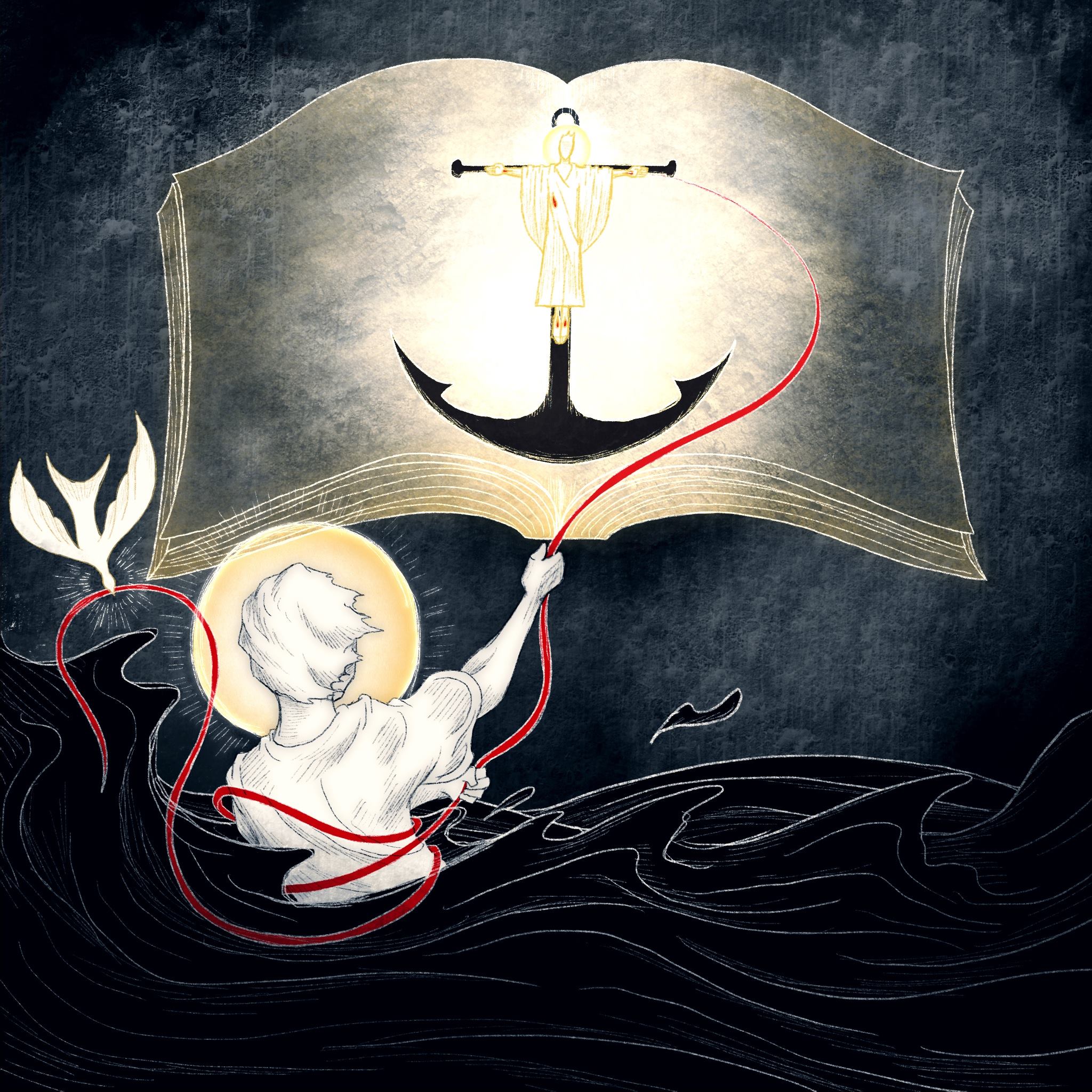
Peter reminds the people how they had, with their own eyes, seen Jesus heal the sick, give sight to the blind, and do all sorts of miracles. But even though they had seen all of this, they delivered Jesus into the hands of lawless men in order to be crucified. But Peter adds that Jesus was crucified according to the definite plan and foreknowledge of God.

The sermon goes on to tell how though Jesus was crucified, He rose from the dead and is forever seated at God’s right hand. And Peter makes it clear that Jesus was and forever is the Lord and Christ whom they had crucified (Act. 2:36).

Upon hearing this, the people in the crowd are, according to Scripture, “cut to the heart” (Act. 2:37). But before I go to describe what happened that day, I want to make a quick mention of another time when a similar sermon was preached. A few years after our reading in Acts 2 today, Stephen preaches a very similar sermon to a similar crowd (Act. 7). But when Stephen’s sermon ends, the crowd is enraged. They grind their teeth, put their hands over their ears, rush Stephen out of the city, and throw rocks at him until he dies.

I mention that to highlight the greatest miracle on the day of Pentecost. The greatest miracle of Pentecost is what happens when Peter concludes his sermon by saying, “[K]now for certain that God has made him both Lord and Christ, this Jesus whom you crucified,” and the people do not kill Peter or run to their safe spaces. Instead, the Holy Spirit works on them. They are, again, “cut to the heart.” They are devastated and full of regret. In other words, they lament and despair because of their sin. They go from amazement to fear.

But in their fear because of their sin, they offer no excuses. They point no fingers. Their mouths are silent before the Law with the exception that they fearfully ask, “What shall we do?” (Act. 2:37). Of course, they know that there is nothing they can do. They can’t go back. They can’t make up for it. They can’t pay Jesus off. No excuses will help them. They know they can’t remove their guilt, but Peter points them to Jesus who can.

Peter says, “Repent and be baptized every one of you in the name of Jesus Christ for the forgiveness of your sins, and you will receive the gift of the Holy Spirit. For the promise is for you and for your children and for all who are far off, everyone whom the Lord our God calls to himself” (Act. 2:38).

That day, God added 3,000 souls to the Holy Christian Church. Their fear is swallowed up in faith. Faith in the Jesus whom Peter preached. Faith in the name of Jesus given to them in their Baptism. Faith in the Jesus who died for them, rose for them, and washed them.

And it is that promise of Scripture that I want you to consider today. Sometimes, we get too caught up in the amazement of the coming of the Holy Spirit. But the most amazing thing that happens when the Holy Spirit arrives is how people are moved by the Holy Spirit working through the Word of God to repentance and faith.

Romans 15_4 - Spirit Scriptures SalvationSo you, when the Law comes and points its finger at you and declares you to be a sinner, don’t make excuses. Don’t try to turn the accusations away. Don’t try to put your own spin on it and say that at least you aren’t as bad as so-and-so. Instead, repent. Repent because the Holy Spirit wants you to know that Jesus came to save you who are lost in sin. That means that Jesus has come to save you and me.

Secondly, know that this salvation isn’t only for you. It is for your children. The promises of Baptism are for the cute little sinners who are born into your family. Jesus calls them to Himself as well.

Finally, know also that this promise is for everyone you meet. Your family, your co-workers, your acquaintances, the people you pass by on the street – Jesus died for them as well. And your Savior desires that they hear the promises of life, mercy, forgiveness, and salvation as well. So, fill your speech with those promises.

One study showed that 86% of people who attend church regularly attend because someone invited them. That’s amazing. So, as your pastor, I ask you: When was the last time you invited someone to join you here at church? I am willing to bet that you would be fearful if I were to have everyone stand and say when the last time was.

Brothers and sisters, our world is dark, and people are hurting. Let us, all of us, be people of faith in our Lord while we invite others to the faith as well. Amen.

The peace of God, which surpasses all understanding, will guard your hearts and minds in Christ Jesus. Amen.

Remembrance – Sermon for Pentecost on John 14:23-31

Due to technical difficulties, no audio for today’s sermon.

John 14:23–31

23Jesus answered him, “If anyone loves me, he will keep my word, and my Father will love him, and we will come to him and make our home with him.24Whoever does not love me does not keep my words. And the word that you hear is not mine but the Father’s who sent me.

25“These things I have spoken to you while I am still with you.26But the Helper, the Holy Spirit, whom the Father will send in my name, he will teach you all things and bring to your remembrance all that I have said to you.

27“Peace I leave with you; my peace I give to you. Not as the world gives do I give to you. Let not your hearts be troubled, neither let them be afraid.28You heard me say to you, ‘I am going away, and I will come to you.’ If you loved me, you would have rejoiced, because I am going to the Father, for the Father is greater than I.29And now I have told you before it takes place, so that when it does take place you may believe.30I will no longer talk much with you, for the ruler of this world is coming. He has no claim on me,31but I do as the Father has commanded me, so that the world may know that I love the Father. Rise, let us go from here.”

In the name of the Father and of the Son and of the Holy Spirit. Amen.

Jesus says that the Holy Spirit’s job is, “to bring to your remembrance all that I have said to you.”

What was the last thing you forgot? Now, there’s a scary question. If you can remember the last thing you forgot, then you’ve remembered. You maybe didn’t remember on time, but you did remember. The very question, “What was the last thing you forgot?” makes you wonder the dozens, or thousands, of things that you should remember but don’t.

We all have stories of entering the room with decision, purpose, and intent but we enter the room and ask ourselves, “What did I come here to do?” Some mornings, in the clamor of trying to get the kids to school, I frantically search for my keys wondering to myself, “Where in the world and I put them?” only to look down and find my misplaced keys in my hand.

Well, today is Pentecost. We are fifty days after Easter, and today we celebrate God sending His Holy Spirit. And, I hope you remember, three weeks ago Jesus said that the Holy Spirit convicts the world concerning sin, righteousness, and judgment (Jn. 16:5-15).

In case you don’t remember, the Holy Spirit convicts us of our sin to show us that we need a Savior, Jesus. The Holy Spirit convicts us of righteousness to show us that Jesus’ perfect sacrifice on the cross makes us righteous. And the Holy Spirit convicts us of judgment to remind us that Satan no longer has any claim on us because he is judged.

In other words, wherever the Gospel is preached, where Jesus’ death and resurrection are proclaimed, where Jesus is announced as the Lamb of God who takes away the sin of the world – there, the Holy Spirit is, without question, at work. Wherever the Word of God is being faithfully proclaimed, the Holy Spirit is doing His work calling, gathering, enlightening, sanctifying, and preserving the Christian Church.

In our Old Testament reading (Gen. 11:1-9), we heard how God dispersed the people after the Flood. They had plans to build a tower that would have its top in the heavens. Possibly, they were trying to protect themselves from another flood even though God had promised to never flood the earth again. They were sinfully rebelling against God’s command to fill the earth. However, God, in His mercy, came down to stop their sin and to disperse them by confusing their language – sort of a “we can do this the easy way or the hard way.” By this act of judgment, God nudges His creatures to do what He commanded them.

In our reading from Acts (2:1-21), we heard how God doesn’t remove the confusion of language He brought to Babel. Instead, God continues to be gracious. So the Gospel can be proclaimed in all creation, God gives the apostles the gift of speaking in tongues. They are enabled to preach the mighty works of God in all the human languages present that day of Pentecost.

We didn’t hear Peter’s whole sermon in our reading today. But in the next fifteen versus, he preaches Jesus. He doesn’t preach about the Holy Spirit; he preaches Jesus. And what happens in the crowd reveals the Holy Spirit’s work. They are convicted of sin.

They heard that Jesus, whom they crucified, was both Lord and Christ. And when they heard this, “they were cut to the heart,” and asked, “What shall we do?” And Peter continued to be the Holy Spirit’s instrument saying, “Repent.” Now, the people were already convicted, so Peter isn’t telling them to feel bad about their sin. Instead, the Holy Spirit through Peter is telling the people to trust Jesus’ forgiveness.

“Repent and be baptized in the name of Jesus Christ for the forgiveness of your sins. For this promise is for you and for your children and all who are far off, everyone whom the Lord our God calls to Himself” (Act. 2:38-39). That day, 3,000 souls were added to the Christian church by the working of the Holy Spirit. And the Holy Spirit continued to work in those believers’ hearts reminding them of Christ’s forgiveness.

The devil’s work is similar to the Holy Spirit’s work, but only at one point. The devil wants to do the first work of the Holy Spirit but leave you there. Like entering a room and not remembering why you are there, the devil wants to leave you in the fog and doubt of your sin.

Thank God for the Holy Spirit! He removes the fog. No matter how thick and dense your sin is, the Holy Spirit brings to your remembrance the truth that God has removed your every sin, transgression, and iniquity sin by Jesus’ death and resurrection.

And the Holy Spirit is about to do another work.

The only other time that Jesus uses this word, ‘remembrance,’ is when He institutes the Lord’s Supper. Jesus says to take and eat the bread which is His Body given unto death and to drink the wine which is His very Blood shed for the forgiveness of your sins. Jesus says we are to do this ‘in remembrance’ of Him.

Through this Bread and Wine, the Holy Spirit is at work giving you Jesus. Believe Him that through this holy and blessed Sacrament, all your sins are completely forgiven. Then, rise and go from here remembering the comfort of your Savior’s mercy. Amen.

The peace of God, which surpasses all understanding, will guard your hearts and minds inChrist Jesus. Amen.