
Matthew 5:1–12
1 Seeing the crowds, he went up on the mountain, and when he sat down, his disciples came to him. 2 And he opened his mouth and taught them, saying:
3 “Blessed are the poor in spirit, for theirs is the kingdom of heaven.
4 “Blessed are those who mourn, for they shall be comforted.
5 “Blessed are the meek, for they shall inherit the earth.
6 “Blessed are those who hunger and thirst for righteousness, for they shall be satisfied.
7 “Blessed are the merciful, for they shall receive mercy.
8 “Blessed are the pure in heart, for they shall see God.
9 “Blessed are the peacemakers, for they shall be called sons of God.
10 “Blessed are those who are persecuted for righteousness’ sake, for theirs is the kingdom of heaven.
11 “Blessed are you when others revile you and persecute you and utter all kinds of evil against you falsely on my account. 12 Rejoice and be glad, for your reward is great in heaven, for so they persecuted the prophets who were before you.
In the name of Jesus. Amen.
Dear saints, that’s you. If you are a Christian, you are a saint. A saint is nothing more than a holy person. I don’t imagine you think that you are holy in and of yourself. If you think you are, that is nothing more than pride, which is evidence that you are not holy. No, you are a saint because you belong to Jesus. He has made you holy by shedding His blood and dying for you. Christ has purchased and redeemed you and has made you holy.
Now, that brings us to the Beatitudes, but we’re going to start at the end so we can better understand the whole thing. In the last two verses, Jesus says, “Blessed are you when others revile you and persecute you and utter all kinds of evil against you falsely on my account. Rejoice and be glad, for your reward is great in heaven.”
Jesus commands us to do something here, but it might be one of the most difficult commands in Scripture. Your Lord commands you to rejoice and be glad when you are reviled, when you are persecuted, and when people utter all kinds of evil against you falsely. This command doesn’t have to do with how you use your body. We’re used to those kinds of commands – don’t use your mouth, tongue, and lips to lie; don’t use your arms and hands to kill or steal. We can do those things at least outwardly – even though we don’t perfectly keep those commands when we don’t lie, kill, or steal. But with this command, Jesus demands that you have certain feelings. Be joyful and glad. Yes, Jesus commands even your emotions and feelings, and Christ gives the reason we are to have those feelings.
“Rejoice and be glad for,” in other words, ‘because,’ or ‘here’s why,’ “your reward is great in heaven.”This is so helpful. The reason you are to rejoice is your heavenly reward is great. If you looked up the Greek word that gets translated as ‘reward,’ the first definition you would see is ‘wage.’ In fact, it’s the same word Jesus uses in the parable about the workers in the vineyard who all get paid the same wage of a denarius, no matter how many hours they worked (Mt. 20:1-16).
We do use the word ‘reward’ in a similar way. If you win a game or a race, your reward is a trophy or medal – it’s what you’ve earned for all your work before and during the contest. But ‘wage’ puts a little more of an edge to it. Wages are what you get paid for doing something, and Jesus promises great, heavenly wages.
In the Beatitudes, Jesus lets you know that things are going to be difficult in this life, at least for a while. You will be poor in spirit. Many things will cause you to mourn. You will be meek and humble. You will constantly hunger and thirst for righteousness. You will be merciful instead of vengeful. You will be pure in heart. You will seek to make peace instead of demanding your rights. And when you do all of that, Jesus says, people will persecute you because of it. But Christ wants you to endure all of that with rejoicing because He will pay you. And He will pay you well.
And to be clear, this isn’t the only time Jesus says something like this. In Luke 14:12-14, Jesus says, and I’ll paraphrase: “When you give a feast, don’t invite your friends, family, or rich neighbors because they will invite you to repay you. Instead, invite the poor, the crippled, the lame, and the blind who cannot repay you. Do this because you will be repaid at the resurrection of the just.” There, Jesus says that one of the reasons or motivations for you to treat people well – even those who can’t repay you – is that you will be repaid by God at the resurrection.
Shouldn’t you just do this because Jesus has been so kind and merciful to you? Yes, you should. God’s mercy freely given to you is all the motivation you should need. But Jesus gives another motivation here in the Beatitudes and in Lk. 14:14, and that motivation is that God Himself will repay you.
This is a great promise, and we should use it more often. So, take this promise, and keep it in your back pocket so you can pull it out regularly. The next time you are mistreated, pull this promise out of your pocket. When you spend hours planning, shopping, chopping, and cooking a nice meal for your kid and you place that that healthy food in front of him, but he says, “I don’t like that!” and slides it off the table so it spills all over the floor, take a breath. Remind yourself, “Jesus promises that I will be repaid.” When you are waiting in a long line and someone rudely and budges in front of you, take comfort in the fact that you will be repaid. When someone dominates the conversation and constantly interrupts you, don’t be impolite back and take your vengeance. Instead, think about those heavenly wages that Christ promises.
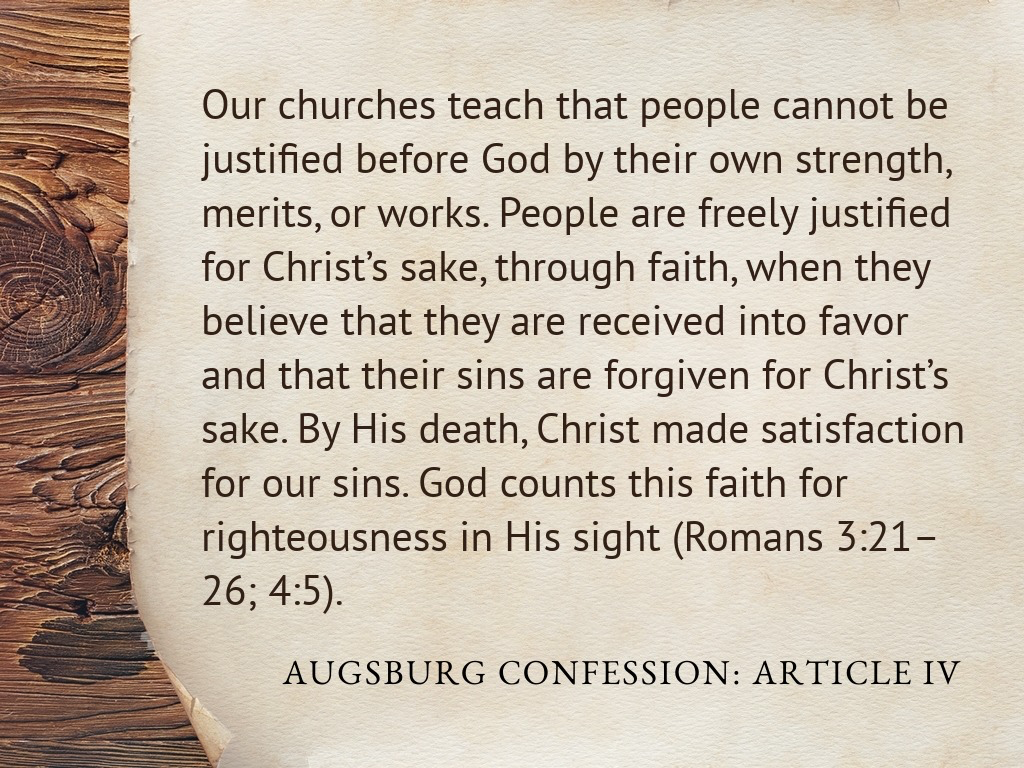
Of course, none of this – not one bit of it – is the basis for your salvation. You aren’t earning God’s favor or pleasure because of these works. But, again, this promise of blessed, heavenly wages can give you patience and motivate you toward good works. This is simply doing what you are called to do in Colossians 3:1-4, “Seek the things that are above, where Christ is seated at the right hand of God. Set your minds on things that are above, not on things that are on earth. For you have died, and your life is hidden with Christ in God. When Christ who is your Life appears, then you also will appear with Him in glory.”
So, to go through the Beatitudes quickly:
Blessed are the poor in spirit, for theirs is the kingdom of heaven. You are the subject of a king who isn’t going anywhere. He won’t ever be unseated. This world is not your home. You have a better one now and forever.
Blessed are those who mourn, for they shall be comforted. That’s a heavenly reward. You will be comforted by Jesus. Yes, you have this comfort now through the Gospel and forgiveness of your sins, but there is even more and greater comfort yet to come in heaven.
Blessed are the meek, for they shall inherit the earth. The new creation will be yours. You, dear saint, will be co-owners of the new heavens and earth. It belongs to you.
Blessed are those who hunger and thirst for righteousness, for they shall be satisfied. You already have the righteousness of Christ. You don’t hunger and thirst for that. But you do hunger and thirst for the righteousness that will be yours when your sinful nature is finally done away with. That will come, and it will be paid to you as your blessed wage.
Blessed are the merciful, for they shall receive mercy. Yes, you have mercy now, but there’s still more to come. And you will be given this mercy.
Blessed are the pure in heart, for they shall see God. You will behold Him and His face forever. The closest you get to that here is in the Lord’s Supper where you get to eat and drink His Body and Blood. But here, He is still veiled. Eventually, that veil will be removed.
Finally, blessed are the peacemakers, for they shall be called sons of God. Yes, you are God’s children now, but what you will be has not yet appeared. But know that when He appears, you will be like Him because you will see Him as He is (1 Jn. 3:2).
The treasures of earth are going to fade and pass away (Mt. 6:19), but your blessed wages will not. Dear saints, blessed are you. Jesus promises. Amen.
The peace of God, which surpasses all understanding, will guard your hearts and minds in Christ Jesus. Amen.
 Pastorsamwise
You must be logged in to post a comment.