Sackcloth & Ashes to Robes of Righteousness – Sermon on Joel 2:12-19 & Revelation 7:9-14 for Ash Wednesday

Joel 2:12-19; Revelation 7:9-14; Matthew 6:1-6, 16-21

In the name of Jesus. Amen.

Humanity’s first experiment with clothes didn’t work very well. You remember that God had created Adam and Eve without sin, and they were both naked and unashamed (Gen. 2:25). But after they sinned, Adam and Eve became aware of their nakedness. They saw their shame, and because of their disobedience, they now knew what evil was and were ashamed of what God had created to be good. So, they tried to cover their nakedness and shame with fig leaves (Gen. 3:7). Those fig leaves were Adam and Eve’s feeble attempt to cover their sin. It didn’t work.

When God came to the Garden, He was seeking them out asking, “Where are you?” (Gen. 3:9). Of course, God knew where they were, but He was giving Adam and Eve opportunity to repent. Adam knew his half-stitched leaf sewing wasn’t enough to cover his guilt. Adam replied, “I heard the sound of You in the garden, and I was afraid, because I was naked, and I hid myself” (Gen. 3:10). Fig leaves and hiding weren’t enough. Adam and Eve stood before a holy God utterly and totally incapable of covering their sin and shame.

Now, God had told Adam that the day he ate from the Tree of the Knowledge of Good and Evil that Adam would surely die (Gen. 2:17). And those fig leaves were no escape from the death sentence that Adam had earned by his disobedience. The problem of Adam and Eve’s sin and shame doesn’t get fixed until toward the end of Gen. 3 when God makes garments of skins and clothes them (Gen. 3:21). You’ve heard me say this before, but it needs regular repeating. When God makes cloths of skins for Adam and Eve, blood is shed. You can’t get skins from an animal without spilling blood. So, when God clothes Adam and Eve, He is teaching them that He will accept the death of another to cover their sin and guilt.

After clothing Adam and Eve, God did one more gracious thing – He expelled them from the Garden of Eden. We typically think of this exile from Eden and banishment from the Tree of Life as a further penalty (Gen. 3:22). But not so fast. This exile from the Garden wasn’t a punishment. Think about it for a minute. Adam and Eve were now sinners. If they ate from the Tree of Life as sinners, they would live forever in their sin. Dear saints, that is the definition of hell. Their expulsion from the Garden and inability to access the Tree of Life was God acting in grace and mercy. Clothed in those animal skins, Adam and Eve are sent out of the Garden and into exile, but their garments served as a constant reminder of God’s promise to crush the serpent’s head (Gen. 3:15).

Now, we’re going to change gears here, but stick with me. Tonight, we heard in our Old Testament lesson (Joel 2:12-19) God calling to humanity again. But this time, God isn’t calling us to come out of a hiding place in Eden. Instead, He is calling to us who are in the exile of sin. And in this invitation, God brings up the topic of clothing again.

God invites us to return to Him with fasting, weeping, and mourning. He says to rend and rip our hearts and not our garments. Rending and ripping clothes was a way to express and reveal deep sorrow. After all of Job’s possessions and children were destroyed, Job tore his clothes in mourning (Job 1:20). David tore his clothes when King Saul and his dear friend Jonathan were killed in battle (2 Sam. 1:11). The interesting thing about that verse from Joel about rending hearts and not clothes is what comes after. Notice in Joel 2:13 what comes immediately after the call to rend your heart: “Return to the Lord your God, for He is gracious and merciful, slow to anger, and abounding in steadfast love.” Even with your clothes rent and your nakedness uncovered, God invites you to leave your exile in sin, shame, and nakedness to return to Him to receive His grace and mercy.

Instead of simply an outward sign of ripping and rending clothes, God calls us to rend our hearts. God is calling for true repentance – not merely an external show of repentance. When a person rends their garments, it only reveals the nakedness and shame underneath. But after the problem is revealed, God calls us to a step further. Underneath our ripped cloths, lies a broken spirit and heart. And Ps. 51:17 tells us, “The sacrifices of God are a broken spirit; a broken and contrite heart, O God You will not despise.”

Tonight, our corrupt, sinful hearts are laid bare before God. Because of our sin we are under the same curse as Adam, “Remember you are dust, and to dust you shall return” (Gen. 3:19). The wages of our sin is death (Ro. 6:23), but God in His abundant mercy still seeks us out. He desires to save us and bring us out of our exile. And God has fulfilled His promise to cover our sin and shame. God has accepted the death of Another in our place. Jesus has taken your place. He went to the cross and hung there naked, and not just physically. He bore your all your sins in His body on the tree and by His wounds you have been healed (1 Pet. 2:24).

Our Epistle lesson (Rev. 7:9-14) shows what is in store for us. God has permanently covered us in Christ. Because of what Christ has done, we can sing with Isaiah, “I will greatly rejoice in the Lord; my soul shall exult in my God, for He has clothed me with the garments of salvation; He has covered me with the robe of righteousness” (Is. 61:10). You who are baptized into Christ have put on Christ (Gal. 3:27). Even now, you have a white robe that is washed perfectly clean in the blood of the Lamb.

Dear saints, because of what Christ has done, your sackcloth and your dusty ashes have been exchanged for the robe of righteousness. Your exile in sin and shame is ended because Jesus has won the victory over sin and death. By His resurrection, He has turned your mourning into dancing and loosed your sackcloth and clothed you with gladness (Ps. 30:11). By God’s action of seeking you out, you have returned to His presence, and now He welcomes you as His beloved bride (Is. 54:5). Your time in exile is over. You have returned to God. And there is treasure in heaven laid up for you. A treasure that lies hidden with Christ where moth and rust do not destroy and where thieves do not break in and steal (Mt. 6:19-21).

Dear saints, come. Come clothed in Jesus’ righteousness. Come to God’s table and receive Christ’s body and blood for the forgiveness of all your sins. He welcomes you home. In Jesus’ name. Amen.

The peace of God, which surpasses all understanding, will guard your hearts and minds in Christ Jesus. Amen.

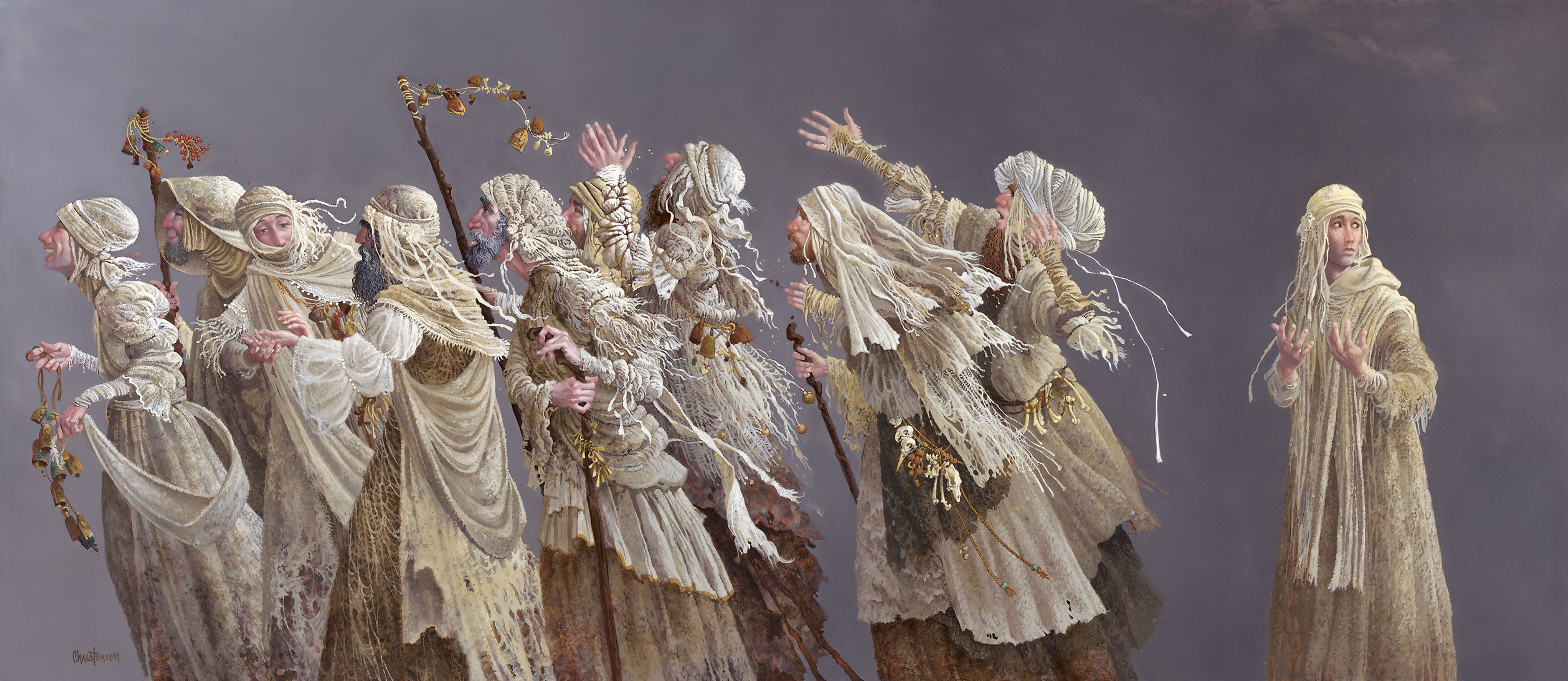
Rise & Go – Sermon on Luke 17:11-19 for the Fourteenth Sunday after Trinity

Luke 17:11-19

11 On the way to Jerusalem [Jesus] was passing along between Samaria and Galilee. 12 And as he entered a village, he was met by ten lepers, who stood at a distance 13 and lifted up their voices, saying, “Jesus, Master, have mercy on us.” 14 When he saw them he said to them, “Go and show yourselves to the priests.” And as they went they were cleansed. 15 Then one of them, when he saw that he was healed, turned back, praising God with a loud voice; 16 and he fell on his face at Jesus’ feet, giving him thanks. Now he was a Samaritan. 17 Then Jesus answered, “Were not ten cleansed? Where are the nine? 18 Was no one found to return and give praise to God except this foreigner?” 19 And he said to him, “Rise and go your way; your faith has made you well.”

In the name of Jesus. Amen.

Leprosy wasn’t simply a skin disease. Scripture repeatedly equates leprosy with punishment for sin and a sign of God’s wrath. In Dt. 28(:15, 27) Moses says, “If you will not obey the voice of the Lord your God,… [He] will strike you with the boils of Egypt, with tumors, with scales and [leprosy] of which you cannot be healed.” We see this happen several times in the Scriptures.

When Moses’ sister Miriam spoke against Moses (Num. 12:1-10), she became a leper. David’s general, Joab (and later Joab’s descendants), were struck with leprosy after he unjustly killed Abner (2 Sam. 3:29). After Naaman was healed from his leprosy, Elisha’s servant, Gehazi, took a bribe from Naaman and became leprous (2 Kgs. 5:20-27). King Uzziah of Judah contracted leprosy when he offered incense in the Temple even though he was not a priest (2 Chr. 26:16-21). The rabbis in Jesus’ day taught that leprosy was never contracted by people who lived moral lives. (I don’t think we can or should go that far, though.) There is little doubt that these ten lepers concluded that their condition meant they were being punished by God.

In desperation, they cry out, “Jesus, Master, have mercy upon us.” What were they asking for? Did they know that Jesus had cleansed lepers before, so they were crying out to Him for healing? Did they want food or money? Honestly, we don’t know, and it’s possible that the lepers didn’t know themselves. Notice, they don’t call Jesus ‘Lord’ as many other people do when they call out to Jesus in faith. Instead, they call our Lord, ‘master,’ which opens the door to all sorts of possibilities. Jesus simply responds, “Go and show yourselves to the priests.”

Now, this statement from Jesus was probably not received well by the lepers. They already knew that the priests were supposed to examine people with skin diseases and declare them to be clean or unclean, and, since these ten have leprosy, they are unclean. Going to the priests would be a pointless exorcise for lepers. The best-case scenario for a leper being examined by a priest would be for them to be declared unclean again. Because we know the end of the story, we know that Jesus has a hidden word of promise here. We know that their leprosy would be gone by the time they got to the priests. But some have argued, and I think convincingly, that these lepers heard the opposite. Instead of hearing the hidden promise, they heard a hard, “No, I won’t help you,” from Jesus.

Let me explain. I frequently and regularly get phone calls and people coming in to the church asking for help. I listen to their story and ask questions to discern how we as a congregation can best help them. Nine times out of ten, the individual is simply looking for one more excuse to continue some type of sinful, destructive behavior.

A few years ago, a man came here telling me that he was homeless and wanted money to buy food. I listened to his story, prayed with him, offered him some godly advice, and told him, “We have some food I can give you in the basement.” (And just so you know it was perfectly good food that I ate a couple days after he came.) But he didn’t want what we had, so I told him that he could go to Northlands Rescue Mission or to the Food Shelf because we support those ministries monthly, but he wasn’t interested in that either. He wanted money to get something from the store. I simply told him, “Listen, we are happy and willing to help you. You can have this food here, you can get a meal at Northland, or you can get something from the Food Shelf.” He became very upset, and as he left he yelled at me, “[Bleep] off.”

I’m very glad that we, as a congregation, send monthly support to different ministries in our community that can assist probably 95% of the people who come to our congregation asking for help. Those ministries serve as a clearing house to make sure people aren’t abusing the generosity of Christians and can come along side of people to help teach them to make better decisions. And I want to be clear, we still help many who need assistance through our Deacons’ Fund, but some people refuse to receive the help they actually need.

I think the nine lepers were like that man. He was offered three ways to get food, which is what he said he wanted. But he only heard the refusal to give him money as a refusal to help him. These lepers probably heard Jesus’ statement, “Go and show yourselves to the priests,” in a similar way. It was as if Jesus was saying, “I’ll only help you if you are declared to be clean by the priests.”

The other thing we have to consider is the timing of all this. When were these lepers healed, and when did they discover that they were cleansed? I’ve typically imagined that the ten lepers start marching off to Jerusalem, and after they had walked for a couple hours, discover that they were healed. Nine of them continue journeying to the Temple, but the Samaritan hikes his way back to the village, back through the streets, back to Jesus’ feet where he falls down and gives Him thanks. The thing about this is that the text doesn’t actually supply any of those details. It’s certainly possible that it happened that way, but the grammar that Luke uses actually seems to imply something different.

The way the verbs work seems to suggest that the healing happened more or less immediately, or at least while the ten are still within earshot of Jesus. Imagine if their cleansing happened immediately, basically just as they turned away. The Samaritan, unlike the nine, turns back and praises Jesus with a loud voice. He recognizes both his healing and the source of his healing – which came from the Word of Jesus. In faith, given by the Holy Spirit, the Samaritan believes that Jesus is the good God who has good things for him. He receives the gift of healing, but even better, he believes in the healing Savior, who also gives salvation and eternal life, which is exactly what he gets. Those last words of Jesus in our text are better translated, “Your faith has saved you.”

In the end, the nine ungrateful lepers didn’t expect God to be good to them. And Jesus’ statement, “Were not ten cleansed? Where are the nine?” would be a direct rebuke of them – something along the lines of, “Are you nine going to ignore when I have just done? I’ve given better than the mercy you asked for, and I have even more to give you.” But even if that isn’t the case, when the nine are healed, they refuse to recognize their Healer. The fact that they are cleansed is a wonderful thing, but it is only temporary. Their skin is restored, but their souls were still leprous in sin. They are the embodiment of the un-thankfulness that Jesus talks about in Mt. 5:45 where He says, “[God] makes the sun rise on the evil and on and on the good, and sends rain on the just and on the unjust.” Dear saints, how often does our merciful God gives good things to draw us to Himself, but we fail to recognize it?

But the Samaritan sees God’s goodness and comes back for more. He returned to Christ from whom all blessings flow.

It’s one thing to be grateful, but it is a different thing to be thankful. There is little doubt that the nine lepers were grateful that they were better, but they didn’t recognize how they had been healed. But the one, the Samaritan, the doubly outcast, was thankful. He was not only happy for the gift of healing; he was also thankful for and to the Giver of the gift. That is why he returns to Jesus and gives Him thanks and praise.

I’m going to abruptly change gears here, so bear with me. The church has commonly used Psalm 116:12-13 as a prayer before receiving the cup during Holy Communion. Here’s that prayer: “What shall I render to the Lord for all his benefits to me? I will lift up the cup of salvation and call on the name of the Lord,” which fits perfectly with what this Samaritan leper does. Jesus is good to him by healing him. So, what thanks and service does he offer to God? He goes back and receives more. He receives the salvation of his soul which is even better than being cleansed from leprosy.

So, let’s bring this to us today. Too often, we are like the nine. We see and feel our suffering and think that God has forsaken us. We pray and ask God to remove whatever crosses we bear, but in our impatience, we think that any delay of relief is a hard, “No,” from God which makes us doubt God’s goodness. As that sinful doubt creeps in, we grow less and less thankful, and even when God does remove that suffering, we do not recognize His goodness and mercy. May we repent.

Dear saints, even in our most difficult times, we can wait on the mercy of God. Yes, we suffer in this life, and “Our sufferings are not trivial, but neither are they eternal” (Rev. Petersen). We can wait on and trust in God. We can praise Him even in times of sorrow because He has bought us with His blood and will never leave nor forsake us.

And from this Samaritan, let us learn to always return to Jesus. When Jesus tells him, “Rise and go,” He doesn’t give him any direction. The man can go wherever he wants. But notice where he did go after being healed, he went back to Jesus, back to the goodness of God for more. And the interesting thing about Jesus’ command to ‘go’ is that the Greek word is a little ambiguous. At its root, it means ‘journey’ which means that It doesn’t necessarily mean, ‘go away,’ it could also mean ‘come with me.’ And it doesn’t make much sense if Jesus praises the man’s faith and tells him to go away. Faith always returns to Jesus in thanks to receive more of what Jesus has to offer. That is why Ps. 116 answers the question, “What shall I render to the Lord for all his benefits to me?” with, “I will lift up the cup of salvation and call on the name of the Lord.”

Dear saints, we can expect God to be good wherever we journey. And we always desire to come back to Christ because He has more good things to give to us. Faith wants to be with Jesus and continue to receive His gifts. He is our Temple. He is our Priest. And He is here now to cleanse us and freely give us His forgiveness.

God has given you every good thing. So, what will you do to repay Him? Come and get more. Come now to His table and lift up the cup of salvation. Come, eat and drink the Body and Blood of Christ for the salvation of your soul. Amen.

The peace of God, which surpasses all understanding, will guard your hearts and minds in Christ Jesus. Amen.
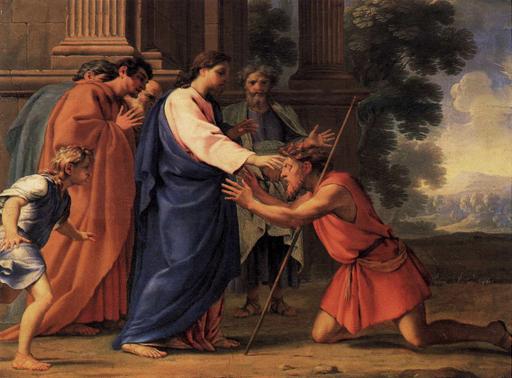
The Well of Salvation – Sermon on Isaiah 12:1-6 for the Fifth Sunday of Easter

Listen here.

Isaiah:12-1-6

1 You will say in that day: 

     “I will give thanks to you, O Lord, 
      for though you were angry with me, 

     your anger turned away, 
that you might comfort me. 

2   “Behold, God is my salvation; 
I will trust, and will not be afraid; 

     for the Lord God is my strength and my song, 
and he has become my salvation.” 

3 With joy you will draw water from the wells of salvation. 4 And you will say in that day: 

     “Give thanks to the Lord, 
call upon his name, 

     make known his deeds among the peoples, 
proclaim that his name is exalted. 

5   “Sing praises to the Lord, for he has done gloriously; 
let this be made known in all the earth. 

6   Shout, and sing for joy, O inhabitant of Zion, 
for great in your midst is the Holy One of Israel.”

Alleluia! Christ is risen!
He is risen indeed! Alleluia!

In the name of Jesus. Amen.

Have you ever been watching a movie for an hour and a half and then right at the climax, when there is only twenty minutes left, someone walks into the room starts asking questions? They want to know everything about the characters and what is happening so they can watch the end with you. When that happens to me, my inclination is to grab the remote, turn up the volume, and pretend I don’t hear the intruder. Hopefully, you’re more polite than I am and pause the movie to give as full of an explanation as possible so that person will understand the characters, plot, and inside jokes that usually come at the end of a movie.

This text, which is a stunning song, is one of the climactic parts of the book of Isaiah. Isaiah 12 is absolutely magnificent, but jumping straight into it like we have today is like coming in for the climax of a movie. Without the context, you miss the beauty and wonder. Well, don’t worry. Today, I’m a preacher, so I won’t just ignore the questions that this text begs. Let’s all get caught up.

The two questions that stare us in the face when we come to this beautiful chapter are first, when is “that day”? And second, who is the “you” that will sing this song in “that day”?

To get at the ‘when’ of that day, we have to go back to Isaiah 11 which begins with a famous prophecy of Jesus’ birth. “There shall come forth a shoot from the stump of Jesse, and a branch from his roots shall bear fruit.” And as you get to v. 6 of Isaiah 11, the focus shifts to looking beyond Christ’s birth to His return on the Last Day. There, Isaiah talks about how “the wolf shall dwell with the lamb,” etc. And as you work your way down to v. 10, Isaiah speaks about how Christ will, “stand as a signal for the peoples – of Him shall the nations inquire, and His resting place shall be glorious.”

So, when we get to our passage here in ch. 12, what day is Isaiah referring to when he says this beautiful song will be sung? Is it when Christ is born in Bethlehem, or is it when He returns on the Last Day? I think the best and safest answer is, “Yes. It’s both.” Which also means that the answer to the second question about the identity of the “you” who sings this song is you, believer.

Dear saint, you live in the day when God’s anger turned away from you and to Christ. God comforts you because Jesus went to the cross to suffer God’s wrath against your sin in your place. On the cross, Christ, the eternal Son of God, became your salvation. Today, you trust in Him and are not afraid. Jesus is your strength and your song, and He has become your salvation.

And to see how this is for you now, we have to do a little leg work. And, please, bear with me; this will feel more like Bible study than a sermon for just a bit. And it would be helpful for you to turn to ch. 7 of John’s Gospel. There in Jn. 7, Jesus is in Jerusalem for the Feast of Booths. That feast was when God’s people commemorated their time of exodus in the wilderness and lived in tents. If you want to learn more about what God commanded for that feast, see Lev. 23[:33-36, 39-43] and Dt. 16[:13-17].

Each day of the celebration of that week-long feast, the priest would go to the Pool of Silom in Jerusalem and draw some water and carry it back to the Temple in a parade filled with trumpets. The crowds would follow the priest who was carrying that jar of water and sing v. 3 of our text, “With joy you will draw water from the wells of salvation.” When they reached the Temple, that water was poured around the Altar as a thank offering for God’s provision for the people during the Exodus.

So then, look at Jn. 7:37-38. It was on the last day of that feast that Jesus cries out, “If anyone thirsts, let him come to Me and drink. Whoever believes in Me, as the Scripture has said, ‘Out of his heart will flow rivers of living water.’” So, in the context of the people singing for a whole week about joyfully drawing water from the wells of salvation, Jesus says, “If you’re thirsty for salvation, come to Me and drink.”

Now, the way the ESV reads there, the one who drinks from Christ will have living waters flowing from his heart. But I want you to notice something. If you are looking at one of our pew Bibles, there is a little footnote #3 which provides an alternate translation (which, I think, fits better with the context).

The alternate translation reads, “If anyone thirsts, let him come to me, and let him who believes in Me drink. As the Scripture has said, ‘Out of his heart will flow rivers of living water.” Translated that way, it makes Jesus Himself the source of the rivers of living water. In other words, Jesus is saying, “Believer, drink from Me because out of My heart flow the rivers of the living water of salvation.” And understanding Christ’s words that way makes more sense since Christ is inviting those who are thirsty for salvation to come to Him and be satisfied.

Also, think back to what John tells us happened after Christ died on the cross. The soldiers came to Jesus, saw that He was already dead, and pierced His side with a spear. And what came out? Water and blood flowed from Christ (Jn. 19:31-37). In other words, when we understand Jesus as the source of the rivers of living water, it is the very wounds of Christ that are the wells of salvation for you, believer. From the wounds of Jesus, salvation has poured and flows into this world. God be praised!

That is why we Christians sing. We give thanks to the Lord, we call upon His name, and we make His deeds known among the peoples.

All of this brings me back to you, Israelle. Israelle, today, God has joined your voice to the great choir of His children. Today, God poured the wells of His salvation over you. Though you were born in sin, Jesus’ heart has flowed with rivers of living water to save you (see also Jn. 4:1014).

Israelle, in your Baptism today, you have begun to drink from the wells of salvation which are the wounds of Christ. Because of God’s promises given to you in your Baptism, His anger has turned away from you, and He has comforted you (Is. 12:1). Continue to drink from Christ. And continue to sing His praises because He will never leave you or forsake you.

Israelle, Jesus will always be in your midst to deliver and save you (Is. 12:6). He will bless you with every good and perfect gift from above (Jas. 1:17). His right hand and holy arm have worked salvation for you (Ps. 98:1). Israelle, God has given you the Holy Spirit to guide you into all the truth throughout your life (Jn. 16:13). So, continually put away all filthiness and wickedness and receive with meekness the implanted Word of God, which is able to save your soul (Ja. 21).

And all you Christians, come today to this altar to drink again from the wells of salvation as Christ gives you His Body to eat and His Blood to drink. Nourished by this pure gift, give Him thanks. Go back out into the world making His deeds known among the people you encounter.

Sing His praises. He has done gloriously. Shout, and sing for joy, you inhabitant of Zion. The Holy One of Israel is great in your midst today and forever. Amen.

Alleluia! Christ is risen!
He is risen indeed! Alleluia!

The peace of God, which surpasses all understanding, will guard your hearts and minds in Christ Jesus. Amen.

What Gifts or Benefits Does Baptism Bestow? – Sermon for Midweek Lent 2

Listen here.

II. What Gifts or Benefits Does Baptism Bestow?

Baptism works forgiveness of sins, delivers from death and the devil, and gives everlasting salvation to all who believe, as the word and promise of God declare.

What is this word and promise of God?

It is the word of our Lord Jesus Christ, as recorded in the last chapter of Mark: “He who has believed and has been baptized shall be saved; but he who has disbelieved shall be condemned.”

Martin Luther’s Small Catechism

In the name of Jesus. Amen.

Last week we considered how Jesus instructs His disciples to make disciples of all nations/ethnicities by baptizing them and teaching them. Since Jesus has instituted Baptism as the means to make disciples, Baptism cannot be an empty, optional thing. It is vital. We also introduced the idea that God places His Name – Father, Son, and Holy Spirit – upon us when we are Baptized. Wherever God’s name is, there is salvation. Psalm 54:1 says, “O God, save me by Your name.”

Now, as we move to the second question about Baptism and consider what gifts and benefits Baptism bestows, we see according to Scripture that Baptism works forgiveness of sins. After Peter preached on Pentecost, his listeners were convicted by the Law and asked, “What shall we do?” Peter responded, “Repent and be Baptized … for the forgiveness of your sins” (Act. 2:38). Because Baptism works the forgiveness of sins, it delivers from death and the devil (see Col. 1:13). (The idea of forgiveness being deliverance from death and the devil will be part of the sermon this Sunday.) Baptism also gives salvation to all who believe.

According to the plain words of Scripture, Baptism saves. You heard it tonight. Palin as the nose on your face, 1 Peter 3:21 says, “Baptism now saves you.” Before we get into the specifics of that text, I want to acknowledge that there are Christians (and, please, note that I truly call them Christians) who deny that Baptism saves. I’ve heard many Christians ask me, “You do know, the Bible doesn’t teach that Baptism saves, don’t you?” I point them to 1 Peter 3:21, “Baptism now saves you.” And they don’t have an answer. I have a friend who learned Greek at a Baptist college. His class translated this verse, and the professor said, “There is no denying what this verse says, ‘Baptism saves,’ but we know that isn’t what this verse means.”

That is a dangerous approach to theology and leads down a perilous road. If Scripture says, “Baptism saves,” but it doesn’t really mean, “Baptism saves,” then what other passages don’t really mean what they say? The devil loves to take little slivers of doubt like that to destroy the faith of Christians by sowing the seeds of unbelief in all sorts of texts – both Law and Gospel. Satan will whisper, “Does the Bible mean what it says, ‘By grace you have been saved through faith’ (Eph. 2:8)?  Does John 3:16 mean what it says? Did Jesus really mean it when He said, ‘I am the Way, the Truth, and the Life. No one comes to the Father except through Me’ (Jn. 14:6)? Did God really say, ‘Thou shalt not murder,’ ‘Thou shalt not commit adultery,’ or, ‘Thou shalt not bear false witness’? (Ex. 20:13-1416)?”

Now, this is a bit of an aside, but I love you too much to not address this: We could call Baptism an “apex doctrine.” Let me explain what that means. In biology, there are apex predators – the animals at the top of the food chain. For example, sharks are the top of the food chain in the ocean. Nothing hunts the sharks. So, when there is a shortage of plankton in a part of the ocean because there are high levels of mercury, the biologists will test the blood of sharks even though they are interested in learning about the plankton. Here’s why. 

Plankton will absorb the mercury, but the mercury won’t be detectable in the plankton. As you move up the food chain, mercury levels will get higher at each level. The fish that eat plankton have a little higher level of mercury. And the fish that eat the fish that eat the plankton have even higher levels. But the sharks that eat the fish that eat the fish that eat the fish that eat the plankton will have the highest concentrations of mercury. So that’s where the biologists look. They look at the apex predator because they will have levels of mercury that are detectable. Ok.

Baptism is one of the doctrines at the top of the food chain when it comes to being able to detect doctrinal poison. Little levels of poison don’t necessarily kill you right away, but there is no amount of theological poison that is safe. So, to you kids who are in middle school and high school, when you go off to college, move away from home, and look for a church, don’t necessarily pick the church that is the most fun to go to. Look at what that church believes – and look especially to what that church teaches about Baptism and I’ll add the Lord’s Supper. The ‘little’ theological problems that can be hard to see get more detectable when it comes to the church’s teaching about the Sacraments.

Ok. To 1 Peter 3. That text is so rich and dense, I’m not going to cover everything. Instead, I want to give you the context and then focus on what it says concerning Baptism. I’ll start at v. 18:

Jesus suffered once for sins, the righteous One for us unrighteous ones, that He might bring us to God. Jesus was put to death in the flesh but made alive in the spirit. What this text is saying is that Jesus rose from the dead on Easter, but before He physically came out of the tomb, He went in His spirit to hell and preached to those who were in that place of torment that they experience now. We know they have torment before Christ returns because of Jesus’ parable about the rich man and Lazarus in Lk. 16:19-31, but that is not their final destination. When Christ returns, everyone will be raised from the dead. Those who do not believe in Christ will be cast into the lake of fire that was prepared for the devil and his angels (Mt. 25:41). So, Christ went to that place of torment and proclaimed His victory over sin, death, and the devil. And Peter mentions specifically that Jesus preached to the souls who did not listen to Noah’s preaching while he built the ark. And Peter mentions them because of the point he is about to make about Noah, his family, the ark, and Baptism.

Noah and his wife and his sons and their wives, eight people in total, were brought safely through the water of the Flood (Gen. 7-8). In the Flood, God was judging unbelief and saving the faithful at the same time. And in the Flood, God uses the same ingredient or instrument to bring both judgment and salvation. It was the waters of the Flood that killed the sinful, unbelieving people, and it was the same water that raised Noah and his family above God’s judgment that came through the Flood. In the Flood, water was the instrument of both death and life.

The same is true of Baptism, and we’ll consider this more fully in two weeks when we look at Romans 6which teaches that Baptism unites us with Christ’s death and resurrection. But for tonight, see how Baptism delivers us from sin, death, and the devil by defeating them, and how it saves us. According to this verse (1 Pet. 3:21), Baptism saves because it isn’t just washing a little dirt from a person. Instead, Baptism is an appeal to God for a good conscience. And this Baptism saves because it connects us to the resurrection of Jesus Christ.

Now, some will ask the question, “Do you have to be Baptized to be saved? What about the thief on the cross. He wasn’t Baptized and Jesus said that he would be in paradise that very day.” To which we respond, that’s right. But go again to what Jesus says in Mk. 16:16, “Whoever believes and is Baptized will be saved, but whoever does not believe will be condemned.”

Notice that unbelief is the only condition that Jesus mentions with regard to being lost and condemned. Those who trust in Christ’s death and resurrection for the forgiveness of their sins are saved. Those who don’t believe aren’t – even if they are Baptized. If you do not believe in Christ, you are still in your sins. Faith in Christ is to believe that Jesus has removed your sins.

All of this is to say that you can be saved without being Baptized. Deathbed and foxhole converts are just as saved as those who are Baptized as infants and remain believers their entire life.

The main thing about saving faith is that it believes something. To simply say, “I believe,” is an incomplete confession of faith. What is it that you believe? Christians, children of God believe what God has promised them.

Remember when God promised old, childless Abraham (then Abram)? God brought Abraham outside, told Abraham to try to count the stars, and promised that Abraham’s offspring would be as numerous as the stars. God made a direct promise to Abraham there under that night sky, and Gen. 15:6 says, “[Abraham] believed the Lord, and He counted it to him as righteousness.”

God connected His promise to Abraham to something physical, the stars. And I love to imagine what the nights were like for old Abraham after that. I can picture him going out on a clear, cloudless night and seeing all the stars because there was no light pollution. How many nights, do you suppose, Abraham would remember God’s promise and start trying to count the stars? How long would he count before he realized it wasn’t possible? And then he would get tired, smile to himself, go to his bed, and fall asleep thinking, “Well, God made a promise to me. It’s hard to imagine and believe, but God promised.”

Dear saints, God has made promises to you as well. God didn’t bring you outside to look at the stars, but He did bring you to the font. In your Baptism, God promised that He washed away your sins (Act. 2:38). At the font, God promised that you who are Baptized into Christ have put on Christ (Gal. 3:27). God promised that those waters joined you to Jesus’ death and resurrection (Ro. 6:3-4Col. 2:12). There God promised that He delivered you from the domain of darkness and transferred you to the kingdom of His beloved Son (Col. 1:13-14). These are all things God has said in the Scriptures about what He did for you in your Baptism. God is true to His Word, and faith clings to and believes those promises of God.

So, when you wash your hands or face, when you take a shower, when raindrops keep falling on your head, you too can remember God’s promises to you. Everything Christ has won for you by His life, death, and resurrection was delivered to you in your Baptism by God’s decree. And God counts that faith as your righteousness. Amen.

The peace of God, which surpasses all understanding, will guard your hearts and minds in Christ Jesus. Amen.

Unto Eternity – Sermon on Psalm 23, Revelation 22:1-21, and Luke 12:35-40 for Midweek Advent 3 2020

Listen here.

In the name of Jesus. Amen.

Dear saints, what will eternity be like? Through these Advent services, we’ve considered the comfort of Christ’s coming and what it means for us now and on the Last Day. But what does it mean for us beyond that? What does Jesus’ coming mean unto eternity? Even though we don’t get a ton of details, the overwhelming picture of Scripture has one common theme, and throughout the all texts tonight (Ps. 23Rev. 22:1-21Lk. 12:35-40), God serving you has been that theme.

First you heard how God serves you throughout your life. In Ps. 23, God serves you as your shepherd making you lie down in green pastures, leading you beside still waters, protecting you through the valley of the shadow of death, and finally preparing a table before you in the presence of your enemies anointing your head with oil, and overflowing your cup. Indeed, God’s goodness and mercy follow you all the days of your life. Really, the translation there is too weak. ‘Follow’ is not nearly strong enough.

The Hebrew word there is almost always a military term to pursue. It gets used when Pharaoh had his army chase the Israelites to the edge of the Red Sea (Ex. 14:48-923). It is what Israel’s army did to the Philistine army after David defeated Goliath (1 Sam. 17:52). At the end of Ps. 23 – the picture is so beautiful – God’s goodness and God’s mercy pursue you and hunt you down all the days of your life. No matter how often you try to flee, God is coming after you with His goodness and mercy. And that care and compassion of God will continue because you will dwell in His house forever.

In our Gospel lesson, we have another picture of God serving us. And it is so interesting. Jesus opens that text by commanding us to, “Stay dressed for action.” Literally, the phrase is, “Let your loins be girded.”Now, I’m sorry to do this to you on a Wednesday night, but the grammar is too important to not do it. This is a perfect imperative. In other words, it is a command to already be in a certain state. So, Jesus is commanding you to have your loins girded – which doesn’t mean much for us today. But in Jesus’ day this would mean that men would lift up the heavy robes from around their feet and ankles so they were ready work or travel. This is important because God gave the same command to Moses on how the people were to eat the original Passover meal (Ex. 12:11). They were to eat the Passover with their belts fastened (that’s the girded loins idea), sandals on their feet, staff in hand, and eat it quickly.

Now, remember during the original Passover, they had to put the blood of the lamb around their doors to keep the angel of death from entering their household. And this was the final plague which brought God’s people out of slavery. But in this text, Jesus bringing about a beautiful reversal. He gets our minds to be thinking about the Passover with the command to gird our loins, but, dear people of God, we aren’t waiting for the angel of death to pass over. Instead, we are waiting for our Lord and master to come home from the wedding feast He has attended.

So, here’s the picture: Jesus has died, risen again, and ascended to God’s right hand in heaven where there is a joyful celebration going on. But Christ has promised that He will come back for us, and He wants us to be ready for His return. And those who have heeded Jesus’ command to be ready to work when He returns find the most amazing thing upon His return. Instead of us, Christ’s servants, serving Him, Jesus serves us. In other words, Jesus will go to work while you recline at the table and feast for eternity.

Dear saints, Jesus, the Son of Man, came on Christmas day not to be served but to serve and give His life as a ransom for you (Mt. 20:28). And Jesus is returning not to be served but to serve you and shower you with His eternal love.

Finally, we have the most beautiful picture of this in our Epistle text (Rev. 22:1-21). Christ Himself will be your Lamb who shepherds you by the still waters of the river of life which flows from the throne of God. He will feed you in the eternal green pastures from the tree of life which bring healing for the nations. No longer will there be anything that is cursed. You will see God’s face, and His name will be on your forehead. There will be no more night. God Himself will be your light, and you will reign forever and ever.

Dear saints, throughout these Advent services, you have been reminded of the urgency to be ready for Christ’s return. Jesus could come back before this service ends, so be ready. It could be months from now, so do not grow weary, but be ready. It could be millennia before He returns, so ingrain the faith in your children and pass on the faith to ensure others will be ready as well. We need to heed Jesus’ warnings about being ready for His return.

But then we need to take a deep breath and let it out with a laugh because what we are waiting for an eternal party. Christ has already come winning your salvation. Jesus continually comes bringing you His forgiveness. And your Savior is returning bringing eternal joys. 

Ultimately, know this: Jesus isn’t returning like a picky mother-in-law inspecting the china she gave you as a wedding present to see if it’s been chipped or damaged. Instead, Jesus is returning like your favorite uncle with treats in one hand and a pile of fireworks in the other. Yes, we do need to watch and be ready for His return but mainly because it would be such a pity to miss all the fun. 

Come, Lord Jesus. Come quickly. Amen.

The peace of God, which surpasses all understanding, will guard your hearts and minds in Christ Jesus. Amen.

Known – Sermon on Revelation 7:9-17 for All Saints’ Day

Listen here.

Revelation 7:9-17

9 After this I looked, and behold, a great multitude that no one could number, from every nation, from all tribes and peoples and languages, standing before the throne and before the Lamb, clothed in white robes, with palm branches in their hands, 10 and crying out with a loud voice, 

“Salvation belongs to our God who sits on the throne, 
and to the Lamb!” 

11 And all the angels were standing around the throne and around the elders and the four living creatures, and they fell on their faces before the throne and worshiped God, 12 saying, 

“Amen! Blessing and glory and wisdom and thanksgiving 
and honor and power and might 
be to our God forever and ever! Amen.” 

13 Then one of the elders addressed me, saying, “Who are these, clothed in white robes, and from where have they come?” 14 I said to him, “Sir, you know.” And he said to me, 

“These are the ones who are coming out of the great tribulation. 
They have washed their robes 
and made them white in the blood of the Lamb. 
15 “Therefore they are before the throne of God, 
and serve him day and night in his temple; 
and he who sits on the throne 
will shelter them with his presence. 
16 They shall hunger no more, neither thirst anymore; 
the sun shall not strike them, nor any scorching heat. 
17 For the Lamb in the midst of the throne will be their shepherd, 
and he will guide them to springs of living water, 
and God will wipe away every tear from their eyes.”

In the name of Jesus. Amen.

Dear saints, yes, you saints.

What sets the saints apart? How do the saints become holy? Normally, when we use the word ‘saint’ we are thinking about the really good people. If the church were a classroom, we think the saints would be those who are on the ‘A’ honor roll, the summa cum laude graduates. But that is not the Scriptural way to talk about saints. Instead, that kind of thinking is close to the Roman Catholic idea of saints – those who have done enough good works to avoid purgatory.

The saints are not those who have done so many good works that they earned extra credit before God. Saints aren’t the teacher’s pets. Instead, the saints are those who are made holy by Jesus. We got a picture of the saints in this reading from Revelation 7. The saints are those who have come from every nation, tribe, people, and language who have washed their robes and made them white in the blood of the Lamb. That means, you are included in the number of the saints. You have been cleansed and made holy by Jesus and have had your sins wiped away by Christ.

Today on All Saints’ Day, we remember the saints who are not famous to the world, but they are famous to us. We knew them, took Communion with them, prayed, fellowshipped, and worshipped with them. As a congregation today, we remember with thanks to God Grace Hjelle, Carol Quern, Delores Malm, and John Griffith. We love them and we miss them, but as much as we love them, we know that they probably won’t be remembered in history books. They probably won’t be remembered by many others, but we will never forget them. In particular, we remember that while they have finished their course of faith, they are not gone from us. They have become part of the great cloud of witnesses that was mentioned in our verse of the week (Heb. 12:1-2), who surround us and are now cheering us on as we run our race of faith.

So far in our service, we have had two Biblical descriptions of all the saints that focus on how many there are. The saints are this ‘great cloud of witnesses’ from Heb. 12, and then here from Rev. 7:9 they are called a ‘great multitude’ that is so large you cannot count them. Imagine this massive throng, this sea of people, this glorious crowd so numerous that it takes your breath away. But don’t think for one minute that because there are so many of them that each individual becomes anonymous.

In v. 13, one of the four elders asks John, “Who are these, clothed in white robes, and from where have they come?” And I love John’s response. It’s like he says, “Boy, I hope you know!” But the elder tells John who they are, where they have come from, and how their robes got to be so white. Listen to the answer:

“These are the ones coming out of the great tribulation. They have washed their robes and made them white in the blood of the Lamb. Therefore they are before the throne of God, and serve him day and night in His temple; and He who sits on the throne will shelter them with His presence. They shall hunger no more, neither thirst anymore; the sun shall not strike them, nor any scorching heat. For the Lamb in the midst of the throne will be their shepherd, and He will guide them to springs of living water, and God will wipe away every tear from their eyes.” 

These people are all known, intimately known, by God! They have white robes washed clean in the blood of the Lamb. Think about this for a minute. Remember Jesus’ parable about the wedding feast (Mt. 22:1-14). They have been called and invited. They have been greeted at the door. They have been given a wedding garment.

These people are guided by Jesus, their good Shepherd. Think of what Jesus says about this in John 10. “I am the good Shepherd. The good Shepherd lays down His life for the sheep” (Jn. 10:11). Jesus goes on to say about those who are His sheep, “I know My own and My own know Me, just as the Father knows Me”(Jn. 10:14-15). And the book of Revelation says that each one of these people have their names written in the Lamb’s book of life (Rev. 3:513:8). In other words, each one of these people are known by God by name. God knows who they are, and He even knows the number of hairs on their head (Mt. 10:30).

The saints are the known ones! Known and loved by God. God be praised!

Because they are known by God, look at what these saints know by what they sing. Our text has two songs sung by two different choirs. The second one is sung by the choir of angels surrounding the throne. The angels sing, “Amen! Blessing and glory and wisdom and thanksgiving and honor and power and might be to our God forever and ever! Amen” (v. 12). But the first song, the song of the saints, is different.

The choir of saints sing, “Salvation belongs to our God who sits on the throne, and to the Lamb” (v. 10). The angels didn’t sing about salvation, but the saints do. This is remarkable.

Now, there is something you need to know about this song, the original Greek does not have the word ‘belongs,’ the ESV supplies that word. The Greek doesn’t have a verb here. Greek does this at times. It leaves us to supply the verb. When Greek doesn’t supply a verb, it is because it doesn’t want to limit the action in any way, so ‘belongs’ is as good verb as any. But it is also legitimate to say, “Salvation is or belongs or is accomplished by or depends upon our God and to the Lamb.”

In other words, the eternal song of the saints is that salvation is by grace alone through faith alone. Now, of course, they are singing about this because it is true. They wouldn’t be singing about something false. But you don’t sing about normal, everyday things. You sing about wonderful things, amazing things, remarkable things. The saints in heaven are amazed and, we could even say, surprised that salvation belongs to God alone. Are they really surprised by that? You wouldn’t think they would be. It’s what the whole Bible teaches. It’s obvious that salvation is by grace alone.

It must be that even though they knew that salvation is by God’s grace alone, but when they got into heaven and saw this reality, they understood better than they ever did before. They are even more amazed and stunned by the salvation they have by grace now that they are in God’s presence.

This is marvelous, it should give us hope, and it should make us excited for when we are with Jesus. We also know that salvation is by grace alone. But we get so focused here about how to live our lives, how to be better people, how to have better relationships, how to improve in good works. All of that is good and right. But while the saints in heaven did those things while they lived here, when they arrive in heaven all those things fade away. The saints are eternally amazed at what God has done for them in saving them.

Dear saints, I hope that you never tire in this life about hearing that God has saved you by His infinite grace. And I hope that even though I mention in every sermon that Jesus has gone to the cross, shed His blood, and died to save you from your sin, I hope that you realize that this salvation will merit an eternal song of praise to Jesus. I want to hammer that into you with every sermon and through the liturgy we use here every week. But you will know it even better and it will be more glorious when you arrive in the presence of your Savior.

No matter how many times you hear it now, no matter how wonderful the Good News of the Gospel is in this life, it is still like looking at a picture of the Grand Canyon but never visiting it. Pictures can capture wonderful moments and remarkable beauty, but it never matches the reality.

On this side of heaven, we are always fighting the temptation to think that we offer something to God for our salvation. But know this, dear saints who are known by God, God’s mercy, grace, forgiveness, and salvation is more than enough to satisfy God’s wrath and remove it forever.

Apparently, things are clearer in heaven than they are here. May God bring us at last to that throng who is known by Him and who knows better than we do now the salvation that Christ has won for us. In that day, we will also know, and we will join in their song. Amen.

The peace of God, which surpasses all understanding, will guard your hearts and minds in Christ Jesus. Amen.

Holy Deliverance – Sermon on Luke 18:31-43 for Quinquagesima

Listen here.

Luke 18:31-43

31 And taking the twelve, he said to them, “See, we are going up to Jerusalem, and everything that is written about the Son of Man by the prophets will be accomplished. 32 For he will be delivered over to the Gentiles and will be mocked and shamefully treated and spit upon. 33 And after flogging him, they will kill him, and on the third day he will rise.” 34 But they understood none of these things. This saying was hidden from them, and they did not grasp what was said.

Jesus Heals Bartimeaus35 As he drew near to Jericho, a blind man was sitting by the roadside begging. 36 And hearing a crowd going by, he inquired what this meant. 37 They told him, “Jesus of Nazareth is passing by.” 38 And he cried out, “Jesus, Son of David, have mercy on me!” 39 And those who were in front rebuked him, telling him to be silent. But he cried out all the more, “Son of David, have mercy on me!” 40 And Jesus stopped and commanded him to be brought to him. And when he came near, he asked him, 41 “What do you want me to do for you?” He said, “Lord, let me recover my sight.” 42 And Jesus said to him, “Recover your sight; your faith has made you well.” 43 And immediately he recovered his sight and followed him, glorifying God. And all the people, when they saw it, gave praise to God.

In the name of Jesus. Amen.

Christ is on His way to Jerusalem. He plainly says that He is going there to fulfill everything that was written about Him in the Scriptures. He is going there to be delivered to the Gentiles, mocked, shamefully treated, spit upon, flogged, and killed. But on the third day He will rise. Jesus says this plainly and clearly. But notice how carefully Luke records the reaction of the disciples. They understood none of these things. The saying was hidden from them. And they did not grasp what was said. That’s the long, emphatic way to say, “They didn’t get it.” The text then notes that Jesus’ journey to Jerusalem takes Him through Jericho where a crowd was waiting to meet Him.

Now, Christ’s name in Greek is Ἰησοῦς and it gets brought into English as ‘Jesus.’ But if you said Jesus’ name in Hebrew it would be יְהוֹשׁוּעַ, and when that gets brought into English it is ‘Joshua.’ If I asked you what city most goes with the name Joshua, I would bet you would say Jericho. It was Joshua who “fit [sic.] the battle of Jericho.” When Joshua went to Jericho, it was to destroy and kill. Joshua and the Battle of JerichoJoshua lead God’s people marching around those thick, fortified walls for six days, and on the seventh day, the people shouted and “the walls came a-tumbilin’ down.” Afterward, they burned the fallen rubble and reduced the city to ashes.

But Joshua wasn’t done yet. He stood over the smoke and ruins of that city and pronounced a curse, “Cursed before the Lord be the man who rises up and rebuilds this city, Jericho. At the cost of his firstborn shall he lay its foundation and at the cost of his youngest son shall he set up its gates” (Josh. 6:26). Those ruins were to be a perpetual sign of God’s displeasure with the wicked inhabitants of that city. But about 500 years later, a man named Hiel, began to rebuild Jericho. And you don’t have to guess what happened. The foundation of the city was laid, and his firstborn died. And when the gates were raised, his youngest son died (1 Kgs. 16:34). It should serve as a warning to us not to mess around with what is cursed by God.

We need to remember that, as blessed as our country is, we live in a modern-day Jericho. Most people do not believe in God. Today, sins that would have caused our parents to blush with shame are celebrated. People worship their bank accounts, their careers, and their livelihood. In our land, nearly one million babies are sacrificed in abortions every year. But, while that should cause us to weep and mourn, how many more are sacrificed spiritually?

Kids are programmed by parents to aim for success in this life by getting good grades, playing hard in sports, and finding a good job. None of those things are evil by themselves. But how often are those things promoted to the neglect of teaching those children the fear and love of God? What good is any of that if those same children end up in hell? Yes, parents, give your children those good things, but make sure are secondary to faith in Jesus, the true, merciful God. No, you may not be trying to rebuild Jericho, but too often Christian parents are raising their children on cursed foundations that are protected only by cursed gates.

Repent. Repent, and know that if you are feeling the curse of your sins that the New Joshua draws near to Jericho.

The first Joshua came to curse and destroy the sinful city of Jericho, but Jesus, the new Joshua, comes to bless. Joshua came to hurt, but Jesus comes to heal. Joshua came to march around Jericho, but Jesus came to walk straight through it. Jesus came to rescue from the ruins and curse of sin and bring His holy deliverance into His heavenly kingdom. That holy deliverance will come as His own body is wrecked and the curse of our sin is laid upon Him.

So, the Lamb of God travels through Jericho. It would make sense if Jesus went through the city quickly passing by beggars on the street. Jesus is marching to do something bigger than to simply help a miserable beggar. And that is exactly what seems to be in the minds of some who are walking with Jesus. They tell one of those beggars to sit down and leave Jesus alone. But even though His eyes focused on the cross, Jesus doesn’t pass by this blind man. Jesus stands still, and He stands still to deliver holy mercy.

It is as though Jesus can’t help Himself. He never ignores cries for mercy because He is mercy embodied. Jesus stands still and tells them to bring the blind beggar to Him. And notice how Jesus treats the blind man with dignity and respect. Jesus knows he can’t see, but He goes to the blind man’s level and gives him something for his ears. He asks, “What do you want Me to do for you?” The blind man answers, “Lord, let me recover my sight.” And Jesus delivers him from his blindness.

This morning, Jesus passes through your Jericho. Christ has heard your cries for mercy too. In fact, this same scene played out today just as it does every Sunday you gather here. We beggars come into the presence of Jesus, and we cry for mercy. Jesus doesn’t turn away. Instead, He hears you. He stops and stands still. You confessed your sins, you cried out for mercy, and Christ answered you by absolving you.

Notice what Jesus does not say to the blind man. Jesus does not say, “I have made you well and restored your sight.” Instead, Jesus says, “Your faith has made you well,” or better, “Your faith has (lit.) saved you.” Yes, it was Jesus who saved him, but Jesus points the man to his God-given faith.

Remember, dear saints, that your salvation was won and purchased by Jesus on the cross some two-thousand years ago, but your salvation is not distributed there. Thank the good Lord that it isn’t distributed there because you and I weren’t there. Even if we were to go to Jerusalem today, we couldn’t be at the foot of the cross because there isn’t anything there anymore. Salvation Won and DeliveredOn the cross, Jesus did everything for your salvation. On the cross, Jesus won the victory over sin, death, and the devil. But God delivers what Jesus did on the cross to you here and now. God delivers the mercy, grace, life, and salvation of Jesus through the preaching of His Word (Ro. 10:17), through your Baptism (Ro. 6:3-11), and through the Lord’s Supper (Lk. 22:14-20). God brings His holy deliverance to you through all those things, and as you receive those gifts of God through faith, you are saved.

Finally, notice the blind man’s response. He follows Jesus. The blind man leaves his Jericho home and follows Jesus to Jerusalem. As we begin Lent this Wednesday, let us do the same as we follow Jesus by listening to His Word. Let us abandon our cursed state and follow Jesus to Jerusalem this Lent. He leads, and we follow with grateful hearts. Let Jesus lead you to Jerusalem, to the cross, and to the empty tomb on Easter. Amen.

The peace of God, which surpasses all understanding, will guard your hearts and minds in Christ Jesus. Amen.

Holy Rest – Sermon on Hebrews 4:9-13 for Sexagesima

Listen here.

Hebrews 4:9-13

9 So then, there remains a Sabbath rest for the people of God, 10 for whoever has entered God’s rest has also rested from his works as God did from his. 11 Let us therefore strive to enter that rest, so that no one may fall by the same sort of disobedience. 12 For the word of God is living and active, sharper than any two-edged sword, piercing to the division of soul and of spirit, of joints and of marrow, and discerning the thoughts and intentions of the heart. 13 And no creature is hidden from his sight, but all are naked and exposed to the eyes of him to whom we must give account.

In the name of the Father and of the Son and of the Holy Spirit. Amen.

This text has two things that, at first glance, don’t seem to go together – striving and rest. Striving is effort. Hebrews 4_13 - God's RestStriving means that you work hard because you aren’t sure if you are going to make it. That’s why you strive. And rest? Well, rest is rest. It’s the opposite of striving. Typically, striving and rest only go together when the later follows the former. People strive so they can go home and rest for the evening or the weekend, or they work for decades so that eventually they can retire and rest. But that is only how things are in this fallen world.

Christians rest from their works just as God did from His. Genesis 1-2 records how God created all things. Each day of creation follows a pattern. God spoke and created light, and there was evening and morning day one. God spoke and created the sky, and there was evening and morning day two. God spoke and created land, seas, and plants, and there was evening and morning day three. God spoke and created the sun, moon, and stars, and there was evening and morning day four. God spoke and created birds and fish, and there was evening and morning day five. God spoke and created animals and people, and there was evening and morning day six. The pattern breaks there. But Scripture does tell us about the seventh day.

Genesis 2:1-3 says, “Thus the heavens and the earth were finished, and all the host of them. And on the seventh day God finished His work that He had done, and He rested on the seventh day from all His work that He had done. So God blessed the seventh day and made it holy, because on it God rested from all His work that He had done in creation.” Notice that two things are missing. First, God doesn’t speak. God is silent on the seventh day because He is done creating. And second, there is no mention of evening and morning. In the text, the seventh day, the holy day of rest, doesn’t end.

God rested from His work. God didn’t rest because He was tired. He rested because everything was completed. The beautiful thing that happens here in Hebrews is the declaration that you, Christian, enter into the same eternal, holy Sabbath rest that God had on that seventh day (Heb. 4:10). But what works do you rest from?

There are two options. Some might suggest that it is the work you have to do while living in a fallen world. But that rest only comes after you die, and you only have to go back to Heb. 4:3 to see that the Scriptures say believers have already now entered into God’s rest. So, it can’t be the rest that comes only after death. Instead believer, you rest from the work of self-justification and self-salvation (Ro. 3:20 and Eph 2:9).

Hebrews 4_12 - Word of God Sharp SwordChristian, you have entered into the rest of God. You find your rest as you simply allow God’s Word to do its work in your heart as it pierces to the division of soul and spirit and discerns the thoughts and intentions of your heart. That Word of God convicts you of your sin revealing that your thoughts, words, and deeds are sinful in God’s sight. And that same Word invites you to faith in Christ who says, “Come to Me, all who labor and are heavy laden, and I will give you rest,” or better translated, “I will rest you” Mt. 11:28).

Now, none of this is to say that Christian life is easy. No, the Christian life is hard work and full of danger. We all need to realize that we could stumble and fall away from the faith. In fact, that is what the first eight verses of Hebrews 4 warn us about. God’s people, the Israelites, did not enter the rest of the Promised Land because they did not believe God. They fell away. They were the soil on the path, the rocky soil, and the thorny soil (Lk. 8:4-15). They failed to enter into God’s rest. Scripture is very clear about the dangers of falling away.

We need to hold fast, keep our eyes on Jesus, and not stray away. That is striving. But that striving is only possible because of the rest that has already been won for us. It is a rest that has already been given by God. So, the Christian life can be a restful striving.

Your rest has already been won by Jesus. Jesus came into the world to do the work that you and I could not do. He came to battle against sin, death, and the devil. Jesus’ faithful striving led Him to the cross where He endured the wrath of God because of our sin. Jesus faithfully walked all the way to the cross for you. Jesus Rested on the SabbathAnd on a Friday, the sixth day from the cross, Jesus cried out as He died, “It is finished” (Jn. 19:30). His striving for your salvation was done. Jesus was laid to rest in a tomb on the Sabbath, the seventh day because all His work to redeem you was complete. And Christ rises on the first day of the week, the first day of the new creation.
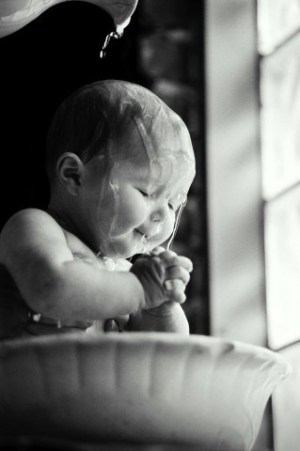
Now, Jesus is ascended to His and your heavenly Father. So when you strive, you do it with Jesus on your side. Jesus knows your weaknesses and fears. And because of His work, He pours out His forgiveness every moment of every day. The rest He won and purchased for you is guaranteed, perfect, and stored up for you ready to be revealed at the Last Day (1 Pet. 1:5). You can rest because of Jesus.

Bella, today you are Baptized. Today, you have been joined to Jesus your Savior (Ro. 6:3-11) and have been clothed with Christ (Gal. 3:27). That means, dear Bella, that today you have entered into your rest with God. Jesus has done absolutely, positively everything that needed to be done for your salvation. You are wholly and completely given over into holy rest.

Baptism 2Bella, and all you saints, because you and I are always tempted to think there is something left for us to do to be saved, God desires that you continue to be pointed to the holy, eternal rest that Christ has given you. Here, assembled in God’s presence with your brothers and sisters in Christ, God reminds you of the holy rest you have now. There is nothing left for you to do. Every time you come here, you receive that rest by listening to God’s life-giving Word and letting that Word do God’s work in you.
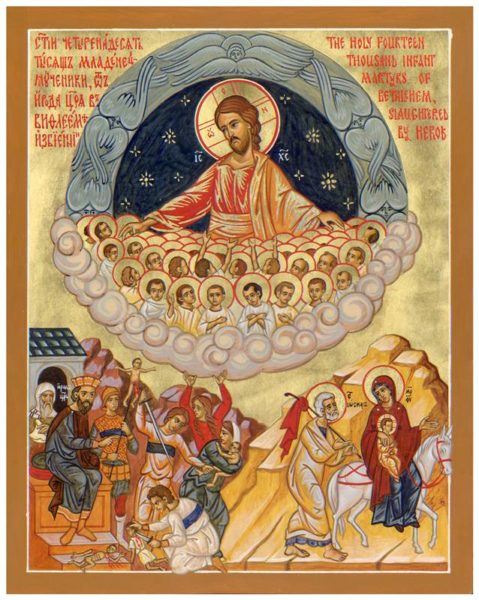
That is why we use our liturgy. It is one of the best ways to deliver the holy rest that comes only through God’s Word. We enter God’s presence by hearing His Word and singing His praise. We confess our sins and receive His forgiveness. We hear His Word and confess our faith that is taught in that Word. We receive instruction from that Word and pray to Him as His beloved children. We are fed Christ’s body and blood for the forgiveness of our sins. And we receive His blessing and benediction as we depart so we can carry that blessing with us through the week.

Bella, and all you saints, keep listening to the Word faithfully and diligently as it is preached and enacted in the service because your present access to God’s eternal, holy rest depends upon that Word. And that Word will never fail you. Amen.

The peace of God, which surpasses all understanding, will guard your hearts and minds in Christ Jesus. Amen.

Saving the Savior – Sermon on Matthew 2:13-23 for the Second Sunday of Christmas

Listen here.

Matthew 2:13-23

13 Now when they had departed, behold, an angel of the Lord appeared to Joseph in a dream and said, “Rise, take the child and his mother, and flee to Egypt, and remain there until I tell you, for Herod is about to search for the child, to destroy him.” 14 And he rose and took the child and his mother by night and departed to Egypt 15 and remained there until the death of Herod. This was to fulfill what the Lord had spoken by the prophet, “Out of Egypt I called my son.”

The Slaughter of the Innocents of Bethlehem Matthew 2 1616 Then Herod, when he saw that he had been tricked by the wise men, became furious, and he sent and killed all the male children in Bethlehem and in all that region who were two years old or under, according to the time that he had ascertained from the wise men. 17 Then was fulfilled what was spoken by the prophet Jeremiah:

18 “A voice was heard in Ramah,
weeping and loud lamentation,
Rachel weeping for her children;
she refused to be comforted, because they are no more.”

19 But when Herod died, behold, an angel of the Lord appeared in a dream to Joseph in Egypt, 20saying, “Rise, take the child and his mother and go to the land of Israel, for those who sought the child’s life are dead.” 21 And he rose and took the child and his mother and went to the land of Israel. 22 But when he heard that Archelaus was reigning over Judea in place of his father Herod, he was afraid to go there, and being warned in a dream he withdrew to the district of Galilee. 23 And he went and lived in a city called Nazareth, so that what was spoken by the prophets might be fulfilled, that he would be called a Nazarene.

In the name of Jesus. Amen.

Merry Christmas and happy New Year! Today is the twelfth and last day of the Christmas season. Maybe you began celebrating Christmas when the Hallmark Channel began their “Countdown to Christmas” way back on October 26th. And, no, I’m not going to mock their movies today. Finally, after ten years of being your pastor, I’ve learned to not do that anymore – at least not in a sermon.

Maybe you have taken down your tree and lights and have stored all the decorations in your garage and shed. Remember for Christians, every Sunday is Christmas and Easter – even if your house or this sanctuary isn’t decorated accordingly. So, before we take everything down today after the service, God would remind us of why Jesus came. And this reminder comes in a sobering way with a sad text. The reminder is this: Jesus entered this world to bring life and salvation to people who are obsessed with death.

The birth of Jesus wasn’t the soft, cleaned up picture that we so often have in our minds. Joseph and Mary didn’t lay baby Jesus in a warm, comfortable, well-kept barn. It was a normal barn – cold, dirty, and stinky. They weren’t surrounded by well-groomed animals. Instead, the Scriptures make sure we know that things were much humbler and more dangerous for the holy family. After the birth of Jesus announced by gruff shepherds, the families of Bethlehem wondered at the news (Lk. 2:18) but soon returned to their normal lives. Then at the beginning of Matthew 2, King Herod heard from the magi about the birth of the One who had been born King of the Jews. And Herod did not think this was good news at all.

A little background on King Herod. This Herod was known as Herod the Great, probably because of the many building projects he completed. Herod wasn’t an Israelite; he was an Edomite, a descendent of Esau. But Caesar had given him the title king of the Jews. Herod was utterly and completely wicked and would do whatever he thought necessary to protect his power. He had nine or ten wives, most of whom were murdered because he suspected of them plotting against him. Herod was so bad that Caesar Augustus, who was his friend, said that it was better to be Herod’s pig than Herod’s son.

Five days before Herod’s death, he murdered his oldest son to keep him from gaining his throne. As Herod lay on his death bed, he called all his advisors and all the influential men of Jerusalem and Judea to gather together and had them locked in the Hippodrome which was a horse racing track. Herod ordered his armies to surround the stadium and kill everyone inside after he died so that the city cry when he died – even if they weren’t crying for him. Apparently, the order wasn’t carried out.

So, when the magi come to Jerusalem asking, “Where is he who is born King of the Jews?” you can imagine how troubled Herod was. King of the Jews is his job, his title, his office. herod and the magiThe guy who didn’t even want his own children to be king after him hears that someone else has been born to be King of the Jews. Well, Herod isn’t going to let that stand. And when Herod is troubled about this, the rest of Jerusalem is also quaking as they wonder what will happen next.

So, Herod learns from the chief priests and scribes that the Christ was to be born in Bethlehem, he sends the magi to find the Child and let him know where the infant Jesus is. But God tells the magi to not return to Herod, and they depart to their own country. And God sends an angel to warn Joseph to take the infant Jesus to Egypt, the land of slavery and infanticide (Ex. 1:8-21), to save the life of the Savior. As the soldiers marched south from Herod’s castle toward Bethlehem to carry out their murderous orders, the holy family fled ahead of them to Egypt.

Again, the first Christmas was not a tranquil, picturesque scene. Lord, have mercy.

The slaughter of all those boys two years old and younger in Bethlehem is one of the saddest, most horrific things recorded in all of the Scriptures. And yet, it is not so different in our time and culture today.

In 2018, the number of abortions performed in the US passed 60 million since the Roe v. Wade decision. Worldwide, the numbers are much more devastating. In our country, the killing of these pre-born children isn’t to protect a title of a king. Instead, these children are killed for the sake of convenience and independence. And it is all done in the name of choice. Politicians used to defend abortion saying that it should be safe, legal, and rare, but many of them are pushing to expand access to abortion and even suggesting that babies who survive attempts at abortion can be left to die on a table. And now, the leading provider of abortion in our country encourages women to shout their abortions and celebrate them.

Dear saints, there is a modern-day holocaust going on in our country, and it should daily drive us to our knees in prayer. Thomas Jefferson, the third president of our country, a man who published his own version of the Gospels that removed all of Jesus’ miracles, all the claims of His divinity, and even the Resurrection, Jefferson said, “A single human being is of infinite worth.” Even this secular principle is right and is enough to peacefully (and notice I said peacefully) oppose abortion with every ounce of our strength. But the coming of the Son of God in the flesh has raised the sacredness of all human life to an even higher dimension (Dr. Rev. David Scaer). In Jesus is life which gives light to everyone (Jn. 1:4, 9).

BaptismIn the incarnation, the eternal Son of God shares in the life of every man, woman, and child – born and unborn. We human beings are all taken out of the flesh of Adam which means that we are all part of one another. But even more importantly, by His conception, the eternal Son of God has permeated all of humanity. This is why the devil loves abortion. Satan loves abortion because every unborn child reminds him of the fact that the Son of God came in the flesh, took up residence in His mother’s womb, and defeated him. The fact that your Savior was once a pre-born child is primary the reason Christians oppose abortion.

Because we are descended from Adam, we all stand before God under the just verdict of guilty and deserving of hell (Ps. 51:5). But again, more importantly, because Jesus has taken on our flesh, we can stand in faith before God with Jesus, the second Adam, to hear a verdict of innocent, holy, and righteous because this Jesus has taken your place. On the cross, He become your sin (2 Cor. 6:21) so that He is the Lamb of God who takes away your sin (Jn. 1:29) and buries it into the emptiness of His tomb.

The young boys of Bethlehem died that night so Jesus could escape death as an infant but not escape death forever. Jesus grew up and died for them and for you upon the cross. Jesus died for them and for the evil Herod’s, Hitler’s, Stalin’s, bin Laden’s, and Soleimani’s of the world. Christ paid for the sins of every abortionist, every woman who has had an abortion, and every man who has pressured a woman to get an abortion. Your Savior died for those sins just as much as He died for yours.

Today, you have heard how your Savior was saved from death so that, at the right time Christ could die for you (Ro. 5:6). So, yes – rejoice because of Christmas while you remember why Jesus came. He came to bring salvation and life to a world obsessed with death. He came to make you – yes you, sinner – His own. Amen.

The peace of God, which surpasses all understanding, will guard your hearts and minds in Christ Jesus. Amen.

On the Road Again – Sermon on Luke 17:11-19 for the Fourteenth Sunday after Trinity

Listen here.

Luke 17:11-19

11 On the way to Jerusalem he was passing along between Samaria and Galilee. 12 And as he entered a village, he was met by ten lepers, who stood at a distance 13 and lifted up their voices, saying, “Jesus, Master, have mercy on us.” 14 When he saw them he said to H-68 Trinity 14 (Lu 17.11-19)them, “Go and show yourselves to the priests.”And as they went they were cleansed. 15 Then one of them, when he saw that he was healed, turned back, praising God with a loud voice; 16 and he fell on his face at Jesus’ feet, giving him thanks. Now he was a Samaritan. 17 Then Jesus answered, “Were not ten cleansed? Where are the nine? 18 Was no one found to return and give praise to God except this foreigner?” 19 And he said to him, “Rise and go your way; your faith has made you well.”

In the name of Jesus. Amen.

This text is so full of movement, it’s like a carousel. Jesus is traveling on His way to Jerusalem between Samaria and Galilee. Jesus tells the ten lepers to hit the road and travel to the priests and the Temple. The Samaritan leper turns back interrupting his trip to the priest to make his way back to Jesus. And Jesus tells the thankful Samaritan to go his way in health and salvation (more on that later). This is a moving text in more than one way.

Now, the first verse of our text is what the commentators will call a “travel notice.” We tend to skip over these travel notices when we read because we aren’t that familiar with the geography of Israel in Jesus’ day, but they are important. However, describing where places are on a map doesn’t work well in a sermon. The important thing is this: Back at the end of Luke 9, Jesus foretells His death and resurrection (9:44-45) then Luke gives us an important turning point in his Gospel. Luke says, “When the days drew near for Him to be taken up, [Jesus] set His face to go to Jerusalem” (9:51). In other words, this miracle takes place while Jesus is on His way to the cross.

The interesting thing is that Jesus isn’t taking the direct route. Instead, Luke mentions is that Jesus is traveling between the regions of Samaria and Galilee which mainly east-west instead of from Galilee in the north directly south toward Jerusalem. Instead, He is taking His time to preach, heal, and minister to the needs of as many people as possible with His mercy and grace.

As Jesus enters a village, He is met by ten lepers. Now, leprosy still exists today, though it is commonly called ‘Hansen’s disease.’ There are actually cases of it in the US today, but it is treatable by modern medicine and not easily transferred anymore. But in Jesus day, leprosy was a terrible problem. The disease makes your skin rot away while you are still alive. Leprosy would make the nerve endings of the effected areas grow numb. A leper could have oozing blisters all over their feet, cut their arm, or burn their hand and they wouldn’t even now it. This is why, so often throughout the history of the church, sin is described as leprosy. Our sin makes us so sick, we don’t even realize how wounded we are.

Now, in Jesus’ day, leprosy was highly contagious. So, lepers had to live apart from everyone else. If you had leprosy and somebody got near you, you would have to yell out, “Unclean! Unclean!” so they wouldn’t get near you. Because of this, lepers would form their own communities to help take care of each other, and that is what we see in this text. These ten lepers have formed a little community and, because of their common disease, it was a very inclusive community. Most of these lepers are Jews, but at least one of them is a Samaritan. Normally, the Jews and Samaritans didn’t deal with each other at all (Jn. 4:9). For a Jew to eat with a Samaritan made the Jew unclean. But these ten lepers formed a little community of the desperate.

They cry out to Jesus, but instead of yelling, “Unclean! Unclean!” they cry out, “Jesus, Master, have mercy on us.” They pray the Kyrie just like do each week. But Jesus’ response to their cry for mercy isn’t to wave His hand over their bodies and speak them clean. He doesn’t make mud with His spit and put it on their diseased skin to heal them. Jesus simply tells them to go show themselves to the priest.

Now, as lepers, this is something they would have done when they first contracted their leprosy. Through Moses (Lev. 13:2ff), God commanded that people who had a problem with their skin to go to the priest. The priest would examine the effected area, and, if it was indeed leprosy, the priest would declare them to be unclean. Then, if the area would clear up, the person was to go back for a second appointment with the priest and be declared clean (Lev. 14:1-32) so they could go back and live with their family and return to work. But here, Jesus simply tells them to go show themselves to the priest.

Think of that for a minute. Before anything has changed, while their skin is still rotting, Jesus tells them to go to the priest. Now, they wouldn’t be let into the streets of Jerusalem let alone be allowed into the Temple. But in this command of Jesus, there is an implicit promise. And by leaving Jesus, they act in faith.

There is a little lesson here for us about prayer. Probably most of our lives as Christians, we are waiting for an answer to a prayer. How often do we pray for something and are left to wait? But, Christian, take heart, God will answer. As these lepers journey to the Temple, they are cleansed.

Now, presumably, the nine lepers do continue to Jerusalem. They make their way through the streets to the Temple. They find the priest and are declared to be cleansed of their disease and allowed back into their families and community once gain. But only one of them actually obeys Jesus.

ten-lepersThis Samaritan who returns to the true Temple and true High Priest. He returns to Jesus to give thanks. Did you catch what Jesus said there, “Was no one found to return and give praise to God except this foreigner?” In other words, the nine went onto the Temple and God’s house, but God wasn’t there. He was walking in the flesh between Samaria and Galilee where the Samaritan falls at His human feet giving Him thanks. Some people will read the Gospels and say that Jesus never claimed to be God. Well, sorry, they are wrong. He does right here.

And this Samaritan receives from God, from Jesus, not just a declaration of cleanliness from his flesh-eating disease, but from his leprosy of sin. Jesus’ final recorded words to this man are, “Rise and go your way, your faith has saved (σῴζω) you,” (not just ‘made you well’), “your faith has saved you.”

The Samaritan is more than just a cleansed man, he is now our Christian brother. In fact, he shows the fruits of the Spirit that we heard about in our Epistle lesson (Gal. 5:16-24). He has love for God, joy in his healing, and peace that only comes through faith in Christ. He exhibited patience as he walked away from Jesus with the promise of healing. We can imagine his kindness toward the other nine who might have thought he was silly to go back to Jesus instead of going to the Temple in Jerusalem. His goodness is visible. Jesus encourages his faith. His has gentleness and self-control can be seen in his thankfulness to God; let me quickly explain that.

The word that gets translated ‘gentleness’ is a noun and has the idea of being humble or meek. Jesus uses the same word as an adjective in the Beatitudes, “Blessed are the meek, for they shall inherit the earth” (Mt. 5:5). The Samaritan humbles himself in meekness before Jesus falling at His feet. And instead of running off to his restored life, the man exercises self-control to turn back and first give thanks to God, to Jesus.

As we, like this Samaritan, rise from here and go on our way, let us turn back to give thanks to Jesus. Thankfulness requires a turning back. If we are thinking of what is going to happen next, we can’t give thanks. If we are always thinking about the future, we cannot give thanks because there is nothing there to give thanks for – at least not yet. We don’t know what is going to happen tomorrow. Jesus could return before we get to our cars to leave. As long as we’re thinking about tomorrow, we can’t give thanks.Blessings from the Cross

Instead, turn back. Turn back to what Jesus has done for you. Most importantly, He has died and risen for you. Because of His blood shed for you, He has declared you free and forgiven of all your sins here and now. Dear saints, rise and go your way. Get on the road again in thankfulness for what Christ has done, your faith has saved you. Amen.

The peace of God, which surpasses all understanding, will guard your hearts and minds in Christ Jesus. Amen.