Aligned – Sermon on Matthew 6:1, 16-21 for Ash Wednesday

Matthew 6:116-21

In the name of Jesus. Amen.

I thought about starting this sermon with a question, but I’m going to start with the answer first. So, here’s the answer, “No. Absolutely, positively, definitely not!” That’s the answer. You’re probably wondering, “Ok, pastor. What’s the question?” Here it is: “Is Jesus telling us to be hypocrites here?” Again, the answer is, “No way. No how. Nuh-uh.” One of the common definitions of a hypocrite is ‘someone who says one thing and does another.’ Or we can flip the order – a hypocrite is ‘someone who does one thing and says another.’

That definition is overly simplistic because here Jesus says that when you fast you are to make it look like you aren’tfasting. And Jesus isn’t telling you to be a hypocrite. So, we should probably get better get a better, more Biblical definition of what hypocrite is. A hypocrite is someone who removes God from the equation of everything they do.

Scripture clearly teaches that everyone knows that God exists. Ro. 1:19-21 says that God has revealed Himself in the things that have been made. But instead of acknowledging God, people do not honor Him as God or give thanks to Him. The short way to say that is that atheists don’t exist. Sure, there are liars who falsely call themselves atheists. They claim to believe that God doesn’t exist, but they’re lying to themselves.

So basically, a hypocrite is someone who seeks the approval of men rather than of God. Jesus repeatedly says so here in Mt. 6. Christ says that hypocrites sound a trumpet before they give so that they can be praised by others (Mt. 6:2). He teaches that hypocrites pray so that they can be seen by others (Mt. 6:5). In this reading, our Lord says that hypocrites make themselves look gloomy and miserable when they fast so they will be seen by other people (Mt. 6:16).

In other words, hypocrites do good works. But they do those good works to get the approval of other sinners instead of God. Again, they remove God from the equation. Ultimately, hypocrisy is idolatry. It makes people into little gods. And if you do good works for people, Jesus says that you already have your reward which won’t last. But Jesus promises that if you do your good works for God, you will be rewarded by God, and that reward will be eternal treasure that will last forever (Mt. 6:4618).

With all of that said, I’m going to give you the entire sermon in one sentence. Ready? There is a spiritual benefit to the bodily practice of fasting because fasting helps align our body and soul.

Christian, you are justified and saved by grace through faith and not your works (Eph. 2:8-9). Faith is not just something that happens in your heart and that’s it. No. Faith changes everything about you. Faith changes both your soul and your body. In other words, faith is lived out. We know this because God works on you to sanctify you, to make you more and more holy.

There are two aspects of sanctification. First, sanctification comes about when the Holy Spirit comes to live in you and gives you the strength to love God and love your neighbor. Sanctification is that growth in good works and acts of love. The second side of sanctification is that the Holy Spirit gives you strength to fight against your sinful flesh. Ro. 6:12-14 puts it this way, “Let not sin reign in your mortal body, to make you obey its passions.” In other words, don’t go on sinning. Don’t let yourself to continue living in sin.

That’s where fasting comes in. You can think of fasting as practice. Just like a basketball player will run ‘crushers’ and do dribbling and shooting drills so, when they face an opponent in a game, all of those things come naturally. Fasting is like doing those drills. It gives you the endurance and discipline and skill that you need to fight against sin when it really counts.

Before I go on, I have to add this. You can’t fast when it comes sinful actions. If you’re a kleptomaniac and habitual liar, you can’t say, “I’m going to fast from stealing and lying.” No! Those are sins; don’t do them. Fasting is temporarily denying yourself and not doing things that aren’t sinful. You do that so that you know what to do when you stand face-to-face with sinful lusts and desires.

Normally, we think about fasting as not eating. That is one way to fast. When you fast from eating and your stomach growls and starts preaching to you, “Hey, you should feed me,” you say to your stomach, “You’re not the boss. Man does not live by bread alone but by every word that proceeds from the mouth of God” (Mt. 4:4Dt. 8:3). Then, instead of eating, you read Scripture or pray. That discipline helps bring your body in alignment with your redeemed and forgiven soul.

So, I would encourage you, give fasting a try. It doesn’t have to be giving up food. Use your God-given wisdom to pick something that you regularly do and don’t do it for a certain amount of time. Let me give you a few possible examples:

Maybe, you decide that you won’t go on YouTube or social media for a few days, or you decide to limit yourself to a certain amount of time on those apps each day, or only during a certain window of the day. You get to pick. Then, when you have the desire to go on them outside of your window, read your Bible or pray or sing a hymn instead.

Maybe, you decide to give up watching a news program for a while. Instead of watching it, read the Psalms to remind yourself that God is in control. This will help you learn that the world won’t fall apart just because you don’t know what’s going on. Use that time to pray for our leaders.

Maybe, you normally listen to something on your headphones while you’re plowing snow. Instead of doing that, meditate on a passage of Scripture. Maybe, you set your alarm 15 minutes earlier and deny yourself that bit of sleep to pray for your family and friends or text them a Bible verse.

The possibilities are endless. By doing those things, you train your body and mind and bring them into alignment with your redeemed soul. You gain self-control and see that you have the strength to fight when you have desires that are actually sinful.

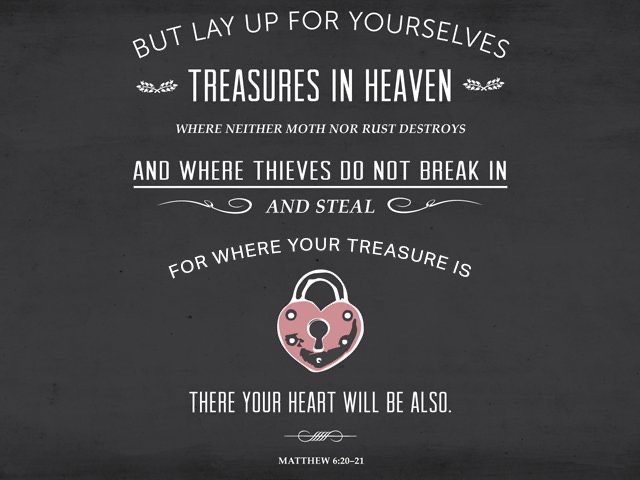
Yes, keep your fasting secret, but remember that Jesus promises that your heavenly Father sees your fasting and will reward you. In other words, fasting lays up treasures in heaven for you. And where your treasure is, there your heart will be also (Mt. 6:21).

Dear saints, know this – God loves you whether you fast or not. He has come to win your forgiveness and salvation, and His work is finished, complete, and perfect. Certain of that restored relationship with God, know that you are His, and you are free. Free to spend your life on things that matter. Free to store up eternal treasures in heaven. 

And your Savior freely invites you now to His table to receive the greatest treasure of His Body and Blood given and shed for you for the forgiveness of all your sins. Amen.

The peace of God, which surpasses all understanding, will guard your hearts and minds in Christ Jesus (Php. 4:7). Amen.

Pursue What Never Fades – Sermon on 1 Corinthians 9:24-10:5 for Septuagesima Sunday

1 Corinthians 9:24-10:5

In the name of Jesus. Amen.

Before we get into the text something needs to be abundantly clear in our minds. Salvation is a gift. It is freely given by God because He is merciful and gracious, abounding in steadfast love and faithfulness (Ex. 34:6). You are saved by grace through faith and not because of your own doing; salvation is a free gift given by God and isn’t a result of your works (Eph. 2:8-9). You don’t earn your way into heaven. You don’t deserve God’s forgiveness and mercy, but He loves to freely give you His forgiveness, mercy, and grace because of what Christ has done by His death and resurrection. That needs to be firm in your mind because that isn’t what Paul is dealing with in these verses.

What Paul is dealing with is the fact that salvation can be neglected and cast aside. Salvation can be lost. That’s why those first few verses from 1 Co. 10 talk about how God’s people were overthrown in the wilderness. They prayed, and God delivered them from bondage and slavery in Egypt. God sent His judgment on their oppressors, and His people left with the treasures of Egypt (Ex. 12:35-36). On top of that, God gave them every spiritual blessing. They were Baptized in the cloud and the sea. God fed them with spiritual food and gave them spiritual drink. But even though they had received all those gifts, they didn’t enter the Promised Land. Instead, they were overthrown in the wilderness (1 Co. 10:5). Or, to use the word Paul uses at the end of ch. 9, they were disqualified.

So, what Paul is dealing with here isn’t about becoming saved. That’s a free gift. What he’s talking about is being a Christian, living a Christian life, denying self, and bearing the cross (Mt. 16:24). He’s talking about walking in the good works that God prepared for you (Eph. 2:10) and about bearing the fruit of good works that proves that faith is living (Jam. 2:17-18).

When you aren’t striving to walk in the good works God has prepared for you, Paul says you look absurd. You look like an athlete on a track who isn’t even trying. The gun goes off, and you’re still standing at the starting line as though nothing is happening, or you’re ridiculously dancing across all the lanes while the other competitors are finishing the race. When you are complacent in your faith, you’re like an unfocused boxer. The bell rings, and you’re swinging punches in the air willy-nilly while the other guy in the ring is waiting to knock you out cold.

Yes, God has saved us and freely granted us salvation. The point here is that salvation places us into a life that is filled with good works, a life where we fight against the sins of being lazy and complacent, a life where we are devoted to loving God and our neighbor, and a life where we are determined and disciplined to do better at keeping His commandments. This kind of life is what gives us a deeper and firmer faith in and devotion to Christ.

This pursuit to faith, this growth in and devotion to good works isn’t just a minor teaching of Scripture. It’s all over the New Testament. In Lk. 13:24, Jesus says, “Strive to enter through the narrow door.” In Jn. 6:27, He says, “Do not work for the food that perishes, but [work] for the food that endures to eternal life.” 1 Co. 15:58 says, “Be steadfast, immovable, always abounding in the work of the Lord.” Gal. 6:9, “Let us not grow weary of doing good.” Php. 2:12“Work out your own salvation with fear and trembling.” Tit. 2:14 says that Jesus purified us to be His people who are “zealous for good works.” Heb. 4:9-11 says, “There remains a Sabbath rest for the people of God; …strive to enter that rest.” 1 Pt. 1:22, “Love one another earnestly from a pure heart.” This teaching everywhere.

But one of the problems that we have with these many calls to good works is that we look backward. We think about how it went when we had opportunities to do good works. We look back at our failures to be diligent and how un-zealous and lazy we were. We realize that we aren’t what God calls us to be. So, the Bible is pushing us forward to good works, but we look back and see our failures. That kills our drive and motivation. Instead of being inspired by these calls to good works, we are discouraged. We think, “With all the times I’ve failed, why would I even try?” The very thing that is meant to encourage us ends up discouraging us. And that isn’t a problem with the Scriptures. The problem is our sin and looking backward.

What Paul is doing with this text is trying to get us to quit looking at our past failures and laziness. Instead, we are to look forward to the prize. In Php. 3:13–14, Paul puts it this way, “[O]ne thing I do: forgetting what lies behind and straining forward to what lies ahead, I press on toward the goal for the prize of the upward call of God in Christ Jesus.”

This is why Paul uses this sporting analogy here and says that he disciplines his body and keeps it under control. The Greek there literally says, “I pummel my body and make it a slave… lest I should be disqualified.”

To compete in the games that Paul mentions here, athletes in Paul’s day would devote themselves to ten months of training. They would go on strict diets and give up anything that hindered their training. Those competitors had to have the will and self-control to let go of everything that would distract them from winning. And when it was time to compete, they had one goal – winning the prize.

The prize the athletes won at the games near Corinth wasn’t a gold medal. No, they got a wreath made of dried, withered celery. Dear saints, if an athlete is willing to do all that for celery – something that you buy at the store simply so you can throw it away after it sits in your fridge for a week – how much more should you work and strive and discipline yourself and use self-control? You should do all that because your prize, your aim, your goal is the resurrection? Your goal is eternal life. It’s peace and rest with God Himself (Heb. 4:9-11).

The parable in our Gospel lesson today (Mt. 20:1-16) dealt with this too. The problem with the workers who were hired at the beginning of the day was that they kept looking backward at their work and toil and were focused on the wage. That perspective wrongly led them to think they were owed more than the guys who were hired later. The problem with those workers was that were looking in the wrong direction. They figured the goal was the paycheck when, in reality, it was a place in the vineyard. That’s why they are told to exit the vineyard.

Dear saints, pursue what never perishes. Chase what never fades because that is actually worth having and attaining. 2 Tim. 4:8 points you to the crown of righteousness which the Lord, your Savior and righteous Judge, will award to you because you have loved His appearing. That is what is before you, and that is worth striving for.

Look to that. When you wake up every morning, you are to see a track, a race, a finish line, and a prize. That prize is the imperishable crown of righteousness and life with your Savior. Get up and run that you may obtain it. Dear saints, pursue that because it will never fade. Amen.

The peace of God, which surpasses all understanding, will guard your hearts and minds in Christ Jesus (Php. 4:7). Amen.

Implanted – Sermon on James 1:16-21 for the Fifth Sunday of Easter

James 1:16-21

16 Do not be deceived, my beloved brothers. 17 Every good gift and every perfect gift is from above, coming down from the Father of lights, with whom there is no variation or shadow due to change. 18 Of his own will he brought us forth by the word of truth, that we should be a kind of firstfruits of his creatures. 

19 Know this, my beloved brothers: let every person be quick to hear, slow to speak, slow to anger; 20 for the anger of man does not produce the righteousness of God. 21 Therefore put away all filthiness and rampant wickedness and receive with meekness the implanted word, which is able to save your souls.

Alleluia! Christ is risen! He is risen indeed! Alleluia!

In the name of Jesus. Amen.

Even as we live in a broken and fallen world, God continues to shower His good gifts upon us. Everything good in your life – your family and friends, the air you breathe, the tasty food waiting for us downstairs, the green leaves on the trees, and the cushioned chairs under your posteriors – all of it comes from the Father of lights, the almighty Creator of the universe. And your heavenly Father isn’t stingy. His good gifts started immediately at the beginning of your life, the moment of your conception. He intricately weaved you together in your mother’s womb, and He has and will sustain you all the days of your life with His good gifts (Ps. 139:13-16). And God still gives more.

On top of His good gifts, God gives perfect, complete gifts that also come ‘from above.’ In these verses, James uses language that echoes what Jesus says in Jn. 3. That only those who are born again, or ‘from above,’ (same word) by water and the Spirit will see the kingdom of God. The greatest and perfectest [sic.] gift God has given you is the new, from-above birth that James mentions in v. 18. This new, spiritual birth is yours through faith. “Of [God’s] own will, He brought you forth.” And God didn’t even wait for you to begin living to give you this gift of new birth and salvation. Before God created all things, even before the foundation of the world He had inked your name in the Book of Life (Mt. 25:34Eph. 1:4-52 Tim. 1:9).

Dear saints, you didn’t earn your place in God’s family. God freely gave it. That’s how you were and are and remain saved. It isn’t your work; it’s God’s perfect gift. Period. In your Baptism, God gave you the gift of faith as He implanted His life-giving Word into you. And the Holy Spirit has watered and nurtured that Word so that it would grow, mature, and bear fruit. Micah and SidaLee, today you aren’t earning God’s gift or approval. Instead, you are simply publicly acknowledging the gift you have received from Him as you stand, rooted where God has planted you.

Micah, SidaLee, and all you saints, count on God continuing to give His good and perfect gifts to you. Don’t be deceived into thinking that you can reach out and grab those gifts before God gives them. Our reading starts, “Don’t be deceived.” It’s a good translation, but the word James uses has a nuance to it of following the wrong path.

You would be utterly and sinfully deceived to think that you can snatch God’s good gifts before God gives them. That is the path of filthiness and rampant wickedness where those gifts cease to be gifts. It is the path of darkness that only leads to more darkness. The devil, the world, and your own flesh will try to lure you down that path of darkness to your eternal death. Do not go down that path.

But that is not the path you are on, Christian. Your path is to recognize the good and perfect gifts for what they really are – gifts from your Heavenly Father, your merciful Savior, and your comforting Holy Spirit. Your path is illumined by the true, eternal, inerrant, infallible, Word of God that is a lamp to your feet and a light to your path (Ps. 119:105). And you can know without a doubt that Word will never fail you.

Christ Himself is that Word, and there is no shadow, no shiftiness, no variation in Him. The sun sets, and the moon goes down. But Christ does not. Even though Christ describes this path as narrow and difficult (Mt. 7:13-14), you can confidently and safely run down that path with your eyes fixed your eyes on Christ, the Author and Perfector of your faith (Heb. 12:1-2). That confidence comes because He has implanted His Word in you.

I have to apologize for mixing metaphors about going down a wrong path on the one hand and being planted on the other hand. But it’s what the Holy Spirit inspired James to do. So, I guess, I’ll do it too.

Receive the implanted Word. A tree doesn’t need go off on a journey to find more nourishment to grow taller and bear more fruit. Instead, it stretches wider – both with branches and roots. That stretching enables that tree to receive more and more. And the more it receives, the more fruit it bears.

By God’s will, you were brought forth, planted, and are continually nourished because your God is a giver. With a giver, you can receive or reject, but you can’t make a deal. The giving-God doesn’t play around with negotiations, and you cannot make a deal with Him because you have nothing to offer that isn’t His already.

Be comforted. God doesn’t tire of giving. He just gives more. He would have all of you open your hands wider to keep receiving His good and perfect gifts. And if you are worried that His gifts will get too big and overwhelm you, there is a simple solution: Join God in His giving game.

Because God continues to pour out His gifts and blessings on you, you know that you are free to bless others and join God in giving His gifts away. Your giver-God pours out His good and perfect gifts on you because He has made you His child. With each gift, He nudges you to open your hands wider to both to receive from Him and give to others as well.

So, Micah, SidaLee, all you saints, open your hands wide to receive God’s good and perfect gifts (Ps. 81:10). Always continue to receive the implanted Word which saves your soul and delivers the righteousness of God to you now and always. Amen.

Alleluia! Christ is risen! He is risen indeed! Alleluia!

The peace of God, which surpasses all understanding, will guard your hearts and minds in Christ Jesus. Amen.

Today in Paradise – Sermon on Luke 23:39-43 for Good Friday

In the name of Jesus. Amen.

The disciples, James and John, had asked Jesus if they could sit at His right and left when Jesus entered His glory, but Jesus told them that they didn’t know what they were asking. Besides that, Jesus said that it wasn’t His to grant, and the heavenly Father had already determined who would have those seats of honor (Mk. 10:35-40). In a few minutes, we will hear who gets those positions – two criminals one on Jesus’ right and another on His left (Mk. 15:27; Lk. 23:33).

At first, both of these condemned men mock Jesus as they hang there with Christ on their own crosses (Mk. 15:32). But something happens as the thief on the right watches Jesus suffer. This thief hears Jesus’ words as He hangs on the cross. Maybe, it was when he heard Jesus say, “Father, forgive them, for they know not what they do” (Lk. 23:34). And faith sprouts in that criminal’s heart. He is converted and is a Christian.

Now, instead of mocking Jesus, he prays to Jesus. And his prayer sounds absurd, “Jesus, remember me when You come into Your kingdom.” Here Jesus is beaten, bloodied, stricken, stripped, hanging, and dying on a cross. He is about as far from obtaining a kingdom as you could possibly be. But through faith this thief knows that Jesus isn’t done. He knows that the cross won’t be the end of Jesus. Somehow, and this can only be by the working of the Holy Spirit, this man believes that death won’t be the end of Jesus. He is a king who is coming into His kingdom. And even in that moment this thief believes that Jesus is a Savior who can save him from the condemnation that is the due reward for his deeds (Lk. 23:41).

Jesus looks at him and says, “Truly, I say to you, today you will be with me in Paradise.”

And when Jesus dies, His body is run through with a spear, taken down from the cross, and laid in the grave. But Jesus’ soul goes to be with the Father in heaven, and the thief goes with Him. Jesus and this thief meet up that very day in Paradise. Scripture says that to be away from the body is to be present with the Lord (2 Cor. 5:8). 

The separation of body and soul that Jesus and this criminal experience when they die is the same separation that you and I will face unless Jesus returns first. Our body will go to the grave, and our soul will go to be with the Lord. But when Jesus returns, He will put you back together. Your body will be raised from the grave. Your soul will be rejoined to your body, and you will live forever. This is our hope and comfort.

But there is something more comforting to learn from the thief on the cross, and it is this: You are saved, not by your works, but by God’s grace. You are justified, not by your deeds, but by God’s promise. You are delivered, not by your efforts, but by God’s mercy. And this is only possible because Jesus takes all your sin and suffers in your place on the cross.

That thief’s story preaches this to you today. He lived a life that earned him capital punishment. But the Holy Spirit got a hold of him. He believed and was converted. And he’s right into heaven. 

The thief isn’t saved because of his works, deeds, or efforts! Even if he wanted to do a good work, he wouldn’t have been able because his hands and feet are nailed to a cross. All he had to face the judgment of God was the promise of Jesus, and that was enough for him. And it is enough for you.

When you stand before God’s holiness and perfection to be judged, there is nothing you can offer – no excuse, no self-justification, no good work. Nothing. 

You have nothing except the promise of Jesus. And, again, that is enough. Jesus says to this condemned criminal, “Truly, today you will be with Me in Paradise.” And Christ says the same to you, dear saint. “Truly, you will be with Me in Paradise.” Amen.

The peace of God, which surpasses all understanding, will guard your hearts and minds in Christ Jesus. Amen.

The Sword – Sermon on Luke 2:22-40 for the First Sunday after Christmas

Listen here.

Luke 2:22-40

22 And when the time came for their purification according to the Law of Moses, they brought him up to Jerusalem to present him to the Lord 23 (as it is written in the Law of the Lord, “Every male who first opens the womb shall be called holy to the Lord”) 24 and to offer a sacrifice according to what is said in the Law of the Lord, “a pair of turtledoves, or two young pigeons.”

25 Now there was a man in Jerusalem, whose name was Simeon, and this man was righteous and devout, waiting for the consolation of Israel, and the Holy Spirit was upon him. 26 And it had been revealed to him by the Holy Spirit that he would not see death before he had seen the Lord’s Christ. 27 Jesus presented in the Temple SimeonAnd he came in the Spirit into the temple, and when the parents brought in the child Jesus, to do for him according to the custom of the Law, 28 he took him up in his arms and blessed God and said,

29 “Lord, now you are letting your servant depart in peace,
according to your word;
30 for my eyes have seen your salvation
31 that you have prepared in the presence of all peoples,
32 a light for revelation to the Gentiles,
and for glory to your people Israel.”

33 And his father and his mother marveled at what was said about him. 34 And Simeon blessed them and said to Mary his mother, “Behold, this child is appointed for the fall and rising of many in Israel, and for a sign that is opposed 35 (and a sword will pierce through your own soul also), so that thoughts from many hearts may be revealed.”

36 And there was a prophetess, Anna, the daughter of Phanuel, of the tribe of Asher. She was advanced in years, having lived with her husband seven years from when she was a virgin, 37 and then as a widow until she was eighty-four. She did not depart from the temple, worshiping with fasting and prayer night and day. 38 And coming up at that very hour she began to give thanks to God and to speak of him to all who were waiting for the redemption of Jerusalem.

39 And when they had performed everything according to the Law of the Lord, they returned into Galilee, to their own town of Nazareth. 40 And the child grew and became strong, filled with wisdom. And the favor of God was upon him.

In the name of the Father and of the Son and of the Holy Spirit. Amen.

Merry Christmas! Today is the sixth day of Christmas, so make sure you have enough room in your house or yard for your six geese a-laying. Someone will bring them by sometime later. Probably, most people you come across think Christmas is over and done with, but not here in church. The Church is right in the middle of celebrating Christmas. In the Church, we get to enjoy Christmas until next Sunday when we remember the visit of the wise men on Epiphany.

This text today has a lot going on, and we could focus on so much. But we are going to consider mainly what Simeon says to Mary in v. 34-35. Listen to those words again, “Behold, this Child is appointed for the fall and rising of many in Israel, and for a sign that is opposed (and a sword will pierce through your own soul also), so that the thoughts from many hearts may be revealed.”

First, Jesus is appointed for the fall (or ‘ruin’ or ‘downfall’) of many. In other words, many will reject Jesus to their damnation. But Jesus is also appointed for the rising of many. That word, ‘rising,’ is the word that also gets translated as ‘resurrection’ when Jesus says, “I am the resurrection and the life”(Jn. 11:25). Many will trust in Jesus and from Him receive forgiveness, salvation, resurrection, and eternal life.

Simeon & Presentation of Jesus in the TempleThis forty-day-old Jesus is going to bring a division between believers and unbelievers. Simeon, inspired by the Holy Spirit, says this division comes because what a person does with Jesus will reveal the thoughts of their heart. The division falls in one of two ways: many will oppose and reject Jesus to their fall, to their ruin, and to their damnation, and many will trust in Him to their resurrection and eternal life.
But there is one more phrase from Simeon’s words to Mary that we haven’t touched on yet. It is the phrase in parenthesis. “A sword will pierce through your own soul also.” And this is what we are going to pull apart and consider for the rest of the sermon.

Typically, the understanding of that phrase from Simeon is understood to mean that Mary is going to be very sad when she stands at the cross and watches her Son suffer the wrath of God against all sin. Now, I don’t want in any way to diminish Mary’s sorrow at the cross. But if that is what Simeon is saying there, it is very out of place. Simeon is focusing on the division and separation that Jesus will bring between believers and non-believers. So, for him to tell Mary that she is going to be very sad at some point would be odd.

A better understanding is that Mary is going to be divided even within herself because of Jesus. Not only is Jesus going to challenge, confront, and expose those who reject Him. Jesus is also going to challenge, confront, and expose those who believe in Him and are Christians. Now, Mary is a Christian. She believes and trusts in Jesus. God had told her that she was bearing the Messiah and Savior. But Mary, and all Christians (so you too), all Christians are going to be divided within themselves because of Jesus.

And that is where this sword that Simeon talks about comes in. What is this sword? The book of Hebrews helps shed some light on Simeon’s words. Listen to this verse, you are probably familiar with it: Hebrews 4:12“For the word of God is living and active, sharper than any two-edged sword,piercing to the division of soul and of spirit, of joints and of marrow, and discerning the thoughts and intentions of the heart.”

Do you see how similar that is to Simeon’s words?

God’s Word is like a scalpel that divides between soul and spirit. Usually in English, soul and spirit are synonyms. The Bible will even use the two as synonyms (Lk. 1:46-47; 1 Pet. 3:19; Rev. 6:9). You aren’t made up of three things – body, soul, and spirit. You are made up of two things – body and soul or body and spirit. But there are times – and Heb. 4:12is one of them – where Scripture makes a distinction between your soul and your spirit.

When the Bible does make a distinction between soul and spirit, usually the soul will refer to your thoughts, emotions, personality, and inward life. Your soul is who you are. It is your personality, and it is wrapped up with your body. If your body has a traumatic injury, it changes who you are. So your soul is shaped by your past, by your upbringing, by important people in your life.

On the other hand, your spirit different. Your spirit is who you are from God’s perspective. Before you were a Christian, your spirit was dead in sin and trespasses (Eph. 2:1f), but your soul was not dead. When you were born again, your spirit was reborn. Remember when Jesus says to Nicodemus (Jn. 3:6), “That which is born of the flesh is flesh, and that which is born of the [Holy] Spirit is spirit”(also, see Ro. 8:16).

So, God causes your spirit to be born again. You are saved, reborn, renewed, forgiven, perfect, and sinless by the washing of regeneration and renewal of the Holy Spirit (Tit. 3:5). When God looks at you, He sees your spirit which has been washed and renewed. So, now, back to Heb. 4:12, the Word of God is a sword that is sharp enough to distinguish between your soul and spirit.

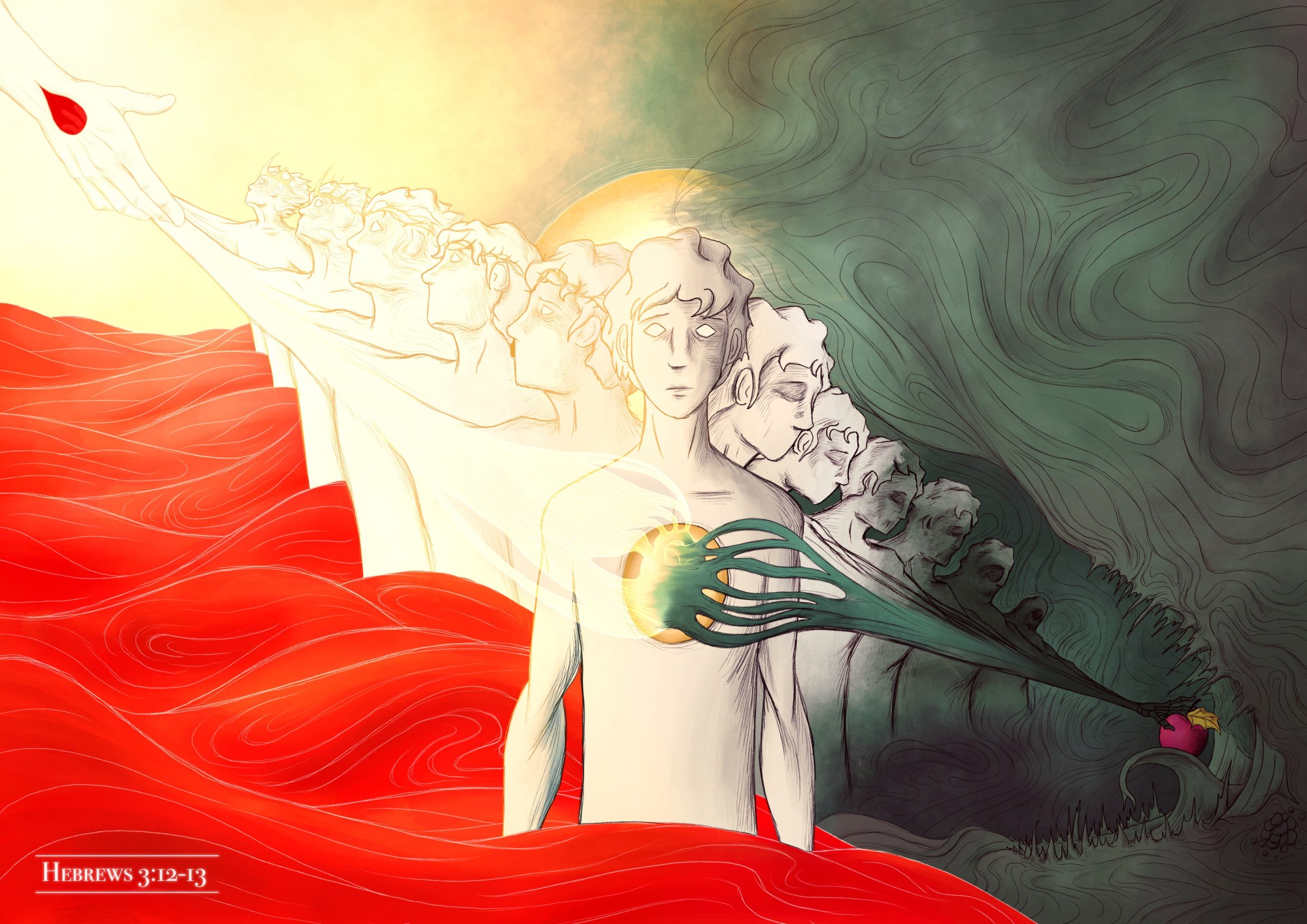
Hebrews 3_12-13 RenewedThere can be, and often is, a conflict between how God sees you in your reborn spirit and how you see yourself in your soul – your thoughts, and emotions. You have probably experienced this. Part of you, your spirit, wants to live a certain way. You want to keep God’s commands, you want to live a God-pleasing life, you want to love your neighbor, etc. But part of you, your soul, doesn’t. Your soul would rather make sure you are comfortable and doesn’t really care about what God has commanded or what would benefit others. Paul talks about this conflict in Ro. 7(:7-25)where he wants to do good, but instead he keeps doing the sinful thing that he hates.
This is why, dear Christian, you need the Word of God. The Word of God is sharper than any two-edged sword. It can cut across even your soul and spirit. The Word of God will distinguish what is right, good, and holy that has come from God. And it will distinguish what is sinful and your soul tries to hold on to but needs to let go.

In other words, the Word of God does surgery on you, Christian. Like a surgeon cutting out and removing a tumor leaving the good, healthy tissue behind, the Word of God will cut out the pollution of sin and leave behind what is good and right. Those things that you thought were normal and did all the time, but they really harm you and your neighbor, the Word of God wants to cut those things out. And those things that are right and good and come from God, the Word wants those things to remain.

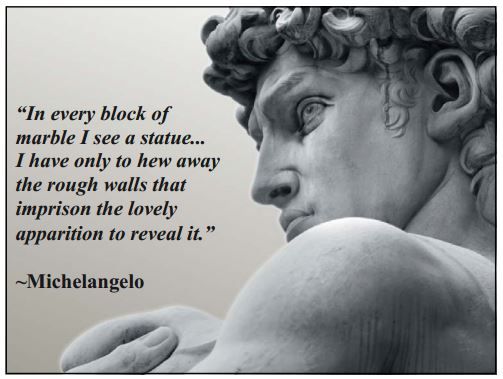
Michelangelo Sculpture Quote.jpgThe artist Michelangelo (not the Ninja Turtle) used to say that when he looked at a hunk of marble, he didn’t see big rock. Instead, he saw the sculpture that he was going to free from the rest of the rock that he would eventually chip away. He would say that he wasn’t creating a sculpture, he was just getting rid of all the rock that wasn’t part of the sculpture. That is somewhat the idea in the verse from Hebrews about the Word of God doing the work of dividing soul and spirit.

So, here is the picture. You might think that you are just fine. You are better than others and don’t need forgiveness like they do. That is the rock and debris of your sinful soul. Repent of that. God’s Word is sharp and will cut away the veneer of your pride and arrogance. The Word of God will remove all of that and mold and shape you into the person God wants you to be.

Or, on the other hand, maybe you think that you are worthless and unlovable. Sometimes, you and I even imagine that those thoughts of worthlessness are a good work. But, really, that is just the other side of pride and arrogance. Repent of that too. That is not how God sees you, Christian. Jesus was not wasting His time when He died on the cross for you. He loved and valued you and was cleansing you by the shedding of His blood. So, the sharp Word of God comes along and cuts away that wrong idea that you are worthless and unlovable.

For about a month now, I’ve been inviting you to join me in 2019 to read through the entire Bible. I hope you take me up on that invitation. There will be times where it will be painful and difficult. But remember that God’s Word isn’t just a bunch of words like any other book. God’s Word is always doing what God wants it to do.

May your Lord and Savior continue His work of molding and shaping you through His Word this coming new year. Amen.

The peace of God, which surpasses all understanding, will guard your hearts and minds in Christ Jesus. Amen.