Unveiled – Sermon on Exodus 34:29-35; Matthew 17:1-9; and 2 Peter 1:16-21 for the Transfiguration of Our Lord

Exodus 34:29-35; Matthew 17:1-9; & 2 Peter 1:16-21

In the name of Jesus. Amen.

This is a glorious text, but even more glorious is that the beloved Son of God would give His life for you on the cross. Because Jesus has died for you, you, dear saints, will also shine like the sun (Mt. 13:43). To make that point, we’re going to consider all three of our Scripture readings and two other passages, 2 Cor. 3:4-18 and Mt. 13:43. A figure skater or a competitive diver will do a routine with a high degree of difficulty to get a higher score. Hopefully, my execution of the sermon will be good enough that the payoff will be worth it in the end.

A person’s face can tell you a lot. Just to be clear, I’m not talking about the mouth part of a person’s face – of course, the mouth can tell you a lot too. I’m talking about a person’s facial demeanor. Someone could be talking to you in a normal tone, but if you watch their face, you can tell if they are sad or happy, discouraged or excited, heartbroken or twitterpated. Sometimes you just enter a room, and a family member will ask, “What’s wrong?” or, “Why are you so happy?” Your word hole doesn’t have to be operating for your face to say a lot.

Between our Old Testament and Gospel readings today (Ex. 34:29-35 & Mt. 17:1-9), we heard about two different shining faces – Moses’ and Jesus’. And those two shining faces produced two very different responses.

Right before our OT text, Scripture says that Moses had been on Mt. Sinai for forty days and forty nights, and during that time he neither ate bread nor drank water (Ex. 34:28). How Moses survived that, I don’t know. Somehow, God miraculously kept Moses going. After being on a mountain for forty days and nights with nothing to eat or drink, you would expect Moses’ face to be weathered, worn, and weary. But when he arrives back in the camp, Moses’ face was shining because he had been talking with God. This made the people so afraid that they wouldn’t even approach Moses. Now, Moses admits here (because he wrote Exodus) that he had no idea that his face was shining. And this gives us a glimpse into what Moses must have seen and heard during those forty days and nights. Being in God’s presence and talking directly to God was so grand and glorious that the glory Moses saw continued to radiate from his face. And Moses was so used to being in that glory that he didn’t realize his face was shining.

In 2 Cor. 3:4-18, Paul contemplates on this. I would encourage you to read that passage later today, and you might want to turn there because we’re going to come back to it. In 2 Cor. 3:4-18, Paul says that the Law came with such splendor and glory that people were afraid to come near because of Moses’ shining face. Paul goes on to say how much more glorious is the ministry of the Gospel, and we see that glory on the Mount of Transfiguration.

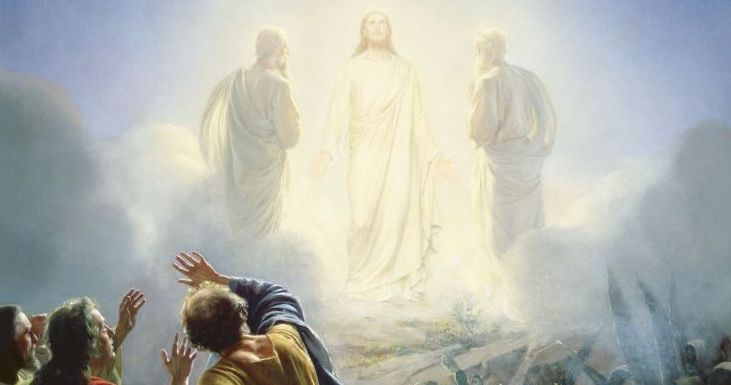
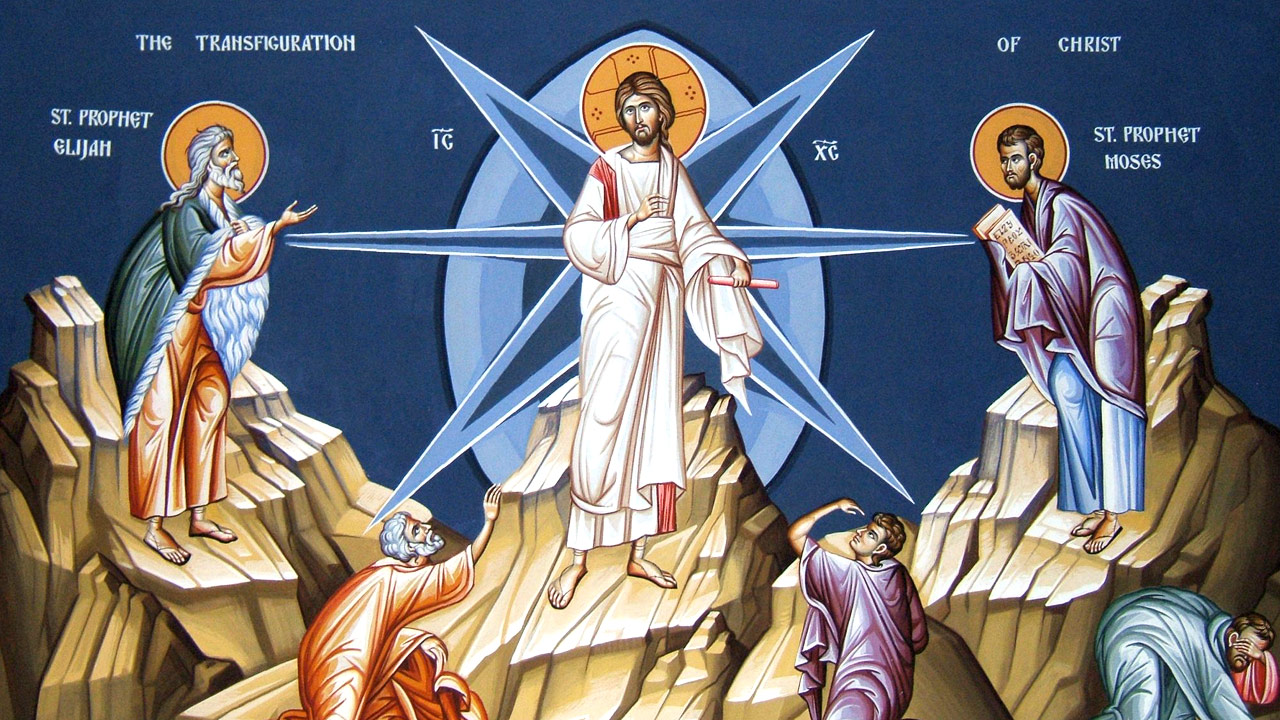
Jesus goes up a high mountain with Peter, James, and John and is transfigured. His clothes become white as light. Moses and Elijah appear and are talking with Jesus. And Jesus’ face shone like the sun. Now, Scripture doesn’t give us the total lumens of Moses’ face compared to Jesus’ face. It is interesting to note that the Greek translation of our Old Testament text uses a word that means ‘glow’ to refer Moses’ face while Matthew here uses the word λάμπω (lampō) which means ‘shine’ to refer to Jesus’ face. So, Moses’ face glowed with a radiant, reflected glory, but Jesus’ face shines like the sun with its own glory.

We do know that Moses’ face was bright enough that people could see it and were afraid, but a thin veil was enough to calm their fears. But here Jesus’ face shines like the sun, and I’m pretty sure a little veil wasn’t going to do much to dim that shining. Despite the brightness and glory, notice that Peter, James, and John don’t ask Jesus to veil His face. Instead, the reaction is completely different. Peter says, “Lord, it is good that we are here. In fact, let’s stay here. I’ll make three tents – one for You, one for Moses, and one for Elijah.” But while Peter is still speaking, the bright cloud of God’s glory overshadowed them, and God the Father said, “This is My beloved Son, with whom I am well pleased; listen to Him.” This terrifies the three disciples, but Jesus came and touched them saying, “Rise, and have no fear.”

In our Epistle text (2 Pet. 1:16-21), Peter reflects on the Transfiguration about thirty years later. There, Peter says that the Transfiguration does show Jesus’ glory, but even more so, it unveils the glory of the Bible. Peter says that it is better for you to have the Scriptures than for you to have witnessed the Transfiguration because every verse of the Scriptures unveils God’s great love for you. The shining face of Jesus points us to the bright lamp of the Scriptures that shines in a dark place. But what is this dark place?

Your initial thought is probably that the lamp of the Scriptures shines in the darkness of this world. The Bible certainly does talk about the world being full of darkness and sin. Psalm 119:105 says, “Your Word is a lamp to my feet and a light to my path.” God’s Word does enlighten this dark world so that we don’t stumble or go the wrong way. But here Peter is talking about a different dark place. He says to pay careful attention to the Scriptures as “a lamp shining in a dark place until the day dawns and the morning star rises” – and catch this – “the morning star rises in your hearts.”

You see, it’s not just the world and things outside of you that are a dark place. Your heart also has a darkness that needs the light of God’s Word. Peter doesn’t use the normal word for ‘dark’ here. The word Peter uses means, “foul and repulsive from a lack of care; neglected and filthy.” Here is the picture: Our sinful hearts are a filthy, murky, dark place. And we do well to pay attention to the Word of God shining in the dirty, neglected, dark place of our heart. When we pay attention to them, the lamp of the Scriptures shines in the darkness of our heart and pierces through the filth inside us. And the Gospel also changes us.

Even though you weren’t a witness to Jesus’ Transfiguration (lit. His ‘metamorphosis’), you have something better. Back to 2 Cor. 3:18, “And we all, with unveiled face, beholding the glory of the Lord, are being transfigured (same word used for Jesus’ transfiguration though the ESV translates it as ‘transformed’) we are being transfigured into the same image from one degree of glory to another.” Even now, already in this life, Christian, you are being transfigured into the same glory that Jesus had on the mountain. God brings about that transfiguration through His Word. By God’s gracious working through His Word, you are slowly being transfigured and metamorphosized into Jesus’ glory.

God has promised that you are being transfigured. And the picture of Jesus on the mountain today is what you are heading toward by the grace of God. In Mt. 13:43, Jesus says that you who are righteous through faith in Him will shine like the sun, just like Jesus did.

So that you could shine like the sun and be like Him, Jesus went down from the mount of Transfiguration. He descended from that glorious peak, so He could ascend another mountain, Mt. Calvary, where He laid down His life for Peter, for Moses and Elijah, and for you. He did this because He loves you and wants you to be transfigured and share in His unveiled glory. Lord Jesus, come soon and bring us to that glory. Amen.

The peace of God, which surpasses all understanding, will guard your hearts and minds in Christ Jesus. Amen.
Don’t Settle – Sermon on Matthew 17:1-9 for the Transfiguration of our Lord

Matthew 17:1-9

1 And after six days Jesus took with him Peter and James, and John his brother, and led them up a high mountain by themselves. 2 And he was transfigured before them, and his face shone like the sun, and his clothes became white as light. 3 And behold, there appeared to them Moses and Elijah, talking with him. 4 And Peter said to Jesus, “Lord, it is good that we are here. If you wish, I will make three tents here, one for you and one for Moses and one for Elijah.” 5 He was still speaking when, behold, a bright cloud overshadowed them, and a voice from the cloud said, “This is my beloved Son, with whom I am well pleased; listen to him.” 

6 When the disciples heard this, they fell on their faces and were terrified. 7 But Jesus came and touched them, saying, “Rise, and have no fear.” 8 And when they lifted up their eyes, they saw no one but Jesus only. 9 And as they were coming down the mountain, Jesus commanded them, “Tell no one the vision, until the Son of Man is raised from the dead.”

In the name of Jesus. Amen.

Change is often difficult because we have to adjust. We prefer consistency over fluctuation and variation. This past Thursday morning, the temperature in East Grand Forks bottomed out at -30°F; the forecast for Tuesday indicates we’ll reach 36°F. If that prediction holds out, we will experience a 66° swing in five days. That 36°F is going to feel glorious. Kids will be begging parents to go around without coats and wearing shorts. I can already hear several of you thinking, “I can’t wait for a change in this bitterly cold weather. I’ll adjust just fine, thank you.” But the change I’m thinking of will happen next Fall. What will happen then? When October rolls around and we dip back down into the 30’s, the coats and shivers will be back because we will have gotten accustomed to 80-90° weather through the summer. Change can be rough. Those mid 30’s will feel glorious if we get there in the next couple of days, but not so much in October.

Now, I bring all of this up to set the stage for what happens at the Transfiguration of Jesus. Our text begins with a time marker, “And after six days…”, so we need a bit of context. If you look back to Mt. 16, you see that Jesus has just told His disciples that He must go to Jerusalem, suffer, be killed, and rise on the third day, and this prediction would have been about six months before the crucifixion. The disciples had been following Jesus for about two and a half years. They had gotten comfortable being around Him, seeing His miracles, listening to His teaching, and enjoying His company.

The impression we get is that Peter does not hear everything Jesus says. Peter hears the suffering and dying part, and I imagine Peter is so shocked that he doesn’t hear Jesus say He would rise again on the third day. So, when Jesus says that He is going to suffer and die, Peter doesn’t like it – not one bit. Jesus getting killed would be a very unwelcome change. So, Peter scolds Jesus for saying that He was going to die by saying, “Far be it from You, Lord! This shall never happen to you” (Mt. 16:22). And Jesus utterly rebukes Peter with His harshest words recorded in the Gospels, “Get behind me, Satan! You are a hindrance to Me. For you are not setting your mind on the things of God, but on the things of man” (Mt. 16:23).

So now, to our text. The Transfiguration takes place six days after this exchange between Jesus and Peter. Jesus brings Peter, James, and John up a high mountain by themselves, and suddenly, Jesus is transfigured. His face shines like the sun, and His clothes become dazzlingly bright and white as light. Then, Old Testament celebrities start showing up as Moses and Elijah crash the party.

Peter sees all of this and is scared (Mk. 9:6) but probably in a thrilling way. He wants to remain there with Jesus, Moses, and Elijah. Peter likes how things are there, up on that glorious mountain. Seeing the Transfiguration is probably in the top three highlights of Peter’s time with Jesus. Shiny Jesus is fantastic stuff, and it definitely beats the suffering and death Jesus predicted six days earlier. But as Moses and Elijah are there talking with Jesus, the Gospel of Luke tells us that Jesus, Moses, and Elijah are speaking about Jesus’ exodus which He was about to accomplish in Jerusalem (Lk. 9:31). Even in the shining glory of the Transfiguration, there is this talk about Jesus’ suffering and death. So, Peter says (and listen to how he focuses on location), “Lord, it is good that we are here. If you wish, I will make three tents here, one for you and one for Moses and one for Elijah.” It’s almost like Peter is saying, “Hey, things are good here! Why don’t we all just hang out here on this glorious mountain and forget about all that stuff in Jerusalem?”

But God the Father interrupts Peter’s plan. The cloud of God’s glory overshadowed them, and God said, “This is My beloved Son, with whom I am well pleased; listen to Him” (Mt. 17:5). Now, I don’t think we should only take this in the broad, general sense that Jesus’ words are important to listen to. That is, of course, true. Every Word of Christ is important, and Peter even makes that point in our Epistle lesson (2 Pet. 1:16-21). The Bible, God’s Word, is a lamp shining in the darkness of this world, and we do well to pay attention to it. But I would suggest that God’s command to listen to Jesus here is much more specific and pointed.

When God the Father interrupts Peter’s plan to make tents and remain on the mountain by saying, “Listen to My beloved Son,” God is reinforcing to Peter the fact that Jesus must go to Jerusalem, be crucified, and rise again. Peter is right that the glory on that mountain is good, but if Jesus doesn’t descend from the summit, if He doesn’t go down to Jerusalem, down to suffer, down to the cross, and down to the grave, then Jesus’ truest glory would never be revealed. The glory of the Transfiguration is good but remaining there would have been settling for something far less than the glory that Jesus revealed upon the cross.

We don’t understand the glory of Jesus’ Transfiguration until we see the crucifixion because by His cross Jesus elevates us to share in His glory. And those two events closely parallel each other. Here in the Transfiguration, Jesus’ clothes are shining white; on Calvary, they have been stripped off and soldiers gambled for them (Mt. 27:35). Today, Jesus was surrounded by Moses and Elijah. At the cross, Jesus is flanked by criminals (Mt. 27:38). At the Transfiguration, the bright cloud of God’s glory illumines everything; at Calvary darkness fills the land (Mt. 27:45). Here, God’s voice thunders from heaven declaring Jesus to be His beloved Son. There, the Roman soldier confesses that Jesus truly was the Son of God (Mk. 15:39).

While the two scenes are strikingly different, they help us understand each other. Because it was on the cross that Christ delivered you from the power of sin, death, and the devil so that you could share in His glory. Because of what Jesus has done for you by shedding His blood, you are being transfigured from one degree of glory to another (2 Cor. 3:18).

Dear saints, this life is filled with ups and downs and all the changes that come with them. We can certainly thank God for the moments where we have mountaintop experiences. They are good and glorious, but we don’t remain in them in this life. Don’t settle for those temporary moments. Another glory, a greater and eternal glory, awaits you. As it was with Jesus, so it is with you. You follow Jesus through suffering in this world and await the glory that is yours because of what Christ has done (Mt. 16:24-25).

And so, Christ comes to you now to strengthen you and assure you that He will never leave you nor forsake you. He comes now to give you His Body to eat and His Blood to drink and make full satisfaction for all of your sins. Jesus invites you to come to His altar and His table. Remove the veil over your face. Behold the glory of the Lord. And go back into the world with God’s glory radiating from you (Mt. 5:14-16) so that others may see your good works and give glory to your Father who is in heaven. Amen.

The peace of God, which surpasses all understanding, will guard your hearts and minds in Christ Jesus. Amen.

Just a Glimpse – Sermon on Matthew 17:1-9 for the Transfiguration of our Lord

Listen here.

Matthew 17:1-9

1 And after six days Jesus took with him Peter and James, and John his brother, and led them up a high mountain by themselves. 2 And he was transfigured before them, and his face shone like the sun, and his clothes became white as light. 3 And behold, there appeared to them Moses and Elijah, talking with him. 4 And Peter said to Jesus, “Lord, it is good that we are here. If you wish, I will make three tents here, one for you and one for Moses and one for Elijah.” 5 He was still speaking when, behold, a bright cloud overshadowed them, and a voice from the cloud said, “This is my beloved Son, with whom I am well pleased; listen to him.” 

6 When the disciples heard this, they fell on their faces and were terrified. 7 But Jesus came and touched them, saying, “Rise, and have no fear.” 8 And when they lifted up their eyes, they saw no one but Jesus only. 9 And as they were coming down the mountain, Jesus commanded them, “Tell no one the vision, until the Son of Man is raised from the dead.”

In the name of Jesus. Amen.

In the Transfiguration of our Lord, we see a glimpse of Jesus’ divinity. His face shines like the sun, and His clothes become white as light. At no other moment during His time on earth, does Jesus become as gloriously dazzling and bright as at the Transfiguration. In the Transfiguration, we absolutely see that Jesus is divine. God the Father declares so from heaven, “This is My beloved Son with whom I am well pleased.” But all that being said, we do need to be a careful with equating Jesus’ brightness with His divinity. Just because Jesus is shiny doesn’t mean that He is God.

Here’s why we need to be careful. Jesus isn’t the only one shining at the Transfiguration. Luke’s gospel tells us that Moses and Elijah were both shiny as they stood with Jesus on the mountain (Lk. 9:30-31). Also, in our Old Testament lesson (Ex. 34:29-35), we heard how Moses’ face would shine after he talked with God. Moses’ shining appearance made the people afraid to come near him. We don’t say that Moses and Elijah are divine because they were shiny too. They are normal, human men. They are Christians, but they aren’t divine. Yet, both of them also radiate a splendid light.

There are other examples of this too. In the book of Acts, we are told about Stephen (Act. 6:8-7:60). He had been chosen to be one of the first deacons. Acts tells us that he was full of faith and the Holy Spirit and would constantly point people to Christ. The Jewish council didn’t like this, so they had some false witnesses accuse Stephen of blasphemy. When Stephen was on trial, we are told that the council saw that Stephen’s face was like the face of an angel (Act. 6:15).

Now, this makes us wonder: how did they know what an angel looked like? Would they regularly see angles? Probably not. It’s likely that they thought Stephen looked like an angel because of how the Scriptures regularly describe angles. In Is. 6:1-8, the angels are called seraphim which means ‘burning ones.’ Or in Ezk. 1:13-14, Ezekiel sees angels and describes them as “burning coals of fire” that had “the appearance of torches.” So, the book of Acts doesn’t say this for sure, but it is likely that Stephen had a bright, shiny appearance as well. Many suggest that the glory that Stephen was about to receive when he was martyred in a few verses began to shine through Stephen’s face a little early.

All of this is to say that it is possible for ordinary humans to have the that bright, shiny countenance that Jesus has in His Transfiguration. Maybe it isn’t the same number of Kelvins, but you get the point. In short, when Jesus undergoes this beautiful, majestic, bright metamorphosis (that’s the Greek word that gets translated as ‘transfigured’ in our text), that’s not just because He is God, but it is also because He is a perfect, sinless, holy Man. Jesus was Man as God intended all mankind to be. In other words, at the Transfiguration, Jesus gives us just a glimpse of how all humanity is supposed to look. Here, Christ bears the unstained, true image of God. And one day, dear Christian, you will have this glory as well.

Try this picture: Imagine that your whole life, you had the flu. Every day of your life you have had body aches, fever, vomiting, diarrhea. Your hair is always disheveled, and you can hardly walk straight because you are so weak and miserable. But, again, this is all you have ever known, all you’ve ever experienced. So, if someone came up to you to you on any given day and said, “You look horrible. You should go get some rest.” You would probably respond, “What do you mean, I look horrible? I feel totally normal.”

Now, expand that out. Let’s say everyone in the entire world is sick every day of their lives. Everyone is in misery, and all everyone experiences is pain and sickness. But no one would complain that much because nobody knows anything different.

But then imagine that one day, you woke up, and your fever and flu were gone. You aren’t running to the toilet every twenty minutes to explode out one end or the other. You have a new appetite and a new strength and vitality that you never knew was possible. You are filled with so much energy, vigor, and liveliness that you don’t know what to do with yourself. You’d feel like Superman, and everyone who saw you would be amazed at how strong and alive you are because they are still sick and miserable.

What Peter saw in the Transfiguration was glorious, but what he saw is what it is to be normal human being. Peter saw in Jesus how God created us to be. The only reason it was so foreign and different was because of how sick we sinners have become and how deeply we have fallen into sin. And this vision was so wonderful that Peter doesn’t want to leave. Just to behold Jesus in that glorious state was enough for Peter, so he wants to make some tents and gaze upon Christ.

I hadn’t thought of the Transfiguration and how it reveals what humanity is supposed to look like before writing this sermon, but it’s important for us to do that because the testimony of Scripture bears all this out. Romans 8[:19-23] talks about how creation waits with eager longing for the revealing of the sons of God. And the creation will be set free from its bondage to corruption (think of the sickness) and obtain the freedom of the glory of the children of God. Don’t miss that. Creation itself is watching and waiting for the full glory of you children of God to be revealed.

But as wonderful as that text from Romans is, there is another one that is even more fitting as we consider the Transfiguration of our Lord. It’s 2 Cor. 3:18, which I included in your Scripture insert. To briefly put it in its context, Paul there is talking about what our Old Testament lesson (Ex. 34:29-35) considered about Moses’ face shining and the veil he had to wear because of the glory that made his face bright. Remember that when Moses went to speak with God, he would remove the veil, and when he would speak to the people, Moses would put a veil over his face. Then, 2 Cor. 3:18 says, “And we all, with unveiled face, beholding the glory of the Lord, are being transfigured (same word used for Jesus’ transfiguration lit. the Greek word is ‘metamorphosized’ though the ESV translates it as ‘transformed’) we are being transfigured into the same image from one degree of glory to another.”

So, did you catch that? Already in this life, Christian, you are being transfigured into the same glory that Jesus had on the mountain. God brings about that transfiguration through His Word, through Him continually working on you through His Sacraments, and through Christian fellowship. Through these things, God is working on you to mold, shape, and metamorphosize you. We aren’t perfect like Jesus, not by a long shot. But we are, by the grace of God which we behold when we gather together in Jesus’ presence (Mt. 18:20), we are slowly being transfigured and metamorphosized into His glory.

Dear Christian, all you know is this life of sin, and so you think what you now are and how you see others is normal. But it isn’t. When we confess our sins, it is right – absolutely right – to call ourselves “a poor, miserable sinner.” And here’s the sad part, because we are so sin-sick, we set our hopes much too low. For, what, ten months now, we’ve been thinking how wonderful it will be to get past this pandemic and be able to spend time with family and friends, shake hands, give each other hugs, go on a trip, or walk into a store without having to wear a stinky mask. Sure, that will be nice, but you will still be in this fallen, broken world. A world full of sin and death, where you are still surrounded selfish, self-centered, narcissistic people just like yourself and myself.

Or we think, life will be so much better when my kids are older and can take care of themselves, when my preferred political party is back in positions of power, or when I retire and get to do what I want. Dear saints, that’s setting your hopes far, far, far too low. That’s like a person with the flu saying, “Won’t it be great when I only have to run to the toilet every 30 minutes instead of every 20 minutes.” No matter how good things get in this life, it’s not normal. Because of your sin, this life is not what God intended you to experience.

But there is a higher hope because God has promised in His eternal, abiding Word that you are being transfigured. And the picture of Jesus on the mountain today is what you are heading toward by the grace of God. That glimpse of Jesus’ glory is a preview of what lies ahead for you, believer. In Mt. 13[:42-43], Jesus says that the righteous – and that’s you, baptized Christian – the righteous will shine like the sun. And even now, Jesus declares you to be the light of the world (Mt. 5:14-16). May that light shine from you and radiate into this dark, fallen world.

This brief glimpse of Jesus’ glory is small taste of what is to come, and it made Peter want to remain there in tents. But Jesus wanted more for Peter, and He wanted more for you. It’s almost though Peter’s enjoyment of and desire to stay in this moment is what drives Jesus to set His face towards Jerusalem so that you with Peter can share in that glory without having to go through the trouble making a tent.

So, Christ went down from that mountain. He descended from that peak of glory. Jesus did it to ascend another mountain, Mt. Calvary, where He laid down His life for Peter, for Moses and Elijah, for me, for you, and for the whole poor, fallen, miserable, sin-sick world. He did this because He loves you and wants you to be fully transfigured to share in this glory. 

Jesus did all of this so that you wouldn’t have just a glimpse, but the fullness of the glory and splendor that God created you for. May He come soon and bring us to that glory. Amen.

The peace of God, which surpasses all understanding, will guard your hearts and minds in Christ Jesus. Amen.

Resurrection Mode – Sermon on Matthew 17:1-9 for the Transfiguration of Our Lord

Listen here.

Matthew 17:1-9

1 And after six days Jesus took with him Peter and James, and John his brother, and led them up a high mountain by themselves. 2 And he was transfigured before them, and his face shone like the sun, and his clothes became white as light. 3 And behold, there appeared to them Moses and Elijah, talking with him. 4 And Peter said to Jesus, “Lord, it is good that we are here. If you wish, I will make three tents here, one for you and one for Moses and one for Elijah.” 5 He was still speaking when, behold, a bright cloud overshadowed them, and a voice from the cloud said, “This is my beloved Son, with whom I am well pleased; listen to him.”

6 When the disciples heard this, they fell on their faces and were terrified. 7 But Jesus came and touched them, saying, “Rise, and have no fear.” 8 And when they lifted up their eyes, they saw no one but Jesus only. 9 And as they were coming down the mountain, Jesus commanded them, “Tell no one the vision, until the Son of Man is raised from the dead.”transfiguration-icon

In the name of Jesus. Amen.

Chapter and verse breaks are helpful for us to find the same passage of Scripture, but they can also get in the way of important context. Our text, which begins a new chapter of Matthew, starts with the phrase “And after six days….” So, before we get to the Transfiguration, we need to see what was happening that week prior to Jesus getting shiny up on the mountain.

Matthew’ context for the Transfiguration starts back in Matthew 16[:13ff]. Jesus asks the disciples, “Who do people say that the Son of Man is?” The disciples report that some say that the Son of Man is John the Baptist, Elijah, Jeremiah, or one of the prophets. But then Jesus turns the question to them, “But who do you say that I am?” and Peter has his great confession, “You are the Christ, the Son of the living God.” Jesus had been proving that all along with His miracles and teaching. So, Jesus praises and blesses Peter even while He states that Peter didn’t come up with this confession on his own. Instead, God the Father had revealed this to Peter.

Then, Matthew tells us from that time Jesus began to show His disciples that He must go to Jerusalem and suffer many things, be killed, and on the third day be raised (Mt. 16:21). Transfiguration & Christ ForsakenAnd from this point, things get a little crazy and awkward. It is almost as though Peter didn’t hear Jesus say that He would rise from the dead because Peter rebukes Jesus – the very one he just confessed is the Son of the living God. Peter says, “Far be it from You, Lord! This shall never happen to You.” It would be easy to sling mud at Peter here for telling God that what He says is going to happen won’t ever happen. But you do it all the time – more on that in a bit.

Now, when Peter confessed that Jesus is the Messiah, it meant something for him. What exactly Peter had in mind that Jesus would do as the Messiah is a bit hard to pin down. But basically, Peter figured that Jesus, the Messiah, had come to fix problems. Exactly what those problems were we can’t say with certainty. But whatever Peter had in mind, one thing is sure, it would be difficult for Jesus the Messiah and Great Problem Solver to fix those problems if He was dead.

So, Peter rebukes Jesus, and Jesus rebukes Peter. “Get behind Me, Satan! You are a hindrance to Me. For you are not setting your mind on the things of God, but on the things of man” (Mt. 16:23). And this is the sharpest rebuke Jesus ever gave an individual.

You know how it can be after you have an argument with someone. You try to avoid the other person for fear that a fight will break out at any moment. When you have to talk with them, you feel uncomfortable during every conversation. You carefully word everything in order to avoid the issue flaring up again. Imagine how Peter must have felt during those six days between this rebuke and the Transfiguration.

Now, let’s ascend the mountain. Jesus invites Peter, James, and John to come up the mountain with Him. Maybe this summons made Peter figure the whole issue was over and done with. Anyway, while they are there, Jesus is transfigured. Christ’s face shines like the sun. His clothes become white as light. Moses and Elijah appear and talk with Jesus. Luke tells us that conversation centered around Jesus’ exodus (usually translated as “departure” but the word is ἔξοδος) which Jesus was about to accomplish at Jerusalem (Lk. 9:30). In other words, they were discussing the very thing that Peter said should never happen just a week ago.

To summarize: Six days prior, Jesus told the disciples about His suffering, death, and resurrection. And Peter didn’t like it then, and Peter doesn’t like it now even in the presence of shiny Jesus. Instead, Peter likes being there on the mountain basking in Jesus’ unveiled glory. But even more than that, Peter doesn’t want Jesus to walk down that mountain, down to Jerusalem, down to be arrested, down to be tried, down to suffer, and down to die on a cross – which would appear to be a complete waste. So, Peter pips up and says, “Lord, it is good that we are here.” And the word that receives the most emphasis in Peter’s statement is ‘here.’ It is nice to be there on the mountain away from where Jesus says He will die, so Peter says, “Let’s stay here. I can build some tents so we can stay here!”

In a few weeks, we are going to hear the account of Jesus’ temptation. After Jesus resists the devil’s temptations in the wilderness, Luke tells us that the devil left Jesus to tempt Him at a more opportune time (Lk. 4:13). This, right here, is a more opportune time. In other words, this statement by Peter is a real temptation for Jesus to stay there with Peter, James, John, Moses, and Elijah on that mountain of glory.

But while Peter was still speaking, a bright cloud overshadowed them, and God the Father speaks the same words He spoke over Jesus at His Baptism, “This is my beloved Son, with whom I am well pleased.” But then the Father has one more thing to say – a command to give – “Listen to Him.” That’s not just friendly advice. The previous week, Peter had been rebuked by Jesus Himself for saying that Jesus shouldn’t die, “Get behind me Satan.” Now, Peter is rebuked again by God the Father for telling Jesus to stay away from Jerusalem and death. God says, “Listen to Him!” And the disciples hear this and are terrified.

Now, which of us does not have the same kind of weakness that Peter had? How often do you think you know better than God? You sin, but instead of confessing it for the rebellion that it is, you try to self-justify your actions. You judge God for being hard-nosed because of the things He has declared are evil. You think you know better than God how to raise your children, run your bank account, drive your car, and what to look at on the internet. Every time you complain, covet, and get angry, you are bucking God’s commands and setting yourself above God. It’s all idolatry, and we are all guilty. Stay in your lane. You don’t know better than God. You don’t get to tell God how things should be. Stay in your lane, and repent.

The voice of the Father from heaven says, “Listen to Him,” and crushes Peter’s conscience along with yours and mine.

Transfiguration - Rise and Have No FearBut here is where all of this is leading: Jesus comes to Peter, James, and John cowering in their sins and touches them. And notice what He says. He doesn’t continue to rebuke Peter. Jesus doesn’t say, “See I told you so.” Instead, Jesus says, “Rise,” the same word Jesus used when He spoke about His resurrection.“Rise, and have no fear.” Of all the things our Lord could have said, He says, “Rise, and have no fear.” Jesus is resurrecting Peter from his sin.

And Jesus stays in resurrection mode. As they are coming down the mountain, Jesus says, “Don’t tell anyone about what you saw until I rise from the dead.” There, Jesus speaks about His death. But it almost seems as though this is the first time the disciples realize Jesus says that as the Messiah that He will die and rise again. Christ will rise again.

Despite your objections; despite your idolatrous thinking that you know better than God; despite your continual, obstinate, insubordination against God; Jesus knows what you need. You need His suffering, the shedding of His blood, His death, and His resurrection. You need exactly what Jesus is here to provide for you right now. Here is His body, given for you. Here is His blood, shed for the forgiveness of all your sins. Here, Jesus gives you Himself to be your Savior. Amen.

The peace of God, which surpasses all understanding, will guard your hearts and minds in Christ Jesus. Amen.

The Lamp & the Darkness – Sermon on 2 Peter 1:16-21 for the Sunday of the Transfiguration of Our Lord

Listen here.

2 Peter 1:16-21

transfiguration-icon16 For we did not follow cleverly devised myths when we made known to you the power and coming of our Lord Jesus Christ, but we were eyewitnesses of his majesty. 17 For when he received honor and glory from God the Father, and the voice was borne to him by the Majestic Glory, “This is my beloved Son, with whom I am well pleased,” 18 we ourselves heard this very voice borne from heaven, for we were with him on the holy mountain. 19 And we have the prophetic word more fully confirmed, to which you will do well to pay attention as to a lamp shining in a dark place, until the day dawns and the morning star rises in your hearts, 20 knowing this first of all, that no prophecy of Scripture comes from someone’s own interpretation. 21 For no prophecy was ever produced by the will of man, but men spoke from God as they were carried along by the Holy Spirit.

In the name of the Father and of the Son and of the Holy Spirit. Amen.

Peter, James, and John saw Jesus do many amazing things. Just think back on the sermons from the last few weeks. They were there when Jesus (according to John), “manifested His glory” by turning water into wine (Jn. 2:11). They saw Jesus touch a leper, and, instead of the disease spreading from the man and infecting Jesus, the cleanness of Jesus spreads to the man and his leprosy was gone (Mt. 8:1-4). They heard Jesus speak a word to heal a centurion’s paralyzed servant (Mt. 8:5-13). They were in a boat that was being swamped by the winds and the waves, and Jesus tells that storm to knock it off resulting in a great calm (Mt. 8:23-27). Peter, James, and John would see Jesus feed the masses, give sight to the blind, and raise the dead.

But, when Peter looks back on everything that Jesus did, and when Peter wants to let people know the truth of the Christian faith, Peter points the people to whom he wrote this letter to the Transfiguration. There on the holy mountain, Peter says he saw the power, the coming, and the majesty of Jesus with his own eyes. The Transfiguration is the greatest manifestation of the deity of Jesus. It is where Jesus’ divine nature, which He always had, shines through His human nature showing that He is God of God, Light of Light, very God of very God.

The truth that God Himself came down to die and rise again to save all mankind from sin is not some cleverly devised myth. It is rooted in historical fact. Peter was there. He saw with his own eyes. Peter’s own ears heard God the Father preach a very important but very brief sermon, “This is my beloved Son, with whom I am well pleased. Listen to Him” (Mt. 17:5).

So, we could summarize v. 16-18 here as Peter saying, “Listen up. Our preaching of God coming down to rescue us from sin and death is not some myth or fairy tale. We preach Jesus as the Savior of the world because we saw His glory and power and majesty. We preach Jesus because we heard the very voice of God from heaven when we were with Jesus on the holy mountain of Transfiguration.”

And the rest of this text, which is where we are going to focus most of our attention, is the meaning, the take-away, of why the Transfiguration is still important for us today. And the reason might surprise you.

Normally, we think of the Transfiguration as mainly showing us the glory of who Jesus is. The Transfiguration certainly does do that. But listen to Peter’s conclusion: Verse 19, “And we have the prophetic word more fully confirmed, to which you will do well to pay attention to as to a lamp shining in a dark place, until the day dawns and the morning star rises in your hearts.”

The Transfiguration of Jesus does show the glory of Jesus, but even more so, according to this text, the Transfiguration shows us the glory of the Bible. Peter says here that it is better for you to have the Scriptures than for you to have been there with Jesus, Peter, James, John, Moses, and Elijah. It is better for you because the Scriptures, every last verse, show you of God’s great love for you. The shining face and dazzling clothes of Jesus point us to the shining and dazzling lamp of the Scriptures that shine in a dark place.

So where is this dark place? We might think that the lamp of the Scriptures shines in the darkness of this world. The Bible certainly does talk about the world being full of darkness and sin. In the first chapter of the Gospel of John, John writes that in Jesus was life, and “the life was the light of men. The light shines in the darkness, and the darkness has not overcome it” (Jn. 1:4-5). That passage of Scripture says that the light of Jesus defeats the darkness of this world. Or consider Psalm 119:105, “Your Word is a lamp to my feet and a light to my path.” There, the Scriptures give a picture of the light of God’s Word giving us direction in this dark world so that we don’t stumble or go the wrong way.

But Peter seems to be saying something different here. He says to pay careful attention to the Scriptures as “a lamp shining in a dark place until the day dawns and the morning star rises” – now catch this – “the morning star rises in your hearts.”

Dark HeartYou see, it’s not just the world and things outside of you that are a dark place. Your heart also has a darkness that needs the light of God’s Word. Peter doesn’t use the normal word for ‘dark’ here. In fact, the word that gets translated here as ‘dark’ is the only time in all the Scriptures where this word gets used. When I looked Greek the word up, the first definition is ‘squalid’ which is a word I don’t think I’ve ever used in normal conversation. So, I looked up ‘squalid’ and it means this, ‘foul and repulsive from a lack of care; neglected and filthy.’

Here is the picture: Sinner, your heart and my heart is a filthy, murky, dark place. Peter says that we do well to pay attention to the Word of God shining in the filthy, dirty, neglected, dark place of our hearts.

Many celebrities and influential people have been saying for a long time, “Follow your heart.” It sounds nice. It sounds good. But it is totally unscriptural. Jeremiah 17:9 says, “The heart is deceitful above all things, and desperately sick.” Or maybe you have seen the little cartoon, it floats around social media from time to time. The picture is of a small child standing before Jesus and offering Jesus a red heart that looks like a nice valentine saying, “It’s all I have.” And Jesus is reaching out to take it replying, “It’s all I ever wanted.” That isn’t the picture that the Scriptures give us. It would be better if that heart were the color of dung. And Jesus says, “I’ll take that filthy, desperately sick thing from you and give you a new heart” (Ez. 36:26).

But back to Peter’s picture of the Scriptures shining like a lamp in the squalid (there, now I’ve used it), dank, neglected, filthy darkness of our hearts. We need the clear lamp of the Bible to shine through the dark places of our heart.

We walk around in a dark, dirty, and ugly house. We have all sorts of temptations within ourselves to sin. Whether it is more money, a better relationship, an image of something pleasant to look at, a bigger house, or accolades from others, we are tempted to think that those things will bring us happiness. And we are willing to do whatever it takes, whatever sin is necessary, to grab on to those things. But, when we pay attention, the lamp of the Scriptures shines in the darkness of our heart, we see – we clearly see – that those things are filthy. We see that those things are not worth comparing to the greatness of the treasures of God’s promises.

So, pay attention here because I’m going to read a long passage of the Scriptures to shine some of their light in your heart. It comes just a few verses before our text today. 2 Peter 1:3–11 (turn there if it will help you follow along) “[Christ’s] divine power has granted to us all things that pertain to life and godliness, through the knowledge of him who called us to his own glory and excellence, by which he has granted to us His precious and very great promises, so that through them you may become partakers of the divine nature, having escaped from the corruption that is in the world because of sinful desire. For this very reason, make every effort to supplement your faith with virtue, and virtue with knowledge, and knowledge with self-control, and self-control with steadfastness, and steadfastness with godliness, and godliness with brotherly affection, and brotherly affection with love. For if these qualities are yours and are increasing, they keep you from being ineffective or unfruitful in the knowledge of our Lord Jesus Christ. For whoever lacks these qualities is so Light shining in darknessnearsighted that he is blind, having forgotten that he was cleansed from his former sins. Therefore, brothers, be all the more diligent to confirm your calling and election, for if you practice these qualities you will never fall. For in this way there will be richly provided for you an entrance into the eternal kingdom of our Lord and Savior Jesus Christ.”

This is what the Scriptures do for you, believer. They shine in your heart to give you faith, virtue, knowledge, self-control, steadfastness, godliness, brotherly affection, and love.

Dear saints, don’t be blinded by neglecting your Bible. You have been cleansed from your former sins. Grow and abound in the godly qualities that are yours through your God and Redeemer, Jesus Christ. Amen.

The peace of God, which surpasses all understanding, will guard your hearts and minds in Christ Jesus. Amen.