
Correction – Sermon on Proverbs 9:1-10 for the Second Sunday after Trinity

Proverbs 9:1–10

1 Wisdom has built her house; 
she has hewn her seven pillars. 
2 She has slaughtered her beasts; she has mixed her wine; 
she has also set her table. 
3 She has sent out her young women to call 
from the highest places in the town, 
4 “Whoever is simple, let him turn in here!” 
To him who lacks sense she says, 
5 “Come, eat of my bread 
and drink of the wine I have mixed. 
6 Leave your simple ways, and live, 
and walk in the way of insight.” 
7 Whoever corrects a scoffer gets himself abuse, 
and he who reproves a wicked man incurs injury. 
8 Do not reprove a scoffer, or he will hate you; 
reprove a wise man, and he will love you. 
9 Give instruction to a wise man, and he will be still wiser; 
teach a righteous man, and he will increase in learning. 
10 The fear of the Lord is the beginning of wisdom, 
and the knowledge of the Holy One is insight.

In the name of Jesus. Amen.

What comes to mind when you think of a wise person? Maybe you picture an individual. Some of you see a gray-haired man with a long beard and weathered robe sitting on top of a mountain. Maybe, you think of your grandpa, dad, or a former pastor – not your current one! Maybe, when you think of a wise person, you think of characteristics and qualities. Someone who doesn’t immediately react. Someone who ponders and mulls over possibilities before responding to different questions and situations that arise.

We might think a wise person is someone very put together and successful. Someone who is well off financially and made the right career choices and investments. We build up this wise person into someone who never makes mistakes. Here’s where we need our first correction because a person who never makes mistakes is not a wise person – that’s a perfect person. Wisdom does not mean a person is always right – not even close. Instead, a wise person is someone who is good at being wrong. And what I mean by that is that a wise person is someone who listens to correction. A wise person is someone who knows they don’t know everything and is willing to be learn from their mistakes and from the experience of others.

Our text says, “Whoever corrects a scoffer gets himself abuse, and he who reproves a wicked man incurs injury. Do not reprove a scoffer, or he will hate you” (Pro. 9:7-8a). When we hear those lines, we might think that is advice to keep us from wasting our time and correcting someone who won’t take correction. In other words, we interpret that as a way to disdain others. “I pointed out his mistakes and how he was wrong, but he didn’t like it and lashed out at me. He must be a wicked scoffer because he didn’t listen to the wisdom I tried to give him.”

There is truth to that interpretation, but I don’t think that is how we should understand those verses. Instead, the Holy Spirit would correct us and have us understand those verses a diagnostic tool on ourselves when we are corrected. In other words, when someone corrects or reproves you, how do you respond? Do you lash out at that person? Do you offer up all sorts of excuses to defend your actions? Do you hate it when people correct you? If you do, you are the wicked scoffer.

Here’s why we should take it that way. Look again at what comes right after those verses, “Reprove,” same word used above, “Reprove a wise man, and he will love you. Give instruction to a wise man and he will be still wiser; teach a righteous man, and he will increase in learning” (Pro. 9:8b-9) A person who is truly wise welcomes correction when he is wrong. A wise person knows he doesn’t know everything and is willing to keep learning more and more. A wise person is even willing to be rebuked, “You messed up here.”

Now, receiving that kind of reproof and rebuke isn’t fun. No one likes being corrected. We all resist admitting that we made a mistake, sinned, or failed. But after the sting of being corrected wears off, we should step back, reflect, repent, and learn from those mistakes and sins so we can do better in the future. When we do that, we can be actually grateful for the person who rebuked us because that person has had a hand in making us better, smarter, and wiser.

That is the path of wisdom: Humbly receiving correction and rebuke. Pondering advice and reproof. And implementing changes to improve and progress toward being a better, more complete person.

Now, all of this is surface level stuff and is true for everything. It’s true for how to be a boss and manage employees; how to treat a patient; how to keep track of your finances; how to dribble a basketball; and how to sweep a floor, wash the dishes, and mow a lawn. Even the most experienced person can be corrected and improve at those tasks. Recognizing that other people have good advice and insight to make us better at those things is to be wise. The thing about that is that you could hear a lecture about this kind of thing from a TED talk, a self-improvement lecture, or a motivational speech. But this is a sermon, so let’s take this further.

First and most obviously, we need to take correction, instruction, and reproof from the Scriptures. What the Bible calls a sin is sin. When you do what God has forbidden or failed to do what God demands, recognize that as the sin that it is. When you are reading the Scriptures and realize that you need to repent, well, repent.

Remember how Adam, after he had eaten the forbidden fruit, had his eyes opened to realize his nakedness and shame. Then, Adam heard the sound of God walking in the Garden and tried to hide from God (Gen. 3:8). But God wasn’t coming to destroy Adam; He was coming to give Adam chance after chance to repent. I’ve taught this so often that you might be tired of hearing it, but we all need to hear this repeatedly.

When God calls out to Adam, “Where are you?” He is giving Adam an opportunity to repent. When God asks, “Who told you were naked? Did you eat from the tree I commanded you not to eat?” God is giving Adam a second and third opportunity to repent. Adam does finally admit his sin, but when he does, he blames God, “The woman whom You gave me, she gave me the fruit and I ate” (Gen. 3:9-12). Even though Adam barely admits his sin and even accuses God for his transgression, God still responds in mercy promising to send the Seed of the Woman who would crush the serpent’s head (Gen. 3:15).

Let me be clear, this doesn’t mean you should be like Adam. Instead, learn from his example and do better than he did. When the God says, “You are a sinner,” say, “Yes. I’m a sinner. I need Your forgiveness.” And know that God is a better forgiver than you are a sinner.

Secondly, learn from the example of the people in Scripture when they sin and are reproved. In 1 Cor. 10:1-12, Paul talks about all the things God had done for His people when He delivered them from slavery in Egypt, baptizing them as they passed through the Red Sea, and nourishing their bodies with food and water. But they still sinned. They made the golden calf, they repeatedly grumbled, and rebelled. They were judged, bitten by poisonous serpents, and destroyed by their enemies. Paul’s conclusion to all of that is, “These things happened to them as an example, but they were written for our instruction” (1 Cor. 10:11; Ro. 15:4).

Wisdom includes learning from their experiences. So, know your Bible. Learn from Abraham’s folly in trying to make God’s promises come early (Gen. 16). Be instructed by sinners like David and Peter who repented of their great sin and failures and were restored. One of the reasons Scripture records the failures of the heroes of the faith is so we would not fail, fall, and sin in the ways they did. Another reason is so we can see how God extends His abounding mercy to them, even in the midst of their failures.

Where do we get this wisdom? Our text tells us, “The fear of the Lord is the beginning of wisdom, and the knowledge of the Holy One is insight.” Here is where we need another correction. Fear comes up a lot in Scripture, but is fear a good thing or a bad thing? In many places in Scripture, fear is the thing from which Christ came to rescue us. “Fear not,” is the most common command in the Bible. You heard it in last week’s Epistle reading, “There is no fear in love, but perfect love casts out fear. For fear has to do with punishment, and whoever fears has not been perfected in love” (1 Jn. 4:18). Yet at the same time, Scripture says about God, “With You there is forgiveness that you may be feared” (Ps. 130:4). The Bible calls us to fear, and strangely we are to fear God. This can leave us confused. On one hand, we are told Jesus frees us from fear. And on the other hand, we are told to fear God. Why would God want us to fear Him?

There are two types of fear in Scripture. One is a sinful fear that runs away from God like Adam did. James talks about that kind of fear when he says that the demons believe in God and shudder (Jam. 2:19). But the right fear of God is completely different. This right fear of God is not being afraid of God. The right fear of God is spoken of in Isaiah 8:12-14 which says, “Do not call conspiracy what this people calls conspiracy, and do not fear what they fear, nor be in dread. But the Lord of hosts, Him you shall honor as holy. Let Him be your fear, and let Him be your dread. And He will become a sanctuary.”

A right understanding of the fear and love of God that Scripture talks about recognizes the two are not opposites. It’s not like the fear of the Lord is cold water that extinguishes your love for Him. No. When you fear the One who gives you His mercy, grace, and forgiveness, you are corrected and realize that there is nothing left to be afraid of. He is in control of all the other things that might cause you fear. When you rightly fear the Lord of hosts, then you will not fear what others fear because He can and will deliver you from whatever other dreadful things might come your way. Again, with your God there is forgiveness, that He may be feared (Ps. 130:4).

Finally, dear saints, God, who is Wisdom itself, calls you to come to His feast. We might think such a banquet is only for the wise and that we have to attain wisdom on our own before attending this feast. But if that is what you think, you need one more correction. God, who is Wisdom itself, calls and invites you who are simple and lack sense. God calls all of us simpletons, “Come, eat of My bread and drink the wine I have mixed. Leave your simple ways and live, and walk in the way of insight.” Amen.

The peace of God, which surpasses all understanding, will guard your hearts and minds in Christ Jesus. Amen.

Love in Deed & Truth – Sermon on 1 John 3:13-18 for Second Sunday after Trinity

1 John 3:13-18

13 Do not be surprised, brothers, that the world hates you. 14 We know that we have passed out of death into life, because we love the brothers. Whoever does not love abides in death. 15 Everyone who hates his brother is a murderer, and you know that no murderer has eternal life abiding in him. 

16 By this we know love, that he laid down his life for us, and we ought to lay down our lives for the brothers. 17 But if anyone has the world’s goods and sees his brother in need, yet closes his heart against him, how does God’s love abide in him? 18 Little children, let us not love in word or talk but in deed and in truth.

In the name of Jesus. Amen.

This world is broken. Infected with sin and death, all creation longs to be set free from its corruption and continual decline (Ro. 8:19-22). Everyone looks for an escape from this brokenness. Ever since humanity’s Fall into sin, there has only been one solution to sin, death, and evil, and that solution is found in God’s promise of mercy which He freely gives through His Son, Jesus Christ. Jesus is the only One who can set us free from the chains of sin, death, and the devil. And yet, people try to offer alternatives.

In 1969, The Beatles offered their solution to the world’s problems, “All you need is love; all you need is love; all you need is love, love; love is all you need.” If you read through the lyrics to that whole song, they really are saying human love can fix everything. Just a few years earlier, the band The Youngbloods had tried rally everyone behind the same platform. “Come on, people now; smile on your brother; everybody get together; try to love one another right now.” Both of those songs sound similar to what is being offered in this text, but they couldn’t be more different. They are different because the world is so broken, fallen, and lost that even the concept of love is twisted.

Love is not simply what makes you or someone else feel good. The world wants you to think that love can be redefined in all sorts of different ways. But the world’s attempts at love are only empty words and talk. Behind the world’s efforts at love is this creepy, demented delusion that if we simply ignore sinful things or dress them up in nicer terms, then the nastiness will go away. The world doesn’t want to hear about murdering babies in the womb, so it will call it ‘choice’ over a ‘clump of cells.’ The world doesn’t want to hear about fornication and adultery, so the world will talk about ‘alternative lifestyles,’ or ‘equality’ – sounds much nicer. The world tries to convince everyone that we can stop the pain of gender dysphoria by simply using a person’s preferred pronouns.

Now, please know that I picked each of those specifics because they have been staring us in the face all month. The same is true for any number of sins. But in each of those cases, the world’s proposed solutions might bring slight, momentary comfort, but that is all. Those petty solutions, which are only talk, always end long-term pain.

You cannot love a drug addict by feeding their addiction. It is not loving to continually give money to a druggie and never encourage them to get help for their addiction. If someone is continually hitting themself over the head with an iron skillet, you have to tell them, “Stop doing that.” And if they say, “I was born this way,” you tell them, “No, you weren’t.” And take the skillet away. Both that drug addict and person who is harming himself might see your actions and words as unloving. They might accuse you of hating them and the way they were born. But that’s complete nonsense.

Now apply that same logic to the various sins that are so rampant in our culture. The world’s solutions to those sins that are dressed up in a false, fallen idea of ‘love’ do nothing more than allow those who are harming themselves and others to continue doing so.  Scripture is clear, Pr. 12:10 says, “The [love] of the wicked is cruel.” (And when Scripture uses the term ‘wicked’ there don’t think of only a few, select, especially bad sinners. The ‘wicked’ are all of us apart from faith in Christ.) Pointing out the harm and pain that sin causes is loving. Dear saints, please use your God-given wisdom to say it in the most loving way possible.

Now, before you start patting yourself on the back, Christian, don’t think that you are guiltless when it comes to loving only in word and talk. How many times have you responded to someone who is hurting by saying, “You’re in my thoughts and prayers” heart emoji, heart emoji, heart emoji, and press the ‘care’ button, then go about your day? We’re all guilty when it comes to this. Repent.

It can be hard (especially on social media) to love in ways that extend beyond word and talk. The hurting person may be hundreds of miles or half a world away, so how can you love them in deed and truth? Well, one of the best lessons I learned during my pastoral internship came from an elderly German woman named Ruth. Many of you have heard me mention her before. Several times I would greet Ruth after the service, and she would tell me about her medical problems or appointments coming up. I would listen and say, “I’ll be praying for you,” and dear little five-foot Ruth would look up at me and say in her deep German accent, “Do it now,” and I would. I was too intimidated not to. It took months her regular reminders for me to go straight to prayer.

Dear saints, your prayers are not merely words and talk. They are you, as God’s beloved child, requesting your loving heavenly Father to spring into action. Remember that, especially on social media, but also in your daily conversations. Write or say a prayer then and there and continue upholding that person in prayer.

The only way we can know what love is, is to look to Jesus and what He has done for us on the cross. “By this we know love, that [Jesus] laid down His life for us” (1 Jn. 3:16). We know love only in knowing Jesus crucified for us. You can’t find this love anywhere else, and you can’t produce this love apart from fellowship with God through faith in Christ.

The Holy Spirit works faith into your heart and pours God’s love into you. By filling you with that love, the Holy Spirit also enables you to love others. Faith and love go together. The love of God that we receive through faith is the very love we show our neighbor by our deeds. Yes, sin remains in us as long as we live in this world, but God continues to pour His love into us and delivering His forgiveness. God’s love for you is so great that you cannot contain it all, so it spills out of you to your neighbor.

Yes, we fall short in our love, and when we do we repent. We repent and God springs into action. He points us to Christ who laid down His life for us. Jesus’ death conquered hate and death once and for all. Christ has laid down His life for you. He forgives you of all your sin, cleanses your guilty conscience, and delivers you from Satan’s power.

This is what His love does and will continue to do all the days of your life. And that, dear saints, is the source and strength of every act of love you and I will ever do. Amen.

The peace of God, which surpasses all understanding, will guard your hearts and minds in Christ Jesus. Amen.

Invited – Sermon on Proverbs 9:1-10 for the Second Sunday after Trinity

Proverbs 9:1-10

1   Wisdom has built her house;
she has hewn her seven pillars.

2   She has slaughtered her beasts; she has mixed her wine;
she has also set her table.

3   She has sent out her young women to call
from the highest places in the town,

4   “Whoever is simple, let him turn in here!”
To him who lacks sense she says,

5   “Come, eat of my bread
and drink of the wine I have mixed.

6   Leave your simple ways, and live,
and walk in the way of insight.”

7   Whoever corrects a scoffer gets himself abuse,
and he who reproves a wicked man incurs injury.

8   Do not reprove a scoffer, or he will hate you;
reprove a wise man, and he will love you.

9   Give instruction to a wise man, and he will be still wiser;
teach a righteous man, and he will increase in learning.

10 The fear of the Lord is the beginning of wisdom,
and the knowledge of the Holy One is insight.

In the name of Jesus. Amen.

Today, we’re diving right in. Jesus is Wisdom who speaks in this text. Jesus is the one who has prepared this banquet and invites the simple (probably best understood as ‘gullible’) and those who lack sense to a feast He has prepared. Don’t be offended by that interpretation just because Wisdom here is given feminine pronouns. “Wisdom has built her house, hewn her pillars, slaughtered her beasts, mixed her wine…” etc. The word “wisdom” in both Hebrew and Greek is a feminine noun, so don’t let that confuse you. This text is not teaching that God is a woman. Wisdom is the everlasting, eternal, infinite, almighty Son of God.

A bit of context helps cement this interpretation. Back in Pro. 8:22-23, 27-31, Wisdom says of Himself,

“The Lord possessed me at the beginning of his work, the first of his acts of old.
Ages ago I was set up, at the first, before the beginning of the earth….
When he established the heavens, I was there; when he drew a circle on the face of the deep,
when he made firm the skies above, when he established the fountains of the deep,
when he assigned to the sea its limit, so that the waters might not transgress his command,
when he marked out the foundations of the earth, then I was beside him, like a master workman.”

In other words, God created with and through Wisdom, and all of that echoes the opening of the Gospel of John. “In the beginning was the Word, and the Word was with God, and the Word was God. He was in the beginning with God. All things were made through him, and without him was not any thing made that was made…. And the Word became flesh and dwelt among us, and we have seen his glory, glory as of the only Son from the Father, full of grace and truth” (Jn. 1:1-3, 14). And if that isn’t enough to prove that Jesus is Wisdom who is speaking here, in Lk. 11:31 Jesus calls Himself the Wisdom greater than Solomon. And in 1 Cor. 1:30, Paul says that Jesus is the wisdom from God.

Jesus, the eternal Son of God and wisdom of God, is the Father’s voice to the world. Jesus reveals God’s heart. And Christ gives us true wisdom that remains when everything else is gone. And look at this beautiful invitation:

He prepares the food, sets the table, and calls all people – even the gullible and senseless – to come to the banquet. This feast is free by grace. God charges no admission fee, and the guests have no bill at the end of the meal. They don’t even have to cover the tip. Those who have no money are invited to come and have their fill. This beautiful picture is also what we saw in our Gospel lesson (Lk. 14:15-23). There, the king doesn’t care if the guests are poor, crippled, blind, or lame. He doesn’t even care if they are citizens of his kingdom. He tells his servants, “Go out to the highways and hedges and compel people to come in that My house may be filled.” God has a banquet. He wants His tables to be filled with guests. He desires that all be saved and come to a knowledge of the truth.

The past three times these readings have come up, I’ve preached on that Gospel text and highlighted the importance of coming to church because the riches of the feast that God gives us right here, in this sanctuary, are so grand, elaborate, and infinitely valuable. But I’m not preaching on the Gospel lesson today. The main overlap of the Gospel lesson and this lesson from Proverbs is the invitation and how we are commissioned by God to spread that invitation to the divine feast far and wide. So, for the rest of this sermon, let’s consider evangelism and witnessing.

Honestly, there is a lot of bad theology when it comes to evangelism and sharing the Gospel. I want to consider three truths about evangelism today. There are more, but these three are central. And I want to be very clear at the outset here. I’m going to criticize some of the common trends and ideas about evangelism. Just because I criticize them doesn’t mean that those things have never worked to share the Gospel.  Instead, I hope that as we consider what the Scriptures have to say about salvation and how we see that Christianity spread in the book of Acts, you are encouraged and emboldened to simply be who you are in Christ. Be a sinner who has been washed in Christ’s forgiveness. That is all the equipping you need to be a faithful inviter to God’s eternal feast.

The first truth about sharing the Gospel is that evangelism is nothing more than simply announcing that there is a feast that is ready and free to any who will come. As v. 4 of our text said, Wisdom sends us to proclaim, “Whoever is simple, let him turn in here.” And as they arrive at the banquet, Wisdom – in other words Jesus – says to them, “Come, eat of my bread and drink of the wine I have mixed. Leave your simple ways, and live, and walk in the way of insight” (v. 5-6).

God gives us opportunities to invite to a banquet; He doesn’t call us to scare people into heaven. Plays like “Heaven’s Gates, Hell’s Flames” and fire-and-brimstone-street-corner preaching aren’t what Christians are about. Christians are about the free Gospel, the abundant mercy of Christ, and the joy of the eternal banquet. Yes, the horrors of hell are real. But if people are scared into believing in God, they are more slaves than children. And God wants children to love and cherish. Christian, you have the Gospel – the greatest news ever. Jesus has died and shed His blood for the forgiveness of your sins. That message is for all people. Out of His pure mercy, Jesus says, “Fear not, little flock for it is your Father’s good pleasure to give you the kingdom” (Lk. 12:32). God’s greatest delight is to give sinners His kingdom and have them as His guests at His banquet.

The second truth about evangelism is that you don’t have to go out and find people to evangelize. I’ve been through (and even taught) evangelism models that encourage you to seek people out, strike up a conversation, and then turn that conversation to spiritual matters so you can share about Jesus. First off, not a lot of people are comfortable doing that. And very few people who are comfortable doing that can do it naturally – especially when the person they are trying to evangelize tries to change the subject away from spiritual matters. I’ve been a victim (and I’m using that word a little sarcastically) of people who are part of pyramid schemes. Of course, they don’t call it a pyramid scheme – it’s ‘multi-level-marketing.’ At first, they are very friendly and outgoing, but then comes the moment when they try to feel me out about their great, wonderful product. When they realize I’m not interested in purchasing or selling their product, they aren’t interested in me anymore. And you know what that does to my opinion of them? Yeah.

Dear saints, you don’t have to seek out potential converts to Christianity. Repeatedly in the book of Acts, the apostles would proclaim the Gospel in the synagogues – to the people who were already familiar with God’s Word. In those synagogues, some would believe in Christ, but many would reject. The interesting thing is that the apostles never sought out people who were unfamiliar with God’s Word. They never made cold calls. God would simply bring people to the apostles, they would preach, point to Jesus, and people would believe.

Just a few examples: At Pentecost, God brought people together by the sound of the rushing wind (Act. 2:5-6) and the apostles pointed them to Jesus. In Acts 3, Peter and John go to the Temple for prayer one afternoon and encounter a paralyzed man who was begging. Peter tells the guy, “I don’t have any silver or gold for you, but in the name of Jesus Christ of Nazareth, rise up and walk.” The guy does, and whole crowds get drawn to Peter and John to hear more about Jesus (Act. 3:1-4:37). God dropped the Ethiopian eunuch into Phillip’s life (Act. 8:26-38). And when Phillip was done baptizing the eunuch, God teleported him somewhere else to share the Gospel (Act. 8:39-40). God told Cornelius to send for Peter (Act. 10:1-8). We could go on and on. But I’d encourage you, read the book of Acts this week, and notice how God just drops people into the lives of the apostles. Then they simply share the Gospel and point the people whom God put in their lives to Jesus.

Dear saints, you don’t have to seek people out. Be faithful in the vocations and callings that God has given you. Be a good spouse, parent, child, worker, student, neighbor, whatever. Have the best, most genuine relationship possible with the people God brings into your life. Be an authentic person and be ready to give an answer for the reason for the hope that is in you (1 Pet. 3:15-16). As you have opportunity, point them to Jesus, and invite them here where Jesus has prepared His banquet. The most recent survey I saw showed that 86% of people who attend a church go to that congregation because a friend invited them. Be friendly to people not in an effort to convert them – that isn’t true friendship. Just be a friend, and be ready for God to open doors to sharing the Gospel. Like Phillip did for Nathaniel, invite people to come and see Jesus (Jn. 1:46).

Finally, the third truth about evangelism is this: Rest in the fact that you can’t mess it up. Dear saints, Scripture is clear on this. No one will go to hell because you failed in sharing the Gospel with them. It isn’t possible. Jesus promises in Jn. 10:27-29, “My sheep hear my voice, and I know them, and they follow me. I give them eternal life, and they will never perish, and no one will snatch them out of my hand. My Father, who has given them to me, is greater than all, and no one is able to snatch them out of the Father’s hand.”

There is a fascinating verse in Acts 13 about this. Just to give a bit of the context here: Paul and his companions arrive in the city of Antioch (Act 13:13ff). As was their custom, they go to the synagogue and are asked by the rulers if they have a word of encouragement. Paul preaches a little sermon about Jesus (Act. 13:16-41). Some believe, and Paul and Barnabas are invited to come again the next Sabbath. When they do, the whole city of Antioch gathered together to hear the Word of the Lord (Act. 13:44). Paul and Barnabas again share about Jesus. Some were filled with jealousy and were contradicting what Paul was preaching and reviling him (Act. 13:45). But then (and this might be the most important verse you can memorize to encourage you as you think about evangelism), Acts 13:48b, “As many as were appointed to eternal life believed.”

Dear saints, salvation belongs to God (Jon. 2:9; Ps. 3:8; Rev. 7:10). You and all Christians are saved by grace (Eph. 2:8-9). Since you aren’t the source of either salvation or grace, the work of saving people belongs exclusively to God. God can and does use you to be His salt and light (Mt. 5:13-16), and when He does, God be praised! But know that no one, not a single soul, will end up in hell because you have failed. You aren’t that powerful. You cannot erase someone’s name from the book of life (Rev. 3:5). Romans 8:38-39 says, “Neither death nor life, nor angels nor rulers, nor things present nor things to come, nor powers, nor height nor depth, nor anything else in all creation, will be able to separate us from the love of God in Christ Jesus our Lord.”

Dear saints, evangelism, inviting anyone to Jesus’ banquet is zero risk, infinite reward.

Dear saints, there is a banquet. It is free to you and to all. You are invited, and you have the privilege and joy of inviting others. So, invite them. Invite them because of the joy of being part of that feast yourself.

The banquet is prepared. The gifts are ready. Jesus calls you, “Come, eat of my bread and drink of the wine I have mixed. Leave your simple ways, and live, and walk in the way of insight.” Because the fear of the Lord is the beginning of wisdom, and the knowledge of the Holy One is insight. Amen.

The peace of God, which surpasses all understanding, will guard your hearts and minds in Christ Jesus. Amen.

Room for You – Sermon on Luke 14:15-23 for the Second Sunday after Trinity & Father’s Day

Listen here.

Luke 14:15-23

15 When one of those who reclined at table with him heard these things, he said to him, “Blessed is everyone who will eat bread in the kingdom of God!”

16 But he said to him, “A man once gave a great banquet and invited many. 17 And at the time for the banquet he sent his servant to say to those who had been invited, ‘Come, for everything is now ready.’ 18 But they all alike began to make excuses. The first said to him, ‘I have bought a field, and I must go out and see it. Please have me excused.’ 19 And another said, ‘I have bought five yoke of oxen, and I go to examine them. Please have me excused.’ 20 And another said, ‘I have married a wife, and therefore I cannot come.’ 21 So the servant came and reported these things to his master. Then the master of the house became angry and said to his servant, ‘Go out quickly to the streets and lanes of the city, and bring in the poor and crippled and blind and lame.’ 22 And the servant said, ‘Sir, what you commanded has been done, and still there is room.’ 23 And the master said to the servant, ‘Go out to the highways and hedges and compel people to come in, that my house may be filled. 24 For I tell you, none of those men who were invited shall taste my banquet.’”

In the name of Jesus. Amen.

Last week, we heard the parable of poor, hungry Lazarus who wanted to eat the crumbs that fell from the rich man’s table (Lk. 16:19-31). What Lazarus lacked in life made him trust in and long for God’s eternal promises. Now, this week, we hear a parable of people who are not hungry and don’t desire food. They have been invited to a great banquet that is ready, but they are full of excuses.

Those who make excuses to escape going to the banquet treat the invitation like it isn’t a big deal. They simply aren’t interested in going to the banquet because they each thought they had something better to do. And they don’t care about the repercussions if they are absent. They are comfortable insulting the invitation, the feast, and the master because they have treasures on earth. They don’t realize that, unlike the feast, the invitation is not eternal.

Because it ends on such a depressing note, the point of the parable is easy to see. Hell and eternal damnation are real things. Not everyone goes to heaven. Those who do not think they need God’s grace will find that, outside of His grace, there is only eternal loneliness and torment. As we just sang in our hymn:

But they who have … resisted His grace
and on their own virtue depended,
Shall then be condemned and cast out from His face,
eternally lost and unfriended.
Have mercy upon us, O Jesus![1]

At the time of death or when Jesus returns, the invitation to the feast will be withdrawn. Those who have rejected the invitation will get exactly what they want. They won’t have to offer any more excuses to the master and his messengers. Those who persist in their rejection of God’s invitation will one day be free of God, but they will find that they are eternal prisoners of themselves and their sin.

What we want to notice today is that the people who make excuses aren’t ‘big’ sinners. The guy who had to look at his field, the guy who had to stare at his ox, and the guy who had just gotten married, none of them are skipping the banquet because they had to be murderous, rebellious, thieving hedons. They aren’t skipping the banquet to go commit a lot of sins. Instead, they were skipping the feast because they had too much work to do. They were more interested in their blessings. In the end, they missed the feast because of their earthly goodness, and they didn’t properly estimate the eternal greatness of the banquet. The master had invited them, but they weren’t looking for a banquet because they figured they could get enough for themselves in this world.

I’m going to slightly change gears because today is Father’s Day. Fathers, you have important tasks. God has placed you in your role as a father so that you can take time to teach your child how to throw a ball, bait a hook, shoot a gun, clean a deer, mow the lawn, and drive a car. All those things are important to teach your children. Those skills need to be passed on to the next generation. But if you haven’t taught your child about Jesus, teaching your children all those other things is not enough.

Fathers, you need to provide for your family – economically, emotionally, and most importantly spiritually. Yes, you need to teach your children (both sons and daughters) how to buy and manage fields and property. You need to teach your children how to work and take care of the blessings God has given you. You need to teach your children how to properly evaluate relationships and spend time with your wife. Your kids need to see you do all of that.

But on this Father’s Day, we need to be reminded that this world needs men – real men. We need fathers, husbands, grandfathers, brothers, and sons to be men. Our society desperately needs men to model and teach their sons, daughters, wives, and grandchildren what the essence of being a man is. And here is the essence of being a man – to give.

Real men see themselves as instruments for the good of others. Real men sacrifice themselves to love others in a Christ-like way.

Jesus loves us as the perfect Man. He held nothing back and gave everything for us as He shed His holy and precious blood on the cross so that we can be His guests at God’s banquet.

So, men, be the Christ figure in your family. Be givers. Lay down your personal pursuits, and put your family first. Yes, provide for your family and teach your kids the skills and abilities they will need in this life. But make sure that everything is in the correct order of importance. Fostering faith, establishing the importance of God’s invitation, in your wife and children comes first. Everything, and I mean everything, everything else comes second.

Dads, you can become a great Christian father. You can point your children to the Savior. You can, by the Spirit’s power, keep your promises to your family even when it is inconvenient for you. You can be a great Christian father by bringing your family to church and having daily time in God’s Word and prayer as a family with Your Savior.

You should know there is no job you will ever tackle, no position you will ever fill, that is more important or more eternal than pointing your children to Jesus and bringing them with you to the eternal banquet because you have been invited. You have been invited to God’s feast, and there is room for you, for your family, and for all.

And, dear saints, here is the good news. You aren’t waiting for the feast to come sometime in the distant future. You have come to it. Right here, right now, God prepares a table for you in the presence of your enemies in this world. Here God anoints your head with oil and pours His forgiveness into your cup so that it overflows. God invites you to turn in here to come eat of His bread and drink of the wine He has mixed. Come and receive, leave your simple ways and live, and walk in the way of insight (Prov. 9:4-6). There is room for you now at the table of God’s feast. Amen.

The peace of God, which surpasses all understanding, will guard your hearts and minds in Christ Jesus. Amen.

[1] There Many Shall Come v. 2. Magnus Brostrup Landstad.

Ready – Sermon on Luke 14:15-24 for the Second Sunday after Trinity

Listen here.

Luke 14:15-23

15 When one of those who reclined at table with him heard these things, he said to him, “Blessed is everyone who will eat bread in the kingdom of God!”

16 But he said to him, “A man once gave a great banquet and invited many. 17 And at the time for the banquet he sent his servant to say to those who had been invited, ‘Come, for everything is now ready.’ 18 But they all alike began to make excuses. The first said to him, ‘I have bought a field, and I must go out and see it. Please have me excused.’ 19 And another said, ‘I have bought five yoke of oxen, and I go to examine them. Please have me excused.’ 20 And another said, ‘I have married a wife, and therefore I cannot come.’ 21 So the servant came and reported these things to his master. Invite as many as you find to the wedding feastThen the master of the house became angry and said to his servant, ‘Go out quickly to the streets and lanes of the city, and bring in the poor and crippled and blind and lame.’ 22 And the servant said, ‘Sir, what you commanded has been done, and still there is room.’ 23 And the master said to the servant, ‘Go out to the highways and hedges and compel people to come in, that my house may be filled. 24 For I tell you, none of those men who were invited shall taste my banquet.’”

In the name of Jesus. Amen.

Our God is a God of order (1 Cor. 14:33; Heb 13:20). Because God is eternal, all-powerful, and all-knowing, God is never surprised, never caught off guard. He is always prepared, always ready. This is very basic stuff, but it is good to dwell on it for a bit.

When God created the universe, He didn’t create cows until everything was ready for cows. God waited until the sixth day so cows would have grass, land, atmosphere, and light. God didn’t create fish or birds until He had created the sky and sea for them to dwell in. And God didn’t create Adam and Eve until very last so that they could be brought into a perfectly prepared world and perfectly prepared Garden. God made everything ready for them.

We can go further. When God sent the Flood in Noah’s days, God patiently waited for Noah to build the ark so that it would be ready to save his family and the animals. When God sent Jacob’s family into Egypt, God made everything ready by first sending Joseph down to Egypt so he could rise to power and provide food and a good, safe place for God’s chosen people. And God doesn’t bring His people out of Egypt until the Promised Land is already flowing with milk and honey.

When God drove the inhabitants of Canaan out so His people could dwell there, He doesn’t do it all at once. God said that He would drive the idol-worshipping pagans out little by little so the wild beasts wouldn’t become too many (Ex. 23:29-30Dt. 7:22-23). On top of that, God also said that would first make the people afraid of the Israelites (Ex. 23:27-28). And when His people got to Jericho, that is exactly what Rahab said had happened (Josh. 2:9-11). God is never in emergency mode. He always makes everything ready.

But even above and beyond all of that, God makes sure that everything is prepared and ready when it comes to the salvation of sinners. Galatians 4:4-5 says, “But when the fullness of time had come, God sent forth his Son, born of woman, born under the law, to redeem those who were under the law, so that we might receive adoption as sons.” God is always ready.

In this parable, Jesus tells us about God’s plan of salvation. The man giving the banquet in this parable had sent out invitations. You can think of this as a “save the date,” even though no exact date was given. The people are simply invited by the host, “I’m going to have a feast, and you are invited.” And the people respond, “Sounds great. We’ll be sure to come when you call us.” That is understood in v. 16.

This initial invitation is God’s repeated promise to send the Messiah, His Son, our Savior, Jesus Christ. God repeatedly invited people to come to Him through Christ, but He didn’t announce exactly when Jesus would arrive.

Heavenly Banquet TableSo, the man has sent out this invitation without saying exactly when the banquet would begin. Then in v. 17, the preparations are finished – the food is cooked, the table is set, the decorations are hung, the wine is poured, everything is ready. The man sends his servant to tell all those who were invited, “Come, for everything is now ready.” But they all make excuses, and their excuses are lame and stupid.
No one buys a field without looking at it first to see if it is worth the asking price. No one buys a yoke of oxen without checking if they are old, decrepit, and sickly. And you just got married? Well, bring your wife, you simpleton! Your host won’t mind. Besides, this banquet will be a more exquisite honeymoon than you could afford or imagine.

Now, we need to pause here because a question lies before us: What things keep you from the long-prepared banquet? What do you value more than the kingdom of God? What are your excuses? It doesn’t matter what excuses you have; they are just as lame and stupid as the ones offered in the parable.

Is your schedule so full that you can’t eek out time to pray and study God’s Word for yourself or as a family? God sees that as a rejection of Him. Do you not come to church everySunday because it is your only time to sleep in or because that is when the tournament is scheduled? God sees that as a rejection of Him. Do you withhold your tithe because you don’t know how you would be able to make ends meet even though you can always justify all other kinds of frivolous spending? God sees that as a rejection of Him.

Hear what the master of the feast says, “None of those who were invited shall taste my banquet.”

Repent. Your excuses are all statements that you are perfectly happy and fine as you are and that don’t need a banquet. Confess your excuses for despising the things of God as what they really are – a rejection of the God who personally loves you.

Confess yourself to be poor and unable to pay the debt you owe to God. Confess yourself to be lame and cripple and unable to walk in the way that God’s Law demands. Confess yourself to be blind and unable to grasp the depth of your sin and the heights of God’s mercy toward you.

When beggars – the poor, lame, cripple, and blind – get invited to come to a ready feast, they come. God loves you and has made everything ready for you. God’s feast is ready, and His feast is not sometime in the future. His feast is now.

Jesus tells this parable while He is at a feast. Jesus had just told His host, “When you give a dinner or a banquet, do not invite [people who can] invite you in return and you be repaid. But when you give a feast, invite the poor, the crippled, the lame, the blind, and you will be blessed, because they cannot repay you. For you will be repaid at the resurrection of the just” (Lk. 14:12-14).

Immediately after Jesus says that, another guest responded to Jesus, “Blessed are those who will eat bread in the kingdom of God.” Then, Jesus tells this parable in response to that statement. Now, if you take that statement, “Blessed are those who will eat bread in the kingdom of God,” out of its context, that blessing, that benediction, that beatitude is one-hundred percent true. But in context, that statement is damnably ludicrous.

Whoever it was who said it was, at that exact moment, eating and drinking with Jesus, God in the flesh. The blessing he spoke of was not something in the distant future that would happen eventually. It was already present with him, and he completely missed it.

Because Jesus was there, the kingdom of God was there. The feast was ready, and that man made an excuse to not enjoy what had been made ready for him.

Last week, we heard the parable of Lazarus who desired to eat from the rich man’s table. But God blessed Lazarus in his poverty, hunger, illness, and loneliness. Lazarus’ dissatisfaction with the world made him dependent upon God and ready to receive the joys and comforts of heaven for eternity. This week, we hear a parable of people who have no desire for food. They have been invited to a banquet that is ready, but they are full of excuses.I said it before, but I’ll say it again: When beggars – the poor, lame, cripple, and blind – get invited to come to a ready feast, they come.

We started with the premise that God is always ready. Ready to have mercy, ready to save those who are lost, and ready to usher them into His feast. The only thing that will keep you out of His banquet is your stubborn unwillingness to recognize your need and His gracious invitation.

Sinner, your sin has made you unworthy to come to God’s feast. And God could have made a lot of excuses for leaving you out of His heavenly banquet, but He didn’t. It is His good pleasure to give the kingdom to those who are unworthy.

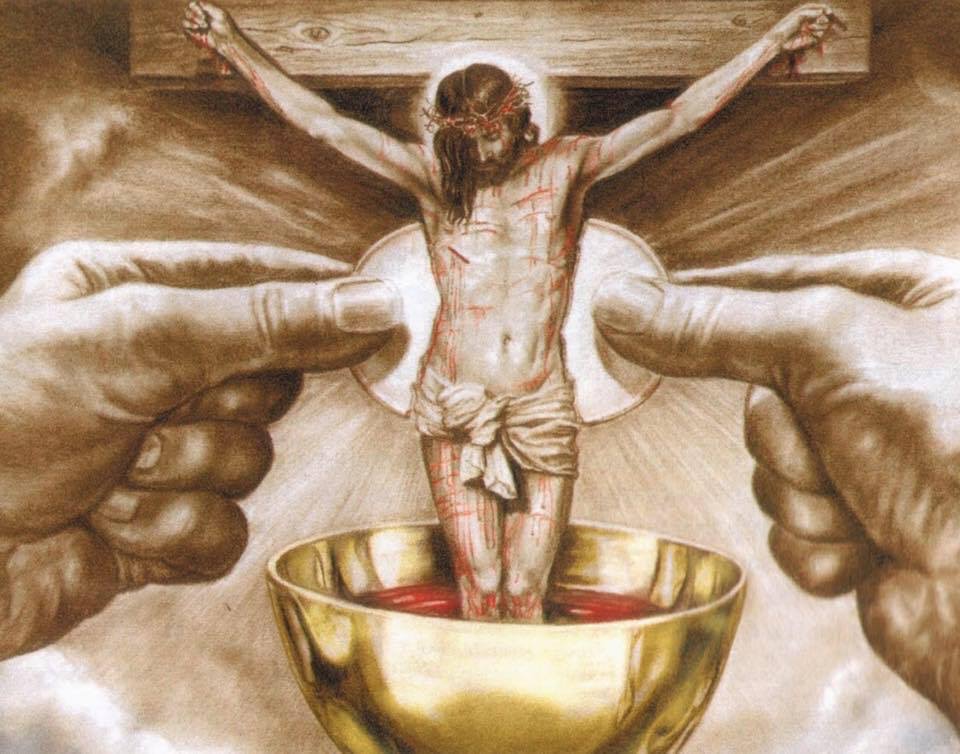
Cross and CommunionChristian, God has ushered you into His paradise. You receive the benefit of the sacrifice of Christ’s death. You are promised the resurrection. And, now, in this feast you are about to receive, God nourishes you and declares you to be the object of His love and His perfect bride.

Your God says to you, His beloved, “Come for everything is now ready.” Amen.

The peace of God, which surpasses all understanding, will guard your hearts and minds in Christ Jesus. Amen.

Excuses – Sermon for the Second Sunday of Trinity on Luke 14:15-24

Listen here.

Luke 14:15-23

15When one of those who reclined at table with him heard these things, he said to him, “Blessed is everyone who will eat bread in the kingdom of God!”

16But he said to him, “A man once gave a great banquet and invited many. 17And at the time for the banquet he sent his servant to say to those who had been invited, ‘Come, for everything is now ready.’ 18But they all alike began to make excuses. The first said to him, ‘I have bought a field, and I must go out and see it. Please have me excused.’ 19And another said, ‘I have bought five yoke of oxen, and I go to examine them. Please have me excused.’ 20And another said, ‘I have married a wife, and therefore I cannot come.’ 21So the servant came and reported these things to his master. Then the master of the house became angry and said to his servant, ‘Go out quickly to the streets and lanes of the city, and bring in the poor and crippled and blind and lame.’ 22And the servant said, ‘Sir, what you commanded has been done, and still there is room.’ 23And the master said to the servant, ‘Go out to the highways and hedges and compel people to come in, that my house may be filled. 24For I tell you, none of those men who were invited shall taste my banquet.’”

In the name of the Father and of the Son and of the Holy Spirit. Amen.

Once, there was a young child whose parents loved him very much. They taught him the Scriptures, and the child was gradually learning to repeat the passages his parents read to him. The child grew, and it was time to train him to use the toilet. His parents would sit him on the potty chair and give him privacy to do his business. This child, schooled in the Scriptures, had a signal to his parents when he needed help cleaning himself after going number 2. He would recite from our text, “Come, for everything is now ready.” Thankfully, his parents were not like those who offered excuses in the parable. They were loving and went and cared for his needs.

The men who make excuses to escape going to the king’s banquet are treating the invitation like it is a call to help wipe a toddler’s derriere. They simply aren’t interested in going to the banquet because they thought they had something better to do, and they don’t care about the repercussions if they are absent. They are comfortable insulting the king, his invitation, and his feast because they have treasures on earth. They don’t realize that, unlike the feast, the invitation is not eternal.

The point of the parable is easy to see. Not everyone goes to heaven. Those who do not think they need God’s grace will find that, outside of His grace, there is only eternal loneliness and torment. As our hymn just said:

But they who have … resisted His grace
And on their own virtue depended,
Shall then be condemned and cast out from His face,
Eternally lost and unfriended.
Have mercy upon us, O Jesus![1]

At the time of death or when Jesus returns, the invitation is withdrawn. Those who reject the invitation will get what they want. They won’t have to offer any more excuses to the king and his messengers. Those who continually reject God’s invitation will one day be free of God, but they will be eternal prisoners of themselves.

Invite as many as you find to the wedding feastSo, this parable should give us an urgency. There is still room for more at the feast. We should be those who go out and call more of the poor, crippled, blind, and lame. We should go out to the highways and hedges and compel more to come in. And we wouldn’t even have to go far from this very place. How many Muslim refugees do we have living less than one block away? They play in our yard and use our trees for shade. Jesus wants them to come to His feast as much as He wants you.

But this parable should hit each and every one of us harder because of the context. And when this parable hits us harder, we will become more eager to extend the invitation of Christ the King.

Here is why this parable should crush us – it isn’t just that it exposes our sinful hesitation to share the Gospel with others. Jesus tells this parable in response to a statement, “Blessed is everyone who will eat bread in the kingdom of God.” In its context, that is a heretical benediction.

Now, don’t get me wrong. At face value, it is true. Everyone who eats bread in the kingdom of God is blessed. But the person who says this is, at that very moment, eating with Jesus. In that context, this statement would be like a newlywed husband getting to the hotel on his wedding night and saying to his bride, “Today was nice, but I’m really looking forward to my retirement party.” The man who says, “Blessed is everyone who will eat bread in the kingdom of God,” doesn’t realize that he is, in truth, living in that present blessing. The blessed existence he that would come sometime in the future was going on right around him.

Wherever Jesus is, there is the kingdom of God. Jesus came preaching that the kingdom of God was at hand (Mk. 1:14-15). And just a couple of chapters earlier in Luke’s Gospel, Jesus said that because He was casting out demons by the finger of God that God’s kingdom had come (Lk. 11:20).

You see, the person sitting there with Jesus at the table was sitting with the present King and eating with God incarnate. So, this parable speaks to us today about being at church. When God’s people gather together to hear God’s Word and receive His gifts, there is the kingdom of God. So, if you are looking forward to going to heaven and being with Jesus, you should also look forward to coming to church because it is a foretaste of eternity with Jesus.

Each of the men who offer excuses in the parable aren’t saying that they never want to go to the party; they just want to go when it is more convenient for them. And their excuses show that they view the things of the world as more important than eternal things.

The pleasures and cares of this world are dangerous to faith when we appreciate and love them more than the blessing of gathering with our Lord and Savior and brothers and sisters in Christ here every Sunday morning.

Wedding Feast of the LambWeekends at the lake, sport tournaments, and even time with family are all blessings from God. But when those things keep us from gathering around God’s Word in the place where God says He meets with us, they are deadly. They are idols. When you are not in church for whatever reason on any given Sunday, you are missing the blessing of being and feasting with God.

The king is angry with those who offer excuses. And notice – this is the most amazing thing that is hard to wrap our minds around – the king is angry because all he wants is for them to be there with him. The king is angry because he wants these people to have the good and joyous things he has for them. God is much more desirous of giving to and helping us than we are of receiving or asking for those things (Luther).

Repent. Repent of your excuses. Jesus has died and shed His blood so that the sinful excuses you would offer are washed away. They are removed as far from you as the east is from the west. And know that God’s invitation stands. “Come. Come to my feast. Come and receive what you could never earn or deserve. Come, you who are worthy. Come, you who are unworthy. Come, for all the blessings of heaven are here for you for free. Come, for everything is now ready.”Amen.

The peace of God, which surpasses all understanding, will guard your hearts and minds inChrist Jesus. Amen.

[1]“There Many Shall Come” Ambassador Hymnal #627. Magnus Brostrup Landstad.