
Scene 2 – Sermon on Matthew 18:21-35 for the Twenty-second Sunday after Trinity

Matthew 18:21-35

21 Then Peter came up and said to him, “Lord, how often will my brother sin against me, and I forgive him? As many as seven times?” 22 Jesus said to him, “I do not say to you seven times, but seventy-seven times.

23 “Therefore the kingdom of heaven may be compared to a king who wished to settle accounts with his servants. 24When he began to settle, one was brought to him who owed him ten thousand talents. 25 And since he could not pay, his master ordered him to be sold, with his wife and children and all that he had, and payment to be made. 26 So the servant fell on his knees, imploring him, ‘Have patience with me, and I will pay you everything.’ 27 And out of pity for him, the master of that servant released him and forgave him the debt. 

28 “But when that same servant went out, he found one of his fellow servants who owed him a hundred denarii, and seizing him, he began to choke him, saying, ‘Pay what you owe.’ 29So his fellow servant fell down and pleaded with him, ‘Have patience with me, and I will pay you.’ 30 He refused and went and put him in prison until he should pay the debt. 31 When his fellow servants saw what had taken place, they were greatly distressed, and they went and reported to their master all that had taken place. 

32 “Then his master summoned him and said to him, ‘You wicked servant! I forgave you all that debt because you pleaded with me. 33 And should not you have had mercy on your fellow servant, as I had mercy on you?’ 34 And in anger his master delivered him to the jailers, until he should pay all his debt. 35 So also my heavenly Father will do to every one of you, if you do not forgive your brother from your heart.”

In the name of Jesus. Amen.

Jesus gives a sober warning at the end of this text. I’m going to reorder and tweak the way Jesus says it to make it crystal clear. Our Lord says, “If you do not forgive your brother from your heart, My heavenly Father will do to you what the king did to that first servant. He will demand you pay your debt and hand you over to the jailers for eternity.” Christian, you are forgiven, so you also must forgive. This is what Jesus is teaching with this parable. The parable has three scenes. And the order in which they happen is what makes Jesus’ point so powerful.

In Scene 1, the first servant (let’s call him ‘Vinnie’). Vinnie is hauled into the palace owing 10,000 talents to the king. Normally, a ‘talent’ is a unit of weight, not currency. Commentators are split on how we should understand what a talent’s value is. Some figure it’s a years’ pay; some say 20 years of wages. Either way, this is an impossible debt for an individual to pay off. After Vinnie’s debt is announced, the king commands that Vinnie, his wife, his children, and everything he has be sold. And Vinnie – notice what he begs for – he says, “Have patience with me, and I’ll pay you everything.” In other words, he asks for time. It’s ridiculous. Time? Time isn’t going to help! So, the king forgives the debt, he releases it. But debts are always paid by someone. They don’t just magically vanish. Here, the king pays. He swallows the debt and releases Vinnie. This is utter, unmerited mercy on the part of the king. End scene one.

The curtain rises and the spotlights illumine Scene 2, and we find Vinnie outside the palace. We’d expect him to be in a fantastic mood – smelling flowers and singing with birds. He’s forgiven and freed. But it sure doesn’t look like it by his actions. Vinnie spots his buddy (let’s call Vinnie’s buddy ‘Chuck’) who owed him 100 denarii, which is 100 days’ wages. That’s not an insignificant amount. But compared to what Vinnie was just forgiven – it’s pittance. Immediately, Vinnie grabs Chuck by the throat, throttles him, and demands, “Pay what you owe me.” And Chuck echoes almost word-for-word what Vinnie said in Scene 1. Chuck asks for time, but Vinnie doesn’t even give Chuck that. He has Chuck thrown into prison. Scene 2 ends with other servants informing the king how Vinnie had acted.

Now, just pause here. It’s intermission in the play of this parable. Let’s say you arrived late to the play and didn’t see Scene 1. All you know about it was that Vinnie is the character who owed 10,000 talents to the king. But you did watch all of Scene 2. What would you suppose happened in Scene 1? You would imagine that the king was still expecting Vinnie to pay the entire debt. The king must be breathing threats down Vinnie’s neck. That’s the only logical explanation. It’s the only way Vinnie’s actions are justified. And they would be just. It’s still futile; Vinnie won’t be able to choke enough throats to get out from under his debt. But at least it would make sense of his actions.

Dear saints, how many people know you are a Christian, but don’t have any idea about what goes on here? I mean, they might have an obscure idea that you’re coming here to meet with God. But they don’t necessarily know what goes on in this sanctuary between you and God while you’re here. So, ponder this: What does your Scene 2 say about the kind of God you have? Do your actions throughout the week accurately reflect on what God does here? Do people have the impression that the God you meet here is loving, kind, merciful, forgiving; or do they think your God is a harsh, cruel, punitive tyrant?

That’s all the time we have. Intermission’s over. The warning bell for Scene 3 just rang. And because we know what happened in the Scenes 1 and 2, we know exactly what’s going to happen in Scene 3. The king treats Vinnie precisely the way he deserves to be treated. Vinnie was given mercy, but he rejected that mercy by his actions. Vinnie demanded justice, so justice is what he gets. The king reinstates Vinnie’s debt, and justly so.

Dear saints, mercy has two sides. The first side of mercy is not getting what you deserve. Vinnie deserved to lose everything. He deserved to be sold with his family and possessions, but the king wanted to be merciful and not give Vinnie what he deserved. The second side of mercy is being given what you do not deserve. Vinnie had his debt forgiven and released by the king. He didn’t deserve it. I mean, Vinnie didn’t even have a grasp on how much debt he owed. Again, he had the delusion that time would help him. But the king doesn’t laugh at his idiotic request. No, the king was willing to release the debt and swallow it himself. Vinnie was given mercy, but he desperately demanded justice.

Here’s the thing: Mercy and justice are something only God can possess simultaneously. Only because of what Jesus has done on the cross can God be merciful and just to forgive and cleanse you from your sin (1 Jn. 1:9). Dear saints, God gives His mercy to you. It’s yours, but it is not something that you can keep for yourself and withhold from others. As soon as you try to hold on to God’s mercy and keep it only for yourself, you lose it. Forgiving others and being a forgiving person is not optional for a Christian. And this is hard.

Forgiving others, releasing someone from the retribution and retaliation that they deserve, is difficult. Some of you have been sinned against in ways that are so painful that I can’t even imagine. So, how do you go about being a person who forgives?

Let me give you two pastoral pieces of advice on how to be better forgivers. First, know that to forgive from the heart is something only a Christian can do, and the only reason a Christian can do it is what has happened in your Scene 1. Because of Christ’s death, God forgives your debt of sin. He separates it from you as far as the east is from the west (Ps. 103:12). The best way to grow as a forgiver is to recognize the massive debt that God has released for you.

Second, know that you aren’t going to forgive as perfectly God does. Pain and distrust will still be there. And forgiving someone does not mean that you have to become best friends. You can, and sometimes you must, forgive and still have boundaries to keep the one who has sinned against you away from you.

Forgiving is hard, but you can choose to forgive. That Holy Spirit-led choice is an act of a reborn disciple of Jesus. The emotions of pain and hurt and anger you have may slowly follow along in agreement. But, you might need to drag your emotions kicking and screaming behind you. Your emotions might take a long time to get on board with the choice to forgive. But one thing I would encourage you to do to help with that process is this: Name the sin.

If you’re angry and frustrated with someone for something, think concretely and specifically how you were sinned against. Figure out what commandment was broken when that person hurt you. We live in a sinful world. It’s naive to think that we are going make it out of here without having someone sin against us. You are going to be hurt in this world, and it will be painful. Your natural reaction to that hurt will be frustration, anger, and resentment. If you have that, name it. Name the sin that has been committed against you because then, it becomes something concrete, something you can identify. And being able to identify it, helps you realize what to do with that sin. It helps you realize that sin has been taken away by the Lamb of God.

You might be justified to want to strangle someone. But remember that God was justified to do that to you, and He didn’t. He didn’t. Instead, your God has released you and your debt for the sake of the complete payment of Jesus for your sin. He’s already done that here for you today in the Absolution, and He’s about to do it again here, at His Table. This is your Scene 1. Let that be reflected out there in your Scene 2. Amen.

The peace of God, which surpasses all understanding, will guard your hearts and minds in Christ Jesus (Php. 4:7). Amen.

Living Forgiveness – Sermon on Matthew 18:21-35 for the Twenty-second Sunday after Trinity

Matthew 18:21-35

21 Then Peter came up and said to him, “Lord, how often will my brother sin against me, and I forgive him? As many as seven times?” 22 Jesus said to him, “I do not say to you seven times, but seventy-seven times.

23 “Therefore the kingdom of heaven may be compared to a king who wished to settle accounts with his servants. 24 When he began to settle, one was brought to him who owed him ten thousand talents. 25 And since he could not pay, his master ordered him to be sold, with his wife and children and all that he had, and payment to be made. 26 So the servant fell on his knees, imploring him, ‘Have patience with me, and I will pay you everything.’ 27 And out of pity for him, the master of that servant released him and forgave him the debt. 28But when that same servant went out, he found one of his fellow servants who owed him a hundred denarii, and seizing him, he began to choke him, saying, ‘Pay what you owe.’ 29 So his fellow servant fell down and pleaded with him, ‘Have patience with me, and I will pay you.’ 30 He refused and went and put him in prison until he should pay the debt. 31 When his fellow servants saw what had taken place, they were greatly distressed, and they went and reported to their master all that had taken place. 32 Then his master summoned him and said to him, ‘You wicked servant! I forgave you all that debt because you pleaded with me. 33 And should not you have had mercy on your fellow servant, as I had mercy on you?’ 34 And in anger his master delivered him to the jailers, until he should pay all his debt. 35 So also my heavenly Father will do to every one of you, if you do not forgive your brother from your heart.”

In the name of Jesus. Amen.

Jesus said to Peter, “No, forgiving seven times isn’t enough. Instead, seventy-seven (or it could also be translated ‘seventy multiplied by seven’) times.” Now, Jesus doesn’t mean that you forgive and forgive and forgive, but when you get either to 76 or 489 forgivings (sic) you warn the other person, “Listen buster, you’ve only got one left.” Nope, let the forgiveness flow freely.

Before we consider the parable, we have to do some conversions. Two different servants have two different debts. Servant 1 owes the king 10,000 talents. A talent was originally a unit of weight that later became a unit of coinage, and the value of that coinage would change a lot. Most resources say that one talent is equal to twenty years of pay for the average worker. So, imagine your annual income, double it, and slap five zeros on the end of it. That’s what the first servant owed the king. Even if he lived and worked every day for 2,000 years giving every penny to the king, it would only shave off a 1% sliver off his debt.

Servant 2 owed a debt to servant 1 to the tune of 100 denarii. Now, this is still a significant amount of money. The average worker earned one denarius per day. So, we’re talking about a little over 3 months’ worth of pay. Significant yes, but a manageable amount. It is totally conceivable and reasonable that someone can pay off a debt of 100 denarii.

Now, the three main characters in the parable are obvious: the king, servant 1, and servant 2. But as we consider the parable today, I want you to imagine yourself in the roll of one of the minor characters. Imagine you are one of the other servants.

The king has called you and all the servants who owe him money to the castle. You are standing in line outside the king’s office. You compare debts with the other servants. You are a little nervous because you don’t know what the king is going to do about your debt. Now, imagine you are standing in line behind servant 1 who owed the 10,000 talents, and you know how large his debt is. He goes into the king’s office, but you don’t know what is happening behind that door. You want to catch a glimpse of servant 1 as he comes out because his demeanor will give you an indication of how it is going to go for you. If he’s smiling or skipping, you’d have a sense of relief because you’d know that the king is in a good mood and your meeting with the king might not be so bad.

Finally, the door opens. Servant 1 comes out of the king’s office, he immediately runs over to servant 2, wrings his neck, and demands that the guy pay him everything. What are you going to conclude about how his meeting with the king went? He didn’t come out in shackles to be led to the prison, but he wasn’t happy. Seeing his treatment of servant 2, you would probably assume that the king had not forgiven his debt and demanded full payment. You would probably deduce that the king gave him some time – maybe a couple of weeks or months – to pay off the debt.

Dear saints, that’s the problem of refusing to forgive.

If people don’t know what happens here in this sanctuary, the only clues they have would be to watch how you act when you aren’t here. So, as others watch you, what will they conclude about what has happened here? What would they think about your king? Would they figure that He demanded that you pay? Would they think He is gracious and merciful, or would they assume that He is a King who demands that all debts get paid?

Dear saints, God wants to be known for His goodness. God wants to be known by His mercy. God wants to be known for His willingness to freely forgive. And if you refuse to forgive those who have sinned against you, what does that say about your God and King?

All this is to say, dear saints, that you, as forgiven servants of the King, are called to live out the forgiveness you have in Christ. This can be a difficult thing because it goes against our nature to forgive. But the cure of our unforgiveness doesn’t come from being beaten down by calls to forgive. The cure for our unforgiveness is to have a right understanding the massive debt that each of us owe to God. When we wrongly think that have only a little debt of sin, we can only have a little Savior. Jesus didn’t go to the cross because you were a few bucks short of your heavenly entrance fee. He went to the cross because your sin was so great that you are too dead to even see the gates.

Sin – all sin – is against God (Ps. 51:4; 1 Cor. 8:12). Every day, you and I rack up an unimaginable, incalculable debt of sin. And when God calls you in to settle accounts what does He do? Because of Jesus’ death on the cross, God simply wipes it out. Because of Jesus, as far as God is concerned, your debt of sin never existed.

Jesus completely erased your debt by the shedding of His blood. He went to Calvary, not so you would have enough time to get your act together and become a better person. He went to raise you from your deadness in sin. When you were lost, powerless, and dead, Jesus made all – not just a portion – all of your debt His own. And on the cross, He killed and cancelled that debt. Jesus who knew no sin became sin for you (2 Cor. 5:21) and He bore all your sins in His body upon the cross (1 Pet. 2:24). And now the grave is empty. Your debt of sin has been erased in the death and resurrection of your Savior.

You are forgiven. Jesus didn’t die just to get you to a zero balance; He came to erase your debt and fill your account with His righteousness. His mercy is complete. He has paid and absorbed all your debt, and you owe Him nothing. There is absolutely nothing left for you to pay, and there is nothing you could do to even begin to pay Him back. Even the thought of paying Him back is offensive because what He has done is so complete, so wonderful, and so merciful.

Now, when your neighbor sins against you and you feel the hurt and pain of those transgressions against you, don’t reach out your hands to grab your neighbor by the throat. Instead, let the nail-scarred hands of Jesus remove your hands from around your neighbor’s throat and make you right and at peace with Him and your neighbor.

There is no denying the fact that forgiving others is a difficult thing to do. Sin is a debt, and that debt must be paid. Forgiving others is absorbing the debt that is owed to you. The pain that comes from the sins of others is real and often terrible. It is always tempting to our old nature to hold a grudge, to make them pay, to construct a prison in our minds, and to put the offender into it. But the only thing that prison will ever hold is you. Unforgiveness imprisons you in a space where there is only judgment. Dear saints, unforgiveness is hell.

To forgive means ‘to send away.’ The only way to be freed from the pain and hurt of sin that others commit against you is to forgive it, release it, and send it away.

Forgiving others does not mean you approve what they have done. Forgiveness means that the offense has hurt you, but you won’t return the pain upon them with judgment. And forgiveness isn’t a license for the other person to continue sinning. The biggest lie the devil will ever tell you is that forgiving someone will just encourage them keep sinning against you, taking advantage of you, and making you a doormat. That satanic lie is a sneaky attack on God’s forgiveness. Is God worried about His forgiveness encouraging you to sin? Nope! Absolutely not. He forgives you fully and freely.

Dear saints, God’s forgiveness of you is a living, life-giving thing. No matter how much and how often you come under His debt with your sin, God gives you His mercy and forgiveness. God remembers your sins no more (Jer. 31:34). Because of Jesus, your sins are released from you as far as the east is from the west (Ps. 103:12). God has shown you, what is good and what He requires of you. Do justice, and love mercy, and walk humbly with your God (Mic. 6:8). Let that full, free forgiveness that God has given you in Christ be the key that opens the gates of your forgiveness toward others. Amen.

The peace of God, which surpasses all understanding, will guard your hearts and minds in Christ Jesus. Amen.

Forgiven Forgivers – Sermon on Matthew 18:21-35

Listen here.

Matthew 18:21-35

21 Then Peter came up and said to him, “Lord, how often will my brother sin against me, and I forgive him? As many as seven times?” 22 Jesus said to him, “I do not say to you seven times, but seventy-seven times.

23 “Therefore the kingdom of heaven may be compared to a king who wished to settle accounts with his servants. 24 When he began to settle, one was brought to him who owed him ten thousand talents. 25 And since he could not pay, his master ordered him to be sold, with his wife and children and all that he had, and payment to be made. 26 So the servant fell on his knees, imploring him, ‘Have patience with me, and I will pay you everything.’ 27 And out of pity for him, the master of that servant released him and forgave him the debt. 28But when that same servant went out, he found one of his fellow servants who owed him a hundred denarii, and seizing him, he began to choke him, saying, ‘Pay what you owe.’ 29 So his fellow servant fell down and pleaded with him, ‘Have patience with me, and I will pay you.’ 30 He refused and went and put him in prison until he should pay the debt. 31 When his fellow servants saw what had taken place, they were greatly distressed, and they went and reported to their master all that had taken place. 32 Then his master summoned him and said to him, ‘You wicked servant! I forgave you all that debt because you pleaded with me. 33 And should not you have had mercy on your fellow servant, as I had mercy on you?’ 34 And in anger his master delivered him to the jailers, until he should pay all his debt. 35 So also my heavenly Father will do to every one of you, if you do not forgive your brother from your heart.”

In the name of Jesus. Amen.

We need to start with some context before we dive in to what Jesus says here. Earlier in Mt. 18, Jesus makes it clear that His disciples will always struggle against sin in this life. Christ says, “If your right hand or right eye causes you to sin, cut it off and pluck it out” (Mt. 18:8-9). Then, Jesus goes on to establish a process for restoring and forgiving those who have sinned against you by talking to them privately, bringing one or two witnesses, declaring it to the church, and finally expelling them from the congregation if they still refuse to repent (Mt. 18:15-17). I would be negligent if I didn’t mention that this process is always intended to restore the sinner back into fellowship. Finally, right before this text, Jesus promises that when sins are loosed from sinners in the Church, they are loosed in heaven (Mt. 18:18).

Now, we get to Peter’s question which immediately follows all of that. “How often will my brother sin against me, and I forgive him? As many as seven times?” Peter was being generous. Most rabbis in Jesus’ day had a three-strikes-and-you’re-out approach to this question, and Peter more than doubles it. The essence of Peter’s question is, “How much do I have to put up with? When do I get to quit being taken advantage of?” Peter wants practical advice from Jesus, but Jesus doesn’t give any. Instead, Jesus says that we are to forgive as often as sinners repent. 

There is some debate as to whether the phrase Jesus uses here means ‘seventy-seven’ or ‘seventy times seven.’ Either way, the point Jesus is making doesn’t mean we count to seventy-seven or four-hundred-ninety, “I forgive you’s.” Jesus doesn’t want us counting the sins of our neighbor. Christ wants us to keep on forgiving even as we are forgiven. Those forgiven by God are to be forgivers. The parable Jesus tells illustrates this innumerable forgiveness.

The king in the parable wants balanced books, clean accounts. And he’s completely happy to forgive enormous debts rather than demand payment. Settled accounts is the goal, and erasing debt is the quickest way to get there. In the parable, when the king forgives this ten-thousand talent debt (equivalent to two-hundred-thousand years’ salary), Jesus shows that the kingdom of heaven is not like any earthly kingdom.

The kingdom of heaven is established and sustained only by God’s generosity and His ongoing, ridiculous, extravagant forgiveness. No one is a citizen of the kingdom of heaven without the forgiveness of Christ, the King of kings. And if you are not shaped by this forgiveness, if this forgiveness doesn’t change you and you still hold back forgiving others, you are not truly citizens of the kingdom of heaven. Instead, God will hand you over to the devil. Those forgiven by God are to be forgivers of those who have sinned against them. According to Jesus, God the Father will deliver you straight to eternal hell if you do not forgive your brother from your heart (v. 33).

This text should make us squirm, and I know that many of you don’t particularly like this parable. It causes the Law to shine clearly on our hearts so that we recognize that forgiveness doesn’t flow out of us as well as it should. We are more likely to hold a grudge, demand repayment, and want those who have sinned against us to be punished. Even though God promises, “Vengeance is Mine, I will repay” (Ro. 12:19Dt. 32:35), we desperately want to have a part in that vengeance. We don’t want to be a doormat. We don’t want to be taken advantage of. We want justice for the sins committed against us. So, when Jesus says that God will deliver us to hell if we do not forgive others from our heart, we should be bothered, we should be agitated, and we should be afraid.

If the final verse of this text – and several other verses like it (Mt. 6:15Mk. 11:25-26Eph. 4:32Col. 3:13Jam. 2:131 Jn. 3:10) – if this teaching doesn’t bother you, repent. It should. The only people who think that they don’t need to forgive are those who do not value or do not believe they have Christ’s forgiveness. In other words, if you refuse to forgive others, you will not be forgiven.

This teaching from Jesus is hard and bothers you. It doesn’t bother you because you think Jesus is being ridiculous. It bothers you because you actually want to forgive. You want to be like God – in a good way. You want to forgive others as He has forgiven you, but you aren’t quite there. So, you feel conflicted and convicted.

Please know that if you struggle with this, it is not a sign of doubt. It is a sign of faith. It shows that you do indeed love the forgiveness of Christ. You love His word. You want His forgiveness and you want to be defined by that forgiveness. The whole reason that you are bothered is that you recognize that you do not fully live up to Christ’s calling. The fact that you are bothered is evidence that you still need forgiveness. You areforgiven, but you are not yet without sin so you need ongoing forgiveness.

Take heart! If you recogniae this, it means that the Holy Spirit continues to work on you forgiving your sins – even your sins of unforgiveness. Live in that forgiveness and continue to strive to forgive. Try to let go. Try to stop obsessing about getting back. Quit daydreaming about vengeance. End your passive aggressive remarks. Put the sins committed against you into God’s hands because all sins are ultimately committed against Him (Gen. 39:9Ps. 51:4).

Remember that Jesus died for the sins of the world (1 Jn. 2:2) and that God Himself wants to forgive all sinners (1 Tim. 2:4). You also want what God wants. You love what God loves. You trust what He says so you want to be reconciled to your enemies and those who hurt you. You want them to be saved, and you work at forgiving as you have been forgiven.

Of course, our old nature doesn’t want to forgive. On this side of glory, faith is always a struggle against our sinful flesh. Our good works and our forgiveness of others is always going to be imperfect, but it is still real and it is still good.

But know this: Your struggle to forgive and to live like Christ is a sign that His Word is true and that your sins are forgiven. He is the one who taught you to pray that you would forgive the trespasses of others as you have been forgiven, and Christ will answer that prayer.

All of that being said, Jesus doesn’t get into all the exact specifics of what this looks like exactly. There are nuances of forgiveness that aren’t dealt with here. Jesus isn’t saying that a person who steals your bicycle shouldn’t give it back or pay and be punished for his theft. Jesus isn’t saying that a child who hits her sibling shouldn’t have consequences when she repents.

There are consequences for sin on this side of glory. Those consequences are godly punishments, and they do not negate forgiveness but should be understood as merciful penalties and helpful tools for curbing further sins.

For example (and this is very important): When someone steals and cheats but repents and asks for your forgiveness, you forgive them and don’t hold a grudge against them. But that doesn’t mean you are required to put them in a position where they can repeat their sin. If a drunk driver crashes into you and paralyzes you, you don’t have to send them a bottle of wine when they ask for forgiveness. You forgive them, but you can still, as a Christian, have them prosecuted and even seek restitution from them. In fact, that might be the most loving thing you do for them.

Finally, as we heard in our Old Testament lesson (Mic. 6:6-8), God isn’t pleased with our offerings no matter how great and costly they are. We cannot even begin to make repayment on the debt we owe Him. Instead, God has shown what is good and what He requires: Do justice. Love mercy. And walk humbly with your God.

In the end, that humility comes when we remember the overarching principle and defining character of Christ’s Kingdom. What defines Jesus’ kingdom is the fact that He does not remember our sins and iniquities (Jer. 31:34). All our transgressions have been set down upon Jesus. He settles your account by His forgiveness. We can stand in this mercy and grace and have hope. For with Christ there is forgiveness that He may be feared (Ps. 130:4). Amen.[1]

The peace of God, which surpasses all understanding, will guard your hearts and minds in Christ Jesus. Amen.


[1] This sermon is an adaptation of a sermon by Rev. David H. Petersen of Redeemer Lutheran Church Ft. Wayne, ID.

Attentive Ears – Sermon on Matthew 18:21-35 for the Twenty-Second Sunday after Trinity

Listen here.

Matthew 18:21-35

21 Then Peter came up and said to him, “Lord, how often will my brother sin against me, and I forgive him? As many as seven times?” 22 Jesus said to him, “I do not say to you seven times, but seventy-seven times.

23 “Therefore the kingdom of heaven may be compared to a king who wished to settle accounts with his servants. 24 When he began to settle, one was brought to him who owed him ten thousand talents. 25 And since he could not pay, his master ordered him to be sold, with his wife and children and all that he had, and payment to be made. 26 So the servant fell on his knees, imploring him, ‘Have patience with me, and I will pay you everything.’ 27 And out of pity for him, the master of that servant released him and forgave him the debt. H-76 Trinity 22 (Mt 18.21-35)28 But when that same servant went out, he found one of his fellow servants who owed him a hundred denarii, and seizing him, he began to choke him, saying, ‘Pay what you owe.’ 29 So his fellow servant fell down and pleaded with him, ‘Have patience with me, and I will pay you.’ 30 He refused and went and put him in prison until he should pay the debt. 31 When his fellow servants saw what had taken place, they were greatly distressed, and they went and reported to their master all that had taken place. 32 Then his master summoned him and said to him, ‘You wicked servant! I forgave you all that debt because you pleaded with me. 33 And should not you have had mercy on your fellow servant, as I had mercy on you?’ 34 And in anger his master delivered him to the jailers, until he should pay all his debt. 35 So also my heavenly Father will do to every one of you, if you do not forgive your brother from your heart.”

In the name of Jesus. Amen.

Today, our Lord Jesus wants us to consider forgiveness – both the forgiveness we receive and the forgiveness we extend. Slow down and consider the first four verses of the parable (v. 23-26).

A king wishes to settle accounts with his servants. In other words, the king wants his books to be clean, so all the servants who owe him money are brought in. Picture them standing in a line to appear before the king one-by-one. In this line is a particular servant. Let’s give him a name, shall we? We’ll call him Owen (pun intended). Owen knows why he is there. He patiently awaits his turn and slowly moves forward as the other servants have their audience with the king. Finally, it’s Owen’s turn. The bookkeeper asks for his name, turns a few pages, and announces, “Your highness, this is Owen who owes you ten thousand talents.”

Now this is an absurd amount of debt. One talent is equivalent to twenty-years’ pay. Owen owes two-hundred-thousand years’ wages. “Your highness, this is Owen who owes you ten thousand talents.” All eyes turn to him, but Owen doesn’t fall to his knees to beg or plead yet. The picture Jesus gives in the parable is that Owen simply says, “Yeah, I don’t have it.” The parable simply states, “he could not pay.” No kidding! He couldn’t pay? Of course he couldn’t pay!

So, the king orders that Owen be sold. He will no longer be the king’s problem. Sell off Owen, his wife, his children, and everything that Owen has will belong to the king. Then, and only then, does Owen fall to his knees and beg.

Why wasn’t Owen begging from the moment he was brought into the room? Did he think that the king didn’t mind about all that debt? Was Owen unaware of how much he owed the king? If this parable were about money, there is no question that Owen would have at least had an idea about the enormity of his debt. But remember, dear saints, this parable is about forgiveness. In the end, this debt of Owen isn’t about money; it is about sin.

Stop and consider this. When we remember the fact that the debt in this parable is sin, we can see how this kind of debt is possible, and we start to get a bit of a handle on our own sinful condition and indebtedness before God. So, buckle up and consider this for a moment:

Children are a gift from God, but we daily take them for granted, ignore them, and snap at them out of irritation. God does not want it to be that way.

Ponder how you spend your time at work. When you aren’t concentrated on your tasks, you aren’t just robbing your boss or the company. Your coworkers know that you are a Christian, and they see how you dishonor God’s name by loafing.

Think about the number of times you have come into this sanctuary and dropped a $20 bill into the offering plate.  God knows your income. He knows your priorities and how you have spent what He has given you on vehicles, clothes, cell phones, and travel to kids’ sporting tournaments.

Kids, listen up. Think about how you act at school. Do you give your best effort on your assignments? Do you say hurtful things to your classmates? Do you not help and befriend the kids who are being bullied? Do you try to get attention by using language or jokes that you wouldn’t dare use in front of your parents? Think about how rudely and disrespectfully you talk to your parents or your attitude toward them when they ask you to do something. Think about how you don’t recognize or acknowledge how much they have done and sacrificed for you.

Everyone, think about the times you have told your friends about the mistakes of others. Or, maybe you have been hurt by someone, and you think it will make you feel better to tell other people about it. You see something on Facebook or Twitter, and your response there will do nothing more than stir up strife. But you do it anyway.

Remember the times you were on vacation and you thought it wouldn’t hurt to skip church that Sunday morning. It did hurt. It hurt God. He wanted you to hear again how He loves you and sent Jesus to pay the price for your soul. When you aren’t in church, you lose something, your children lose something, and God loses something.

Jesus takes and becomes sinThink about the other night. You were watching that show. Men, that woman wasn’t your wife; she was sitting next to you. But God knew your lusts. Women, that handsome, considerate, compassionate character wasn’t your husband. You know what? That’s lust too.
Or think about the time you had sex outside of marriage. Nothing came of it – no pregnancy, no infections or diseases – you weren’t “caught.” But you did get caught. God knew about it. And it hurt the other person.

Think about all the times God has given you a golden opportunity to invite someone to church and receive the forgiveness of sins in the Absolution and Lord’s Supper. They are hurting and lonely because of their sins, and we have the fellowship and community here to heal them. But you were too embarrassed to bring them with you.

Think about that little comment that embarrassed your spouse or your friend. Or think about that time you got something new for your house, but you didn’t thank God for it. Think of how you lost your temper watching the game or the news. Your kids saw that, but even if they didn’t, God did.

Think too, about how each of these sins harms your neighbor. Your neighbor, hurt by that sin, goes and harms someone else. While you aren’t directly responsible for their actions, you end up being an accomplice to their sin.

We could go on and on all day like this. And, maybe, you think this is all nit-picking. The point of all this is to recognize that it isn’t just those particular sins that bother your conscience that rack up a debt of sin. All these little things count toward your debt. It all accumulates. Your sin grows and multiplies and expands. Yet, we go on day after day blissfully unaware of the debt we have racked up.

Remember David? After his sin with Bathsheba – Uriah is dead, his child doesn’t survive, his kingdom is torn to pieces, and there is all sorts of carnage left in the wake of that sin – David rightly confesses to God in Ps. 51:4, “Against You, You only, have I sinned, and done what is evil in Your sight.” Repent. Repent, and see the mercy of God.

Back to the parable. Maybe Owen was so casual about his audit because he figured the king didn’t mind the debt. Or that there aren’t jailors or punishment or a day of reckoning or that his family isn’t harmed by his debt. He only begs after the sentence is read. Owen’s debt has cost him and those closest to him. Only when he sees that does Owen plead with the king.

But, to see the greatness of God’s mercy, notice what Owen begs for. He doesn’t beg for mercy. He begs for time. “Have patience with me, and I will pay you everything.” But the king, God, out of pity doesn’t give Owen what he asks for. No, the king is more merciful than that. He releases Owen and forgives him the debt.

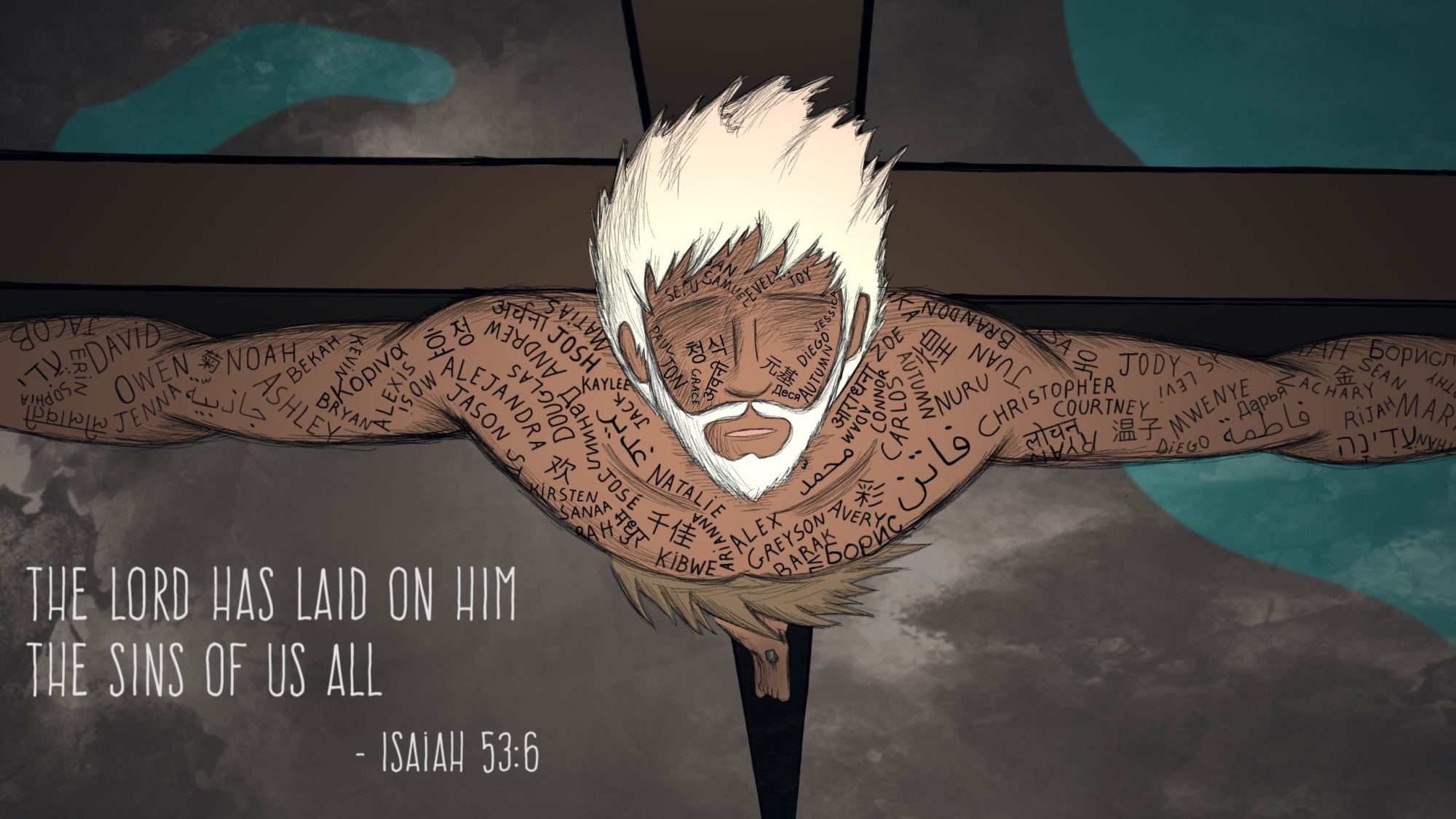
The first verses of Scripture in our service today from Ps. 130[:3-4, 1-2, 7-8] are so beautiful. Hear them again, “If you, O Lord, should mark iniquities, O Lord, who could stand? But with you there is forgiveness, that you may be feared. O Lord, hear my voice! Isaiah 53_6 - Sin BearerLet your ears be attentive to the voice of my pleas for mercy! [W]ith the Lord there is steadfast love, and with him is plentiful redemption. And he will redeem Israel from all his iniquities.”

Dear saints, God’s ears are more attentive in mercy to forgive your sins than your tongue is willing to confess. Because of Christ and what He has done for you on the cross, God erases your entire debt, completely and absolutely. Today, come to this altar and receive Christ’s forgiveness in this Sacrament. Then, go from here as God’s children ready to forgive the inexcusable in others because He has forgiven the inexcusable in you. Amen.

The peace of God, which surpasses all understanding, will guard your hearts and minds in Christ Jesus. Amen.