Christ’s Suffering as Proof of God’s Love for Us

The Scripture readings for tonight’s service are
Psalm 85; Hosea 14:1-2; 1 John 4:17-21; and John 15:1-17.

In the name of Jesus. Amen.

I was listening to a couple of pastors talk about sermons and preaching yesterday, and one of them said something that was as insightful as it was obvious; I just hadn’t heard it put so bluntly. The pastor basically said, “Every evangelical sermon is a commentary on Genesis 3 and the Fall.” Especially lately, it seems like my sermons keep referring back to Gen. 3. First of all, if you’re sick of that, I’m sorry that I’m not sorry. And second, tonight, rather than attempting to hide it, I’m just going to embrace it because it ties so closely to our Old Testament reading (Hos. 14:1-2).

After those fateful bites of forbidden fruit, Adam and his wife’s eyes are opened, and they knew that they were naked and exposed. When they heard the sound of their Creator walking in the garden, they hid themselves from His presence. God calls out to Adam, “Where are you?” God wasn’t looking for information; instead, He was giving Adam a chance to repent and return. But Adam says that he was trying to hide from God because he was naked. In other words, he had nothing. He was exposed and afraid because there was nothing He could offer God after disobeying the command to not eat from that one tree.

But the fact that he didn’t have anything to offer God didn’t stop Adam from trying. All Adam could come up with was to offer some pitiful, evil excuses for his sin. “The woman whom You gave to be with me, she gave me fruit, and I ate” (Gen. 3:12). With those words, Adam tries to blame his wife first, but ultimately, he tries to blame God. While I’ve always found that absurd, Adam did have some logic in trying that.

Think about this for a minute: When God created, He did it through words. Because Adam was created in God’s image, his words also had power over creation. God brought every living creature to Adam and whatever he called it, that was its name (Gen. 2:19). But when Adam fell into sin, that image of God and verbal power was lost. His lips and tongue had been infected with sin and were full of lies (Ro. 3:13-14). After eating the forbidden fruit, Adam’s words didn’t have the same power over reality that they had before. Blaming God didn’t work. Those pathetic excuses failed to rectify the situation. But with his nakedness exposed, Adam figured he had nothing else to offer God.

Now, here’s where the reading from Hosea comes in because God tells us what to offer Him when we have been separated from Him due to sin. God calls His people to return to Him because they had stumbled in iniquity and were completely exposed as sinners. But notice how they called are to return – not empty, naked, and bare. They to return with something. They are given words to take with them as they return. What words are given? “Take away all iniquity.” Those are bold words for sinners to place on their lips, but there is a reason they can and should.

First of all, those words are God-given. God gives those words and wants to hear those words. Second, those words recognize the presence of sin and iniquity and transgression that needs to be dealt with. And third and most importantly, those words recognize that sin can only be removed by God Himself. And this confession, “Take away all iniquity,” is, at the same time, both the confession of the existence of sin and the confession that God needs to remove that sin, which is exactly in line with who God has promised to be.

Right after the Fall, God promised that the Seed of the woman would come and crush the serpent’s head. He did the work of covering Adam and the woman’s nakedness and shame with animal skins. He had defined Himself as a God who is merciful and gracious, slow to anger and abounding in steadfast love and faithfulness keeping steadfast love for thousands, forgiving iniquity and transgression and sin (Ex. 34:6-7). God has promised to be the Sin Absolver.

Our Psalm tonight (Ps. 85) opens by remembering how God had been favorable, restored fortunes, forgiven iniquity, covered sin, and withdrawn His wrath and anger. Then, it takes those things God had done and says, “God, do it again! Give us your favor, restore our fortunes, forgive our iniquity, cover our sin, withdraw Your wrath and anger again.”

To ask God to do all of that again assumes that God loves us even though we are sinners. But that isn’t just an assumption. God has proven that love. Jesus said, “Greater love has no one than this, that someone lay down his life for his friends.” Christ went a step beyond that. Jesus has shown and demonstrated God’s love for us, in that, while we were still sinners – not friends, but sinners and enemies of God – Christ came and died for us (Ro. 5:8). God sent His Son to suffer and be the atoning sacrifice for your sin (1 Jn. 4:10). 

Dear saints, when you return to God, you are to return with these promises, these works, these demonstrations of God’s love for you. You remind and point God back to the suffering and death of Jesus, your Savior. In His suffering and death, you have been given full, undeniable proof of God’s love for you. His love was made manifest when He sent Jesus so that you might live through Him (1 Jn. 4:9).

And this love of God produces fruit that lasts and abides (Jn. 15:16). Go and tell others about this love of God. Jesus has suffered for sin of the world (1 Jn. 4:14). Teach them the words with which God wants them to return. He is ready to hear that they are sinners, and He is eager to forgive them for the sake of Jesus’ suffering which reconciles us, returns us to God, and gives us life now and forever. Amen.

The peace of God, which surpasses all understanding, will guard your hearts and minds in Christ Jesus. Amen.
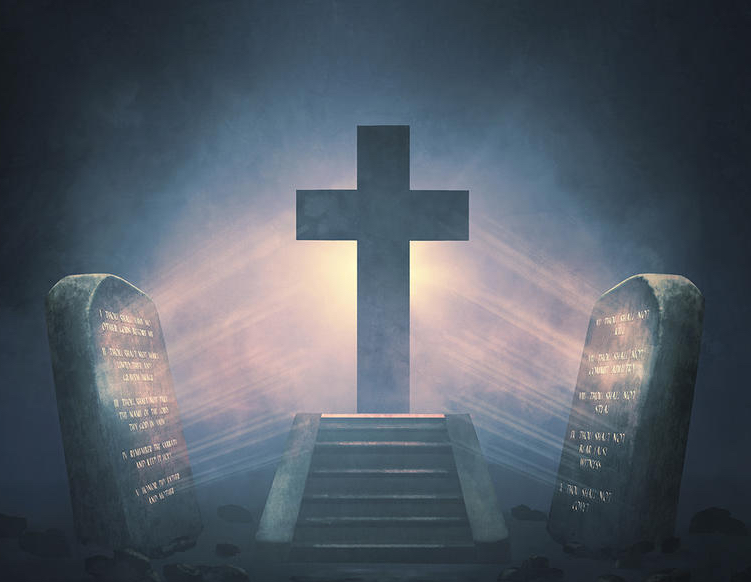
The Ten Words – Sermon on Exodus 20:1-17 for the Sixth Sunday after Trinity

Exodus 20:1-17

1 And God spoke all these words, saying, 

2 “I am the Lord your God, who brought you out of the land of Egypt, out of the house of slavery. 

3 “You shall have no other gods before me. 4 You shall not make for yourself a carved image, or any likeness of anything that is in heaven above, or that is in the earth beneath, or that is in the water under the earth. 5 You shall not bow down to them or serve them, for I the Lord your God am a jealous God, visiting the iniquity of the fathers on the children to the third and the fourth generation of those who hate me, 6 but showing steadfast love to thousands of those who love me and keep my commandments. 

7 “You shall not take the name of the Lord your God in vain, for the Lord will not hold him guiltless who takes his name in vain. 

8 “Remember the Sabbath day, to keep it holy. 9 Six days you shall labor, and do all your work, 10 but the seventh day is a Sabbath to the Lord your God. On it you shall not do any work, you, or your son, or your daughter, your male servant, or your female servant, or your livestock, or the sojourner who is within your gates. 11 For in six days the Lord made heaven and earth, the sea, and all that is in them, and rested on the seventh day. Therefore the Lord blessed the Sabbath day and made it holy. 

12 “Honor your father and your mother, that your days may be long in the land that the Lord your God is giving you. 

13 “You shall not murder. 

14 “You shall not commit adultery. 

15 “You shall not steal. 

16 “You shall not bear false witness against your neighbor. 

17 “You shall not covet your neighbor’s house.“You shall not covet your neighbor’s wife, or his male servant, or his female servant, or his ox, or his donkey, or anything that is your neighbor’s.”

In the name of Jesus. Amen.

Dear saints, you are familiar with this text – or, at least, you should be. We know these verses as “the Ten Commandments” – even though Scripture itself never refers to them as the Ten Commandments. (More on that in just a bit.)

We have grown used to thinking that God only gave the Ten Commandments to show us our sin so that we repent and believe in Jesus for the forgiveness of our sin. Saying that isn’t wrong – not in the least! Scripture says that one of the reasons God gave us the Law is to tell us what we must and have failed to do (Ro. 7:7-12). That’s how Luther uses them in his Small Catechism, and in his hymn on the Ten Commandments that we just sang, he does the same thing, “You have this Law to see therein / that you have not been free from sin, / but also that you clearly see / how pure toward God your life should be.” But God gave the Ten Commandments to do more than simply show us our sin.

Scripture calls this text “the Ten Words” (Ex. 34:28; Dt. 4:13, 10:4). The Bible refers to them as “the Ten Words” because only one of them is actually an imperative (command) – “Honor your father and mother.” All the rest are indicative (statements). A perfectly legitimate – and, admittedly, shorthand – way to understand these verses would be, “You will have no other gods before Me…. You will not misuse My Name…. You will keep the Sabbath holy…. Honor your parents. You will not murder, commit adultery, steal, lie, covet.”

As God’s people heard these words at the base of Mt. Sinai, they would have understood three distinct things at the same time. First, they would have understood that this is what God demands they do, which is how we normally understand them. Second, they would have heard them as a description of who they are and how God sees them. Third, they would have heard these as God’s promise to work in them to make them all these things (Php. 1:6).

Think of it this way: A boy might be pestered and bullied by a girl at school so much that he finally retaliates and shoves her to the ground. (You boys, don’t do that because that’s wrong.) They boy’s parents get called to the principal’s office and learn about the altercation. When they get home, the parents send the boy to his room as punishment. Afterwards, the father goes into his son’s room for ‘the talk’ and says, “We do not shove, hit, or be mean to girls.”

Notice what that speech from the father does. First, by saying, “we,” the father is still showing his son that they are in a relationship. The son hasn’t been abandoned or disowned; they belong together and are identified together as a unit. Second, the father is also saying that as a unit, they act and behave a certain way – they don’t use physical force against girls. Also, the boy knows that his dad is forbidding him to use physical force against a girl. All three of those things get communicated at the same time. The Ten Words here work just like that.

Let’s stick with that analogy about the boy and the girl bully to get one more thing about the Ten Words across. As soon as the boy pushed the girl to the ground and saw that she was dirty, dusty, and hurt, the boy’s conscience kicked in because he knew what he had done was wrong even before he pushed her. That rule or command, “Don’t hurt girls,” was already known by the boy even if he had never been taught it. The girl’s pain simply awakened his conscience. The same thing is true for these Ten Words (Ro. 7:7-8).

Cain knew it was wrong to kill Abel (Gen. 4:1-9) even though God hadn’t given the commandment, “Thou shalt not murder,” yet. Joseph knew not lie with Potiphar’s wife (Gen. 39:7-9) even though God hadn’t given the command, “Thou shalt not commit adultery.” Esau accused Jacob of cheating him (Gen. 27:36), and Jacob accused his father-in-law, Laban, of cheating him (Gen. 31:7) even though God hadn’t given the commandment, “Thou shalt not steal.” Abraham knew it was wrong to lie about Sarah being his sister (Gen. 12:11-20, 20:1-14) even though God hadn’t given the commandment, “Thou shalt not bear false witness.”

Everyone knows to not break the commandments because God has written them into the fabric of creation and on the heart of every person (Ro. 2:15). Everyone, even atheists (Ro. 1:21-25), know that we should love God with all our heart, soul, mind, and strength (Mt. 22:37). Everyone knows that we should love our neighbor as ourselves (Mt. 22:39).

God didn’t give the Ten Words so that we would know right from wrong. People knew (and still know) right from wrong already. Some think God gave the Ten Words to limit our freedom. Not at all. They are given in the context of God having set His people free, bringing them out of Egypt and slavery (Ex. 20:2). Instead, the Ten Words show God’s people what it looks like to be the free people He has created us to be. In the world that God has made, we aren’t free to do or be anything we please. We are free when we become what we are. A caterpillar is free to become a butterfly not a walrus. The Ten Words guide us to grow up to be what we are, and what we are is the very children of God (1 Jn. 3:2; Gal. 4:1-7).

Now, in an effort to assist with that growth, here’s some advice from Luther. Take each of the Ten Words with you into prayer and ask yourself these four questions: 1. What does this teach me? 2. What does this give me? 3. What does this show me to confess? And 4. What does this teach me to pray for?

For the first, “You shall have no other gods before Me,” you could pray something like this: “Father, thank you that You teach me that You are my God. Thank you that, as my God, You give me all good things. Forgive me for the times I do not trust You to be my God. Grant me Your Holy Spirit so I would love You with all my heart, soul, mind, and strength.”

For the seventh, “Thou shalt not steal,” you could pray: “Heavenly Father thank You for giving me so many good things. Everything I have is a gift from You. Forgive me for loving and pursuing stuff more than You. Help me to use what You have given me to serve my neighbor.”

Now, all of this is to say that what is most important with regard to the Ten Words is to believe them. Romans 14:23 says, “Whatever does not proceed from faith is sin.” As you believe the Ten Words, you see that God demands that you avoid certain sins and that you do certain good works. But you also see that God is accomplishing these things in you through faith. He has begun that good work in you when you were joined to Jesus’ death and resurrection in your Baptism (Ro. 6:1-11), and, again, He will complete that good work in you (Php. 1:6).

Dear saints, God promises that He is your God who has brought you out of slavery to sin by sending Jesus, who did not abolish the Law but fulfilled it. Through faith in Him, you have a righteousness that exceeds that of the scribes and Pharisees. Because of Him and His work, you will enter the kingdom of heaven, and He invites you now to a seat at His table. Amen.

The peace of God, which surpasses all understanding, will guard your hearts and minds in Christ Jesus. Amen.

Love in Deed & Truth – Sermon on 1 John 3:13-18 for Second Sunday after Trinity

1 John 3:13-18

13 Do not be surprised, brothers, that the world hates you. 14 We know that we have passed out of death into life, because we love the brothers. Whoever does not love abides in death. 15 Everyone who hates his brother is a murderer, and you know that no murderer has eternal life abiding in him. 

16 By this we know love, that he laid down his life for us, and we ought to lay down our lives for the brothers. 17 But if anyone has the world’s goods and sees his brother in need, yet closes his heart against him, how does God’s love abide in him? 18 Little children, let us not love in word or talk but in deed and in truth.

In the name of Jesus. Amen.

This world is broken. Infected with sin and death, all creation longs to be set free from its corruption and continual decline (Ro. 8:19-22). Everyone looks for an escape from this brokenness. Ever since humanity’s Fall into sin, there has only been one solution to sin, death, and evil, and that solution is found in God’s promise of mercy which He freely gives through His Son, Jesus Christ. Jesus is the only One who can set us free from the chains of sin, death, and the devil. And yet, people try to offer alternatives.

In 1969, The Beatles offered their solution to the world’s problems, “All you need is love; all you need is love; all you need is love, love; love is all you need.” If you read through the lyrics to that whole song, they really are saying human love can fix everything. Just a few years earlier, the band The Youngbloods had tried rally everyone behind the same platform. “Come on, people now; smile on your brother; everybody get together; try to love one another right now.” Both of those songs sound similar to what is being offered in this text, but they couldn’t be more different. They are different because the world is so broken, fallen, and lost that even the concept of love is twisted.

Love is not simply what makes you or someone else feel good. The world wants you to think that love can be redefined in all sorts of different ways. But the world’s attempts at love are only empty words and talk. Behind the world’s efforts at love is this creepy, demented delusion that if we simply ignore sinful things or dress them up in nicer terms, then the nastiness will go away. The world doesn’t want to hear about murdering babies in the womb, so it will call it ‘choice’ over a ‘clump of cells.’ The world doesn’t want to hear about fornication and adultery, so the world will talk about ‘alternative lifestyles,’ or ‘equality’ – sounds much nicer. The world tries to convince everyone that we can stop the pain of gender dysphoria by simply using a person’s preferred pronouns.

Now, please know that I picked each of those specifics because they have been staring us in the face all month. The same is true for any number of sins. But in each of those cases, the world’s proposed solutions might bring slight, momentary comfort, but that is all. Those petty solutions, which are only talk, always end long-term pain.

You cannot love a drug addict by feeding their addiction. It is not loving to continually give money to a druggie and never encourage them to get help for their addiction. If someone is continually hitting themself over the head with an iron skillet, you have to tell them, “Stop doing that.” And if they say, “I was born this way,” you tell them, “No, you weren’t.” And take the skillet away. Both that drug addict and person who is harming himself might see your actions and words as unloving. They might accuse you of hating them and the way they were born. But that’s complete nonsense.

Now apply that same logic to the various sins that are so rampant in our culture. The world’s solutions to those sins that are dressed up in a false, fallen idea of ‘love’ do nothing more than allow those who are harming themselves and others to continue doing so.  Scripture is clear, Pr. 12:10 says, “The [love] of the wicked is cruel.” (And when Scripture uses the term ‘wicked’ there don’t think of only a few, select, especially bad sinners. The ‘wicked’ are all of us apart from faith in Christ.) Pointing out the harm and pain that sin causes is loving. Dear saints, please use your God-given wisdom to say it in the most loving way possible.

Now, before you start patting yourself on the back, Christian, don’t think that you are guiltless when it comes to loving only in word and talk. How many times have you responded to someone who is hurting by saying, “You’re in my thoughts and prayers” heart emoji, heart emoji, heart emoji, and press the ‘care’ button, then go about your day? We’re all guilty when it comes to this. Repent.

It can be hard (especially on social media) to love in ways that extend beyond word and talk. The hurting person may be hundreds of miles or half a world away, so how can you love them in deed and truth? Well, one of the best lessons I learned during my pastoral internship came from an elderly German woman named Ruth. Many of you have heard me mention her before. Several times I would greet Ruth after the service, and she would tell me about her medical problems or appointments coming up. I would listen and say, “I’ll be praying for you,” and dear little five-foot Ruth would look up at me and say in her deep German accent, “Do it now,” and I would. I was too intimidated not to. It took months her regular reminders for me to go straight to prayer.

Dear saints, your prayers are not merely words and talk. They are you, as God’s beloved child, requesting your loving heavenly Father to spring into action. Remember that, especially on social media, but also in your daily conversations. Write or say a prayer then and there and continue upholding that person in prayer.

The only way we can know what love is, is to look to Jesus and what He has done for us on the cross. “By this we know love, that [Jesus] laid down His life for us” (1 Jn. 3:16). We know love only in knowing Jesus crucified for us. You can’t find this love anywhere else, and you can’t produce this love apart from fellowship with God through faith in Christ.

The Holy Spirit works faith into your heart and pours God’s love into you. By filling you with that love, the Holy Spirit also enables you to love others. Faith and love go together. The love of God that we receive through faith is the very love we show our neighbor by our deeds. Yes, sin remains in us as long as we live in this world, but God continues to pour His love into us and delivering His forgiveness. God’s love for you is so great that you cannot contain it all, so it spills out of you to your neighbor.

Yes, we fall short in our love, and when we do we repent. We repent and God springs into action. He points us to Christ who laid down His life for us. Jesus’ death conquered hate and death once and for all. Christ has laid down His life for you. He forgives you of all your sin, cleanses your guilty conscience, and delivers you from Satan’s power.

This is what His love does and will continue to do all the days of your life. And that, dear saints, is the source and strength of every act of love you and I will ever do. Amen.

The peace of God, which surpasses all understanding, will guard your hearts and minds in Christ Jesus. Amen.