The Clash – Sermon on Matthew 11:12-19 for Reformation Sunday

Matthew 11:12-19

12 From the days of John the Baptist until now the kingdom of heaven has suffered violence, and the violent take it by force. 13 For all the Prophets and the Law prophesied until John, 14 and if you are willing to accept it, he is Elijah who is to come. 15 He who has ears to hear, let him hear.

16 “But to what shall I compare this generation? It is like children sitting in the marketplaces and calling to their playmates,

17 “‘We played the flute for you, and you did not dance; 
we sang a dirge, and you did not mourn.’

18 For John came neither eating nor drinking, and they say, ‘He has a demon.’ 19 The Son of Man came eating and drinking, and they say, ‘Look at him! A glutton and a drunkard, a friend of tax collectors and sinners!’ Yet wisdom is justified by her deeds.”

In the name of Jesus. Amen.

Do you believe that God uses the plans and actions of violent men to accomplish His will? I hope you can answer, “Yes.”

We don’t normally think of it this way, but the cross is the greatest example of God’s will being accomplished through the actions of evil men. The very event that won your salvation was the height of mankind’s rebellion against God. The world planned, plotted, and schemed to put the Son of God to death (Mt. 12:14Mk. 3:6Jn. 11:47-53). Christ’s death on the cross was the most unjust act ever committed by mankind. Jesus, the only person to ever live a righteous and sinless life, was condemned and crucified. And it was through Christ’s death that death itself was undone. There, on the cross, God won your salvation.

So, if God can accomplish your salvation through the actions of violent men – which He has, He absolutely has – then you don’t ever have to fear any evil in this world. The plans and actions of evil men never stop God and His will. When we see all the violence, upheaval, and opposition in this world, it can be easy to fall into despair and think that God isn’t in control. But He is – no question He is. Christ is still ruling and reigning over all things. And God’s will is still done.

Still today, God destroys and brings to nothing every evil council and purpose of the devil, the world, and our own flesh. His Name is still hallowed. His kingdom still comes. God continues to strengthen and keep us steadfast in His Word and in faith. This is His good and gracious will that we pray would be done in the Lord’s Prayer.

So, believer, every night when you go to bed, you can close your eyes in the peace and comfort of knowing that your sins are forgiven because of what Christ has done. Even as the world constantly clashes against the kingdom of heaven, you have God’s comfort and peace that surpasses all understanding (Php. 4:7).

Ever since the Fall into sin, there has been a clash between fallen humanity and God. This clash is rightly described when theologians make a distinction between believers on earth and believers in heaven. Christian, as long as you are in this world, you are part of the “Church militant,” and when you are removed from this world – either when you die or when Christ returns – you are transferred to the “Church triumphant.”

In this text, Jesus teaches us how to live as members of the “Church militant.” And this is important and helpful instruction because the clash between this fallen world and you citizens of the kingdom of heaven, that clash can make us want to fight back against the world. But you don’t need to fight because Jesus has already won the war.

So, in this text – which is not an easy text – Christ helps you understand how to live when you face violence and opposition in this world. There are two portions of this text that I’ve always found confusing and somewhat difficult. The first deals with the violence the Church faces in this world. The second deals with the world’s opposition and ridicule of the Church. We’ll think our way through each of them; then, we’ll see how Jesus tells us to respond.

The first difficult part is right away in v. 12 where Jesus addresses the violence that faces the Church. Our Lord says, “From the days of John the Baptist until now the kingdom of heaven has suffered violence,” no problems so far. It’s what comes next, “and the violent take it by force.” What is Jesus talking about? Do the violent seize control of the kingdom? No. There’s something else going on. But we have to wade through all of this to get the full picture.

Both John the Baptist and Jesus came preaching the exact same message “Repent, for the kingdom of heaven is at hand” (Mt. 3:24:17). And the world didn’t like that message. It turns out – surprise, surprise – that people who don’t think they’re sinners, they don’t want to be told to repent. So, they violently attacked the messengers. John’s preaching got him arrested, and soon after this text, John will be beheaded (Mt. 14:1-12). At this point in Matthew’s gospel, Jesus is still a couple of years from being crucified, but it’s coming.

That violence against the kingdom of heaven that John and Jesus faced continues to this day. It’s happening all over the world – even here in our country. The shootings at Annunciation School in Minneapolis, the Christian school in Nashville, Charlie Kirk’s martyrdom, and many other events are part of this clash. Today, in North Korea, China, Egypt, and all around the world, Christians are being violently persecuted. Just this week, I saw horrifying statistics from Nigeria. Since the year 2000, 62,000 Christians have been martyred there, and already in 2025, 7,000 have been martyred. Yes, the kingdom of heaven still suffers violence. Lord, have mercy.

So, what does Jesus mean with that last phrase, “the violent take it by force”? Again, it isn’t that the violent gain possession or ownership or control of the kingdom of heaven by force. Instead, they try to take it away by force. In other words, this world actively tries to prevent the coming of God’s kingdom. But they will never succeed.

The second part of the text that can be confusing starts in v. 16 where Jesus is trying to figure out how to describe ‘this generation.’ “To what shall I compare this generation? It is like children sitting in the marketplaces and calling to their playmates, ‘We played the flute for you, and you did not dance. We sang a dirge, and you did not mourn.’”

In a way, this is a little parable. The generation Jesus is speaking about isn’t just the generation of His time. The children in the marketplace are the same violent people Jesus talked about in v. 12 – it’s the generation of sinners. Sinners aren’t happy with anything. Basically, they say, “We were happy, but you weren’t happy with us. We were sad, and you didn’t get sad with us.” And Jesus goes on to explain that little poem to illustrate how the world reacts to the kingdom of heaven. The explanation is seen in how this generation reacted to John the Baptizer and to Jesus Himself.

In short, neither John nor Jesus followed the world. John wouldn’t dance when the world wanted him to. He came eating locusts and honey, and he wasn’t feasting with them because he was too busy calling them to repentance. They thought John’s preaching was too pessimistic. They figured things weren’t as bad as John said they were. So, they tried to dismiss John saying, “You won’t dance to our flute? You must have a demon.”

But then Jesus came, and He did eat and drink. He went to many feasts throughout His ministry. He went to dinners at Pharisees’ houses (Lk. 7:36ff14:1ff). Jesus feasted with tax collectors and sinners (Mk. 2:15-17Mt. 9:10-13Lk. 15:1), and the world didn’t like that either. Christ wouldn’t mourn during their dirges and funeral songs. So, just like they did with John, they tried to dismiss Jesus saying, “You’re a glutton, a drunkard,” (both of which are ridiculous accusations), “a friend of tax collectors and sinners.”

In other words, dear saints, you can live a life of fasting that avoids all of the pleasures this world seeks because you know this world is not all there is. And people will respond by calling you evil and demonic. You can also live a life where you participate and eat and drink, and people will say that you are a glutton and a drunkard.

So, Jesus is saying you can’t win with the world. Yes, there is a time for fasting and saying that the things of this world don’t matter. And there is also a time for feasting and enjoying the fullness of the gifts God has given. But it doesn’t matter to the world if you fast or feast, the world is going to hate you – not because of your eating and drinking or your abstaining. The world is going to hate you, dear saints, simply because you are a citizen of the kingdom of heaven.

So, what should our response be? How do we live in a generation that violently attacks and opposes the Gospel?

Well, first, recognize that the kingdom of heaven advances through the simple, unimpressive Word of God that can be attacked and resisted. The kingdom of God advances through the preaching of the Gospel because faith comes by hearing (Ro. 10:17). In other words, listen. Jesus puts it this way, “He who has ears to hear, let him hear” (Mt. 11:15).

One of the most important lessons from the Reformation is that we don’t need to talk as much as we need to listen. Christians are first and foremost hearers. You hear the Law which stops your mouth and makes you silently accountable to God (Ro. 3:19). Stop making excuses for your sin and be silent before God. Then, hear the Gospel, which forgives all your sin.

The other response to the violence and opposition from this generation is to patiently wait. Jesus says, “Wisdom is justified by her deeds” (Mt. 11:19). That means that the day is coming when your faith and your identity as a member of the kingdom will be proven true. No one will be able to deny the wisdom you had in confessing your sin and believing in Jesus. That right fear of the Lord is the beginning of wisdom (Pr. 9:10).

Christian, you do not need to try to make God’s kingdom come. God is, and He will, bring about the coming of His kingdom. In the meantime, He arms you with the sword of His Word (Eph. 6:17). The sword of God’s Word doesn’t function like any other sword because it is the sword that makes the wounded whole. Use that sword to heal this broken generation. And pray. Pray, “Lord, keep us steadfast in Your Word.”

When this world is filled with wickedness, when violence surrounds you, when the evil people oppose you, and when all of this is clashing down around you, remember what Jesus says to you. “Fear not, little flock, for it is your Father’s good pleasure to give you the kingdom” (Lk. 12:32). Alleluia! Amen.

The peace of God, which surpasses all understanding, will guard your hearts and minds in Christ Jesus (Php. 4:7). Amen.

Silenced – Sermon on Matthew 22:34-46 for the Eighteenth Sunday after Trinity

Matthew 22:34-46

34 But when the Pharisees heard that he had silenced the Sadducees, they gathered together. 35 And one of them, a lawyer, asked him a question to test him. 36 “Teacher, which is the great commandment in the Law?” 37 And he said to him, “You shall love the Lord your God with all your heart and with all your soul and with all your mind. 38 This is the great and first commandment. 39 And a second is like it: You shall love your neighbor as yourself. 40 On these two commandments depend all the Law and the Prophets.”

41 Now while the Pharisees were gathered together, Jesus asked them a question, 42 saying, “What do you think about the Christ? Whose son is he?” They said to him, “The son of David.” 43 He said to them, “How is it then that David, in the Spirit, calls him Lord, saying,

44 “ ‘The Lord said to my Lord, 
“Sit at my right hand, 
until I put your enemies under your feet” ’?

45 If then David calls him Lord, how is he his son?” 46 And no one was able to answer him a word, nor from that day did anyone dare to ask him any more questions.

In the name of Jesus. Amen.

Arrogance was behind that question, “What is the great commandment in the Law?” We know this was arrogant because the lawyer is asking this question in order to test Jesus. This text is at the end of a conversation Jesus has been having with the religious leaders. If you look back to the beginning in Mt. 22:15, you’ll see that the religious leaders are trying to entangle Jesus in His words. The Pharisees had debated which command was the greatest for centuries, but they couldn’t come up with an answer because picking one would imply that something God commanded isn’t important. Or, at least, not as important. And, of course, that can’t be true. Every word that comes from the mouth of God matters because He is the One whose powerful voice spoke all things into existence.

Imagine a student who is studying to be a heart surgeon. I don’t actually know how heart surgeons are trained, but I see them getting something similar to a recipe. It’s got a list of all utensils and ingredients needed followed by instructions on how to use them. Imagine a student seeing that recipe. Step 1: Scrub up. Step 2: Make the incision. Step 3: Find this artery. And so on, going through the whole process. If one of those students asked which step is the most important, how would the instructor reply? I imagine the instructor saying, “They’re all important! Do everything correctly – from scrubbing up to closing. You have to get it all exactly right. Don’t leave anything out, or you’ll kill your patient!”

Basically, that is what Jesus says here. Everything God has commanded is important. All the Commands are good, right, and true. That’s what Jesus communicates when He summarizes God’s Law as, “Love the Lord your God with all your heart and with all your soul and with all your mind. And love your neighbor as yourself”(Mt. 22:37-39). Everything command of God is important, and everything He requires falls into two categories of either loving God or loving neighbor. In Ro. 13:10, the Law is summarized even further, “Love is the fulfilling of the Law.”

But sadly, this summary the Law is twisted. The devil has used countless false teachers say that the word ‘love’ is God’s only command. And when they do that, those false teachers utterly corrupt love. Yes, the command to love summarizesGod’s Law, but it doesn’t replace God’s commands. Today, to combat that devilish twisting, I want to make six points about God’s Law. I’ve done this before, but it’s been seven years since I last did it. So, it’s worth reviewing again.

First, while the command to love summarizes the Law, the word ‘love’ doesn’t replace the Law. We sinners will do all sorts of things that go against what God has commanded in the name of love. But you don’t get to steal food from a store because you love your children and want to feed them. Instead, loving your children requires you to keep the Command against stealing by getting a job to buy food for them. Committing adultery is not suddenly ok just because you love someone. That leads to the second point.

Second, the Law defines how to love your neighbor. There’s a 4th Command love that honors parents. There’s an 8th Command love that does not bear false witness and tells the truth. In each Command, God is telling us, “Here is how you love Me and love your neighbor.”

The third point about the Law is closely related to that. While the Law shapes how you love your neighbor, the needs of your neighbor also shape your love for them. The 7th Command about stealing will take one shape if you are an employee. It looks like working hard, not wasting time, and doing good work. But if you own a business, the 7th Command takes a different shape. It means that you are generous and pay a fair wage that rewards the work and skills of your employees. Same with the 4th Command to honor parents. When you are a child, honoring parents means obeying them. When you’re an adult, honoring parents means respecting them.

Fourth, you show love for God by showing love for your neighbor. 1 Jn. 4:20 says, “If anyone says, ‘I love God,’ and hates his brother, he is a liar; for he who does not love his brother whom he has seen cannot love God whom he has not seen.” If you want to demonstrate love for God, you do that by loving your neighbor, according to the commandments and according to your neighbor’s need.

And with this fourth point we see that there is an order to your love. You are to love the people God has placed closest to you first, then love everyone else. 1 Tim. 5:8 says that a person needs to provide for all his relatives, but especially the members of his household. And Gal. 6:10 says, “As we have opportunity, let us do good to everyone, and especially to those who are of the household of faith.” So, it is loving to give to the Feed My Starving Children offerings, but it is not loving for you to put your entire paycheck in there and not be able to feed your family or to let your brothers and sisters in Christ go hungry while you feed people you haven’t met.

Fifth, and this is the most important one: The Law always accuses. There’s no time in your life where you can say that you have kept God’s Law perfectly. As long as you have a pulse, you can’t check off the boxes to love God and your neighbor because you still have strength. Those boxes are always on your to-do list. And you and I are sinners and always fall short when it comes to the command to love. So, the life of a Christian is always filled with repentance and receiving the forgiveness that comes only through Christ.

Finally, the sixth point: Even though the Law always shows you that you are a sinner, don’t fall into the temptation of giving up in your attempt to keep God’s Law. Christian, even though you are going to fail to love perfectly, you need to strive to do it. Pray for strength and wisdom. Pray that God would open your eyes and ears to your neighbors’ needs. Then, be God’s hands and feet to meet those needs.

Changing gears and getting back to Mt. 22. We know that the Law is not the only word God has spoken to you. God also speaks His comforting words of Gospel. After Jesus summarized the Law, He turns the tables. Now, He has a question for the religious leaders about the Gospel. “What do you think about the Christ? Whose Son is He?”To their credit, these Pharisees know their Bible. They know that in 2 Sam. 7, God promised that the Christ would come through King David’s lineage, and He would reign as King forever and ever.

But Jesus wants to draw them further into the Gospel and into a further knowledge of the identity of the Christ by asking, “If the Christ is David’s son, how can David also call him, ‘Lord’?” (Ps. 110:1). The Pharisees can’t figure out this riddle because they figured the Christ was going to be a man who would set things right and save them. They didn’t understand that the Christ would be fully God and fully Man. But Jesus wasn’t trying to trick them. There He was, the Christ, standing right before them. The God-Man and Messiah, talking with them, calling them to Himself. Sadly, their only response was silent ignorance.

Dear saints, this question from Jesus silences you too, but in a very different way. You aren’t silenced into the shame of the Pharisees; instead, you are silenced in a holy wonder. Your silence is an awe that realizes that, to save you from the condemnation of the Law, God has located Himself in the body of Jesus. Because of Jesus’ birth, part of God’s nature is that He now has a human body. He took on that body so He could suffer for you, shed His blood for you, die for you, rise again for you, and rule as King until all your enemies are placed under His nail-scarred feet. Your Christ, your Savior, and your God has united Himself to you.

Lucy, today, we rejoice with you that you are Baptized. You are now clothed with Christ (Gal. 3:27) and joined to Him in His death and resurrection (Ro. 6:3-4). Remain in Him. Lucy and all you Baptized saints, we will never fully understand the unity that we have with God because of our Baptism. And yet, we, in silent wonder, can bask in the glory that God Himself has loved us in this way.

God came to you. He took on your flesh. He lived a perfect life and died an atoning death. Now, He is risen and rules as the Lord of all creation. Your Savior from sin is David’s Son and David’s Lord. He is your Lord and King, and yet He is your brother Who now invites you to His royal banquet to receive His Body and Blood for the forgiveness of all your sin and failure to love God and neighbor. Come and receive Him. Amen.

The peace of God, which surpasses all understanding, will guard your hearts and minds in Christ Jesus (Php. 4:7). Amen.

Moved Up – Sermon on Luke 14:1-11 for the Seventeenth Sunday after Trinity

Luke 14:1-11

1 One Sabbath, when he went to dine at the house of a ruler of the Pharisees, they were watching him carefully. 2 And behold, there was a man before him who had dropsy. 3 And Jesus responded to the lawyers and Pharisees, saying, “Is it lawful to heal on the Sabbath, or not?” 4 But they remained silent. Then he took him and healed him and sent him away. 5And he said to them, “Which of you, having a son or an ox that has fallen into a well on a Sabbath day, will not immediately pull him out?” 6 And they could not reply to these things. 

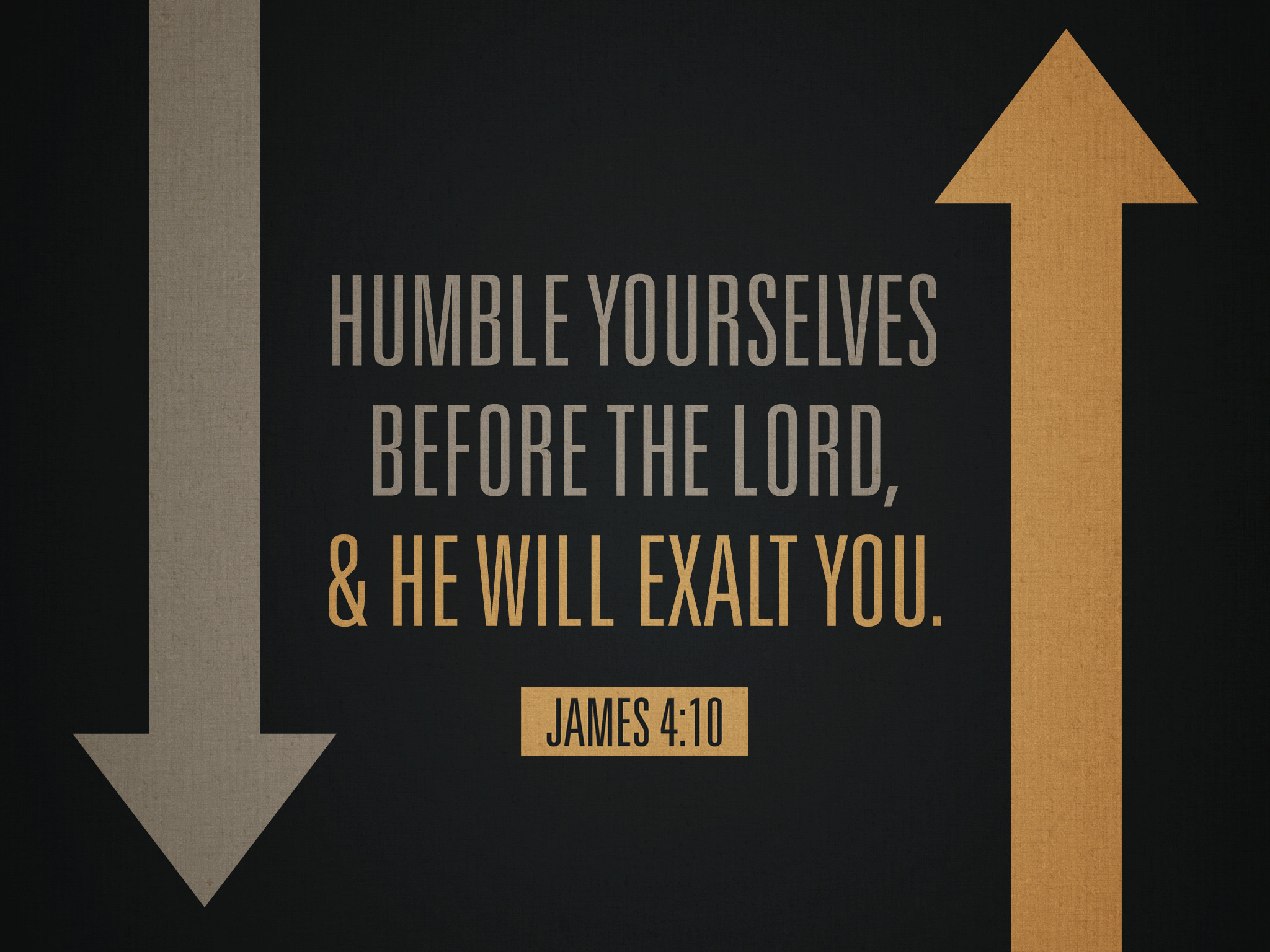
7 Now he told a parable to those who were invited, when he noticed how they chose the places of honor, saying to them, 8 “When you are invited by someone to a wedding feast, do not sit down in a place of honor, lest someone more distinguished than you be invited by him, 9 and he who invited you both will come and say to you, ‘Give your place to this person,’ and then you will begin with shame to take the lowest place. 10 But when you are invited, go and sit in the lowest place, so that when your host comes he may say to you, ‘Friend, move up higher.’ Then you will be honored in the presence of all who sit at table with you. 11 For everyone who exalts himself will be humbled, and he who humbles himself will be exalted.”

In the name of Jesus. Amen.

Everyone is religious. Everyone has a belief in what is good and right and true as opposed to what is evil and wrong and false. And in the end, there aren’t hundreds of religions. There are only two. One is true. The other is false. And we can put a title on each of these religions: the true religion of the Gospel of Jesus Christ, and the false religion of the law.

The true religion of the Gospel is faith in our Lord, Jesus Christ, who is the Way, the Truth, and the Life (Jn. 14:6). This true religion believes that God is merciful. It believes that we are made right with Him because of the cross. It believes God is gracious and forgives us despite our sin against His good and holy Law. The false religion of the law wrongly imagines that we have to reconcile ourselves to God by our own works and efforts. Even though the false, pagan religions of Hinduism, Islam, Buddhism, etc. – those all serve false gods instead of the true God. But they all operate in the same manner and under the same premise. And that premise boils down to this: You need to work yourself out of the messes of this world.

In this Gospel reading, it’s that false religion of the law that Jesus is attacking because that is the religion these Pharisees. They have placed the full weight of their trust in the idea that they can make themselves right with God and the world. But their religion is weaker than a house of cards.

Before we continue, one thing needs to be crystal clear. The Pharisee heresy isn’t exclusive to Pharisees. It’s a heresy that’s in all of us. It’s our default operating system because of our sinful nature. Normally, when we think about our sinful nature, we think of it as the part of us that drives and moves us toward sinful actions. And that is true, our sinful nature certainly does that. But it does more than just that. Our sinful nature also invents our own standards, morals, and commandments that are simpler than God’s standard of total, complete perfection.

This is why the Pharisees invented and added all their extra laws to God’s Commands. For example, the Pharisees took the 3rdCommandment, “Remember the Sabbath day to keep it holy,” and because they believed in their false religion of the law, they figured, “Let’s really get after keeping the Sabbath holy to make God happy with us.” So, they added all sorts of extra rules and regulations. They decided you could only walk 2,000 cubits (or about two-thirds of a mile) on the Sabbath because walking further than that would be considered the work of travel. In a futile effort to please God, Pharisees debated if it was ok to walk in the rain on the Sabbath because if you got rain on your clothes and went inside, that could be considered the work of delivering water. I don’t know anyone who drinks water from rain-soaked clothes. I wonder why they didn’t consider walking in rain on the Sabbath the work of doing laundry.

But they would also come up with all sorts of ways to get around their additional Sabbath laws. So, with the 2,000 cubit limitation on walking, they decided that, if you considered the whole town your home, then you could walk as far as you wanted so long as you stayed in town. They decided that if you walked in the rain on the Sabbath, you could just take off your clothes before you entered your house and leave them outside because then you weren’t delivering water. Can you imagine that? “Honey, I’m home.”

Now, we can laugh at how ridiculous this is because – it is. But we do the same sorts of things. Christ is clear that, when we get angry, it is the same as murder (Mt. 5:21-22). But rather than repent of our anger and receive God’s forgiveness, we do all sorts of mental gymnastics to try to justify our breaking of the 5th Command. But the Pharisee inside each of us also does something even worse. When our conscience still bothers us because of our sin, when it isn’t quieted by our mental justification of that sin, we recruit. We recruit and gather others around us. We tell them about whatever it was that made us angry – usually, in a way to make our anger seem right and just. We do that because we want others to confirm and affirm our sin. But it doesn’t matter if you could get the entire world to agree with you. God doesn’t care about the consensus you build, no matter how large it is. If God says it’s sinful, it’s sinful. Period. End of story.

Now, all of that was to build to this point: Dear saints, God’s view of what is right or wrong, what is good or bad, and what is holy or evil – that’s the only opinion that matters. That is what Jesus is getting at in this text – especially with the parable He tells in v. 8-11.

This parable isn’t like any other parable that Jesus tells. In fact, it is so unique that it won’t appear in most lists of Jesus’ parables that you can find. But Luke clearly calls it a parable in v. 7, so a parable it is. I would guess that the confusion about it being a parable stems from the fact that, at face value, it’s an etiquette lesson of how to be a good guest at a wedding feast. Basically, don’t automatically sit yourself in a place of honor because the host might see someone who is more important than you. Then, the host is going to tell you to sit somewhere else and give the more important person the seat of honor. If that happens, you’ll end up sitting somewhere obscure because all the other good seats are taken. Instead, Jesus says to sit in a low, undesirable place so the host can honor you saying, “Hey, friend. You deserve better. I’m going to move you up here.”

Again, this is just good, wise advice. But this advice is also a parable because there is a deeper theological truth here. Discovering that truth hinges on one thing. In this “etiquette parable” whose opinion matters? The host’s. Only the host’s. It doesn’t matter if everyone else at the wedding feast thought you were the most important person there. If the host tells you another guest gets the seat of honor, it’s his feast. So, the other guy gets it.

Here’s the point. Don’t move yourself up. Instead, be moved up by God. In that parable, the host is God Himself. His opinion of you and your honor – that’s the only thing that matters. So, there are times where you have to tell the little Pharisee inside of you to shut up and stop trying to clamor for honor and recognition and accolades. The opinions of others (and even your own opinions), they don’t matter (1 Co. 4:3-5). And Jesus, the Son of God, clearly tells you what He finds honorable and shameful in the last verse of this reading. “Everyone who exalts himself will be humbled, and he who humbles himself will be exalted” (Lk. 14:11).

If you are trying to exalt yourself and be impressive by your self-chosen good works, it isn’t going to go well for you. God is going to come into the banquet hall and say to you, “No. You don’t get to sit here.” And where will that leave you? Ultimately, it’ll leave you outside and in the darkness (Mt. 22:13). Instead, sit in the lowest seat, and don’t worry if others ask, “What are you doing there? Why are you putting up with that lowly, humiliating spot?” Don’t worry about being in positions that others think are shameful. God the Host is going to come Himself and say, “Friend, why are sitting way down here? Move up higher.”

One of the things Jesus is doing with this parable is He’s giving you God’s perspective on your simple, normal, everyday callings and vocations and works. Don’t ever forget that God is the One who has put you in those vocations and given you those works. Even if they don’t look flashy or impressive to the world, they are exactly the places where God has put you and given you holy work to do. If you stop and think about it, what higher seat is there than the seat God gives you?

To understand this better, imagine two people. The first is a devout monk who has abandoned the world to live a life of holiness. He takes a vow to get up every night at 2 AM and pray for three hours. Every night, this monk deprives himself of sleep; goes into a chapel to burn incense; lies face-down on a stone floor; and earnestly prays. The second person is a mom. At 2 AM, she gets woken up by the cries of her newborn because he’s sick with a stuffed, runny nose and has a full, stinky diaper. Exhausted, she stumbles around the room. She gets her hands into the snot and poop. She cleans and comforts and feeds the child. And she spends hours to finally rock him back to sleep.

Both of them are getting up at 2 AM. Both are doing work instead of sleeping. But which one is more holy, exalted, and honorable – the monk who chose to take that vow? Or the mom who received her child from God Himself? Of course it’s the mom.

Think of Paul in today’s Epistle reading (Eph. 4:1-6). In v. 1, he wrote, “I therefore, a prisoner…” I mean how low can you get? Paul is there in prison – rats running across his feet, muck oozing down the walls, mold in the air. And Paul writes, “I a prisoner for the Lord, urge you to walk in a manner worthy of the calling to which you have been called.” Paul recognized that, even in prison, he’s the Lord’s prisoner. It wasn’t Caesar or a king or a governor. God put him there. And if God, his loving heavenly Father, put him there, what better or more honorable place could there be?

Dear saints, the religion of the Gospel is the only thing that moves you up. You don’t need all the Pharisaical nonsense that vainly tries to get God to clap for you and give you accolades. One, it’s not going to work. And two, God has already given you important, holy works to do. Those works are pleasing to Him; those works show your love for Him by showing love for your neighbor. 

So, walk in a manner worthy of the calling to which you have been called. And you’ve been called God’s friend. God’s saints. God’s holy ones. God’s children. The work God gives you is worthy and holy. So, do that work with all your might.

Dear saints, you have the true religion which is faith that God is the One who moves you up. Not yourself. Not ever yourself. You are moved up, exalted, and honored by the holy and righteous God who calls you, “Friend.” And He calls you, “Friend,” solely because of what Christ has done on the cross for you. Amen.

The peace of God, which surpasses all understanding, will guard your hearts and minds in Christ Jesus (Php. 4:7). Amen.

At the Gate – Sermon on Luke 7:11-17 for the Sixteenth Sunday after Trinity

Luke 7:11-17

11 Soon afterward he went to a town called Nain, and his disciples and a great crowd went with him. 12 As he drew near to the gate of the town, behold, a man who had died was being carried out, the only son of his mother, and she was a widow, and a considerable crowd from the town was with her. 13 And when the Lord saw her, he had compassion on her and said to her, “Do not weep.” 14 Then he came up and touched the bier, and the bearers stood still. And he said, “Young man, I say to you, arise.” 15 And the dead man sat up and began to speak, and Jesus gave him to his mother. 16 Fear seized them all, and they glorified God, saying, “A great prophet has arisen among us!” and “God has visited his people!” 17 And this report about him spread through the whole of Judea and all the surrounding country.

In the name of Jesus. Amen.

One of the great mysteries of Scripture is that Jesus is fully God and fully Man. Saying that isn’t hard; you’ve probably grown up saying it. But believing that Jesus is both 100% God and Man is hard to believe – especially when it comes to Jesus’ life here on earth. As the Son of God, Jesus is eternal, all-powerful, and all-knowing, but as a Man, Jesus didn’t always fully use His divine rights and attributes. As God, Jesus all-powerful, but as a man, He still had to eat (Lk. 4:2), His body got tired and needed sit after a long walk (Jn. 4:6), and He had to sleep (Lk. 8:23). Because Jesus is God, He is all-knowing. He had known from all eternity that He would meet this funeral procession at the gate of Nain. But as a man, it wasn’t as though Jesus woke up that morning thinking, “Oh, today’s the day I’ll raise that boy in Nain.”

The way Luke records this event, he makes it clear that Jesus didn’t intentionally go to Nain for the purpose of raising this boy from the dead. Instead, Luke gives us the impression that Christ just happened to be going by the city at the precise moment this boy, widow, and funeral procession was exiting the city gate. This resurrection is very different from what we see in John 11, when Jesus raises Lazarus.

In John 11, Christ does use His divine omniscience. Jesus is a long way from where Lazarus lived when He gets a message that Lazarus is sick, but He doesn’t move an inch. He stays put. He says that Lazarus’ sickness would not end in death and that it was for the glory of God (Jn. 11:4). Then, Jesus waits two more days before He finally decides to go to Lazarus’ house because He knows that Lazarus has died, but our Lord says that He is going to wake Lazarus from the sleep of death (Jn. 11:1411). By those statements before Lazarus’ resurrection, we know that Jesus did plan on going to Lazarus’ grave for the purpose of raising him even though no one told Jesus that Lazarus had died.

But this resurrection miracle is different. No one had summoned Jesus to come and help like they would for some of the other miracles (Lk. 7:1-108:40-56). His presence wasn’t requested at the gate of Nain. He just happens to be at the gate at that very moment. But even though Jesus intended to pass by the city, His compassion for the mother means that He has to stop and raise her son.

Dear saints, your Savior is no priest or Levite who passes by and leaves someone for dead in the ditch (Lk. 10:30-32). No. Your Savior is the Good Samaritan. He sees the widow and her dead son coming out of the gate, and He has compassion. He interrupts that march toward the grave. He pours on the medicine of His Word by telling that mother to stop weeping, and He raises her son. In that moment, the gate of Nain was more than just a way to enter or exit the city. It was much more significant than that. The gate was the threshold between life and death, and it was the place where the citizens of Nain encountered and recognized the God who had come in the flesh to visit His people (Lk. 7:16).

Throughout the Bible, gates were always incredibly important places. Generally, when we think about a gate, we only think about its purpose. A gate exists to be either a barrier to block entrance or a doorway to grant it. Gates separate insiders from outsiders, allies from enemies, friend and family from foe. That’s probably all we imagine when we think about gates. But in the ancient world, gates were much more significant than that. In the Bible, gates were important places for commerce, politics, and justice.

The city gate was where citizens would typically meet (Pr. 1:21). The gate is where business deals and transactions were made (Ru. 4:11). Leaders would have people assemble at the gate so they could make important announcements (2 Ch. 32:6Neh. 8:13), which is why prophets and priests would proclaim God’s Word at the gates (Is. 29:21Am. 5:10Jer. 17:19-20). Instead of courthouses like we have today, trials took place at the city gate (2 Sam. 15:2). The gate was where you would learn about everything that was going on in the city (Gen. 19:1Ps. 69:12Est. 2:21).

So, in this reading, it’s likely that almost the entire town of Nain was there, at the gate. The gate would have already been busy and crowded just because of the normal, day-to-day things that took place at the gate. And it would have been even busier than normal because this boy’s funeral. The mother and the mourners were carrying her son through the gate to lay him to rest outside of the city, away from the living. So, again, that gate was the threshold between life and death. But there, at the gate stood the Author of Life (Act. 3:15), and Jesus does not let death cast this boy outside.

Now, before I go on here, I need to say that this miracle is an actual, historical event that really happened. Because it happened, it reveals that Jesus is the long-promised prophet (Dt. 18:15) and that God has visited His people (Lk. 7:16). But even more than that, the Holy Spirit inspired Luke to record this event for your comfort because this resurrection miracle is a glimpse into your story.

When God created all things, He gave Adam and Eve a home in the Garden of Eden. But when they chose to sin and rebel against God by eating the forbidden fruit, they were cast out of Eden. Now, Eden is never described as having a gate, but it is described as having borders made by four rivers. And when Adam and Eve are expelled from Eden, God, in His mercy, sent a cherub with a flaming sword to protect the way to the Tree of Life to prevent mankind from living forever because we would have lived forever in sin (Gen. 3:23-24). So, even though Eden is never mentioned as having a gate, the idea of a gate is certainly there. It is right to say that the cherub shut the gate to Eden and to an eternal life in sin and death.

God did not want the path to life to be forever blocked by a gate, but He had to do something before the gate could be reopened. God had to send Jesus to pay the penalty for your sin, my sin, and the sin of all mankind (1 Jn. 2:2). By Jesus’ death and resurrection, the gates to Eden, to paradise, and to eternal life free from sin are now open for you.

And even better, now that Christ is raised and ascended, He always and fully uses His divine attributes. He sees your sorrow and has compassion on you. He sees you when you are lost and outside of the gates. He runs to embrace you and bring you unto Himself as His child (Lk. 15:20-24). Christ uses all of His divine power to bring you back to Himself through the gates that He has opened for you.

One of the most beautiful scenes in all Scripture is the new heavens and earth in Rev. 21. The New Jerusalem is described as having twelve gates, three gates on each side of the city, and all twelve gates are made out of a single pearl (Rev. 21:12-1321). And the most wonderful thing about those gates is that they stand wide open – never to be shut (Rev. 21:25). They can remain open without any danger because when Christ returns, all your enemies are utterly defeated and cast out forever.

In that blessed, eternal city, every tear is wiped away. Mourning is turned into dancing (Ps. 30:11Jn. 16:20). There will be no more pain because this fallen world will have passed away (Rev. 21:4). In that city, all the children of God dwell together because they are raised, never to die again (Ro. 6:7-11).

So, you who are dead in sin, know that God is able to do far, far, far more abundantly than all you ask or think (Eph. 3:20). Hear your Savior’s call. Rise from your deadness. Christ, who is the Resurrection and the Life, has given you to the rest creation to be a blessing.

Dear saints, you have been raised to new life. So, enter His gates with thanksgiving and His courts with praise. To Christ Jesus be glory in the Church throughout all generations, forever and ever (Eph. 3:21). Amen.

The peace of God, which surpasses all understanding, will guard your hearts and minds in Christ Jesus (Php. 4:7). Amen.