Pure Religion – Sermon on James 1:22-27 for the Sixth Sunday of Easter

James 1:22-27

Alleluia! Christ is risen! 
He is risen indeed! Alleluia!

In the name of Jesus. Amen.

Pop quiz. You’ve probably heard this phrase, so finish it for me, “Christianity isn’t a religion, it’s a [relationship].” I’m going to push back on that. But before I do, I have to say two things. First, I understand the sentiment behind calling Christianity a relationship. I really do. Scripture does talk about believers in relational terms. The Bible is clear that God is our Father (Mt. 6:9), and we are His children (1 Jn. 3:1). Because Christ has come in the flesh, He is our Brother (Jn. 20:17Heb. 2:11). Through faith, believers are the Bride of Christ (Eph. 5:31-32Hos. 2:19-20). All of those are relationships. That relational language is clear, important, and Scriptural. The thing I want to point out is that those relationships only exist when a person has the right religion.

Second, the word ‘relationship’ doesn’t actually occur in the Bible—at least not in the Hebrew or Greek. There are a couple modern translations that use it. But the word ‘religion’ is a word the Bible uses. Here, James talks about a ‘worthless’ (lit. ‘vain, vaporous’) religion and a ‘pure’ religion, and there is only one.

Today when people use the word ‘religion’, they often focus on the practices people have. But ‘religion’ mainly has to do with the set of beliefs a person has, and, yes, those beliefs result in practices. We could talk about the different religions of Christianity, Judaism, Islam, Buddhism, Hindu, and a myriad of others. But we can distill all religions down to two beliefs. On the one hand, there’s the Christian religion that believes people are made right through faith in Christ. Every other religion believes you have to do something to make yourself right. We can shorten that down even further—there’s the religion of the Gospel and a myriad of religions of law. Or, even more simply, we can say there’s true religion, Christianity, and false religions, everything else. In this text, James wants us to focus on pure, undefiled, true religion.

This text begins with a clear call, “Be doers of the Word and not hearers only, deceiving yourselves” (Jam. 1:22). Notice what James does not say. He doesn’t divide humanity into people who hear and people who do not hear. Instead, he says there are 1) hearers who become doers and 2) hearers who forget and are not doers. You can’t be a doer without first being a hearer.

The verse right before our text, which you heard in last week’s epistle reading, makes that clear. “Receive with meekness the implanted word, which is able to save your souls” (Jam. 1:21). The Holy Spirit takes God’s Word, plants it in you, and you grow and produce fruit (Mt. 13:19-23). That Word gives you faith and is able to save your soul (Ro. 10:17). Everything James says in our text today grows out of that implanted Word. 

James helps us understand what this kind of hearing looks like with a vivid analogy that can be confusing. It might feel like he’s mixing metaphors, but he isn’t. James is actually talking about hearing the Word, but he uses the image of seeingin a mirror to show what happens—or doesn’t happen—when we hear. God’s Word is the crystal-clear mirror. You stand before it, and it shows you exactly who you are. All of God’s Word, both Law and Gospel, show you who you are and set you at liberty. 

For example, even the Ten Commandments set us at liberty because they begin, “I am the Lord your God, who brought you out of the land of Egypt, out of the house of slavery” (Ex 20:2). Before God gives a single command, He tells us who we really are. We are His people, rescued by His mighty hand. To be a doer of that Word is to say back to God and others, “Yes. You are God; we are Your people.”

The only alternative is to turn away and say, “You are not our God; we are not your people.” But to do that is to be the hearer who forgets. He looks in the mirror of the Word, sees his face, and then walks away forgetting what he just saw. Nothing changes, and that makes his religion worthless. He deceives his own heart.

But the one who looks intently into the perfect law of liberty and remains steadfast—he does not forget. He is a doer of the Word. And James promises: this one will be blessed in his doing. Not because the doing earns God’s favor—faith alone saves (Ro. 1:17Eph. 2:8-9)—but because the doing flows from the gift already received. Faith alone saves, but true faith is never alone.

And that perfect law of liberty is freeing in the deepest sense. The Ten Commandments show us how creation itself works. They are not a ladder by which we to climb up to God. They are the guardrails of the life God has already given us in Christ. They teach us how to love God with all our heart and how to love our neighbor as ourselves. They show us the shape of freedom and of a life of love that reflects the love of God who first loved us.

And when we break those commands and get out of line with how God created us to live, the perfect law of liberty is still freeing. The Gospel comes to tell us that we have a Savior. We have Jesus who died and rose again for us. We have redemption and forgiveness through His blood. God’s Word makes those promises, and we become doers by believing and trusting that what God has said is true.

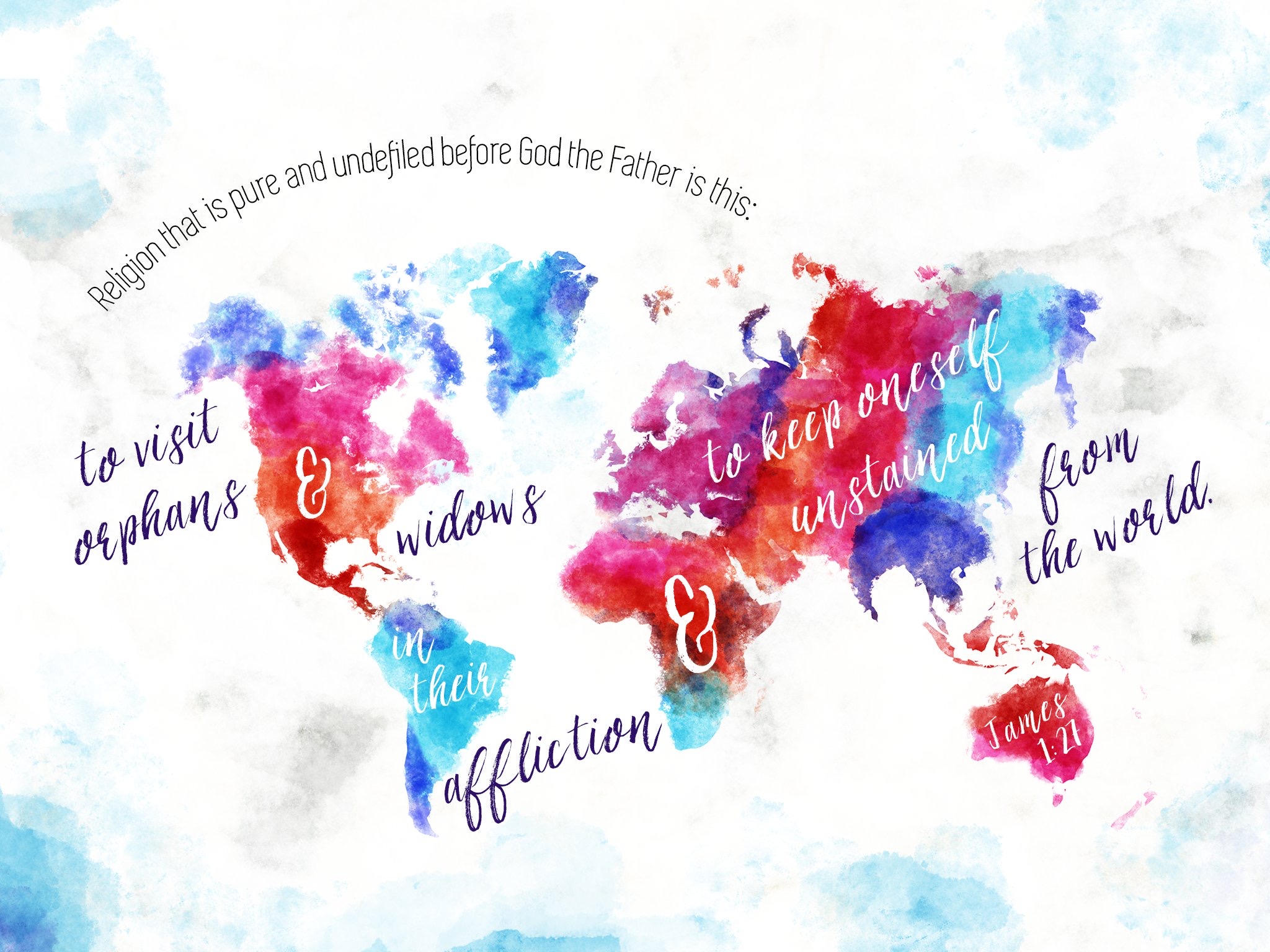
That is why James can define pure and undefiled religion so clearly in Jam. 1:26-27. Pure religion is to bridle our tongues, so our words give life by confessing the truth of God’s Word instead of tearing down. Pure religion is visiting orphans and widows in their affliction and keeping oneself untainted from the world. These are not new laws that we have to obey to earn God’s love. They are the natural fruit of a faith that remembers who it is in the mirror of the Word. 

In your daily vocations—whether you are a parent, a neighbor, a coworker, a citizen, or a friend—pure religion takes a shape. You notice the outcast and hurting and invite them to lunch. You see the struggling family down the street and drop off a meal or watch their kids so the parents can go on a date. You sit with the widow in the pew and listen to her stories. You advocate for the vulnerable instead of looking the other way. You live in the world but refuse to let its godless values stain your heart. You calmly but boldly speak truth. You show mercy because Christ has first given His mercy to you. And you walk in the freedom Christ has won for you.

Dear saints, that is pure religion—the religion that is pure, and the religion that makes you pure. That religion sets you into a right relationship with God as your Father and you as His children. That relationship only exists because we have the right religion—the religion of the Gospel of Christ.

Jason, that brings me to you. Jason, today is a day of pure joy. You are now Baptized into the name of the Father and of the Son and of the Holy Spirit. God has implanted His Word in you which is able to save your soul. You have received the new birth of water and the Spirit that Jesus promised (Jn. 3:3-6). You are joined to Christ’s death and resurrection (Ro. 6:3-7). As the Holy Spirit continues to work in you, you become more and more a doer of the Word.

Jason and all of you, dear saints, keep looking intently into this perfect law of liberty. Come back to it every day in the Scriptures, in the preaching, in the Lord’s Supper. Remember who you are. You are beloved children of the Father, brothers and sisters of the risen Christ, and you are the Bride He has washed clean. Continue to live as doers. Care for the lonely and the hurting. Bridle your tongue and speak life and the forgiveness of Christ. Live in the world but refuse to be stained by it. Do the good works God has prepared for you to walk in—not to earn His favor, but because you already have that favor in full.

This is pure religion. This is true faith. This is the life that is blessed in the doing, all because of the One who lived, died, and rose for you. Amen.

Alleluia! Christ is risen! 
He is risen indeed! Alleluia!

The peace of God, which surpasses all understanding, will guard your hearts and minds in Christ Jesus (Php. 4:7). Amen.
Moved Up – Sermon on Luke 14:1-11 for the Seventeenth Sunday after Trinity

Luke 14:1-11

1 One Sabbath, when he went to dine at the house of a ruler of the Pharisees, they were watching him carefully. 2 And behold, there was a man before him who had dropsy. 3 And Jesus responded to the lawyers and Pharisees, saying, “Is it lawful to heal on the Sabbath, or not?” 4 But they remained silent. Then he took him and healed him and sent him away. 5And he said to them, “Which of you, having a son or an ox that has fallen into a well on a Sabbath day, will not immediately pull him out?” 6 And they could not reply to these things. 

7 Now he told a parable to those who were invited, when he noticed how they chose the places of honor, saying to them, 8 “When you are invited by someone to a wedding feast, do not sit down in a place of honor, lest someone more distinguished than you be invited by him, 9 and he who invited you both will come and say to you, ‘Give your place to this person,’ and then you will begin with shame to take the lowest place. 10 But when you are invited, go and sit in the lowest place, so that when your host comes he may say to you, ‘Friend, move up higher.’ Then you will be honored in the presence of all who sit at table with you. 11 For everyone who exalts himself will be humbled, and he who humbles himself will be exalted.”

In the name of Jesus. Amen.

Everyone is religious. Everyone has a belief in what is good and right and true as opposed to what is evil and wrong and false. And in the end, there aren’t hundreds of religions. There are only two. One is true. The other is false. And we can put a title on each of these religions: the true religion of the Gospel of Jesus Christ, and the false religion of the law.

The true religion of the Gospel is faith in our Lord, Jesus Christ, who is the Way, the Truth, and the Life (Jn. 14:6). This true religion believes that God is merciful. It believes that we are made right with Him because of the cross. It believes God is gracious and forgives us despite our sin against His good and holy Law. The false religion of the law wrongly imagines that we have to reconcile ourselves to God by our own works and efforts. Even though the false, pagan religions of Hinduism, Islam, Buddhism, etc. – those all serve false gods instead of the true God. But they all operate in the same manner and under the same premise. And that premise boils down to this: You need to work yourself out of the messes of this world.

In this Gospel reading, it’s that false religion of the law that Jesus is attacking because that is the religion these Pharisees. They have placed the full weight of their trust in the idea that they can make themselves right with God and the world. But their religion is weaker than a house of cards.

Before we continue, one thing needs to be crystal clear. The Pharisee heresy isn’t exclusive to Pharisees. It’s a heresy that’s in all of us. It’s our default operating system because of our sinful nature. Normally, when we think about our sinful nature, we think of it as the part of us that drives and moves us toward sinful actions. And that is true, our sinful nature certainly does that. But it does more than just that. Our sinful nature also invents our own standards, morals, and commandments that are simpler than God’s standard of total, complete perfection.

This is why the Pharisees invented and added all their extra laws to God’s Commands. For example, the Pharisees took the 3rdCommandment, “Remember the Sabbath day to keep it holy,” and because they believed in their false religion of the law, they figured, “Let’s really get after keeping the Sabbath holy to make God happy with us.” So, they added all sorts of extra rules and regulations. They decided you could only walk 2,000 cubits (or about two-thirds of a mile) on the Sabbath because walking further than that would be considered the work of travel. In a futile effort to please God, Pharisees debated if it was ok to walk in the rain on the Sabbath because if you got rain on your clothes and went inside, that could be considered the work of delivering water. I don’t know anyone who drinks water from rain-soaked clothes. I wonder why they didn’t consider walking in rain on the Sabbath the work of doing laundry.

But they would also come up with all sorts of ways to get around their additional Sabbath laws. So, with the 2,000 cubit limitation on walking, they decided that, if you considered the whole town your home, then you could walk as far as you wanted so long as you stayed in town. They decided that if you walked in the rain on the Sabbath, you could just take off your clothes before you entered your house and leave them outside because then you weren’t delivering water. Can you imagine that? “Honey, I’m home.”

Now, we can laugh at how ridiculous this is because – it is. But we do the same sorts of things. Christ is clear that, when we get angry, it is the same as murder (Mt. 5:21-22). But rather than repent of our anger and receive God’s forgiveness, we do all sorts of mental gymnastics to try to justify our breaking of the 5th Command. But the Pharisee inside each of us also does something even worse. When our conscience still bothers us because of our sin, when it isn’t quieted by our mental justification of that sin, we recruit. We recruit and gather others around us. We tell them about whatever it was that made us angry – usually, in a way to make our anger seem right and just. We do that because we want others to confirm and affirm our sin. But it doesn’t matter if you could get the entire world to agree with you. God doesn’t care about the consensus you build, no matter how large it is. If God says it’s sinful, it’s sinful. Period. End of story.

Now, all of that was to build to this point: Dear saints, God’s view of what is right or wrong, what is good or bad, and what is holy or evil – that’s the only opinion that matters. That is what Jesus is getting at in this text – especially with the parable He tells in v. 8-11.

This parable isn’t like any other parable that Jesus tells. In fact, it is so unique that it won’t appear in most lists of Jesus’ parables that you can find. But Luke clearly calls it a parable in v. 7, so a parable it is. I would guess that the confusion about it being a parable stems from the fact that, at face value, it’s an etiquette lesson of how to be a good guest at a wedding feast. Basically, don’t automatically sit yourself in a place of honor because the host might see someone who is more important than you. Then, the host is going to tell you to sit somewhere else and give the more important person the seat of honor. If that happens, you’ll end up sitting somewhere obscure because all the other good seats are taken. Instead, Jesus says to sit in a low, undesirable place so the host can honor you saying, “Hey, friend. You deserve better. I’m going to move you up here.”

Again, this is just good, wise advice. But this advice is also a parable because there is a deeper theological truth here. Discovering that truth hinges on one thing. In this “etiquette parable” whose opinion matters? The host’s. Only the host’s. It doesn’t matter if everyone else at the wedding feast thought you were the most important person there. If the host tells you another guest gets the seat of honor, it’s his feast. So, the other guy gets it.

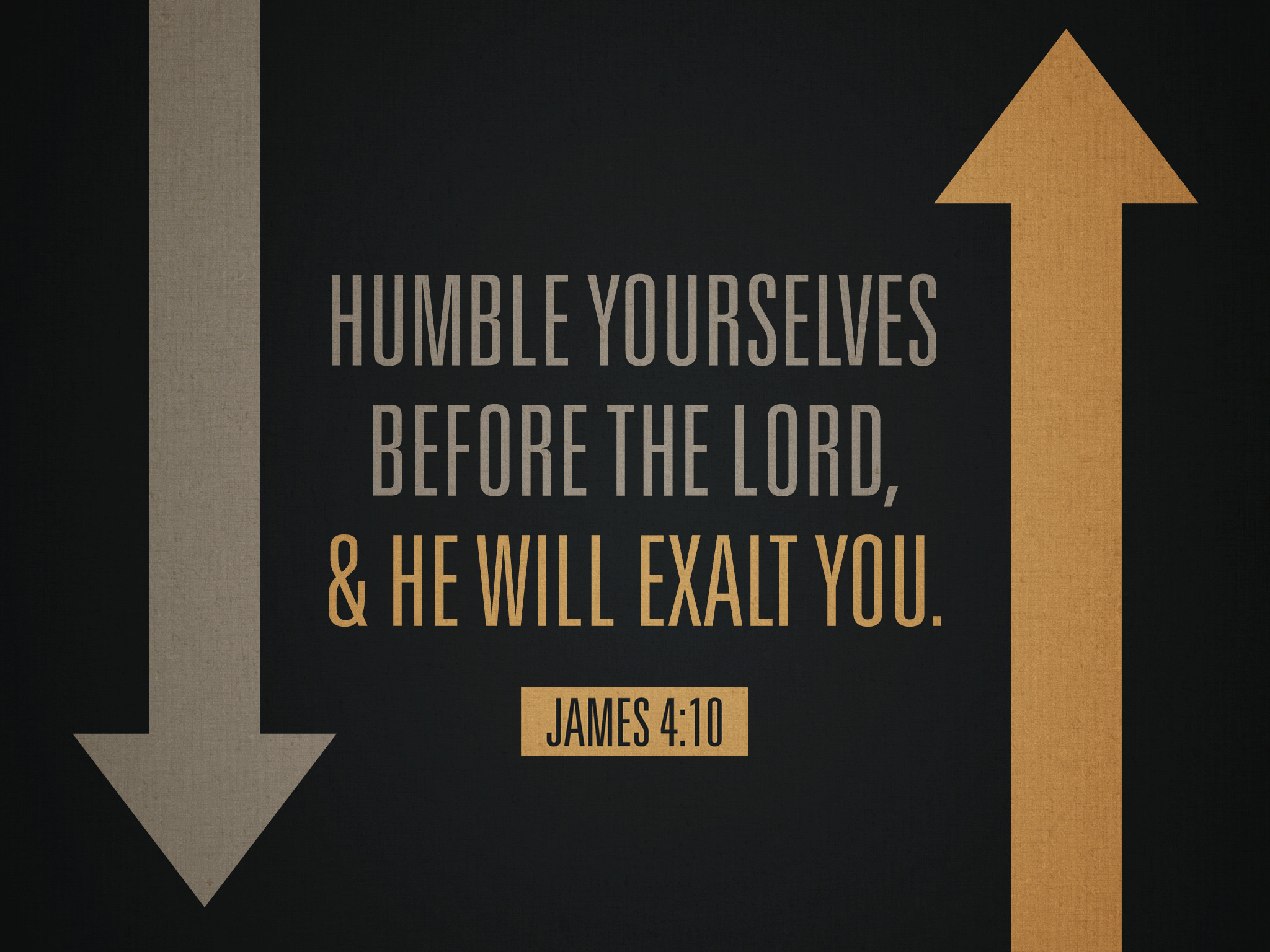
Here’s the point. Don’t move yourself up. Instead, be moved up by God. In that parable, the host is God Himself. His opinion of you and your honor – that’s the only thing that matters. So, there are times where you have to tell the little Pharisee inside of you to shut up and stop trying to clamor for honor and recognition and accolades. The opinions of others (and even your own opinions), they don’t matter (1 Co. 4:3-5). And Jesus, the Son of God, clearly tells you what He finds honorable and shameful in the last verse of this reading. “Everyone who exalts himself will be humbled, and he who humbles himself will be exalted” (Lk. 14:11).

If you are trying to exalt yourself and be impressive by your self-chosen good works, it isn’t going to go well for you. God is going to come into the banquet hall and say to you, “No. You don’t get to sit here.” And where will that leave you? Ultimately, it’ll leave you outside and in the darkness (Mt. 22:13). Instead, sit in the lowest seat, and don’t worry if others ask, “What are you doing there? Why are you putting up with that lowly, humiliating spot?” Don’t worry about being in positions that others think are shameful. God the Host is going to come Himself and say, “Friend, why are sitting way down here? Move up higher.”

One of the things Jesus is doing with this parable is He’s giving you God’s perspective on your simple, normal, everyday callings and vocations and works. Don’t ever forget that God is the One who has put you in those vocations and given you those works. Even if they don’t look flashy or impressive to the world, they are exactly the places where God has put you and given you holy work to do. If you stop and think about it, what higher seat is there than the seat God gives you?

To understand this better, imagine two people. The first is a devout monk who has abandoned the world to live a life of holiness. He takes a vow to get up every night at 2 AM and pray for three hours. Every night, this monk deprives himself of sleep; goes into a chapel to burn incense; lies face-down on a stone floor; and earnestly prays. The second person is a mom. At 2 AM, she gets woken up by the cries of her newborn because he’s sick with a stuffed, runny nose and has a full, stinky diaper. Exhausted, she stumbles around the room. She gets her hands into the snot and poop. She cleans and comforts and feeds the child. And she spends hours to finally rock him back to sleep.

Both of them are getting up at 2 AM. Both are doing work instead of sleeping. But which one is more holy, exalted, and honorable – the monk who chose to take that vow? Or the mom who received her child from God Himself? Of course it’s the mom.

Think of Paul in today’s Epistle reading (Eph. 4:1-6). In v. 1, he wrote, “I therefore, a prisoner…” I mean how low can you get? Paul is there in prison – rats running across his feet, muck oozing down the walls, mold in the air. And Paul writes, “I a prisoner for the Lord, urge you to walk in a manner worthy of the calling to which you have been called.” Paul recognized that, even in prison, he’s the Lord’s prisoner. It wasn’t Caesar or a king or a governor. God put him there. And if God, his loving heavenly Father, put him there, what better or more honorable place could there be?

Dear saints, the religion of the Gospel is the only thing that moves you up. You don’t need all the Pharisaical nonsense that vainly tries to get God to clap for you and give you accolades. One, it’s not going to work. And two, God has already given you important, holy works to do. Those works are pleasing to Him; those works show your love for Him by showing love for your neighbor. 

So, walk in a manner worthy of the calling to which you have been called. And you’ve been called God’s friend. God’s saints. God’s holy ones. God’s children. The work God gives you is worthy and holy. So, do that work with all your might.

Dear saints, you have the true religion which is faith that God is the One who moves you up. Not yourself. Not ever yourself. You are moved up, exalted, and honored by the holy and righteous God who calls you, “Friend.” And He calls you, “Friend,” solely because of what Christ has done on the cross for you. Amen.

The peace of God, which surpasses all understanding, will guard your hearts and minds in Christ Jesus (Php. 4:7). Amen.