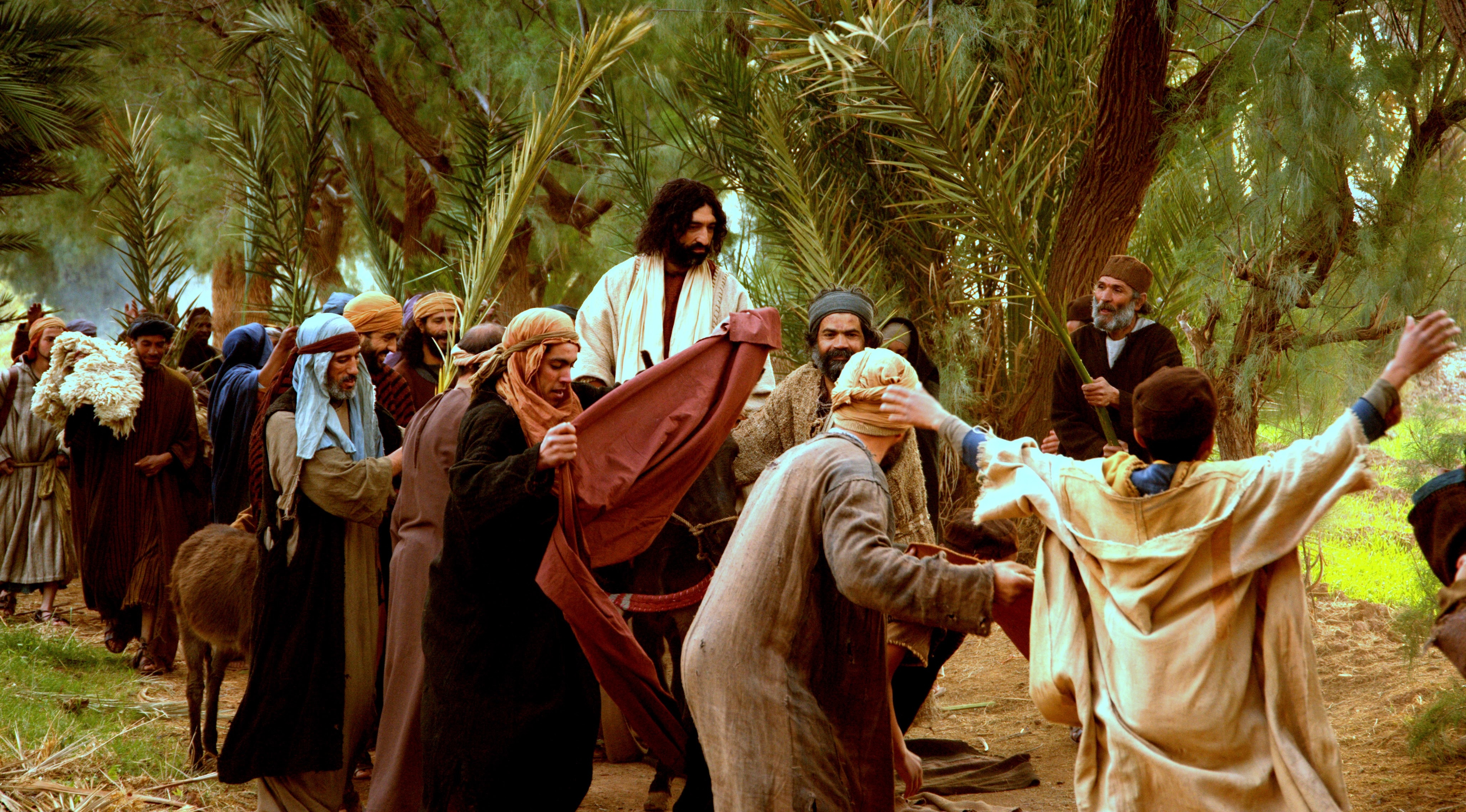
Comfort to the Heart – Sermon on Isaiah 40:1-8 for the Third Sunday of Advent

Isaiah 40:1-8

In the name of Jesus. Amen.

In your lowest moments – and even before those lowest moments arrive – God is there tenderly speaking, “Comfort, comfort,” to you, His people. He speaks that comfort to remove the burden of the debt of sin, and this changes everything for us sinners.

Just before our text, in Isaiah 39, Hezekiah, the king of Judah, welcomes an envoy of ambassadors from the king of Babylon. That empire was growing in strength and power, and Hezekiah wanted to have Babylon as an ally in case the Assyrian Empire attacked Judah. While those ambassadors were there, Hezekiah does what kings often do. He shows off. He gives the ambassadors a tour of his palace and shows them all of his treasure. He flaunted his silver, gold, and spices. Hezekiah displayed all the weapons of his armory – his entire treasury. He left nothing hidden. Basically, Hezekiah was boasting about himself and the greatness of his kingdom, but he doesn’t boast about his Lord and God who had given it all to him.

After the Babylonian delegation leaves, the prophet Isaiah visits the palace to confront Hezekiah about all this. Isaiah rebukes him for being so foolish and prophesies that the Babylonians will come again in a hundred years to strip the palace and the Temple of everything. All the gold and wealth and treasure and weaponry of Hezekiah’s kingdom – it will all be taken by the Babylonians because Hezekiah’s pride did nothing more than make himself a target by showing off. Isaiah says that Hezekiah’s descendants would pay the price of his foolish actions.

And Hezekiah’s response is, frankly, disgusting. Basically, he says, “Let me get this straight, Isaiah. You’re saying that I get to keep the treasure? Babylon isn’t going to come and ransack and pillage as long as I’m alive?” And Isaiah says, “Yeah, but listen. It’s going to happen to your descendants.” But Hezekiah doesn’t care. Instead, he says, “Cool. Everything will be safe and secure in my days.” That, of course, is the wrong response.

Hezekiah should have fallen to his knees and begged for God to forgive him or, at least, ask that the payment of his foolishness not fall upon his children and grandchildren. Instead, Hezekiah callously says, “This is great. I don’t have to deal with it.”

Just over 100 years later, the price of Hezekiah’s foolishness and pride was paid. Babylon came. They destroyed the Temple. Men, women, and children were slaughtered in the streets. The nation was torn apart. People were ripped from their country, their lands, and their homes. And they were taken into exile in Babylon (2 Kgs. 25:1-212 Ch. 36:17-21Jer. 52:1-30).

Imagine enduring all of that. Imagine being part of that generation who paid the debt of Hezekiah’s pride. They watched as all these things happened, and because they were familiar with the book of Isaiah, they knew that they were paying Hezekiah’s debt because he was totally fine with passing that debt of his sin off to a future generation.

If you were part of that generation who endured that destruction, how would you handle and process that? How could you be anything but bitter and resentful that your forefather had been totally willing to pass the punishment of his sin off to you? How would you cope? Where would you find comfort?

Well, you would find it here in these verses that come immediately after Isaiah recorded Hezekiah’s foolish and callous actions. And dear saints, these verses aren’t only for the people who were carried into exile in Babylon. They are also for you today. Now. “Comfort, comfort My people, says your God. Speak tenderly to Jerusalem.” And that phrase, ‘speak tenderly,’ is a lot stronger in Hebrew. It’s an idiom that is literally translated, “speak to the heart.” God isn’t just speaking cliché platitudes from a far, distant place. No. Your God leans in close to speak comforting words directly into the heart of you, His people.

These words of comfort here in Isaiah 40 are for you because you are God’s people through faith in Christ. And these words cut through the noise and chaos of sin and suffering to touch you where your ache is sharpest and deepest. In the midst of the pain that has come to you because of sin – both your sin and the sins of others – God speaks tenderly, He speaks directly to your heart, “Be comforted. Be comforted. [Your] warfare and hardship is ended; [your] iniquity is pardoned.”

This whole text is beautiful, and dozens sermons could be preached on each line of the text. We could focus on the lines concerning John the Baptizer who would proceed Jesus and make a straight, level highway in the wilderness for the coming of the God who brings this comfort. We could ponder the arrival of God’s glory that will be seen by all flesh for eternity.

Earlier this week, I considered focusing this sermon on the lines about all flesh being like grass. Remember how Adam and Eve – who, after the Fall, became like the grass that withers and fades – they tried to cover themselves with foliage when they heard the sound of God walking in the Garden of Eden (Gen. 3:7-8). But God had come to give them the comfort that He would send the Seed of the woman to crush the serpent’s head (Gen. 3:15). And that Word of promise endures forever. Maybe, I’ll preach that sermon sometime in the future. Anyway, there’s an eternity of sermons that could be preached from these nine verses.

But the thing I want to focus on today is that phrase from the last line of v. 2 about receiving, “from the Lord’s hand double for all [your] sins.” And I want to focus on it because, even though it sounds like Law, it is sweet, sweet Gospel spoken from God’s mouth directly into your heart. But we need to do a little groundwork first.

In Is. 40:2, Isaiah uses two of the three most common Hebrew words for breaking God’s Law – ‘iniquity’ and ‘sin.’ The third word that Isaiah doesn’t use here is ‘transgression.’ And each of these words give a slightly different picture of what sin is.

The Hebrew word that regularly gets translated ‘transgression’ means to cross a boundary. In each Commandment, God sets a line and crossing over that line is a ‘transgression’ or a ‘trespass.’ The Hebrew word that most often gets translated as ‘sin’ means to miss the mark. God has a standard for us, but we keep missing it. Think of an archer who never hits the target, let alone the bullseye. Finally, the Hebrew word that gets translated ‘iniquity’ refers to the guilt and shame caused by sin. Think of the weight and indebtedness you feel when you’ve wronged someone – that’s the iniquity. All three words deal with the same thing (our sin), but each one focuses on a different aspect of that sin.

Well, here God says that your iniquity, that debt and weight of sin, is pardoned and that you have received from His hand double for all your sins. Again, this should be comforting. God isn’t saying that He’s giving you double punishment for your sin. No!

Instead, God has taken that debt of sin. He pays for it. Imagine your sin as a pile debt on your account. Because of Jesus, the billions of debt that you owe because of your sin is all paid off. But God doesn’t stop and just get you to an even balance. In place of that massive debt, God credits your account with the righteous deeds and the perfect obedience of Jesus.

You can imagine a chalkboard where all your sins are written down. Through faith, Jesus comes and wipes every last speck of that chalk and dust off. But He doesn’t stop once your slate is wiped clean. He writes over that chalkboard all of the holy, righteous, and perfect works that He has done (see Mt. 25:31-40).

God knows the full debt of your sin down to the last penny. And when Jesus pours out His forgiveness, mercy, and salvation on you, it is in double measure of your debt.

In Jer. 31:34, God says that He forgives your iniquity and remembers your sin no more. Dear saints, be comforted. God doesn’t remember the kind or type of sins you have committed. He doesn’t remember the specific ways you have transgressed against Him and against your neighbor. The only thing that He remembers about your sin is the amount of debt you owe. And the only reason God remembers that is so He can give you a double portion of His grace and mercy (Jn. 1:16).

That is the comfort He gives to you. That is the comfort He speaks to directly into your heart today and every day. Your Redeemer will continue to speak that comfort to you, and His Word of grace, mercy, and comfort endures forever. Amen.

The peace of God, which surpasses all understanding, will guard your hearts and minds in Christ Jesus (Php. 4:7). Amen.


Encouragement – Sermon on Romans 15:4-13 for the Second Sunday of Advent

Romans 15:4-13

4 For whatever was written in former days was written for our instruction, that through endurance and through the encouragement of the Scriptures we might have hope. 5 May the God of endurance and encouragement grant you to live in such harmony with one another, in accord with Christ Jesus, 6 that together you may with one voice glorify the God and Father of our Lord Jesus Christ. 7 Therefore welcome one another as Christ has welcomed you, for the glory of God. 

8 For I tell you that Christ became a servant to the circumcised to show God’s truthfulness, in order to confirm the promises given to the patriarchs, 9 and in order that the Gentiles might glorify God for his mercy. As it is written, 

“Therefore I will praise you among the Gentiles, 
and sing to your name.” 

10 And again it is said, 

“Rejoice, O Gentiles, with his people.” 

11 And again, 

“Praise the Lord, all you Gentiles, 
and let all the peoples extol him.” 

12 And again Isaiah says, 

“The root of Jesse will come, 
even he who arises to rule the Gentiles;
in him will the Gentiles hope.” 

13 May the God of hope fill you with all joy and peace in believing, so that by the power of the Holy Spirit you may abound in hope.

In the name of Jesus. Amen.

If your mailbox is anything like ours, you’ve noticed it being fuller than normal over the last couple weeks. It happens each year – usually beginning sometime around Thanksgiving. You start getting advertisements for Black Friday sales. Different organizations and charities send requests for end of the year gifts. If you live in Polk County, you receive your estimate for next year’s property tax. Packages arrive with gifts that will be wrapped and placed under the tree. Family and friends start sending out their Christmas cards and newsletters. Some of this extra mail makes you excited; some of it makes you mad or, even, overwhelmed. You’re more likely to be excited to open a package or read a Christmas card than you are to open your property tax assessment. And you might be frustrated with how quickly some of that mail fills up your garbage can.

In these verses, Paul is talking about God’s mail to you. He’s referring to the Bible. And all of it has a purpose. He says, “Whatever was written in former days was written for our instruction, that through endurance and through the encouragement of the Scriptures we might have hope.” This verse (Ro. 15:4) is an extremely important verse for preachers. It and 2 Tim. 3:16-17 are where Scripture itself tells us what the purpose of Scripture is. Scripture teaches that there are five different ‘uses’ or ‘purposes’ of God’s Word. 2 Tim. 3:16-17 gives the first four when it says, “All Scripture is breathed out,” or ‘inspired,’ “by God and is profitable for 1) teaching, 2) reproof, 3) correction, and 4) training in righteousness, that the man of God may be complete, equipped for every good work.”

The fifth use/purpose of Scripture is here in Ro. 15:4 – encouragement. When preachers are taught this five-fold use/purpose of Scripture, the two that float to the top as the most important uses of Scripture, the ones that should probably always be in a sermon, are teaching and encouragement. The other three – reproof, correction, and training in righteousness – yes, they are important, but they don’t need to be part of every sermon. The text that’s being preached is what should guide the preacher as to which of the five ‘uses’ make it into the sermon because each text has a different focus. But teaching and encouragement are something that should happen in every sermon – at least, to some degree.

Dear saints, according to Scripture itself, God is encouraging us whenever we read the Scriptures. The Bible wasn’t written for the benefit of the authors so they could write a best-seller and earn a living. Neither are the Scriptures merely personal notes or stories or genealogical records. No. The Scriptures were inspired, written, recorded, and preserved by God to teach you and to give you hope, comfort, and encouragement.

The Holy Spirit inspired each author to write what they wrote to give you encouragement. God Himself is the author of all Scripture. So, He inspired Moses to write Genesis-Deuteronomy for you. He had David write the Psalms for you. The Holy Spirit inspired Isaiah and Jeremiah and Malachi to write so that you – along with all the saints who have come before you and will come after you – could learn and be encouraged. The Scriptures are God’s Word. The contain God’s promises that He gave to our brothers and sisters in Christ who came before us. But they are written and recorded for your sake. In other words, we all benefit from them. Every line of Scripture is written for your benefit.

Sadly, many think that the Bible is nothing more than an old book with dead authors and dead audiences. That wrong idea leads them to conclude that the contents and the subjects that Scripture addresses are dead as well. But they aren’t. The Bible is not a bunch of words for a former time that are intended for former people. As Christ’s children, you know better.

The Bible is God’s Word for you and to you. The Scriptures are written for your learning and mine. The applications that can be made from the Scriptures are for us – even when the things that occur in them happened to somebody else. The Scriptures are for your learning, reproof, correction, training in righteousness, and for your encouragement.

The word that Paul uses here for ‘encouragement’ is the same word that Jesus uses to refer to the Holy Spirit in Jn. 14-16. The Holy Spirit is the Comforter, the Helper, the Advocate of God’s people. The Holy Spirit uses that Word to point you to Jesus (Jn. 15:26), who is also your Comforter and Advocate (1 Jn. 2:1). And the Spirit uses that Word to bring you to faith in what is firm, certain, strong, and unchanging. Christian, you don’t have to speculate about God or wonder what He thinks about you. The Scriptures tell you exactly what God thinks and what He promises to give to you and to do for you. That is the source of your encouragement.

Comfort and encouragement is always for those who are troubled. There are all sorts of things in this world that might cause you to be troubled, but the Scriptures seem to divide the trouble you face into two main categories 1) a troubled conscience and 2) a troubled heart. And it’s helpful to keep a distinction between those two.

When we think about the encouragement that the Bible gives, we might think mostly about the comfort that has to do with our sin, which is probably good. Scripture is where God tells us all the things that we must do, all the things we must notdo. And as we hear that, we recognize that we are sinners because our conscience is troubled by our sin. Then, of course, God’s Word comes and tells us that for the sake of Jesus Christ, God removes our sin as far from us as the east is from the west (Ps. 103:12) because Christ is the Lamb of God who takes away the sin of the world (Jn. 1:29). Jesus died for those sins, bearing them to His now-empty tomb. All of us need the encouragement that our sins are forgiven so we would be comforted in our conscience.

But Scripture also wants to encourage your troubled heart, which is different from a troubled conscience. In Jn. 14:1, Jesus tells the disciples, “Let not your hearts be troubled.” There, Jesus isn’t addressing the disciples’ sin. Instead, He’s comforting and encouraging them because of what’s about to happen. He’s about to go to the cross and be parted from them. He’ll be in the tomb for three days. That fact is going to give the disciples troubled hearts.

So, the distinction between a troubled conscience and a troubled heart is the root cause. A troubled conscience is caused by sin. But a troubled heart is caused when you see the things going on in this dark, fallen, sinful world and recognize that things are not as they should be. They are not as God created and intended them to be.

This is why all of Scripture – every book, chapter, paragraph, verse, and word – all of it is for your encouragement. Sure, you might gravitate to certain comforting and reassuring passages. That is natural. It’s fine and, even, good. But all of it is for your encouragement. Even the Law portions of Scripture, the parts that tell you what you must do and must not do, even those are encouraging.

Think back to the idea of the different kinds of mail you receive this time of the year. You’d probably rather read the Christmas cards than open your property tax assessment for the upcoming year. Just like you’d probably prefer to read Ps. 23 about God being your Shepherd than, say, Lev. 14 about the laws for a person with leprosy. But both are for your encouragement.

Even God’s Law and Commands are comforting because you are clearly told what is required of you. God doesn’t hide anything from you. There will be no surprises on the Last Day when it comes to what God demands. He’s not shifty. He is open and clear. So, whenever you read Scripture, look for the encouragement. Sure, there are portions of Scripture that you might – at least not initially – think of as comforting, but that’s not a problem with the Scriptures. That’s a problem with our perspective of the Scriptures. In His holy Word, God has laid everything out on the table. Everything He wants you to know, He has told you in His Word. He hasn’t held anything back.

One of the most encouraging things in the Scriptures that should always be on your mind is that Jesus is coming back to rescue you. Our Gospel reading today (Lk. 21:25-36) makes that clear. Sure, some of the language in that reading is troubling. Jesus mentions all sorts of things that can cause a troubled heart – signs in the sun, moon, and stars; distress of nations; the roaring of the sea and waves; and the powers of the heavens being shaken. People will be fainting with fear and foreboding for all the things that are coming on in the world. And we see a lot of that going on today. We see the wars and hear rumors of wars. We see violence and division. We see evil people doing evil things. We hear reports and speculations of all sorts of bad things that might happen in the future. And all of this can cause our hearts to be troubled. But be encouraged. Jesus has plainly told you that these things will happen. So, He’s not surprised when they do. And because He’s not surprised, be encouraged because Christ is still on the throne, and He knows how to deal with all those things.

Your crucified and risen Savior, Jesus Christ, has ascended into heaven and now rules and reigns over all things for your benefit, believer. And He is coming back to rescue and deliver you from every trouble and every evil. That is your hope, that is your comfort, that is your encouragement each and every time your heart is troubled. Open the Scriptures and be reminded that Christ is coming to deliver and rescue you. 

When your heart is troubled because of all the evil that surrounds you, remember that Jesus promises that evil is the sign that His return is drawing closer. He says, “When these [troubling] things begin to take place, straighten up, raise your heads, because your redemption is drawing near” (Lk. 21:28). Not only is it drawing near, but it is here as our Savior comes and invites us to His table. Amen.

The peace of God, which surpasses all understanding, will guard your hearts and minds in Christ Jesus (Php. 4:7). Amen.

Alert, Awake, & Armored – Sermon on 1 Thessalonians 5:1-11 for the Last Sunday of the Church Year

1 Thessalonians 5:1-11

1 Now concerning the times and the seasons, brothers, you have no need to have anything written to you. 2 For you yourselves are fully aware that the day of the Lord will come like a thief in the night. 3 While people are saying, “There is peace and security,” then sudden destruction will come upon them as labor pains come upon a pregnant woman, and they will not escape. 4 But you are not in darkness, brothers, for that day to surprise you like a thief. 5 For you are all children of light, children of the day. We are not of the night or of the darkness. 6 So then let us not sleep, as others do, but let us keep awake and be sober. 7 For those who sleep, sleep at night, and those who get drunk, are drunk at night. 8 But since we belong to the day, let us be sober, having put on the breastplate of faith and love, and for a helmet the hope of salvation. 9 For God has not destined us for wrath, but to obtain salvation through our Lord Jesus Christ, 10 who died for us so that whether we are awake or asleep we might live with him. 11 Therefore encourage one another and build one another up, just as you are doing.

Scene 2 – Sermon on Matthew 18:21-35 for the Twenty-second Sunday after Trinity

Matthew 18:21-35

21 Then Peter came up and said to him, “Lord, how often will my brother sin against me, and I forgive him? As many as seven times?” 22 Jesus said to him, “I do not say to you seven times, but seventy-seven times.

23 “Therefore the kingdom of heaven may be compared to a king who wished to settle accounts with his servants. 24When he began to settle, one was brought to him who owed him ten thousand talents. 25 And since he could not pay, his master ordered him to be sold, with his wife and children and all that he had, and payment to be made. 26 So the servant fell on his knees, imploring him, ‘Have patience with me, and I will pay you everything.’ 27 And out of pity for him, the master of that servant released him and forgave him the debt. 

28 “But when that same servant went out, he found one of his fellow servants who owed him a hundred denarii, and seizing him, he began to choke him, saying, ‘Pay what you owe.’ 29So his fellow servant fell down and pleaded with him, ‘Have patience with me, and I will pay you.’ 30 He refused and went and put him in prison until he should pay the debt. 31 When his fellow servants saw what had taken place, they were greatly distressed, and they went and reported to their master all that had taken place. 

32 “Then his master summoned him and said to him, ‘You wicked servant! I forgave you all that debt because you pleaded with me. 33 And should not you have had mercy on your fellow servant, as I had mercy on you?’ 34 And in anger his master delivered him to the jailers, until he should pay all his debt. 35 So also my heavenly Father will do to every one of you, if you do not forgive your brother from your heart.”

In the name of Jesus. Amen.

Jesus gives a sober warning at the end of this text. I’m going to reorder and tweak the way Jesus says it to make it crystal clear. Our Lord says, “If you do not forgive your brother from your heart, My heavenly Father will do to you what the king did to that first servant. He will demand you pay your debt and hand you over to the jailers for eternity.” Christian, you are forgiven, so you also must forgive. This is what Jesus is teaching with this parable. The parable has three scenes. And the order in which they happen is what makes Jesus’ point so powerful.

In Scene 1, the first servant (let’s call him ‘Vinnie’). Vinnie is hauled into the palace owing 10,000 talents to the king. Normally, a ‘talent’ is a unit of weight, not currency. Commentators are split on how we should understand what a talent’s value is. Some figure it’s a years’ pay; some say 20 years of wages. Either way, this is an impossible debt for an individual to pay off. After Vinnie’s debt is announced, the king commands that Vinnie, his wife, his children, and everything he has be sold. And Vinnie – notice what he begs for – he says, “Have patience with me, and I’ll pay you everything.” In other words, he asks for time. It’s ridiculous. Time? Time isn’t going to help! So, the king forgives the debt, he releases it. But debts are always paid by someone. They don’t just magically vanish. Here, the king pays. He swallows the debt and releases Vinnie. This is utter, unmerited mercy on the part of the king. End scene one.

The curtain rises and the spotlights illumine Scene 2, and we find Vinnie outside the palace. We’d expect him to be in a fantastic mood – smelling flowers and singing with birds. He’s forgiven and freed. But it sure doesn’t look like it by his actions. Vinnie spots his buddy (let’s call Vinnie’s buddy ‘Chuck’) who owed him 100 denarii, which is 100 days’ wages. That’s not an insignificant amount. But compared to what Vinnie was just forgiven – it’s pittance. Immediately, Vinnie grabs Chuck by the throat, throttles him, and demands, “Pay what you owe me.” And Chuck echoes almost word-for-word what Vinnie said in Scene 1. Chuck asks for time, but Vinnie doesn’t even give Chuck that. He has Chuck thrown into prison. Scene 2 ends with other servants informing the king how Vinnie had acted.

Now, just pause here. It’s intermission in the play of this parable. Let’s say you arrived late to the play and didn’t see Scene 1. All you know about it was that Vinnie is the character who owed 10,000 talents to the king. But you did watch all of Scene 2. What would you suppose happened in Scene 1? You would imagine that the king was still expecting Vinnie to pay the entire debt. The king must be breathing threats down Vinnie’s neck. That’s the only logical explanation. It’s the only way Vinnie’s actions are justified. And they would be just. It’s still futile; Vinnie won’t be able to choke enough throats to get out from under his debt. But at least it would make sense of his actions.

Dear saints, how many people know you are a Christian, but don’t have any idea about what goes on here? I mean, they might have an obscure idea that you’re coming here to meet with God. But they don’t necessarily know what goes on in this sanctuary between you and God while you’re here. So, ponder this: What does your Scene 2 say about the kind of God you have? Do your actions throughout the week accurately reflect on what God does here? Do people have the impression that the God you meet here is loving, kind, merciful, forgiving; or do they think your God is a harsh, cruel, punitive tyrant?

That’s all the time we have. Intermission’s over. The warning bell for Scene 3 just rang. And because we know what happened in the Scenes 1 and 2, we know exactly what’s going to happen in Scene 3. The king treats Vinnie precisely the way he deserves to be treated. Vinnie was given mercy, but he rejected that mercy by his actions. Vinnie demanded justice, so justice is what he gets. The king reinstates Vinnie’s debt, and justly so.

Dear saints, mercy has two sides. The first side of mercy is not getting what you deserve. Vinnie deserved to lose everything. He deserved to be sold with his family and possessions, but the king wanted to be merciful and not give Vinnie what he deserved. The second side of mercy is being given what you do not deserve. Vinnie had his debt forgiven and released by the king. He didn’t deserve it. I mean, Vinnie didn’t even have a grasp on how much debt he owed. Again, he had the delusion that time would help him. But the king doesn’t laugh at his idiotic request. No, the king was willing to release the debt and swallow it himself. Vinnie was given mercy, but he desperately demanded justice.

Here’s the thing: Mercy and justice are something only God can possess simultaneously. Only because of what Jesus has done on the cross can God be merciful and just to forgive and cleanse you from your sin (1 Jn. 1:9). Dear saints, God gives His mercy to you. It’s yours, but it is not something that you can keep for yourself and withhold from others. As soon as you try to hold on to God’s mercy and keep it only for yourself, you lose it. Forgiving others and being a forgiving person is not optional for a Christian. And this is hard.

Forgiving others, releasing someone from the retribution and retaliation that they deserve, is difficult. Some of you have been sinned against in ways that are so painful that I can’t even imagine. So, how do you go about being a person who forgives?

Let me give you two pastoral pieces of advice on how to be better forgivers. First, know that to forgive from the heart is something only a Christian can do, and the only reason a Christian can do it is what has happened in your Scene 1. Because of Christ’s death, God forgives your debt of sin. He separates it from you as far as the east is from the west (Ps. 103:12). The best way to grow as a forgiver is to recognize the massive debt that God has released for you.

Second, know that you aren’t going to forgive as perfectly God does. Pain and distrust will still be there. And forgiving someone does not mean that you have to become best friends. You can, and sometimes you must, forgive and still have boundaries to keep the one who has sinned against you away from you.

Forgiving is hard, but you can choose to forgive. That Holy Spirit-led choice is an act of a reborn disciple of Jesus. The emotions of pain and hurt and anger you have may slowly follow along in agreement. But, you might need to drag your emotions kicking and screaming behind you. Your emotions might take a long time to get on board with the choice to forgive. But one thing I would encourage you to do to help with that process is this: Name the sin.

If you’re angry and frustrated with someone for something, think concretely and specifically how you were sinned against. Figure out what commandment was broken when that person hurt you. We live in a sinful world. It’s naive to think that we are going make it out of here without having someone sin against us. You are going to be hurt in this world, and it will be painful. Your natural reaction to that hurt will be frustration, anger, and resentment. If you have that, name it. Name the sin that has been committed against you because then, it becomes something concrete, something you can identify. And being able to identify it, helps you realize what to do with that sin. It helps you realize that sin has been taken away by the Lamb of God.

You might be justified to want to strangle someone. But remember that God was justified to do that to you, and He didn’t. He didn’t. Instead, your God has released you and your debt for the sake of the complete payment of Jesus for your sin. He’s already done that here for you today in the Absolution, and He’s about to do it again here, at His Table. This is your Scene 1. Let that be reflected out there in your Scene 2. Amen.

The peace of God, which surpasses all understanding, will guard your hearts and minds in Christ Jesus (Php. 4:7). Amen.
At Your Strongest – Sermon on Ephesians 6:10-20 for the Twenty-first Sunday after Trinity

Ephesians 6:10-20

10 Finally, be strong in the Lord and in the strength of his might. 11 Put on the whole armor of God, that you may be able to stand against the schemes of the devil. 12 For we do not wrestle against flesh and blood, but against the rulers, against the authorities, against the cosmic powers over this present darkness, against the spiritual forces of evil in the heavenly places. 13 Therefore take up the whole armor of God, that you may be able to withstand in the evil day, and having done all, to stand firm. 14 Stand therefore, having fastened on the belt of truth, and having put on the breastplate of righteousness, 15 and, as shoes for your feet, having put on the readiness given by the gospel of peace. 16 In all circumstances take up the shield of faith, with which you can extinguish all the flaming darts of the evil one; 17 and take the helmet of salvation, and the sword of the Spirit, which is the word of God, 18 praying at all times in the Spirit, with all prayer and supplication. To that end, keep alert with all perseverance, making supplication for all the saints, 19 and also for me, that words may be given to me in opening my mouth boldly to proclaim the mystery of the gospel, 20 for which I am an ambassador in chains, that I may declare it boldly, as I ought to speak.

In the name of Jesus. Amen.

I love this text. I’ve always loved this text, but younger me really loved this text – however, for the wrong reasons. All this talk about strength, might, armor, wrestling, and facing powerful, cosmic enemies – it gets a guy’s juices flowing. It brings out the fighter and warrior in a man. Sorry if that doesn’t resonate as much with you ladies and mothers here. Maybe, you gals will need to calm down and restrain your husbands and sons and brothers after the service, so they don’t march off to conquer Manitoba or something.

The passage tells us about a war that surrounds us every moment of every day. And it’s good that it does because we would be completely unaware of this war unless Scripture told us about it. Being oblivious to a war that surrounds you is not good. The reason we would be ignorant of this war is that it isn’t a war that we can see. As we confessed in the creed earlier, we “believe in God the Father Almighty, maker of heaven and earth, and [maker] of all things visible and invisible.”

Today, we heard how in six days God created everything we can see (Gen. 1:1-2:3), but God also created things we cannot see (Col. 1:16). And, dear saints, the enemy in the war that surrounds you is in that invisible part of God’s creation. In fact, none of your enemies exist in the visible part of creation. You do not – I repeat you do not – wrestle against flesh and blood. Instead, you wrestle against the rulers, the authorities, the cosmic powers over this present darkness, and the spiritual forces of evil in the heavenly places (Eph. 6:12). And some of you men out there are thinking, “Cool, an invisible enemy! That’ll make our victory even more impressive!”

Calm down, guys. And take heart, ladies. Because, while this text is about fighting in an invisible war against an unseeable enemy, the battle plan is straightforward and simple.

Before we can even dive into that battle plan, we have to understand where this invisible war is taking place. To be ready for battle, you have to know the battlefield. And one of the ways our enemy has made us unprepared for battle is taking this text out of its context. You might be very familiar with this text, but do you know what comes immediately before it? Maybe. But, I’ll admit, that even as your pastor and as someone who gets paid to study and teach the Scriptures, I find it easy to forget the context.

The context starts back in Eph. 5:22. Paul has been laying out the callings and duties for Christians in their vocations. Christian wives are to submit to their husbands. Christian husbands are to love their wives as Christ loved the Church. Christian children are to obey their parents. Christian parents are do bring up their children in the discipline and instruction of the Lord. And so on. It’s in that context that this passage about spiritual warfare falls.

In other words, you, Christian, need recognize that the battle described here is occurring in your everyday callings, vocations, and relationships. It’s there that you need God’s strength. It’s there that you need God’s armor because that’s where the devil and demons are attacking. They are attacking both you and those around you. Your daily life is the battlefield.

You husbands, wives, parents, and grandparents. The war is happening as you earn a living, as you keep the house, as you shuttle kids around. You kids, as you go to school, as you do your homework and chores, as you interact with your friends, the battle is taking place there.

There are two points I want to make sure you take away from this sermon, and this is the first. So, listen up: There is a spiritual war raging all around you every moment of every day, and you need to be strong and aware all the time. And that leads to right into the second point: You are at your strongest and are completely prepared for this war when you stand in the Lord’s strength and in the armor that He provides.

Right off the bat (Eph. 6:10), you are told, “be strong in the Lord.” Almost all of the popular versions of the Bible will read that way, and I understand why it’s translated that way. It’s a fine translation. But the verb there “be strong” is passive. When it’s only translated, “be strong,” you might start wondering how you go about becoming or making yourself strong.

I wish our translations read, “be strengthened in the Lord, in His mighty strength.” The text is clear. God is the One who makes you strong (Php. 4:13). Earlier in Eph. 3:16-17, Paul says that, according to the riches of His glory, God Himself grants you to be strengthened with power through the Holy Spirit so that Christ dwells in your heart through faith.

Not only does God make you strong, He also clothes you in His armor. You have the belt of truth, the breastplate of righteousness, the boots of the Gospel, the shield of faith, the helmet of salvation, and the sword of the Spirit which is the Word of God. All of that, God’s strength and God’s armor, it all comes from God’s Word. God’s Word is truth (Jn. 17:17). Christ’s righteousness is given through the Word (2 Tim. 3:16-17). The Gospel is only revealed in the Bible. Faith is given through God’s Word (Ro. 10:17). The Scriptures are what make you wise to salvation (2 Tim. 3:15Jam. 1:21).

Strengthened by God and armed with and by His Word, you are prepared for this war. But you still might wonder, “Am I properly trained for the war? What are my duties?” Well, you aren’t told to march off to war. You also aren’t told to retreat. Instead, four times in this text, you are told what your assignment is in the battle. You are to stand (Eph. 6:1113-14). The picture Paul is giving is that you are a particular kind of soldier – a sentry, who stands guard over the kingdom.

The picture of this passage is this: Christian, you are God’s soldier. As God’s soldier, your responsibilities are simple. You are a sentry who guards the holy ground of God’s kingdom. And God has placed you in a particular place – where no one else is stationed. You are there to watch and to pray. In other words, when the enemy attacks, you are not supposed to go off and fight alone. No. Instead, you stay in your post. You stand in God’s strength and in the protection of His armor. And you pray. With that prayer, you call in the reinforcements of the Lord’s army.

When you see the war raging around your spouse, your children, your parents, or any neighbor – stand your ground, man your post, and pray. You, dear saints, stand in the Lord’s strength and protection. And when the battle gets in close, take up the sword of the Spirit, the Word of God. Wield that sword against the devil, and he will flee.

Psalm 35 opens with a beautiful prayer for you to use in the battle. “Contend, O Lord, with those who contend with me; fight against those who fight against me! O Lord, take hold of shield and buckler and rise for my help! Draw the spear and javelin against my pursuers! Say to my soul, ‘I am your salvation!’” Christ Himself is the One leads the charge against your enemies, and He turns over His shoulder to remind you that He is your salvation. Amen.

The peace of God, which surpasses all understanding, will guard your hearts and minds in Christ Jesus (Php. 4:7). Amen.
Loved Ones – Sermon on 1 John 3:1-3 for All Saints’ Sunday

1 John 3:1-3

1 See what kind of love the Father has given to us, that we should be called children of God; and so we are. The reason why the world does not know us is that it did not know him. 2 Beloved, we are God’s children now, and what we will be has not yet appeared; but we know that when he appears we shall be like him, because we shall see him as he is. 3 And everyone who thus hopes in him purifies himself as he is pure.

In the name of Jesus. Amen.

Typically, names are given. When you’re born, you’re given a name. Whether or not you like your name, doesn’t matter. The name your parents gave you is your name. Sometimes, you are given a nickname, which you may like or dislike.

In junior high, my schoolmates called me ‘string-bean.’ I didn’t like it so much. But being over 6 ft. tall and weighing maybe 120 lbs. soaking wet, it fit. When I made the varsity swim team, I thought, “This is my chance for a cool nickname,” because no one else from my school was a swimmer. So, I tried to give myself a nickname. The movie Rudy had just come out, and the story of that weak, little football player who finally got a chance and proved himself on the field was so inspirational that I told my teammates to call me ‘Rudy.’ I even had it printed on my first varsity swimming t-shirt. Long story short, ‘Rudy’ didn’t stick, sadly. Even worse was that one of the other swimmers was dating a girl from my school. As soon as he found out that I was called ‘string bean,’ the name followed me into the pool.

The Bible has lots of names and titles for people who are saved by grace through faith in Christ – Christian (Act. 11:26), believer (Act. 5:14), child of God (Jn. 1:12-13), people of God (1 Pet. 2:9Rev. 21:3), citizens of the kingdom of heaven/God (Php. 3:20), people belonging to the Way (Act. 9:2). I could go on and on. All of those names and titles have a different focus, and you are probably comfortable with some of those titles and names for yourself. But the Bible has another name for you. Even though it’s a name that you might not like, even though it’s a title that you wouldn’t claim for yourself, it’s a name that is true and accurate. You, Christian, are a ‘saint.’

A saint is not someone who does a lot of good works, has witnesses who can verify two miracles, and gets recognized by people wearing funny hats at the Vatican. No! To be a saint literally means to be a ‘holy one.’ And no; you aren’t holy by your own works or efforts. You aren’t holy when it comes to keeping God’s commands. You aren’t holy because of your obedience. Instead, you are made holy by grace through faith in Jesus. Christ is the Lamb of God who takes away the sin of the world (Jn. 1:29). That means Jesus takes all your sin and shame and guilt and bares it to the cross. In exchange, Jesus gives you His perfect obedience, His total righteousness, His pure holiness. Because of Christ, God makes you holy. The fact that you are a saint is God’s work – not yours.

Here in chapter 3, John wants you to see, to behold, to recognize that you are a saint. Even though the word ‘saint’ doesn’t come up in the text, there are three other terms or titles in this text that point to the fact that you are a ‘saint.’

First, you are God’s child, and John wants you to bask in the fact that God has made you His child. “See what kind of love the Father has given to us, that we…” we who are sinful and unclean, we who rebel against God, we who by nature are enemies of God, “See the love God the Father has given to us that we should be called children of God.” And John drives the point home, “And so we are” (1 Jn. 3:1).

You, dear saints, are God’s children. Jesus Himself said so. The morning of the Resurrection, shortly after Jesus finished tidying up His grave, folding up His burial cloths, and making the bed, He tells Mary Magdelene to tell the disciples, “Go to My brothers and say to them, ‘I am ascending to My Father and your Father, to My God and your God’” (Jn. 20:17).

In Hebrews 2:10, Jesus is referred to as the Founder of your salvation who brings “many sons to glory.” Then, Hebrews goes on to say, “He who sanctifies,” (in other words ‘makes holy’), “and those who are sanctified,” (in other words, ‘who are made saints’), “all have one source. That is why [Jesus] is not ashamed to call [you who are made holy] ‘brothers’” (Heb. 2:11). Since Jesus, the Son of God, is not ashamed to call you ‘brothers,’ then you also are children of God. And children inherit characteristics from their parents. Since God is holy, holy, holy (Is. 6:3) – you also are holy. You, children of God, are saints.

John goes on to acknowledge that the world doesn’t recognize you as the children of God. People can’t look at you and say, “Oh, I see you’re a Christian. You look just like your heavenly Father.” You and I don’t bear that divine resemblance because even though we are children of God, we still sin and fall short of the glory of God (Ro. 3:23). In the eyes of the world, we look like sinners, so the world doesn’t see us as children of God. But the fact that the world doesn’t recognize that we are children of God shouldn’t surprise us. The world doesn’t recognize us as children of God because it didn’t recognize Jesus as the Son of God when He came to earth.

The second term John uses to point to the fact that we are saints is “beloved” or lit. ‘loved ones.’ God has poured His love into you. And by His love, He has given you the right to be His children who are born of God (Jn. 1:12-133:5). And in that love you receive grace on top of grace (Jn. 1:16). Because of Jesus, God’s love washes over you. His love makes you clean, forgiven, and sanctified, i.e. holy and sainted (1 Co. 6:11). That is what it is to be God’s beloved. As God’s loved one, you also have His promise that the day is coming when you will be like Jesus because you will see Him as He is (1 Jn. 3:2).

And it’s a good thing that we need to wait for that transformation before we look like Jesus. Can you imagine if you already had the glory of being God’s beloved child? Imagine if as soon as you were Baptized and given the gift of faith that you started to radiate like Jesus did in the Transfiguration. You face shines like the sun (Mt. 17:2), and your clothes become radiant and intensely white (Mk. 9:3). You’d probably get pulled over all the time, and the police would demand that you have more tint on your windows.

The third term John uses to ‘saint’ you is in this text is in v. 3. As you have this hope of being like Jesus when you see Him John says, “Everyone who thus hopes in Him purifies himself as He is pure.” The root of the word for ‘purifies’ and ‘pure’ is the same as ‘holy’ and ‘saint.’

This purification doesn’t happen by you doing good works and no longer sinning. This purification comes through faith and the hope you have of being like Jesus – which is, again, only by God’s love and grace. To live by grace through faith is to have this hope. The picture here is that, through faith and hope, Jesus’ purity is given and poured into you. The Old Testament had all those regular sacrifices that delivered this same purity by pointing people forward to the cleansing that comes only through Jesus’ sacrifice on the cross. Now, you have the fullness of what those were pointing to. Faith in Christ continually purifies you as Jesus Himself is pure.

Since the last time we celebrated All Saints’ Day, one of our sisters in Christ became like Jesus. On Tuesday, March 25th, Ros, who was already a saint in this life, saw Jesus as He is. She entered that great multitude around the throne of Jesus. She exited this great tribulation and got her white robe. She is now sheltered in God’s presence where Jesus will shepherd her to springs of living water (Rev. 7:9-17). Now Ros and every other believer who has gone to be with Christ surrounds us and cheers us on as we look to Jesus, the Founder and Perfector of our faith (Heb. 12:1-2).

Dear saints, behold what manner of love the Father has given unto you, that you should be called children of God – and so you are. God your Father now invites you to His Supper. God the Son comes to serve you. And God the Holy Spirit comes to continually purify you by grace through faith. This is God’s promise, and this is our hope. Amen.

The peace of God, which surpasses all understanding, will guard your hearts and minds in Christ Jesus (Php. 4:7). Amen.
The Clash – Sermon on Matthew 11:12-19 for Reformation Sunday

Matthew 11:12-19

12 From the days of John the Baptist until now the kingdom of heaven has suffered violence, and the violent take it by force. 13 For all the Prophets and the Law prophesied until John, 14 and if you are willing to accept it, he is Elijah who is to come. 15 He who has ears to hear, let him hear.

16 “But to what shall I compare this generation? It is like children sitting in the marketplaces and calling to their playmates,

17 “‘We played the flute for you, and you did not dance; 
we sang a dirge, and you did not mourn.’

18 For John came neither eating nor drinking, and they say, ‘He has a demon.’ 19 The Son of Man came eating and drinking, and they say, ‘Look at him! A glutton and a drunkard, a friend of tax collectors and sinners!’ Yet wisdom is justified by her deeds.”

In the name of Jesus. Amen.

Do you believe that God uses the plans and actions of violent men to accomplish His will? I hope you can answer, “Yes.”

We don’t normally think of it this way, but the cross is the greatest example of God’s will being accomplished through the actions of evil men. The very event that won your salvation was the height of mankind’s rebellion against God. The world planned, plotted, and schemed to put the Son of God to death (Mt. 12:14Mk. 3:6Jn. 11:47-53). Christ’s death on the cross was the most unjust act ever committed by mankind. Jesus, the only person to ever live a righteous and sinless life, was condemned and crucified. And it was through Christ’s death that death itself was undone. There, on the cross, God won your salvation.

So, if God can accomplish your salvation through the actions of violent men – which He has, He absolutely has – then you don’t ever have to fear any evil in this world. The plans and actions of evil men never stop God and His will. When we see all the violence, upheaval, and opposition in this world, it can be easy to fall into despair and think that God isn’t in control. But He is – no question He is. Christ is still ruling and reigning over all things. And God’s will is still done.

Still today, God destroys and brings to nothing every evil council and purpose of the devil, the world, and our own flesh. His Name is still hallowed. His kingdom still comes. God continues to strengthen and keep us steadfast in His Word and in faith. This is His good and gracious will that we pray would be done in the Lord’s Prayer.

So, believer, every night when you go to bed, you can close your eyes in the peace and comfort of knowing that your sins are forgiven because of what Christ has done. Even as the world constantly clashes against the kingdom of heaven, you have God’s comfort and peace that surpasses all understanding (Php. 4:7).

Ever since the Fall into sin, there has been a clash between fallen humanity and God. This clash is rightly described when theologians make a distinction between believers on earth and believers in heaven. Christian, as long as you are in this world, you are part of the “Church militant,” and when you are removed from this world – either when you die or when Christ returns – you are transferred to the “Church triumphant.”

In this text, Jesus teaches us how to live as members of the “Church militant.” And this is important and helpful instruction because the clash between this fallen world and you citizens of the kingdom of heaven, that clash can make us want to fight back against the world. But you don’t need to fight because Jesus has already won the war.

So, in this text – which is not an easy text – Christ helps you understand how to live when you face violence and opposition in this world. There are two portions of this text that I’ve always found confusing and somewhat difficult. The first deals with the violence the Church faces in this world. The second deals with the world’s opposition and ridicule of the Church. We’ll think our way through each of them; then, we’ll see how Jesus tells us to respond.

The first difficult part is right away in v. 12 where Jesus addresses the violence that faces the Church. Our Lord says, “From the days of John the Baptist until now the kingdom of heaven has suffered violence,” no problems so far. It’s what comes next, “and the violent take it by force.” What is Jesus talking about? Do the violent seize control of the kingdom? No. There’s something else going on. But we have to wade through all of this to get the full picture.

Both John the Baptist and Jesus came preaching the exact same message “Repent, for the kingdom of heaven is at hand” (Mt. 3:24:17). And the world didn’t like that message. It turns out – surprise, surprise – that people who don’t think they’re sinners, they don’t want to be told to repent. So, they violently attacked the messengers. John’s preaching got him arrested, and soon after this text, John will be beheaded (Mt. 14:1-12). At this point in Matthew’s gospel, Jesus is still a couple of years from being crucified, but it’s coming.

That violence against the kingdom of heaven that John and Jesus faced continues to this day. It’s happening all over the world – even here in our country. The shootings at Annunciation School in Minneapolis, the Christian school in Nashville, Charlie Kirk’s martyrdom, and many other events are part of this clash. Today, in North Korea, China, Egypt, and all around the world, Christians are being violently persecuted. Just this week, I saw horrifying statistics from Nigeria. Since the year 2000, 62,000 Christians have been martyred there, and already in 2025, 7,000 have been martyred. Yes, the kingdom of heaven still suffers violence. Lord, have mercy.

So, what does Jesus mean with that last phrase, “the violent take it by force”? Again, it isn’t that the violent gain possession or ownership or control of the kingdom of heaven by force. Instead, they try to take it away by force. In other words, this world actively tries to prevent the coming of God’s kingdom. But they will never succeed.

The second part of the text that can be confusing starts in v. 16 where Jesus is trying to figure out how to describe ‘this generation.’ “To what shall I compare this generation? It is like children sitting in the marketplaces and calling to their playmates, ‘We played the flute for you, and you did not dance. We sang a dirge, and you did not mourn.’”

In a way, this is a little parable. The generation Jesus is speaking about isn’t just the generation of His time. The children in the marketplace are the same violent people Jesus talked about in v. 12 – it’s the generation of sinners. Sinners aren’t happy with anything. Basically, they say, “We were happy, but you weren’t happy with us. We were sad, and you didn’t get sad with us.” And Jesus goes on to explain that little poem to illustrate how the world reacts to the kingdom of heaven. The explanation is seen in how this generation reacted to John the Baptizer and to Jesus Himself.

In short, neither John nor Jesus followed the world. John wouldn’t dance when the world wanted him to. He came eating locusts and honey, and he wasn’t feasting with them because he was too busy calling them to repentance. They thought John’s preaching was too pessimistic. They figured things weren’t as bad as John said they were. So, they tried to dismiss John saying, “You won’t dance to our flute? You must have a demon.”

But then Jesus came, and He did eat and drink. He went to many feasts throughout His ministry. He went to dinners at Pharisees’ houses (Lk. 7:36ff14:1ff). Jesus feasted with tax collectors and sinners (Mk. 2:15-17Mt. 9:10-13Lk. 15:1), and the world didn’t like that either. Christ wouldn’t mourn during their dirges and funeral songs. So, just like they did with John, they tried to dismiss Jesus saying, “You’re a glutton, a drunkard,” (both of which are ridiculous accusations), “a friend of tax collectors and sinners.”

In other words, dear saints, you can live a life of fasting that avoids all of the pleasures this world seeks because you know this world is not all there is. And people will respond by calling you evil and demonic. You can also live a life where you participate and eat and drink, and people will say that you are a glutton and a drunkard.

So, Jesus is saying you can’t win with the world. Yes, there is a time for fasting and saying that the things of this world don’t matter. And there is also a time for feasting and enjoying the fullness of the gifts God has given. But it doesn’t matter to the world if you fast or feast, the world is going to hate you – not because of your eating and drinking or your abstaining. The world is going to hate you, dear saints, simply because you are a citizen of the kingdom of heaven.

So, what should our response be? How do we live in a generation that violently attacks and opposes the Gospel?

Well, first, recognize that the kingdom of heaven advances through the simple, unimpressive Word of God that can be attacked and resisted. The kingdom of God advances through the preaching of the Gospel because faith comes by hearing (Ro. 10:17). In other words, listen. Jesus puts it this way, “He who has ears to hear, let him hear” (Mt. 11:15).

One of the most important lessons from the Reformation is that we don’t need to talk as much as we need to listen. Christians are first and foremost hearers. You hear the Law which stops your mouth and makes you silently accountable to God (Ro. 3:19). Stop making excuses for your sin and be silent before God. Then, hear the Gospel, which forgives all your sin.

The other response to the violence and opposition from this generation is to patiently wait. Jesus says, “Wisdom is justified by her deeds” (Mt. 11:19). That means that the day is coming when your faith and your identity as a member of the kingdom will be proven true. No one will be able to deny the wisdom you had in confessing your sin and believing in Jesus. That right fear of the Lord is the beginning of wisdom (Pr. 9:10).

Christian, you do not need to try to make God’s kingdom come. God is, and He will, bring about the coming of His kingdom. In the meantime, He arms you with the sword of His Word (Eph. 6:17). The sword of God’s Word doesn’t function like any other sword because it is the sword that makes the wounded whole. Use that sword to heal this broken generation. And pray. Pray, “Lord, keep us steadfast in Your Word.”

When this world is filled with wickedness, when violence surrounds you, when the evil people oppose you, and when all of this is clashing down around you, remember what Jesus says to you. “Fear not, little flock, for it is your Father’s good pleasure to give you the kingdom” (Lk. 12:32). Alleluia! Amen.

The peace of God, which surpasses all understanding, will guard your hearts and minds in Christ Jesus (Php. 4:7). Amen.

Silenced – Sermon on Matthew 22:34-46 for the Eighteenth Sunday after Trinity

Matthew 22:34-46

34 But when the Pharisees heard that he had silenced the Sadducees, they gathered together. 35 And one of them, a lawyer, asked him a question to test him. 36 “Teacher, which is the great commandment in the Law?” 37 And he said to him, “You shall love the Lord your God with all your heart and with all your soul and with all your mind. 38 This is the great and first commandment. 39 And a second is like it: You shall love your neighbor as yourself. 40 On these two commandments depend all the Law and the Prophets.”

41 Now while the Pharisees were gathered together, Jesus asked them a question, 42 saying, “What do you think about the Christ? Whose son is he?” They said to him, “The son of David.” 43 He said to them, “How is it then that David, in the Spirit, calls him Lord, saying,

44 “ ‘The Lord said to my Lord, 
“Sit at my right hand, 
until I put your enemies under your feet” ’?

45 If then David calls him Lord, how is he his son?” 46 And no one was able to answer him a word, nor from that day did anyone dare to ask him any more questions.

In the name of Jesus. Amen.

Arrogance was behind that question, “What is the great commandment in the Law?” We know this was arrogant because the lawyer is asking this question in order to test Jesus. This text is at the end of a conversation Jesus has been having with the religious leaders. If you look back to the beginning in Mt. 22:15, you’ll see that the religious leaders are trying to entangle Jesus in His words. The Pharisees had debated which command was the greatest for centuries, but they couldn’t come up with an answer because picking one would imply that something God commanded isn’t important. Or, at least, not as important. And, of course, that can’t be true. Every word that comes from the mouth of God matters because He is the One whose powerful voice spoke all things into existence.

Imagine a student who is studying to be a heart surgeon. I don’t actually know how heart surgeons are trained, but I see them getting something similar to a recipe. It’s got a list of all utensils and ingredients needed followed by instructions on how to use them. Imagine a student seeing that recipe. Step 1: Scrub up. Step 2: Make the incision. Step 3: Find this artery. And so on, going through the whole process. If one of those students asked which step is the most important, how would the instructor reply? I imagine the instructor saying, “They’re all important! Do everything correctly – from scrubbing up to closing. You have to get it all exactly right. Don’t leave anything out, or you’ll kill your patient!”

Basically, that is what Jesus says here. Everything God has commanded is important. All the Commands are good, right, and true. That’s what Jesus communicates when He summarizes God’s Law as, “Love the Lord your God with all your heart and with all your soul and with all your mind. And love your neighbor as yourself”(Mt. 22:37-39). Everything command of God is important, and everything He requires falls into two categories of either loving God or loving neighbor. In Ro. 13:10, the Law is summarized even further, “Love is the fulfilling of the Law.”

But sadly, this summary the Law is twisted. The devil has used countless false teachers say that the word ‘love’ is God’s only command. And when they do that, those false teachers utterly corrupt love. Yes, the command to love summarizesGod’s Law, but it doesn’t replace God’s commands. Today, to combat that devilish twisting, I want to make six points about God’s Law. I’ve done this before, but it’s been seven years since I last did it. So, it’s worth reviewing again.

First, while the command to love summarizes the Law, the word ‘love’ doesn’t replace the Law. We sinners will do all sorts of things that go against what God has commanded in the name of love. But you don’t get to steal food from a store because you love your children and want to feed them. Instead, loving your children requires you to keep the Command against stealing by getting a job to buy food for them. Committing adultery is not suddenly ok just because you love someone. That leads to the second point.

Second, the Law defines how to love your neighbor. There’s a 4th Command love that honors parents. There’s an 8th Command love that does not bear false witness and tells the truth. In each Command, God is telling us, “Here is how you love Me and love your neighbor.”

The third point about the Law is closely related to that. While the Law shapes how you love your neighbor, the needs of your neighbor also shape your love for them. The 7th Command about stealing will take one shape if you are an employee. It looks like working hard, not wasting time, and doing good work. But if you own a business, the 7th Command takes a different shape. It means that you are generous and pay a fair wage that rewards the work and skills of your employees. Same with the 4th Command to honor parents. When you are a child, honoring parents means obeying them. When you’re an adult, honoring parents means respecting them.

Fourth, you show love for God by showing love for your neighbor. 1 Jn. 4:20 says, “If anyone says, ‘I love God,’ and hates his brother, he is a liar; for he who does not love his brother whom he has seen cannot love God whom he has not seen.” If you want to demonstrate love for God, you do that by loving your neighbor, according to the commandments and according to your neighbor’s need.

And with this fourth point we see that there is an order to your love. You are to love the people God has placed closest to you first, then love everyone else. 1 Tim. 5:8 says that a person needs to provide for all his relatives, but especially the members of his household. And Gal. 6:10 says, “As we have opportunity, let us do good to everyone, and especially to those who are of the household of faith.” So, it is loving to give to the Feed My Starving Children offerings, but it is not loving for you to put your entire paycheck in there and not be able to feed your family or to let your brothers and sisters in Christ go hungry while you feed people you haven’t met.

Fifth, and this is the most important one: The Law always accuses. There’s no time in your life where you can say that you have kept God’s Law perfectly. As long as you have a pulse, you can’t check off the boxes to love God and your neighbor because you still have strength. Those boxes are always on your to-do list. And you and I are sinners and always fall short when it comes to the command to love. So, the life of a Christian is always filled with repentance and receiving the forgiveness that comes only through Christ.

Finally, the sixth point: Even though the Law always shows you that you are a sinner, don’t fall into the temptation of giving up in your attempt to keep God’s Law. Christian, even though you are going to fail to love perfectly, you need to strive to do it. Pray for strength and wisdom. Pray that God would open your eyes and ears to your neighbors’ needs. Then, be God’s hands and feet to meet those needs.

Changing gears and getting back to Mt. 22. We know that the Law is not the only word God has spoken to you. God also speaks His comforting words of Gospel. After Jesus summarized the Law, He turns the tables. Now, He has a question for the religious leaders about the Gospel. “What do you think about the Christ? Whose Son is He?”To their credit, these Pharisees know their Bible. They know that in 2 Sam. 7, God promised that the Christ would come through King David’s lineage, and He would reign as King forever and ever.

But Jesus wants to draw them further into the Gospel and into a further knowledge of the identity of the Christ by asking, “If the Christ is David’s son, how can David also call him, ‘Lord’?” (Ps. 110:1). The Pharisees can’t figure out this riddle because they figured the Christ was going to be a man who would set things right and save them. They didn’t understand that the Christ would be fully God and fully Man. But Jesus wasn’t trying to trick them. There He was, the Christ, standing right before them. The God-Man and Messiah, talking with them, calling them to Himself. Sadly, their only response was silent ignorance.

Dear saints, this question from Jesus silences you too, but in a very different way. You aren’t silenced into the shame of the Pharisees; instead, you are silenced in a holy wonder. Your silence is an awe that realizes that, to save you from the condemnation of the Law, God has located Himself in the body of Jesus. Because of Jesus’ birth, part of God’s nature is that He now has a human body. He took on that body so He could suffer for you, shed His blood for you, die for you, rise again for you, and rule as King until all your enemies are placed under His nail-scarred feet. Your Christ, your Savior, and your God has united Himself to you.

Lucy, today, we rejoice with you that you are Baptized. You are now clothed with Christ (Gal. 3:27) and joined to Him in His death and resurrection (Ro. 6:3-4). Remain in Him. Lucy and all you Baptized saints, we will never fully understand the unity that we have with God because of our Baptism. And yet, we, in silent wonder, can bask in the glory that God Himself has loved us in this way.

God came to you. He took on your flesh. He lived a perfect life and died an atoning death. Now, He is risen and rules as the Lord of all creation. Your Savior from sin is David’s Son and David’s Lord. He is your Lord and King, and yet He is your brother Who now invites you to His royal banquet to receive His Body and Blood for the forgiveness of all your sin and failure to love God and neighbor. Come and receive Him. Amen.

The peace of God, which surpasses all understanding, will guard your hearts and minds in Christ Jesus (Php. 4:7). Amen.

Moved Up – Sermon on Luke 14:1-11 for the Seventeenth Sunday after Trinity

Luke 14:1-11

1 One Sabbath, when he went to dine at the house of a ruler of the Pharisees, they were watching him carefully. 2 And behold, there was a man before him who had dropsy. 3 And Jesus responded to the lawyers and Pharisees, saying, “Is it lawful to heal on the Sabbath, or not?” 4 But they remained silent. Then he took him and healed him and sent him away. 5And he said to them, “Which of you, having a son or an ox that has fallen into a well on a Sabbath day, will not immediately pull him out?” 6 And they could not reply to these things. 

7 Now he told a parable to those who were invited, when he noticed how they chose the places of honor, saying to them, 8 “When you are invited by someone to a wedding feast, do not sit down in a place of honor, lest someone more distinguished than you be invited by him, 9 and he who invited you both will come and say to you, ‘Give your place to this person,’ and then you will begin with shame to take the lowest place. 10 But when you are invited, go and sit in the lowest place, so that when your host comes he may say to you, ‘Friend, move up higher.’ Then you will be honored in the presence of all who sit at table with you. 11 For everyone who exalts himself will be humbled, and he who humbles himself will be exalted.”

In the name of Jesus. Amen.

Everyone is religious. Everyone has a belief in what is good and right and true as opposed to what is evil and wrong and false. And in the end, there aren’t hundreds of religions. There are only two. One is true. The other is false. And we can put a title on each of these religions: the true religion of the Gospel of Jesus Christ, and the false religion of the law.

The true religion of the Gospel is faith in our Lord, Jesus Christ, who is the Way, the Truth, and the Life (Jn. 14:6). This true religion believes that God is merciful. It believes that we are made right with Him because of the cross. It believes God is gracious and forgives us despite our sin against His good and holy Law. The false religion of the law wrongly imagines that we have to reconcile ourselves to God by our own works and efforts. Even though the false, pagan religions of Hinduism, Islam, Buddhism, etc. – those all serve false gods instead of the true God. But they all operate in the same manner and under the same premise. And that premise boils down to this: You need to work yourself out of the messes of this world.

In this Gospel reading, it’s that false religion of the law that Jesus is attacking because that is the religion these Pharisees. They have placed the full weight of their trust in the idea that they can make themselves right with God and the world. But their religion is weaker than a house of cards.

Before we continue, one thing needs to be crystal clear. The Pharisee heresy isn’t exclusive to Pharisees. It’s a heresy that’s in all of us. It’s our default operating system because of our sinful nature. Normally, when we think about our sinful nature, we think of it as the part of us that drives and moves us toward sinful actions. And that is true, our sinful nature certainly does that. But it does more than just that. Our sinful nature also invents our own standards, morals, and commandments that are simpler than God’s standard of total, complete perfection.

This is why the Pharisees invented and added all their extra laws to God’s Commands. For example, the Pharisees took the 3rdCommandment, “Remember the Sabbath day to keep it holy,” and because they believed in their false religion of the law, they figured, “Let’s really get after keeping the Sabbath holy to make God happy with us.” So, they added all sorts of extra rules and regulations. They decided you could only walk 2,000 cubits (or about two-thirds of a mile) on the Sabbath because walking further than that would be considered the work of travel. In a futile effort to please God, Pharisees debated if it was ok to walk in the rain on the Sabbath because if you got rain on your clothes and went inside, that could be considered the work of delivering water. I don’t know anyone who drinks water from rain-soaked clothes. I wonder why they didn’t consider walking in rain on the Sabbath the work of doing laundry.

But they would also come up with all sorts of ways to get around their additional Sabbath laws. So, with the 2,000 cubit limitation on walking, they decided that, if you considered the whole town your home, then you could walk as far as you wanted so long as you stayed in town. They decided that if you walked in the rain on the Sabbath, you could just take off your clothes before you entered your house and leave them outside because then you weren’t delivering water. Can you imagine that? “Honey, I’m home.”

Now, we can laugh at how ridiculous this is because – it is. But we do the same sorts of things. Christ is clear that, when we get angry, it is the same as murder (Mt. 5:21-22). But rather than repent of our anger and receive God’s forgiveness, we do all sorts of mental gymnastics to try to justify our breaking of the 5th Command. But the Pharisee inside each of us also does something even worse. When our conscience still bothers us because of our sin, when it isn’t quieted by our mental justification of that sin, we recruit. We recruit and gather others around us. We tell them about whatever it was that made us angry – usually, in a way to make our anger seem right and just. We do that because we want others to confirm and affirm our sin. But it doesn’t matter if you could get the entire world to agree with you. God doesn’t care about the consensus you build, no matter how large it is. If God says it’s sinful, it’s sinful. Period. End of story.

Now, all of that was to build to this point: Dear saints, God’s view of what is right or wrong, what is good or bad, and what is holy or evil – that’s the only opinion that matters. That is what Jesus is getting at in this text – especially with the parable He tells in v. 8-11.

This parable isn’t like any other parable that Jesus tells. In fact, it is so unique that it won’t appear in most lists of Jesus’ parables that you can find. But Luke clearly calls it a parable in v. 7, so a parable it is. I would guess that the confusion about it being a parable stems from the fact that, at face value, it’s an etiquette lesson of how to be a good guest at a wedding feast. Basically, don’t automatically sit yourself in a place of honor because the host might see someone who is more important than you. Then, the host is going to tell you to sit somewhere else and give the more important person the seat of honor. If that happens, you’ll end up sitting somewhere obscure because all the other good seats are taken. Instead, Jesus says to sit in a low, undesirable place so the host can honor you saying, “Hey, friend. You deserve better. I’m going to move you up here.”

Again, this is just good, wise advice. But this advice is also a parable because there is a deeper theological truth here. Discovering that truth hinges on one thing. In this “etiquette parable” whose opinion matters? The host’s. Only the host’s. It doesn’t matter if everyone else at the wedding feast thought you were the most important person there. If the host tells you another guest gets the seat of honor, it’s his feast. So, the other guy gets it.

Here’s the point. Don’t move yourself up. Instead, be moved up by God. In that parable, the host is God Himself. His opinion of you and your honor – that’s the only thing that matters. So, there are times where you have to tell the little Pharisee inside of you to shut up and stop trying to clamor for honor and recognition and accolades. The opinions of others (and even your own opinions), they don’t matter (1 Co. 4:3-5). And Jesus, the Son of God, clearly tells you what He finds honorable and shameful in the last verse of this reading. “Everyone who exalts himself will be humbled, and he who humbles himself will be exalted” (Lk. 14:11).

If you are trying to exalt yourself and be impressive by your self-chosen good works, it isn’t going to go well for you. God is going to come into the banquet hall and say to you, “No. You don’t get to sit here.” And where will that leave you? Ultimately, it’ll leave you outside and in the darkness (Mt. 22:13). Instead, sit in the lowest seat, and don’t worry if others ask, “What are you doing there? Why are you putting up with that lowly, humiliating spot?” Don’t worry about being in positions that others think are shameful. God the Host is going to come Himself and say, “Friend, why are sitting way down here? Move up higher.”

One of the things Jesus is doing with this parable is He’s giving you God’s perspective on your simple, normal, everyday callings and vocations and works. Don’t ever forget that God is the One who has put you in those vocations and given you those works. Even if they don’t look flashy or impressive to the world, they are exactly the places where God has put you and given you holy work to do. If you stop and think about it, what higher seat is there than the seat God gives you?

To understand this better, imagine two people. The first is a devout monk who has abandoned the world to live a life of holiness. He takes a vow to get up every night at 2 AM and pray for three hours. Every night, this monk deprives himself of sleep; goes into a chapel to burn incense; lies face-down on a stone floor; and earnestly prays. The second person is a mom. At 2 AM, she gets woken up by the cries of her newborn because he’s sick with a stuffed, runny nose and has a full, stinky diaper. Exhausted, she stumbles around the room. She gets her hands into the snot and poop. She cleans and comforts and feeds the child. And she spends hours to finally rock him back to sleep.

Both of them are getting up at 2 AM. Both are doing work instead of sleeping. But which one is more holy, exalted, and honorable – the monk who chose to take that vow? Or the mom who received her child from God Himself? Of course it’s the mom.

Think of Paul in today’s Epistle reading (Eph. 4:1-6). In v. 1, he wrote, “I therefore, a prisoner…” I mean how low can you get? Paul is there in prison – rats running across his feet, muck oozing down the walls, mold in the air. And Paul writes, “I a prisoner for the Lord, urge you to walk in a manner worthy of the calling to which you have been called.” Paul recognized that, even in prison, he’s the Lord’s prisoner. It wasn’t Caesar or a king or a governor. God put him there. And if God, his loving heavenly Father, put him there, what better or more honorable place could there be?

Dear saints, the religion of the Gospel is the only thing that moves you up. You don’t need all the Pharisaical nonsense that vainly tries to get God to clap for you and give you accolades. One, it’s not going to work. And two, God has already given you important, holy works to do. Those works are pleasing to Him; those works show your love for Him by showing love for your neighbor. 

So, walk in a manner worthy of the calling to which you have been called. And you’ve been called God’s friend. God’s saints. God’s holy ones. God’s children. The work God gives you is worthy and holy. So, do that work with all your might.

Dear saints, you have the true religion which is faith that God is the One who moves you up. Not yourself. Not ever yourself. You are moved up, exalted, and honored by the holy and righteous God who calls you, “Friend.” And He calls you, “Friend,” solely because of what Christ has done on the cross for you. Amen.

The peace of God, which surpasses all understanding, will guard your hearts and minds in Christ Jesus (Php. 4:7). Amen.

At the Gate – Sermon on Luke 7:11-17 for the Sixteenth Sunday after Trinity

Luke 7:11-17

11 Soon afterward he went to a town called Nain, and his disciples and a great crowd went with him. 12 As he drew near to the gate of the town, behold, a man who had died was being carried out, the only son of his mother, and she was a widow, and a considerable crowd from the town was with her. 13 And when the Lord saw her, he had compassion on her and said to her, “Do not weep.” 14 Then he came up and touched the bier, and the bearers stood still. And he said, “Young man, I say to you, arise.” 15 And the dead man sat up and began to speak, and Jesus gave him to his mother. 16 Fear seized them all, and they glorified God, saying, “A great prophet has arisen among us!” and “God has visited his people!” 17 And this report about him spread through the whole of Judea and all the surrounding country.

In the name of Jesus. Amen.

One of the great mysteries of Scripture is that Jesus is fully God and fully Man. Saying that isn’t hard; you’ve probably grown up saying it. But believing that Jesus is both 100% God and Man is hard to believe – especially when it comes to Jesus’ life here on earth. As the Son of God, Jesus is eternal, all-powerful, and all-knowing, but as a Man, Jesus didn’t always fully use His divine rights and attributes. As God, Jesus all-powerful, but as a man, He still had to eat (Lk. 4:2), His body got tired and needed sit after a long walk (Jn. 4:6), and He had to sleep (Lk. 8:23). Because Jesus is God, He is all-knowing. He had known from all eternity that He would meet this funeral procession at the gate of Nain. But as a man, it wasn’t as though Jesus woke up that morning thinking, “Oh, today’s the day I’ll raise that boy in Nain.”

The way Luke records this event, he makes it clear that Jesus didn’t intentionally go to Nain for the purpose of raising this boy from the dead. Instead, Luke gives us the impression that Christ just happened to be going by the city at the precise moment this boy, widow, and funeral procession was exiting the city gate. This resurrection is very different from what we see in John 11, when Jesus raises Lazarus.

In John 11, Christ does use His divine omniscience. Jesus is a long way from where Lazarus lived when He gets a message that Lazarus is sick, but He doesn’t move an inch. He stays put. He says that Lazarus’ sickness would not end in death and that it was for the glory of God (Jn. 11:4). Then, Jesus waits two more days before He finally decides to go to Lazarus’ house because He knows that Lazarus has died, but our Lord says that He is going to wake Lazarus from the sleep of death (Jn. 11:1411). By those statements before Lazarus’ resurrection, we know that Jesus did plan on going to Lazarus’ grave for the purpose of raising him even though no one told Jesus that Lazarus had died.

But this resurrection miracle is different. No one had summoned Jesus to come and help like they would for some of the other miracles (Lk. 7:1-108:40-56). His presence wasn’t requested at the gate of Nain. He just happens to be at the gate at that very moment. But even though Jesus intended to pass by the city, His compassion for the mother means that He has to stop and raise her son.

Dear saints, your Savior is no priest or Levite who passes by and leaves someone for dead in the ditch (Lk. 10:30-32). No. Your Savior is the Good Samaritan. He sees the widow and her dead son coming out of the gate, and He has compassion. He interrupts that march toward the grave. He pours on the medicine of His Word by telling that mother to stop weeping, and He raises her son. In that moment, the gate of Nain was more than just a way to enter or exit the city. It was much more significant than that. The gate was the threshold between life and death, and it was the place where the citizens of Nain encountered and recognized the God who had come in the flesh to visit His people (Lk. 7:16).

Throughout the Bible, gates were always incredibly important places. Generally, when we think about a gate, we only think about its purpose. A gate exists to be either a barrier to block entrance or a doorway to grant it. Gates separate insiders from outsiders, allies from enemies, friend and family from foe. That’s probably all we imagine when we think about gates. But in the ancient world, gates were much more significant than that. In the Bible, gates were important places for commerce, politics, and justice.

The city gate was where citizens would typically meet (Pr. 1:21). The gate is where business deals and transactions were made (Ru. 4:11). Leaders would have people assemble at the gate so they could make important announcements (2 Ch. 32:6Neh. 8:13), which is why prophets and priests would proclaim God’s Word at the gates (Is. 29:21Am. 5:10Jer. 17:19-20). Instead of courthouses like we have today, trials took place at the city gate (2 Sam. 15:2). The gate was where you would learn about everything that was going on in the city (Gen. 19:1Ps. 69:12Est. 2:21).

So, in this reading, it’s likely that almost the entire town of Nain was there, at the gate. The gate would have already been busy and crowded just because of the normal, day-to-day things that took place at the gate. And it would have been even busier than normal because this boy’s funeral. The mother and the mourners were carrying her son through the gate to lay him to rest outside of the city, away from the living. So, again, that gate was the threshold between life and death. But there, at the gate stood the Author of Life (Act. 3:15), and Jesus does not let death cast this boy outside.

Now, before I go on here, I need to say that this miracle is an actual, historical event that really happened. Because it happened, it reveals that Jesus is the long-promised prophet (Dt. 18:15) and that God has visited His people (Lk. 7:16). But even more than that, the Holy Spirit inspired Luke to record this event for your comfort because this resurrection miracle is a glimpse into your story.

When God created all things, He gave Adam and Eve a home in the Garden of Eden. But when they chose to sin and rebel against God by eating the forbidden fruit, they were cast out of Eden. Now, Eden is never described as having a gate, but it is described as having borders made by four rivers. And when Adam and Eve are expelled from Eden, God, in His mercy, sent a cherub with a flaming sword to protect the way to the Tree of Life to prevent mankind from living forever because we would have lived forever in sin (Gen. 3:23-24). So, even though Eden is never mentioned as having a gate, the idea of a gate is certainly there. It is right to say that the cherub shut the gate to Eden and to an eternal life in sin and death.

God did not want the path to life to be forever blocked by a gate, but He had to do something before the gate could be reopened. God had to send Jesus to pay the penalty for your sin, my sin, and the sin of all mankind (1 Jn. 2:2). By Jesus’ death and resurrection, the gates to Eden, to paradise, and to eternal life free from sin are now open for you.

And even better, now that Christ is raised and ascended, He always and fully uses His divine attributes. He sees your sorrow and has compassion on you. He sees you when you are lost and outside of the gates. He runs to embrace you and bring you unto Himself as His child (Lk. 15:20-24). Christ uses all of His divine power to bring you back to Himself through the gates that He has opened for you.

One of the most beautiful scenes in all Scripture is the new heavens and earth in Rev. 21. The New Jerusalem is described as having twelve gates, three gates on each side of the city, and all twelve gates are made out of a single pearl (Rev. 21:12-1321). And the most wonderful thing about those gates is that they stand wide open – never to be shut (Rev. 21:25). They can remain open without any danger because when Christ returns, all your enemies are utterly defeated and cast out forever.

In that blessed, eternal city, every tear is wiped away. Mourning is turned into dancing (Ps. 30:11Jn. 16:20). There will be no more pain because this fallen world will have passed away (Rev. 21:4). In that city, all the children of God dwell together because they are raised, never to die again (Ro. 6:7-11).

So, you who are dead in sin, know that God is able to do far, far, far more abundantly than all you ask or think (Eph. 3:20). Hear your Savior’s call. Rise from your deadness. Christ, who is the Resurrection and the Life, has given you to the rest creation to be a blessing.

Dear saints, you have been raised to new life. So, enter His gates with thanksgiving and His courts with praise. To Christ Jesus be glory in the Church throughout all generations, forever and ever (Eph. 3:21). Amen.

The peace of God, which surpasses all understanding, will guard your hearts and minds in Christ Jesus (Php. 4:7). Amen.