
Rooted – Sermon on Luke 8:4-15 for Sexagesima Sunday

Luke 8:4–15

And when a great crowd was gathering and people from town after town came to him, he said in a parable, “A sower went out to sow his seed. And as he sowed, some fell along the path and was trampled underfoot, and the birds of the air devoured it. And some fell on the rock, and as it grew up, it withered away, because it had no moisture. And some fell among thorns, and the thorns grew up with it and choked it. And some fell into good soil and grew and yielded a hundredfold.” As he said these things, he called out, “He who has ears to hear, let him hear.”

And when his disciples asked him what this parable meant, 10 he said, “To you it has been given to know the secrets of the kingdom of God, but for others they are in parables, so that ‘seeing they may not see, and hearing they may not understand.’ 11 Now the parable is this: The seed is the word of God. 12 The ones along the path are those who have heard; then the devil comes and takes away the word from their hearts, so that they may not believe and be saved. 13 And the ones on the rock are those who, when they hear the word, receive it with joy. But these have no root; they believe for a while, and in time of testing fall away. 14 And as for what fell among the thorns, they are those who hear, but as they go on their way they are choked by the cares and riches and pleasures of life, and their fruit does not mature. 15 As for that in the good soil, they are those who, hearing the word, hold it fast in an honest and good heart, and bear fruit with patience.

In the name of Jesus. Amen.

Today, I’m taking a different approach on how I’m preaching this text. We’ll use the parable and explanation as a lens through which we look at what is happening in this text. You’re all smart people, so I think you’ll catch on pretty quickly.

One day Jesus saw massive crowds coming toward Him. So many had come to listen to Him teach that Matthew actually lets us know that Jesus had to teach from a boat while the crowds listened from the beach (Mt. 13:1-9). But Jesus didn’t see this as just another day at the lake. No. He saw fields that were ripe unto seeding. He saw ground that was ready to be planted with God’s Word. So, Christ reached into His bag and started throwing the good Seed of God’s Word as far and wide as He possibly could.

As He taught, Jesus threw some seed on the path. He noticed that some were not paying much attention. They were nodding off or distracted by one thing or another. They could hear His voice, that wasn’t the issue. But He could tell that the Seed of the Word wasn’t sinking in. Christ wasn’t worried about this. Jesus knew He could get a harvest there, but He didn’t want the Seed to be trampled down or eaten by the birds. So, Jesus took out His plow. He called out, “He who has ears to hear, let him hear.” But even though the plow broke the soil up, it quickly went back to being impermeable. The seed just stayed on the top. And Jesus watched in grief as the birds came and devoured the precious Seed from the soil of the path.

As Jesus taught, He threw some Seed on the rocks. Christ saw that they were joyfully listening and excited to hear. But Jesus also knew their excitement would die down, their joy would fade, and they would soon face times of testing. The Seed Jesus was spreading grew up quickly, but the roots weren’t digging down because of the rocks underneath. Jesus knew the sun would soon come out with its heat. Plants need the sun and its warmth, but if those plants didn’t have roots that could find moisture, they would wither and die. So, Jesus rolled up His sleeves to pick the rock out of that soil. He called out, “He who has ears to hear, let him hear.” But the rocks just kept returning. No matter how many tons of rock Jesus removed, there was always more. And Jesus grieved as the hot sun of those trials beat down on the soil, and the plants withered away before the Word could produce fruit in that rocky soil.

As Jesus taught, He threw some seed among the thorns. Christ saw others who were listening, but those thorns threatened the growth of the precious Seed. Christ knew those listeners would go back to their homes and focus on other things – their jobs, their families, and their houses. Even though Jesus Himself had given those good gifts, He knew that soil loved those thorns more than the Word, and if those thorns weren’t plucked and picked, they would choke out the Seed of the Word. So, again, Jesus rolls up His sleeves to remove those thorns by calling out, “He who has ears to hear, let him hear.” With those words, Jesus carefully and meticulously uprooted the thorns, but they kept coming back. The Seed of God’s Word was there and growing. But Christ mourned as He watched the thorns of the cares, riches, and pleasures of life prevent that soil from producing fruit.

But there was a fourth kind of soil that did produce fruit. In fact, it produced a miraculous harvest of a hundredfold. What made this soil good? Well, we have to remember that there is no soil that is naturally and natively good. No. Jesus, the Sower always tends what He plants with His Word. Everywhere Jesus sows the Word of God will look like an unlikely place to produce fruit, but as He continues to work on the soil, He brings about a harvest by plowing, picking, and plucking the unworthy soil.

Even the twelve disciples were those bad soils. Think of Thomas as the soil of the path. Easter evening, the Gospel Seed was tossed onto Thomas. He heard that Jesus had risen from the dead, but the birds simply devoured that Seed. Thomas refused to be tilled and softened, but Jesus didn’t give up on Thomas. Christ continued to dig His plow into the hard soil of Thomas’ heart. And one week later, Thomas believed and confessed Christ as his Lord and God (Jn. 20:24-28).

Think of Peter as the rocky soil. Peter had been warned about falling into the temptation of denying Jesus three times. Peter needed to produce the fruit of fleeing temptation, but his stone-hard heart didn’t let the roots of Jesus’ warning find the moisture it needed. Peter was withered in the hot sun of that test. Three times Peter denied knowing Jesus (Jn 18:15-18, 25-27). The Seed planted in him got scorched, but Jesus hadn’t given up on Peter either. Christ continued to sow the seed of His Word and remove the rocks from Peter’s heart. Through the labor of Jesus’ sowing and tending the soil of Peter’s heart, Peter was restored and produced great fruit as he later fed, tended, and shepherded Jesus’ lambs (Jn 21:15-19).

Several of the disciples were also the thorny soil. They saw Jesus anointed with expensive ointment shortly before He was arrested and thought it was a complete waste (Mk. 14:3-9). They were choked out by the cares and riches of this life, but Christ didn’t give up on them either. Jesus continued to pull and pluck those thorns by teaching them how that anointing was preparing Him for His burial. The sad reality, though, is that for all of Jesus’ plucking and tending, the soil of Judas Iscariot’s heart still ended up being choked out by the thorns of thirty pieces of silver (Jn. 12:4; Mt. 26:14-16).

Dear saints, all of this is to say that Jesus, the Sower, doesn’t merely scatter the Seed of His Word, walk away, and only come back periodically to see what’s happened with His precious Seed. No! He is the constant gardener. He continually scatters the Seed of His Word which guides, teaches, forgives, feeds, and strengthens you. He also digs and plows to break up the hard soil. He clears the soil of rocks and thorns. Through His Word, He corrects, exhorts, and rebukes. Some of what He does is gentle. He consoles, comforts, and encourages by declaring His love, mercy, and forgiveness. And Jesus constantly guards His field to protect what He has planted (Is. 5:1-7). He does all of this, the planting, the tending, the weeding, and the guarding so that the Seed of His Word gets well-rooted to produce abundant fruit in and through you.

Dear saints, you are God’s children. Through His Word, He gives you an honest and good heart. Yes, you are attacked by the devil, threatened by temptation, and seduced by the cares and riches of this world. But by God’s grace, He will sustain you as He continues to work on you through that same holy and precious Word. May that Word be deeply rooted in each of us today and always. He who has ears to hear, let him hear. Amen.

The peace of God, which surpasses all understanding, will guard your hearts and minds in Christ Jesus. Amen.

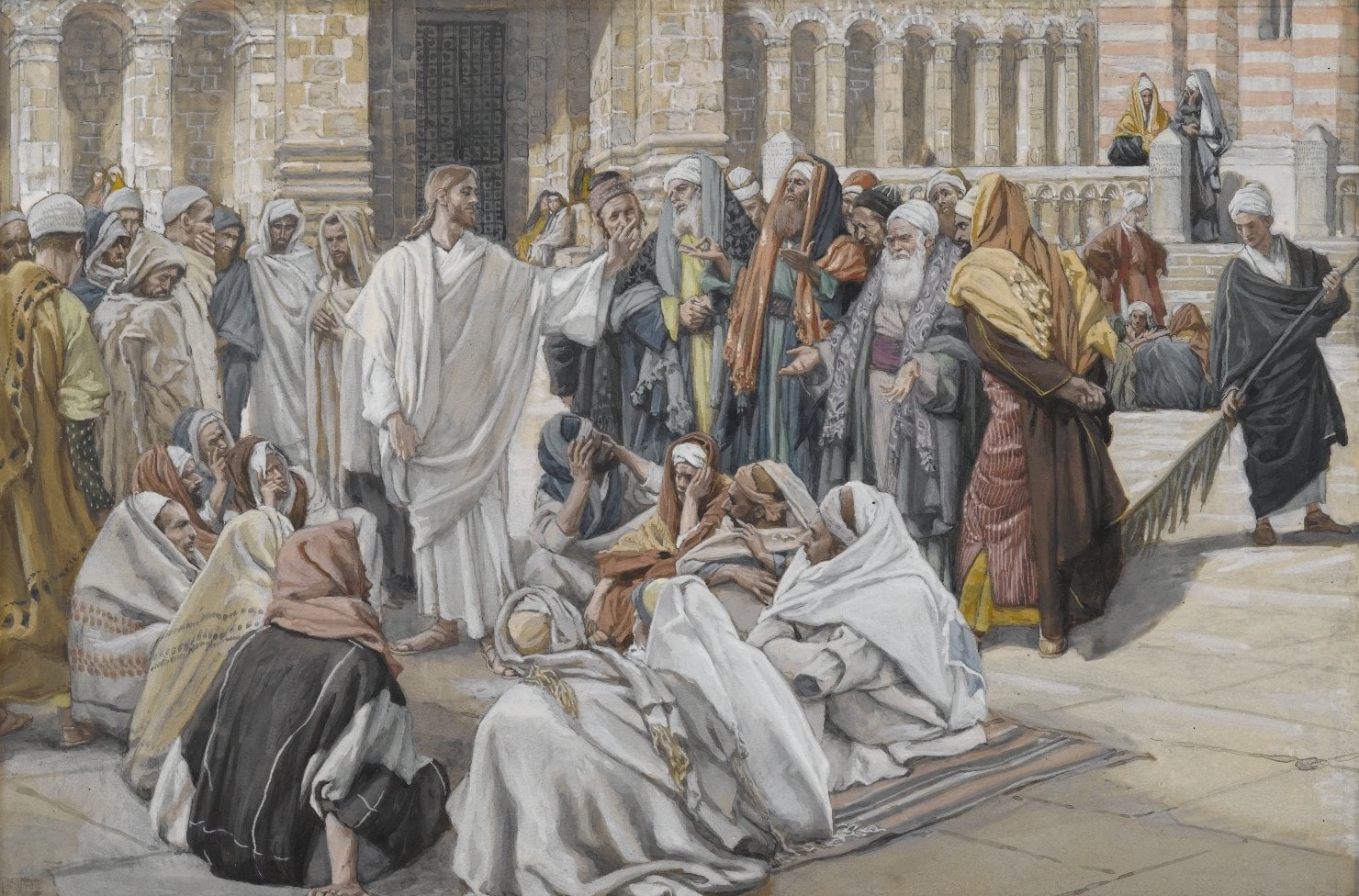
Out of the Marketplace & into the Vineyard – Sermon on Matthew 20:1-16 for Septuagesima Sunday

Matthew 20:1–16

1 “For the kingdom of heaven is like a master of a house who went out early in the morning to hire laborers for his vineyard. 2 After agreeing with the laborers for a denarius a day, he sent them into his vineyard. 3 And going out about the third hour he saw others standing idle in the marketplace, 4 and to them he said, ‘You go into the vineyard too, and whatever is right I will give you.’ 5 So they went. Going out again about the sixth hour and the ninth hour, he did the same. 6 And about the eleventh hour he went out and found others standing. And he said to them, ‘Why do you stand here idle all day?’ 7 They said to him, ‘Because no one has hired us.’ He said to them, ‘You go into the vineyard too.’ 8 And when evening came, the owner of the vineyard said to his foreman, ‘Call the laborers and pay them their wages, beginning with the last, up to the first.’ 9 And when those hired about the eleventh hour came, each of them received a denarius. 10 Now when those hired first came, they thought they would receive more, but each of them also received a denarius. 11 And on receiving it they grumbled at the master of the house, 12 saying, ‘These last worked only one hour, and you have made them equal to us who have borne the burden of the day and the scorching heat.’ 13 But he replied to one of them, ‘Friend, I am doing you no wrong. Did you not agree with me for a denarius? 14 Take what belongs to you and go. I choose to give to this last worker as I give to you. 15 Am I not allowed to do what I choose with what belongs to me? Or do you begrudge my generosity?’ 16 So the last will be first, and the first last.”

In the name of Jesus. Amen.

Was this vineyard owner being fair, or was he being merciful? Was he being just, or was he being gracious? As I was preparing for the sermon this week, I came across several sermons that summarized the parable as a dichotomy: “Not fair, but merciful,” or, “Not just, but gracious.” If you think fairness and mercy or justice and grace do not exist together, you are wrong. Just plain wrong.

We must get one thing straight. With this parable, Jesus isn’t giving advice on how to run a business. An economic system where everyone is paid equal wages without considering how much experience they have, the skills required for the position, or the number of hours a person works has been tried. Even when whole governments try to force this type of arrangement in the country, it fails. It fails miserably, and that failure is always accompanied by a lot of suffering and death. But even in a small business, it doesn’t work. There are tons of examples of this, but I was reading about one particular company near London that tried to do this,[1]and the experiment lasted only a year before they had to abandon it and adopt a normal pay scale.

The reason this doesn’t work is companies do not have unlimited, infinite resources. Sure, they might have massive profits and huge budgets, but that doesn’t mean a business can afford to pay everyone equally. Companies always need to be taking in more money than they are spending and paying. If a company doesn’t balance its finances, it won’t be in business for long. A business should pay its employees a fair day’s wage for a fair day’s work. The economy of the marketplace needs to operate on a fair and just scale because it is always dealing in the realm of supply and demand, and supply is always limited.

Now, all of that is just basic economics. But I am not an economist, I don’t play one on TV, and didn’t I stay at a Holiday Inn last night. And this is not an economics lecture; this is a sermon. I only say all of that to set the stage so you can see that the vineyard owner is fair and just as well as merciful and gracious. Through the whole parable, this vineyard owner follows every standard of just of economics.

In Jesus’ day, you didn’t have a 9-5 job; instead, you worked while it was light until it got dark. Because Israel is geographically close to the equator, the workday throughout the year is basically consistent, 6 AM to 6 PM. We don’t have that luxury here in the bitter north. Our shortest day has about 8.5 hours of daylight, and our longest day just over 16 hours. So, this vineyard owner goes to the marketplace to hire workers just before sunrise. In Jesus’ day (and still today), people who didn’t have regular jobs would gather in a certain spot in the marketplace hoping to be hired – even if it was just for a day. The vineyard owner selects some workers and offers them the standard wage for a regular workday – one denarius. Because the arrangement is acceptable to the workers he selects, off to the vineyard they go. They have the confidence and security that they will be able to provide for their family for the day.

About the third hour of the workday, think 9 AM or during the morning coffee break, the owner goes back to the marketplace, and notice how different v. 1 and v. 3 are. In v. 1, he goes to the market to hire workers. But in v. 3, there is no mention of the owner wanting to hire more workers. He simply goes to the marketplace and sees people who are still there hoping to get a job. The owner gives them two things: an invitation and a promise. Listen carefully to what he says, “You go into the vineyard too, and whatever is right I will give you.” This group sees it as a job offer, and since they trust the owner to be a fair and just guy, they go and work in the vineyard.

The owner goes out two more times – the 6th hour (lunchtime), and the 9th hour (afternoon break) – and does the exact same thing. “You go into the vineyard too, and whatever is right I will give you.” And the owner isn’t done visiting the marketplace. He goes again at the 11th hour, right as all the other businesses are getting ready to close up. He finds even more people standing around because no one hired them. Now, the owner simply invites them, “You go into the vineyard too.” They don’t get a promise of getting what is right, fair, or just. They are simply invited to leave the marketplace and go into the vineyard.

Now, the surprises start coming in the parable. Suddenly, there’s a new character, a foreman. Think of him as the manager of the vineyard. Now, why wasn’t this manager going out to hire workers? But we don’t even have time to ponder the question because the next two surprises come so quickly. The owner tells the manager lit., “Call the workers and pay them the wage.” (Our translation makes it sound like the wages are still a secret, but the Greek is clear.) No matter when they arrived in the vineyard, they all are to receive the wageof a full day’s pay. The final surprise comes with the order in which the wage is paid out. The owner decides that the order will be the last get their denarius first and the first will get their denarius last.

Why not do it the other way? Those who agreed for a denarius could get exactly what they bargained for, and every subsequent group would get a surprise that would bring more delight because they worked fewer hours. Everyone would be happy, and it would avoid the trouble of the argument which comes at the end of the parable. We could also ask, when the owner went to the marketplace at the eleventh hour, why didn’t he just toss a denarius to those who were still there? Why go through the trouble of bringing them to the vineyard? The answer to both questions is that the owner wants his grace and mercy to be seen and witnessed by everyone in his vineyard. This vineyard is the place to be. The owner doesn’t want them to have to go back to the marketplace.

Well, the grumbling comes, “These last worked only one hour, and you have made them equal to us who have borne the burden of the day and the scorching heat.” If those grumblers had thought two seconds about what they were saying, they would have realized their complaint roughly means, “This isn’t right, fair, or just. Why are you being gracious and merciful to them? They haven’t deserved it!”

Let me paraphrase the owner’s response, “Um, excuse me? I’ve been completely fair and just with you. Remember our contract this morning? You agreed on a denarius. You have it. It’s yours. You are free to do whatever you want with what is yours. Don’t I have the freedom to do what I want with what is mine? Why does the grace I give to others irritate you? You don’t have any less because I give more to others. I understand that you want to be richer at the end of the day. That’s fine. You are. I have chosen to be poorer at the end of the day. If you don’t like that, you can take what is yours, get out of my vineyard, and go back to the marketplace.”

The parable ends there, and we are left hanging. How did the full-day workers respond? Did they leave the vineyard where the owner runs things with both justice and mercy? We don’t know.

What would you do? Or, more accurately, what are you doing?

Again, this parable is not about companies and businesses who have limited assets. This parable is about the kingdom of your God who has unlimited resources, and the vastness of His resources is only outmatched by His incalculable mercy. There is only one vineyard and one master who is fair and just as well as being merciful and gracious like this. You can certainly return to the marketplace if you want, but there you will only find justice and no mercy.

Dear saints, in the end, there is only One who has worked a full day’s shift – Jesus. Christ has borne the burden and heat of the day. He has come and did the work you could never do. He has fully kept God’s Law and was perfectly obedient to God’s Commands. You get His wages, and this is Jesus’ delight. Christ willingly went to the cross got the wrath and punishment of sin that you deserve. For the joy that was set before Him, He endured the cross for you (Heb. 12:2). Jesus wants to bring you out of the marketplace and into the vineyard. There is no better place to be, but if you don’t like the vineyard, you are free to go.

Christ Jesus invites you to remain in His vineyard and never go back to the marketplace that is empty of mercy and grace. Because of the mercy and grace of God, you are no longer workers being overpaid. You are a member of the kingdom, a child of God, and a brother or sister of Christ. You remain with Him. Not only do you get paid generously; you also have a permanent place and remain in the vineyard.

And secure in His vineyard, Jesus invites you now to a feast at His table where He will give you what is right and just as well as what is merciful and gracious. So, come. Dear saints, when you confess your sins, He is faithful and just to mercifully and graciously forgive you and cleanse you from all unrighteousness (1 Jn. 1:9). Amen.

The peace of God, which surpasses all understanding, will guard your hearts and minds in Christ Jesus. Amen.


Information on the company in London that wasn’t used:

The company started out small, just five people. The owner realized everyone was basically contributing the same, so he talked to his employees, and they all agreed to be paid the same. From the owner himself down to the office assistant, they all received the same amount which is what they all agreed was a ‘decent living wage’ for London. For a while it worked just fine, but as the company grew, this wage model caused all sorts of problems. The company needed to hire more staff because of a higher demand for their services. When they advertised a position for a software developer, they didn’t get applicants because that skill is in high demand and was typically compensated higher than the living wage the company had set. And when they advertised for more another office assistant, they were inundated with applications because the salary was much higher than other companies were offering for the same type of work. In short, the experiment lasted only one year before the company started basing their salaries on experience and expertise.


[1] “CEO Secrets: ‘We tried paying everyone the same salary. It failed.’” https://www.bbc.com/news/business-55800730

Unveiled – Sermon on Exodus 34:29-35; Matthew 17:1-9; and 2 Peter 1:16-21 for the Transfiguration of Our Lord

Exodus 34:29-35; Matthew 17:1-9; & 2 Peter 1:16-21

In the name of Jesus. Amen.

This is a glorious text, but even more glorious is that the beloved Son of God would give His life for you on the cross. Because Jesus has died for you, you, dear saints, will also shine like the sun (Mt. 13:43). To make that point, we’re going to consider all three of our Scripture readings and two other passages, 2 Cor. 3:4-18 and Mt. 13:43. A figure skater or a competitive diver will do a routine with a high degree of difficulty to get a higher score. Hopefully, my execution of the sermon will be good enough that the payoff will be worth it in the end.

A person’s face can tell you a lot. Just to be clear, I’m not talking about the mouth part of a person’s face – of course, the mouth can tell you a lot too. I’m talking about a person’s facial demeanor. Someone could be talking to you in a normal tone, but if you watch their face, you can tell if they are sad or happy, discouraged or excited, heartbroken or twitterpated. Sometimes you just enter a room, and a family member will ask, “What’s wrong?” or, “Why are you so happy?” Your word hole doesn’t have to be operating for your face to say a lot.

Between our Old Testament and Gospel readings today (Ex. 34:29-35 & Mt. 17:1-9), we heard about two different shining faces – Moses’ and Jesus’. And those two shining faces produced two very different responses.

Right before our OT text, Scripture says that Moses had been on Mt. Sinai for forty days and forty nights, and during that time he neither ate bread nor drank water (Ex. 34:28). How Moses survived that, I don’t know. Somehow, God miraculously kept Moses going. After being on a mountain for forty days and nights with nothing to eat or drink, you would expect Moses’ face to be weathered, worn, and weary. But when he arrives back in the camp, Moses’ face was shining because he had been talking with God. This made the people so afraid that they wouldn’t even approach Moses. Now, Moses admits here (because he wrote Exodus) that he had no idea that his face was shining. And this gives us a glimpse into what Moses must have seen and heard during those forty days and nights. Being in God’s presence and talking directly to God was so grand and glorious that the glory Moses saw continued to radiate from his face. And Moses was so used to being in that glory that he didn’t realize his face was shining.

In 2 Cor. 3:4-18, Paul contemplates on this. I would encourage you to read that passage later today, and you might want to turn there because we’re going to come back to it. In 2 Cor. 3:4-18, Paul says that the Law came with such splendor and glory that people were afraid to come near because of Moses’ shining face. Paul goes on to say how much more glorious is the ministry of the Gospel, and we see that glory on the Mount of Transfiguration.

Jesus goes up a high mountain with Peter, James, and John and is transfigured. His clothes become white as light. Moses and Elijah appear and are talking with Jesus. And Jesus’ face shone like the sun. Now, Scripture doesn’t give us the total lumens of Moses’ face compared to Jesus’ face. It is interesting to note that the Greek translation of our Old Testament text uses a word that means ‘glow’ to refer Moses’ face while Matthew here uses the word λάμπω (lampō) which means ‘shine’ to refer to Jesus’ face. So, Moses’ face glowed with a radiant, reflected glory, but Jesus’ face shines like the sun with its own glory.

We do know that Moses’ face was bright enough that people could see it and were afraid, but a thin veil was enough to calm their fears. But here Jesus’ face shines like the sun, and I’m pretty sure a little veil wasn’t going to do much to dim that shining. Despite the brightness and glory, notice that Peter, James, and John don’t ask Jesus to veil His face. Instead, the reaction is completely different. Peter says, “Lord, it is good that we are here. In fact, let’s stay here. I’ll make three tents – one for You, one for Moses, and one for Elijah.” But while Peter is still speaking, the bright cloud of God’s glory overshadowed them, and God the Father said, “This is My beloved Son, with whom I am well pleased; listen to Him.” This terrifies the three disciples, but Jesus came and touched them saying, “Rise, and have no fear.”

In our Epistle text (2 Pet. 1:16-21), Peter reflects on the Transfiguration about thirty years later. There, Peter says that the Transfiguration does show Jesus’ glory, but even more so, it unveils the glory of the Bible. Peter says that it is better for you to have the Scriptures than for you to have witnessed the Transfiguration because every verse of the Scriptures unveils God’s great love for you. The shining face of Jesus points us to the bright lamp of the Scriptures that shines in a dark place. But what is this dark place?

Your initial thought is probably that the lamp of the Scriptures shines in the darkness of this world. The Bible certainly does talk about the world being full of darkness and sin. Psalm 119:105 says, “Your Word is a lamp to my feet and a light to my path.” God’s Word does enlighten this dark world so that we don’t stumble or go the wrong way. But here Peter is talking about a different dark place. He says to pay careful attention to the Scriptures as “a lamp shining in a dark place until the day dawns and the morning star rises” – and catch this – “the morning star rises in your hearts.”

You see, it’s not just the world and things outside of you that are a dark place. Your heart also has a darkness that needs the light of God’s Word. Peter doesn’t use the normal word for ‘dark’ here. The word Peter uses means, “foul and repulsive from a lack of care; neglected and filthy.” Here is the picture: Our sinful hearts are a filthy, murky, dark place. And we do well to pay attention to the Word of God shining in the dirty, neglected, dark place of our heart. When we pay attention to them, the lamp of the Scriptures shines in the darkness of our heart and pierces through the filth inside us. And the Gospel also changes us.

Even though you weren’t a witness to Jesus’ Transfiguration (lit. His ‘metamorphosis’), you have something better. Back to 2 Cor. 3:18, “And we all, with unveiled face, beholding the glory of the Lord, are being transfigured (same word used for Jesus’ transfiguration though the ESV translates it as ‘transformed’) we are being transfigured into the same image from one degree of glory to another.” Even now, already in this life, Christian, you are being transfigured into the same glory that Jesus had on the mountain. God brings about that transfiguration through His Word. By God’s gracious working through His Word, you are slowly being transfigured and metamorphosized into Jesus’ glory.

God has promised that you are being transfigured. And the picture of Jesus on the mountain today is what you are heading toward by the grace of God. In Mt. 13:43, Jesus says that you who are righteous through faith in Him will shine like the sun, just like Jesus did.

So that you could shine like the sun and be like Him, Jesus went down from the mount of Transfiguration. He descended from that glorious peak, so He could ascend another mountain, Mt. Calvary, where He laid down His life for Peter, for Moses and Elijah, and for you. He did this because He loves you and wants you to be transfigured and share in His unveiled glory. Lord Jesus, come soon and bring us to that glory. Amen.

The peace of God, which surpasses all understanding, will guard your hearts and minds in Christ Jesus. Amen.

The Non-Avengers – Sermon on Romans 12:16-21 for the Third Sunday after Epiphany

Romans 12:16-21

16 Live in harmony with one another. Do not be haughty, but associate with the lowly. Never be wise in your own sight. 17 Repay no one evil for evil, but give thought to do what is honorable in the sight of all. 18 If possible, so far as it depends on you, live peaceably with all. 19 Beloved, never avenge yourselves, but leave it to the wrath of God, for it is written, “Vengeance is mine, I will repay, says the Lord.” 20 To the contrary, “if your enemy is hungry, feed him; if he is thirsty, give him something to drink; for by so doing you will heap burning coals on his head.” 21 Do not be overcome by evil, but overcome evil with good.

In the name of Jesus. Amen.

We’re going to be spending a lot of time in this sermon thinking about vengeance, but to do that we have to establish something very basic first. Sin is bad, and the affects of sin are bad. I don’t think anyone here would disagree with that. Sin is awful, and the results of sin can be hideous. When you sin against others and know the hurt and pain you have caused, you feel terrible, and you should repent and reconcile with the person you have sinned against. And when someone sins against you, you know the injustice and pain that accompanies that too. Of course, depending on the nature and circumstances surrounding sins committed against you, that injustice will bring various levels of anger and pain that you have in response to that sin.

For example, imagine you are in the grocery store and have a shopping cart full of items and a pile of coupons. You are just a few steps away from the checkout line when someone who has an item or two quickly darts in line in front of you. That person has sinned against you. But you are only slightly perturbed and can let something like that roll off your back. You console yourself thinking how you were going to offer to let them go first anyway. Sure, you’re annoyed, but you can let it go fairly easily.

Ok now, flip the script. You are the one with only a couple items and the person who barges in front of you has the full cart and a ream of coupons. Now, you are going to be angry. And if you’ve already had a bad day and your patience has been spread very thin, you might be really angry. Maybe you will make loud sighs when their coupon doesn’t ring up the way they think it should or even say something rude to them. You might let that moment stew in your mind for the rest of the evening and next day, thinking of all sorts of ways you could have responded that would have made them feel bad.

Those responses to sin – whether you are only slightly annoyed or are angry and stewing – those responses reveal something about the nature of sin. Sin ruins things. It throws things off in the world makes the entire universe off-kilter. This is clear because it only took the one sin in the Garden to bring pain, strife, and death to all creation. Now, we’ve only known what it is to live in a world that is filled with the chaos of sin. But it is important for us to remember that when we sin and when we are sinned against, it is an injustice that brings further chaos and disorder to creation. Someone cutting in line in front of you might only affect your small corner of creation, but when you sin in response to your sphere of creation being thrown off, those effects continue to spread.

One more piece in all of this: When we see sin, injustice, and the hurt that accompanies all of that, we want to fix it. Since we are made in the image of God, we are like God and want to restore the order and justice which has been disturbed because of sin. That is what vengeance is. Vengeance isn’t necessarily a bad thing. We’ve gotten so used to the word ‘vengeance’ being used in a negative way that we think vengeance is always evil. Yes, vengeance can be evil, but look, God Himself here says, “Vengeance is Mine, I will repay.” Paul there is quoting Dt. 32:35. The same verse gets quoted again in Heb. 10:30. Throughout the Scriptures, both in the Old and New Testament, we hear that God will execute vengeance on the wicked and restore justice. In Ps. 94 and many other places in the Bible, this idea is repeated. God is just and will punish sin and make creation right again.

With all of that in our minds now, we can consider this text. Here in v. 19, Paul says, “Beloved, never avenge yourselves, but leave it to the wrath of God.” Christian, that is what you are to do. When you are wronged and sinned against, it might seem like everything in creation is against you – depending on the nature, gravity, and seriousness of the sin. But you are instructed here to not avenge yourself because executing vengeance is, typically, not your job. Instead, you are commanded to leave it to the wrath of God. “Beloved, never avenge yourselves, but leave it to the wrath of God,” and then Paul uses a very important word – ‘for.’ In other words, here is why you are not to avenge yourself, “for it is written, ‘Vengeance is Mine, I will repay, says the Lord.’” Bringing order and justice back to a broken creation is not your responsibility. Vengeance belongs to God.

You already know this, but I’ll give you an example. Since, I had you imagining yourself in a grocery store earlier, let’s stick with that setting. When you are in the store and a mom is there with her little boy who is whining, kicking, and screaming because she said, “No,” to the treat he wanted, you aren’t going to go over to that boy and punish him. It isn’t your job. You can’t go over to that boy and tell him, “Because you are acting like this, you don’t get desert tonight and will be going to bed early.” You can’t enforce that punishment. And you will be arrested if you spank the boy – as you should be. It isn’t your office to bring vengeance, justice, and punishment in that situation.

Now, of course, if it is your boy doing the exact same thing, you can and should punish him. God has placed you in a position of authority over your children to train, guide, and direct their behavior and character. Exactly how you do that is up to you since you are placed in that authority by God. An important thing here is that right after our text comes Ro. 13, and I would highly encourage you to read this text along with Ro. 13 together. In Ro. 13, Paul will say that every authority that exists is placed in that position by God, and God puts people in positions of authority to bear God’s sword of vengeance – i.e. to be the hand of God that punishes people who sin and do wrong.

Now, this is a brief but important aside: There are times when the authorities that God has put in positions to punish sin do not use that authority as they should. Sometimes, they let the guilty off with minimal or no punishment, and other times they overstep their bounds and punish the innocent. That happens. But navigating those situations falls outside the scope of this sermon. I will say that is an important thing to think through. Just know that the authorities God puts in place are responsible to God for how they use that authority, and God will judge His servants and hold them accountable for any misuse of that authority (Ro. 13:4a; Mt. 24:45-51). 

One more brief thing on this before we all get hammered by the Law: Depending on the nature of the sin against you, you can and should take legal action against others. But have your day in court. You can even ask that the court throw the book at them and punish them to the fullest extent of the law. If they do, God is working through them to execute His vengeance. Just remember that it is not for you to execute vengeance. You, Christian, are to forgive in your heart. And, yes, you can forgive and ask that the authorities punish the wrong done to you (Ro. 13:3-4).

Christian, you are not to avenge yourself. Avenging ends up being idolatry of yourself. You put yourself in the place of God and try to usurp Christ from His throne. Yes, you have enemies who sin against you, but you are not to repay their evil with your own evil. By returning evil for evil, you become as evil as the person who sinned against you. Repent.

Instead, as far as it depends on you, live peaceably with everyone. If you really want to hurt the person who hurt you, love and care for them. “If your enemy is hungry, feed him; if he is thirsty, give him something to drink,” doing that will be like heaping burning coals on his head (Ro. 12:20). Do not be overcome by evil, but overcome evil with good. In other words, Christian, be the non-avengers and leave room for God’s vengeance.

We often think that the reason we should be merciful and forgiving because God is merciful and forgiving. Scripture does teach that (e.g. Mt. 5:43-48), but not here. Here, Scripture gives a different motive for being merciful and kind to our enemies. The motivation is that God Himself will repay, and God’s punishment will far exceed any retribution and vengeance that you could ever dole out. Jesus described that punishment in our Gospel lesson (Mt. 8:1-13). Those who have done evil will be thrown into the outer darkness where there will be weeping and gnashing of teeth (Mt. 8:12).

I know this is a difficult passage and teaching. It isn’t comfortable. I know that because it convicts me of my idolatry and desire to execute vengeance, and I hope and pray it convicts you as well. Texts like this make us squirm because of the pain we feel when someone sins against us. We want to hold grudges and be the avengers. And when Scripture forbids that, we recognize that we have sinned against our enemies by not being kind to them and that means we have sinned against God.

Well, take that sin of yours. Take that guilt of carrying out your vengeance and bring it to the cross. Because on the cross, God poured out His justice upon all sin – not upon you, but upon Jesus, your Savior. There on the cross, Christ drank the cup of God’s wrath against you. Every ounce of God’s righteous anger against you was placed upon Jesus so you can receive His mercy. Know that when you confess your sins God mercifully forgives you because of what Christ has done. God’s mercy does not negate or cancel His justice. When you confess your sins, God is faithful, and God is just to forgive your sins and cleanse you from all your unrighteousness (1 Jn. 1:9). For that, God be praised. Amen.

The peace of God, which surpasses all understanding, will guard your hearts and minds in Christ Jesus. Amen.

Stepping In – Sermon on John 2:1-11 for the Second Sunday after Epiphany

John 2:1-11

1 On the third day there was a wedding at Cana in Galilee, and the mother of Jesus was there. 2 Jesus also was invited to the wedding with his disciples. 3 When the wine ran out, the mother of Jesus said to him, “They have no wine.” 4 And Jesus said to her, “Woman, what does this have to do with me? My hour has not yet come.” 5 His mother said to the servants, “Do whatever he tells you.” 6 Now there were six stone water jars there for the Jewish rites of purification, each holding twenty or thirty gallons. 7 Jesus said to the servants, “Fill the jars with water.” And they filled them up to the brim. 8 And he said to them, “Now draw some out and take it to the master of the feast.” So they took it. 9 When the master of the feast tasted the water now become wine, and did not know where it came from (though the servants who had drawn the water knew), the master of the feast called the bridegroom 10 and said to him, “Everyone serves the good wine first, and when people have become drunk, then the poor wine. But you have kept the good wine until now.” 11 This, the first of his signs, Jesus did at Cana in Galilee, and manifested his glory. And his disciples believed in him.

In the name of Jesus. Amen.

This text is so rich; it’s a pile of treasure for preachers. This whole week, I felt like Scrooge McDuck taking a daily swim in all the wealth.

The main point of the text is that Jesus supplies more mercifully and abundantly than we can ask or imagine (Eph. 3:20). Christ manifests His glory by turning 120-180 gallons of water into wine for a bunch of people who are drunk. Most English translations have the master of the feast say in v. 10, “Everyone serves the good wine first, and when people have drunk freely, then the poor wine.” Every other place that word gets used in the New Testament (Lk. 12:45; Eph. 5:18; 1 Th. 5:7; and Rev. 17:2), it is a reference to drinking too much alcohol and is condemned. Do not – I repeat, DO NOT – take this text to mean that Jesus is ok with getting drunk. Instead, see that in turning water into wine, Jesus is giving sinful people good things they do not deserve and cannot fully appreciate. That is the definition and nature of mercy, and God’s glory is to give mercy (Jn. 1:14).

My fellow failures, Jesus gives you the full forgiveness of your sins even though He knows that you will turn around and fall into the same sin tomorrow. And when you fall into the same sin over and over, repent, and confess again. Jesus will answer with His mercy again. That is the main point of this text.

But there are many other gems here. We could consider how Jesus removes all human efforts to purify ourselves. He makes the stone jars that are there for man-made purification rites hold wine instead of water. Or, we could spend a lot of time talking about how much God loves marriage and weddings. Jesus makes sure that the celebration of the union of man and woman as husband and wife keeps going by providing for the feast. God created marriage, He blesses marriage, and He sustains joy in marriage.

Again, this text is a treasure-trove for preachers. But today, we are going to consider what this text has to preach to us about prayer. Yes, Jesus turning water into wine has a lot to teach us about prayer, so let’s get to that.

In Jesus’ day, wedding feasts would last several days, typically a whole week. At some point during this feast, [1] the wine runs out. The custom in Jesus’ day was for the groom and his family to pay for the wedding and the feast that followed. But here, Mary steps in, “They have no wine.” The wine wasn’t Mary’s responsibility. It isn’t one of her kids getting married; if it were, she would have told Jesus, “We have no wine.” But she says, “They have no wine.”

Having no wine is a fairly trivial thing and something we probably wouldn’t think Jesus would get involved in. It isn’t like someone is demon possessed, leprous, blind, lame, or dead. Those are typically the times Jesus steps in for a miracle. Even in the feeding of the five and four thousand, Jesus is concerned that the people won’t make it home because they will faint on the way. No one is in physical or spiritual danger at this feast because they ran out of wine. 

Now that being said, running out of wine at a wedding feast in that culture would mean public humiliation and disgrace. It’s impossible to make a direct equivalent between the customs of Jesus’ day and ours, but here’s my best shot. Imagine you get invited to a wedding. You love the couple and excited for their marriage, and you RSVP indicating that you would like the bone-in tomahawk ribeye (rare, of course) and chicken cordon bleu for the reception. (And yes, that would be a really fancy wedding reception.) But after the wedding, you go to where the reception is supposed to be only to find out the party has been cancelled because the couple didn’t pay the caterer and venue, so the doors are locked. For the rest of your life, you would remember that the wedding gift you bought for the couple was way too expensive. (In saying that, I’m assuming the custom is to buy a gift that is similar to the amount spent on the reception.)

Again, Mary has or nothing to do with this quandary of the wine running out. But here, she presents this problem to Jesus as though she is responsible for keeping the feast kept going. And Jesus initially responds, “What is that to you and to Me. My hour has not yet come.” In the Gospel of John, Jesus’ hour is His Passion and cross (see Jn. 12:23, 27; 17:1). In other words, according to Jesus, fixing this problem will cost Jesus His life – eventually. (There is a whole sermon there too.)

Even though His response sounds rude, Mary trusts that Jesus will do what is right and good. So, she steps in a little further telling the servants, “Do whatever He tells you.” Jesus directs the servants to fill the six jars full of water, and He miraculously turns them into wine. This would be equivalent to between 750 and 900 bottles of wine. Jesus steps in because Mary had stepped in seeking Jesus’ help in a problem that is fairly minor and more of a luxury than a need, and Jesus responds with abundance. And this is where the text has something to say about prayer – or, even more importantly, the grace and mercy of our God who answers prayer.

Only a few people know where the wine came from. The servants, the disciples, and Mary knew, but no one else at the feast did. The master of the feast, the guests, and the groom didn’t know the Source of the wine. For the most part, the miracle is done in secret. As best as we can tell, the groom has no clue about the embarrassment and shame he was spared because Mary stepped in by her prayer, and Jesus stepped in to answer her petition. So, here are the two things this text teaches us about prayer. 

First, we benefit from the prayers of others when they step in and intercede for us. Dear saints, we are like the groom in this account. The way John records this miracle, the groom is a necessary character, but he’s almost invisible. The groom doesn’t say or do anything except listen to the master of the feast call him an idiot for serving the good wine to guests who can’t appreciate it. The groom goes stumbling through the wedding feast unaware of what is happening behind the scenes and completely dependent on the prayers of others who interceded for him. He simply benefits from Jesus’ miraculous provision because Mary stepped in and prayed.

Now, I don’t think you and I can even begin to imagine how many millions of people have stepped in and prayed for us, maybe not by name, but with a general prayer that God has answered in a way that blesses you. If we could see how God answers those prayers through governing all of creation; by commanding His angel armies to protect and defend us; and by using His infinite power, wisdom, and might to cause all things to work together for our good (Ro. 8:28), if we could see all of that, we would fall on our faces in humility and praise.

And the second thought on prayer from this text is that we should pray for others because Jesus steps in by answering our prayers with His grace, mercy, and abundant provision. Each week in our corporate prayer we pray for all sorts of people we will never meet. We pray that they would hear God’s Word taught and preached; that God would protect families, husbands, wives, children, widows, and orphans; that God would provide our nation with good leaders, good economic conditions, and good laws; that God would heal those who are sick; etc. I don’t know what your thought is about that prayer, but I would encourage you to imagine it as all of us going into battle together. As we pray corporately, we aren’t individual soldiers fighting on our own. We are a while squad or battalion fighting a spiritual battle together as one. So, each week, listen to that prayer, and as it concludes with, “Lord, in Your mercy…” you pray with me, “hear our prayer.”

And as you go through your week, be a soldier fighting the spiritual battles around you through prayer. When you hear of someone in need, pray for them. It can be as simple as, “Lord, have mercy.” When you hear that something good has happened, pray, “God be praised.” 

Don’t be concerned with how trivial or silly your prayer might sound to God. In Romans 8:26, Paul says that none of us, and he includes himself in this, none of us know how to pray as we should, but the Holy Spirit intercedes for us with groanings too deep for words. God loves to hear your prayers, the Holy Spirit loves to interpret those prayers, and the almighty God of armies will always answer those prayers in the way He knows is best.

Dear saints, God gives better than we deserve and better than we can even appreciate. And He invites you now to come to this altar where He will do another miracle by giving you His very Body and Blood for the forgiveness of your sin. Here, Christ gives better than you deserve and more than you can appreciate. Come to His table and receive a foretaste of the great wedding feast to come. Amen.

The peace of God, which surpasses all understanding, will guard your hearts and minds in Christ Jesus. Amen.


[1] We don’t know how many days had elapsed during this wedding feast before the wine ran out. When John talks about “the third day” in v. 1, he’s making a connection to the sixth day of creation when God created mankind and instituted marriage. If you go back to John 1, you see John start to number days. Day 1 – Jn. 1:19-28. Day 2 – Jn. 2:29-34. Day 3 – Jn. 1:35-42. Day 4 – Jn. 1:43-51. Day 6 begins in our text with the phrase “on the third day” (i.e. ‘after, but including, day four’).

Entrance – Sermon on Matthew 3:13-17 for the Baptism of Our Lord

Matthew 3:13-17

13 Then Jesus came from Galilee to the Jordan to John, to be baptized by him. 14 John would have prevented him, saying, “I need to be baptized by you, and do you come to me?” 15 But Jesus answered him, “Let it be so now, for thus it is fitting for us to fulfill all righteousness.” Then he consented. 16 And when Jesus was baptized, immediately he went up from the water, and behold, the heavens were opened to him, and he saw the Spirit of God descending like a dove and coming to rest on him; 17 and behold, a voice from heaven said, “This is my beloved Son, with whom I am well pleased.”

In the name of Jesus. Amen.

John the Baptizer didn’t invent Baptism. Baptism had been around for a long time before John. The most basic meaning of the verb ‘baptize’ is ‘to wash.’ In the Old Testament, God gave instructions to people who had become spiritually unclean to wash themselves before going to the priest to be declared clean. Just a few examples: If a person had contact with a corpse, he had to wash himself before being declared clean (Lev. 11:25). People with a skin disease, they were unclean, but when that disease cleared up, they were to wash and become clean (Lev. 13:6). And the person who brought the scapegoat into the wilderness was unclean because that goat was loaded up with the sins of all the people (Lev. 16:21, 26). When he returned he would wash and become clean from his proximity to all that sin. I could go on, but you get the picture. If anyone had contact with something that was unclean, that person was to wash and be declared clean. This is part of the background of the baptisms going on before and in John’s day.

To get an idea of what happens at Jesus’ Baptism, I want you to think about what happens when you wash dishes. You fill the sink, and the first dish goes into clean water and is washed. But the second dish goes into water that less clean because of the grime that has been washed off of the first dish. With every dish you wash, the water in the sink gets dirtier and dirtier. But you don’t empty the sink and replace the water for every dish. Even though that water is dirty with the filth and grime of many dishes, it still gets the final glasses and silverware clean. But when you are all done, you wouldn’t want to drink the contents of the sink.

Picture a similar thing happening as John baptizes. A thief would come to John confessing his sins. John would apply the waters of the Jordan to him, and he was clean because that sin had been washed away by the water. Adulterers would confess their adultery, and those waters cleanse them. A gossip would confess her sin and is washed. This was happening over and over. Sins are being washed away from sinners while the waters of the Jordan are getting dirty – even filthier than your sink does when you wash dishes. But now, Jesus comes to the banks of that sin-filled, scummy Jordan River to be Baptized, so John hesitates. He doesn’t want to Baptize Jesus because he recognizes that he is the sinner who needs to be washed by Jesus. But Jesus says, “Let it be so now, for thus it is fitting for us to fulfill all righteousness.”

Then, Jesus enters those sin-filled waters and absorbs all those sins into Himself like a sponge. In His Baptism, Jesus takes all those sins so that He can bring them to the cross and die for them. And we say this because it is only after Jesus’ Baptism that John declares that Jesus is the Lamb of God who ‘takes away the sin of the world’ (Jn. 1:29). John can say that because of what happened in Jesus’ Baptism.

Scripture wants us to see that Jesus is absorbing all the sins in His Baptism because what happens in Jesus’ Baptism is the opposite of what happens to us sinners in our Baptism. In Jesus’ Baptism, He had all the sins of all people placed upon Him. In Isaiah 53, God says that Jesus would be numbered with the transgressors (Is. 53:12) and that God would lay on Jesus the iniquity of us all (Is. 53:4-6). Just like the scapegoat had the sins of the people confessed on it and laid on its head (Lev. 16:21), Jesus had the sins of the world placed upon Himself in His Baptism.

Baptism didn’t wash Jesus clean like it does you (1 Cor. 6:11; Eph. 5:26). Jesus was already clean because He lived a sinless life. Instead, Jesus’ Baptism infects Him with our sins, and Jesus does this willingly. We sinners come to the clean waters of Baptism filthy in our sins, and we come out with the washing of rebirth and renewal of the Holy Spirit (Tit. 3:5). Jesus is clean, pure, and without sin. But then, He steps into the filthy waters and comes out loaded up with all those sins leaving the waters completely clear and clean to be used in your Baptism.

Now, that brings us to what happens to each of us in our Baptism. Some Christians will say that Baptism is merely symbolic, but they are only half right. The Bible does teach that Baptism symbolizes things (which we’ll get to in a minute), but the Bible also teaches that God actually does stuff in Baptism. So first, what does the Bible teach that Baptism does – not just symbolically but in reality?

Scripture teaches in Ro. 6:3-5 that in your Baptism God joined you to Jesus’ death and resurrection. Galatians 3:27 teaches that God clothed you with Christ’s righteousness and holiness in your Baptism. 1 Peter 3:21 says that your Baptism saved you. God did all of that to you in your Baptism. This is not my opinion, understanding, or interpretation; it is what the Bible teaches. God works through Baptism to do all those things. So, continue to live every day in all the gifts and benefits that God gave you in your Baptism.

Baptism actually does each of those things, but does that mean that Baptism is not symbolic? No. Baptism is also symbolic. But the reason Baptism is symbolic is because God actually does things in Baptism. The symbolic things about Baptism teach us how to use our Baptism. While Romans 6 teaches that Baptism actually joins you to Jesus’ death and resurrection, Paul will go on in the rest of Romans 6-7 to say that we Baptized still sin. From that we conclude that Baptism also symbolizes the new life we are to have after our Baptism. Baptized Christians should daily repent and die to sin so that our new man would daily come forth and rise to live before God in righteousness and holiness forever (SC Baptism IV).

1 Peter 3:21 teaches that Baptism actually saves, but when you look at the context, you also see that Baptism symbolizes Noah’s Flood. In the Flood, the water was both the instrument of judgment and deliverance. The floodwaters were sent to purge evil from the world and wash it away. But the waters were also the instrument that saved Noah and his family. So, the picture in Christian Baptism is that the waters wash away, purge, and judge the sin and evil in you. But that doesn’t mean that once you are Baptized, you never need to darken the door of a church again. Instead, those waters of your Baptism also lift you up above God’s judgment and save you as you remain in the ark of the Christian Church.

1 Corinthians 10:2 teaches that Baptism symbolizes that you are led out of slavery to sin just like the Israelites were led out of slavery in Egypt by passing through the waters of the Red Sea, so don’t go back to your slavery in sin. And I could go on and on about other things that Baptism symbolizes. But I want to leave you with one final thing that your Baptism symbolizes, and that is your entrance into the kingdom of God.

In our Old Testament lesson (Josh. 3:1-3, 7-8, 13-17), God led His people out of the wilderness and into the Promised Land through the waters of the Jordan. In the same way, God leads you out of the wilderness of sin and death and into the promised land of His kingdom, His rule, and His reign as you follow Jesus. This is so comforting. In your Baptism, God led you out of death and into new life with Him.

But, dear saints, let us also remember where Jesus was led after His Baptism. In a lot of ways, we could say that Jesus’ Baptism was the beginning of His work as the Savior. Everything Jesus did before His Baptism – His birth, His obedience, and sinless childhood – was preparation. Then, after Christ exited the water of His Baptism, He was led by the Holy Spirit into the wilderness (Mt. 4:1). He went to battle with the devil fighting against temptation; casting out demons; healing the sick; restoring creation; raising the dead; and suffering, dying, and rising again.

In the same way, Christian, your Baptism is your entrance into a life of following Jesus as you fight temptation, as you serve your neighbor, and walk in a life of holiness and righteousness. In your Baptism, you are saved by grace through faith (Eph. 2:8-9). And your Baptism is your entrance into a life filled with good works which God prepared beforehand that you should walk in them (Eph. 2:10).

Even though you repeatedly fall into sin, the things God has done for you in your Baptism are still available to you. You will fail in your Christian walk, but God remains faithful to all the promises He has given to you in your Baptism. So, keep returning to them. Keep trusting in those promises because God is faithful to you, even when you are unfaithful to Him (2 Tim. 2:13).

Dear saints, Scripture teaches that God began a good work in you in your Baptism, and He will be faithful to complete it at the day of Jesus Christ (Php. 1:6). Amen.

The peace of God, which surpasses all understanding, will guard your hearts and minds in Christ Jesus. Amen.

God Made Known – Sermon on Exodus 40:17-21, 34-38; Titus 3:4-7; and John 1:1-18 for Christmas Day 2022

John 1:1-18

1 In the beginning was the Word, and the Word was with God, and the Word was God. 2 He was in the beginning with God. 3 All things were made through him, and without him was not any thing made that was made. 4 In him was life, and the life was the light of men. 5 The light shines in the darkness, and the darkness has not overcome it. 

6 There was a man sent from God, whose name was John. 7 He came as a witness, to bear witness about the light, that all might believe through him. 8 He was not the light, but came to bear witness about the light. 

9 The true light, which gives light to everyone, was coming into the world. 10 He was in the world, and the world was made through him, yet the world did not know him. 11 He came to his own, and his own people did not receive him. 12 But to all who did receive him, who believed in his name, he gave the right to become children of God, 13 who were born, not of blood nor of the will of the flesh nor of the will of man, but of God. 

14 And the Word became flesh and dwelt among us, and we have seen his glory, glory as of the only Son from the Father, full of grace and truth. 15 (John bore witness about him, and cried out, “This was he of whom I said, ‘He who comes after me ranks before me, because he was before me.’”) 16 For from his fullness we have all received, grace upon grace. 17 For the law was given through Moses; grace and truth came through Jesus Christ. 18 No one has ever seen God; the only God, who is at the Father’s side, he has made him known.

In the name of Jesus. Amen.

Until the Temple was built, God was happy to dwell on earth in the tent of the Tabernacle. We heard about it in our Old Testament lesson from Exodus (Ex. 40:17-21, 34-38). If you’re like me, the first thing that comes to mind about the book of Exodus is God sending plagues on Egypt to deliver His people from slavery. It is a significant part of the book. Chapters 5-15 deal with the plagues, the Passover, and the crossing of the Red Sea. But a similar chunk of Exodus, in fact 13 chapters (Ex. 25-31, 35-40), deals with the Tabernacle. In Ex. 25-31, God picked the curtains, furniture, and standardized the dress code. And in those chapters, God spent a lot of time designing His throne.

That throne would be a box about 3 x 2 ft. which we know as the Ark of the Covenant. Inside that box was placed a golden jar of manna, Aaron’s rod that miraculously bloomed, and the tablets of the Ten Commandments (Heb. 9:4). But the most important part of the Ark was the gold cover which was called the mercy seat. The mercy seat had two big golden angels facing each other, and the wings of those angels pointed toward an empty spot which God declared to be His throne on earth where He would meet with His people (Ex. 25:17-22).

In today’s Old Testament lesson, we heard about the first time the Tabernacle was pitched. The poles were assembled, the curtains hung, the furniture arranged, and the Ark brought into the Most Holy Place. The cloud of God’s glory entered the Tabernacle. And that cloud would dictate the movements of God’s people. When it stayed, they stayed, and when the cloud went up, the people would pack up their things and move.

Once each year, on the Day of Atonement, the high priest would enter the Most Holy Place to sprinkle the blood of a goat between the wings of those golden angels above the mercy seat, but visually that space was always empty. Only by faith in God’s promise did the high priest and God’s people know that God was dwelling with them. For generations this went on. God’s people brought that box with them wherever they went. But a King never appeared to sit on the throne of the mercy seat. God’s presence with His people was always invisible. So, it always seemed as though something was missing.

Until today. Today is the day, the day of great joy for all people – for you. In the birth of Jesus, the King appeared. As we heard last night, King Jesus wasn’t born in a palace with soft beds and linens. He didn’t even come to that tent to sit in that empty space above the golden throne of the Ark. No. He appeared humbly, born in a stable and placed in an empty feeding trough until He would finally be enthroned on the cross. King Jesus had appeared to save His rebellious people.

As our Epistle lesson (Tit. 3:4-7) said, “When the goodness and loving kindness of our God and Savior appeared, He saved us.” The word for loving-kindness in Greek is philanthropia, where we get our word ‘philanthropy’ – lover of man. God Himself is the ultimate philanthropist. He has appeared in the flesh of Jesus to love you by saving you.

You aren’t saved by doing all sorts of good, righteous works. You are saved by God’s mercy through the washing of regeneration and renewal of the Holy Spirit. And God pours His Holy Spirit out on you richly through Jesus Christ, your Savior.

Dear saints, God has come to you, here on earth. The Word became flesh and dwelt among us (Jn. 1:14). Literally, John says the Word became flesh and ‘tabernacled’ among us. And by Jesus’ tabernacling with us, God is made known.

He came with a glory that isn’t frightening, but with a glory full of grace and truth. From the fullness of His mercy, goodness, and loving-kindness, we receive grace upon grace. God’s glory is no longer covered in a smoke that fills the Tabernacle. The truest form of God’s glory appears to you today in the body Jesus. And that glory draws to itself the presence and attention of angels, shepherds, wise men, and all who hunger and thirst for righteousness.

The Ark and throne of God that was in the Tabernacle and, later, the Temple had served its purpose. Because of the birth of Jesus, because of Christmas, there is a better place where God meets man. It’s here, at this altar, and every Christian altar.

Here, you have a better manna – Jesus’ true Body and Blood given to you for the forgiveness of your sin. Here, you have something better than Aaron’s rod. You have the royal branch of David’s tree (Jer. 23:5). And here, you have those Ten Commandments which have been fulfilled (Mt. 5:17-18) and fully credited to your account.

Dear saints, in Jesus, God makes Himself known as your Savior, your King, your Deliverer. Merry Christmas! Amen.[1]

The peace of God, which surpasses all understanding, will guard your hearts and minds in Christ Jesus. Amen.


[1] This sermon has been adapted from a sermon written by Pr. Ralph Tausz of Melrose Park, IL.

Come & Behold – Sermon on Luke 2:1-20 for Christmas Eve 2022

Luke 2:1–20

1 In those days a decree went out from Caesar Augustus that all the world should be registered. 2 This was the first registration when Quirinius was governor of Syria. 3 And all went to be registered, each to his own town. 4 And Joseph also went up from Galilee, from the town of Nazareth, to Judea, to the city of David, which is called Bethlehem, because he was of the house and lineage of David, 5 to be registered with Mary, his betrothed, who was with child. 6 And while they were there, the time came for her to give birth. 7 And she gave birth to her firstborn son and wrapped him in swaddling cloths and laid him in a manger, because there was no place for them in the inn. 

8 And in the same region there were shepherds out in the field, keeping watch over their flock by night. 9 And an angel of the Lord appeared to them, and the glory of the Lord shone around them, and they were filled with great fear. 10 And the angel said to them, “Fear not, for behold, I bring you good news of great joy that will be for all the people. 11 For unto you is born this day in the city of David a Savior, who is Christ the Lord. 12 And this will be a sign for you: you will find a baby wrapped in swaddling cloths and lying in a manger.” 13 And suddenly there was with the angel a multitude of the heavenly host praising God and saying, 

14 “Glory to God in the highest, 
and on earth peace among those with whom he is pleased!” 

15 When the angels went away from them into heaven, the shepherds said to one another, “Let us go over to Bethlehem and see this thing that has happened, which the Lord has made known to us.” 16 And they went with haste and found Mary and Joseph, and the baby lying in a manger. 17 And when they saw it, they made known the saying that had been told them concerning this child. 18 And all who heard it wondered at what the shepherds told them. 19 But Mary treasured up all these things, pondering them in her heart. 20 And the shepherds returned, glorifying and praising God for all they had heard and seen, as it had been told them.

In the name of Jesus. Amen.

The birth of Jesus – the very thing we are here to celebrate tonight – doesn’t get much ink in the Scriptures. Don’t get me wrong. The entirety of the Bible is about Jesus coming to save humanity from sin. But His birth comes and goes rather quickly, quietly, and uneventfully.

In the Gospel of Matthew, Jesus’ birth only takes half a verse (Mt. 1:25). John’s Gospel, which we will consider in tomorrow’s sermon, simply says that Jesus, the Word, became flesh and dwelt among us (Jn. 1:14). We could say that John doesn’t record anything about Jesus’ birth because Jesus became flesh the moment He was miraculously conceived. Mark doesn’t include anything about Jesus’ birth; he jumps straight into Jesus’ ministry (Mk. 1:1-11). And even in this familiar reading from Luke 2, Jesus’ birth fills only one verse, v. 7.

The first six verses of this text show how God was working behind the scenes and using Caesar’s census and taxation to get Joseph and Mary to Bethlehem where God promised the Savior would be born (Mic. 5:2-5a). There, we see that God uses even the most powerful people the world to bring about His purpose and plan – even when they don’t intend to. Then, v. 8-20 are about the announcement of Jesus’ birth, which is what we are going to meditate on.

As shepherds are tending their sheep out in the field, an angel of the Lord appears to them and God’s glory shines all around them. The shepherds are terrified, but the agnel says to them, “Fear not, for behold, I bring you good news of great joy…. For unto you is born this day in the city of David a Savior, who is Christ the Lord.”

Notice that the angel is speaking directly to the shepherds. The angel tells them, “Fear not.” This has to be to the shepherds because the other people in and around Bethlehem aren’t terrified; only the shepherds are. Also, notice how the angel directs his speech to them, “I bring you good news… unto you is born this day a Savior.” The angel isn’t speaking over the shepherds’ heads to the entire world. Finally, the angel gives the shepherds instructions how to find this newborn Savior. “You’ll find Him wrapped in swaddling cloths and lying in a manger.” This news and announcement is specifically directed to the shepherds that first Christmas night.

Now, it isn’t the first Christmas anymore, and you have probably noticed that I’ve been skipping over a phrase as I’ve been talking about v. 10-11. I’m not ignoring it. I’ve delayed including it to make a point, and it is time to make that point.

The message of the angel that first Christmas night is good news for those shepherds. A Savior has been born to them. Eventually, that good news will spread over the days, years, and centuries. The first Christmas it was for the shepherds, but this good news of great joy will be for all people, but please know that it is for you specifically and directly, in the same way it was for the shepherds that night.

If that angel was here tonight, he would say directly to you, “I bring you good news of great joy… unto you is born a Savior who is Christ the Lord.” Don’t get lost in the broad scope this announcement. It isn’t as though this Savior is born for all people, and since you’re part of ‘all people,’ I guess, you’re included. No! Unto you is born a Savior who is Christ the Lord. Maybe some Christmas Eve, I’ll preach to each of you individually. But the sermon would be the same for everyone. “Unto you is born a Savior who is Christ the Lord.”

You infants, I’m preaching to you right now. Some might think it’s silly because you can’t understand or comprehend, but this is God’s Word. And the Holy Spirit accompanies that Word to create and sustain the faith God gave you in your Baptism. So, you infants, unto you is born a Savior who is Christ the Lord. Your Savior was once just like you – small and helpless. His father and mother had to carry Him around and do everything for Him. Jesus came to save you. Jesus says that you are the model of our faith and to you belongs the kingdom of God (Lk. 18:18-19).

You children, you’re part of this too. Jesus is your Savior. You aren’t perfect. You sin. But unto you children is born a Savior who is Christ the Lord. Jesus loves you and desires that you come to Him (Mk. 10:13-16). And know this, you are the reason that Jesus grew up as a child.

You adults who have busy, full lives. You have a lot of pressures. Working. Putting food on the table and keeping the house warm. Running kids from one thing to another and helping them with homework. In between all of that, you try to find time to clear your sidewalks and driveway from the ridiculous amount of snow we’ve gotten. You do your best, but you lose your patience. You say and do things to your kids, spouse, friends, and coworkers that you regret. You might have all sorts of things on your mind right now about the rest of the evening’s activities and the credit card bill that is coming to pay for tonight. Well, you adults, give me at least five seconds of your attention: Unto you adults is born a Savior who is Christ the Lord.

You seniors, you’ve seen a lot of changes throughout your life, and very few of those changes have been for the better. Even though Christmas isn’t the same as it was in your childhood, Jesus hasn’t changed. Your Savior is the same yesterday, today, and forever (Heb. 13:8). Unto you is born a Savior who is Christ the Lord. Jesus loves you no less today than the day you were Baptized and brought to faith, and your God will remain faithful to you all your days.

And you who mourn the recent death of a loved one, I know Christmas can be especially difficult. Tonight, you might find yourself looking to an empty chair or wanting to make a comment to someone who is no longer with you. And that absence tonight is just another reminder of the pain and loneliness you feel daily. In the midst of that pain, don’t be ashamed of feeling the joy of the birth of Jesus. You can feel sad tonight, and it’s understandable if you do. Even Jesus wept at the death of His friend, Lazarus (Jn. 11:35). Just know that joy and sadness can mingle together because this good news of great joy is also for you. Unto you is born this day a Savior who is Christ the Lord. And this same Jesus is the Resurrection and the Life (Jn. 11:25).

Again, the angel would say to each of you, “Unto you is born this day a Savior who is Christ the Lord.” The only difference between you and those shepherds is that you cannot go to see Jesus in the manger. He didn’t stay there. Yes, His infant arms were tucked tightly into that manger so those same arms could be stretched out upon the cross. His head was surrounded by hay in a feeding trough to later be crowned with thorns. His body was swaddled and laid in a manger so that same body could eventually be wrapped in linen cloths and laid in a tomb. But just as He did not remain the manger, neither did He remain in the grave.

Even if you went to Bethlehem right now, you wouldn’t behold Jesus there. Instead, you have something better. You have His presence here and now. The Savior born unto you this day says, “Where two or three are gathered in My name, there am I among them” (Mt. 18:20). 

You who have gathered here in Jesus’ name, come and behold Him. You never have to wonder if God loves you. He has demonstrated His great love for you (Ro. 5:8). If you want to know what God thinks of you, first, look down into the manger, then look up to the cross. There is your answer. Merry Christmas! Amen.

The peace of God, which surpasses all understanding, will guard your hearts and minds in Christ Jesus. Amen.

Gentle, Reasonable Rejoicing – Sermon on Philippians 4:4-7 for the Fourth Sunday of Advent

Philippians 4:4-7

4 Rejoice in the Lord always; again I will say, rejoice. 5 Let your reasonableness be known to everyone. The Lord is at hand; 6 do not be anxious about anything, but in everything by prayer and supplication with thanksgiving let your requests be made known to God. 7 And the peace of God, which surpasses all understanding, will guard your hearts and your minds in Christ Jesus.

In the name of Jesus. Amen.

Before I share a quote with you, I want to be clear on something: I am a Vikings fan, through and through. Have been and will be all my life. I feel like I need to say that because the quote comes from the former Green Bay Packers coach, Vince Lombardi. In 1967, the Packers’ kick returner, Travis Williams, scored a touchdown and danced in the endzone to celebrate. As he returned to the sideline, Lombardi told his excited rookie, “Travis, the next time you make it to the endzone, act like you’ve been there before.”

Now, I share that quote to help us get to the meaning of one particular word in this text; it’s in v. 5, “Let your reasonableness (the Greek word there is pronounced epieikēs) be known to everyone.” There really isn’t a good English equivalent for epieikēs, which is utterly unfortunate. Other translations will use words like gentleness, graciousness, and moderation, but each of those only convey one part of the word’s meaning. Epieikēs – refers to a strength that doesn’t need to prove anything to other people because that strength is accompanied with gentleness, meekness, and humility. We could compare it to scoring a touchdown, calmly handing the ball to the ref, and heading to the sidelines to get ready for the next play. A player who does that is confident enough to know that he has the strength and ability to find his way into the endzone again so he can be humble.

Now, all of that was to simply convey the meaning of epieikēs. When Paul wrote Philippians, he wasn’t writing to a football team, so let’s get to what this means for us Christians.

Dear saints, “Rejoice in the Lord always; again I will say, rejoice.” The life of a Christian is a life of rejoicing. Why can you be joyful always? Because you are a sinner who deserves nothing but God’s punishment, but that is not what God has given you. Instead, you have a Savior. Jesus, the eternal Son of God, has come in the flesh. He has taken your place. He lived a perfect, sinless life for you. He is the Lamb of God who takes away your sin (Jn. 1:29) and brings it to the cross where He endured the punishment that you deserved because of your sin (2 Cor. 5:21).

And in place of your sin, Jesus has fully forgiven you and has given you His perfect righteousness. When God looks at you, He sees His holy, beloved Son (Gal. 3:27). Nothing can take that away from you – not sickness, not financial troubles, not pesky relatives, not greedy politicians. Neither death nor life, nor angels nor rulers, nor things present nor things to come, nor powers, nor height nor depth, nor anything else in all creation, will be able to separate you from the love of God in Christ Jesus your Lord (Ro. 8:38-39). Now, that is reason to rejoice.

In your rejoicing, let that epieikēs – that confident, humble, gentle strength – be evident to everyone you encounter because Jesus, your Savior, is at hand. Christian, Jesus is coming back, and He will bring justice and righteousness. You don’t have to prove or assert yourself. You don’t have to make everything right in a fallen world. Jesus will come and do that. Just a few verses before our text, we are told that “our citizenship is in heaven, and from [heaven] we await a Savior, the Lord Jesus Christ” (Php. 3:20). So, when you face any type of adversity in this world, you can have a moderated, calm kindness and gentleness because you stand in the strength of Jesus who is going to fix everything that is broken and make everything right.

Yes, this world is going to throw all sorts of trials, tribulations, and adversities at you that will make you worried and anxious. But this text tells us what to do with those worries so our humble, gentle strength – our epieikēs – continues to be known to everyone. Turn those anxieties into your prayers. Whatever makes you worried and anxious, doesn’t need to dictate how you act. Instead, hand that thing over to God in prayer. God promises to take care of that thing in the way that is best for you and for those around you (Ro. 8:28).

Christian, the almighty, all-powerful God and Creator of all things is also your Redeemer. Rejoice! He freely gives you His salvation. In Isaiah 30:15, God makes a promise to you that explains why you can have this epieikēs; He says, “In returning and rest you shall be saved; in quietness and in trust shall be your strength.”

Dear saints, in Jesus you are sons and daughters of God and have the victory over every evil because His death on the cross has delivered you (1 Cor. 15:57). “Christ’s resurrection guarantees the victory of [you,] His brothers and sisters. Christ’s second coming brings the final fulfillment. And Christ, [your] Lord, is at hand.”[1] Amen.

The peace of God, which surpasses all understanding, will guard your hearts and minds in Christ Jesus. Amen.

Today’s sermon was abbreviated due to our Sunday School Christmas program.


[1] Rev. Dr. Normal Nagel. Selected Sermons of Norman Nagel. Concordia Publishing House, 2004. p. 27

Patience – Sermon on Matthew 11:2-11 for the Third Sunday of Advent

Matthew 11:2-11

2 Now when John heard in prison about the deeds of the Christ, he sent word by his disciples 3 and said to him, “Are you the one who is to come, or shall we look for another?” 4 And Jesus answered them, “Go and tell John what you hear and see: 5 the blind receive their sight and the lame walk, lepers are cleansed and the deaf hear, and the dead are raised up, and the poor have good news preached to them. 6 And blessed is the one who is not offended by me.”

7 As they went away, Jesus began to speak to the crowds concerning John: “What did you go out into the wilderness to see? A reed shaken by the wind? 8 What then did you go out to see? A man dressed in soft clothing? Behold, those who wear soft clothing are in kings’ houses. 9 What then did you go out to see? A prophet? Yes, I tell you, and more than a prophet. 10 This is he of whom it is written,

“‘Behold, I send my messenger before your face, 
who will prepare your way before you.’

11 Truly, I say to you, among those born of women there has arisen no one greater than John the Baptist. Yet the one who is least in the kingdom of heaven is greater than he.”

In the name of Jesus. Amen.

For a long time, John the Baptizer stood on the banks of the Jordan preaching, “Repent, for the kingdom of heaven is at hand” (Mt. 3:2). Massive crowds were going out to John confessing their sins and being baptized by him (Mt. 3:5). But not anymore. Now, John is sitting in the dungeon of Herod’s palace, and all he can hear are the sounds of Herod and his nobles partying, feasting, getting drunk, and doing all sorts of debaucherous things (Mt. 14:6-7).

The reason John sends his disciples to Jesus here is not entirely clear. Some suggest that John was trying to get his few remaining disciples to leave him and follow Jesus. That could be, I suppose, but my guess is that the theologians who promote that theory don’t preach very often. The devil and his demons love to torment preachers after they’ve left the pulpit by whispering, “No one is listening. No one cares. All your words and work have amounted to nothing.” Satan and his minions try to convince preachers that the Word of God is ineffective and weak. But that is a total, complete lie. The opposite is true. All flesh is like grass that withers and fades, but the Word of our God stands forever (Is. 40:6-8).

John had clearly confessed that Jesus was the One who was greater than he was (Jn. 1:15). John confessed that Jesus is the Lamb of God who takes away the sin of the world (Jn. 1:29). There is no doubt that John knew Jesus was the Christ who was coming to save His people from their sins. But it seems – and know this is my opinion, but it’s an opinion that is shared with many others as well – it seems that John’s state of mind was being affected by his imprisonment. Jesus sure appeared to be taking His sweet time in ushering in the kingdom of God. Jesus hadn’t done anything to get John out of prison, and He didn’t appear to be delivering His people. So, John longed for reassurance, “Are you the Coming One, or shall we look for another?”

John’s question is on the edge of being rude. Basically, John is complaining that Jesus is taking too long and isn’t being the Messiah that John imagined He would be. We could almost translate John’s words, “If You’re the Coming One, hurry up and get going, or we’re going to look for another.” Jesus is patient with His answer. He doesn’t say, “Yes, I am the Coming One. Just wait.” Instead, Jesus tells John how He is coming. “The blind receive their sight and the lame walk, lepers are cleansed and the deaf hear, and the dead are raised up, and the poor have good news preached to them. And blessed is the one who is not offended by Me.”

Jesus knows what He is doing. He will work all things together for good to those who love Him and are called according to His purpose (Ro. 8:28). Christ comforts John with the only comfort there is for those who wait, either patiently or impatiently, and that comfort comes solely from the Word of God. The salvation Jesus came to bring was more than just to save John from imprisonment and martyrdom. Jesus came to save all humanity from their sins. So, if John must wait, it will be worth it. Christ’s grace will be sufficient for John – even if he must remain in prison until he is martyred, which he will (Mt. 14:1-12).

Dear saints, just like He is with John here, Jesus is gentle with us, His children, even when we grow impatient and angry. Jesus didn’t give up on John, and He doesn’t give up on you. In our suffering, we need to look to and find comfort in the Word and promises of God which stand forever.

In the Scriptures, John doesn’t get to see Jesus perform any miracles. John simply has to trust the reports of the miracles. Here, John doesn’t get a detailed plan or timeline of how and when Jesus is going to bring about the long-promised salvation. John simply has to trust. Sitting there in prison, he has nothing more than the Word and promise of Jesus. Even John the Baptizer, the forerunner and herald of the Messiah, must live by faith given in and through the Word. The same is true for us.

In this life, we often have to face tribulation, sickness, instability, and uncertainty. We are imprisoned in a world where the devil prowls around like a roaring lion seeking to devour us (1 Pet. 5:8). We pray that God would remove the trials we face, but there are times when the only answer we get is, “My grace is sufficient for you, for My power is made perfect in weakness” (2 Cor. 12:9).

Dear saints, be patient as you wait for Jesus and his deliverance. Even if it seems as though Christ is taking His sweet time, He is doing what is right and good and best. Our nation might continue to crumble and even fall. The wicked might appear to prosper and grow even more evil (Jer. 12:1). You might watch as your loved ones go through sickness and even to death. I hope and pray that isn’t the case, but it may be. Even in the midst of those things, rejoice and remember what God has promised, “the sufferings of this present time are not worth comparing with the glory that is to be revealed to us” (Ro. 8:18).

As painful as your sufferings are, they are temporary. Have patience. Your Savior knows what He is doing. And as you wait for Him, arm yourself now with the Word of God and His promises which stand forever.

Dear saints, rejoice and have patience. God is for you, and no one can stand against you. And you know that God is for you because He has already given up His Son to save you. God has already given you His Son, Jesus, to die and rise again for you, so He will, without a doubt, give you all good things (Ro. 8:31-32).

Rejoice and be comforted by the words of your God. He promises that your warfare is ended. Your iniquity is pardoned. Jesus has come and paid double for your sins. He has removed those sins from you as far as the east is from the west, and He has given you His perfect righteousness. This same Jesus is coming again for you. Amen.

The peace of God, which surpasses all understanding, will guard your hearts and minds in Christ Jesus. Amen.