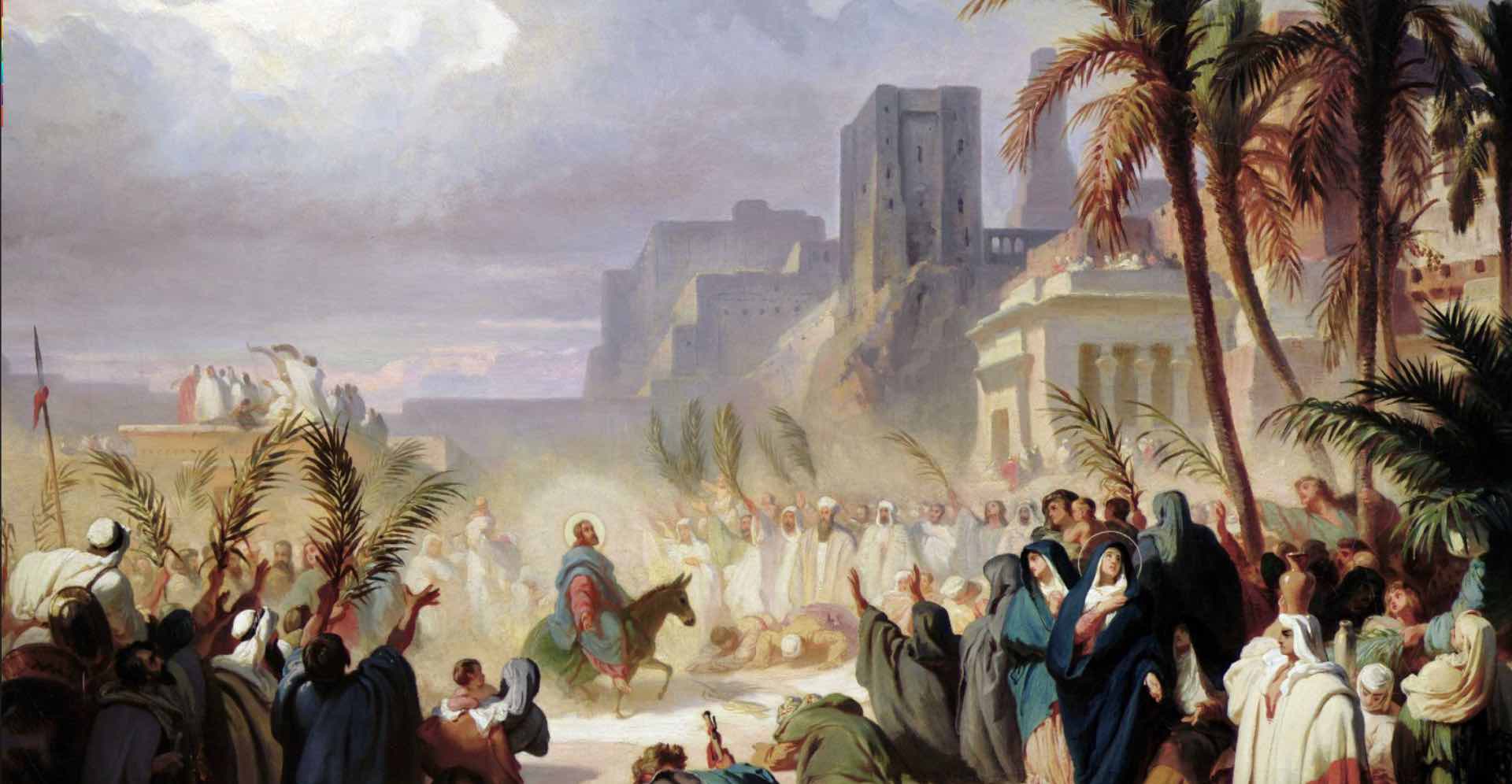
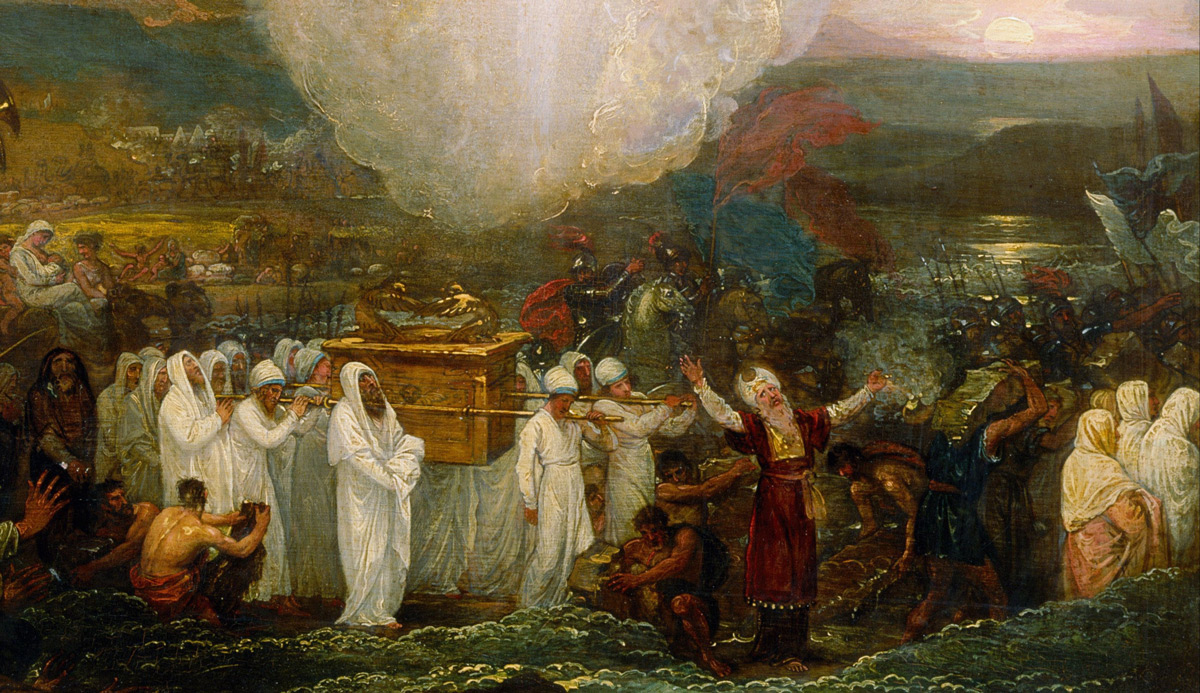
Slavery to the Promised Land – Sermon on Exodus 14:13-31 and Mark 1:9-13

Exodus 14:13-31; Mark 1:9-13

In the name of Jesus. Amen.

Scripture repeatedly connects water with death and life. At creation, there was chaos and darkness as the Spirit of God hovered over the face of the waters. But then God spoke, and life was brought forth (Gen. 1:2). In the Flood, God sent judgment and death upon sinful mankind by raining water on the earth for 40 days and nights, but those same waters were life-giving as they lifted Noah and his family safely in the ark above God’s judgment (1 Pet. 3:21). When Moses was born, the Hebrew baby boys were to be drowned in the waters of the Nile, but Moses was placed in a basket – his own personal ark – and saved by those waters to be found by Pharaoh’s daughter (Ex. 1:22-2:10).

After wandering in the desert for forty years, God’s people passed out of the deathly, barren wilderness and into the Promised Land by passing through the waters of the Jordan River (Jos. 3). Naaman came to the prophet, Elijah, as a man with deadly leprosy, but he washed himself in the waters of the Jordan River and came out with the skin of a newborn (2 Kg. 5:1-14). Jonah was swallowed by the great fish and brought down to the depths of the sea, but was vomited up again on dry land with new life (Jon. 1:17:2-10, Mt. 12:40). 

Last but not least, in tonight’s Old Testament lesson (Ex. 14:13-31), God’s people are departing Egypt and leaving the land of slavery, leaving the brutal taskmasters, whips, despair, hopelessness, and death behind. Initially, Israel had gone to Egypt to stay alive and find a place of refuge and rescue from a severe famine (Gen. 45:4-15). In those days, Egypt was a land that offered a good home while the world was filled with desperation (Ex. 1:1-7). But things had taken a bad turn. A new pharaoh came to power and saw God’s people as a source of cheap labor. The Hebrews ended up groaning under his cruelty. The land that had provided for them became the place of pain and sorrow. The country that had been a place of life became a place of death.

God heard the cries of His people and sent Moses to deliver them out of slavery and death. It wasn’t an easy departure. It took ten terrible plagues to convince Pharaoh to let them leave and go to the land that God had promised to give to Abraham and his offspring. But the Hebrews only got as far as the Red Sea when Pharaoh had another change of heart. Now, God’s people were stuck between a big body of water on one side and Pharaoh and his army on the other. 

God told Moses to lift his staff over the sea, and the waters parted so God’s people could pass through on dry ground. Through the water, God’s people left slavery and death and begin their journey from their exile in Egypt back to the Promised Land. The Egyptian army pursued them through those waters, but it didn’t work. The walls of the sea collapsed on Pharaoh’s army. The Lord did, indeed, fight for His people, and they had only to be silent (Ex. 14:14). The evil tormentors of God’s people were all washed away. The waters of the Red Sea were an instrument of both life and death. The same waters that destroyed the enemies of God’s people are the waters that save them. The waters that killed also delivered.

Dear saints, the world around is is getting very bleak. Yes, we live in the land of the free, but the darkness of evil is gathering around us. Like the Hebrews when they initially entered Egypt, we’ve had remarkably blessed days, but that is changing daily before our eyes. The novelist, G. David Hopf wrote, “Hard times create strong men. Strong men create good times. Good times create weak men. And, weak men create hard times.” The good times that have been a blessing from God, have created weak men. We are watching inflation soar. We see the potential for horrific wars. The holocaust of abortion continues to rage around us. And our culture has become so open-minded that brains are falling out. For example, yesterday, the supreme court nominee said that she was unable to define what a woman is during her confirmation hearing. Stating simple truths are now considered “hate speech.” It may be that hard times and persecution are looming large before us. Dear Christian, be ready. Our beloved country might turn into a land of slavery. Lord, have mercy.

But even if that isn’t the case and we enjoy more good days, it doesn’t change the fact that we are all slaves of sin and death. We continually sin in thought, word, and deed. We do not love God with our whole heart or our neighbors as ourselves. We need a Savior and deliverer. We need to be rescued from the demons. And, God be praised, God has come and fought for us to deliver us from every oppression.

In our Gospel lesson tonight (Mk. 1:9-13), Jesus came to the Jordan River. Scripture tells us that in those same waters, the people of Jerusalem, all Judea, and all the region around the Jordan were going to John to be baptized as they confessed their sins (Mt. 3:5-6). Jesus also went into that water to be baptized. But Christ didn’t need to be washed clean of sin because He didn’t have any. Instead, Jesus went down into those waters, and like a sponge, He absorbed those sins into Himself. After Jesus was baptized, He was driven by the Holy Spirit to go into the wilderness bringing those sins back to Satan, the father of sin.

In His baptism, Jesus began to take upon Himself the sins of the whole world (2 Cor. 5:21, Jn. 1:29). In Jesus, God has condemned sin in the flesh (Ro. 8:3). By taking our sin, going to the cross, and suffering God’s wrath against your sin, Jesus prepared you for your own journey into and through the waters of Baptism. In your Baptism, your old, sinful nature was drowned (Ro. 6:3-8), and your sin, all your sin, is washed away. God promises that in your Baptism, you have everlasting life and are delivered from your exile. Dear saints, continue to believe what God has promised you. Because of what Jesus has done for you, heaven has been torn open so you can pass safely through this world of sin and into the promised land of the kingdom of heaven. Amen.

The peace of God, which surpasses all understanding, will guard your hearts and minds in Christ Jesus. Amen.

Disturbing the Peace – Sermon on Luke 11:14-28 for the Third Sunday in Lent

Luke 11:14-28

14 Now he was casting out a demon that was mute. When the demon had gone out, the mute man spoke, and the people marveled. 15 But some of them said, “He casts out demons by Beelzebul, the prince of demons,” 16 while others, to test him, kept seeking from him a sign from heaven. 17 But he, knowing their thoughts, said to them, “Every kingdom divided against itself is laid waste, and a divided household falls. 18And if Satan also is divided against himself, how will his kingdom stand? For you say that I cast out demons by Beelzebul. 19 And if I cast out demons by Beelzebul, by whom do your sons cast them out? Therefore they will be your judges. 20 But if it is by the finger of God that I cast out demons, then the kingdom of God has come upon you. 21 When a strong man, fully armed, guards his own palace, his goods are safe; 22 but when one stronger than he attacks him and overcomes him, he takes away his armor in which he trusted and divides his spoil. 23 Whoever is not with me is against me, and whoever does not gather with me scatters.

24 “When the unclean spirit has gone out of a person, it passes through waterless places seeking rest, and finding none it says, ‘I will return to my house from which I came.’ 25 And when it comes, it finds the house swept and put in order. 26 Then it goes and brings seven other spirits more evil than itself, and they enter and dwell there. And the last state of that person is worse than the first.”

27 As he said these things, a woman in the crowd raised her voice and said to him, “Blessed is the womb that bore you, and the breasts at which you nursed!” 28 But he said, “Blessed rather are those who hear the word of God and keep it!”

In the name of Jesus. Amen.

This text is so full and rich, I could easily preach 847 sermons on it, but you’re only going to get one today. To some of you, “Sorry,” and to the rest of you, “You’re welcome.” Today, we’re mainly going to focus on the little parable that Jesus tells in v. 21-22 and then carry what we learn there to the blessing that Jesus gives to you in v. 28. But to do that, let’s quickly highlight a few things from the opening of the reading to get the context.

Jesus has cast out a demon that made a man mute. Some of the people marvel at this exorcism, but some (Mt. 12:24 tells us that they are Pharisees) say that it is only by the power of Beelzebul, which was a name for the devil, that Jesus can do this. Earlier this week, Anna asked me what text I was going to be preaching on I summarized the text. When I told her about the Pharisees’ accusation that Jesus was casting out demons by the power of demons, she said, “That’s so dumb.” Yup. And Jesus addresses the absurdity (v. 17-20). Then, He says something very important to set up the parable. “If it is by the finger of God that I cast out demons, then the kingdom of God has come upon you.” The grammar there makes it clear that Jesus says that it is, indeed, by God’s finger that He casts out demons which means that the kingdom of God has arrived. Christ the King is bringing the kingdom of God with Him as He throws out the demons He has defeated. Then, Jesus tells everyone what is going with this little parable.

“When a strong man, fully armed, guards his own palace, his goods are safe; but when one stronger than [the strong man] attacks him and overcomes him, he takes away his armor in which he trusted and divides the spoil.” Let’s dissect this. The strong man with all his armor is the devil, the palace that the devil is guarding is the entire world which is under his power, and the goods that he is guarding are all sinners. Until Christ claims us as His own, we were under the rulership of Satan and the demons. Col. 1:16 says, “[God] has delivered us from the domain of darkness and transferred us to the kingdom of his beloved Son.”

Now, please don’t misunderstand this. Typically, when we think of people demons influencing people, scenes from the movie The Exorcist come to our minds. We do see that a few times in the Gospels. In this text, the demon makes the man mute. In Mt. 17:14-15, there is a demon-possessed boy who is repeatedly thrown into fire and water. Or the man who was possessed by the demon, Legion, who lived among tombs and could not be bound (Mk. 5:2-5). But that type of extreme demonic possession is extremely rare in Scripture; in fact, it never happens in the entire Old Testament. We only see it a few times in the Gospels and a couple of times in the book of Acts (16:16-18, 19:15-16). Most of the time, the Bible links what we think of as common illness with unclean spirits (Mt. 4:24, 8:16, 10:1; Mk. 1:32-34, 6:13; Lk. 9:1; Act. 5:16, 19:12). I’ve got a whole slew of references for that, and if you’re interested, just ask me after the service.

So yes, this extreme demonic possession does happen, but it is rare. What we do regularly see, throughout Scripture, is demonic influence and temptations. Just think of Job. When the devil went after Job, it was manifest with loss of property, children, and health. Because Job’s friends and wife only see that and can’t see that the devil is behind all of this, they wrongly think that Job has some secret sin that he must confess and repent. But they’re just plain wrong.

So, for you Christians here today, remember demons are real, and they do pester us trying to get us to fall into unbelief. But normally, they do so with things that disguise their evil intent. But Scripture helps us see through their disguise. It is right to recognize that the pandemic, the divisions in our families and country, and the wars and rumors of wars[1] are all demonic. And it is right to see every stolen car; every case of cancer; and every addiction, struggle, temptation, and fear we have as a demonic attack. Recognizing this will help us do two things. One, it will drive us to prayer, and two, it will help us to have sympathy and patience when others wrong us instead of hating them.

Now, the eeriest part of this little parable is the condition of those who are guarded by the devil. Our translation reads, “his goods are safe,” which makes it sound like Jesus is saying there that the devil’s very powerful in his armor and palace. But that isn’t what Jesus is highlighting with that phrase. What Jesus says there is literally, “his goods are in peace.” The picture is that those under the control of the devil are content, safely tucked away, and quietly and lying there with no desire to leave the devil’s palace. Those who are under the control of the devil and his demons have grown so accustomed to being under his watchful eye with his strong armor that they don’t like it when they see Jesus, the stronger man, stripping the devil of all his protection and leaving him in nothing but his underwear. Those under the guardianship of Satan don’t like seeing their fellow goods are being plundered and taken away.

But, dear saints, here is the good news: Christ has come to disturb the evil, demonic peace of Satan’s kingdom. In fact, the devil has been dealt a fatal blow; his head has been crushed by Jesus, the promised Seed of Eve (Gen. 3:15). And as the days get more and more evil, that evil is a sign of Christ’s victory over all the forces of darkness. The kingdom and domain of Satan is chaotic today precisely because Christ come bringing the kingdom of God with Him. The kingdom of God disrupts the peace of the devil’s goods and brings true peace. What the crowd was witnessing in this text – and, quite frankly, what we are witnessing today – is not some demons fighting against other demons trying to see who is the strongest. Instead, we are witnessing Satan being unseated. Jesus is the stronger man who flicks away the demons with His finger and brings God’s true peace.

Dear saints, the battle is won. You are the prize, the treasure, and the spoil. Christ has come and given His life for you. His blood covers you and cleanses you as a bride adorned for her husband (Eph. 5:25-27, Rev. 21:2). The war has been won by the Word of God. The Word of God speaks you righteous and clean, which brings us to that final verse.

Jesus says, “Blessed are those who hear the Word of God and keep it.” We know what it is to hear God’s Word, but what does it mean to ‘keep’ it? A lot of times, we think to ‘keep’ God’s Word is equivalent to obeying it. Yes, of course, we absolutely should obey God’s commands. But the devil wants you to think that only those who perfectly keep God’s commands are blessed so you think this blessing of Jesus isn’t for you. In other words, Satan wants to steal this blessing from you and make you think it doesn’t really apply to you. But the devil is a liar.

The word that Jesus uses here for ‘keep’ is the exact same word Jesus used to describe what the strong man did with his goods in v. 21 – he ‘guarded’ and protected them. Jesus’ blessing reads like this, “Blessed are those who hear the Word of God and guard it.”

Dear saints, Jesus calls you to a life of faith which wars against the demons by guarding the promises God has spoken to you. So, hear God’s Word and guard it, hold on to it, and treasure it. That is precisely what you are doing now. As you sit there listening to this sermon, you are engaging in spiritual warfare, and the devil is losing. So, keep listening, keep learning, keep repenting, believing, and trusting that God is good and that He loves you and has bought and won you through Christ’s death and resurrection because He has.

The spiritual warfare you are called to is made up of the little things of hearing God’s Word, coming to church, attending Bible study, talking with your children about God, and praying. In these quiet, simple things, the devil is stripped of his armor and his goods are plundered. By hearing and guarding God’s Word, you set up a barrier and sanctuary for yourself and your children. When you hear and guard God’s Word, you are engaging the enemy and reinforcing the defenses of the saints.

It doesn’t matter how strong the forces of evil appear to be. They have lost. Jesus has come bringing His kingdom with Him. Christ flicks away the demons like flies. Their demonic peace has been disturbed by Jesus. And He has freely given you true, eternal, abiding, and everlasting peace. Amen.

The peace of God, which surpasses all understanding, will guard your hearts and minds in Christ Jesus. Amen.


[1] The wars and rumors of wars are demonic even though they are signs that Jesus gives us to be looking for His return (Mt. 24:6, Mk. 13:7) and should cause us to raise up our heads because it means our redemption is drawing near (Lk. 21:28).

Moriah to Zion – Sermon on Genesis 22:1-14; Hebrews 9:22, 11:17-19; and John 3:16

In the name of Jesus. Amen.

Throughout Scripture, God repeatedly makes Himself available to people on mountains. Working backwards through time, Jesus ascended into heaven from Mt. Olivet (Act. 1:12). Jesus was Transfigured on the top of a mountain (Mt. 17:1). Jesus preached His most famous sermon on the top of a mountain (Mt. 5:1); He even titled it the Sermon on the Mount – just kidding. Elijah met with God on the top of a mountain (1 Kgs. 19:8-18). God brought Moses to the top of a mountain to see the Promised Land before he died (Dt. 34:1-5). And, of course, God spoke the Ten Commandments to His people from the top of Mt. Sinai (Ex. 20).

In the Old Testament, God’s people had the understanding that heaven was up, hell was down, and earth was between. Because of that, mountains were places of worship. All that being said, when Abraham saw Mt. Moriah, it probably wasn’t an awe-inspiring moment. God told Abraham to take his only son to Mt. Moriah and offer him up as a sacrifice. Amazingly, Abraham was faithful and trusted. Our epistle text tonight (Heb. 9:22, 11:17-19) sheds some light on how Abraham could go through this. Abraham believed that God would raise Isaac from the dead. We get a hint of that in Gen. 22. Notice what Abraham says to his servants when he and Isaac leave them behind. The same subject governs all the verbs, “I and the boy will go over there and [I and the boy] will worship and [I and the boy] will come again to you” (Gen. 22:5).

Abraham takes the wood and lays it on his son, and Isaac carries his own location of death. As they ascend the mountain, Isaac speaks up and asks the question of the day, “Behold, the fire and the wood, but where is the lamb for a burnt offering?” Abraham says, “God will provide for Himself the lamb for a burnt offering, my son.”

Now, we need to interrupt the text, slow down, and ponder Abraham’s answer. The Hebrew word here in v. 8 which gets translated ‘provide’ is a really bad translation. The Hebrew word actually means ‘to see,’ but basically every English version you can get your hands on will translate it as ‘provide.’ They say that the verb ‘to see’ here has the sense of ‘will see to it’ as in, “God will see to it Himself that there is a lamb.” But to translate it that way makes us miss something big because there is one other part of Abraham’s words here that we miss in English. The most literal, wooden translation of Abraham’s response to Isaac is, “God will see Himself – a lamb” (Dr. John Saleska). Hear that again: “God will see Himself – a lamb.”

Now, the story slows down giving every excruciating detail. They come to the place. Abraham builds the altar, lays the wood in order, binds Isaac, and lays him on top of the wood. Abraham reaches out his hand and takes the knife to slaughter his son. But the angel of the Lord steps in.

I’m not going to take the time to fully explain it in this sermon (ask me later if you’re interested), but the “angel of the Lord” in the Old Testament is Jesus. For now, the only proof I’ll offer is that the angel of the Lordspeaks as God Himself and uses God’s same words from earlier in the text. Notice He says, “You have not withheld your son, your only son, from Me.”

Abraham lifts up his eyes and “looked” (which is the same word that was translated ‘provide’ earlier) and there is a ram caught in a thicket by his horns. And Abraham offers up the ram as a burnt offering instead of his son. After all this, Abraham names that place, “Yahweh will see” (again, same word back in v. 8 and v. 13). And it became a saying, “On the mount of Yahweh it will be seen.”

For years, God would see on that same mountain, Mt. Moriah, the sacrifices of His people. It was on that very mountain that Solomon built the Temple and where the blood of animals was shed to atone for the sins of the people. On that mountain, God would accept the death and blood of another in place of His people who were under condemnation for their sins. And it’s no surprise that Jewish people admire this account of the sacrifice of Isaac highly – so highly, in fact, that they gave it a title, the Aqedah, which is the Hebrew word for ‘binding.’ In the Old Testament, Isaac is the only sacrifice that is ‘bound.’ And in the New Testament, there is only one other ‘bound’ sacrifice.

On a mountain just outside Jerusalem and within view of Mt. Moriah, Jesus offers the sacrifice of His body and blood. On Mt. Calvary, God sees the Lamb of God who takes away the sin of the world (Jn. 1:29) as Christ, your Savior, is bound to the cross by nails through His hands and feet. Even though Jesus was sacrificed on Mt. Calvary, He brought His atoning blood to the true Holy of Holies in the heavenly Temple (Heb. 9:11-12) and sprinkled it before God so you would have forgiveness, life, and salvation. 

The journey from Mt. Moriah to Mt. Zion is the story of your deliverance from exile because Jesus is what Isaac could not have possibly been. Christ is the son, the only Son, the only begotten Son, whom God the Father loves. He carries the wood of the altar upon which He is sacrificed. His head was caught in a thicket of thorns. Jesus freely gives His life for your salvation, and the sacrifice isn’t interrupted. Jesus delivers forgiveness and life to you through the shedding of His holy and precious blood. Through faith in Him you will not ever perish but have everlasting life (Jn. 3:16).

God has seen. He has seen the sacrifice of Jesus, and because of that, heaven is eternally opened to you. Amen.

The peace of God, which surpasses all understanding, will guard your hearts and minds in Christ Jesus. Amen.

When Prayer Gets Violent – Sermon on Matthew 15:21-28 for the Second Sunday in Lent

Matthew 15:21-28

21 And Jesus went away from there and withdrew to the district of Tyre and Sidon. 22 And behold, a Canaanite woman from that region came out and was crying, “Have mercy on me, O Lord, Son of David; my daughter is severely oppressed by a demon.” 23 But he did not answer her a word. And his disciples came and begged him, saying, “Send her away, for she is crying out after us.” 24 He answered, “I was sent only to the lost sheep of the house of Israel.” 25 But she came and knelt before him, saying, “Lord, help me.” 26 And he answered, “It is not right to take the children’s bread and throw it to the dogs.” 27 She said, “Yes, Lord, yet even the dogs eat the crumbs that fall from their masters’ table.” 28 Then Jesus answered her, “O woman, great is your faith! Be it done for you as you desire.” And her daughter was healed instantly.

In the name of Jesus. Amen.

In our Old Testament lesson today (Gen. 32:22-32), you heard how Jacob wrestled with God. Jacob was already tired and under a lot of stress. He was returning home after living with and working for his father-in-law for a couple decades, and he was approaching his brother Esau who had sworn to kill Jacob for taking his birthright and blessing (Gen. 27:41-42). The night before Jacob and Esau met, God came down to Jacob, and they wrestled mano a mano. Once the dust from their scuffle settled, God blessed Jacob and gave him a new name. Now, Jacob is known as ‘Israel’ which means ‘God strives.’

That text is a fantastic set-up for this Gospel lesson. Here, God has again descended, and Jesus wrestles with one of His creatures who, like Jacob, is already tired and afraid. This time, God’s opponent is a woman; she is a foreigner; and she is a pagan. Three strikes, so she should be out. But she approaches Jesus in great need. She comes boldly, and her prayer is violent. It doesn’t sound so violent in our translation. We heard that she is ‘crying out,’ but the Greek word there conveys the shrieking of a raven. We heard that she ‘knelt’ before Jesus, but the Greek word there is more along the lines of flung – she flung herself at Jesus feet.

Notice how she addresses Jesus with two titles: ‘Lord’ and ‘Son of David.’ In the Gospel of Matthew, only disciples address Jesus as ‘Lord.’ And she refers to Jesus as only an Israelite would with the kingly title, ‘Son of David.’ And her request isn’t for herself. Her little daughter is severely oppressed by a demon. So, her prayer checks all the right boxes. Jesus is the Lord and King. And He has come to destroy the works of the devil (1 Jn. 3:8). But Jesus acts in a way that can make us Christians feel a bit awkward.

Christ first ignores her. The disciples start praying against her and beg Jesus to send her away. Then, Jesus says, “I was sent only to the lost sheep of the house of Israel.” And when she flings herself into the dust before Jesus’ feet with a last gasp prayer, “Lord, help me,” Jesus calls her a dog. This isn’t the Jesus we are used to hearing about in the Gospels, the one who welcomes the lowly and despised, the one who heals, the one who casts out all sorts of demons.

But even though Jesus has her in a submission hold (figuratively speaking), this woman has one last punch to throw at Jesus to win this fight, and it’s a haymaker. Yes, Jesus has called her a dog, but she takes the insult. She says, in effect, “Yes Lord, I am a dog. I don’t belong or have any right to sit at Your table. I don’t deserve the bread that You feed to Your children. But if You call me a dog, I’ll be your dog. And I’ll be content with nothing more than what the dogs get. The crumbs from Your table are enough for me.”

After that statement, Jesus taps out, “O woman, great is your faith!” This is one of two times in the Gospels that Jesus praises someone’s faith (Mt. 8:5-13 is the other). “Be it done for you as you desire.” And her daughter was healed instantly.

This wrestling match between Jesus and the Canaanite woman reminds me of the parable of the unrighteous judge that Jesus tells in Lk. 18:1-6. In that parable, a woman repeatedly asks an unjust judge for justice. The judge just ignores her, but the woman keeps crying out for justice. Finally, the judge gives her what she wants because, according to the judge, the woman is beating him down with her continual requests. Luke tells us that Jesus told that parable to encourage His disciples to be persistent in their prayers because God is just and will not delay in answering.

There is no question, Jesus heard every one of this Canaanite woman’s prayers. Christ loved this woman and her daughter and had come to set them free from the oppression of demons. So, why did it take so long for Jesus to give her what she wanted, and why did He treat her like this? I think the only safe answer to those questions is, “I don’t know.” God’s ways are not our ways (Is. 55:8-9). But we can say this because Scripture clearly teaches it:

By delaying His answer to her prayer, Jesus purifies this woman’s faith. James 1:2-3 says, “Count it all joy, my brothers, when you meet trials of various kinds, for you know that the testing of your faith produces steadfastness.” And our Epistle Lesson today (Ro. 5:1-5) says that we can rejoice in our suffering because suffering produces endurance, and endurance produces character, and character produces hope. Jesus knows how much heat this woman can take, and she comes out the other side with a stronger faith than what she had before this violent wrestling match of prayer.

There is no question that Jesus sent trial after trial to this woman. But that is what makes her faith so beautiful. Rather than turning her back on Jesus for being a jerk, her roots sink in deeper. She knows there is no other help for her and her daughter. So, here is the real question. Can you trust God when, to all appearances, He ignores you? Can you trust God when the wicked prosper, when the world is falling apart, and when your loved ones die too early? Will you trust Him when He doesn’t do what you ask? Faith trusts in God even when it is contrary to experience and our fallen reason.

The greatness of the woman’s faith wasn’t in her confidence or certainty. Its greatness was in its weakness. Her faith was great not when she was crying, “Son of David have mercy on me,” but it was great when she says, “Yes, Lord. I am Your dog.” It was great then because it only wanted what He gave.

In your walk of faith, remember that God doesn’t keep every promise you can imagine. But He has, does, and will keep every promise He has made. When it appears – and please note, I said, appears – that God isn’t listening to your prayers and seems to be sending you away, have the ingenuity of this woman. When God tells you, “You are lost,” you can take God at His Word and cry to Him, “Yes, God. I’m lost; find me.” When God says, “You’re a sinner,” say, “Yes, God. I’m a sinner; save me.” When God says, “You’re dead,” cry to Him “Yes, raise me.”

Finally, don’t give up on your prayers. Keep wrestling in them. You can’t hurt God by getting too violent with your prayer. Jesus wants you, like this woman did, to continue bringing your requests to Him. Jesus says, “Ask, and it will be given to you; seek, and you will find; knock, and it will be opened to you” (Mt. 7:7). So, keep asking; keep seeking; keep knocking. God will answer in the best way and at the exact right time.

Dear saints, you can be bold in your prayers because Christ has come and restored peace between you and God; you now stand in God’s grace (Ro. 5:2). He will remember His mercy and steadfast love, and He will redeem you out of all your troubles (Ps. 25:6, 22). Amen.

The peace of God, which surpasses all understanding, will guard your hearts and minds in Christ Jesus. Amen.

Eden to Heaven – Sermon on Genesis 3:22-24 & Revelation 22:1-5

Genesis 3:22-24 & Revelation 22:1-5

In the name of Jesus. Amen.

God created you to live in perfection. In six days, God created everything in the universe. He created light and darkness. He placed the sun, moon, stars, and galaxies in their places. God established land, sea, and plants and filled the earth with birds, fish, and every kind of animal. And God planted the garden of Eden. Only after all that was completed did God create the crown of creation – man and woman. And Adam and Eve were placed in the Garden of Eden to work it and keep it.

But it wasn’t the kind of work that we experience – it was pure joy. There was no need to look at the forecast to see what the weather would be. No worries about gas prices and inflation. No crisis. No war. No disease or pandemic. Everything was in perfect harmony. In God’s own estimation, all that He created was good, in fact, very good (Gen. 1:21). Best of all was the perfect relationship that existed between God and man. God freely giving and man graciously receiving. Even the one command that God gave was gracious, “Of the tree of the knowledge of good and evil you shall not eat, for in the day you eat of it you shall surely die” (Gen. 2:17).

Now, some suggest that God put the tree of the knowledge of good and evil in the garden so Adam and Eve could choose to trust or reject God. But this is not the case. God’s prohibition to eat from that tree was a promise for Adam and Eve to believe. Just track with me for a minute here. Scripture repeatedly says, “The righteous shall live by faith” (Hab. 2:4; Ro. 2:17; Gal. 3:11; Heb. 10:38). In other words, to be righteous is to have faith. We know that for us sinners to be righteous is to have faith in Jesus as our Savior. But what kind of faith did Adam and Eve have before the Fall? They already knew the mercy, goodness, and graciousness of God because they constantly experienced it in everything that God had given and in everything God was to them. So, what is it that Adam and Eve believed before the Fall that made them righteous through faith?

Well, at some point in those first six days, God created the angels. Now, Scripture doesn’t tell us specifically when, but at some point in those days of creation the devil and demons rebelled and fell. In other words, evil existed. When God banned Adam and Eve from eating from the tree of knowledge of good and evil, God was giving a promise, “Evil exists, and I just want you to trust Me on this. When you find out what evil is, it won’t go well for you, in fact, you’ll die.” So, Adam and Eve could go to the tree of the knowledge of good and evil and know, “What a good God we have. He has given us everything and doesn’t want us to experience or even know what evil is.”

But, as you heard in Sunday’s Old Testament lesson (Gen. 3:1-21), Satan stirred up discontentment in Adam and Eve. The devil told Eve that she could become something more than God had created her to be. Satan said that she would become like God. So, deceived as she was (Gen. 3:13; 2 Cor. 11:3), Eve took the fruit. Adam was even worse; he wasn’t deceived and knew exactly what he was doing (1 Tim. 2:14). They both sinned and fell. They took. They ate. Their eyes were opened. They had become something more. You heard God say it Himself tonight, “Behold, the man has become like one of us in knowing good and evil” (Gen. 3:22).

But Adam and Eve knowing evil wasn’t better. Not even close. Now, because the head of creation had fallen into sin, creation fell with him (Ro. 8:20-21). And Adam and Eve were sent into exile – away from God’s presence, away from the Garden of Eden, and away from the tree of life which was now guarded by the cherubim and a flaming sword. But God sent them into this exile with a new promise to believe. A promise that paradise would be restored to them when the seed of the woman would come and crush the serpent’s head (Gen. 3:15). And it was through faith in that promise that God went with them.

Dear saints, you and I live in exile. We wander about sinfully trying to become like God by our own works, but all our effort is curved in upon itself. Instead of being like our giving God, we seek after our own comfort and desires. Unlike God who is generous and giving, we try to pile up riches for ourselves. We try to create our own little gardens of Eden in an attempt to regain the paradise we lost. But we never achieve the perfection we long for. The treasures we acquire quickly fade and fall apart in our hands.

We cannot return from this exile by our own reason or strength. Yet, God walks alongside us, calling us back unto Himself. Out of His great love for us, He continues to give us promise after promise. And God delivers on every one of His promises. He has sent Jesus into this world of exile to bring us back to paradise. He comes to us who are bent over in our sin and frees us. He delivers us from the bondage of Satan (Lk. 13:16) and gives us rest. He announces to us that because of what He has done by His death and resurrection, we will be eternally restored. While Jesus was on the cross, He told the thief next to Him, “Today, you will be with Me in paradise” (Lk. 23:43). That word ‘paradise’ means ‘an enclosed garden.’

In our reading from Rev. 22:1-5 tonight, we get a picture of that garden of paradise. And that is what lies ahead for you, dear saint. Through faith in Jesus, you are righteous. Your destination is the bright crystal river, the tree of life yielding its twelve kinds of fruit, and leaves for the healing of the nations. There you will see God’s face, and there will be no more night. You will need no light of lamp or sun, for you will be restored to God, and He will be your light. Your time in exile has an end. And there, in eternal bliss, you will reign forever and ever. Amen.

The peace of God, which surpasses all understanding, will guard your hearts and minds in Christ Jesus. Amen.

The Umbrella – Sermon on Matthew 4:1-11 for the First Sunday in Lent

Matthew 4:1-11

1 Then Jesus was led up by the Spirit into the wilderness to be tempted by the devil. 2 And after fasting forty days and forty nights, he was hungry. 3 And the tempter came and said to him, “If you are the Son of God, command these stones to become loaves of bread.” 4 But he answered, “It is written,

“‘Man shall not live by bread alone, 
but by every word that comes from the mouth of God.’”

5 Then the devil took him to the holy city and set him on the pinnacle of the temple 6 and said to him, “If you are the Son of God, throw yourself down, for it is written, 

“‘He will command his angels concerning you,’ 

and 

“‘On their hands they will bear you up, 
lest you strike your foot against a stone.’” 

7 Jesus said to him, “Again it is written, ‘You shall not put the Lord your God to the test.’”

8 Again, the devil took him to a very high mountain and showed him all the kingdoms of the world and their glory. 9 And he said to him, “All these I will give you, if you will fall down and worship me.” 10 Then Jesus said to him, “Be gone, Satan! For it is written,

“‘You shall worship the Lord your God 
and him only shall you serve.’”

11 Then the devil left him, and behold, angels came and were ministering to him.

In the name of Jesus. Amen.

Generally, there are two ways to approach preaching a sermon on Jesus’ temptation. The first is to point out the tactics that Jesus used to resist temptation and encourage the hearers to employ those same tactics because we are to fight and resist temptations (Jam. 1:144:7). Those sermons can make you much more prepared than Eve was in our Old Testament lesson (Gen. 3:1-21) when the devil came asking, “Did God really say?” Preaching Jesus’ temptation that way is helpful, beneficial, and Scriptural, and I’ve taken that approach several times in the past. 

That being said, those sermons are mostly oriented toward the Law and have the potential to be dangerous. They can leave you only hearing, “Jesus is your example. Here, use the same strategies and maneuvers that Jesus used. And if you follow this plan when you face temptation, you can resist sin like Jesus.”

But when – not ‘if’ but ‘when’ – you fail and fall into sin, it can be extremely discouraging. If you only hear sermons about how Jesus is your example, it can leave you thinking that the Bible is simply a self-help book. And when your life doesn’t get better, you can start to think that the Bible isn’t really all that helpful. The devil can take sermons like that and place all your sins and failures and in front of you to tempt you into abandoning the Word of God completely. So, I’m not taking that approach today. Maybe I will the next time, but not today.

Today, I’m taking the second common approach of preaching on Jesus’ temptation which is to see that Jesus is resisting temptation for you. He is doing for you what you cannot and could not do. As Christ resists and fights against the devil, He is trusting in God where you have not. And because Jesus has done all of this for you, God credits Jesus’ victory over sin and temptation to your account through faith.

To get a better understanding of this we need to see that these are real temptations for Jesus. Honestly, these temptations don’t sound all that difficult to us. Turning rocks into food, jumping off a building without a bungee cord or parachute, and bowing down at Satan’s feet are not the temptations you and I face. But the reason each of these temptations is difficult for Jesus is that in each of them the devil is tempting Jesus to abandon His mission to be your Savior. To get at this, we’ll need an analogy:

Imagine that the Ten Commandments are a giant umbrella, and God by creating you has put you under that umbrella of His Law. You and I and all humanity live under the Law, and we don’t have a choice of getting out from under it. That is not an option. The Law is always there directing, instructing, and accusing us because we are sinners.

Now, God isn’t under that umbrella of the Law. God is outside and above the Law. Whether you like it or not, God isn’t subject to the Commandments. He can’t be. Consider the 4th Commandment, “Honor thy father and thy mother.” How is God going to keep that Command? He doesn’t have a father or mother or any authorities above Him to honor. Or consider the 7th Commandment, “Thou shalt not steal,” and the 9th and 10thCommandments about coveting. God created all things, so He already owns all things. He can’t steal or covet anything because everything is His already. So, we live under the umbrella of the Law, and God doesn’t.

But when God saw your pitiful condition under the Law and how it always accuses you, He desired to save you, the only way to do that was for Him to come next to you under the umbrella. Jesus came in the flesh to live under the Commandments next to you. This is the picture we are given in Gal. 4:4-5a, “When the fullness of time had come, God sent forth His Son, burn of a woman, born under the Law to redeem [you] who were under the Law.” You see this?

So, when Satan initially comes to tempt Jesus here, he doesn’t tempt our Lord the same way he tempts us. The devil tempts us to break specific commandments – to disrespect those who have authority over us and break the 4th Commandment, to hate and harm our neighbor and break the 5th, to lust and break the 6th, to lie and break the 8th, and so on. But none of the temptations that the devil throws at Jesus here would lead Jesus to break one of the Commandments. Satan is doing something different here.

In each of these temptations, the devil is tempting Jesus to come out from under the umbrella of the Law. Basically, each of these temptations is Satan, that worm, saying to Jesus, “You created the umbrella! You don’t belong under the Commandments. Leave the people under there, they deserve it. They’ve earned all the punishment they get under there.”

Now with that picture in our minds, let’s consider each of the temptations. If you had gone forty days without eating, the devil would tempt you by simply putting some food in front of you. But when the devil tempts Jesus here, he doesn’t put food in front of our Lord; instead, he points to a pile of rocks. That wouldn’t be tempting for you or me, but this temptation is uniquely tailored for Christ. Jesus has the power, ability, and authority to change those stones into bread. He is God after all, so those stones are His creation. If He wanted to turn them into bread, He had every right to do so. But Jesus doesn’t. He responds by quoting Dt. 8:3, “Man shall not live by bread alone, but by every word that comes from the mouth of God.”

What that passage means is that we humans must trust that God will provide our food at the proper time (Ps. 145:15). So, this temptation to turn rocks into bread is the devil saying to Jesus, “You don’t have to wait for God to give You bread. Only the sons of Adam and daughters of Eve have to wait for God to feed them.” And the devil was right. Jesus didn’t have to wait. Because Jesus is God, if He had turned those stones into bread, God would have been providing. But because Jesus is your substitute and has willingly come next to you under the umbrella, He does wait. He waits for His heavenly Father to provide food. He chooses to be patient because you and I have to be patient and wait for food to come from our heavenly Father. So, by resisting this temptation, Jesus stays with you under the umbrella.

In the second temptation, Jesus is taken to the top of the Temple and is told to jump off. This temptation sounds really strange to us because I doubt you have ever been tempted to jump off the roof of the Alerus or the Ralph. How is this tempting? It wouldn’t be for you or me, but it is for Jesus. If Jesus had jumped off the pinnacle of the Temple, which was a very public place, people would see the angels catch Him, and they would know that He was God. Jesus could get all the glory, worship, and praise that is His due as God.

But Jesus’ glory doesn’t mainly come from doing amazing things. His main glory is staying with you under the umbrella and going to the cross to be your Savior. Just before He was arrested, Jesus began His high priestly prayer, “Father, the hour has come; glorify Your Son” (Jn. 17:1). Again, the devil’s temptation here is to get Jesus to come out of the umbrella and get the glory that Jesus rightly deserves. But Jesus won’t do it. He remains with you under the umbrella because it is much more glorious to be the Savior of mankind than to be a miracle-worker.

Finally, in the third temptation, the devil takes Jesus to a high mountain, shows Him all the kingdoms of the world, and says, “I’ll give You all this if You bow down and worship me.” Remember, Jesus had come to win all the kingdoms of the world for Himself. At the very end of the Gospel of Matthew, Jesus says, “All authority in heaven and on earth has been given to Me” (Mt. 28:18). In this temptation, the devil is saying, “I can give You the kingdoms of the world right now.”

But Jesus won’t do it. Again, He stays under the umbrella. Yes, Jesus has come to reclaim the kingdoms of the world, but only after He has redeemed you by shedding His blood and dying and rising again for you.

Dear saints, Jesus has resisted temptation for you. And we know Jesus faced more temptations than these three. When Luke records Jesus’ temptation, he ends it by saying, “The devil departed from Jesus until an opportune time” (Lk. 4:13). Jesus can sympathize with your weakness because He has been tempted in every way that you are but without sin (Heb. 4:15).

One more thing about Christ’s temptation today. Notice, that Jesus was led by the Holy Spirit into the wilderness in order to be tempted by the devil (v. 1). You can take comfort in the fact that the Holy Spirit will never ever lead you into temptation because Scripture promises (Jam. 1:13). But beyond that, you can know that by facing these temptations for you, Jesus is totally and completely determined and committed to be your Savior. He did not and will not ever come out of the umbrella with you. His desire is to give you His mercy. He has brought that mercy, grace, and forgiveness to you who live under the umbrella.

So today, right now, and always You can draw near to His throne of grace with complete confidence. Because at His throne of grace you will always find His mercy and grace to help in every time of need (Heb. 4:16). Amen.

The peace of God, which surpasses all understanding, will guard your hearts and minds in Christ Jesus. Amen.

Sackcloth & Ashes to Robes of Righteousness – Sermon on Joel 2:12-19 & Revelation 7:9-14 for Ash Wednesday

Joel 2:12-19; Revelation 7:9-14; Matthew 6:1-6, 16-21

In the name of Jesus. Amen.

Humanity’s first experiment with clothes didn’t work very well. You remember that God had created Adam and Eve without sin, and they were both naked and unashamed (Gen. 2:25). But after they sinned, Adam and Eve became aware of their nakedness. They saw their shame, and because of their disobedience, they now knew what evil was and were ashamed of what God had created to be good. So, they tried to cover their nakedness and shame with fig leaves (Gen. 3:7). Those fig leaves were Adam and Eve’s feeble attempt to cover their sin. It didn’t work.

When God came to the Garden, He was seeking them out asking, “Where are you?” (Gen. 3:9). Of course, God knew where they were, but He was giving Adam and Eve opportunity to repent. Adam knew his half-stitched leaf sewing wasn’t enough to cover his guilt. Adam replied, “I heard the sound of You in the garden, and I was afraid, because I was naked, and I hid myself” (Gen. 3:10). Fig leaves and hiding weren’t enough. Adam and Eve stood before a holy God utterly and totally incapable of covering their sin and shame.

Now, God had told Adam that the day he ate from the Tree of the Knowledge of Good and Evil that Adam would surely die (Gen. 2:17). And those fig leaves were no escape from the death sentence that Adam had earned by his disobedience. The problem of Adam and Eve’s sin and shame doesn’t get fixed until toward the end of Gen. 3 when God makes garments of skins and clothes them (Gen. 3:21). You’ve heard me say this before, but it needs regular repeating. When God makes cloths of skins for Adam and Eve, blood is shed. You can’t get skins from an animal without spilling blood. So, when God clothes Adam and Eve, He is teaching them that He will accept the death of another to cover their sin and guilt.

After clothing Adam and Eve, God did one more gracious thing – He expelled them from the Garden of Eden. We typically think of this exile from Eden and banishment from the Tree of Life as a further penalty (Gen. 3:22). But not so fast. This exile from the Garden wasn’t a punishment. Think about it for a minute. Adam and Eve were now sinners. If they ate from the Tree of Life as sinners, they would live forever in their sin. Dear saints, that is the definition of hell. Their expulsion from the Garden and inability to access the Tree of Life was God acting in grace and mercy. Clothed in those animal skins, Adam and Eve are sent out of the Garden and into exile, but their garments served as a constant reminder of God’s promise to crush the serpent’s head (Gen. 3:15).

Now, we’re going to change gears here, but stick with me. Tonight, we heard in our Old Testament lesson (Joel 2:12-19) God calling to humanity again. But this time, God isn’t calling us to come out of a hiding place in Eden. Instead, He is calling to us who are in the exile of sin. And in this invitation, God brings up the topic of clothing again.

God invites us to return to Him with fasting, weeping, and mourning. He says to rend and rip our hearts and not our garments. Rending and ripping clothes was a way to express and reveal deep sorrow. After all of Job’s possessions and children were destroyed, Job tore his clothes in mourning (Job 1:20). David tore his clothes when King Saul and his dear friend Jonathan were killed in battle (2 Sam. 1:11). The interesting thing about that verse from Joel about rending hearts and not clothes is what comes after. Notice in Joel 2:13 what comes immediately after the call to rend your heart: “Return to the Lord your God, for He is gracious and merciful, slow to anger, and abounding in steadfast love.” Even with your clothes rent and your nakedness uncovered, God invites you to leave your exile in sin, shame, and nakedness to return to Him to receive His grace and mercy.

Instead of simply an outward sign of ripping and rending clothes, God calls us to rend our hearts. God is calling for true repentance – not merely an external show of repentance. When a person rends their garments, it only reveals the nakedness and shame underneath. But after the problem is revealed, God calls us to a step further. Underneath our ripped cloths, lies a broken spirit and heart. And Ps. 51:17 tells us, “The sacrifices of God are a broken spirit; a broken and contrite heart, O God You will not despise.”

Tonight, our corrupt, sinful hearts are laid bare before God. Because of our sin we are under the same curse as Adam, “Remember you are dust, and to dust you shall return” (Gen. 3:19). The wages of our sin is death (Ro. 6:23), but God in His abundant mercy still seeks us out. He desires to save us and bring us out of our exile. And God has fulfilled His promise to cover our sin and shame. God has accepted the death of Another in our place. Jesus has taken your place. He went to the cross and hung there naked, and not just physically. He bore your all your sins in His body on the tree and by His wounds you have been healed (1 Pet. 2:24).

Our Epistle lesson (Rev. 7:9-14) shows what is in store for us. God has permanently covered us in Christ. Because of what Christ has done, we can sing with Isaiah, “I will greatly rejoice in the Lord; my soul shall exult in my God, for He has clothed me with the garments of salvation; He has covered me with the robe of righteousness” (Is. 61:10). You who are baptized into Christ have put on Christ (Gal. 3:27). Even now, you have a white robe that is washed perfectly clean in the blood of the Lamb.

Dear saints, because of what Christ has done, your sackcloth and your dusty ashes have been exchanged for the robe of righteousness. Your exile in sin and shame is ended because Jesus has won the victory over sin and death. By His resurrection, He has turned your mourning into dancing and loosed your sackcloth and clothed you with gladness (Ps. 30:11). By God’s action of seeking you out, you have returned to His presence, and now He welcomes you as His beloved bride (Is. 54:5). Your time in exile is over. You have returned to God. And there is treasure in heaven laid up for you. A treasure that lies hidden with Christ where moth and rust do not destroy and where thieves do not break in and steal (Mt. 6:19-21).

Dear saints, come. Come clothed in Jesus’ righteousness. Come to God’s table and receive Christ’s body and blood for the forgiveness of all your sins. He welcomes you home. In Jesus’ name. Amen.

The peace of God, which surpasses all understanding, will guard your hearts and minds in Christ Jesus. Amen.

Agape – Sermon on 1 Corinthians 13:1-13 for Quinquagesima Sunday

1 Corinthians 13:1-13

1 If I speak in the tongues of men and of angels, but have not love, I am a noisy gong or a clanging cymbal. 2 And if I have prophetic powers, and understand all mysteries and all knowledge, and if I have all faith, so as to remove mountains, but have not love, I am nothing. 3 If I give away all I have, and if I deliver up my body to be burned, but have not love, I gain nothing.

4 Love is patient and kind; love does not envy or boast; it is not arrogant 5 or rude. It does not insist on its own way; it is not irritable or resentful; 6 it does not rejoice at wrongdoing, but rejoices with the truth. 7 Love bears all things, believes all things, hopes all things, endures all things.

8 Love never ends. As for prophecies, they will pass away; as for tongues, they will cease; as for knowledge, it will pass away. 9 For we know in part and we prophesy in part, 10 but when the perfect comes, the partial will pass away. 11 When I was a child, I spoke like a child, I thought like a child, I reasoned like a child. When I became a man, I gave up childish ways. 12 For now we see in a mirror dimly, but then face to face. Now I know in part; then I shall know fully, even as I have been fully known. 13 So now faith, hope, and love abide, these three; but the greatest of these is love.

In the name of Jesus. Amen.

We use the word ‘love’ to describe our attitude towards all sorts of things. You will say that you love your spouse, kids, and parents, but you also might also say that you love your dog, watching a TV show, and taking naps. For example, I love my wife, Sarah; I love my mom; and I love eating my mom’s lasagna. But those loves are not all the same, and they shouldn’t be.

In Greek, there are four different words for love. I would highly recommend a book by C. S. Lewis called The Four Loves which helps to distinguish between these four kinds of love. Today, I’ll just briefly describe each of them. And if you’re interested in learning more, read Lewis.

The first Greek word for love is storge. Probably the best English word we have for this is ‘affection.’ Storge is the most basic kind of love, but just because it is basic, don’t think that it is unimportant. Storge is the enjoyment of someone or something. Storge is the love you have for your fish and your car. Lewis rightly says that storge is the jacket that clothes the other loves.

The second Greek word for love is phileo. This is the love that is present in friendship. Phileo binds two people together but in a way that is outside of each of them. It has a focus on a common goal or interest that both individuals share. You can have storge for your friend and enjoy him/her, and you can share phileo with that friend as well as you two pursue that common goal or interest.

The third Greek word for love is eros which is romantic love between a husband and wife. Unlike phileo,which is fueled by common interests or goals that are outside of the individuals, eros is directed at the other person. Eros can truthfully say, “It’s better to be miserable with him/her than happy without him/her.”

The fourth Greek word for love is agapeAgape is the highest and most unselfish love, and it is the only love that is described here in our text. Agape loves the unlovable, the undeserving, and even the ugly. Agapegives everything and asks for nothing in return. First and foremost, agape is the love that God has for us in Christ. John 3:16 says that God loved (He agaped) the world that He gave Jesus, His only begotten Son to suffer and die for us sinners and enemies of God. Agape, this sacrificial love, is also the love that we Christians are to have toward others. 1 John 4:7-8 says, “Beloved (lit. ‘you agaped ones’), let us agape one another, for agape is from God and whoever agapes has been born of God and knows God. Anyone who does not agape does not know God because God is agape.”

Now, I wanted to walk through those different types of love because they are good distinctions to keep in mind. With the first three loves (storgephileo, and eros), there can be certain levels or temperatures of those loves. Think of the thermometer. You can have storge, or affection, for drinking cold water from a garden hose on a hot day, but you might have a stronger storge for drinking Mountain Dew. You might have phileo, or friendly love, with Sally, but a stronger phileo with Tiffany. Even in marriage, eros, that romantic love, will grow stronger as years pass. One of the problems in our culture today is that too often people will confuse strong affection (storge), or a high degree of friendship (phileo), or even sacrificial love (agape) – they’ll confuse those with romantic love (eros). Keeping them straight can help curb sins that are so rampant in our culture.

One final word about the four loves. Scripture is clear that, except for your husband (if you are a woman) or your wife (if you are a man), you must not have eros for others. It is also true that there are people that you can’t have affection (storge) or friendship (phileo) toward. Something as simple as distance or just a dislike can prevent those loves. But you can, and should, practice agape toward all – first for God then others, the good and bad, the old and the young, those close to you and far from you.

Now, with all that in mind, I’d like to turn to the text and consider the phrase, “love (agape) bears all things.” I’ve preached on this before, but it is good to cover again and let it sink in a bit further. What does it mean that love bears all things? Galatians 6:2 helps us understand this; it says, “Bear one another’s burdens, and so fulfill the law of Christ.” And that law of Christ is to love, to agape, your neighbor as yourself (Mt. 22:39).

What does this look like? Maybe you have had a conversation with someone who tells you about all sorts of difficulties in their life, and you leave that conversation feeling tired – not necessarily physically, but emotionally and spiritually. You feel tired because you are sharing that person’s burdens. This is an act of agape love that has cost you something and has truly helped the other person. Hopefully, you have experienced the relief of unburdening yourself like that. You just tell a person all the things that are difficult or stressful for you. After you unload all of that, you feel better about the situation even though nothing has changed. You’ve simply shared your burden.

Dear saints, with everything going on in the world, this is a very real, tangible way to sacrificially love others with agape. Too often, we try to get out of showing agape because we are unwilling to bear one another’s burdens. This is unloving and is, in fact, sinful. I can think of three tricks we commonly use to avoid bearing the burdens of others, but I am sure there are more.

The first trick is to simply avoid being around people. We don’t let people have access to us. We elude certain people who are always talking about their problems, and we avoid meaningful interactions. We fill our schedules so full that we are always running from one thing to the next. Even though you may be around people every waking moment, there is no time or occasion for others to have a real conversation with you. Stop that, and slow down.

The second trick is, when other people start to tell us their troubles, we may listen for a bit, but then we start telling them about our troubles. It almost turns into a contest to see who has the most stress. All this does is simply build a wall between us and their problems. I’ll talk about myself and my problems so I don’t have to deal with you and your problems.

The third trick is the most dangerous because we think it is pious. We give advice. We listen for a bit, and then we say, “Have you considered doing this?” Now, our advice might be really good. But don’t miss the point, it deflects their burden from us back on to them. It can leave the person more deflated and more burdened, and we leave the conversation thinking we’ve done something good and loving. But we aren’t bearing their burden. Remember: if that person wanted your advice… they would’ve asked for it.

Avoidance, barriers, and advice – all tricks we use to avoid bearing another’s burdens.

Consider our Gospel lesson (Lk. 18:31-43) where we saw Jesus’ agape in action when He encountered blind Bartimeaus (Mk. 10:46). Bartimaeus cries out to Jesus, “Have mercy on me!” Jesus pauses on His trek to Jerusalem, where He is going to save the whole world. He doesn’t avoid Bartimeaus; Jesus stops and listens asking him, “What do you want Me to do for you?” Bartimeaus says that he wants to receive his sight. And Jesus doesn’t start talking about Himself and the problems He is about to face in the crucifixion. And Jesus doesn’t give advice – and if anyone is in a position to give advice it’s Jesus. Jesus simply says, “Receive your sight, your faith has made you well.”

Now, at this point, consider the problems of people who are unloading their burdens on you – high blood pressure, cancer, stuff at work, depression, family problems. Unlike Jesus, we can’t simply say the word and make things better. But like Jesus we can recognize and acknowledge the brokenness in people’s lives and say, “I’m so sorry you’re going through this.” We can listen to them and pray for them, then and there. Pray for them and say, “May Jesus bless you.”

Jesus not only healed Bartimaeus’ blindness, Jesus bears his burden completely. Again, Jesus was on His way to Jerusalem where He would bear all mankind’s burdens, all your sins and iniquities. He would suffer all the consequences of sin in this world as He hung in darkness on the cross. And He carried all those burdens, every last one of them, to the grave. But Jesus wouldn’t stay there. Because of that fact, we know that whatever we suffer in this world is temporary. So whatever burdens you bear – whether they are yours or others’ – they will disappear when our Lord returns because He has taken them.

You see, the love of Jesus has already and continues to bear all things – all your sins, all your iniquities, all your transgressions, all your griefs, all your cares, all your sorrows. And when this passage says that love never ends, know what that means for you. Christ’s love for you never ends. His love embraces you and will change your mortal body into a resurrected body.

Dear saints, agape one another, but also know that in this life, your love will fall short. But God’s love for you in Christ is perfect, complete, and whole. And the day will come when you will also love perfectly. Your impatience, your cruelty, anger, pride, envy, and bitterness will disappear from your heart. What you now see in a mirror dimly will become crystal clear. God’s pure love will flow through you forever.

That’s why love is greater than faith and hope. Faith will cease because it will be replaced by sight. Hope will no longer be needed because it will be exchanged with experience. Love is the greatest because it never ends. God’s steadfast love for you in Christ never ceases. His mercies never come to an end. They are new each and every morning. Now, and unto eternity. And this love of Christ becomes our focus for the next six weeks as we turn to Lent. Amen.

The peace of God, which surpasses all understanding, will guard your hearts and minds in Christ Jesus. Amen.

Patiently Bearing Fruit – Sermon on Luke 8:4-15 for Sexagesima Sunday

Luke 8:4-15

4 And when a great crowd was gathering and people from town after town came to him, he said in a parable, 5 “A sower went out to sow his seed. And as he sowed, some fell along the path and was trampled underfoot, and the birds of the air devoured it. 6 And some fell on the rock, and as it grew up, it withered away, because it had no moisture. 7 And some fell among thorns, and the thorns grew up with it and choked it. 8 And some fell into good soil and grew and yielded a hundredfold.” As he said these things, he called out, “He who has ears to hear, let him hear.”

9 And when his disciples asked him what this parable meant, 10 he said, “To you it has been given to know the secrets of the kingdom of God, but for others they are in parables, so that ‘seeing they may not see, and hearing they may not understand.’ 11 Now the parable is this: The seed is the word of God. 12 The ones along the path are those who have heard; then the devil comes and takes away the word from their hearts, so that they may not believe and be saved. 13 And the ones on the rock are those who, when they hear the word, receive it with joy. But these have no root; they believe for a while, and in time of testing fall away. 14 And as for what fell among the thorns, they are those who hear, but as they go on their way they are choked by the cares and riches and pleasures of life, and their fruit does not mature. 15 As for that in the good soil, they are those who, hearing the word, hold it fast in an honest and good heart, and bear fruit with patience.”

In the name of Jesus. Amen.

The Scripture readings today seem present a contradiction. Our Old Testament reading (Is. 55:10-13)says that God’s Word always accomplishes the purpose for which God sends it. Just as the rain and the snow make things wet, God’s Word succeeds in everything God sends it to do. But then, in this Gospel lesson, it appears as though 3/4ths of the seed of God’s Word fails. To our eyes, the Sower throws around His seed ineffectively, haphazardly, and chaotically. So how can God say His Word always accomplishes the purpose for which He sends it?

I think they key to understanding this apparent paradox is… patience.

First, let’s consider the Seed that falls on the path. The seed that falls on the path is swallowed up by Satan and his demons. This looks like a total waste of good seed. But you know what happens after birds eat seeds? Those birds fly around and end up ‘depositing’ (which is the politest way I can think to say it) them somewhere else. To our eyes, seed on the path that gets devoured by birds looks like a total failure, but the Seed of God’s Word still works.

Second, the seed that falls on the rock. This seed springs up, and there is faith. But the plant doesn’t have much of a chance because there is no soil for roots to dig down and find moisture. Then, times of testing come and the plant dies as the sun scotches it. Now, if there had been roots, the sun would have been beneficial to the plant. Plants need sun and heat to grow. Even there, the Word works. The remarkable Seed of God’s Word is able to produce a plant even if it doesn’t last long.

Third is the seed that falls among the thorns. This is where we are going to spend most of our time and consideration today. The seed that falls among the thorns is choked out by the cares and pleasures of this world. Because you and I are all sinful and selfish, even good things in this life are a threat to our faith. Even the best gifts that God gives can entangle and trap you. So, enjoy the good gifts God gives you in this life, but also recognize how easily those things can choke out your faith. The harder you hold on to them, the more they take hold of you.

Now, how should we understand and apply this? Scripture doesn’t give specifics for each of us as to what chokes out our faith; instead, God’s Word gives us wisdom to discern what might be slowly strangling us. I am calling on you now to use that wisdom. Christian, there are times where you need to go out and pick weeds from your spiritual life. You can’t simply trim weeds. You have to pull them up by the root. We are ten days away from the beginning of Lent which begins a week from Wednesday. Lent is a good time to remove pluck the weeds that become a hinderance to God’s Word. The Scriptures call this fasting.

Fasting is not commanded, but Jesus does assume that His disciples will fast at times (see. Mt. 6:16-18). Fasting is not a way to make God more pleased with you. God is already completely pleased with you who believe that Jesus has forgiven you of all your sins. Instead, fasting is a way to uproot the thorns that the devil would use to choke out your faith. Fasting curbs your sinful, fleshly desires and tells your flesh, “Flesh, you are not in charge of me.”

So, you have ten days to consider what you might remove from your life for the forty days of Lent. Maybe, there is something that would be beneficial for you to give up in order to discipline your flesh and give extra attention to God’s Word. Again, God doesn’t command this. It’s not something you have to do, but it is a good practice. Don’t think that God will be more pleased with you if you fast. Instead, know that it is a good and beneficial to discipline yourself and deny yourself something, so that thing, whatever it is, doesn’t become a choking, strangling thorn in your life of faith. Doing that will help you to bear fruit with patience.

Another way to patiently bear fruit is to consider how you give to the ministry of God’s Word. I’ve said it before, this is not something I like to talk about. But, as your pastor, I am called to declare and teach the whole council of God. So, because the Scriptures talk about it, and because this text warns us about the danger that riches can be to faith, I’m addressing it today.

This time of year is a good opportunity to consider how you handle the riches that God has given you. You have recently received your year-end giving statement from our financial committee for 2021. Thank you to those who faithfully carry out that job. It is appreciated. So, you have the information about what you gave in the last year. As you prepare to file your taxes, you might be looking over that statement. I would encourage you to use that statement to consider how you are being a steward of what God has given you.

Here’s the recommendation: take out a calculator and figure out what percentage of your earnings last year were given to this congregation. Maybe you find out that you gave 3% of your income to Christ the King. First of all, thank you. What you give to this congregation is used by God to further His kingdom. Those gifts are used to fund the ministry here. They also go to help different charitable organizations in our community and mission projects throughout the world. So, again, thank you. 

Now, I would encourage you to consider increasing your giving by 10%. And, let me be clear, that doesn’t mean if you gave 3% that you give 13% this year. No. If you have 3% last year, prayerfully consider giving 3.3% this year. Or if you gave 7% last year, try to make it 7.7% this year. If everyone did that, we would easily make our budget for 2022. If you gave $1,500 in ‘21, try to increase that this year by giving $150 more and make it $1,650 for ‘22. And if you divide that amount over twelve months, it will probably feel a lot more manageable.

Doing that might mean that you bring snacks to your kids’ basketball tournaments rather than getting food from the concessions stand. Maybe it will mean going out to eat a little less this year. Wherever you might find that extra amount, I would encourage that you ask yourself: “Is this thing more important than than ministry of the Gospel and my kids and my brothers and sisters in Christ having a place where they can hear about Jesus and grow in their faith so they can produce fruit?” And maybe you can’t give as much as you did last year. Maybe your income will be less this year. God bless you. We love you and are here to help you. Just know that whatever you give to this congregation will be used by God to bear fruit over time.

Ok. That was all Law. And I hope and pray that it encourages you to consider how you use the gifts that God has given you. Now, we need the Gospel.

Hear again what Jesus says in the last verse of our text: “As for that in the good soil, they are those who, hearing the word, hold it fast in an honest and good heart, and bear fruit with patience.” Dear saints, you Christians, you are the good soil. You hear the Word of God. You hold it fast in an honest and good heart. And you bear fruit with patience.

Jesus promises that the good soil bears fruit. But that fruit requires patience. Sometimes the fruit you bear doesn’t come in a way that you will ever see, but that doesn’t matter. Jesus promises it is there, and the fruit you bear is of eternal benefit to you and to others. Whatever fruit you bear is used in service to God and His kingdom. And that fruit is never wasted, never lost, and never in vain.

Know that your honest and good heart has come from the Seed of the Word of God itself. The Word cleanses and forgives you. The Seed of the Word is what makes your heart clean (Jn. 15:2-3). And the fruit comes.

Don’t be surprised if you don’t see the massive, hundredfold production. Be patient. God is the one who will bring it about. Don’t fall into the devil’s temptation to measure how successful God’s Word is. If we try to measure the how successful God’s Word is by looking for our fruit, we will, without a doubt, be discouraged. Instead, remember that the success of God’s Word Is not dependent on what you see or experience. The success of God’s Word is dependent on His promises.

Dear Christians, to you it has been given to know the secrets of the kingdom of God. Hear and receive Christ’s Word. Hold it fast. Be continually nourished by that Word as you hear it, read it, learn it, and receive it now in the Lord’s Supper. And be patient. He who began a good work in you will be faithful to bring it to completion (Php. 1:6). Amen.

The peace of God, which surpasses all understanding, will guard your hearts and minds in Christ Jesus. Amen.

Kingdom Work – Sermon on Matthew 20:1-16 for Septuagesima Sunday

Matthew 20:1-16

1 [Jesus says,] “For the kingdom of heaven is like a master of a house who went out early in the morning to hire laborers for his vineyard. 2 After agreeing with the laborers for a denarius a day, he sent them into his vineyard. 3 And going out about the third hour he saw others standing idle in the marketplace, 4 and to them he said, ‘You go into the vineyard too, and whatever is right I will give you.’ 5 So they went. Going out again about the sixth hour and the ninth hour, he did the same. 6 And about the eleventh hour he went out and found others standing. And he said to them, ‘Why do you stand here idle all day?’ 7 They said to him, ‘Because no one has hired us.’ He said to them, ‘You go into the vineyard too.’ 8 And when evening came, the owner of the vineyard said to his foreman, ‘Call the laborers and pay them their wages, beginning with the last, up to the first.’ 9 And when those hired about the eleventh hour came, each of them received a denarius. 10 Now when those hired first came, they thought they would receive more, but each of them also received a denarius. 11And on receiving it they grumbled at the master of the house, 12 saying, ‘These last worked only one hour, and you have made them equal to us who have borne the burden of the day and the scorching heat.’ 13 But he replied to one of them, ‘Friend, I am doing you no wrong. Did you not agree with me for a denarius? 14 Take what belongs to you and go. I choose to give to this last worker as I give to you. 15 Am I not allowed to do what I choose with what belongs to me? Or do you begrudge my generosity?’ 16 So the last will be first, and the first last.”

In the name of Jesus. Amen.

This parable is about the kingdom of heaven and not about the kingdom of this world. An economy where workers are given equal wages without considering how much they have contributed does not work a world filled with sinners. If any CEO operated a company this way, they would have a lot of employees but no workers, and that business would go under in short order because the funds would be gone in to time. Anyone who suggests that the Scriptures are in favor of a Marxist, Socialist economy has proven that he doesn’t know the Bible very well. Several places in Proverbs say that the sluggard will not eat. And just so you know that isn’t ‘just an Old Testament thing,’ Paul says in 2 Thess. 3:10–12, “If anyone is not willing to work, let him not eat. For we hear that some among you walk in idleness, not busy at work, but busybodies. Now such persons we command and encourage in the Lord Jesus Christ to do their work quietly and to earn their own living.”

With that in mind, we can turn to the parable.

This parable is about the kingdom of heaven which works the opposite of the kingdoms of men. In the kingdom of heaven, you don’t earn a wage, and you don’t pay for goods or services. Instead, everything in the kingdom of heaven is given away for free because Christ has done all the work and paid for it all by His death and resurrection. God can do this because He isn’t out to make a living by running a profitable business. Instead, God is only interested in giving you His kingdom for free. That’s the main point of the parable, and Jesus stresses that point with two important details.

First, notice when the vineyard owner goes out early in the morning, he bargains with the full-day workers. They agree to work for the day, and in exchange, they will receive a denarius (which, just to be clear, was the normal wage for a day’s work). That was the settled agreement. None of the other workers got a contract like that. They only get a promise. The vineyard owner promises those who were hired at the third hour, “Whatever is right I will give you” (v. 4). And the word there that gets translated ‘right’ is the Greek word for ‘just’ and ‘justice.’

At the sixth and ninth hour, the vineyard owner said the same thing to the workers. But then, notice how the schlubs who are standing idly in the marketplace at the eleventh hour (which would be about 5:00 PM our time and one hour before payday), they don’t even get a promise. The vineyard owner simply tells them, “You go into the vineyard too.” When the wages are given out, everyone gets the same – one denarius. It didn’t matter if the workers had bargained for the denarius or if they simply trusted the promise of the vineyard owner to give what was right and just or if they just went into the vineyard because the owner told them to. Everyone gets the same – one denarius.

And it is good to recognize that the denarius was a gift no matter how long each person worked. None of the workers, not a single one, took the initiative to go and work in the vineyard. No one went knocking at the owner’s door to ask for a job, and none of them volunteered to work for him when he came into the marketplace. Each of them was called at the precise time the owner called them. He went and retrieved them to come into his vineyard. 

This is God’s economy in the kingdom of heaven. And this is the way it must be if it is by grace. Nothing is earned; nothing deserved. That’s the first detail to notice. The denarius was a gift from the hand of the vineyard owner for everyone – those who worked twelve hours, who worked nine hours, or six, or three, or one.

The second detail that shows that God’s intention is to give away the kingdom for free cones at the end. Notice that those who were upset with everyone getting a denarius are sent away from the vineyard which implies that those who were grateful for what they received get to stay.

If you don’t like the fact that in the kingdom of heaven everyone gets the same, then these harsh words of judgment are for you, “Take what belongs to you and go.” In other words, you are free to leave God’s vineyard with your wages and nothing more. Just remember what your wages are. Ro. 6:23 says, “The wages of sin is death.”  If you want to, you can look at your denarius and complain to God that others, who you think haven’t worked as hard as you, have gotten the same as you. But you do so at your own peril and will be sent away from the vineyard.

The most beautiful thing in the parable is not the fact that some get overpaid, and the owner pretends like they worked the whole day and asks them to come back to the next morning. Instead, they have a new home with the gracious vineyard owner. Grace is a one-way street. Everything you have is a gift from God which has been paid for by the blood of Christ. Eternal life is given solely because of what Christ has done by dying and rising again for you. Those who don’t like it and are angry with the vineyard owner are sent away. In this way, the first become the last. 

But there is one more thing about the parable that I want to highlight. It is a minor but important point. Jesus depicts the kingdom of God as working in His vineyard. Dear saints, God has kingdom work for you to do; you are a laborer in His vineyard. I know a lot of devout Christians who are constantly trying to figure out, “What is God’s will for my life?” They have a good heart and want to serve God in meaningful ways. This is a good thing, but you don’t have to agonize yourself trying to discern what God wants you to be doing in His kingdom because Jesus has already told you where He wants you working in His vineyard.

Jesus says that the second great command is, “Love your neighbor as yourself” (Mt. 22:39). So, if you want to figure out how to serve God in any given moment, all you have to do is ask yourself, “Who is my neighbor, and what do I owe that neighbor?” If you find yourself at your job, the kingdom work that God has given you to do is to be a good employee, coworker, and provider for your household. When you are out running errands, be a good driver, help the short person reach the item on the top shelf (or, if you’re short, help me reach the stuff on the bottom shelf). Be kind and polite to the people around you. Plow your neighbor’s sidewalk or driveway. Be a good parent. Feed your kids, help them with their homework, and teach them about life. If you’re retired, spend more time praying and interceding for the needs of others. All of this is fruitful kingdom work.

Kids, do what your parents ask you to do at home. When you’re at school, be a good student and classmate and recognize that you are preparing yourself to become a productive member of society. Parents, instill that fact into your children. When they complain about their homework (the multiplication tables, the sentence diagraming, and memorizing facts about ancient Egypt or photosynthesis) when they complain that it is pointless and boring, remind them that they are doing that work not just for their teacher or for a grade, they are doing it for God. Col. 3:23 says, “Whatever you do, work heartily, as for the Lord and not for men.”

In all of those situations, you aren’t just serving your neighbor, you are serving God and doing kingdom work. It doesn’t matter how small or seemingly insignificant the task is, it is the vocation that God has called you to do.

Here’s the thing: God certainly doesn’t need you to work in His kingdom. He could do it all better Himself. He has the power, strength, and ability to do it all without you. But He has called you into His vineyard and join Him in all of these things.

I’d like to close with an illustration. Imagine a dad tells his young son, “Let’s go chop some wood.” The boy jumps at the invitation because he doesn’t even see it as work. He wants to be like his dad. He wants to be strong, swing that axe, and be productive. He would rather do that than anything else. So, the boy goes out and, of course, he stinks at it. The dad is doing all the real work. At some point, the boy gets tired, bored, discouraged, or distracted. But the dad calls the boy back to the task at hand, “No, we’re chopping wood here.” At the end of it all, the dad has produced a giant pile of wood, and the boy has only chopped a handful of little logs. The dad could have probably produced a way more logs by himself than the two of them did together because the dad had to teach his son how to swing the axe and keep calling his son back to work. But here’s the thing: the wood that the boy has chopped is used. It contributes to the needs of the family. And as long as that pile of wood that the dad and boy produced lasts, the dad is going to brag to his family and guests, “Isn’t that fire nice? Timmy helped me chop that wood. Thanks for all your work, Timmy.”

Dear saints, your Heavenly Father has called you to work with Him doing kingdom work. Going back to Col. 3:23-34, “Whatever you do, work heartily, as for the Lord and not for men,” and listen carefully now, “knowing that from the Lord you will receive the inheritance as your reward. You are serving the Lord Christ.”

The day is coming, and it is coming soon, when Jesus will return. And on that day, He will give you faithful Christians the inheritance of the vineyard. In the meantime, God will use every last bit of what you do to expand and grow His kingdom because everything you do and say is made holy and sanctified by what Christ has done for you (Ps. 18:32). Amen.

The peace of God, which surpasses all understanding, will guard your hearts and minds in Christ Jesus. Amen.