19 And this is the testimony of John, when the Jews sent priests and Levites from Jerusalem to ask him, “Who are you?” 20 He confessed, and did not deny, but confessed, “I am not the Christ.” 21 And they asked him, “What then? Are you Elijah?” He said, “I am not.” “Are you the Prophet?” And he answered, “No.” 22 So they said to him, “Who are you? We need to give an answer to those who sent us. What do you say about yourself?” 23 He said,
“I am the voice of one crying out in the wilderness, ‘Make straight the way of the Lord,’
as the prophet Isaiah said.”
24 (Now they had been sent from the Pharisees.) 25 They asked him, “Then why are you baptizing, if you are neither the Christ, nor Elijah, nor the Prophet?” 26 John answered them, “I baptize with water, but among you stands one you do not know, 27 even he who comes after me, the strap of whose sandal I am not worthy to untie.” 28 These things took place in Bethany across the Jordan, where John was baptizing.
29 The next day he saw Jesus coming toward him, and said, “Behold, the Lamb of God, who takes away the sin of the world!”
In the name of Jesus. Amen.
Nativity sets always include Joseph, Mary, and, of course, baby Jesus in the manger. Most will have figures that depict the shepherds and wise men (even though the wise men almost certainly did not arrive the night of Jesus’ birth). A lot of nativity sets will also incorporate animals. There might be a donkey because of the idea that Mary rode on a donkey. It very well might be that she did ride on a donkey from Nazareth to Bethlehem, but that is not recorded for us in Scripture. Nativity sets might include camels that the wise men supposedly rode, but again, even if they were there that night, Scripture doesn’t tell us if they rode on camels. But if there is one animal in a nativity set, it is probably a lamb. Of all the animals that should be part of our imagery of Christ’s birth, a lamb is at the top of the list.
Now, Jesus’ birth took place in Bethlehem which is located about five miles south of the Temple where God commanded that sacrifices be made. And the requirements for the sacrificial system at the Temple would have been immense. Each day, two lambs would be sacrificed – one in the morning and one in the evening. On top of that there were the sin offerings, peace offerings, and freewill offerings that individuals and families would bring at various times all would have required animals for sacrifice. And even beyond that, there were the animals needed for the extra sacrifices on festival days. So, all around Jerusalem, there would have been a large industry of raising animals that would be sacrificed at the Temple.
It is not a stretch to think that at least some if not most of the lambs the shepherds were tending the night of Jesus’ birth were destined to be sacrificed. It’s even possible that some of the animals who fed from the manger where Jesus was laid would also end up on the altar at the Temple. But there, in the center of it all, is Jesus – God in the flesh, the One who was born to be the one-time, forever sacrifice for your sins.
“Behold the Lamb of God who takes away the sin of the world.”
In this Gospel reading, the priests and Levites were sent to ask John the Baptizer, “Who are you?” John had been attracting massive crowds who were going out to hear his preaching and to be baptized. So, the big shot Pharisees back in Jerusalem wanted to know why John was doing what he was doing out there in the wilderness beyond the Jordan.
“Who are you, John?”
John confessed, “I am not the Christ. I am not Elijah. I am not the Prophet. I am the voice of one crying out in the wilderness, ‘Make straight the way of the Lord.’” Everything John does and says in this text points people away from himself and to Jesus, to the Savior, to the Lamb of God who takes away the sin of the world.
Dear saints, as we approach the birth of our Lord, there are all sorts of things that would grab our attention. Parties, pageants, and programs. Decorating, shopping, and wrapping. Cleaning, baking, and cooking. In the midst of the hustle and busyness of this season, don’t let your attention be grabbed only by the peripherals. Don’t be like the Pharisees, priests, and Levites who are only interested the stuff that is flashy and popular. One thing and one thing only is important this Christmas season: May you behold the Lamb of God who takes away the sin of the world.
He comes to you to take away your sin, to restore you into a right relationship with God, and to give you eternal life. Jesus comes to take away the sin of the world. That means your sin – every last bit of it – is taken away by Jesus.
This Christmas, may you be surrounded by God’s blessings – family, friends, food, gifts, and celebration. But in the midst of all of that, remember that you are secure for all eternity because of what Christ has done. He is your Savior, your Lamb of God who takes away the sin of the world. Amen.
The peace of God, which surpasses all understanding, will guard your hearts and minds in Christ Jesus. Amen.
We expect kings to behave differently than we do. Kings don’t walk; they strut. Kings don’t just throw on some clothes; they are robed. And kings don’t eat; they dine. Kings are dignified and distinguished. That’s why David’s wife, Michal, was so disgusted by her husband’s behavior in our Old Testament reading (2 Sam. 6:12-23). He wasn’t acting very kingly.
The Ark of the Covenant had been stolen by the Philistines and had been held for about seven months (1 Sam. 6:1). When the Israelites initially recovered the Ark, things didn’t go so well. Hundreds of years before, when God had given instructions on how to build the Ark, He commanded that the Ark have golden rings on its corners so that poles overlaid with gold could be placed through those rings (Ex. 25:12-15). The priests were instructed to carry the Ark by those poles on their shoulders (Nu. 7:9). But a guy named Uzzah and those with him put the Ark on a cart. When one of the oxen pulling the cart stumbled, Uzzah reached out to stabilize the Ark and was killed when he touched it. This made David afraid to move the Ark any further. So, the Ark stayed at the house of Obed-edom for three months (2 Sam. 6:11) while he and his whole household were blessed. That is where our Old Testament lesson picks up.
David hears how Obed-edom was blessed and decides to finish the job of bringing the Ark back to Jerusalem. This time, the proper procedure for carrying the Ark was followed to the letter (1 Ch. 15:13-15). The “proper” behavior for a king, however, was thrown out the window. King David is part of the procession, but he doesn’t wear his royal robes. Instead, David puts on a linen ephod which was a humble garment for a priest. David doesn’t stride like a king before the Ark; instead, David leaped and danced like nobody was watching.
But David’s wife, Michal, was watching, and she wasn’t at all impressed by her husband’s behavior. Instead, she sarcastically nags him for it. But God was watching David too, and God judged David’s celebration and joy to be very befitting for His king. So, God made Michal barren for the rest of her life because she mocked David’s joy.
At the beginning of our service this past Sunday, the first words of Scripture you heard in our Call to Worship were the same words from our Epistle lesson tonight (Php. 4:4-7), “Rejoice in the Lord always; again I will say, rejoice.” (And, in fact, you’ll hear those verses again in this coming Sunday’s epistle lesson.) The reason for so much rejoicing this week is, according to the text, that “the Lord is at hand.” Rejoice. You don’t have to climb up to heaven to the presence of God. No. He comes to you. He comes to bring His love, mercy, forgiveness, and grace. And this good news should make us throw away any sense pride or dignity we might think we possess in ourselves and cause our hearts to leap for joy like David.
Our problem is that we are too much like Michal and not enough like King David. Our hearts are pulled from the joy of God’s presence. Like Adam and Eve in the garden after they ate the forbidden fruit, we avoid God’s presence. Usually, it isn’t because we are afraid of punishment but because we are too busy running after worldly things that we imagine will bring joy. But when we attain those things, we don’t find joy or even fulfillment. At best, we are amused for a while and then get bored. Even though God knows this about us, He still graciously desires to dwell with us.
That is why Christ came. He draws near to save a world that is in love with sin instead of Him. God comes to remove our hearts of stone and give us new hearts of flesh so that we can truly rejoice in His presence with us.
We can learn a lot both from King David and from the pre-born John the Baptizer in our Gospel text (Lk. 1:39-45). King David was so overcome with joy that he dropped all sense of decorum a king should have and danced and leapt for joy at the return of the Ark because the Ark of the Covenant was where God promised to dwell with His people. In other words, when David brought the Ark back to Jerusalem, God was returning to His people. And in a more important way, when Mary, who was pregnant with Jesus, visited her older relative (Lk. 1:36) Elizabeth, unborn John leapt when he heard the voice of the woman carrying the world’s Savior. John leapt because something even more wonderful than the Ark had arrived at his house. Mary was, in a very real way, the new Ark of the Covenant because she carried in her womb God in human flesh.
It is absolutely true that our Roman Catholic brothers and sisters in Christ say way more about Mary than what Scripture does. But we overreact and push back against the false Roman Catholic teaching harder than we should. That isn’t good either because it ends up diminishing what Scripture says about Jesus. And if we say anything less about Jesus, our salvation is in doubt. Now, if you have any questions regarding what I’m about to say here, please let me know. I’m happy to answer them. Trust me; I’m not starting to lean toward Rome.
To have a proper understanding of Mary and her place in the story of God saving mankind, it is good to start with a Scriptural understanding of who we are and who Jesus is. So, Adam was created by God without a man or woman. Eve was created by God from a man without a woman. We are created by God from both a man and a woman. But Jesus, the God-man, is the only one who comes into human flesh solely from a woman, and that woman is Mary.
The Son of God, the second Person of the Trinity, existed from all eternity. But when He took on flesh, He did so through Mary. That means every bit of Jesus’ human nature comes from Mary. She was chosen by God to carry out a unique role in the salvation of mankind. According to our Gospel text, she is the mother of Elizabeth’s Lord and your Lord as well. God chose her to be Jesus’ earthly mother.
Now, in no way does that mean that Mary was sinless herself. We have at least one example from Scripture where Mary sins (and possibly others [Mk. 3:21, 31; Jn. 2:3-4, 7:5]). The easiest example is when Mary wrongly chides twelve-year-old Jesus when He stays in Jerusalem (Lk. 2:48). Mary sins at least twice there. First, she neglected her responsibility as a parent to protect her Son, and second, she blames Jesus for her sin, which is the same thing Adam did when he blamed God for giving him a wife who gave him the forbidden fruit. Also, no, we don’t and shouldn’t worship Mary or pray to her. But, again, we shouldn’t diminish her unique part in the story of salvation. Doing so robs us of the wonder and joy of our salvation. God became man to save us.
In our Gospel text tonight, God was drawing near not just to Jerusalem, but to the whole world through the pre-born Jesus in Mary’s womb. And that is why the unborn John the Baptizer leaps in Elizabeth’s womb. God had come to earth in order to redeem sinful mankind.
This good news brought joy to John even before he was born, but it also brought joy to Jesus Himself. Hebrews 12:2 says that enduring the cross to save mankind was the joy that was set before Jesus. God had come born of a woman, born under the Law, to redeem you who were under the Law, so that you might receive adoption as sons (Gal. 4:4-5).
So, when the hymn we sang earlier asks, “What Child is This?” the answer is enough to make our hearts leap just like King David and John the Baptizer. The Child is Christ the King, God in the flesh come to save us. The eternal Son of God comes brings forgiveness, eternal life, and joy to the world.
And right now, through His Word, He comes even nearer to you than He came to John in this Gospel text (Mt. 18:20). He comes and takes up residence in your heart. His love fills you and that love spills over to others. Jesus comes near and makes you a new creation (2 Cor. 5:17). And the day is coming soon when Jesus will come to dwell with you again. He will come from His eternal throne one final time to bring you out of this world of sin and sorrow to His eternal joys.
So, “Rejoice in the Lord always; again I will say, rejoice. The Lord is at hand.” He has come, and He is coming again. Amen.[1]The peace of God, which surpasses all understanding, will guard your hearts and minds in Christ Jesus. Amen.
[1] The idea for connecting David’s joy at the return of the Ark to the leaping of John the Baptizer was adapted from a sermon by Pr. Ralph Tausz.
2 Now when John heard in prison about the deeds of the Christ, he sent word by his disciples 3 and said to him, “Are you the one who is to come, or shall we look for another?” 4 And Jesus answered them, “Go and tell John what you hear and see: 5 the blind receive their sight and the lame walk, lepers are cleansed and the deaf hear, and the dead are raised up, and the poor have good news preached to them. 6 And blessed is the one who is not offended by me.”
7 As they went away, Jesus began to speak to the crowds concerning John: “What did you go out into the wilderness to see? A reed shaken by the wind? 8 What then did you go out to see? A man dressed in soft clothing? Behold, those who wear soft clothing are in kings’ houses. 9 What then did you go out to see? A prophet? Yes, I tell you, and more than a prophet. 10 This is he of whom it is written,
“‘Behold, I send my messenger before your face, who will prepare your way before you.’
11 Truly, I say to you, among those born of women there has arisen no one greater than John the Baptist. Yet the one who is least in the kingdom of heaven is greater than he.”
In the name of Jesus. Amen.
John the Baptizer, you know him. You love him. That camel hair wearing, locust eating, outspoken prophet in the wilderness is a combination of a biker gang member, wilderness survivalist, and street-corner preacher. John preached, “Repent for the kingdom of heaven is at hand.” He announced that Jesus was coming after him, and John said he wasn’t worthy to stoop down and untie Christ’s sandals (Mk. 1:7). Scripture tells us that the people of Jerusalem, all Judea, and all the region around the Jordan were going to be baptized by John (Mt. 3:5). John came to bear witness to Jesus as the true Light who gives light to everyone (Jn. 1:6-9). And he pointed people to Jesus as the Lamb of God who takes away the sin of the world (Jn. 1:29ff).
John preached the Gospel, but he also preached the Law. He would call out the Pharisees and Sadducees, calling them a brood of vipers (Mt. 3:7). And when Herod the tetrarch married his brother’s wife, John spoke out against this evil thing (Lk. 3:19-20). That is why John is in prison when we meet him here. (Just a side note: Yes, there are times that a preacher should call out the evil things politicians do.) For his whole life, John had been a faithful steward of the mysteries of God’s Word (1 Cor. 4:1-2).
But here, in this text, John is nearing the end of his life and is soon to be executed. He is in a dank, dark prison cell. He probably had no heat or light, wasn’t being fed well, and was shackled in some way. But even though he is in prison, John was able to visit with his disciples. From that dark place, John sends his disciples to ask Jesus an important but surprising question, “Are You the one who is to come, or should we look for another?”
The question, in and of itself, is a great question, but we should be surprised and utterly shocked at the source and originator of this question. John already knew the answer. On top of everything I’ve already mentioned about him, John is the one who baptized Jesus. After that baptism, John saw the Holy Spirit descend and remain on Jesus (Jn. 1:31-33). John heard God the Father say, “This is My beloved Son, with whom I am well pleased” (Mt. 3:17). And John publicly proclaimed that Jesus is the Son of God (Jn. 1:34).
But now, John asks Jesus, “Are You really the Messiah?” It’s shocking. So shocking, in fact, that after Jesus answers the question with all the proofs – the blind see, the lame walk, lepers are cleansed, the deaf hear, and the dead are raised up – Jesus then turns to the crowds and defends John for even asking this question and talks him up a bit. Christ basically says, “Listen, you didn’t go out in the wilderness to listen to a reed shaken by the wind or to see a guy dressed up funny clothes.” And, quite honestly, what Jesus says there is at least PG-13, just ask me after the service. Jesus goes on to say that John the Baptist is a prophet, and more than a prophet. He is the long-promised messenger who would prepare the way of the Messiah (Mal. 3:1). On top of that, Jesus says that John the Baptizer is the greatest of all men ever born. This is absolutely stunning.
Just think about this. According to Jesus, John is greater than Noah, Abraham, Moses, David, Solomon, Elijah, Isaiah, Jeremiah, Ezekiel. So, the question before us this morning is why does John ask Jesus, “Are You he one who is to come, or should we look for another?”?
Now, there are two schools of thought as to why John would ask this question. Some say that John is having legitimate doubts and is second-guessing his entire ministry of pointing people to Jesus, but others completely dismiss that possibility and say that John is asking this question to get his disciples to follow Jesus. But I don’t think we can simply dismiss the theory that John doubted. Here’s why.
Everything we know about John is that is he was direct and doesn’t beat around the bush. If he wanted his disciples to follow Jesus, he would have told them straight out, and we have passages of Scripture where John does exactly that (Jn. 1:26-30). Another reason to reject the theory that John is trying to get his disciples to follow Jesus is that Jesus doesn’t go along with the plan. Christ sends those disciples back to John to report what they hear and see. If John was trying to get his disciples to follow Jesus, you would think that Jesus would invite them to follow Him. But Jesus takes John’s question seriously. Finally, the speculation that John is trying to get his disciples to follow Jesus typically works under the assumption that Christians cannot or should not ever have serious doubts or difficulties. And that assumption is wrong.
All sorts of strong believers in Scripture went through times of struggle and doubt. Abraham, Jacob, Job, Moses, David, Elijah, Peter, and Paul all faced serious doubts – some of them more than once. Why wouldn’t John, even though he is the greatest man ever born, face that too?
Dear saints, even the greatest struggle in the faith. Just consider, for a moment: how many people did John minister to? How many did he point to Jesus when they faced temptation, guilt, pain, suffering, and struggles? But, now, as John is sitting in prison, he is the one who needs the ministry of the Gospel. He needs to be reminded. He needs to be pointed to the same Jesus he pointed others to as he travels down his own dark road. If John the Baptizer gets to that place, so will you, if you haven’t already.
So, I want to leave you with two thoughts, which should also be encouraging. First of all, there is a difference between John’s question here, where he is struggling and panicking a bit (I think we can categorize his question that way), there is a difference between that and real intellectual questions about Christianity, God, the resurrection, and other aspects of our faith. None of us are immune to the struggle that John is going through here. If even the greatest man ever born struggles in this way, expect that you will as well. So, when (not if but when) you face these spiritually dark times, don’t panic. Do as John does here and bring those questions to Jesus. Dive into Scripture and hear God’s promises again. Pull out the Psalms and see how often they deal with these spiritually low places. And know that I am here to help. I’m here to minister to you in those times, and so are all your brothers and sisters in Christ.
Now, there might be times where you have intellectual questions about the faith. That is a different thing entirely. If that’s the case, if you have a question about creation because of what you have heard in a science class that is teaching the theory of evolution, or a question about if the Resurrection of Jesus actually happened, or about Christianity in general, ask someone who knows more than you do. I can help answer a lot of those questions or I can help you search for and find the answers. Don’t be a fool and think there aren’t answers for those types of questions. You aren’t so smart that you have found a hole in our faith that hasn’t already been answered. Christianity is intellectually rigorous and can answer even your most difficult questions. So don’t be afraid to ask them. But remember that is a different thing than going through a dark, difficult time spiritually.
The second thing I want you to observe is how gently Jesus answers John’s question. Consider this question from Jesus’ perspective. Throughout the Gospels, Jesus hardly gets a break. He’s always teaching, healing, ministering. Even when Christ does try to get away from the crowds for a bit, He ends up being found and having to do more (Mk. 6:30-34), or Jesus will try to sit down to rest but ends up ministering to another lost soul (Jn. 4:6-26), or Christ tries to catch a quick nap and His disciples will wake Him up with their problems (Mt. 8:23-27). When this question comes from John, Jesus doesn’t throw up His hands, groan, and say, “What! John needs help too? Isn’t he supposed to be the greatest? I don’t have time for this.” No, Jesus answers John’s question kindly, softly, and without a single, solitary shred of impatience.
Jesus doesn’t rebuke John. He doesn’t complain about how busy and tired He is. Jesus simply says exactly what John needs to hear. Jesus is patient and gentle with John, and He is with you too.
I know this text of John the Baptizer sitting in prison and struggling in his faith doesn’t sound very Christmassy, but it is very practical, real life, and down to earth stuff. This can be a dark and lonely time of year. But the same Lord who loved John and gave him the encouragement he needed in the moment he needed it is here for you to speak peace to you and encourage you. Rejoice! He will see you through because He has promised. Amen.
The peace of God, which surpasses all understanding, will guard your hearts and minds in Christ Jesus. Amen.
5 In the days of Herod, king of Judea, there was a priest named Zechariah, of the division of Abijah. And he had a wife from the daughters of Aaron, and her name was Elizabeth. 6 And they were both righteous before God, walking blamelessly in all the commandments and statutes of the Lord. 7 But they had no child, because Elizabeth was barren, and both were advanced in years.
8 Now while he was serving as priest before God when his division was on duty, 9 according to the custom of the priesthood, he was chosen by lot to enter the temple of the Lord and burn incense. 10 And the whole multitude of the people were praying outside at the hour of incense. 11 And there appeared to him an angel of the Lord standing on the right side of the altar of incense. 12 And Zechariah was troubled when he saw him, and fear fell upon him. 13 But the angel said to him, “Do not be afraid, Zechariah, for your prayer has been heard, and your wife Elizabeth will bear you a son, and you shall call his name John. 14 And you will have joy and gladness, and many will rejoice at his birth, 15 for he will be great before the Lord. And he must not drink wine or strong drink, and he will be filled with the Holy Spirit, even from his mother’s womb. 16 And he will turn many of the children of Israel to the Lord their God, 17 and he will go before him in the spirit and power of Elijah, to turn the hearts of the fathers to the children, and the disobedient to the wisdom of the just, to make ready for the Lord a people prepared.”
18 And Zechariah said to the angel, “How shall I know this? For I am an old man, and my wife is advanced in years.” 19 And the angel answered him, “I am Gabriel. I stand in the presence of God, and I was sent to speak to you and to bring you this good news. 20 And behold, you will be silent and unable to speak until the day that these things take place, because you did not believe my words, which will be fulfilled in their time.” 21 And the people were waiting for Zechariah, and they were wondering at his delay in the temple. 22And when he came out, he was unable to speak to them, and they realized that he had seen a vision in the temple. And he kept making signs to them and remained mute. 23 And when his time of service was ended, he went to his home.
24 After these days his wife Elizabeth conceived, and for five months she kept herself hidden, saying, 25“Thus the Lord has done for me in the days when he looked on me, to take away my reproach among people.”
In the name of Jesus. Amen.
Zechariah and Elizabeth were an ideal couple. They were both righteous before God. In other words, they both had faith in God’s promises to send the Messiah who would crush the serpent’s head and deliver all God’s people (Gen. 3:15; Is. 9:14). They both walked blamelessly in keeping the commandments and statues of the Lord. But this dear couple had to walk the sad road of infertility. They had no child.
It is interesting how often Scripture will introduce a new era of salvation history with a barren womb. The beginning of God’s chosen people who would be the lineage of the Messiah begins with Sarah’s barren womb which would bring forth Isaac. In the age of the kings, the focus is on Hannah’s barren womb which would bring forth the prophet and king-anointer, Samuel. Now here, at the time of the Messiah, God will bring the forerunner and proclaimer of the Messiah from Elizabeth’s barren womb. And the Messiah Himself will come from the virgin womb of Mary.
As Zechariah is serving in the Temple, he is given all these wonderful promises about the child he and Elizabeth will bear, but he doubts. “How shall I know this? For I am an old man, and my wife is advanced in years.” It’s ironic that Zechariah doubts like this. After all, Zechariah’s name means, “God remembers.” Apparently, Zechariah didn’t live up to his name. He didn’t remember that God remembers. Somehow, this righteous and blameless man didn’t remember how God had acted for Abraham and Sarah with the birth of Isaac and for Elkanah and Hannah with the birth of Samuel. Zechariah didn’t remember, but God did. God remembered His merciful promises to deliver mankind from sin and death. God remembered His mercy and steadfast love (Ps. 25:6-7). Whenever Scripture talks about God remembering, it isn’t simply that a bit of information had been momentarily lost in God’s mind and suddenly found. No. When God remembers, He acts.
God sent the angel Gabriel to Zechariah that day in the Temple to announce that God was going to act and bring about the long-promised salvation. God was about to send John the Baptizer, the one whom God promised would come in the spirit and power of Elijah to prepare God’s people for the coming of the Savior (Mal. 4:5-6). But Zechariah, God’s priest, doubted and was made silent for his unbelief.
Dear saints, too often we are like Zechariah. We have been made God’s royal priests (1 Pet. 2:9). In His mercy, God has chosen you to do priestly work – to pray, to train your children in the Scriptures, and to proclaim God’s goodness and mercy to everyone you meet. You and I have every reason to be bold and confident in everything we do because of God’s promises to us. But too often we find ourselves doubting. Doubting that God has and will deliver us. Doubting that we have been justified by grace through faith. Doubting that we have peace with God. Doubting that we have access to God’s grace. All of this doubt grieves the Holy Spirit. And our doubt mutes us from proclaiming God’s love to others.
Like Zechariah, we may forget, but God does not forget. Instead, God continues to act. He has sent Jesus, the Messiah who is our Great High Priest (Heb. 4:14) and the Lamb of God who takes away the sin of the world (Jn. 1:29).
Jesus came and used His voice to bless, to pray, to teach, and the gather sinners. Our guiltless Christ was silent before His accusers and went to an unjust death in your place. There, from the cross, Jesus uttered the greatest blessing any priest could speak, “Father, forgive them, for they know not what they do” (Lk. 23:34). Now, Jesus sits at God’s right hand as your intercessor and advocate.
In Advent, we focus on Jesus’ coming. He came in humility at His birth in Bethlehem. He comes in humility now in His Word and Sacraments. And He will come again in glory on the Last Day. So, as we wait, let us remember His mercy never comes to an end but is new each and every morning. And He gives us better than we ask or think.
We ask for comfort from our wounded consciences, and He gives comfort on top of comfort (Is. 40:2). We ask Him to help is in our earthly trials, and He gives us an eternal Kingdom. We ask for help to endure pain, disease, and sickness, and He gives us the promise of full and complete healing in the resurrection on the Last Day.
Dear saints, whenever we consider the Child whose birth we will soon celebrate, let the answer to “What Child is this?” always be, “This is Christ the King whom angels sing.” And may our voices join with theirs now and for all eternity because He who has promised is faithful and He will surely do it. Amen.
The peace of God, which surpasses all understanding, will guard your hearts and minds in Christ Jesus. Amen.
1 Now when they drew near to Jerusalem and came to Bethphage, to the Mount of Olives, then Jesus sent two disciples, 2 saying to them, “Go into the village in front of you, and immediately you will find a donkey tied, and a colt with her. Untie them and bring them to me. 3 If anyone says anything to you, you shall say, ‘The Lord needs them,’ and he will send them at once.” 4 This took place to fulfill what was spoken by the prophet, saying,
5 “Say to the daughter of Zion,
‘Behold, your king is coming to you, humble, and mounted on a donkey, on a colt, the foal of a beast of burden.’”
6 The disciples went and did as Jesus had directed them. 7 They brought the donkey and the colt and put on them their cloaks, and he sat on them. 8 Most of the crowd spread their cloaks on the road, and others cut branches from the trees and spread them on the road. 9 And the crowds that went before him and that followed him were shouting,
“Hosanna to the Son of David! Blessed is he who comes in the name of the Lord!
Hosanna in the highest!”
In the name of Jesus. Amen.
Imagine that you are on the gameshow Family Feud. I’ll pretend to be the host, Steve Harvey. “We asked 100 people: What word would you use to describe a donkey?” Yeah, I bet “stubborn” would be worth 97 points. This past week, I did a lot of reading on donkeys and found an article titled, “Fourteen Reasons a Donkey Is an Ideal Hiking Companion.”[1] A few of my favorite sarcastic reasons: They don’t engage in chit-chat but are very good listeners. Big ears. They kick really hard and are, basically, the Chuck Norris of the equine family. They aren’t interested in social media, so you won’t freeze at the summit while you wait for them to try and get the perfect shot to post in Instagram.
But some of the more serious reasons are: They will carry your stuff for you. They have great endurance. They are focused and surefooted in all types of terrain. Donkeys have great memories and can remember areas they have been up to 25 years previously. They are a good judge as to whether or not a path or situation is potentially dangerous, and it’s nearly impossible to persuade a donkey to take a path that it considers sus (sic.). (For you old, out-of-tough folks, that means ‘suspicious.’) And that last reason is why most people consider them to be stubborn. If a donkey senses danger, it won’t budge.
Remember Balaam’s donkey? Balaam was riding his donkey to go curse the people of Israel on behalf of the king of Moab (1 Kgs. 22). God was angry at Balaam for going and sent the angel of the Lord to stand on the road with a drawn sword. The donkey saw the danger, but Balaam didn’t. The donkey went off the road and into a field, so Balaam struck his donkey. Then, the angel stood in a narrow path with a wall on both sides. The donkey moved to the side, right against the wall, which smushed Balaam’s foot, so he struck her again. Then, the angel went to another narrow place. This time donkey lay down, and Balaam struck her again.
So, God opened the donkey’s mouth to speak to Balaam, “What have I done to you, that you have struck me these three times?” Balaam complains to his donkey that she has made him look like… well, another word for ‘donkey.’ And the donkey responded, “You have ridden me your whole life. Do I normally treat you this way?” Balaam answered, “No.” Finally, God opened Balaam’s eyes to see the angel of the Lord with his sword drawn, and Balaam fell on his face.
Balaam’s donkey was being stubborn and refusing to walk near the angel of the Lord because it was good for the donkey, but it was also good for her rider. The stubbornness of donkeys is one of their best qualities. It protects them and their companions.
It’s interesting that the donkey Jesus rode in our text didn’t sense the danger ahead for its Rider and dig in its heels. Maybe, that donkey didn’t realize that sinful man is even more stubborn than a donkey.
Donkeys are supposed to be stubborn, but we aren’t. Quite honestly, when it comes to being stubborn, we sinners are far more guilty than donkeys. The Old Testament prophets – especially Jeremiah – talk about how we stubbornly refuse to listen to God. Our old nature is a wild, unmanageable donkey (Jer. 2:23-24). We have stubborn hearts that turn us aside from God’s way (Jer. 5:23). Too often, we allow our stubborn, sinful hearts to lead us in gratifying our fleshly desires. We are not loving toward God or our neighbor. Instead, we dig our heels into the ground and demand our own way. And when we do run, it is generally toward sin and away from God. Repent.
There’s no way to know if the donkey Jesus rode into Jerusalem knew about the danger that lay ahead for its Rider, but Christ certainly knew. And that is why He rode forward. Christ came to be the King for stubborn sinners. He knew the suffering He would endure for you, and your stubborn heart is no match for your King’s loving and merciful heart. Today, you hear how He comes to save you, humble and mounted on a donkey.
And for us stubborn sinners, that is good news. He doesn’t come as a conquering king on a war horse or elephant. He comes humble and mounted on a beast of burden. Jesus comes to carry your burden of sin on His shoulders to the cross where He will be even more humble and lowly and die for your sins.
And now, Christ does for you just what He did for that donkey He rode into Jerusalem. In the Absolution, Jesus has sent His disciple with authority to come and untie you from your sin (Jn. 20:22-23). He has loosed you from your stubbornness in sin and freed you to go with Him bearing your cross as His willing disciple.
As we begin the season of Advent (which means ‘coming’), we want to remember all the comings of Christ, our King and Savior. He came in Bethlehem: born of a woman, born under the Law to redeem you who were under the Law (Gal. 4:4). On the Last Day, He will dome again in glory with all the angels to judge the living and the dead.
But we don’t want to forget that Christ still repeatedly comes now in humility in His Word and Sacraments. He comes to give you what you could never earn or deserve – a place in His eternal kingdom. He washes away your stubborn stains of sin and makes you clean, righteous, and holy. For that, God be praised. Amen.
The peace of God, which surpasses all understanding, will guard your hearts and minds in Christ Jesus. Amen.
1 “Then the kingdom of heaven will be like ten virgins who took their lamps and went to meet the bridegroom. 2 Five of them were foolish, and five were wise. 3 For when the foolish took their lamps, they took no oil with them, 4 but the wise took flasks of oil with their lamps. 5 As the bridegroom was delayed, they all became drowsy and slept. 6 But at midnight there was a cry, ‘Here is the bridegroom! Come out to meet him.’ 7Then all those virgins rose and trimmed their lamps. 8 And the foolish said to the wise, ‘Give us some of your oil, for our lamps are going out.’ 9 But the wise answered, saying, ‘Since there will not be enough for us and for you, go rather to the dealers and buy for yourselves.’ 10 And while they were going to buy, the bridegroom came, and those who were ready went in with him to the marriage feast, and the door was shut. 11 Afterward the other virgins came also, saying, ‘Lord, lord, open to us.’ 12 But he answered, ‘Truly, I say to you, I do not know you.’ 13 Watch therefore, for you know neither the day nor the hour.”
In the name of Jesus. Amen.
The five foolish virgins had one problem. They were “morons.” That’s literally the word Jesus uses – μωρός. So that’s how I’ll refer to them; if you have a problem with me calling them morons, you can take it up with Jesus. Being morons was their only problem. The fact that they had lamps but no oil is problematic, but their problem is that they are morons. Having an oil lamp but no oil is silly. Wicks without oil can only burn for a few seconds before disappearing in a choking mess of smoke.
We might think that the wise virgins not sharing their oil with the morons is a problem. It doesn’t seem very charitable. Why don’t the wise just offer to let the morons walk in the light of their lamps? Well, we don’t know enough about the customs of Jesus’ day to know why each girl needed to have her own lamp. And who knows? Maybe that arrangement would have been acceptable. But notice what the morons did. When the call rings out, “Here is the bridegroom! Come out to meet him,” they moronically wander away from the banquet hall to try and buy some “midnight oil.” What shop would be open at that hour?
While the morons are gone on their hopeless shopping trip, the bridegroom arrives. The five wise virgins go in to the marriage feast, and the door is shut. When the five morons finally return begging to be allowed in to the feast, they are met with the horrifying reply, “Truly, I say to you, I do not know you.”
Jesus tells this parable as a warning for us to be ready for His return. The moral of the parable is, “Watch therefore, for you know neither the day nor the hour.” Jesus will return to judge the living and the dead. But Jesus didn’t tell us when He would return. So, He commands us to watch and be ready. Wake up from your sleep today. Wake up now. When the feast begins, Jesus wants you there. Have oil. Don’t be left outside.
But now, we have a problem. Jesus doesn’t tell us what the oil is. Is it the Bible, faith, grace, the Holy Spirit, or the Sacraments? Jesus doesn’t say. But the Scriptures would indicate that it can be and is all of those. I’m open to other suggestions that you might have, but my guess is that Jesus doesn’t tell us what the oil is so that we seek after all those things because each of them – Bible, faith, grace, absolution, and the Sacraments – are kingdom of heaven things. And Christ tells us to, “Seek first the kingdom of God and His righteousness” (Mt. 6:33).
That is why you are here today. God has gathered you here around His Word and Sacrament. This is where you need to be and where you belong. In this place, you hear God’s Word, are absolved of your sins, and receive Christ’s risen Body and Blood. In this place, you are supported by your brothers and sisters in Christ, and your presence ministers to them. Here, you unite in prayer making intercessions for yourselves and others, for our nation and this world. This is how faith is given, sustained, and strengthened. The Church is the well-fortified barracks where you are fitted with the whole armor of God (Eph. 6:11). And, here, you help others prepare for the battle.
But you don’t get to stay here. You will return to the battlefield of the world. It is necessary, and it is, in fact, what God has called you to do. You are called by God to go into the world and deal with lazy coworkers and incompetent supervisors and bosses. You will have to endure your children’s temper tantrums, your spouse’s failures and shortcomings, the loneliness of a widowed house, and your relatives’ problems. You will go back to school and classes with boring teachers, pointless homework, and bullies. God calls you to face all of that even while you struggle with your own sins of anger, lust, gossip, and envy.
In each of those places, each of those callings and vocations, the devil has laid all sorts of traps and snares for you; he prowls around like a roaring lion seeking to devour you (1 Pet. 5:8). Satan attacks you in those arenas because everywhere you go, you carry God’s light to a darkened world. Christian, every relationship you have is a holy, divine calling. And because you are God’s child, everything you do has spiritual value. How you handle work, school, chores, laundry, dishes, and whatever else has both temporal and eternal consequences. That is why you come to church and get what is necessary for your salvation. But what happens here must extend to the rest of your week.
Don’t be a moron thinking that a couple hours at church each week (or two to three times each month) is enough to prepare you for what you will face out there. You need more. And parents, listen up. Your children can’t share your oil and can’t walk in the light of your lamp. Each one needs his or her own lit lamp. So, if it hasn’t been your family’s practice in the past, start today. Make the reading of Scripture, prayer, and fellowship around God’s Word together as a family your top priority each day. Fathers, God calls you to take the lead on this. Wives, if he doesn’t do it on his own, pester and nag him until he does.
Family time in the Bible doesn’t need to be complicated or fancy. Start simple. Start with the Gospel of John and read one paragraph each day. After you read, pray for your friends and family. It can be as simple as, “Bless grandma and help Phil. Amen.” Then, pray the Lord’s Prayer. That will take five minutes. You can do that. You have the time to do that. And if you don’t have enough time, rip something out of your schedule. If your job makes it impossible, quit. Find a new one – even if it means a pay cut and you have to buy a smaller, cheaper house. This is eternally serious. Your salvation and the salvation of your children depends on it. If you miss a day, don’t give up. Start again the next. Make it a habit for you and your kids to pray together on the way to school or practice or wherever. All of this will help to begin to make God’s Word part of your regular conversations as you watch and remain ready for His return.
Ok. That was the Law part of the sermon. And, I hope was a bucket of ice water to awaken you from slumber. Now, we need the Gospel. And there is one more problem to address: Now, be honest. Does this parable strike fear into you?
Honestly, if you summarize the parable, it is a story of ten silly girls who fall asleep waiting for a party. Five are able to light a lamp and get to go into the party. Five can’t, so they have to go away. And if your high school experience was like mine, if you aren’t at the party, you just end up at home sulking and feeling a bit lonely and sorry for yourself.
So, when Jesus tells us that the purpose of this parable is to get us to watch for the day of His return, why did He use this analogy of a wedding party and ten silly, sleepy girls? If being ready for His return is so important, why not tell a parable with more urgency and more horrific consequences? Why not a parable of ten fishermen – five who wear life jackets and five morons who don’t and drown when the storm comes and the boat sinks? How about ten soldiers – five who carry their sword at all times and five morons who leave their swords lying around and get slaughtered when the enemy ambushes them?
Well, that is precisely why Jesus’ parable is different. In either of the parables I just suggested, the return of Jesus is depicted as a terrible, tragic event – a storm at sea, or a sudden attack by an enemy army. But in Jesus’ parable, the thing we need to be ready for, well, it’s the greatest day ever – the day of the arrival of Jesus, the Bridegroom and Savior of all mankind. A day of feasting, joy, laughter, and blessedness for those who are ready to enter with Him. It is the very thing we are looking forward to and longing for.
Once we have worked ourselves into a tizzy about the dire urgency of Christ’s return, we need to step back, take a deep breath, and remember: Christ’s return is not something horrific that you need to be scared of. Jesus’ return means that you will be in eternal bliss, happiness, contentment, and joy. There will be no more pain, tears, or sorrow. Christ’s return is something to anticipate – more than a child anticipates the arrival of her favorite aunt and cousins. That excited expectation is what Jesus is highlighting with this parable.
Yes, this parable is a warning. Our lamps can run dry. Faith must be continually fed by God’s Word and the Sacraments. Repent. Believe. Have faith in Christ.
And yes, Jesus teaches that as the end draws near the signs of His return are alarming: wars and rumors of wars, nation rising up against nation, earthquakes, persecution, hatred, false teaching, and love growing cold (Mt. 24:4-12). But, when you see those things, remember what that means for you. Christ says it means your redemption is drawing near (Lk. 21:28). The bridegroom is coming, and you are His bride without spot, wrinkle, or blemish (Eph. 5:27).
Dear saints, this world is ending. Good riddance. You have Christ. Your redemption is secure and your eternity certain. So, look forward to that day. Stay awake. Keep eagerly anticipating and looking for the resurrection of the dead and the life of the world to come. Amen.
The peace of God, which surpasses all understanding, will guard your hearts and minds in Christ Jesus. Amen.
18 While [Jesus] was saying these things to them, behold, a ruler came in and knelt before him, saying, “My daughter has just died, but come and lay your hand on her, and she will live.” 19 And Jesus rose and followed him, with his disciples.
20 And behold, a woman who had suffered from a discharge of blood for twelve years came up behind him and touched the fringe of his garment, 21 for she said to herself, “If I only touch his garment, I will be made well.” 22 Jesus turned, and seeing her he said, “Take heart, daughter; your faith has made you well.” And instantly the woman was made well.
23 And when Jesus came to the ruler’s house and saw the flute players and the crowd making a commotion, 24 he said, “Go away, for the girl is not dead but sleeping.” And they laughed at him. 25 But when the crowd had been put outside, he went in and took her by the hand, and the girl arose. 26 And the report of this went through all that district.
In the name of Jesus. Amen.
This text begins with, “While [Jesus] was saying these things….” which means it is plopping us into the middle of a conversation. Matthew could have just told this as a stand-alone story by starting with, “One time a ruler came to Jesus….” Both Mark’s and Luke’s Gospels do that when they record the story (Mk 5:22-43; Lk. 8:41-56), but Matthew was inspired by the Holy Spirit to include more context. He connects these two miracles with the discussion Jesus is currently having. So, please, grab your Bible, so you can see what Jesus is saying. Open, turn, tap, or whatever you do in your Bible to Mt. 9:14-17.
Some of John the Baptizer’s disciples come to ask Jesus a question, “Why do we and the Pharisees fast, but Your disciples do not fast?” Notice what their question assumes. “We’re pious, religious people, and we fast. The Pharisees are pious, religious people, and they fast. Why aren’t Your disciples religious and pious like us? Why don’t they fast?” These disciples of John figure that Jesus’ disciples should be practicing their religion like they and others do. In other words, at the root of their question is the idea that Jesus is just a regular teacher and nothing new or special. They must have missed the fact that John had been pointing and pushing them toward Jesus (Jn. 3:25-30).
Jesus answers the question from John’s disciples by saying (Mt. 9:15-17), “Can the wedding guests mourn as long as the bridegroom is with them? The days will come when the bridegroom is taken away from them, and then they will fast.” Then, Jesus goes on to talk about old cloths and new patches and new wine and old wineskins. But the point of interest here is this talk about the Bridegroom being present – something that John the Baptizer had taught.
In Jesus’ day, wedding feasts were an even bigger ordeal than they are today. A wedding feast would last several days – sometimes even a week (Gen. 29:27) or two.[1] Refusing to eat at a wedding feast would be at least inappropriate if not offensive. Imagine if you invited someone to come to your house for dinner in two weeks. You carefully prepare the menu making sure it will be tasty and nourishing. You go out shopping picking the best produce and meat. You spend hours preparing the food. Your guest arrives, sits down for the meal, and announces he won’t be eating because he is fasting. It’s rude and wrong.
When Jesus says that His disciples don’t fast because the bridegroom is present, He is saying that the Old Testament promises about God’s people being married to God (Is. 54:5-6; 62:4-5; Hos. 2:14-20) are coming true in His ministry. The day of deliverance that God had been promising since the Fall has come. The Messiah is here, and the wedding feast has begun!
But now, while Jesus is saying these things, a ruler comes and tells Jesus that his daughter has died. Mark’s Gospel tells us that his name is Jairus (Mk. 5:22), so I’m going to refer to him by his name. Jairus has a legitimate reason to be mourning, but the Groom is present. And the wedding feast that is Jesus’ ministry will not be disturbed by death of anyone except the Groom. (But even His death ends up being only a brief interruption of the feast.) Jairus knows that Jesus, the Groom, won’t let his daughter’s death stand, so he says to Jesus, “Come lay Your hand on her, and she will live.” So, what does Jesus do? Look carefully at v. 19, “Jesus rose and followed him.”
Matthew doesn’t just say that Jesus follows Jairus to his home. Christ “rose.” That word that gets translated ‘rose’ a word for resurrection. In fact, Matthew uses that same word again in v. 25 when the little girl will arise from her sleep of death. The word can mean “stand up,” but most literally it is what we do in the morning when we get out of bed. And it is what we Christians will do on the Last Day when we rise up from our graves. But Matthew is giving a nice little foreshadowing of what Jesus is going to do when He gets to Jairus’ house. The little girl’s rising from death only happens because Jesus rises first. Dear saints, the same is true for you. You will rise again because Jesus is risen – no question about that. [Alleluia! Christ is risen! He is risen indeed! Alleluia!]
On the way to Jairus’ house, we get a little interruption in the story. A woman who has been suffering from a discharge of blood for twelve years hears about this wedding feast and decides that all she needs to do is touch the fringe of Jesus’ garment and she will be ‘saved.’ The word there doesn’t just mean ‘made well,’ it means ‘saved’ from her disease. She does. She is. And Jesus proves that her idea of touching His garment isn’t just a superstition about Jesus’ clothes. Her faith saves her.
For twelve years, she had been ceremonially unclean from this menstrual bleeding. This meant for twelve years she couldn’t go to the Temple, couldn’t get married, couldn’t even attend some family gatherings. But Christ brings her into the celebration of the joy of the Messiah’s wedding feast. She gets even better than what Isaiah got when the burning coal touched his lips (Is. 6:7), and she ascends the ladder to heaven that Jacob saw in his dream (Gen. 28:12).
After all this, Jesus arrives at Jairus’ house. He dismisses the people who are there making a commotion and mourning. By the way, these were professional, paid mourners, so they knew who was dead and who wasn’t. But Jesus dismisses them saying, “Go away, for the girl is not dead but sleeping,” which says a lot about what your Savior thinks about your death. The mourners laugh at Christ, but Jesus simply takes this little girl by the hand and lifts her up from the nap of death. Her spirit returns (Lk. 8:55), and she lives.
Dear Natalie, that brings me to you. Natalie, today you are Baptized. Today, Jesus has joined you to Himself by placing His name upon you (Mt. 28:19) and clothed you with Himself (Gal. 3:27). In your Baptism, Jesus joined you to His death so that you have a Jesus-kind of death – in other words, a death that doesn’t last long and ends in resurrection (Ro. 6:3-11).
Natalie, no one here knows what God has in store for your life in this world. But, dear Natalie, we do know this because Scripture promises: You heard it in our Epistle lesson (Col. 1:9-14), God has delivered you from the domain of darkness and transferred you to the kingdom of His beloved Son, in whom you have redemption, the forgiveness of sins.
Natalie, and all you saints, God promises in our Old Testament lesson (Is. 51:9-16), “I, I am He who comforts you.” You are the redeemed of the Lord. You shall come to the eternal Zion with singing. Everlasting joy will be on your head. You will, without a doubt, obtain gladness and joy. Whatever sorrow and sighing you endure in this fallen world, whether it is caused by others or by your own sins and failures, that sorrow and sighing will flee away because they are utterly defeated by Christ’s death and resurrection.
Jesus, your Savior and Groom, has borne your griefs and carried your sorrows. Your sorrow and sighing cannot and will not stay with you. They will flee because Jesus lives. And because He lives, so will you. Amen.
The peace of God, which surpasses all understanding, will guard your hearts and minds in Christ Jesus. Amen.
[1] The apocryphal book of Tobit (8:20) speaks of a two-week wedding feast for a particularly important wedding.
1 Seeing the crowds, he went up on the mountain, and when he sat down, his disciples came to him. 2And he opened his mouth and taught them, saying:
3 “Blessed are the poor in spirit, for theirs is the kingdom of heaven.
4 “Blessed are those who mourn, for they shall be comforted.
5 “Blessed are the meek, for they shall inherit the earth.
6 “Blessed are those who hunger and thirst for righteousness, for they shall be satisfied.
7 “Blessed are the merciful, for they shall receive mercy.
8 “Blessed are the pure in heart, for they shall see God.
9 “Blessed are the peacemakers, for they shall be called sons of God.
10 “Blessed are those who are persecuted for righteousness’ sake, for theirs is the kingdom of heaven.
11 “Blessed are you when others revile you and persecute you and utter all kinds of evil against you falsely on my account. 12 Rejoice and be glad, for your reward is great in heaven, for so they persecuted the prophets who were before you.”
In the name of Jesus. Amen.
“Blessed.” Nine times, Jesus proclaims a blessing in this text. Each of these blessings that Jesus speaks is the kind of story that we like – a rags to riches story. The poor, the down and out, the little, and the weak rise from their pitiful condition and get something good.
Other than the Bible, the book my nose has spent the most time in is Tolkien’s Lord of the Rings. And, I have to say the obvious, don’t just watch the movies, read the books – they’re infinitely better. The little hobbits “rise from their quiet fields to shake the towers and counsels of the Great,” and topple the dark lord, Sauron. We love that kind of story. We love how Cinderella ascends from mopping the floors of her wicked stepmother and waiting on her cruel stepsisters to live in the palace married to Prince Charming.
The stories where the small, weak, despised, and ostracized overcome all the obstacles and live happily ever after capture our attention. They are often a nice escape from reality because we know that not everything works out so perfectly. And even though we like to hear, “and they all lived happily ever after,” we know that real stories don’t end up that way. Cinderella grows old, wrinkly, and dies. The Ugly Duckling turns into a swan, but eventually gets entangled in a windmill. And Bambi either gets chronic wasting disease or shot during hunting season.
So, back to Lord of the Rings for just a moment: Old Bilbo was the one who found the ring of power which gave him an unnaturally long life. He has passed the ring on to his nephew, Frodo, and retired from adventuring at the elven house of Rivendell so he could settle down and write a book about his adventures. But when Bilbo finds out the ring must be taken on a perilous journey to Mount Doom to be destroyed, he figures it’s his job. He mourns for a bit saying, “I was just writing an ending for [my book]…. I had thought of putting: and he lived happily ever afterwards to the end of his days.” That last phrase, “to the end of his days,” is more realistic. Happily ever after can only last so long in this fallen world. Psalm 90:9 says, “we bring our years to an end like a sigh.” Deep down, we know that happily ever after doesn’t come in this world. Rags-to-riches stories rarely happen, and even when they do, those riches don’t last.
So, when Jesus sits down on the top of the mountain and teaches us the Beatitudes, we know our Lord doesn’t lie. We want our own happily ever after, so think we need to try to be what Jesus describes in order to be eternally blessed. But, when we hear who Jesus says is blessed, we take a step back. Who wants to be poor in spirit, mournful, meek, hungry, thirsty, and persecuted? We spend so much time and energy trying to avoid being those things. We want to be spiritually strong, not poor in spirit. We want to be happy and joyful, not mourning. We want to be powerful, not meek. And we typically avoid persecution at all costs.
Today, as we observe All Saints’ Day, it is important to remember that the Beatitudes are not attitudes that Jesus commands us to have. They are not Jesus’ advice on how we must arrange our lives to attain our own rags-to-riches, happily ever after ending. That approach turns the blessings Jesus gives here into be-curse-itudes. Instead, the Beatitudes are a description first of Jesus and then of who you are, dear saints, because you are in Jesus.
And we can say that because of what Christ has done. Christ’s story is a better but different kind of story than rags-to-riches. In fact, Christ’s is the only story that even makes rages-to-riches possible. It is the story, the true story, of Jesus who went from riches to rags to save us ragged sinners.
The eternal Son of God left His dwelling in heaven. He humbled Himself to be born in a manger and entered this sin-sick world. Christ endured every temptation, disappointment, and sorrow you have ever and will ever face. He was poor in spirit (Mk. 14:34). He mourned death (Jn. 11:35). He was meek (same Gk. word in Mt. 11:29 and Mt. 21:5). He became hungry (Mt. 4:2) and thirsty (Jn. 19:28). He was merciful, pure in heart, and a peacemaker. And persecuted? Yes, He was persecuted. Abandoned by even His closest friends, betrayed into the hands of evil men, beaten, mocked, scorned. Crucified, forsaken by God the Father, died, and buried. It doesn’t get any lower than that.
Jesus didn’t have to do or experience any of this, but out of His great love for you – He did. “He left His Father’s throne above, so free so infinite His grace. Emptied Himself of all but love and bled for Adam’s helpless race.” Jesus left the riches of heaven to descend to you and me in the filthy rags (Is. 64:6) of our sin. He came to you to raise you from your rages to His riches. He did that to make you His saints, His holy ones, His beloved, His blessed.
Dear saints, you don’t ever have to wonder if the blessings Jesus proclaims in the Beatitudes are for you. If v. 3-10 were all we had, then, sure, maybe there would be doubt. But Jesus closes the Beatitudes by saying, “Blessed are you.” You are blessed now even when you are reviled, persecuted, and slandered for your faith in Jesus. Rejoice and be glad, your reward is great in heaven.
“Beloved, [you] are God’s children now, and what [you] will be has not yet appeared; but know that when He appears [you] shall be like him, because [you] shall see Him as He is” (1 Jn. 3:2). Blessed Jesus, may that day come soon. Amen.
The peace of God, which surpasses all understanding, will guard your hearts and minds in Christ Jesus. Amen.
31 So Jesus said to the Jews who had believed him, “If you abide in my word, you are truly my disciples,32 and you will know the truth, and the truth will set you free.” 33 They answered him, “We are offspring of Abraham and have never been enslaved to anyone. How is it that you say, ‘You will become free’?” 34 Jesus answered them, “Truly, truly, I say to you, everyone who practices sin is a slave to sin. 35 The slave does not remain in the house forever; the son remains forever. 36 So if the Son sets you free, you will be free indeed.”
In the name of Jesus. Amen.
The crowds answered Jesus, “We are offspring of Abraham and have never been enslaved to anyone.” Right.
They must have completely forgotten their history. They had been slaves in Egypt until God delivered them from their slavery. Even when they arrived in the Promised Land, they were ruled by the Philistines, the Ammonites, the Midianites, and the Moabites. They were taken captive by the Assyrians and Babylonians. They had been under the Greeks and the Persians. And even when Jesus is talking to them here, they are under Roman authority. They had to pay taxes to Caesar and are worried that if people believe in Jesus, the Romans will come and take away their place and nation (Jn. 11:47-48). And remember, the chief priests wanted to kill Jesus, but they had to get permission from the Roman governor Pilate (Jn. 18:11). In fact, when you consider the 1,500-year history of the Jewish people, there is probably only a few hundred years where they were not in some sort of slavery to another nation or power.
But when Jesus says, “If you abide in My Word, you are truly My disciples, and you will know the truth, and the truth will set you free,” they are offended. Even though these are words of comfort and Gospel, there is an implied bit of Law here. Since the truth will (future tense) will set you free, that means that you are in bondage.
We have to recognize Jesus’ audience. He is speaking to the Jews who believed in Him. I know our translation throws in the word ‘had’ in there – “the Jews who had believed in him.” But that implies that they believed at one time but have stopped believing in Him. That isn’t what the Greek is trying to get across. The verb makes it clear.
Jesus is talking to people who do currently believe in Him, but their faith is shallow and in danger. In fact, by the end of this chapter, the faith of these people will be gone. They are offended at Jesus’ Words of Gospel and freedom. They believed in Him, maybe because of the miracles or because He was interesting to listen to. But they don’t abide, they don’t remain, in Jesus’ Word. They are a prime example of the path in Jesus’ parable of the Sower and the Seed. The Word is sown there, but the devil and demons quickly snatched it away (Mt. 13:4, 19) because their hearts were hardened with pride.
“If you abide in My Word, you are truly My disciples, and you will know the truth, and the truth will set you free.” These are gracious words, but there is also a warning here for you and for me. That warning is this: It is possible to fall away. If you do not abide and remain in Jesus’ Word, then you are certainly not Jesus’ disciples; you will not know the truth, and you will not be free. Only those who abide and remain in Jesus’ Word are true disciples and become free.
Dear saints, Jesus might as well be speaking these very same words to you here today. You also need to abide in Jesus’ Word. You also need to know the truth which sets you free. Whether you recognize it or not, you are in bondage worse than any slavery this world can throw at you. Jesus says, “Truly, truly, I say to you, everyone who practices sin is a slave to sin.”
Sin has so infected us that we have a wrong sense of freedom. We think freedom means that we can do whatever we want whenever we want. We think freedom is a life without obligation or responsibility. That kind of existence, well, it doesn’t exist. Instead, we are captive and slaves to our sinful desires.
The Scripture readings you heard today have made this entirely clear. “All have sinned and fall short of the glory of God” (Ro. 3:23). “Everyone who practices sin is a slave to sin” (Jn. 8:34). We sin; therefore, we are slaves to sin. And you can’t just wiggle out of this saying, “Well we don’t really have a choice in the matter.” Our slavery to sin is at a higher level than that. We are slaves in our will. We deliberately chose to sin. It isn’t just weakness or mistakes. We have all ignored our conscience, and knowing exactly what we are doing, we have chosen to sin. We sin on purpose and repeatedly.
And even when we do fight against our sinful desires, which is good, we still are doing so out of slavery. Jesus’ parable of the Prodigal Son (Lk. 15:11-32) shows that there is a slavery when we rebel and try to live apart from our heavenly Father, and there is also a slavery when we try to win the approval of our heavenly Father by life of obedience.
So, remember the younger son? He deliberately tells his father to drop dead so he can have his inheritance early. That son takes all that he has, quickly wastes it in reckless living, and has to hire himself out feeding pigs. Remember, he was longing to eat the slop he was feeding the pigs. What he thought would bring him freedom made him a slave to pigs. So, he concocts a plan to go and ask to become a servant in his dad’s house in order to get a little food in his hungry tummy. Now of course, you know the story. The father doesn’t even hear the offer of his wayward son. Instead, the father restores this little brat to be a son and throws a party.
But don’t forget about the older son. He didn’t do all the wrong things his younger brother had done. He didn’t tell his father to drop dead. He didn’t demand his inheritance be given to him so he could move away and blow it all. He didn’t end up in the pigpen. No, the older brother hadn’t done anything wrong. But that didn’t make him any less of a slave.
Instead, that older brother insists that he did all the right things. He was dutifully working in his father’s field when his despicable brother returned. And when his father came outside to compel him to come and join the party celebrating his brother’s restoration, he answered his father, “I’ve served,” notice that, “I’ve servedyou my whole life. I’ve never disobeyed your command. I’ve never wasted your money. But when this son of yours comes home, you go and kill the fattened calf for him.” And the parable ends with the father pleading with his oldest son to join the party.
We know that slavery can come from living contrary to God’s Commandments; that is entirely clear and plain as the nose on your face. But there is another slavery – a slavery that is more sneaky – and that is the slavery of the older brother and the people Jesus is speaking to in this text. That is a slavery of us trying to live in such a way that God owes us for all the good we have done. My fellow sinners, repent of that thought as well. God will never be in our debt.
In this text and in parable of the Prodigal Son, we clearly see that God doesn’t want slaves. He wants sons. Slaves don’t remain in the house forever – only sons do.
That is why Jesus has come. The only begotten Son of God came to do His Father’s will. He came to fulfill God’s Law and to be the perfect sacrifice for your sins and free you from slavery. Yes, you sin, and that reveals your slavery. But at the same time you are also a son – redeemed, purchased, and adopted by the blood of Christ. At the same time, you are a slave and a son, a sinner and a saint.
Dear saints always remember what Jesus says, “If the Son sets you free, you will be free indeed.”Christ has. You are free. Free from the condemnation of the Law. Free from the bondage of sin. Free from the fear of death. Free from the burden of having to earn your salvation. Free from the burden of having to complete your salvation. Free to serve God and neighbor without the nagging worry of whether you’ve done it well enough.
Jesus Christ, the eternal Son of God, has set you free by His death and resurrection. He has freely given you the gift of new life, and that comes with a happy and joyful future that will last to all eternity. If the Son sets you free – and Christ has by His death and resurrection – you will be free indeed. So, “Fear not, little flock, for it is your Father’s good pleasure to give you the kingdom,” (Lk. 12:32). Amen.
The peace of God, which surpasses all understanding, will guard your hearts and minds in Christ Jesus. Amen.
1 In the beginning, God created the heavens and the earth. 2 The earth was without form and void, and darkness was over the face of the deep. And the Spirit of God was hovering over the face of the waters.
3 And God said, “Let there be light,” and there was light. 4 And God saw that the light was good. And God separated the light from the darkness. 5 God called the light Day, and the darkness he called Night. And there was evening and there was morning, the first day.
6 And God said, “Let there be an expanse in the midst of the waters, and let it separate the waters from the waters.” 7 And God made the expanse and separated the waters that were under the expanse from the waters that were above the expanse. And it was so. 8 And God called the expanse Heaven. And there was evening and there was morning, the second day.
9 And God said, “Let the waters under the heavens be gathered together into one place, and let the dry land appear.” And it was so. 10 God called the dry land Earth, and the waters that were gathered together he called Seas. And God saw that it was good.
11 And God said, “Let the earth sprout vegetation, plants yielding seed, and fruit trees bearing fruit in which is their seed, each according to its kind, on the earth.” And it was so. 12 The earth brought forth vegetation, plants yielding seed according to their own kinds, and trees bearing fruit in which is their seed, each according to its kind. And God saw that it was good. 13 And there was evening and there was morning, the third day.
14 And God said, “Let there be lights in the expanse of the heavens to separate the day from the night. And let them be for signs and for seasons, and for days and years, 15 and let them be lights in the expanse of the heavens to give light upon the earth.” And it was so. 16 And God made the two great lights—the greater light to rule the day and the lesser light to rule the night—and the stars. 17 And God set them in the expanse of the heavens to give light on the earth, 18 to rule over the day and over the night, and to separate the light from the darkness. And God saw that it was good. 19 And there was evening and there was morning, the fourth day.
20 And God said, “Let the waters swarm with swarms of living creatures, and let birds fly above the earth across the expanse of the heavens.” 21 So God created the great sea creatures and every living creature that moves, with which the waters swarm, according to their kinds, and every winged bird according to its kind. And God saw that it was good. 22 And God blessed them, saying, “Be fruitful and multiply and fill the waters in the seas, and let birds multiply on the earth.” 23 And there was evening and there was morning, the fifth day.
24 And God said, “Let the earth bring forth living creatures according to their kinds—livestock and creeping things and beasts of the earth according to their kinds.” And it was so. 25 And God made the beasts of the earth according to their kinds and the livestock according to their kinds, and everything that creeps on the ground according to its kind. And God saw that it was good.
26 Then God said, “Let us make man in our image, after our likeness. And let them have dominion over the fish of the sea and over the birds of the heavens and over the livestock and over all the earth and over every creeping thing that creeps on the earth.”
27 So God created man in his own image, in the image of God he created him; male and female he created them.
28 And God blessed them. And God said to them, “Be fruitful and multiply and fill the earth and subdue it, and have dominion over the fish of the sea and over the birds of the heavens and over every living thing that moves on the earth.” 29 And God said, “Behold, I have given you every plant yielding seed that is on the face of all the earth, and every tree with seed in its fruit. You shall have them for food. 30 And to every beast of the earth and to every bird of the heavens and to everything that creeps on the earth, everything that has the breath of life, I have given every green plant for food.” And it was so. 31 And God saw everything that he had made, and behold, it was very good. And there was evening and there was morning, the sixth day.
1 Thus the heavens and the earth were finished, and all the host of them. 2 And on the seventh day God finished his work that he had done, and he rested on the seventh day from all his work that he had done. 3 So God blessed the seventh day and made it holy, because on it God rested from all his work that he had done in creation.
In the name of Jesus. Amen.
An overture is a medley that opens an opera, suite, or play, and it introduces the different songs you will hear through the whole work. Movies used to do this often. Most of you are probably familiar with The Sound of Music. The movie begins with scenes of the mountains and fields surrounding Salzburg, Austria, and after Julie Andrews frolics through the grass singing “The Hills Are Alive,” the overture begins. The overture continues several more measures of “The Hills Are Alive,” but then transitions into “Do-Re-Mi,” followed by, “A Few of My Favorite Things,” which morphs into “Something Good,” and closes with a brief hint to “Climb Every Mountain.” There aren’t any lyrics in the overture, so you don’t know that part of the song, but you get to hear the melody so it sticks in your mind and you are able to recognize it when the actual song enters the movie. Not every song gets into the overture, but it gives you an idea of the significant events that are coming up in the film.
Well, the text we just heard is the overture of all of Scripture. So much of what the Bible teaches is introduced in these verses, but too often we miss them because we’re so familiar with the account of creation. So, we’re going to do our best to open our ears to hear the themes that are introduced in this text. We will catch some of the melodies presented to us, so that when the rest of Scripture gives us the lyrics, we can recognize the music behind the song. Just so you know, because there is so much packed into these verses, we aren’t going to be able to hit everything. Sorry.
Right off the bat, we are introduced to one of the great, mysterious theological truths of Scripture – we serve a triune God. In Hebrew, the third and fourth words are ‘God’ and ‘created.’ The interesting thing is that the word for ‘God’ is Elohim, which is a plural word, but the verb for ‘created’ is singular. This would sound really weird to a Hebrew-speaker reading it. Imagine if you read, “The painters (pl.) cleans (sg.) their brushes.” It’s a little jarring.
On top of that, in v. 2-3, you are introduced to each of the three Persons of the Trinity (especially if you know the rest of your Bible). You see the Spirit of God hovering over the waters. (The Holy Spirit’s connection to water is a whole theme of Scripture by itself, but we’re not going to dive into that today.) The Holy Spirit is over the water. God the Father speaks. And the Word that is spoken is Jesus who was in the beginning with God through whom all things were made (Jn. 1:3).
We see a return to this theme of the Trinity in v. 26 where God says, “Let us make man in our (pl.) image (sg.) after our (pl.) likeness (sg.).” Then, v. 27 says with poetic beauty, “So God (pl.) created (sg.) man (sg.) in His (sg.) own image, in the image of God (pl.) He created (sg.) him (sg.); male and female He created (sg.) them (pl.).” Just briefly, as a sidenote, part of us being created in the image of God is that we share with God a plurality. Our one God has a plurality of three, one mankind has a plurality of two. This is why I would encourage you to not use someone’s “preferred pronouns” – especially if those pronouns are the plural, they/them. That is a demonic attempt to twist and mangle God’s creation and to make an individual more than he or she actually is. Moving on.
The second part of the overture I’ll point out today is that God is a God of order (1 Cor. 14:33). And we see this in the details of what is created each day. In v. 2, we are told that the earth is without form and void. In days 1-3, God creates defined spaces that give form and order, and in days 4-6, God fills those spaces. You can think of it as God creating a shelf on days 1-3 and God filling those shelves days 4-6. Day one, God creates light and time; then on day four, God fills it with sun, moon, and stars. Day two, God creates the atmosphere and waters; then on day five, God fills those spaces with birds and fish. Day three, God creates land and plants; then on day six, God fills the space with animals and mankind.
This is so beautiful. God doesn’t just build the house of creation. He also fills and decorates it. Because God creates with this order, we can say that wherever and whenever we see disorder, there are evil forces working against God. Satan brought that disordering when he tempted Adam to fall into sin, and we see that continued work of the devil and demons wherever there are attempts to bring anarchy, chaos, and confusion. After the Fall in Gen. 3, the rest of the Bible is about God bringing order back into a sin-sick, chaotic creation.
The third movement of this overture we will highlight is the movement from darkness to light. Verse 2tells us that before God spoke over the formlessness and void, there was darkness over the face of the deep. Before God creates, there is darkness, but then God speaks, “Let there be light,” and there was light. And notice how each of the first six days end with the refrain, “and there was evening and there was morning the ___ day.” So, each day of the creation account begins with darkness and moves toward light.
In our culture today, we mark the beginning of a day at midnight, and this is totally fine. We’re just using the way the Roman empire counted time. The Hebrew culture considers the start of the next day to be right around sunset, which would be about 6 PM because they are closer to the equator than we are. So, they have kept that theme of a day moving from darkness to light. And in the Church, we do this as well. Christmas begins in the “eve.” When it is dark, we celebrate the birth of Christ, and the day moves toward the light.
The interesting thing is that when we get to the seventh day, the pattern “there was evening and morning” that we have heard six times, is broken. There is only mention of the fact that there is a seventh day. So, this entire account moves from chaos and darkness to order and eternal, never-ending light. The book of Revelation shows the conclusion and culmination of this beautiful movement from darkness to light. Rev. 21:23-25 tells us that the eternal city of God will have no sun or moon for the glory of God gives it light and there will be no night there.
Since we’re talking about this seventh day with no darkness, we’ll move to the next beautiful piece of this overture – the eternal day of rest. The seventh day is totally unique in three ways. First, God doesn’t speak a single word on the seventh day. God is silent because the heavens and the earth were finished, completed. God has said all that needed to be said, and His creative Word continues to work to this day as it echoes through His creation. All of creation continues to run and exist because of the Word of God.
The second way the seventh day is unique is that it is blessed. On day five, God blessed the sea creatures and birds to be fruitful and multiply, filling the waters and the air. On day six, God blesses mankind to be fruitful and multiply filling, subduing, and having dominion over the earth. it. (Many people today are calling for population control. They say there are too many people on the planet. Dear saints, this is a demonic thought. God created the world to be filled with people, and He blesses us for the purpose of filling the world.) But then, God finishes creation by blessing a day. It is God’s intention to use the blessed seventh day to bless His people – both physically with rest from work, and spiritually with His holiness being conveyed from God to people.
The third way the seventh day is unique is that it doesn’t have an end in the text. The text makes the seventh day eternal and open. Even though we have fallen into sin, God has given us access to the seventh day of eternal rest until Jesus comes again in glory on the Last Day. Hebrews 3-4 encourages us to listen to God’s Word and enter God’s rest. Hebrews 4:9–10 says, “So then, there remains a Sabbath rest for the people of God, for whoever has entered God’s rest has also rested from his works as God did from His.”
Dear saints, there are so many wonderful themes here in the account of creation, but the one that tops them all is the power of the Word of God. Through His Word, God created all things in six days, and since sin entered the world, God has used His Word to bring the sin-induced chaotic creation back into order and rest. So, God sent His Son, Jesus, the Word made flesh, into the world. Colossians 1:19-20 says, “In [Christ Jesus] all the fullness of God was pleased to dwell, and through Him to reconcile to Himself all things, whether on earth or in heaven, making peace by the blood of His cross.”
The God who says, “Let there be ____,” and that which does not exist obeys, He now says to you, “Your sins are removed from you as far as the east is from the west” (Ps. 103:12), and they are. He says to you, “I am the resurrection and the life. Whoever lives and believes in Me shall never die” (Jn. 11:25-26), and it is true. He says to you, “Come to Me, all you who labor and are heavy laden, and I will rest you” (Mt. 11:28), and you find peace.
Dear saints, this is very good indeed. God has created, redeemed, and sanctified you. Trust in what Christ has done, and you will find your eternal rest with God and will all His saints. Amen.
The peace of God, which surpasses all understanding, will guard your hearts and minds in Christ Jesus. Amen.





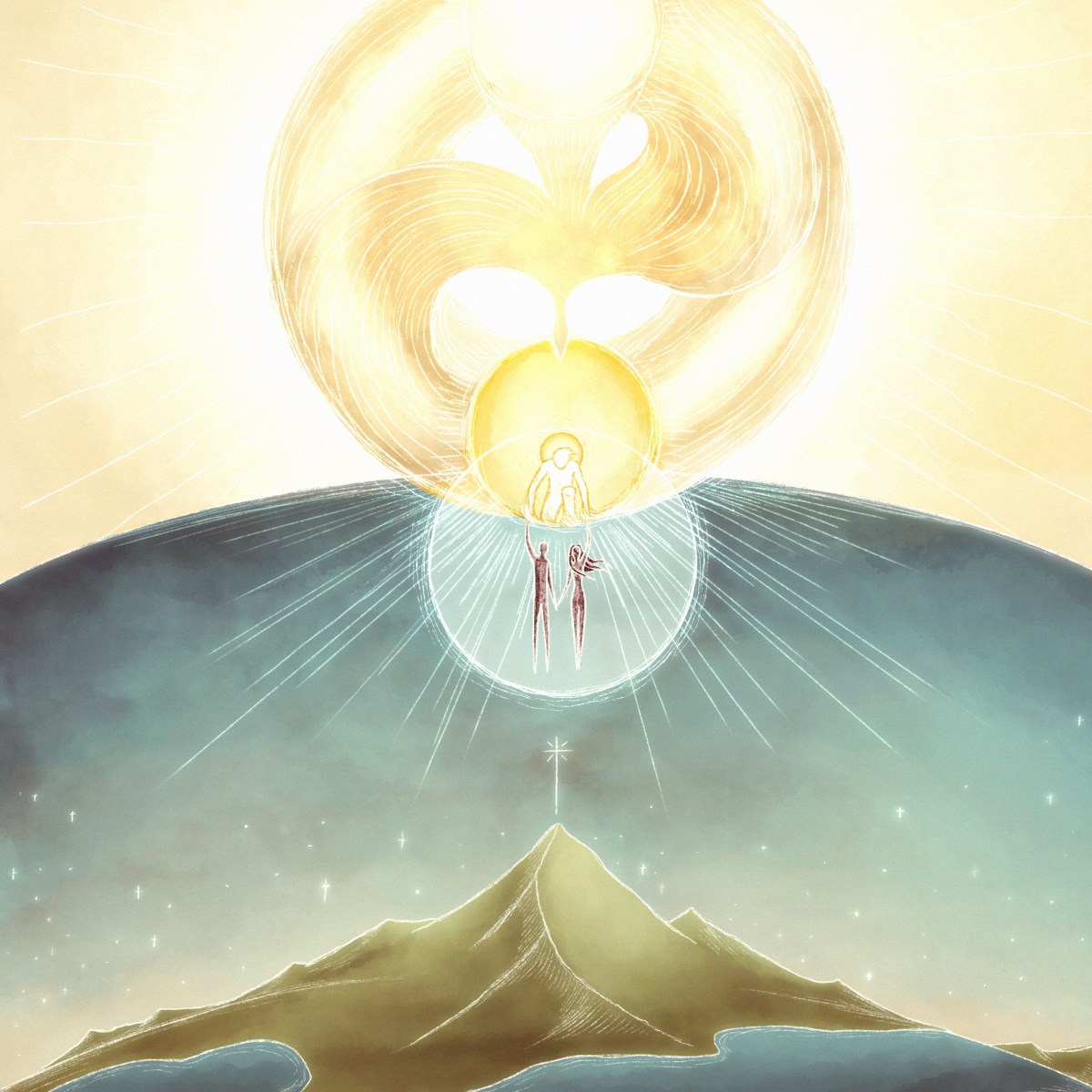
 Pastorsamwise
You must be logged in to post a comment.