Listen here.
Luke 21:5-36
5 And while some were speaking of the temple, how it was adorned with noble stones and offerings, he said, 6 “As for these things that you see, the days will come when there will not be left here one stone upon another that will not be thrown down.”
7 And they asked him, “Teacher, when will these things be, and what will be the sign when these things are about to take place?” 8 And he said, “See that you are not led astray. For many will come in my name, saying, ‘I am he!’ and, ‘The time is at hand!’ Do not go after them. 9 And when you hear of wars and tumults, do not be terrified, for these things must first take place, but the end will not be at once.”
10 Then he said to them, “Nation will rise against nation, and kingdom against kingdom. 11 There will be great earthquakes, and in various places famines and pestilences. And there will be terrors and great signs from heaven.
12 “But before all this they will lay their hands on you and persecute you, delivering you up to the synagogues and prisons, and you will be brought before kings and governors for my name’s sake. 13 This will be your opportunity to bear witness. 14 Settle it therefore in your minds not to meditate beforehand how to answer, 15 for I will give you a mouth and wisdom, which none of your adversaries will be able to withstand or contradict. 16 You will be delivered up even by parents and brothers and relatives and friends, and some of you they will put to death. 17 You will be hated by all for my name’s sake. 18 But not a hair of your head will perish. 19 By your endurance you will gain your lives.
20 “But when you see Jerusalem surrounded by armies, then know that its desolation has come near. 21 Then let those who are in Judea flee to the mountains, and let those who are inside the city depart, and let not those who are out in the country enter it, 22 for these are days of vengeance, to fulfill all that is written. 23 Alas for women who are pregnant and for those who are nursing infants in those days! For there will be great distress upon the earth and wrath against this people. 24 They will fall by the edge of the sword and be led captive among all nations, and Jerusalem will be trampled underfoot by the Gentiles, until the times of the Gentiles are fulfilled.
25 “And there will be signs in sun and moon and stars, and on the earth distress of nations in perplexity because of the roaring of the sea and the waves, 26 people fainting with fear and with foreboding of what is coming on the world. For the powers of the heavens will be shaken. 27 And then they will see the Son of Man coming in a cloud with power and great glory. 28 Now when these things begin to take place, straighten up and raise your heads, because your redemption is drawing near.”
 29 And he told them a parable: “Look at the fig tree, and all the trees. 30 As soon as they come out in leaf, you see for yourselves and know that the summer is already near. 31 So also, when you see these things taking place, you know that the kingdom of God is near. 32 Truly, I say to you, this generation will not pass away until all has taken place. 33 Heaven and earth will pass away, but my words will not pass away.
34 “But watch yourselves lest your hearts be weighed down with dissipation and drunkenness and cares of this life, and that day come upon you suddenly like a trap. 35 For it will come upon all who dwell on the face of the whole earth. 36 But stay awake at all times, praying that you may have strength to escape all these things that are going to take place, and to stand before the Son of Man.”
Grace, mercy, and peace to you from God our Father and from our Lord and Savior Jesus Christ. Amen.
Jesus says that as His return draws closer, there will be signs. He tells us about those signs because He expects us to be able to read them. The signs mean His return is as near and as sure as buds on a tree mean leaves are about to bloom.
The signs Jesus mentions are not pleasant. They hang over all of us with impending doom, and we see the signs even today. If you haven’t noticed, the world isn’t getting better. Violent, unstable rulers have the capability to use nuclear or biological weapons. Terrorism continues to spread. Anti-biotics might stop working. Christianity is being persecuted more and more. Violence is on the rise.
Creation is falling apart because our sins have polluted it. But none of this is a surprise. Jesus said it would happen, and He has told us to notice. He told us to notice so that we wouldn’t react to these signs like the unbelievers do.
When unbelievers notice the signs of Christ’s return and the end of the world, they react in two main ways. First, they fear and their fear leads them, secondly, to do works that they think will make themselves righteous.
 The first reaction is fear. For those who do not have faith in Christ, for those who do not know God’s mercy, love, and forgiveness, these signs cause distress. Unbelievers are weighed down with fear, dissipation, and drunkenness. And how else should they respond? Fear is proper and appropriate for those who think that this world is all there is. As they see the creation falling apart and people fighting against each other, they know that everything they hold dear is coming undone. They fear.
Their fear is good and proper – it shows that their conscience is working. Fear is the first part of repentance, but it isn’t true repentance. It isn’t full repentance. It isn’t true, full repentance because it is lacking the most important part of repentance, faith. Faith is the most important part of repentance. Faith that clings to the promise that Christ has died and taken away their sin.
This fear often leads to the second way unbelievers react to the signs of Christ’s return and the end of the world which is to make up all sorts of works which they think will give them a clean conscience. But these works cannot justify them because they are motivated by fear – fear of wrath, punishment, and judgment.
You see this in the so-called ‘radical Muslims.’ In fear of Allah’s wrath, they try to follow the Koran. They use violence and terror in an effort to bring about total submission to Allah.
You see it in climate activists. They see the signs of the end of the world in nature and blame people who have huge carbon footprints, drive gas guzzling SUV’s, and spew “toxic” carbon dioxide into the ozone. So they do their good works. They try to save the planet by buying carbon credits and driving hybrid cars. And they evangelize. They preach that the only way to save the world is to do the ‘good works’ of reducing emissions.
And, you even see it in Christians too. Some think that electing this politician or passing that law will slow or stop the terrifying collapse of society. Some believe that we can make our nation become Christian, but nation’s don’t have faith – only individuals do. Brothers and sisters, the Church has worshipped far too long at the altar of politics and prayed too many prayers to the god of government.
None of this will stop or delay Christ’s return and the end of the world. It won’t! Because of sin – your sin and my sin and the sin of those who have come before us and the sin of those who will come after us – because of sin this world will end. It doesn’t matter how many good works you do or how many sins you avoid. This world will end. Christ will return. You will stand before God on Judgment Day.
The only response to the signs that Christ tells us about is to repent. Turn away from your sins and believe, trust in Christ.
The signs of the end of the world do demand repentance, but not a repentance that manifests itself in a self-made righteousness of works done in fear. Rather a repentance of the heart. When you see these signs, don’t be indifferent and don’t try to amend your life thinking that you will stop or delay the end of the world.
 Instead, Jesus says, “When these things begin to take place, straighten up and raise your heads, because your redemption is drawing near.”
This takes faith – faith in the words of Christ. You have faith in something that stands firm even in the midst of all these terrors. You have faith that Jesus has come to restore this fallen, decaying creation. Christ will bring that work to completion when He returns. Jesus says, “Heaven and earth will pass away, but My words will not pass away.” And Jesus’ word to you is, “You are forgiven because of My death and resurrection.”
Believer, do not despair. Do not grow weary in doing good (2 Thess. 3:13). Jesus doesn’t tell us that the world will end so that we would try to fix it. Jesus has already fixed it. He will, He absolutely will – bring His work to completion. Jesus also doesn’t want you to should retreat.
The kingdom is drawing near. Jesus tells you this so that you will have joy and so that you will pray. And while you pray, you should work. Do the works that God has prepared beforehand that you should walk in (Eph. 2:10). What are these good works? They are laid out for you in the Commandments:
Have no other gods. Fear, love, and trust in God above all things.
Do not take God’s name in vain. Call upon God in every time of need and worship Him with prayer, praise, and thanksgiving.
Remember the Sabbath. Keep God’s Word holy by being here to listen to God’s Word where He absolves you.
Honor your parents and all in authority over you. Honor, serve, obey, and respect them.
Do not kill. Help and befriend your neighbor in every need.
Do not commit adultery. Honor and defend marriage. Husbands and wives, love and honor each other.
Do not steal. Help your neighbor improve and protect his property and living.
Do not bear false witness. Defend your neighbor. Speak well of him. Put the most charitable construction on all that he does.
Do not covet. Be content with what God has given you.
Don’t do those works to escape Christ’s return or to give yourself a good defense when you stand before God on Judgment Day. Instead do those works because God called you to them.
Brothers and sisters, your Savior says, “Stay awake at all times praying that you may have strength to escape all these things that are going to take place and to stand before the Son of Man. As you see these things taking place, straighten up and raise your heads, because your redemption is drawing near.” Amen.
The peace of God, which surpasses all understanding, will guard your hearts and minds in Christ Jesus. Amen.
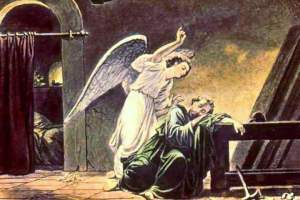 Joseph is in a mess. His legally-bound fiancé is pregnant, and Joseph knows that he is not the father. Joseph is a just man, a respectable man, an honorable man. It is very possible that Joseph had paid several years’ savings to become engaged to Mary. Legally, Joseph could have taken Mary into court and gotten his money back. Instead, Joseph resolves to quietly divorce her so she doesn’t get stoned for her apparent adultery. Joseph knows that this will bring him public shame and disgrace, but he is willing to do it anyway. Joseph is not willing to put Mary to shame.
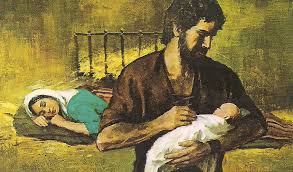 Yet Joseph endured all of that suffering and shame because of God’s promise. And Joseph clung to that promise that this Child, entrusted into his care, would save him from his sins.
 This is more unique than the Cubs winning the World Series or the Vikings winning the Super Bowl. Start dancing in the streets. Throw a parade. But, hang on, we’d better wait. Before we start blowing the confetti and popping the champagne corks, look – there in prison, in Herod’s dungeon – there sits John the Baptizer. We should probably wait for him.
 What do you do when you cannot pray because Jesus has seemed to fail you? What do you do when Jesus doesn’t bust you out of the prison of suffering and doubt, and it looks like He has left you there to rot? What do you do when Jesus becomes offensive?
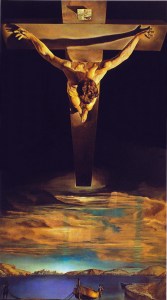 When you are offended by Jesus, remember, that in the cross and the empty tomb, He has defeated all your doubts, all your afflictions, and all your diseases.
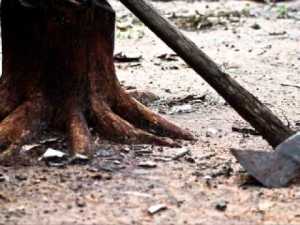 10 Even now the axe is laid to the root of the trees. Every tree therefore that does not bear good fruit is cut down and thrown into the fire.
 They say, “You are what you eat.” John’s diet of locusts has a locust effect, but John’s diet of honey also has a sweet effect too. John preaches, “Repent. Repent for the reign of heaven is at hand.”
 This is the second, and most important part of repentance. Repentance, turning away from trust in yourself and your own works and efforts leads you to trust in what Jesus has done for you.
 Jesus didn’t tell His disciples to find a chariot and a mighty war horse to chauffeur Him into Jerusalem. He could have, but He didn’t. Jesus’ entrance into Jerusalem was not a red-carpet event. He didn’t make His way on top of a long runner of fine, royal fabric. Again, He could have, but He didn’t. Instead, Jesus told the disciples to find a donkey and a colt – common beasts for common, poor people. And your Savior entered Jerusalem passing over the cloaks of the people who welcomed Him and over the palm branches they found nearby.
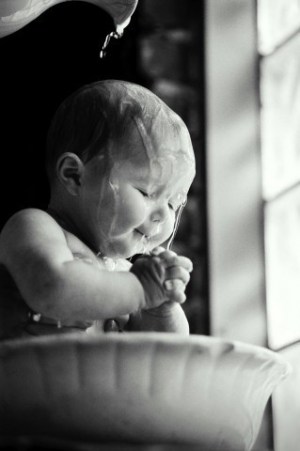 Today is a day to celebrate and be glad. You have been adopted into a loving, caring family. Your parents have chosen you to be their children. You have the unique privilege of never having to wonder if your parents wanted you or not. You will always know that your parents have intentionally brought you into your family and have promised to care for you and love you.
 Dear saints, though you have nothing to offer God, though you are unimportant in the eyes of the world, and even though the world looks at you and thinks that you could be replaced by any other body, this is not what your God thinks about you. The God who entered Jerusalem that Palm Sunday does not think about you that way.
 Be careful as you consider this text. This text requires faith – faith to see what is really happening. At the crucifixion, only Jesus and His Father know what is happening.
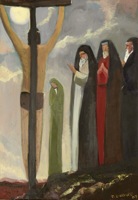 Our text reads, “Jesus said, ‘Father, forgive them, for they know not what they do.’” But the Greek there should be translated either “Jesus was saying,” or “Jesus began to say.” “Father, forgive them.” The point is that this was not just a one-time prayer. This was Jesus’ constant plea to His Heavenly Father.
 Christ the King promises, “Truly, I say to you, today you will be with Me in Paradise.”
 In the vision that John saw in our first reading (Rev. 7:2-17), John saw you. John saw you who have come out of the great tribulation of this world which Jesus has overcome (Jn. 16:33). John saw you who have been baptized, absolved, have had your hunger and thirst for righteousness quenched by Communion, and have washed your robe white in the blood of the Lamb. You have Jesus, the lamb of God who takes away the sin of the world, as your Shepherd.
 When you are weary of the fight, when the war seems unwinnable, when you reach the end of yourself, hear the victorious battle song. Remember that the battle has been won. On the cross Christ, your Savior, defeated all your enemies. Be encouraged. Stand again. Fight with a heart made brave and arms made strong by Jesus’ body and blood. Alleluia! Alleluia!
 entered Jericho and was passing through. 2 And behold, there was a man named Zacchaeus. He was a chief tax collector and was rich. 3 And he was seeking to see who Jesus was, but on account of the crowd he could not, because he was small in stature. 4 So he ran on ahead and climbed up into a sycamore tree to see him, for he was about to pass that way. 5 And when Jesus came to the place, he looked up and said to him, “Zacchaeus, hurry and come down, for I must stay at your house today.” 6 So he hurried and came down and received him joyfully. 7 And when they saw it, they all grumbled, “He has gone in to be the guest of a man who is a sinner.” 8 And Zacchaeus stood and said to the Lord, “Behold, Lord, the half of my goods I give to the poor. And if I have defrauded anyone of anything, I restore it fourfold.” 9 And Jesus said to him, “Today salvation has come to this house, since he also is a son of Abraham. 10 For the Son of Man came to seek and to save the lost.”
 Today, our congregation is focusing on missions. But today the church also celebrates the Reformation. The Reformation was certainly a rediscovery of the Gospel. But it was more than that too.
 Look up into that tree because on that tree, Jesus will bear Zacchaeus’ sins and your sins. On the tree of the cross, Jesus died for all the thieving and conniving of Zacchaeus as well as for all your sins.
 ‘God, I thank you that I am not like other men, extortioners, unjust, adulterers, or even like this tax collector. 12 I fast twice a week; I give tithes of all that I get.’ 13 But the tax collector, standing far off, would not even lift up his eyes to heaven, but beat his breast, saying, ‘God, be merciful to me, a sinner!’ 14 I tell you, this man went down to his house justified, rather than the other. For everyone who exalts himself will be humbled, but the one who humbles himself will be exalted.”
 Imagine that you joined a rebellion against a king and killed his advisors and judges. When you stand on trial before the king, are you going to say, “I know I did some pretty bad things, but I didn’t kill as many as the other rebels. And I killed my victims quickly. I made sure they were dead before attacking the next guy. Those other guys left your friends to suffer and die slowly”? That isn’t repentance. It is pride cloaked in humility, and it isn’t going to fly.
 2 He said, “In a certain city there was a judge who neither feared God nor respected man. 3 And there was a widow in that city who kept coming to him and saying, ‘Give me justice against my adversary.’ 4 For a while he refused, but afterward he said to himself, ‘Though I neither fear God nor respect man, 5 yet because this widow keeps bothering me, I will give her justice, so that she will not beat me down by her continual coming.’” 6 And the Lord said, “Hear what the unrighteous judge says. 7 And will not God give justice to his elect, who cry to him day and night? Will he delay long over them? 8 I tell you, he will give justice to them speedily. Nevertheless, when the Son of Man comes, will he find faith on earth?”
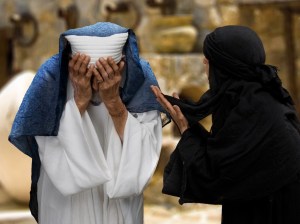 She shows up day after day before the judge with her constant, persistent nagging. The judge’s response is despicable but hilarious, “Though I neither fear God nor respect man, yet because this widow keeps bothering me, I will give her justice, so that she will not beat me down by her continual coming.” That is where we get the same picture of prayer as wrestling with God like Jacob did. The phrase beat me down means, “give me a black eye.”

You must be logged in to post a comment.