Eternal Dominion – Sermon on Daniel 7:1, 9-10, 13-14 for the Ascension of Our Lord (Observed)

Daniel 7:19-1013-14

Alleluia! Christ is risen! 
He is risen indeed! Alleluia!

In the name of Jesus. Amen.

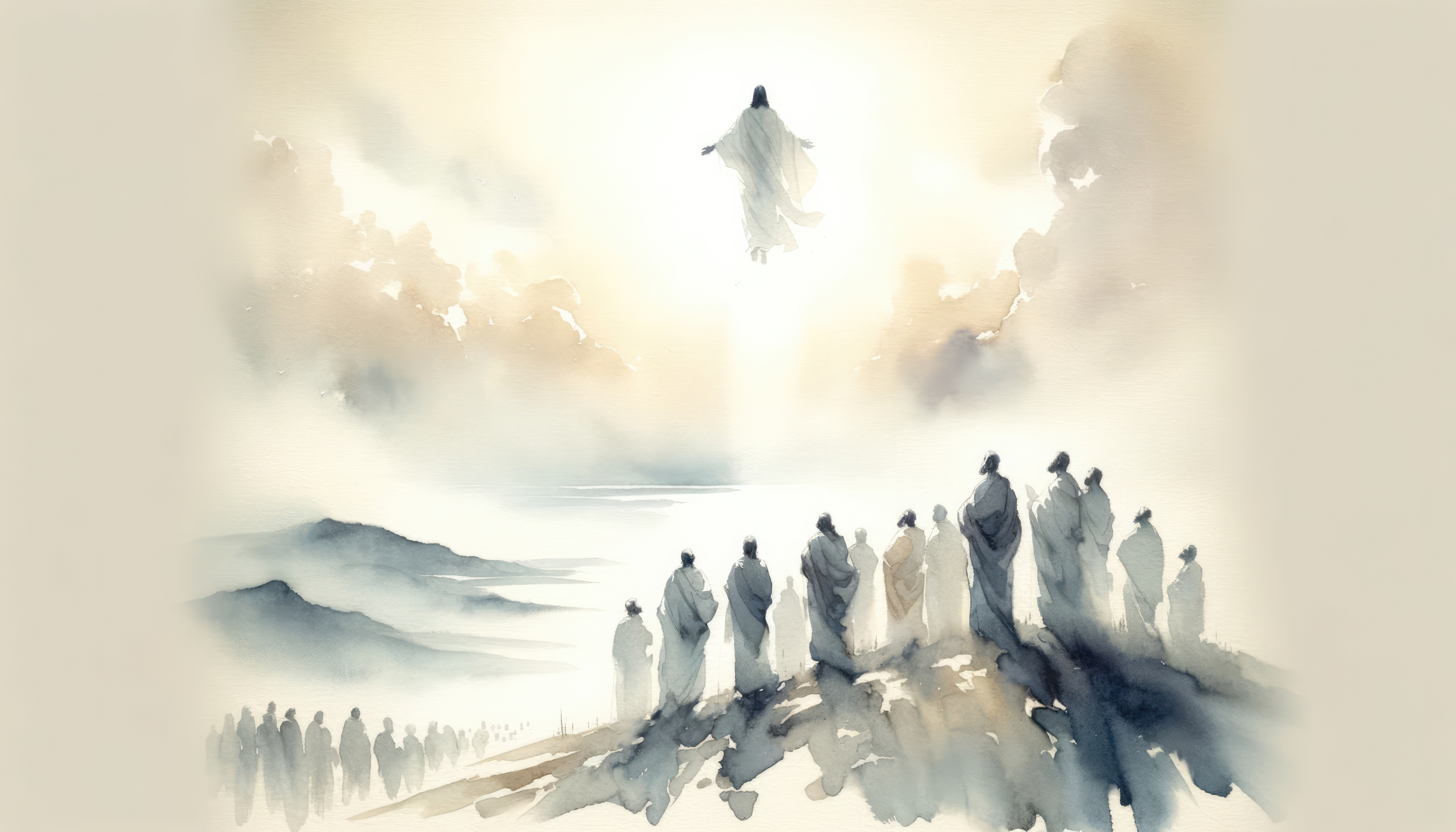
They say, “Repetition is the mother of learning.” Well, today, you’ve heard the same event, Jesus’ ascension, described three times. You heard it twice from Luke’s two books of the Bible (Act. 1:1-11Lk. 24:44-53). And you just now heard it from the prophet Daniel. This past Thursday marked the 1,993rd anniversary of Jesus’ ascension to the throne of all creation. The gospel of Luke ends with the disciples seeing Jesus ascend, and Luke makes this comment, “They worshiped Him and returned to Jerusalem with great joy, and were continually in the temple blessing God” (Lk. 24:52-53). The reason they were filled with joy was that they knew what Jesus’ ascension meant.

Jesus had opened the disciples’ minds to understand everything that had been written about Him in the Old Testament (Lk. 24:44-45). So, the disciples got to see Jesus ascend with their own eyes, but they also knew what that meant because Jesus had opened their minds to understand the vision we just heard from Daniel. This text is what happens at Jesus’ ascension—not from the view of earth that Luke records. Daniel records what happens in heaven at Jesus’ ascension. And really, it’s what happens in the entire cosmos.

So today, fellow disciples of Jesus, let’s be filled with the same joy that the disciples had because of Jesus’ ascension by considering this text from Daniel.

Daniel wants us to know about this vision he saw around 552 BC. Daniel had multiple visions that night, but what I just read was the final and greatest vision he saw. He sees God the Father, but Daniel calls Him “the Ancient of Days” (Dan. 7:9). His clothing is white as snow. His hair like pure wool. His throne is ablaze with fire. God is sitting there in judgment. Holy. Majestic. Perfect. Glorious. But the Ancient of Days isn’t alone. There are angels present there. Daniel says there are a thousand thousands angels serving Him (Dan. 7:10). That’s one million angels. How did he count them all? A million seconds is 11.5 days. But then, there’s more. Daniel says there’s 10,000 times 10,000 angels standing before Him. That’s 100 million more angels. How do they all fit in that throne room? They’re all gathered around that fiery throne. Again, think of the beauty and sheer holiness of this place.

Then what does Daniel see? “With the clouds of heaven, there came one like a Son of Man” (Dan. 7:13). Don’t get confused here by the word ‘like.’ This isn’t a being that merely appears like a man. The translation would be better if it said, “There came one as a Son of Man.” Or even, “I saw a Human come up into that scene in heaven.” What business does a human have there?

Remember how Adam fled in his own home that God had made for him in the Garden of Eden because he merely heard the sound of God walking there (Gen. 3:8) Remember how Isaiah saw God on the throne. He saw some angels—some seraphim. But Isaiah doesn’t say he saw 100 million. And he cowered in fear (Is. 6:1-5). Remember how the millions of people God brought out of slavery in Egypt heard God speaking from Mt. Sinai and asked to not even hear His voice (Ex. 20:18-19). Remember all the people in Scripture who are terrified even when they see one angel (Num. 22:31Jdg. 6:22-23Lk. 1:11-1226-29Mt. 28:2-4). This Man isn’t acting like any of them.

He doesn’t run. He doesn’t fall down in fear. He isn’t ashamed or afraid. He enters that room. He doesn’t sneak in to find a quiet, obscure corner in the back to simply see everything. He goes higher. He keeps approaching, walking through those millions of angels as they make a path for Him. Closer and closer He walks with His human body and stands there before the Ancient of Days Himself (Dan 7:13).

Pause here for a minute before we get to the rest of the vision because Daniel’s probably thinking, “What is this guy doing? He’s going to be incinerated!” You, of course, know that this is Jesus, so you know that this is the Son of God approaching the Ancient of Days. But don’t forget that this Jesus became man, true man. Christ is Man as we were intended to be. Sadly, it’s easy to forget Jesus’ humanity. Remember Daniel describes Him as “a Son of Man.” And Daniel knows that all humans have been stained by sin, so he probably thinks this Man had been too. And He actually was, but not in the way the rest of us have been stained.

This is Jesus, the One Isaiah says, “the Lord laid on Him the iniquity of us all” (Is. 53:6). Paul tells us that He became sin (2 Co. 5:21). He didn’t commit any sin, but He definitely got tangled up in them. Who is more familiar with sin? You who committed them? Or the One who bears them, suffers God’s wrath against them, and paid for them with His precious blood and death (1 Pet. 2:24)? Jesus knows the weight of your sin. He’s your great High Priest who bears with you in your weaknesses (Heb. 4:15).

Dear saints, this Jesus, this Son of Man that Daniel sees, He doesn’t approach the Ancient of Days because He avoidedsin. He approaches the Ancient of Days because He triumphed over it by His blood (Col. 1:20). He canceled the record of debt that stood against us by nailing it to the cross (Col. 2:14). He left those sins in the grave, which forever stands empty. That’s why He approaches the throne. And what happens? 

Daniel sees that this Man is the center of attention in that great throne room. He is there to receive dominion and glory and a kingdom (Dan. 7:14). Jesus doesn’t go to just be there or because His work is done here. He goes to receive what belongs to Him. This isn’t a gift. Jesus takes possession of what He has purchased. He’s earned this.

This Man, Jesus, takes possession of the kingdom of all peoples, nations, and languages. This all-encompassing kingdom and dominion is everlasting. It will not pass away or be destroyed.

Daniel saw kingdoms get destroyed in his days. History is full of kingdoms that have risen to great power, but all of them eventually fall—Egypt, Babylon, Persia, Greece, Rome, the British Empire. Enough time passes and they all fade away. But not this kingdom. Not Jesus’ dominion. It lasts to eternity. It spans any boundary you can imagine, either physical or ethnic. Again, this kingdom is over all peoples, nations, and languages. In other words, this kingdom is also over you.

In Philippians 2, Paul says that Jesus is highly exalted and has the name above every name. And that at the name of Jesus every knee will bow, in heaven and on earth and under the earth, and every tongue will confess that Jesus Christ is Lord (Php. 2:9-11). Christian, for you this is the best news. Your Savior sits on the throne of the eternal kingdom of God. But, sadly, for those who reject or deny Him, for those who don’t believe, well… they’re fighting in a battle they’ve already lost.

That’s the Ascension. But I want to leave you today with a call from Scripture that relates to Jesus’ ascension. It’s from Hebrews 4:16, “Let us then with confidence draw near to the throne of grace, that we may receive mercy and find grace to help in time of need.”

Scripture repeatedly calls us to draw near to God (Jas. 4:8Is. 55:6Jer. 29:13). But in Heb. 4:16, it says to draw near to the throne. That’s different. How do we do that? What do we do to draw near to the throne? Do we need to get ourselves into this throne room that Daniel is seeing? Nope!

The throne of grace is here—right here—at church. When you come to church, you are drawing near to the throne of grace because here Jesus is preached. You are drawing near to the place Jesus gives Himself to you, Body and Blood. Jesus is not somewhere far away. He promises that where two or three are gathered in His name, there He is (Mt. 18:20).

Dear saints, you have a place in Daniel’s vision here. As you approach Jesus, the Ruler of all creation smiles and welcomes you as His redeemed child.

Later in Hebrews, you are told that you have come to Mount Zion. You have come to the city of the living God, the heavenly Jerusalem. Here are innumerable angels in festal gathering. This is the assembly of the firstborn who are enrolled in heaven. Right here is God, the judge of all, and the spirits of the righteous made perfect. Here is Jesus, the Mediator of a new covenant (Heb. 12:22-24).

No, you can’t see all of that. But Scripture is clear that you go wherever Jesus goes. He is the Head, and you are His Body (Eph. 5:23). The day will come when He will return, and you will see Him and everything else Daniel saw. But for now, know that He is present here for you, right now, in His Body and Blood. Amen.

Alleluia! Christ is risen! 
He is risen indeed! Alleluia!

The peace of God, which surpasses all understanding, will guard your hearts and minds in Christ Jesus (Php. 4:7). Amen.

Pure Religion – Sermon on James 1:22-27 for the Sixth Sunday of Easter

James 1:22-27

Alleluia! Christ is risen! 
He is risen indeed! Alleluia!

In the name of Jesus. Amen.

Pop quiz. You’ve probably heard this phrase, so finish it for me, “Christianity isn’t a religion, it’s a [relationship].” I’m going to push back on that. But before I do, I have to say two things. First, I understand the sentiment behind calling Christianity a relationship. I really do. Scripture does talk about believers in relational terms. The Bible is clear that God is our Father (Mt. 6:9), and we are His children (1 Jn. 3:1). Because Christ has come in the flesh, He is our Brother (Jn. 20:17Heb. 2:11). Through faith, believers are the Bride of Christ (Eph. 5:31-32Hos. 2:19-20). All of those are relationships. That relational language is clear, important, and Scriptural. The thing I want to point out is that those relationships only exist when a person has the right religion.

Second, the word ‘relationship’ doesn’t actually occur in the Bible—at least not in the Hebrew or Greek. There are a couple modern translations that use it. But the word ‘religion’ is a word the Bible uses. Here, James talks about a ‘worthless’ (lit. ‘vain, vaporous’) religion and a ‘pure’ religion, and there is only one.

Today when people use the word ‘religion’, they often focus on the practices people have. But ‘religion’ mainly has to do with the set of beliefs a person has, and, yes, those beliefs result in practices. We could talk about the different religions of Christianity, Judaism, Islam, Buddhism, Hindu, and a myriad of others. But we can distill all religions down to two beliefs. On the one hand, there’s the Christian religion that believes people are made right through faith in Christ. Every other religion believes you have to do something to make yourself right. We can shorten that down even further—there’s the religion of the Gospel and a myriad of religions of law. Or, even more simply, we can say there’s true religion, Christianity, and false religions, everything else. In this text, James wants us to focus on pure, undefiled, true religion.

This text begins with a clear call, “Be doers of the Word and not hearers only, deceiving yourselves” (Jam. 1:22). Notice what James does not say. He doesn’t divide humanity into people who hear and people who do not hear. Instead, he says there are 1) hearers who become doers and 2) hearers who forget and are not doers. You can’t be a doer without first being a hearer.

The verse right before our text, which you heard in last week’s epistle reading, makes that clear. “Receive with meekness the implanted word, which is able to save your souls” (Jam. 1:21). The Holy Spirit takes God’s Word, plants it in you, and you grow and produce fruit (Mt. 13:19-23). That Word gives you faith and is able to save your soul (Ro. 10:17). Everything James says in our text today grows out of that implanted Word. 

James helps us understand what this kind of hearing looks like with a vivid analogy that can be confusing. It might feel like he’s mixing metaphors, but he isn’t. James is actually talking about hearing the Word, but he uses the image of seeingin a mirror to show what happens—or doesn’t happen—when we hear. God’s Word is the crystal-clear mirror. You stand before it, and it shows you exactly who you are. All of God’s Word, both Law and Gospel, show you who you are and set you at liberty. 

For example, even the Ten Commandments set us at liberty because they begin, “I am the Lord your God, who brought you out of the land of Egypt, out of the house of slavery” (Ex 20:2). Before God gives a single command, He tells us who we really are. We are His people, rescued by His mighty hand. To be a doer of that Word is to say back to God and others, “Yes. You are God; we are Your people.”

The only alternative is to turn away and say, “You are not our God; we are not your people.” But to do that is to be the hearer who forgets. He looks in the mirror of the Word, sees his face, and then walks away forgetting what he just saw. Nothing changes, and that makes his religion worthless. He deceives his own heart.

But the one who looks intently into the perfect law of liberty and remains steadfast—he does not forget. He is a doer of the Word. And James promises: this one will be blessed in his doing. Not because the doing earns God’s favor—faith alone saves (Ro. 1:17Eph. 2:8-9)—but because the doing flows from the gift already received. Faith alone saves, but true faith is never alone.

And that perfect law of liberty is freeing in the deepest sense. The Ten Commandments show us how creation itself works. They are not a ladder by which we to climb up to God. They are the guardrails of the life God has already given us in Christ. They teach us how to love God with all our heart and how to love our neighbor as ourselves. They show us the shape of freedom and of a life of love that reflects the love of God who first loved us.

And when we break those commands and get out of line with how God created us to live, the perfect law of liberty is still freeing. The Gospel comes to tell us that we have a Savior. We have Jesus who died and rose again for us. We have redemption and forgiveness through His blood. God’s Word makes those promises, and we become doers by believing and trusting that what God has said is true.

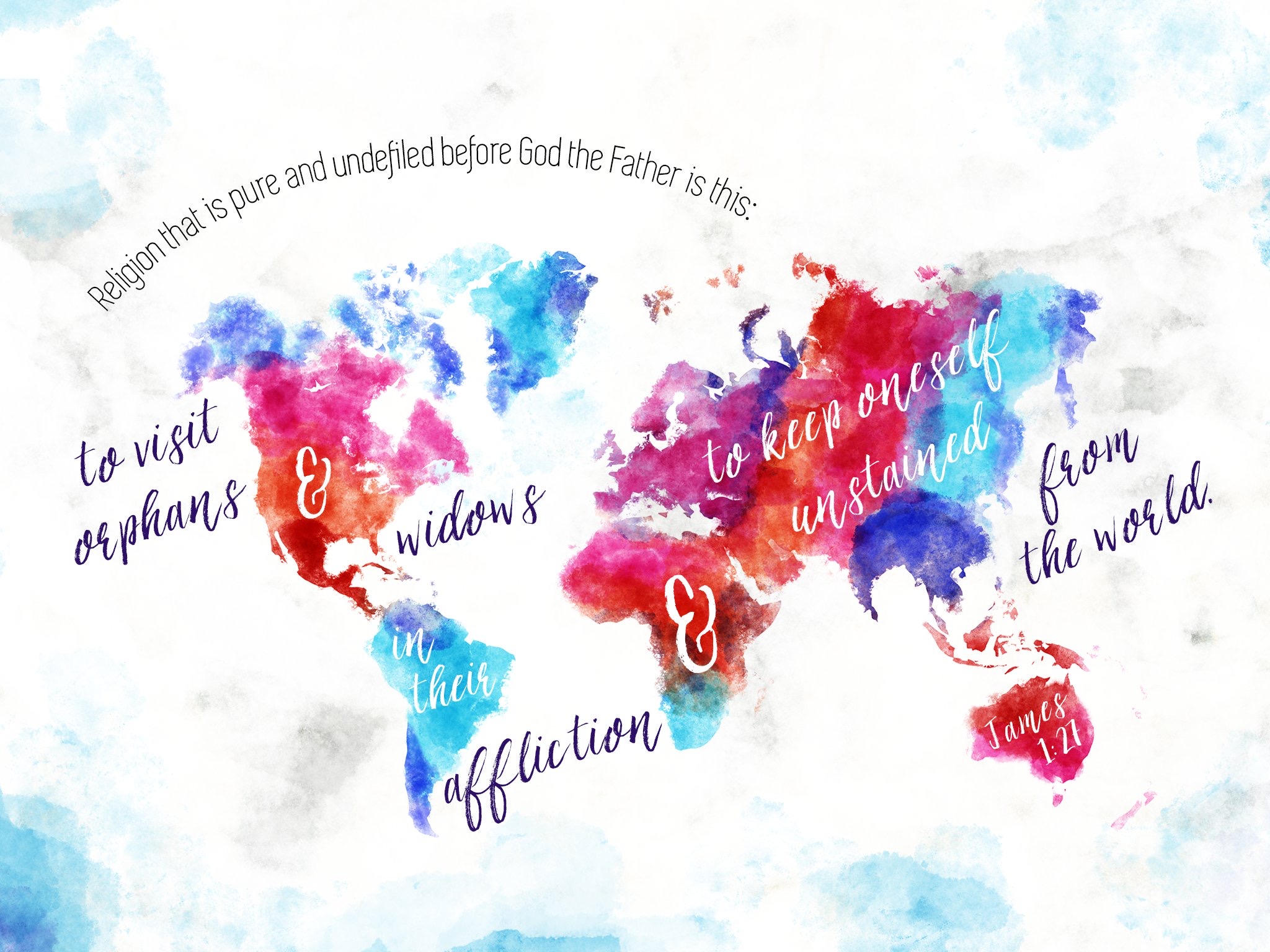
That is why James can define pure and undefiled religion so clearly in Jam. 1:26-27. Pure religion is to bridle our tongues, so our words give life by confessing the truth of God’s Word instead of tearing down. Pure religion is visiting orphans and widows in their affliction and keeping oneself untainted from the world. These are not new laws that we have to obey to earn God’s love. They are the natural fruit of a faith that remembers who it is in the mirror of the Word. 

In your daily vocations—whether you are a parent, a neighbor, a coworker, a citizen, or a friend—pure religion takes a shape. You notice the outcast and hurting and invite them to lunch. You see the struggling family down the street and drop off a meal or watch their kids so the parents can go on a date. You sit with the widow in the pew and listen to her stories. You advocate for the vulnerable instead of looking the other way. You live in the world but refuse to let its godless values stain your heart. You calmly but boldly speak truth. You show mercy because Christ has first given His mercy to you. And you walk in the freedom Christ has won for you.

Dear saints, that is pure religion—the religion that is pure, and the religion that makes you pure. That religion sets you into a right relationship with God as your Father and you as His children. That relationship only exists because we have the right religion—the religion of the Gospel of Christ.

Jason, that brings me to you. Jason, today is a day of pure joy. You are now Baptized into the name of the Father and of the Son and of the Holy Spirit. God has implanted His Word in you which is able to save your soul. You have received the new birth of water and the Spirit that Jesus promised (Jn. 3:3-6). You are joined to Christ’s death and resurrection (Ro. 6:3-7). As the Holy Spirit continues to work in you, you become more and more a doer of the Word.

Jason and all of you, dear saints, keep looking intently into this perfect law of liberty. Come back to it every day in the Scriptures, in the preaching, in the Lord’s Supper. Remember who you are. You are beloved children of the Father, brothers and sisters of the risen Christ, and you are the Bride He has washed clean. Continue to live as doers. Care for the lonely and the hurting. Bridle your tongue and speak life and the forgiveness of Christ. Live in the world but refuse to be stained by it. Do the good works God has prepared for you to walk in—not to earn His favor, but because you already have that favor in full.

This is pure religion. This is true faith. This is the life that is blessed in the doing, all because of the One who lived, died, and rose for you. Amen.

Alleluia! Christ is risen! 
He is risen indeed! Alleluia!

The peace of God, which surpasses all understanding, will guard your hearts and minds in Christ Jesus (Php. 4:7). Amen.
Advantageous – Sermon on John 16:5-15 for the Fifth Sunday of Easter

John 16:5-15

Alleluia! Christ is risen! 
He is risen indeed! Alleluia!

In the name of Jesus. Amen.

One of those phrases we just heard from our Lord’s lips comes and goes so fast, it’s easy to miss. But it is one of the most comforting things in all of Scripture. Look again at the end of v. 11. Jesus says that the ruler of this world is judged. That’s a good translation. I’ll just add this. The verb there for the word ‘judged’ is in the perfect tense. That means it’s something that happened in the past, but it has ongoing, lasting results. Jesus says that Satan, your accuser (Rev. 12:10), has been, and forever remains, judged.

To our eyes, it often doesn’t look like that’s the case. We see everything going on in the world, and we’re tempted to think that the devil keeps winning. That’s why we need the Holy Spirit to keep doing His work of convicting us of judgment—not our judgment, but the devil’s judgment. The word translated ‘convict’ means ‘to reveal, expose, or convince.’ ‘Convict’ here is like when we talk about someone who has deep conviction. The Holy Spirit comes to convince us that the one found guilty is the devil. Satan has been judged, condemned.

That means, dear saints, that the devil is not winning. He isn’t losing either. No. He’s already lost. He has no power.

If the devil had any power at all and got his way in the world, do you think that we’d be able to gather here this morning to hear God’s Word? If the devil was getting his way, there’s no way that you would have heard at the beginning of our service that your sins are entirely forgiven for the sake of Jesus. If the devil was getting his way, you wouldn’t be able to come up here to Christ’s table to receive Jesus’ Body and Blood for the forgiveness of all your sins. All those things would go away if the devil had any power.

That worm would gladly give up the desecration of marriage in our culture. He’d be happy to let abortion be outlawed if he could stop the Gospel being proclaimed. He’d stop tempting people to be violent, rebellious, and depraved if he could prevent the Gospel ringing forth from this and other Christian pulpits. Satan would gladly make that trade. But the devil can’t make that happen. He can’t defeat the preaching of the Gospel. It isn’t possible.

This is why Jesus calls the Holy Spirit’s coming advantageous for you. I’m sure the disciples were stunned and confused when Jesus told them, “It is to your advantage that I go away, for if I do not go away, the Helper will not come to you. But if I go, I will send Him to you”(Jn. 16:7).

To the disciples this sounded like loss, not advantage. Their beloved Teacher was leaving. Their Friend was going to the cross. How could that possibly be better? Yet Jesus insists it is advantageous, profitable, and beneficial for them. Why? Because this departure isn’t referring to His ascension to God’s right hand. The departure Jesus talks about is His death on the cross where He pays the full price for all your sins. And when that price was paid, the curtain of the Temple was torn in two (Mt. 27:51Heb. 10:19-20). The separation between us sinners and the holy God was no longer needed. Jesus’ departure and death won your full, complete salvation and resulted in the sending of the Holy Spirit, who now takes everything Jesus won for us and delivers it personally to you and me.

That’s the advantage. The devil stands judged, and you stand forgiven. The accuser has been thrown down, and the Comforter has been poured out. The ruler of this world has lost his throne, and the Spirit of truth now rules in your heart.

We see the evidence of this advantage all around us, even though the world looks dark. Every time a sinner is baptized and believes, the devil loses another captive. Every time the absolution is spoken, Satan’s accusations are silenced. Every time God’s people gather around the Lord’s Table, the victory of the cross is proclaimed (1 Co. 11:26). And these are not small things. They are the direct result of the Holy Spirit’s work, and they prove that the judgment of Satan that Jesus announced has already taken place.

And the Holy Spirit does even more. He brings us back into harmony with God and with His creation. Remember how sin shattered that harmony in the beginning. Adam and Eve were created to live in perfect harmony with God, but they hid in fear (Gen. 3:8). Sin brought discord into creation. The ground was cursed. Now, it produces thorns and thistles. Sin brought pain in childbirth, hostility between brothers. All of that is the result of that first act of rebellion. The devil’s lie had introduced discord into every relationship—between God and man; between husband and wife, parents and children; between humanity and the creation we were meant to steward.

But now Christ has reversed the curse. On the cross He bore the judgment we deserved. In His resurrection He declared peace (Jn. 20:192126). Now, the Holy Spirit takes that victory and convinces you of it so that you are reconciled to the Father. You are no longer God’s enemies. You are His beloved children. You are brought back into harmony with God.

And that harmony begins to echo outward. The same Spirit who convicts the world concerning sin, righteousness, and judgment also renews your minds so you see people and creation differently. Instead of viewing your neighbor as competition or threat, you see someone for whom Christ shed His blood. The Spirit leads you to live as a citizen of the new creation even while you still live in the old (2 Co. 5:17).

This is the advantage Jesus purchased for you. Because the devil is judged, you are free to live without fear. When anxiety creeps in about the future of the Church or the direction of our culture, the Spirit reminds you that the outcome is already decided. When guilt over past sins weighs heavy, the Spirit points you to the cross to remind you, “It is finished”(Jn. 19:30). And that verdict stands. When loneliness or grief press close, the Spirit comforts you with the presence of Christ who has not left you as orphans (Jn. 14:18).

This advantage also equips you to share this Good News with others. The Holy Spirit uses you as His voice to declare this Gospel to a confused world because you know the ruler of this world has been judged. You can love your enemy because you know Satan is the real enemy, and he has been defeated. You can love and serve your neighbor generously because you know your Father owns all things and delights to provide for His children.

Dear saints, the Holy Spirit is at work now and is doing exactly what Jesus promised. He is still convicting, still comforting, still guiding into all truth. He is still taking what belongs to Jesus—His victory, His forgiveness, His life—and declaring it to you. That is why you can leave this sanctuary not as victims of the devil’s schemes, but as victors in Christ.

Hear the good news again this morning. The devil has been judged. Your sins are forgiven. You are covered in Jesus’ righteousness. You have peace with God (Ro. 5:1). You are restored to harmony with your Creator and His creation. That is the advantage Christ has won. This is your reality because Christ has risen, the Spirit has come, and the battle is over.

Go in that peace. Live in that advantage. Wherever you go, proclaim with confidence what the Holy Spirit has declared to you. The ruler of this world is judged, and in Jesus Christ you are free indeed (Jn. 8:36). Amen.

Alleluia! Christ is risen! 
He is risen indeed! Alleluia!

The peace of God, which surpasses all understanding, will guard your hearts and minds in Christ Jesus (Php. 4:7). Amen.