Alleluia! Christ is risen!
He is risen indeed! Alleluia!
In the name of Jesus. Amen.
Pop quiz. You’ve probably heard this phrase, so finish it for me, “Christianity isn’t a religion, it’s a [relationship].” I’m going to push back on that. But before I do, I have to say two things. First, I understand the sentiment behind calling Christianity a relationship. I really do. Scripture does talk about believers in relational terms. The Bible is clear that God is our Father (Mt. 6:9), and we are His children (1 Jn. 3:1). Because Christ has come in the flesh, He is our Brother (Jn. 20:17; Heb. 2:11). Through faith, believers are the Bride of Christ (Eph. 5:31-32; Hos. 2:19-20). All of those are relationships. That relational language is clear, important, and Scriptural. The thing I want to point out is that those relationships only exist when a person has the right religion.
Second, the word ‘relationship’ doesn’t actually occur in the Bible—at least not in the Hebrew or Greek. There are a couple modern translations that use it. But the word ‘religion’ is a word the Bible uses. Here, James talks about a ‘worthless’ (lit. ‘vain, vaporous’) religion and a ‘pure’ religion, and there is only one.
Today when people use the word ‘religion’, they often focus on the practices people have. But ‘religion’ mainly has to do with the set of beliefs a person has, and, yes, those beliefs result in practices. We could talk about the different religions of Christianity, Judaism, Islam, Buddhism, Hindu, and a myriad of others. But we can distill all religions down to two beliefs. On the one hand, there’s the Christian religion that believes people are made right through faith in Christ. Every other religion believes you have to do something to make yourself right. We can shorten that down even further—there’s the religion of the Gospel and a myriad of religions of law. Or, even more simply, we can say there’s true religion, Christianity, and false religions, everything else. In this text, James wants us to focus on pure, undefiled, true religion.
This text begins with a clear call, “Be doers of the Word and not hearers only, deceiving yourselves” (Jam. 1:22). Notice what James does not say. He doesn’t divide humanity into people who hear and people who do not hear. Instead, he says there are 1) hearers who become doers and 2) hearers who forget and are not doers. You can’t be a doer without first being a hearer.
The verse right before our text, which you heard in last week’s epistle reading, makes that clear. “Receive with meekness the implanted word, which is able to save your souls” (Jam. 1:21). The Holy Spirit takes God’s Word, plants it in you, and you grow and produce fruit (Mt. 13:19-23). That Word gives you faith and is able to save your soul (Ro. 10:17). Everything James says in our text today grows out of that implanted Word.
James helps us understand what this kind of hearing looks like with a vivid analogy that can be confusing. It might feel like he’s mixing metaphors, but he isn’t. James is actually talking about hearing the Word, but he uses the image of seeingin a mirror to show what happens—or doesn’t happen—when we hear. God’s Word is the crystal-clear mirror. You stand before it, and it shows you exactly who you are. All of God’s Word, both Law and Gospel, show you who you are and set you at liberty.
For example, even the Ten Commandments set us at liberty because they begin, “I am the Lord your God, who brought you out of the land of Egypt, out of the house of slavery” (Ex 20:2). Before God gives a single command, He tells us who we really are. We are His people, rescued by His mighty hand. To be a doer of that Word is to say back to God and others, “Yes. You are God; we are Your people.”
The only alternative is to turn away and say, “You are not our God; we are not your people.” But to do that is to be the hearer who forgets. He looks in the mirror of the Word, sees his face, and then walks away forgetting what he just saw. Nothing changes, and that makes his religion worthless. He deceives his own heart.
But the one who looks intently into the perfect law of liberty and remains steadfast—he does not forget. He is a doer of the Word. And James promises: this one will be blessed in his doing. Not because the doing earns God’s favor—faith alone saves (Ro. 1:17; Eph. 2:8-9)—but because the doing flows from the gift already received. Faith alone saves, but true faith is never alone.
And that perfect law of liberty is freeing in the deepest sense. The Ten Commandments show us how creation itself works. They are not a ladder by which we to climb up to God. They are the guardrails of the life God has already given us in Christ. They teach us how to love God with all our heart and how to love our neighbor as ourselves. They show us the shape of freedom and of a life of love that reflects the love of God who first loved us.
And when we break those commands and get out of line with how God created us to live, the perfect law of liberty is still freeing. The Gospel comes to tell us that we have a Savior. We have Jesus who died and rose again for us. We have redemption and forgiveness through His blood. God’s Word makes those promises, and we become doers by believing and trusting that what God has said is true.
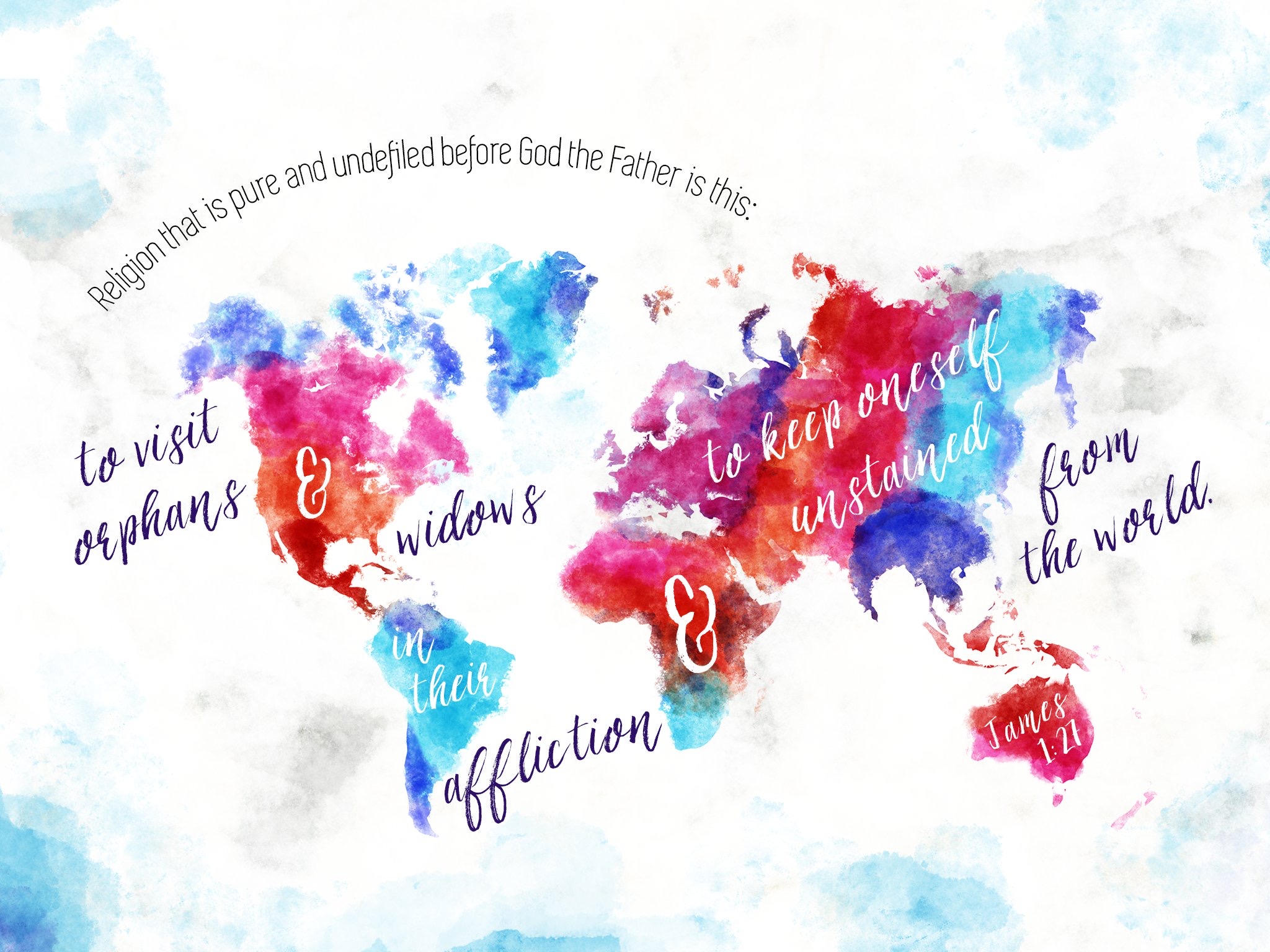
That is why James can define pure and undefiled religion so clearly in Jam. 1:26-27. Pure religion is to bridle our tongues, so our words give life by confessing the truth of God’s Word instead of tearing down. Pure religion is visiting orphans and widows in their affliction and keeping oneself untainted from the world. These are not new laws that we have to obey to earn God’s love. They are the natural fruit of a faith that remembers who it is in the mirror of the Word.
In your daily vocations—whether you are a parent, a neighbor, a coworker, a citizen, or a friend—pure religion takes a shape. You notice the outcast and hurting and invite them to lunch. You see the struggling family down the street and drop off a meal or watch their kids so the parents can go on a date. You sit with the widow in the pew and listen to her stories. You advocate for the vulnerable instead of looking the other way. You live in the world but refuse to let its godless values stain your heart. You calmly but boldly speak truth. You show mercy because Christ has first given His mercy to you. And you walk in the freedom Christ has won for you.
Dear saints, that is pure religion—the religion that is pure, and the religion that makes you pure. That religion sets you into a right relationship with God as your Father and you as His children. That relationship only exists because we have the right religion—the religion of the Gospel of Christ.
Jason, that brings me to you. Jason, today is a day of pure joy. You are now Baptized into the name of the Father and of the Son and of the Holy Spirit. God has implanted His Word in you which is able to save your soul. You have received the new birth of water and the Spirit that Jesus promised (Jn. 3:3-6). You are joined to Christ’s death and resurrection (Ro. 6:3-7). As the Holy Spirit continues to work in you, you become more and more a doer of the Word.
Jason and all of you, dear saints, keep looking intently into this perfect law of liberty. Come back to it every day in the Scriptures, in the preaching, in the Lord’s Supper. Remember who you are. You are beloved children of the Father, brothers and sisters of the risen Christ, and you are the Bride He has washed clean. Continue to live as doers. Care for the lonely and the hurting. Bridle your tongue and speak life and the forgiveness of Christ. Live in the world but refuse to be stained by it. Do the good works God has prepared for you to walk in—not to earn His favor, but because you already have that favor in full.
This is pure religion. This is true faith. This is the life that is blessed in the doing, all because of the One who lived, died, and rose for you. Amen.
Alleluia! Christ is risen!
He is risen indeed! Alleluia!
The peace of God, which surpasses all understanding, will guard your hearts and minds in Christ Jesus (Php. 4:7). Amen.


You must be logged in to post a comment.