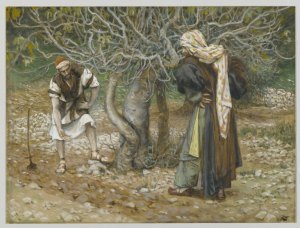
Luke 4:16-30

Listen here.

Luke 4:16-30

16 And he came to Nazareth, where he had been brought up. And as was his custom, he went to the synagogue on the Sabbath day, and he stood up to read. 17 And the scroll of the prophet Isaiah was given to him. He unrolled the scroll and found the place where it was written,

18 “The Spirit of the Lord is upon me,
because he has anointed me
to proclaim good news to the poor.

       He has sent me to proclaim liberty to the captives
and recovering of sight to the blind,
to set at liberty those who are oppressed,

19 to proclaim the year of the Lord’s favor.”

20 And he rolled up the scroll and gave it back to the attendant and sat down. And the eyes of all in the synagogue were fixed on him. 21 And he began to say to them, “Today this Scripture has been fulfilled in your hearing.” 22 And all spoke well of him and marveled at the gracious words that were coming from his mouth. And they said, “Is not this Joseph’s son?” 23 And he said to them, “Doubtless you will quote to me this proverb, ‘Physician, heal yourself. What we have heard you did at Capernaum, do here in your hometown as well.’” 24 And he said, “Truly, I say to you, no prophet is acceptable in his hometown. 25 But in truth, I tell you, there were many widows in Israel in the days of Elijah, when the heavens were shut up three years and six months, and a great famine came over all the land, 26 and Elijah was sent to none of them but only to Zarephath, in the land of Sidon, to a woman who was a widow. 27 And there were many lepers in Israel in the time of the prophet Elisha, and none of them was cleansed, but only Naaman the Syrian.” 28 When they heard these things, all in the synagogue were filled with wrath. 29 And they rose up and drove him out of the town and brought him to the brow of the hill on which their town was built, so that they could throw him down the cliff. 30 But passing through their midst, he went away.

Grace, mercy, and peace to you from God our Father and from our Lord and Savior Jesus Christ. Amen.

Dear saints, the Gospel is offensive. Yes, you heard me right – the Gospel is offensive. The Gospel is the Good News; it is the power of God for salvation to everyone who believes. But it is offensive in two different ways. Follow with me on this:

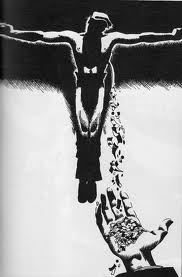
Lamb of God who takes away the sins of the wolrdThe Gospel says that Jesus is the Lamb of God who takes away the sins of the world. In other words, there is not one person for whom Christ did not die. His crucifixion appeases the wrath of God for all sin of all time. But imagine walking up to a total, complete stranger at the grocery store and telling them, “You are forgiven.” Now, some of them might be Christians and say, “Praise God!” Be I bet that most people and even some Christians would say something like, “Forgiven for what? I haven’t done anything wrong.” For someone who does not have a sense of their sin and guilt, the Gospel is offensive. This is the first way that the Gospel is offensive; it is out of an ignorance of sin and guilt.

The second way that the Gospel is offensive is the exact opposite – for people who have an ignorance of their own righteousness. This is the one that I think is most applicable to you, here. I say that because it is most applicable to me too. It is easy to start comparing ourselves to others – especially as Christians. Sure, we know that we have sinned, but we’ve gotten much better. We have improved. We aren’t as sinful as we were ten years ago, five years ago, last month. Yes, we still sin, but we’re not as bad as the drunks, the abortionists, the terrorists, the adulterers, and the homosexuals. They are the ones who are really sinful. They need to hear a Law-filled sermon and repent of their wicked ways.

But then, we see Jesus giving the Gospel to exactly those people. In fact, those are the very people Jesus is hanging out with in the Gospels. You see, Jesus didn’t come to help those who are basically good and just needed a little help. He came for poor, miserable sinners. He came to those who are captive to their evil lusts, desires, and actions. He came to give sight to those who are blind to any goodness within themselves. He came to release the oppressed slaves of sin.

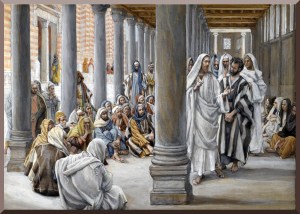
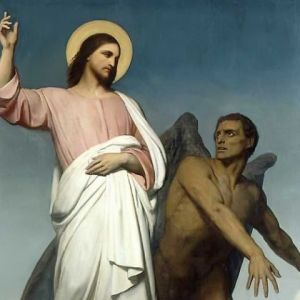
This is what our Gospel Lesson, which is Jesus’ first sermon, is about. Jesus has come to Nazareth, His hometown. Anointed by the Holy Spirit in His baptism, tempted by the devil in the wilderness, and having manifested His glory at a wedding in Cana, now, here He is. In His synagogue, the place where He had heard the Word of God proclaimed. Now, it is His turn.

He is handed the scroll of Isaiah. He finds the place and reads, “The Spirit of the Lord is upon me, because he has anointed me to proclaim good news to the poor. He has sent me to proclaim liberty to the captives and recovering of sight to the blind, to set at liberty those who are oppressed, to proclaim the year of the Lord’s favor.”

The people hear those gracious words and wait with bated breath for Jesus to begin preaching. They can’t take their eyes off of Him. Jesus opens His mouth again and says, “Today this Scripture has been fulfilled in your hearing.”

Now, the people’s response in v. 22 is difficult to decide how to translate. The phrase that gets translated ‘spoke well of Him’ is not necessarily meant to be taken in a positive way. It is actually a very neutral phrase. The phrase is simply ’witnessed Him’ (the Greek is the word ‘martyr’ which means ‘witness’). Some places it does mean ’to speak well of,’ (Jn. 1:34; Ro. 10:2), but other places it means ’to witness against’ (Mt. 23:31; Jn. 7:7; Js. 5:3). So there is a possibility that the people were witnessing against Jesus’ gracious words.

But, there is another option. It could also be that they were speaking well of the gracious words Jesus was preaching. But they were really upset about the not-so-gracious words Jesus didn’t speak. You see, Jesus left something out of His reading in Isaiah. The portion of Isaiah that Jesus read is, mostly, from Is. 61:1-2 (He does throw a line from Is. 58:6). But Jesus doesn’t read the line from Is. 61:2 that says He has come to proclaim “the day of vengeance of our God.”

So the text leaves us with two options: Either A – The people were upset right away that Jesus is saying that the text from Isaiah is fulfilled as He read the text. Or B (the option I’m going with)– The people loved hearing about the poor hearing good news, the liberty for the captives, the recovery of sight to the blind, etc. But when they realized that their Homeboy wasn’t proclaiming anything about God’s vengeance on their enemies, they got upset.

But either way, you can hear the people whispering and murmuring to each other: “Hey, wait. Isn’t this Joseph’s son?” “Yeah, He’s the one who made my coffee table.” “He made my made my custom cabinets.” “How could the son of a carpenter be saying this?” “Sure, these words are gracious, but who does He think He is, changing Scripture to skip the line about the destruction of the wicked?”

Brothers and sisters, here lies our danger. We cannot be too eager for the destruction of the wicked. Because of our sin, we deserve the same destruction. Without the Gospel, we too are destroyed. We can get too presumptuous and think that we have moved on past our need of the Gospel. When we start to neglect hearing the Gospel, we are in great danger because we do not know when the Gospel will no longer be proclaimed to us.

The Gospel is the Good News of the forgiveness of sin and is the power of God unto salvation to everyone who believes. You could take Hitler, Osama bin Laden, and a serial rapist and roll them all into one person and Jesus still died for that person’s sin. Because of the cross, all their sins are forgiven. And for any scumbag who believes that Jesus’ death forgives them of their sins, that faith is counted by God as their righteousness. That is the Gospel. We don’t like to hear that. But Jesus says, “There will be more joy in heaven over one sinner who repents that over ninety-nine righteous persons who need no repentance” (Lk. 15:7).

The people of Nazareth didn’t like the fact that Jesus doesn’t speak about God’s vengeance on sinners. So, Jesus’ sermon takes a turn. He stops preaching the Gospel completely because the people are already rejecting those words of grace. And Jesus goes all Law. He says to them, “Doubtless you will quote to me this proverb, ‘Physician, heal yourself.’” And, that is basically what the people say while Jesus hangs on the cross in Lk. 23:39, “He saved others; He cannot save Himself. If He is the King of Israel, let Him come down now from the cross, and we will believe in Him.”

In other words, Jesus is saying, “You are going to demand that I do some miracle before you believe that what I’m telling you is true. You aren’t going to get one. You have to believe My word. Remember the days of Elijah? Many widows were in Israel. But because Israel had rejected God’s word, Elijah wasn’t sent to any of them but only to heathen widow from Sidon, Israel’s enemy. Also, there were many lepers in Israel during Elisha’s day, but they too rejected God’s word. So Elisha didn’t heal any of them. He only healed an officer of the enemy army – Naaman the Syrian.”

This, of course, sets the people off. They are filled with wrath. And they are ready to kill the Preacher of Good News by throwing Him off a cliff. But that death was not the way that God would take away their sin.  So Jesus simply passes through that murderous crowd and walks away.

And even in this, we see the grace of Jesus. There was a more torturous death that Jesus didn’t walk away from. Passion of Christ on the CrossAs the nails pierced His hands and feet, Jesus prayed for those who were killing Him, “Father forgive them for they know not what they do” (Lk. 23:34). Jesus was there on that cross dying for the sins of those who were crucifying Him. He was dying for the sins of these people in Nazareth who rejected Him and tried to kill Him. And He was dying for your sins as well.

Brothers and sisters, the Gospel that Jesus preaches is offensive, but it is true. He has died for your sins. Jesus’ ministry is all grace. He has been anointed with God’s Spirit to minister to the poor, the captive, the blind, the oppressed. He has come to bring God’s favor not to the righteous, but to sinners – to you. Amen.

The peace of God, which surpasses all understanding, will guard your hearts and minds in Christ Jesus. Amen.
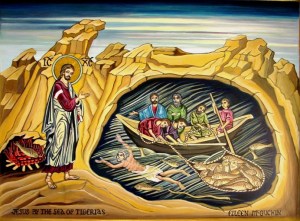
John 2:1-11 – They Have No Wine

Listen here.

John 2:1–11

1 On the third day there was a wedding at Cana in Galilee, and the mother of Jesus was there. 2 Jesus also was invited to the wedding with his disciples. 3 When the wine ran out, the mother of Jesus said to him, “They have no wine.” 4 And Jesus said to her, “Woman, what does this have to do with me? My hour has not yet come.” 5 His mother said to the servants, “Do whatever he tells you.”

Water into Wine Jesus Christ6 Now there were six stone water jars there for the Jewish rites of purification, each holding twenty or thirty gallons. 7 Jesus said to the servants, “Fill the jars with water.” And they filled them up to the brim. 8 And he said to them, “Now draw some out and take it to the master of the feast.” So they took it. 9 When the master of the feast tasted the water now become wine, and did not know where it came from (though the servants who had drawn the water knew), the master of the feast called the bridegroom 10 and said to him, “Everyone serves the good wine first, and when people have drunk freely, then the poor wine. But you have kept the good wine until now.” 11 This, the first of his signs, Jesus did at Cana in Galilee, and manifested his glory. And his disciples believed in him.

Grace, mercy, and peace to you from God our Father and from our Lord and Savior Jesus Christ. Amen.

Our Gospel text begins with four words that should send a thrill up your spine, “On the third day.” John could have written, ‘a couple days later,’ or ‘Tuesday,’ or any other indication of time. But John, inspired by the Holy Spirit, wrote, “On the third day.” John wants us to see the connection between Jesus’ first sign and the resurrection because they are linked.

For the first time, Jesus manifests His glory to His disciples ‘on the third day’ at a wedding because Jesus came to end divorce. The divorce between men and women, between body and soul, between God and man. Jesus makes you, the Church of redeemed sinners, to be His holy bride without wrinkle or blemish. This miracle at a wedding feast shows that Jesus comes to reunite you with God as you were meant to be, in harmony and peace with yourself, your neighbor, and with God.

This is Jesus’ first sign. While this is the first miracle of Jesus chronologically, it is also the first sign because it is the primary sign. Jesus turning water into wine defines all the other signs of His ministry because it is an act of pure grace.

To see this, let’s get this miracle set up in its context: Jesus has been baptized. He has been in the wilderness for forty days being tempted by the devil, but not falling into any sin. Then, Jesus returns to inhabited society. Jesus has called five of His disciples. Three days later, Jesus, His disciples, and His mother are all invited to a wedding. At that wedding feast, the wine runs out.

Ask yourself, is this really a big deal? Sure, it was probably embarrassing for the new husband and wife. It was probably very upsetting for their bottle-chugging uncle, Chuck. But does it go any farther than that? The world is full of people who are sick, lame, blind, and deaf. Lepers are everywhere. So many people are cruelly possessed by demons. There are wicked rulers and wars. All these things are more important in the grand scheme of things. But here comes Mary, the mother of our Lord, and she says, “They have no wine.”

Child WhiningReally, Mary? You are bringing the Son of God into this situation, and you’re doing it like this? Mary, you sound like a whiny child. Parents, you know what I’m talking about. Your kid lethargically walks up to you and says in their whiney little voice, “There’s nothing to eat.” You know that they are in a very ungrateful, impolite way they are asking you for food. It is very easy to get upset when our children approach us like this. I get upset. But notice the faith of your children in this. They feel a need, and where do they go? They go to you. They know that you provide food and so they present their need to you trusting that you will translate their statement into a request. And lovingly or, maybe, not so lovingly, you give them what they haven’t asked for simply because you are gracious.

Mary comes to Jesus, not asking for anything, but simply making a statement, “They have no wine.” And Jesus responds with a phrase that is really difficult to translate. Literally, He says, “Woman, what to you and to Me?” Our translation mostly gets it – but it leaves Mary out of Jesus’ statement. Maybe, to get the sense a little better we should understand Jesus as asking, “Woman, why should we be bothered about this?”

There are all sorts of reasons for Jesus to do nothing. First, He hasn’t been asked to do anything; He’s only been rudely told that the wine, which isn’t necessary, has run out. But, secondly and even more shocking, is what we hear from the master of the feast. In v. 10 after the master tastes the water that Jesus made into wine, he tells the groom, “Hey, there has been a mistake here. This is the top-shelf wine. This stuff tastes way better than the swill you have been serving up until now. You are supposed to serve this good stuff first. Then, when the people have become intoxicated,” (not ‘drunk freely’ [every other place where this word is used in Scripture Lk. 12:45; Eph 5:18; 1 Th. 5:7; Rev. 17:2 and in ancient Greek literature it means ‘drunk, intoxicated’]), “then serve the cheap stuff because their numbed brains and taste buds won’t be able to tell the difference.”

This is the scene that the text paints for us. Jesus is at a wedding reception where at least some of the people are sloshed. It’s scandalous! This is the type of behavior of Jesus that led the Pharisees to their grumbling accusation in Lk. 15:2, “This Man receives sinners and eats with them.” And what does Jesus do for these sinful people? He gives them 120-180 more gallons of good wine.

Now don’t walk out on me because I know what you are thinking. “Pastor, are you saying that Jesus gives wine to drunks.” Yup, but it’s not me saying it so much as the Bible.

“Pastor, are you saying that Jesus gives not only more wine but better-tasting wine to people who can’t appreciate it because they are three sheets to the wind?” Yup; it’s what the text says.

“Pastor, this cannot be. Jesus shouldn’t give anything good to such undeserving, ungrateful, sinful people who are only abusing what God gives. Sinners like this need a fire and brimstone sermon.”

You are right. But that is precisely where the Law points its finger at you. Do you really think you are less sinful than the people at this wedding feast? Do you think that you don’t abuse God’s good gifts of grace and mercy? Do you really think that you appreciate and give proper thanks for all that God does for you? Repent.

God doesn’t save you on the condition that you, then, turn into someone worth saving. God always gives more than you ask. God always gives better than you deserve. He never holds back on giving what is right and good to you. Even though you take God’s free gifts of forgiveness, mercy, and grace and abuse them and do not appreciate them, He still gives His forgiveness, mercy, and grace freely and recklessly.

images (1)This most clearly seen on the cross. To the lost, rebellious, drunk-with-sin, unthankful human race, Jesus gives what is most precious and what should make all our hearts burst with gladness. Jesus gives His very blood and His perfect obedience to the Father.

Jesus knows we will be too numb to appreciate it like we should. Jesus knows that we will abuse this great and unfathomable gift. But He gives it nonetheless. Because of Jesus, God showers His gifts of love – not because you are worthy or will respond rightly, but because He is generous and loving to you. And because His works toward you are always, always pure and unmerited grace. Amen.

The peace of God, which surpasses all understanding, will guard your hearts and minds in Christ Jesus. Amen.

Luke 2:40-52 – Among the Things of His Father

Listen here.

Luke 2:40-52

40 And the child grew and became strong, filled with wisdom. And the favor of God was upon him.

41 Now his parents went to Jerusalem every year at the Feast of the Passover. 42 And when he was twelve years old, they went up according to custom. 43 And when the feast was ended, as they were returning, the boy Jesus stayed behind in Jerusalem. His parents did not know it, 44 but supposing him to be in the group they went a day’s journey, but then they began to search for him among their relatives and acquaintances, 45 and when they did not find him, they returned to Jerusalem, searching for him. Jesus in the Temple Twelve46 After three days they found him in the temple, sitting among the teachers, listening to them and asking them questions. 47 And all who heard him were amazed at his understanding and his answers. 48 And when his parents saw him, they were astonished. And his mother said to him, “Son, why have you treated us so? Behold, your father and I have been searching for you in great distress.” 49 And he said to them, “Why were you looking for me? Did you not know that I must be in my Father’s house?” 50 And they did not understand the saying that he spoke to them. 51 And he went down with them and came to Nazareth and was submissive to them. And his mother treasured up all these things in her heart. 52 And Jesus increased in wisdom and in stature and in favor with God and man.

Grace, mercy, and peace to you from God our Father and from our Lord and Savior Jesus Christ. Amen.

I would guess that a perfectly obedient child is easy to neglect. I don’t know personally, but I guess. They assume He is with them.

This text leaves all sorts of questions about everything Jesus did during those three days unanswered. What did He eat? Where did He sleep? How was He kept safe? What about His parents? Mary and Joseph had no way to get hold of Him. They can’t text Him to see where He is. They cannot put out an Amber Alert for others to look for Him. They have to go back, but even going back has risks. If they start back and He leaves the city, what happens if they miss Him on the road? What if He decides to hole up somewhere along the way?

Joseph and Mary have failed as parents. They are feeling the burning shame of leaving a twelve-year-old alone for three days in the big city. When they finally do find Him, there in the Temple, Mary takes all of those feelings of shame, pain, and grief and speaks harshly to Jesus. It is His fault. Why is Jesus treating them so? He should have stayed with His parents, right?

Repent.

Our anxiety and guilt transform us into something nasty. We choose to feel the way we feel. Our reactions are under our control and no one else’s. Even if we are provoked, that is no excuse. AngerNo one makes us angry. Rather, we give in to our anger and let it have the best of us. In our fight or flight instinct, we usually choose to fight, and we blame others for our overreactions.

Yes, there are times when we are victims, but we add to the hurt. We hurt ourselves with bad responses to bad behavior. There is no excuse, nowhere to point the finger of blame, for our anger, gossip, or worry but to our own sinful selves.

Mary did a bad thing – she neglected her Son. But she made it worse by blaming Him. “Son, why have you treated us so? Behold, your father and I have been searching for you in great distress.”

Jesus rebukes her, but He is gentle. “Why were you looking for Me?” In other words, “Why did I get lost? Whose responsibility was it to watch over Me? What went wrong?” But then He continues to correct Mary’s heated accusation. “Did you not know that I must be in My Father’s house?” Joseph was not His father. Jesus had been safely tucked away there in the Temple.

Now, every English Bible fails at Jesus’ words which get translated, “Did you not know that I must be in My Father’s house?” Luke doesn’t use either the word must or the word house. The most literal way to translate Jesus’ words is, “Did you not know that it is necessary for Me to be among My Father’s things?”

Whenever you hear this text, remember this. Jesus doesn’t say, “I must be.” He says, “It is necessary.” Those important words, “It is necessary,” indicate that Jesus is fulfilling prophecy. Jesus will use the same words later to say that it is necessary for Him to be betrayed, beaten, and be crucified. It is necessary for Him to suffer and die. It is necessary for Mary, for you, for me.

The other problem is when our translations speak of the Father’s house. There is nothing in Jesus’ words here that carries the idea of Him being in the Father’s house. It is not necessary for Jesus to be in the location of a particular building that was His Father’s. Instead, Jesus says that it is necessary to be among His Father’s things. The things like the lampstand, the altar of incense, the altar of burnt offerings, and all of that stuff of sacrifice. Jesus is in the midst of the stuff that makes God’s people clean through blood. Jesus is among the stuff that reconciles the people to God. The whole purpose of the Temple was to give God’s people safe access to Him. God didn’t need the Temple, we do.

Jesus is among the things of His Father because Jesus is the Thing of His Father. He is the Thing that makes mankind clean and reconciles all sinners back to God. On the cross, Jesus is there at the altar making the one-time blood payment for your sin. He is there as both the Priest and the Victim.

Luke gives an important clue to foreshadow all of this: Joseph and Mary find Jesus on the third day. This does foreshadow the Resurrection, but it also tells you where to find Jesus. You live in the third day. You live in the time of the Resurrection.

So where is Jesus today? He is still there among His Father’s things. We sinners tore down the Temple – which is Jesus’ own body. And Jesus rebuilt that Temple again on the third day. You see Jesus is where God has promised to dwell and abide with you. Jesus is where you have access to the Father.

Cross and CommunionSo, here He is. Present in His Body and Blood. Here He is in His holy Word. Here He is among you, His purchased, chosen, elect people. He is in the preaching of His Gospel and in the Absolution. Here is where Jesus is and remains for you.

Jesus welcomes Joseph and Mary back into His fold, and He welcomes you.

Your sins do not and can not stop His love. Jesus is faithful to the end. His mercy endures forever. Treasure these things up in your heart. And be fed, be forgiven, be here. Amen.[1]

The peace of God, which surpasses all understanding, will guard your hearts and minds in Christ Jesus. Amen.

[1] I am thankful to a sermon by Rev. David H. Petersen as inspiration for this sermon.

For Thirty-Four Years, I Am Baptized

Thirty-four years ago today, my parents did the best thing they could do for me. They brought my sinful, not-so-little infant body to the waters of Baptism. And they didn’t stop there. They, then, did the second best thing they could do for me (and the thing that I am learning is constantly difficult) – they continually catechized me in the Word of God.

In those waters of baptism, God joined me to the death and resurrection of Jesus (Ro. 6:3-5).

Baptism 2In those waters of my baptism, the all-consuming Flood of God condemned all that was unbelieving in me while God safely placed me in the ark of His catholic Church.

In those waters of my baptism, God led me out of slavery to sin and drowned all the evil that pursued me. Yet, I went safely through the waters.

In those waters of my baptism, God led me into His Promised Land.

In those waters of my baptism, God sent His appointed messenger, not with a burning coal to touch my lips, but with a few handfuls of water to splash on my forehead.

In those waters of my baptism, the Holy Spirit descended upon Me, and God said, “You are my beloved son.”

None of this was my own doing. It was God’s. He washed. He condemned. He delivered. He absolved. He chose. He elected. He predestined.

I was passive through it all. Check that. I was kicking and screaming and resisting.

Like Naaman, I and others often scoff at the idea that water could cleanse me of my leprosy of sin (1 Kgs. 5:1-14). However, the Scriptures repeatedly promise that it wasn’t simply water. It is water with a promise. A promise of God. God said it. Baptism saves me (1 Pe. 3:21). I can’t change it – and neither can God. His promises are sure, certain, and unchangeable.

Cross and CommunionThe best part of all of this: today, God is going to continue to make promises to me. God is going to feed me with His Body and Blood. The resurrected Body and Blood of Jesus will be placed in my mouth so I know my sins are forgiven and also that I too, like Jesus, will rise again on the Last Day.

Exodus 15:1b-18 is now my song as it is the song of all the baptized:

1 “I will sing to the Lord, for he has triumphed gloriously;

the horse and his rider he has thrown into the sea.

2 The Lord is my strength and my song,

and he has become my salvation;

this is my God, and I will praise him,

my father’s God, and I will exalt him.

3 The Lord is a man of war;

the Lord is his name.

4 “Pharaoh’s chariots and his host he cast into the sea,

and his chosen officers were sunk in the Red Sea.

5 The floods covered them;

they went down into the depths like a stone.

6 Your right hand, O Lord, glorious in power,

your right hand, O Lord, shatters the enemy.

7 In the greatness of your majesty you overthrow your adversaries;

you send out your fury; it consumes them like stubble.

8 At the blast of your nostrils the waters piled up;

the floods stood up in a heap;

the deeps congealed in the heart of the sea.

9 The enemy said, ‘I will pursue, I will overtake,

I will divide the spoil, my desire shall have its fill of them.

I will draw my sword; my hand shall destroy them.’

10 You blew with your wind; the sea covered them;

they sank like lead in the mighty waters.

11 “Who is like you, O Lord, among the gods?

Who is like you, majestic in holiness,

awesome in glorious deeds, doing wonders?

12 You stretched out your right hand;

the earth swallowed them.

13 “You have led in your steadfast love the people whom you have redeemed;

you have guided them by your strength to your holy abode.

14 The peoples have heard; they tremble;

pangs have seized the inhabitants of Philistia.

15 Now are the chiefs of Edom dismayed;

trembling seizes the leaders of Moab;

all the inhabitants of Canaan have melted away.

16 Terror and dread fall upon them;

because of the greatness of your arm, they are still as a stone,

till your people, O Lord, pass by,

till the people pass by whom you have purchased.

17 You will bring them in and plant them on your own mountain,

the place, O Lord, which you have made for your abode,

the sanctuary, O Lord, which your hands have established.

18 The Lord will reign forever and ever.”

Thirty-four years now, I am baptized. And for that, I praise God.

Micah 5:2-5a – An Ancient Ruler from the House of Bread

Sermon for Advent 4 and our Sunday School Christmas program.

Listen here.

Micah 5:2-5a

2 But you, O Bethlehem Ephrathah,
who are too little to be among the clans of Judah,

from you shall come forth for me one Bethlehem with Star
who is to be ruler in Israel,

whose coming forth is from of old,
from ancient days.

3   Therefore he shall give them up until the time
when she who is in labor has given birth;

then the rest of his brothers shall return
to the people of Israel.

4   And he shall stand and shepherd his flock in the strength of the Lord,
in the majesty of the name of the Lord his God.

And they shall dwell secure, for now he shall be great
to the ends of the earth.

5   And he shall be their peace.

Grace, mercy, and peace to you from God our Father and from our Lord and Savior Jesus Christ. Amen.

Where you are from can say a lot about you. If someone tells you they are from Wisconsin, you can picture them wearing their cheese head and green jersey on Sunday. If someone tells you they are from Alabama, you can see their old pickup with a Confederate flag and gun rack on the back window. In high school, I went on a trip to Washington D.C. with other high schoolers from across the country. When they heard I was from North Dakota, they inevitably responded, “Oh! Fargo, eh?” (the movie Fargo had recently been released).

Where you are from can say a lot about you. And this text from Micah tells us about a ruler who would come from the little town of Bethlehem.

She’s a little town with a long, sad story of pain and sorrow. In Bethlehem, Jacob buried Rachel – the wife he loved (Gen. 35:16, 19; 48:7). Bethlehem was the home of a concubine who was brutally raped and killed which led to a civil war (Jdg. 19-20). Bethlehem was the place of a severe famine that drove Naomi, her husband, and her two sons into the pagan land of Moab. Widowed and sonless, Naomi and her daughter-in-law, Ruth, returned to Bethlehem to spend the rest of their lonely days. And, saddest of all, Bethlehem is where the infant boys were slaughtered after Herod learned from the magi that the King of the Jews had been born there.

Even though Bethlehem had her sad stories, she produced an important ruler too. After returning with her mother-in-law to Bethlehem, Ruth got remarried to a man named Boaz. Boaz and Ruth had a son named Obed. Obed had a son named Jesse. Jesse had eight sons – the youngest was named David. God sent Samuel to Bethlehem – of all places – to anoint a new king because King Saul had abandoned God. Fearing that Saul would kill him for this, Samuel went, as God directed him, to the house of Jesse. Seven of Jesse’s sons were paraded before Samuel, but God told him that none of those were to be the new king.

So Samuel asks Jesse if he has any more sons. There was the youngest, but he was too unimportant to be there when Samuel came, so he was out tending the sheep. What interest could there be in him? Samuel says, “Send for him, for we will not sit down until he comes here.” When David arrives, God tells Samuel to anoint him as king. From his humble beginnings, in that sad, little town of Bethlehem, shepherd David was anointed to be king. But David quickly forgot his lowly roots. David became a king with blood on his hands, a murderer.

So here in Micah, God says, “It’s back to the little town of Bethlehem again.” Again, from humble, insignificant Bethlehem, God will raise up one who will rule Israel. But he isn’t really from Bethlehem either. His “coming forth is from of old, from ancient days.”

Cross and CommunionWhere you are from can say a lot about you, and when you combine these two statements from Micah, you learn a lot about this Ruler. He is from the tiny town whose name means “House of Bread,” but his coming is also from ancient days. If His coming is from ancient days, then He is the Ancient of Days. This ruler is, of course, Jesus. Because Jesus is from ancient days and from Bethlehem, “House of Bread,” He is the Living Bread which came down from heaven (Jn. 6:35, 41).

Jesus, the ancient Ruler from the House of Bread, He comes to rule shepherd you, His people, in the strength and majesty of God.

Where you are from says a lot about you. Brothers and sisters in Christ, you are citizens of the kingdom of this Ruler who comes from ancient days. You are part of the kingdom of God because your Ruler is the Lamb slain from the foundation of the world (1 Pet. 1:18-20). You dwell secure because Jesus has fully paid for all your sins on the cross. And though you live in this world full of tribulation, Jesus Himself is your peace because He has reconciled you back to God. Amen.

The peace of God, which surpasses all understanding, will guard your hearts and minds in Christ Jesus. Amen.

Zephaniah 3:14-20 – Rejoice for God Rejoices over You

Listen here.

Gaudate Sunday and the baptism of Leah Yvonne Lorentz.

Zephaniah 3:14-20

14  Sing aloud, O daughter of Zion;
shout, O Israel!

Rejoice and exult with all your heart, Advent Wreath Guadete
O daughter of Jerusalem!

15   The Lord has taken away the judgments against you;
he has cleared away your enemies.

The King of Israel, the Lord, is in your midst;
you shall never again fear evil.

16 On that day it shall be said to Jerusalem:

“Fear not, O Zion;
let not your hands grow weak.

17   The Lord your God is in your midst,
a mighty one who will save;

he will rejoice over you with gladness;
he will quiet you by his love;

he will exult over you with loud singing.

18   I will gather those of you who mourn for the festival,
so that you will no longer suffer reproach.

19   Behold, at that time I will deal
with all your oppressors.

And I will save the lame
and gather the outcast,

and I will change their shame into praise
and renown in all the earth.

20   At that time I will bring you in,
at the time when I gather you together;

for I will make you renowned and praised
among all the peoples of the earth,

when I restore your fortunes
before your eyes,” says the Lord.

Grace, mercy, and peace to you from God our Father and from our Lord and Savior Jesus Christ. Amen.

Dear Leah,

Today, you are baptized. Today, you are joined with Christ’s death and resurrection (Ro. 6:3-5). Today is a day, as our text says, to rejoice and exalt with all your heart because, in your baptism, God has taken away all the judgments against you and cleared away all your enemies. Today, dear Leah, God has come to be with you – you are joined to Him. Because of your baptism today, you have no reason to ever fear evil.

And yet, you live in a world filled with hate, death, and evil. Tony and Angela (and all parents here), I am sure that you worry about what kind of world your child will live in. And I have to admit that I do too. The seemingly random terrorist attacks, of which we have heard whispers around the world, are here. The carefree life that most of us grew up with may very well be a thing of the past.

Leah, you are baptized, and now you have a target on your back. Satan will do everything in his power to cause you to leave the faith into which you have been baptized. Satan will attack you in ways that we, your brothers and sisters in Christ, cannot yet see. Satan will torment you in ways that your parents cannot even fathom. Leah, the devil, the world, and even you yourself will oppress you and give you plenty of reasons to mourn.

And yet, dear Leah, these words from God are for you just as they are for all of your brothers and sisters in Christ here today:

Blessings from the CrossSing aloud. Rejoice. Exalt with all your heart. The Lord has taken away the judgments against you. He has cleared away your enemies. God is in your midst. You shall never again fear evil. You see, Leah (and all of you here), your existence as a believer is the “already and not yet” of deliverance. Notice how all of these promises are yours now, and still God says that He is a mighty One who will save. He will gather those who are morning. He will deal with all your oppressors. God will change your shame into praise. He will restore your fortunes.

Leah, you will find out, like we, your brothers and sisters in Christ, have found out – life as a baptized child of God isn’t all peaches and cream. You will waver in your faith because you will have reason to mourn. You will have oppressors. You will have shame. Ill fortune will come upon you. And yet, dear Leah, rejoice in the Lord always, I will say it again, rejoice! (Php. 4:7).

As we heard in our Gospel text (Lk. 11:18-28), even John the Baptizer, the forerunner and herald of Jesus, the one who pointed to Jesus saying, “Behold the Lamb of God who takes away the sin of the world” (Jn. 1:29), the one of whom Jesus said, “I tell you, among those born of women none is greater than John,” – even his faith wavered. John sat in prison for proclaiming the Word of God. In that dark, dank place, John sent some of his disciples to Jesus asking, “Are You the One who is to come, or should we look for another?” And Jesus healed many and said, “Go and tell John what you have seen and heard. The blind receive their sight, the lame walk, lepers are cleansed, and the deaf hear, the dead are raised up, and the poor have good news preached to them.”

Jesus doesn’t lead a throng of individuals who needed healing to John’s cell window and heal them so John can see. Instead, Jesus simply sends individuals with a message to preach. Leah, you may, at times, see God do mighty things. But the most important things that God does for you will be what you hear in the message of the Gospel, the proclamation of forgiveness which you cannot see. God and His work will most often be hidden. Even Zephaniah’s name says this – Zephaniah means ‘Yahweh is hidden.’ Even though God’s work is hidden from your eyes, rejoice because it is not about what you see but what you hear. So hear God’s promises to you in His Word. Even when you cannot see the forgiveness, life, and deliverance promised, those promises remain true, certain, and unchangeable.

Baptism 2Leah, today rejoice for your God rejoices over you. God rejoices and sings over you and exalts over you with loud singing because He has made you His own. You live under Him in His kingdom. And you will serve Him in everlasting righteousness, innocence, and blessedness. So, dear Leah, and all you saints, “Rejoice, rejoice Christ is born of the virgin Mary. Rejoice.” Amen.

The peace of God, which surpasses all understanding, will guard your hearts and minds in Christ Jesus. Amen.

Malachi 3:1-7b – A Herald Heralding the Herald of the King

Listen here.

Malachi 3:1-7b

John the Baptizer1 “Behold, I send my messenger, and he will prepare the way before me. And the Lord whom you seek will suddenly come to his temple; and the messenger of the covenant in whom you delight, behold, he is coming, says the Lord of hosts. 2 But who can endure the day of his coming, and who can stand when he appears? For he is like a refiner’s fire and like fullers’ soap. 3 He will sit as a refiner and purifier of silver, and he will purify the sons of Levi and refine them like gold and silver, and they will bring offerings in righteousness to the Lord. 4 Then the offering of Judah and Jerusalem will be pleasing to the Lord as in the days of old and as in former years.

5 “Then I will draw near to you for judgment. I will be a swift witness against the sorcerers, against the adulterers, against those who swear falsely, against those who oppress the hired worker in his wages, the widow and the fatherless, against those who thrust aside the sojourner, and do not fear me, says the Lord of hosts.

6 “For I the Lord do not change; therefore you, O children of Jacob, are not consumed. 7 From the days of your fathers you have turned aside from my statutes and have not kept them. Return to me, and I will return to you, says the Lord of hosts.

Grace, mercy, and peace to you from God our Father and from our Lord and Savior Jesus Christ. Amen.

Imagine you are driving south on Columbia Rd. to go Christmas shopping. You’ve passed through the UND campus and crossed the bridge over the train yard and Demers. You are next to Altru and you hit the light next to Perkins red. You are the first car to the light. You wait as the cross traffic makes its way through the intersection. Finally, the light turns green. You start accelerating and, suddenly, you are T-boned by someone who didn’t stop. Your car is totaled. You have a broken arm and leg. The only good thing is that you are close to the hospital. After surgery, physical therapy, and a week-long hospital stay you are finally ready to go home; however, it will be five weeks before you can return to work.

You end up having to take the other driver to court. The judge asks you what compensation you are looking for. You tell your sad story of how the bills were piling up because you couldn’t work. You tell him about how you had late fees for your utility bills and mortgage because you had no income. You conclude by telling the judge, “I want justice. I want all my hospital bills paid for. I want compensation for all the time I missed work. I want the late fees for my bills covered. And I want a car that will replace the car that was destroyed. I want justice.”

The judge asks the other driver, “Did you hear all of that?” The other driver stares at the ground and nods. “Well,” says the judge, “are you willing to fix what you have broken?”

The other driver says, “I know I’m at fault. But I can’t afford all of that. I have a family of my own, and we struggle to make ends meet. I know I have made a mess of the plaintiff’s life, but I can’t afford to fix what I’ve broken. Please, judge, have mercy on me.”

The judge appears to have a soft spot for the defendant. He looks at you inquiringly, and you respond, “Your honor, I’m the victim here. I simply what what is right. It’s not as though I’m asking for millions in pain and suffering. I simply want justice. I demand justice.” So, the judge rules in favor of you. You get every penny that you are asking for, and life returns to normal.

One month later, you are driving along in your car. You hit a patch of ice and slide into oncoming traffic hitting an approaching vehicle head-on. You are fine, and neither car has too much damage. But, in the other vehicle, a child was eating her snack. The impact made the child choke she dies.

You find yourself, once again, in court before the same judge. The judge asks the other driver, “What compensation are you looking for?”

The mother’s eyes are filled with tears. She’s barely able to speak through her sobs. “Your honor, that was the worst day of my life. Because of that day, I will never get to see my daughter again. I simply want justice.”

You burst out, “I can’t give justice! I can’t replace what has been lost! I can’t give her child back to her. Please, your honor, have mercy.”

JudgeThe judge looks at you and says, “I remember you. You were here before and demanded justice. I am ordering you to pay for every expense. You will pay all expenses to have the car fixed. You will pay for the funeral. Beyond that, you will pay $50 million in pain and suffering and be imprisoned for vehicular homicide.” And you are taken directly to jail.

The moral of the story: “Be careful what you ask for, you just might get it.” Malachi has just told the people that they have wearied God by complaining about everything – every injustice, every misfortune, every bump in the road – they have been complaining about everything except their own sins and offences (Mal. 2:17). The people kept asking for God’s judgment and justice to fall upon evil. The people want God’s fiery wrath to scorch the sinners. “Be careful what you ask for, you just might get it.”

The people crying out for justice in this text might not like it so much when it comes because they are not as good as they thought. Those calling out for God to punish evil are going to find out they are more evil than they thought. And you too, have a care. Do not be too eager for God’s judgment and justice to fall upon the guilty. You will not like it when justice comes because it comes for all – it comes for you.

“Who can endure the day of His coming, and who can stand when He appears?” (v. 2) “Christ is not merely the Purifier but also the purifying Agent. He is not only the Blacksmith but also the Fire; not only the Cleaner but also the Soap” (Luther). Jesus comes to burn away all the evil and injustice of the world. You too are evil and unjust, and you will not endure the coming of Christ. You will not stand when he appears.

Repent. Instead of asking for judgment and wrath, beg, plead, “Lord, have mercy upon me the sinner” (Lk. 18:13).

Here, Malachi, whose name means ‘my messenger/herald,’ announces that God is going to send another messenger who will prepare the way of the King. A herald heralds the herald of the King because the people had better be ready for His coming. This herald that Malachi spoke of came. John the Baptizer appeared in the wilderness preaching, “Prepare the way of the Lord. Make His paths straight. Every valley shall be filled and every mountain and hill made low. The axe is already laid at the foot of the trees, and every tree that does not bear good fruit will be hacked down and thrown into the fire” (Lk. 3:4-5, 9).

John’s bony finger points at us and says, “You brood of vipers! Who warned you to flee from the wrath to come?” (Lk. 3:7). Don’t even try to pretend that the finger of the Law doesn’t point in your direction. When you see the evil in this world, instead of crying out for God’s justice, cry out for God’s mercy.

In repentance, we see John’s finger pointing away from us and pointing to Jesus. John’s preaching changes from, “You brood of vipers,” to, “Behold, the Lamb of God who takes away the sin of the world.” We hear from even from this text that though we deserve to be devoured in the refiner’s fire, “I the Lord do not change; therefore, you are not consumed.”

Advent is all about the coming of Jesus. He has come in the flesh by way of the Virgin. He is coming again in judgment on the Last day. And Jesus came preaching just as John did, “Repent.” But, unlike John, Jesus brought the very grace and mercy that you need.

Cross and CommunionJustice for your sins has already been doled out, but not on you. Your sins have been paid for, but not by you. Jesus comes here and now in this Sacrament. Jesus’ body is broken – for you. Jesus’ blood is shed – for you for the forgiveness of sins. Return to Him, once again, in repentance and faith. Amen.

The peace of God, which surpasses all understanding, will guard your hearts and minds in Christ Jesus. Amen.

Jeremiah 33:14-16 – The King’s Secure City

Listen here.

Jeremiah 33:14-16

14 “Behold, the days are coming, declares the Lord, when I will fulfill the promise I made to the house of Israel and the house of Judah. 15 In those days and at that time I will cause a righteous Branch to spring up for David, and he shall execute justice and righteousness in the land. 16 In those days Judah will be saved, and Jerusalem will dwell securely. And this is the name by which it will be called: ‘The Lord is our righteousness.’”

Grace, mercy, and peace to you from God our Father and from our Lord and Savior Jesus Christ. Amen.

In the name of Jesus. Amen.

God promises that a new King will rule rightly and justly over a secure city which will be called ‘The Lord is our righteousness.’ This promise came even as the city of God’s people sat besieged and surrounded by enemies. From our Gospel text, Jesus says, “Watch yourselves lest your hearts be weighed down with dissipation and drunkenness and the cares of this life” (Lk. 21:34). In the days of Jeremiah, the cares of life weren’t just a heavy burden – they were a bone-crushing hammer. The bottle would have been a tempting escape from reality as the capitol city, Jerusalem, sat in shambles and the country was teetering on the edge of complete destruction.

Captives Leave JerusalemIn Jeremiah’s days, the Babylonians had already sacked the capitol city once. They had stormed the Temple and stolen the important vessels of worship. But the Babylonians didn’t stop there. They took all the government officials, military officers, craftsmen, and King Jehoiachin captive into Babylon. In his place, King Nebuchadnezzar had set up Zedekiah, a relative of Jehoichin, as ruler (2 Kgs. 24:17).

In those days, many false prophets were guaranteeing that Babylon’s power would be broken within two years (Jer. 28:2-4) and that the Temple vessels would be returned. But Jeremiah said otherwise. Speaking on God’s behalf, Jeremiah told the priests and rulers to serve Nebuchadnezzar if they wanted to live (Jer. 27:16-22). Jeremiah told them that the few items left in the Temple would be taken away because Babylon was going to come again. But Zedekiah and his advisors didn’t listen to Jeremiah. Instead, they all listened to the false prophets who were speaking deceitful words and fake prophecies of peace. Zedekiah made an alliance with the surrounding countries who were plotting against the Babylonian empire and joined in a multi-nation rebellion against Babylon. Not a good idea.

Babylon came back. Nebuchadnezzar surrounded Jerusalem a second time. The food started running short, and Jeremiah told Zedekiah that Babylon would take him captive. But Zedekiah still didn’t listen and put Jeremiah in prison for speaking the word of God.

Can you imagine the darkness of those days for those inhabitants of Jerusalem? Can you imagine watching and waiting for the Babylonians to invade your capitol city a second time? Can you imagine going to the already decimated Temple knowing that Jeremiah had prophesied that the few things that were left in that Temple would be taken? Again, it would have been easy for your heart to become weighed down with dissipation, drunkenness, and the cares of life.

Finally, the food did run out. The Babylonians broke through the walls. Zedekiah fled the city, but he didn’t get very far. He was caught by Nebuchadnezzar near Jericho. As punishment for his rebellion, Nebuchadnezzar slaughtered Zedekiah’s sons before his eyes. And that was the last thing Zedekiah saw. After the execution of his sons, Zedekiah’s eyes were plucked out (2 Kgs. 25:5-7), and he was taken to Babylon where he spent the rest of his dark days in a dungeon (Jer. 52:11).

But before Jerusalem fell, in the midst of this second siege of Jerusalem, the words of this text come from Jeremiah who was doubly captive – imprisoned by his own king, Zedekiah, and besieged by a foreign king, Nebuchadnezzar. Yet Jeremiah promises that a new King would come. This Righteous Branch would rule over an enduring capitol city where justice and righteousness would reign. These words came even as there was no justice for Jerusalem. Jeremiah was held captive for speaking God’s Word. There was no righteousness in the city where King Zedekiah ruled (even though Zedekiah means ‘Yahweh is my righteousness’); he did evil in the sight of God and rebelled against God and God’s messenger. But through Jeremiah God gave this beautiful promise.

Days were coming when God would cause a Righteous Branch to spring up for David. In those days, a King would come who would execute justice and righteousness in the land. In the midst of the destruction of the capitol and the uncertainty, Jeremiah spoke of days when Judah would be saved and Jerusalem would dwell securely. Jeremiah and his neighbors were soon to be captives in a pagan land and homeless. But Jeremiah speaks of the day when he and his countrymen would be citizens of the city of God which would be called, “Yahweh is our righteousness.”

Jeremiah was, of course, speaking of the coming, the Advent, of Jesus the true Righteous Branch. Five-hundred-eighty-four years after these words from Jeremiah, Jesus, the Son of David, was born to rule God’s people. He came in justice and righteousness, but we sinners treated Him unjustly and wickedly. King Jesus was crowned – but with thorns. King Jesus was proclaimed as king – but only with mocking and ridicule. King Jesus was enthroned – but only as He hung naked on a cross. Jesus came as your King – not the kind of king you would expect, but as the King you needed.

Jesus came as the eternal King for the people of Jeremiah’s day and for you. Through Jesus, the Righteous Branch, God has provided a place, even in the midst of this fallen world. He calls you right here, right now, to your home in His presence. Your city is safe and secure not because of your efforts or the efforts of some government or military. It is secure because of Christ’s work and God’s enduring promise.

In these days of Advent, you can celebrate as you wait because even now you have an enduring city you can call home. Even though foes surround you on every side, you dwell securely. In this eternal city, God is with you and loves you with an everlasting love. You are part of the Church, the Body of Christ. In this secure city, your King rules to forgive, renew, and empower you as you await the second advent of your King. Amen.

The peace of God, which surpasses all understanding, will guard your hearts and minds in Christ Jesus. Amen.

Mark 13:24-37 – Stay Awake

Listen here.

Mark 13:24-37

24 “But in those days, after that tribulation, the sun will be darkened, and the moon will not give its light, 25 and the stars will be falling from heaven, and the powers in the heavens will be shaken. 26 And then they will see the Son of Man coming in clouds with great power and glory. 27 And then he will send out the angels and gather his elect from the four winds, from the ends of the earth to the ends of heaven.

Jesus speaks about the destruction of the temple28 “From the fig tree learn its lesson: as soon as its branch becomes tender and puts out its leaves, you know that summer is near. 29 So also, when you see these things taking place, you know that he is near, at the very gates. 30 Truly, I say to you, this generation will not pass away until all these things take place. 31 Heaven and earth will pass away, but my words will not pass away.

32 “But concerning that day or that hour, no one knows, not even the angels in heaven, nor the Son, but only the Father. 33 Be on guard, keep awake. For you do not know when the time will come. 34 It is like a man going on a journey, when he leaves home and puts his servants in charge, each with his work, and commands the doorkeeper to stay awake. 35 Therefore stay awake—for you do not know when the master of the house will come, in the evening, or at midnight, or when the rooster crows, or in the morning— 36 lest he come suddenly and find you asleep. 37 And what I say to you I say to all: Stay awake.”

Grace, mercy, and peace to you from God our Father and from our Lord and Savior Jesus Christ. Amen.

In the name of Jesus. Amen.

Bad News TerrorismIf you look around at everything happening in the world, it is easy to despair. Just think of the ride you have gone on this year watching the news: from Ebola; to Ferguson, Missouri; Boko Haram; Charlie Hebdo; the Supreme Court’s ruling on “gay marriage”; endless presidential primaries; Planned Parenthood’s calloused, soulless selling of aborted baby parts; the riots on college campuses; the attacks in Paris and several other places the past week.  It is easy to believe that things can’t go on much longer. It is easy to believe that the world is coming unhinged. It is easy to focus on all those terrible things and become worried, wearied, disheartened, and despairing. But don’t.

Jesus, your Lord and Savior, said that all sorts of terrible things are going to take place in this broken, sinful world. In Lk. 21:28, which is parallel to this text, Jesus says, “Now when these things begin to take place, straighten up and raise your heads, because your redemption is drawing near.” Don’t focus on the evil that surrounds you. Instead, straighten up. Raise your head. Look for your redemption.

Jesus is very clear in v. 31 of our text, “Heaven and earth will pass away, but My words will not pass away.” What is Jesus’ word to you? He says, “You are forgiven. You are My child. You are redeemed, holy, sanctified.” You belong to Jesus because He was willing to become man for you, to suffer the punishment of your sins, to hang on a cross and bleed out His holy and precious blood for you. And Jesus promises, He promises, that He is coming for you. So don’t let the bad and evil things that happen in this world distract you and lead you to despair. Jesus told you that they would happen, and He ascended to heaven where He is seated as king over the entire universe. He is with you always. He will never leave you nor forsake you. So don’t freak out when Chicken Little comes and tells you the sky if falling.

Chicken Little loved to walk in the woods, look at the trees, smell the flowers, and listen to the birds sing. One day while she was walking, an acorn fell from a tree and hit her on the head. chicken-little“Oh my, oh my. The sky is falling. I must run and tell the lion about it,” she said.

As she ran, she met the hen. The hen asked her, “Where are you going?”

“Oh hen, the sky is falling and I’m going to tell the lion about it.”

“How do you know the sky is falling?” asks the hen.

“It hit me on the head, so it must be so.”

“Well, let me go with you,” says the hen.

So off they run to the lion. On their way, they met the duck. “The sky is falling, and we are running to tell the lion about it!” the hen says to the duck.

“How do you know that?” asked the duck.

“It hit chicken little on the head,” answered the hen.

“I’m coming with you,” responded the duck.

So Chicken Little, the hen, and the duck run along until they met the fox. “Where are you going?” asked the fox.

“The sky is falling and we are going to tell the lion about it,” exclaimed the duck.

The fox, licking his lips, asked, “Do you know where lion lives?”

“I don’t,” said Chicken Little. “I don’t,” said the hen. “I don’t,” said the duck.

“Well, I do,” said the fox. “Come with me and I’ll take you to him.” The fox led the three to his own den and said, “Come right on in.” The three go in, but never come out again.

I’m sure that acorn caused Chicken Little pain. But acorns fall, and bad things happen in this sinful world. Now, don’t think I’m comparing what happened in Paris to an acorn falling on someone’s head. But you and I shouldn’t be surprised when things like the terrorist attack in Paris happen. Frankly, we should be surprised that they don’t happen more often. Evil will always be present in this world, but don’t let the presence of evil cause you to despair. Don’t let yourself get so befuddled that you trust the fox. Stay awake.

Jesus says, “Be on guard, keep awake. For you do not know when the time will come.”  And Jesus tells this little parable about a man going on a journey. He puts His servants in charge and gives them all tasks to do, and He leaves. Where does Jesus go? Remember from last week, Jesus is now sitting at God’s right hand, the place of all power and authority. Jesus is there because His work as your High Priest, His sacrifice for your sin and the sin of everyone is done. Jesus is patiently waiting until the time when God says, “Ok, Jesus, it’s time for You to return.”

Table of DutiesIn the meantime, go about the work that God has given you to do. God hasn’t called you to stop ISIS or figure out the Syrian refugee situation. If you have opportunity to speak God’s truth into those situations, sure, do that. But God has given you important tasks to busy yourself with. Be the best spouse, parent, employer, employee, child, student that you can be. Remember that it is not up to you to save the world. Jesus has already done that. You don’t have to worry about this fallen creation coming apart at the seams and crumbling into dust. Jesus is in control. Don’t tire yourself out with anxiety over this fallen world. Heaven and earth will pass away, but His words to you of forgiveness, life, and salvation will not pass away.

Jesus has given you work to do. He has given you vocations to carry out. Just imagine the witness it is to those who do not have faith, when you calmly and dutifully go about the tasks that Jesus has given to you simply trusting that He has everything in control.

Stay awake. Do what Jesus has given you to do. He is coming again. He will gather you, His elect, from the corners of the earth. Even through the destruction of this creation, Jesus, your Savior, will bring you safely to the resurrection, the new creation, and the life everlasting. Amen.

The peace of God, which surpasses all understanding, will guard your hearts and minds in Christ Jesus. Amen.

Hebrews 10:11-25 – Access Granted And So Much More

Listen here.

Hebrews 10:11-25

11 And every priest stands daily at his service, offering repeatedly the same sacrifices, which can never take away sins. 12 But when Christ had offered for all time a single sacrifice for sins, he sat down at the right hand of God, 13 waiting from that time until his enemies should be made a footstool for his feet. 14 For by a single offering he has perfected for all time those who are being sanctified.

15 And the Holy Spirit also bears witness to us; for after saying,

16 “This is the covenant that I will make with them
after those days, declares the Lord:

I will put my laws on their hearts,
and write them on their minds,”

17 then he adds,

“I will remember their sins and their lawless deeds no more.”

18 Where there is forgiveness of these, there is no longer any offering for sin.

19 Therefore, brothers, since we have confidence to enter the holy places by the blood of Jesus, 20 by the new and living way that he opened for us through the curtain, that is, through his flesh, 21 and since we have a great priest over the house of God, 22 let us draw near with a true heart in full assurance of faith, with our hearts sprinkled clean from an evil conscience and our bodies washed with pure water. 23 Let us hold fast the confession of our hope without wavering, for he who promised is faithful. 24 And let us consider how to stir up one another to love and good works, 25 not neglecting to meet together, as is the habit of some, but encouraging one another, and all the more as you see the Day drawing near.

Grace, mercy, and peace to you from God our Father and from our Lord and Savior Jesus Christ. Amen.

In the name of Jesus. Amen.

Can you imagine the life of the Temple priests? They would go into the Temple every day and start slaughtering, hacking, handling blood, waving offerings, burning offerings. And on and on it went. When that priest finally finished his day of work, what do you suppose he would do when he finally got home? Probably what I will do after the service today – change into comfortable clothes and plop into a chair and sit. But those priests would be back at the Temple the next day standing to repeatedly and continually offer the same sacrifices which, as our passage says, “can never take away sins” (v. 11).

Passion of Christ on the CrossBut now, the offerings for sin have stopped. Jesus has come and offered for all time a single sacrifice for sins. And now Jesus sits. His work is complete. “It is finished” (Jn. 19:30). Blood is no longer spilled in the Temple from bulls and sheep and goats. Sacrifices for sin are done, and yet the blood still flows. It is given to you in Communion where you are sanctified, made holy, by Jesus’ body which was crucified for you. You now have the purifying blood which flowed from Calvary poured into your mouth.

The one offering of Jesus on the cross was for you – for your sins. Because of that one-time offering, God remembers your sins and lawless deeds no more. Because of Jesus’ finished work, you have forgiveness.

Jesus, your Savior, now sits at God’s right hand because all the Law’s demands have been met. There is nothing left to accuse you. God remembers your sins no more. The angel of death sees Jesus’ blood on you and passes over you. You have forgiveness, so there is no longer any offering for sin. And because you have the perfect, complete, one-time sacrifice of Jesus for your sins, there is no longer any offering that Jesus has to do for you or that you have to do for yourself. Your sin is gone, done away with. You, brother and sister, are forgiven.

What does this mean, now, for you? Look at v. 19-25 of our text. Because Jesus’ work is done, you have full and complete access to God. Think of that for a minute. You are denied access to many things in this world. You do not have access to other people’s bank account. Generally, you do not have access to people’s homes. You do not have access to the president. Just try to waltz into the White House and say, “I’m here to see the president” (I’ll try to visit you in prison). Even though you are denied access to many things, you do have direct access to God.

The door to God doesn’t just stand ajar, it is wide open. You can confidently enter the Holy of Holies, the place where only the High Priest was allowed to go, and only once a year. To you, Jesus has opened the new and living way through the curtain of His flesh. Because you have this access, go!

But, maybe, you are still timid. You know that you have rebelled against God. You know that you have mocked Him. You have not feared, loved, and trusted Him with all your heart, soul, mind, and strength. You know that you are a sinner. Sinners do not want to be in the presence of a holy God. It makes you feel dirty, unclean, and ashamed. Too often for us sinners, we only hear a God who is critical, damning, and judging. We think God is only waiting for the right moment to zap us and burn us to a crisp.

Baptism 2But this text says the exact opposite. Jesus has completed His work as your High Priest, and He is sitting at God’s right hand. Draw near to God in full assurance of faith. You have been sprinkled clean from your evil conscience. God has washed you in the pure water of your baptism. He does not want you to run from Him and His presence any more. Jesus wants you to be with Him so He can serve you. So He can place His own body and blood in your mouth. You have access to God. You have a conscience washed clean in baptism. And you have one another.

So, come. Meet here together with God and with your fellow brothers and sisters in Christ. Coming to church on Sunday is important for you, but it is also important for your fellow believers. Through meeting together here, we stir up one another to love and good works.

Missing church hurts this congregation. It tears this congregation down. But meeting together to receive all that God has to offer us through Christ builds us all up. By coming here into the Father’s presence, you encourage your fellow believers and your fellow believers encourage you. We need this. I need this. You need this because the Last Day is surly drawing near.

Brothers and sisters, because Jesus is seated at God’s right hand you have blessings beyond comprehension. You have access to God. You have confidence to enter the holy places by Jesus’ blood. You have a clean conscience. And you have one another. Amen.

The peace of God, which surpasses all understanding, will guard your hearts and minds in Christ Jesus. Amen.