John 6:22-35
22 On the next day the crowd that remained on the other side of the sea saw that there had been only one boat there, and that Jesus had not entered the boat with his disciples, but that his disciples had gone away alone. 23 Other boats from Tiberias came near the place where they had eaten the bread after the Lord had given thanks. 24 So when the crowd saw that Jesus was not there, nor his disciples, they themselves got into the boats and went to Capernaum, seeking Jesus. 25 When they found him on the other side of the sea, they said to him, “Rabbi, when did you come here?”
26 Jesus answered them, “Truly, truly, I say to you, you are seeking me, not because you saw signs, but because you ate your fill of the loaves. 27 Do not work for the food that perishes, but for the food that endures to eternal life, which the Son of Man will give to you. For on him God the Father has set his seal.” 28 Then they said to him, “What must we do, to be doing the works of God?” 29 Jesus answered them, “This is the work of God, that you believe in him whom he has sent.”
 30 So they said to him, “Then what sign do you do, that we may see and believe you? What work do you perform? 31 Our fathers ate the manna in the wilderness; as it is written, ‘He gave them bread from heaven to eat.’” 32 Jesus then said to them, “Truly, truly, I say to you, it was not Moses who gave you the bread from heaven, but my Father gives you the true bread from heaven. 33 For the bread of God is he who comes down from heaven and gives life to the world.” 34 They said to him, “Sir, give us this bread always.” 35 Jesus said to them, “I am the bread of life; whoever comes to me shall not hunger, and whoever believes in me shall never thirst.”
In the name of Jesus. Amen.
You could sit down at lunch today and stuff your face until you have to be rolled away from the table in a wheelbarrow. But do you know what you will be tomorrow? Hungry. Your teeth, stomach, and intestines will have done their thing. The nutrients, vitamins, and calories will do to your body what God has designed them to do. And you will wake up in the morning and need to eat again.
These crowds who are coming to Jesus had eaten their fill. The five loaves and two fish had become a banquet that filled all their bellies. After eating, they wiped their mouths and decided to make Jesus their king – their bread king – by force (Jn. 6:15). With a king like Jesus, they would never face starvation or famine again. With a king like Jesus, they would never fear again. With a king like Jesus, there would be no more suffering in this earthly life. But Jesus won’t have it. Jesus did not come to be a bread king; He came to be a crucified King. So He dismissed the crowds and quietly walked across the sea to meet up with the disciples.
Our text begins the day after. The crowds have empty stomachs again, so they search for Jesus. Now, of course, it is good to seek Jesus when you are in any need. It is good to pray to God when you have a lack. But they are looking for Jesus to meet a particular type of lack, a very temporal lack. But Jesus refuses to give the crowds even one crumb. Yesterday, Jesus had compassion on the crowd – they were harassed and helpless, like sheep without a shepherd (Mk. 6:34). He fed the crowd’s souls with the word of His teaching. And when the day grew late, Jesus, in His mercy, filled their stomachs with the bread and fish. But today, He refuses to give one measly morsel to munch on.
Had Jesus’ love and compassion for the people stopped? The crowd probably felt like It had. But of course Jesus still loved the people. But Jesus’ love is shown to be even greater today in His refusal to feed them. The people had failed to see the sign. They refused to believe that Jesus was truly the God in the flesh who provided manna for their fathers in the wilderness, and they refused to believe that Jesus was the God who wanted to feed their souls for eternity.
Jesus loves the people enough to disappoint them by telling them that He won’t be the bread king they want Him to be. He loves the people enough to speak the truth which would be hard for them to hear. Jesus says, “You want Me for a bread king. I could be that for you. But what good is feeding your stomach for a day or even a lifetime if you remain damned in your sin? I’m not going to fill your belly with bread while your souls are still malnourished and starving for God’s mercy. So do not work for the food that perishes, but for the food that endures to eternal life, which the Son of Man will give to you as a free gift.”
 We all waste so much time and energy and worry about the things of this world that perish. All the food, clothes, house, home, and luxuries that God is providing – it all will perish. Do not work for the stuff that perishes, but for the food that endures to eternal life.
The work of God is not really a work at all. The work of God is that you believe in the One whom He has sent. Faith in Christ is everything. When you have faith that the death and resurrection of Christ is for you for the forgiveness of sins, everything else falls into place. You could own the whole world, but without Christ it would mean nothing. Jesus says He is the bread that comes down from heaven and gives eternal life to the world and whoever believes in Him will never hunger or thirst.
At this point, we know Jesus is not talking about normal food anymore. You could be in perfect health, you could never be hungry or thirsty, but you will still die. We know that the things of this creation can fill us up temporarily, but we will always want more if this is all there is. As they wandered in the wilderness, the people ate manna from heaven, and they all died. But Jesus claims that He is the true bread, and if you eat Him in faith, you will never hunger or thirst. The question is this: is Jesus enough? Can Jesus really satisfy all your needs? Jesus says that He is the bread of life, but is He enough?
The answer is, “Of course He is.” His death covers your sin. No action you have done is able to escape His forgiveness. Jesus’ word of forgiveness is for you. He invites you to eat His true Body and Blood. With His life-giving food within you, you will rise from the dead just as He rose from the dead. There is nothing else you need. His body is broken, Jesus says, for you. His blood is shed, Jesus says, for you. It is all for the forgiveness of your sins. Even the sin of working and worrying for the food that perishes. Even the sin of thinking that you need something more than simple faith in Jesus. Even for the sin of thinking that you have to do something to earn it.
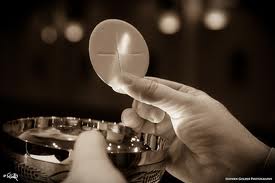 In this supper, here is Jesus. Here is your Savior. Here is His gift to you. Come and receive – it is free. Everything is provided. Here is the food that will sustain you until the day when you take your place at the marriage supper of the Lamb in the kingdom that has no end. Amen.
The peace of God, which surpasses all understanding, will guard your hearts and minds in Christ Jesus. Amen.
 48 And he saw that they were making headway painfully, for the wind was against them. And about the fourth watch of the night he came to them, walking on the sea. He meant to pass by them, 49 but when they saw him walking on the sea they thought it was a ghost, and cried out, 50 for they all saw him and were terrified. But immediately he spoke to them and said, “Take heart; it is I. Do not be afraid.” 51 And he got into the boat with them, and the wind ceased. And they were utterly astounded, 52 for they did not understand about the loaves, but their hearts were hardened.
 Christianity is about bad people being told they have failed to be good. Christianity says, “You are a sinner. You deserve pain. You deserve punishment. You deserve God to stand there and watch as you perish with all the other sinners in the ditch of death.” That’s the Law. But Christianity also says that Jesus takes your place, and the place of all sinners. Christ took your pain and punishment and death. Christianity says that God leaves Jesus in the ditch of death right alongside of you and all sinners.
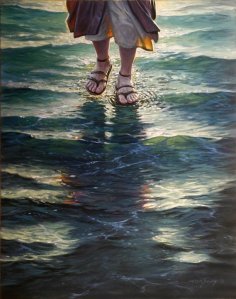 This is the same language that is used when God “passed before” Moses and revealed His glory (Ex. 33:18-34:9). Remember how God places Moses in the cleft of the rock and defined His name, “Yahweh, a God merciful and gracious. Slow to anger and abounding in steadfast love and faithfulness.” Well, here is Jesus was revealing His divine glory to the disciples. But seeing the divine in the midst of their troubles, knowing that God was present in the midst of their suffering, creates terror because their hearts were hardened and they did not understand the nature of Jesus even after the banquet earlier that day. Seeing Jesus’ reveal His divinity by walking on the water (see Job 9:8, Ps. 77:19, Is. 43:16) sends the disciples into a frenzied fear.
 In the name of Jesus. Amen.
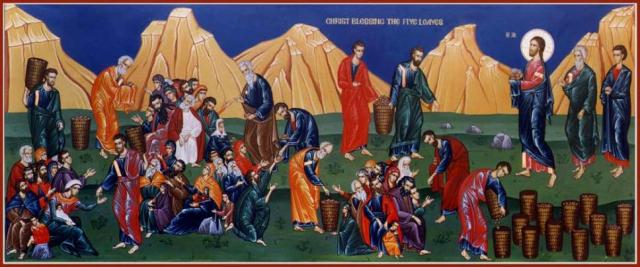
 To every person in that crowd, Jesus gave exactly what was needed. Whether they had problems with their marriage, fights with their kids, struggles to make ends meet, death in the family, or fear of what the future might hold, Jesus knew their need. He taught them, and His words fed their souls. When Jesus teaches, He isn’t merely giving facts, not just describing God, not giving steps to a better life, a better marriage, or better relationships with others. Instead, when Jesus teaches, He gives the words of life. In other words, when Jesus teaches the Word of God, He gives Himself. Jesus gives the Law to expose sin for what it is, and He gives the Gospel – the full and complete release of sin. Jesus steps in as Shepherd, and the lost sheep are made into a flock. But Jesus still isn’t done. He is going to take care of their bodies too.
 Jesus gives thanks, maybe from Ps. 145:15-16, “The eyes of all look to You, and You give them their food in due season. You open Your hand; You satisfy the desire of every living thing.” Jesus hands the bread and fish out to the disciples who, in turn, serve that crowd of 5,000 men plus women and children. They feast. There in the desert wilderness is a banquet prepared by Jesus Himself. He is their shepherd, and they do not lack anything good. And neither do you.
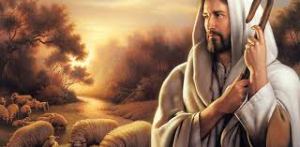 Yahweh is your Shepherd. You lack nothing. He makes you lie down in green pastures. He leads you beside still waters. Through the death and resurrection of Jesus, He restores your soul. He leads you in paths of righteousness for His name’s sake. Even as you walk through the valley of the shadow of death, you fear no evil because you are already delivered from death. God is with you. His rod and staff comfort you. Even in the midst of your enemies, He prepares a banqueting table before you. He anoints your head with oil, and your cup overflows. God’s goodness and mercy pursue you all the days of your life. And because Christ’s death is your death and His resurrection is your resurrection, you will dwell in His house forever. Amen.
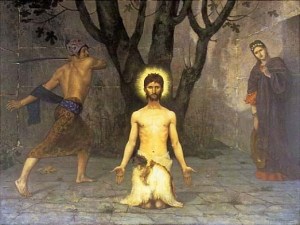 24 And she went out and said to her mother, “For what should I ask?” And she said, “The head of John the Baptist.” 25 And she came in immediately with haste to the king and asked, saying, “I want you to give me at once the head of John the Baptist on a platter.” 26 And the king was exceedingly sorry, but because of his oaths and his guests he did not want to break his word to her. 27 And immediately the king sent an executioner with orders to bring John’s head. He went and beheaded him in the prison 28 and brought his head on a platter and gave it to the girl, and the girl gave it to her mother. 29 When his disciples heard of it, they came and took his body and laid it in a tomb.
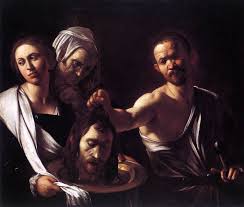 So Herod, this intoxicated idiot, offers her whatever she wishes up to half his kingdom. The girl goes out to talk to her mother, and her mother suggests asking for the head of John the Baptizer. But this girl adds a sadistic little twist of her own. It is a dinner party after all. So she tells Herod to give her the head of John on a platter. Herod was more worried about keeping up appearances with his guests than doing the right, honorable thing. So he sends the executioner to John’s cell. And John becomes a head shorter.
 But you know who Jesus really is. He isn’t John the Baptizer raised from the dead. He is the Savior of the world. Yes, even the Savior of Herod. Jesus died for Herod’s sick, twisted immorality just as He died for all your sick, twisted, and wicked ways as well. Jesus has come to save sinners – even ones as bad as us here at Christ the King. We know, deep down we know, that we are no better than Herod. And so we are here, gathered together in Jesus’ name, to find shelter in the blood that Christ shed for all our sins.
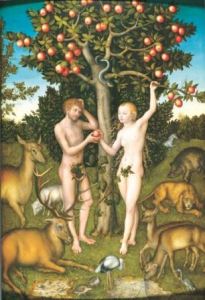 First, Adam and Eve attempt the impossible. They try to avoid their Creator. They try to hide themselves in the dumbest place – behind leaves and trees. Adam and Eve could have buried themselves under the mountains and God still would have found them. Adam and Eve have been caught, but they still try to flee. God shows up. The leaves haven’t worked. Their little aprons blow away. “The Lord God called to the man and said to him, ‘Where are you?’”
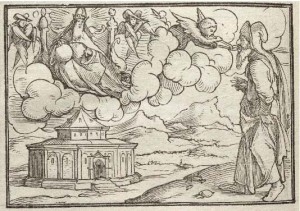 4 And the foundations of the thresholds shook at the voice of him who called, and the house was filled with smoke. 5 And I said: “Woe is me! For I am lost; for I am a man of unclean lips, and I dwell in the midst of a people of unclean lips; for my eyes have seen the King, the Lord of hosts!”
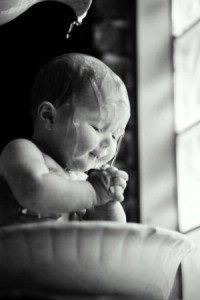 In your baptism, God the Father, Son, and Holy Spirit has washed away your sins. In the waters of your baptism, the holy blood of Jesus covered you and made you holy. In the waters of your baptism, all evidence of your sin was washed away in the name of the Father, Son, and Holy Spirit. In your baptism, you were given the right to no longer fear the holiness of God.
 3 And he said to me, “Son of man, can these bones live?” And I answered, “O Lord God, you know.” 4 Then he said to me, “Prophesy over these bones, and say to them, O dry bones, hear the word of the Lord. 5 Thus says the Lord God to these bones: Behold, I will cause breath to enter you, and you shall live. 6 And I will lay sinews upon you, and will cause flesh to come upon you, and cover you with skin, and put breath in you, and you shall live, and you shall know that I am the Lord.”
 If you have seen the movie, The Princess Bride, you will remember Miracle Max talking about different categories of deadness. Miracle Max was able to revive “mostly dead” Wesley, but he said there is only one thing you can do when someone is all dead – go through their pockets for loose change.

 11 “And I am no longer in the world, but they are in the world, and I am coming to you. Holy Father, keep them in your name, which you have given me, that they may be one, even as we are one. 12 While I was with them, I kept them in your name, which you have given me. I have guarded them, and not one of them has been lost except the son of destruction, that the Scripture might be fulfilled. 13 But now I am coming to you, and these things I speak in the world, that they may have my joy fulfilled in themselves. 14 I have given them your word, and the world has hated them because they are not of the world, just as I am not of the world. 15 I do not ask that you take them out of the world, but that you keep them from the evil one. 16 They are not of the world, just as I am not of the world. 17 Sanctify them in the truth; your word is truth. 18 As you sent me into the world, so I have sent them into the world. 19 And for their sake I consecrate myself, that they also may be sanctified in truth.”
 You probably start with Christmas Good Friday, and Easter, of course. Maundy Thursday might come next. Throw Pentecost in there too. But then what? Tap your pencil on your notepad a few of times, and scratch your head. Think through the Apostle’s Creed. You confess that Jesus was “born of the Virgin Mary, suffered under Pontius Pilate, was crucified, dead, and buried. On the third day, He rose again from the dead.” Well, you’ve hit all those, and Pentecost comes up when you get to the Third Article, “I believe in the Holy Spirit.” But notice that your list has skipped over the Ascension. “[Jesus] ascended into heaven and sits at the right hand of God the Father Almighty.”
 Risen Jesus is now at the right hand of God the Father. God’s right hand is not a particular place that we can think of. Instead, it is representative of the whole power of the omnipotent God. Jesus is where all God’s power and authority is, and He promises that He is with you. He is with you always. And He is with you even to the end of the age. Because He is going to the Father, Jesus prays this prayer, He speaks these things, for you so that you may have His joy fulfilled in you – even while you live as an alien in this sin-filled, hostile world.
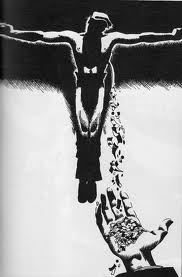 Brothers and sisters, Jesus says we are in the world, but we are not of the world – an important distinction. Jesus does not call you to change the world. The only thing that can change this world is Christ’s death and resurrection which has already redeemed us and all of creation. But that doesn’t mean that we can just sit back and relax either. We must speak out against sin. But even more importantly, we must announce the forgiveness that Jesus’ death and resurrection has won. We are kept in this world to be evidence of God’s forgiveness. Our lives are witness to the grace and mercy we have received in Christ. The Word which makes us holy is the Word of forgiveness that we are left in this world to proclaim.
 The disciples didn’t either. Remember, Jesus is speaking these words to the disciples just moments before He is betrayed and delivered to be crucified. The disciples did a poor job of loving Jesus that night. They did not stay awake and watch with Jesus even one hour as He prayed. The disciples all fled, abandoning Jesus when He was arrested. When a little servant girl asked Peter if he was one of Jesus’ disciples, he denied it three times.
 Vines, vines, vines all over the place. Scripture is literally crawling with vines. Jesus is making a big statement in these verses – calling Himself the “true vine.” So we’re going to take a little time to see how God speaks about His vine in the Old Testament.
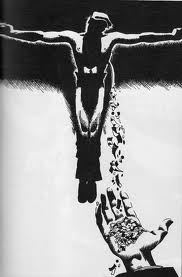 Soak up the Word of God. Read it daily. Come here and drink God’s Word as it comes through the songs, hymns, liturgy, readings, and sermons. Let the rain of your baptism, which is water connected with the Word, precipitate through your whole life. Open your lips to receive the nourishing sap of Christ’s body and blood given in bread and wine.
 Pastorsamwise
You must be logged in to post a comment.