Alleluia! Christ is risen!
He is risen indeed! Alleluia!
In the name of Jesus. Amen.
This may or may not shock some of you, but I am old enough that I learned how to write in cursive in elementary school. My 2nd Grade teacher, Mrs. Ranum, would walk across the front of the classroom, lick her fingers to count out the right number of worksheets, plop them on the front desk of each row, and say, “Take one and pass the rest back.” Then we would spend time tracing those dotted lines with all the curves and loops. We’d swoop and swish across those lines again and again. All of that tracing was designed to give our young fingers and wrists the muscle memory so our letters would be legible.
Those dotted lines were the standard we all started with. But over time each of us developed our own unique style—some more legible than others. No two people have identical handwriting.
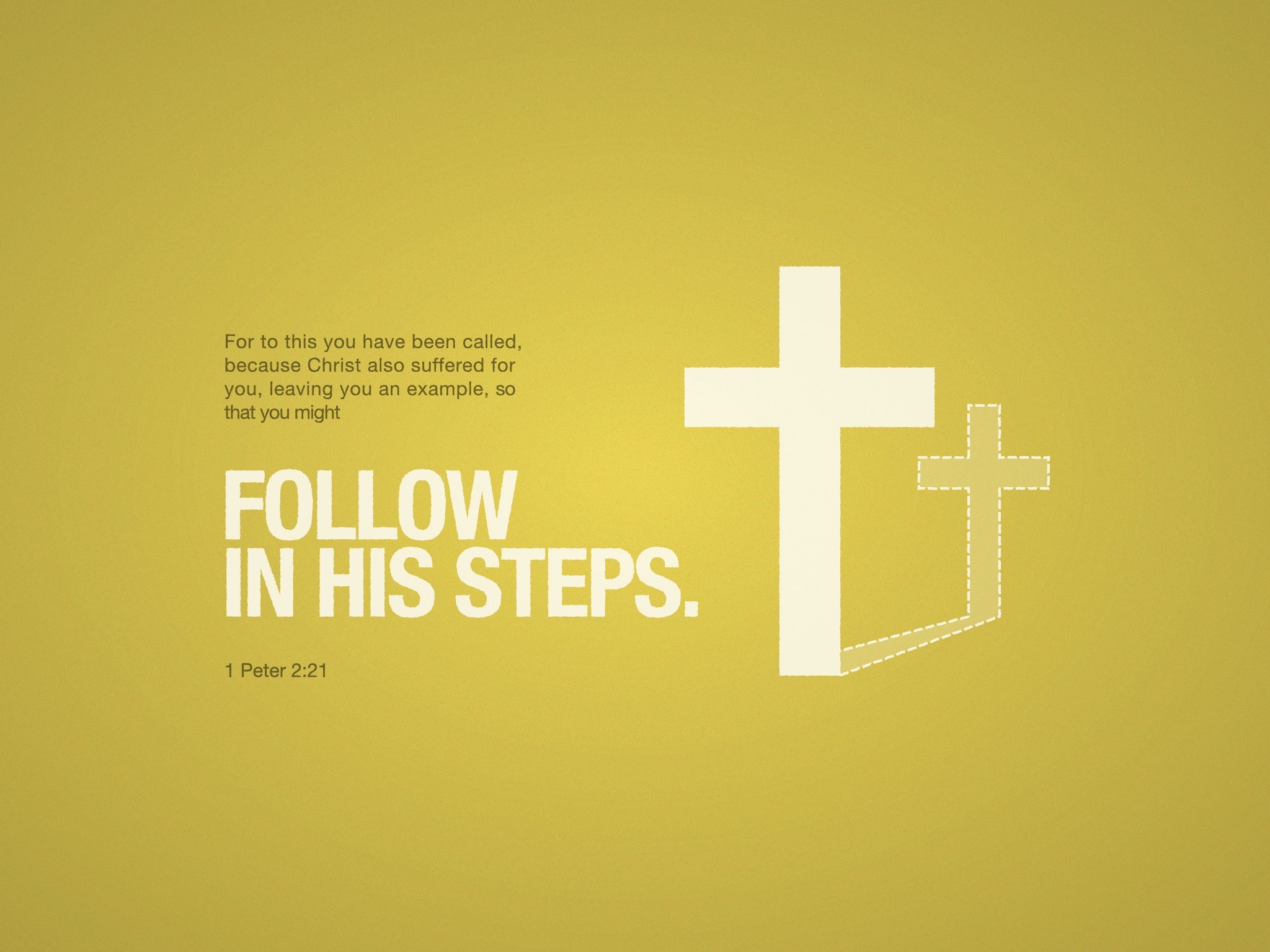
Here in our text from 1 Peter, the apostle refers to Jesus as our “example,” and the Greek word he uses is hypogrammos. This word appears only here in the entire New Testament. Literally, it means something you write over or trace—like those dotted lines on the worksheets Mrs. Ranum handed out. When you trace something, there are many different ways to start and finish the strokes. Some are smoother than others. But the goal is always the same: your writing should resemble the the original.
Notice that Jesus is our hypogrammos in a very particular way. Peter is not calling us to trace Jesus in every way. You don’t trace Him so that you get left in the temple at age twelve, or walk on water, or multiply loaves for thousands of people, or heal the sick, or raise the dead. And it’s good that Peter isn’t calling you to trace Jesus in those ways, because you can’t do any of those things. Sure, God could do some of them through you, but none of those things are on Peter’s radar here.
Instead, the focus is to trace Jesus in the way He endured suffering—like a sheep before its shearers is silent (Is. 53:7). The verse just before our text says that when you do good and suffer for it and endure, this is a gracious thing in the sight of God (1 Pet. 2:20).
That is the kind of suffering to which you have been called. Because Christ also suffered for you, leaving you an example—a hypogrammos, a pattern to trace—so that you might follow in His steps. Jesus committed no sin, and absolutely no deceit in was found in His mouth. He spoke pure, unfiltered truth. And He suffered for it. When He was reviled, He did not revile in return. When He suffered, He didn’t threaten. He simply trusted that God would judge justly. In and through all of that, Jesus Himself bore your sins in His body on the tree, that you might die to sin and live to righteousness. By His wounds, you are healed (1 Pet. 2:21-24).
Dear saints, Peter wrote these words to Christians who felt like exiles and aliens in their own world and like scattered sheep far from home. Many of them were servants living under masters who could be harsh and unfair. For them, suffering was not theoretical. It was a daily reality. And Peter doesn’t coat it. He says plainly, “This is what you have been called to do.” Because following Jesus, your Shepherd, means walking in His steps, and those steps often lead through pain and suffering because we still live in a broken world.
But look at the pattern your Shepherd left—the hypogrammos that we are to trace. First, He was completely innocent. “He committed no sin, and no deceit was found in His mouth.” That’s an echo of the Suffering Servant song in Is. 53. Jesus didn’t deserve a single lash, a single insult, a single nail. Yet He took it all like a lamb led to the slaughter (Is. 53:7) without fighting back.
When they hurled insults at Him during His trial and on the cross, He didn’t fire back with clever comebacks or righteous anger. The soldiers mocked Him. The crowd shouted, “Crucify!” Even the thieves crucified beside Him joined in the abuse (Mt. 27:44). Yet, through all of that, Jesus remained silent. He didn’t threaten. Instead, He entrusted Himself to the One who judges justly. He prayed, “Father, forgive them” (Lk. 23:34). He handed all of His suffering over to His heavenly Father.
You and I can’t do exactly as Jesus did. We can’t do this without sin. We can’t shed holy, perfect blood to pay the price for the sins of the world. We can’t do that. But we can trace His pattern and follow His steps. We don’t have to demand our rights. Instead, we can quietly entrust ourselves to the God who sees every injustice.
Now, before we go any further, let’s be clear about what this is not. This is not a call to ignore evil. It does not mean you must stay in situations where you or your children are in danger. Peter is not giving a blank check for evil to run rampant. Instead, he is speaking to believers who are already doing good and suffering for it anyway. When the world hates you simply because you belong to Christ; when standing for truth costs you friends, or a promotion, or respect in the community—keep tracing your Shepherd’s steps. Do not repay evil with evil. Do not let bitterness take root. Instead, entrust yourself to the Judge who sees it all.
The reason we can do this is that Jesus didn’t just leave us an example. He has also given us the power to follow Him. The power of His own resurrected life. Look again at v. 24, “He Himself bore our sins in His body on the tree, that we might die to sin and live to righteousness. By His wounds you have been healed.”
Jesus is more than a model on the page. He is your Substitute. Dear saints, you have the comfort of knowing what Christ accomplished on the cross is for you and your eternal destiny. He took your wandering. He took your straying like sheep. He took your selfish instincts to either strike back or run away—He carried all of it in His own body to the cross. The stripes that should have fallen on us fell on Him. The death we deserved, He swallowed whole. And by those wounds you are healed. You are forgiven. You are made new.
That healing isn’t just a feeling in your heart. It’s a real dying and rising that happens every day. You die to sin and to the urge to lash out. You die to the desire to demand your own way and to nurse grudges. Now, you live to righteousness. You live in the freedom of those who know their Shepherd has already won the victory. So you don’t need to win or prove anything. It is done. Finished.
Whatever your suffering is—whether it’s physical, emotional, or the ache of loneliness—know that it is known by your God and Savior. Know that He isn’t ignoring you or your pain. Instead, He is using that pain to shape you to look more and more like your Shepherd.
You don’t trace those dotted lines alone. Through faith you have returned to the Shepherd and Overseer of your souls. Jesus isn’t standing at a distance shouting instructions. He is your living Shepherd who goes before you. He knows every valley because He walked through the darkest one first. He gathers you when you stray. He binds up your wounds with the same hands that still bear the scars. He leads you beside still waters even when the world feels like a raging storm.
Dear saints, the call to follow the Shepherd in suffering is not a burden meant to crush you. It is an invitation into the life Jesus has already lived for you and now lives in you by His Spirit. When you fail—and we all do—He does not cast you out. He brings you back, again and again, because His sheep hear His voice and follow Him (Jn. 10:27-28).
Dear saints, whatever suffering or injustice or hardship you face, look to your hypogrammos. Trace the steps of the One who suffered for you. Entrust yourself to the Father who judges justly. Die to sin and live to righteousness. By His wounds you have been healed. You belong to the Shepherd and Overseer of your souls. And He will not—never, not ever—lose one of His sheep. Amen.
Alleluia! Christ is risen!
He is risen indeed! Alleluia!
The peace of God, which surpasses all understanding, will guard your hearts and minds in Christ Jesus (Php. 4:7). Amen.


You must be logged in to post a comment.