Quit hitting the books

It is bookkeeping, therefore – our enslavement to it and God’s rejection of it – that seems to me to be the burden of the closing lines of this parable of the Chief Seats. Jesus warns his host not to consult any records he has kept on people: not the Friend/Foe ledger, not the Rich/ Poor volume – and none of the other books either; not Nice/Nasty, Winners/Losers, or even Good/Bad. And he warns him because, as far as God is concerned, that way of doing business is over. It may be our sacred conviction that the only way to keep God happy, the stars in their courses, our children safe, our psyches adjusted, and our neighbors reasonable is to be ready, at every moment, to have the books we have kept on ourselves and others audited. But that is not God’s conviction because he has taken away the handwriting that was against us (Col. 2:14). In Jesus’ death and resurrection, God has declared that he isn’t the least interested in examining anybody’s books ever again, not even his own: he’s nailed them all to the cross. Accountability, however much it may be a buzzword now, is not one of his eschatological categories.

Robert Farrar Capon on Luke 14:1-14

Luke 4:31-44 – Rebuked

Luke 4:31-44—And he went down to Capernaum, a city of Galilee. And he was teaching them on the Sabbath, 32 and they were astonished at his teaching, for his word possessed authority. 33 And in the synagogue there was a man who had the spirit of an unclean demon, and he cried out with a loud voice, 34 “Ha! What have you to do with us, Jesus of Nazareth? Have you come to destroy us? I know who you are—the Holy One of God.” 35 But Jesus rebuked him, saying, “Be silent and come out of him!” And when the demon had thrown him down in their midst, he came out of him, having done him no harm. 36 And they were all amazed and said to one another, “What is this word? For with authority and power he commands the unclean spirits, and they come out!” 37 And reports about him went out into every place in the surrounding region.

38 And he arose and left the synagogue and entered Simon’s house. Now Simon’s mother-in-law was ill with a high fever, and they appealed to him on her behalf. 39 And he stood over her and rebuked the fever, and it left her, and immediately she rose and began to serve them. 40 Now when the sun was setting, all those who had any who were sick with various diseases brought them to him, and he laid his hands on every one of them and healed them. 41 And demons also came out of many, crying, “You are the Son of God!” But he rebuked them and would not allow them to speak, because they knew that he was the Christ.

42 And when it was day, he departed and went into a desolate place. And the people sought him and came to him, and would have kept him from leaving them, 43 but he said to them, “I must preach the good news of the kingdom of God to the other towns as well; for I was sent for this purpose.” 44 And he was preaching in the synagogues of Judea.

In the name of the Father, Son, and Holy Spirit.  Amen.

This world is broken.

Last week, we began to see how broken this world is.  Jesus proclaimed the Gospel in the synagogue of His hometown and was rejected.  Maybe, it’s not so surprising that He was rejected.  He openly claimed that He was the Lord’s Anointed, and the people of Nazareth weren’t morons.  They were able to do math; they knew Jesus’ birthday was a couple of months before His parents’ anniversary.  They knew Joseph’s Son.

Even though Jesus, the Word made flesh, proclaimed the Gospel, the broken people of Nazareth rejected Him.  They brought Jesus up a hill to the edge of the cliff, prepared to throw Him down and stone Him.  But He walked through the crowds.  He made His way down the hill, and down to the city by the sea – Capernaum.

Capernaum welcomed Jesus, but it was broken too.  Even while the crowds of Capernaum are marveling at the authority and the power of Jesus, they are still suffering the brokenness of this world.

Peter’s mother-in-law lies ill with a high fever.  Hordes of people were broken with illnesses and diseases.  Many individuals are possessed by unclean demons.

Jesus works to fix the brokenness, and when He tires and tries to find a deserted place to pray, the people search for Him and try to make Him stay.  They want Jesus to fix their all their brokenness.

Nazareth and Capernaum were broken.  And our world is still broken.

Now, I’m not just talking about the pain of having to upgrade from the iPhone 4 to the iPhone 4S to the iPhone 5.  I’m not just talking about the difficulty of having too many chips for your dip.

I am not talking about the brokenness caused by a young man who is able to walk into an elementary school and shoot and kill young children who are completely unprotected.

I’m not even talking about the brokenness of our politics and society.

Do you know where the real brokenness is?  It is in you; it is in me.  We don’t have to look any farther than that.

Because of the sin within us we are just as broken as the people who had various diseases in Capernaum.  Because of the sin within us we are just as broken as the demonically possessed.  Because of the sin that surrounds us, we are broken.  Because of the thoughts of our own minds and emotions, we are no less sinful than any mass murderer of children.

It is shocking to think that a man possessed by a demon could walk into a synagogue in Capernaum on the Sabbath day to be in the presence of Jesus Who is preaching with authority.  Or is it?  What bitterness and resentment is festering in you?  What evil have you brought here?  What sin have you carried into God’s house?

When you stop and think about it, how dare you be here?  If you pause for a moment and truly examine your life, the brokenness isn’t just devastating, it’s terrifying.

It looked bad in that synagogue in Capernaum.  The occult belief is that, if you know the name of your opponent, you have power over him.  And the demon recognized Jesus exactly for Who He is – the Holy One of God.

So the people in that synagogue were impressed when Jesus is able rebuke the demon.  The people in Simon Peter’s house are amazed when Jesus is able to rebuke the high fever.  The throngs of people are impressed when Jesus is able to rebuke the demons and cast out the diseases.

Yes, the demon had it right – interestingly, only the demon recognizes Jesus for Who He is and what He has come to do.  Jesus did come to destroy the dominion of Satan and demons and sin and death.  That is the work He does.  Jesus has the authority to rebuke the brokenness of this world caused by evil and sin and Satan.

It is no problem for Jesus to rebuke the brokenness of your life.  He is the one with all the authority.

Jesus doesn’t just fix what is broken and give it a year-long warranty that if it breaks again you can bring it back to Him.  No.  He takes your broken body, He takes your broken life, He takes your broken, sinful heart and buries it all in His tomb.  And He leaves it there.

He takes your brokenness and rebukes it.  And He gives you His body which was broken for you.  He gives you His blood which was shed for you.  Jesus gives you this meal of His body and blood – the feast of victory.  Alleluia.  Amen.

May the peace of God which surpasses all understanding guard your hearts and minds in Christ Jesus.  Amen.

Luke 4:16-30 – The Final Prophet Rejected

Luke 4:16-30—And he came to Nazareth, where he had been brought up. And as was his custom, he went to the synagogue on the Sabbath day, and he stood up to read. 17 And the scroll of the prophet Isaiah was given to him. He unrolled the scroll and found the place where it was written,

18 “The Spirit of the Lord is upon me,
because he has anointed me
to proclaim good news to the poor.

         He has sent me to proclaim liberty to the captives
and recovering of sight to the blind,
to set at liberty those who are oppressed,

19 to proclaim the year of the Lord’s favor.”

20 And he rolled up the scroll and gave it back to the attendant and sat down. And the eyes of all in the synagogue were fixed on him. 21 And he began to say to them, “Today this Scripture has been fulfilled in your hearing.” 22 And all spoke well of him and marveled at the gracious words that were coming from his mouth. And they said, “Is not this Joseph’s son?” 23 And he said to them, “Doubtless you will quote to me this proverb, ‘Physician, heal yourself. What we have heard you did at Capernaum, do here in your hometown as well.’” 24 And he said, “Truly, I say to you, no prophet is acceptable in his hometown. 25 But in truth, I tell you, there were many widows in Israel in the days of Elijah, when the heavens were shut up three years and six months, and a great famine came over all the land, 26 and Elijah was sent to none of them but only to Zarephath, in the land of Sidon, to a woman who was a widow. 27 And there were many lepers in Israel in the time of the prophet Elisha, and none of them was cleansed, but only Naaman the Syrian.” 28 When they heard these things, all in the synagogue were filled with wrath. 29 And they rose up and drove him out of the town and brought him to the brow of the hill on which their town was built, so that they could throw him down the cliff. 30 But passing through their midst, he went away.

In the name of the Father, Son, and Holy Spirit.  Amen.

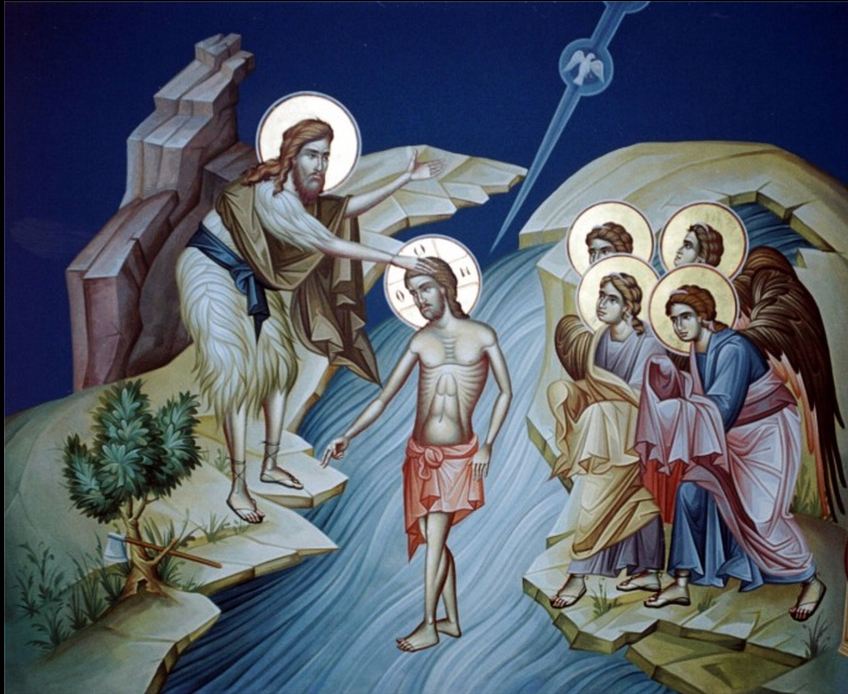
After being baptized by John in the Jordan, tempted by the devil in the wilderness, and preaching in the power of the Spirit throughout Galilee, Jesus comes back to Nazareth, His hometown.

Nazareth was an all-Jewish settlement town established outside of Jewish territory.  The thought when Nazareth (and other towns like it) was established was that eventually the Jews would have a strong enough presence to take back those regions.  The people were very patriotic and religious, but they lived among the Gentiles.

Now, Luke has skipped over a large portion of what’s both Matthew and Mark cover.  This scene of Jesus in Nazareth doesn’t come until Mt. 13.  Jesus has been busy healing, casting out demons, and preaching.  You get a sense of excitement from the people in Nazareth as Jesus returns home.  Their excitement makes sense, if Jesus has been doing all of that for people who are strangers, what is He going to do for the people He grew up with?

We know there was a daily lectionary or pericope that was used in Jesus’ day.  I tend to think that this was the appointed reading for the day; there’s no way to know for sure though.  Jesus unrolls the scroll to Is. 61[:1-7], but He only reads v. 1 and the first line of v. 2Is. 61:1-7 speaks about what the Messiah, the Christ, will do when He comes.

Residents of Nazareth loved this portion because it said that when God’s Messiah came the Gentiles, who were currently living around them, would do all the work.  Strangers would tend their flocks; foreigners would be there plowmen and wine dressers.  God’s people would be called priests and eat the wealth of the nations.  God’s people would have everlasting joy.

It would almost be like Jesus coming here and reading Ps. 23, “He leads me in paths of righteousness for His name’s sake.  Even though I walk through the valley of the shadow of death….”  Some wonderful things are read, but some of the best parts got skipped.  You would wonder, “What about the fearing no evil?  What about that table that’s prepared before me?  What about my had being anointed with oil, and my cup overflowing?”

Jesus the miracle-worker returns to His hometown, reads one of the people’s favorite passages but leaves out the good parts about God’s vengeance upon the Gentiles and the Gentiles doing the work while the Jews relax and enjoy a double portion.  Then He its down and says, “Today, this Scripture has been fulfilled in your hearing.  The Lord has anointed Me.”  In other words, Jesus is saying, “I am the Messiah Isaiah spoke about.  I am the Christ.”

As if this weren’t enough, Jesus then piles on the insults.  He says, “I know you want me to do the miracles that I did at Capernaum.  I know you don’t find Me acceptable here.  You’ll reject Me; just like Elijah and Elisha were rejected by your ancestors.”

Of course, this did not sit well with the people of Nazareth.  Jesus claims that they are rejecting one of their favorite passages of Scripture, so what do they do?  They reject Jesus.  How could He claim to be the Messiah? Where is all the good, tangible stuff, the miracles they can see and touch?  Who cares about good news for the destitute and liberty for the captives?

They drive Jesus out of the synagogue, out of the town, and up a hill to the edge of a cliff.  Just as they are about to throw Him off and stone Him by casting down boulders, Jesus, ironically, performs His miracle.  He walks through the crowd and continues on his journey.

Jesus does the work of a prophet – He proclaims the Word of God and gets rejected.  He continues to proclaim the Gospel, but it’s more than that.  When Christ, the Word made flesh, speaks His words create.  Jesus’ words cause the brokenness of this world to be restored.  The reign of God is present wherever you find Christ.

Jesus continues to speak the Gospel of His rule and reign today.  Now, I would not say this unless Scripture taught it: In what would appear to be a great folly, God has ordained and sent me to you today to speak His Word.  The message that God gives you is, “I forgive you of your sins through Jesus Christ.”

Jesus continued the pattern of a prophet of God; He is a prophet and more than a prophet. He is the Christ.  Jesus continued to proclaim God’s Gospel and get rejected.

Jesus left the hill outside Nazareth that day to journey to a different hill outside Jerusalem where Jesus was rejected by all humanity – by you and by me.  Though He died on the cross, His death did not negate what His words created.  In fact, just the opposite.

Jesus’ death rejected all of your enemies.  Jesus releases you from your bondage to sin, death, and the devil, and He is your double portion Who restores you to harmony with God.  As you hear this, it is the year of God’s favor – for you.  Amen.

May the peace of God which surpasses all understanding guard your hearts and minds in Christ Jesus, now and forevermore.  Amen.

Mark 13:24-37 – In Those Days; In That Day

Mark 13:24–37 24 “But in those days, after that tribulation, the sun will be darkened, and the moon will not give its light, 25 and the stars will be falling from heaven, and the powers in the heavens will be shaken. 26 And then they will see the Son of Man coming in clouds with great power and glory. 27 And then he will send out the angels and gather his elect from the four winds, from the ends of the earth to the ends of heaven.

28 “From the fig tree learn its lesson: as soon as its branch becomes tender and puts out its leaves, you know that summer is near. 29 So also, when you see these things taking place, you know that he is near, at the very gates. 30 Truly, I say to you, this generation will not pass away until all these things take place. 31 Heaven and earth will pass away, but my words will not pass away.

32 “But concerning that day or that hour, no one knows, not even the angels in heaven, nor the Son, but only the Father. 33 Be on guard, keep awake. For you do not know when the time will come. 34 It is like a man going on a journey, when he leaves home and puts his servants in charge, each with his work, and commands the doorkeeper to stay awake. 35 Therefore stay awake—for you do not know when the master of the house will come, in the evening, or at midnight, or when the rooster crows, or in the morning— 36 lest he come suddenly and find you asleep. 37 And what I say to you I say to all: Stay awake.”

In the name of the Father, Son, and Holy Spirit, Amen.

“Stay awake… lest he come suddenly and find you asleep.  And what I say to you I say to all: Stay awake.”

You have maybe seen commercials for the National Geographic show Doomsday Preppers.  Individuals across the country are stockpiling seeds, food, ammunition, and potable water; they are building shelters, learning self-defense, and preparing their bodies to face what could be the “end of the world as we know it.”

Different individuals are preparing for various contingencies: earthquake, nuclear warhead, chemical attack, asteroid, electromagnetic pulse.  The commercial for Doomsday Preppers ends with an individual asking, “Am I nuts, or are you?”

My answer to that question would be, “Yes.”

“Stay awake.”  The whole chapter of Mk. 13 is Jesus’ answer to two questions.  The first question is when will the Temple will be destroyed and the second is when will the end of the age be.  In the mind of a Jew in Jesus day, the destruction of the Temple and the end of the world were the same event.  One-thousand-nine-hundred-forty-two years later, hopefully, we know better.  Jesus did not come back, the world did not end, when the Temple was destroyed in 70 A.D.  The majority of Jesus’ answer in Mk. 13 deals with when the Temple was destroyed—that is how Jesus can say, “This generation will not pass away until all these things take place” in v. 30.

And Jesus gives us a clue throughout Mk. 13 when He is speaking about the destruction of the Temple in 70 A.D. and when He is speaking about the end of the world.  It’s all about the difference between when Jesus says, “In those days,” all the way up until v. 32 when He says, “But concerning that day.”

Yes, even v. 24-27 are speaking about Jesus’ days before that “generation passed away.”

When Jesus says, “The sun will be darkened, and the moon will not give its light,”  He is speaking about His death.  At the hour of Jesus’ death, there was darkness covering the whole land (Mk. 15:33).  As He died, the curtain in the temple which had sun, moon, and stars upon it was torn in two; “the powers in the heavens [were] shaken.”

V. 26 ”And then they will see the Son of Man coming in clouds with great power and glory,”  is a quote from our OT text (Dan. 7:13,look at it).  You will notice that the Son of Man’s “coming” is not a descent to earth, but an ascent to the Ancient of Days.  Fits in pretty well with what Jesus said before He ascended into heaven.  Mt. 28:18–20 ”All authority in heaven and on earth has been given to Me.19 Go therefore and make disciples of all nations, baptizing them in the name of the Father and of the Son and of the Holy Spirit, 20 teaching them to observe all that I have commanded you. And behold, I am with you always, to the end of the age.”

Since then, Jesus has sent (“apostled”) His angels—lit.  His ‘messengers’—to all the corners of the earth to proclaim the Gospel and to gather His elect.  On the day of Pentecost, there were “men from every nation under heaven” (Act. 2:5), and the message continues to go out today.

Until about 150 years ago, this is how the Church interpreted this passage.  Today, there are so many people trying to pin the tail on the antichrist and predict the precise date when Christ will return that they’ve completely forgotten what Jesus said about His return in v. 32, “But concerning that day or that hour, no one knows, not even the angels in heaven, nor the Son, but only the Father.”

“Stay awake.”  I don’t think Jesus will be very pleased with the Harold Camping’s (the May 21st/October 21st guy) of this world when He returns and finds them trying to figure out the precise day when He will return.  I don’t think they will be too impressed either when Jesus foils their life’s work.

Jesus does speak about the End of the Age; He speaks about His return.  Jesus speaks about judgment and doom.

The End of the World, Judgment Day, is coming, and in a very real sense, it has already come. Jn. 12:31–32 31 “Now is the judgment of this world; now will the ruler of this world be cast out. 32 And I, when I am lifted up from the earth, will draw all people to Myself.”

This world has been judged and condemned; it is just waiting its sentencing.

The cross stands through all of history as the time and place where the world was judged.  As Christians, we look at the cross and see deliverance; we see hope; we see where Christ forgave our sins.  But the cross is a place of judgment and execution.  The cross is an instrument of doom.  Had Jesus come in our time, we would probably be wearing necklaces with an electric chair hanging from them instead of a cross.

For the life of a believer, Judgment Day is every day.  You experienced it once in your baptism when Christ condemned, killed, and buried your sinful nature in His tomb (Ro. 6).  In that same baptism, you were also connected with Christ’s resurrection.  Your life, believer, is a life of daily judgment—drowning to death and sin, but rising to life in the new creation.  Daily you are moved from conviction of sin to faith, from condemnation to forgiveness, from death to life.

For the believer, every day is Judgment Day until that final day, when Christ returns and will be revealed.  Then the party begins. “Stay awake.”

Yes, the party begins when Christ returns.  Too often, Christians, we look at the Return of Christ as Doomsday.  But, when Christ returns, the party begins, and you don’t want to miss it.  “Stay awake.”

Christ isn’t coming like your Great Aunt Maggie who is going to make sure you are wearing the itchy wool sweater she made you and is two sizes too small.

Christ is coming like your favorite Uncle Chuck.  The Uncle Who is going to take you outside to play football, or go sledding or fishing.  He is going to play cards with you, make you the best hot ham and cheese, and tell you stories that make you laugh so hard your guts hurt.

“Stay awake.”  The party is coming, and you don’t want to miss it.  Neither do your friends and family, so tell them about Christ your favorite crazy Uncle Who is so fun they won’t believe it until they meet Him.

“Stay awake.”  Believer wait with patience.  Wait with hope.  Wait with faith.  Amen.

And may the peace of God, which surpasses all understanding, guard your hearts and minds in Christ Jesus until that Great, Awesome Day.  Amen.

Mark 12:38-44 – The Pompous & the Penurious

Mark 12:38–44 38 And in his teaching he said, “Beware of the scribes, who like to walk around in long robes and like greetings in the marketplaces 39 and have the best seats in the synagogues and the places of honor at feasts, 40 who devour widows’ houses and for a pretense make long prayers. They will receive the greater condemnation.”

41 And he sat down opposite the treasury and watched the people putting money into the offering box. Many rich people put in large sums. 42 And a poor widow came and put in two small copper coins, which make a penny. 43 And he called his disciples to him and said to them, “Truly, I say to you, this poor widow has put in more than all those who are contributing to the offering box. 44 For they all contributed out of their abundance, but she out of her poverty has put in everything she had, all she had to live on.”

Grace, mercy, and peace to you from God the Father through our Lord and Savior, Jesus Christ.  Amen.

Nobody wants to lose.  Nobody enters a competition planning on losing.  Maybe, you recognize your opponent is faster, smarter, more skilled, and better equipped.  Maybe you recognize that your opponent will probably win, but you always compete with the hope to overcome and be victorious.

We like the movies that portray the underdog, the down-and-outers, coming back against all odds and winning the State Championship or getting the girl/guy or landing the ultimate job.  We cheer for the Titans, we hope for Cinderella, and we are a just a little bit jealous of Forest Gump.

In our Gospel text today, Jesus contrasts winning and losing.  And everything leading up to our text certainly makes it look like Jesus is winning.

Jesus is in Jerusalem awaiting His death.  Huge crowds welcomed Him waving palm branches and shouting “Hosanna.”  He is challenging the authorities with His every word and action.  He clears the money-changers out of the temple.  He has made the scribes and Pharisees look foolish by asking them if John the Baptizer was from heaven or from man (Mk. 11:30); a question they do not answer.  He speaks in a parable which shows that the religious leaders have rejected the God of their fathers (Mk. 12:1-11).

Finally, we are told that the scribes and Pharisees want to arrest Jesus, but they are afraid of the people (Mk. 12:12).  Jesus appears to be winning and the scribes and Pharisees appear to be losing.

So the scribes and Pharisees start asking Jesus questions that appear to have no safe answer.  They try to make Jesus walk a tightrope without a balancing pole.  They ask questions designed to get Him in trouble either with the religious leaders or with the Roman government.  They ask questions about paying taxes (12:13-17), about the resurrection (12:18-27), and about which is the greatest commandment (12:28-34).  But Jesus skillfully gives them nothing to bring against Him.  After these encounters, no one even dared to ask Him any more questions (Mk. 12:34).

But Jesus isn’t done; He goes on the offensive and asks the scribes and Pharisees a difficult question, “Whose son is the Christ?  How can the Messiah be David’s son and David’s Lord?”  The scribes and Pharisees answer not one word.  But we are told, “a great throng heard Him gladly” (Mk. 12:37).

Jesus certainly appears to be winning and the scribes and Pharisees appear to be losing.  And Jesus even keeps hitting them while they were down.

But Jesus’ words in the beginning of our text (Mk. 12:38-40) speak against winning.

Beware.  Beware of winning.  Beware the desire to have the ‘latest and greatest’ in clothes and gadgets.  Beware of what those things do to your head.  Beware the things that make you in.  Beware the things that make you someone.

Beware of winning.  Beware the winning ways that you publish through your Christmas letters, through your conversations, and on your Facebook wall.  You are so smart and so witty.  You and your family have it all together.  You are so popular that you have dozens of friends talking about you and liking and commenting on your status.  Beware of winning popularity.

Beware of winning.  Beware of having the best places in your job (with tasks beneath you).  Beware in your circle of friends (where you keep certain people close and shun everyone else) even here at church.  Beware of the notoriety and fame that you crave so badly.

Is the cost of constantly winning worth it?  Does it bother you when someone else is winning more than you are?  Aren’t you still miserable even when you win?

Misery loves company.  One author wrote,“Misery loves company, particularly when she is herself the hostess, and can give generously of her stores to others” (John K. Bangs).

Jesus warns against your winning ways.  Jesus says, “You winners will receive the greater condemnation.”

After all of the controversy with the scribes and Pharisees, Jesus—maybe tired of arguing—sits down opposite the treasury to watch the spectacle of people putting their offerings into the boxes.  In the Temple, there were thirteen different horns which received offerings; those horns were literally shaped like trumpets.

Jesus watches people put in their large sums of money and “sound the trumpet” (Mt. 6:2) tooting their own horn.  You can almost hear the clamor of the wheel-barrow full of valuable coins clinking and clanking as they fall through the trumpet and land in the box.  You can almost hear the wonder in people’s voices and the encouragement they give to each other.  “Good job, Larry.  Boy, you sure gave a lot!”  “Wow Hank. That’ll be hard to top.”  “My goodness Phil.  You are generous.”

But there is a sight and a sound that almost goes unnoticed and would have gone unnoticed if Jesus had not been there.  A poor pauper widow accidently makes a tiny sound of two small copper coins tinkling into the box.  Together, her two coins totaled 1/64th of a days’ wage.

Her offering was so small that it was unlawful to give a less amount.  She could not have given more and was not allowed to give less.  This offering was everything to her; she has nothing left.  And as that miniscule offering drops into the box, she loses.  The scribes have devoured another house.  They have won this match; game over.  Score: pompous scribes and Pharisees-1, penurious widow-0.

Yet, the looser widow gets singled out by Jesus.  He doesn’t publicly recognize her; it would mar the beauty of her gift.  Jesus does not encourage her; she already has God’s promised faithfulness.

The pompous scribes “devour widow’s houses.”  This penurious widow gives away not only her house but everything she had to live on.  She loses.  She loses not bitterly but of her own free will knowing God’s promise.

This impoverished widow has the world because she has nothing.  She is the last; she is made first.  She is servant of all—servant even of the greedy scribes and Pharisees; she is made the greatest.  She is a loser; God gives her the victory.

While Jesus appears to be winning in this text, He is the Ultimate Loser.  He, even though He had lived a perfect life, died an unjust death.  Jesus had the most to give and the greatest reason to “trumpet” His offering, but He laid it down.  He was oppressed and afflicted, but He didn’t open His mouth.  He was led like a lamb to the slaughter, but He didn’t speak a word (Is. 53:7).

In His death, Jesus didn’t notice the pious, the moral, the great, or the winners.  In His death, Jesus noticed the nobodies, the losers; He noticed you.  He noticed you who had nothing to offer, and He rejoiced in that.

Jesus saw that there was no way for you to win.  So Jesus took the loss for you.  He gave you His victory.  He gave you Himself.  Amen.

May the peace of God which surpasses all understanding guard your hearts and minds in Christ Jesus.  Amen.

Revelation 7:9-17 – All Saints

Revelation 7:9–17 9 After this I looked, and behold, a great multitude that no one could number, from every nation, from all tribes and peoples and languages, standing before the throne and before the Lamb, clothed in white robes, with palm branches in their hands, 10 and crying out with a loud voice, “Salvation belongs to our God who sits on the throne, and to the Lamb!” 11 And all the angels were standing around the throne and around the elders and the four living creatures, and they fell on their faces before the throne and worshiped God, 12 saying, “Amen! Blessing and glory and wisdom and thanksgiving and honor and power and might be to our God forever and ever! Amen.”

13 Then one of the elders addressed me, saying, “Who are these, clothed in white robes, and from where have they come?” 14 I said to him, “Sir, you know.” And he said to me, “These are the ones coming out of the great tribulation. They have washed their robes and made them white in the blood of the Lamb.

15 “Therefore they are before the throne of God,
and serve him day and night in his temple;
and he who sits on the throne will shelter them with his presence.

16 They shall hunger no more, neither thirst anymore;
the sun shall not strike them,
nor any scorching heat.

17 For the Lamb in the midst of the throne will be their shepherd,
and he will guide them to springs of living water,

and God will wipe away every tear from their eyes.”

Grace, mercy, and peace to you from God the Father, Son, and Holy Spirit.  Amen.

Today, is All Saints Sunday.  It is a time to remember those who have gone before us in the faith.  It is a good day to remember loved ones who have been transferred out of this broken world into the presence of Christ.  It is a good time to remember the martyrs of the faith, not because they were so courageous or strong or faithful, but because of their Savior, Jesus Christ, His courage, His strength, and His faithfulness to and for them.

If we looked at all of Revelation 7, we would see two pictures of the church, both of which are comforting.

In Rev. 7:1-8 John hears about the 144,000 who are also called the “Church militant.”  Every member of the Church, every believer of all time, is called by God into His organized army of servants who live in this broken world.  Every believer of all time is sealed individually—one-by-one.  The whole group is organized for battle in the Lord’s army.

After John hears this, he turns and sees the group.  John sees the “Church militant” revealed to be the “Church triumphant” in our text.  The picture is of every believer of all time cleansed by the blood of the Lamb removed from tribulation.  People from every tribe and language, clothed in blood-washed, white robes, waving palm branches, crying out together, standing before the throne and the Lamb.  They are no longer troubled by the brokenness and tribulation of this world: no hunger, no thirst, no striking sun, no scorching heat.  They are led by springs of living water.

Every tear, even the smallest tear in this uncountable multitude, is wiped away.

At this point, we simply need to be content with the words of Scripture.  The New Heavens and the New Earth; the Holy City, the New Jerusalem coming down from God out of heaven prepared as a bride adorned for her husband; the Twelve Gates and Twelve Foundations; the Pearls, the Precious Stones, the Pure Gold like transparent glass, the River and the Tree of Life (Rev. 21:1-22:6).  All of it is utter triumph.

All of it reveals the victory of Christ—Who swallowed up of death—and gives the victory to you.

Believer, whatever you think about eternal life, make sure that you recognize that it is yours now, not just later.

Christ says (Jn. 5:24), “Whoever believes in Me has passed from death to life.”  And Eph. 2:5–6 says,5 even when [you] were dead in our trespasses, [God] made [you] alive together with Christ… 6 and raised [you] up with Him and seated [you] with Him in the heavenly places in Christ Jesus.

Let the comfort of that sink in.

Our text today is a picture of your friends and family who have died and are now with Christ, and it is a picture of you before Christ.  You are joined together with that uncountable multitude from every tribe and nation, even here today, as you join in the great Feast that Christ has given His Church—His Supper.

You are in the presence of God.  You join “with angels and archangels, and with all the company of heaven” lauding and magnifying the glorious Name of Christ.

In the Name that God placed upon you in your baptism—Father, Son, and Holy Spirit, you are sealed, protected, forgiven.

Eternal life is yours now.  God doesn’t make you wait.  You are in Jesus Who is the Resurrection and the Life (Jn. 11:25-26).  You are connected with Christ, the One Who gives Living Water (Jn. 4:10; 7:37-38).  You are in the flock of Jesus—the Lamb Who is the Good Shepherd (Jn. 10:11).

Unless you don’t believe what Jesus says…

These glories, these mysterious glories, are all true for you here.  They are true for you now.  They are true for you forever.  Amen.

May the peace of God which surpasses all understanding guard your hearts and minds in Christ Jesus.  Amen.

Mark 10:17-31 – All Things Possible

Mark 10:17–31 17 And as he was setting out on his journey, a man ran up and knelt before him and asked him, “Good Teacher, what must I do to inherit eternal life?” 18 And Jesus said to him, “Why do you call me good? No one is good except God alone. 19 You know the commandments: ‘Do not murder, Do not commit adultery, Do not steal, Do not bear false witness, Do not defraud, Honor your father and mother.’ ” 20 And he said to him, “Teacher, all these I have kept from my youth.” 21 And Jesus, looking at him, loved him, and said to him, “You lack one thing: go, sell all that you have and give to the poor, and you will have treasure in heaven; and come, follow me.” 22 Disheartened by the saying, he went away sorrowful, for he had great possessions.

23 And Jesus looked around and said to his disciples, “How difficult it will be for those who have wealth to enter the kingdom of God!” 24 And the disciples were amazed at his words. But Jesus said to them again, “Children, how difficult it is to enter the kingdom of God! 25 It is easier for a camel to go through the eye of a needle than for a rich person to enter the kingdom of God.” 26 And they were exceedingly astonished, and said to him, “Then who can be saved?” 27 Jesus looked at them and said, “With man it is impossible, but not with God. For all things are possible with God.” 28 Peter began to say to him, “See, we have left everything and followed you.” 29 Jesus said, “Truly, I say to you, there is no one who has left house or brothers or sisters or mother or father or children or lands, for my sake and for the gospel, 30 who will not receive a hundredfold now in this time, houses and brothers and sisters and mothers and children and lands, with persecutions, and in the age to come eternal life. 31 But many who are first will be last, and the last first.”

Grace, mercy, and peace to you from God the Father and His Son, our Lord, Jesus Christ.  Amen.

Yes, this is the same text we looked at last week.  Yes, we are looking at it again.  No, it isn’t the same sermon.  Some will be review of what we covered, but, overall, today will have a different focus from last week.

Last week, we looked at this rich young man who realized that he was incomplete; he was lacking something for his salvation.  He looked to Jesus, yet he walks away from Jesus grieved with his face clouded over.  Jesus’ command, “Go and sell all that you have.  Give it to the poor.  Then come, follow Me as I go to Jerusalem where I will die on the cross,” was just too much.

Jesus had asked the rich, young ruler to do something that was more difficult than shoving a camel through the eye of a needle; Jesus’ command was something that was more difficult than impossible.

Imagine with me, please, the life of this rich young ruler—let’s call him “Joshua.”

Joshua is born into a family with royal lineage.  His parents raise him to be a devout Jewish boy.  Joshua’s parents teach him about Yahweh Who had delivered His people in the past.  He learns about Noah, Abraham, Isaac, Jacob, Moses, Samuel, David, Isaiah, Elijah and all the great prophets of old.

Joshua learns the great Shema Blessing, the confession of Israel, “Hear, O Israel: The Lord our God, the Lord is one.  You shall love the Lord your God with all your heart and with all your soul and with all your might.”  Joshua’s parents diligently taught Joshua when they sat in their house, and when they walked by the way, and when they lied down, and when they rose (Dt. 6:4–7).

As Joshua grew up, not only did he became strong and tall, but also loving and wise.  People liked him, and God was obviously blessing him.

Joshua’s parents continued to teach him.  Each year they would bring him to Jerusalem for the Passover Feast.  Joshua continued to hear and learn his people’s history.

Parents wanted their kids to be like Joshua, and other kids liked him too.  Even though some were jealous of how greatly he was blessed, no one had any reason to complain about Joshua being greedy or stingy because he was always generous.

Joshua never caused anyone to suffer or be in any distress; he was blameless in his words and deeds.  Joshua gave freely to anyone that had need; he helped when someone else was in trouble.  Joshua always spoke well of people—even when others were gossiping; he never complained about what others had, but was excited for them when they were blessed.  And Joshua continued to honor, serve, obey, love, and respect his parents.

But when Joshua grew up, he suddenly left.  He left his parent’s royal house with all its comforts.  He simply walked away.  People began to wonder why he left.  Some thought he was crazy and wondered if he leaving his royalty behind.

But Joshua left because something was not right.  Something was missing for eternal life.  That something kept nagging his mind, so he left.

Now imagine, please, as the rich, young ruler’s face clouds over and visible grief overtakes him, he walks away.  He turns the corner, and the disciples ask, “Who can be saved?”

And Joshua (Yeshua), Jesus the real Rich, Young Ruler—Who had perfectly obeyed the Commandments and Who had great riches and power and glory and Who gave it all up, giving everything He had to the poor.  Jesus says, “With man, entering the reign of God is impossible, but not with God.  For all things are possible with God.”

You see the real Rich, Young Ruler here is Jesus.  Jesus wasn’t asking the man who ran up and knelt before Him (let’s call him Henry) to do anything Jesus hadn’t done Himself.  Jesus looked at Henry and loved him because, I think, Jesus saw something of Himself in Henry.

We tend to look at this text and see Jesus heaping the law upon poor Henry, but Jesus was tenderly calling on him to receive the Gospel.  Jesus was calling Henry to give up anything that he thought made him right with God.  Jesus was calling Henry to give up on winning and excelling and, even, living.  Henry wanted to earn an inheritance, but Christ wants to give a free gift.

Christ is waiting, just waiting, to give him this gift, but Henry walks away.

“How hard it is,” Jesus says, “for those who have stuff to enter the reign of God.”  This is not just the final nail in the coffin for those who are rich.  The word wealth in v. 23 (again from last week) simply means things, possessions, stuff—even, possibly, debt.  The words from Jesus, “How hard it is to enter the reign on God,” condemn us all.

“How hard it is, for those who have stuff to enter the reign of God.”  Or in another place (Mt. 7:13-14), “Enter by the narrow gate.  For the gate is wide and the way is easy that leads to destruction, and those who enter by it are many.  For the gate is narrow and the way is hard that leads to life, and those who find it are few.”

But Jesus also said (Jn. 12:32), “I, when I am lifted up from the earth, will draw all people to Myself.”  That includes Henry; that includes you.

I wonder, what if Henry had stayed?  What would happened if, after Jesus had commanded him, “Go, sell, give, follow,” Henry had simply said, “I can’t do that”?  I think Jesus would have said the same thing but in a different way.

“It is difficult to enter the reign of God.  So difficult, in fact, that with man it is impossible, but not with God.  For all things are possible with God.  That is why, dear Henry, I am going to Jerusalem.  You see, Henry, I am going to Jerusalem to be delivered over to the chief priests and scribes to be condemned.  Yes, Henry, condemned to death.  I will be delivered over to the Gentiles who will mock Me and spit on Me and flog Me and kill Me.  Yes, it is a far cry from the royal riches that I left, but after three days I will rise.”

Salvation is impossible with man.  Salvation is impossible for you, but God specializes in the impossible.

Then Peter speaks up, but let’s not be too hard on Peter here—Jesus isn’t.  Peter rightly recognizes that he and the disciples have left things behind and are following Jesus.  And Jesus’ response isn’t harsh.  He doesn’t rebuke Peter.  He says, “Amen (Truly), I say to you there is no one who has left house or brothers or sisters or mother or father or children or lands, for my sake and for the gospel, who will not receive a hundredfold now in this time, houses and brothers and sisters and mothers and children and lands.”

Look around at your family here and imagine the family—the houses and brothers and sisters and mothers and children and lands—that you have inherited because you too are a part of the body of Christ.  Imagine the believers of all of history, they are your family, even now they are your family.  Imagine, Who your Father is—the Creator of the universe.  Imagine the age to come—eternal life with that family and Father.

Sounds good right?  Hold on, “with persecutions,” Jesus adds.  Jesus doesn’t save you out of all your problems.  He doesn’t remove you from this broken world.  He does save and pulls you safely through it.

“But many who are first will be last, and the last first.”

That’s how Jesus works.

Jesus isn’t interested in your piety or honesty or good works at all.  Jesus doesn’t save you strutting around, dressed up in your Sunday best.  “The first will be last.”

Jesus saves you stumbling around naked and un-showered.  He saves you sweaty and smelly and dead and rotting.  “The last will be first.”

Jesus saves you the last, the least, the lost, the little, and the dead.  Amen.

May the peace of God which surpasses all understanding guard your hearts and minds in Christ Jesus.  Amen.

Mark 10:17-31 – What Must I Do?

Mark 10:17–31 17 And as he was setting out on his journey, a man ran up and knelt before him and asked him, “Good Teacher, what must I do to inherit eternal life?” 18 And Jesus said to him, “Why do you call me good? No one is good except God alone. 19 You know the commandments: ‘Do not murder, Do not commit adultery, Do not steal, Do not bear false witness, Do not defraud, Honor your father and mother.’ ” 20 And he said to him, “Teacher, all these I have kept from my youth.” 21 And Jesus, looking at him, loved him, and said to him, “You lack one thing: go, sell all that you have and give to the poor, and you will have treasure in heaven; and come, follow me.” 22 Disheartened by the saying, he went away sorrowful, for he had great possessions.

23 And Jesus looked around and said to his disciples, “How difficult it will be for those who have wealth to enter the kingdom of God!” 24 And the disciples were amazed at his words. But Jesus said to them again, “Children, how difficult it is to enter the kingdom of God! 25 It is easier for a camel to go through the eye of a needle than for a rich person to enter the kingdom of God.” 26 And they were exceedingly astonished, and said to him, “Then who can be saved?” 27 Jesus looked at them and said, “With man it is impossible, but not with God. For all things are possible with God.” 28 Peter began to say to him, “See, we have left everything and followed you.” 29 Jesus said, “Truly, I say to you, there is no one who has left house or brothers or sisters or mother or father or children or lands, for my sake and for the gospel, 30 who will not receive a hundredfold now in this time, houses and brothers and sisters and mothers and children and lands, with persecutions, and in the age to come eternal life. 31 But many who are first will be last, and the last first.”

Grace, mercy, and peace to you from God the Father and Jesus Christ our Lord. Amen.

Jesus is on a mission.  He is setting out on a journey to Jerusalem where He, by His Own Words, will be betrayed and delivered into the hands of ruthless, evil men and killed.  Now, as He sets out on this journey, a rich, young ruler runs up to Him with an urgent question.

The rich, young ruler kneels before Jesus and asks a question that has been nagging him: “Good teacher, what must I do?  What must I do to inherit eternal life?”  The successful ruler is setting out on a journey too, and he wants to be prepared.  He reverently asks Jesus a sincere question.  “What must I do to inherit eternal life?”

Any rabbi, any teacher, could have answered this question.  And like any other rabbi would have, Jesus points this man to the Commandments—specifically, to the second table of the Law dealing with love towards your neighbor.  Interestingly, Jesus gives them out of order.  Jesus starts with the fifth through the tenth, “Do not murder, Do not commit adultery, Do not steal, Do not bear false witness, Do not defraud,” (9th & 10th commandments combined).  Then, Jesus goes back to the fourth commandment, “Honor your father and mother.”

Jesus doesn’t give the man anything new.  Jesus points the man to Moses, to the Commandments.  These Commandments had been around for 1500 years, and Jesus places them before the man once again.  But the question continues to burn in the man’s mind.  Something is still missing, “Jesus I’ve taken care of all of that stuff.  I have followed those commandments.  I have not killed or committed adultery or stolen or lied or coveted.  I have loved and honored my parents.  My integrity is intact, but something must still be missing.”

Notice v. 21, “Jesus, looking at him, loved him”.

Jesus sees a rich young man who has a clean conscience—there is nothing in his life for which he needs to repent.   Jesus sees this young man who has his whole life together and still seeks out Jesus to ask this important question, “What must I do to inherit eternal life?”  Jesus, looking at him, loved him.

Jesus loves this rich and powerful young man who has clean conscience but still lacks the peace of God which surpasses all understanding.  Something is missing; he knows something is missing, but what is it?  The ruler is even seeking for the answer in the right place; he is asking Jesus.

“You still lack one thing.”  Jesus commands, “Go, sell, give, and follow.”

Imagine this from the disciples’ perspective because this would be threatening to them.  For several chapters now, the disciples have repeatedly misunderstood Jesus.  They have argued about who is the greatest (Mk. 9:34).  They have hindered a man who was casting out demons in Jesus’ name (Mk. 38).  They rebuked children from coming to Jesus (Mk. 10:13).  Now, this rich, powerful man kneels before Jesus.  He could be the model disciple.  He is not asking Jesus any dumb questions.  He is young.  He is rich—God must be pleased with him.  He is good looking (it is hard to be young and rich without being good looking).  He is morally upright.  In the disciples’ minds, if he joins their group, he will obviously be the greatest among them.

But at Jesus’ words, “You still lack one thing.  Go, sell, give, follow,” the man is ‘disheartened’ (lit. clouded over) by the saying.  He walks away sorrowful, grieved.  Just as Jesus was grieved in His spirit “even to death” (Mt. 26:38) in the Garden of Gethsemane.  This ruler’s face clouded over and his heart was grieved, because he had many possessions.

Jesus watches the man leave.  “How difficult,” He says, “How difficult it will be for those who have stuff to enter the reign of God!”  The word translated ‘wealth’ here just means “things, stuff, possessions,” the word can even refer to debt.

Jesus had looked at this young man with love, and now Jesus watches the clouded over, grieved man leave.  You can see Jesus kicking at the ground saying this solemnly, and the disciples are amazed and speechless.  Jesus broadens His statement, “Children, how difficult it is to enter the reign of God!”

Now, many different explanations have been offered with this whole camel-eye-of-a-needle parable that Jesus gives.  Some people have tried to say that Mark wrote this wrong, there is a word that is just one vowel different that refers to rope.  So Jesus really said, “It is easier for a rope to go through the eye of a needle.”  Nope.

Others have said that the “eye of a needle” refers to a gate that was small, so you had to completely unload your camel of everything to get it to fit.  Nope.

Neither of those explanations really work.  What Jesus is saying here is literally impossible.  A camel will not fit through the eye of a needle.  And that is easier than to enter the reign of God.  The impossible is easier than entering the reign of God

Even though the disciples have not been understanding Jesus from the middle of Mk. 9 all the way into Mk. 10, they finally start to get it now.  They come to the right conclusion with this eye of a needle stuff.  “Who can be saved?”

In the eyes of a 1st century Jew, this rich young ruler had everything going for him.  In that culture, his wealth proved that God was pleased with him.  He was respectful.  He lived a virtuous, moral life.  He was striving to love God with all his heart, soul, mind, and strength, and his neighbor as himself.  Nothing more could be done.  “Who can be saved?”

So why did Jesus point this young man to works of the law?  Jesus did not ask other followers to sell all their possessions. Joseph of Arimathea was wealthy; he had a brand new tomb (Jn. 19:38), 1%er.  Nicodemus provided enough spices for a royal burial (Jn. 19:39) 1%er.  Plenty of rich people had faith in Jesus, but Jesus didn’t make them sell everything.  Why make an additional requirement for this man?  Why add an additional hurdle for him?  Why would Jesus require something extra for eternal life, especially something He knew this man wouldn’t do?  “Who can be saved?”

It is not what you do or do not do that allows you to inherit the reign of God.  And it isn’t what you have that keeps you from inheriting the reign of God; it is who or what you have as your ruler.

You see this rich, young ruler was ruled by the things he had—power, wealth, stuff.  He prefers hold on to his things for another 30, 40, 50 years.  But not matter what, this rich, young ruler will give up everything he has.  Eventually, he will die and leave everything behind.

And Jesus had been hinting at this all along.  Jesus gave a hint when He responded to the ruler’s address to Him as “Good Teacher.”  Jesus responded, “No one is good except God alone.”

The young man wanted to earn a status of being good, but “No one is good except God alone.”  This rich young ruler wanted to know, “What must I do?” and he wouldn’t accept help.  He wanted a checklist—not charity.  He wanted his own merits—not mercy.  He wanted a guide—not grace.  He wanted law—not love.

And he left.  He left, and Jesus didn’t stop him.

Jesus did what would most help this man—Jesus continued and set out on His journey.  I’m sure He thought about the rich young ruler as He journeyed to Jerusalem.  He was delivered into the hands of evil men; He was killed.  Jesus, the Good Teacher, shoved a camel through the eye of the needle.  He did something even more difficult.  Jesus shoved the whole world, and you, through the holes in His hands and feet.  He made the impossible possible.

Jesus brought God’s reign.  You are not limited to what you can do.  Jesus reigns now and forever, and He wants to give you His inheritance.  Amen.

May the peace of God which surpasses all understanding guard your hearts and minds in Christ Jesus unto life everlasting.  Amen.

Mark 10:2-16 – Family Life in the Reign of God

Mark 10:2–16 2 And Pharisees came up and in order to test him asked, “Is it lawful for a man to divorce his wife?” 3 He answered them, “What did Moses command you?” 4 They said, “Moses allowed a man to write a certificate of divorce and to send her away.” 5 And Jesus said to them, “Because of your hardness of heart he wrote you this commandment. 6 But from the beginning of creation, ‘God made them male and female.’ 7 ‘Therefore a man shall leave his father and mother and hold fast to his wife, 8 and the two shall become one flesh.’ So they are no longer two but one flesh. 9 What therefore God has joined together, let not man separate.”

10 And in the house the disciples asked him again about this matter. 11 And he said to them, “Whoever divorces his wife and marries another commits adultery against her, 12 and if she divorces her husband and marries another, she commits adultery.”

13 And they were bringing children to him that he might touch them, and the disciples rebuked them. 14 But when Jesus saw it, he was indignant and said to them, “Let the children come to me; do not hinder them, for to such belongs the kingdom of God. 15 Truly, I say to you, whoever does not receive the kingdom of God like a child shall not enter it.” 16 And he took them in his arms and blessed them, laying his hands on them.

Grace, mercy, and peace to you from God the Father and our Lord Jesus Christ.  Amen.

Some things just never change.  When people look at the state of marriages in our society, many will wring their hands and say, “This is terrible.  If only we could go back 20, 40, 80, or 100 years to when marriage was honored.”  You know what?—it wouldn’t help.  Sorry, folks, despising marriage is nothing new.

Marriage was in just as bad a position in Jesus’ day as it is in our day.  The Pharisees ask, “Is it lawful for a man to divorce his wife?”   Is it lawful?  Even the question shows a mindset, a desire, to meet the minimum requirements.  Is it lawful?  When that is your view of things, even the bare minimum is done grudgingly.  Is it lawful?  They might as well have asked, “How much can we get away with?”

The Pharisees had two schools of thought on divorce.  On the one hand you had Pharisees (Shammai) who taught that adultery was the only legitimate cause for divorce.  The far more popular view among the Pharisees (Hillel) was divorce for many reasons—a spoiled meal or, simply, if the husband found another woman fairer than his wife.  One Jewish historian wrote in his autobiography, “I divorced my wife, not liking her behavior” (Josephus Life 426).

“Is it lawful for a man to divorce his wife?”  Ins’t it interesting that even the Pharisees, with all their rules and additions to God’s law, even they wanted to get away with doing the bare minimum.  More laws and rules do not make you more pious and righteous.

Jesus asks, “What did Moses teach about divorce?”

Now, Moses wrote the first five books of the Bible: Genesis, Exodus, Leviticus, Numbers, and Deuteronomy.  You need to understand what where the Pharisees go to answer Jesus’ question—they go to Dt. 24:1-4.  The passage does talk about writing a certificate of divorce, but the focus of the passage deals with remarrying your first husband if you get a divorce from a second husband—it is an abomination before Yahweh.  The Pharisees, these experts in Scripture, twist a passage to fit what they want.  People still do that today.

The Pharisees use Dt. 24 to answer Jesus’ question; now, see where Jesus goes to talk about marriage.  Jesus gets away from the, Is it lawful? away from the, What is the minimum required?  These questions reveal a hardness of heart—a cardio-sclerosis—which desires to dumb down the holiness of God to something attainable.  As though reluctantly sloughing off and doing just enough to get by will make a marriage work.  Cardio-sclerosis indeed.

Jesus goes to the beginning, to the Divine intention for marriage.  Marriage is rooted in creation, rooted in the beginning of life.

From the beginning of creation, Jesus says God had an intention for man and woman.  God created the universe to house life; He created the plants and animals to sustain life; He created man and woman and marriage to propagate life.

God defines marriage.  No ballot initiative has the authority to define (or ‘redefine’ marriage); it cannot be done.  No human institution has that authority.  Marriage is defined by God, “God made them male and female.”

As He created, God said, “It is not good for the man to be alone.  I will make a suitable helper for him” (Gen. 2:18).  God put Adam into a deep sleep then took out one of his ribs.  From that rib, God formed and crafted Eve.

Marriage was God’s idea—not Adam’s.  God created a woman—not a buddy or a chum or a pal.  God created a single woman to be Adam’s wife; He didn’t create not a herd of women for Adam to choose.  God created marriage to be a relationship between one man and one woman working together to subdue and dominate the world (Gen. 1:27-28).

God opened Adam’s flesh and removed part of Adam, but God’s intent was for that piece of Adam to be united with Adam once again as one flesh.  God brought Eve to Adam, and Adam responded, “This at last (how long had Adam been alive?) is bone of my bones and flesh of my flesh.”  God created precisely what Adam needed and desired.  God brought Eve to Adam and Adam to Eve.

In marriage, God joins man and woman together.

Husbands, God brought your wife to you, and your wife is God’s gift to you.  Wives, God brought your husband to you, and your husband is God’s gift to you.  Live that way.

Jesus teaches “The two become one flesh.”  God’s intention for marriage is that one man and one woman equals one flesh.  One plus one equals one.  When you take one away from that, what are you left with?

“The two become one flesh” by way of what happens in the marriage bed (1 Cor. 6:16), and “the two become one flesh” by the natural results, the fruit, of what happens in the marriage bed—children.  Children of a husband and wife are the ‘one flesh’ fruit marriage.  You cannot separate what God has joined together.

Oneness is God’s wonderful way to build husband and wife up, but husbands and wives can also use this oneness to tear each other down.  If there ever was a legitimate reason for divorce, the Fall into sin was it.  How can you remain one with someone who is brought death to you and to creation?  Now, both Adam and Eve share the blame for the Fall.  Yet, their marriage survived.  Marriage survived the Fall.

The Pharisees want to know what is lawful.  Jesus doesn’t deal with the lawful;  Jesus doesn’t work within the set of minimum requirements.  Jesus talks about God’s intent—what God has joined together better not be separated by anyone.  God’s intent for marriage is never divorce.

Several other passages of Scripture (1 Cor. 6:12-7:40) teach that there are Biblical grounds for divorce—adultery, an unequally yoked situation where the unbeliever abandons the believer (which includes abuse).  Divorce is always caused by sin.  One spouse may be ‘innocent’ by our standards, but divorce is always caused by sin. Divorce is always a result of something that needs to be repented and confessed.

Know that God truly does forgive—even divorce—through Jesus’ death and resurrection.  Those of you who look down on people who have been divorced, knock it off.  God forgives.  Even if you are guilty of adultery or were abusive, Jesus took that sin and buried it in the tomb where it remains condemned and killed forever.

And God knew what He was doing when He inspired Mark to write about Jesus receiving the children immediately after this encounter with the Pharisees with their question, Is it lawful?

The fruit of ‘one flesh’ unions—the fruit of marriage—children, the ones of whom Jesus says (Mk. 9:37), “When you receive one of these little children you receive Me and when you receive Me you receive not Me but God the Father Who sent Me.”  The disciples are hindering them.  They allow the unbelieving Pharisees to come to Jesus with their questions about what is lawful, but hinder these children who come simply to receive blessings from Jesus.

Many denominations do the same thing by denying baptism to infants.  But if you only look at others as falling short of God’s standard, you are just as concerned with the minimum requirements as the Pharisees.  The Pharisees are not alone despising marriage; the disciples are not alone when it comes to hindering children from coming to Jesus.

As your pastor who loves you, it kills me to say this, but you people, whom I love, are guilty too.  Some of you by the way you speak of your relationship reveal that you want to get by doing the minimum in your marriage.  Stop despising God’s gift to you.

Some of you hinder children and tear apart marriages by getting upset with the parents who do not “properly” control their kids here in church.  You Pharisee, you hypocrite.  There are enough ways that Satan is attacking children and marriage.

Serve those parents; help them.  Instead of complaining about the kids who run in church and scream during the service, instead of dragging your spouse down with you while they listen to you complain on the drive home, help and serve where it is needed.  Encourage parents; thank them for bringing their kids to church.  Offer to help; don’t give condescending advice.

When you hinder the children, Jesus is indignant, enraged.  He receives and blesses those who are not concerned about meeting the minimal requirements of the lawful, and He receives you.  He receives you precisely because He suffered the unlawful for you.

He has made you, the church, His bride.  He has made you one flesh as He gives you His flesh to eat, and His blood to drink.  Receive from Him, as a child from a parent, everything you need for life.  Amen.

May the peace of God which surpasses all understanding guard your hearts and minds and marriages and homes forever and ever in Christ Jesus.  Amen.