The Righteous Live by Faith – Sermon on Habakkuk 2:1-4 for Reformation Sunday

Habakkuk 2:1–4

1 I will take my stand at my watchpost 
and station myself on the tower, 
and look out to see what he will say to me, 
and what I will answer concerning my complaint. 

2 And the Lord answered me: 
“Write the vision; 
make it plain on tablets, 
so he may run who reads it. 
3 For still the vision awaits its appointed time; 
it hastens to the end—it will not lie. 
If it seems slow, wait for it; 
it will surely come; it will not delay. 
4 “Behold, his soul is puffed up; it is not upright within him, 
but the righteous shall live by his faith.

The Malicious Master of Mammon – Sermon on Matthew 6:24-34 for the Fifteenth Sunday after Trinity

Matthew 6:24–34

24 “No one can serve two masters, for either he will hate the one and love the other, or he will be devoted to the one and despise the other. You cannot serve God and money.

25 “Therefore I tell you, do not be anxious about your life, what you will eat or what you will drink, nor about your body, what you will put on. Is not life more than food, and the body more than clothing? 26 Look at the birds of the air: they neither sow nor reap nor gather into barns, and yet your heavenly Father feeds them. Are you not of more value than they? 27 And which of you by being anxious can add a single hour to his span of life? 28 And why are you anxious about clothing? Consider the lilies of the field, how they grow: they neither toil nor spin, 29 yet I tell you, even Solomon in all his glory was not arrayed like one of these. 30 But if God so clothes the grass of the field, which today is alive and tomorrow is thrown into the oven, will he not much more clothe you, O you of little faith? 31 Therefore do not be anxious, saying, ‘What shall we eat?’ or ‘What shall we drink?’ or ‘What shall we wear?’ 32 For the Gentiles seek after all these things, and your heavenly Father knows that you need them all. 33 But seek first the kingdom of God and his righteousness, and all these things will be added to you.

34 “Therefore do not be anxious about tomorrow, for tomorrow will be anxious for itself. Sufficient for the day is its own trouble.”

In the name of Jesus. Amen.

When we are anxious and full of worry, we are serving the false god of mammon. Jesus says, “You cannot serve two masters. You cannot serve God and mammon.” I know our translation says ‘money,’ but the word there is mammon. It includes money, but it also refers to all our stuff. Worry and anxiety is the worship we give to the stuff of this world. When we worry, we are living out the future before it has even gotten here. That’s the opposite of faith. Faith simply trusts that when the future becomes the present, our heavenly Father will be there to give us what we need because He promises to do so.

This is how and why mammon is such a malicious master. Mammon cannot promise you anything in the future because all the money and stuff of this life is temporary and fleeting. Money and things come and go. One moment you have plenty, the next you have little. That is why, when mammon is your god, the one command is to try to possess more in the false hope of finding pleasure or security. But there is no pleasure or security in the things of creation apart from God’s giving of those things. And because we aren’t ever satisfied with what we have, we think the answer is to get more. But that turns into a vicious cycle. If we do, somehow, get more, we find that we aren’t satisfied with the more we’ve gotten. Repent.

Jesus wants you to listen to the preaching of the lilies. The lilies Jesus speaks about here aren’t the large lilies we know from Eastertime. Those don’t grow in Galilee. The lilies Jesus refers to here are tiny flowers that grow along the grass in the fields.

It isn’t quite true to say that the lilies grow. Saying it that way gives the impression that their growth has to do with their achievement. Instead, it is more accurate to say that God grows the lilies. All a lily can do is wait on God to give it the strength and resources it needs to grow. A lily can’t go out and get any more nourishment than what God gives to it. It can’t try to find soil that is better fertilized, and it can’t dig irrigation ditches to get more water. Every aspect of the lily’s life is in God’s hand. That’s why lilies aren’t impatient, and they don’t try to grow up to be trees. Instead, God grows the lily slowly, steadily, and quietly to be what He designed it to be. And the lily is content to receive what God has given it.

The same is true for the birds. When was the last time you saw a bird driving a tractor or operating a combine? A bird cannot plant and harvest like we can, but God didn’t design birds to do that. He designed us to do that. Birds simply do what God designed them to do: have chicks, raise them, and sing.

A bird wakes up, finds a branch, and sings the song God puts into its beak. While that little bird sings, it isn’t worried about food even though it has more reason to be worried than we do because that bird doesn’t know where its food is going to come from. It can’t go to the store to buy food. The bird just sits there and sings for a while. Then, when it is hungry, it flies off and finds the food God has set out for it.

Now, to be clear, Jesus isn’t telling you to not work in this text. The lily isn’t preaching to you that you should sit down, do nothing, and expect God to drop your clothing from the sky. God didn’t create you to be a lily. The birds aren’t preaching that you should just fly around and make music and serenate the rest of creation for free. God didn’t create you to be a bird.

We humans were created to work. Jesus’ whole life was hard work, and He has given you work to do that calls for energy, effort, and diligence. But because we rebelled against God’s design, we bear the curse of sin and our work, which should be happy and creative, has become a toil and burden. What Jesus wants for you is to have your work and, now, even the burden of work be free of anxiety and worry.

The pagans go around full of anxiety asking, “What are we going to eat and drink? How are going to get clothes?” Here, Jesus wants you to know, to be confident, and to be content in the fact that you are not your own maker. You don’t live by your own hand. The food you eat isn’t just the nourishment you have earned. No, it’s the food that God has given you. The house you live in, isn’t just a bunch of wood, sheetrock, wiring, and plumbing; it’s the combination of all those things that God has given to you.

Dear saints, you live by everything that proceeds from God’s hand. You live by Him and because of Him.

In 1 Timothy 6:6-10, Paul writes what basically serves as a commentary what Jesus says in this text: “Godliness with contentment is great gain, for we brought nothing into the world, and we cannot take anything out of the world. But if we have food and clothing, with these we will be content. But those who desire to be rich fall into temptation, into a snare, into many senseless and harmful desires that plunge people into ruin and destruction. For the love of money is a root of all kinds of evils. It is through this craving that some have wandered away from the faith and pierced themselves with many pangs.”

When Paul says, “Godliness with contentment is great gain,” the word Paul uses for ‘godliness’ does not mean to be like God. In English, when we talk about godliness, it can mean that, and there is a right place to do that. But the word there means “right reverence.” It means to have a right and proper attitude and response toward God. To have the right attitude and reverence toward God is to recognize that He is the Giver of all good things, and when we recognize that, we can be content.

So rather than wasting your time and energy by worrying and living in the unknown future (which you can’t do anyway, all that does is drain you in the present), you can work diligently in the present knowing that God promises to give what you need in the future. Yes, it will mean more work and toil for you, but God promises to give you the strength to do that as well. Live your life in the present knowing that God holds the future in His omnipotent hand.

Philippians 4:6 says, “Do not be anxious about anything, but in everything with prayer and supplication with thanksgiving let your requests be made known to God.” So, when you worry, take that worry and turn it around. Don’t let it be the slavish worship you offer to the malicious master of mammon. Instead, when you are worried about anything, make it your prayer. Pray, “God, You have told me not to be anxious. You have told me not to worry. Well, I’m worried about ______. You take care of that. Help me. Provide for me. Protect me.” Then your worry is transformed into true service to God.

Dear saints, God loves you. He has already provided you with everything you need for your eternal future. In His mercy, He sent His only-begotten Son to shed His blood on the cross to make you His own so that you will live forever in His kingdom. There is no reason for you to doubt His provision of the things you need today or tomorrow (Ro. 8:32).

And then, be free. Free to seek first the kingdom of God and His righteousness – the righteousness He freely delivers to you in His Word and the righteousness He gives you now in His Body and Blood given and shed for the forgiveness of all your sins. Seek that first because you know where to find it – here at His altar. And He clearly promises that all other things will be added to you as well. Amen.[1]The peace of God, which surpasses all understanding, will guard your hearts and minds in Christ Jesus. Amen.

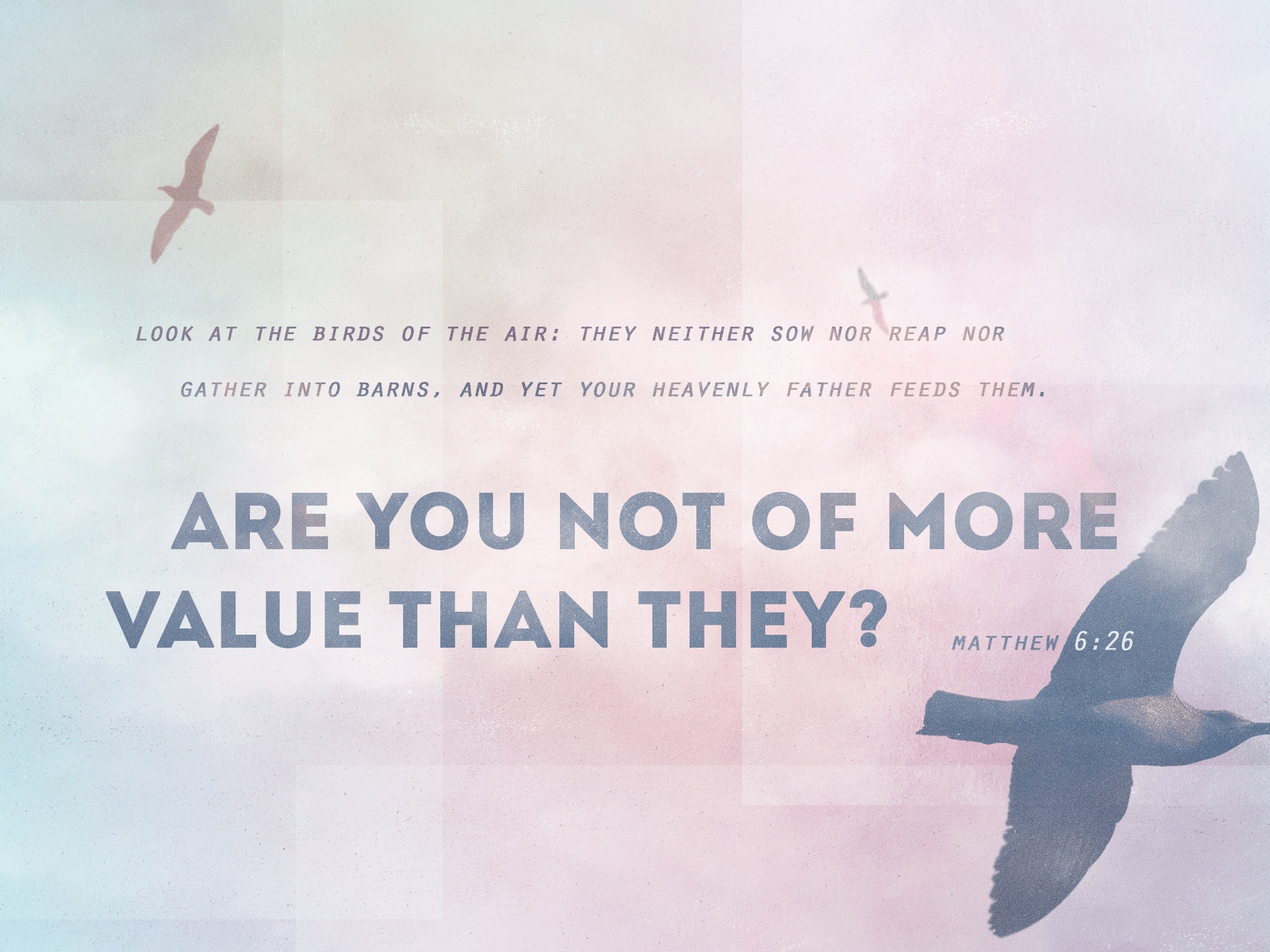
[1] Portions of this sermon – especially regarding lilies – were adapted from a sermon by Rev. Dr. Norman Nagel.

Gentle, Reasonable Rejoicing – Sermon on Philippians 4:4-7 for the Fourth Sunday of Advent

Philippians 4:4-7

4 Rejoice in the Lord always; again I will say, rejoice. 5 Let your reasonableness be known to everyone. The Lord is at hand; 6 do not be anxious about anything, but in everything by prayer and supplication with thanksgiving let your requests be made known to God. 7 And the peace of God, which surpasses all understanding, will guard your hearts and your minds in Christ Jesus.

In the name of Jesus. Amen.

Before I share a quote with you, I want to be clear on something: I am a Vikings fan, through and through. Have been and will be all my life. I feel like I need to say that because the quote comes from the former Green Bay Packers coach, Vince Lombardi. In 1967, the Packers’ kick returner, Travis Williams, scored a touchdown and danced in the endzone to celebrate. As he returned to the sideline, Lombardi told his excited rookie, “Travis, the next time you make it to the endzone, act like you’ve been there before.”

Now, I share that quote to help us get to the meaning of one particular word in this text; it’s in v. 5, “Let your reasonableness (the Greek word there is pronounced epieikēs) be known to everyone.” There really isn’t a good English equivalent for epieikēs, which is utterly unfortunate. Other translations will use words like gentleness, graciousness, and moderation, but each of those only convey one part of the word’s meaning. Epieikēs – refers to a strength that doesn’t need to prove anything to other people because that strength is accompanied with gentleness, meekness, and humility. We could compare it to scoring a touchdown, calmly handing the ball to the ref, and heading to the sidelines to get ready for the next play. A player who does that is confident enough to know that he has the strength and ability to find his way into the endzone again so he can be humble.

Now, all of that was to simply convey the meaning of epieikēs. When Paul wrote Philippians, he wasn’t writing to a football team, so let’s get to what this means for us Christians.

Dear saints, “Rejoice in the Lord always; again I will say, rejoice.” The life of a Christian is a life of rejoicing. Why can you be joyful always? Because you are a sinner who deserves nothing but God’s punishment, but that is not what God has given you. Instead, you have a Savior. Jesus, the eternal Son of God, has come in the flesh. He has taken your place. He lived a perfect, sinless life for you. He is the Lamb of God who takes away your sin (Jn. 1:29) and brings it to the cross where He endured the punishment that you deserved because of your sin (2 Cor. 5:21).

And in place of your sin, Jesus has fully forgiven you and has given you His perfect righteousness. When God looks at you, He sees His holy, beloved Son (Gal. 3:27). Nothing can take that away from you – not sickness, not financial troubles, not pesky relatives, not greedy politicians. Neither death nor life, nor angels nor rulers, nor things present nor things to come, nor powers, nor height nor depth, nor anything else in all creation, will be able to separate you from the love of God in Christ Jesus your Lord (Ro. 8:38-39). Now, that is reason to rejoice.

In your rejoicing, let that epieikēs – that confident, humble, gentle strength – be evident to everyone you encounter because Jesus, your Savior, is at hand. Christian, Jesus is coming back, and He will bring justice and righteousness. You don’t have to prove or assert yourself. You don’t have to make everything right in a fallen world. Jesus will come and do that. Just a few verses before our text, we are told that “our citizenship is in heaven, and from [heaven] we await a Savior, the Lord Jesus Christ” (Php. 3:20). So, when you face any type of adversity in this world, you can have a moderated, calm kindness and gentleness because you stand in the strength of Jesus who is going to fix everything that is broken and make everything right.

Yes, this world is going to throw all sorts of trials, tribulations, and adversities at you that will make you worried and anxious. But this text tells us what to do with those worries so our humble, gentle strength – our epieikēs – continues to be known to everyone. Turn those anxieties into your prayers. Whatever makes you worried and anxious, doesn’t need to dictate how you act. Instead, hand that thing over to God in prayer. God promises to take care of that thing in the way that is best for you and for those around you (Ro. 8:28).

Christian, the almighty, all-powerful God and Creator of all things is also your Redeemer. Rejoice! He freely gives you His salvation. In Isaiah 30:15, God makes a promise to you that explains why you can have this epieikēs; He says, “In returning and rest you shall be saved; in quietness and in trust shall be your strength.”

Dear saints, in Jesus you are sons and daughters of God and have the victory over every evil because His death on the cross has delivered you (1 Cor. 15:57). “Christ’s resurrection guarantees the victory of [you,] His brothers and sisters. Christ’s second coming brings the final fulfillment. And Christ, [your] Lord, is at hand.”[1] Amen.

The peace of God, which surpasses all understanding, will guard your hearts and minds in Christ Jesus. Amen.

Today’s sermon was abbreviated due to our Sunday School Christmas program.


[1] Rev. Dr. Normal Nagel. Selected Sermons of Norman Nagel. Concordia Publishing House, 2004. p. 27

The Line – Sermon on Matthew 6:24-34 for the Fifteenth Sunday after Trinity

Matthew 6:24-34

24 “No one can serve two masters, for either he will hate the one and love the other, or he will be devoted to the one and despise the other. You cannot serve God and money.

25 “Therefore I tell you, do not be anxious about your life, what you will eat or what you will drink, nor about your body, what you will put on. Is not life more than food, and the body more than clothing? 26 Look at the birds of the air: they neither sow nor reap nor gather into barns, and yet your heavenly Father feeds them. Are you not of more value than they? 27 And which of you by being anxious can add a single hour to his span of life? 28 And why are you anxious about clothing? Consider the lilies of the field, how they grow: they neither toil nor spin, 29 yet I tell you, even Solomon in all his glory was not arrayed like one of these. 30 But if God so clothes the grass of the field, which today is alive and tomorrow is thrown into the oven, will he not much more clothe you, O you of little faith? 31 Therefore do not be anxious, saying, ‘What shall we eat?’ or ‘What shall we drink?’ or ‘What shall we wear?’ 32 For the Gentiles seek after all these things, and your heavenly Father knows that you need them all. 33 But seek first the kingdom of God and his righteousness, and all these things will be added to you.

34 “Therefore do not be anxious about tomorrow, for tomorrow will be anxious for itself. Sufficient for the day is its own trouble.”

In the name of Jesus. Amen.

The things Jesus tells us to not be worried about in this text are, typically, not the things that we are actually worried about. The last time you didn’t have a meal was probably because you chose not to eat, either you are on a diet, you chose to do something other than eat, or you didn’t like the food you had on hand. You probably aren’t worried about clothing either. Your dressers and closets are likely full of clothes. Even if they are last year’s styles, they would still do what clothes are meant to do. Yes, clothes wear out, but in a pinch you could stitch together something to keep you warm and covered. You have food and clothing. And here Jesus promises that He will give you everything you need for this life as long as He wants to keep you in this life. And Jesus wants you to trust that He will do this. 

That is why Jesus harps on all of us for our worry over and over in this text. Even though we don’t typically worry about food, drink, and clothing, we certainly do worry about other things. The economy. Gas prices. Inflation. Cancer. Heart disease. The upheaval and unrest in our country and throughout the world. Those things and things like it are the things we worry about, and we try to excuse our worry about those things. But  today, Jesus says, “Do not be anxious, saying, ‘What shall we eat?’ or ‘What shall we drink?’ or ‘What shall we wear?’ For the Gentiles,” in other words, the pagans and unbelievers, “the Gentiles seek after all these things.” According to Jesus here, one of the marks of the unbeliever is worry. Yet, you and I still worry. This text gives us all ample reasons to repent. 

Notice how Jesus draws a line in the last verse. After telling us not to worry about food, drink, or clothing or anything else we need for this life, Jesus adds, “Do not be anxious about tomorrow, for tomorrow will be anxious for itself. Sufficient for the day is its own trouble.” Last week, we considered how thankfulness looks back to the good gifts of God in the past. Well, worry does the opposite. Worry looks at the unknown, bad things in the future and has a wrong belief that we have to face that future alone. Tomorrow is clouded in the unknown, but tomorrow is also clothed with the promises of God to be with us, to never leave or forsake us, to provide all that we need, and to protect us with His power and might. God will care for us. Now, that doesn’t mean that we get to be lazy or idle. But too often we sinfully think that worry is the work we need to do to face the troubles of tomorrow.

That is why Jesus draws this line for us. The things that God sets before us today are the things that should have our attention. We are to do everything God gives us to do to confront and combat those evils and troubles that we face each day. Jesus wants us to go about our business and exert our efforts while God promises to give us the strength we need for every moment of today. But when Jesus says, “Do not worry about tomorrow,” He draws a line at the end of today. Anything past that line, we are to leave in His gracious hands.

With all of Jesus’ talk about not worrying, we can fall off the other side of the horse and become sinfully passive and idle. We might be tempted to think we don’t ever have to work or do anything to combat the evils we face and think God will just take care of everything as we can just back and do nothing. Well, that isn’t right either. For example, it is a sin to pray for a hole when God has given you a shovel. God uses you as His hands and feet to combat the evils of the day, and He promises to give you the strength you need as you face those evils. And since each day has enough evil of its own, don’t let tomorrow’s evil distract you with worry from what God has given you to face today. Jesus promises that He will give you everything you need to meet the evil, ugly troubles of today. And, if He gives you another day tomorrow, He will do it again.

Our Old Testament lesson (1 Kgs. 17:8-16) is a great example of God giving what is needed to face the troubles of today. In Elijah’s days, things were bad. God’s own people had given up the faith and were worshipping Baal, the false god of fertility. So many had abandoned the faith that Elijah worries that he was the only believer left (1 Kgs. 19:10). God had sent a drought to punish Israel, but God told Elijah to live by the brook Cherith promising, “I have commanded the ravens to feed you there” (1 Kgs. 17:4). We don’t know exactly how long Elijah lived by that stream with the crows waiting on him, but as the drought went on, the brook dried out, and that is where our text picks up. God tells Elijah to go the city of Zarephath because, “I have commanded a widow there to feed you” (1 Kgs. 17:9).

For however long he lived at Cherith, Elijah had become accustomed to the ravens flying to him and providing his food because God had commanded them to feed him. Now, Elijah gets to Zarephath, but this widow isn’t like the crows who just delivered his food to him. She doesn’t come up to him and say, “There you are. Diner is at my place. God commanded me to feed you.” Not even close! Elijah watches this widow picking up a couple of sticks, asks her for a drink of water, and as the woman heads off to get it Elijah adds a bite of bread to his order. The widow doesn’t say, “No way! I can’t give you anything.” Instead, her response is, basically, “I’ve only got enough ingredients for my son and I to have a bite. I’m grabbing these sticks so we can bake it, eat, and die.” But Elijah gives her a promise from God that the flour and oil will not run out until God would send rain and provide relief from the drought (1 Kgs. 17:14, 16). For the entire three and a half years of the drought, God gave Elijah what he needed to face the evil of each of those days. Dear saints, God will provide all you need for this life until He calls you out of this veil of tears. So don’t worry.

Some of you have watched the pain that a family endures while their child is being treated for cancer. Some of you have gone through this, but for those of you who haven’t, you might think, “I could never handle that the way they handled that. I don’t have the strength.” You were right. You don’t have the strength to handle that because God hasn’t called you to face that – at least not yet. But here’s the thing. When Jesus says, “Do not worry about tomorrow,” Jesus is saying that He doesn’t want you to worry about that diagnosis coming tomorrow because it distracts you from meeting the troubles that God has called you to face today. If the day comes when God calls you to meet that evil (or any other evil), Jesus promises to give you the strength to meet that evil each and every day it is yours to endure.

You see, when you get to the end of the day and are completely worn out, remember, God designed your tank to be empty at the end of the day. So, go to sleep in peace (Ps. 4:8). And when you wake up again, be ready to face the trouble that comes your way that day because God will give you His strength to meet it then.

Dear saints, work and strive and face the evil, troubling that are before you. But draw a line at the end of the day, and don’t worry about anything past that line since you can’t do anything about it anyway. God promises that He will give you the strength to meet the evil things that come your way each and every day of your life, and He is faithful.

Above all, remember what Christ has done by taking on our flesh. Jesus Himself got hungry and thirsty and tired and hot and cold, so He knows the struggles you face. Christ endured it all without a shred of worry because He trusted that God the Father would provide the strength He needed to endure it. Even as He went to the cross, carrying all your sin of doubt and anxiety, Christ entrusted Himself to God (1 Pet. 2:23), and there on the cross Jesus provided what you needed most – His forgiving blood shed for you. On the cross, Christ overcame and defeated all the evils of every day that you face and has now opened the kingdom of heaven to you.

This means that you can face the evils of each day of your life knowing that God will give you the strength to meet those evils, and you don’t need to help Him with your worry. Without fail, Christ will give you everything you need until the day He calls you into His gracious presence. Amen.

The peace of God, which surpasses all understanding, will guard your hearts and minds in Christ Jesus. Amen.

Three Circles of Protection – Sermon on Matthew 6:24-34 for the Fifteenth Sunday after Trinity

Listen here.

Matthew 6:24-34

24 “No one can serve two masters, for either he will hate the one and love the other, or he will be devoted to the one and despise the other. You cannot serve God and money.

25 “Therefore I tell you, do not be anxious about your life, what you will eat or what you will drink, nor about your body, what you will put on. Is not life more than food, and the body more than clothing? 26 Look at the birds of the air: they neither sow nor reap nor gather into barns, and yet your heavenly Father feeds them. Are you not of more value than they? 27 And which of you by being anxious can add a single hour to his span of life? 28 And why are you anxious about clothing? Consider the lilies of the field, how they grow: they neither toil nor spin, 29 yet I tell you, even Solomon in all his glory was not arrayed like one of these. 30 But if God so clothes the grass of the field, which today is alive and tomorrow is thrown into the oven, will he not much more clothe you, O you of little faith? 31 Therefore do not be anxious, saying, ‘What shall we eat?’ or ‘What shall we drink?’ or ‘What shall we wear?’ 32 For the Gentiles seek after all these things, and your heavenly Father knows that you need them all. 33 But seek first the kingdom of God and his righteousness, and all these things will be added to you.

34 “Therefore do not be anxious about tomorrow, for tomorrow will be anxious for itself. Sufficient for the day is its own trouble.”

In the name of Jesus. Amen.

Today, Jesus preaches to us against worry by making fun of it. Jesus asks, “Which of you by being anxious can add a single hour to his span of life?” (v. 27). Christ is making a joke. Literally, Jesus says, “Which of you by worrying can add a cubit,” a measurement of length, “to your life?” which is, of course, measured in time. I don’t know a lot of tall, elderly people, but my grandfather, who died in his 80’s, was 6’ 2”. When I saw him never thought, “Wow. Grandpa must have worried a lot.” Jesus even makes fun of us worriers. When our translation quotes Jesus asking, “Will He not much more clothe you, O you of little faith?” He is actually calling us a name – “you little faiths” or “little faithers.”

In His preaching, Jesus invites us wise and noble humans to slow down and hear the preaching of birds and flowers. When birds need food, they don’t go to the little bird grocery store where all the food grown by farmer birds is sold. It’s almost as if Jesus was inviting you to imagine certain types of birds working in each role. (Finches would be at the grocery tills – fight me.) Birds don’t keep their food in cupboards and pantries in their nests. Flowers don’t look for best sales of the season for clothes, but they are splendidly clothed. In His wisdom, God has ordered creation in such a way that He takes care of feeding birds and clothing the grass. The birds and grass trust Him, and Jesus says we should as well.

Kids, whenever you are studying science – botany, biology, anatomy, astronomy, physics, etc. – you get a small peek into all the ways we have observed how God has ordered creation. And the more scientists discover, the more we see about the complexity, intricacy, and beauty of God our Father and Creator. God put thought and wisdom and detail into every part of creation as He spoke it into existence. All of creation was designed by God to both continue and sustain life. He does it for birds and plants and animals and planets and stars and galaxies. And He does it for you.

And it is with that thought, I want to take a step back and consider how God gives order to provide for us and protect us, the pinnacle of His creation. As we see this wonderful and beautiful order, Jesus invites us to not worry when we are tempted to do so.

In His wisdom, God has given order to our lives by creating and instituting, what theologians call, “the Three Estates”: The Three Estates are the Church, the Family, and the State (or government), in that order are the three circles of protection that God has graciously given. Science cannot observe and study this, but from God’s Word we can see how God has woven these Three Estates into the fabric of creation to provide for you and protect you. When we consider what is going on in the world through the lens of the Three Estates, it helps shape and guide our thinking in a biblical way so that we do not worry. And even though things can get bad (and, even, currently are bad) in these estates, these estates cannot be completely overthrown or destroyed.

Each of the Three Estates has a “source” or when it was instituted. A “form” or what it consists of. And an “end” or goal. So, let’s talk about each of these:

First, the estate of the Church. The estate of the Church was instituted and has its source at the Tree of the Knowledge of Good and Evil. And this will take a bit of explaining. We are always and only righteous and holy through faith. Scripture repeatedly says, “the righteous shall live by faith” (Hab. 2:4; Ro. 1:17; Gal. 3:11).

Before they fell into sin, Adam and Eve had everything good from God because of the perfection of creation, so they needed a promise of God to believe. That promise was implied when God gave the command to not eat the fruit of the Tree of the Knowledge of Good and Evil (Gen. 2:16-17). In other words, God’s command included a promise which was, “Evil is bad. Trust Me on this. When you find out what evil is, it won’t go well for you. In fact, you’ll die.” So, with this command and promise, Adam and Eve could have by faith what God never intended them to have. God didn’t want humanity to experience evil or death by sight, only by faith.

The estate of the church takes the form and consists of the Word of God preached and believed. As long as Adam and Eve believed God’s Word, they had the pure Church. God be praised that now, even after the Fall, we still have the Church which continued when God promised that the Seed of the woman, Jesus, would deliver and rescue us from death (Gen. 3:15).

Finally, the end or goal of the Estate of the Church is for us to have eternal life with God. So, we have, first, the Church: instituted by God’s promise before the Fall (and sustained after the Fall), with the goal and end of eternal life.

The second estate instituted by God to protect and provide for humanity is the Estate of the Family. The Estate of the Family has its source and was instituted also before the Fall when God took Adam’s rib and formed Eve. Then, God told Adam and Eve, “Be fruitful and multiply and fill the earth and subdue it” (Gen. 1:28). Even after the Fall, we know that God wants the Estate of the Family to continue because God repeats this command to Noah and his descendants after the Flood (Gen. 9:1).

The Estate of the Family takes the form of and us made up by husband, wife, and children.

And the end or goal of the Estate of the Family is also life, but, unlike the Estate of Church, the Family provides temporal, physical life. So, we have the Family: again, instituted by God before the Fall (and sustained after the Fall), with the goal and end physical life.

The Estate of the State is a little more complex because it was instituted only after the Fall. And there isn’t a direct passage of Scripture where God clearly establishes the Estate of the State. However, Scripture does clearly teach us that the Estate of the State is a good institution of God in both Romans 13:1-7 and 1 Peter 2:13-17 where Scripture teaches that the State is not a terror to good conduct but to bad and that the State carries out God’s wrath on the wrongdoer.

A couple possibilities of when God establishes the Estate of the State could be: When God sent the cherubim to guard the way to the Tree of Life (Gen. 3:22-24). By prohibiting Adam and Eve from eating from the Tree of Life, God was protecting them from living forever in sin. Some suggest that the Estate of the State was instituted after the murder of Abel, and there are some good arguments for that, but for the sake of time I’m not going to get into that now.

The Estate of the State takes the form of and uses the instrument of the sword and punishment. In other words, the State uses either punishment or the threat of punishment to protect and preserve life. Think of it this way, God established the State to bring about ‘little death.’ To the State God has given the tools of rules, punishments, jail, even execution and war to prevent more or bigger death.

Try this as an example: your car can probably go over 100 mph. But the authorities that God has established in the State have brought about a ‘little death’ for your car through speed limits. You have to drive down Columbia at or under 40 mph. because driving 100 mph. would endanger the lives of others. And if you refuse to obey the law, there is the threat of punishment through a speeding ticket, or, if you actually do drive 100 mph. down Columbia, you should be thrown in jail for reckless endangerment.

The goal of the Estate of the State is to preserve life. Because it is impossible for the state to give life, it’s only function is to preserve life through the means of that ‘little death.’ An analogy for this would be when a surgeon cuts open a person to do surgery on their heart or to remove a tumor. This brings about pain and death, but in an effort to preserve life. So, we have the State: instituted by God after the Fall, with the goal and end preserving life through punishment or “little death.”

Now, this ordering of creation has very important ramifications. When we worry about what is going on around us, the Three Estates let us see how God has provided these three circles of protection. The Three Estates also helps shape what we are to do. We are to be faithful citizens of the State by voting and following the laws that the State gives to protect life. We are to be faithful to our Family by being good parents and obedient children. And we are to be faithful members of Christ’s Church by trusting Him and growing in God’s Word and faith.

We are constantly bombarded with news, and it is easy to get caught up with what is going on in Washington D.C. or St. Paul or Bismarck. We tend to get so focused on the coming election and what is happening in the government – both at the federal and state level. With the economy in a bad place, an open seat on the Supreme Court, and pandemic, we start to think that the State has to do something, and the State does have a place to make rules and laws to protect life. But then – when you throw in riots, fires, hurricanes, masks, and social distancing – it is easy for us to look to the State for things that God hasn’t given the State to do. There certainly may be a place for the State to have care and direction when it comes to those things as well. And there is also a place for polite discussion and disagreement on what level and to what degree the State should or shouldn’t make those decisions.

But in all of this, we should recognize that the State exists only to protect life by minimizing death. It also means that the Estate of the State has nothing to do and has no purpose apart from the Estate of the Church and the Estate of the Family. Since life does not exist apart from the Church and the Family, there is nothing for the State to do without the Church or Family. So, the State is the most temporary and the least important of the Three Estates because it only exists to serve and protect the life that comes only through the Church and the Family.

Also, it is important for each of the Three Estates to “stay in their own lane.” Pastors should not shepherd their flock like a president or king. Families should not look to the State or the Church to provide for them. Politicians should not guide on what is right and moral. We could go on and on, but I hope you get the point. (And we can talk about all this later too.)

The end of all this, dear saints, is this: A lot of our worry (at least for me and what I see on social media) comes from what is going on in the State. Repent! It shouldn’t be this way. Yes, the State is important. The State and the authorities God has placed over us matter and are there to protect life. But what is going on in your Family much more important than what happens in the State. Put more of your focus and attention there.

Remember that Jesus promises to provide for your family. Jesus hasn’t given you permission to worry about anything. If Jesus wants to give you permission to worry about something, He’ll be sure to let you know. But until then, go about your work. And worrying is not work – even though it often feels like it. Worrying takes a lot of time and energy, but worrying isn’t productive. Remember, God has promised, and He will provide – even if it means sending ravens or a miraculous provision of flour and oil like He did in our Old Testament text (1 Kgs. 17:8-16). While you remember that what happens in your family is more important than what is going on in the State, even more important than what is going on in your family is what is going on at here at Church.

Here God provides everything you need for eternal life. He has given Christ to go to the cross, shed His blood, die, and rise again for your justification. He continues to pour out His mercy upon you from this very altar with this holy Supper. Sure, things are currently bad in the state. Maybe, things are even not so great in your family. But both could certainly be worse. Remember, God still protects and provides everything you need for eternal life through the Estate of the Church. And no matter what happens in this world, the gates of hell will never overcome Christ’s Church (Mt. 16:18). Don’t be anxious. Don’t worry, little faithers.

I want to close here with what Jesus says when He preaches almost the exact same sermon in Luke 12:29–31. Your Savior says, “Do not seek what you are to eat and what you are to drink, nor be worried. For all the nations of the world seek after these things, and your Father knows that you need them. Instead, seek His kingdom, and these things will be added to you. Fear not, little flock, for it is your Father’s good pleasure to give you the kingdom.” Amen.

The peace of God, which surpasses all understanding, will guard your hearts and minds in Christ Jesus. Amen.