The Word, the Light, & the Darkness – Sermon on John 1:1-5 for Midweek Advent 1

John 1:1-5

1 In the beginning was the Word, and the Word was with God, and the Word was God. 2 He was in the beginning with God. 3 All things were made through him, and without him was not any thing made that was made. 4 In him was life, and the life was the light of men. 5 The light shines in the darkness, and the darkness has not overcome it.

In the name of Jesus. Amen.

Texts like this are one of many reasons why I’ll never attempt to create a chronological Bible reading plan. I’m familiar with several of those plans, but none of the ones I’ve seen have these verses from the opening of John’s Gospel anywhere near Genesis 1. And they should be. Parts of these verses are chronologically before the beginning. But I don’t know how exactly how a person could decide where to put them. You have Gen. 1:1, “In the beginning, God created the heavens and the earth,” and Jn. 1:1-2, “In the beginning was the Word, and the Word was with God, and the Word was God. He was in the beginning with God.” Which of those should come first? How do you order those? Would you put them parallel to each other? I don’t know. There are valid arguments to go either way.

Then, what do you do with v. 3-5? I suppose you could put v. 3-4 after the, “and there was evening and there was morning, the sixth day” (Gen. 1:31). But then, what do you do with v. 5, “The light shines in the darkness”? You might consider putting that back on the first day of creation when God creates light and separates light from dark. But ‘the Light’ there doesn’t refer to light as we know it. There, ‘Light’ refers to Jesus Himself, and He existed even before God said, “Let there be light” (Gen. 1:3). On top of that, “The light shines in the darkness,” is present tense and is always true. Jesus constantly, continually, always shines into and pierces the darkness, and He will never be overcome. So, maybe you’d need to put v. 5 running down the margin of every single page from Genesis to Revelation.

John 1:5 is so comforting. It’s a verse that I would recommend that you tuck in your back pocket so you can contemplate and meditate on it whenever you get the sense that the darkness of this world is gaining the upper hand. It isn’t. Not now. Not ever. The darkness will never win. It can’t. Use Jn. 1:5 to constantly remind yourself, “Jesus is my Life and Light. No darkness will ever overcome Him, so no darkness will overcome me. The darkness simply isn’t strong enough.” Isn’t that a wonderful, comforting thought?

The reason no darkness can overcome Jesus is that He is eternal. There was never a time when He was not. In fact, time itself exists through and because of Him. He created time and everything else that has been made. Scripture clearly teaches that Jesus’ birth in Bethlehem was not His beginning. He always is. Notice it’s not, “He always was” but is (Jn. 8:58Ex. 3:14).

Look again at our Old Testament reading (Pr. 8:22-31). Jesus, the Word and Wisdom God, is there before the beginning of the earth (Pr. 8:22-23). He was there before the depths were carved. He was there before the mountains were stretched into the sky. He was there before the stars were placed into their orbits and before the foundations of the earth were laid (Pr. 8:24-29). Jesus was right there beside God the Father like a master craftsman (Pr. 8:30). Jesus Himself was the Word that God that the Father spoke and which gave shape and order and beauty to all of creation. And notice the joyful exchange between God the Father and God the Son at the end of that text. God the Son says, “I was daily [the Father’s] delight,” and, “[I was] always rejoicing before [the Father]” (Pr. 8:30).

Jesus delighted in all of God’s creation. But He especially found delight in the crown of God’s creation – the children of man (Pr. 8:31). Just stop and think of that. Do you ever think of yourself as Jesus’ delight and source of joy? You should! Imagine Jesus watching over God the Father’s shoulder as Adam is being formed from the dust of the ground. He stares in amazed joy as God shapes him and uses Adam’s rib to make Eve. And even now, Jesus delights as God knits together every subsequent human who has ever been born – including you (Ps. 139:13-15).

Jesus, the eternal Son of God and God’s life-giving Word, delights in you to the extent that He can’t stand the thought of you being severed from Him. Whenever we sin, we start walking away from God’s Light and into darkness. That is why the Word became flesh and dwelt among us (Jn. 1:14). (We’ll cover that verse in a couple weeks. And I hope I’m not preaching myself into a corner here.) God became flesh for you.

Jesus’ delight in you is so great that even though He was God, He became one of you. He took on your flesh. Now, because of the incarnation, part of God’s nature is that He has a human body. Even though Jesus is true God, He doesn’t refuse to endure the same things that you experience as a human. Jesus got hungry and thirsty. He became tired and weary. Jesus prayed to His Father when He was in danger. 

As God, Jesus is always feeding everyone everywhere in the world. But as a human Infant, Jesus nursed from Mary’s breast and was fed from Joseph’s hand. As God, Jesus never needs to sleep. But as a Man, He sleeps on a pillow in the stern of a boat during a storm (Mk. 4:38). As God, Jesus is the commanding General of all the angel armies. But as a Man, Jesus was strengthened by an angel (Lk. 22:43-44). As God, Jesus put into place the entire starry height of planets, stars, and galaxies. But as a Man, Jesus’ Body is nailed to a block of wood in the shape of a cross. As God, Jesus gives life to all. But as a Man, Jesus’ side was pierced by a spear. Jesus is the One who raises the dead, but He was laid in a tomb for you.

Dear saints, the eternal Word of God – begotten of the Father before all worlds, God of God, Light of Light, very God of very God – came down from heaven and was made Man. He did all of this for you. He did this to give you Life and Light. He did this because you are His delight. He will not let the darkness overcome you. And He will bring you to Himself in His eternal city where there will be no more night or darkness. He is and will always be your Light, and through faith you will reign with Him forever and ever (Rev. 21:22-22:5). Amen.

The peace of God, which surpasses all understanding, will guard your hearts and minds in Christ Jesus (Php. 4:7). Amen.

Children of Light – Sermon on Ephesians 5:1-9 for the Third Sunday of Lent

Ephesians 5:1-9

1 Therefore be imitators of God, as beloved children. 2 And walk in love, as Christ loved us and gave himself up for us, a fragrant offering and sacrifice to God. 

3 But sexual immorality and all impurity or covetousness must not even be named among you, as is proper among saints. 4 Let there be no filthiness nor foolish talk nor crude joking, which are out of place, but instead let there be thanksgiving. 5 For you may be sure of this, that everyone who is sexually immoral or impure, or who is covetous (that is, an idolater), has no inheritance in the kingdom of Christ and God. 6 Let no one deceive you with empty words, for because of these things the wrath of God comes upon the sons of disobedience. 7 Therefore do not become partners with them; 8 for at one time you were darkness, but now you are light in the Lord. Walk as children of light 9 (for the fruit of light is found in all that is good and right and true),

In the name of Jesus. Amen.

You’ve probably all heard the phrase, “Nothing good happens after ___ o’clock.” If a news anchor said it, the time might have been midnight or 2 AM. If it was one of your parents, it was probably 10:00. Kids, if you ever hear that phrase from your parents or grandparents, they know what they’re talking about. When darkness falls, it is a lot more likely that evil things are going to happen.

Darkness is the favorite blanket of evil, and we know this instinctively. It’s why kids go into their parents’ room in the middle of the night and cry about monsters under the bed or whatever other impossible things kids imagine. Everyone has a keen sense of vulnerability in the dark. Even adults often have their bleakest thoughts when the world is dark. The thoughts that wake me up at 3 AM are never the best, brightest, or most hopeful ones.

In a wonderful way, Scripture repeatedly gives a picture of the Savior as the bright Morning Star (Is. 60:1-3; Mal. 4:2; 2 Pet. 1:19; Rev. 2:28, 22:16). Or, in a similar vein, Scripture says that, when Jesus comes, a new day dawns (Ps. 84:11; Ro. 13:12). In the first chapter of Luke’s Gospel, the coming of Jesus is described as the “sunrise from on high” that “give[s] light to those who sit in darkness and in the shadow of death,” and His coming, “guide[s] our feet into the way of peace” (Lk. 1:78-79).

Dear saints, the picture Scripture gives us is that all of creation has changed because Christ has come. The darkness has been dispelled, put to flight, and broken up. Jesus hints at this in our Gospel reading (Lk. 11:14-28). Christ says that He casts out demons by the finger of God, and His power to do that is proof that the kingdom of God has come upon us (Lk. 11:20).

Because of Jesus’ resurrection, there is a new day – the day that the Lord has made. Because He has made it, we rejoice and are glad in it (Ps. 118:24). And this new day will never end. Believer, this changes you, and it changes how you think about the world. The fact that today and every other day of your life is the day that the Lord has made, the things in front of you that are ominous, scary, and threatening are all less intimidating. Yes, they are still threats, but you know that they are all defeated threats.

All three of our readings today are about spiritual warfare, about the battle between the kingdom of darkness and Christ’s kingdom of light. It’s obvious in both the Old Testament (Ex. 8:16-24) and Gospel (Lk. 11:14-28). In our Gospel reading, Jesus tells us know how the kingdom of Satan operates, and our Lord comforts us because He tells us how He, our Savior and Champion, has defeated sin, death, and the devil.

And in the Old Testament reading, we heard how Pharaoh’s magicians recognized that the finger of God was at work when they couldn’t replicate the gnats that swarmed throughout Egypt (Ex. 8:18-19). Those evil, demonic sorcerers were able to duplicate the sign God did through Moses of turning his staff into a serpent (Ex. 7:11-12), but they failed to do the smaller thing of reproducing gnats.

The last time these texts came up, I had fully intended to preach about the folly of the kingdom of darkness because that folly is on full display through Pharaoh and his magicians. Their whole country is completely overrun with gnats, but they still try to duplicate the sign done through Moses. That text shows how self-destructive the kingdom of Satan is. “Our whole nation is filled with these gnats.” “I know what we should do; let’s try to make more of them.”

But today, rather than seeing how the kingdom of darkness works or how self-destructive it is, I decided to preach on this Epistle reading because it gives us the strategy of how to fight back against the forces of darkness. Throughout Scripture you are given several ways to fight evil, but this text gives you one simple weapon – thankfulness and thanksgiving.

Notice that v. 3 gives us a list of things we are to not only avoid we aren’t even to name them. That list is sexual immorality, impurity, and covetousness. Then in v. 5, that list is repeated when we’re told that the sexually immoral, the impure, and those who are covetous have no inheritance in the kingdom of Christ and God.

To contrast that twice-repeated list, Paul mentions only one thing here – thanksgiving. The beloved children of God who walk in love as children of light have thanksgiving on their lips, not filthiness or foolish talk or crude joking.

Thanksgiving is one of the fruits of the Spirit (Gal. 5:22-23). And thanksgiving is one of your best weapons against the darkness from which you have been rescued. When thanksgiving is on your lips, the temptations and sins you face are much easier to fight because those things become revolting.

Think back to the Garden of Eden and how the devil tempted our first parents to fall into sin. “Can’t you eat from any tree? If you eat from this one that God told you not to eat from, you will be like God. Don’t you want to be like Him?” (Gen. 3:1, 5). Instead of being thankful that God had given all the other trees for food, instead of being thankful that God had already made created them in His image (Gen. 1:27), Adam and Eve coveted (Gen. 3:6). The fruit of the forbidden tree looked good, and it was desirable. Because of that coveting, because of that wrong desire to be more than God had already made them to be, they took of the fruit and ate and plunged all of creation into the darkness of sin and death.

Coveting is a sin, but it is a sin that rarely registers in our conscience. We pass off coveting as nothing because we think it doesn’t hurt anyone else. That is so wrong. Here coveting is equated with idolatry (Eph. 5:5). Coveting is the first step into sin. To put it another way, every time you sin, you first covet and idolize yourself. Coveting is basically saying, “God, you got it wrong. You messed up. That thing over there,” whatever it is, “should be here. It should be mine.”

Whenever you sin, you break at least three commandments. Every time you sin, you first covet which is nothing less than idolizing yourself. Then you commit adultery, steal, lie, take the Lord’s name in vain, etc. The way to fight against this is to give thanks instead of coveting and having those false desires.

Imagine for just a minute if thankfulness had replaced Adam and Eve’s coveting. They would have realized, “We aren’t hungry; the entire world is our pantry! Thank you, God. We are already created in God’s image and are exactly what God wants us to be. Thank you, God, that we are created in Your image and that you have declared that we are ‘very good’” (Gen. 1:31).

Dear saints, Scripture gives you several ways to fight against the devil and the darkness. But today, you children of light, this text gives you one simple, specific weapon to fight back against the forces of evil, and that is thanksgiving.

You husbands, the next time you are tempted with lust, pause. Take a moment to give thanks to God for your wife. Thank God for uniting the two of you in the bond of holy marriage (Mt. 19:6). You wives, the next time you are tempted to complain to someone about your husband, take a moment to give thanks to God for him and all the ways he cares for you and your family. Children, the next time you are tempted to disobey your parents, take a moment to give thanks to God for all that your parents provide to you and how they protect you.

Dear saints, the light of Christ has shined upon you, and because of that you are now children of the light. You used to be darkness, and notice the way Eph. 5:8 says that. It isn’t just that you were in darkness. No. You were darkness itself. But now that you are God’s children, you are light in the Lord, so now you walk as children of the light. And as children of the light, you produce the fruit of light which is found in all that is good and right and true.

You give thanks to God for all the good He has given you. You give thanks to God, and it is right to do so because He has truly blessed you because He has given Himself up for you as a fragrant offering and sacrifice.

God has forgiven you (Eph 4:32). He has made this new day of light and has shined His light into you. So, rejoice, be glad in this day, and give thanks. And as you give thanks, the darkness flees. Amen.

The peace of God, which surpasses all understanding, will guard your hearts and minds in Christ Jesus. Amen.

Successful Steward – Sermon on 1 Corinthians 4:1-5 for the Third Sunday of Advent

1 Corinthians 4:1–5

1 This is how one should regard us, as servants of Christ and stewards of the mysteries of God. 2 Moreover, it is required of stewards that they be found faithful. 3 But with me it is a very small thing that I should be judged by you or by any human court. In fact, I do not even judge myself. 4 For I am not aware of anything against myself, but I am not thereby acquitted. It is the Lord who judges me. 5 Therefore do not pronounce judgment before the time, before the Lord comes, who will bring to light the things now hidden in darkness and will disclose the purposes of the heart. Then each one will receive his commendation from God.

In the name of Jesus. Amen.

In these days leading up to Christmas, gifts are probably taking a lot of your time, energy, and mental space. Maybe, you’re still looking for that perfect present that evens out the number of gifts and the amount you’ve spent on each individual. You might be struggling to find a spot to hide everything until you can get it all wrapped, or you’re closely following the tracking information so you can intercept the packages before they are discovered on your front step.

In this season of giving gifts, it’s good to remember that everything you have is a gift. Just two verses after this reading (1 Cor. 4:7), Paul rhetorically asks, “What do you have that you did not receive?” Everything we possess has been graciously given to us by our God and Father (Jn. 3:27). Our houses and vehicles, our food and clothing, our families and jobs are all good gifts freely given by the hand of God. He has given you your time, your talents, your body, your energy, and strength. Don’t fool yourself into thinking that you have earned anything you have. God has given it. The epistle of James says, “Every good and every perfect gift is from above coming down from the Father of lights” (Jam. 1:17).

Because everything you have is a gift, that means you are a steward or manager of those gifts. It all belongs to God, and God wants and expects you to use everything He has given you to love Him by loving your neighbor (Mk. 12:28-31). Stewards know that what they have will all eventually be returned to their Owner, and on the Last Day, you will give an account to God for how you have used those gifts (Heb. 4:13). The issue that Paul is dealing with here is about being a successful steward.

Here, Paul is specifically talking about his stewardship of his office, his vocation, of being an apostle. God made Paul a steward of the mysteries of God. That means that Paul is to preach God’s Word and write the sacred, Holy Spirit-inspired Scriptures. He recognizes that he needs to be faithful in that. But this text extends far beyond just Paul.

All stewards are required to be faithful with what they are given. Paul writes, “It is required of stewards that they be found faithful” (1 Cor. 4:2). In other words, faithfulness is the one standard by which stewards are judged. And there is great comfort in this. Stewards aren’t judged by numbers or growth or success or fame. Faithfulness is the one, and only, standard by which a stewards’ success will be determined. And the only One who can and does judge by that standard is God, the Giver of the good gifts that we have.

As Paul writes about himself here, he says, “with me it is a very small thing that I should be judged by you or by any human court” (v. 3a). It doesn’t matter how they judge him. And it doesn’t matter what anyone else thinks. In fact, Paul says that it doesn’t even matter what his own estimation is; he says, “I do not even judge myself” (v. 3b). The only thing that matters is what the Lord God judges (v. 4). In God’s timing, He will bring to light the things that are now hidden in darkness and disclose the purposes and intentions of the heart. Then, and only then, will each one receive his commendation and praise from God (v. 5).

Dear saints, there is such freedom for you here. It can be incredibly easy to get discouraged in life. We make our plans, and they don’t pan out. We struggle through our tasks at work and don’t seem to make any progress. We do our best to teach our kids and train them how they should act, but they keep disobeying. We try to provide financially for ourselves and our families, but we always seem to be behind. In all those moments, we start judging ourselves and our work by metrics that – honestly, in the end – don’t really matter.

Now, that does not mean that we shouldn’t use those metrics to improve and do better as stewards. I’m not saying that. We should always strive to be better stewards of what God has given us.

What I am saying, though, is this: At the end of the day, at the completion of a task, when we consider how well we’ve done at anything, the question we should ask is, “Have I been faithful?” In other words, “Did I do what God has given me to do? Did I use the resources and means that God provided in the best way I could?” If the answer to that is, “Yes,” then that is enough. But remember that your estimation doesn’t matter. Only God’s does.

This standard of success for stewards applies to all areas of your life. It applies to your schooling, your marriage, your career, your time, talents, and treasures because, again, all of it is a gift from God. Some of you think far worse of yourself than you really are. And, yes, some of you think far better of yourself than you actually are. The day will come when God will reveal all sorts of hidden obstacles and struggles – as well as blessings and gifts – that we didn’t have any idea were there. And then, He will be the Judge who commends or condemns. So, don’t you go jump the gun. Don’t bother with rating or grading yourself. God will take care of it when He comes.

Another pastor put it well when he said that this text gives us a “blessed uncertainty” as it concerns our success, our failure, our progress, or our lack of progress. And there are at least two reasons God wants you to have this uncertainty.

First, God wants you to be uncertain about your success because if you were confident in either direction – either how well or how poorly you had done – that becomes a distraction to you remaining faithful. If you’re always looking around to see how well or how poorly you’re doing, you’re probably not paying enough attention to what you are actually doing. God wants you to be focused on the thing He has given you to do. All you have to do is to be faithful.

Second, and more importantly, God wants you to be uncertain about your success because He wants you to be certain of only one thing – just one thing. And that is the certainty of your position in Christ alone. God wants you to be certain that you are justified because Christ Jesus has died for you. Through faith in Him, your sins are not and will not be counted against you. You have a future and a hope in Christ that is immovable. Keep your focus and attention on that because, again, that is certain.

Dear saints, the Lord, and the Lord Jesus Christ alone, judges you. And, through faith, you already know what that judgment is. You heard it in the Absolution. Jesus Himself says, “I entirely forgive you all of your sins because I have died for them.” Rejoice in that, my fellow stewards of God’s gifts. Amen.

The peace of God, which surpasses all understanding, will guard your hearts and minds in Christ Jesus. Amen.

Redeeming the Time – Sermon on Ephesians 5:15-21 for the Twentieth Sunday after Trinity

Ephesians 5:15–21

15 Look carefully then how you walk, not as unwise but as wise, 16 making the best use of the time, because the days are evil. 17 Therefore do not be foolish, but understand what the will of the Lord is. 18 And do not get drunk with wine, for that is debauchery, but be filled with the Spirit, 19 addressing one another in psalms and hymns and spiritual songs, singing and making melody to the Lord with your heart, 20 giving thanks always and for everything to God the Father in the name of our Lord Jesus Christ, 21 submitting to one another out of reverence for Christ.

Roadblock – Sermon on Proverbs 4:10-23 for the Fourteenth Sunday after Trinity

Proverbs 4:10–23

10 Hear, my son, and accept my words, 
that the years of your life may be many. 
11 I have taught you the way of wisdom; 
I have led you in the paths of uprightness. 
12 When you walk, your step will not be hampered,
and if you run, you will not stumble. 
13 Keep hold of instruction; do not let go; 
guard her, for she is your life. 
14 Do not enter the path of the wicked, 
and do not walk in the way of the evil. 
15 Avoid it; do not go on it; 
turn away from it and pass on. 
16 For they cannot sleep unless they have done wrong; 
they are robbed of sleep unless they have made someone stumble. 
17 For they eat the bread of wickedness 
and drink the wine of violence. 
18 But the path of the righteous is like the light of dawn, 
which shines brighter and brighter until full day. 
19 The way of the wicked is like deep darkness; 
they do not know over what they stumble. 

20 My son, be attentive to my words; 
incline your ear to my sayings. 
21 Let them not escape from your sight; 
keep them within your heart. 
22 For they are life to those who find them, 
and healing to all their flesh. 
23 Keep your heart with all vigilance, 
for from it flow the springs of life.

In the name of Jesus. Amen.

In 2019, the AFLC’s Annual Conference was held near Scranton, PA. To save our congregations a bit of money, four other pastors and I decided to travel together. We rented a vehicle in Minneapolis which ended up being a brand new, black GMC Yukon with tinted windows and all the bells and whistles. Our first day of travel together was from Minneapolis to a hotel in Toledo, OH which is just under 700 miles and would take about 10 hours. We had Google Maps plot our course to avoid toll roads, made our way through Wisconsin, and started to enter the Chicago metro. As we got deeper into Chicago, Google kindly told us that our current course had congested traffic and that there was an alternate route which would save us 45 minutes. That’s what you call a no brainer. Reroute.

We got off the freeway and quickly found ourselves driving through the neighborhoods of Chicago. Sure, there were stoplights and stop signs, but we kept moving. Now, one of the other pastors had grown up near Chicago, but he had been asleep in the third-row seat when we decided to reroute. I’m not exactly sure what woke him up, but he looked out the window and asked, “Where are we?” We told him that we were still in Chicago and that we had left the freeway to avoid traffic. He looked at a couple of street signs and said in the most serious voice I had ever heard him use. “We need to get out of here. Now!”

We had been redirected to the south side of Chicago, not only that, but a neighborhood notorious for stray bullets and carjackings. Apparently, Google Maps can help you avoid tolls and traffic jams, but it isn’t able to assist five, slightly overweight, mostly Scandinavian pastors avoid being robbed at gunpoint. We did make it out safely with the rented Yukon.

The point is this: it is easy to quickly and unintentionally end up on the wrong path. For us five pastors, the address of our destination didn’t even change, but we were deeply down the wrong path.

Now, there is a temptation for us to hear about the two paths described in these verses and lull ourselves into a false sense of security. We can wrongly think, “I’ve been taught the Bible which is the Word of Life. I’m not overly influenced by all that bad stuff ‘out there.’ I’ll just set the cruise control on my mostly moral life, make sure the lane departure warning system is enabled so I keep being virtuous, and everything will be just fine and dandy.”

Dear saints, beware of that attitude sneaking up on you because when it does, you are already several steps down the dark path of wickedness. The fork in the road between the path of life and the path of the wicked isn’t just ‘out there’ and clearly marked with signs. No. The exit down road of evil is always in the heart of each of us sinners and you can start down it without realizing that your destination has changed. Repent.

Go back for just a minute to that picture of the wicked being unable to rest or sleep unless they have done wrong or made someone stumble. If it weren’t so haunting, it would almost be comical. Imagine the wicked getting ready for bed. They put on their pajamas, brush their teeth, go to the bathroom, fluff their pillow, snuggle up under the covers, but toss and turn because they realize they haven’t gotten someone else to sin. It sounds so ridiculous, but, if you’re honest, you’ve probably experienced that restlessness and sleeplessness when you realize you haven’t caused someone else to stumble.

Stick with me on this. The most natural reaction we sinners have to our sin is, sadly, not to repent, not to get off the dark, evil path of the wicked. Instead, our natural reaction is to recruit other sinners by trying one of two things:

First, we try to recruit other sinners when we play the comparison game. We compare our sin to the sin of others. We search high and low for people who have fallen into sin and think that God will look more kindly on us because there are others who fell harder or further than we did. In our opinion – which, frankly, doesn’t matter – our sin isn’t as grievous as those other people’s. That comparing our sin to the sin of others brings us to a place where we celebrate the sin and downfall of others. We hope to find others stumbling.

But the second way we recruit others to sin is more dangerous and, I think, more common. We recruit other sinners when we try to defend ourselves and make excuses for our sin. When we make excuses for our sin, we are foolishly trying to rig a jury that has no jurisdiction over our case. We figure if we can get enough people to understand why we did that sinful thing, whatever it was, then they will be ‘on our side.’ We lose sleep thinking of ways to convince others that our sin was justified. We want them to make us comfortable with our unrepented sin.

Adam tried to pull this asinine trick when he ate the forbidden fruit. He tried to excuse his sin by convincing God that the reason he ate the fruit was the fault of God Himself. Adam basically says, “Listen God, the only reason I ate the fruit was that this woman, whom You gave to be with me, gave me that fruit. You’re responsible and culpable for my sin” (Gen. 3:12).

When we make excuses for our sin, what we are actually doing is we are trying to get others to fall into their own sin. We want them to lie by calling the evil, sinful thing we did ‘good’ or ‘ok’ or, at least, ‘neutral.’ But Isaiah 5:20 says, “Woe,” in other words, ‘damned,’ “are those who call evil good and good evil.” When we try to excuse our sin before others, we are trying to get them to call something evil we have done ‘good.’ Again, repent.

Dear saints, constantly be on the alert for the path of the wicked knowing that you are always inclined to reroute yourself to it. See the roadblock that this passage puts in front of that wicked path. “Do not enter the path of the wicked, and do not walk in the way of the evil. Avoid it; do not go on it; turn away from it and pass on” (v. 14-15). Don’t be like a foolish child and blow through that roadblock.

Dear saints, stay on the righteous path. Hold fast to the Words of Scripture. Notice how the opening verses also call this righteous path the way of wisdom. This wise, righteous path is clear of obstacles. When you walk on this path, you will not be hampered, and if you run (I’m so glad that the text leaves that as optional by saying, ‘if’) if you run on this path, you will not stumble. This path is life – it is full of life, and it grants life.

To follow this path means that when Scripture points out your sin, be wise. Confess that sin. Receive God’s mercy and forgiveness freely given to you because it has been bought and paid for by Jesus’ holy and precious blood. Confess that sin and be filled with Christ’s righteousness.

And know that this path is like the light of dawn. You who are righteous through faith in Christ, you don’t walk in the light of the full day – not yet. But you do walk in the light of the dawn which is always growing brighter and brighter so you see the righteous way more clearly as the day of your Savior’s return draws ever nearer. Amen.

The peace of God, which surpasses all understanding, will guard your hearts and minds in Christ Jesus. Amen.

Unveiled – Sermon on Exodus 34:29-35; Matthew 17:1-9; and 2 Peter 1:16-21 for the Transfiguration of Our Lord

Exodus 34:29-35; Matthew 17:1-9; & 2 Peter 1:16-21

In the name of Jesus. Amen.

This is a glorious text, but even more glorious is that the beloved Son of God would give His life for you on the cross. Because Jesus has died for you, you, dear saints, will also shine like the sun (Mt. 13:43). To make that point, we’re going to consider all three of our Scripture readings and two other passages, 2 Cor. 3:4-18 and Mt. 13:43. A figure skater or a competitive diver will do a routine with a high degree of difficulty to get a higher score. Hopefully, my execution of the sermon will be good enough that the payoff will be worth it in the end.

A person’s face can tell you a lot. Just to be clear, I’m not talking about the mouth part of a person’s face – of course, the mouth can tell you a lot too. I’m talking about a person’s facial demeanor. Someone could be talking to you in a normal tone, but if you watch their face, you can tell if they are sad or happy, discouraged or excited, heartbroken or twitterpated. Sometimes you just enter a room, and a family member will ask, “What’s wrong?” or, “Why are you so happy?” Your word hole doesn’t have to be operating for your face to say a lot.

Between our Old Testament and Gospel readings today (Ex. 34:29-35 & Mt. 17:1-9), we heard about two different shining faces – Moses’ and Jesus’. And those two shining faces produced two very different responses.

Right before our OT text, Scripture says that Moses had been on Mt. Sinai for forty days and forty nights, and during that time he neither ate bread nor drank water (Ex. 34:28). How Moses survived that, I don’t know. Somehow, God miraculously kept Moses going. After being on a mountain for forty days and nights with nothing to eat or drink, you would expect Moses’ face to be weathered, worn, and weary. But when he arrives back in the camp, Moses’ face was shining because he had been talking with God. This made the people so afraid that they wouldn’t even approach Moses. Now, Moses admits here (because he wrote Exodus) that he had no idea that his face was shining. And this gives us a glimpse into what Moses must have seen and heard during those forty days and nights. Being in God’s presence and talking directly to God was so grand and glorious that the glory Moses saw continued to radiate from his face. And Moses was so used to being in that glory that he didn’t realize his face was shining.

In 2 Cor. 3:4-18, Paul contemplates on this. I would encourage you to read that passage later today, and you might want to turn there because we’re going to come back to it. In 2 Cor. 3:4-18, Paul says that the Law came with such splendor and glory that people were afraid to come near because of Moses’ shining face. Paul goes on to say how much more glorious is the ministry of the Gospel, and we see that glory on the Mount of Transfiguration.

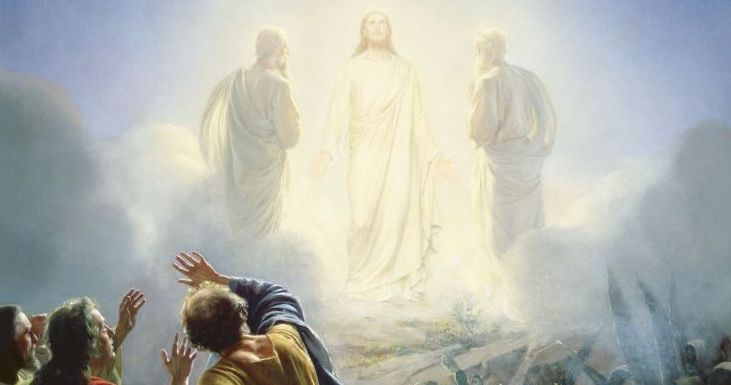
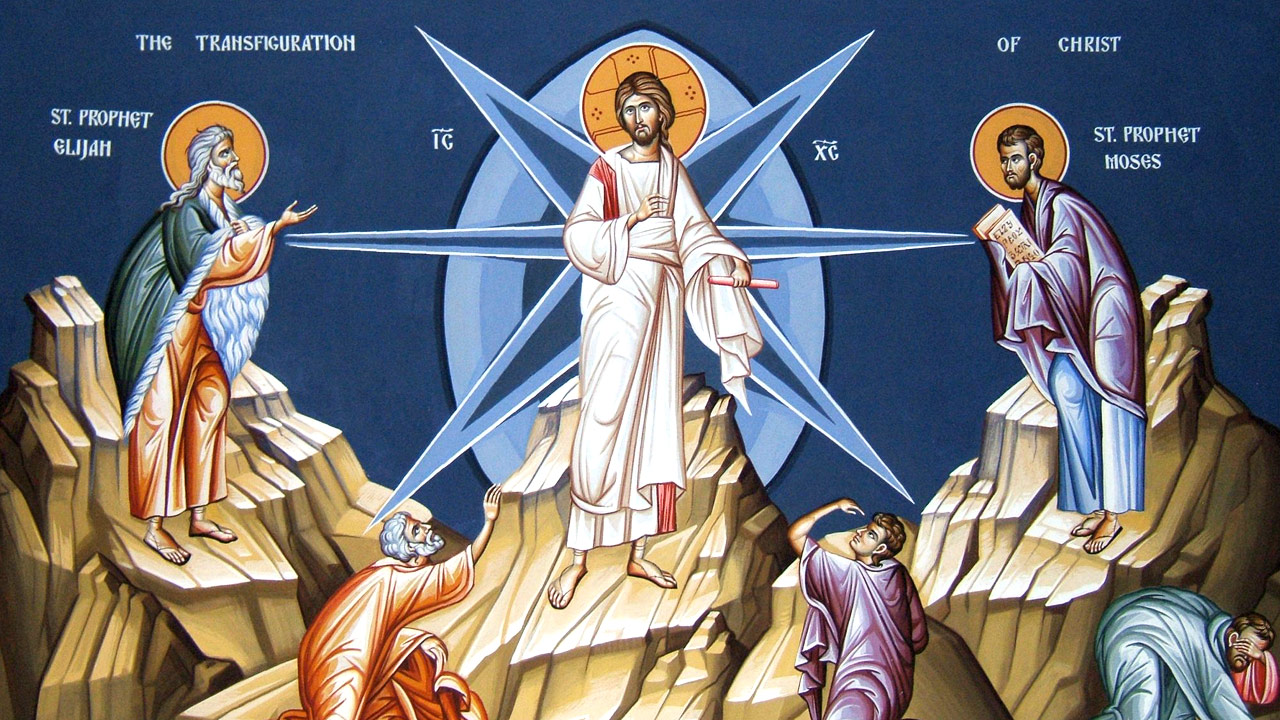
Jesus goes up a high mountain with Peter, James, and John and is transfigured. His clothes become white as light. Moses and Elijah appear and are talking with Jesus. And Jesus’ face shone like the sun. Now, Scripture doesn’t give us the total lumens of Moses’ face compared to Jesus’ face. It is interesting to note that the Greek translation of our Old Testament text uses a word that means ‘glow’ to refer Moses’ face while Matthew here uses the word λάμπω (lampō) which means ‘shine’ to refer to Jesus’ face. So, Moses’ face glowed with a radiant, reflected glory, but Jesus’ face shines like the sun with its own glory.

We do know that Moses’ face was bright enough that people could see it and were afraid, but a thin veil was enough to calm their fears. But here Jesus’ face shines like the sun, and I’m pretty sure a little veil wasn’t going to do much to dim that shining. Despite the brightness and glory, notice that Peter, James, and John don’t ask Jesus to veil His face. Instead, the reaction is completely different. Peter says, “Lord, it is good that we are here. In fact, let’s stay here. I’ll make three tents – one for You, one for Moses, and one for Elijah.” But while Peter is still speaking, the bright cloud of God’s glory overshadowed them, and God the Father said, “This is My beloved Son, with whom I am well pleased; listen to Him.” This terrifies the three disciples, but Jesus came and touched them saying, “Rise, and have no fear.”

In our Epistle text (2 Pet. 1:16-21), Peter reflects on the Transfiguration about thirty years later. There, Peter says that the Transfiguration does show Jesus’ glory, but even more so, it unveils the glory of the Bible. Peter says that it is better for you to have the Scriptures than for you to have witnessed the Transfiguration because every verse of the Scriptures unveils God’s great love for you. The shining face of Jesus points us to the bright lamp of the Scriptures that shines in a dark place. But what is this dark place?

Your initial thought is probably that the lamp of the Scriptures shines in the darkness of this world. The Bible certainly does talk about the world being full of darkness and sin. Psalm 119:105 says, “Your Word is a lamp to my feet and a light to my path.” God’s Word does enlighten this dark world so that we don’t stumble or go the wrong way. But here Peter is talking about a different dark place. He says to pay careful attention to the Scriptures as “a lamp shining in a dark place until the day dawns and the morning star rises” – and catch this – “the morning star rises in your hearts.”

You see, it’s not just the world and things outside of you that are a dark place. Your heart also has a darkness that needs the light of God’s Word. Peter doesn’t use the normal word for ‘dark’ here. The word Peter uses means, “foul and repulsive from a lack of care; neglected and filthy.” Here is the picture: Our sinful hearts are a filthy, murky, dark place. And we do well to pay attention to the Word of God shining in the dirty, neglected, dark place of our heart. When we pay attention to them, the lamp of the Scriptures shines in the darkness of our heart and pierces through the filth inside us. And the Gospel also changes us.

Even though you weren’t a witness to Jesus’ Transfiguration (lit. His ‘metamorphosis’), you have something better. Back to 2 Cor. 3:18, “And we all, with unveiled face, beholding the glory of the Lord, are being transfigured (same word used for Jesus’ transfiguration though the ESV translates it as ‘transformed’) we are being transfigured into the same image from one degree of glory to another.” Even now, already in this life, Christian, you are being transfigured into the same glory that Jesus had on the mountain. God brings about that transfiguration through His Word. By God’s gracious working through His Word, you are slowly being transfigured and metamorphosized into Jesus’ glory.

God has promised that you are being transfigured. And the picture of Jesus on the mountain today is what you are heading toward by the grace of God. In Mt. 13:43, Jesus says that you who are righteous through faith in Him will shine like the sun, just like Jesus did.

So that you could shine like the sun and be like Him, Jesus went down from the mount of Transfiguration. He descended from that glorious peak, so He could ascend another mountain, Mt. Calvary, where He laid down His life for Peter, for Moses and Elijah, and for you. He did this because He loves you and wants you to be transfigured and share in His unveiled glory. Lord Jesus, come soon and bring us to that glory. Amen.

The peace of God, which surpasses all understanding, will guard your hearts and minds in Christ Jesus. Amen.

Sorrow & Sighing Will Flee – Sermon on Matthew 9:18-26 for the Twenty-fourth Sunday after Trinity

Matthew 9:18-26

18 While [Jesus] was saying these things to them, behold, a ruler came in and knelt before him, saying, “My daughter has just died, but come and lay your hand on her, and she will live.” 19 And Jesus rose and followed him, with his disciples. 

20 And behold, a woman who had suffered from a discharge of blood for twelve years came up behind him and touched the fringe of his garment, 21 for she said to herself, “If I only touch his garment, I will be made well.” 22 Jesus turned, and seeing her he said, “Take heart, daughter; your faith has made you well.” And instantly the woman was made well. 

23 And when Jesus came to the ruler’s house and saw the flute players and the crowd making a commotion, 24 he said, “Go away, for the girl is not dead but sleeping.” And they laughed at him. 25 But when the crowd had been put outside, he went in and took her by the hand, and the girl arose. 26 And the report of this went through all that district.

In the name of Jesus. Amen.

This text begins with, “While [Jesus] was saying these things….” which means it is plopping us into the middle of a conversation. Matthew could have just told this as a stand-alone story by starting with, “One time a ruler came to Jesus….” Both Mark’s and Luke’s Gospels do that when they record the story (Mk 5:22-43Lk. 8:41-56), but Matthew was inspired by the Holy Spirit to include more context. He connects these two miracles with the discussion Jesus is currently having. So, please, grab your Bible, so you can see what Jesus is saying. Open, turn, tap, or whatever you do in your Bible to Mt. 9:14-17.

Some of John the Baptizer’s disciples come to ask Jesus a question, “Why do we and the Pharisees fast, but Your disciples do not fast?” Notice what their question assumes. “We’re pious, religious people, and we fast. The Pharisees are pious, religious people, and they fast. Why aren’t Your disciples religious and pious like us? Why don’t they fast?” These disciples of John figure that Jesus’ disciples should be practicing their religion like they and others do. In other words, at the root of their question is the idea that Jesus is just a regular teacher and nothing new or special. They must have missed the fact that John had been pointing and pushing them toward Jesus (Jn. 3:25-30).

Jesus answers the question from John’s disciples by saying (Mt. 9:15-17), “Can the wedding guests mourn as long as the bridegroom is with them? The days will come when the bridegroom is taken away from them, and then they will fast.” Then, Jesus goes on to talk about old cloths and new patches and new wine and old wineskins. But the point of interest here is this talk about the Bridegroom being present – something that John the Baptizer had taught.

In Jesus’ day, wedding feasts were an even bigger ordeal than they are today. A wedding feast would last several days – sometimes even a week (Gen. 29:27) or two.[1] Refusing to eat at a wedding feast would be at least inappropriate if not offensive. Imagine if you invited someone to come to your house for dinner in two weeks. You carefully prepare the menu making sure it will be tasty and nourishing. You go out shopping picking the best produce and meat. You spend hours preparing the food. Your guest arrives, sits down for the meal, and announces he won’t be eating because he is fasting. It’s rude and wrong.

When Jesus says that His disciples don’t fast because the bridegroom is present, He is saying that the Old Testament promises about God’s people being married to God (Is. 54:5-662:4-5Hos. 2:14-20) are coming true in His ministry. The day of deliverance that God had been promising since the Fall has come. The Messiah is here, and the wedding feast has begun!

But now, while Jesus is saying these things, a ruler comes and tells Jesus that his daughter has died. Mark’s Gospel tells us that his name is Jairus (Mk. 5:22), so I’m going to refer to him by his name. Jairus has a legitimate reason to be mourning, but the Groom is present. And the wedding feast that is Jesus’ ministry will not be disturbed by death of anyone except the Groom. (But even His death ends up being only a brief interruption of the feast.) Jairus knows that Jesus, the Groom, won’t let his daughter’s death stand, so he says to Jesus, “Come lay Your hand on her, and she will live.” So, what does Jesus do? Look carefully at v. 19, “Jesus rose and followed him.”

Matthew doesn’t just say that Jesus follows Jairus to his home. Christ “rose.” That word that gets translated ‘rose’ a word for resurrection. In fact, Matthew uses that same word again in v. 25 when the little girl will arise from her sleep of death. The word can mean “stand up,” but most literally it is what we do in the morning when we get out of bed. And it is what we Christians will do on the Last Day when we rise up from our graves. But Matthew is giving a nice little foreshadowing of what Jesus is going to do when He gets to Jairus’ house. The little girl’s rising from death only happens because Jesus rises first. Dear saints, the same is true for you. You will rise again because Jesus is risen – no question about that. [Alleluia! Christ is risen! He is risen indeed! Alleluia!]

On the way to Jairus’ house, we get a little interruption in the story. A woman who has been suffering from a discharge of blood for twelve years hears about this wedding feast and decides that all she needs to do is touch the fringe of Jesus’ garment and she will be ‘saved.’ The word there doesn’t just mean ‘made well,’ it means ‘saved’ from her disease. She does. She is. And Jesus proves that her idea of touching His garment isn’t just a superstition about Jesus’ clothes. Her faith saves her.

For twelve years, she had been ceremonially unclean from this menstrual bleeding. This meant for twelve years she couldn’t go to the Temple, couldn’t get married, couldn’t even attend some family gatherings. But Christ brings her into the celebration of the joy of the Messiah’s wedding feast. She gets even better than what Isaiah got when the burning coal touched his lips (Is. 6:7), and she ascends the ladder to heaven that Jacob saw in his dream (Gen. 28:12).

After all this, Jesus arrives at Jairus’ house. He dismisses the people who are there making a commotion and mourning. By the way, these were professional, paid mourners, so they knew who was dead and who wasn’t. But Jesus dismisses them saying, “Go away, for the girl is not dead but sleeping,” which says a lot about what your Savior thinks about your death. The mourners laugh at Christ, but Jesus simply takes this little girl by the hand and lifts her up from the nap of death. Her spirit returns (Lk. 8:55), and she lives.

Dear Natalie, that brings me to you. Natalie, today you are Baptized. Today, Jesus has joined you to Himself by placing His name upon you (Mt. 28:19) and clothed you with Himself (Gal. 3:27). In your Baptism, Jesus joined you to His death so that you have a Jesus-kind of death – in other words, a death that doesn’t last long and ends in resurrection (Ro. 6:3-11).

Natalie, no one here knows what God has in store for your life in this world. But, dear Natalie, we do know this because Scripture promises: You heard it in our Epistle lesson (Col. 1:9-14), God has delivered you from the domain of darkness and transferred you to the kingdom of His beloved Son, in whom you have redemption, the forgiveness of sins.

Natalie, and all you saints, God promises in our Old Testament lesson (Is. 51:9-16), “I, I am He who comforts you.” You are the redeemed of the Lord. You shall come to the eternal Zion with singing. Everlasting joy will be on your head. You will, without a doubt, obtain gladness and joy. Whatever sorrow and sighing you endure in this fallen world, whether it is caused by others or by your own sins and failures, that sorrow and sighing will flee away because they are utterly defeated by Christ’s death and resurrection.

Jesus, your Savior and Groom, has borne your griefs and carried your sorrows. Your sorrow and sighing cannot and will not stay with you. They will flee because Jesus lives. And because He lives, so will you. Amen.

The peace of God, which surpasses all understanding, will guard your hearts and minds in Christ Jesus. Amen.


[1] The apocryphal book of Tobit (8:20) speaks of a two-week wedding feast for a particularly important wedding.

Passion Miracles – Sermon on Matthew 26:1-27:66 for Palm Sunday

Listen here.

Matthew 26:1-27:66

In the name of Jesus. Amen.

The seven sayings of Jesus on the cross are the most important words spoken in all history. We have considered them in the past, and we will hear them again on Friday. But Jesus isn’t the only member of the Trinity speaking during the crucifixion. God the Father speaks too, but not audibly. Instead, the Father speaks through the miracles that take place while Jesus is on the cross, and we are going to give our attention to those today.

The first miracle is the darkness. In the Gospel of Mark, we are told that Jesus was crucified, nailed to the cross, at the third hour (Mk. 15:25), which would be about 9 AM. Then, the Gospels tell us that there was darkness from sixth hour until the ninth hour. In other words, that darkness lasted from noon until 3 PM when Jesus died.

Now, Matthew says this darkness was over “all the land” (Mt. 27:45). The interesting thing there is that the word ‘land’ can mean portions of a country. But most of the time, the word there means the entire earth. Matthew uses it in both senses throughout his Gospel. It could be that this darkness was localized to the region surrounding Jerusalem where Jesus was crucified, but it could have been much more than just that – even the entire earth.

This darkness was not a solar eclipse. Jesus was crucified at the time of the Passover which means there would have been a full moon, and a solar eclipse can only happen at a new moon. Plus an eclipse only lasts minutes, not hours. We also know that this darkness wasn’t the result a bunch of thick, dark clouds gathering. A Greek historian named Phlegon of Tralles, who was born shortly after Jesus’ death, records what he calls an eclipse. He wrote that it became night at noon so that the stars even appeared in the heavens. Now, Phlegon wasn’t a Christian. He might not have even been aware of the Gospels recording this same event. But the dating of his account matches up precisely with the timing of the crucifixion. Today, secular scholars have tried to come up with an explanation for this darkness Phlegon mentions, but they can’t. No astronomical or meteorological explanation can be made, but the historical accounts aren’t denied either.

This darkness happened because of God. God has the authority to turn off the sun if He wants to. Over and over in Scriptures, darkness is a sign connected with God’s judgment and anger over sin. Remember the ninth plague of darkness over the land of Egypt (Ex. 10:21-22). For three hours during the crucifixion, this darkness covered the land.

So, what was going on here; what was God the Father saying with this darkness? Well, Jesus had taken upon Himself the sins of all humanity, and God’s judgment was laid upon Christ (Is. 53:6). Think of all the sins you just heard about: treachery of Judas, the cowardice of Pilate, the blasphemy of the chief priests, the malice of the crowds. All those heinous sins were all placed upon Jesus.

But it was more than that too. The murder committed by Cain, the hard-heartedness of Pharaoh, the continual unbelief of the Israelites, the pagan practices of the inhabitants of Canaan, the adultery of David, every bit of sin in the world up to that point was all placed on Jesus. All the sins that have happened since: the sins of Nero, Hitler, Stalin, bin Ladin, and every other wicked, evil person were laid upon Jesus. Your sins were there too: your anger, lust, pride, gossip, lies, and covetousness. And all the sins that are still to happen in the future. All of it was there in that moment on Christ as He hung on the cross.

All of those sins angered God. He noticed them and was angry because of them. But know this. God only let the darkness of judgment fall when those sins were laid upon Christ and were no longer yours. So, between noon and three on that Good Friday, Jesus took all of those sins. Christ Himself bore your sins in His body on the cross, and by His wounds you are healed (1 Pet. 2:24). That’s why Jesus says from the cross, “It is finished” (Jn. 19:30). His redemption for every sin of every person who has ever lived and will ever live was paid in full. Jesus suffered the punishment of God for it all.

The second miracle was the tearing of the curtain in the Temple. The curtain was thick and heavy, so it was no coincidence that it tore from top to bottom. For hundreds of years, that curtain stood as a barrier between God and all of humanity. Only the priest could go behind that curtain into God’s presence on the Day of Atonement. Remember that both the Tabernacle and the Temple served as copies of heaven (Heb. 8:59:23; Ex. 25:9). So, for generations, that curtain preached a sermon to God’s people that said, “Heaven is off limits to you.” But when the high priest would go in behind the curtain on the Day of Atonement, that yearly event preached another sermon. A very different sermon. That sermon preached that access to heaven would come, but only through a substitute.

So, when that Temple curtain tore from top to bottom, what was God saying? God was saying that you who were once far off have been brought near by the blood of Christ (Eph. 2:13). God is pleased with you now. He loves you, and heaven is open to you because of Jesus’ death.

The third miracle was the earthquake. The same historian I mentioned earlier, Phlegon, he wrote about this earthquake too. And he wrote about it in Nicaea which is almost 700 miles away from Jerusalem. It’s hard to say for certain what this earthquake means – especially because there is another earthquake Easter morning (Mt. 28:2). But remember how the Pharisees wanted Jesus to rebuke the people who were crying out, “Hosanna,” as He rode into Jerusalem? Jesus answers them, “If these were silent, the very stones would cry out” (Lk. 19:36-40) It could be related to that. It could be a sign that God had redeemed all creation by the death of Jesus (Ro. 8:21-23). We can’t say for sure why the earthquake happened. But creation noticed and responded to both the death and resurrection of Jesus.

Finally, the fourth miracle is that many of the saints were raised. We heard how Matthew mentions that these risen saints walked around after Jesus’ resurrection and appeared to many (Mt. 27:52-53). What this shows us is that death is no longer the enemy it was before the death of Jesus. God can raise the dead in an instant. Jesus has paid the price. Disease, death, violence, virus, plague, and pandemic are no longer your enemy. They are all defeated by Christ. 

Dear saints, these miracles prove that you have nothing to fear. Christ has paid the price for your sins. God is on your side. He is risen, and so will you. Your King has come with righteousness and salvation (Zech. 9:9). He has spoken peace to you (Zech. 9:10). Return, you prisoners of hope; return to God, your stronghold (Zech. 9:12).

Christ has humbled Himself for you to death – even death on a cross (Php. 2:8). At the name of Jesus every knee will bow and every tongue confess that He is Lord.

So, yes, “Hosanna! Hosanna to the Son of David! Hosanna in the highest!” Ride on Jesus. Ride on and save us. Welcome to Holy Week. Amen.

The peace of God, which surpasses all understanding, will guard your hearts and minds in Christ Jesus. Amen.

The Lamp & the Darkness – Sermon on 2 Peter 1:16-21 for the Sunday of the Transfiguration of Our Lord

Listen here.

2 Peter 1:16-21

transfiguration-icon16 For we did not follow cleverly devised myths when we made known to you the power and coming of our Lord Jesus Christ, but we were eyewitnesses of his majesty. 17 For when he received honor and glory from God the Father, and the voice was borne to him by the Majestic Glory, “This is my beloved Son, with whom I am well pleased,” 18 we ourselves heard this very voice borne from heaven, for we were with him on the holy mountain. 19 And we have the prophetic word more fully confirmed, to which you will do well to pay attention as to a lamp shining in a dark place, until the day dawns and the morning star rises in your hearts, 20 knowing this first of all, that no prophecy of Scripture comes from someone’s own interpretation. 21 For no prophecy was ever produced by the will of man, but men spoke from God as they were carried along by the Holy Spirit.

In the name of the Father and of the Son and of the Holy Spirit. Amen.

Peter, James, and John saw Jesus do many amazing things. Just think back on the sermons from the last few weeks. They were there when Jesus (according to John), “manifested His glory” by turning water into wine (Jn. 2:11). They saw Jesus touch a leper, and, instead of the disease spreading from the man and infecting Jesus, the cleanness of Jesus spreads to the man and his leprosy was gone (Mt. 8:1-4). They heard Jesus speak a word to heal a centurion’s paralyzed servant (Mt. 8:5-13). They were in a boat that was being swamped by the winds and the waves, and Jesus tells that storm to knock it off resulting in a great calm (Mt. 8:23-27). Peter, James, and John would see Jesus feed the masses, give sight to the blind, and raise the dead.

But, when Peter looks back on everything that Jesus did, and when Peter wants to let people know the truth of the Christian faith, Peter points the people to whom he wrote this letter to the Transfiguration. There on the holy mountain, Peter says he saw the power, the coming, and the majesty of Jesus with his own eyes. The Transfiguration is the greatest manifestation of the deity of Jesus. It is where Jesus’ divine nature, which He always had, shines through His human nature showing that He is God of God, Light of Light, very God of very God.

The truth that God Himself came down to die and rise again to save all mankind from sin is not some cleverly devised myth. It is rooted in historical fact. Peter was there. He saw with his own eyes. Peter’s own ears heard God the Father preach a very important but very brief sermon, “This is my beloved Son, with whom I am well pleased. Listen to Him” (Mt. 17:5).

So, we could summarize v. 16-18 here as Peter saying, “Listen up. Our preaching of God coming down to rescue us from sin and death is not some myth or fairy tale. We preach Jesus as the Savior of the world because we saw His glory and power and majesty. We preach Jesus because we heard the very voice of God from heaven when we were with Jesus on the holy mountain of Transfiguration.”

And the rest of this text, which is where we are going to focus most of our attention, is the meaning, the take-away, of why the Transfiguration is still important for us today. And the reason might surprise you.

Normally, we think of the Transfiguration as mainly showing us the glory of who Jesus is. The Transfiguration certainly does do that. But listen to Peter’s conclusion: Verse 19, “And we have the prophetic word more fully confirmed, to which you will do well to pay attention to as to a lamp shining in a dark place, until the day dawns and the morning star rises in your hearts.”

The Transfiguration of Jesus does show the glory of Jesus, but even more so, according to this text, the Transfiguration shows us the glory of the Bible. Peter says here that it is better for you to have the Scriptures than for you to have been there with Jesus, Peter, James, John, Moses, and Elijah. It is better for you because the Scriptures, every last verse, show you of God’s great love for you. The shining face and dazzling clothes of Jesus point us to the shining and dazzling lamp of the Scriptures that shine in a dark place.

So where is this dark place? We might think that the lamp of the Scriptures shines in the darkness of this world. The Bible certainly does talk about the world being full of darkness and sin. In the first chapter of the Gospel of John, John writes that in Jesus was life, and “the life was the light of men. The light shines in the darkness, and the darkness has not overcome it” (Jn. 1:4-5). That passage of Scripture says that the light of Jesus defeats the darkness of this world. Or consider Psalm 119:105, “Your Word is a lamp to my feet and a light to my path.” There, the Scriptures give a picture of the light of God’s Word giving us direction in this dark world so that we don’t stumble or go the wrong way.

But Peter seems to be saying something different here. He says to pay careful attention to the Scriptures as “a lamp shining in a dark place until the day dawns and the morning star rises” – now catch this – “the morning star rises in your hearts.”

Dark HeartYou see, it’s not just the world and things outside of you that are a dark place. Your heart also has a darkness that needs the light of God’s Word. Peter doesn’t use the normal word for ‘dark’ here. In fact, the word that gets translated here as ‘dark’ is the only time in all the Scriptures where this word gets used. When I looked Greek the word up, the first definition is ‘squalid’ which is a word I don’t think I’ve ever used in normal conversation. So, I looked up ‘squalid’ and it means this, ‘foul and repulsive from a lack of care; neglected and filthy.’

Here is the picture: Sinner, your heart and my heart is a filthy, murky, dark place. Peter says that we do well to pay attention to the Word of God shining in the filthy, dirty, neglected, dark place of our hearts.

Many celebrities and influential people have been saying for a long time, “Follow your heart.” It sounds nice. It sounds good. But it is totally unscriptural. Jeremiah 17:9 says, “The heart is deceitful above all things, and desperately sick.” Or maybe you have seen the little cartoon, it floats around social media from time to time. The picture is of a small child standing before Jesus and offering Jesus a red heart that looks like a nice valentine saying, “It’s all I have.” And Jesus is reaching out to take it replying, “It’s all I ever wanted.” That isn’t the picture that the Scriptures give us. It would be better if that heart were the color of dung. And Jesus says, “I’ll take that filthy, desperately sick thing from you and give you a new heart” (Ez. 36:26).

But back to Peter’s picture of the Scriptures shining like a lamp in the squalid (there, now I’ve used it), dank, neglected, filthy darkness of our hearts. We need the clear lamp of the Bible to shine through the dark places of our heart.

We walk around in a dark, dirty, and ugly house. We have all sorts of temptations within ourselves to sin. Whether it is more money, a better relationship, an image of something pleasant to look at, a bigger house, or accolades from others, we are tempted to think that those things will bring us happiness. And we are willing to do whatever it takes, whatever sin is necessary, to grab on to those things. But, when we pay attention, the lamp of the Scriptures shines in the darkness of our heart, we see – we clearly see – that those things are filthy. We see that those things are not worth comparing to the greatness of the treasures of God’s promises.

So, pay attention here because I’m going to read a long passage of the Scriptures to shine some of their light in your heart. It comes just a few verses before our text today. 2 Peter 1:3–11 (turn there if it will help you follow along) “[Christ’s] divine power has granted to us all things that pertain to life and godliness, through the knowledge of him who called us to his own glory and excellence, by which he has granted to us His precious and very great promises, so that through them you may become partakers of the divine nature, having escaped from the corruption that is in the world because of sinful desire. For this very reason, make every effort to supplement your faith with virtue, and virtue with knowledge, and knowledge with self-control, and self-control with steadfastness, and steadfastness with godliness, and godliness with brotherly affection, and brotherly affection with love. For if these qualities are yours and are increasing, they keep you from being ineffective or unfruitful in the knowledge of our Lord Jesus Christ. For whoever lacks these qualities is so Light shining in darknessnearsighted that he is blind, having forgotten that he was cleansed from his former sins. Therefore, brothers, be all the more diligent to confirm your calling and election, for if you practice these qualities you will never fall. For in this way there will be richly provided for you an entrance into the eternal kingdom of our Lord and Savior Jesus Christ.”

This is what the Scriptures do for you, believer. They shine in your heart to give you faith, virtue, knowledge, self-control, steadfastness, godliness, brotherly affection, and love.

Dear saints, don’t be blinded by neglecting your Bible. You have been cleansed from your former sins. Grow and abound in the godly qualities that are yours through your God and Redeemer, Jesus Christ. Amen.

The peace of God, which surpasses all understanding, will guard your hearts and minds in Christ Jesus. Amen.