In the name of Jesus. Amen.
We’ll get to the parable, but we’ll start with a little congregational participation. Ready? Pick one hand and hold it in front of you. Point your thumb toward your face and line your other fingers straight behind it like you’re going to do a karate chop. Keep your hand like that and look at me for a moment.
Imagine you’re at the grocery store to buy a snack for yourself. It could be a bag of chips, a box of cookies, or a pint of ice cream, whatever you fancy right now. No self-checkout today. You’ve handed the cashier a $20 bill, and she’s about to hand you your change. Without looking at your hand, move it into position to receive the change. Now, look at your hand. I’m guessing your palm is toward the ceiling, fingers slightly open, ready to close around the change. We’ll call that the ‘receptive’ hand.
Put your hand back in the karate chop position and keep it there again. Imagine you spot a $100 bill on a shelf in the store. No one else is around. Forget about what you would do with it. Just move your hand as if you’re reaching to take it. Look again—that’s the grasping and taking hand.
Everyone knows that hand. It is the hand of a child who snatches a toy and yells, “Mine!” It is the hand that treats everything as something to control rather than receive. That grasping hand is not new. It is as old as the Fall.
God created our hands to be the hands of a steward with open palms. First, receiving from Him; then, offering to Him. God created us in His Own image and gave us dominion over the fish of the sea, the birds of the air, the animals, and all the earth. He gave every plant for food (Gen. 1:28-30). That dominion wasn’t permission to beat creation into submission. It was entrusted to us as image-bearers, so that we would reflect the heart of our all-giving Creator.
Not only did God give all of creation to be under our dominion, He also gave us a home. He put Adam and the woman in the Garden of Eden and gave them a clear purpose, “to work it and keep it” (Gen. 2:15). The two Hebrew verbs there are the same words God used when He established the priests who were to ‘serve’ and ‘guard’ the Tabernacle (Num. 3:7-8; 8:26; 18:5-6). In short, Adam wasn’t only created to be a gardener. He was created to be a priestly guardian of the sacred space of Eden. There was only one vocation in Eden, and that was the vocation of steward. God created us to receive everything from His open hand—palms up, receiving every gift of creation from His generosity. That open, receptive hand is the original stewardship hand.
Sadly, the hand rolled over. In Gen. 3, the devil suggested that God was holding out. Out of all creation, God said that one tree was off-limits. The devil lied to the woman and said that things would be better if she would eat the forbidden fruit. Suddenly, that is all her eye could see. The woman sees that the tree is good for food, a delight to the eyes, and desirable to make one wise (Gen 3:6). That desire and covetousness twisted her vision. The hands of the woman and Adam—hands that had been open to receive—those hands turned over to reach, grasp, and take.
That single motion—palm down, fingers closing around what wasn’t theirs—was the tipping point. The stewards presumed to be owners. But God never transferred ownership. Instead, they took and grasped what didn’t belong to them. They became thieves. In a sense, they stole the fruit. But the deeper theft was their attempt to take God’s place. The closing, grasping hand was the first act of original sin. It showed that they no longer trusted God, and whatever does not proceed from faith is sin (Ro. 14:23). That hand turning over and grasping what God hadn’t given was a violation of at least the 1st, 3rd, 4th, 5th, 7th, 9th, and 10th Commandments.
Now, bring that picture into the parable Jesus tells today.
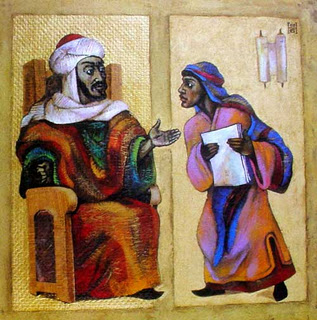
There is a rich man whose hand was always open, always giving. He entrusted his possessions to a manager. The manager’s hand was supposed to stay palm up so he could receive the master’s wealth, manage it, and return it to the owner. But the manager’s hand has already rolled over. He has been wasting what was never his. Some commentators suggest that this manager was scamming the tenants by collecting more than he was supposed to and keeping the extra for himself.
When the master calls for an accounting of the books, the manager’s closed fist is exposed, and he will be removed from his position. The manager knows himself well enough to admit that he isn’t strong enough to dig, and he’s too proud to beg. So, what does he do? He acts shrewdly and hatches a plan. He probably worked harder that afternoon than he had in years.
He calls in the debtors one by one and reduces what they actually owe without the master’s permission or authorization. The unrighteous manager is still living off the master’s open-handed generosity, still using the master’s resources. He keeps his hand turned over so he can cleverly take more—this time, from the master himself. He is using his boss’s generosity as his own personal safety net. He knows that these debtors will be singing the praises of the rich man. But they will also associate him with their debt being slashed.
Notice that when the rich man figures the whole thing out, he still doesn’t close his hand. Instead, the master commends and praises the manager—not for his theft, but for his shrewdness. The manager knew the giving nature of the rich man and bet everything on it. That’s what Jesus is praising.
Jesus is not holding him up as a moral example. The man is unrighteous. His motivation is purely self-preservation. He’s a thief, but he’s a shrewd thief. Look at the energy this little scoundrel pours into securing a few friends who will toss him bread when he’s finally out of his job. Look at how he plots, stays up late, and reworks the books for his own benefit.
What Jesus praises is the shrewd use of what belongs to another. The manager did it only for his own benefit. Jesus wants us to do it for the benefit of others. In short, Christ wants us to use what God gives and entrusts to us in shrewd ways that reveal the generosity of our heavenly Father. That’s why Jesus says, “The sons of this world are more shrewd in dealing with their own generation than the sons of light” (Lk. 16:8).
Dear saints, you have infinite treasures. You have the Gospel, the forgiveness of sins, the hope of the resurrection and the life of the world to come. You have all of that because of the open hand of our God who gives and gives and gives. He promises that you don’t have to worry about any of your needs for tomorrow because He will provide (Mt. 6:31-34). But still, we are careful, cautious, and stingy. In our selfishness we have tamed ourselves to be close-fisted. Repent.
That is the rebuke Jesus has for us today. Our closed hands are greedy and lazy. The 7th Commandment forbids both. Greed selfishly grabs. Laziness selfishly refuses to work. The virtue the Holy Spirit is after in us today is generosity. He wants us to open our hands to both freely receive and freely give. Jesus presses the point: “Make friends for yourselves by means of unrighteous wealth, so that when it fails they may receive you into the eternal dwellings”(Lk. 16:9). Eventually, money will fail. The day is coming when our hands can’t hold anything. So today, use what is already the Lord’s to make eternal friends—people who will stand with you in the Resurrection because the Gospel reached them through the resources you have stewarded.
David recognized this in our Old Testament reading (1 Chr. 29:10-15). When the people freely gave and poured out their gifts so the Temple could be built, David prayed, “All things come from You, and of Your own have we given You” (1 Chron. 29:14). Whenever and whatever we give, we are only returning what the open hand of God first placed in our hands. There is no such thing as ‘my money’ or ‘my stuff’ in the kingdom of heaven. There is only the Lord’s money and the Lord’s stuff temporarily in our care. That fact frees the fist that desires to grasp. That truth untames us and makes us shrewd. Closed hands always end in idolatry by making a (little ‘g’) god of the self and of the stuff we think we can control.
Repent and always know that Christ is the perfect Steward. His hands stayed open. Though He was rich, yet for your sake He became poor, so that you by His poverty might become rich (2 Co. 8:9). He emptied Himself. He stretched out His hands on the cross and let everything be taken. His blood, His life, His whole Self—He gave it all as pure gift. You are not just a failed steward left to dig yourself out of sin. Instead, you are a redeemed steward who has been washed, forgiven, and claimed. The Holy Spirit is still at work to turn our hands back over, palm up, open again.
Jesus wants us to have the same energy that the unjust steward showed. He wants to untame us so we shrewdly use that same intensity, that same foresight, that same willingness to stay up late and work hard for His kingdom.
You have a mind. Use it to find new ways to love your neighbor. You have a body. Use it to serve others. You have resources that are already His. Use them to make friends who will welcome you into the eternal dwellings.
Dear saints, your Master’s hand is always open. He has already given you everything that matters. You are free. Be shrewd with His gifts, and rejoice in His goodness. Amen.
The peace of God, which surpasses all understanding, will guard your hearts and minds in Christ Jesus (Php. 4:7). Amen.
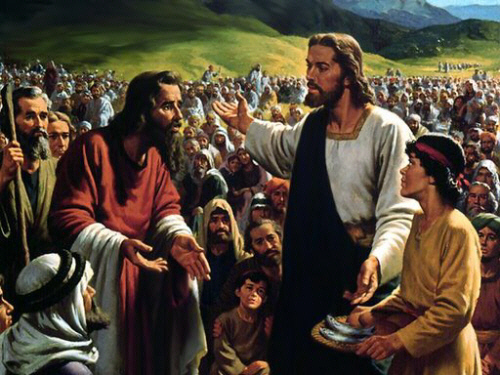


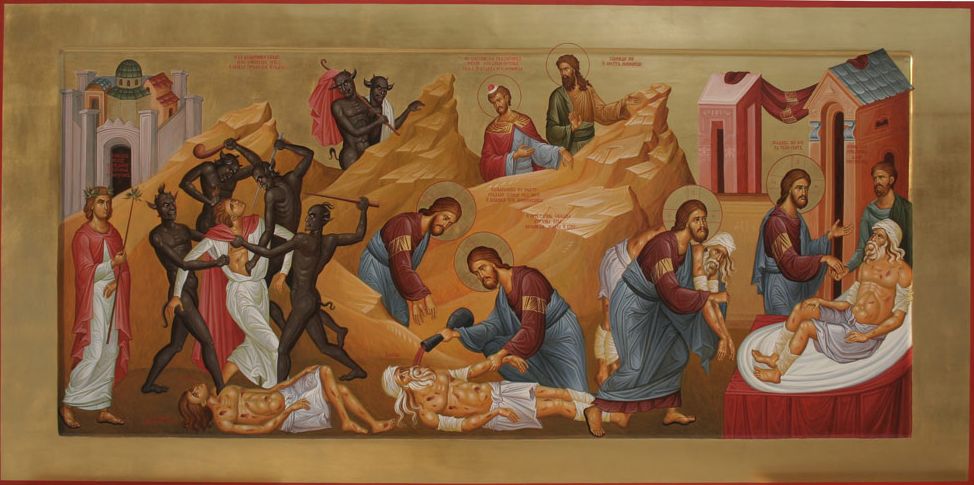 Because, first and foremost, the parable of the Good Samaritan is a picture of what Jesus has done for you. Jesus, and Jesus alone, is the Good Samaritan who has compassion. He left His throne in the glory of heaven to become your neighbor. He risks His own safety while scoundrels and robbers are roaming about. He stops to give you aid. He pours on you oil and wine. He gives up His own comfort and convenience to bring you to the inn of the holy Christian Church. And Jesus sets up an all-expenses-paid stay there promising to return. Jesus is the one who has and continues to show you mercy. Amen.
 This reduction was, of course, not legally binding. The rich man could have simply said, “Hang on everyone. I fired that guy before he lowered your debt. You still owe the original amount.” But that isn’t the character of the rich man. Instead, the whole town is singing the praises of the rich man because he is so generous. And the rich man isn’t willing to harm his reputation as a merciful guy. So, what does the rich man do in the parable? He tells the fired, scoundrel of a manager, “Dude, you’re shrewd. You knew I’d rather be known as a merciful person rather than hold on to my wealth. And by your shrewdness, you’ve helped yourself.”
 Now, Jesus is absolutely clear, “You cannot serve God and money.”It can’t be done. If you trust in money, you do not trust God. So, repent of your love of money.
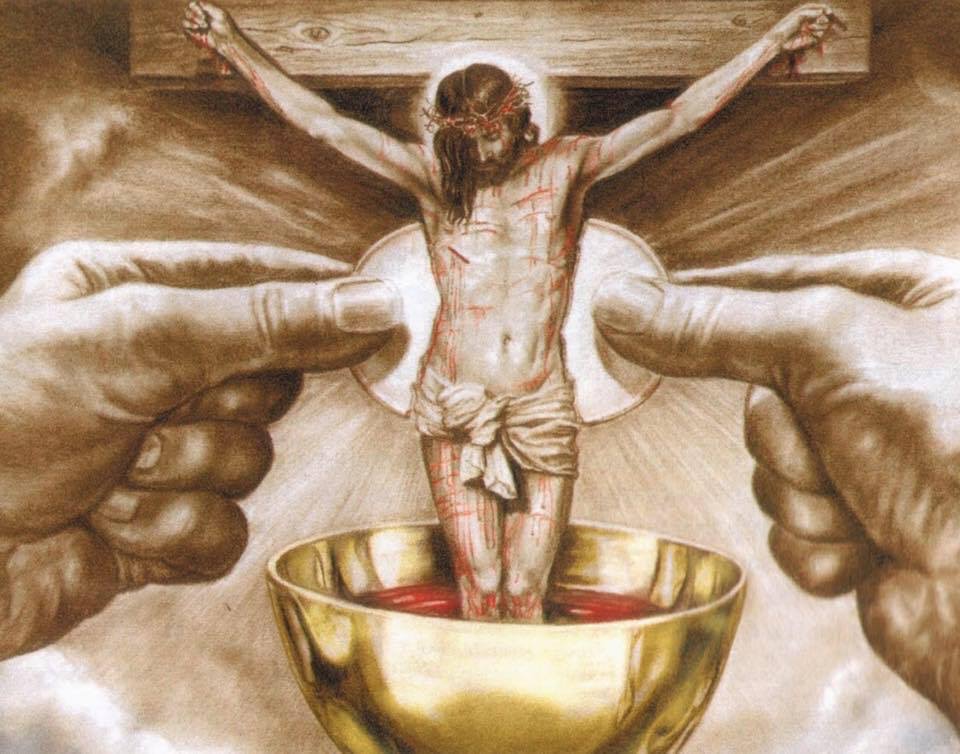 The only thing that matters for your salvation is what Christ has done and completed for you upon the cross. Even when you are stingy and fail to be generous with what God has given to you, God was not. He gave what was most valuable to Him for your salvation. God, in His mercy, gave Jesus to die upon the cross for you. Don’t trust in your stewardship of what God has given you. Instead, trust in Christ’s giving of Himself completely for you and for others. Amen.
 22 The poor man died and was carried by the angels to Abraham’s side. The rich man also died and was buried, 23 and in Hades, being in torment, he lifted up his eyes and saw Abraham far off and Lazarus at his side. 24 And he called out, ‘Father Abraham, have mercy on me, and send Lazarus to dip the end of his finger in water and cool my tongue, for I am in anguish in this flame.’ 25 But Abraham said, ‘Child, remember that you in your lifetime received your good things, and Lazarus in like manner bad things; but now he is comforted here, and you are in anguish. 26 And besides all this, between us and you a great chasm has been fixed, in order that those who would pass from here to you may not be able, and none may cross from there to us.’ 27 And he said, ‘Then I beg you, father, to send him to my father’s house— 28 for I have five brothers—so that he may warn them, lest they also come into this place of torment.’ 29 But Abraham said, ‘They have Moses and the Prophets; let them hear them.’ 30 And he said, ‘No, father Abraham, but if someone goes to them from the dead, they will repent.’ 31 He said to him, ‘If they do not hear Moses and the Prophets, neither will they be convinced if someone should rise from the dead.’”
 So, when your conscience is pricked and you feel guilt for your lack of love, first repent. Repent of your lack of love. Then, make a list of the people God has placed in your life to help, to care for, and to love starting with the people closest to you.
 And never forget, Christian, that you have been given a name. Through the waters of your Baptism, God gave you your name. He has adopted you into His family. You are His child and part of the household of Jesus. The love you fail to show to those God has placed in your life is forgiven and covered by the blood of Jesus, your Savior. And God does not forget to pour out His love, mercy, forgiveness, and provision for you.

You must be logged in to post a comment.