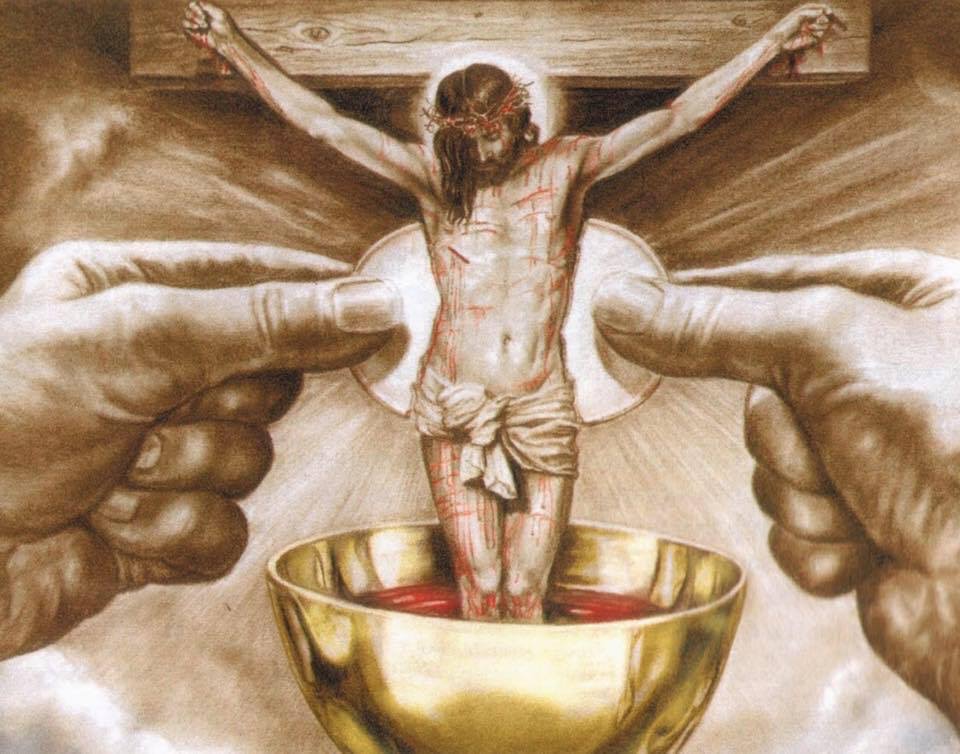
Before God rescued His people from slavery in the land of Egypt, He gave them a meal to celebrate their deliverance – the Passover meal. They were to take a lamb and slaughter it at twilight. God told them to take some of the blood and smear that blood on doorposts and the lintel of the houses where they would eat it. They were to eat that lamb and unleavened bread quickly and dressed to travel. That night, God passed through the land of Egypt and struck dead all the firstborn of both man and beast, but He did not enter any houses where He saw the blood of the lamb on the door. That blood was a sign that shielded God’s people from death.
It’s interesting, though, God had already set apart His people so they were not troubled by the previous plagues. Scripture tells us that the flies of the fourth plague didn’t pester the Israelites (Ex. 8:22-23). In the fifth plague, the livestock of the Egyptians died, but not the livestock of God’s people (Ex. 9:4, 7). The hail of the seventh plague didn’t fall upon the Hebrews (Ex. 9:26). Same with the darkness in the ninth plague (Ex. 10:22-23). God didn’t have His people set up any sign to keep those plagues from harming them. They didn’t need to put a fly in their window or write a “Have a nice day” in chalk on their sidewalks to be spared from those plagues. But with this final plague, God had His people set themselves apart with the sign of the blood of the lamb marking their doors.
The fact that God had His people do this not only on that day but also every year afterward was to preach an annual sermon. Each year in the Passover feast, God was reminding His people and preaching to them that the blood of a lamb protected and guarded them from His wrath and death. That blood and meal reminded the people of what God had done in the past, but it was also pointing forward to another Lamb and a better blood that would protect and shield God’s people. And that Lamb is Jesus.
But then, in our Gospel lesson tonight (Mk. 14:12-26), that Passover sermon was preached for the final time. Jesus has His disciples prepare the Passover meal, and that very night, that sermon is fulfilled. It’s no longer needed. The Passover sermon is about to become obsolete because Jesus institutes the new testament of His Supper where He gives His Body and Blood for the forgiveness of sins.
One interesting thing to notice before we move on here: In both instances, both with the Passover meal and the Lord’s Supper, God gives this meal to His people before the event actually happened. Before God passed through Egypt, God gave the Passover meal. The same thing is true in the Lord’s Supper. Before Jesus goes to the cross and gives His body unto death and sheds His blood, Jesus gives the meal of His Body and Blood for the forgiveness of your sins.
Jesus had come, and He was about to do His Father’s will. The Lamb of God, who takes away the sins of the world (Jn. 1:29) and eternally protects God’s people from the plague of death (Heb. 12:24), this Lamb had come to give Himself so that His blood can shield you and death no longer has a claim on you.
The Passover meal had served its purpose. Tomorrow, Jesus will go to the cross. And to replace the Passover meal, Jesus now gives you Holy Communion. Yes, the Lord’s Supper was instituted in the context of the Passover, but it lays aside that old meal. Many people have tried to figure out at what point during the Passover meal Jesus gives Communion as its replacement. But Scripture indicates that Jesus institutes Holy Communion as a separate thing after they had finished that final Passover meal. The Gospel of Luke especially indicates that Jesus institutes His Supper after the Passover meal was finished (Lk. 22:20).
Now, instead of the Passover meal, you are to eat the bread, which Jesus says is His body, and you are to drink the cup, which Jesus says is His blood. And you do this as a remembrance of what Christ has done for you. Yes, there is remembrance in this meal, but it also delivers exactly what Christ promises it delivers. Jesus promises that in this little meal, you receive the forgiveness of your sins. And unlike the Passover meal, which was an annual thing, Jesus says to do this often in remembrance of Him (1 Cor. 11:25).
So now, Jesus invites you – yes, you – to His altar, to His table. Jesus knows what you need, and He invites you to come and receive it. This is your entry into the Holy of Holies. Here in this meal, the time and distance between you and the cross of Jesus collapses as you participate in the feast of the Lamb who was slain from the foundation of the world (1 Pet. 1:19-20). Here, your Lord gives you everything you need as you walk out of your slavery to sin and toward the Promised Land of the new heavens and earth (Rev. 21:1). Here, your sins are forgiven. Here, the Body and Blood of Christ are given for you.
So, come. Your Brother, your Lord, and your Savior invites you. Amen.The peace of God, which surpasses all understanding, will guard your hearts and minds in Christ Jesus. Amen.
Scripture repeatedly connects water with death and life. At creation, there was chaos and darkness as the Spirit of God hovered over the face of the waters. But then God spoke, and life was brought forth (Gen. 1:2). In the Flood, God sent judgment and death upon sinful mankind by raining water on the earth for 40 days and nights, but those same waters were life-giving as they lifted Noah and his family safely in the ark above God’s judgment (1 Pet. 3:21). When Moses was born, the Hebrew baby boys were to be drowned in the waters of the Nile, but Moses was placed in a basket – his own personal ark – and saved by those waters to be found by Pharaoh’s daughter (Ex. 1:22-2:10).
After wandering in the desert for forty years, God’s people passed out of the deathly, barren wilderness and into the Promised Land by passing through the waters of the Jordan River (Jos. 3). Naaman came to the prophet, Elijah, as a man with deadly leprosy, but he washed himself in the waters of the Jordan River and came out with the skin of a newborn (2 Kg. 5:1-14). Jonah was swallowed by the great fish and brought down to the depths of the sea, but was vomited up again on dry land with new life (Jon. 1:17:2-10, Mt. 12:40).
Last but not least, in tonight’s Old Testament lesson (Ex. 14:13-31), God’s people are departing Egypt and leaving the land of slavery, leaving the brutal taskmasters, whips, despair, hopelessness, and death behind. Initially, Israel had gone to Egypt to stay alive and find a place of refuge and rescue from a severe famine (Gen. 45:4-15). In those days, Egypt was a land that offered a good home while the world was filled with desperation (Ex. 1:1-7). But things had taken a bad turn. A new pharaoh came to power and saw God’s people as a source of cheap labor. The Hebrews ended up groaning under his cruelty. The land that had provided for them became the place of pain and sorrow. The country that had been a place of life became a place of death.
God heard the cries of His people and sent Moses to deliver them out of slavery and death. It wasn’t an easy departure. It took ten terrible plagues to convince Pharaoh to let them leave and go to the land that God had promised to give to Abraham and his offspring. But the Hebrews only got as far as the Red Sea when Pharaoh had another change of heart. Now, God’s people were stuck between a big body of water on one side and Pharaoh and his army on the other.
God told Moses to lift his staff over the sea, and the waters parted so God’s people could pass through on dry ground. Through the water, God’s people left slavery and death and begin their journey from their exile in Egypt back to the Promised Land. The Egyptian army pursued them through those waters, but it didn’t work. The walls of the sea collapsed on Pharaoh’s army. The Lord did, indeed, fight for His people, and they had only to be silent (Ex. 14:14). The evil tormentors of God’s people were all washed away. The waters of the Red Sea were an instrument of both life and death. The same waters that destroyed the enemies of God’s people are the waters that save them. The waters that killed also delivered.
Dear saints, the world around is is getting very bleak. Yes, we live in the land of the free, but the darkness of evil is gathering around us. Like the Hebrews when they initially entered Egypt, we’ve had remarkably blessed days, but that is changing daily before our eyes. The novelist, G. David Hopf wrote, “Hard times create strong men. Strong men create good times. Good times create weak men. And, weak men create hard times.” The good times that have been a blessing from God, have created weak men. We are watching inflation soar. We see the potential for horrific wars. The holocaust of abortion continues to rage around us. And our culture has become so open-minded that brains are falling out. For example, yesterday, the supreme court nominee said that she was unable to define what a woman is during her confirmation hearing. Stating simple truths are now considered “hate speech.” It may be that hard times and persecution are looming large before us. Dear Christian, be ready. Our beloved country might turn into a land of slavery. Lord, have mercy.
But even if that isn’t the case and we enjoy more good days, it doesn’t change the fact that we are all slaves of sin and death. We continually sin in thought, word, and deed. We do not love God with our whole heart or our neighbors as ourselves. We need a Savior and deliverer. We need to be rescued from the demons. And, God be praised, God has come and fought for us to deliver us from every oppression.
In our Gospel lesson tonight (Mk. 1:9-13), Jesus came to the Jordan River. Scripture tells us that in those same waters, the people of Jerusalem, all Judea, and all the region around the Jordan were going to John to be baptized as they confessed their sins (Mt. 3:5-6). Jesus also went into that water to be baptized. But Christ didn’t need to be washed clean of sin because He didn’t have any. Instead, Jesus went down into those waters, and like a sponge, He absorbed those sins into Himself. After Jesus was baptized, He was driven by the Holy Spirit to go into the wilderness bringing those sins back to Satan, the father of sin.
In His baptism, Jesus began to take upon Himself the sins of the whole world (2 Cor. 5:21, Jn. 1:29). In Jesus, God has condemned sin in the flesh (Ro. 8:3). By taking our sin, going to the cross, and suffering God’s wrath against your sin, Jesus prepared you for your own journey into and through the waters of Baptism. In your Baptism, your old, sinful nature was drowned (Ro. 6:3-8), and your sin, all your sin, is washed away. God promises that in your Baptism, you have everlasting life and are delivered from your exile. Dear saints, continue to believe what God has promised you. Because of what Jesus has done for you, heaven has been torn open so you can pass safely through this world of sin and into the promised land of the kingdom of heaven. Amen.
The peace of God, which surpasses all understanding, will guard your hearts and minds in Christ Jesus. Amen.

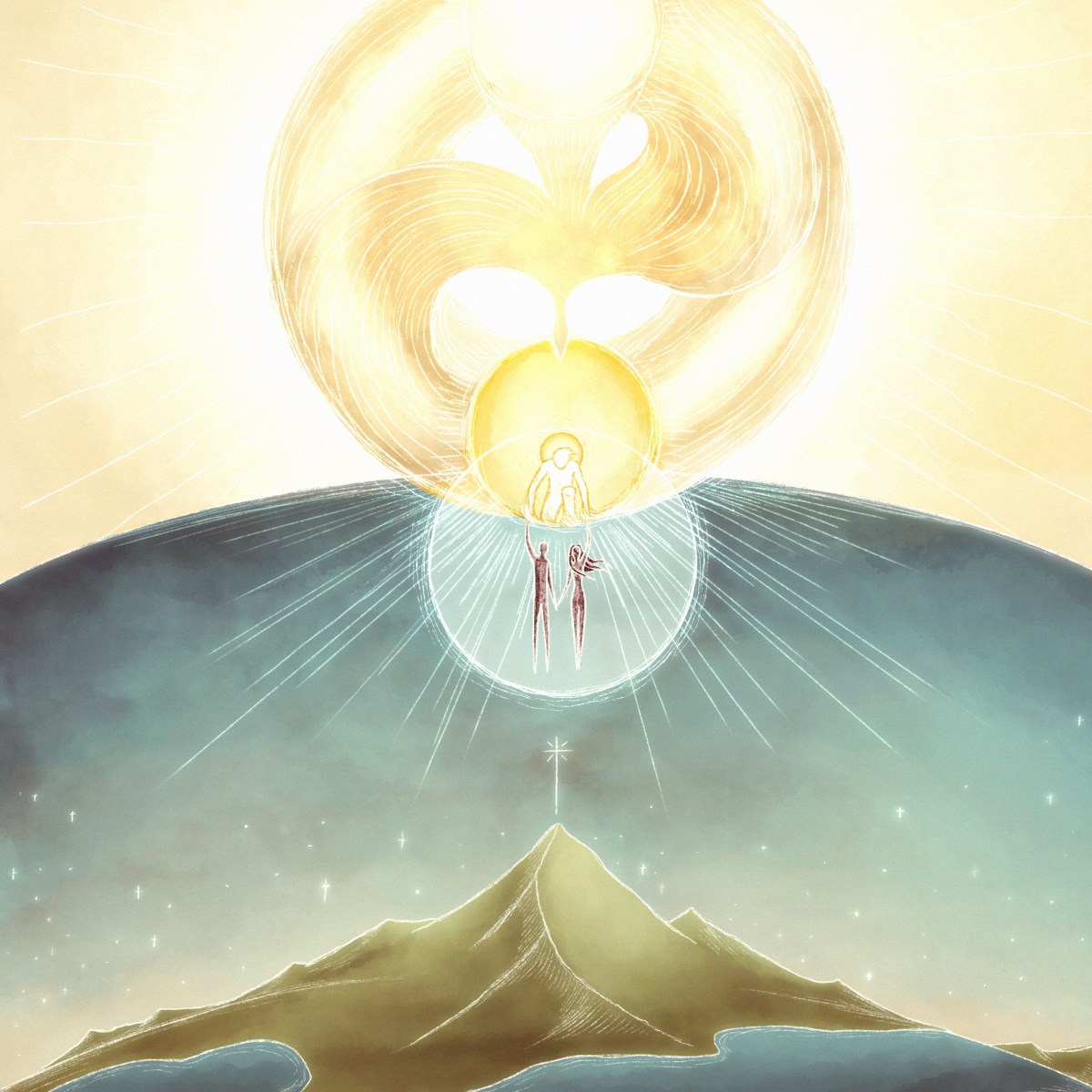
Throughout Scripture, God repeatedly makes Himself available to people on mountains. Working backwards through time, Jesus ascended into heaven from Mt. Olivet (Act. 1:12). Jesus was Transfigured on the top of a mountain (Mt. 17:1). Jesus preached His most famous sermon on the top of a mountain (Mt. 5:1); He even titled it the Sermon on the Mount – just kidding. Elijah met with God on the top of a mountain (1 Kgs. 19:8-18). God brought Moses to the top of a mountain to see the Promised Land before he died (Dt. 34:1-5). And, of course, God spoke the Ten Commandments to His people from the top of Mt. Sinai (Ex. 20).
In the Old Testament, God’s people had the understanding that heaven was up, hell was down, and earth was between. Because of that, mountains were places of worship. All that being said, when Abraham saw Mt. Moriah, it probably wasn’t an awe-inspiring moment. God told Abraham to take his only son to Mt. Moriah and offer him up as a sacrifice. Amazingly, Abraham was faithful and trusted. Our epistle text tonight (Heb. 9:22, 11:17-19) sheds some light on how Abraham could go through this. Abraham believed that God would raise Isaac from the dead. We get a hint of that in Gen. 22. Notice what Abraham says to his servants when he and Isaac leave them behind. The same subject governs all the verbs, “I and the boy will go over there and [I and the boy] will worship and [I and the boy] will come again to you” (Gen. 22:5).
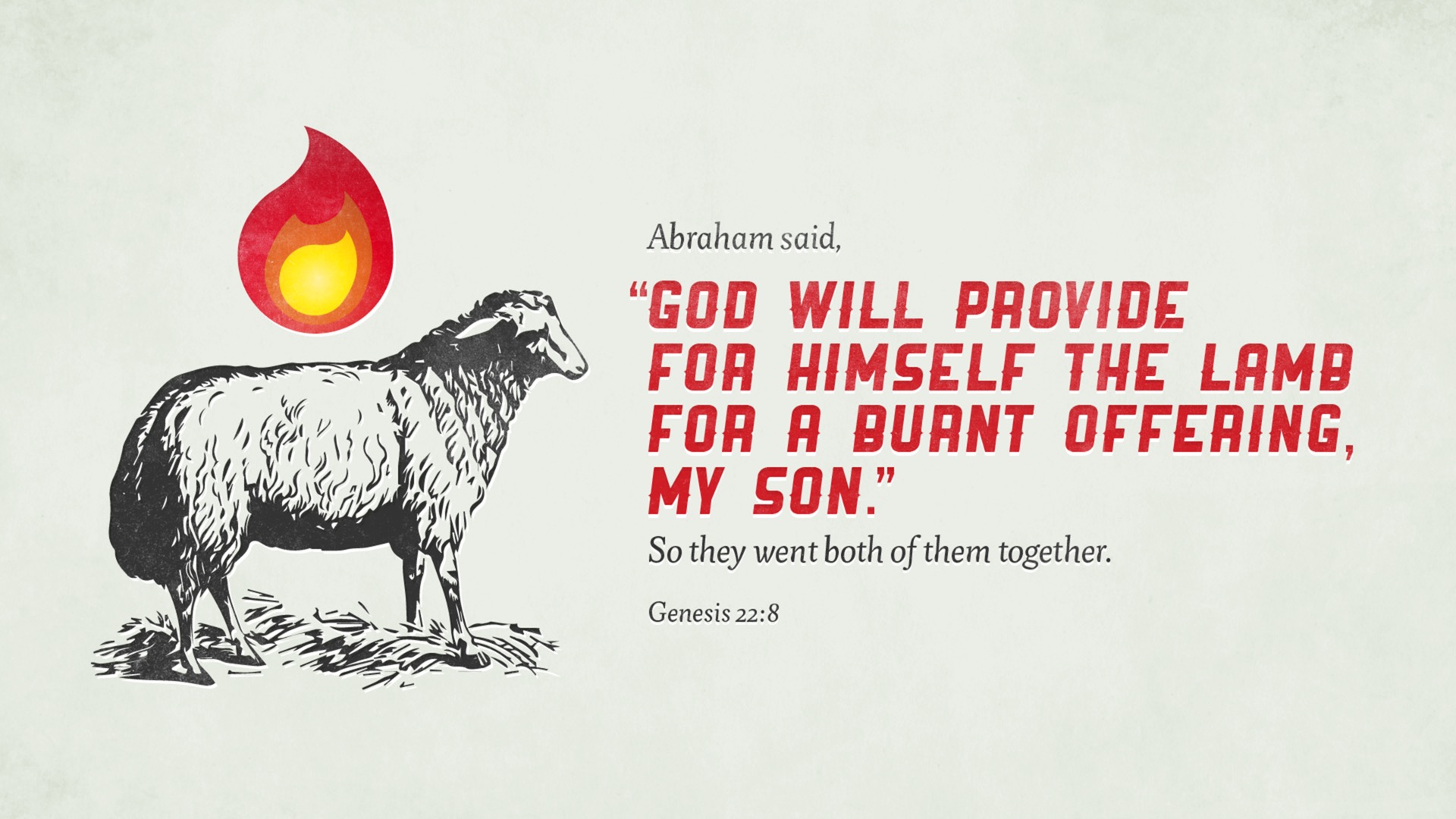
Abraham takes the wood and lays it on his son, and Isaac carries his own location of death. As they ascend the mountain, Isaac speaks up and asks the question of the day, “Behold, the fire and the wood, but where is the lamb for a burnt offering?” Abraham says, “God will provide for Himself the lamb for a burnt offering, my son.”
Now, we need to interrupt the text, slow down, and ponder Abraham’s answer. The Hebrew word here in v. 8 which gets translated ‘provide’ is a really bad translation. The Hebrew word actually means ‘to see,’ but basically every English version you can get your hands on will translate it as ‘provide.’ They say that the verb ‘to see’ here has the sense of ‘will see to it’ as in, “God will see to it Himself that there is a lamb.” But to translate it that way makes us miss something big because there is one other part of Abraham’s words here that we miss in English. The most literal, wooden translation of Abraham’s response to Isaac is, “God will see Himself – a lamb” (Dr. John Saleska). Hear that again: “God will see Himself – a lamb.”
Now, the story slows down giving every excruciating detail. They come to the place. Abraham builds the altar, lays the wood in order, binds Isaac, and lays him on top of the wood. Abraham reaches out his hand and takes the knife to slaughter his son. But the angel of the Lord steps in.
I’m not going to take the time to fully explain it in this sermon (ask me later if you’re interested), but the “angel of the Lord” in the Old Testament is Jesus. For now, the only proof I’ll offer is that the angel of the Lordspeaks as God Himself and uses God’s same words from earlier in the text. Notice He says, “You have not withheld your son, your only son, from Me.”
Abraham lifts up his eyes and “looked” (which is the same word that was translated ‘provide’ earlier) and there is a ram caught in a thicket by his horns. And Abraham offers up the ram as a burnt offering instead of his son. After all this, Abraham names that place, “Yahweh will see” (again, same word back in v. 8 and v. 13). And it became a saying, “On the mount of Yahweh it will be seen.”
For years, God would see on that same mountain, Mt. Moriah, the sacrifices of His people. It was on that very mountain that Solomon built the Temple and where the blood of animals was shed to atone for the sins of the people. On that mountain, God would accept the death and blood of another in place of His people who were under condemnation for their sins. And it’s no surprise that Jewish people admire this account of the sacrifice of Isaac highly – so highly, in fact, that they gave it a title, the Aqedah, which is the Hebrew word for ‘binding.’ In the Old Testament, Isaac is the only sacrifice that is ‘bound.’ And in the New Testament, there is only one other ‘bound’ sacrifice.
On a mountain just outside Jerusalem and within view of Mt. Moriah, Jesus offers the sacrifice of His body and blood. On Mt. Calvary, God sees the Lamb of God who takes away the sin of the world (Jn. 1:29) as Christ, your Savior, is bound to the cross by nails through His hands and feet. Even though Jesus was sacrificed on Mt. Calvary, He brought His atoning blood to the true Holy of Holies in the heavenly Temple (Heb. 9:11-12) and sprinkled it before God so you would have forgiveness, life, and salvation.
The journey from Mt. Moriah to Mt. Zion is the story of your deliverance from exile because Jesus is what Isaac could not have possibly been. Christ is the son, the only Son, the only begotten Son, whom God the Father loves. He carries the wood of the altar upon which He is sacrificed. His head was caught in a thicket of thorns. Jesus freely gives His life for your salvation, and the sacrifice isn’t interrupted. Jesus delivers forgiveness and life to you through the shedding of His holy and precious blood. Through faith in Him you will not ever perish but have everlasting life (Jn. 3:16).
God has seen. He has seen the sacrifice of Jesus, and because of that, heaven is eternally opened to you. Amen.
The peace of God, which surpasses all understanding, will guard your hearts and minds in Christ Jesus. Amen.
Joel 2:12-19; Revelation 7:9-14; Matthew 6:1-6, 16-21
In the name of Jesus. Amen.
Humanity’s first experiment with clothes didn’t work very well. You remember that God had created Adam and Eve without sin, and they were both naked and unashamed (Gen. 2:25). But after they sinned, Adam and Eve became aware of their nakedness. They saw their shame, and because of their disobedience, they now knew what evil was and were ashamed of what God had created to be good. So, they tried to cover their nakedness and shame with fig leaves (Gen. 3:7). Those fig leaves were Adam and Eve’s feeble attempt to cover their sin. It didn’t work.
When God came to the Garden, He was seeking them out asking, “Where are you?” (Gen. 3:9). Of course, God knew where they were, but He was giving Adam and Eve opportunity to repent. Adam knew his half-stitched leaf sewing wasn’t enough to cover his guilt. Adam replied, “I heard the sound of You in the garden, and I was afraid, because I was naked, and I hid myself” (Gen. 3:10). Fig leaves and hiding weren’t enough. Adam and Eve stood before a holy God utterly and totally incapable of covering their sin and shame.
Now, God had told Adam that the day he ate from the Tree of the Knowledge of Good and Evil that Adam would surely die (Gen. 2:17). And those fig leaves were no escape from the death sentence that Adam had earned by his disobedience. The problem of Adam and Eve’s sin and shame doesn’t get fixed until toward the end of Gen. 3 when God makes garments of skins and clothes them (Gen. 3:21). You’ve heard me say this before, but it needs regular repeating. When God makes cloths of skins for Adam and Eve, blood is shed. You can’t get skins from an animal without spilling blood. So, when God clothes Adam and Eve, He is teaching them that He will accept the death of another to cover their sin and guilt.
After clothing Adam and Eve, God did one more gracious thing – He expelled them from the Garden of Eden. We typically think of this exile from Eden and banishment from the Tree of Life as a further penalty (Gen. 3:22). But not so fast. This exile from the Garden wasn’t a punishment. Think about it for a minute. Adam and Eve were now sinners. If they ate from the Tree of Life as sinners, they would live forever in their sin. Dear saints, that is the definition of hell. Their expulsion from the Garden and inability to access the Tree of Life was God acting in grace and mercy. Clothed in those animal skins, Adam and Eve are sent out of the Garden and into exile, but their garments served as a constant reminder of God’s promise to crush the serpent’s head (Gen. 3:15).
Now, we’re going to change gears here, but stick with me. Tonight, we heard in our Old Testament lesson (Joel 2:12-19) God calling to humanity again. But this time, God isn’t calling us to come out of a hiding place in Eden. Instead, He is calling to us who are in the exile of sin. And in this invitation, God brings up the topic of clothing again.
God invites us to return to Him with fasting, weeping, and mourning. He says to rend and rip our hearts and not our garments. Rending and ripping clothes was a way to express and reveal deep sorrow. After all of Job’s possessions and children were destroyed, Job tore his clothes in mourning (Job 1:20). David tore his clothes when King Saul and his dear friend Jonathan were killed in battle (2 Sam. 1:11). The interesting thing about that verse from Joel about rending hearts and not clothes is what comes after. Notice in Joel 2:13 what comes immediately after the call to rend your heart: “Return to the Lord your God, for He is gracious and merciful, slow to anger, and abounding in steadfast love.” Even with your clothes rent and your nakedness uncovered, God invites you to leave your exile in sin, shame, and nakedness to return to Him to receive His grace and mercy.
Instead of simply an outward sign of ripping and rending clothes, God calls us to rend our hearts. God is calling for true repentance – not merely an external show of repentance. When a person rends their garments, it only reveals the nakedness and shame underneath. But after the problem is revealed, God calls us to a step further. Underneath our ripped cloths, lies a broken spirit and heart. And Ps. 51:17 tells us, “The sacrifices of God are a broken spirit; a broken and contrite heart, O God You will not despise.”
Tonight, our corrupt, sinful hearts are laid bare before God. Because of our sin we are under the same curse as Adam, “Remember you are dust, and to dust you shall return” (Gen. 3:19). The wages of our sin is death (Ro. 6:23), but God in His abundant mercy still seeks us out. He desires to save us and bring us out of our exile. And God has fulfilled His promise to cover our sin and shame. God has accepted the death of Another in our place. Jesus has taken your place. He went to the cross and hung there naked, and not just physically. He bore your all your sins in His body on the tree and by His wounds you have been healed (1 Pet. 2:24).
Our Epistle lesson (Rev. 7:9-14) shows what is in store for us. God has permanently covered us in Christ. Because of what Christ has done, we can sing with Isaiah, “I will greatly rejoice in the Lord; my soul shall exult in my God, for He has clothed me with the garments of salvation; He has covered me with the robe of righteousness” (Is. 61:10). You who are baptized into Christ have put on Christ (Gal. 3:27). Even now, you have a white robe that is washed perfectly clean in the blood of the Lamb.
Dear saints, because of what Christ has done, your sackcloth and your dusty ashes have been exchanged for the robe of righteousness. Your exile in sin and shame is ended because Jesus has won the victory over sin and death. By His resurrection, He has turned your mourning into dancing and loosed your sackcloth and clothed you with gladness (Ps. 30:11). By God’s action of seeking you out, you have returned to His presence, and now He welcomes you as His beloved bride (Is. 54:5). Your time in exile is over. You have returned to God. And there is treasure in heaven laid up for you. A treasure that lies hidden with Christ where moth and rust do not destroy and where thieves do not break in and steal (Mt. 6:19-21).
Dear saints, come. Come clothed in Jesus’ righteousness. Come to God’s table and receive Christ’s body and blood for the forgiveness of all your sins. He welcomes you home. In Jesus’ name. Amen.
The peace of God, which surpasses all understanding, will guard your hearts and minds in Christ Jesus. Amen.
31 So Jesus said to the Jews who had believed him, “If you abide in my word, you are truly my disciples,32 and you will know the truth, and the truth will set you free.” 33 They answered him, “We are offspring of Abraham and have never been enslaved to anyone. How is it that you say, ‘You will become free’?” 34 Jesus answered them, “Truly, truly, I say to you, everyone who practices sin is a slave to sin. 35 The slave does not remain in the house forever; the son remains forever. 36 So if the Son sets you free, you will be free indeed.”
In the name of Jesus. Amen.
The crowds answered Jesus, “We are offspring of Abraham and have never been enslaved to anyone.” Right.
They must have completely forgotten their history. They had been slaves in Egypt until God delivered them from their slavery. Even when they arrived in the Promised Land, they were ruled by the Philistines, the Ammonites, the Midianites, and the Moabites. They were taken captive by the Assyrians and Babylonians. They had been under the Greeks and the Persians. And even when Jesus is talking to them here, they are under Roman authority. They had to pay taxes to Caesar and are worried that if people believe in Jesus, the Romans will come and take away their place and nation (Jn. 11:47-48). And remember, the chief priests wanted to kill Jesus, but they had to get permission from the Roman governor Pilate (Jn. 18:11). In fact, when you consider the 1,500-year history of the Jewish people, there is probably only a few hundred years where they were not in some sort of slavery to another nation or power.
But when Jesus says, “If you abide in My Word, you are truly My disciples, and you will know the truth, and the truth will set you free,” they are offended. Even though these are words of comfort and Gospel, there is an implied bit of Law here. Since the truth will (future tense) will set you free, that means that you are in bondage.
We have to recognize Jesus’ audience. He is speaking to the Jews who believed in Him. I know our translation throws in the word ‘had’ in there – “the Jews who had believed in him.” But that implies that they believed at one time but have stopped believing in Him. That isn’t what the Greek is trying to get across. The verb makes it clear.
Jesus is talking to people who do currently believe in Him, but their faith is shallow and in danger. In fact, by the end of this chapter, the faith of these people will be gone. They are offended at Jesus’ Words of Gospel and freedom. They believed in Him, maybe because of the miracles or because He was interesting to listen to. But they don’t abide, they don’t remain, in Jesus’ Word. They are a prime example of the path in Jesus’ parable of the Sower and the Seed. The Word is sown there, but the devil and demons quickly snatched it away (Mt. 13:4, 19) because their hearts were hardened with pride.
“If you abide in My Word, you are truly My disciples, and you will know the truth, and the truth will set you free.” These are gracious words, but there is also a warning here for you and for me. That warning is this: It is possible to fall away. If you do not abide and remain in Jesus’ Word, then you are certainly not Jesus’ disciples; you will not know the truth, and you will not be free. Only those who abide and remain in Jesus’ Word are true disciples and become free.
Dear saints, Jesus might as well be speaking these very same words to you here today. You also need to abide in Jesus’ Word. You also need to know the truth which sets you free. Whether you recognize it or not, you are in bondage worse than any slavery this world can throw at you. Jesus says, “Truly, truly, I say to you, everyone who practices sin is a slave to sin.”
Sin has so infected us that we have a wrong sense of freedom. We think freedom means that we can do whatever we want whenever we want. We think freedom is a life without obligation or responsibility. That kind of existence, well, it doesn’t exist. Instead, we are captive and slaves to our sinful desires.
The Scripture readings you heard today have made this entirely clear. “All have sinned and fall short of the glory of God” (Ro. 3:23). “Everyone who practices sin is a slave to sin” (Jn. 8:34). We sin; therefore, we are slaves to sin. And you can’t just wiggle out of this saying, “Well we don’t really have a choice in the matter.” Our slavery to sin is at a higher level than that. We are slaves in our will. We deliberately chose to sin. It isn’t just weakness or mistakes. We have all ignored our conscience, and knowing exactly what we are doing, we have chosen to sin. We sin on purpose and repeatedly.
And even when we do fight against our sinful desires, which is good, we still are doing so out of slavery. Jesus’ parable of the Prodigal Son (Lk. 15:11-32) shows that there is a slavery when we rebel and try to live apart from our heavenly Father, and there is also a slavery when we try to win the approval of our heavenly Father by life of obedience.
So, remember the younger son? He deliberately tells his father to drop dead so he can have his inheritance early. That son takes all that he has, quickly wastes it in reckless living, and has to hire himself out feeding pigs. Remember, he was longing to eat the slop he was feeding the pigs. What he thought would bring him freedom made him a slave to pigs. So, he concocts a plan to go and ask to become a servant in his dad’s house in order to get a little food in his hungry tummy. Now of course, you know the story. The father doesn’t even hear the offer of his wayward son. Instead, the father restores this little brat to be a son and throws a party.
But don’t forget about the older son. He didn’t do all the wrong things his younger brother had done. He didn’t tell his father to drop dead. He didn’t demand his inheritance be given to him so he could move away and blow it all. He didn’t end up in the pigpen. No, the older brother hadn’t done anything wrong. But that didn’t make him any less of a slave.
Instead, that older brother insists that he did all the right things. He was dutifully working in his father’s field when his despicable brother returned. And when his father came outside to compel him to come and join the party celebrating his brother’s restoration, he answered his father, “I’ve served,” notice that, “I’ve servedyou my whole life. I’ve never disobeyed your command. I’ve never wasted your money. But when this son of yours comes home, you go and kill the fattened calf for him.” And the parable ends with the father pleading with his oldest son to join the party.
We know that slavery can come from living contrary to God’s Commandments; that is entirely clear and plain as the nose on your face. But there is another slavery – a slavery that is more sneaky – and that is the slavery of the older brother and the people Jesus is speaking to in this text. That is a slavery of us trying to live in such a way that God owes us for all the good we have done. My fellow sinners, repent of that thought as well. God will never be in our debt.
In this text and in parable of the Prodigal Son, we clearly see that God doesn’t want slaves. He wants sons. Slaves don’t remain in the house forever – only sons do.
That is why Jesus has come. The only begotten Son of God came to do His Father’s will. He came to fulfill God’s Law and to be the perfect sacrifice for your sins and free you from slavery. Yes, you sin, and that reveals your slavery. But at the same time you are also a son – redeemed, purchased, and adopted by the blood of Christ. At the same time, you are a slave and a son, a sinner and a saint.
Dear saints always remember what Jesus says, “If the Son sets you free, you will be free indeed.”Christ has. You are free. Free from the condemnation of the Law. Free from the bondage of sin. Free from the fear of death. Free from the burden of having to earn your salvation. Free from the burden of having to complete your salvation. Free to serve God and neighbor without the nagging worry of whether you’ve done it well enough.
Jesus Christ, the eternal Son of God, has set you free by His death and resurrection. He has freely given you the gift of new life, and that comes with a happy and joyful future that will last to all eternity. If the Son sets you free – and Christ has by His death and resurrection – you will be free indeed. So, “Fear not, little flock, for it is your Father’s good pleasure to give you the kingdom,” (Lk. 12:32). Amen.
The peace of God, which surpasses all understanding, will guard your hearts and minds in Christ Jesus. Amen.
1 In the beginning, God created the heavens and the earth. 2 The earth was without form and void, and darkness was over the face of the deep. And the Spirit of God was hovering over the face of the waters.
3 And God said, “Let there be light,” and there was light. 4 And God saw that the light was good. And God separated the light from the darkness. 5 God called the light Day, and the darkness he called Night. And there was evening and there was morning, the first day.
6 And God said, “Let there be an expanse in the midst of the waters, and let it separate the waters from the waters.” 7 And God made the expanse and separated the waters that were under the expanse from the waters that were above the expanse. And it was so. 8 And God called the expanse Heaven. And there was evening and there was morning, the second day.
9 And God said, “Let the waters under the heavens be gathered together into one place, and let the dry land appear.” And it was so. 10 God called the dry land Earth, and the waters that were gathered together he called Seas. And God saw that it was good.
11 And God said, “Let the earth sprout vegetation, plants yielding seed, and fruit trees bearing fruit in which is their seed, each according to its kind, on the earth.” And it was so. 12 The earth brought forth vegetation, plants yielding seed according to their own kinds, and trees bearing fruit in which is their seed, each according to its kind. And God saw that it was good. 13 And there was evening and there was morning, the third day.
14 And God said, “Let there be lights in the expanse of the heavens to separate the day from the night. And let them be for signs and for seasons, and for days and years, 15 and let them be lights in the expanse of the heavens to give light upon the earth.” And it was so. 16 And God made the two great lights—the greater light to rule the day and the lesser light to rule the night—and the stars. 17 And God set them in the expanse of the heavens to give light on the earth, 18 to rule over the day and over the night, and to separate the light from the darkness. And God saw that it was good. 19 And there was evening and there was morning, the fourth day.
20 And God said, “Let the waters swarm with swarms of living creatures, and let birds fly above the earth across the expanse of the heavens.” 21 So God created the great sea creatures and every living creature that moves, with which the waters swarm, according to their kinds, and every winged bird according to its kind. And God saw that it was good. 22 And God blessed them, saying, “Be fruitful and multiply and fill the waters in the seas, and let birds multiply on the earth.” 23 And there was evening and there was morning, the fifth day.
24 And God said, “Let the earth bring forth living creatures according to their kinds—livestock and creeping things and beasts of the earth according to their kinds.” And it was so. 25 And God made the beasts of the earth according to their kinds and the livestock according to their kinds, and everything that creeps on the ground according to its kind. And God saw that it was good.
26 Then God said, “Let us make man in our image, after our likeness. And let them have dominion over the fish of the sea and over the birds of the heavens and over the livestock and over all the earth and over every creeping thing that creeps on the earth.”
27 So God created man in his own image, in the image of God he created him; male and female he created them.
28 And God blessed them. And God said to them, “Be fruitful and multiply and fill the earth and subdue it, and have dominion over the fish of the sea and over the birds of the heavens and over every living thing that moves on the earth.” 29 And God said, “Behold, I have given you every plant yielding seed that is on the face of all the earth, and every tree with seed in its fruit. You shall have them for food. 30 And to every beast of the earth and to every bird of the heavens and to everything that creeps on the earth, everything that has the breath of life, I have given every green plant for food.” And it was so. 31 And God saw everything that he had made, and behold, it was very good. And there was evening and there was morning, the sixth day.
1 Thus the heavens and the earth were finished, and all the host of them. 2 And on the seventh day God finished his work that he had done, and he rested on the seventh day from all his work that he had done. 3 So God blessed the seventh day and made it holy, because on it God rested from all his work that he had done in creation.
In the name of Jesus. Amen.
An overture is a medley that opens an opera, suite, or play, and it introduces the different songs you will hear through the whole work. Movies used to do this often. Most of you are probably familiar with The Sound of Music. The movie begins with scenes of the mountains and fields surrounding Salzburg, Austria, and after Julie Andrews frolics through the grass singing “The Hills Are Alive,” the overture begins. The overture continues several more measures of “The Hills Are Alive,” but then transitions into “Do-Re-Mi,” followed by, “A Few of My Favorite Things,” which morphs into “Something Good,” and closes with a brief hint to “Climb Every Mountain.” There aren’t any lyrics in the overture, so you don’t know that part of the song, but you get to hear the melody so it sticks in your mind and you are able to recognize it when the actual song enters the movie. Not every song gets into the overture, but it gives you an idea of the significant events that are coming up in the film.
Well, the text we just heard is the overture of all of Scripture. So much of what the Bible teaches is introduced in these verses, but too often we miss them because we’re so familiar with the account of creation. So, we’re going to do our best to open our ears to hear the themes that are introduced in this text. We will catch some of the melodies presented to us, so that when the rest of Scripture gives us the lyrics, we can recognize the music behind the song. Just so you know, because there is so much packed into these verses, we aren’t going to be able to hit everything. Sorry.
Right off the bat, we are introduced to one of the great, mysterious theological truths of Scripture – we serve a triune God. In Hebrew, the third and fourth words are ‘God’ and ‘created.’ The interesting thing is that the word for ‘God’ is Elohim, which is a plural word, but the verb for ‘created’ is singular. This would sound really weird to a Hebrew-speaker reading it. Imagine if you read, “The painters (pl.) cleans (sg.) their brushes.” It’s a little jarring.
On top of that, in v. 2-3, you are introduced to each of the three Persons of the Trinity (especially if you know the rest of your Bible). You see the Spirit of God hovering over the waters. (The Holy Spirit’s connection to water is a whole theme of Scripture by itself, but we’re not going to dive into that today.) The Holy Spirit is over the water. God the Father speaks. And the Word that is spoken is Jesus who was in the beginning with God through whom all things were made (Jn. 1:3).
We see a return to this theme of the Trinity in v. 26 where God says, “Let us make man in our (pl.) image (sg.) after our (pl.) likeness (sg.).” Then, v. 27 says with poetic beauty, “So God (pl.) created (sg.) man (sg.) in His (sg.) own image, in the image of God (pl.) He created (sg.) him (sg.); male and female He created (sg.) them (pl.).” Just briefly, as a sidenote, part of us being created in the image of God is that we share with God a plurality. Our one God has a plurality of three, one mankind has a plurality of two. This is why I would encourage you to not use someone’s “preferred pronouns” – especially if those pronouns are the plural, they/them. That is a demonic attempt to twist and mangle God’s creation and to make an individual more than he or she actually is. Moving on.
The second part of the overture I’ll point out today is that God is a God of order (1 Cor. 14:33). And we see this in the details of what is created each day. In v. 2, we are told that the earth is without form and void. In days 1-3, God creates defined spaces that give form and order, and in days 4-6, God fills those spaces. You can think of it as God creating a shelf on days 1-3 and God filling those shelves days 4-6. Day one, God creates light and time; then on day four, God fills it with sun, moon, and stars. Day two, God creates the atmosphere and waters; then on day five, God fills those spaces with birds and fish. Day three, God creates land and plants; then on day six, God fills the space with animals and mankind.
This is so beautiful. God doesn’t just build the house of creation. He also fills and decorates it. Because God creates with this order, we can say that wherever and whenever we see disorder, there are evil forces working against God. Satan brought that disordering when he tempted Adam to fall into sin, and we see that continued work of the devil and demons wherever there are attempts to bring anarchy, chaos, and confusion. After the Fall in Gen. 3, the rest of the Bible is about God bringing order back into a sin-sick, chaotic creation.
The third movement of this overture we will highlight is the movement from darkness to light. Verse 2tells us that before God spoke over the formlessness and void, there was darkness over the face of the deep. Before God creates, there is darkness, but then God speaks, “Let there be light,” and there was light. And notice how each of the first six days end with the refrain, “and there was evening and there was morning the ___ day.” So, each day of the creation account begins with darkness and moves toward light.
In our culture today, we mark the beginning of a day at midnight, and this is totally fine. We’re just using the way the Roman empire counted time. The Hebrew culture considers the start of the next day to be right around sunset, which would be about 6 PM because they are closer to the equator than we are. So, they have kept that theme of a day moving from darkness to light. And in the Church, we do this as well. Christmas begins in the “eve.” When it is dark, we celebrate the birth of Christ, and the day moves toward the light.
The interesting thing is that when we get to the seventh day, the pattern “there was evening and morning” that we have heard six times, is broken. There is only mention of the fact that there is a seventh day. So, this entire account moves from chaos and darkness to order and eternal, never-ending light. The book of Revelation shows the conclusion and culmination of this beautiful movement from darkness to light. Rev. 21:23-25 tells us that the eternal city of God will have no sun or moon for the glory of God gives it light and there will be no night there.
Since we’re talking about this seventh day with no darkness, we’ll move to the next beautiful piece of this overture – the eternal day of rest. The seventh day is totally unique in three ways. First, God doesn’t speak a single word on the seventh day. God is silent because the heavens and the earth were finished, completed. God has said all that needed to be said, and His creative Word continues to work to this day as it echoes through His creation. All of creation continues to run and exist because of the Word of God.
The second way the seventh day is unique is that it is blessed. On day five, God blessed the sea creatures and birds to be fruitful and multiply, filling the waters and the air. On day six, God blesses mankind to be fruitful and multiply filling, subduing, and having dominion over the earth. it. (Many people today are calling for population control. They say there are too many people on the planet. Dear saints, this is a demonic thought. God created the world to be filled with people, and He blesses us for the purpose of filling the world.) But then, God finishes creation by blessing a day. It is God’s intention to use the blessed seventh day to bless His people – both physically with rest from work, and spiritually with His holiness being conveyed from God to people.
The third way the seventh day is unique is that it doesn’t have an end in the text. The text makes the seventh day eternal and open. Even though we have fallen into sin, God has given us access to the seventh day of eternal rest until Jesus comes again in glory on the Last Day. Hebrews 3-4 encourages us to listen to God’s Word and enter God’s rest. Hebrews 4:9–10 says, “So then, there remains a Sabbath rest for the people of God, for whoever has entered God’s rest has also rested from his works as God did from His.”
Dear saints, there are so many wonderful themes here in the account of creation, but the one that tops them all is the power of the Word of God. Through His Word, God created all things in six days, and since sin entered the world, God has used His Word to bring the sin-induced chaotic creation back into order and rest. So, God sent His Son, Jesus, the Word made flesh, into the world. Colossians 1:19-20 says, “In [Christ Jesus] all the fullness of God was pleased to dwell, and through Him to reconcile to Himself all things, whether on earth or in heaven, making peace by the blood of His cross.”
The God who says, “Let there be ____,” and that which does not exist obeys, He now says to you, “Your sins are removed from you as far as the east is from the west” (Ps. 103:12), and they are. He says to you, “I am the resurrection and the life. Whoever lives and believes in Me shall never die” (Jn. 11:25-26), and it is true. He says to you, “Come to Me, all you who labor and are heavy laden, and I will rest you” (Mt. 11:28), and you find peace.
Dear saints, this is very good indeed. God has created, redeemed, and sanctified you. Trust in what Christ has done, and you will find your eternal rest with God and will all His saints. Amen.
The peace of God, which surpasses all understanding, will guard your hearts and minds in Christ Jesus. Amen.
8 The men of Israel took captive 200,000 of their relatives, women, sons, and daughters. They also took much spoil from them and brought the spoil to Samaria. 9 But a prophet of the Lord was there, whose name was Oded, and he went out to meet the army that came to Samaria and said to them, “Behold, because the Lord, the God of your fathers, was angry with Judah, he gave them into your hand, but you have killed them in a rage that has reached up to heaven. 10 And now you intend to subjugate the people of Judah and Jerusalem, male and female, as your slaves. Have you not sins of your own against the Lord your God? 11Now hear me, and send back the captives from your relatives whom you have taken, for the fierce wrath of the Lord is upon you.”
12 Certain chiefs also of the men of Ephraim, Azariah the son of Johanan, Berechiah the son of Meshillemoth, Jehizkiah the son of Shallum, and Amasa the son of Hadlai, stood up against those who were coming from the war 13 and said to them, “You shall not bring the captives in here, for you propose to bring upon us guilt against the Lord in addition to our present sins and guilt. For our guilt is already great, and there is fierce wrath against Israel.” 14 So the armed men left the captives and the spoil before the princes and all the assembly. 15 And the men who have been mentioned by name rose and took the captives, and with the spoil they clothed all who were naked among them. They clothed them, gave them sandals, provided them with food and drink, and anointed them, and carrying all the feeble among them on donkeys, they brought them to their kinsfolk at Jericho, the city of palm trees. Then they returned to Samaria.
In the name of Jesus. Amen.
To get at this text, we need to set the scene. The first three kings to rule over God’s people were Saul, David, and Solomon. King Solomon wasn’t that great, though. Despite all the wisdom, wealth, and fame that God gave him, Solomon went after the pagan gods of his many wives. So, God tells Solomon that He will take away the kingdom from Solomon’s son, Rehoboam (1 Kgs. 11:9-13). After Solomon’s death, God’s people were split into two kingdoms. There was the kingdom of Israel in the north who had wicked, unfaithful kings. And there was the kingdom of Judah in the south who had some kings who were faithful to God, but also many who were wicked. And, I have to admit, this time of the divided kingdoms is a confusing time.
All of 2 Ch. 28 is about the reign of Judah’s most wicked king, King Ahaz.[1] (And don’t confuse Ahaz with wicked King Ahab who ruled Israel about 140 years before Ahaz ruled Judah. Like I said, it’s hard to keep everything straight with two kingdoms and similar names.) Ahaz was the twelfth king of Judah and his reign began about 200 years after Israel and Judah split. During his reign, King Ahaz made sacrifices to all sorts of false gods. Scripture says he made these sacrifices under every green tree (2 Ch. 28:4). He even burned his own sons in an attempt to appease these false gods (2 Ch. 28:3). Because of his wickedness and idolatry, God sent judgment upon Ahaz and Judah through the kings and armies of Syria and Israel. These two armies came and killed 120,000 of Judah’s men of valor in one day (2 Ch. 28:5-6).
God brought this judgment upon the people of Judah so they would repent of their sin. Hosea, who was a prophet during the time of King Ahaz, wrote, “Come, let us return to the Lord; for He has torn us, that He may heal us…” (Hos. 6:1a). Dear saints, God sends judgment and punishment so that we repent and return to Him. Remember that in times of pandemics, economic trouble, terrorist activity, and when our soldiers are killed.
Now, beyond the 120,000 soldiers of Judah who were killed, the kingdom of Israel also took captive 200,000 men, women, and children and took much spoil and brought them to Israel’s capitol city which was Samaria.[2] The Israelites planned to make these captives their slaves. They were treating their relatives the same way barbarian people would treat their enemies. In the minds of these Israelites, the devastating judgment that God had doled out on the battlefield wasn’t enough. They planned to pour on more judgment by taking the people of Judah as their slaves and plundering what God had left them after their defeat.
But this obscure prophet of God named Oded stands up and basically says, “Listen, you Israelites, the reason you defeated Judah was that God was judging them through you. But now you plan on making your relatives, these fellow children of Abraham, your slaves. This is a bad idea. You Israelites aren’t any better than the people you have defeated. You have your own sins to repent of. The battle is over. Stop pouring out judgment. Send these people back before God turns His judgment upon your own heads” (2 Ch. 28:9-11).
You see, what Israel was doing to Judah happens all the time in our day. You turn on the news and see a person who was caught in some sin. Judgment has been poured out upon him – either through the court system or through that sin being made public. And what happens? Everyone starts pouring out more judgment by making that sin more public and mocking and ridiculing that person. It’s like social media was made for this very thing. God allows a sin that someone committed in the dark to come into the light, and everyone jumps on and does everything they can to spread that sin farther and farther. We see how far we can go to ruin that person’s life. We loot and pillage whatever hasn’t already been taken from that person – make him lose his job, take his friends away, and turn his family against him. We don’t think that the punishment God poured out on the battlefield was enough, so we do everything we can to add to that judgment. And we do this because we think it makes us look more righteous. We spread the sins of others as far as we can to distract from our own sins.
My fellow failures, repent. We are all guilty of this. Any time we gossip we are doing this very thing. And I hope and pray we are all tired of it. May our conscience be a little Oded on our shoulder telling us to knock it off and repent instead of pouring out more judgment once the battle is over.
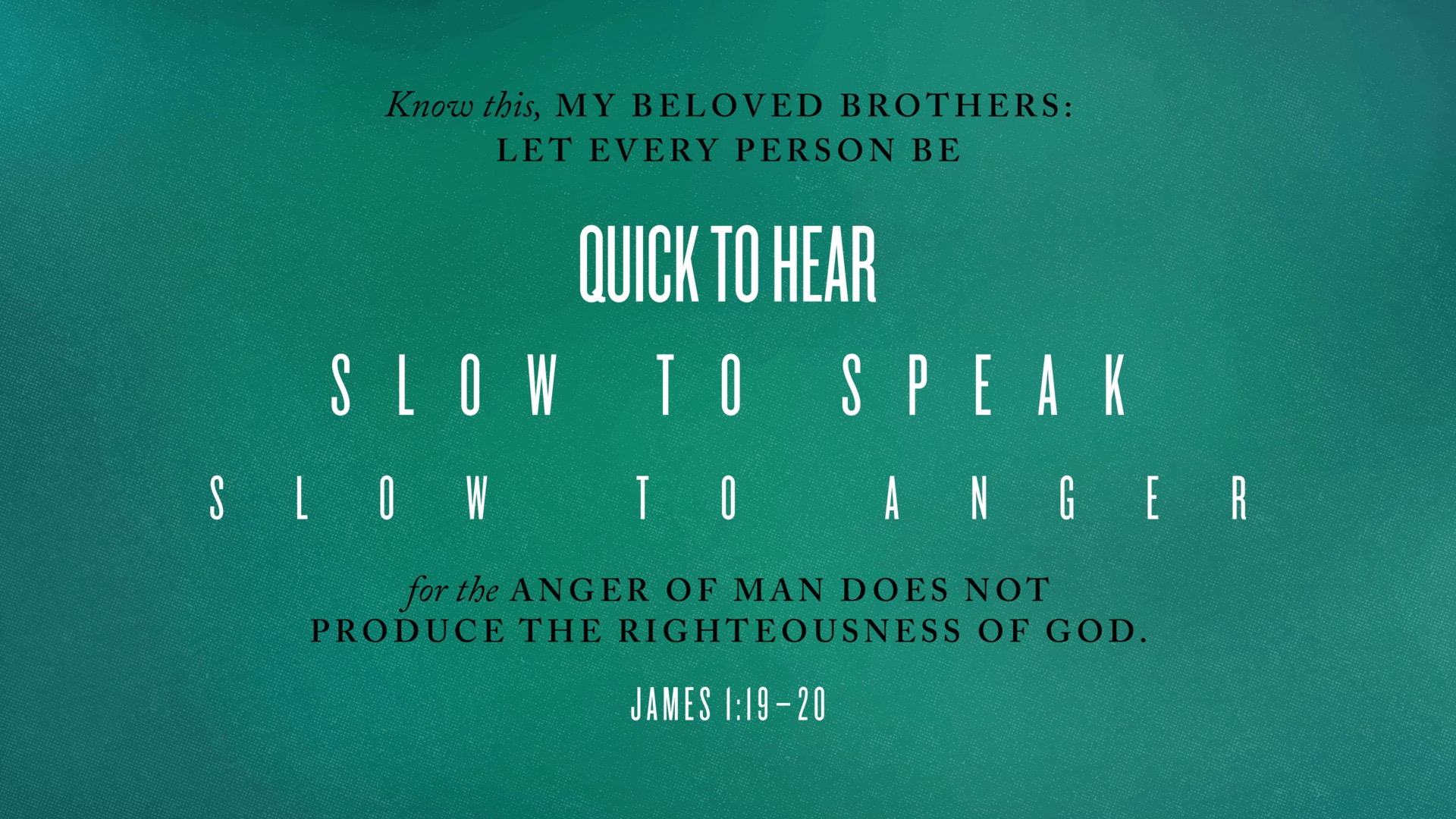
James 1:20 says, “[T]he anger of man does not produce the righteousness of God.” No matter how mad you get at the sins you see in this world, that anger does not make you righteous. That’s why we get so tired trying to make ourselves righteous; we know our little judgment doesn’t actually accomplish anything.
So, what does produce the righteousness of God? It’s the mercy and forgiveness of Jesus and His holy and perfect blood, shed for you on the cross. Christ takes all the wrath and judgment that our sins deserve to His grave, and in return He gives us the holiness and righteousness that God requires.
The voice of Oded prevailed in our text. The four guys mentioned in v. 12, whose names I won’t butcher again, they used the spoil that had been taken to clothe, feed, anoint, and return their kinsfolk to their home. These good Samaritans are a little picture of whatJesus, your Good Samaritan, does for you. Christ is your Good Samaritan (Lk. 10:23-37) who sees you in the ditch – bruised, bloodied, and left for dead. And in His mercy, He looks on you and pours out His love and forgiveness.
Dear Syrus, that brings me to you. Syrus, today you are Baptized. Today, Jesus has joined you to Himself. Through the waters that God placed upon your head, God clothed you in Christ (Gal. 3:15). Jesus saw you beat up by the guilt of your sin. But Christ cleaned your wounds by this washing of regeneration and renewal of the Holy Spirit (Tit. 3:5-6). And Jesus has carried you to the inn of His Church where He has set up an all-expenses paid account where you are cared for until He returns.
And to all you dear saints, this is true for you as well. Remember that. Remember especially that whatever care, compassion, and healing you need is already paid for by Christ. And now, Christ has called you to be merciful as He has had mercy upon you (Lk. 6:36). In our Gospel lesson (Lk. 10:23-37), after Jesus tells the Parable of the Good Samaritan, He tells the lawyer, “You go, and do likewise” (Lk. 10:37).
That’s a tough calling. There will be times when, instead of being like the world and piling judgment upon judgment, you pour out the mercy that Christ has first given you. The world will see this and take advantage of you and that mercy. But don’t let that stop you from being merciful. Don’t become embittered when they harm you and try to leave you in the ditch again. Remember the anger of man does not produce the righteousness of God. Don’t go back to your judgmental ways.
Yes, being merciful costs you, but your account is fully covered so you don’t have to pay a thing. Instead, you can be merciful because you live in the all-inclusive inn of the holy Christian Church fully and completely paid for by your Savior who has shown you His mercy and will cover every expense for the love and care and healing and nurturing you need, from now until the day you depart this veil of tears.
Yes, there is an end to judgment, but it is only found in the mercy of Christ, your Lord and Savior. For that, God be praised. Let’s run now to His table and receive that mercy. Amen.
The peace of God, which surpasses all understanding, will guard your hearts and minds in Christ Jesus. Amen.
[1] See also 2 Kings 16 for more about King Ahaz’s reign.
[2] Most of the time you come across the name ‘Samaria’ in the Old Testament, it is referring to the capitol city of Israel. In the New Testament, it usually refers to the geographical region surrounding Samaria.
15 When Joseph’s brothers saw that their father was dead, they said, “It may be that Joseph will hate us and pay us back for all the evil that we did to him.” 16 So they sent a message to Joseph, saying, “Your father gave this command before he died: 17 ‘Say to Joseph, “Please forgive the transgression of your brothers and their sin, because they did evil to you.” ’ And now, please forgive the transgression of the servants of the God of your father.” Joseph wept when they spoke to him. 18 His brothers also came and fell down before him and said, “Behold, we are your servants.” 19 But Joseph said to them, “Do not fear, for am I in the place of God? 20 As for you, you meant evil against me, but God meant it for good, to bring it about that many people should be kept alive, as they are today. 21 So do not fear; I will provide for you and your little ones.” Thus he comforted them and spoke kindly to them.
In the name of Jesus. Amen.
This is a phenomenal text and a beautiful conclusion to a long story of Joseph and his brothers. I know you’re familiar with it, but I still want to review it to highlight some details that are often overlooked so we can see just how dramatic this scene is.
Joseph’s father, Jacob, had two wives (which Scripture repeatedly shows is a bad idea), and his wives were sisters, Leah and Rachel, and this family arrangement poisoned the relationship of these two sisters. Because Jacob loved Rachel but not Leah (Gen. 29:31), God made it so Leah is able to have children, but Rachel isn’t. Without getting too much into the seedy details, only after Jacob has ten sons does Rachel conceive and bear Jacob’s two youngest sons, Joseph then Benjamin. So, of his twelve sons, Joseph was Jacob’s hands-down favorite, and Jacob didn’t hide that fact (Gen. 37:3).
When Joseph was seventeen years old (Gen. 37:2), he started telling his brothers about his dreams where they bow down to him and serve him (Gen 37:5-8). What can you say? He’s the spoiled-rotten, favorite child. Sometime shortly after this, Joseph’s brothers concoct a plan to murder Joseph (Gen. 37:19). But Joseph’s oldest brother, Reuben, convinces his brothers to simply throw Joseph in a pit, and Joseph ends up being sold to a caravan of slave traders. Joseph’s brothers lead their father to believe that Joseph has been attacked by a wild animal and is dead (Gen. 37:31-35). The slave traders take Joseph to Egypt where he is sold to a man named Potiphar who is an officer of Pharaoh and his title is the captain of the guard (Gen. 39:1). Joseph works hard and eventually becomes the overseer of everything in Potiphar’s house.
Potiphar’s wife finds Joseph attractive and tries to seduce him, but Joseph refuses to sin against God and his master. So, Potiphar’s wife makes false accusations against Joseph (Gen. 39:1-19). And just quickly – I’ve mentioned this before – I think there is good reason to believe that Potiphar doesn’t believe the accusations of his wife against Joseph because if he had Joseph would have been executed immediately. Instead, Potiphar puts Joseph into the same prison where Pharaoh’s prisoners are kept (Gen. 39:20), and Scripture tells us that the keeper of that prison is Pharaoh’s captain of the guard (Gen. 40:3), which you remember is Potiphar’s title. This helps explain why Joseph quickly gets put in charge of basically running the prison (Gen. 39:22-23).
While Joseph is there, Pharaoh’s chief baker and cupbearer anger Pharaoh and get thrown into the same prison where Joseph is. They each have a dream that troubles them, and Joseph notices they are down in the dumps. The cupbearer tells Joseph his dream, and God gives Joseph insight to interpret the dream. The cupbearer’s dream means that he will be restored to his position in three days, and Joseph asks the cupbearer to remember him when he gets back to serving Pharaoh his wine (or whatever Pharaohs drink). The chief baker hears that the cupbearer’s dream means something good will happen, so the baker wants Joseph to interpret his dream. The baker, however, doesn’t get good news about his dream. Joseph interprets his dream to mean that Pharaoh will have him executed in three days. The baker is probably even more disappointed when the interpretation of both dreams comes true (Gen. 40:1-22). The only problem for Joseph is that the cupbearer forgets all about Joseph for two whole years (Gen. 40:23-41:1).
After those two years, Pharaoh himself has a couple of dreams that none of his magicians can interpret. Only then does the cupbearer remember about Joseph and the interpretation that God had given him about those two dreams (Gen. 40:8, 41:16). So, Joseph is brought before Pharaoh and hears his dreams about fat cows getting eaten by skinny cows and bad crops eating good crops. Joseph says that God is telling Pharaoh (Gen. 41:25, 28, 32) that seven years of plenty are coming, but those good years will be followed by seven years of severe famine. Joseph suggests that Pharaoh tax one-fifth of the produce during the years of plenty so there will be enough food stored up for when the famine comes (Gen. 41:33-38). Pharaoh basically says, “You’re my guy. You’ve got the Spirit of God in you. You’ll be in charge of implementing this plan.” So, Pharaoh puts Joseph in charge of all Egypt, has everyone bow down to Joseph wherever he goes, and even gives Joseph one of his daughters as a wife (Gen. 41:37-45). And at this time, Joseph is thirty years old (Gen. 41:46).
Now, just to sum up: Joseph was 17 when he was sold into slavery (Gen. 37:2). His first 13 years in Egypt are spent partly as a slave in Potiphar’s house and at least two (but probably more) years in prison before he becomes, basically, the prime minister of Egypt at age 30 (Gen. 41:46). For the next seven years, Joseph oversees the storing up of so much food and grain that they stopped keeping track of how much extra they had (Gen. 41:49). So, at this point, Joseph has been in Egypt for 20 years and is 37 when the famine starts. And the famine was so bad people from all over the earth came to Egypt to buy grain (Gen. 41:57).
Joseph’s father and brothers are still living in Canaan, and they have no food. So, Jacob sends Joseph’s brothers to go and buy grain in Egypt. All of Joseph’s brothers except his only full brother, Benjamin, go down to Egypt to buy food. But if you want to buy food in Egypt during this time, the guy you have to see is Joseph. So, when Joseph’s brothers arrive at the checkout counter, Joseph is the one taking the money (Gen. 42:1-6). And when your life and the lives of everyone in your entire family is in the hands of the prime minister of the only country that has grain and when that prime minister is the clerk, you don’t ask if there are any sales, specials, or coupons. You don’t want to get him upset with you. You show him respect. So, Joseph’s brothers bow down to him fulfilling Joseph’s dream that he had twenty years before (Gen. 37:5-8). But Joseph’s brothers don’t recognize him after twenty years, and they figured he was dead. However, Joseph recognizes his brothers and remembers his dream (Gen. 42:9a).
Now, we need to pick up the pace. Joseph puts his brothers through the ringer for the next 3 chapters of Scripture which span two years. Joseph throws them in jail for three days (Gen. 42:9b-17). He sets them up to think that they didn’t pay for their food (Gen. 42:25, 35). Two years into the famine, Joseph’s brothers return to Egypt a second time to buy more food (Gen. 45:6). And Joseph shows favoritism to his only full brother Benjamin whom Joseph forced to come on this second trip (Gen. 43:34). And Joseph concocts a plan to make it appear that Benjamin has stolen Joseph’s silver cup (Gen. 44:1-2). When his brothers are confronted with this, the brothers all go back to try and save Benjamin from punishment because they know their father will die if they don’t return with Benjamin (Gen. 43:1-14; 44:18-29) whom Jacob thinks is the only living son of Rebekah (Gen. 35:16-20).
Now, before the brothers had left Canaan the second time to buy food, Reuben tried to make a deal with their father Jacob by saying, “We’re not going to get food in Egypt unless Benjamin comes with us, and if he doesn’t come back, you can kill my two sons” (Gen. 42:37-38). But Jacob doesn’t agree to this pagan-like, child sacrifice arrangement. But then Judah says, “Listen, dad, I’ll be responsible for Benjamin. If he doesn’t come back, you can kill me” (Gen. 43:8-10). So, when Judah sees that Joseph is going to punish Benjamin for stealing his cup, Judah gives a beautiful speech, which I’d encourage you to read later today (you can find it in Gen. 44:18-34). In that speech, Judah basically repeats the Gospel promises that Joseph had grown up hearing. Judah says, “I didn’t commit this sin, but treat me as the one who did.” In other words, Judah says, “Let the guilty one go free. Give me the punishment that one deserves, so he can return to the arms of his father.”
And you have to realize how impactful this is. Joseph has been the only Christian in Egypt for 22 years now. He didn’t have any fellowship with fellow believers. He had to be content simply remembering the Gospel promises his father had taught him up until he was sold into slavery at age 17. Now, at age 39 he gets to hear his brother Judah preaching that Gospel to him. Judah is living out the Gospel promise that he failed to live out 22 years before when he had a hand in selling Joseph into slavery.
Joseph is so overcome with emotion that he reveals himself to his brothers. He tells them to get Jacob and the whole family and move to Egypt because there are still five years of famine left (Gen 45:6). The family arrives in Egypt and lives in the best land of Egypt. And Joseph takes care of them for the next seventeen years in Egypt until Jacob dies (Gen. 47:28). Which, finally, brings us to our text.
Even though Joseph had forgiven his brothers (Gen. 45:4-15) and provided for them during those seventeen years, they still fear that Joseph is going to punish them now that their father had died. Joseph’s brothers make up this story, “Hey, bro, right before he died, dad totally told us that you can’t punish us for our sin against you 39 years ago.” You see, through those 39 years, Joseph’s brothers are repeatedly haunted by their guilt of sinning against Joseph (Gen. 42:21-22, 28; 43:18; 44:16). And even after living for 17 years under Joseph’s care and forgiveness, they are still afraid that their sin is going to be punished by Joseph.
But look how beautifully Joseph replies (Gen. 50:19-20), “Do not fear, for am I in the place of God? As for you, you meant evil against me, but God meant it for good, to bring it about that many people should be kept alive, as they are today.” In other words, Joseph is saying, “Listen, I wasn’t just taking care of you because I loved dad, and now I’m going to get back at you because he’s gone. I have truly forgiven you. I love you, and will continue to care for you.” And please notice carefully what Joseph said there, “You meant evil against me, but God meant it for good.”
Think back to our Gospel reading today (Lk. 6:36-42). Those verses contain every non-Christian’s favorite saying of Jesus, “Judge not.” If any atheist knows a lick of Scripture, it’s probably those two words of Jesus. But the way unbelievers (and even some Christians) twist those words is abhorrent. In fact, the words of Jesus in our Gospel reading today are probably the most misunderstood, taken-out-of-context words of all Scripture. Sinners love to say, “Jesus told you not to judge.”
But when our Lord says, “Judge not,” Christ isn’t saying that Christians are never allowed to point out the sin of others and call them to repentance. Instead, Jesus wants us to not be hypocrites. Christ doesn’t want us judging others unless we recognize that we need repentance too. So, Jesus gives the analogy of the logs and specks in eyes. In short, Jesus wants you to repent of and remove your timbers of sin in your eye so that you can see clearly and help remove the specks of sin in your neighbor’s eye. Jesus is clear that He wants everyone’s eyes to be free of logs and specks.
Now, all of that brings us back to Joseph and his brothers. The brothers feared that the only reason Joseph was being nice to them was because of their father Jacob. Now, their dad is gone, and they figure the hammer is about to fall, so they fear. So, see how Joseph, in such a godly way, addresses the seriousness of their sin by rightly acknowledging that they meant evil against him. He doesn’t say that their sin didn’t matter. But then, Joseph immediately comforts them with the Gospel and forgiveness.
Dear Christians, if we identify ourselves as any of the characters in this story, it should be Joseph’s brothers. We follow their pattern. We sin and fear that our punishment is just waiting to fall, but our brother, Jesus, comforts us with His forgiveness and cares for us for all eternity.
Jesus teaches us that we sinners are right to fear God. Jesus says in Mt. 10:28, “Do not fear those who kill the body but cannot kill the soul. Rather fear Him who can destroy both soul and body in hell.” According to Christ, we should fear God. And when we do, God comforts us and kindly speaks His absolution over us. Psalm 130:3-4 says, “If you, O Lord, should mark iniquities, O Lord, who could stand? But with you there is forgiveness, that you may be feared.” Because Jesus, the sinless One, has died in your place, God forgives you and cares for you. Because Jesus went to the cross to shed His blood providing everything you need for eternal life, you are set free to run back to the arms of your Heavenly Father.
When you rightly fear God because of your sin, He smiles back at you and says, “Yes, your sin is terrible, but I have taken care of it. I love and forgive you.” When you fear, love, and trust in God above all else, God says to you, “Fear not, my beloved child.” And when God, the only One who is worthy of your fear does that for you, you are set free from all fears because His perfect love casts out your fear (1 Jn. 4:18) now and forever. Amen.
The peace of God, which surpasses all understanding, will guard your hearts and minds in Christ Jesus. Amen.
1 The hand of the Lord was upon me, and he brought me out in the Spirit of the Lord and set me down in the middle of the valley; it was full of bones. 2 And he led me around among them, and behold, there were very many on the surface of the valley, and behold, they were very dry. 3 And he said to me, “Son of man, can these bones live?” And I answered, “O Lord God, you know.” 4 Then he said to me, “Prophesy over these bones, and say to them, O dry bones, hear the word of the Lord. 5 Thus says the Lord God to these bones: Behold, I will cause breath to enter you, and you shall live. 6 And I will lay sinews upon you, and will cause flesh to come upon you, and cover you with skin, and put breath in you, and you shall live, and you shall know that I am the Lord.”
7 So I prophesied as I was commanded. And as I prophesied, there was a sound, and behold, a rattling, and the bones came together, bone to its bone. 8 And I looked, and behold, there were sinews on them, and flesh had come upon them, and skin had covered them. But there was no breath in them. 9 Then he said to me, “Prophesy to the breath; prophesy, son of man, and say to the breath, Thus says the Lord God: Come from the four winds, O breath, and breathe on these slain, that they may live.” 10 So I prophesied as he commanded me, and the breath came into them, and they lived and stood on their feet, an exceedingly great army.
11 Then he said to me, “Son of man, these bones are the whole house of Israel. Behold, they say, ‘Our bones are dried up, and our hope is lost; we are indeed cut off.’ 12 Therefore prophesy, and say to them, Thus says the Lord God: Behold, I will open your graves and raise you from your graves, O my people. And I will bring you into the land of Israel. 13 And you shall know that I am the Lord, when I open your graves, and raise you from your graves, O my people. 14 And I will put my Spirit within you, and you shall live, and I will place you in your own land. Then you shall know that I am the Lord; I have spoken, and I will do it, declares the Lord.”
Alleluia! Christ is risen! He is risen indeed! Alleluia!
In the name of Jesus. Amen.
Ezekiel had an odd call to preach to a strange congregation. God brought Ezekiel out by the Spirit into the middle of a valley. It was full of bones, lots of bones. And these bones were dry – very dry. This congregation, maybe we could call it Dry Bones Lutheran, they weren’t loving their neighbor. They weren’t shining the love of Christ to the world. They weren’t improving day by day. They were just lying there, dead and dry.
Then God asks Ezekiel the question: “Son of man, can these bones live?” What kind of question is that? When God asks something like that, what answer can you give? Ezekiel goes the safe route, “O Lord God, You know.” That’s as secure of a reply as you can give.
Well, God gives Ezekiel a call to preach to this strange congregation. “Prophesy over these bones, and say to them, ‘O dry bones, hear the word of the Lord.’” It’s an odd call. How many times did Jesus say after His sermons, “He who has ears, let him hear”? But here, God calls Ezekiel to preach to a congregation of bare bones that don’t even have ears.
“O dry bones, hear the word of the Lord. Thus says the Lord God to these bones: Behold, I will cause breath to enter you, and you shall live. And I will lay sinews upon you, and will cause flesh to come upon you, and cover you with skin, and put breath in you, and you shall live, and you shall know that I am the Lord.”
The sermon is preached. And God’s little sermon appears to be working. There is a rattling. The toe bone connected to foot bone to ankle bone to shin bone to knee bone to leg bone to hip bone to back bone to rib bone to shoulder bone to neck bone to head bone. Now hear the Word of the Lord!
But wait a second. Bones are connected, sinews hold together, muscles have grown, and skin covers. But there is still no breath, no spirit, no life. Wasn’t the sermon supposed to be done? Well, not yet. God has more for Ezekiel to preach. “Prophesy to the breath.”
Now, pause here for just a second. In Hebrew, the word for ‘wind’ and ‘breath’ and ‘spirit’ is all the same word. Ten times in this text, that word comes up. Seven times, it is translated as ‘breath.’ In v. 9, it’s translated as ‘wind.’ But back in v. 1 and again in v. 14, it is translated as ‘Spirit’ referring to the Holy Spirit. But, again, it’s all the same word. And I think, I could be wrong, but I think there is a sense here that God is calling Ezekiel to preach a sermon to the Holy Spirit. “Prophesy, son of man, and say to the Spirit, ‘Come from the four winds and breathe on these slain that they may live.’” In other words, it could be something like, “Holy Spirit, come from the four winds and spirit (as a verb) on these slain, that they may live.”
Ezekiel preaches, and after this second sermon is preached, what do you know? God’s Word works. The Spirit comes into these lifeless bodies that just a couple moments before had been bones, dry bones. Now, they live, and they are an exceedingly great army.
Finally, God tells Ezekiel exactly what was going on. The army is the entirety of God’s people. They were complaining that their bones are dried up and they are cut off. But God promises that He will open their graves and raise them up causing life to come into them. He will bring them into their own land. He will put His Spirit into them, they will live, and they will know that God is the Lord. He promises to do this. He is faithful, and He will do it (1 Thes. 5:24).
Now, this lesson from Ezekiel is fulfilled in our Gospel lesson (Jn. 20:19-31). That first Easter evening, the disciples are all huddled together. They aren’t in a valley, but in the upper room. Sure, they aren’t dry, dead bones, but they are as good as dead because of their fear.
We know they were already afraid of suffering the same fate that Jesus suffered because Jesus said that if they persecuted Him they would be persecuted as well (Jn. 15:20). They know that Pilate had Jesus’ tomb sealed because the religious leaders were worried that the disicples would steal Christ’s body and claim that He had risen (Mt. 27:62-66; Jn. 20:19). But even worse, they have heard that Jesus is alive. That might have been their biggest cause of fear because they had all abandoned Jesus when He was betrayed. They weren’t with Him during His trial and crucifixion. They don’t know what a resurrected Jesus means for them. Maybe He’s mad and is coming after them for their failure. You don’t want a Guy who can walk out of the grave as your enemy.
But then, Jesus enters the room even though the doors were locked. And what does He do for this little congregation dead in fear? He shows them His hands and side as He preaches, “Peace be with you.” That little band of dry, dead disciples come together to see Christ’s wounds and become glad. But at this point, they’re still like those bones, muscles, sinews, and skin that come together in Ezekiel. But they still have no life, no spirit.
So, Jesus has more to preach to them. And the second sermon starts the same as the first, “Peace be with you. As the Father has sent Me, even so I am sending you.” Jesus breathes on them. Christ spirits them. He gives them the Holy Spirit, just like in Ezekiel’s second sermon. But we have to pause a moment first. When Jesus says He is sending the disciples just like God the Father had sent Him, what does He mean? What are they to do?
Because God sent Jesus to do a lot of things. God sent Jesus to earth to be both God and Man. God sent Jesus to live a perfect life of obedience. God sent Jesus to preach and teach. God sent Jesus to do miracles. And most importantly, God sent Jesus to be the once-for-all sacrifice for sins. God sent Christ to be the Lamb of God who takes away the sin of the world (Jn. 1:29). God sent Jesus, who knew no sin, to be sin (2 Cor. 5:21). God sent Jesus to die on the cross for our sin and rise again for our justification (Ro. 4:25). God sent Jesus to do all of that, but Jesus isn’t saying that He is sending the disciples to do any of those things.
That’s why Jesus gets very specific after He tells the disciples that He is sending them just as the Father had sent Him. These disciples are sent, just as Jesus had been sent, to do something very specific. Jesus says, “If you forgive the sins of any, they are forgiven them; if you withhold forgiveness from any it is withheld.”
God had sent Jesus to proclaim God’s mercy and forgiveness, and that is what Jesus is saying that He is sending the disciples to do. Jesus sends them out with the Holy Spirit to forgive sins. And this call is given, in the first place to these apostles (‘apostle’ is the term Jesus uses when He says, “I am sending you,” it’s lit.“I’m ‘apostle-ing’ you.”). And this call is extended to pastors who carry on the apostolic ministry. But this call even extends to all Christians who have been given the Holy Spirit and confess the name of Jesus.
So, what does this all mean? When we consider this Old Testament lesson and its fulfillment in our Gospel reading, what do we learn?
First off, as a pastor, that text from Ezekiel has always been comforting to me. It shows that God’s Word will always accomplish what God sends it to do. No matter how dead a congregation seems to be, God will work through His Word to bring about more than you or I could ever imagine. And just to be clear: I haven’t ever thought you are just a valley of dry bones. You were served well and faithfully by those who came before me. But even if you were nothing more than a bunch of dry bones, God’s Word working through the power of the Holy Spirit is effective to breathe life into you.
But let’s go even beyond that. Know that God has caused you to live. God has come and proclaimed the peace of Christ’s forgiveness to you. When Jesus preaches twice to the disciples, “Peace be with you,” I think the peace that we should think of is the peace of Christ’s forgiveness because that is the peace that Christ gives to all of us dry-bones sinners. Christ has given you the Holy Spirit. And Christ has also called you to be forgivers and proclaimers of that same peace in this world.
So, when people come to you and tell you about their problems, when they complain because they feel the weight of their sin, give them Christ’s peace. Proclaim that same peace to them. It doesn’t matter if they are worried about their kids, their health, their finances, their marriage, the state of the country, whatever it is, you can proclaim, “Peace be with you.” And point them to the cross. Point them to what Jesus has done to forgive them of their sins. You can do this because Jesus has called you to do so.
You see, Jesus Himself is part of the army that God has raised up. Christ became a member of those bones that seemed defeated. He went to the grave defeated. But, of course, He was raised alive, victorious over the death. And Christ has gone before you proclaiming peace to this fallen world full of sin. So, follow after Him proclaiming that same peace and forgiveness in His name.
Then watch as God raises dead, dry bones. Watch as God puts His Spirit within those who were dead in sin and know that He is the Lord. He has spoken and He will do it.
Alleluia! Christ is risen! He is risen indeed! Alleluia!
Amen.
The peace of God, which surpasses all understanding, will guard your hearts and minds in Christ Jesus. Amen.
1 When the Sabbath was past, Mary Magdalene, Mary the mother of James, and Salome bought spices, so that they might go and anoint him. 2 And very early on the first day of the week, when the sun had risen, they went to the tomb. 3 And they were saying to one another, “Who will roll away the stone for us from the entrance of the tomb?” 4 And looking up, they saw that the stone had been rolled back—it was very large. 5And entering the tomb, they saw a young man sitting on the right side, dressed in a white robe, and they were alarmed. 6 And he said to them, “Do not be alarmed. You seek Jesus of Nazareth, who was crucified. He has risen; he is not here. See the place where they laid him. 7 But go, tell his disciples and Peter that he is going before you to Galilee. There you will see him, just as he told you.” 8 And they went out and fled from the tomb, for trembling and astonishment had seized them, and they said nothing to anyone, for they were afraid.
Alleluia! Christ is risen! He is Risen indeed! Alleluia!
In the name of Jesus. Amen.
Jesus is out. Risen from the grave. The One who was crucified; who was stricken, smitten, and afflicted (Is. 53:4); who had all the sins of the world laid upon Him (Is. 53:6); who suffered God’s wrath for all of those sins; He is risen. The resurrection proves that God has accepted the death of Jesus in your place. The price for your sins has been paid. You do not need to be held accountable for any of your sins when Christ returns on the Last Day. Christ is the Lamb of God who takes away the sin of the world. Guess what? That means your sin, whatever sin it is, your sin is included. He bore your sins to the cross, to death, and to the grave. Now, that grave is empty.
It’s the greatest story ever because it’s true. The Resurrection is no “fake news.” It wasn’t fabricated by men who were out to get rich. The preachers of this Good News were persecuted, exiled, and even killed for preaching it. The resurrection of Jesus is one of the most provable events in history. There are hundreds of books and days’ worth of podcasts that I could point you to. Just ask me after the service. I just want to make sure you know this. The historical evidence for Christ’s resurrection is out there for anyone to learn, and it is undeniable.
Most of you are here today because you do believe that Jesus rose from the dead. But if, for some reason, you are here today and deny Christ’s resurrection from the grave, it is only for one of two reasons. Either you aren’t familiar with the evidence, or you do know the evidence, but you ignore it and continue denying it because you want to continue in some sinful habit or lifestyle. And you know that because Jesus is risen, you will have make a change and begin to take Jesus very seriously. But you don’t want to do that.
If that’s the case, I beg and plead with you. The pleasures of this life will never give you the peace and joy that the forgiveness of Jesus will give you. And, deep down, you already know that those sins don’t satisfy. Christ has died for whatever sins you are holding on to and forgives you for those sins. So, repent. Consider the evidence and believe because if you won’t believe, I have to be honest with you, if you won’t believe, you will have Jesus, the Son of God who defeated death, you will have Him against you. And you are without excuse.
Ok. To the Resurrection. And I’m going to add some details from the other three Gospels. If you want the references, I can print this sermon off for you after the service. Just ask me. Early that first Easter morning the women arrive at the tomb to finish the burial and embalming customs because there wasn’t time to finish it all on Friday. Joseph of Arimathea and Nicodemus had begun the work of embalming Jesus’ body back on Friday (Jn. 19:38-42). Now, these women are back to finish their work for the dead. They didn’t know the One who died had finished off death. And when they arrive at the tomb, the Gospel of Luke tells us that they find two angels (Lk. 24:4).
According to Matthew’s Gospel, the first angel was outside of the tomb and was sitting on the stone that had sealed Jesus’ grave (Mt. 28:2). That first angel tells them, “Do not be afraid, for I know that you seek Jesus who was crucified. He is not here, for he has risen, as He said. Come, see the place where He lay” (Mt. 28:5-6).
So, the women go into the tomb and find the second angel which is what we have recorded here in Mark. The second angel tells them nearly the same thing. “Do not be alarmed. You seek Jesus of Nazareth, who was crucified.” I need to make a quick comment here. The grammar of that statement is so important. The angel doesn’t say that the crucifixion is just some event that happened to Jesus in the past. Instead, the angel says that Jesus is the one who is and remains the Crucified One. But, even though He was crucified, death didn’t stop Him.
So, allow me to give a loosey-goosey translation/interpretation of what the angel says there in v. 6. “You seek Jesus of Nazareth, the Crucified One. But crucifixion can’t keep Him down. He bounced right out of His death. See the place where they laid Him.” And the women look at the place where they had seen the crucified, dead Jesus laid. And what do they see? According to John’s Gospel, they say saw the cloths that had covered Jesus lying there neatly folded (Jn. 20:6b-7). In other words, Jesus made His bed before He left to tomb. Kids, note that. If you want to be like Jesus, make your bed and tidy up after yourself!
I want to tie all of this back to the first words of Scripture you heard this morning in our call to worship from Lk. 24:5 where the angel asks the women, “Why do you seek the living among the dead?” One more grammar point. The angel asks, “Why do you seek the Living One (singular) among the dead ones (plural)?” In other words, the women were looking in the wrong place.
They were looking for the Crucified One in the place of dead ones. But Jesus, the Crucified One, is God. And when God dies, He doesn’t stay dead! Jesus had told them this would happen. No less than three times (Mk. 8:31; 9:30-32; 10:32-34), Jesus told His disciples that He would die and rise again. These women had come to the tomb with their spices to finish embalming a dead guy who wasn’t there anymore. They were looking in the wrong place.
I want to bring this idea, this concept to today. If the past year of virus and pandemic has taught us anything, I hope it has taught us this: Don’t look for health, hope, security, or safety in anything in this fallen world. The dangers of sin and death that surround us are more than we realize. And if you are looking for hope and life in anything but the crucified and resurrected Jesus, you’re looking in the wrong place.
Hope and life are only found in Jesus, the Crucified and Risen One. Because of what Christ has done, nothing can harm you. The resurrection is what helps us understand Psalm 91 whichsays, “He who dwells in the shelter of the Most High will abide in the shadow of the Almighty. He will deliver you from the snare of the fowler and from the deadly pestilence…. You need not fear the terror of the night, nor the arrow the flies by day…. [When you make the] Lord your dwelling place – the Most High your refuge, no evil shall be allowed to befall you, no plague come near your tent. He will command His angels concerning you to guard you in all of your ways…. When you call to [God], [He] will answer [you]. [He] will be with [you] in trouble; and will rescue and honor [you]. With long life [God] will satisfy [you] and show [you] [His] salvation.”
Dear people loved by God, everything in this life will fail you. Politicians, scientists, experts, and doctors are all good gifts from God, and we do thank God for them. But they cannot give you the life and peace and security that Jesus gives.
So, when you feel the guilt and weight of your sin, don’t go looking for deliverance from your works and efforts. Look to the cross where Jesus died for those sins.
And when you are afraid, unsure, or uncertain about the present or the future, look to the empty tomb and nowhere else. Christ is risen. Death has been swallowed up in victory. Death’s victory and sting is gone forever (1 Cor. 15:54-57).
Christ is risen. Your Redeemer lives. And at the last He will stand upon the earth. You will see Him for yourself. And through faith in Jesus, the Crucified and Risen One, you will live forever with Him.
Alleluia! Christ is risen! He is Risen indeed! Alleluia!
Amen.
The peace of God, which surpasses all understanding, will guard your hearts and minds in Christ Jesus. Amen.
You must be logged in to post a comment.