The Eyes of Prayer – Sermon on Luke 18:9-14 for the Eleventh Sunday after Trinity

Listen here.

Luke 18:9-14

9 He also told this parable to some who trusted in themselves that they were righteous, and treated others with contempt: Luke 18_9-14 - Pharisee and Tax Collector10 “Two men went up into the temple to pray, one a Pharisee and the other a tax collector. 11 The Pharisee, standing by himself, prayed thus: ‘God, I thank you that I am not like other men, extortioners, unjust, adulterers, or even like this tax collector. 12 I fast twice a week; I give tithes of all that I get.’ 13 But the tax collector, standing far off, would not even lift up his eyes to heaven, but beat his breast, saying, ‘God, be merciful to me, a sinner!’ 14 I tell you, this man went down to his house justified, rather than the other. For everyone who exalts himself will be humbled, but the one who humbles himself will be exalted.”

In the name of Jesus. Amen.

When we pray, we are taught to fold our hands, bow our heads, and close our eyes. Even though this isn’t commanded anywhere in Scripture, it is a good idea for a few reasons. One, it helps keep you from being distracted by, looking at, or fiddling with the stuff around you. Two, it focuses your attention on what you are praying. And three, it is a unique posture to place your body in which makes it a special or holy posture. You don’t typically fold your hands unless you are either praying or getting arrested. (I like to watch clips from the show Live PD, and I find it hilarious how often police officers from all over the country will tell the criminal with bags of drugs, an illegal gun, and two felony warrants, “Place your hands behind your back and interlock your fingers like you’re praying at church.”) Anyway…

I titled this sermon “The Eyes of Prayer” not to make the point that you should close your eyes when you pray – even though, again, it is a good practice. Instead, I hope this sermon encourages you to look only two places when you pray – one is your unworthiness and the other is God’s great mercy toward you.

Just like two weeks ago with the parable of the unjust steward and the merciful master, getting some context for this parable is helpful. Luke 18 opens with the parable of the persistent widow. She keeps crying out to the unrighteous judge asking for justice. The unrighteous judge finally gives her justice but only so she won’t beat him down with her constant asking (v. 2-5). The introduction to that parable says that Jesus, “told them a parable to the effect that they ought always to pray and not lose heart” (v. 1). Jesus teaches what the parable means (v. 6-8) by basically saying that if an unrighteous person will grant justice when he is continually asked, how much more will God, who is just, grant justice when His elect, beloved children cry out to Him. In fact, God will answer their cries quickly.

Now, as we turn to this parable which follows that one, we see how quickly and mercifully God answers the prayers of His elect.

A Pharisee and a tax collector go up to the Temple to pray. The Pharisee assumes a posture that we would recognize as prayer. He stands off by himself. He is likely looking up in thankfulness to God, but his eyes are also scanning the other worshipers in the Temple, and those eyes look down on the sinners who are there.

Now, we need to be careful about our animosity toward the Pharisee because he is simply doing what you and I do all the time. Remember, Jesus repeatedly warns against becoming like the Pharisees (Mt. 16:6-12; Mk. 8:15; Lk. 12:1), and Jesus wouldn’t give these warnings unless it is actually easy to become like them. Why is it easy? Why are we in danger of becoming like Pharisees?

When we look at the sins of our neighbor, much of what we see confirms that our good behavior is beneficial to us which too often leads us to pride. The stuff that God calls us to do in the Ten Commandments is really good stuff, and your life is much better if you live according to them. Think about it. When people commit adultery, do their lives get worse or better? Of course, they get worse. When people steal, they are more likely have their things stolen. If you deal drugs, your odds of getting shot, robbed, or thrown in prison are much higher.

The reality is that God didn’t just come up with a set of ten arbitrary rules. Instead, the Ten Commandments are written into the fabric of God’s creation. When you go against the natural laws of God and creation, it isn’t going to go well for you or for those around you.

And just a little side note here: Christians, we need to stand firm on the truths of the Commandments – especially that it is good to live in obedience to them. It is not loving to condone or promote people’s sins. When there is sin, we should speak of it as sin. We need to show how it hurts the individual committing that sin and how it harms those around the person committing that sin. But when you do that, the world is likely going to throw Jesus’ words in your face about the speck in your neighbor’s eye and log in your own eye (Mt. 7:3-5). But don’t let them take those verses out of context. Remember, Jesus wants to remove both the log in your eye and the speck in your neighbor’s eye by His mercy through the Gospel that Jesus has won through His death and resurrection. In other words, when you point out someone’s sin, always do it in a way that points them to the freedom from sin and forgiveness of sin that comes only through Jesus. Amen?

So, back to the Pharisee and his eyes of prayer. He is looking around at his life and the lives of others. The problem is that everywhere the Pharisee looks are places where he can’t find Jesus. The Pharisee won’t find Christ by looking at his good life, and he won’t find Jesus by looking at the sins of his neighbor. All he sees is his goodness which leads him to pride and going home not justified.

pharisee-tax-collectorThe tax collector’s eyes of prayer are much different. He doesn’t look to heaven, and he doesn’t look at the sinners around him. He stands far off from the others, likely with his face to the floor, tears flowing down his cheeks, and beating his chest. He looks two places – at himself where there is no hope and to God where the only hope lies.

The tax collector’s eyes of prayer are eyes of faith. Incredible faith! Our translation records his prayer as, “God be merciful to me, a sinner!” This is weak on two points. First, it is not just ‘a sinner’; he says, ‘thesinner.’ His eyes don’t notice anyone else’s sins – only his own. Second, the translation of his prayer, ‘be merciful,’ falls short here.

Throughout the Gospels, many people call to Jesus, “Lord, have mercy,” or in Greek, “Kyrie eleison,” which is why we sing the Kyrie after the Confession of Sin. The ten lepers call out, “Kyrie eleison” (Lk. 17:13). Two blind men early in Jesus ministry and blind Bartimeaus just before Palm Sunday cry out to Jesus, “Kyrie eleison” (Mt. 9:27; Mk. 10:47). The Canaanite woman cries out to Jesus, “Kyrie eleison,” on behalf of her demon possessed daughter (Mt. 15:22). All of those are excellent prayers. They are asking Jesus to do exactly what He has come to do. But what the tax collector in this parable prays is something similar but importantly different. The tax collector prays to God (lit.), “Be propitiated to me, the sinner.”

The noun ‘propitiation’ and the verb ‘propitiate’ have never been commonly used in English, but it is an extremely important word and concept. To propitiate means to make an atoning sacrifice. And the tax collector prays that God would be made the atoning sacrifice for him. In the Greek translation of the Old Testament, this word was also used for the mercy seat on the ark of the covenant. The place where the high priest would sprinkle the blood on the Day of Atonement and where God promised to meet with His people (Ex. 25:22; Lev. 16) was called by the same word.

Jesus is that place where God makes the atoning sacrifice. 1 John 2:2 says, “[Jesus] is the propitiation for our sins, and not for ours only but also for the sins of the whole world.” Jesus is your Great High Priest who makes the propitiating sacrifice of Himself. Hebrews 2:17 says, “[Christ] had to be made like His brothers in every respect, so that he might become a merciful and faithful high priest in the service of God, to make propitiation for the sins of the people.”

When the tax collector prays, “God, be propitiated to me, the sinner,” he is praying that God would be reconciled to him by the blood of Jesus. And that is why the tax collector, who is the far greater sinner, goes home justified rather than the well-behaved Pharisee. He looks to God in faith and asks God to be exactly who God has promised to be – a merciful, forgiving God.

Hear again what we sang before the sermon:

Trinity 11 Luke 18_9-14 - Pharisee and Tax CollectorWhen in the hour of deepest need
we know not where to look for aid;
when days and nights of anxious thought
no help or counsel yet have brought.

Then is our comfort – this alone –
that we may meet before Your throne.
To you, O faithful God, we cry
for rescue in our misery.

Dear saints, may your eyes of prayer be focused on God’s infinite mercy toward you despite your unworthiness. Know that God is always more ready to hear your prayers than you are to pray. God always gives more and better than you desire or deserve. He pours down His abundant mercy upon you. He forgives you of all the sins – every last one of those sins – that prick your conscience. He does all of this because of what Jesus has done for you. Christ has propitiated and reconciled you to God.

May our eyes of prayer be on our unworthiness and, even better, on God’s faithfulness and mercy to us because of what Christ has done. Amen.

The peace of God, which surpasses all understanding, will guard your hearts and minds in Christ Jesus. Amen.

Reunion – Sermon on John 20:19-31 for the 2nd Sunday of Easter

Listen here.

John 20:19-31

19 On the evening of that day, the first day of the week, the doors being locked where the disciples were for fear of the Jews, Jesus came and stood among them and said to them, “Peace be with you.” 20 When he had said this, he showed them his hands and his side. Then the disciples were glad when they saw the Lord. 21 Jesus said to them again, “Peace be with you. As the Father has sent me, even so I am sending you.” 22And when he had said this, he breathed on them and said to them, “Receive the Holy Spirit. 23 If you forgive the sins of any, they are forgiven them; if you withhold forgiveness from any, it is withheld.”

24 Now Thomas, one of the twelve, called the Twin, was not with them when Jesus came. 25 So the other disciples told him, “We have seen the Lord.” But he said to them, “Unless I see in his hands the mark of the nails, and place my finger into the mark of the nails, and place my hand into his side, I will never believe.”

26 Eight days later, his disciples were inside again, and Thomas was with them. Although the doors were locked, Jesus came and stood among them and said, “Peace be with you.” 27 Then he said to Thomas, “Put your finger here, and see my hands; and put out your hand, and place it in my side. Do not disbelieve, but believe.” 28 Thomas answered him, “My Lord and my God!” 29 Jesus said to him, “Have you believed because you have seen me? Blessed are those who have not seen and yet have believed.”

30 Now Jesus did many other signs in the presence of the disciples, which are not written in this book; 31 but these are written so that you may believe that Jesus is the Christ, the Son of God, and that by believing you may have life in his name.

Alleluia, Christ is risen!
He is risen indeed. Alleluia!

In the name of Jesus. Amen.

Easter evening found ten of Jesus’ disciples huddled together behind locked doors. Earlier that morning, Peter and John had seen the empty tomb (Jn. 20:3-8). Mary Magdalene and some of the other women saw Jesus (Mt. 28:9-10). Two other disciples, who are not part of the Twelve, see Jesus on the road to Emmaus and have dinner with Him. At some point, Jesus appears to Peter privately (Lk. 24:34). Jesus is popping up all over the place, but the disciples are scared. They figure they are toast. Since Jesus had been killed, they must be next. At the direction of the religious leaders, Pilate had set a guard at the tomb to make sure they didn’t steal Jesus’ body. Now that He isn’t in the tomb anymore, the disciples expect soldiers can appear at any moment to drag them off to be executed.

And the interesting thing is that when Jesus appears and is reunited with them, He doesn’t promise that they won’t be killed for being His disciples. As it turns out, they will all eventually be executed for their faith in Jesus (all of them except for John). Jesus doesn’t take away the end that they are all afraid of, but Jesus does give them the courage to leave the room.

Jesus does not promise them that He won’t let them be harmed for being His disciples. He does not promise that He has taken care of the threats. Jesus does not give them superpowers to keep them safe from their enemies. Christ does not promise to protect them from dying a martyr’s death.

No, Jesus has this reunion with His disciples to give them courage to simply leave the room. And because of that courage Jesus gives them, you are saved today. How does Jesus deliver this courage? He does it through the peace and the purpose the only Jesus can give.

First, peace. When Jesus is reunited with His disciples, He says, “Peace be with you.” He says it again after He shows them His hands and side, “Peace be with you.” He’ll even say it a third time when He appears the next week when they are still in the same room with the same locked doors and Thomas is with them, “Peace be with you.”

Jesus speaks that peace to them and shows them His wounds. The reason Jesus shows them His hands and side is not only to prove that it really is Him – the one who was crucified and rose again. He shows them His wounds because it was from those very wounds that He shed His holy and precious blood which delivers peace.

Whatever you are afraid of, the answer to your fear is found in the wounds of Jesus. Christ says to you in the face of all your fears, “I died for you. Your sins are forgiven. I have overcome death and the grave for you.” Whenever your courage falters, whenever you cower in fear, Jesus gives you a glimpse of His wounds in the preaching of the Gospel. Those wounds preach to you that God is not mad at you because of your sin. Those wounds preach to you that there is no judgment, no condemnation for you who are in Christ (Ro. 8:1). And this preaching of peace gives you courage. Because of the wounds of Jesus, you can face anything that threatens you now because God is on your side. The worst thing that could ever happen to you is that you die and go to be with Jesus your Savior who conquered and defeated death for you. And in that knowledge, you have peace – peace that surpasses all understanding.

So, first, Jesus gives His disciples peace, then, second, He gives them and you purpose.

A lot of people look for purpose in life. People have always been asking, “Why am I here? What am I to do? What is the meaning of it all?” I would guess that these types of questions are running through your mind even more in these days when our community, our society, our country, and our whole world is threatened by something so small as a virus. What’s the reason to keep going?

Well, dear saints, Jesus has a reason and a purpose for you to keep on. Jesus says, “As the Father has sent Me, even so I am sending you.” Then, Jesus breaths on them and says, “Receive the Holy Spirit. If you forgive the sins of any, they are forgiven; if you withhold forgiveness from any, it is withheld.”

Jesus gives you the peace you need, and the purpose you need. Christian, you have a specific purpose. Your purpose is to go and give out the forgiveness of sins. As a Christian, your life is set apart to be forgiven by Christ and to share that forgiveness with others for the sake of Christ. You are to know and make known the death and resurrection of Jesus.

And in this time of pandemic full of anxiety and fear – when you can’t go to work or school or sporting tournaments or visit relatives and friends – God is giving you the perfect opportunity to share that forgiveness and peace with the people that God has put closest to you, your immediate family. I would encourage you to spend this time rejoicing as a family in the forgiveness of Jesus. Being cooped up together in your house is the perfect time to learn and practice loving and forgiving one another. It will make you better at loving and forgiving others when God sees fit for that to happen again.

This is why you are still here. This is why God is keeping you in this world. Jesus has you here so that He can love you and forgive all your sins. And Jesus keeps you here, in this life, so you can love Him and the people He puts into your life.

Dear saints, Jesus is out of the tomb. The One who defeated death is alive and reunited with you so that you can have a reunion with God. And until the day that you are reunited with God, be reunited with one another. Share the peace and purpose that only comes through Jesus’ forgiveness.

Alleluia, Christ is risen!
He is risen indeed. Alleluia!

Amen.

The peace of God, which surpasses all understanding, will guard your hearts and minds in Christ Jesus. Amen.

Father, Forgive Them – Sermon on Luke 23:34 for Good Friday

Listen here.

Luke 23:34a

34 And Jesus said, “Father, forgive them, for they know not what they do.”

In the name of Jesus. Amen.

Whenever I read the passages about the crucifixion, I get frustrated. There is a big part of me that wants to enter into the story, grab people by the shirt, and tell them, “You don’t know what you’re doing!”

But imagine saying, “You don’t know what you are doing,” to the chief priests and Pharisees when they put Jesus on trial. Likely, they would have responded, “We know exactly what we are doing.” They had intentionally sought out gathered people who they knew would give false testimony against Jesus (Mt. 26:59-60), so they could put Him to death. In fact, for the majority of Jesus’ ministry, they had been trying to find a way to destroy Jesus (Mk. 3:6; Jn. 5:18).

Imagine saying to the crowds, “You don’t know what you are doing.” They probably would have said, “That man, Jesus, is dangerous. The chief priests and elders told us just how dangerous He is. It’s better for us to have murderer Barabbas freed and wandering the streets than to have Jesus leading people astray. We want Him crucified.”

Imagine saying to the soldiers, “You don’t know what you are doing.” They would have likely said, “Yes we do. We are experts with whips and hammers and nails. We know how to whip, beat, and flog a prisoner. We have been trained to know exactly where to put the nails in the hands and feet to avoid the arteries and maximize the suffering to make death on a cross as excruciating as possible.”

It seems as though everyone responsible for putting Jesus on the cross knew exactly what they were doing. But Jesus prays, “Father, forgive them, for they know not what they do.” Was Jesus wrong?

No. In His mercy, Jesus looks on them from His with compassion, and absolves them. He forgives their sins. And He blesses them. Because that is exactly why He is dying. He is dying to forgive them, and He is dying to forgive you.

When we see Jesus dying on the cross, we are sorry for our sins. We know our sins are bad, but when we see how Jesus suffers for our sins, we know just how bad they are. We see what the cost is for our sins. We know how angry God is at our sins.

We know that it was because of our sins that Jesus was dragged around all night to the different trials. We know that our sin caused Jesus to be spit upon, beaten, and whipped. Because of our sin, Jesus was pinned to that splintered piece of wood and lifted up to hang there and suffocate to death. Because of our sin, Jesus endured the wrath of God as He hung in darkness, abandoned and deserted by His Father. All of it is sad, and it should make us sorry. There is no more severe preaching of God’s Law than the cross of Jesus because on the cross of Jesus we see what we deserve (FOC. Ep. IV. 9).

But know this: Jesus is not just suffering because of you; He is suffering for you and in your place.

Jesus wants to be on the cross. Now, it isn’t as though Jesus enjoyed being on the cross. Hebrews 12:2 says Jesus despised the shame of the cross. He wants to be there. He wants to pay the price. He wants to rescue, redeem, save, and forgive you all your sins.

Yes, Jesus suffers because of you, but even more wonderfully Jesus suffers for you. And Christ would have it no other way.

Remember when Peter says that he doesn’t want Jesus to go to the cross (Mt. 16:21-22), but Jesus rebukes Peter saying, “Get behind Me, Satan.” Jesus is determined to be up there on the cross because it is the only way for you to have the gifts that He will win. To be on that cross is what Jesus wants.

Jesus wants to be crucified for you so that you can have His joy and His peace.

And this is why we call it “Good Friday” because Jesus is dying for you.

And He isn’t mad about it. Jesus isn’t upset or angry at you. He loves you and prays from the cross for you, “Father, forgive them, for they know not what they do.” Amen.

The peace of God, which surpasses all understanding, will guard your hearts and minds in Christ Jesus. Amen.

Faithful & Just – Sermon on 1 John 1:5-10 for Ash Wednesday

Listen here.

The Scripture readings for tonight were Jonah 3:1-10; 1 John 1:5-10; and Matthew 6:16-21.

In the name of Jesus. Amen.

I don’t remember exactly how old I was, but I was definitely old enough to know better. It was a cold, wet, Spring day. A friend from church, my sister, and myself were probably driving our parents crazy, so our parents dropped us off at the Williston Recreational Center to burn off some energy. The Rec. Center had two basketball courts, a few racquetball courts, and a hockey arena that still had the boards up but no ice. When we paid the fee and signed our names in, the employee told us that the empty hockey rink was off limits to the public that particular day, so we went to the basketball courts to play horse and lightning. But it didn’t take long before we got bored and decided we needed a little more excitement. So, of course, we went to the forbidden hockey arena.

I don’t remember exactly how we got past the front desk unnoticed, but we did. And we proceeded to have a grand time playing inside the boards. But not for long. I remember seeing the employee approaching the glass windows and door that separated the hockey arena from the lobby, and he didn’t look happy. I warned my friend and sister that we had been caught and were about to get in trouble. But my sister had a plan. She insisted that if we closed our eyes, the employee couldn’t see us. She said that it worked once for her friend. Now, I’m three years older than she is, so, again, I should have known better. But I did it. I closed my eyes as tight as I could and assumed the fetal position against the boards. I can only imagine how foolish we looked to that employee. Even as he hollered at us for being in there, I didn’t open my eyes until he tapped my shoulder.

Dear people of God, “If we say we have no sin,” (Notice that this is present tense. No matter how long you’ve been a Christian, not matter how much you’ve improved, no matter how much good you do, you still have sin.) “if we say we have no sin we deceive only ourselves,” and we look like a foolish child cowering with our eyes closed. We cannot flee from or escape the watchful eye of the God who created us. He knows your actions. He knows the words that come out of your mouth. He knows the thoughts of your mind. And He knows the hypocrisy of your heart. If we say we have no sin, the truth is not in us.

Repent because there is another way. Repent because that is the only way!

Scripture is clear that our God is merciful and gracious, slow to anger and abounding in steadfast love and faithfulness. This is one of if not the most common descriptions of God. In fact, this is how God Himself defines who He is (Ex. 34:6). Repentance of Ninevah by John Martin c 1840When Jonah preached to the sinners of Nineveh in our Old Testament lesson (Jon. 3:1-10), they repented from their evil, violent ways. And for them, it was as crazy an idea as closing their eyes to enable invisibility mode. The king says in his proclamation, “Who knows? God may turn aside from His fierce anger, so that we may not perish.” In other words, “Let’s try repenting. It might work.” Dear saints, we do not have to wonder how God will respond to humble, contrite sinners. Our Epistle Lesson (1 Jn. 1:5-10) says, “If we confess our sins, God is faithful and just to forgive our sins and to cleanse us from all unrighteousness.”
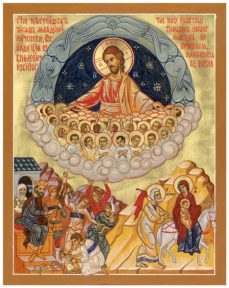
Make sure you catch all of the words there in v. 9. The text doesn’t just say “If you confess your sins, God will forgive and cleanse.” No. The text says that God is faithful and just to forgive. We would expect to hear different words there – words like merciful, gracious, kind, generous, or even lenient. But that is not what Scripture says. God is faithful and just to forgive you of your sins and cleanse you from all unrighteousness.

Dear saints, God’s forgiveness delivered to you is right and just. That’s saying it in a positive way. And it is true in a negative way (or the opposite way): God would be unjust to withhold forgiveness from you who confess your sins. Your sin, your shame, your unrighteousness, your guilt was all laid upon Jesus on the cross. He has taken all of it and endured the punishment that you deserve. For God to give you any of His anger or displeasure because of your sin would not be right or just. He would be removed from the bench, disbarred, and thrown into prison if He didn’t forgive you.

Dear Christian, be comforted. God faithfully and justly and willingly and delightfully forgives you all your sins because of what Jesus has done for you. Amen.

The peace of God, which surpasses all understanding, will guard your hearts and minds in Christ Jesus. Amen.

Saving the Savior – Sermon on Matthew 2:13-23 for the Second Sunday of Christmas

Listen here.

Matthew 2:13-23

13 Now when they had departed, behold, an angel of the Lord appeared to Joseph in a dream and said, “Rise, take the child and his mother, and flee to Egypt, and remain there until I tell you, for Herod is about to search for the child, to destroy him.” 14 And he rose and took the child and his mother by night and departed to Egypt 15 and remained there until the death of Herod. This was to fulfill what the Lord had spoken by the prophet, “Out of Egypt I called my son.”

The Slaughter of the Innocents of Bethlehem Matthew 2 1616 Then Herod, when he saw that he had been tricked by the wise men, became furious, and he sent and killed all the male children in Bethlehem and in all that region who were two years old or under, according to the time that he had ascertained from the wise men. 17 Then was fulfilled what was spoken by the prophet Jeremiah:

18 “A voice was heard in Ramah,
weeping and loud lamentation,
Rachel weeping for her children;
she refused to be comforted, because they are no more.”

19 But when Herod died, behold, an angel of the Lord appeared in a dream to Joseph in Egypt, 20saying, “Rise, take the child and his mother and go to the land of Israel, for those who sought the child’s life are dead.” 21 And he rose and took the child and his mother and went to the land of Israel. 22 But when he heard that Archelaus was reigning over Judea in place of his father Herod, he was afraid to go there, and being warned in a dream he withdrew to the district of Galilee. 23 And he went and lived in a city called Nazareth, so that what was spoken by the prophets might be fulfilled, that he would be called a Nazarene.

In the name of Jesus. Amen.

Merry Christmas and happy New Year! Today is the twelfth and last day of the Christmas season. Maybe you began celebrating Christmas when the Hallmark Channel began their “Countdown to Christmas” way back on October 26th. And, no, I’m not going to mock their movies today. Finally, after ten years of being your pastor, I’ve learned to not do that anymore – at least not in a sermon.

Maybe you have taken down your tree and lights and have stored all the decorations in your garage and shed. Remember for Christians, every Sunday is Christmas and Easter – even if your house or this sanctuary isn’t decorated accordingly. So, before we take everything down today after the service, God would remind us of why Jesus came. And this reminder comes in a sobering way with a sad text. The reminder is this: Jesus entered this world to bring life and salvation to people who are obsessed with death.

The birth of Jesus wasn’t the soft, cleaned up picture that we so often have in our minds. Joseph and Mary didn’t lay baby Jesus in a warm, comfortable, well-kept barn. It was a normal barn – cold, dirty, and stinky. They weren’t surrounded by well-groomed animals. Instead, the Scriptures make sure we know that things were much humbler and more dangerous for the holy family. After the birth of Jesus announced by gruff shepherds, the families of Bethlehem wondered at the news (Lk. 2:18) but soon returned to their normal lives. Then at the beginning of Matthew 2, King Herod heard from the magi about the birth of the One who had been born King of the Jews. And Herod did not think this was good news at all.

A little background on King Herod. This Herod was known as Herod the Great, probably because of the many building projects he completed. Herod wasn’t an Israelite; he was an Edomite, a descendent of Esau. But Caesar had given him the title king of the Jews. Herod was utterly and completely wicked and would do whatever he thought necessary to protect his power. He had nine or ten wives, most of whom were murdered because he suspected of them plotting against him. Herod was so bad that Caesar Augustus, who was his friend, said that it was better to be Herod’s pig than Herod’s son.

Five days before Herod’s death, he murdered his oldest son to keep him from gaining his throne. As Herod lay on his death bed, he called all his advisors and all the influential men of Jerusalem and Judea to gather together and had them locked in the Hippodrome which was a horse racing track. Herod ordered his armies to surround the stadium and kill everyone inside after he died so that the city cry when he died – even if they weren’t crying for him. Apparently, the order wasn’t carried out.

So, when the magi come to Jerusalem asking, “Where is he who is born King of the Jews?” you can imagine how troubled Herod was. King of the Jews is his job, his title, his office. herod and the magiThe guy who didn’t even want his own children to be king after him hears that someone else has been born to be King of the Jews. Well, Herod isn’t going to let that stand. And when Herod is troubled about this, the rest of Jerusalem is also quaking as they wonder what will happen next.

So, Herod learns from the chief priests and scribes that the Christ was to be born in Bethlehem, he sends the magi to find the Child and let him know where the infant Jesus is. But God tells the magi to not return to Herod, and they depart to their own country. And God sends an angel to warn Joseph to take the infant Jesus to Egypt, the land of slavery and infanticide (Ex. 1:8-21), to save the life of the Savior. As the soldiers marched south from Herod’s castle toward Bethlehem to carry out their murderous orders, the holy family fled ahead of them to Egypt.

Again, the first Christmas was not a tranquil, picturesque scene. Lord, have mercy.

The slaughter of all those boys two years old and younger in Bethlehem is one of the saddest, most horrific things recorded in all of the Scriptures. And yet, it is not so different in our time and culture today.

In 2018, the number of abortions performed in the US passed 60 million since the Roe v. Wade decision. Worldwide, the numbers are much more devastating. In our country, the killing of these pre-born children isn’t to protect a title of a king. Instead, these children are killed for the sake of convenience and independence. And it is all done in the name of choice. Politicians used to defend abortion saying that it should be safe, legal, and rare, but many of them are pushing to expand access to abortion and even suggesting that babies who survive attempts at abortion can be left to die on a table. And now, the leading provider of abortion in our country encourages women to shout their abortions and celebrate them.

Dear saints, there is a modern-day holocaust going on in our country, and it should daily drive us to our knees in prayer. Thomas Jefferson, the third president of our country, a man who published his own version of the Gospels that removed all of Jesus’ miracles, all the claims of His divinity, and even the Resurrection, Jefferson said, “A single human being is of infinite worth.” Even this secular principle is right and is enough to peacefully (and notice I said peacefully) oppose abortion with every ounce of our strength. But the coming of the Son of God in the flesh has raised the sacredness of all human life to an even higher dimension (Dr. Rev. David Scaer). In Jesus is life which gives light to everyone (Jn. 1:4, 9).

BaptismIn the incarnation, the eternal Son of God shares in the life of every man, woman, and child – born and unborn. We human beings are all taken out of the flesh of Adam which means that we are all part of one another. But even more importantly, by His conception, the eternal Son of God has permeated all of humanity. This is why the devil loves abortion. Satan loves abortion because every unborn child reminds him of the fact that the Son of God came in the flesh, took up residence in His mother’s womb, and defeated him. The fact that your Savior was once a pre-born child is primary the reason Christians oppose abortion.

Because we are descended from Adam, we all stand before God under the just verdict of guilty and deserving of hell (Ps. 51:5). But again, more importantly, because Jesus has taken on our flesh, we can stand in faith before God with Jesus, the second Adam, to hear a verdict of innocent, holy, and righteous because this Jesus has taken your place. On the cross, He become your sin (2 Cor. 6:21) so that He is the Lamb of God who takes away your sin (Jn. 1:29) and buries it into the emptiness of His tomb.

The young boys of Bethlehem died that night so Jesus could escape death as an infant but not escape death forever. Jesus grew up and died for them and for you upon the cross. Jesus died for them and for the evil Herod’s, Hitler’s, Stalin’s, bin Laden’s, and Soleimani’s of the world. Christ paid for the sins of every abortionist, every woman who has had an abortion, and every man who has pressured a woman to get an abortion. Your Savior died for those sins just as much as He died for yours.

Today, you have heard how your Savior was saved from death so that, at the right time Christ could die for you (Ro. 5:6). So, yes – rejoice because of Christmas while you remember why Jesus came. He came to bring salvation and life to a world obsessed with death. He came to make you – yes you, sinner – His own. Amen.

The peace of God, which surpasses all understanding, will guard your hearts and minds in Christ Jesus. Amen.

Attentive Ears – Sermon on Matthew 18:21-35 for the Twenty-Second Sunday after Trinity

Listen here.

Matthew 18:21-35

21 Then Peter came up and said to him, “Lord, how often will my brother sin against me, and I forgive him? As many as seven times?” 22 Jesus said to him, “I do not say to you seven times, but seventy-seven times.

23 “Therefore the kingdom of heaven may be compared to a king who wished to settle accounts with his servants. 24 When he began to settle, one was brought to him who owed him ten thousand talents. 25 And since he could not pay, his master ordered him to be sold, with his wife and children and all that he had, and payment to be made. 26 So the servant fell on his knees, imploring him, ‘Have patience with me, and I will pay you everything.’ 27 And out of pity for him, the master of that servant released him and forgave him the debt. H-76 Trinity 22 (Mt 18.21-35)28 But when that same servant went out, he found one of his fellow servants who owed him a hundred denarii, and seizing him, he began to choke him, saying, ‘Pay what you owe.’ 29 So his fellow servant fell down and pleaded with him, ‘Have patience with me, and I will pay you.’ 30 He refused and went and put him in prison until he should pay the debt. 31 When his fellow servants saw what had taken place, they were greatly distressed, and they went and reported to their master all that had taken place. 32 Then his master summoned him and said to him, ‘You wicked servant! I forgave you all that debt because you pleaded with me. 33 And should not you have had mercy on your fellow servant, as I had mercy on you?’ 34 And in anger his master delivered him to the jailers, until he should pay all his debt. 35 So also my heavenly Father will do to every one of you, if you do not forgive your brother from your heart.”

In the name of Jesus. Amen.

Today, our Lord Jesus wants us to consider forgiveness – both the forgiveness we receive and the forgiveness we extend. Slow down and consider the first four verses of the parable (v. 23-26).

A king wishes to settle accounts with his servants. In other words, the king wants his books to be clean, so all the servants who owe him money are brought in. Picture them standing in a line to appear before the king one-by-one. In this line is a particular servant. Let’s give him a name, shall we? We’ll call him Owen (pun intended). Owen knows why he is there. He patiently awaits his turn and slowly moves forward as the other servants have their audience with the king. Finally, it’s Owen’s turn. The bookkeeper asks for his name, turns a few pages, and announces, “Your highness, this is Owen who owes you ten thousand talents.”

Now this is an absurd amount of debt. One talent is equivalent to twenty-years’ pay. Owen owes two-hundred-thousand years’ wages. “Your highness, this is Owen who owes you ten thousand talents.” All eyes turn to him, but Owen doesn’t fall to his knees to beg or plead yet. The picture Jesus gives in the parable is that Owen simply says, “Yeah, I don’t have it.” The parable simply states, “he could not pay.” No kidding! He couldn’t pay? Of course he couldn’t pay!

So, the king orders that Owen be sold. He will no longer be the king’s problem. Sell off Owen, his wife, his children, and everything that Owen has will belong to the king. Then, and only then, does Owen fall to his knees and beg.

Why wasn’t Owen begging from the moment he was brought into the room? Did he think that the king didn’t mind about all that debt? Was Owen unaware of how much he owed the king? If this parable were about money, there is no question that Owen would have at least had an idea about the enormity of his debt. But remember, dear saints, this parable is about forgiveness. In the end, this debt of Owen isn’t about money; it is about sin.

Stop and consider this. When we remember the fact that the debt in this parable is sin, we can see how this kind of debt is possible, and we start to get a bit of a handle on our own sinful condition and indebtedness before God. So, buckle up and consider this for a moment:

Children are a gift from God, but we daily take them for granted, ignore them, and snap at them out of irritation. God does not want it to be that way.

Ponder how you spend your time at work. When you aren’t concentrated on your tasks, you aren’t just robbing your boss or the company. Your coworkers know that you are a Christian, and they see how you dishonor God’s name by loafing.

Think about the number of times you have come into this sanctuary and dropped a $20 bill into the offering plate.  God knows your income. He knows your priorities and how you have spent what He has given you on vehicles, clothes, cell phones, and travel to kids’ sporting tournaments.

Kids, listen up. Think about how you act at school. Do you give your best effort on your assignments? Do you say hurtful things to your classmates? Do you not help and befriend the kids who are being bullied? Do you try to get attention by using language or jokes that you wouldn’t dare use in front of your parents? Think about how rudely and disrespectfully you talk to your parents or your attitude toward them when they ask you to do something. Think about how you don’t recognize or acknowledge how much they have done and sacrificed for you.

Everyone, think about the times you have told your friends about the mistakes of others. Or, maybe you have been hurt by someone, and you think it will make you feel better to tell other people about it. You see something on Facebook or Twitter, and your response there will do nothing more than stir up strife. But you do it anyway.

Remember the times you were on vacation and you thought it wouldn’t hurt to skip church that Sunday morning. It did hurt. It hurt God. He wanted you to hear again how He loves you and sent Jesus to pay the price for your soul. When you aren’t in church, you lose something, your children lose something, and God loses something.

Jesus takes and becomes sinThink about the other night. You were watching that show. Men, that woman wasn’t your wife; she was sitting next to you. But God knew your lusts. Women, that handsome, considerate, compassionate character wasn’t your husband. You know what? That’s lust too.

Or think about the time you had sex outside of marriage. Nothing came of it – no pregnancy, no infections or diseases – you weren’t “caught.” But you did get caught. God knew about it. And it hurt the other person.

Think about all the times God has given you a golden opportunity to invite someone to church and receive the forgiveness of sins in the Absolution and Lord’s Supper. They are hurting and lonely because of their sins, and we have the fellowship and community here to heal them. But you were too embarrassed to bring them with you.

Think about that little comment that embarrassed your spouse or your friend. Or think about that time you got something new for your house, but you didn’t thank God for it. Think of how you lost your temper watching the game or the news. Your kids saw that, but even if they didn’t, God did.

Think too, about how each of these sins harms your neighbor. Your neighbor, hurt by that sin, goes and harms someone else. While you aren’t directly responsible for their actions, you end up being an accomplice to their sin.

We could go on and on all day like this. And, maybe, you think this is all nit-picking. The point of all this is to recognize that it isn’t just those particular sins that bother your conscience that rack up a debt of sin. All these little things count toward your debt. It all accumulates. Your sin grows and multiplies and expands. Yet, we go on day after day blissfully unaware of the debt we have racked up.

Remember David? After his sin with Bathsheba – Uriah is dead, his child doesn’t survive, his kingdom is torn to pieces, and there is all sorts of carnage left in the wake of that sin – David rightly confesses to God in Ps. 51:4, “Against You, You only, have I sinned, and done what is evil in Your sight.” Repent. Repent, and see the mercy of God.

Back to the parable. Maybe Owen was so casual about his audit because he figured the king didn’t mind the debt. Or that there aren’t jailors or punishment or a day of reckoning or that his family isn’t harmed by his debt. He only begs after the sentence is read. Owen’s debt has cost him and those closest to him. Only when he sees that does Owen plead with the king.

But, to see the greatness of God’s mercy, notice what Owen begs for. He doesn’t beg for mercy. He begs for time. “Have patience with me, and I will pay you everything.” But the king, God, out of pity doesn’t give Owen what he asks for. No, the king is more merciful than that. He releases Owen and forgives him the debt.

The first verses of Scripture in our service today from Ps. 130[:3-4, 1-2, 7-8] are so beautiful. Hear them again, “If you, O Lord, should mark iniquities, O Lord, who could stand? But with you there is forgiveness, that you may be feared. O Lord, hear my voice! Isaiah 53_6 - Sin BearerLet your ears be attentive to the voice of my pleas for mercy! [W]ith the Lord there is steadfast love, and with him is plentiful redemption. And he will redeem Israel from all his iniquities.”

Dear saints, God’s ears are more attentive in mercy to forgive your sins than your tongue is willing to confess. Because of Christ and what He has done for you on the cross, God erases your entire debt, completely and absolutely. Today, come to this altar and receive Christ’s forgiveness in this Sacrament. Then, go from here as God’s children ready to forgive the inexcusable in others because He has forgiven the inexcusable in you. Amen.

The peace of God, which surpasses all understanding, will guard your hearts and minds in Christ Jesus. Amen.

When Gifts Become Idols – Sermon on John 4:46-54 for the Twenty-First Sunday after Trinity

Listen here.

John 4:46-54

46 So he came again to Cana in Galilee, where he had made the water wine. And at Capernaum there was an official whose son was ill. 47 When this man heard that Jesus had come from Judea to Galilee, he went to him and asked him to come down and heal his son, for he was at the point of death. 48 So Jesus said to him, “Unless you see signs and wonders you will not believe.” 49 The official said to him, “Sir, come down before my child dies.” 50 Jesus said to him, “Go; your son lives.” The man believed the word that Jesus spoke to him and went on his way. 51 As he was going down, his servants met him and told him that his son was recovering. 52 So he asked them the hour when he began to get better, and they said to him, “Yesterday at the seventh hour the fever left him.” 53 The father knew that was the hour when Jesus had said to him, “Your son lives.” And he himself believed, and all his household. 54 This was now the second sign that Jesus did when he had come from Judea to Galilee.

In the name of Jesus. Amen.

God loves to give us gifts. He has given us life. He has given us our families, our homes, our jobs, our cars, our money, our talents, everything. God graciously and happily gives us these things because He loves us and wants us to have good things.

Where Your Treasure IsHowever, because we are sinful and corrupt to our core, we have a tendency to turn God’s good gifts into idols. This happens all over in the Scriptures. God has given beautiful trees and precious metals and stones, but people would take those things and make images out of them into false gods and bow down and worship them. In Isaiah 44[:9-20], God mocks the people for the foolishness of idols. God says, “You foolish people will cut down a tree and take some of the wood and make a bonfire to warm yourself and bake bread. Then, you take other parts of that same tree and carve it into an idol, bow down to it, and worship it saying, ‘Deliver me, for you are my god!’” What folly to say to a hunk of wood, “You are my god.”

Well, we fallen, sinful humans do this with more than just wood and gold and jewels. We do this with our careers, our homes, our bank accounts. And – I’m going to step on some toes here – we can even do this with our family and children. That is what seems to be going on in this text before us today.

To set this all up, I need to give a summary of what has been going on from John 2 up to our text, so please stay with me (I promise it’ll be quick). This text ends with John telling us that this is the second sign recorded for us in his Gospel. The first sign was Jesus turning water into wine. After that miracle, Jesus went to Jerusalem for the Passover, and while He was there, Jesus did other signs. But John doesn’t tell us what those miracles were. John simply says that many people believed in Jesus’ name when they saw those signs (Jn. 2:23). While He is in Jerusalem, Jesus talks with Nicodemus (Jn. 3:1-21). Then, He goes out to where John had been baptizing (Jn. 3:22-36). Jesus travels into Samaria where He talks with the woman at the well, and she believes in Him because of what He says to her (Jn. 4:26, 29). And, even though Jesus doesn’t do any miracles there, the Samaritans also believe in Jesus because they heard His teaching and believed that He is the Savior of the world (Jn. 4:42). They heard Jesus teach and believed in Him as the Messiah without seeing any miracles.

Finally, in the three verses leading up to our text, John tells us that Jesus returns to Galilee, and the people welcome Him because they had seen the signs that He had done in Jerusalem. Through all of this, John is setting up two different responses to the miracles Jesus is doing. On the one hand, you have people who see the signs and recognize that those miracles of Jesus point to the fact that He is the Savior of the world. And, on the other hand, you have people who see the signs but just want the miracle worker to do something for them. For this second group, Jesus is nothing more than a good luck charm. That context is the only way Jesus’ response to this official makes sense. Now, to our text.

Jesus returns to Cana in Galilee and an official, a nobleman – he is likely some higher-up bureaucrat in Herod’s court – he comes to Jesus because his son is desperately sick and at the point of death. The official asks Jesus to come and heal his son. But, again, John’s Gospel has set us up to see that this official is part of that second group. The official sees Jesus only as a means to an end – a way to save his son from death. This official has taken God’s good gift of a child and turned that gift into an idol. The official doesn’t care one lick about Jesus except that Christ might be able to heal his son. Once Jesus heals his son, sure he might be thankful, but that’s all. His son is everything and Jesus is nothing more than a magic pill to preserve his son’s life.

Again, I think that’s the only way Jesus’ response there in v. 48 makes any sense. Our Lord says, “Unless you people,” the pronoun there is plural. It’s directed to this nobleman, but also to the other people there who want a miracle worker instead of a Savior from their sins. Jesus says, “Unless you people see signs and wonders you will not believe.”

The conversation gets more heated and confrontational from there. The official isn’t happy with what Jesus said. He commands Jesus, “Sir, come down before my child dies.” His words don’t appear to be begging and pleading; instead, they are firm and demanding. Stop and ponder that for a minute. This official was used to giving orders and having people obey. And here he has the audacity, pride, and hubris to give Jesus, God in the flesh, a command.

I’m embarrassed to admit it, but I’ve done this too. Most of you, maybe all of you, know that I was born blind in my left eye. Two years ago, I needed cataract surgery for my right eye which meant the only vision I had left was in jeopardy. When I was praying for a successful cataract surgery, my prayers were just as demanding as this official’s request. They were basically, “God, You’ve taken half my sight, and I still trust You. Now, I’m having this procedure done, and You’d better guide the surgeon so I can watch my children grow up because if I lose my sight completely…” And I’d guess you have made similar demands of God as well. Repent.

Jesus doesn’t bow to our idols and demands. If He did, it would do nothing more than reinforce our false faith in those idols. Our heart would keep going after something that can’t save us and is, in fact, harming us. God wants us to have good things, but when His gifts become idols, God has no other course of action than to bash those idols into dust to turn us back to Him. C.S. Lewis Pain QuoteThere is a quote from C. S. Lewis in your Scripture insert from his book The Problem of Pain, which I’d encourage you to read. Here’s the quote, “God whispers to us in our pleasures, speaks in our conscience, but shouts in our pain; [pain] is His megaphone to rouse a deaf world.” In other words, in His mercy, God gets our attention by allowing pain to bring us back to Him for mercy and grace.

And that is precisely what Jesus does here. He doesn’t obey or meet the official’s demands. Instead, Jesus commands him, “Go.” It’s not quite so harsh as though Jesus is saying, “Get outa here,” but Jesus makes it clear that He isn’t going to be ordered around by this man. Jesus is saying, “Listen, I’m not going to bow to your commands. You, go. Your son lives,” present tense, and it is intentionally ambiguous. Jesus says, “Your son is living; he is alive right now.” The official could interpret this as though Jesus is saying, “Go home and spend the final hours of your son’s life with him.” But John tells us that the official interprets this in a different way. He sees this as a promise. He believed the word that Jesus spoke to him and went on his way (Jn. 4:50).

Here’s the point: the official initially had his son, his own flesh and blood, as an idol. And Jesus won’t and can’t condone that official’s worship of his son. But Jesus deeply loves both the official and his son. Christ will be crucified and shed His blood for the official and that boy. So, Jesus doesn’t endorse the idolatry that the official has for his son, but neither does Jesus take away the good gift of his son. Instead, Jesus restores all things.

He heals the official’s son without bowing to the official’s demands to protect his idol. Christ removes the idol, gives a promise for faith to the official. This promise even gives the official’s entire family faith that Jesus is the Messiah. In other words, Jesus removes the idol even as He restores His gift of the son. The official has his family in a new and better way than the he had ever had before. Jesus gives the official his son as a good gift and as a brother in faith.

So, what does this mean for you? Well, a few things to take note of today:

First, always remember that Jesus can help from a distance. Yes, Christ has ascended into heaven and sits at God’s right hand with all authority in heaven and on earth given to Him. And Scripture promises that all things work together for good for those who love Him (Ro. 8:28). Christ knows your troubles and trials, and He sends His love, mercy, and forgiveness. He still saves you, forgives you, and gives you His mercy. And on the last day, He will give you everlasting life.

easte-jesus-brings-us-out-of-deathSecond, God will not leave you alone with your idols. Know that, even when you make an idol of God’s good gifts, God wants you to have what He has given you in a way that is better than you deserve or know. Even in those moments when your pain is acute and severe, God is good and is working all things together for good for those who love and trust Him. So, trust Him because He is completely worthy of your trust.

Finally, the son lives. This official’s son lives today, because his Savior, Jesus, the Son of God, lives. Dear saints, Jesus, the Son, lives, and because He lives, you do to – now and forever. Amen.

The peace of God, which surpasses all understanding, will guard your hearts and minds in Christ Jesus. Amen.

Labor Day – Sermon on Luke 18:9-14 for the Eleventh Sunday after Trinity

Listen here.

Luke 18:9-14

He also told this parable to some who trusted in themselves that they were righteous, and treated others with contempt: H-65 Trinity 11 (Lu 18.9-14)10 “Two men went up into the temple to pray, one a Pharisee and the other a tax collector. 11 The Pharisee, standing by himself, prayed thus: ‘God, I thank you that I am not like other men, extortioners, unjust, adulterers, or even like this tax collector. 12 I fast twice a week; I give tithes of all that I get.’ 13 But the tax collector, standing far off, would not even lift up his eyes to heaven, but beat his breast, saying, ‘God, be merciful to me, a sinner!’ 14 I tell you, this man went down to his house justified, rather than the other. For everyone who exalts himself will be humbled, but the one who humbles himself will be exalted.”

In the name of Jesus. Amen.

Happy Labor Day weekend. Labor Day became an official national holiday when President Grover Cleveland signed the bill into law on June 28, 1894. I came across an article from 2017 titled, “Have we forgotten the true meaning of Labor Day?” The article claimed (and, from what I have read, it is true) that the original establishment of Labor Day was to help unify union workers and reduce the typical workday from twelve hours. It was to be a recognition of the contributions that workers have made for our country.

But, like many holidays (especially Christian/church holidays), the intention behind the celebration gets lost. Traditions grow while reasons fade. Today, most citizens look at Labor Day as just another day off. It’s commonly considered the end of summer, the weekend to close up the lake cabin, and the date after which you should no longer wear white clothing.

I’d better get to the point of all this and how it relates to Jesus’ parable before us. The Pharisee in the parable is celebrating his own personal version of Labor Day. He is there in the Temple to recognize how much his own work has contributed to… well, himself. He is there to celebrate his works and labors and how great his holiness is. Literally, Jesus says that the Pharisee prayed to himself, “God, I thank you that I am not like other men, extortioners, unjust, adulterers, or even like this tax collector. I fast twice a week; I give tithes of all that I get.” Talk about recognition of work.

The Pharisee is there in the Temple praying to himself. You have to understand that the Temple is the very place where God said that He would dwell with His people in order to forgive their sins. When Solomon prayed at the dedication of the Temple, he said six times that when God’s people prayed toward the Temple that God would hear their pleas and, in His mercy, would forgive (2 Chron. 6:12-42). But there, in the place of forgiveness, this Pharisee doesn’t want forgiveness because, in his mind, he doesn’t need forgiveness. Instead, he wants recognition, he wants accolades, he wants God’s applause. His prayer is nothing less than, “Hey, God. Look at how great I am.” Not even, “Hey, God. Look at how great You have made me.” God gets none of the credit. The Pharisee’s prayer is one of the most self-centered, self-interested, self-idolizing statements in the Scriptures.

The tax collector, on the other hand, when he looks at himself sees nothing good, nothing worthy, nothing laudable. So, there is nothing for this tax collector to pray for except mercy. And that is precisely what he receives. He goes home justified. You have to imagine what is going on behind the scenes. In heaven’s courtroom, this tax collector’s case is heard. All charges are dropped and every accusation against him is dismissed.

Isaiah 53_6 - Sin BearerThe parable does teach that the worst of sinners can go to heaven. We know this, but unfortunately, we can grow a little numb to this. But the main reason Jesus tells this parable is to destroy any self-righteousness and contempt we would have against other sinners.

We, I mean us here at Christ the King, need to take this to heart. There are people who have been raised in the church and appear to live good, decent lives who will not go to heaven. Some of our friends who regularly attend church and appear to be upstanding citizens will not go to heaven because they do not have faith in Christ. Not all pastors go to heaven. Flip this around. Some who have political views that appear, at least in our minds, to be incongruous and inconsistent with the Scriptures (either left or right) will be in heaven. Don’t be surprised if you even meet a repentant drug dealer, illegal immigrant, or abortionist in glory.

We are not better than other people, but, because of our sinful nature, we are always tempted to think the worst of others and impose our conceived motivations behind others’ actions. Stop it. Repent.

Dear saints, don’t fall into the trap that this Pharisee did. We are not better than other people – no matter how good we are. We are all equally deserving of God’s wrath and condemnation. We all need the grace and mercy of Christ which covers a multitude of sins.

Maybe that waitress who seems to be annoyed with you was in court fighting to keep custody of her children and away from her abusive boyfriend. Maybe that driver who appears completely incompetent behind the wheel is on his way home after watching his mother die. Maybe that rude, intrusive, foul-mouthed kid on the playground hasn’t gotten any attention from her parents in months. Don’t look down on them and treat them with contempt.

Sinners who come to Christ for the forgiveness they need tend to be more patient with others.

We can make a mistake and think that, because the Pharisee’s pride condemns him to hell, that it is the tax collector’s humility is what sends him home justified. A person’s humility is not what merits justification. None of us, including this tax collector, are humble enough to get to heaven. Too easily we switch out the good works that the Pharisee mentions – his upright living, his fasting, his tithing – with the tax collector’s humility. But when we do that humility becomes just another good work, and we will begin boasting about our humility. We easily swap the Pharisees’ prayer with our own version, “God, I thank You that I am not like other men, self-righteous, pretentious, holier-than-thou types, or even like this Pharisee. I’ve given You my heart, dedicated my life to You, and made You my Lord.” You might as well be praying to yourself.

The point Jesus is making in this parable is to not look inside or to yourself at all. Don’t try to find some super spirituality inside of yourself. The thing, the only thing, that the tax collector looks to is the mercy of Christ. The tax collector is there in the Temple looking to the mercy seat, to the place where God says that He would forgive and dwell with His people.

Cross and CommunionDear saint, you look there too. Look to the cross. Look to the blood of Jesus shed for you on Calvary. Look to His death. Look to His resurrection. Look to His ascension. And know that Jesus promises that all of that is for you.
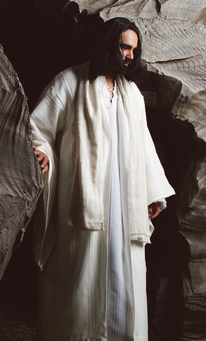
In our Epistle text (1 Cor. 15:1-10), that is where you are pointed. Look to and remember the Gospel. Christ died for your sins according to the Scriptures. He was buried and rose again. Jesus appeared to the first believers. They have seen and have born witness so that you would also believe (Jn. 20:30-3121:24-25).

Don’t be like the Pharisee. Don’t look to yourself, your good works, your piety, your heart, your decisions. Don’t even seek to be like the tax collector. Instead, look to Christ and to Christ alone.

We’d better get to Communion where Christ delivers this mercy. Amen.

The peace of God, which surpasses all understanding, will guard your hearts and minds in Christ Jesus. Amen.

Where Is Your Sting? – Sermon on 1 Corinthians 15:51-57 for the Resurrection of Our Lord

Listen here.

1 Corinthians 15:51-57

51 Behold! I tell you a mystery. We shall not all sleep, but we shall all be changed, 52 in a moment, in the twinkling of an eye, at the last trumpet. For the trumpet will sound, and the dead will be raised imperishable, and we shall be changed. 53 For this perishable body must put on the imperishable, and this mortal body must put on immortality. 54 When the perishable puts on the imperishable, and the mortal puts on immortality, then shall come to pass the saying that is written:

“Death is swallowed up in victory.”
55 “O death, where is your victory?
O death, where is your sting?”

56 The sting of death is sin, and the power of sin is the law. 57 But thanks be to God, who gives us the victory through our Lord Jesus Christ.

Alleluia! Christ is risen!
He is risen indeed! Alleluia!

In the name of Jesus. Amen.

“O death, where is your victory? O death, where is your sting?” Too often we think of death in wrong ways. We think that death is a state or a category or a condition. But v. 55 of that Epistle Lesson says that death is an enemy, a person who can be talked to and, most importantly, an enemy who can be questioned.

Imagine encountering death. When you or someone you love dies and you cross paths with death, you need to only ask death one simple question: “O death, where is your sting?”

Death might try to answer you with a pale, menacing, frightening voice, “My sting is your sin. I sting because you sin. If you didn’t have sin, I would have no sting. But I sting everyone because all have sinned. I am the wages and payment of sin (Ro. 6:23). And I will sting you because your sin is my sting.”

But you can simply respond, “I know all of that, death. I know that my sin has put me under your thumb. I know that the Bible says, ‘The wages of sin is death.’ So, what you say is true. But, death, I didn’t ask you, ‘What is your sting?’ I asked you, ‘Where is your sting?’ So, death, where is it, where is your sting?”

And death might smile and respond, “You simple Christian, have you forgotten how powerful my sting is? It is more powerful than the most poisonous snake or spider or jellyfish. My sting is the most powerful sting imaginable. My sting burns forever because the power of my sting is fueled by the Law. Yes, God’s eternal Law that abides forever, and you have broken that Law over and over.”

But you can look back at death and say, “I know my sin is no small sting. I know my sin is against the God who created me and loves me. I know the penalty of my sin is everlasting death, and I feel it in my conscience. I also know that the Law is not ever going to go away. I know that God’s Commandments are eternal. In fact, the Law was what made me scared of you. Because of the good and righteous Law, I know what you can do to me. I know that your sting is my sin, and I know that the power behind that sting is the Law. But, death, you still have not answered my question. Where is your sting?”

At this point, death is uncomfortable and a little fidgety, but he musters as much gusto as possible and says, “Well, you are face-to-face with me, aren’t you?”

“Yes, I am, but the sting of death is not death. The sting of death is sin. So, I ask you again, ‘Death, where is your sting?’”

Finally, death hangs his head. “I have used it, and I have lost it. But I’ll get it back again.”

Jesus Coming out of the TombAnd you can smile in his face, “Yes, death, you used your sting, didn’t you? You should have used your sting on me. The sting would have stuck on me. But you didn’t. Instead, death, you used your sting on my Savior, my God, and my Lord. You used your sting on Jesus, didn’t you? You had Jesus pinned tightly on the cross, and you stuck Him with your stinger and buried it into Him. Death, you were a fool that day. You stung God Himself. You stung Jesus who is the Resurrection and the Life (Jn. 11:25). But when you went to the tomb to find your stinger and get it back, Jesus wasn’t there. And guess what, death, Christ has taken my sin as He hung on the cross. And, death, you will not ever get your sting back. Never. That empty tomb means that your sting is lost forever. Death, I don’t fear you any longer.”

And having no other answer, death now turns around and walks away from you.

Dear saints, this is why we celebrate every Easter and every Sunday. Every Sunday, we celebrate what Christ has done in absorbing the sting of death so that death no longer has his sting.

And the day is coming when Christ will return. On that day, the trumpet will sound, and the dead will be raised imperishable. The day is coming when your perishable body will put on the imperishable and your mortal body will put on immortality.

Yes, death can and does buzz around now for a while. But death is like a bee that has used its stinger and soon dies.

Dear saints, “Death is swallowed up in victory.” Yes, the sting of death is sin, and the power of sin is the Law. But thanks be to God, who gives us the victory through our Lord Jesus Christ. So now, Christian, you need have no fear of death. Jesus has conquered the bitter tyrant of death. And He has connected you to that victory. You do not need to fear and watch out for death hiding behind a corner to pounce on you. Instead, Christian, you continue to look for the resurrection of the dead, and the life of the world to come.

Because Christ is risen, death is overthrown. Christ is risen and life reigns. Christ is risen, and dear saint, you are safely anchored in Christ who has given you the victory, now and forever.

Alleluia! Christ is risen!
He is risen indeed! Alleluia!

Amen.

The peace of God, which surpasses all understanding, will guard your hearts and minds in Christ Jesus. Amen.

It Is Finished – Sermon on John 19:30 for Good Friday

Listen here.

John 19:30

30 When Jesus had received the sour wine, he said, “It is finished.”

In the name of the Father and of the Son and of the Holy Spirit. Amen.

Dear saints, Jesus says, “It is finished.”

Jesus isn’t talking about His suffering. He doesn’t mean His agony or pain. These words do not refer to the darkness over the whole land while Jesus hung on the cross between noon and three. Yes, those things are coming to an end when Jesus says,“It is finished.”But Jesus is talking about something much bigger.

He is saying that the war between God and man is over. “It is finished.”

All of creation was plunged into sin and rebellion when Adam and the woman ate from the tree of which God commanded them not to eat. In that moment, all of humanity declared war against God. But God would not let mankind, the crown of His creation, be at war against Him. God would not fight against us though we fight against Him. Instead, He would fight for us.

Right after we fell into sin, God came down to the Garden and said that He would put enmity between Himself and the devil promising that the Seed of the woman would come and crush Satan’s head even as the devil crushed His heel. Then and there, God declared war – not against us – but against the devil, against death, and against your sin.

The Scriptures are the record of that war. Throughout the Bible, you read of the devil claiming people as his own, putting his name on them, making them his servants and followers, and dragging them with him into destruction.

But all the while God was fighting back. He kept rescuing His people from the devil and his armies. He rescued Adam and Eve. He delivered Abel, Noah, Abraham, and Moses. God ransomed His people from slavery in Egypt. He saved Joshua, Samuel, Samson, David, Elijah, Isaiah, Ezekiel, and countless others – both named and unnamed. God was fighting back, calling His people back to Himself. Promising that one day the battles would cease. The war would end. And there on the Cross, Jesus proclaims the victory when He says, “It is finished.”

The victory was costly – more costly than we can ever fathom. And the victory did not appear to be glorious. The victory, in fact, looked like defeat as the eternal Son of God hung there, dead on the cross. It is much easier for us to see Jesus’ heel being crushed than to see the devil’s head being crushed because that heel crushing is overwhelming.

But, dear saints, if the crushing of Jesus’ heel appears to be that devastating, how much more annihilating is the crushing of the devil’s head?

Today especially, but whenever you consider Jesus’ suffering, see what God is doing. He is ending the war. The war is ended not with a ceasefire or a peace treaty, but with total and complete victory. “It is finished.”

Consider what God says the crucifixion of our Lord means. It means that everything that was ever demanded of you in the Law (Col. 2:14), Jesus says, “It is finished.”

All the prophecies about Christ’s suffering that were recorded for us in the books of Moses, the prophets, and the Psalms (Lk. 18, 24), Jesus says, “It is finished.”

Everything that was necessary for the Christ to suffer so you could be forgiven and adopted as God’s child (Php. 2:5-15), Jesus says, “It is finished.”

Everything that was necessary for you to be saved and have eternal life (1 Pet. 1:10-12), Jesus says, “It is finished.”

Remember that God calls Jesus “the Lamb slain from the foundation of the world” (1 Pet. 1:19-20). It is God’s loving and gracious will for you to believe in Him. Everything that weighs on your soul, every sin that troubles your conscience, every burden of doubt, every fear, every worry, and every guilt is taken off of you and placed on Jesus. And Christ bears it away and buries it in the depths of the sea (Pr. Preus). “It is finished.”

Today is not bad Friday or sad Friday or black Friday. Today is Good Friday, the day that our Lord restored the original goodness to His creation, and that is most certainly good for us (Petersen).

The death of Christ is your redemption, your victory. Jesus is the Lamb who was slain, but now lives forever and ever. Christ has suffered and died in order that you might be His own, live under Him in His kingdom, and serve Him in everlasting righteousness, innocence, and blessedness. Christian, just as Christ is risen from the dead and lives and reigns to all eternity, you will too. Amen.

The peace of God, which surpasses all understanding, will guard your hearts and minds in Christ Jesus. Amen.