
33 And when the sixth hour had come, there was darkness over the whole land until the ninth hour. 34 And at the ninth hour Jesus cried with a loud voice, “Eloi, Eloi, lema sabachthani?” which means, “My God, my God, why have you forsaken me?” 35 And some of the bystanders hearing it said, “Behold, he is calling Elijah.”
In the name of Jesus. Amen.
On Good Friday, our Lord Jesus Christ suffered in three distinct ways. And it’s helpful to distinguish and contrast them. The three kinds of suffering are 1) physical suffering, 2) suffering the shame, and 3) the suffering of forsakenness.
We know what it is to have physical pain. We’ve all experienced it. Maybe not to the extent that Jesus did, but we’ve all had physical pain. You scrape your knee, get your finger caught in a door, or just sleep or sit wrong. Physical pain is something we naturally try to avoid. The physical pain of the cross was, without a doubt, excruciating for Jesus. But His physical pain was not what won your redemption and salvation. Physical pain was not the price that Jesus had to pay.
If Jesus’ physical pain won your salvation, then you and I have the same capacity to suffer physically as Jesus did. Plenty of people were beaten, whipped, and crucified in Jesus’ day, but their physical suffering didn’t save them.
We also know what it is to experience shame. The shame Jesus endures in His Passion is also horrible. He was spit on. The soldiers placed robes on Him, put a crown of thorns on Him, and bowed down to Him as they mocked, “Hail, King of the Jews.”
He was blindfolded and punched as people asked Him to prophesy, “Who was it that hit you?” People walked by the cross wagging their heads, saying, “You saved others. You don’t seem to be able to do anything now. You trusted in God, where is He now?” That’s the shame of the cross. And yet, the shame Jesus suffered is also not what wins your salvation. Other people have suffered similar shame.
But there’s that third suffering. It’s a hidden suffering, but it is the one that’s most profound of all. We get a glimpse of it in this fourth word of Jesus, “My God, My God, why have You forsaken Me?” That’s the greatest suffering of the cross.
In that moment, Jesus is suffering all the wrath of God over sin. He’s suffering all of God’s anger that you and I deserve. 2 Corinthians 5:21 says that Jesus, who knew no sin, was made to be sin for us, so that in Him we could become the righteousness of God.
In other words, all of the anger, all of the wrath, all of the punishment, and the separation from God that you and I deserve – it all falls on Jesus. He suffers all of that as our sins are laid on Him. In that moment, God is looking down at Jesus, and God does not see the Son whom He loves. Instead, God only sees sin and all the things that He hates and abhors.
In that moment, God the Father forsakes Jesus and pours out all of His wrath onto Christ. This why Isaiah says that Jesus is smitten, stricken by God, and afflicted (Is. 53:4). All of God’s righteous anger falls on Jesus. When Jesus says these words, “My God, My God, why have You forsaken Me?” that is what is taking place.
The most profound word of that prayer from Jesus’ lips is, “Why?”Christ doesn’t pray, “My God, My God, You have forsaken Me.” Instead, it’s, “Why? Why have You forsaken Me?” And this is a real, honest question. Several times throughout His life Jesus denies using His divine knowledge and omnipotence. This is one of those times. For those moments, even the purpose of Jesus’ suffering is hidden from Him.
This wasn’t always the case. When He was nailed to the cross, Jesus knew what He was doing there. That’s why He said, “Father, forgive them.” God can’t forgive without the cross. Jesus knew what He was doing on the cross when He told the thief, “Today you’ll be with Me in paradise.” And in just a few minutes Jesus shows that He knows again why He’s there when He says, “It is finished.”
But here, right in the middle of the crucifixion as Jesus cries out, “Why have You forsaken Me?” He temporarily denies His knowledge of what He is doing there. The point of it all is hidden from Him.
In that moment Jesus has nothing. Nothing to cling to. No hope. No comfort at all. He doesn’t have the comfort of knowing that He’ll be raised on the third day. He doesn’t have the comfort that this is happening for your salvation. In that moment, all Jesus knows is that He’s suffering all of God’s wrath against sin even though He’s done nothing wrong or sinful.
That is the suffering that wins your salvation. That suffering of being forsaken by God that Jesus is enduring here is beyond our comprehension.
We can see the beating and the whip. We can see the crown of thorns. We can see the shame and hear all the mockery. We can see the nails. But what you can’t see is the thing that matters most. The vengeance and wrath of God towards sinners is all poured out on Christ.
That’s the reason. That’s why Jesus goes to the cross. He goes there so that you will never see this wrath. So that you will never know this suffering under God’s righteous judgment. So that you will never know what it is to be forsaken by God.
Jesus says, “My God, My God, why have You forsaken Me?” so that you never have to.
Dear saints, you will never have to say that because God will not forsake you. He has promised (Heb. 13:5-6). He will not leave you alone in your sin. He doesn’t let your sin and guilt remain because Jesus has taken it and has suffered for it in your place.
That’s the suffering that wins and accomplishes your salvation. It is a suffering that we can’t imagine. And, Christian, because of Jesus, you never will. Jesus is your substitute. He pushes you out of the way of God’s wrath so that wrath hits Him and not you.
“My God, My God, why have You forsaken Me?” As He said that, Jesus didn’t know. But, dear saints, you do. You know the answer. He was forsaken by God so that you will be not only accepted, but also loved as God’s redeemed child for all eternity. Amen.
The peace of God, which surpasses all understanding, will guard your hearts and minds in Christ Jesus. Amen.


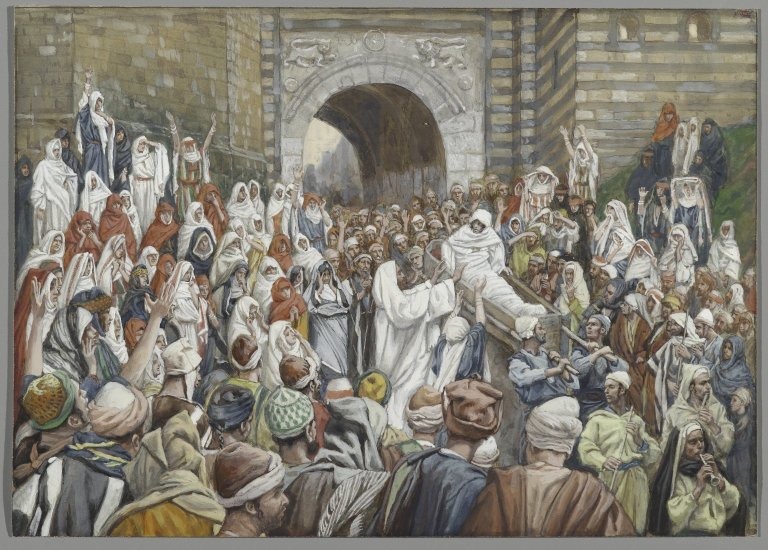 If Menards can have Christmas decorations out already and if the Hallmark Channel can do nonstop Christmas movies in July, then the Church can certainly have Easter in October. In fact, we have to celebrate Easter because this text screams Easter – loud and clear. But always before Easter, there is Good Friday. Before resurrection, there must be death. Good Friday sadness is a prerequisite to Easter joy. We have to see that first.
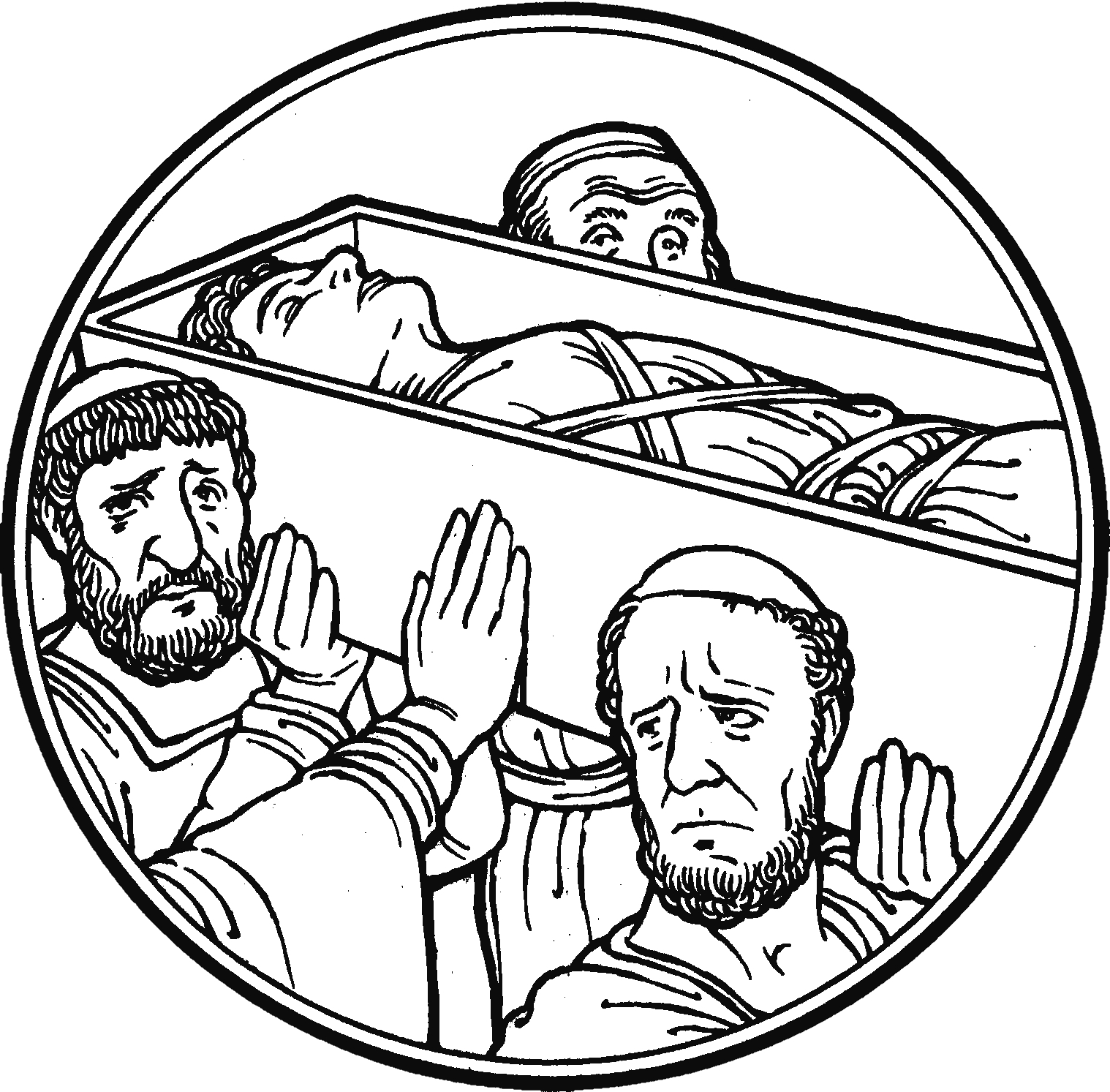 Then, Jesus walks past the pallbearers, straight up to the bier, touches it, and says, “Young man, I say to you, arise,” as though He was waking up a sleepy teenager late on a Saturday morning. The boy gets up and begins to speak. I wonder what he said.
 Jesus marches toward your funeral procession, and He does not stop or yield. Jesus does not give way or defer to death. Instead, Jesus defeats death with His death and resurrection, each and every time He meets it. Jesus meets you here today as you plod along in your personal funeral procession and gives you life. Jesus meets you at this altar to give you His living Body and His life-giving Blood.
 Pastorsamwise
You must be logged in to post a comment.