
Romans 6:1-11
1 What shall we say then? Are we to continue in sin that grace may abound? 2 By no means! How can we who died to sin still live in it? 3 Do you not know that all of us who have been baptized into Christ Jesus were baptized into his death? 4 We were buried therefore with him by baptism into death, in order that, just as Christ was raised from the dead by the glory of the Father, we too might walk in newness of life.
5 For if we have been united with him in a death like his, we shall certainly be united with him in a resurrection like his. 6 We know that our old self was crucified with him in order that the body of sin might be brought to nothing, so that we would no longer be enslaved to sin. 7 For one who has died has been set free from sin. 8 Now if we have died with Christ, we believe that we will also live with him. 9 We know that Christ, being raised from the dead, will never die again; death no longer has dominion over him. 10 For the death he died he died to sin, once for all, but the life he lives he lives to God. 11 So you also must consider yourselves dead to sin and alive to God in Christ Jesus.
In the name of Jesus. Amen.
This epistle text is dropping us near the middle of Paul’s letter to the church in Rome. Because that is the case, I want to quickly summarize what Romans says up until this point: In Ro. 1-2, Paul lays out everyone’s state under God’s Law. We’re all in trouble. We have all sinned and fall short of the glory of God (Ro. 3:23). And there is nothing you or I can do about it. Your works and my works cannot save. The Ten Commandments shut our mouths before the right and just judgment of God. Then, at the end of Ro. 3, we are given hope. In Ro. 3:21-24, Paul says that the righteousness God requires has been manifested apart from the Law through faith in Christ.
When he gets to Ro. 4, Paul uses the example of Abraham who was declared to be righteous not because he was such a good person but because he believed God’s promise to him (Ro. 4:3 see also Gen. 15:6). In Gen. 15, God promised old, childless Abraham that He would bless him with a son. God brought Abraham outside, told him to try to count the stars, and promised that his offspring would be as numerous as the stars. God made a direct promise to Abraham there under that night sky, and Gen. 15:6 says, “[Abraham] believed the Lord, and He counted it to him as righteousness.”
And notice how God connected His promise to Abraham to something physical, the stars. Think about how the nights were for old Abraham after that. Imagine him going out on a clear, cloudless night and seeing all the stars. How many nights, do you suppose, Abraham would remember God’s promise and start trying to count the stars? How long would he count before he would give up, realizing it wasn’t possible? And then Abraham would get tired, yawn, smile to himself, go to his bed, and fall asleep thinking, “Well, God made a promise to me. It’s hard to imagine and believe, but God promised.”
Back to Romans. When we get to Ro. 5, Paul changes gears and compares Jesus to Adam by saying that Jesus is the second Adam and new head of humanity. The first Adam brought sin and death to all humanity, but Christ, the second Adam, brings forgiveness, justification, salvation, and life. Paul writes in Ro. 5:18-19, and listen carefully to these verses, “Therefore, as one trespass led to condemnation for all men, so one act of righteousness leads to justification and life for all men. For as by the one man’s disobedience the many were made sinners, so by the one Man’s obedience the many will be made righteous.”
Through Jesus’ righteousness and obedience, you, believer, are made righteous. Eternal life has been secured for you – not by your works, efforts, and achievements but solely by the work of Christ, which is yours through faith. God be praised!
All that brings us to our text. In this first part of Ro. 6, Paul deals with a question even before it is allowed to enter a forgiven sinner’s mind. When we hear the Gospel, that we are forgiven and reconciled to God for Christ’s sake, the old Adam in us wants to go wild. “If God loves to forgive, let’s give Him lots to forgive!” Paul says, “Not a chance; may the possibility of that thought never come to be! How can you live in sin when you are dead to it?”
“Don’t you know that all of us who have been Baptized into Christ Jesus were Baptized into His death?” (Ro. 6:3). Just like He did for Abraham, God has made a promise to you that is connected to something physical, the water of your Baptism. You who are Baptized have been picked up from where and when you are and joined to Jesus’ death and resurrection. In your Baptism, God joined you to Jesus’ death so that you have a Jesus-kind of death. In other words, a death that doesn’t last very long, and a death concludes with resurrection. That means that sin and death no longer have a say in your life. You are dead to them. You are alive to God in Christ Jesus. The day you were Baptized was both your death day and the day you were begotten from above (Jn. 3:3-5).
But Paul goes on to say that this truth is something you have to take on faith. “You must consider yourself dead to sin and alive to God in Christ Jesus” (Ro. 6:11). This is why we don’t believe that everyone who is Baptized will be saved. Yes, Baptism is where and how God saves you (1 Pet. 3:21) and delivers what Jesus has done for you by His death and resurrection (Ro. 6:3-11). But you can walk away from the promises God gives you in Baptism.
“Consider yourself dead to sin and alive to God in Christ Jesus.” Believer, you have two identities at once – one in Adam and another in Christ. You must reckon yourself as dead and alive at the same time. By your birth into this world, you are a sinner. By your new birth from above (Jn. 3:3-5), you are a child of God.
This means something for you each day of your life. It means that sin is no longer your master because sin has been dethroned by Jesus. He’s your Lord now, not sin. So, don’t put sin back on the throne. Fight against it. Don’t use your body as an instrument of unrighteousness. Sin and death will have no dominion over you because they have no dominion over Jesus, which is what Paul says in the next few verses after our text (Ro. 6:12-14).
Dear saints, you are, right now, dead to sin and alive to God. That fact might seem strange because you know that you still sin. The old Adam still clings closely to you. At times, you feel that old Adam and know the guilt and shame of your sin. You recognize that you are not what God intended you to be. The wages of sin is death (which is what you earn by yourself) but the free gift of God is eternal life in Christ Jesus our Lord (Ro. 6:23). That’s why considering and reckoning yourself dead to sin and alive to God is so important. You are simultaneously righteous and sinner.
So, when you are inclined to sin and cave into temptation, you have all the proof you need that the old Adam is still hanging around and you need repentance. So, repent. Repenting is saying and believing what God says about sin. Confessing that you do not deserve anything good from God, but don’t stop there. Keep going! Confessing your sin also means saying what God says, that those sins have been died for and are forgiven because of Christ.
And when you are upset, discouraged, and appalled that you have sinned, when you resist and fight back against your wicked thoughts, words, and deeds, you can know for certain that you are alive to God.
Through your Baptism you are truly forgiven, regenerated, and made holy. That is how God looks at you, Christian. But we also recognize from both Scripture and our experience that this new life has only begun. It is not yet complete. But know that the God who began a good work in you, He will be faithful to bring it to completion (Php. 1:6).
What occurred in your Baptism – the drowning and rising, the death and resurrection – isn’t something that is merely in the past, but neither is it something will only come later in the future. Your Baptism is your present life, believer. Daily you repent of your sins, daily you believe in Christ crucified for your forgiveness, and daily you walk in newness of life until that great day when your Old Adam finally perishes, and you are perfectly and eternally renewed.
In other words, because your Baptism has joined you to Christ’s death and resurrection, live that out. Sin now has no dominion over you. You are dead to sin and alive to God. Amen.
The peace of God, which surpasses all understanding, will guard your hearts and minds in Christ Jesus. Amen.
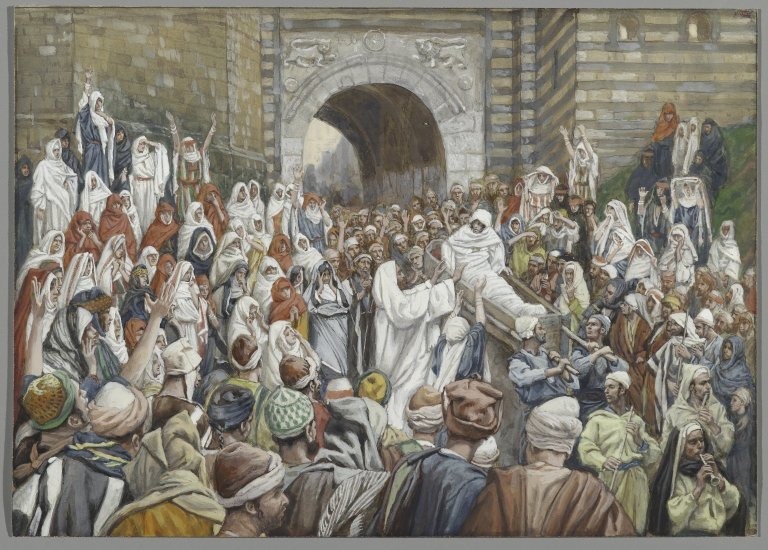
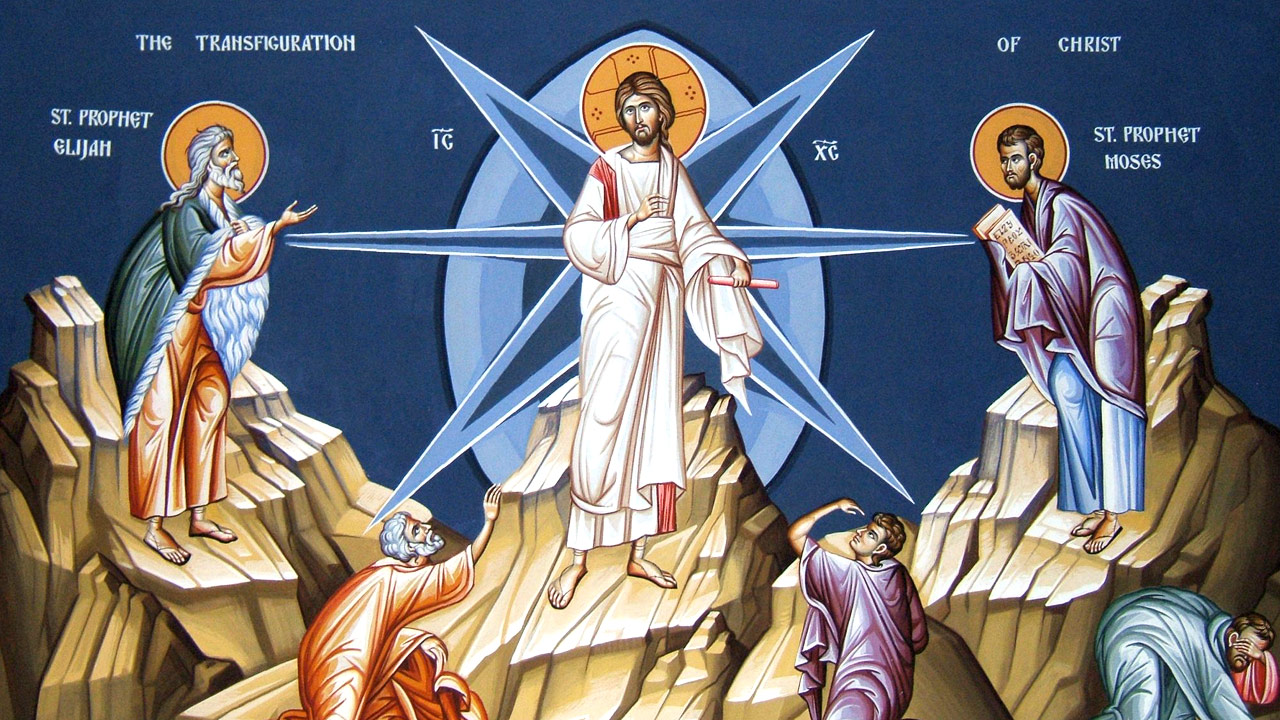
 And from this point, things get a little crazy and awkward. It is almost as though Peter didn’t hear Jesus say that He would rise from the dead because Peter rebukes Jesus – the very one he just confessed is the Son of the living God. Peter says, “Far be it from You, Lord! This shall never happen to You.” It would be easy to sling mud at Peter here for telling God that what He says is going to happen won’t ever happen. But you do it all the time – more on that in a bit.
 But here is where all of this is leading: Jesus comes to Peter, James, and John cowering in their sins and touches them. And notice what He says. He doesn’t continue to rebuke Peter. Jesus doesn’t say, “See I told you so.” Instead, Jesus says, “Rise,” the same word Jesus used when He spoke about His resurrection.“Rise, and have no fear.” Of all the things our Lord could have said, He says, “Rise, and have no fear.” Jesus is resurrecting Peter from his sin.
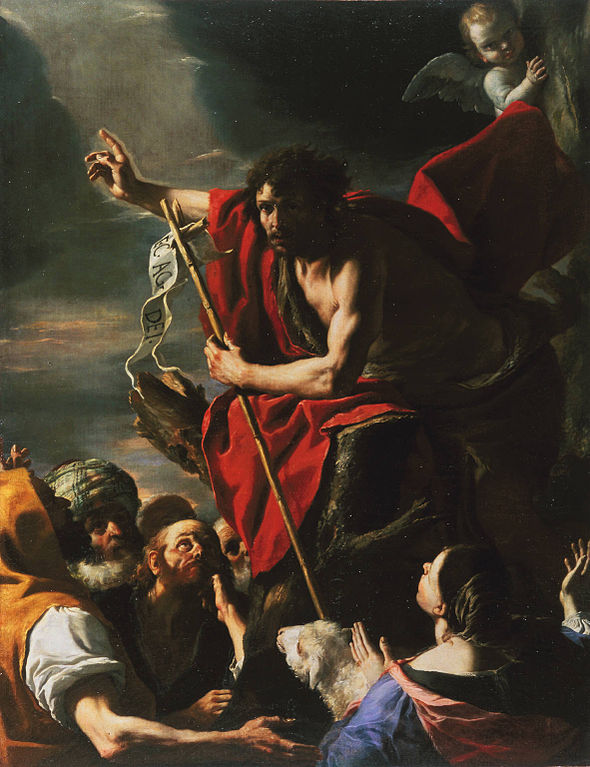 “You brood of vipers! Who warned you to flee from the wrath to come? Bear fruit in keeping with repentance.” The text doesn’t explicitly say it, but it appears as though John refused to baptize at least some of the Pharisees and Sadducees. But why? Why do they get a tongue-lashing and no baptism?
 Now we come to our text. John is baptizing all these people. A thief comes confessing his stealing, an adulterer confesses his adultery, a liar confesses her sin, and John absolves and baptizes them. But then to the front of the line comes Jesus, and John knows Him (Lk. 1:39-45). They’re related to each other. John knows what the angel Gabriel told Mary, that this Jesus would be Son of the Most High, that He would reign over the house of God, and that His kingdom would have no end (Lk. 1:26-38). John knows the angel Gabriel told Joseph that Jesus would be the One to save His people from their sins (Mt. 1:18-25). John knows that Jesus is the sinless God in the flesh. And here He is coming to be baptized unto repentance for the forgiveness of sins? This shouldn’t be!
 But also, the same thing that happens to Jesus in his Baptism happens to you in yours. In your Baptism, you are given the gift of the Holy Spirit and are made God’s beloved child. In your Baptism, God intimately joins you to Jesus, and to His death and resurrection (Ro. 6:3-6).
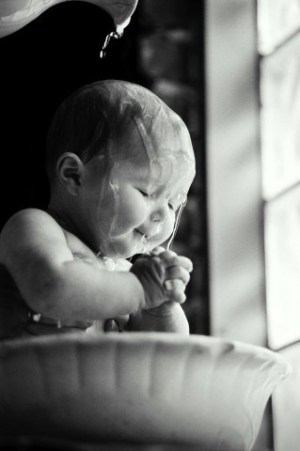 In your Baptism, God has given you the new birth of water and the Spirit (Jn. 3:5). In your Baptism, God has promised to wash away your sins (Act. 2:38-39), save you (1 Pet. 3:21), make you His child (Mt. 3:17), connect you to Jesus’ death and resurrection (Ro. 6:3-6), clothe you with Christ (Gal. 3:27), and fill you with the Holy Spirit (Tit. 3:5). So now, whenever wash your hands or take a shower, you can remember that God Himself has washed you clean and made you holy and sacred. Whenever you take a drink, you can remember that, in your Baptism, Jesus has given you to drink of the living water that wells up to eternal life (Jn. 4:10, 14).
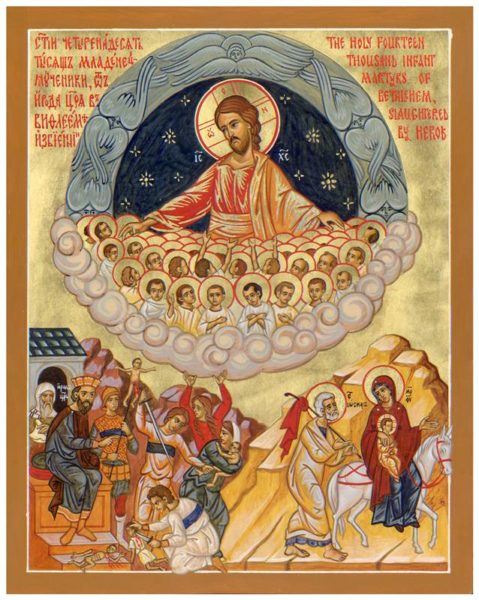 16 Then Herod, when he saw that he had been tricked by the wise men, became furious, and he sent and killed all the male children in Bethlehem and in all that region who were two years old or under, according to the time that he had ascertained from the wise men. 17 Then was fulfilled what was spoken by the prophet Jeremiah:
 The guy who didn’t even want his own children to be king after him hears that someone else has been born to be King of the Jews. Well, Herod isn’t going to let that stand. And when Herod is troubled about this, the rest of Jerusalem is also quaking as they wonder what will happen next.
 In the incarnation, the eternal Son of God shares in the life of every man, woman, and child – born and unborn. We human beings are all taken out of the flesh of Adam which means that we are all part of one another. But even more importantly, by His conception, the eternal Son of God has permeated all of humanity. This is why the devil loves abortion. Satan loves abortion because every unborn child reminds him of the fact that the Son of God came in the flesh, took up residence in His mother’s womb, and defeated him. The fact that your Savior was once a pre-born child is primary the reason Christians oppose abortion.
 9 After this I looked, and behold, a great multitude that no one could number, from every nation, from all tribes and peoples and languages, standing before the throne and before the Lamb, clothed in white robes, with palm branches in their hands, 10 and crying out with a loud voice,
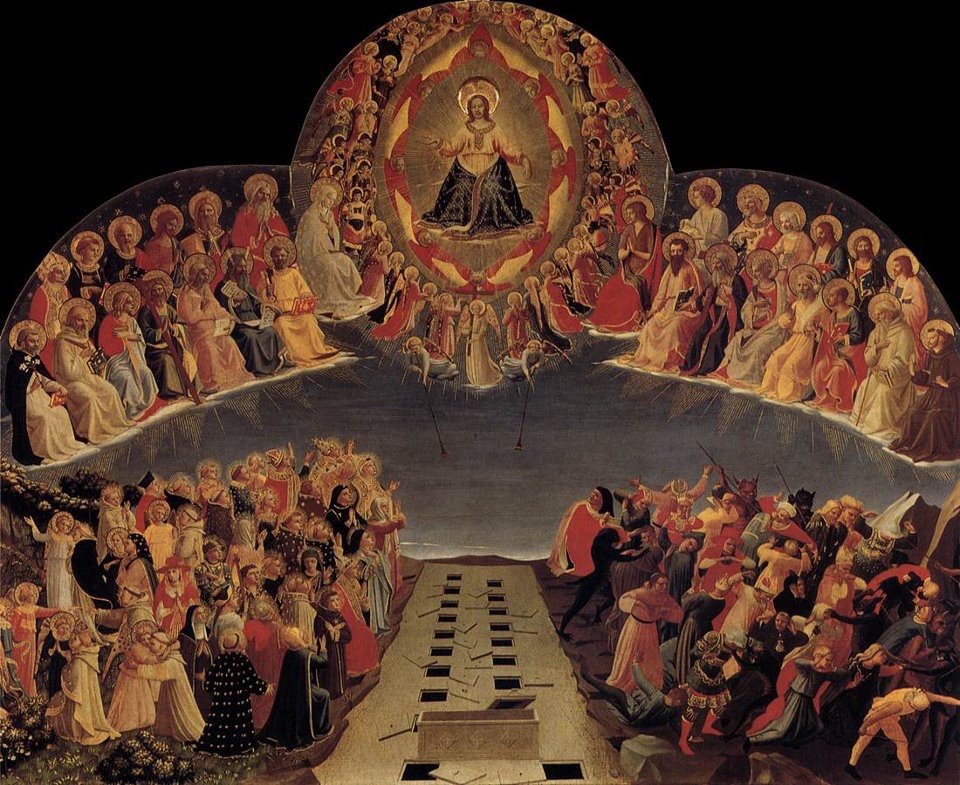 While death may come suddenly and abruptly here, those who die in the faith are not surprise arrivals in heaven. The company in heaven is not startled or shocked by those who show up at the doors of glory. The gates are open, and the believers who arrive there have been anticipated and are welcomed into the great multitude to be with the Lamb who shepherds them. Their arrival into glory is no shock to the residents of heaven. It is perfectly ordinary and on time.
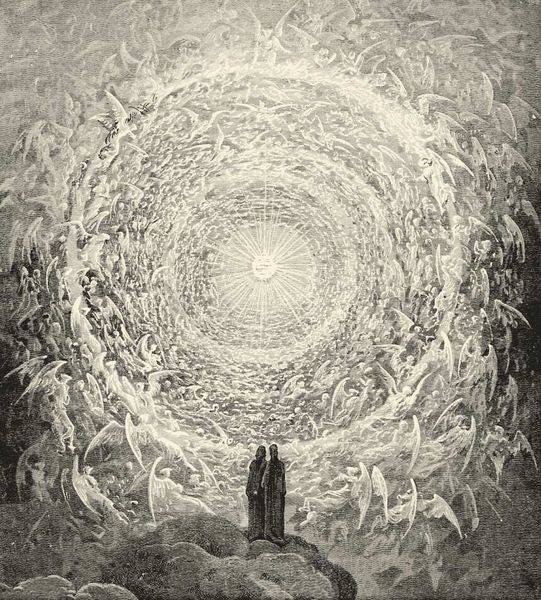 Because of this, we can have joy in the midst of sorrow. Here and now, as we are gathered together in God’s house and are invited to God’s table, we come to what is described in Hebrews 12(:22-24). This very morning in a small church on the north end of East Grand Forks, MN, we have come, “to Mount Zion and to the city of the living God, the heavenly Jerusalem, and to innumerable angels in festal gathering, and to the assembly of the firstborn who are enrolled in heaven, and to God, the judge of all, and to the spirits of the righteous made perfect, and to Jesus, the mediator of a new covenant.”
 Pastorsamwise
You must be logged in to post a comment.