Today’s sermon is short because we spent time considering our liturgy during our service. If you are interested in learning more about that, please see the video of that service.
Exodus 34:29–35
29 When Moses came down from Mount Sinai, with the two tablets of the testimony in his hand as he came down from the mountain, Moses did not know that the skin of his face shone because he had been talking with God. 30 Aaron and all the people of Israel saw Moses, and behold, the skin of his face shone, and they were afraid to come near him. 31 But Moses called to them, and Aaron and all the leaders of the congregation returned to him, and Moses talked with them. 32Afterward all the people of Israel came near, and he commanded them all that the Lord had spoken with him in Mount Sinai. 33 And when Moses had finished speaking with them, he put a veil over his face.
34 Whenever Moses went in before the Lord to speak with him, he would remove the veil, until he came out. And when he came out and told the people of Israel what he was commanded, 35 the people of Israel would see the face of Moses, that the skin of Moses’ face was shining. And Moses would put the veil over his face again, until he went in to speak with him.
In the name of Jesus. Amen.
Moses was eighty years old when he led God’s people out of Egypt, through the Red Sea, and to Mt. Sinai (Act. 7:23, 30). When they all arrived at Mt. Sinai, Moses became a mountaineer of sorts. He kept going up and down – at least six, if not eight, total times. Before God gave the Ten Commandments Moses had already gone up and down the mountain three times (Ex. 19:3-7; 19:8-14; 19:20-25). He would ascend to hear God speak and descend to tell the people what God had said. Then in Ex. 20, all the people heard God speak the words of the Ten Commandments, but the people said that hearing God’s voice was too traumatic and fearful for them. They begged Moses to not let God speak to them anymore (Ex. 20:18-20).
God agreed to the arrangement that they came up with. Moses would be the mediator between God and His people (Dt. 5:23-33). So, Moses kept going up and down the mountain. After God gave the Ten Commandments, Moses went up again to hear the instructions of how to construct the Tabernacle so God could come near and dwell among His people (Ex. 24:9-32:15). While Moses was up there, the people decided they wanted a tame god, a god they could control. So they made the golden calf to worship (Ex. 32:1-10). So, God sent Moses back down. He saw the people worshipping the golden calf and threw the tablets of the Ten Commandments breaking them because they had broken God’s covenant. Then Moses went back up the mountain again.
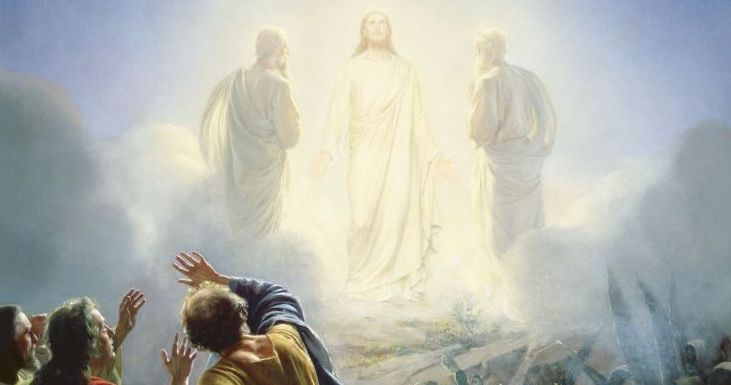
Our text begins as Moses is descending Sinai one final time. This last journey up the mountain was probably the most grueling for Moses. The verse right before our reading says that Moses was on the peak forty days and nights eating no food and drinking no water (Ex. 34:28). Of course, that isn’t humanly possible, but God made it happen. The fact that Moses is even alive after all of that is a miracle. But not only was Moses alive, he wasn’t disheveled or haggard. Instead, Moses’ face shined because he had been talking with God. His face reflected God’s glory, and the people were afraid again.
Now, the cause of their fear wasn’t God’s voice. Instead, it was the fact that the skin of Moses’ face was shining. The people didn’t want to come near Moses. So, Moses would hide his face behind a veil when he finished speaking God’s Word to them.
All of this is to say that the people were afraid when God came near. They were afraid when God spoke to them directly, and they were afraid when Moses was their intermediary. The people didn’t want God to come near to them.
In Jer. 23:29, God describes His Word saying, “Is not My Word like fire, declares the Lord, and a hammer that breaks the rock in pieces?” But in Is. 55:10, God also says that His Word is like the rain and snow that creates life by giving seed to the sower and bread to the eater. We might wonder, “Well, which is it, God? Does Your Word burn and break, or does it give life?” Well, dear saints, God’s Word does both. In Is. 55:11, God says that His Word will always accomplishes what God desires.
Dear saints, you cannot hear God’s Word and remain unchanged. Either you will be softened toward it, or you will be hardened against it. And that is one of the beautiful things about the liturgy we use here because, through that liturgy, God comes near so He can speak to you and create faith.
You hear God’s Law where He says that your sins have harmed you and alienated you from Him. Because of our sins, we should all be afraid like the people who didn’t want God to come too close. So our liturgy is also filled with the Gospel.
You hear how God comes near, not to destroy you but to forgive you and give you eternal life. You hear how Christ has come near by taking on your flesh and becoming one of you. Our Lord came near to remove the veil between us and God so we could stand in His holy, glorious, gracious, merciful presence. The entire service is designed to lead us out of our sinful desires and draw us to God’s side. Through our liturgy, God comes near to us so we can come near to Him.
Even though we have all sinned against God, He doesn’t want to be distant. Dear saints, God wants to bless you. He wants you to behold His face as it shines upon you in grace. He wants to lift up His countenance upon you and give you His peace (Num. 6:24-26).
That peace with God is yours through the death and resurrection of your Lord and Savior, Jesus Christ. In Christ, God has come near to you to dwell among you. In Jesus, you see God’s glory, full of grace and truth. And from His glory you receive grace upon grace (Jn. 1:14, 16). Amen.
The peace of God, which surpasses all understanding, will guard your hearts and minds in Christ Jesus. Amen.
7 [T]hen the Lord God formed the man of dust from the ground and breathed into his nostrils the breath of life, and the man became a living creature. 8 And the Lord God planted a garden in Eden, in the east, and there he put the man whom he had formed. 9 And out of the ground the Lord God made to spring up every tree that is pleasant to the sight and good for food. The tree of life was in the midst of the garden, and the tree of the knowledge of good and evil.
10 A river flowed out of Eden to water the garden, and there it divided and became four rivers. 11 The name of the first is the Pishon. It is the one that flowed around the whole land of Havilah, where there is gold. 12 And the gold of that land is good; bdellium and onyx stone are there. 13 The name of the second river is the Gihon. It is the one that flowed around the whole land of Cush. 14 And the name of the third river is the Tigris, which flows east of Assyria. And the fourth river is the Euphrates.
15 The Lord God took the man and put him in the garden of Eden to work it and keep it. 16 And the Lord God commanded the man, saying, “You may surely eat of every tree of the garden, 17 but of the tree of the knowledge of good and evil you shall not eat, for in the day that you eat of it you shall surely die.”
In the name of Jesus. Amen.
It should come as no surprise, but this text is fundamental and foundational to understanding who we are as God’s creatures. But to really get to the roots of who we are, we first have to understand who God is as our Creator, and this text gives us one piece of that understanding. The other piece came just before our text.
The Bible gives us two very different accounts of creation. In Genesis 1:1-2:3, God creates the sun, moon, stars, land, sky, plants, fish, birds, mankind, and all things by simply speaking. Whatever He commands comes into being. The whole account is filled with the repeated words, “And God said…. And it was so.” Then, God rests. Throughout those six days of creating and the seventh day of rest, He is simply called “God” (Heb.‘Elohim’). In that first account account of creation, we see a God who is transcendent – He is not subject to the limitations we are used to.
But then in our text here, the second account of creation, we see something remarkably different. The difference can be seen just a few verses before our text began in how Moses refers to God. No longer is He simply ‘God’ – He is the Lord God. In Hebrew, it is Yahweh God. In other words, this transcendent, powerful God has a name, and He is close and personal – especially with the head of His creation, Adam.
Yahweh puts His hands into the earth, molds the clay to form the man, and breathes life into Adam’s nostrils (Gen. 2:7). Then that immanent, personal God plants a garden for Adam (Gen. 2:8-9). After our text, Yahweh remains close to Adam by causing him to sleep and performing a surgery on him in order to create the woman. And Yahweh brings the woman to Adam as his suitable helper and joins them together in marriage so they would become one flesh by having children (Mt. 19:6; Mk. 10:9).
From these two accounts of creation, we have an important insight into God. He is mighty, powerful, and uninhibited. But He is also intimately close and involved with mankind.
Finally, after God finishes creation, He rests on the seventh day. Now, God doesn’t rest on the seventh day because He is tired. He created by merely speaking, and God speaks a lot more through the rest of Scripture but doesn’t grow tired or need a nap (Ps. 121:3-4). Instead, those two creation accounts help us understand something about that day of rest. God rests because He has set up all of creation to be His Temple where He will rest in the order and peace that He has established.
When I was younger, I imagined God created everything while He sat far away in heaven, speaking things into existence, but staying aloof somewhere way up there in heaven. But that scenario isn’t compatible with the rest of Scripture.
God’s desire is to dwell with people, the crown of His creation. The final picture Scripture gives of the eternal bliss of believers is God making His dwelling with you (Rev. 21:3). This desire of God to dwell among His creation becomes especially clear after the Fall. When God delivers His people from slavery in Egypt, He instructs them to build the Tabernacle so He can dwell in their midst (Ex. 25:8). In that Tabernacle, and later in the Temple, God says that He will walk among them (Lev. 26:12; 2 Sam. 7:6-7) just as we see He does in Gen. 3:8. To do that, God’s instructions on how to build the Temple in Jerusalem include many of the same materials, like gold and onyx stones, and the same ‘floorplans’ we read about here in the Garden of Eden.[1]
Now, that brings us to the nature of mankind. God puts Adam in the midst of that newly created Temple of Eden and gives Adam two responsibilities. Our translation says that Adam is there “to work it and keep it.” The two Hebrew words there can refer to a lot of activities, but when Scripture uses these two terms together, they most often refer to the duties and responsibilities of the priests in the sanctuary of the Tabernacle and Temple (Num. 3:7-8, 8:26, 18:5-6). In other words, this text is telling us that mankind was created to be the priest and guardian of sacred space. We were not created just to be gardeners.
On top of being priests, God set up mankind to be kings and queens over creation. God said, “Be fruitful and multiply and fill the earth and subdue it, and have dominion over the fish of the sea and over the birds of the heavens and over every living thing that moves on the earth” (Gen. 1:26-28). So, from our very origin, we were created to be priests and the royal rulers over creation with God reigning in our midst.
Of course, sadly, we did not remain in that original state. Adam and his wife failed in their priestly duties. They did not guard the Temple of Eden as they should have. Instead, they let the foul serpent defile it, and they lost their priestly roles. Instead, God sent a cherubim to take over the responsibility of guarding the way to the Tree of Life (Gen. 3:24 [see also Ezk. 28:14-16]). They also gave up their royal status over creation. Instead of having dominion over everything that creeps on the earth, they listened to what should have been under their rule; they listened to the serpent’s lies. By eating the fruit of the Tree of the Knowledge of Good and Evil, they rejected God and His ordering of the world.
But, dear saints, God has provided a way back to the Tree of Life (Rev. 22:2, 14), a way back to being what we were created to be, a way back to our origin. Jesus, the new Adam (1 Cor. 15:21-22, 45, 47), has come and crushed the serpent’s head. By His death and resurrection, Jesus has now redeemed you and made you what you were created to be. Through faith in Christ, you are a chosen race, a royal priesthood, a holy nation, a people for His Own possession (1 Pet. 2:9). This very Jesus dwells among you even now (Mt. 18:20). And, as Christ’s people, you are called to be His priests and kings and queens, guarding the sacred spaces of this congregation and your family.
So repent. Repent of the times you have chosen to neglect and abdicate your position as God’s priests and royalty. Repent of the times you have listened to the serpent’s lies and not expelled him from the good gardens where God has placed you and given you priestly and royal authority. Repent because the only fruit you have gotten from those sins is death (Ro. 6:21).
And know, as our Epistle reading (Ro. 6:19-23) promises, that you have been set free from sin and are now the servants of God who gives you fruit that leads to sanctification and life (Ro. 6:22). And know that Christ has equipped you with everything you need to be His priests and royalty. You have the full armor of God (Eph. 6:10-18) to defend against the attacks of the devil, the world, and your own sinful flesh. And you have God’s promise that He will never leave you or forsake you. In a world that is still soiled and stained with sin, Christ has brought you back into His kingdom, and He will lead you to eternal paradise with Him. Amen.The peace of God, which surpasses all understanding, will guard your hearts and minds in Christ Jesus. Amen.
[1] Gold and onyx (Gen. 2:11-12) are used to decorate the sanctuaries and priestly garments (Ex. 25:7, 11, 17, 31). The Tabernacle/Temple lampstand probably symbolizes the tree of life (Gen. 2:9; Ex. 25:31-35). Even the river flowing from Eden (Gen. 2:10) resembles Ezekiel’s Temple vision (Ezk. 47:1-12).
1 In the beginning, God created the heavens and the earth. 2 The earth was without form and void, and darkness was over the face of the deep. And the Spirit of God was hovering over the face of the waters.
3 And God said, “Let there be light,” and there was light. 4 And God saw that the light was good. And God separated the light from the darkness. 5 God called the light Day, and the darkness he called Night. And there was evening and there was morning, the first day.
6 And God said, “Let there be an expanse in the midst of the waters, and let it separate the waters from the waters.” 7 And God made the expanse and separated the waters that were under the expanse from the waters that were above the expanse. And it was so. 8 And God called the expanse Heaven. And there was evening and there was morning, the second day.
9 And God said, “Let the waters under the heavens be gathered together into one place, and let the dry land appear.” And it was so. 10 God called the dry land Earth, and the waters that were gathered together he called Seas. And God saw that it was good.
11 And God said, “Let the earth sprout vegetation, plants yielding seed, and fruit trees bearing fruit in which is their seed, each according to its kind, on the earth.” And it was so. 12 The earth brought forth vegetation, plants yielding seed according to their own kinds, and trees bearing fruit in which is their seed, each according to its kind. And God saw that it was good. 13 And there was evening and there was morning, the third day.
14 And God said, “Let there be lights in the expanse of the heavens to separate the day from the night. And let them be for signs and for seasons, and for days and years, 15 and let them be lights in the expanse of the heavens to give light upon the earth.” And it was so. 16 And God made the two great lights—the greater light to rule the day and the lesser light to rule the night—and the stars. 17 And God set them in the expanse of the heavens to give light on the earth, 18 to rule over the day and over the night, and to separate the light from the darkness. And God saw that it was good. 19 And there was evening and there was morning, the fourth day.
20 And God said, “Let the waters swarm with swarms of living creatures, and let birds fly above the earth across the expanse of the heavens.” 21 So God created the great sea creatures and every living creature that moves, with which the waters swarm, according to their kinds, and every winged bird according to its kind. And God saw that it was good. 22 And God blessed them, saying, “Be fruitful and multiply and fill the waters in the seas, and let birds multiply on the earth.” 23 And there was evening and there was morning, the fifth day.
24 And God said, “Let the earth bring forth living creatures according to their kinds—livestock and creeping things and beasts of the earth according to their kinds.” And it was so. 25 And God made the beasts of the earth according to their kinds and the livestock according to their kinds, and everything that creeps on the ground according to its kind. And God saw that it was good.
26 Then God said, “Let us make man in our image, after our likeness. And let them have dominion over the fish of the sea and over the birds of the heavens and over the livestock and over all the earth and over every creeping thing that creeps on the earth.”
27 So God created man in his own image, in the image of God he created him; male and female he created them.
28 And God blessed them. And God said to them, “Be fruitful and multiply and fill the earth and subdue it, and have dominion over the fish of the sea and over the birds of the heavens and over every living thing that moves on the earth.” 29 And God said, “Behold, I have given you every plant yielding seed that is on the face of all the earth, and every tree with seed in its fruit. You shall have them for food. 30 And to every beast of the earth and to every bird of the heavens and to everything that creeps on the earth, everything that has the breath of life, I have given every green plant for food.” And it was so. 31 And God saw everything that he had made, and behold, it was very good. And there was evening and there was morning, the sixth day.
1 Thus the heavens and the earth were finished, and all the host of them. 2 And on the seventh day God finished his work that he had done, and he rested on the seventh day from all his work that he had done. 3 So God blessed the seventh day and made it holy, because on it God rested from all his work that he had done in creation.
In the name of Jesus. Amen.
An overture is a medley that opens an opera, suite, or play, and it introduces the different songs you will hear through the whole work. Movies used to do this often. Most of you are probably familiar with The Sound of Music. The movie begins with scenes of the mountains and fields surrounding Salzburg, Austria, and after Julie Andrews frolics through the grass singing “The Hills Are Alive,” the overture begins. The overture continues several more measures of “The Hills Are Alive,” but then transitions into “Do-Re-Mi,” followed by, “A Few of My Favorite Things,” which morphs into “Something Good,” and closes with a brief hint to “Climb Every Mountain.” There aren’t any lyrics in the overture, so you don’t know that part of the song, but you get to hear the melody so it sticks in your mind and you are able to recognize it when the actual song enters the movie. Not every song gets into the overture, but it gives you an idea of the significant events that are coming up in the film.
Well, the text we just heard is the overture of all of Scripture. So much of what the Bible teaches is introduced in these verses, but too often we miss them because we’re so familiar with the account of creation. So, we’re going to do our best to open our ears to hear the themes that are introduced in this text. We will catch some of the melodies presented to us, so that when the rest of Scripture gives us the lyrics, we can recognize the music behind the song. Just so you know, because there is so much packed into these verses, we aren’t going to be able to hit everything. Sorry.
Right off the bat, we are introduced to one of the great, mysterious theological truths of Scripture – we serve a triune God. In Hebrew, the third and fourth words are ‘God’ and ‘created.’ The interesting thing is that the word for ‘God’ is Elohim, which is a plural word, but the verb for ‘created’ is singular. This would sound really weird to a Hebrew-speaker reading it. Imagine if you read, “The painters (pl.) cleans (sg.) their brushes.” It’s a little jarring.
On top of that, in v. 2-3, you are introduced to each of the three Persons of the Trinity (especially if you know the rest of your Bible). You see the Spirit of God hovering over the waters. (The Holy Spirit’s connection to water is a whole theme of Scripture by itself, but we’re not going to dive into that today.) The Holy Spirit is over the water. God the Father speaks. And the Word that is spoken is Jesus who was in the beginning with God through whom all things were made (Jn. 1:3).
We see a return to this theme of the Trinity in v. 26 where God says, “Let us make man in our (pl.) image (sg.) after our (pl.) likeness (sg.).” Then, v. 27 says with poetic beauty, “So God (pl.) created (sg.) man (sg.) in His (sg.) own image, in the image of God (pl.) He created (sg.) him (sg.); male and female He created (sg.) them (pl.).” Just briefly, as a sidenote, part of us being created in the image of God is that we share with God a plurality. Our one God has a plurality of three, one mankind has a plurality of two. This is why I would encourage you to not use someone’s “preferred pronouns” – especially if those pronouns are the plural, they/them. That is a demonic attempt to twist and mangle God’s creation and to make an individual more than he or she actually is. Moving on.
The second part of the overture I’ll point out today is that God is a God of order (1 Cor. 14:33). And we see this in the details of what is created each day. In v. 2, we are told that the earth is without form and void. In days 1-3, God creates defined spaces that give form and order, and in days 4-6, God fills those spaces. You can think of it as God creating a shelf on days 1-3 and God filling those shelves days 4-6. Day one, God creates light and time; then on day four, God fills it with sun, moon, and stars. Day two, God creates the atmosphere and waters; then on day five, God fills those spaces with birds and fish. Day three, God creates land and plants; then on day six, God fills the space with animals and mankind.
This is so beautiful. God doesn’t just build the house of creation. He also fills and decorates it. Because God creates with this order, we can say that wherever and whenever we see disorder, there are evil forces working against God. Satan brought that disordering when he tempted Adam to fall into sin, and we see that continued work of the devil and demons wherever there are attempts to bring anarchy, chaos, and confusion. After the Fall in Gen. 3, the rest of the Bible is about God bringing order back into a sin-sick, chaotic creation.
The third movement of this overture we will highlight is the movement from darkness to light. Verse 2tells us that before God spoke over the formlessness and void, there was darkness over the face of the deep. Before God creates, there is darkness, but then God speaks, “Let there be light,” and there was light. And notice how each of the first six days end with the refrain, “and there was evening and there was morning the ___ day.” So, each day of the creation account begins with darkness and moves toward light.
In our culture today, we mark the beginning of a day at midnight, and this is totally fine. We’re just using the way the Roman empire counted time. The Hebrew culture considers the start of the next day to be right around sunset, which would be about 6 PM because they are closer to the equator than we are. So, they have kept that theme of a day moving from darkness to light. And in the Church, we do this as well. Christmas begins in the “eve.” When it is dark, we celebrate the birth of Christ, and the day moves toward the light.
The interesting thing is that when we get to the seventh day, the pattern “there was evening and morning” that we have heard six times, is broken. There is only mention of the fact that there is a seventh day. So, this entire account moves from chaos and darkness to order and eternal, never-ending light. The book of Revelation shows the conclusion and culmination of this beautiful movement from darkness to light. Rev. 21:23-25 tells us that the eternal city of God will have no sun or moon for the glory of God gives it light and there will be no night there.
Since we’re talking about this seventh day with no darkness, we’ll move to the next beautiful piece of this overture – the eternal day of rest. The seventh day is totally unique in three ways. First, God doesn’t speak a single word on the seventh day. God is silent because the heavens and the earth were finished, completed. God has said all that needed to be said, and His creative Word continues to work to this day as it echoes through His creation. All of creation continues to run and exist because of the Word of God.
The second way the seventh day is unique is that it is blessed. On day five, God blessed the sea creatures and birds to be fruitful and multiply, filling the waters and the air. On day six, God blesses mankind to be fruitful and multiply filling, subduing, and having dominion over the earth. it. (Many people today are calling for population control. They say there are too many people on the planet. Dear saints, this is a demonic thought. God created the world to be filled with people, and He blesses us for the purpose of filling the world.) But then, God finishes creation by blessing a day. It is God’s intention to use the blessed seventh day to bless His people – both physically with rest from work, and spiritually with His holiness being conveyed from God to people.
The third way the seventh day is unique is that it doesn’t have an end in the text. The text makes the seventh day eternal and open. Even though we have fallen into sin, God has given us access to the seventh day of eternal rest until Jesus comes again in glory on the Last Day. Hebrews 3-4 encourages us to listen to God’s Word and enter God’s rest. Hebrews 4:9–10 says, “So then, there remains a Sabbath rest for the people of God, for whoever has entered God’s rest has also rested from his works as God did from His.”
Dear saints, there are so many wonderful themes here in the account of creation, but the one that tops them all is the power of the Word of God. Through His Word, God created all things in six days, and since sin entered the world, God has used His Word to bring the sin-induced chaotic creation back into order and rest. So, God sent His Son, Jesus, the Word made flesh, into the world. Colossians 1:19-20 says, “In [Christ Jesus] all the fullness of God was pleased to dwell, and through Him to reconcile to Himself all things, whether on earth or in heaven, making peace by the blood of His cross.”
The God who says, “Let there be ____,” and that which does not exist obeys, He now says to you, “Your sins are removed from you as far as the east is from the west” (Ps. 103:12), and they are. He says to you, “I am the resurrection and the life. Whoever lives and believes in Me shall never die” (Jn. 11:25-26), and it is true. He says to you, “Come to Me, all you who labor and are heavy laden, and I will rest you” (Mt. 11:28), and you find peace.
Dear saints, this is very good indeed. God has created, redeemed, and sanctified you. Trust in what Christ has done, and you will find your eternal rest with God and will all His saints. Amen.
The peace of God, which surpasses all understanding, will guard your hearts and minds in Christ Jesus. Amen.
You must be logged in to post a comment.