Invited – Sermon on Proverbs 9:1-10 for the Second Sunday after Trinity

Proverbs 9:1-10

1   Wisdom has built her house;
she has hewn her seven pillars.

2   She has slaughtered her beasts; she has mixed her wine;
she has also set her table.

3   She has sent out her young women to call
from the highest places in the town,

4   “Whoever is simple, let him turn in here!”
To him who lacks sense she says,

5   “Come, eat of my bread
and drink of the wine I have mixed.

6   Leave your simple ways, and live,
and walk in the way of insight.”

7   Whoever corrects a scoffer gets himself abuse,
and he who reproves a wicked man incurs injury.

8   Do not reprove a scoffer, or he will hate you;
reprove a wise man, and he will love you.

9   Give instruction to a wise man, and he will be still wiser;
teach a righteous man, and he will increase in learning.

10 The fear of the Lord is the beginning of wisdom,
and the knowledge of the Holy One is insight.

In the name of Jesus. Amen.

Today, we’re diving right in. Jesus is Wisdom who speaks in this text. Jesus is the one who has prepared this banquet and invites the simple (probably best understood as ‘gullible’) and those who lack sense to a feast He has prepared. Don’t be offended by that interpretation just because Wisdom here is given feminine pronouns. “Wisdom has built her house, hewn her pillars, slaughtered her beasts, mixed her wine…” etc. The word “wisdom” in both Hebrew and Greek is a feminine noun, so don’t let that confuse you. This text is not teaching that God is a woman. Wisdom is the everlasting, eternal, infinite, almighty Son of God.

A bit of context helps cement this interpretation. Back in Pro. 8:22-23, 27-31, Wisdom says of Himself,

“The Lord possessed me at the beginning of his work, the first of his acts of old.
Ages ago I was set up, at the first, before the beginning of the earth….
When he established the heavens, I was there; when he drew a circle on the face of the deep,
when he made firm the skies above, when he established the fountains of the deep,
when he assigned to the sea its limit, so that the waters might not transgress his command,
when he marked out the foundations of the earth, then I was beside him, like a master workman.”

In other words, God created with and through Wisdom, and all of that echoes the opening of the Gospel of John. “In the beginning was the Word, and the Word was with God, and the Word was God. He was in the beginning with God. All things were made through him, and without him was not any thing made that was made…. And the Word became flesh and dwelt among us, and we have seen his glory, glory as of the only Son from the Father, full of grace and truth” (Jn. 1:1-3, 14). And if that isn’t enough to prove that Jesus is Wisdom who is speaking here, in Lk. 11:31 Jesus calls Himself the Wisdom greater than Solomon. And in 1 Cor. 1:30, Paul says that Jesus is the wisdom from God.

Jesus, the eternal Son of God and wisdom of God, is the Father’s voice to the world. Jesus reveals God’s heart. And Christ gives us true wisdom that remains when everything else is gone. And look at this beautiful invitation:

He prepares the food, sets the table, and calls all people – even the gullible and senseless – to come to the banquet. This feast is free by grace. God charges no admission fee, and the guests have no bill at the end of the meal. They don’t even have to cover the tip. Those who have no money are invited to come and have their fill. This beautiful picture is also what we saw in our Gospel lesson (Lk. 14:15-23). There, the king doesn’t care if the guests are poor, crippled, blind, or lame. He doesn’t even care if they are citizens of his kingdom. He tells his servants, “Go out to the highways and hedges and compel people to come in that My house may be filled.” God has a banquet. He wants His tables to be filled with guests. He desires that all be saved and come to a knowledge of the truth.

The past three times these readings have come up, I’ve preached on that Gospel text and highlighted the importance of coming to church because the riches of the feast that God gives us right here, in this sanctuary, are so grand, elaborate, and infinitely valuable. But I’m not preaching on the Gospel lesson today. The main overlap of the Gospel lesson and this lesson from Proverbs is the invitation and how we are commissioned by God to spread that invitation to the divine feast far and wide. So, for the rest of this sermon, let’s consider evangelism and witnessing.

Honestly, there is a lot of bad theology when it comes to evangelism and sharing the Gospel. I want to consider three truths about evangelism today. There are more, but these three are central. And I want to be very clear at the outset here. I’m going to criticize some of the common trends and ideas about evangelism. Just because I criticize them doesn’t mean that those things have never worked to share the Gospel.  Instead, I hope that as we consider what the Scriptures have to say about salvation and how we see that Christianity spread in the book of Acts, you are encouraged and emboldened to simply be who you are in Christ. Be a sinner who has been washed in Christ’s forgiveness. That is all the equipping you need to be a faithful inviter to God’s eternal feast.

The first truth about sharing the Gospel is that evangelism is nothing more than simply announcing that there is a feast that is ready and free to any who will come. As v. 4 of our text said, Wisdom sends us to proclaim, “Whoever is simple, let him turn in here.” And as they arrive at the banquet, Wisdom – in other words Jesus – says to them, “Come, eat of my bread and drink of the wine I have mixed. Leave your simple ways, and live, and walk in the way of insight” (v. 5-6).

God gives us opportunities to invite to a banquet; He doesn’t call us to scare people into heaven. Plays like “Heaven’s Gates, Hell’s Flames” and fire-and-brimstone-street-corner preaching aren’t what Christians are about. Christians are about the free Gospel, the abundant mercy of Christ, and the joy of the eternal banquet. Yes, the horrors of hell are real. But if people are scared into believing in God, they are more slaves than children. And God wants children to love and cherish. Christian, you have the Gospel – the greatest news ever. Jesus has died and shed His blood for the forgiveness of your sins. That message is for all people. Out of His pure mercy, Jesus says, “Fear not, little flock for it is your Father’s good pleasure to give you the kingdom” (Lk. 12:32). God’s greatest delight is to give sinners His kingdom and have them as His guests at His banquet.

The second truth about evangelism is that you don’t have to go out and find people to evangelize. I’ve been through (and even taught) evangelism models that encourage you to seek people out, strike up a conversation, and then turn that conversation to spiritual matters so you can share about Jesus. First off, not a lot of people are comfortable doing that. And very few people who are comfortable doing that can do it naturally – especially when the person they are trying to evangelize tries to change the subject away from spiritual matters. I’ve been a victim (and I’m using that word a little sarcastically) of people who are part of pyramid schemes. Of course, they don’t call it a pyramid scheme – it’s ‘multi-level-marketing.’ At first, they are very friendly and outgoing, but then comes the moment when they try to feel me out about their great, wonderful product. When they realize I’m not interested in purchasing or selling their product, they aren’t interested in me anymore. And you know what that does to my opinion of them? Yeah.

Dear saints, you don’t have to seek out potential converts to Christianity. Repeatedly in the book of Acts, the apostles would proclaim the Gospel in the synagogues – to the people who were already familiar with God’s Word. In those synagogues, some would believe in Christ, but many would reject. The interesting thing is that the apostles never sought out people who were unfamiliar with God’s Word. They never made cold calls. God would simply bring people to the apostles, they would preach, point to Jesus, and people would believe.

Just a few examples: At Pentecost, God brought people together by the sound of the rushing wind (Act. 2:5-6) and the apostles pointed them to Jesus. In Acts 3, Peter and John go to the Temple for prayer one afternoon and encounter a paralyzed man who was begging. Peter tells the guy, “I don’t have any silver or gold for you, but in the name of Jesus Christ of Nazareth, rise up and walk.” The guy does, and whole crowds get drawn to Peter and John to hear more about Jesus (Act. 3:1-4:37). God dropped the Ethiopian eunuch into Phillip’s life (Act. 8:26-38). And when Phillip was done baptizing the eunuch, God teleported him somewhere else to share the Gospel (Act. 8:39-40). God told Cornelius to send for Peter (Act. 10:1-8). We could go on and on. But I’d encourage you, read the book of Acts this week, and notice how God just drops people into the lives of the apostles. Then they simply share the Gospel and point the people whom God put in their lives to Jesus.

Dear saints, you don’t have to seek people out. Be faithful in the vocations and callings that God has given you. Be a good spouse, parent, child, worker, student, neighbor, whatever. Have the best, most genuine relationship possible with the people God brings into your life. Be an authentic person and be ready to give an answer for the reason for the hope that is in you (1 Pet. 3:15-16). As you have opportunity, point them to Jesus, and invite them here where Jesus has prepared His banquet. The most recent survey I saw showed that 86% of people who attend a church go to that congregation because a friend invited them. Be friendly to people not in an effort to convert them – that isn’t true friendship. Just be a friend, and be ready for God to open doors to sharing the Gospel. Like Phillip did for Nathaniel, invite people to come and see Jesus (Jn. 1:46).

Finally, the third truth about evangelism is this: Rest in the fact that you can’t mess it up. Dear saints, Scripture is clear on this. No one will go to hell because you failed in sharing the Gospel with them. It isn’t possible. Jesus promises in Jn. 10:27-29, “My sheep hear my voice, and I know them, and they follow me. I give them eternal life, and they will never perish, and no one will snatch them out of my hand. My Father, who has given them to me, is greater than all, and no one is able to snatch them out of the Father’s hand.”

There is a fascinating verse in Acts 13 about this. Just to give a bit of the context here: Paul and his companions arrive in the city of Antioch (Act 13:13ff). As was their custom, they go to the synagogue and are asked by the rulers if they have a word of encouragement. Paul preaches a little sermon about Jesus (Act. 13:16-41). Some believe, and Paul and Barnabas are invited to come again the next Sabbath. When they do, the whole city of Antioch gathered together to hear the Word of the Lord (Act. 13:44). Paul and Barnabas again share about Jesus. Some were filled with jealousy and were contradicting what Paul was preaching and reviling him (Act. 13:45). But then (and this might be the most important verse you can memorize to encourage you as you think about evangelism), Acts 13:48b, “As many as were appointed to eternal life believed.”

Dear saints, salvation belongs to God (Jon. 2:9; Ps. 3:8; Rev. 7:10). You and all Christians are saved by grace (Eph. 2:8-9). Since you aren’t the source of either salvation or grace, the work of saving people belongs exclusively to God. God can and does use you to be His salt and light (Mt. 5:13-16), and when He does, God be praised! But know that no one, not a single soul, will end up in hell because you have failed. You aren’t that powerful. You cannot erase someone’s name from the book of life (Rev. 3:5). Romans 8:38-39 says, “Neither death nor life, nor angels nor rulers, nor things present nor things to come, nor powers, nor height nor depth, nor anything else in all creation, will be able to separate us from the love of God in Christ Jesus our Lord.”

Dear saints, evangelism, inviting anyone to Jesus’ banquet is zero risk, infinite reward.

Dear saints, there is a banquet. It is free to you and to all. You are invited, and you have the privilege and joy of inviting others. So, invite them. Invite them because of the joy of being part of that feast yourself.

The banquet is prepared. The gifts are ready. Jesus calls you, “Come, eat of my bread and drink of the wine I have mixed. Leave your simple ways, and live, and walk in the way of insight.” Because the fear of the Lord is the beginning of wisdom, and the knowledge of the Holy One is insight. Amen.

The peace of God, which surpasses all understanding, will guard your hearts and minds in Christ Jesus. Amen.
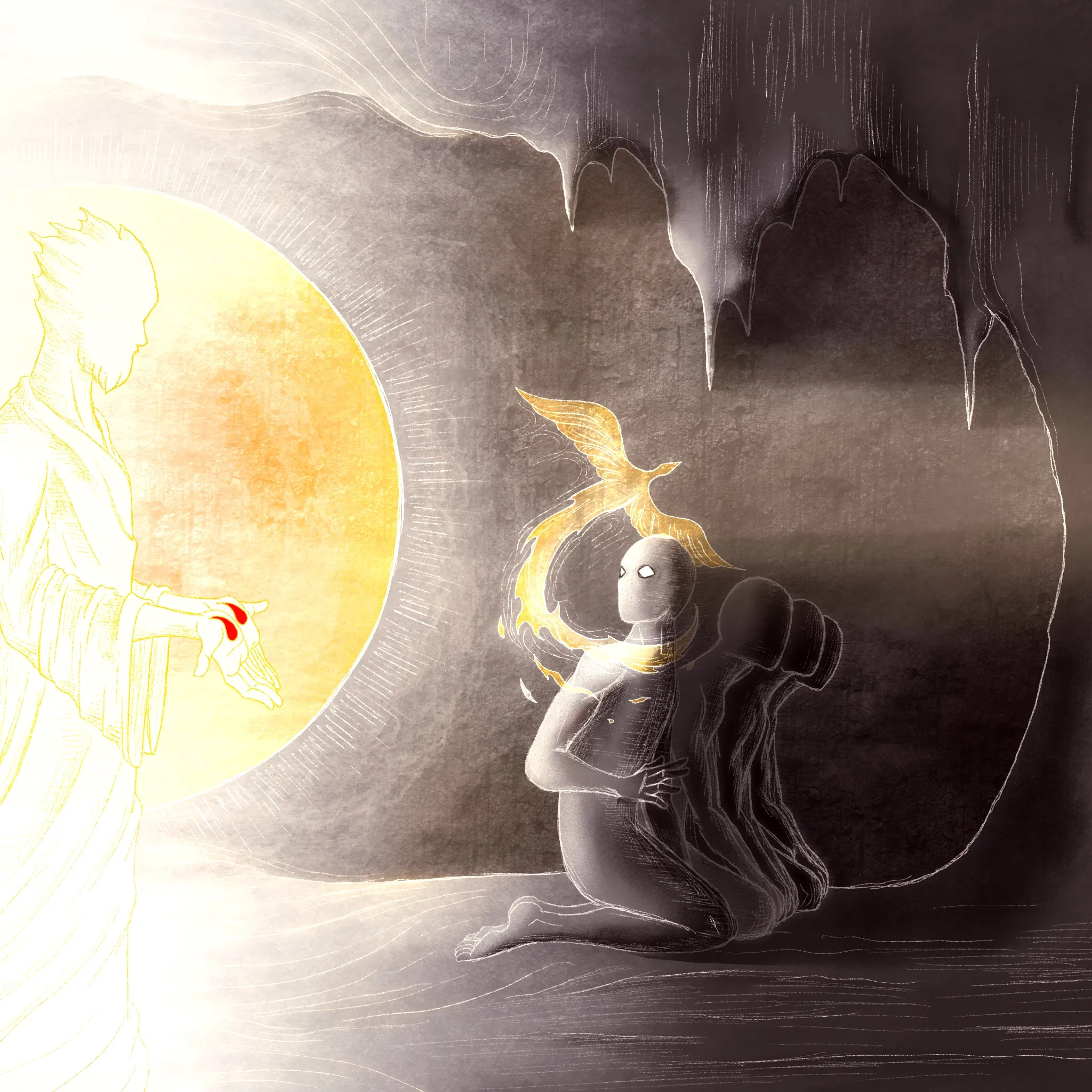
Triune Love – Sermon on John 3:1-17 for Holy Trinity Sunday

John 3:1-17

1 Now there was a man of the Pharisees named Nicodemus, a ruler of the Jews. 2 This man came to Jesus by night and said to him, “Rabbi, we know that you are a teacher come from God, for no one can do these signs that you do unless God is with him.” 3 Jesus answered him, “Truly, truly, I say to you, unless one is born again he cannot see the kingdom of God.” 4 Nicodemus said to him, “How can a man be born when he is old? Can he enter a second time into his mother’s womb and be born?” 5 Jesus answered, “Truly, truly, I say to you, unless one is born of water and the Spirit, he cannot enter the kingdom of God. 6 That which is born of the flesh is flesh, and that which is born of the Spirit is spirit. 7 Do not marvel that I said to you, ‘You must be born again.’ 8 The wind blows where it wishes, and you hear its sound, but you do not know where it comes from or where it goes. So it is with everyone who is born of the Spirit.”

9 Nicodemus said to him, “How can these things be?” 10 Jesus answered him, “Are you the teacher of Israel and yet you do not understand these things? 11 Truly, truly, I say to you, we speak of what we know, and bear witness to what we have seen, but you do not receive our testimony. 12 If I have told you earthly things and you do not believe, how can you believe if I tell you heavenly things? 13 No one has ascended into heaven except he who descended from heaven, the Son of Man. 14 And as Moses lifted up the serpent in the wilderness, so must the Son of Man be lifted up, 15 that whoever believes in him may have eternal life.

16 “For God so loved the world, that he gave his only Son, that whoever believes in him should not perish but have eternal life. 17 For God did not send his Son into the world to condemn the world, but in order that the world might be saved through him.”

In the name of Jesus. Amen.

John 3:16 might be the most recognizable verse of all Scripture. It has, rightly, been called “the Gospel in a nutshell.” That being said, there is a common misconception about one little word of the verse – the word “so.” Most of the time, we understand “so” to mean “so much,” so we read into the verse, “God loved the world so much that He gave His only-begotten Son….” However, the Greek word that gets translated as “so” has a different nuance. It actually means, “in this way.” Here’s how it comes across in Greek, “For God loved the world in this way, that He gave His only-begotten Son, that whoever believes in Him should not perish but have eternal life.”

God the Father loved you by sending His only-begotten Son to die and rise again for you. It is one thing for a person to love you by sacrificing his own life for you. But your God goes further by giving His eternally beloved Son so that you might be saved through Him. In other words, if you ever have doubts about God’s love for you, you only need to look to the cross and empty tomb. By the concrete, historical, provable action of God sending Jesus to shed His blood, die, and rise again for you, God has loved you. That love has not, will not, and can not ever change.

In a lot of ways, that’s enough of a sermon right there, but you’re going to get more.

Today is Trinity Sunday. Scripture teaches that there is one God in three Persons and three Persons in one God. So, as Christians, we worship one God who is Father, Son, and Holy Spirit.

It’s easy for us as Christians to think that there is the God we know and love, but then there are a bunch of guys on the fringe of Christianity called “theologians.” These stuffy guys dress weirdly, have no social skills, and like talking about this thing called “the Trinity,” while go about the important things of real life. I hope this sermon is a beginning of seeing how doctrine – and specifically the doctrine of the Trinity – sparks a joy and wonder in our God who is Father, Son, and Holy Spirit.

The doctrine (or teaching) of the Trinity is the first mystery of the Christian faith. The doctrine of the Trinity is not a secret. A secret is something that you keep to yourself, and if you tell it to another person it isn’t a secret anymore. A mystery is something that, even if you say it and confess it, is still a mystery and above our comprehension.

Let’s start with a quick overview of the Trinity.

Even though the word “Trinity” is never used in Scripture, it is a concept that Scripture presents, so we believe, teach, and confess it. And the word “Trinity” is a helpful term that has been used by Christians going way back to the late 100’s AD. “Trinity” smashes two words together – tri meaning “three” and unity meaning “oneness.” This week, I came across how “Trinity” is communicated in sign language, and it is absolutely beautiful. You hold up three using your thumb, index, and middle finger on one hand behind your other hand; then, you move those fingers underneath and to the front of your other hand to hold up your single index finger.

First, let’s talk about the unity of the Trinity. In the Old Testament, God gave His people a creed to confess, and it opens like this, “Hear O Israel the Lord our God, the Lord is one” (Dt. 6:4). We Christians worship one God, yet the testimony of Scripture is that this one God is also three Persons.

The Trinity is taught in the opening chapter of the Bible (especially when we understand creation in light of the rest of the Scriptures). The very first verse of Scripture says, “In the beginning, God created the heavens and the earth.” The Hebrew word for “God” is אֱלֹהִים (Elohim) and is the most common Old Testament name for God. The interesting thing about the Hebrew word Elohim is that the word is plural in form, but throughout the Old Testament the verbs that follow Elohim are singular.

Also, at creation, you have God the Father creating, God the Holy Spirit hovering over the face of the waters, and God the Son being the Word of God that creates as it is spoken. Admittedly we only rightly understand this when we know what is taught in Jn. 1[:1-3, 14], “In the beginning was the Word, and the Word was with God, and the Word was God…. All things were made through Him, and without Him was not any thing made that was made…. And the Word became flesh and dwelt among us…” We also get to hear the Trinity having a conversation before the creation of Adam and Eve. God says (and listen to the pronouns), “Let us make man in our image, after our likeness” (Gen. 1:26). Then Scripture goes on to say (again listen to the numbers in the nouns and pronouns), “So Elohim (pl.) created man (sg.) in His (sg.) own image, in the image of Elohim (pl.) He (sg.) created him (sg.); male and female He created them (pl.)” (Gen 1:27).

This is an aside, but part of the way that mankind bears the image of God is to have more than one person of the same nature and essence. Humanity has a plurality – male and female. This is why so much of the current push to normalize transgenderism is demonic. There is no other way to say it. The transgender movement isn’t a just a rejection of the way God created a person with boy parts or girl parts. It’s also a rejection of the true God who is plurality in unity. On the one hand, I hope this gives us more compassion toward those who have been deceived by the transgender movement. And on the other hand, I hope it helps us recognize the wickedness of the satanic nature of those who promote transgenderism. As the Church, we need to start preparing ourselves now to welcome back those who have undergone hormone treatments and mutilating surgeries because many of them will eventually realize how they have been deceived. In the next five to twenty or so years, we Christians will need to be ready to give the Gospel in loving, kind ways. I know there is a lot to explore there, but we’ll leave that for another time.

Back to the Trinity.

Now, there are some who will say that the three Persons of the Trinity are simply different ways that the Bible will talk about God. In other words, they say that in the Old Testament, God is depicted as the Father, in the Gospels as the Son, and ever since as the Holy Spirit. This error was given a name, “modalism.” Modelists wrongly say that there is just one God and Father, Son, and Spirit are just different titles for that one God. However, that can’t be the case. Already, we have seen all three Persons in creation, but we also see all three Persons distinctly and individually show up at the Baptism of Jesus (Mt. 3:13-17; Mk. 1:9-11; and Lk. 3:21-22). There you have Jesus, the Son, in the Jordan River, the Holy Spirit descending on Jesus in the form of a dove, and God the Father saying, “This is My beloved Son in whom I am well pleased.”

Now, everything said so far is pretty basic, and you have hopefully heard all of that at some point in your life. But I wanted to review that before we take it a step further. Because it is only with a right understanding of the Trinity that Scripture beautifully teaches two essential, joyful, wonderful things. First, that God is love. And second, that God is just and merciful.

Scripture teaches that God is love (1 Jn. 4:8, 16), but that can only be true because of the Trinity. If God were one, He could not be love. Here’s how that works: God is eternal and has always existed. And for God to be love, there has to be an object of His love. If God were one, He could not have love as part of His essence. Love would not be essential to His being. A god who is one and not triune could think highly of himself, but that wouldn’t be love; it would be pride. But with the Trinity it is possible for God to be love. There is an eternal love of the Father for the Son and Spirit. A love of the Son for the Spirit and Father. And a love of the Spirit for the Father and Son. This perfect relationship of love has eternally existed in the one God who is Father, Son, and Holy Spirit.

So, in God Himself, there has always been an object of love. Islam and Judaism cannot say that love is essential to who God is because they do not confess the Trinity. Now after creation, that perfect, eternal love that has always existed between Father, Son, and Holy Spirit, that love flows from God to us, God’s creatures. God shares that love with us. And, again, we see this most clearly in God giving His Son to save and forgive us.

And because God is love, the blessed Trinity can be merciful and just to forgive us and cleanse us from all unrighteousness.

I’m going to pick on Islam to make this point. The false god of Islam is Allah, and the Koran radically teaches that Allah is one. In fact, the Koran intentionally makes fun of Christianity for teaching that the true God is Triune. But again, a god who is one cannot have love as part of his essence. So, for Muslims, Allah has always existed from all eternity, but he existed as a solitary being and cannot have love as part of his essence. A false god like Allah can only be just; he cannot be merciful and loving toward sinners. In short, if god were only one, the story of that one god and his creatures is the story of an all-powerful master with naughty slaves. Maybe that false god could get his slaves back into his service, but he cannot love his slaves and they certainly cannot be his children.

But the true God is Triune. That means that God is perfectly just, but He is also merciful. Because God is Triune, God can provide Himself the sacrifice for sin as Abraham tells Isaac in Gen. 22:8. Salvation can only be by grace if God is Triune. If anyone but God Himself had to provide the sacrifice and satisfaction for sin, first, it wouldn’t be enough – it would not be sufficient. And second, it wouldn’t be by grace.

And if the Holy Spirit were not God, what possible right would He have to bring us into a relationship with God. If the Holy Spirit isn’t God and just a creature, He doesn’t know the mind of God. If the Holy Spirit isn’t God, He is no more use to us than an angel.

But the Father and the Son and the Holy Spirit is God. The Son has done for us and in our place what we could not do for God. Jesus has come and been perfectly obedient to all of God’s commands. Because He is God, Jesus can render that perfect obedience to God on our behalf. And the Holy Spirit works faith in that work to the Father and Son.

Dear saints, all of this is to say that because God is triune, He can perfectly love and save you by grace. Because God is Father, Son, and Holy Spirit, you are not simply His slaves or pets. You are the object of His love. God the Father has created you out of pure love. God the Son has redeemed you out of pure love. And God the Holy Spirit has sanctified you out of pure love. You are saved and redeemed to be God’s children.

Jesus, the eternal Son of God, has come into the world not to condemn you, but in order that you might be saved through Him. Blessed be the holy Trinity. Amen.

The peace of God, which surpasses all understanding, will guard your hearts and minds in Christ Jesus. Amen.

The Mirror – Sermon on James 1:22-27 for the Sixth Sunday of Easter

Listen here.

James 1:22–27 

22 But be doers of the word, and not hearers only, deceiving yourselves. 23 For if anyone is a hearer of the word and not a doer, he is like a man who looks intently at his natural face in a mirror. 24 For he looks at himself and goes away and at once forgets what he was like. 25 But the one who looks into the perfect law, the law of liberty, and perseveres, being no hearer who forgets but a doer who acts, he will be blessed in his doing. 

26 If anyone thinks he is religious and does not bridle his tongue but deceives his heart, this person’s religion is worthless. 27 Religion that is pure and undefiled before God the Father is this: to visit orphans and widows in their affliction, and to keep oneself unstained from the world.

Alleluia! Christ is risen!
He is risen indeed! Alleluia!

In the name of Jesus. Amen.

Today, we’re going to start by going back to the basics. On Wednesday, our confirmation students had their last lesson for the year which was a review of the two main teachings of the Bible – Law and Gospel. As your pastor, Law and Gospel is what you have called me to do. I’m constantly evaluating if a passage is teaching Law, Gospel, or both. In my conversations with you, I try to determine where and when to apply Law or Gospel. While I’m writing sermons, I try to find the right balance of Law and Gospel. But it’s been a while since we’ve gone back and specifically defined what Law and Gospel are. So, it’s time to do it again, and I apologize if this seems elementary to you.

Basically, the Law is what God requires of you. The Law tells you that if you do not do what it demands or if you do what it forbids, you deserve nothing but God’s wrath and punishment. The Gospel, on the other hand, tells you what God has done for you. Specifically, the Gospel tells you that God has removed His anger, wrath, and punishment from you because of what Christ has done by His death and resurrection. Properly distinguishing Law and Gospel is what makes a theologian, and as a Christian there is enough for you to consider there for your entire life.

But let’s go a little further. The first Lutherans give a nice summary about how the Law actually has three “uses.” In other words, the Law is a tool that does three things. These “uses” are pictured 1) as a curb, 2) as a mirror, and 3) as a guide.

The Law is used as a curb to keep both Christians and non-Christians from committing sin. Think of when you are driving and take a corner too sharply. Your tire hits the curb which bounces you back onto the road. It’s good that the curb does that, but you don’t want to hit the curb too often because it’s bad for your tires. The Law is like that too. When you do wrong and get punished, it hurts and isn’t pleasant, but it gets you back on the path. This is why Christians support appropriate punishment when laws are broken. A thief can repent of his sins and be forgiven before God, but that doesn’t mean he should escape jail time or not have to restore what has been stolen. Those punishments help preserve order in society. So, that’s the first use of the Law – a curb. And it’s important to remember that this first use of the Law is for both believers and unbelievers.

I’m going to wait for a moment on the second “use” of the Law and skip to the third “use” of the Law is as a guide. This “use” of the Law is only for Christians. Christians are fully forgiven for the sake of Christ. We are free from the accusations of the Law (Ro. 3:196:14). But that doesn’t mean that we throw out the Law. No, Christians still need the Law to guide us as to how we live in love toward God and our neighbor. The Law guides us in our love and shows us how to love.

So, back to the second “use” of the Law. The second “use” of the Law is as a crystal-clear mirror which exposes our sin and drives us to Jesus who takes away the sin of the world (Jn. 1:29). The Law is used as a mirror for sinners which means that it is for both Christians and non-Christians. Those who are not Christians need to have their sin exposed by the perfect reflection of the Law so that they repent and believe in Christ. And Christians need this too. As long as we live in this fallen, broken world, Christians will still be sinners. We are forgiven and righteous before God, but our old, sinful nature still clings to us. So, we need the mirror of the Law to expose that sin and run back to Christ. And the end of Romans 7[:14-25] makes that very clear.

So, with all of that in mind, we can now turn our attention to our text here from James. This text, at first glance, sounds like all Law – all Law and no Gospel. We are, according to this text, to be doers of the Word and not hearers only. If we only hear the Word and do not do it, we deceive ourselves, and our religion is worthless. This should convict us because it is Law. Too often we fall into the trap of wrongly thinking that our sins don’t really matter before God, that His forgiveness means that He gives us a wink and a nod when we sin. This text should blast that idea out of your head. That is not the case. Repent. If that is your attitude toward sin, you are a hearer and not a doer. You are deceiving yourself, and your religion is worthless.

But, at the same time, this text isn’t only Law. Notice how these verses from James start. “Be doers of the Word… if anyone is a hearer of the Word and not a doer.” Notice James’ vocabulary. It would have been one thing if James had said, “Be doers of the Law and not hearers only… if anyone is a hearer of the Law and not a doer….” If that is what the text said, we should abandon the Lutheran understanding of salvation and call Lutheran doctrine heresy. But James doesn’t say that. He doesn’t use the word ‘law’; he uses the word ‘word.’ The Holy Spirit inspired James to call us Christians to be doers of the Word which includes both Law andGospel. Notice how James continues:

“If anyone is a hearer of the Word and not a doer, he is like a man who looks intently at his face in a mirror. He looks at himself and goes away and forgets what he was like.” Notice how James, again inspired by the Holy Spirit, now uses a synonym for the Word to conclude his analogy about the mirror. “But the one who looks into the perfect law, the law of liberty, and perseveres, being no hearer who forgets but a doer who acts, he will be blessed in his doing.” There, James equates “the Word” with the “perfect law, the law of liberty.” The two are synonymous.

And, to top it off, the Greek word that gets translated as ‘perfect’ there is very important. The root is τελος which means ‘end, completion, or goal.’ The root can be used as several different parts of speech. Possibly, the most famous use of this root is just before Christ dies on the cross and cries out, “Τετέλεσται” or “It is finished” (Jn. 19:30). And just so you know: in the ESV’s translation of the New Testament, of the 34 times the word ‘perfect’ shows up, 31 of them have τελος as the root.

So, when James talks here about the perfect law, the τελος law, the law of liberty – which again is the Scriptures, the Word, both Law and Gospel – James is talking not just about the Law and what God demands of you. James is also talking about the Gospel which is what Christ has done for you.

It would be legitimate to translate the phrase there in v. 25 “the perfect law” as “the completed law.” Jesus perfectly kept the Law for you, in your place. Christ said, “Do not think I have come to abolish the Law or the Prophets,” in other words the Scriptures, “I have not come to abolish them but fulfill them” (Mt. 5:17). This τελος law of liberty declares that Christ’s perfect obedience is credited to your account through faith (Ro. 4:2-5). This law of liberty invites you to look into the mirror of the Scriptures and see yourself as God sees you – both as a sinner and also as righteous and blameless before Him through faith in Christ.

In other words, it isn’t just the Law that serves as a mirror exposing your sin. The Gospel is a mirror too. See in that mirror of the Gospel what Christ has made you. He says in that law of liberty that He has removed your sins from you as far as the east is from the west (Ps. 103:12). He has redeemed you. He has justified you. He has made you holy. You are a Christian. You are God’s perfect and blameless child. God declares that you are righteous. Don’t just hear that. Live it!

Christian, your religion, isn’t worthless. It is of infinite, eternal worth. Do the Word, the perfected, completed law of liberty, which is a mirror that reflects the fact that you are a child of God, at peace with God, and righteous before God – all for the sake of Christ. See that reflection of yourself in the mirror of God’s Word.

Today is Mothers’ Day, and we rejoice in the gift that mothers are for us. Everyone here has a mother, and it is good and right in the sight of God to honor your mother. Call her. Thank her for what she has done for you. And, if necessary, forgive her for any of her failures.

And, you Christian moms, see yourself as God sees you. You care for those that God has given to you. You feed, clothe, protect, defend, encourage, and comfort the children God has given you. And whenever you do that, you are being the very hands and feet of God on this earth. Do you always do it perfectly and with a willing and happy heart? Probably not. But you are still serving your children and home. And when you recognize how you fall short, repent, and know that because of Christ’s forgiveness you stand before God pure and undefiled. You are a forgiven, redeemed, righteous Christian woman, you are that excellent wife in Proverbs 31[:10-31] by God’s declaration (Mt. 25:34-40).

Dear saints, continue to live as doers of the Word and not hearers only. Live in repentance. Live in the faith and perfection that God has given you for the sake of Christ. Look into the perfect, completed law, and God will keep you unstained from the world.

Alleluia! Christ is risen!
He is risen indeed! Alleluia!

Amen.

The peace of God, which surpasses all understanding, will guard your hearts and minds in Christ Jesus. Amen.

Provision – Sermon on John 6:1-15 for the Fourth Sunday in Lent

Listen here.

John 6:1-15

1 After this Jesus went away to the other side of the Sea of Galilee, which is the Sea of Tiberias. 2 And a large crowd was following him, because they saw the signs that he was doing on the sick. 3 Jesus went up on the mountain, and there he sat down with his disciples. 4 Now the Passover, the feast of the Jews, was at hand. 

5 Lifting up his eyes, then, and seeing that a large crowd was coming toward him, Jesus said to Philip, “Where are we to buy bread, so that these people may eat?” 6 He said this to test him, for he himself knew what he would do. 7 Philip answered him, “Two hundred denarii worth of bread would not be enough for each of them to get a little.” 8 One of his disciples, Andrew, Simon Peter’s brother, said to him, 9 “There is a boy here who has five barley loaves and two fish, but what are they for so many?” 10 Jesus said, “Have the people sit down.” Now there was much grass in the place. So the men sat down, about five thousand in number. 11Jesus then took the loaves, and when he had given thanks, he distributed them to those who were seated. So also the fish, as much as they wanted. 12 And when they had eaten their fill, he told his disciples, “Gather up the leftover fragments, that nothing may be lost.” 13 So they gathered them up and filled twelve baskets with fragments from the five barley loaves left by those who had eaten. 14 When the people saw the sign that he had done, they said, “This is indeed the Prophet who is to come into the world!” 

15 Perceiving then that they were about to come and take him by force to make him king, Jesus withdrew again to the mountain by himself.

In the name of Jesus. Amen.

All of us Christians are tempted to divide our life into two separate, distinct parts. On one side is all the spiritual things: God, Jesus, Holy Spirit, forgiveness, going to church, reading the Bible, praying, eternal life, etc. On the other side is all the physical things that we have to deal with every day: food, clothing, money, house, chores, jobs, etc. When we do this, we figure that we need God and Jesus and mercy over here and hard work, effort, diligence, and maybe a little bit of luck over here. In this mindset, God takes care of our spiritual life, but we have to take care of ourselves and those under our protection in our physical life.

We need to stop thinking that way. That kind of division simply doesn’t exist. And when we have that dividing line in our minds, we suffer both physically and spiritually. The God who richly provides you with His mercy, love, and forgiveness is the exact same God who provides you with food, gas, a job, money, house, shoes, and toilet paper. Jesus is Lord in heaven, and He is Lord on earth. He cares for your all spiritual and all your physical needs.

We got a glimpse of this in our Old Testament reading (Ex. 16:2-21). There, the people of Israel had just been brought of Egypt by God’s mighty hand through the ten plagues which brought judgment on their Egyptian masters. God had parted the Red Sea to deliver them from Pharoah’s army. But almost right away, they begin to complain to Moses, “It’s too bad we didn’t die in Egypt where we had meat and bread. Moses, why did you bring us out in the wilderness to kill us by starvation?” Which is a ludicrous thing to say. As if Moses had brought them out of Egypt by his power! I mean, had they forgotten that it was God who delivered them from their slavery? Apparently, they had! Notice how Moses and Aaron respond to the people (Ex. 16:6-7), “At evening you shall know that it was the Lord who brought you out of the land of Egypt, and in the morning you shall see the glory of the Lord, for He has heard your grumbling against the Lord. For what are we, that you grumble against us?” 

So, God provides mana for the people. The reason it’s called ‘mana’ is that’s what the people asked. In Hebrew, “What is it?” is מָ֣ן ה֔וּא (pronounced, “man hu”). You have to love the Scriptures; v. 15 is one of my favorite, “Duh,” moments in the Bible. “When the people of Israel saw it, they said to one another, ‘What is it?’ For they did not know what it was.”

But the point we need to see is how God was providing for His people physically and spiritually. We see it in how they were to gather the mana. For five days, they were to gather just enough for that day, but on the sixth morning, they were to gather enough for the sixth and seventh day. All the other days, they were to keep nothing for the next morning. But when a few of them tried to keep some leftovers, it rotted, and got all wormy and stinky. God had promised to feed the people’s stomachs each day, but only for the day. And by taking only enough for each day, God was feeding the people’s faith. They had to trust that God would do for them tomorrow what He had done today – which, it’s important to note, is exactly what they were struggling with.

In this Gospel text, we see Jesus providing for His people spiritually by teaching the people late into the evening then providing for His people physically by multiplying the bread and fish. Every indication is that Jesus set this whole dilemma up. It isn’t as clear here in John’s Gospel, but in Mark’s account (Mk. 6:30-44) of this same event, Jesus sees the people coming and has compassion on them because they are like sheep without a shepherd. Mark tells us that Jesus begins to teach them many things, and our Lord teaches them until late into the evening (Mk. 6:35). Jesus knows what it is to be hungry (Lk. 4:2), and He could have taught them for several hours and then told them, “You know what guys it’s getting late. You should go home and get some supper, and we can pick up tomorrow.” But He doesn’t.

Another indication that Jesus set this whole thing up is His conversation with Philip (there’s sort of two of them wrapped up together, here). John tells us that Jesus, “knew what He was going to do.” But the other thing is this: Notice how Jesus words His question to Phillip, “Where are we to buy bread, so that these people may eat?” It’s specific. “Where are we to buy bread.” There are all sorts of logistical problems with trying to feed a crowd this size. But Jesus doesn’t ask, “Where are the Sam’s Clubs and Hugo’s around here with large inventories of bread?” He doesn’t ask, “How are we going to get the bread delivered? Where will we get the carts and animals get all that food into this desolate place?” He doesn’t inquire as to how they would distribute the food to all those people. Jesus asks Phillip, “Where are we to buy bread?” In other words (and I know I’m belaboring the point) Jesus is asking Phillip, “How is money going to help us here, Phillip?”

Phillip must have had the same problem that we have in dividing up his life into two categories of physical and spiritual. And Phillip apparently trusted in money as the solution to physical problems. If you’re like me, you probably think the same way. When you think through your life and all the things that could be better and make you comfortable, there is probably a dollar amount that you have in your mind that would make all your problems go away. Will the coming $1,400 of COVID money fix your problems? Probably not. So, how much do you need? $10,000? $100,000? $5 million? But even if you got that amount, what other problems would spring up that would require more? I say this to you, and I say this to myself, repent.

Phillip throws out 200 denarii as his answer. But why didn’t Phillip say 500 denarii or 800 denarii? Let’s do a little budgeting. A denarius is equal to one day’s wage. So, for the sake of making the math easier, let’s just say feeding your family cost 1/3 of a denarius per meal. Back then, they didn’t have mortgages, car payments, utility bills, or student loans. The main expense was putting food on the table. There are 5,000 men and their families who need a meal. At 1/3 of a denarius per meal that totals 1,667 denarii. But Phillip throws out 200 which isn’t even close to a logical estimate to feed a crowd this size. So, why that number; why 200?

The best guess that I have seen suggested is that is how much money Jesus and the disciples had. Now Judas, the disciple who betrayed Jesus, was the one who kept track of the moneybag (Jn. 12:613:29). But Phillip probably kept a pretty close eye on it too. Phillip knows they have 200 denarii, and it isn’t going to be enough.

The Old Testament Israelites in the wilderness only saw the barrenness around them and figured they would starve. Phillip looks at their 200 denarii and figures it won’t be enough to feed the crowd. Here’s the thing, whenever we look only at what we have, it’s never going to appear to be enough. Instead of focusing on what we have, we need to look past that and see Whom we have.

Dear saints, we have Jesus on our side. All things were made by Him (Jn. 1:3), and He spent every drop of His blood to redeem and save us while we were His enemies (Ro. 6:8-10). Don’t think for one second that He is going to leave you in a lurch either spiritually or physically.

Jesus is your Savior who taught you to pray, “Give us this day our daily bread and forgive us our trespasses as we forgive us who trespass against us.” Jesus Himself ties those two petitions together with that little word, ‘and.’ Your Savior wants you to look to Him as the provider of both your spiritual and your physical needs.

I have one final consideration for you today. The other three Gospels help shape this point (see Mt. 14:13-21Mk. 6:30-44; and Lk. 9:10-17). They tell us that Jesus feeds the 5,000 in the wilderness. In Greek, the word is where we get our word ‘arid’ which means there is not enough rain there to support vegetation. It’s desolate and barren. The same word gets used to describe the place where Jesus fasted for forty days and nights and was tempted by the devil (Mt. 4:1Mk. 1:12-13; and Lk. 4:1) – not that it was necessarily the same place.

The first temptation that the devil threw at Jesus in that arid wilderness, in that deserted place, was to turn stones into bread. Jesus refused. But now, in a deserted, arid, wilderness Jesus multiplies bread so that others can fill their bellies as full as they want. What Jesus did not do for Himself, He does for others. Christ won’t destroy rocks to put food in His own stomach. He certainly could have, but He would have been altering creation. But He will and does work within creation to multiply the bread and provide more than enough to fill the stomachs of others – even those who will reject him in the coming days (see the rest of Jn. 6).

Here’s the point, dear saints. Jesus, your Savior, came not to be served but to serve (Mt. 20:28), and He serves you. Rejoice. He has and will continue to provide for all your needs – physically and spiritually. He has and will provide everything, absolutely everything, you need for this life and the next. Amen.

The peace of God, which surpasses all understanding, will guard your hearts and minds in Christ Jesus. Amen.

Disarmed – Sermon on Luke 11:14-28 for the Third Sunday in Lent

Listen here.

Luke 11:14-28

14 Now he was casting out a demon that was mute. When the demon had gone out, the mute man spoke, and the people marveled. 15 But some of them said, “He casts out demons by Beelzebul, the prince of demons,” 16 while others, to test him, kept seeking from him a sign from heaven. 17 But he, knowing their thoughts, said to them, “Every kingdom divided against itself is laid waste, and a divided household falls. 18And if Satan also is divided against himself, how will his kingdom stand? For you say that I cast out demons by Beelzebul. 19 And if I cast out demons by Beelzebul, by whom do your sons cast them out? Therefore they will be your judges. 20 But if it is by the finger of God that I cast out demons, then the kingdom of God has come upon you. 21 When a strong man, fully armed, guards his own palace, his goods are safe; 22 but when one stronger than he attacks him and overcomes him, he takes away his armor in which he trusted and divides his spoil. 23 Whoever is not with me is against me, and whoever does not gather with me scatters.

24 “When the unclean spirit has gone out of a person, it passes through waterless places seeking rest, and finding none it says, ‘I will return to my house from which I came.’ 25 And when it comes, it finds the house swept and put in order. 26 Then it goes and brings seven other spirits more evil than itself, and they enter and dwell there. And the last state of that person is worse than the first.”

27 As he said these things, a woman in the crowd raised her voice and said to him, “Blessed is the womb that bore you, and the breasts at which you nursed!” 28 But he said, “Blessed rather are those who hear the word of God and keep it!”

In the name of Jesus. Amen.

Jesus casts out a demon, and when the Pharisees see it (see Mt. 12:22-24), they foolishly say that Jesus is only able to cast out demons by using the power of Satan. Lord, have mercy. “Woe to those who call evil good and good evil, who put darkness for light and light for darkness, who put bitter for sweet and sweet for bitter” (Is. 5:20).

When people reject God, they also end up rejecting His standards of right and wrong, and most unfortunately they reject His mercy. But they still know that there is such a thing as right and wrong. So, they will do all sorts of mental gymnastics to fill the void of the true standards, God’s own standards, of right and wrong. And when they do this they sound like a crazy person.

This plays out in our readings this week when they show these two different reactions to God’s mighty hand at work. The ones who rightly understand God’s work are the least you would expect while those who reject God’s hand at work are those who should have recognized it. In our Old Testament lesson (Ex. 8:16-24), Pharaoh’s pagan sorcerers see the terrible plague of judgment through the gnats that were swarming all over, but they rightly conclude, “This is the finger of God.” Then here in our Gospel lesson, the Pharisees see Jesus being kind and gracious, mercifully casting out a demon by the finger of God, but they reject God’s work. Instead, they attribute Christ’s power and mercy to the workings of the devil.

If they had given it two seconds of thought, the Pharisees would have seen their accusation that Jesus is an agent of Satan is absolutely foolish – not only because Jesus is doing things that only God can do – but because their conclusion is completely devoid of any sound thinking and reason. But they didn’t think their accusation through. They prefer to stubbornly deny that Jesus is God in the flesh rather than acknowledging God’s mercy which is staring them in the face.

This darkened, thoughtless, irrational mindset is what we are seeing play out in our culture today. God is always at work in this world. But people who reject God are always inventing other explanations for what happens in creation no matter how ridiculous or ludicrous or silly it sounds. When someone is diagnosed with terminal cancer but then, suddenly, the cancer is gone, some will say, “It’s a medical miracle.” No, it’s God at work, healing and restoring that person, and Christians will rightly attribute that healing to God’s action and mercy. The more we learn about creation, the more we see how wonderfully and intricately God made all things. But atheists still attribute everything to random chance – which takes a lot more faith than believing in a creator.

The other side of this coin (I’ve been thinking about this for a few weeks, and I hope my thoughts here are coherent enough) the other side of this coin is what we are seeing in the “cancel culture.” When people reject God, they also reject His holiness and purity. They lose any and all standards of right and wrong. But they know there is such a thing as right and wrong, so they look for another, false sense of holiness and purity, of right and wrong, but they have to make it up themselves out of their own design and imagination. And this leads us to a place where there is no objective standard or mutual agreement on what is right and good and what is bad and evil.

For example, our culture celebrates and awards all sorts of sinful, vile, disgusting, and, frankly, demonic things in music, television, movies, and online while they will reject and cancel Huck FinnTo Kill a Mockingbird, Dr. Suess, the Muppets, and Mr. Potato Head. It’s why some vandalism is called ‘peaceful protests’ and some is called riots and insurrection. (And please know that I’m not promoting either. I’m just pointing out the double standard.) It’s why you will have a person condemning injecting hormones into cattle (not because of dietary concerns, but because the rights of cattle are being violated). Then, that same person will turn around and celebrate injecting hormones into boys who think they are girls and vice versa. It’s why someone will call and write their representatives to protect the eggs of bald eagles and sea turtles (which is just fine), but then march for the right to kill babies in their mothers’ wombs.

So all of that is just pointing out how made up standards of right and wrong is bad enough. But let’s take it a step further. When popular opinion is the standard for right and wrong the most devastating thing that happens is that any sense of forgiveness or mercy is gone. And this is what we are seeing. If you go against the imaginary morals determined by nothing more than popular consensus, no amount of apologizing will result in forgiveness. Whatever goes against the made up, shifting, demonic morals of popular opinion has to be cancelled because there is no absolution. Mercy becomes a completely foreign concept.

The end result of all this is that people’s actions are insane. There’s no less harsh way to say it. And the scariest thing is that most people are totally at peace living in that quagmire of folly. Jesus actually addresses how they are at peace in their backwards thoughts in the little parable He tells in v. 21-22.

Again, Jesus says there, “When a strong man, fully armed, guards his own palace, his goods are safe;but when one stronger than he attacks him and overcomes him, he takes away his armor in which he trusted and divides his spoil.”

Jesus gives us a picture of something very important. He has us imagine a strong man with lots of armor. Picture a mountain of a man, a knight or a champion, with strong, thick armor – an imposing, dangerous, well protected warrior. And he is standing in front of a palace protecting it because the goods in that palace are very important to him. And Jesus says that this strong man’s goods are “safe.” But the Greek there is a little euphemism. It literally reads his goods are ‘in peace.’ In other words, the goods that this strong man is guarding aren’t going to walk away or escape. Instead, they are ‘in peace,’ so the strong man doesn’t have to have his head on a swivel and focus on everything going on around him. Instead, he can direct all his attention to protecting his palace and goods from intruders who would take his goods away. Everything in the palace is buttoned up and he only needs to protect what he has.

But then, suddenly, a stronger man comes and attacks the strong man, strips him of his armor, and leaves the strong man with nothing but his underwear. And the stronger man is robbed of his goods and spoil. That’s the picture.

Now, remember, Jesus is saying this in the context of having just cast out a demon that made the person mute. For some reason, this type of demon was considered especially difficult to cast out. (I don’t know why, so don’t ask.) But Jesus simply casts the demon out so the man can speak. Here, in this little parable, Jesus explains what is going on when He drives out demons.

The strong man with all his armor is the devil. And the palace that the devil is guarding is the entire world which is under his power. The goods that he is guarding are all sinners – even you and me. We were under the rulership of the devil. And the eeriest part of this little parable is when Jesus says that the goods are ‘in peace.’ It’s a false peace, but the goods don’t mind that. Those under the control of the devil, according to Jesus, are in peace, safely tucked away and quietly and contentedly lying there with no desire to leave the devil’s palace.

This is the saddest part of that text, and it shows us how serious our condition is before Christ plunders us. Jesus, the stronger man, has come and is plundering the devil’s goods which were at peace. He’s rescued this demonized, mute man. But this makes the other goods that are under the devil’s control – specifically here it is the Pharisees – uneasy. They want to remain there under the control of the devil and at peace (which, again, isn’t true peace at all, but it’s what they think of as peace). They have grown so accustomed to being under the watchful eye of the devil with his armor that they don’t like it when they see the strong man stripped of all his protection and left in nothing but his underwear while their fellow goods are being plundered and taken away.

Two weeks ago, we heard how Jesus battled the devil in the wilderness when He was tempted. Jesus already demonstrated His power there when He overcame the devil’s temptations. Throughout His ministry, Jesus cast out demons and was taking back the goods that were in that false sense of peace in the devil’s palace and giving them God’s true peace that surpasses all understanding. And Jesus completely disarms of the devil when He liberates all captive sinners by His cross, death, and resurrection.

So, Jesus has defeated the devil and has taken you, the spoil, fulfilling a familiar text, Is. 53:12. Because Jesus poured out His soul to death and was numbered with the transgressors, God says, “I will divide him a portion with the many, and He shall divide the spoil with the strong.” Dear saints, the devil is completely disarmed and utterly powerless over you because of what your Savior has done.

I promised in my sermon on Wednesday night to address this. What was the armor that made the devil seem so strong and imposing? The strength of the devil, as best as we can conclude, is our sin and our guilt. That’s his armor and strength. Every time that we sin, we give the devil power over us. The devil’s power isn’t that he can do a lot of mean, evil things. We know that the devil is limited in his evil by God from the opening chapters of the book of Job. God has to remove His protection from around Job for the devil to have any access to him. And even still, God doesn’t let the devil do whatever he wants (Job 2:6). Instead, the devil’s power is the guilt of humanity. Because of God’s Law, which we sinners have broken, the devil has a just claim to own us. That is where Satan’s power lies.

But now that power is gone. Dear saints, Jesus has come and removed your sin and guilt. He has stripped away any of the devil’s accusations against you. Beelzebul, that lord of the flies and king of the dung heap, has been disarmed. Your guilt is atoned for and your sin is taken away. The devil has no armor and is completely helpless. As we often sing, “When Satan tempts [you] to despair and tells [you] of the guilt within, upward [you] look and see Him there who made an end to all [your] sin. Because the sinless Savior died, [your] sinful soul is counted free. For God the just is satisfied to look on Him and pardon [you].” You are the treasure, the spoil, that Christ has won for Himself. God be praised!

I want to close with a final thought, then, about evangelism and witnessing today. When you encounter people who reject God and His mercy and His holiness and try to replace it with their own ideas of right and wrong, there is nothing more for you to do than to be faithful to what God’s Word says. I can’t give you specific advice on how to handle each situation. But with gentleness and love, point out the truths of God’s Word.

Show others how shallow and empty it is to be in the devil’s palace. It won’t be easy. They’re not going to want to hear it. Remember, they are in peace and totally content in the palace. But you, dear saints, can show them the peace of Christ who has disarmed and stripped the devil of his armor. You can proclaim Christ’s cross and empty tomb which gives true and eternal peace with God.

And to encourage you in this, hear again how our Epistle lesson (Eph 5:1-9) closed, “At one time you were darkness, but now you are light in the Lord. Walk as children of the light (for the fruit of light is found in all that is good and right and true).” Dear saints, you are (notice this isn’t an exhortation to become something) you are light in the Lord. Faithfully walk as children of the light as you hold fast to what is good and right and true. Amen.

The peace of God, which surpasses all understanding, will guard your hearts and minds in Christ Jesus. Amen.

Confident Repentance – Sermon on Hebrews 4:14-16 for the First Sunday in Lent

Listen here.

Hebrews 4:14-16

14 Since then we have a great high priest who has passed through the heavens, Jesus, the Son of God, let us hold fast our confession. 15 For we do not have a high priest who is unable to sympathize with our weaknesses, but one who in every respect has been tempted as we are, yet without sin. 16 Let us then with confidence draw near to the throne of grace, that we may receive mercy and find grace to help in time of need.

In the name of Jesus. Amen.

All three of our Scripture lessons today (Gen. 3:1-21Mt. 4:1-11; and Heb. 4:14-16) deal with temptation. First, we heard how Adam and Eve were tempted in the Garden and leapt headfirst into sin. Second, we heard how Jesus Himself was tempted in the wilderness by the devil and didn’t jump into sin. And this epistle lesson brings it all together by telling you that your Savior knows your temptations, that He is sympathetic toward your weakness in the face of those temptations, and that He is always ready to welcome you to His throne of grace. Hopefully, v. 15 is a familiar verse to you already, but I want you to hear it again. Listen carefully. “We do not have a high priest who is unable to sympathize with our weaknesses, but one who in every respect has been tempted as we are, yet without sin.”

We might hear that and just fly over it without giving it much thought. I think it is easy to have a blasé attitude toward that verse and think, “Sure, Jesus was tempted in the wilderness, but look how easily He resisted those temptations. He just quoted some Bible verses, and voilà. No big deal. After all, He’s God, and God cannot sin. The temptations I face are much more difficult.” Dear saints, be careful with that kind of thinking. To think that Jesus wasn’t tempted like we are is to essentially deny His humanity.

Jesus was indeed tempted in every way – every way – that we are tempted. And, in fact, I think v. 15here teaches us very clearly that Jesus knows what it is to be tempted even better than you and I do. Try this picture:

Imagine there are two men who are standing over a pit of sin. This pit could be any sin. It could be lust and clicking on certain websites, it could be anger toward others, it could be gluttony, it could be gossip. And I would encourage you to imagine that this pit is whatever sin you recognize most often in your own life. So, these two men are standing over the pit of sin with a cord tied around their waist. At the bottom of that pit is the devil trying to tempt these men into sin.

Neither of the men simply jump into that pit and willingly sin. So, the devil adds some weight. Satan adds five pounds to the first man’s cord. The man notices a little tug, but he knows what is at the bottom of the pit, so he resists. The devil adds another ten pounds to the cord, and the man has to compensate a bit to keep his balance, but he still resists. So, the devil adds another twenty-five pounds. The cord is digging into the man’s waist. It’s painful and difficult. And the man thinks, “Well, this is just going to keep getting harder. The struggle isn’t going to stop.” So, he simply jumps into the pit and sins. And there, please notice that I said that he ‘jumps’ into the pit. He doesn’t simply fall into the pit. Scripture does talk about ‘falling’ into sin but you only fall into sin after you jump. The man willingly and deliberately jumps in because he figures the temptation is just going to continue to get worse. I’ll explain that bit about jumping more in a bit.

Now, the second man doesn’t jump into the pit right away either. The first five and the additional ten pounds are just as noticeable to him as it was to the first man, but he doesn’t jump. The next twenty-five pounds cut into his skin just as it did the other, but he keeps fighting. So, the devil keeps adding weight. Another fifty pounds. Then, another hundred pounds. The second man is pulling with all his might against the 190 lbs. of temptation weight. He’s clutching on to a tree with every ounce of strength to keep himself out of the pit. The devil decides that a little more weight will do the trick and throws it on the end of the cord… 

But the cord snaps. And the man is left there on the ground. He’s tired and sore and injured, but he isn’t in the pit. He remains on the firm, solid ground.

Now, which of those two men knows better what it is to be tempted? The second man. The man who resisted the temptation. He fought longer and harder, and by God’s grace, he prevailed.

With that picture in your mind, listen to what Heb. 2:17-18 says about Jesus, “[Christ] had to be made like His brothers,” that’s all of us (not just the men here), “He had to be made like His brothers in every respect in order to atone for the sins of the people.” Now, listen very carefully as the text continues, “Because [Jesus] Himself has suffered when tempted, He is able to help those who are being tempted.”

Dear saints, Jesus suffered when He was tempted. When our text here says that Jesus was “tempted in every respect as we are, yet without sin,” that isn’t just referring to the types of sin that Jesus was tempted with. He knows every weight of temptation that you have experienced. He knows what it is to have that cord pulling and tugging Him. Yet, He endured the weight and allure of sin. Every cord and rope and chain of temptation that the devil used to try and pull Jesus into the pit of sin broke. So, your Savior is able and knows how to help you when you are being tempted.

Now, that brings me back to what I said in the picture where the first man jumps into the pit of sin. This little analogy should shed new light on 1 Cor. 10:13, which says, “No temptation has come upon you that is not common to man. But God is faithful, and He will not let you be tempted beyond your ability.” Stop there for just a second. Jesus knows how much weight of temptation you can handle. The cords and ropes the devil would use to tempt you will all break, they will completely snap, at the exact weight that God determines. Satan can’t use ropes of temptation that are more than you can bear. The devil does not have that ability. Back to the text, “God will not let you be tempted beyond your ability, but with the temptation [God] will also provide the way of escape, that you may be able to endure it.”

Dear saints, that is why we have to say that when we are tempted and sin, we don’t just fall into the pit. No, we jump. You and I too easily jump into the various pits of sin. And it is only after we jump that we fall. When the weight gets heavy and the struggle long, we simply jump and find ourselves in those pits of despair. We need to fight temptations because those cords will break. Scripture promises. Later in Heb. 12[:4], we hear this, “In your struggle against sin,” and the word there in Greek for ‘struggle’ is ἀνταγωνίζομαι (antagonizomai) where we get our word ‘antagonist.’ It’s interesting to know that word ἀνταγωνίζομαι is used outside of Scripture to describe a boxing match and even mortal combat – fighting to the death. So let’s use that idea. “In your mortal combat against sin, you have not yet resisted to the point of shedding your blood.” Fighting temptation isn’t just a mortal combat for your physical life; it is an eternal combat for your soul. Yet, you and I too often do not put up much of a fight. We jump into all sorts of sins. Repent.

Maybe you noticed that I titled this sermon “Confident Repentance,” and here I’ve spent all this time talking about temptations and the need to resist them. We do need to resist temptation. We need to fight against our sinful flesh. Yet, we also recognize that we keep jumping headfirst into sins over and over again. And the thing that this text would teach us is that we do not need to hide that fact before God. So, here is why you can confidently repent: you have a merciful God who can personally sympathize with your weakness when it comes to temptation and sin.

One of the saddest things we saw in our Old Testament lesson is that Adam and Eve fled from the sound of their Creator after they sinned. Then, over and over God is simply trying to get them to repent which is nothing more than telling the truth about your sin. God asks, “Where are you?” God knew where they were, and He knew what they had done. He was just trying to get them to tell the truth about their sin. God asks Adam a second question, “Who told you that you were naked? Have you eaten of the tree I commanded you to not eat?” In other words, God again just wanted Adam to speak the truth about his sin. But Adam passes the buck. Eve gets asked, “What is this that you have done?” and she blames the serpent. Parents wouldn’t accept these excuses from their children because Adam and Eve are both trying to put the blame somewhere else. It isn’t what we might call ‘true repentance.’

But also notice, there are little kernels of truth. Adam does say he ate – even though he blames his wife and, ultimately, God. Eve also admits she ate even though she blames the serpent. But God abundantly merciful and counts it as repentance. Notice the first thing God does. He punishes the devil and promises to send Jesus to crush his head.

God takes these sorry excuses and counts them as repentance, and this is way back in Genesis. So, how much more, now that Jesus has come and has been tempted in every way that you are, now that Scripture promises that because of Christ God is sympathetic to your temptations because He knows your struggles against them, how much more confidence can you have that when you repent and tell the truth about your sin you will also find mercy and forgiveness?

You can, with sure and certain confidence, approach God’s throne of grace and admit those times that the heavy weight of temptation got to you and you jumped into the pit of sin. You can confess the times where there was just a little weight – just measly fifteen or even ten pounds – and you jumped. You can even bring before God the times where there wasn’t any weight and you simply jumped into the pit.

Jesus knows your temptations, your weakness, and your failures. And He still goes to the cross for you. Jesus takes your sin upon Himself. Jesus has gone into every pit of sin into which you have jumped to rescue and redeem you. He suffered all the wrath you have earned by your sins. And now, He has ascended to the right hand of God the Father ready to hear your plea, “Have mercy on me.” And He does.

So, now, confidently repent. And hear His merciful invitation to take your seat at His table. Amen.

The peace of God, which surpasses all understanding, will guard your hearts and minds in Christ Jesus. Amen.

Dust & Doves – Sermon on Jonah 3:1-10 and Matthew 6:16-21 for Ash Wednesday

Listen here.

Jonah 3:1-10; Matthew 6:16-21

In the name of Jesus. Amen.

Tonight, you heard harsh words. They were the same words that were first spoken to your father Adam, “You are dust, and to dust you shall return” (Gen. 3:19). God had said it would be this way, “In the day you eat of it, you will die,” and so it is.

God never intended to speak such harsh words of judgment over the crown of His creation. When Adam was created, God had lovingly and carefully formed him out of the mud. As a potter molds and shapes the clay (Is. 64:8), so God formed and shaped Adam. Then, God blew into Adam’s nostrils the breath of life, and Adam became a living soul. After God created Eve from one of Adam’s ribs, God blew on both of them again and said, “Be fruitful and multiply and fill the earth and have dominion over everything that moves on the earth” (Gen. 1:28). God wanted more and more of these creatures of dust which He had made in His image.

But tonight, we remember what we have destroyed by our sins. We need to remember because we so easily forget what our sin is and what our sin does. Your sins and my sins aren’t just little accidents here and there. They aren’t just making an occasional wrong choice. Every one of our sins is a rebellion against God. Sin corrupts and darkens and infects every part of us – body and soul. Our sin is the cause of our stiffness, soreness, tiredness, and fatigue. But even if we can hide the outward, bodily effects of our sin, we cannot hide anything before God. Eventually, sin will overtake us and we will return to dust.

Tonight, we remember what we have done to bring about our own death. We remember how we have lived as though God did not matter and as though we mattered most. We remember that our sin is every thought, word, and deed that we have done and what we have left undone. We remember that we justly deserve God’s present and eternal punishment. We remember that our heart is always turning everywhere except where true treasure is to be found. And, as we remember all of this, we repent.

As important as it is to remember our sin, our separation from God, and our mortality, there is something more important to remember and that is the fact that God remembers His promises to you.

Tonight, we heard about Jonah’s preaching and the repentance it brought to the people of Nineveh (Jon. 3:1-10). God had called Jonah to preach to that great city once before, but Jonah ran the opposite way. Jonah ran, not because he was afraid, but because he had faith in God’s Words. Jonah knew that God had promised to be merciful and gracious, slow to anger and abounding in steadfast love and faithfulness, forgiving iniquity and transgression and sin (Ex. 34:6-7). Jonah didn’t want that for the people of Nineveh. We heard how he went and preached a reluctant, one-sentence sermon of only Law. But despite Jonah’s reluctance and poor preaching, God’s Word was still effective. (And that, by the way, is a comfort for me.) The people of Nineveh repented and turned to the one true God whose mercy abounds.

The people of Nineveh heard and believed God’s Word (Jon. 3:5). And they took, what was for them, a shot in the dark. They repented thinking that maybe, just maybe, God would turn from His fierce anger. And it paid off. God forgave them.

A lot could be said about Jonah’s sinful attitude toward preaching to the people of Nineveh, but we’re going to leave that for another time. Tonight, know this. The same God who forgave the wicked sinners of Nineveh is also your God.

God sent Jonah, whose name means ‘dove,’ to proclaim peace to Nineveh. And even though that little dove, who now smelled of whale vomit (because that’s what he had become), and even though his sermon stank as much as he did, God’s peace arrived to those dusty sinners of Nineveh.

Tonight, God has done for you what He did for the Ninevites. God has sent the dove of His Holy Spirit. God has gathered you here tonight so He can breathe on you His life-giving words.

Your merciful God remembers that you are dust, and He has done something about it. God Himself took on a dusty, human frame when He was born. He took on your human flesh so He could draw all the poison of your sin into Himself. The same God is the One who forgives and raises the poor out of the dust to live forever in His kingdom.

Through God’s Word tonight, He is creating faith in us who were His enemies. He brings life to the dying. He opens the gates of heaven because this Word creates faith which remembers God’s promise that He will remember your sins no more.

Tonight, God invites you to His altar to hear another one-sentence sermon. “Take, eat and drink; this is the Body and Blood of Christ given and shed for you for the forgiveness of your sins.” He gives you this Sacrament so that we men and women of dust will live eternally. Amen.[1]

The peace of God, which surpasses all understanding, will guard your hearts and minds in Christ Jesus. Amen.


[1] I am thankful for a sermon by Pr. Ralph Tausz as inspiration for this sermon.

Manifest Glory – Sermon on John 2:1-11 for the Second Sunday after Epiphany

Listen here.

John 2:1-11

1 On the third day there was a wedding at Cana in Galilee, and the mother of Jesus was there. 2 Jesus also was invited to the wedding with his disciples. 3 When the wine ran out, the mother of Jesus said to him, “They have no wine.” 4 And Jesus said to her, “Woman, what does this have to do with me? My hour has not yet come.” 5 His mother said to the servants, “Do whatever he tells you.” 6 Now there were six stone water jars there for the Jewish rites of purification, each holding twenty or thirty gallons. 7 Jesus said to the servants, “Fill the jars with water.” And they filled them up to the brim. 8 And he said to them, “Now draw some out and take it to the master of the feast.” So they took it. 9 When the master of the feast tasted the water now become wine, and did not know where it came from (though the servants who had drawn the water knew), the master of the feast called the bridegroom 10 and said to him, “Everyone serves the good wine first, and when people have become drunk, then the poor wine. But you have kept the good wine until now.” 11 This, the first of his signs, Jesus did at Cana in Galilee, and manifested his glory. And his disciples believed in him.

In the name of Jesus. Amen.

If you ask a woman about a wedding, you are going to hear about the colors of the bridesmaids’ dresses. You’ll hear the flowers described as only a botanist or florist could. She’ll tell you about the style of the bride’s dress – A-line, mermaid, trumpet, column, bell gown. (Yes, I had to look those up.) Then, she’ll go on to describe the more specific details of the gown. She’ll tell you about the décor of the reception and the menu of the meal. You’ll probably even get a lot of details about the wedding cake. Finally, you’ll hear about the dance and the DJ. If you ask a man about a wedding, he’s likely to say, “It was good.” Or, if you ask me, I’ll probably say, “It was successful.” I have yet to attend an unsuccessful wedding.

The Apostle John tells us about a wedding, and he does it as a man would. He mainly tells us about these six stone water jars that are there for the Jewish rites of purification. To our ears, that detail is brief and mundane. But these stone jars tell us more about the wedding and the miracle than we might expect.

Stone jars were especially desirable for the purification rites because they did not become unclean when they came into contact with things that were unclean. When clay jars, which were more common, when clay jars were used for purification, they became unclean and, according to God’s command, had to be broken afterward (Lev. 11:33). But stone jars didn’t become unclean, which meant they were great for the purification rites, but it also meant they were expensive. The fact that this wedding had stone jars indicates that either the couple or their relatives were somewhat wealthy. But even with their wealth, this couple has a problem because they run out of wine during the feast.

Mary lets Jesus know about the lack of wine. And based on Jesus’ response, it doesn’t sound like He’s going to do anything about it. Of course, He does. He provides 120-180 gallons of the finest wine to people who have already had enough wine that they cannot appreciate the goodness of the wine Jesus provides. In fact, the master of the feast figures it’s a mistake. When he tastes it, He assumes someone messed up. You’re supposed to serve the top-shelf stuff first, only later do you break out the boxes of wine. Our English translations soften the master’s words, but he literally says, “Everyone serves the good wine first, and when people have become drunk” (same word that is repeatedly condemned in the New Testament [Ro 13:131 Co. 5:116:10Gal. 5:21Rev. 17:26, etc.]), “when people have become drunk, then the poor wine.” In short, Jesus is giving people what they do not deserve and cannot fully appreciate.

Dear saints, this Is the definition and nature of grace and mercy.

Can you imagine John the disciple, who was there at that wedding, later in life? John, by the way, was the only disciple to die of old age. He became the bishop of Ephesus. Pastor John would have been the guest at many dinners in many houses. But at every meal, he would taste the wine, remember this wedding in Cana, and smile and say, “Not as good.”

The amazing thing is how few people at the feast actually know the Source of this fine vintage. The bride and the groom didn’t know. The master of the feast didn’t know. The guests didn’t know. Only the disciples and the servants know. The humble and the lowly see the work of Jesus.

Yet John tells us that this is how Jesus manifested (lit. “epiphanied”) His glory. That is the main point John wants us to take from this text. He wants us to see Christ’s glory, but we have a problem with that. We don’t see the big deal. Turning water into wine seems like a nice party trick, but nothing compared to walking on water, feeding the hungry, cleansing lepers, making the lame walk, causing the blind to see the deaf to hear, or raising the dead. In our minds, those are the “real” miracles. What’s the big deal about turning water into wine? That is something God does all the time. Every drop of wine across the world in all of history was once water inside a grape. All Jesus does here is speed things up a bit.

Dear saints, this is a call for us to open our eyes to the everyday, manifest glory of your God. Every moment, you are surrounded by the glory of our God. We notice it, at times, when we see a beautiful sunset, a pristine meadow covered in fresh snow, beautiful sun dogs, etc. But don’t miss the more regular manifestations of the glory of God. Don’t let the regularity of glorious things you see every day cause you to think they are mundane. See the glory of God in how a mom feeds her infant, how our food comes up from the ground, and how a child learns to read. If we would just open our eyes we would see the wonders of God all around us, and we would be surprised at every turn.

Especially, don’t let the manifest glory of God pass by you when you are here in church. When you hear the Scriptures read, the Holy Spirit is working on you in a miraculous way. When you hear the absolution, God is actually removing your sins from you. When you come to the altar today, Jesus is actually feeding you with His Body and Blood for the forgiveness of your sins. Every week throughout the entire service, God is visiting you with His mercy and grace to give you what you could not earn or deserve. He is purifying you, cleansing you, and strengthening you to live holy lives because no amount of your own efforts to cleanse yourself will ever work.

Which brings us back to those stone water jars. The sad thing with the stone water jars is that we see how far from the Gospel God’s people had fallen. Their religion had declined to a cold set of laws and rituals. When God had given the purification laws in Leviticus, it was to remind His people of their uncleanness and that true purity and holiness comes only from God. But the rabbis had added to God’s laws all sorts of unnecessary ceremonies and rituals. You remember when the Pharisees accused Jesus’ disciples of eating with unwashed hands (Mk. 7:1-8). They had certain ritual washings that you had to do in order to interact with others socially. You had to pour the water a certain number of times over each hand. And each of pouring had to be in a prescribed direction. These were invented regulations from the Pharisees to be spiritually clean. All of these things were works to make yourself right.

But now what happens once those jars are no longer filled with water and instead are filled with wine? That ritual washing is no longer possible. We are invited to imagine another woman go to the stone jars and find that they aren’t filled with water, so she goes to her Pharisee son and says, “They have no water.”

These jars had been set apart for self-purification, and Jesus uses them to bring the joy of wine (Ps. 104:15) to a wedding feast. Jesus overtakes the works and efforts of man and brings them into submission to Him. Whenever Jesus comes, all human efforts to become righteous and holy are taken away and only joy is left in its place.

When Jesus comes to forgive your sins, He takes away all your works and efforts to make yourself holy or righteous. In their place, Jesus brings His eternal joy. This sign is not just pointing to Jesus’ power, this sign is pointing to what Christ has come to do. He has come to bring the best, to overflow your cup, and to bring you to His eternal kingdom.

Dear saints, our Lord manifests His glory with His first sign at a wedding in Cana because Jesus has come to end the divorce. Jesus came to end the divorce between men and women, between Jews and Gentiles (Gal. 3:28), and most importantly between God and man. Because of what Christ has done, we will be reunited with God just as we were meant to be. And this same God now welcomes you to His altar to have a foretaste of the great wedding feast to come. Amen.

The peace of God, which surpasses all understanding, will guard your hearts and minds in Christ Jesus. Amen.

God Makes Room – Sermon on Luke 2:1-20 for Christmas Eve 2020

Listen here.

Luke 2:1-20

1 In those days a decree went out from Caesar Augustus that all the world should be registered. 2 This was the first registration when Quirinius was governor of Syria. 3 And all went to be registered, each to his own town. 4 And Joseph also went up from Galilee, from the town of Nazareth, to Judea, to the city of David, which is called Bethlehem, because he was of the house and lineage of David, 5 to be registered with Mary, his betrothed, who was with child. 6 And while they were there, the time came for her to give birth. 7 And she gave birth to her firstborn son and wrapped him in swaddling cloths and laid him in a manger, because there was no place for them in the inn.

8 And in the same region there were shepherds out in the field, keeping watch over their flock by night. 9And an angel of the Lord appeared to them, and the glory of the Lord shone around them, and they were filled with great fear. 10 And the angel said to them, “Fear not, for behold, I bring you good news of great joy that will be for all the people. 11 For unto you is born this day in the city of David a Savior, who is Christ the Lord. 12And this will be a sign for you: you will find a baby wrapped in swaddling cloths and lying in a manger.” 13 And suddenly there was with the angel a multitude of the heavenly host praising God and saying, 

14 “Glory to God in the highest, 
and on earth peace among men, with whom he is pleased!”

15 When the angels went away from them into heaven, the shepherds said to one another, “Let us go over to Bethlehem and see this thing that has happened, which the Lord has made known to us.” 16 And they went with haste and found Mary and Joseph, and the baby lying in a manger. 17 And when they saw it, they made known the saying that had been told them concerning this child. 18 And all who heard it wondered at what the shepherds told them.

19 But Mary treasured up all these things, pondering them in her heart. 20 And the shepherds returned, glorifying and praising God for all they had heard and seen, as it had been told them.

In the name of Jesus. Amen.

Merry Christmas!

The first twenty verses of Luke 2 are extremely well-known. Some of you might be able to recite them word for word, and many of you can probably recite them with a little help here and there. Sure, you might need a little help remembering that Quirinius was governor of Syria. (It’s a hard name to remember.) And it is good that you remember this passage. These verses record for us the most significant event in human history. The only other event that would be tied with the birth of Christ would be His death and resurrection.

But one of the problems with our familiarity with this text is just that – we are familiar with it. With that familiarity comes certain ideas that aren’t part of the text. And those things can get ingrained in our minds. Some of the beauty and brilliance of this event fades away when some common misconceptions about the event overshadow the reality. Well, tonight, I’d like to take this magnificent gem of a text and get it cleaned and polished to remove the haze of one of those misconceptions. We’re mainly going to focus on one verse of the text. And I hope and pray that you are blessed. 

The birth of Jesus takes up one verse and is simply recorded for us in v. 7, “And [Mary] gave birth to her firstborn Son and wrapped Him in swaddling cloths and laid him in a manger, because there was no place for them in the inn.”

First let’s lay out the misconception. Unfortunately, we have gotten the idea that Tom Bodett for Motel 6 didn’t leave the light on for Joseph and Mary. (I really hope most of you are old enough to get that reference; if you don’t, you didn’t listen to enough Twins games on the radio in the mid ‘90’s.) All the familiar English translations use the same word there, ‘inn,’ which gives an idea of a hotel. So, we get the idea that, by the time Joseph gets the very pregnant Mary to Bethlehem, it’s late and all the hotels were booked because so many people were there for the census. And it isn’t too hard to imagine that being the case. Anyone who has traveled with a very pregnant lady knows you have to stop for bathroom breaks – a lot of bathroom breaks. The picture in our minds is that Joseph and Mary check at all the hotels, find no rooms available, and end up staying in a stable or barn.

The problem with this is that the word that gets translated as ‘inn’ doesn’t refer to a hotel. In fact, Bethlehem was so small that the little town probably didn’t even have a hotel. Now, the word that gets translated as ‘inn’ here only occurs two other times in the New Testament. The other two times this word gets used are once by Mark and also later at the end of the Gospel of Luke. And both of those times is in the context of Jesus telling His disciples to follow a particular man to his house and say to him, “The Teacher says, ‘Where is My guest room (not ‘inn’ but ‘guest room’ – same word), where I may eat the Passover with My disciples?” (Mk. 14:14Lk. 22:11). And Jesus didn’t institute the Lord’s Supper in a hotel conference room. Also, Luke knows the typical word for an ‘inn’ or ‘hotel’; he uses it in the Parable of the Good Samaritan (Lk. 10:34), but it’s a very different word. If Luke had meant to say there were no rooms in the hotels of Bethlehem, he would have, but he doesn’t.

So, we should understand that Luke isn’t talking about hotels. Instead, when Luke says there was no room for Joseph and Mary in the ‘guest room,’ he’s telling us that the couple had arrived at a home – probably the home of one of Joseph’s relatives – but other members of Joseph’s extended family had lodged there and that there was no longer any place for them in the guest room. In fact, it might be even worse. Maybe, when Joseph and Mary get there, the pious, religious relatives learn that Mary is pregnant out of wedlock and they aren’t willing to make a place in the guest room for her even while she is in labor. So, Joseph and Mary only have one option for the birth of the Child and that was the part of the house where the animals were kept. And, just so you know, it was typical back then for houses to have a place for their animals in a lower part of the house.

Now, don’t go home and throw away your nativity sets. Please don’t. They’re good. But it would be good when you look at a Nativity set to tweak your thinking just a little bit. Add this picture to it: Joseph and Mary aren’t out in a pasture away from everything else. Instead, they are inside a full house where relatives are likely talking, eating, drinking, and laughing – just like at a family reunion. And Mary is off to the side, giving birth, wrapping Jesus in swaddling cloths, and laying Him in a feeding trough.

The Messiah, the One whom all of God’s people were waiting for, is finally born, but there is no place for Him to lay His head except for that manger.

So, play this out a little: When the company of angles come to proclaim the greatest news in all of history, they announce the birth of Jesus to the shepherds. But the shepherds aren’t the first to know about Jesus’ birth. Joseph’s family would have already known. Joseph and Mary probably tried to give an explanation to the family, but they didn’t believe that Mary was miraculously pregnant with Jesus. And, so, they did not make room for the birth and arrival of the Son of God.

Now, this is nothing new. Because of our sin, all humanity is opposed to God’s presence, and in our sin, we have no place for God. That is what we see when Adam and Eve fall into sin. They hear God walking in the garden in the cool of the day but try to hide themselves (Gen. 3:8). It’s what happens after God speaks to His people on Mt. Sinai; they hear His voice and ask Moses to tell God to not talk to them anymore (Ex. 20:18-21Dt. 18:16). It’s why the scribes and Pharisees reject Jesus even though He repeatedly proves that He is God (see esp. Mt. 26:59-66). It still happens today when people use any and every excuse to not be where Jesus is present with His gifts. In his Gospel (and you will hear these verses in a few minutes), John says it more bluntly than Luke. “He came to His own, and His own did not receive Him” (Jn. 1:11).

In the end, we see the sad reality that sinners have no place for the presence of God.

Now, please, don’t finish my sermon for me. This isn’t meant to be a guilt trip. I’m not going to give you a sales pitch appealing to you, “Please, make room for Jesus in your heart.”

Just because God took on flesh and was a helpless Infant, don’t get the impression that Jesus is a fickle, desperate god who is just waiting around for you to make room for Him. Even when He is rejected, when He is pushed out, even when the very people He came to save have no place for Him, He doesn’t twiddle His thumbs and wait for you to make room for Him. Instead, God in His great love for you makes room for Himself.

Don’t let the humility of Jesus’ birth lead you to diminish His power. Even as a little Infant, Jesus is the eternal Son of God, King of kings, Lord of lords. Rather let the humble birth of powerful Jesus lead you to recognize His great love and mercy for you.

Jesus knew what He was coming to and wasn’t surprised that there was no place for Him. But He came anyway. He came to make a room in eternity for those who did not make room for His birth. He knew that the infant hands, feet, and body that Mary swaddled up to keep Him from getting cold would be the same hands, feet, and body that would be nailed to the cross. And He did all of this voluntarily and out of love for you so that He could make an eternal place for you with Him in heaven.

That is the moral of this reading, the whole blessed idea of Christmas, and, in fact, the teaching of all Scripture. God doesn’t wait for you to make room for Him. If you don’t make room for Him, He just nestles in anyway. Whenever He comes, He comes to you to bring you His love, mercy, and forgiveness. Jesus made room in His heart for you. All of your life and salvation is not about how open you are to God rather on how He is open to you. And the the birth of your Savior shows, proves, demonstrates, and manifests how open He is to you.

And Christmas then is the time when we do nothing but watch our God come in the flesh and simply say, “Thank you.”

One more thing and then I’ll stop. Luke is a historian. He is detailed and precise. He mentions all the details about it being the first census when Quirinius was governor, etc. which helps prove the factuality of his Gospel. And Luke does this in all his writings. But notice how Luke is fairly vague in v. 7. He simply and briefly records the fact that Jesus was born and laid in a manger because there was no place in the guest room, and he leaves it at that. Luke doesn’t name names or give addresses. He doesn’t criticize, scorn, or belittle Joseph’s relatives for their rejection of Jesus. He doesn’t throw them under the bus. He simply says, there wasn’t room.

Here’s the point: It isn’t a stretch of the imagination at all to think that the very people who refused to make a place for Jesus when He was born became Christians by the time Luke wrote his Gospel. So, Luke covers their sin and doesn’t call it out. Jesus does the same for you.

Because of what Christ has done by coming to earth, being born in such a humble manner, by giving His life on the cross, and by rising again for you, your sins are removed from you as far as the east is from the west.

And God be praised. You are here tonight. You have rightly made room in your celebration tonight for the birth of the Savior who has made room for you.

People loved by God: Merry Christmas! Amen.[1]

The peace of God, which surpasses all understanding, will guard your hearts and minds in Christ Jesus. Amen.


[1] I am thankful for a sermon by Pr. Jared Melius for the direction of this sermon.

Comfort Doubled – Sermon on Isaiah 40:1-8 for the Third Sunday of Advent

Listen here.

Isaiah 40:1-8

1 Comfort, comfort my people, says your God. 
2  Speak tenderly to Jerusalem, 
and cry to her 
     that her warfare is ended, 
that her iniquity is pardoned, 
     that she has received from the Lord’s hand 
double for all her sins. 

3   A voice cries: 
     “In the wilderness prepare the way of the Lord; 
make straight in the desert a highway for our God. 
4   Every valley shall be lifted up, 
and every mountain and hill be made low; 
     the uneven ground shall become level, 
and the rough places a plain. 
5   And the glory of the Lord shall be revealed, 
and all flesh shall see it together, 
for the mouth of the Lord has spoken.” 
6   A voice says, “Cry!” 
And I said, “What shall I cry?” 
     All flesh is grass, 
and all its beauty is like the flower of the field. 
7   The grass withers, the flower fades 
when the breath of the Lord blows on it; 
surely the people are grass. 
8   The grass withers, the flower fades, 
but the word of our God will stand forever.

In the name of Jesus. Amen.

I titled this sermon “Comfort Doubled,” but it maybe should have been “Infinite Comfort” because the whole text is dripping with comfort. Dear saints, whenever God comes, He comes to comfort you. Listen to what He says in v. 1 again, “Comfort, comfort my people, says your God.” These words are akin to what Jesus, who came not to call the righteous but sinners (Mt. 9:13), says in Mt. 11:28, “Come to Me, all who labor and heavy laden, and I will give you rest.” To any and all who are troubled, afflicted, and uncomfortable, God says, “Here is a double dose – two shots of comfort.”

Who gets this comfort? God’s people – whenever they are troubled. That means you. You are those for whom Christ was born. You are those whom God has claimed as His Own. You are the people for whom Christ has died. God says so Himself. He is the One who calls you, “My people,” and He is not ashamed to call Himself, “Your God.” If you play the first verse of this text backwards, God says to you, “I am your God. You are My people. And I give to you comfort on top of comfort.”

The context in which these verses were originally written helps us see just how comforting these words from God are. God has Isaiah tell Jerusalem that her warfare is ended, but when Isaiah writes these words Jerusalem isn’t even at war. Eventually, Babylon will come and besiege Jerusalem, and God’s people will be taken into exile. But even before any of that has happened, God comforts His people with the promise that her warfare will end.

Dear saints, God’s anger is but for a moment, and His favor is for a lifetime. Weeping may tarry for the night, but joy comes with the morning (Ps. 30:5). And before the suffering begins God preaches comfort to His people.

This is in line with God’s character, and we see this repeatedly in Scripture. Isaiah experienced this when God called Him to be a prophet. Isaiah saw God’s holiness and was terrified because he recognized his sinful lips. But God sent the seraph with a flaming coal to take away Isaiah’s guilt and atone for his sin (Is. 6:1-7). 

Remember how the shepherds saw the glory of God (Is. 40:5) and were terrified? But the angel assured and calmed them saying that God’s appearance in the birth of Jesus was “good news of great joy that would be for all people” (Lk. 2:10).

And even think to our Gospel lesson. John the Baptizer was sitting in a dank, dark prison cell, likely knowing that he would soon be executed. In that dark moment, John sent some of his disciples to confirm that Jesus was indeed the coming Messiah. And Jesus sends them back to John with those beautiful words of reassurance, “The blind receive their sight and the lame walk, lepers are cleansed and the deaf hear, and the dead are raised up, and the poor have good news preached to them. And blessed is the one who is not offended by me” (Mt. 11:4-6). All of these are fulfillments of what the coming Messiah would do (Is. 29:1835:5-6). John’s disciples return to John to reassure him with Jesus’ words. And after John’s disciples leave, Jesus goes on to talk to the crowd about John, and I think there is comfort for you in how Jesus speaks of John.

Think of this. After John’s disciples leave, Jesus affirms the fact that John was the prophet who was going to prepare the way of the Messiah. And Christ confirms to this large crowd that there is no one born of women who is greater than John the Baptizer. Now, here’s why you should find this comforting:

When you are in the lowest moments in life, when you have doubts and grow weak, you would be pleasantly surprised to know who was defending you even though you might not know it. While John sits alone in prison, Jesus is in front of that large crowd gushing John’s praise. Remember that. Remember that especially when you get down on yourself for your shortcomings. Know that God doesn’t think of you in low terms even though you might. You are God’s beloved child. And do not forget what Jesus says, “Whoever acknowledges me before men, I will acknowledge before My Father and before the angels” (Mt. 10:32Lk. 12:8). Dear saints be comforted. In any and every time of suffering, God brings His comforting words to you.

Ok. Back to our text from Isaiah. That final line of v. 2 may still make you scratch your head a little bit. This talk of receiving “from the Lord’s hand double for all her sins.” What is that all about? 

Be careful with what you do with that verse in your mind. Unfortunately, we are often tempted to add a word to that sentence. We read it and add, “she has received double punishment for her sins.” 

Why do we do that? Well, we all know what Scripture says, “The wages of sin is death” (Ro. 6:23). So, it is natural to think of punishment whenever we think of receiving something for our sins. But that can’t be what God means when He says His people have received double for all her sins. You wouldn’t speak tenderly and tell someone, “Your warfare is ended. Your iniquity is pardoned. And it’s ok. I’ve punished you twice for your sins.” That doesn’t fit the context.

Again, what is God giving here? Comfort. A reminder of punishment isn’t comforting. God has given double comfort. Christ came giving double for your sins.  First, He took them away which brings comfort, and second, He gave you His righteousness which brings even more comfort. 

You see, God doesn’t want you to receive any of His wrath or judgment. He doesn’t want you to pay for any of your sin.

Be comforted. Christ has come. Jesus has ended your warfare and pardoned you. You receive double from God for all your sins because your sin is already punished – not on you but on Christ. And in return, you are given Jesus’ righteousness, holiness, innocence, and good works.

This is how God’s accounting works; here is how God manages the debt of your sin. Jesus doesn’t just simply get you out of debt; He gives you an increase. In other words, imagine you stole $1,000 worth of stuff from God. Instead of simply forgiving the debt and calling it even, God gives you $1,000 more (Pr. David Petersen). That is how your God is for you.

Here is your hope, Christian. You have God’s comfort in all things. 

There is nothing sure or lasting or certain in this world. Not the trees, not the mountains, not the grass or the flowers. Only this: the Word of your God stands forever. You can be sure of that. And by that Word you are forgiven, you are justified, you are sanctified, you are glorified, you are comforted, all in Jesus, and all for Jesus‘ sake.

Heaven is on your side. Your warfare is ended. Your iniquity pardoned. And no one, not even God Himself, will charge you for your sins because His Word of comfort stands forever.

You heard it at the beginning of our service, but it bears repeating. “Rejoice in the Lord always; again, I will say, rejoice” (Php. 4:4). Rejoice, rejoice, Emmanuel, God with you, shall come to you. Amen.

The peace of God, which surpasses all understanding, will guard your hearts and minds in Christ Jesus. Amen.