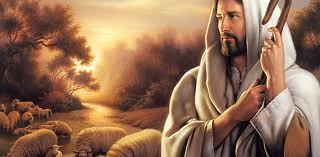
Dirty Work – Sermon on Ezekiel 34:11-16 for the Third Sunday of Easter

Ezekiel 34:11-16

11 “For thus says the Lord God: Behold, I, I myself will search for my sheep and will seek them out. 12 As a shepherd seeks out his flock when he is among his sheep that have been scattered, so will I seek out my sheep, and I will rescue them from all places where they have been scattered on a day of clouds and thick darkness. 13 And I will bring them out from the peoples and gather them from the countries, and will bring them into their own land. And I will feed them on the mountains of Israel, by the ravines, and in all the inhabited places of the country. 14 I will feed them with good pasture, and on the mountain heights of Israel shall be their grazing land. There they shall lie down in good grazing land, and on rich pasture they shall feed on the mountains of Israel. 15 I myself will be the shepherd of my sheep, and I myself will make them lie down, declares the Lord God. 16 I will seek the lost, and I will bring back the strayed, and I will bind up the injured, and I will strengthen the weak, and the fat and the strong I will destroy. I will feed them in justice.

Alleluia! Christ is risen! 
He is risen indeed! Alleluia!

In the name of Jesus. Amen.

One of the most common metaphors that the Bible uses for how we relate to God is the relationship between a shepherd and his sheep. It’s not the most common image, but it’s toward the top. It’s probably merciful that God didn’t make it the most common one because it isn’t overly complimentary. Sheep aren’t strong or fast or smart or impressive animals. Sheep are needy and, honestly, stupid. They get themselves into all kinds of dirty, sticky messes. The imagery isn’t meant to be flattering, but we don’t need to be flattered. God be praised that He doesn’t expect us to be anything more than His sheep.

When you’re the sheep, the image is very comforting. That’s why Psalm 23 is so popular. When you’re the Shepherd, it’s a lot of work – in fact a lot of dirty work. That’s why this text from Ezekiel 34 isn’t as well-known as Psalm 23. The context of this passage is that God is speaking against the shepherds (i.e. the rulers and religious leaders) whom He had called to shepherd His people. He is speaking against them because they hadn’t been faithful (Ezk. 34:1-10).

These shepherds failed to do what God called them to do. They had been feeding themselves instead of the sheep. They had fattened themselves by devouring the sheep. They had not strengthened the weak; they had not healed the sick; they had not bound up the injured, brought back the strayed, or sought the lost. Because of these failures, God’s sheep had been scattered over the face of the earth. God’s sheep had become food for the wild beasts, wandered all over the mountains, and were scattered with no one to search or seek them.

So right before our text starts, God says to those shepherds, “I am against you and will require My sheep from your hand.” God says that He’s going to put a stop to their neglect and lack of care for the sheep. He Himself will rescue them.

One of the classic children’s stories that I enjoy is “The Little Red Hen.” You remember how it goes. The little red hen finds some wheat seed and asks her friends, the dog, the cat, the duck, and the pig a series of questions. “Who will help me plant the seed, water the seed, harvest the wheat, grind the grain, bake the bread?” To each question, there’s the rhythmic reply, “’Not I,’ said the dog, ’Not I,’ said the cat, ’Not I,’ said the duck, ’Not I,’ said the pig.” So, the determined hen says, “Then I will do it myself.” Then, when the bread is finally out of the oven, the little red hen asks, “Who’s going to help me eat the bread?” And of course, the dog, the cat, the duck, and the pig are all eager and ready to eat, but she says, “No, you didn’t help me plant, water, harvest, grind, or bake. I will eat it myself.” And she did.

This passage has a similar tone to it. The shepherds had not done their job, and so God says, “Ok. I will do it Myself.” And He does. He did exactly what we needed as His sheep.

God says that He, Himself, seeks us, rescues us from all the places we’ve been scattered on a day of clouds and thick darkness. He brings us out from the peoples, gathers us from the countries, brings us into our own land, and feeds us with good pasture. He makes us lie down, seeks us when we’re lost, brings us back when we’re strayed, binds us up when we are injured, strengthens us when we are weak. He does all the dirty work that sheep need from their shepherd. God’s frustration here is not directed at the sheep – it’s directed to the shepherds. God willingly does all of these things out of His love, care, and compassion for you, His sheep.

When Jesus calls Himself the Good Shepherd in our Gospel reading today (Jn. 10:11-16), He says that He is that Shepherd. His work of seeking us lost ones, bringing back us strayed ones, binding up our injuries, and strengthening our weaknesses – all of this happens as He lays down His life for us. That is how He is your Good Shepherd.

You are His sheep. He cares for you and does all the dirty work of being your Good Shepherd. Christ does all of this dirty work for the joy set before Him (Heb. 12:2) of having you as His sheep. Your Good Shepherd fully knows that you need to be fed, found, brought back, bound up, and strengthened. In other words, He knows you are His sheep who need His care.

But don’t miss the fact that, as your Good Shepherd, He knows what tasks and responsibilities you can handle. So, He calls you to be His under-shepherds. Just because you are an under-shepherd doesn’t mean you are no longer His sheep. You are always a sheep. But He, as the Good Shepherd, entrusts the care of His sheep to you. Can you imagine a parent saying about their kid, “That’s God’s child, not mine”? Of course not! A parent recognizes, “That’s my child that God has given and entrusted to me.”

Dear saints, every relationship you have is a calling from God to care for His beloved sheep. Be faithful in those callings whether you are a parent, a worker, a student, a friend, a sibling, whatever. You are an under-shepherd.

In our Gospel reading, Jesus calls us hired hands (Jn. 10:12-13). Jesus doesn’t say that all the hired hands are cowards who run away at the sight of the wolf simply because they are hired hands. He says that the ones who flee do so because they don’t care about the sheep. Christ has given you callings and wants you to have the same care for His sheep that He has entrusted to you. Again, the context of this passage from Ezekiel is clear that God intends that His under-shepherds be faithful in doing the dirty work of caring for His sheep. So, be a good under-shepherd.

Dear saints, you have been called to follow Christ’s example (1 Pet. 2:21). Imitate and follow Him. Your Good Shepherd has joined you to His cause of bringing back the strayed to the Shepherd and Overseer of souls (1 Pet. 2:25). Jesus is the Shepherd who clears the path before you, His sheep. Christ is also the janitor who cleans up after you when you fail as His under-shepherd.

Dear saints, you are called to do the dirty work of being shepherds, caring for God’s flock, and ministering to all the different needs of God’s sheep. You are to bind up the injured, bring back the strayed, and strengthen the weak.

I want to close with these verses from 1 Pet. 5:2-4 where the Holy Spirit says to all of us, “Shepherd the flock of God that is among you, exercising oversight, not under compulsion, but willingly, as God would have you; not for shameful gain, but eagerly; not domineering over those in your charge, but being examples to the flock.” And listen to the conclusion, “And when the chief Shepherd appears, you will receive the unfading crown of glory.” 

God be praised that Christ Himself is our Good Shepherd who both leads us and follows after us as He cares for all His sheep. Amen.

Alleluia! Christ is risen! 
He is risen indeed! Alleluia!

The peace of God, which surpasses all understanding, will guard your hearts and minds in Christ Jesus. Amen.

Hirelings – Sermon on John 10:11-18 for the Third Sunday of Easter

John 10:11–18

11 “I am the good shepherd. The good shepherd lays down his life for the sheep. 12 He who is a hired hand and not a shepherd, who does not own the sheep, sees the wolf coming and leaves the sheep and flees, and the wolf snatches them and scatters them. 13 He flees because he is a hired hand and cares nothing for the sheep. 14 I am the good shepherd. I know my own and my own know me, 15 just as the Father knows me and I know the Father; and I lay down my life for the sheep. 16 And I have other sheep that are not of this fold. I must bring them also, and they will listen to my voice. So there will be one flock, one shepherd. 17 For this reason the Father loves me, because I lay down my life that I may take it up again. 18 No one takes it from me, but I lay it down of my own accord. I have authority to lay it down, and I have authority to take it up again. This charge I have received from my Father.”

Alleluia! Christ is risen!
He is risen indeed! Alleluia!

In the name of Jesus. Amen.

When Jesus calls Himself the Good Shepherd it means more than how we use the term ‘good’ today. We often use the word ‘good’ in such a subjective or comparative way. A six-year-old might be a ‘good’ baseball player because he can field a ground ball four out of ten times, but he’s only ‘good’ when you compare him to other six-year-olds who let nine out of every ten grounders roll between their legs. That six-year-old is not ‘good’ when you compare him to some high school players, who can field +90% of the ground balls that come their way. Jesus is not the good shepherd because He is better than other shepherds.

Another misconception we have about Jesus being the Good Shepherd is that we think Jesus means He is the nice shepherd. When Jesus says He is the Good Shepherd, He doesn’t simply mean that He is the nice shepherd. Of course, Jesus is nice, and there is a sort of sentimental comfort of God being our Shepherd. A lot of the imagery of Psalm 23 as well as the parable in Luke 15:3-7 of the shepherd who seeks out his lost sheep offers that comfort. But when Jesus calls Himself the Good Shepherd here in John 10, He is offering another comfort, a deeper comfort.

Throughout human history, shepherds have kept sheep for their wool and their meat. The first shepherd in Scripture was Abel. At least one of the reasons Abel kept sheep was to offer them as a sacrifice to God (Gen. 4:2-5). Today, shepherds keep sheep to put food on the table and a roof over the heads of their family by sheering sheep and slaughtering them for food. So, a “good shepherd” is someone who is successful in making money off of his sheep. We can be thankful that Jesus is not a good shepherd in that way.

When Jesus says that He is the Good Shepherd, He defines what makes Him the Good Shepherd. The Good Shepherd lays down His life for the sheep. Imagine if a cattle rancher said, “I am the good rancher, and I will die for my cows.” You would not call that rancher ‘good.’ You’d call him a lunatic and fool. In fact, that is the response of the crowd who heard Jesus call Himself the Good Shepherd. Their initial reaction, which comes just after our text ends, is that Jesus is insane and has a demon (Jn. 10:20). That’s a double whammy.

Jesus is the Good Shepherd because He is uniquely qualified to be the Shepherd of sinful sheep. It is perfectly legitimate to translate the word Jesus uses there as ‘good,’ but it means more than that. The word means, “right, fitting, true, beautiful, and competent.” I think one of the best ways to get the idea across is, actually, to consider the creation account in Genesis 1-2. Throughout the days of creation, God would look at what He had made and would see that it was “good.” Then, at the end of the sixth day, God looks at everything that He created and sees that it is “very good” (Gen. 1:31).

In creation, God orders everything by His Word. Days 1-3 God creates spaces by His Word, and days 4-6 God fills those spaces by His Word. You can think of it as God creating shelves on days 1-3, and God filling those shelves days 4-6. Day one, God creates light and time; then on day four, God fills it with sun, moon, and stars. Day two, God creates the atmosphere and waters; then on day five, God fills those spaces with birds and fish. Day three, God creates land and plants; then on day six, God fills the space with animals and mankind. And through all this, God creates things that are distinct from each other. God separates the seas from the land (Gen. 1:9-10). God put the sun, moon, and stars into the sky. And each of those are designed to do the same thing but for different purposes. The sun rules the day and the moon and stars rule the night (Gen. 1:16). He created the birds to fill the skies, the fish to fill the waters, and the animals to fill the land (Gen. 1:20-23). Everything had its place and purpose according to God’s Word and design.

Genesis 2:4-25 circles back to the sixth day and zooms in on the creation of Adam and the woman to give us a fuller picture. After God breathed into Adam’s nostrils and made him a living creature but before God created the woman, God says something important, “It is not good that the man should be alone” (Gen. 2:18). Adam was not complete without a wife. Adam could not be what God created him to be without the woman. So, God takes Adam’s side and forms the woman. This was good for Adam, for the woman, for us as their offspring, and for all creation.

After this, creation is complete, and God looks at everything He created and says it is all, “very good,” which is the same word[1] Jesus to describe Himself as the Good Shepherd. All of this is to say that goodness, according to the Scriptures, is to be well ordered according to the Word of God.

Bring all of that to Jesus calling Himself the Good Shepherd. Jesus is the Good Shepherd because He restores the order and relationship between Him and the sheep as well as the relationship His sheep have with the rest of creation. Christ, the Good Shepherd and the Word who became flesh, fixes the chaos and disorder that sin introduced into creation and brings order and peace back into creation, and He does this by His death and resurrection.

Now, all of that was to set this up: Jesus talks about the “hired hand.” Christ saw a problem with those hirelings. They were fleeing when they saw the wolf because they didn’t care for the sheep (Jn. 10:12-13).  The verses before our Old Testament reading (Ezk. 34:11-16) tell us more about the environment under those hirelings and the problems they created (see Ezk. 34:1-10). There, the shepherds are the spiritual and political leaders who failed in their function because they didn’t take care of the sheep. Instead of feeding them, they were eating the sheep. They were not seeking the strayed or binding up the injured which meant that God’s sheep were scattered over the face of the earth.

Because of that, God promised that He Himself will be the Shepherd of His sheep. And that is precisely what Jesus does. He seeks out His flock, rescues them, brings them into their own land. He feeds them with good pasture, binds up the injured, and strengthens the weak. Jesus is the Good Shepherd who restores the proper order for His sheep. That is the main point of this text. Jesus, the Good Shepherd, restores the order that was broken because of sin and the hirelings who cared nothing for the sheep.

Today, though, we are going to go a step further. The hirelings Jesus talks about here aren’t bad merely for the fact that they are hirelings. No. Those hirelings were bad because they were fallen, sinful, and cared about themselves in such a way that they could not and did not care about the sheep. Those hirelings were out of step with how God had ordered creation. But Jesus has come to restore that order by making you right with Him and right with creation.

Dear saints, just as God created the woman to be a helper fit for Adam, God calls you to your proper place in His creation. Our Epistle reading (1 Pet. 2:21-25) points to this. It says that we are under the Good Shepherd and Overseer of our souls, and we are to follow His example (1 Pet. 2:21) and in His steps in the places He has set us.

We are all hirelings. As your pastor, I’m a hireling. The word “pastor” means “shepherd.” Jesus is your Good Shepherd, your Good Pastor, and Christ has called me here to be a good, faithful under-shepherd. If I fail to be that, God will remove me for your sake.

But the roles of hirelings go further than pastors and their congregations. Parents, you are hirelings too. You aren’t the Source of food and shelter for your family – God is. But you, as a hireling, are to do what God has called you to do in your work, in our society, and in your home to join with God in feeding, protecting, and providing for your family. The same is true for you kids. You are to listen to your parents. Learn from them. Obey them and make their job easier. In other words, honor your father and mother (Ex. 20:12). In every interaction and every relationship you have with others, God has called you to be His hirelings assisting Him as He shepherds His flock. You have your proper place and function within creation because you, as Jesus’ sheep, have been redeemed and restored by the Good Shepherd.

Dear saints, you are hirelings, so be good, right, fitting, competent hirelings. In a world full of evil wicked hirelings who care nothing for the sheep, faithfully do what God puts in front of you to do.

Christ, the Good Shepherd, has laid down His life and has taken it up again. He invites you to join Him in His work of shepherding those entrusted to your care. And always remember that He Himself has finished the work of redeeming you. He Himself bore your sins in His body on the cross, that you might die to sin and live to righteousness (1 Pet. 2:24), so that you would resume your proper place in creation. By Jesus’ wounds you have been healed both now and forever.

Alleluia! Christ is risen!
He is risen indeed! Alleluia!

Amen.

The peace of God, which surpasses all understanding, will guard your hearts and minds in Christ Jesus. Amen.


[1] When it is translated from Hebrew to Greek.

Leftovers – Sermon on John 6:1-15 for the Fourth Sunday in Lent

John 6:1-15

1 After this Jesus went away to the other side of the Sea of Galilee, which is the Sea of Tiberias. 2 And a large crowd was following him, because they saw the signs that he was doing on the sick. 3 Jesus went up on the mountain, and there he sat down with his disciples. 4 Now the Passover, the feast of the Jews, was at hand. 

5 Lifting up his eyes, then, and seeing that a large crowd was coming toward him, Jesus said to Philip, “Where are we to buy bread, so that these people may eat?” 6 He said this to test him, for he himself knew what he would do. 7 Philip answered him, “Two hundred denarii worth of bread would not be enough for each of them to get a little.” 8 One of his disciples, Andrew, Simon Peter’s brother, said to him, 9 “There is a boy here who has five barley loaves and two fish, but what are they for so many?” 10 Jesus said, “Have the people sit down.” Now there was much grass in the place. So the men sat down, about five thousand in number. 11Jesus then took the loaves, and when he had given thanks, he distributed them to those who were seated. So also the fish, as much as they wanted. 12 And when they had eaten their fill, he told his disciples, “Gather up the leftover fragments, that nothing may be lost.” 13 So they gathered them up and filled twelve baskets with fragments from the five barley loaves left by those who had eaten. 14 When the people saw the sign that he had done, they said, “This is indeed the Prophet who is to come into the world!” 

15 Perceiving then that they were about to come and take him by force to make him king, Jesus withdrew again to the mountain by himself.

In the name of Jesus. Amen.

Dear saints, your God isn’t stingy. He provides everything you need spiritually and physically out of the abundance of His mercy. Here in the wilderness, Jesus feeds 5,000 men plus women and children (possibly ten to twenty thousand people total) with five loaves of bread and two fish. And this text shows how Jesus is the Shepherd described in Psalm 23. 

Jesus sees this massive crowd coming toward Him. The gospel of Mark tells us that Jesus had compassion on them because they were like sheep without a shepherd, and Jesus restores their souls by teaching them many things (Mk. 6:34). But it looks like there is going to be a whole lotta want from this flock because Jesus’ sermon has gone long. The disciples get antsy and ask Jesus to send the crowd home because they are going to need to eat (Mk. 6:35-36).

But with Jesus as their Shepherd, so there will be no want. Jesus asks Philip, “Where are we going to buy bread, so that these people may eat?” Even today, feeding a crowd this size is a monumental task. We are blessed with farmers that can produce massive amounts of food. Trucks, trains, and railroads can transport goods measured in tons. Most stores still have ample supplies of bread, meat, cheese, and all sorts of goodies, but how many stores would you have to buy out to feed this many people? Plus, the people in Jesus’ day didn’t have all these luxuries, and because this crowd is out in the wilderness, the task is even more impossible. But, again, Jesus is the Shepherd, so this flock will have no want.

A young boy is there, and gives his little snack to Jesus. Our translation records Jesus saying, “Have the people sit down,” but it’s a bit more forceful than that, and sounds more like Psalm 23. Literally, Jesus tells the disciples, “Make the people sit down.” And where do these people sit down? In the green grass. And Jesus prepares a table for His flock. Jesus takes the bread and the fish, gives thanks, and distributes the food to the people as the disciples wait on them (Mk. 6:41).

None of the Gospels say anything about what the crowd drank, but their plates certainly ran over. And everyone eats their fill. Not only that, but while everyone is unbuckling their belts, Jesus sends the disciples out again with doggie bags. They gather up the leftovers and return with twelve baskets full. There is more food in the end than there was in the beginning.

We should remember that in this feeding of the 5,000, Jesus does what He had already been doing and is always doing everywhere throughout the entire world – providing food. Every day, Jesus feeds the billions of people throughout the world and throughout history (Ps. 104:27-28). The only difference here is that Jesus does it differently than He normally does. Of course, feeding this massive crowd with five loaves and two fish is a miracle and reveals that Jesus is God in the flesh. But don’t lose sight of the fact that the food you ate yesterday was also a gracious gift of God miraculously provided for you. You have just gotten used to God feeding you through your paycheck or your parents, then through a restaurant or grocery store, your fridge, and your stove.

Now, let’s reflect on this a little bit. I am tempted (and I suspect you are tempted as well, so I’ll lump you in with myself) we are tempted to divide our life into two parts – the spiritual part and the physical part. And the temptation goes like this: Jesus takes care of the spiritual part – the forgiveness and the eternal life part. But we’re tempted to think that we have to care of the physical part – the working and earning a living part, the eating part, the caring for family and friends part. We think, “Sure, I need mercy and grace for the spiritual part, but I need works and effort for the physical part.” But the result of this makes us live like atheists who don’t believe in God. We end up living as though God isn’t involved in giving us our daily bread. We wrongly think that our food is only the result of creation – soil, seeds, sun, water, etc. But that’s not true. God provides forgiveness and eternal life, but God also provides strength, work, money, bread, and physical life. Because Jesus is Lord of heaven and earth, He gives us what we need for the life to come, and He gives us what we need for this life.

It is true that the way God provides for us spiritually is different than how He provides for us physically. Salvation comes down from heaven, and bread comes up from the earth. But God is behind both. And in this Gospel text, and our Old Testament text (Ex. 16:2-21), God reminds us that He sometimes rains bread from heaven. Sometimes five loaves feed 5,000 men plus women and children. 

And notice how Jesus provided what His flock needed in this life. He used the little snack that the boy gave to provide for His sheep. Jesus wouldn’t have needed this boy’s food to feed the crowd. But He did use it, and Jesus used it to do more than was expected. Again, there were leftovers. As the crowd unbuckles their belts, Jesus sends the disciples out a second time saying, “Gather up the leftover fragments.” Christ here isn’t worried about waste. If He was worried about waste, Jesus wouldn’t have even given as much as everyone wanted, let alone enough for everyone to totally stuff their bellies. Jesus could have provided only what was needed.

But Jesus says, “Gather up the leftover fragments, that nothing may perish.” Our translation says ‘lost,’ but it is the same word Jesus uses in Jn. 3:16. In God’s infinite love, He sent His only-begotten Son so that whoever believes in Him should not ‘perish’ (same word) but have everlasting life. In other words, every last bit of what this boy gives and Jesus’ multiplication of it is used by Jesus. Even the leftovers are useful for further provision in Christ’s kingdom. Nothing of the boy’s gift or Jesus’ multiplication of it perishes.

Dear saints, the same is still true today. Because you belong to Jesus, because you have been redeemed by His death and resurrection, everything you do is used by Jesus to further His kingdom. We are always tempted to minimize what we do in our God-given callings and vocations as though it doesn’t matter or is insignificant. But it isn’t. Don’t minimize what you do as God’s children. Don’t ever think, “Well, I’m just changing a diaper when I could be doing something more spiritually significant,” or, “God doesn’t care how I empty the dishwasher or fold the laundry,” or, “What I put in the offering plate doesn’t help as much as what so-and-so puts in because they can put in a lot more.” That simply isn’t true!

Everything you do and everything you give is used by God. Jesus makes sure none of your works or gifts perish, Christian. God takes what you do, multiplies it, and uses it for the good of your neighbor and for His kingdom. Nothing you do, Christian, will ever perish because it is holy work rendered to your neighbor in service to God. No leftovers end up in the trash. All of it is used by Jesus. Amen.

The peace of God, which surpasses all understanding, will guard your hearts and minds in Christ Jesus. Amen.

Made to Lie Down – Sermon on Ezekiel 34:11-16 for the Third Sunday of Easter

Listen here.

Ezekiel 34:11-16

11 For thus says the Lord God: “Behold, I, I myself will search for my sheep and will seek them out. 12As a shepherd seeks out his flock when he is among his sheep that have been scattered, so will I seek out my sheep, and I will rescue them from all places where they have been scattered on a day of clouds and thick darkness. 13 And I will bring them out from the peoples and gather them from the countries, and will bring them into their own land. And I will feed them on the mountains of Israel, by the ravines, and in all the inhabited places of the country. 14 I will feed them with good pasture, and on the mountain heights of Israel shall be their grazing land. There they shall lie down in good grazing land, and on rich pasture they shall feed on the mountains of Israel. 15 I myself will be the shepherd of my sheep, and I myself will make them lie down, declares the Lord God. 16 I will seek the lost, and I will bring back the strayed, and I will bind up the injured, and I will strengthen the weak, and the fat and the strong I will destroy. I will feed them in justice.”

In the name of Jesus. Amen.

Alleluia! Christ is risen!

He is risen indeed! Alleluia!

Today, we could add:

Alleluia! Christ is our Shepherd!

He is our Shepherd indeed! Alleluia!

Repeatedly, Scripture gives us the picture of God being our Shepherd and us being His sheep. It came up in all three readings today – epistle (1 Pet. 2:21-25), Gospel (Jn. 10:11-16), and this Old Testament lesson, but it comes up all over the place. I’ve seen it suggested that this shepherd-sheep metaphor is the most common way Scripture describes our relationship to God. I couldn’t verify that, but it certainly is common throughout both the Old and New Testaments. Now, sheep are probably the most desperate, vulnerable, weak, prone to wander, and defenseless creatures in all of creation. So, this imagery isn’t meant to be flattering, but that’s ok. We’re Christians and don’t need to be flattered. It isn’t meant be a complement, but it is meant to be comforting. 

My fellow sheep, we have all lived down to the reputation of sheep. And, God be praised, Jesus has no expectation of us beyond being His sheep. He has no expectation that you figure out how to provide for yourself, to take care of yourself, or even to defend yourself. Sheep don’t run fast or kick hard. Sheep don’t have sharp teeth to bite back or a stinky musk to spray at their attackers. Nothing. Sheep have one defense, and that is their shepherd. God does not expect us to be anything more than a sheep, and, God be praised, He desires nothing more than to be our Shepherd.

Deep down, we all know that we are helpless and unable to do anything for ourselves, and that is probably why the sheep-shepherd imagery is so often used for comfort in times of trouble. It’s probably why Psalm 23 is so often used at funerals. Sometimes, when families are picking out texts for a funeral, they’ll ask me, “Would Psalm 23 be a good text to use? It seems so common at funerals.” Yes, of course it is a good text. Some things, no matter how often you hear them, don’t get old. Hearing your spouse or children say, “I love you,” doesn’t get old. Neither should the comforting picture of God, and specifically Jesus, being our shepherd because the Good Shepherd lays down His life for the sheep.

We love to hear the many ways that Psalm 23 describes how God provides for us as our Shepherd. He provides so that we have no want, leads us beside still waters, restores our souls, leads us in paths of righteousness for His name’s sake, and defends us from all evil even as we walk through the valley of the shadow of death. And you probably noticed that I skipped over one phrase in there. But you are smart people, and if you noticed the title of the sermon at the bottom of your Scripture insert, you realize that phrase is what I am going to focus on today. Psalm 23:2 says, “He makes me lie down in green pastures.” And, just so you know, that phrase, “makes me lie down,” wasn’t a fluke we heard it again in this text from Ezekiel where God says, “I Myself will be the Shepherd of my sheep, and I Myself will make them lie down.”

Sure, we understand that we are sheep. We need to be protected from dangerous wolves, lions, and bears. But does God really need to make us lie down? Aren’t we capable of doing that? Can’t we just let gravity take over and lie down? Why does God need to make us lie down?

Apparently, to lie down and rest, is even beyond the capability of a sheep of God to do. Sometimes it might be because we are bored being a sheep. Sometimes it is because we are foolishly curious. Sometimes it is because we get afraid and run from the danger, but in running from that danger, we leave the protection of our Shepherd.

In fact, our inability to lie down might be the greatest danger that we face. Peter says in our epistle lesson, “You were straying like sheep, but have now returned to the Shepherd and Overseer of your souls.” Here, Peter depicts our main problem is us going astray and leaving our Shepherd. God making us lie down is the solution. Our biggest danger is walking away from the flock and from the care of our Shepherd. So, Christ, our Good Shepherd, makes us lie down. And this is remarkable when you think about it.

The world tells us to fear all sorts of things. When you watch the news, it’s all about fear. One of the heads of a major news network this past week was caught saying that his network intentionally put the most dire, bleak news in front of their viewers in an effort to get higher ratings. He actually used the phrase, “If it bleeds it leads.” In other words, the more violent, fearful a news story is, it’s more likely to be put in front of you. The guy even talked about how he caught himself hoping that the COVID death toll ticker they kept on the screen for their viewers, he hoped that it would go higher so the station would get better ratings. Thankfully, he admitted feeling bad about it. Pray for him. Hopefully, the Holy Spirit will continue to use his conscience to bring him to repentance and faith in Christ.

But this is what the world does; the world preaches fear. Fear the virus. Fear global warming; oh, wait, it’s ‘climate change’ now, right? Fear terrorists. Fear Iran, China, North Korea, Russia. Fear riots. Fear the other political party. Fear fascists. Fear anti-fascists. Fear gun violence. Fear the government taking away your Second Amendment rights. Fear immigrants. Fear the national debt and deficit spending. Fear. Fear. Fear. They all do it – CNN, Fox, it doesn’t matter. Because the world does not have the protection Jesus, the Good Shepherd, they mock and ridicule Christians if they don’t join them in their fear.

My dear, fellow sheep, yes, we need to be vigilant and aware of what is going on around us. All of those things are predators like wolves, bears, and lions that threaten the flock, but those are not things to be afraid of. Not when we have Jesus as our Good Shepherd. Instead, those are the things we should bring to our God in prayer.

And I do want to be clear; this isn’t at all to say that you should do nothing when it comes to any of those things. Do what you can. Work, write, vote, engage, and be the change that this world needs. But as you do all of that, remember none of those things are worthy of your fear – not if your Good Shepherd is risen from the dead and is watching over you. And He is.

Instead, dear sheep, recognize that leaving the promises of the Gospel is the greatest danger we face. It is when we leave the Gospel promises and the care of our Good Shepherd that we fall into sin and are incredibly vulnerable to becoming lunch to all sorts of things in this broken, fallen world. If a sheep was smart, the thing that sheep would do is stay close to its shepherd. But since we aren’t that bright, our Shepherd makes us lie down. 

And when we have been scattered, when we have wandered into the valleys and caves of the wolves, when the days of clouds and thick darkness leave us cowering in fear, God searches for us sheep and seeks us out. He brings us into His church and feeds us with the good pasture of His Word. Because that is what God does. He seeks the lost. He brings back the strayed. He binds up the injured. He strengthens the weak.

This is exactly what Christ has done. Jesus has sought you out. He Himself bore your sins in His body on the tree, that you might die to sin and live to righteousness. By His wounds you have been healed. Your Good Shepherd laid down His life for you. He laid in the tomb, and now He is risen and lives forever to be your Good Shepherd.

Come now to His altar where He prepares a table for you even as you continue to live in a fallen world. Today, He brings you close to Himself. He makes you lie down so He can feed you, defend you, protect you, heal you, and deliver you. He has won the victory. So, come. Be made to lie down.

Alleluia! Christ is risen!
He is risen indeed! Alleluia!

Amen.

The peace of God, which surpasses all understanding, will guard your hearts and minds in Christ Jesus. Amen.

At the Last – Sermon on Matthew 25:31-46 for Midweek Advent 2 2020

Listen here.

In the name of Jesus. Amen.

Your Savior, whose first coming was humble and lowly yet announced by the angels, is coming again in glory, and every eye will behold Him. His swaddling clothes will be exchanged for royal robes, and instead of lying in a manger, He will sit on His glorious throne.

Your Redeemer, whose birth was celebrated by the shepherds, is coming again for you as your Good Shepherd.

Growing up, I remember fearing the day of Christ’s return and standing before Him to be judged. I think it started as a dream, but I would often replay the scene in my head. In my mind, the final judgment consisted of Christ setting up a tent (I don’t know why it was a tent) on 8th Ave. East in Williston, North Dakota. I pictured myself waiting in line to go in that tent which opened right in front of our mailbox situated on a wagon wheel.

In my mind, I entered that tent and there was a makeshift projector screen on one of the walls. Jesus invited me in and began to replay my life on that screen, and the replay lasted just over one second. Afterward, Jesus peppered me with hundreds of questions about my conduct and actions – especially regarding my sinful behavior. Sadly, I had no answer, no excuse to offer for my sins, iniquities, and shortcomings. Sadly, the end result of this was that I was terrified of the return of my Redeemer.

God be praised, that is not how Scripture depicts Christ’s return! There will be no replay of your life, no grand inquisition, no need to offer excuses. In fact, the only thing that I can’t disprove of my imagining of the final judgment is that it won’t take place on 8th Ave. East in Williston.

Our Gospel text tonight is typically known as “The Parable of the Sheep and the Goats.” However, there is no indication that this is a parable. The way Jesus talks here, we can expect that this is exactly how it will happen.

Christ will return in His glory. All the angels will be with Him. He will sit on His glorious throne. All people will be gathered before Him, and He will separate people as a shepherd separates sheep from goats. Sheep to the right. Goats to the left.

Christian, you will hear the sweetest, kindest, most merciful and beautiful words your ears have ever heard. “Come, you who are blessed by My Father, inherit the kingdom prepared for you from the foundation of the world.”

Then, Christ will divulge before all people your good works and honor you for what you have done. Jesus will confess that you have been merciful even as God Himself is merciful. Christ will declare that you have given as you have received.

Now, we need to be clear. None of these works are the cause of God’s love for you. In fact, God loved and chose you from before the foundation of the world before you had done any good works. In His love for you, God prepared a place for you before you were born. You do not earn salvation and a place in His kingdom by works. Entrance into the kingdom is not a wage that is paid; instead, it is an invitation to be an heir.

The works that God will honor at the final judgment are simply the proof of your faith. 

God does reward good works in this life. He uses those rewards to strengthen and encourage you to continue to put off your sinful flesh. But most of His rewards are dispensed in the life to come so that you don’t grow complacent and lazy. But know this: even when God defers and delays His rewards, God takes notice of the good works because they are good and God loves them.

Dear saints, the infant Jesus who came to save you from your sins is the same King who does not and will not count your sins against you on the Last Day.

At the last, Christ will say to you, “Come, you who are blessed by my Father, inherit the kingdom prepared for you from the foundation of the world.” What a day that will be. Amen.

The peace of God, which surpasses all understanding, will guard your hearts and minds in Christ Jesus. Amen.

Lost & Found – Sermon on Luke 15:1-10 for the Third Sunday after Trinity

Listen here.

Luke 15:1-10

1 Now the tax collectors and sinners were all drawing near to hear him. 2 And the Pharisees and the scribes grumbled, saying, “This man receives sinners and eats with them.”

3 So he told them this parable: 4 “What man of you, having a hundred sheep, if he has lost one of them, does not leave the ninety-nine in the open country, and go after the one that is lost, until he finds it? 5 And when he has found it, he lays it on his shoulders, rejoicing. 6 And when he comes home, he calls together his friends and his neighbors, saying to them, ‘Rejoice with me, for I have found my sheep that was lost.’ 7 Just so, I tell you, there will be more joy in heaven over one sinner who repents than over ninety-nine righteous persons who need no repentance.

8 “Or what woman, having ten silver coins, if she loses one coin, does not light a lamp and sweep the house and seek diligently until she finds it? 9 And when she has found it, she calls together her friends and neighbors, saying, ‘Rejoice with me, for I have found the coin that I had lost.’ 10 Just so, I tell you, there is joy before the angels of God over one sinner who repents.”

In the name of Jesus. Amen.

Our text shows one scene and that is Jesus sitting with the lowlifes, the riff-raff, the notorious sinners. Not only is Jesus sitting and talking with them, He is eating with them. In the Jewish mind, eating with someone was like putting a rubber stamp with big, red letters “APPROVED” upon their behavior and life. Our text reveals this one scene, but there are two very different reactions to it.

The first reaction is from the Pharisees and scribes. So just imagine the worst of the worst – the burn-outs, the promiscuous, the hoodlums, the rioters, you name it – Jesus is right in there with them. He’s not even shy about it. The scribes and Pharisees see this, and they are triggered. They grumble and murmur. That’s the first reaction.

The second reaction is not something that we see. It isn’t part of Luke’s narration which is only the first three verses. But we know this second reaction is going on because of the parables. The reaction is in heaven. The angels look down on this same scene, and they throw a party. When heaven sees Jesus receiving lost sinners, it sees God keeping His Word and promise. Heaven looks down and sees the holy, eternal, almighty Son of God in the flesh eating with the most despicable people you could imagine, and heaven rejoices.

Now, it is easy to get mad at the scribes and Pharisees. Our tendency is to point the finger at them and say, “They shouldn’t be so hard-nosed. They think they are so good and holy and better than everyone. They should understand no one’s perfect.”

Repent. As soon as you say that, you’ve become just like them. Because when Jesus tells these parables to the scribes and Pharisees, heaven continues to rejoice because He is still doing what God always does. He is seeking after His lost sheep, and in this case the lost sheep are the scribes and Pharisees. Jesus wants to save them as well. He wants to rescue them, bind them up, bring them into the fold, and be their Shepherd. With these two parables Jesus is doing that very seeking.

Now, these parables make sense, but only to a certain point. After that, they become extremely odd. A shepherd certainly might leave 99 sheep to search for the one that is lost. The shepherd has a connection to the sheep and doesn’t want it to die. Even thinking strictly in a business sense, a 1% loss isn’t a huge deal, but it hurts. We’ve probably all looked for something longer than is reasonable. But there comes a point where you have to just cut your losses and move on. Spending all the time and effort just isn’t worth it.

Notice the language Jesus uses in the parable. The shepherd goes after the one that is lost “until he finds it.” That’s a good translation. This is an exhaustive, continual, unending search. The shepherd doesn’t go out for a while, return to make sure the other 99 are cared for, and head back out again. No. The shepherd doesn’t stop, doesn’t rest, doesn’t take a break until he finds that one lost, wandering sheep.

And when he finds the silly animal, the hard work really begins. The shepherd hefts that sheep up onto his shoulders. But he isn’t grunting and complaining, “Dumb sheep.” No! The shepherd is rejoicing while he lugs the 60-pound, wooly, hairy beast back home. Can you imagine how hot that would be around your neck? And instead of collapsing in exhaustion, putting up his feet in his recliner, and complaining to his buddies about the stupid animal, he invites the whole town over for a party that he’s going to have to do more work to prepare.

Think about that. What is it going to take to have a party? Food. What do shepherds serve for food? Sheep.

The same thing is true in the parable of the lost coin. The woman loses one coin and begins her search. To put this in perspective, imagine you had a bunch of errands to run. Your first stop is the bank to get ten $5 bills to send out in birthday cards. You head over to Target to get the cards. You make a trip the Sam’s Club, then run to Hugo’s, and finally buy stamps at the post office. When you get back home, you realize that you only have 9 $5’s. It doesn’t make any sense because you used your debit card at all the other stops. It’s not in your purse or wallet and not in your car. You must have lost that $5 somewhere in your running around. It’s frustrating, but it doesn’t make a lick of sense to drive all around town to go and find a single $5 bill. Once you’ve driven a handful of miles from your home, the IRS says that you’ve spent more in mileage than it’s worth, and someone has probably already found it and put it in their wallet. It makes a lot more sense to just get another $5 later. But not to the woman in this parable.

She lights a lamp. And, you have to understand, this is a costly endeavor. We take light for granted today. In Jesus’ day, you didn’t just light a lamp whenever the sun went down. When it gets dark, you go to bed. The phrase “burning the midnight oil” is economically costly. The olive oil used in those lamps was expensive. Every minute of light is money out the window. Why didn’t she just wait until the morning and start her search again? But she doesn’t do that. She burns that oil and sweeps the house, again, “until she finds” that one lost coin.

And, just like the shepherd, what does she do when she finds it? She throws a party. And her party, just like the shepherd’s party, is going to cost her. That party is going to cost more than the value of the coin that had been lost.

Here is the point: When God seeks after lost sinners, He is spending and sacrificing more than what the prize is worth. It cost God the Father more than you or I are worth to redeem you and me. But God spares no expense to find you lost sinners. Jesus goes to the cross and suffers in your place. He goes to death and the grave. Jesus pays the heavy price for you.

It’s easy to say, “Well, this is what God does. Should we really be surprised at this?” Yes, we should! That’s the point!

Jesus drives it home in the third parable which we didn’t read today. God goes after lost children who tell Him to drop dead, which is what the younger son basically says when he asks for his inheritance.

Today, please, please, please don’t see these parables about others. Many people online and on social media have taken the parable about the lost sheep and turned it to mean things it doesn’t mean. The parables are about you who are lost and Christ who finds you.

After both of these parables, Jesus says, “There is joy in heaven over one sinner who repents.” That word ‘repents’ is in a specific form. It is a present active participle, and if you aren’t a grammar nut like I, I’ll explain it. A participle sounds like a verb but doesn’t function as a verb. In English, you can put ‘ing’ after it. You could translate Jesus here as saying, “There is joy in heaven over one repenting sinner.”

The fact that this is in the present tense is important because it means that this repenting is continual. No matter how many times you wander from the 99, no matter how many times you get lost in a dusty crack in the floor, no matter how many times you say to God, “I wish you were dead,” all of heaven rejoices with Jesus, the Good Shepherd, who finds you, with God who is like the persnickety woman, when your heavenly Father restores you.

With these parables, Jesus is redefining repentance. Too often, we think that repentance is the least we can do to earn God’s forgiveness. We think repentance is our trump card that we play and say to God, “Here is my repentance. You have to be good to me now because of this repentance.” That’s not how repentance works.

Instead, Jesus pictures repentance in these parables as being found. What did the sheep contribute to its being found? All it did was wander off and get lost. Same with the coin. All it did was lay in a dark crack gathering dust. But both are found and restored. And the restoration of both is cause for rejoicing.

Again, Jesus says, “There will be more joy in heaven over one sinner who is repenting than over ninety-nine righteous persons who need no repentance.” You know what? There aren’t ninety-nine who need no repentance. But there is One who needs no repentance.

Remember how the multitude of angels came down the night Jesus was born and rejoiced? Do you hear what Jesus is saying when He says, “There is more joy in heaven over one sinner who is repenting than over ninety-nine righteous persons who need no repentance”? Jesus is saying that heaven rejoices more over you when Jesus finds you than if ninety-nine Jesuses came who needed no repentance. Jesus finding a lost sinner causes heaven to rejoice more than it did at the birth of Jesus because you are the fruit of Jesus’ labor.

Dear sinner, there is joy in heaven over you. You lost have been found. You have been brought to repentance, back into the fold, by your Shepherd, Jesus Christ. Amen.

The peace of God, which surpasses all understanding, will guard your hearts and minds in Christ Jesus. Amen.

I Have Other Sheep – Sermon on John 10:11-16 for the 3rd Sunday of Easter

Listen here.

John 10:11-16

11 “I am the good shepherd. The good shepherd lays down his life for the sheep. 12 He who is a hired hand and not a shepherd, who does not own the sheep, sees the wolf coming and leaves the sheep and flees, and the wolf snatches them and scatters them. 13 He flees because he is a hired hand and cares nothing for the sheep. 14 I am the good shepherd. I know my own and my own know me, 15 just as the Father knows me and I know the Father; and I lay down my life for the sheep. 16 And I have other sheep that are not of this fold. I must bring them also, and they will listen to my voice. So there will be one flock, one shepherd.”

Alleluia, Christ is risen!
He is risen indeed. Alleluia!

In the name of Jesus. Amen.

Many Christians live in fear. They fear that, even though they are Christians today, they won’t ultimately make it to heaven. They have fears that somehow they are fooling themselves, that the demons will get to them, that they will fall away if persecuted, or that they’re simply going to blow it. One of the saddest things is that the source of these fears often comes from pastors, evangelists, and Christian books and radio with pious-sounding questions like, “Sure, Jesus is your Savior, but is He your Lord?” or “How is your commitment to or relationship with Jesus?” I remember several times wondering if I was really a Christian based on questions and statements like those.

I want you to notice that all those fears and doubts come when the focus is moved from Jesus to the individual. Luther once said, “When I look at myself, I don’t see how I can be saved. But when I look at Christ, I don’t see how I can be lost.”

In this Gospel text, Jesus would have us look away from ourselves and fix our eyes on Him, and in Christ we find our Good Shepherd. Listen carefully to Jesus again, “I have other sheep that are not of this fold. I must bring them also, and they will listen to my voice.”

Did you catch it? Jesus says that He has – present tense – He has these sheep even before He brings them. Jesus has these sheep, and then He brings them. Just in case you think Jesus misspoke, simply go back a few verses to John 10:3-4 where Jesus, again talking about Himself as the Good Shepherd says, “The sheep hear [their Shepherd’s] voice and He calls them out. When He has brought out all His own, He goes before them, and the sheep follow Him, for they know His voice.” In other words, the sheep of the Shepherd know His voice when He calls because He is their Shepherd. They are not true sheep because they first hear His voice and then follow. Instead, they hear and follow because they are already His sheep. When Jesus calls through the voice of the Scriptures, He is calling to those who are His own. They know His voice because He already has them as His sheep.

Jesus has His sheep because the Father has given them to Jesus. Listen to how Jesus prays in John 17:6, “I have manifested Your name to the people whom you gave Me out of the world. Yours they were, and You gave them to me, and they have kept Your word.”

Or listen to what Jesus says in John 6:37a, “All that the Father gives Me will come to Me.” The Father has these sheep, gives them to Jesus, and they follow Him and keep His word. But back to our text here, Jesus says, “I have other sheep that are not of this fold. I must bring them also, and they will listen to my voice.”

Remember from last week’s sermon text after Thomas’ doubts are quieted, Jesus says, “Have you believed because you have seen Me? Blessed are those who have not seen and yet have believed” (Jn. 20:29)? Dear Christian, Jesus was speaking of you there. You have not seen Him, and yet through the Holy Spirit working through the Word, you have heard Jesus’ voice and have believed. Well, when Jesus speaks of bringing in other sheep here, He again is speaking of you. You – each of you, individually – were on His mind when He spoke those words nearly two-thousand years ago. Before you heard His voice and believed, He already had you as His sheep.

Before you ever committed a single sin, before you ever did a good work, before you came to church, before any of that, Jesus had you. Your sins weren’t an obstacle, and your good works weren’t the reason He chose you. He already had you as His sheep. He says – present tense – “I have other sheep.”

As God promised in our Old Testament text (Ezk. 34:11-16) which you just heard, “As a shepherd seeks out his flock … so will I seek out My sheep. I will rescue them from all places where they have been scattered…. I will bring them out from the peoples and gather them from the countries…. I will feed them with good pasture…. I Myself will be the shepherd of My sheep, and I Myself will make them lie down…. I will seek the lost, and I will bring back the strayed, and I will bind up the injured, and I will strengthen the weak.”

Now, of course, it is important that we remember that we are sheep who are prone to wander. We need to know the Good Shepherd. We need to listen to the voice of the Good Shepherd. And we need to follow the Good Shepherd. All of those things are part of this text – they are. The sheep don’t go off and listen to the voice of the false shepherds, and they don’t follow in the footsteps of the wolves or play in their dens. They follow Jesus.

But remember what comes previous to all of those things: Jesus, the Good Shepherd, has the sheep. “I have other sheep,” says Jesus.

So, with all of that, does it sound like it is your commitment that will get you to heaven, or is it Jesus’ commitment to you? Jesus’. Who is in control; who is driving, you or Jesus? Jesus is. Who is more interested in your eternal life, you or Jesus? Jesus is. And that is good. He is the Shepherd who goes and seeks after His sheep. In fact, He is the Shepherd who lays down His life for you, His sheep. You have been redeemed and rescued from death.

The 23rd Psalm is, of course, a very fitting text to consider in light of all this, but instead today consider for just a minute these verses Psalm 49[:14-15], “Like sheep they are appointed for Sheol,” (think of Sheol as the grave), “Like sheep they are appointed for [the grave]. Like sheep death shall be their shepherd…. Their form shall be consumed in Sheol, with no place to dwell. But God will ransom my soul from the power of Sheol, for He will receive me.”

Because Jesus has you as His sheep, He came to shepherd you, to seek you out, to find you, and to bring you safely to be with Him. He knows where to find you. He knows how to comfort and quiet you. He knows how to bring you into His fold.

Jesus, your Good Shepherd, became a sheep just like you. He is the Lamb who was slain and went to the grave. But He is risen and victorious. Because He became like you, He knows how to shepherd you. He knows your fears, your struggles, your temptations, and your foes. He has defeated them all. He has gone to the cross for you and died for you. Jesus has come through death to be with you, He will always abide with you, and He will not leave you. He has you as His sheep. And He will bring you safely to your eternal glory with Him.

Alleluia, Christ is risen!
He is risen indeed. Alleluia!

Amen.

The peace of God, which surpasses all understanding, will guard your hearts and minds in Christ Jesus. Amen.

The Kalos Shepherd – Sermon on John 10:11-16 for the Third Sunday of Easter

Listen here.

John 10:11-16

11 “I am the good shepherd. The good shepherd lays down his life for the sheep. 12 He who is a hired hand and not a shepherd, who does not own the sheep, sees the wolf coming and leaves the sheep and flees, and the wolf snatches them and scatters them. 13 He flees because he is a hired hand and cares nothing for the sheep.

14 “I am the good shepherd. I know my own and my own know me, 15 just as the Father knows me and I know the Father; and I lay down my life for the sheep. 16 And I have other sheep that are not of this fold. I must bring them also, and they will listen to my voice. So there will be one flock, one shepherd.”

Alleluia! Christ is risen!
He is risen indeed! Alleluia!

In the name of Jesus. Amen.

Jesus the Good Shepherd 1For our great comfort, Scripture gives many images of God shepherding His people. Psalm 23, of course, comes to mind. We have a picture in the entry of our church of Jesus walking through green pastures and still waters leading a flock of good-looking sheep. Jesus tells the parable of the shepherd who goes out seeking his one lost sheep, hefts it on his shoulders, and brings it home. All of that imagery is Scriptural and comforting and good.
However as comforting as all of that is, it not our Lord’s focus when Jesus calls Himself the ‘good Shepherd’ here. The people who heard Jesus say these words figured He was a lunatic. Their response down in v. 20 is, “He has a demon and is insane; why listen to Him?”

In Jesus’ day and even now, shepherds keep sheep for their wool or their meat. Shepherds put food on the table and a roof over the heads of their family by sheering and slaughtering sheep. In the ways of the world, a ‘good shepherd’ is someone who is successful in making money off of his sheep. Imagine a cattle rancher saying, “I am the good rancher. I love the cows. I like to go out and pet them. And I let them live to a good old age in the field while I go and die for the cows.” You would not call that rancher ‘good.’ You’d call him a fool and a lunatic.

Here’s where this is going: Our translation has Jesus saying, “I am the good Shepherd,”and we use the word ‘good’ to describe all sorts of things that aren’t actually good. Teachers might write ‘good’ on assignments or tests when a student has actually done poor work. Some fathers are sleazy fornicators and only spend time with their children when it is convenient for them while treating their children’s mother like trash. But single mothers might still call them ‘good’ dads even though they scumbags. The word ‘good’ can be vague and simply don’t cut it when we think of Jesus as the ‘good Shepherd.’

On the one hand, ‘good’ is a perfectly legitimate way to translate the word (the adjective) Jesus uses to describe Himself as the Shepherd. But the word that Scripture gives us is much deeper than our word ‘good.’ So, you get to learn a Greek word today. Jesus calls Himself ‘the καλός Shepherd.’

1 Peter 2-24-25 - By His wounds Shepherd overseer of your soulsYes, it does mean ‘good’ but not in a subjective sense, not in a way that is open to anyone’s interpretation. Jesus is uniquely qualified to be the Shepherd of sinful sheep. Christ is the ‘good for you’ Shepherd. Kalos also means ‘right, fitting, true, beautiful, and competent.’ And Jesus Himself defines exactly what makes Him the kalos Shepherd. His the kalos Shepherd because of the fact that He lays down His life for the sheep.

In other words, Jesus, the kalos Shepherd, guards you, His flock, from the wolf no matter what. Jesus talks about the ‘hired hand’ who doesn’t own the sheep. A hired hand might not leave the flock if he sees a wolf way over there. In that situation, the hired hand might make a bunch of noise to scare away the wolf and save the flock he is watching over. A hired hand might even try to save the majority of the flock while a wolf picks off one or two sheep, and we’d still call him a good hired hand.

But Jesus, the kalos Shepherd, does something unimaginable. Jesus overcomes, defeats, and destroys the wolf by filling the wolf’s mouth with His own Body and thereby saves you from being lost and devoured by the wolf.

Right after our reading ends, Jesus goes on to say that the reason the Father loves Him is that He lays down His life for the sheep. Listen to this: Jesus says (v. 17-18), “For this reason the Father loves Me, because I lay down My life that I may take it up again. No one takes it from Me, but I lay it down of My own accord. I have authority to lay it down, and I have authority to take it up again. This charge (lit. “this command”) I have received from My Father.”

So, ask yourself, “If death cannot separate Him from me, what can?” If Jesus will go to the cross for you, and if Jesus will die for you, and if Jesus will come through death to be with you, He will always abide with you and will not leave you.

Hear this, you wandering sheep: When you had cut yourself off from God by your sin, Jesus, the kalos Shepherd, came down to die on the cross for you. Jesus could have run away like the hired hand, but He didn’t. If Jesus didn’t run away then, what would cause Him to run away from you now? The answer is nothing. There is nothing that will make Him throw up His hands and say, “Well, I’m done with that sheep.”

The Good ShepherdMy dear fellow sheep: Jesus is the kalos Shepherd; you are the sheep. You are not called to stand toe-to-toe with the devil. Satan, sin, and death are the wolves, and you are the sheep. Hide behind Jesus. Christ, your kalos Shepherd, places Himself in danger to rescue you from every threat. But even as you hide behind your kalos Shepherd, you do not cower in fear. Hide behind Jesus confidently knowing that He has overcome the wolf, won the victory, and His victory is your victory because you are His.

Alleluia! Christ is risen!
He is risen indeed! Alleluia!

Amen.

The peace of God, which surpasses all understanding, will guard your hearts and minds inChrist Jesus. Amen.