Your Visitation – Sermon on Luke 19:41-48 for the Tenth Sunday after Trinity

Luke 19:41-48

41 And when [Jesus] drew near and saw the city, he wept over it, 42 saying, “Would that you, even you, had known on this day the things that make for peace! But now they are hidden from your eyes. 43 For the days will come upon you, when your enemies will set up a barricade around you and surround you and hem you in on every side 44 and tear you down to the ground, you and your children within you. And they will not leave one stone upon another in you, because you did not know the time of your visitation.”

45 And he entered the temple and began to drive out those who sold, 46 saying to them, “It is written, ‘My house shall be a house of prayer,’ but you have made it a den of robbers.”

47 And he was teaching daily in the temple. The chief priests and the scribes and the principal men of the people were seeking to destroy him, 48 but they did not find anything they could do, for all the people were hanging on his words.

In the name of Jesus. Amen.

This Gospel text takes place on Palm Sunday. The crowds have laid palm branches and coats on the road as Jesus rode into Jerusalem on a donkey. They shouted, “Hosanna! Blessed is the King who comes in the name of the Lord! Peace in heaven and glory in the highest!” (Lk. 19:3638). The Pharisees demanded that Jesus rebuke them, but He refused. Instead, He said, “I tell you, if they were silent, the very stones would cry out” (Lk. 19:40).

But while all this joy and celebration surrounded Jesus, Luke tells us here what is going on in Jesus’ heart. Christ comes to the crest of the hill that overlooks Jerusalem, and He weeps. He has come to visit Jerusalem and bring the peace that surpasses all understanding (Php. 4:7). But He weeps because the city is so twisted and corrupt that it doesn’t know or recognize the things that make for peace. Jesus predicts the destruction of Jerusalem when their Roman armies will set up a barricade all around the city to rip it apart brick by brick. All of this will happen because the people did not know the time of their visitation (Lk. 19:44).

We look forward to some visits. Especially if they live far apart, kids will ask how long it’ll be until they visit grandpa, grandma, and the cousins again. You get excited about an upcoming visit with your college or high school friends. But other visits can be uncomfortable – a visit to the dentist, a visit from the OSHA inspector, or a visit to the principal’s office. 

When Jesus says, “You did not know the time of your visitation,” the word He uses for ‘visitation’ (episkopē) is where we get our English word ‘scope.’ A couple days ago, I was talking with a woman who had a partial knee replacement years ago, but she still had continual pain. Her doctor decided to use a scope to look into her knee and see what was going on. That scope revealed that she had an infection that never showed up on other imaging or lab work. The only thing that revealed the infection was that scope. The doctor needed to get in there and see what was causing her pain.

The visitation Jesus talks about here is Him scoping things out in the city. What does that scope reveal? It reveals that the citizens of Jerusalem, the ‘city of peace,’ do not know the things that make for peace. It revealed that the Temple – God’s house, the place where God promised to deliver His mercy and forgiveness to sinners – had become a hideout of robbers. Jesus’ visitation, that scope, revealed how disordered the city was.

That’s why Jesus goes into the Temple. He drives out the infectious thieves from their den and daily fills the Temple with His teaching. Sadly, by the end of the week, the chief priests, scribes, and other leaders decide to arrest Jesus, put Him on trial, condemn, and crucify Him. And the people of Jerusalem still didn’t know or recognize the things that make for peace.

So, in 70 AD, about 40 years after Jesus’ prophecy here, the Roman general Titus came and destroyed Jerusalem. It was one of the most horrific events in human history. About one million people were killed. Titus took enough gold from the Temple to pay for the building of the Coliseum in Rome and burned Jerusalem to the ground.

All of this – the destruction of Jerusalem and the Temple – should serve as a reminder and a warning to us. Judgment is coming. This world cannot and will not last. Those who do not have faith in Christ will be damned, so repent and believe in Jesus.

Don’t fall into the temptation of being comfortable and complacent in yourself and in your sin. Just because God doesn’t send immediate judgment upon your sin doesn’t mean that God doesn’t mind or care that much about it. In our Old Testament reading (Ez. 3:8-11), we heard how the people rebuilt the Temple. When the foundation was laid, the people sang responsively, “[The Lord] is good, and His steadfast love and mercy endures forever.” Yes, God’s mercy endures forever, but His patience over sin does not.

So, be warned. Be warned but also have hope. There is a purification and replacement of what is broken in this world. The day is coming when all that is corrupt, evil, and infected will be swept away and replaced with what is pure. There is a final freedom and peace from all your enemies.

As you consider this text, ask yourself, “Did Jesus visit Jerusalem to bring judgment or to bring peace?” The answer is, “Yes. Both.”

After His tears dried, Jesus’ first order of business was to visit the Temple and expel the money changers. But He didn’t stop there either. Jesus kept returning to the Temple so He could fill it with the good news that He had come to bring God’s forgiveness, life, and salvation. The whole reason Jesus had gone to Jerusalem was for the sake of peace – true, ultimate peace.

Christ visited Jerusalem to bring the very peace that was first promised to Adam and Eve even after they had fallen into sin (Gen. 3:15). Jesus visited Jerusalem so He could reconcile God and man through His blood. Christ won that peace through His cross and resurrection. And now, Jesus guards that peace with His protection.

Notice how Luke tells us that Jesus’ enemies couldn’t do anything. They couldn’t touch either Jesus or the crowds who listened to Him. Wherever Jesus’ Word is proclaimed the enemies of Christ have no control. They wanted to destroy Jesus, but they couldn’t do a thing (Lk. 19:47-48). Only when Jesus decided are they able to arrest and crucify Him. And through His death, Christ brings His promised peace.

So, dear saints, know the day of your visitation. Today is that day. Today, and every day you come to this place to hear God’s Word, Jesus is visiting you and proclaiming to you the things that make for peace. Yes, there are times when that visitation means Jesus has to remove the filth and shame of your sin. But that is how God brings about His peace.

Jesus’ visitation delivers you to the new, true, heavenly Jerusalem (Heb. 12:22-24) where God dwells with you and your enemies cannot touch you. They cannot touch you because they cannot touch Jesus. They have already done their worst to Him, and now, He lives forever. And because He lives, you live too (Jn. 14:19).

Psalm 48 describes the fortress that you have in the holy Christian Church, a fortress that is not founded on bricks that can crumble. No, the fortress Christ has delivered you to is built upon the foundation of God’s Word, which will never fade, fail, or fall. Listen to the description of your fortress from that Psalm: “Walk about Zion, go around her, number her towers, consider well her ramparts, go through her citadels, that you may tell the next generation that this is God, our God forever and ever. He will guide us forever” (Ps. 48:12-14). 

In this tower, the only danger, the only threat you face is if you would leave its protection. Dear saints, God has and is visiting you here, now to bring you His true, abiding peace. Amen.

The peace of God, which surpasses all understanding, will guard your hearts and minds in Christ Jesus. Amen.

The Pattern – Sermon on Luke 19:41-48 for the Tenth Sunday after Trinity

Luke 19:41–48

41 And when [Jesus] drew near and saw the city, he wept over it, 42 saying, “Would that you, even you, had known on this day the things that make for peace! But now they are hidden from your eyes. 43 For the days will come upon you, when your enemies will set up a barricade around you and surround you and hem you in on every side 44 and tear you down to the ground, you and your children within you. And they will not leave one stone upon another in you, because you did not know the time of your visitation.”

45 And he entered the temple and began to drive out those who sold, 46 saying to them, “It is written, ‘My house shall be a house of prayer,’ but you have made it a den of robbers.”

47 And he was teaching daily in the temple. The chief priests and the scribes and the principal men of the people were seeking to destroy him, 48 but they did not find anything they could do, for all the people were hanging on his words.

In the name of Jesus. Amen.

As the Bible traces through human history, a regular pattern develops. The pattern goes like this: God creates something. Sinful humans defile it. God cleanses it. Then, God refills it. Over and over this happens.

In Genesis 6, we are told that mankind had filled the earth (Gen. 1:28). But because of sin, mankind’s every intention was only evil continually (Gen. 6:5). But Noah found grace in the Lord’s eyes (Gen. 6:8). So, God told Noah that He was about to cleanse the earth with a flood, but Noah, his family, and the animals would be preserved on the ark. After that cleansing, God commanded Noah and his family to, “Be fruitful and multiply and fill the earth” (Gen. 9:1).

Of course, not long after the cleansing of the Flood, people defiled the earth again by not filling it. Instead, they built the tower of Babel (Gen. 11:1-9). And the pattern began again. God came down to cleanse by confusing their languages and dispersing them over the face of all the earth. God then filled the earth with His blessing to Abraham that Abraham’s Offspring would bless all nations (Gen. 15).

Later in Exodus, we see God creating a great number of people to be His own. God delivered them out of slavery in Egypt to be His chosen people and treasured possession (Ex. 19:6). But they repeatedly defiled themselves. They would grumble and complain about their lack of food (Ex. 16) and water (Ex. 17:1-7). They made the golden calf (Ex. 32). Again and again, God would cleanse them by sending punishment. And He would fill them with water and mana.

The whole book of Judges follows this pattern. People would defile themselves and the land with all sorts of sin. God would raise up their enemies and cleanse them through punishment. And God would fill them.

In our Old Testament reading (Jer. 7:1-11), we heard how even as God’s people were in the act of defiling themselves and God’s Temple, God sent Jeremiah to try to cleanse them through his preaching. Jeremiah warned the people about their sins of injustice, oppression, shedding innocent blood, and idolatry. But the people didn’t listen. They kept on defiling themselves, the land God had given them, and even of God’s house. So, God sent the Babylonians to cleanse the land by destroying Jerusalem and the Temple. Later, God allowed them to return, fill the land, and rebuild.

Creating, defiling, cleansing, filling. Over and over this happens. It’s almost like clockwork. But there is a danger with how often this pattern occurs in Scripture. That danger is this: we can too easily become complacent and nonchalant. We might be tempted to be indifferent and unconcerned about our sins and presume that God doesn’t care, “He’ll just cleanse and refill me.” Dear saints, be very careful about that kind of attitude. Don’t do it.

In our Gospel reading here, Jesus draws near to Jerusalem. If you look at the verses just prior to this text, you will see that Jesus is weeping over Jerusalem on Palm Sunday. This is one of only two times that Jesus weeps in the Gospels. The other time happened shortly before this in John 11:35 where Jesus sees the sadness and despair that His friends have over Lazarus’ death. There, of course, Jesus raises Lazarus and defeats death’s grip over His friends. And there is the sense there that Jesus goes to Jerusalem and to the cross to deal the deathblow to death.

But here, Jesus weeps over Jerusalem for an entirely different reason. Listen carefully again to what Jesus says, “Would that you, even you, had known on this day the things that make for peace! But now they are hidden from your eyes.” The only thing that would bring peace to Jerusalem, the only thing that would bring the cleansing they needed, was what Jesus would accomplish that upcoming Friday when He would go to the cross and shed His blood for the forgiveness of all their sin. But that peace was hidden from their eyes. You have to notice that. ‘Hidden’ is in the passive tense. It isn’t as though the people of Jerusalem were refusing to look for the things that made for peace. No, it’s worse than that. The things that make for peace were hidden, and they were hidden by Someone. God Himself had hidden it from their eyes.

This is what the theologians will call God’s ‘alien’ work as opposed to His natural work. Yes, God’s mercies are new every morning (Lam. 3:23). He is merciful and gracious, slow to anger, and abounding in steadfast love and faithfulness (Ex. 34:6). By His very nature, God cleanses. He forgives and restores. He fills with good things (Lk. 1:53). That is who God is by His nature. But God is not mocked. To those who repeatedly and sinfully reject the cleansing He desires to bring, God will eventually hand you over to your sin (Ro. 1:24, 26, 28). Repent.

After weeping over Jerusalem, Jesus enters the Temple to cleanse it. And every day until He was arrested, Jesus filled the Temple with His teaching. Why would He do that? If the things that make for peace were hidden from the eyes of those people, why would Jesus bother to cleanse the Temple and fill it with His teaching? He did it for you. He wants you to hear and believe that He desires to cleanse and fill you. Jesus wants you to know and to have the things that make for peace so that you repent, believe, and have the peace that only He can give.

This pattern of God creating, us defiling, God cleansing and filling has happened again here this morning. Through faith in Christ, God has made you a new creation (2 Cor. 5:17). Though you have sinned against God, He cleansed you through confession and absolution. And He is filling you with His teaching. But He is about to fill you with something even more.

Christ comes to fill you with Himself, with His Body and Blood. He comes to give you what you need to care for the people and places God has given you. Today, if you are hearing this message, the things that make for peace are not hidden from you. So, turn from your sin. Receive God’s forgiveness. Be filled with God’s Word, His mercy, and His grace. Daily hang on Jesus’ words.

In a world that is filled with the defilement of sin, receive God’s cleansing, and be filled with the Holy Spirit. Amen.

The peace of God, which surpasses all understanding, will guard your hearts and minds in Christ Jesus. Amen.
Charismatic Vocation – Sermon on 1 Corinthians 12:1-11 for the Tenth Sunday after Trinity

1 Corinthians 12:1–11

1 Now concerning spiritual gifts, brothers, I do not want you to be uninformed. 2 You know that when you were pagans you were led astray to mute idols, however you were led. 3 Therefore I want you to understand that no one speaking in the Spirit of God ever says “Jesus is accursed!” and no one can say “Jesus is Lord” except in the Holy Spirit. 

4 Now there are varieties of gifts, but the same Spirit; 5 and there are varieties of service, but the same Lord; 6 and there are varieties of activities, but it is the same God who empowers them all in everyone. 7 To each is given the manifestation of the Spirit for the common good. 8 For to one is given through the Spirit the utterance of wisdom, and to another the utterance of knowledge according to the same Spirit, 9 to another faith by the same Spirit, to another gifts of healing by the one Spirit, 10 to another the working of miracles, to another prophecy, to another the ability to distinguish between spirits, to another various kinds of tongues, to another the interpretation of tongues. 11 All these are empowered by one and the same Spirit, who apportions to each one individually as he wills.

In the name of Jesus. Amen.

Paul began this letter to the Christians in Corinth by saying that God had given them all knowledge, speech, and every spiritual gift they needed. Paul said that Jesus would sustain them guiltless until He returns (1 Cor. 1:4-8). With this glowing opening, you would expect the Corinthian congregation to be getting along splendidly. But you would be wrong.

There were divided groups that claimed loyalties to different former pastors causing dissension in the congregation. The members were suing each other in civil, secular courts. They were neglecting the poor. A man was having an illicit relationship with his father’s wife and bragging about it. Some members were getting drunk at Communion. On top of all that, there were even disputes about who was more holy based on the spiritual gifts they had received. So, the context of these verses is Christians fighting with each other over spiritual gifts and who was better because of them. That’s what the text is addressing. Now, I’m not preaching on this text because there is fighting here at Christ the King over who is more spiritual or less spiritual.

The reason I’m preaching on this text today is to encourage you to use the gifts the Holy Spirit gives you in your everyday lives. There is a tendency for all of us – please note that I’m including myself here – to be timid when it comes to living out our faith. I think a lot of that timidness has to do with ignorance about spiritual gifts. Paul begins by saying that he does not want us to be ‘ignorant’ about spiritual gifts. I know our translation says ‘uninformed,’ but the word there isn’t so much about a lack of information, rather it is about a lack of understanding, so ‘ignorant’ is probably better. So today, we want to grow in our understanding of spiritual gifts: what they are, how they are received, and how God uses them.

First, what are the spiritual gifts? The New Testament uses six different words or phrases to talk about spiritual gifts. I’m not going to go through all of them, but the Greek term χάρισμα is the most common and Paul uses that word twice in this text (v. 4 & 9). Yes, it is where we get our word ‘charisma.’ Χάρισμα means ‘gift of grace’ or ‘gracious gift.’ 

Scripture has two different lists of these gifts of grace, one is here in 1 Cor. 12:7-11, 27-30, and the other list is Ro. 12:6-8. The interesting thing is that the two lists aren’t the same. And there are many other verses throughout the New Testament that talk about other χάρισμα even though they aren’t included in a list. Many theologians suggest, and I tend to agree, that the lists are different and other χάρισμα are mentioned elsewhere because these lists aren’t intended to be comprehensive. In other words, there are more spiritual gifts than the ones listed.

There are some things that Scripture calls χάρισμα that we wouldn’t expect to be called ‘spiritual gifts.’ Here’s some of the surprises: service (διακονία where we get our word ‘deacon’); teaching; encouragement; generous giving; leadership; being merciful; a word of wisdom, guidance, or knowledge; faith (not what we would call ‘saving faith’ but an abundant trust and confidence in God’s provision); discernment of spirits; being an apostle; helpful acts; even chastity within marriage and outside of marriage – all of these are spiritual gifts, they are all χάρισμα. A lot of them aren’t so spectacular, but Scripture still calls them χάρισμα.

Second, how are the spiritual gifts received? According to our text (v. 4-7), these gifts are given through the Holy Spirit, but the Holy Spirit doesn’t ever work alone. Instead, the entire Trinity is involved. These various gifts are given by the Spirit; the varieties of places to serve are given by the same Lord (i.e. Jesus Christ, the Son). And the varieties of activities are empowered by the same God (think God the Father). We don’t determine what gift or gifts we receive, it’s up to our Triune God. And God will provide whatever gift we need to fulfill our Christian duty to our neighbor.

One of the ways we are ignorant when it comes to spiritual gifts is that we tend to confuse spiritual gifts with natural talents. I think one of the reasons we confuse the two is that there have been spiritual gift tests and inventories for decades that focus more on where we think we have talents and interests. Natural talents are certainly gifts of God, but spiritual gifts are what God the Father, Son, and Holy Spirit gives you as you carry out the various callings God gives you in life.

Another problem that makes us ignorant of spiritual gifts is that we confuse the order of things. We think the talents we have should determine the callings we pursue. But repeatedly in Scripture and in your own life, it ends up being the opposite. You are called to do something, and the Holy Spirit equips you with the spiritual gifts you need to do it. You’ve probably heard the phrase, “God doesn’t call the equipped; He equips the called.” It’s a little trite, and that phrase can be wrongly interpreted to mean that we don’t need to train or prepare ourselves – i.e. the phrase can be used as an excuse to be lazy. But with a proper understanding, it’s not a bad saying.

You Christian parents, even if you planned on when you would begin having children, you probably quickly realized that there were a lot of things you didn’t know and skills you didn’t have to be a good parent. But the Holy Spirit has given and will give you what you need when you need it. Most often, God doesn’t equip us with gifts in advance. Instead, He gives us exactly what we need exactly when we need it to minister to others as we serve in our vocations. Wherever God calls you, He will give you whatever you need to minister to that person in that situation (Mt. 10:19-20).

Finally, how does God use the spiritual gifts He gives us? Paul will go on after our text to use the analogy of our bodies (1 Cor. 12:12-26). Your body has many different parts that all need each other. Eyes need ears and toes and noses and hearts and livers and kidneys. No part of the body can say that is doesn’t need the others. In the same way, each Christian is part of the body of Christ and is dependent upon the other members. Just as all the parts of your physical body work together to do one common thing – keep you alive – all the parts of the Body of Christ work together to do one common thing – proclaim the Gospel, the forgiveness of sins through Jesus’ death and resurrection.

I know I’ve used the term ‘vocation’ quite a bit in the past, but it is good to revisit it and be clear about what a vocation is in a theological and spiritual sense. When we talk about ‘vocation’ in the Scriptural sense, it means your office or your relationship to the person or people God has placed in your life at any given moment. Every moment of every day God puts you into a relationship with another person where you have different responsibilities. Those are your vocations.

As a silly example, if you find yourself in a moving car, you have one of two possible vocations. Either your vocation is to be a driver, which means your tasks are to drive safely, follow the traffic laws, don’t cause danger to others, and get to your destination safely, or, if you aren’t the driver, your vocation is to be a passenger and your responsibilities are to not make the driver’s vocation more difficult than it needs to be.

Here is the good news, God gives you all the gifts you need to fulfill your vocation every moment of every day. So, rather than filling out inventories and reading books to try to discover your spiritual gift, or your χάρισμα, simply ask yourself, “Who is my neighbor right now, and what is my vocation to that neighbor? How does God want me to serve this person/people?” and Scripture promises that everything will fall into place.

We should expect the Holy Spirit to give us what is needed in each situation we encounter. We should expect and pray that the Holy Spirit will give us what is needed based on whom and what God presents to us. Be attentive.

If you are talking with someone who is going through a lot of problems, the Holy Spirit is calling you to the vocation of being a supportive brother or sister in Christ. Then, pray for the spiritual gifts, the χάρισμα of encouragement, wisdom, knowledge, and compassion depending on the situation. If you are struggling in your marriage, pray for the χάρισμα of chastity, faith, and service. If you are playing with your kids, pray for the χάρισμα of joy and generous giving of your time and energy. If you are at work and have a difficult task, pray for the χάρισμα of service, leadership, or helpful acts. I could go on, but I think you get the idea.

Constantly let your vocation shape your prayers for the spiritual gifts you need in that moment, and watch God act. God loves to hear those prayers. He has promised to answer them. And God the Father, Son, and Holy Spirit will gift, equip, and empower you as He freely gives you the gifts you need to love and serve your neighbor. Amen.

The peace of God, which surpasses all understanding, will guard your hearts and minds in Christ Jesus. Amen.
The Cure – Sermon on Jeremiah 8:4-12 for the Tenth Sunday after Trinity

Jeremiah 8:4-12

4 “You shall say to them, Thus says the Lord:
When men fall, do they not rise again? 
If one turns away, does he not return? 
5 Why then has this people turned away 
in perpetual backsliding? 
They hold fast to deceit; 
they refuse to return. 
6 I have paid attention and listened, 
but they have not spoken rightly; 
no man relents of his evil, 
saying, ‘What have I done?’ 
Everyone turns to his own course, 
like a horse plunging headlong into battle. 
7 Even the stork in the heavens 
knows her times, 
and the turtledove, swallow, and crane 
keep the time of their coming, 
but my people know not 
the rules of the Lord. 

8 “How can you say, ‘We are wise, 
and the law of the Lord is with us’? 
But behold, the lying pen of the scribes 
has made it into a lie. 
9 The wise men shall be put to shame; 
they shall be dismayed and taken; 
behold, they have rejected the word of the Lord, 
so what wisdom is in them? 
10 Therefore I will give their wives to others 
and their fields to conquerors, 
because from the least to the greatest 
everyone is greedy for unjust gain; 
from prophet to priest, 
everyone deals falsely. 
11 They have healed the wound of my people lightly, 
saying, ‘Peace, peace,’ when there is no peace. 
12 Were they ashamed when they committed abomination? 
No, they were not at all ashamed; 
they did not know how to blush. 
Therefore they shall fall among the fallen; 
when I punish them, they shall be overthrown, 
                                    says the Lord.

In the name of Jesus. Amen.

Imagine that you have been in severe pain for two months, so you finally go to the doctor. The doctor asks some questions, examines you, runs some tests, and orders some imaging. After all that, the doctor comes back and says that your blood tests and x-rays show that you have a bacteria that is slowly eating your bones, and if your condition is left untreated it will liquify every bone in your body within six months. We’ll call this infection I completely made up ‘osteoliquiditis.’

You reply to the doctor, “Osteoliquiditis? That sounds completely made up.” But the doctor shows you all sorts of medical journals and studies, and you learn that osteoliquiditis is, in fact, a well-researched, well-studied condition. Your doctor tells you that you can be treated, but the medication will have the side effect of lowering the levels of dopamine in your body reducing your experience of pleasure. You don’t like the sound of that, so you decide to get a second opinion. The second doctor looks over your chart and says, “Yes, this is a classic case of osteoliquiditis. But don’t listen to your first doctor. That medication should never have been approved. Yes, it kills the bacteria that causes osteoliquiditis, but do you really want to have less pleasure in your life? I don’t recommend any of my osteoliquiditis patients take that medication.” You ask, “Then, how should I treat this?” as you hope and pray this second doctor knows of a treatment that kills the bacteria with little to no side effects.

The doctor hands you a Band-Aid, and says, “Here. Put this on, it’ll help you feel better.” You can’t believe your ears and reply, “A Band-Aid for a bone-liquifying bacterial infection? Is this some magical Band-Aid?” The doctor says, “No, it’s just a regular Band-Aid. It won’t do anything to stop or slow the bacteria. But do you remember how, when you were little, your mom would put a Band-Aid on your shin after you bruised it? That Band-Aid did nothing to heal your shin, but it made you feel better because you knew someone cared. This is the same thing.” And the doctor walks out of the room. 

Now, you are left with a decision. You can go back to your first doctor and get a prescription for the pleasure-reducing medicine, or you can slap that Band-Aid on hoping for the placebo as you live out your last six months while the bacteria slowly liquifies every bone your body. So, what do you do? You open the Band-Aid, slap it on, and go about your life. Thus endeth the analogy.

This text from Jeremiah before us today is utterly depressing and almost exasperating. God Himself is mourning the unrepentance of His people. They keep falling headlong into sin and don’t get back up. They turn away, but never return. God isn’t frustrated because His people take one step forward and two steps back. No, instead, they are perpetually backsliding. They abandoned truth and desperately clung to the lies and deceit that their sin isn’t so bad and their pain and suffering wasn’t being caused by their iniquities. They went after their sins with the speed, strength, and determination of a warhorse. But you can hear God’s frustration when He says that the birds know when to migrate. They don’t need to be told to fly south before winter; they just do. Yet God’s people didn’t know the way home. The animals obey God better than the people God created to rule over nature.

What happened? How did things get so bad that God would be so despondent? Why did God’s people take the Band-Aid instead of running back to God for the treatment? Well, the text tells us exactly why. God’s people did not know the rules (lit. the ‘just decrees’) of the Lord. They claimed to be wise thinking they still had God’s Word, but the religious leaders had twisted the Scriptures into a lie. Because God’s people had rejected God’s Word, there was not even the possibility of them having wisdom. Instead of calling God’s people to turn from their sin, the leaders put a Band-Aid on a terminal disease saying, “Peace, peace,” when there was no peace. As a result, God’s people were not ashamed of their sin and did not even know how to blush.

Dear saints, we are no better. The same sins and abandoning of God’s Word in Jeremiah’s day are rampant today, and we don’t have to go outside these walls to find those sins. If we are honest, if we examine ourselves and our actions, thoughts, words, and deeds, we will find the same. Instead of being convicted of our sins, we justify our actions. Instead of turning from sin, we dive headfirst into more transgression. Instead of blushing, we thrive on the dopamine of our pet iniquities and crave after more. Repent.

Dear saints, there is only one cure for our sin and that is the sacrifice of Jesus on the cross. By His blood shed for you, you are cured of your transgressions. Your iniquity is taken away and your sin is atoned for (Is. 6:7). And by His grace, the false pleasures of sin are shown for what they really are. Your lust, greed, and pride are shown to be empty and shallow compared to the freedom that comes from God’s grace. Your idolatry, adultery, gossip, lies, and covetousness are revealed as the stinking piles of dung that they are.

So, come back. Come back to Jesus, your Great Physician, and get the medicine of immortality. Just as Christ wept over Jerusalem in our Gospel lesson (Lk. 19:41-48), Jesus weeps for your repentance that everything He has done for you would be applied to you. Christ comes and clears out the sinful cravings in your life and turns your body into a temple of the Holy Spirit (1 Cor. 6:19). To you who did not pursue righteousness, God has freely given you the righteousness that comes only by faith (Ro. 9:30) bringing you the eternal cure for all your sin.

Dear Branch, that brings me to you. Branch, today you are Baptized. Today, Jesus has joined you to Himself by placing His name upon you (Mt. 28:19) and clothed you with Himself (Gal. 3:27). Branch, in your Baptism, Jesus joined you to His death so that you have a Jesus-kind of death – in other words, a death that doesn’t last long and ends in resurrection (Ro. 6:3-11). Even though you did not seek the cure for your sin, Jesus has freely gifted all of this to you. As those waters ran down your head God healed, restored, and saved you.

So, Branch, and all of you dear saints, do not think that you can find another righteousness. There is no other cure. When you sin, and sin you will, repent and return. Learn and know and grow in God’s Word. When God’s Word tells you that you have slid back into your old ways of sin and pain, come back to Jesus for the cure. When the Scriptures reveal the evil you have in your heart, ask, “What have I done?” and flee to Christ. When there is pain and chaos all around you because of this fallen and broken world, don’t listen to the voices that say, “Peace, peace,” because Jesus is the only true peace. When you recognize the pain and evil of the abominations of sin surrounding you and within you, blush. But don’t stop there. Return to the Savior whose blood gives you the cure for all the evil, pain, and suffering in this world.

Come back to the brightness and glory of Christ’s eternal medicine and grace. Come now to God’s table of love and mercy where He gives you the cure of His Body and Blood given and shed for the forgiveness of all your sin. Amen.

The peace of God, which surpasses all understanding, will guard your hearts and minds in Christ Jesus. Amen.

Various Vocations – Sermon on 1 Corinthians 12:1-11 for the Tenth Sunday after Trinity

Listen here.

1 Corinthians 12:1-11

Now concerning spiritual gifts, brothers, I do not want you to be uninformed. You know that when you were pagans you were led astray to mute idols, however you were led. Therefore I want you to understand that no one speaking in the Spirit of God ever says “Jesus is accursed!” and no one can say “Jesus is Lord” except in the Holy Spirit.

Now there are varieties of gifts, but the same Spirit; and there are varieties of service, but the same Lord; and there are varieties of activities, but it is the same God who empowers them all in everyone. To each is given the manifestation of the Spirit for the common good. For to one is given through the Spirit the utterance of wisdom, and to another the utterance of knowledge according to the same Spirit, to another faith by the same Spirit, to another gifts of healing by the one Spirit, 10 to another the working of miracles, to another prophecy, to another the ability to distinguish between spirits, to another various kinds of tongues, to another the interpretation of tongues. 11 All these are empowered by one and the same Spirit, who apportions to each one individually as he wills.

In the name of the Father and of the Son and of the Holy Spirit. Amen.

How many of you would say that we are a “charismatic” church? Some of you might be thinking, “No! And thank goodness. I don’t want to part of a church where people are rolling around on the floor and babbling in tongues.” But some of you might be thinking, “We should shake things up! We could use more manifestations of the Spirit in this stuffy place.” Maybe, some of you are somewhere in the middle. Well, wherever you fall in the charismatic opinion spectrum, this sermon is for you. Technically, of course, all the sermons I preach are for you which is why they are preached from this pulpit. (That isn’t a throw-away line. Remember that for later in the sermon).

James 1 17 Gift.jpgThree times the English word ‘gifts’ came up in this text, but in Greek, Paul uses two different words that get translated as ‘gifts.’ Twice the Greek word is χάρισμα (which is singular and the plural is χαρίσματα – I’m going to try to be grammatically correct through the sermon). Χάρισμα is where we get our word ‘charismatic.’ Inv. 4, “there are varieties of gifts/χαρίσματα,” and in v. 9, he mentions the “gifts/χαρίσματα of healing…” But in v. 1, Paul uses a different word that gets translated as ‘spiritual gifts’ or ‘spiritual things.’

The New Testament uses six different words or phrases to talk bout spiritual gifts. For the sake of time, I’m not going to give you all six, but χάρισμα is the most common and means ‘gift of grace.’ And if you look through all the texts about gifts, you see that the Holy Spirit doesn’t make Christians clones of each other but there is an enormous variety of ways the Holy Spirit’s work is manifested in people.

Now, Scripture has two different lists of the gifts/χαρίσματα (1 Cor. 12:7-11, 27-30 and Ro. 12:6-8). The two lists aren’t the same, but they include: prophets and prophecy; service (διακονία where we get our word ‘deacon’); teaching; encouragement; generous giving; leadership (yes, that’s a gift of the Holy Spirit); the gift of being merciful; a word of wisdom/guidance; a word of knowledge; faith, not what we would call ‘saving faith’ but an abundant trust and confidence in God’s provision; gifts of healing – which would include physical, mental, spiritual, and psychological healing; mighty works (probably referring to exorcisms); discernment of spirits; the gift of tongues and interpretation of tongues; being an apostle is a χαρίσμα; so are helpful acts; even chastity (within marriage and outside of marriage) is a χαρίσμα. All these are the gifts/χαρίσματα that Scripture talks about. Notice that most of these aren’t the wowie-zowie things that you think about as being charismatic gifts, but this is the list that Scripture gives.

For a long time in our country, Christians have been talking about spiritual gifts. You can take inventories to try to discover what your spiritual gift is so that you use it in service to the Lord. Some people get all tied up in knots trying to figure out what their gift is so they can figure out where they should be and what they should be doing to serve the Lord. But Scripture actually teaches that wherever you are as a Christian, you are serving God. Instead of seeking to try to find out what our spiritual gift is, we should be asking ourselves, “Where has God put me?” and, “Who is the neighbor that God has given me to serve?” Or to combine the two and make it a shorter question, “What is my vocation?”

I know I’ve used the term ‘vocation’ quite a bit in the past, but it is good to be clear. When we talk about ‘vocation’ in the Scriptural sense, it means your office or your relationship to the person or people God has placed in your life at any given moment. Every moment of every day God puts you into a relationship with another person where you have different responsibilities. That is your vocation.

As a silly example, if you are in a moving car, you have one of two possible vocations. Either your vocation is to be a driver and your responsibilities are to drive safely, follow the traffic laws, don’t cause danger to others, and get to your destination safely. Or, if you aren’t the driver, your vocation is to be a passenger and your responsibilities are to not put your hands over the driver’s eyes or make the driver’s vocation more difficult than it needs to be.

Here is the good news, God gives you gifts to fulfill your vocation in every moment of every day. So, rather than filling out inventories and reading books to try to discover your spiritual gift, or your χάρισμα, simply ask yourself, “What is my vocation?” and Scripture promises that everything will fall into place.

Thinking back on that list of χαρίσματα, Scripture teaches that there is a great diversity of gifts that are given by the Holy Spirit. The Holy Spirit gives these gifts equally, but, again, He doesn’t clone people. Instead, He individualizes believers and brings out their distinctive character. Each believer represents and reflects a different aspect of the image of God which is why there is a diversity of gifts.

Trinity and Vocation.jpgAccording to our text (v. 4-7), these various gifts are given through the Holy Spirit, but the Holy Spirit doesn’t ever work alone; instead, the entire Trinity is involved. These various gifts are given by the Spirit; the varieties of service are given by the same Lord, Jesus Christ, the Son; and the varieties of activities are empowered by the same God (think Father) who empowers them all in everyone. We don’t determine what gift we receive, it’s up to our Triune God. And God will provide whatever we need to fulfill our Christian duty to our neighbor.
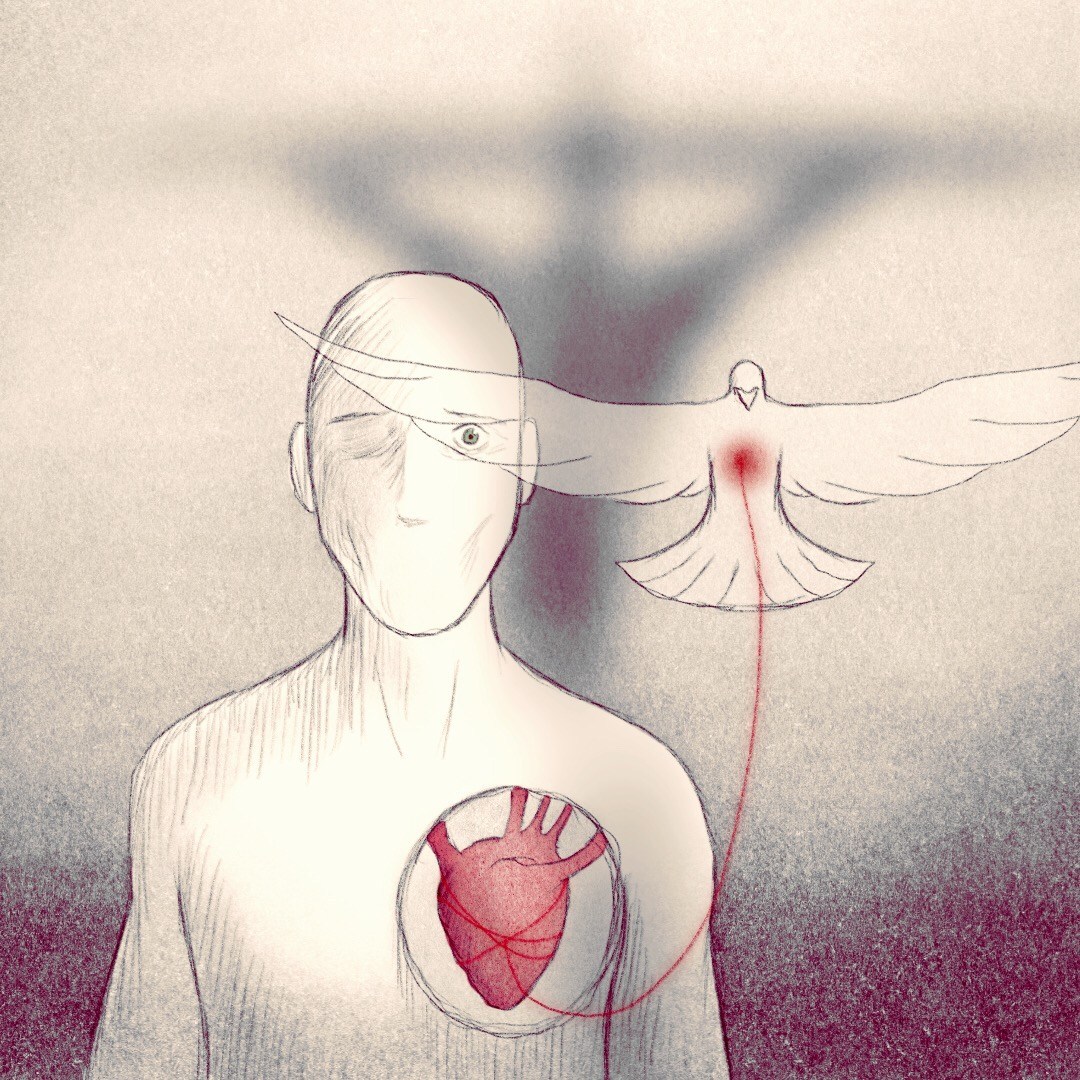
Paul will go on after our text to say that each member of the entire church and each congregation is part of the body of Christ. And each member is dependent upon the other members. Eyes need ears and toes and noses and hearts and livers and bladders. No part of the body can say that they don’t need the other parts. All the parts work together to do one common thing, and the most important thing is that the forgiveness of sins through Jesus’ death and resurrection, the Gospel, is proclaimed.

Back to that line that wasn’t a “throw away”: I have been called by God to be your pastor and to preach this sermon today. And God has called you here today to hear this sermon, use your Holy Spirit-given gift to listen because Jesus says, “Blessed are those who hear the Word of God and keep it” (Lk. 11:28, Rev. 1:3).

So, you might be wondering, “What are my gifts? What are my χαρίσματα?” Well, rather than focusing on what gifts we have, we should be focusing on the people that God has placed in our lives to serve. Doing this helps to shape our prayers so that we ask God for the gifts we need in any particular moment. It also helps to protect us from getting puffed up and arrogant so that we decrease and Christ increases (Jn. 3:30). First, get your priorities right. Holy Spirit open eyes new heartsDo you believe in Christ’s death and resurrection for the forgiveness of your sins? Do you trust that His blood has covered all your iniquities and transgressions? If so, praise God! Then ask, “What is my vocation/station in life? What am I called to do right now?” “What do I need now as a mother?” “What do I need now as a husband?” “As a child?” “A student?” “A customer?” “A citizen?” God has called you to those vocations and He won’t leave you in a lurch. He will give you the gifts you need. In every moment of every day, you have a particular relationship to someone else, so you are called to be God’s representative in that moment. So, ask God to give you what you need to fulfill that vocation.

God doesn’t equip us with gifts/χαρίσματα in advance, but He gives us what we need when we need it to minister to others as we serve in our vocations.

When you need to do something, you can confidently expect to receive exactly what you need to serve in the way that God has called you. Wherever God calls you He will give you whatever you need to minister to that person in that situation (Mt. 10:19-20).

Now, there is a lot here, and I need to wrap things up. So, two concluding thoughts. You, Christian, have been given unique gifts by the Holy Spirit to serve those whom God has put in your life through your various vocations. The Holy Spirit has uniquely equipped you to serve in every vocation where He has placed you. So, what are you waiting for? Don’t wait to figure out how God has gifted you because He has already called and equipped you to serve your neighbor in your vocation. Which brings me to the second conclusion.

In the opening verse of our text, Paul says that he does not want us to be ignorant about spiritual gifts. Our translation says ‘uninformed’ but the word there isn’t about a lack of information rather a lack of knowledge, so ‘ignorant’ is probably better. So, understand this, and don’t be ignorant. Paul speaks about many different gifts/χαρίσματα in our text. But Paul will go on to boil everything down to the three greatest gifts by the end of ch. 13 – faith, hope, and love. These three gifts are the most important χαρίσματα given by the Holy Spirit. The Holy Spirit has given you faith. No one can say, “Jesus is Lord,” except by the Holy Spirit. And because of that God-given faith, you have the gift/χάρισμα of hope.

Dear saints, the Holy Spirit has called you by the Gospel, enlightened you with His gifts, and will continue sanctify and preserve you in the true faith. But also remember that the greatest χάρισμα that you are given is love. Any use of your gifts without the gift, without the χάρισμα, of love is detrimental to the body of Christ. So, may you be faithful, may you be hopeful, and may you be loving as you use the other gifts He gives you as well.In Jesus’ name. Amen.[1]

The peace of God, which surpasses all understanding, will guard your hearts and minds in Christ Jesus. Amen.

[1]I am thankful for a lecture by Rev. Dr. John Kleinig titled “Heavenly Power for Earthly Service” for much of the information in this sermon.

The City of Peace – Sermon for the 10th Sunday of Trinity on Luke 19:41-48

Listen here.

Luke 19:41-48

41 And when he drew near and saw the city, he wept over it, 42 saying, “Would that you, even you, had known on this day the things that make for peace! But now they are hidden from your eyes. 43 For the days will come upon you, when your enemies will set up a barricade around you and surround you and hem you in on every side 44 and tear you down to the ground, you and your children within you. And they will not leave one stone upon another in you, because you did not know the time of your visitation.”

45 And he entered the temple and began to drive out those who sold, 46 saying to them, “It is written,

‘My house shall be a house of prayer,’
but you have made it a den of robbers.”

47 And he was teaching daily in the temple. The chief priests and the scribes and the principal men of the people were seeking to destroy him, 48 but they did not find anything they could do, for all the people were hanging on his words.

In the name of the Father and of the Son and of the Holy Spirit. Amen.

Palm Sunday, King Jesus rode toward Jerusalem on a borrowed donkey as shouts of, “Hosanna,” filled the air. When you ponder that event, you probably imagine smiles on the faces of the people as they wave their palms, children holding out their hands in joy and praise, the disciples proudly walking close to Jesus as part of His royal entourage, and Jesus’ face happy and pleasant as He takes it all in. But it wasn’t all joy for Jesus.

Luke tells us here that before He enters the City of Peace (which is what ‘Jerusalem’ means), Jesus weeps and laments because her residents, by and large, do not live up to their home town’s name. They do not know the things that make for peace. In a tragic twist of irony, the citizens of the City of Peace had no idea where true peace is found.

Jesus had come in the flesh to be their Immanuel, their Savior, their Messiah who would purchase and redeem them with His holy and precious blood. Christ had come to be the King from David’s line who would sit upon the throne forever. He came to remove the curse of death. But they thought He was there to release them from the Roman occupation. While that would have been delivering them, it would have been of no eternal consequence. Jesus was there to do more. However, most of the people of Jerusalem didn’t believe this. They did not know the things that make for peace.

Jesus had come to be the High Priest who offered Himself as the Lamb of God who takes away their sin and the sin of the world. He had come to be the fulfillment of all the sacrifices that pointed the people to Him. Jesus had come to be the true Temple where God met with His people with His mercy and love. But the majority of Jerusalem chose instead to make an idol out of the building of the Temple with its gold and precious stones. The chief priests, scribes, and leaders of the people didn’t want Jesus to die for their sins. They just wanted Him to die, and they wanted to be the ones who destroyed Him. They did not know the things that make for peace.

Jesus is the fulfillment of all the Old Testament offices: prophet, priest, and king. But because they had rejected their true Priest and King, Jesus weeps over the city as the true Prophet predicting destruction. He prophesizes that the City of Peace would be demolished, but His words were ignored, and His warning went unheeded. The majority of the people of Jerusalem did not know the things that make for peace.

Destruction of Jerusalem by Ercole de' RobertiAbout 40 years later, the Roman armies would come to the City of Peace and fulfill Jesus’ prophecy. In one of the most horrific events in all of history, God would send the Roman general Titus to demolish Jerusalem. The Romans would kill around one million of its residents, take enough gold from the Temple to fund the building of the Coliseum, tear the Temple down to the ground brick-by-brick and stone-by-stone, burn the city, and leave it a smoldering pile of charred rubble.

The Scriptures record this prophecy of Jesus as a warning to us. God is not mocked. Sin does not go unpunished. And because God has freely and graciously given us the things that make for peace, we must recognize and embrace them when He sends them.

Don’t fall into the devil’s temptation to embrace a peace that cannot and will not last. Don’t grow comfortable and complacent in your sin. When God doesn’t send immediate judgement upon our sin, the devil whispers in our ear that God either doesn’t really mind our sin all that much or that God won’t actually judge us.

This is what had happened to the people of Jerusalem. God’s house was to be a house of prayer. But when Jesus enters the Temple that day, He sees nothing but a Wal-Mart of religious items. So, He drives out the money changers and merchants with a whip.

Today, some churches aim to be little more than places of cheap entertainment. But even here in our congregation, how often is this sanctuary considered to be a place to come for a free cup of coffee, sit in a comfortable chair, sing a few songs, and catch up with friends?

Christ Returns in Power and GloryRepent. This isn’t a social club or just a nice place to spend a Sunday morning. This is where God comes to meet you. This is where God delivers His gifts of Word and Sacrament. This is a place of wonder as you hear the Gospel, a place of joy as you receive forgiveness, and a place of shelter in God’s presence. Here and now, God is delivering to you all the things that make for peace. Receive them. Rejoice in them. Live in them.

Eliza, today you are baptized. Today, God has connected His Word to water and washed you clean of all your sins – now and forever. Eliza, today God has joined you to Jesus’ death and resurrection and clothed you in Christ. And Eliza, God will continue to pour out upon you the things that make for peace through His holy and precious Word. Receive them and be at peace because of them.

All you saints, remember this: The things that make for peace are not always the things that feel pleasant. Because you are a sinner, the things that make for peace come through God’s Law and Gospel. When you hear God’s Law, don’t be like the people of Jeremiah’s day who hardened their hearts and didn’t know how to blush (from our OT lesson Jer. 8:4-12[esp. v. 12]).

Blush, faint, weep, and die to your sin. Repent. Stop your wickedness. Turn. Hang on Jesus’ words. Jesus has come. He has given Himself unto death to be your Savior. He has shed His holy and precious blood for you which He now gives to you who hunger and thirst for righteousness. Come. Receive. Be at peace now, and look forward to the eternal City of Peace, the heavenly Jerusalem (Heb. 12:22), which will never fall, never fade, and never be destroyed. Amen.

The peace of God, which surpasses all understanding, will guard your hearts and minds in Christ Jesus. Amen.