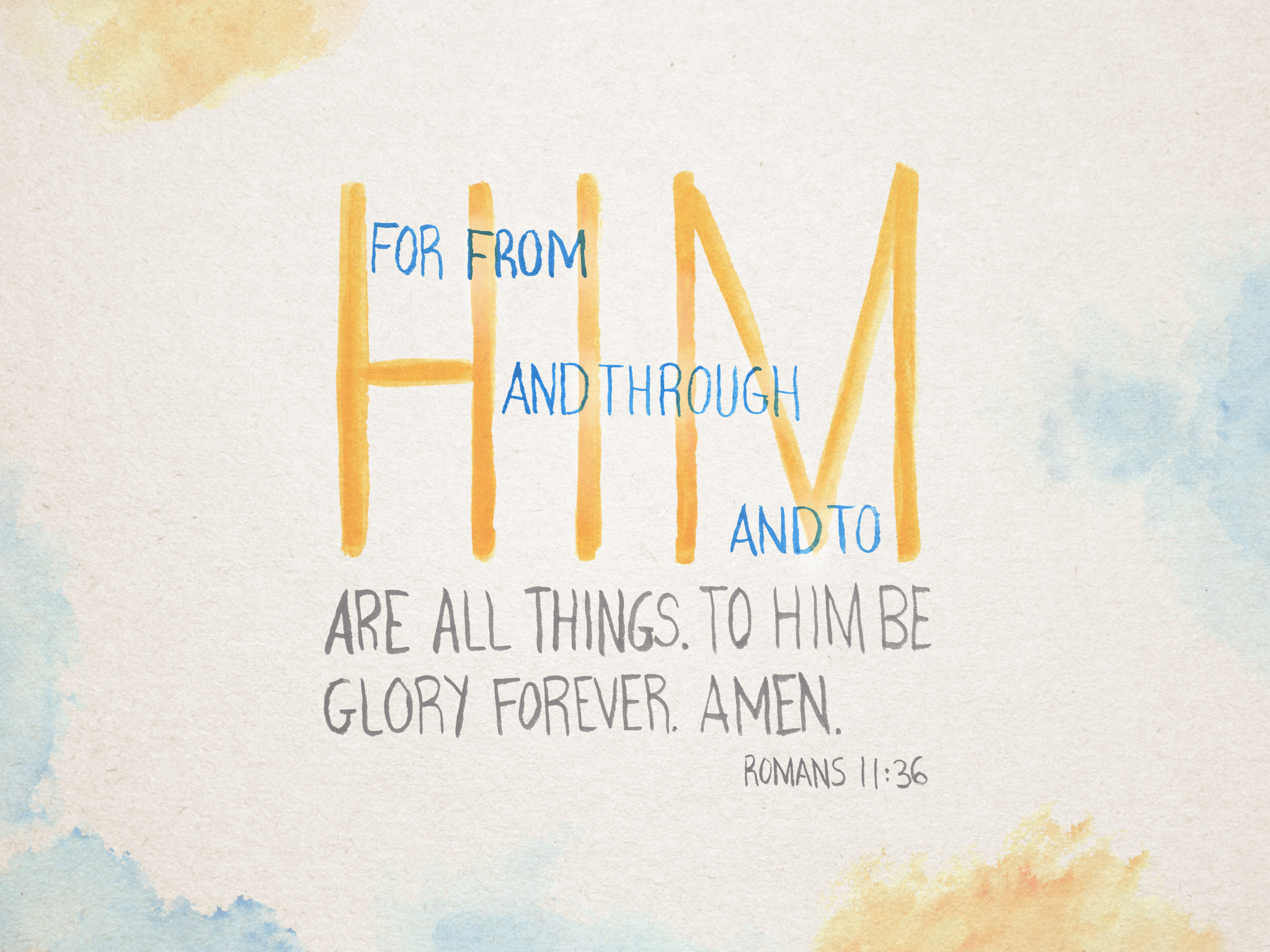
Romans 11:33–36
33 Oh, the depth of the riches
and wisdom and knowledge of God!
How unsearchable are his judgments
and how inscrutable his ways!
34 “For who has known the mind of the Lord,
or who has been his counselor?”
35 “Or who has given a gift to him
that he might be repaid?”
36 For from him and through him and to him are all things.
To him be glory forever. Amen.
In the name of the Father and of the Son and of the Holy Spirit. Amen.
Who has seen the ocean? Probably everyone has seen the ocean. If you haven’t, I can show you a picture or video after the service and, technically, you will have seen the ocean. But a picture or video doesn’t do the ocean justice. It isn’t the same as seeing it in person with your own eyes. So, how many of you have been to the ocean and have seen it, smelled it, and felt it?
Now, which ocean(s) – the Pacific, Atlantic, Indian, Arctic, Antarctic? Maybe you have seen each of them, but how much of them have you seen? Did you see a bit of it from a beach? Have you been on a boat where no land is in sight? “Water, water everywhere and not a drop to drink.” Even then, you only saw just shy of three miles of ocean before the curve of the earth pulled the rest of it away from your sight. And your field of vision only allowed you to see so much without turning your head or spinning around in circles, which, if you are prone to seasickness, is not something I would recommend. And even if you’ve been so far out to sea that no land was in sight, you can only say that you’ve skimmed the surface of the ocean – literally.
Have you seen what’s in the ocean and on its floor? Have you been able to snorkel or scuba dive to see what’s down there? How deep have you gone? Twenty, fifty, one-hundred feet? I have one friend who has dived to somewhere near that depth. As far as I know, I don’t know anyone who has been 1,000 feet below the surface of the ocean. The average depth of the ocean is about 2.3 miles deep. Some people have gone that deep. But think about the deepest part of the ocean, Challenger Deep, which is nearly 7 miles below sea level. Twelve people have walked on the moon, but only three have ever been down there.
Many people have gone up into space, orbited the planet hundreds of times, and have seen the majority of the oceans’ surface. But they haven’t been through all the oceans at all the depths to see what lies underneath the surface. So, I ask again, have you seen the ocean? Ultimately, no one can claim to have seen the oceans in their entirety. The best anyone can accurately say is, “I’ve seen a tiny fraction of the ocean.” The oceans are too big, too wide, too deep for anyone to see very much of it. But still, we wouldn’t call someone a liar if they said that they have seen the ocean. To see part of it is to truthfully say that you’ve seen it.
All of that is to set this up: These verses come at the tail end of Paul’s main theological treatise in Romans. In the first eight chapters, Romans is a thorough skimming of the surface of theology. It has dealt with the fact that no one is righteous in the way that God demands. Because of that everyone deserves death and condemnation. But God, in His mercy, has delivered the very righteousness He demands to those who have faith in Christ. By believing that God has come in the flesh of Jesus; believing that Christ suffered, bled, and died; and believing that He rose again for you, you are righteous – as righteous as Jesus is righteous.
Then, Paul dives deeper into the depths of the theological ocean. He writes about how God delivers that faith through His gracious choosing of you. Inspired by the Holy Spirit, Paul talks about the doctrines of election and predestination. Believer, you are saved exclusively because of what God has done. Jesus has done the work to deliver, rescue, and save you from your sin. The Holy Spirit has called you through God’s Word, given you faith to believe, and will sustain your faith as He works through the Scriptures (Ro. 10:17). Your salvation is entirely based on God’s mercy (Ro. 8:29-33) and the fact that He chose you to be in Christ from before the foundation of the world (Eph. 1:4-5). The culmination of Paul’s short dive into the doctrine of predestination comes in the verse just before this text where his conclusion is, “God has consigned all to disobedience, that He may have mercy on all” (Ro. 11:32).
Now, the doctrine of predestination is a huge topic, and I’m not going to go into it today. I have preached on it the past. And if you ever have questions about it, please feel free to talk with me. (I enjoy having any theological conversations.) The only reason I mention predestination here is to set up the context of the praise that we heard in this reading. God’s mercy in delivering salvation to us unworthy sinners leads to this doxology, this song of praise that is our reading: “Oh, the depth of the riches and wisdom and knowledge of God! How unsearchable are His judgments and how inscrutable His ways!”
Whenever we study theology, no matter what branch of theology is being studied, we come to a point where we realize the simple truth that God is bigger than us. God has revealed much to us in His Word, but He hasn’t revealed everything. His riches, wisdom, and knowledge go to a depth that we cannot reach. His ways are inscrutable and inconceivable. It isn’t just that they are hard to understand they are far, far beyond our comprehension. Just like how you’ve only seen a small sliver of the ocean, but you haven’t seen the whole thing. The more I study theology and the Bible, the more I realize there is to learn. It’s a regular occurrence for me to be reading a passage and suddenly realize, “I’ve never noticed that before.” Christian, there’s always more to be learned and meditated on when it comes to theology and the Bible. More and more and more and more. And it is always a joy and delight to discover more.
Today is Holy Trinity Sunday which ends the festival half of the Church year which began in Advent. The Advent, Christmas, Epiphany, Lent, Easter, and Pentecost seasons focus on God’s work for us by coming, declaring, suffering, dying, rising, ascending, and sending the Holy Spirit. Now, on Trinity Sunday, we recognize that the work of our salvation is exclusively brought about by the plan and efforts of the one God who is Father, Son, and Holy Spirit. So, Trinity Sunday is a fitting time to pause, step back, and simply praise God for all He has done, accomplished, and delivered to us. Even though we’ve spent the past six months considering what God has done to save us, we’ve just barely scratched the surface. Even when we do it again and again, there is still more.
We can’t know God’s mind. We can’t advise Him. We can’t give or offer anything to Him. That’s why Paul closes in v. 36 with this doxology, “From Him and through Him and to Him are all things.”
Consider each of those in order. “From Him,” God the Father is the source and Creator of all things. “Through Him,” God the Son has set all things in order and gives them to us. “And to Him,” the God the Holy Spirit directs all things so they find their end and meaning in this one God.
Rejoice because this One unfathomable, inscrutable, inconceivable God took it upon Himself to create, redeem, and sanctify you. So, “to Him be glory forever.” In the name of the Father and of the Son and of the Holy Spirit. Amen.
The peace of God, which surpasses all understanding, will guard your hearts and minds in Christ Jesus. Amen.

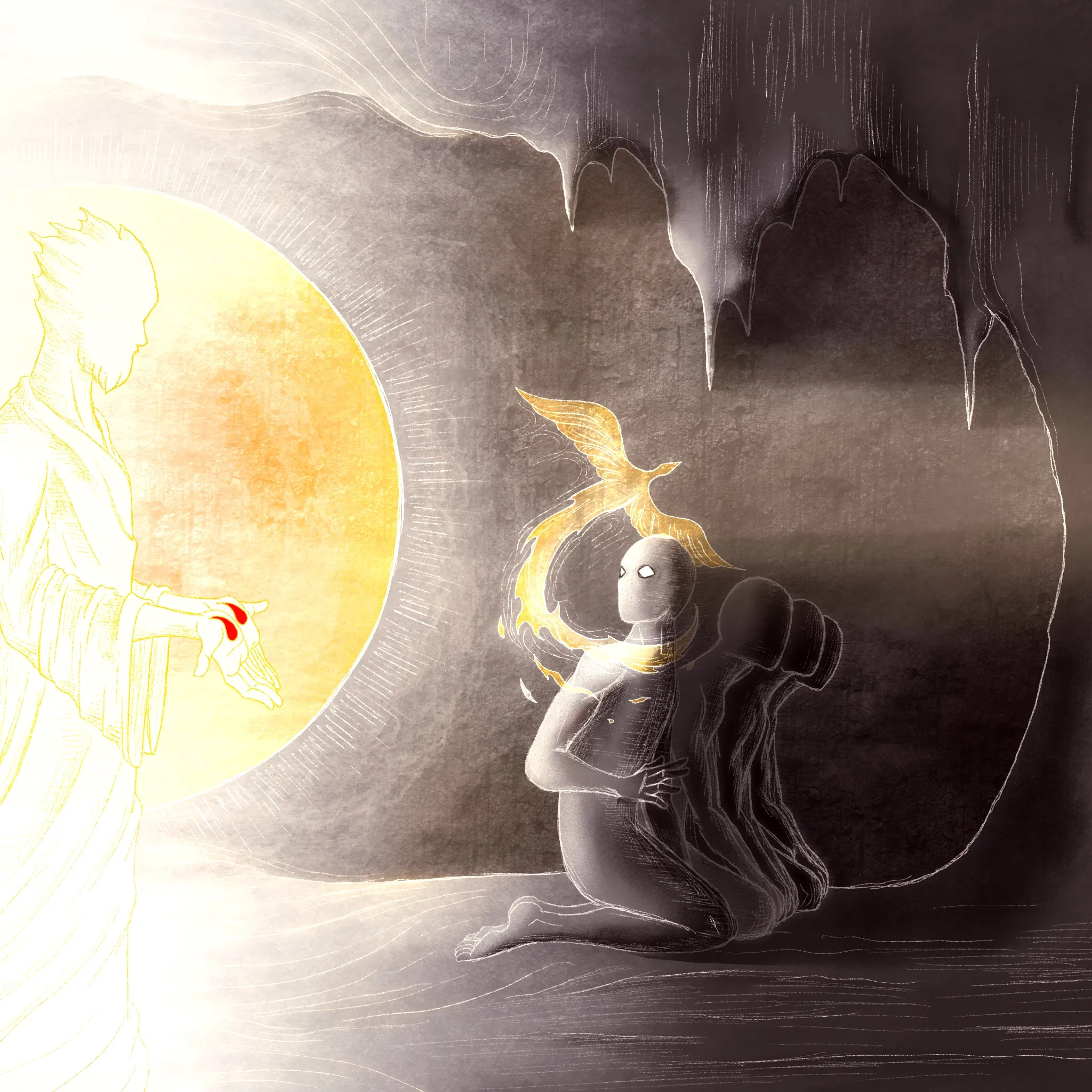
 Your heart has a wrong desire, and that false desire is conceived and eventually gives birth to sin. Then, when sin grows up, it brings forth death. Knowing this, we know Satan’s game plan. But it is helpful for us to see how the devil’s game plan plays out in real time, and we saw it in our Old Testament text (Gen. 3:1-21).
 When Eve looked at that fruit, she should have recognized, “That fruit is death.” Instead, she wrongly sees that it is to be desired to make one wise. This is the danger for us. There are things that are put in front of us and God says, “That’s bad, and it leads to death.” But instead of regarding those things according to God’s Word, we regard them according to how we see and think. We put ourselves over and above God and judge Him to be wrong. The devil entices us to think that God is the bad guy who is holding out on us, keeping us from having our heart’s desires. Then, we think we know better than God, and we fall for the temptation and into sin.
 Jesus has been fasting forty days and nights. I remember as a kid being hungry forty minutes after dinner. Jesus is famished. He is weakened by this fast. So, this temptation to turn stones into bread is a real temptation. The tempter again tries to exploit the gap between Jesus’ desires and what God has given. Jesus wanted food. Because He is man just like you and me, His stomach and His brain would have been screaming at Him, “Feed us!” But God has not yet given Jesus food. So Satan tries to get Jesus to take for Himself what God has not given.
 “to guard you in all your ways.” God the Father will protect Jesus in all His ways. But God didn’t send Jesus to earth to be some X-Games-temple-pinnacle jumper.
 So, dear saints, be wise. Know the devil’s attacks and tactics. The devil is going to use those tactics against you, but God has given you weapons against the devil, your flesh, and the world (1 Jn. 2:15-16). When the devil comes to tempt you, take up the weapon of prayer. Pray God’s Word and watch the devils flee. When your flesh tempts you, take up the weapon of fasting. If you are tempted to certain desires of your flesh, fast from those things. Tell your body, “Body, you aren’t in control.” And when the world tempts you with its vain riches, give. Be generous to the point that it makes you unable to afford falling into the temptations of this world.
 6 But at midnight there was a cry, ‘Here is the bridegroom! Come out to meet him.’ 7Then all those virgins rose and trimmed their lamps. 8 And the foolish said to the wise, ‘Give us some of your oil, for our lamps are going out.’ 9 But the wise answered, saying, ‘Since there will not be enough for us and for you, go rather to the dealers and buy for yourselves.’ 10 And while they were going to buy, the bridegroom came, and those who were ready went in with him to the marriage feast, and the door was shut. 11 Afterward the other virgins came also, saying, ‘Lord, lord, open to us.’ 12 But he answered, ‘Truly, I say to you, I do not know you.’ 13 Watch therefore, for you know neither the day nor the hour.”
 But thanksgiving, yes it recognizes the goodness of the thing, but it looks past that and sees the goodness of the giver of the thing. This is why Christians can give thanks in all circumstances (1 Th. 5:18). Even in the tough stuff, even in difficult times, in sorrow, and in afflictions that come to us in this broken world, you can know that everything comes to you from the very same hands that were nailed to the cross for you.
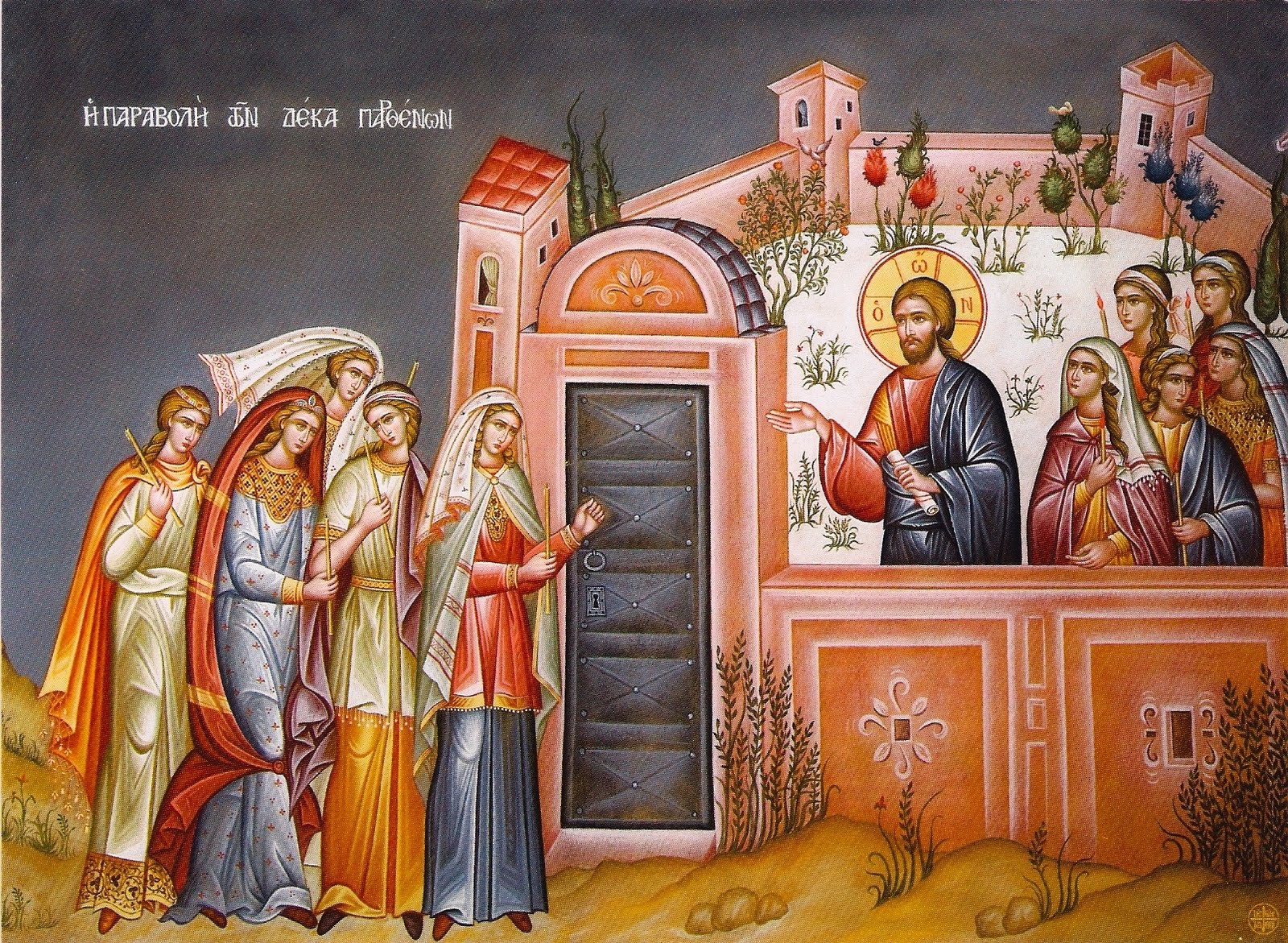 Now, to the parable. Honestly, it is very difficult, and the difficulty mainly lies in the fact that we don’t know enough about Jewish wedding customs in Jesus’ day to know why it was so important that these virgins have lit lamps when the groom arrived.
 Pastorsamwise
You must be logged in to post a comment.