
See No Death, Taste No Death – Sermon on John 8:42-59 for the Fifth Sunday of Lent

John 8:42–59

42 Jesus said to them, “If God were your Father, you would love me, for I came from God and I am here. I came not of my own accord, but he sent me. 43 Why do you not understand what I say? It is because you cannot bear to hear my word. 44You are of your father the devil, and your will is to do your father’s desires. He was a murderer from the beginning, and does not stand in the truth, because there is no truth in him. When he lies, he speaks out of his own character, for he is a liar and the father of lies. 45 But because I tell the truth, you do not believe me. 46 Which one of you convicts me of sin? If I tell the truth, why do you not believe me? 47 Whoever is of God hears the words of God. The reason why you do not hear them is that you are not of God.”

48 The Jews answered him, “Are we not right in saying that you are a Samaritan and have a demon?” 49 Jesus answered, “I do not have a demon, but I honor my Father, and you dishonor me. 50 Yet I do not seek my own glory; there is One who seeks it, and he is the judge. 51 Truly, truly, I say to you, if anyone keeps my word, he will never see death.”52 The Jews said to him, “Now we know that you have a demon! Abraham died, as did the prophets, yet you say, ‘If anyone keeps my word, he will never taste death.’ 53 Are you greater than our father Abraham, who died? And the prophets died! Who do you make yourself out to be?” 54 Jesus answered, “If I glorify myself, my glory is nothing. It is my Father who glorifies me, of whom you say, ‘He is our God.’ 55 But you have not known him. I know him. If I were to say that I do not know him, I would be a liar like you, but I do know him and I keep his word. 56 Your father Abraham rejoiced that he would see my day. He saw it and was glad.” 57 So the Jews said to him, “You are not yet fifty years old, and have you seen Abraham?” 58 Jesus said to them, “Truly, truly, I say to you, before Abraham was, I am.” 59 So they picked up stones to throw at him, but Jesus hid himself and went out of the temple.

In the name of Jesus. Amen.

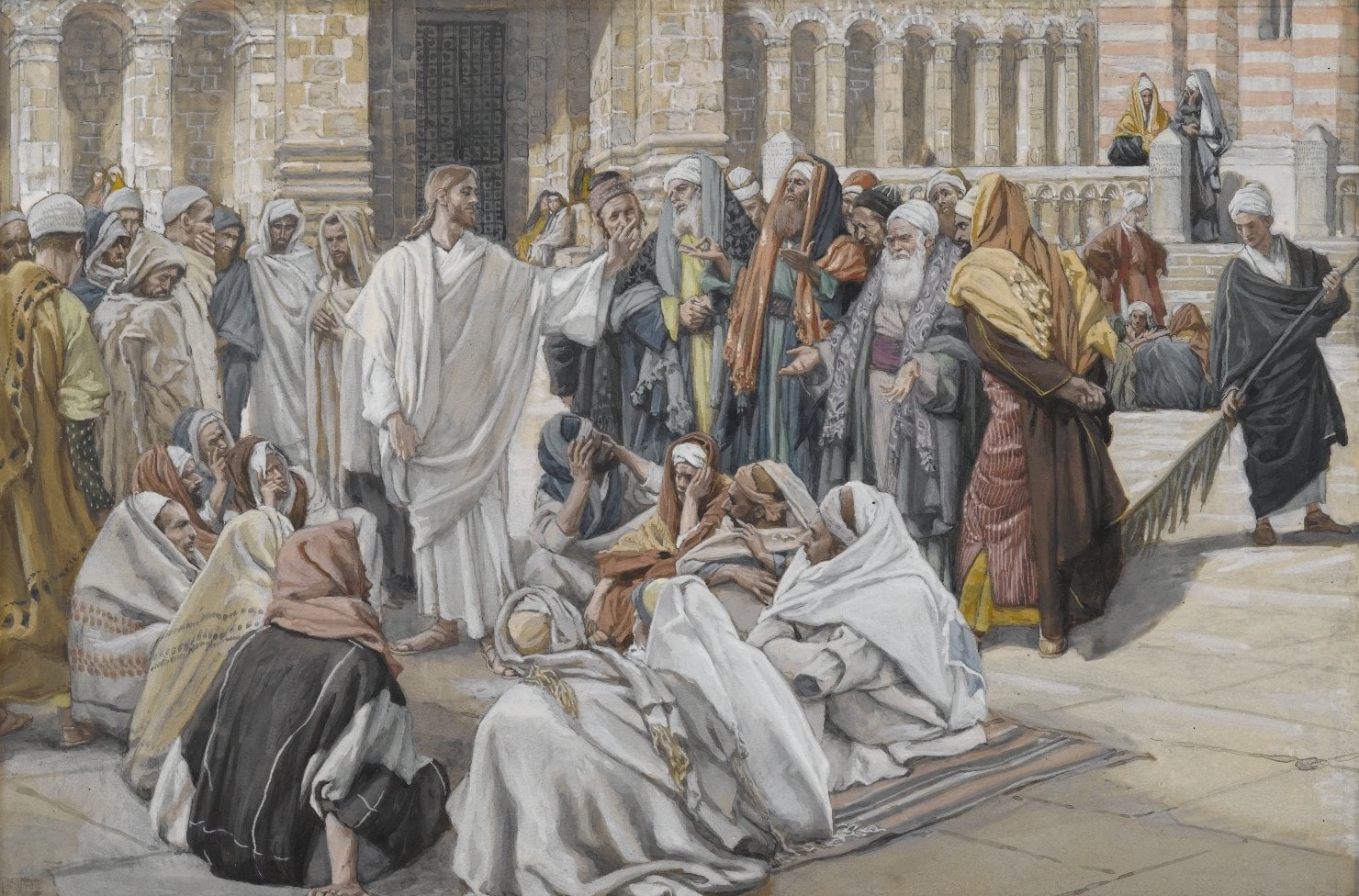
Today we hear Jesus give one of the clearest, most comforting promises He ever spoke. “Truly, truly I say to you, if anyone keeps My Word, he will never see death.” As comforting as this already is, it is even more comforting when we consider the context of when Jesus says this. Jesus is having an argument with some of the Jews in the Temple (Jn. 8:20, 24), and this argument is heated.

Earlier, in part of the argument that isn’t in our text, Jesus told them, “You will die in your sin.” He calls them slaves to sin (Jn. 8:31-34). In this reading, you heard Jesus call these hostile people children of the devil (Jn. 8:44) who do not listen to the voice of God (Jn. 8:47).

Now, these are not tactics you will hear in an evangelism class, but it is all true. Of course, Jesus is telling them the truth. Everything He says is absolutely true, clear, and direct. Jesus isn’t beating around the bush or sugarcoating anything. He isn’t worried about tiptoeing around touchy topics in order to maintain His relationship with them just in case they eventually come around to see things His way. Christ tells them what they need to hear even though it is offensive.

Dear saints, there are times when you simply tell someone the truth, and they will get mad. But the truth remains the truth no matter how people respond to it. Yes, speak the truth in love (Eph. 4:15), but remember that the truth is always loving. And know that there are times people will get angry when they hear the truth. And it isn’t a matter of you needing to speak the truth in a better way or be more loving. You are not smarter, gentler, or more loving than Jesus. Even though He speaks the hard truth to them, Jesus loves these people. About six months after this argument, Jesus will go the cross and be their substitute under God’s wrath, but here they get angry with Him. And if people got angry with Jesus for telling the truth, then, Christian, there are times when people will be angry with you for telling the truth. Sometimes, showing love will get people angry with you.

That’s all important to know, but we are trying to see how great a promise Jesus makes to these people who are arguing with Him when He tells them that if they keep His Word they will never see or taste death. He starts with the hard but loving truth, but listen to how they respond. They throw two accusations at Jesus, “Are we not right is saying that You are a Samaritan and have a demon?” Now, calling Jesus a Samaritan was, at least, a racial slur. Today, people’s lives get ruined if they use this type of language. But this might have been more than just a racial slur.

Remember, Jesus had just called them children of the devil (Jn. 8:42), and when they call Jesus a Samaritan, it appears that they are responding to Jesus calling them Satan’s spawn. They are saying that Jesus’ mom was adulterous and promiscuous. They are calling Jesus is an illegitimate child.

They also accuse Jesus of having a demon. Here is God in the flesh warning people and calling them to repentance and faith, and they accuse Him of trying to pull them down into hell. If I were in Jesus’ sandals and had to listen to people saying awful things like this, the best I could hope to do is walk away from them. But Jesus doesn’t walk away. Instead, this is the context where He gives them the promise, “Truly, truly, I say to you, if anyone keeps My Word, He will never see death.” He is calling them to faith and life. Despite their horrific statements, Jesus still loves them and wants to rescue them from death. That Jesus would give this promise to these people – in fact, that He is even speaking to them at all – is tremendous, remarkable mercy. Jesus had come to rescue them.

But, again, they respond to this promise, “Now we know you have a demon!” They are hearing are the very words of God, but they think it is the voice of Satan. Jesus had come to His own, but they did not receive Him (Jn. 1:11); they loved the darkness rather than the light (Jn. 3:19).

So, what does Jesus mean when He says, “Truly, truly, I say to you, if anyone keeps My Word, He will never see death”? First, what does it mean to keep His Word?

To keep Jesus’ Word is to believe what He says. Keeping Jesus’ Word does mean to do the things He commands, but it also means that when you fail to obey what He says, you also keep Jesus’ promises. It means believing that because of what God has done for you in Christ, you are forgiven (Jn. 6:28-29). Keeping Jesus’ Word means to believe what He says when He calls you a sinner, and keeping Jesus’ Word means believing what He says when He declares that you are forgiven.

Anyone who keeps Jesus’ Word will never see death. And what does that mean? Well, most of you have heard me preach at a funeral, so this is something you have heard before. But even if we heard this a thousand times, we still need to be reminded of it – even if it isn’t at a funeral.

To the one who keeps Jesus’ Word, to anyone who believes the Gospel, in other words you, Christian, you will never see death. You won’t die. And this isn’t the only time Jesus says something like this. In John 10:28, Jesus says that His sheep will never perish. In John 11:26, Jesus plainly says, “Everyone who lives and believes in Me shall never die.”

It is true that one day you will breathe your last and your heart will stop beating – unless Jesus comes first. Christ might return before that happens (1 Thess. 4:15). Let’s imagine that Jesus does come back before you die, you are simply given your new body and are eternally with the Lord. If you went and found your loved ones who did die and asked them, “What was that like? What happened when you died?”

Their response would be, “I don’t know. I didn’t die. Jesus was simply with me the entire time.”

“Even though I walk through the valley of the shadow of death, I will fear no evil, for You are with me” (Ps. 23:4) – all the way through. Jesus has died for you. Christ has taken away your sin, your guilt, your shame, and even your death.

That is why Scripture will regularly use different terms when a believer dies. Abraham didn’t die, he was “gathered to his people (Gen. 25:8). Simeon, after he sees forty-day-old Jesus in the Temple says that now he can depart in peace (Lk. 2:29). The Bible talks about death being sleep (Mt. 9:24; Jn. 11:11, 13-14; 1 Thess. 4:13) from which Jesus will simply wake us. Paul talks about death as “departing and being with Christ” (Php. 1:23), being “delivered from evil” (2 Tim. 4:18), and even death being gain (Php. 1:21).

Dear saints, Jesus is the God of the living (Lk. 20:38) and He promises that, “neither death nor life, nor angels nor rulers, nor things present nor things to come, nor powers, nor height nor depth, nor anything else in all creation, will be able to separate [you] from the love of God in Christ Jesus [your] Lord” (Ro. 8:38-39). Dear saints, keep Jesus’ Word, believe, and you will never see and never taste death. Amen.

The peace of God, which surpasses all understanding, will guard your hearts and minds in Christ Jesus. Amen.

How Can the Bodily Eating and Drinking Produce Such Great Benefits? – Sermon for Midweek Lent 4

III. How Can the Bodily Eating and Drinking Produce Such Great Benefits?

The eating and drinking, indeed, do not produce them, but the words: “Given and shed for you for the forgiveness of sins.” For besides the bodily eating and drinking, these words are the chief thing in the Sacrament; and anyone who believes them has what they say and declare, namely, the forgiveness of sins.

Luther’s Small Catechism

In the name of Jesus. Amen.

Again, to recap: the Lord’s Supper is the true Body and Blood of Jesus in and with the bread and wine which Christ gives to us to eat and to drink. This means that Jesus is truly present in the Lord’s Supper to give you forgiveness, life, and salvation. When you receive Communion, you never have to wonder why Jesus is with you. He is there to deliver all the benefits of His death and resurrection which He won for you on the cross. You simply taste and see that He is good (Ps. 34:8).

This question from the Small Catechism addresses a common misunderstanding many Christians today have about the Lord’s Supper. The misunderstanding will take different shapes, so tonight’s sermon is largely going to be responding to the errors about Communion.

I don’t know of any Christians who say that Jesus doesn’t really care if we have Communion or not. But some Christians will say that Jesus doesn’t actually give us His Body and Blood for the forgiveness of sins in the Sacrament. Instead, they believe the Lord’s Supper is a meal which helps us remember what Christ has done for us. They will say that when Jesus said, “This is My Body and Blood,” what He really meant was, “This represents My Body. This represents My Blood.” I think one of the biggest reasons they think that is what this question from the Small Catechism addresses. If we modernized this question a bit it would be, “How can having a physical bite a bread and a physical sip of wine do anything that benefits a person spiritually?” 

This is a logical question. You don’t eat a hotdog and drink a soda to be forgiven. You aren’t saved by having a bowl of soup and a glass of water. So, why would eating and drinking the elements of Communion be any different? Even though it is a logical question, that doesn’t mean we can respond with mere logic. Our logic, thinking, and reasoning is a good gift from God. But our logic is fallen and cannot comprehend everything God teaches and promises in His Word. God’s ways and thoughts are higher than our ways and thoughts (Is. 55:8-9).

So, it all comes down to the words and promises of Jesus. Once Jesus says, “Given and shed for you for the forgiveness of sins,” that settles any disagreement of what Communion is for. The Lord’s Supper delivers the forgiveness of sins. 

Think back to Naaman, the commander of the army of Syria (1 Kgs. 5:1-14). He had leprosy and was given the suggestion to go to God’s prophet, Elisha. Elisha told Naaman to wash seven times in the Jordan River, and he would be cleansed of his leprosy. But when Naaman considered the water of the Jordan, he balked at the idea. There were cleaner rivers back in Syria which he thought could do a better job of washing his festering, diseased skin. So, he wasn’t going to lower himself into those dirty, mucky waters until one of his servants basically said, “Why not give it a try? We’ve come all this way, and the prophet said to wash and be cleansed of your leprosy. If it doesn’t work, we can get the mud washed off of you later.” Naaman washes and finds out that God had given him a promise through Elisha. The waters of the Jordan River became a leprosy-healing stream – not because those waters were special by themselves. Instead, it was because God had attached a promise for Naaman to those waters.

Some might object to that and say, “Well, that was to heal the physical ailment of leprosy. God doesn’t use physical things to bring about spiritual benefits.”  Not so fast. What about the burning coal that touched Isaiah’s lips? The seraph promised him, “Behold, this has touched your lips. Your guilt is taken away, and your sin atoned for” (Is. 6:7). The same is true for Holy Communion. Jesus, the Son of God Himself, puts His Supper into your mouth and says to you who receive it, “This has touched your lips. You have eaten and drunk. Your guilt is taken away, and your sin atoned for.”

And on top of that, if it were true that physical things do not and cannot bring about forgiveness and spiritual benefits, what is Jesus doing on the cross? Throughout Scripture, God can and does regularly bring about spiritual benefits through physical things and physical actions.

Another objection Christians have about the elements of the Lord’s Supper being Jesus’ Body and Blood is, as I already mentioned, that Jesus is speaking figuratively. They will say, “Sure Jesus said, ‘This is My body; this is My blood,’ but what He meant is, ‘This represents My body; this represents My blood.’” They will point to passages where Jesus says that He is the door (Jn. 10:7, 9). Obviously, Jesus isn’t a literal door. They will say we should understand what Jesus says when institutes Communion exactly the same way.

The problem with that argument is the context of what Jesus is saying and what He is doing when He says it. When Jesus talks about being the door, it is in the context of Him drawing from all sorts of shepherd/sheep imagery from the Old Testament. When you read those verses in context, it is clear that He is using figurative language.

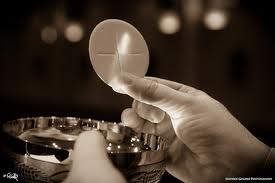
But when Jesus institutes Holy Communion everything is different. Jesus blessed the physical Bread and physical Cup and handed them to the disciples saying, “This is My Body. This is My Blood.” Jesus could have used language that is figurative. He does that all the time to introduce the parables. “The kingdom of heaven is like…” (Mt. 13; 20:1; 25:1; Lk. 13:18; etc.) But Jesus doesn’t do that in His Supper. He gives them Bread and Wine saying, “This is My Body; this is My Blood.” When God speaks, the impossible happens – the lame walk, the blind see, the dead are raised, and Bread and Wine become more than mere bread and wine.

Another objection that Christians today will have about Communion is that created things – especially small things like bread and wine – cannot hold something as big as God. The phrase that gets used is, “The finite cannot hold the infinite.” If that statement is true (and it’s not), that is big problem. If the finite cannot hold the infinite, that would mean that Jesus wasn’t God in the flesh, that would be impossible. But that is not the case. The finite can and does hold the infinite. Scripture clearly teaches that in Jesus, “the whole fullness of God dwells bodily” (Col. 2:9). And if Jesus wants to put Himself in Bread and Wine, He can do that too.

The final objection we will address tonight is when some Christians will say something like, “Well, Jesus’ death on the cross is what saves – not what we receive in Communion.”

The response to that is, “Yes. It is only through Jesus’ finished work on the cross that we are saved.” But how does God give and deliver what Jesus did on the cross to you? You weren’t there.

As much as I enjoy the hymn Were You There When They Crucified My Lord? (especially hearing Johnny Cash’s version), that hymn is asking questions to which we would have to answer with a resounding, “No.” In fact, only a small minority of the people who existed were there. You weren’t there when they crucified Jesus. You weren’t there when they nailed Him to the tree. You weren’t there when they laid Him in the tomb. You weren’t there when He rose up from the grave. All those things are good and important to remember, but you weren’t there – halfway across the world, outside of Jerusalem nearly 2,000 years ago.

But Jesus can, and promises to, deliver all the benefits of the cross to you in Holy Communion – His body broken, His Blood shed – directly delivered to your mouth. If the eating of the fruit of the tree of the knowledge of good and evil can cause the devastating damage of sin entering the whole world, how beautiful is it that eating and drinking Jesus’ Body and Blood, which were given on the tree of the cross, brings forgiveness, life, and salvation?

We probably want to know more about how the eating and drinking of the Lord’s Supper makes logical sense, God hasn’t given us all the details. That’s ok. We have His sure and certain promise, so hold fast to that.

Even though what you receive in the Sacrament doesn’t look like much, and by itself it isn’t much, but when Jesus attaches His promises to it, it is everything. It is the medicine of immortality. Amen.

The peace of God, which surpasses all understanding, will guard your hearts and minds in Christ Jesus. Amen.

The Devil’s Playbook – Sermon on Matthew 4:1-11 for the First Sunday of Lent

Matthew 4:1–11

1 Then Jesus was led up by the Spirit into the wilderness to be tempted by the devil. 2 And after fasting forty days and forty nights, he was hungry. 3 And the tempter came and said to him, “If you are the Son of God, command these stones to become loaves of bread.” 4 But he answered, “It is written,

“‘Man shall not live by bread alone, 
but by every word that comes from the mouth of God.’ ”

5 Then the devil took him to the holy city and set him on the pinnacle of the temple 6 and said to him, “If you are the Son of God, throw yourself down, for it is written, 

“‘He will command his angels concerning you,’ 

and 

“‘On their hands they will bear you up, 
lest you strike your foot against a stone.’” 

7 Jesus said to him, “Again it is written, ‘You shall not put the Lord your God to the test.’ ” 8 Again, the devil took him to a very high mountain and showed him all the kingdoms of the world and their glory. 9 And he said to him, “All these I will give you, if you will fall down and worship me.” 10 Then Jesus said to him, “Be gone, Satan! For it is written,

“‘You shall worship the Lord your God 
and him only shall you serve.’”

11 Then the devil left him, and behold, angels came and were ministering to him.

In the name of Jesus. Amen.

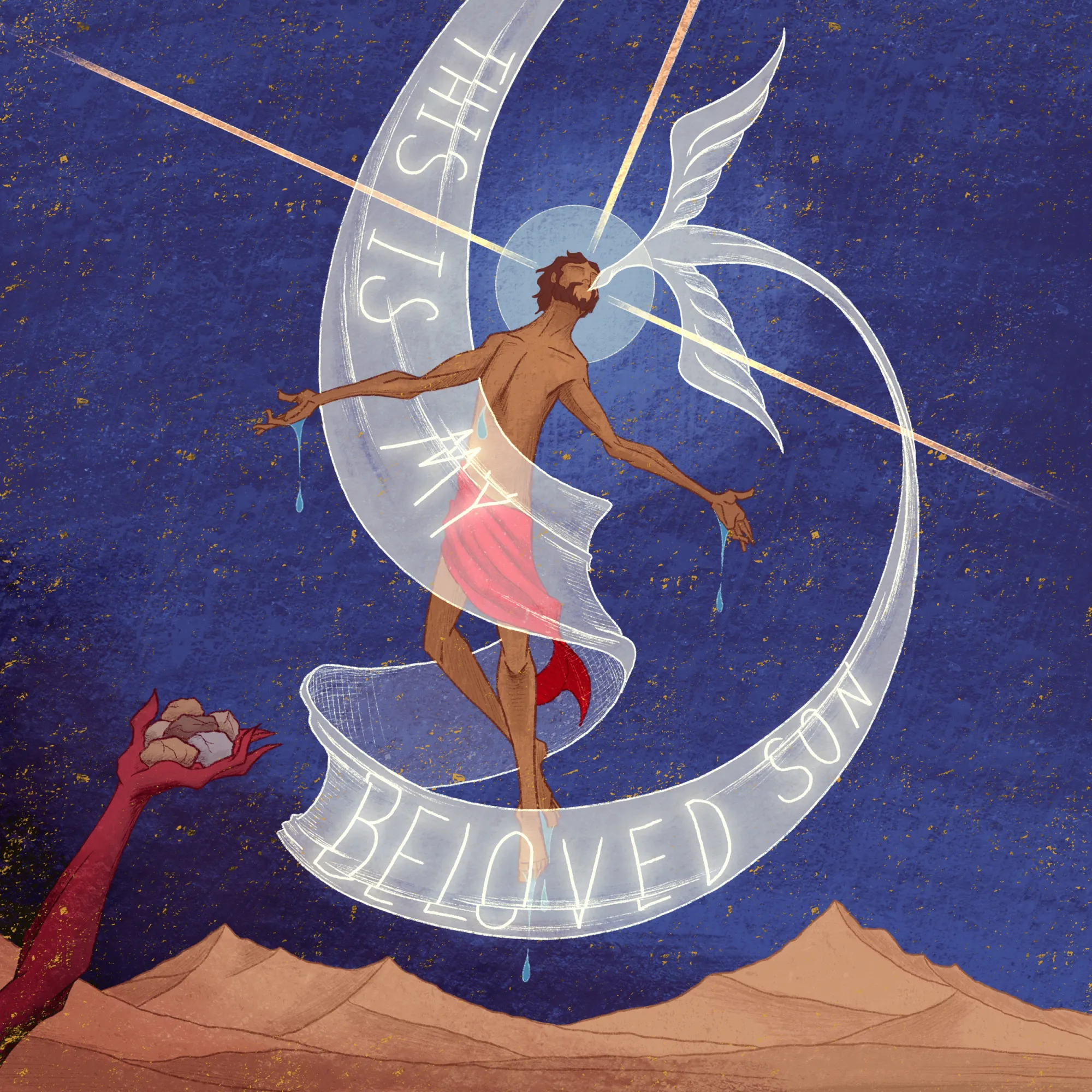
For years now, you’ve heard me say that the devil has one trick up his sleeve and that is to get you to doubt God’s Word. In the luscious perfection of the Garden of Eden, the devil began his temptation by asking the woman, “Did God really say?” And in the temptation of Jesus, the devil takes the exact same approach. He begins the first two temptations with, “If you are the Son of God…” Remember, this came immediately after God the Father declared at Jesus’ Baptism, “You are My beloved Son, in whom I am well pleased” (Mk. 1:11; Mt. 3:17). So, when Satan begins, “If you are the Son of God,” he’s trying the exact same tactic he used in the Garden, “Did God really say?” Trying to cast doubt on God’s Word is the only play in the devil’s playbook, and this is helpful to know. But we need to consider this scheme of the devil more closely because he is so skilled at running this play.

Enough of you enjoy football that I’m going to try this analogy. Even if you don’t care about football, I think the analogy is still helpful, so please stick with me. Some teams will primarily use just one play called an ‘option.’ In this play, the quarterback sees where the defense is and how they move at the beginning of the play, and that will determine what he does with the ball – pass, hand it off, or keep it himself. It’s one play that has several options for success, and a skilled quarterback simply choses the best option available. This one play can be extremely effective. So, when we understand how Satan runs his one play to utilize the options he has before him, we can better defend against each of those options.

When the devil tempts us with his, “Did God really say?” he wants us to start speculating, “Why doesn’t God want me to have this thing?” whatever that thing is. There are three main answers to that speculation. One, God doesn’t actually know what I need. Two, God doesn’t want me to be happy. And three, God doesn’t have the power or ability to give that thing to me.

If any of those things are true (which, of course, they aren’t), then God isn’t worthy of our obedience or worship. And when we start speculating on those false possibilities, we begin to think that God either can’t or won’t help us. Then, we assume that we have to help ourselves, but doing that put us in the place of God which means that we fall into idolatry and sin. So, when we recognize what those temptations are doing, we can better defend against the temptation. Because the truth is: God does know what you need. He knows what you need before you ask Him (Mt. 6:8). And He promises to give it to you (Mt. 6:32). God does want you to be happy – happier than you can possibly imagine – just not necessarily in the way or in the timing you might have in mind. He doesn’t withhold any good thing from those who walk uprightly (Ps. 84:11), and He knows how to give good gifts to His children (Mt. 7:11; Ps. 85:12). And God is able and pleased to give you everything that is good for you (Lk. 12:32).

Our problem is that we don’t always recognize how simple and shortsighted we are. We don’t always know what is and isn’t good for us. Too often, we are like spoiled children who think things that are harmful to us would make us happy. God knows better than we do, and He won’t ever hold back when it comes to giving us things that are beneficial for us (1 Cor. 1:7).

With all of that in mind, let’s consider these three temptations. Jesus is starving because He hasn’t eaten for forty days. The devil runs his play, “If you are the Son of God, command these stones to become loaves of bread.” Notice how insidious this is. The devil wants Jesus to speculate, “Why doesn’t God want Me to have bread?” At that very moment, the heavenly Father was providing bread for everyone in the world. Christ is the only one who actually loves and obeys God. So, why is He starving? The devil is tempting Jesus to think that His heavenly Father either: 1) doesn’t know what He needs; 2) doesn’t want to give Jesus what He needs; or 3) isn’t able to give Jesus what He needs. Again, all of those things are false.

But Jesus doesn’t fall for the play; He doesn’t speculate. He simply responds, “Man shall not live by bread alone, but by every word that proceeds from the mouth of God” (Dt. 8:3). Jesus trusts that God can and will provide what is needed when it is needed. He doesn’t fall into the temptation.

If we stick with the football analogy, it’s second down, and the devil goes back to his same play. He takes Jesus to the pinnacle of the Temple and says, “If you are the Son of God, jump off. God has promised to send the angels to protect you.” Satan wants Jesus to test God’s ability to keep Him safe. The devil is, basically, saying, “Let’s see if God will notice when you are in danger and if he can help you when you need it.” But Jesus doesn’t need to test drive God’s protection. God has promised He will care for Him, and that is enough. So, our Lord responds, “You shall not put the Lord your God to the test” (Dt. 6:16).

Now, it’s third down, and the devil is in a bad spot. But he still runs the same play trying to get Jesus to think that God is holding out on Him. Satan shows Jesus all the kingdoms of the world and all their glory and offers them to Jesus if He will worship him. Jesus will, and does, receive all the kingdoms of the world but only after He has redeemed them by dying and rising again. But the devil wants Jesus to take that authority early. But our Lord doesn’t fall for the trick. Jesus quickly responds with Scripture again, “Be gone, Satan! For it is written, ‘You shall worship the Lord your God, and Him only shall you serve’” (Dt. 6:13). Now that He is ascended to the throne of all creation, Christ has all authority in heaven and on earth (Mt. 28:18) with all things placed under His feet (Eph. 1:21-22).

Now, let’s bring this to you. Again, the one play in the devil’s playbook is for the devil to get you to question God’s Word which leads you to speculate that God is holding out on you. Dear saints, God does not and will not ever deny you anything that is good for you. Psalm 84:11 says, “The Lord God is a sun and shield; the Lord bestows favor and honor. No good thing does He withhold from those who walk uprightly.”

Recognizing that God promises to provide and care for us is the best weapon we have to defend against temptation. The last verse of this text is so important for our fight against temptation because it clearly shows us that God wasn’t withholding anything from Jesus. At the right and proper time, God did give Jesus the bread, protection, and authority He needed and desired. “The devil left [Jesus], and behold, angels came and were ministering to Him.” And don’t think for one second that God only does this for Jesus because He does it for us sinners too.

We saw God do the same thing for Adam and Eve in our Old Testament text (Gen. 3:1-24) even after they had fallen into temptation and sinned. God gave them chance after chance to repent. Every question God asks in Gen. 3:9-13 is a merciful call to repentance because God knows that they need confession and absolution. Even when they don’t repent and confess their sins, God still gives them what they need. He gives them a promise that He will send Jesus, the Seed of the woman, to crush the head of the serpent (Gen. 3:15). Then, God instructs both the woman and Adam what life will be like now that they have brought sin into the world (Gen. 3:16-19) which will help them face the challenges ahead. There, God still promises to provide food for them. After that, God covers their nakedness and shame with animal skins (Gen. 3:21). And finally, God sends His cherubim with a flaming sword, to protect them from the horror of eating from the tree of life and living forever in sin (Gen. 3:22-24).

In all of that, God is protecting them, providing for them, loving them, and giving them everything they need for life and salvation. Dear saints, if God will do that for Adam and Eve immediately after they sinned, how much more will God do for you now that He has sent Jesus to die and rise again to redeem and purchase you?

Because of what Christ has done, you are His beloved children. Jesus, your great High Priest has been tempted in every way as you are, yet without sin. Christ knows the difficulty of facing the temptations the devil throws at you, so He has sympathy for you. And even when you fall into temptation and sin, you can draw near to His throne where you will find mercy and grace to help in time of need (Heb. 4:14-16). Amen.

The peace of God, which surpasses all understanding, will guard your hearts and minds in Christ Jesus. Amen.

Rooted – Sermon on Luke 8:4-15 for Sexagesima Sunday

Luke 8:4–15

And when a great crowd was gathering and people from town after town came to him, he said in a parable, “A sower went out to sow his seed. And as he sowed, some fell along the path and was trampled underfoot, and the birds of the air devoured it. And some fell on the rock, and as it grew up, it withered away, because it had no moisture. And some fell among thorns, and the thorns grew up with it and choked it. And some fell into good soil and grew and yielded a hundredfold.” As he said these things, he called out, “He who has ears to hear, let him hear.”

And when his disciples asked him what this parable meant, 10 he said, “To you it has been given to know the secrets of the kingdom of God, but for others they are in parables, so that ‘seeing they may not see, and hearing they may not understand.’ 11 Now the parable is this: The seed is the word of God. 12 The ones along the path are those who have heard; then the devil comes and takes away the word from their hearts, so that they may not believe and be saved. 13 And the ones on the rock are those who, when they hear the word, receive it with joy. But these have no root; they believe for a while, and in time of testing fall away. 14 And as for what fell among the thorns, they are those who hear, but as they go on their way they are choked by the cares and riches and pleasures of life, and their fruit does not mature. 15 As for that in the good soil, they are those who, hearing the word, hold it fast in an honest and good heart, and bear fruit with patience.

In the name of Jesus. Amen.

Today, I’m taking a different approach on how I’m preaching this text. We’ll use the parable and explanation as a lens through which we look at what is happening in this text. You’re all smart people, so I think you’ll catch on pretty quickly.

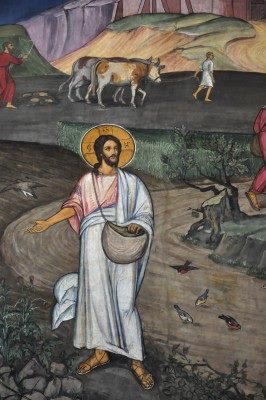
One day Jesus saw massive crowds coming toward Him. So many had come to listen to Him teach that Matthew actually lets us know that Jesus had to teach from a boat while the crowds listened from the beach (Mt. 13:1-9). But Jesus didn’t see this as just another day at the lake. No. He saw fields that were ripe unto seeding. He saw ground that was ready to be planted with God’s Word. So, Christ reached into His bag and started throwing the good Seed of God’s Word as far and wide as He possibly could.

As He taught, Jesus threw some seed on the path. He noticed that some were not paying much attention. They were nodding off or distracted by one thing or another. They could hear His voice, that wasn’t the issue. But He could tell that the Seed of the Word wasn’t sinking in. Christ wasn’t worried about this. Jesus knew He could get a harvest there, but He didn’t want the Seed to be trampled down or eaten by the birds. So, Jesus took out His plow. He called out, “He who has ears to hear, let him hear.” But even though the plow broke the soil up, it quickly went back to being impermeable. The seed just stayed on the top. And Jesus watched in grief as the birds came and devoured the precious Seed from the soil of the path.

As Jesus taught, He threw some Seed on the rocks. Christ saw that they were joyfully listening and excited to hear. But Jesus also knew their excitement would die down, their joy would fade, and they would soon face times of testing. The Seed Jesus was spreading grew up quickly, but the roots weren’t digging down because of the rocks underneath. Jesus knew the sun would soon come out with its heat. Plants need the sun and its warmth, but if those plants didn’t have roots that could find moisture, they would wither and die. So, Jesus rolled up His sleeves to pick the rock out of that soil. He called out, “He who has ears to hear, let him hear.” But the rocks just kept returning. No matter how many tons of rock Jesus removed, there was always more. And Jesus grieved as the hot sun of those trials beat down on the soil, and the plants withered away before the Word could produce fruit in that rocky soil.

As Jesus taught, He threw some seed among the thorns. Christ saw others who were listening, but those thorns threatened the growth of the precious Seed. Christ knew those listeners would go back to their homes and focus on other things – their jobs, their families, and their houses. Even though Jesus Himself had given those good gifts, He knew that soil loved those thorns more than the Word, and if those thorns weren’t plucked and picked, they would choke out the Seed of the Word. So, again, Jesus rolls up His sleeves to remove those thorns by calling out, “He who has ears to hear, let him hear.” With those words, Jesus carefully and meticulously uprooted the thorns, but they kept coming back. The Seed of God’s Word was there and growing. But Christ mourned as He watched the thorns of the cares, riches, and pleasures of life prevent that soil from producing fruit.

But there was a fourth kind of soil that did produce fruit. In fact, it produced a miraculous harvest of a hundredfold. What made this soil good? Well, we have to remember that there is no soil that is naturally and natively good. No. Jesus, the Sower always tends what He plants with His Word. Everywhere Jesus sows the Word of God will look like an unlikely place to produce fruit, but as He continues to work on the soil, He brings about a harvest by plowing, picking, and plucking the unworthy soil.

Even the twelve disciples were those bad soils. Think of Thomas as the soil of the path. Easter evening, the Gospel Seed was tossed onto Thomas. He heard that Jesus had risen from the dead, but the birds simply devoured that Seed. Thomas refused to be tilled and softened, but Jesus didn’t give up on Thomas. Christ continued to dig His plow into the hard soil of Thomas’ heart. And one week later, Thomas believed and confessed Christ as his Lord and God (Jn. 20:24-28).

Think of Peter as the rocky soil. Peter had been warned about falling into the temptation of denying Jesus three times. Peter needed to produce the fruit of fleeing temptation, but his stone-hard heart didn’t let the roots of Jesus’ warning find the moisture it needed. Peter was withered in the hot sun of that test. Three times Peter denied knowing Jesus (Jn 18:15-18, 25-27). The Seed planted in him got scorched, but Jesus hadn’t given up on Peter either. Christ continued to sow the seed of His Word and remove the rocks from Peter’s heart. Through the labor of Jesus’ sowing and tending the soil of Peter’s heart, Peter was restored and produced great fruit as he later fed, tended, and shepherded Jesus’ lambs (Jn 21:15-19).

Several of the disciples were also the thorny soil. They saw Jesus anointed with expensive ointment shortly before He was arrested and thought it was a complete waste (Mk. 14:3-9). They were choked out by the cares and riches of this life, but Christ didn’t give up on them either. Jesus continued to pull and pluck those thorns by teaching them how that anointing was preparing Him for His burial. The sad reality, though, is that for all of Jesus’ plucking and tending, the soil of Judas Iscariot’s heart still ended up being choked out by the thorns of thirty pieces of silver (Jn. 12:4; Mt. 26:14-16).

Dear saints, all of this is to say that Jesus, the Sower, doesn’t merely scatter the Seed of His Word, walk away, and only come back periodically to see what’s happened with His precious Seed. No! He is the constant gardener. He continually scatters the Seed of His Word which guides, teaches, forgives, feeds, and strengthens you. He also digs and plows to break up the hard soil. He clears the soil of rocks and thorns. Through His Word, He corrects, exhorts, and rebukes. Some of what He does is gentle. He consoles, comforts, and encourages by declaring His love, mercy, and forgiveness. And Jesus constantly guards His field to protect what He has planted (Is. 5:1-7). He does all of this, the planting, the tending, the weeding, and the guarding so that the Seed of His Word gets well-rooted to produce abundant fruit in and through you.

Dear saints, you are God’s children. Through His Word, He gives you an honest and good heart. Yes, you are attacked by the devil, threatened by temptation, and seduced by the cares and riches of this world. But by God’s grace, He will sustain you as He continues to work on you through that same holy and precious Word. May that Word be deeply rooted in each of us today and always. He who has ears to hear, let him hear. Amen.

The peace of God, which surpasses all understanding, will guard your hearts and minds in Christ Jesus. Amen.

God Made Known – Sermon on Exodus 40:17-21, 34-38; Titus 3:4-7; and John 1:1-18 for Christmas Day 2022

John 1:1-18

1 In the beginning was the Word, and the Word was with God, and the Word was God. 2 He was in the beginning with God. 3 All things were made through him, and without him was not any thing made that was made. 4 In him was life, and the life was the light of men. 5 The light shines in the darkness, and the darkness has not overcome it. 

6 There was a man sent from God, whose name was John. 7 He came as a witness, to bear witness about the light, that all might believe through him. 8 He was not the light, but came to bear witness about the light. 

9 The true light, which gives light to everyone, was coming into the world. 10 He was in the world, and the world was made through him, yet the world did not know him. 11 He came to his own, and his own people did not receive him. 12 But to all who did receive him, who believed in his name, he gave the right to become children of God, 13 who were born, not of blood nor of the will of the flesh nor of the will of man, but of God. 

14 And the Word became flesh and dwelt among us, and we have seen his glory, glory as of the only Son from the Father, full of grace and truth. 15 (John bore witness about him, and cried out, “This was he of whom I said, ‘He who comes after me ranks before me, because he was before me.’”) 16 For from his fullness we have all received, grace upon grace. 17 For the law was given through Moses; grace and truth came through Jesus Christ. 18 No one has ever seen God; the only God, who is at the Father’s side, he has made him known.

In the name of Jesus. Amen.

Until the Temple was built, God was happy to dwell on earth in the tent of the Tabernacle. We heard about it in our Old Testament lesson from Exodus (Ex. 40:17-21, 34-38). If you’re like me, the first thing that comes to mind about the book of Exodus is God sending plagues on Egypt to deliver His people from slavery. It is a significant part of the book. Chapters 5-15 deal with the plagues, the Passover, and the crossing of the Red Sea. But a similar chunk of Exodus, in fact 13 chapters (Ex. 25-31, 35-40), deals with the Tabernacle. In Ex. 25-31, God picked the curtains, furniture, and standardized the dress code. And in those chapters, God spent a lot of time designing His throne.

That throne would be a box about 3 x 2 ft. which we know as the Ark of the Covenant. Inside that box was placed a golden jar of manna, Aaron’s rod that miraculously bloomed, and the tablets of the Ten Commandments (Heb. 9:4). But the most important part of the Ark was the gold cover which was called the mercy seat. The mercy seat had two big golden angels facing each other, and the wings of those angels pointed toward an empty spot which God declared to be His throne on earth where He would meet with His people (Ex. 25:17-22).

In today’s Old Testament lesson, we heard about the first time the Tabernacle was pitched. The poles were assembled, the curtains hung, the furniture arranged, and the Ark brought into the Most Holy Place. The cloud of God’s glory entered the Tabernacle. And that cloud would dictate the movements of God’s people. When it stayed, they stayed, and when the cloud went up, the people would pack up their things and move.

Once each year, on the Day of Atonement, the high priest would enter the Most Holy Place to sprinkle the blood of a goat between the wings of those golden angels above the mercy seat, but visually that space was always empty. Only by faith in God’s promise did the high priest and God’s people know that God was dwelling with them. For generations this went on. God’s people brought that box with them wherever they went. But a King never appeared to sit on the throne of the mercy seat. God’s presence with His people was always invisible. So, it always seemed as though something was missing.

Until today. Today is the day, the day of great joy for all people – for you. In the birth of Jesus, the King appeared. As we heard last night, King Jesus wasn’t born in a palace with soft beds and linens. He didn’t even come to that tent to sit in that empty space above the golden throne of the Ark. No. He appeared humbly, born in a stable and placed in an empty feeding trough until He would finally be enthroned on the cross. King Jesus had appeared to save His rebellious people.

As our Epistle lesson (Tit. 3:4-7) said, “When the goodness and loving kindness of our God and Savior appeared, He saved us.” The word for loving-kindness in Greek is philanthropia, where we get our word ‘philanthropy’ – lover of man. God Himself is the ultimate philanthropist. He has appeared in the flesh of Jesus to love you by saving you.

You aren’t saved by doing all sorts of good, righteous works. You are saved by God’s mercy through the washing of regeneration and renewal of the Holy Spirit. And God pours His Holy Spirit out on you richly through Jesus Christ, your Savior.

Dear saints, God has come to you, here on earth. The Word became flesh and dwelt among us (Jn. 1:14). Literally, John says the Word became flesh and ‘tabernacled’ among us. And by Jesus’ tabernacling with us, God is made known.

He came with a glory that isn’t frightening, but with a glory full of grace and truth. From the fullness of His mercy, goodness, and loving-kindness, we receive grace upon grace. God’s glory is no longer covered in a smoke that fills the Tabernacle. The truest form of God’s glory appears to you today in the body Jesus. And that glory draws to itself the presence and attention of angels, shepherds, wise men, and all who hunger and thirst for righteousness.

The Ark and throne of God that was in the Tabernacle and, later, the Temple had served its purpose. Because of the birth of Jesus, because of Christmas, there is a better place where God meets man. It’s here, at this altar, and every Christian altar.

Here, you have a better manna – Jesus’ true Body and Blood given to you for the forgiveness of your sin. Here, you have something better than Aaron’s rod. You have the royal branch of David’s tree (Jer. 23:5). And here, you have those Ten Commandments which have been fulfilled (Mt. 5:17-18) and fully credited to your account.

Dear saints, in Jesus, God makes Himself known as your Savior, your King, your Deliverer. Merry Christmas! Amen.[1]

The peace of God, which surpasses all understanding, will guard your hearts and minds in Christ Jesus. Amen.


[1] This sermon has been adapted from a sermon written by Pr. Ralph Tausz of Melrose Park, IL.

Patience – Sermon on Matthew 11:2-11 for the Third Sunday of Advent

Matthew 11:2-11

2 Now when John heard in prison about the deeds of the Christ, he sent word by his disciples 3 and said to him, “Are you the one who is to come, or shall we look for another?” 4 And Jesus answered them, “Go and tell John what you hear and see: 5 the blind receive their sight and the lame walk, lepers are cleansed and the deaf hear, and the dead are raised up, and the poor have good news preached to them. 6 And blessed is the one who is not offended by me.”

7 As they went away, Jesus began to speak to the crowds concerning John: “What did you go out into the wilderness to see? A reed shaken by the wind? 8 What then did you go out to see? A man dressed in soft clothing? Behold, those who wear soft clothing are in kings’ houses. 9 What then did you go out to see? A prophet? Yes, I tell you, and more than a prophet. 10 This is he of whom it is written,

“‘Behold, I send my messenger before your face, 
who will prepare your way before you.’

11 Truly, I say to you, among those born of women there has arisen no one greater than John the Baptist. Yet the one who is least in the kingdom of heaven is greater than he.”

In the name of Jesus. Amen.

For a long time, John the Baptizer stood on the banks of the Jordan preaching, “Repent, for the kingdom of heaven is at hand” (Mt. 3:2). Massive crowds were going out to John confessing their sins and being baptized by him (Mt. 3:5). But not anymore. Now, John is sitting in the dungeon of Herod’s palace, and all he can hear are the sounds of Herod and his nobles partying, feasting, getting drunk, and doing all sorts of debaucherous things (Mt. 14:6-7).

The reason John sends his disciples to Jesus here is not entirely clear. Some suggest that John was trying to get his few remaining disciples to leave him and follow Jesus. That could be, I suppose, but my guess is that the theologians who promote that theory don’t preach very often. The devil and his demons love to torment preachers after they’ve left the pulpit by whispering, “No one is listening. No one cares. All your words and work have amounted to nothing.” Satan and his minions try to convince preachers that the Word of God is ineffective and weak. But that is a total, complete lie. The opposite is true. All flesh is like grass that withers and fades, but the Word of our God stands forever (Is. 40:6-8).

John had clearly confessed that Jesus was the One who was greater than he was (Jn. 1:15). John confessed that Jesus is the Lamb of God who takes away the sin of the world (Jn. 1:29). There is no doubt that John knew Jesus was the Christ who was coming to save His people from their sins. But it seems – and know this is my opinion, but it’s an opinion that is shared with many others as well – it seems that John’s state of mind was being affected by his imprisonment. Jesus sure appeared to be taking His sweet time in ushering in the kingdom of God. Jesus hadn’t done anything to get John out of prison, and He didn’t appear to be delivering His people. So, John longed for reassurance, “Are you the Coming One, or shall we look for another?”

John’s question is on the edge of being rude. Basically, John is complaining that Jesus is taking too long and isn’t being the Messiah that John imagined He would be. We could almost translate John’s words, “If You’re the Coming One, hurry up and get going, or we’re going to look for another.” Jesus is patient with His answer. He doesn’t say, “Yes, I am the Coming One. Just wait.” Instead, Jesus tells John how He is coming. “The blind receive their sight and the lame walk, lepers are cleansed and the deaf hear, and the dead are raised up, and the poor have good news preached to them. And blessed is the one who is not offended by Me.”

Jesus knows what He is doing. He will work all things together for good to those who love Him and are called according to His purpose (Ro. 8:28). Christ comforts John with the only comfort there is for those who wait, either patiently or impatiently, and that comfort comes solely from the Word of God. The salvation Jesus came to bring was more than just to save John from imprisonment and martyrdom. Jesus came to save all humanity from their sins. So, if John must wait, it will be worth it. Christ’s grace will be sufficient for John – even if he must remain in prison until he is martyred, which he will (Mt. 14:1-12).

Dear saints, just like He is with John here, Jesus is gentle with us, His children, even when we grow impatient and angry. Jesus didn’t give up on John, and He doesn’t give up on you. In our suffering, we need to look to and find comfort in the Word and promises of God which stand forever.

In the Scriptures, John doesn’t get to see Jesus perform any miracles. John simply has to trust the reports of the miracles. Here, John doesn’t get a detailed plan or timeline of how and when Jesus is going to bring about the long-promised salvation. John simply has to trust. Sitting there in prison, he has nothing more than the Word and promise of Jesus. Even John the Baptizer, the forerunner and herald of the Messiah, must live by faith given in and through the Word. The same is true for us.

In this life, we often have to face tribulation, sickness, instability, and uncertainty. We are imprisoned in a world where the devil prowls around like a roaring lion seeking to devour us (1 Pet. 5:8). We pray that God would remove the trials we face, but there are times when the only answer we get is, “My grace is sufficient for you, for My power is made perfect in weakness” (2 Cor. 12:9).

Dear saints, be patient as you wait for Jesus and his deliverance. Even if it seems as though Christ is taking His sweet time, He is doing what is right and good and best. Our nation might continue to crumble and even fall. The wicked might appear to prosper and grow even more evil (Jer. 12:1). You might watch as your loved ones go through sickness and even to death. I hope and pray that isn’t the case, but it may be. Even in the midst of those things, rejoice and remember what God has promised, “the sufferings of this present time are not worth comparing with the glory that is to be revealed to us” (Ro. 8:18).

As painful as your sufferings are, they are temporary. Have patience. Your Savior knows what He is doing. And as you wait for Him, arm yourself now with the Word of God and His promises which stand forever.

Dear saints, rejoice and have patience. God is for you, and no one can stand against you. And you know that God is for you because He has already given up His Son to save you. God has already given you His Son, Jesus, to die and rise again for you, so He will, without a doubt, give you all good things (Ro. 8:31-32).

Rejoice and be comforted by the words of your God. He promises that your warfare is ended. Your iniquity is pardoned. Jesus has come and paid double for your sins. He has removed those sins from you as far as the east is from the west, and He has given you His perfect righteousness. This same Jesus is coming again for you. Amen.

The peace of God, which surpasses all understanding, will guard your hearts and minds in Christ Jesus. Amen.
Calling Friends & Family to See Jesus – Sermon on John 1:43-51 for Midweek Advent 2

John 1:43-51

43 The next day Jesus decided to go to Galilee. He found Philip and said to him, “Follow me.” 44 Now Philip was from Bethsaida, the city of Andrew and Peter. 45 Philip found Nathanael and said to him, “We have found him of whom Moses in the Law and also the prophets wrote, Jesus of Nazareth, the son of Joseph.” 46Nathanael said to him, “Can anything good come out of Nazareth?” Philip said to him, “Come and see.” 47Jesus saw Nathanael coming toward him and said of him, “Behold, an Israelite indeed, in whom there is no deceit!” 48 Nathanael said to him, “How do you know me?” Jesus answered him, “Before Philip called you, when you were under the fig tree, I saw you.” 49 Nathanael answered him, “Rabbi, you are the Son of God! You are the King of Israel!” 50 Jesus answered him, “Because I said to you, ‘I saw you under the fig tree,’ do you believe? You will see greater things than these.” 51 And he said to him, “Truly, truly, I say to you, you will see heaven opened, and the angels of God ascending and descending on the Son of Man.”

In the name of Jesus. Amen.

As is often the case, we have to remember where we’ve been, so we can see where we’re going.

Last Wednesday, we heard how Andrew became a disciple of Jesus. Andrew heard John the Baptizer declare Jesus to be the Lamb of God. Andrew asked where Jesus was teaching so he could learn more, and Jesus invited him, “Come and see.” As Andrew listened to Jesus teach, his eyes were opened by the Holy Spirit to see that Jesus was indeed the Messiah. So, Andrew ran and found his brother Simon Peter and brought him to Jesus.

That’s where we’ve been, now here’s where we’re going.

The day after that, Jesus finds Philip, and calls him, “Follow Me.” We don’t know how long Philip was with Jesus or what happened while they were together, but Philip comes to believe the same thing Andrew believed the day before. This Jesus dude is the fulfillment of everything Moses and the prophets (i.e. the entire Old Testament) wrote about.

Growing up as a pastor’s kid, I learned to moderately despise the puns that pastors would make; they were just so bad. So, I’m going to need your advanced forgiveness for this pun I’m about to use. Philip’s name means (of all things) ‘lover of horses.’ Philip is so excited about finding the Messiah that he gallops off to find his buddy, Nathanael to tell him about Jesus. When a person hears good news, they naturally want to share it with others – especially with people who are close to them.

Dear saints, you too have found the Messiah, the Savior and Lamb of God who takes away the sin of the world. Well, probably more accurately (like Philip) you have been found by Him. Jesus came and found you lost and dead in your sin. He has raised you to new life, given you the forgiveness of all your sins, and gifted you with the Holy Spirit so that you are now God’s temple (1 Cor. 6:19). Maybe the excitement and joy of that fact has worn off a bit. Well, it’s time for God to restore to you the joy of His salvation (Ps. 51:12).

Just think what your life and existence would be like without Jesus. You would have no real purpose or meaning for life. You would have no hope. You would be destined for an eternity in hell. All the pain and suffering you experience in this life would be nothing more than signs that you are living in a cold, meaningless world.

But with Jesus, everything is different. All your sins are forgiven. You are a child of your heavenly Father. You know that for all eternity, you are safe and secure in God’s eternal, almighty hands. You know that the suffering and tribulation you experience in this world is known by Jesus, but He has overcome the world (Jn. 16:33). He is causing all things to work together for your good because loves you, you love Him, and He has called you according to His purpose (Ro. 8:28). That is what it is to be found by Jesus who calls you to follow Him, just like He did with Philip.

And Philip wants nothing more than to share this good news with his friend Nathanael, but Nathanael doesn’t jump on board right away. He’s more interested to stay in the shade of his fig tree than meeting someone from Nazareth. I don’t know what Nathanael’s beef with Nazareth is. Maybe his childhood rival was from there. Maybe Nathanael is skeptical about the Messiah being from Nazareth because he knew his Bible well enough to know that Nazareth had no connections to the Messiah. Bethlehem, sure (Mic. 5:2), but not Nazareth. I think we can all empathize with Nathanael to a degree. If you came to me all excited about something in/from Mandan, I’d echo Nathanael, “Can anything good come from Mandan?”

But Philip doesn’t give up. He doesn’t argue with Nathanael or try to remind him about the really good doughnut shop in downtown Nazareth. Nope. Philip simply says, “Come and see.” And Nathanael saw.

Without any pleasantries exchanged between them, Jesus knows Nathanael and who he is. As Nathanael walks up to Him, Jesus says, “Behold, an Israelite indeed, in whom there is no deceit!” In other words, Nathanael is a straight-shooter and doesn’t mince words, not when he expresses his thoughts about Nazareth or anything else. Nathanael is dumbfounded and maybe a little convicted, “How do you know me?” Jesus answered, “Before Philip called you, when you were under the fig tree, I saw you.” That’s all it took. “Rabbi, you are the Son of God! You are the King of Israel!” Nathanael believed.

Dear saints, that’s the power of Jesus working through His Word. Philip doesn’t have to do a whole bunch of convincing and arguing with Nathanael. Philip doesn’t even have to share his personal testimony or anything like that. Nathanael is called to be one of Jesus’ disciples simply because of Philip sharing his joy of being found by Jesus, the Messiah. Jesus does the rest (i.e. Jesus does it all).

Maybe you know people who are skeptical and even have animosity toward God. You might think that nothing will ever get through to them. Take heart. Jesus works through His Word to do things far beyond our imagination. Two sentences from Jesus changed Nathanael’s heart toward this carpenter’s Son from backwards Nazareth.

Now, I can’t say that Jesus will convert your skeptical friends or family as quickly, but Jesus will work on them through His Word. As surely as rain and snow make the ground wet, God will use His Word to accomplish the purpose for which He sends it (Is. 55:10-11).

It all comes down to sharing good news with others. You share good news all the time. You find a trusty mechanic, a good burger, a nice cup of coffee, you see a good movie, read a good book, or even find a funny meme on social media, and you find yourself telling others about and introducing them to it. Pretty much the only time we keep good news to ourselves is if/when we think sharing it with others would mean that we get less of it. 

Repent of that, and remember you don’t get any less Gospel when you share it with others. Instead, you gain new brothers and sisters in Christ. Feel free, absolutely and joyfully free, to share the best thing in the history of the world – the Good News that Jesus is the Savior of all mankind.

Luther (supposedly) once said, “Christians are simply beggars telling other beggars where to find bread.” Maybe when you invite people to come here to God’s house, they will be skeptical like Nathanael was at first. Don’t worry about it. Keep telling them. Keep inviting them. At least those beggars will have heard where the bread is. You don’t need to be eloquent. Simply invite those whom you love to, “Come and see.” Amen.

The peace of God, which surpasses all understanding, will guard your hearts and minds in Christ Jesus. Amen.
Very Good – Sermon on Genesis 1:1-2:3 for the Twenty-first Sunday after Trinity

Genesis 1:1-2:3

1 In the beginning, God created the heavens and the earth. 2 The earth was without form and void, and darkness was over the face of the deep. And the Spirit of God was hovering over the face of the waters. 

3 And God said, “Let there be light,” and there was light. 4 And God saw that the light was good. And God separated the light from the darkness. 5 God called the light Day, and the darkness he called Night. And there was evening and there was morning, the first day. 

6 And God said, “Let there be an expanse in the midst of the waters, and let it separate the waters from the waters.” 7 And God made the expanse and separated the waters that were under the expanse from the waters that were above the expanse. And it was so. 8 And God called the expanse Heaven. And there was evening and there was morning, the second day. 

9 And God said, “Let the waters under the heavens be gathered together into one place, and let the dry land appear.” And it was so. 10 God called the dry land Earth, and the waters that were gathered together he called Seas. And God saw that it was good.

11 And God said, “Let the earth sprout vegetation, plants yielding seed, and fruit trees bearing fruit in which is their seed, each according to its kind, on the earth.” And it was so. 12 The earth brought forth vegetation, plants yielding seed according to their own kinds, and trees bearing fruit in which is their seed, each according to its kind. And God saw that it was good. 13 And there was evening and there was morning, the third day. 

14 And God said, “Let there be lights in the expanse of the heavens to separate the day from the night. And let them be for signs and for seasons, and for days and years, 15 and let them be lights in the expanse of the heavens to give light upon the earth.” And it was so. 16 And God made the two great lights—the greater light to rule the day and the lesser light to rule the night—and the stars. 17 And God set them in the expanse of the heavens to give light on the earth, 18 to rule over the day and over the night, and to separate the light from the darkness. And God saw that it was good. 19 And there was evening and there was morning, the fourth day. 

20 And God said, “Let the waters swarm with swarms of living creatures, and let birds fly above the earth across the expanse of the heavens.” 21 So God created the great sea creatures and every living creature that moves, with which the waters swarm, according to their kinds, and every winged bird according to its kind. And God saw that it was good. 22 And God blessed them, saying, “Be fruitful and multiply and fill the waters in the seas, and let birds multiply on the earth.” 23 And there was evening and there was morning, the fifth day. 

24 And God said, “Let the earth bring forth living creatures according to their kinds—livestock and creeping things and beasts of the earth according to their kinds.” And it was so. 25 And God made the beasts of the earth according to their kinds and the livestock according to their kinds, and everything that creeps on the ground according to its kind. And God saw that it was good. 

26 Then God said, “Let us make man in our image, after our likeness. And let them have dominion over the fish of the sea and over the birds of the heavens and over the livestock and over all the earth and over every creeping thing that creeps on the earth.” 

27 So God created man in his own image, 
in the image of God he created him; 
male and female he created them. 

28 And God blessed them. And God said to them, “Be fruitful and multiply and fill the earth and subdue it, and have dominion over the fish of the sea and over the birds of the heavens and over every living thing that moves on the earth.” 29 And God said, “Behold, I have given you every plant yielding seed that is on the face of all the earth, and every tree with seed in its fruit. You shall have them for food. 30 And to every beast of the earth and to every bird of the heavens and to everything that creeps on the earth, everything that has the breath of life, I have given every green plant for food.” And it was so. 31 And God saw everything that he had made, and behold, it was very good. And there was evening and there was morning, the sixth day. 

1 Thus the heavens and the earth were finished, and all the host of them. 2 And on the seventh day God finished his work that he had done, and he rested on the seventh day from all his work that he had done. 3 So God blessed the seventh day and made it holy, because on it God rested from all his work that he had done in creation.

In the name of Jesus. Amen.

An overture is a medley that opens an opera, suite, or play, and it introduces the different songs you will hear through the whole work. Movies used to do this often. Most of you are probably familiar with The Sound of Music. The movie begins with scenes of the mountains and fields surrounding Salzburg, Austria, and after Julie Andrews frolics through the grass singing “The Hills Are Alive,” the overture begins. The overture continues several more measures of “The Hills Are Alive,” but then transitions into “Do-Re-Mi,” followed by, “A Few of My Favorite Things,” which morphs into “Something Good,” and closes with a brief hint to “Climb Every Mountain.” There aren’t any lyrics in the overture, so you don’t know that part of the song, but you get to hear the melody so it sticks in your mind and you are able to recognize it when the actual song enters the movie. Not every song gets into the overture, but it gives you an idea of the significant events that are coming up in the film.

Well, the text we just heard is the overture of all of Scripture. So much of what the Bible teaches is introduced in these verses, but too often we miss them because we’re so familiar with the account of creation. So, we’re going to do our best to open our ears to hear the themes that are introduced in this text. We will catch some of the melodies presented to us, so that when the rest of Scripture gives us the lyrics, we can recognize the music behind the song. Just so you know, because there is so much packed into these verses, we aren’t going to be able to hit everything. Sorry.

Right off the bat, we are introduced to one of the great, mysterious theological truths of Scripture – we serve a triune God. In Hebrew, the third and fourth words are ‘God’ and ‘created.’ The interesting thing is that the word for ‘God’ is Elohim, which is a plural word, but the verb for ‘created’ is singular. This would sound really weird to a Hebrew-speaker reading it. Imagine if you read, “The painters (pl.) cleans (sg.) their brushes.” It’s a little jarring.

On top of that, in v. 2-3, you are introduced to each of the three Persons of the Trinity (especially if you know the rest of your Bible). You see the Spirit of God hovering over the waters. (The Holy Spirit’s connection to water is a whole theme of Scripture by itself, but we’re not going to dive into that today.) The Holy Spirit is over the water. God the Father speaks. And the Word that is spoken is Jesus who was in the beginning with God through whom all things were made (Jn. 1:3).

We see a return to this theme of the Trinity in v. 26 where God says, “Let us make man in our (pl.) image (sg.) after our (pl.) likeness (sg.).” Then, v. 27 says with poetic beauty, “So God (pl.) created (sg.) man (sg.) in His (sg.) own image, in the image of God (pl.) He created (sg.) him (sg.); male and female He created (sg.) them (pl.).” Just briefly, as a sidenote, part of us being created in the image of God is that we share with God a plurality. Our one God has a plurality of three, one mankind has a plurality of two. This is why I would encourage you to not use someone’s “preferred pronouns” – especially if those pronouns are the plural, they/them. That is a demonic attempt to twist and mangle God’s creation and to make an individual more than he or she actually is. Moving on.

The second part of the overture I’ll point out today is that God is a God of order (1 Cor. 14:33). And we see this in the details of what is created each day. In v. 2, we are told that the earth is without form and void. In days 1-3, God creates defined spaces that give form and order, and in days 4-6, God fills those spaces. You can think of it as God creating a shelf on days 1-3 and God filling those shelves days 4-6. Day one, God creates light and time; then on day four, God fills it with sun, moon, and stars. Day two, God creates the atmosphere and waters; then on day five, God fills those spaces with birds and fish. Day three, God creates land and plants; then on day six, God fills the space with animals and mankind. 

This is so beautiful. God doesn’t just build the house of creation. He also fills and decorates it. Because God creates with this order, we can say that wherever and whenever we see disorder, there are evil forces working against God. Satan brought that disordering when he tempted Adam to fall into sin, and we see that continued work of the devil and demons wherever there are attempts to bring anarchy, chaos, and confusion. After the Fall in Gen. 3, the rest of the Bible is about God bringing order back into a sin-sick, chaotic creation.

The third movement of this overture we will highlight is the movement from darkness to light. Verse 2tells us that before God spoke over the formlessness and void, there was darkness over the face of the deep. Before God creates, there is darkness, but then God speaks, “Let there be light,” and there was light. And notice how each of the first six days end with the refrain, “and there was evening and there was morning the ___ day.” So, each day of the creation account begins with darkness and moves toward light.

In our culture today, we mark the beginning of a day at midnight, and this is totally fine. We’re just using the way the Roman empire counted time. The Hebrew culture considers the start of the next day to be right around sunset, which would be about 6 PM because they are closer to the equator than we are. So, they have kept that theme of a day moving from darkness to light. And in the Church, we do this as well. Christmas begins in the “eve.” When it is dark, we celebrate the birth of Christ, and the day moves toward the light.

The interesting thing is that when we get to the seventh day, the pattern “there was evening and morning” that we have heard six times, is broken. There is only mention of the fact that there is a seventh day. So, this entire account moves from chaos and darkness to order and eternal, never-ending light. The book of Revelation shows the conclusion and culmination of this beautiful movement from darkness to light. Rev. 21:23-25 tells us that the eternal city of God will have no sun or moon for the glory of God gives it light and there will be no night there.

Since we’re talking about this seventh day with no darkness, we’ll move to the next beautiful piece of this overture – the eternal day of rest. The seventh day is totally unique in three ways. First, God doesn’t speak a single word on the seventh day. God is silent because the heavens and the earth were finished, completed. God has said all that needed to be said, and His creative Word continues to work to this day as it echoes through His creation. All of creation continues to run and exist because of the Word of God.

The second way the seventh day is unique is that it is blessed. On day five, God blessed the sea creatures and birds to be fruitful and multiply, filling the waters and the air. On day six, God blesses mankind to be fruitful and multiply filling, subduing, and having dominion over the earth. it. (Many people today are calling for population control. They say there are too many people on the planet. Dear saints, this is a demonic thought. God created the world to be filled with people, and He blesses us for the purpose of filling the world.) But then, God finishes creation by blessing a day. It is God’s intention to use the blessed seventh day to bless His people – both physically with rest from work, and spiritually with His holiness being conveyed from God to people.

The third way the seventh day is unique is that it doesn’t have an end in the text. The text makes the seventh day eternal and open. Even though we have fallen into sin, God has given us access to the seventh day of eternal rest until Jesus comes again in glory on the Last Day. Hebrews 3-4 encourages us to listen to God’s Word and enter God’s rest. Hebrews 4:9–10 says, “So then, there remains a Sabbath rest for the people of God, for whoever has entered God’s rest has also rested from his works as God did from His.”

Dear saints, there are so many wonderful themes here in the account of creation, but the one that tops them all is the power of the Word of God. Through His Word, God created all things in six days, and since sin entered the world, God has used His Word to bring the sin-induced chaotic creation back into order and rest. So, God sent His Son, Jesus, the Word made flesh, into the world. Colossians 1:19-20 says, “In [Christ Jesus] all the fullness of God was pleased to dwell, and through Him to reconcile to Himself all things, whether on earth or in heaven, making peace by the blood of His cross.”

The God who says, “Let there be ____,” and that which does not exist obeys, He now says to you, “Your sins are removed from you as far as the east is from the west” (Ps. 103:12), and they are. He says to you, “I am the resurrection and the life. Whoever lives and believes in Me shall never die” (Jn. 11:25-26), and it is true. He says to you, “Come to Me, all you who labor and are heavy laden, and I will rest you” (Mt. 11:28), and you find peace.

Dear saints, this is very good indeed. God has created, redeemed, and sanctified you. Trust in what Christ has done, and you will find your eternal rest with God and will all His saints. Amen.

The peace of God, which surpasses all understanding, will guard your hearts and minds in Christ Jesus. Amen.

Carried – Sermon on Luke 16:19-31 for the First Sunday after Trinity

Luke 16:19-31

19 “There was a rich man who was clothed in purple and fine linen and who feasted sumptuously every day. 20 And at his gate was laid a poor man named Lazarus, covered with sores, 21 who desired to be fed with what fell from the rich man’s table. Moreover, even the dogs came and licked his sores. 22 The poor man died and was carried by the angels to Abraham’s side. The rich man also died and was buried, 23 and in Hades, being in torment, he lifted up his eyes and saw Abraham far off and Lazarus at his side. 24 And he called out, ‘Father Abraham, have mercy on me, and send Lazarus to dip the end of his finger in water and cool my tongue, for I am in anguish in this flame.’ 25 But Abraham said, ‘Child, remember that you in your lifetime received your good things, and Lazarus in like manner bad things; but now he is comforted here, and you are in anguish. 26 And besides all this, between us and you a great chasm has been fixed, in order that those who would pass from here to you may not be able, and none may cross from there to us.’ 27 And he said, ‘Then I beg you, father, to send him to my father’s house— 28 for I have five brothers—so that he may warn them, lest they also come into this place of torment.’ 29 But Abraham said, ‘They have Moses and the Prophets; let them hear them.’ 30 And he said, ‘No, father Abraham, but if someone goes to them from the dead, they will repent.’ 31 He said to him, ‘If they do not hear Moses and the Prophets, neither will they be convinced if someone should rise from the dead.’”

In the name of Jesus. Amen.

Right off the bat, this text confirms that there are things much worse than being poor, hungry, covered with sores, and having dogs as your only friends and caretakers. There is eternal life after this life, and after you die, there are only two destinations. Heaven and hell are real. You will spend eternity either in bliss with God your Creator, Redeemer, and Sanctifier, or in eternal damnation and torment.

Because that truth stares you in the face when hearing this text, I want us to focus for a moment on a rich man in this text.

There was a rich man who was adorned with the finest garb. This man daily feasted on the best food. Wherever he went, he was chauffeured around in decadence. This rich man had the most precious things in all creation and was truly blessed. And this rich man’s name was… Lazarus.

Now, I can hear what you’re thinking: “Pastor, Lazarus didn’t have anything good in this life. Abraham even said that Lazarus received bad things in his lifetime.” Absolutely, I’ll concede that point. But with this parable, Jesus is trying to fix our hearts where true joys are found. Both in this life and the next, true joy is to be found in the promises of God’s Word.

Too often, we Christians are tempted to think that if things aren’t going a certain way that God is mad at us. I often hear testimonies of Christians who will say things like, “I thought I was saved, but…” Then, they’ll recount some difficulty or hardship they have gone through. Then they will continue, “But then, I truly gave my life to Jesus, and everything got so much better. And now I’m really saved.” Honestly, that is sad to hear.

Dear saints, beware that kind of thinking and mentality. The devil wants us to tie our assurance of salvation to how things are going in this life. Honestly, that type of thinking is precisely what the book of Job is teaching against. God says that Job is righteous and upright (Job 1:8, 2:3), but the devil says, “Hey God, let me have a crack at him. Let me take everything from him – his wealth, family, possessions, and health. And Job will curse You to Your face, God” (Job 1:9-11, 2:4-5). And even when Job’s friends try to get Job to confess that he must have done something sinful to cause all the evil he endured, Job clung to faith in God’s promises.

Considering our life and judging what God thinks of us based on our blessings or lack of blessings is a dangerous place to be. Jesus Himself says that the life of faith is going to be difficult. Remember, Jesus promises that if the world persecuted Him, believers will be persecuted too (Jn. 15:20). Jesus calls Christians to follow Him which means picking up a cross – not a lazy boy (Lk. 9:23). If we are always stuck looking at how our lives are going, we’ll never be at rest as Christians. In fact, we will easily fall away. All the devil will have to do is keep bouncing us between highs and lows, and eventually, we will break.

Now, there are all sorts of ways we can go wrong when we consider this parable about Lazarus and the rich man unless we understand Jesus when He says, “Blessed are those who hear the Word of God and keep it” (Lk. 11:28). Those who hear God’s Word and believe it live blessed lives despite all appearances to the contrary. And that is the main difference between Lazarus and the rich man.

So, back to the idea that Lazarus was the truly rich man in this parable: Yes, absolutely. Lazarus was poor in this life, but when we consider what God’s Word says, we see that Lazarus was rich. In the parable, Jesus doesn’t say what kind of rags Lazarus wore, but Scripture does say that all believers are clothed with Christ (Gal. 3:27). In fact, Ephesians 5:25-27 says that Christ loved the Church and gave Himself up for her, that He might sanctify her and cleanse her by the washing of water with the Word, so that He might present the Church to Himself in splendor, without spot or wrinkle or any such thing, holy and without blemish. Because Lazarus was a Christian, that is how he was clothed – despite the appearance of his beggarly clothes.

In the parable, Jesus says that Lazarus was hungry and desired to be fed with what fell from the rich man’s table. But because Lazarus was a Christian, he did not live on bread alone, but on every Word that proceeds from the mouth of God (Mt. 4:4). Lazarus knew the mercy of Christ, the Word made flesh (Jn. 1:14), who is the living bread that comes down from heaven (Jn. 6:50-51). That Word of God was sweet to Lazarus’ taste, sweeter than honey (Ps. 119:103).

And Lazarus had the finest chauffeurs who, when he died, carried him to Abraham’s side. The angels took care of all his transportation needs. Yes, despite all the suffering Lazarus had in this life, he was truly blessed.

And when we consider the rich man in the parable, we see the opposite. For all the temporal blessings the rich man had in this life, he did not have the most important thing – faith in God’s Word. Even as he is tormented in hell, the rich man continues to reject God’s Word. In damnation, he has the audacity to tell Abraham that God’s Word isn’t enough to warn his five living brothers about the peril of their sins. He demands that Lazarus be raised from the dead and warn them. But Abraham responds, “If they do not hear Moses and the Prophets (in other words, the Scriptures), neither will they be convinced if someone should rise from the dead.” In other words, to hold fast to God’s Word is to be truly rich through faith in Christ. Blessed are those who hear the Work of God and keep it.

Don’t trip up on v. 25 where Abraham says, “Child, remember that you in your lifetime received your good things, and Lazarus in like manner bad things.” Some will say that statement teaches that the poor in this life go to heaven and the rich in this life go hell. That can’t be the case. Instead that again teaches us to not look at our blessings in this life, whether they be many or few.

Just think about the other rich man you heard about today in our Old Testament lesson (Gen. 15:1-6) – Abraham himself. In his day, Abraham was one of the wealthiest men in the world. One night, the Lord promised Abraham that His reward would be very great. But when Abraham looked at himself, he saw an old, wrinkled man. When Abraham looked at his wife, he saw an old woman who was past the age of bearing children. Abraham looked over at his servant Eliezer who was going to get all Abraham’s stuff when he died because Abraham had no heir. So God took Abraham outside, told him to look at the stars and try to number them. And God promised, “So shall your offspring be.” And Abraham stopped looking at his temporal blessings, and he looked past the limitations that seemed to contradict God’s promise. Instead, Abraham believed the Lord, and God counted it to him as righteousness.

Lazarus had that same faith. The name “Lazarus” means “one whom God helps.” Even with his beggarly status in life, Lazarus rested on the promises of God for forgiveness, life, and salvation despite all appearances to the contrary. Those promises carried Lazarus throughout his life, so when he died, the angels carried Lazarus to paradise. Yes, the rich man had earthly treasures in this life, but once he died, those treasures were gone forever. Because he didn’t have faith in God’s Word, he had nothing and was truly poor.

So, parents, this is mainly directed at you, but it is also for all of us Christians: We need to reconsider how we encourage our children and young people. Too often, we urge kids to grow up to be like the unnamed rich man in the parable. Obviously, he was wildly successful financially. He was a family man who cared about his siblings. He was probably a very generous man. Why else would Lazarus be begging at this man’s gate each day? The unnamed rich man was independent, successful, and a model, upstanding citizen. But he lacked the faith and fear of God. And without that, he had nothing.

And don’t get me wrong here. It is good to teach, instruct, and encourage our children to work hard, be independent, earn an honest living, and take pride in their accomplishments. It is important to do that. But never to the neglect of faith in God’s Word. Above all else, let us train our children and encourage one another to be dependent upon God and rest in His promises.

Those promises of God’s love, mercy, and forgiveness carry us through this life. And when our time comes, may we be found faithful to Christ and like Lazarus be carried by the angels to the side of our crucified, risen, and ascended Savior, Jesus Christ. Amen.

The peace of God, which surpasses all understanding, will guard your hearts and minds in Christ Jesus. Amen.

Whom Shall I Fear? – Sermon on Psalm 27 for the Seventh Sunday of Easter & Confirmation Sunday

Alleluia! Christ is risen!
He is risen indeed! Alleluia!

In the name of Jesus. Amen.

Alyssa, Isaac, Annalise, and Naomi, God be praised for each one of you today. You have done a lot of work. You have read, studied, memorized, and learned a lot to get to today. This is good, and we praise God who has given you the ability to complete all that work. I hope that each one of you also recognize the work that your parents have done to help you. Matt and Lisa, Jon and Mel, Sam and Sarah, you have made sure your child was in class and have helped your child study and memorize. In other words, you parents have been faithful to the promises you made to nurture and raise your child in the faith when they were Baptized. God be praised for that as well. And I hope that each of you confirmands thank God for your parents’ faithfulness. Not all children have parents who faithfully keep those vows, but you do. You can also thank your Baptismal sponsors (or godparents, if that is what you call them). They also have been faithful in their prayers for you and supporting your parents in their duties.

So, today is a day to celebrate. It is a day to celebrate all the work that you and your parents and sponsors have done. Even more so, it is a day to celebrate because you will receive Jesus’ very Body and Blood and all the promises Christ gives with that.

But I do want to caution you. Just because you have come to this day of your confirmation, that doesn’t mean that you have finished the race. The beginning of Hebrews 12 talks about the life of a Christian as a race. And for everyone here who isn’t being confirmed today, you listen very carefully too. Heb. 12:1-2 says, “Let us lay aside every weight and sin which clings so closely, and let us run with endurance the race that is set before us, looking to Jesus, the Author and Perfector of our faith, who for the joy that was set before Him endured the cross, despising the shame, and is seated at the right hand of the throne of God.”

The Christian life is a marathon; it’s a race that requires endurance. Alyssa, Isaac, Annalise, and Naomi, each of you are off to a good start. There’s no question about that. You are running well. But none of us can say exactly how far along you are in the race. As important and momentous as your Confirmation is, it isn’t time to relax a little bit and rest your legs. Keep up the pace. Keep pressing on; keep learning; keep growing in your faith. You aren’t at the finish line – not yet.

And to some of you Christians here today, maybe you have been slacking and slowing up in the race of faith. Repent. Consider this your reminder to keep running. Maybe you have been a bit lazy and started walking or even stopping to smell the roses. Maybe you have gotten completely off course. Now is the time to come back to the race. Put your past failures of loafing, slacking, and being lazy behind you. Start running again and forget them. St. Paul says in Philippians 3:13-14, “[Forget] what lies behind and [strive] forward to what lies ahead. Press on toward the goal for the prize of the upward call of God in Christ Jesus.” 

Now, whether you are being confirmed today, were confirmed years or decades ago, or are not yet confirmed, it is good to remember that there are two other days that are more important than your confirmation day. The first is the day of your Baptism. It was at your Baptism that were begotten from above (Jn. 3:35), joined to Jesus’ death and resurrection (Ro. 6:3-11), and clothed with Christ (Gal. 3:27). That is why the day of your Baptism is more important than today. So, just briefly: 

Alyssa, you were Baptized June 10th of 2010 at Christ the King Lutheran Church in Wilson, WI. God used the hands of Pastor Les Johnson, your grandpa, to Baptize you. And your Baptismal sponsors were Stephen, Frieda, and Jodi.

Isaac, you were Baptized August 14th, 2007 here at this font by the hands of Pastor Gary Jorgenson. Your sponsors were Mark and Melissa. Many of those who are here today were present that day as well.

Annalise, you were Baptized February 15th, 2009 at St. Ansgar’s Lutheran Church in Salinas, CA. You were Baptized by the hands of the pastoral intern, Sam Wellumson. Apparently, his supervising pastor thought he needed some experience doing a Baptism. Your sponsors are Abby, Nathen, Andrew, and Matt.

Naomi, you were also Baptized at this font on August 1st, 2010 by my hands. Abby, Nathen, and Andrew are your sponsors. Just like Isaac, many here today were witnesses of your Baptism. And Naomi, you are the first person I’ve confirmed whom God has put under my pastoral care for your whole life. While I rejoice in that, I also feel like I owe you an apology. But I trust God knows what He is doing.

Now, each one of you, know that your confirmation today is actually tied to your Baptism. Jesus says that disciples are made by Baptizing and teaching (Mt. 28:18-20). So, today, you are simply confirming and publicly confessing that the work that God began in you when you were Baptized has continued, and you have kept the faith that God gave you in your Baptism. And by God’s grace, you will continue in that faith.

The other day that is more important than today is still ahead of you and is the day you will cross the finish line when Jesus returns. On that day, by God’s grace, Christ will say to you, “Well done, good and faithful servant” (Mt. 25:2123). So, again, keep pressing on until you reach that day. Keep learning God’s Word. Keep gathering with your fellow believers to be encouraged, sing God’s praises, be strengthened by God’s Word, and be fed by Christ’s Body and Blood for the forgiveness of your sins.

Today is not your completion of learning and studying God’s Word. Confirmation is not a graduation from Sunday School or Church or something like that. As hard as you have worked and as much as you have learned, you have just begun to explore the depths of the riches of God’s Word. Keep it up your entire life.

Ok. To the sermon proper. (Don’t worry, I know how long I’ve gone already).

Today’s sermon is titled “Whom shall I fear?” which comes mainly from our call to worship from Psalm 27. But this idea also fits with all three of today’s readings (Ezk. 36:22-281 Pet. 4:7-14Jn. 15:26-16:4) about being a believer in Christ and the dangers that surround all Christians. It also fits with the verses each of you picked as your Confirmation verses which are all related to faith triumphing over fear (Josh. 1:9Ps. 46:10Ps 4:8Dt. 31:8).

I’d encourage everyone to open a Bible to Ps. 27. You already heard about one-third of it from our Call to worship. But I want you to see the progression of the Psalm as David originally wrote it. Most of the Psalms are pretty Lutheran in their structure (which is, admittedly, putting the cart before the horse). Most Psalms begin with a complaint or confession of sin and move toward hope and the promises of God, but Psalm 27weaves around a bit differently. And in a lot of ways Ps. 27 follows the pattern of the Christian life of faith.

In v. 1-6, David starts out very confident in his faith. V. 1 – because God is David’s light, salvation, and the stronghold of his life, he has no reason to fear. V. 2-3 – when enemies assail him, they are the ones who fall. V. 4-6 – all David wants to do is be in God’s temple and worship. In those first six verses, David has a lot of excitement and energy and enthusiasm.

But then in Ps. 27:7, there is a shift to earnest prayer. We don’t know specifically what it is, but something is causing David to suffer. He’s crying aloud to God (v. 7). He’s pleading his case. God wants David to seek His face. David is earnestly doing that (v. 8), but God still seems hidden (v. 9a). David isn’t doubting God; he hasn’t fallen away. David still recognizes that God has been his help and salvation, but David really needs God’s presence and salvation now (v. 9b-10).

It seems as though David is realizing that the life of faith is more difficult than he thought, and he wasn’t as prepared as he assumed he would be for the trials that have come his way. He begs God to lead him on a level path and deliver him from his enemies (v. 11-12).

Finally, the last two verses (v. 13-14) come back full circle. David recognizes that he cannot manipulate or control the world, so he sets everything in the Lord’s hands. God has made promises, and David will patiently wait for those promises to be fulfilled.

So, the Psalm opened with excitement and braggadocios faith that a young Christian (or confirmand) might have. Then, after getting beaten up by the world, that faith matures into a calm, quiet, peaceful trust and patience on God.

You confirmands, and all you Christians, there are times of great joy and excitement in the life of faith. Those “mountaintop experiences” are good, and we can praise God for them when they come along. But don’t be discouraged when those experiences fade. Don’t despair when life is hard. When it seems that evil and all sorts of danger surrounds you, remember that Jesus has promised to be with you forever (Mt. 28:20). Because of those promises:

Alyssa, as your verse (Josh. 1:9) said, you can be strong and courageous. God is with you wherever you go.

Isaac, as your verse (Ps. 46:10) said, when times get tough, be still and know that the God who is exalted over all creation is by your side.

Annalise, as your verse (Ps. 4:8) said, even in turmoil and tribulation, you can lie down and sleep in peace because God makes you dwell in safety.

Naomi, as your verse (Dt. 31:8) said, you have nothing to fear because God will never leave you or forsake you.

You can know all of this because of what the church celebrated this past Thursday. Thursday marked 40 days after Easter, which means it was the celebration of when Jesus ascended into heaven. Jesus, the eternal Son of God who became man, is now seated as the ruler of all creation. That means the one who died and rose again for you is ruling and reigning over all things. In other words, Jesus, your Savior, is in control of all that happens.

And even though you still live in a fallen world full of sin hear what Scripture promises you. Ephesians 2:4-7 says, “But God, being rich in mercy, because of the great love with which He loved us, even when we were dead in our trespasses, made us alive together with Christ—by grace you have been saved— and raised us up with Him and seated us with Him in the heavenly places in Christ Jesus, so that in the coming ages He might show the immeasurable riches of His grace in kindness toward us in Christ Jesus.”

And in a few moments, your Savior invites you to receive those immeasurable riches of His grace and be His guest at His table. Come. Join in the feast. Receive Jesus’ Holy Supper of His very Body and Blood given and shed for you for the forgiveness of all your sins.

Alleluia! Christ is risen!
He is risen indeed! Alleluia!

Amen.

The peace of God, which surpasses all understanding, will guard your hearts and minds in Christ Jesus. Amen.