Far More – Sermon on John 20:19-31 for the Second Sunday of Easter

John 20:19-31

19 On the evening of that day, the first day of the week, the doors being locked where the disciples were for fear of the Jews, Jesus came and stood among them and said to them, “Peace be with you.” 20 When he had said this, he showed them his hands and his side. Then the disciples were glad when they saw the Lord. 21 Jesus said to them again, “Peace be with you. As the Father has sent me, even so I am sending you.” 22 And when he had said this, he breathed on them and said to them, “Receive the Holy Spirit. 23 If you forgive the sins of any, they are forgiven them; if you withhold forgiveness from any, it is withheld.”

24 Now Thomas, one of the twelve, called the Twin, was not with them when Jesus came. 25 So the other disciples told him, “We have seen the Lord.” But he said to them, “Unless I see in his hands the mark of the nails, and place my finger into the mark of the nails, and place my hand into his side, I will never believe.” 

26 Eight days later, his disciples were inside again, and Thomas was with them. Although the doors were locked, Jesus came and stood among them and said, “Peace be with you.” 27 Then he said to Thomas, “Put your finger here, and see my hands; and put out your hand, and place it in my side. Do not disbelieve, but believe.” 28 Thomas answered him, “My Lord and my God!” 29 Jesus said to him, “Have you believed because you have seen me? Blessed are those who have not seen and yet have believed.”

30 Now Jesus did many other signs in the presence of the disciples, which are not written in this book; 31 but these are written so that you may believe that Jesus is the Christ, the Son of God, and that by believing you may have life in his name.

Alleluia! Christ is risen! 
He is risen indeed! Alleluia!

In the name of Jesus. Amen.

Imagine you were building a house. You wouldn’t start by arranging the furniture or painting interior walls because there aren’t any rooms or walls to paint. You’d begin with the foundation – a foundation that is solid and will stand firm in the midst of wind, rain, snow, and all the other things our northern climate could throw at it because the prettiest walls and nicest furniture won’t save a house from collapsing.

Our faith has a foundation that can withstand all the things that the devil, the world, and our own sinful flesh can and will throw at it. John wrote to give that foundation. He clearly states that he doesn’t record all the signs Jesus did – there were far more. In fact, John says that even if he tried to write everything Jesus did, the whole world wouldn’t be able to contain the books that would be written (Jn. 21:25). But the signs John does record provide a solid foundation for eternal life (Jn. 20:30-31). John says that he chose his signs to reveal Jesus’ identity as the Christ and Son of God. But each of those signs are rightly read and understood only when we consider the ultimate sign – the eighth sign – which is Jesus’ crucifixion and resurrection.

As I was considering what to preach from this text, I thought it would be fun to preach on the last two verses because preaching on them meant skimming through and summarizing the entire Gospel of John with all the signs that it contains. So, here we go.

The first sign John records is Jesus turning water into wine at the wedding in Cana (Jn. 2:1-12), which reveals that Jesus has authority over creation. Jesus uses His authority to provide not just what is good, but what is extravagant and delightful. The sign invites us to see that, In an empty world, Jesus fills our lives with His abundant joy.

The second sign John recorded was Jesus healing the royal official’s son (Jn. 4:46-54). Jesus simply speaks a word while He’s about sixteen miles away from where that boy lay dying, and the child was healed in the same moment. This sign shows Jesus’ boundless authority over both distance and death.

The third sign is when Jesus heals a crippled man who lay by a pool in Jerusalem (Jn. 5:1-14). Because Jesus does this sign on the Sabbath, it reveals that Jesus is the One who brings true rest by making the broken whole. That sign shows that in a world paralyzed by sin and pain, Jesus restores.

We heard the fourth sign a few weeks ago – the feeding of the 5,000 men, plus women and children with five loaves and two fish (Jn. 6:1-13). That sign recalled how God had fed His people in the wilderness with manna, but Jesus says He has come to do far more. The sign shows that He is the very Bread of Life from heaven (Jn. 6:35) who nourishes us for eternity.

The fifth sign immediately follows that when Jesus walks on water (Jn. 6:16-24). As the disciples battle a storm, Jesus walks to them on the sea, and when He gets into the boat, they immediately arrive at their destination. This sign also reveals Jesus’ dominion and authority over creation. But here, Jesus also invokes the divine name – Yahweh, “I am” – on Himself (Jn. 6:20). This sign shows that Jesus is the God who safely brings the troubled to their desired haven (Ps. 107:28-30).

The sixth sign is when Jesus heals a man who had been blind from birth (Jn. 9). This sign confirms Jesus’ claim that He is the Light of the World (John 9:5). Jesus has come to give us more than simple sight. In a dark world, Jesus opens our eyes to the light of His truth.

The seventh sign is Jesus raising Lazarus from the dead (Jn. 11:1-45). Lazarus had been dead four days, but Jesus simply calls him out the grave. This sign reveals that Jesus is the Resurrection and the Life (Jn. 11:25). This sign shows that Jesus is the Author of Life (Act. 3:15).

These seven signs show Jesus is the gracious Creator, the mighty Healer, the generous Provider, and the Lord over death. John chose these seven signs, and again, he admits that he could have written far more. Those seven signs point to the fact that Jesus was sent by God. And yet, do they really prove that Jesus is God’s Son? Other prophets who had been sent by God had done similar signs. Moses had turned water into blood (Ex. 7:14-25). Elijah and Elisha had healed and raised people from the dead (1 Kgs. 17:17-242 Kgs. 4:18-37). Elisha also miraculously fed a crowd with a tiny amount of food and had some left over (2 Kgs. 4:42-44).

However, Jesus is more than a prophet. He’s the Christ and Son of God who brings life to all who believe in Him. When John wrote this Gospel, he wasn’t out to prove that Jesus was a powerful individual. John wants far more than that. He wants you to believe that Jesus is the Christ, the Son of God, and Savior so that you would have life in His name (Jn. 20:31).

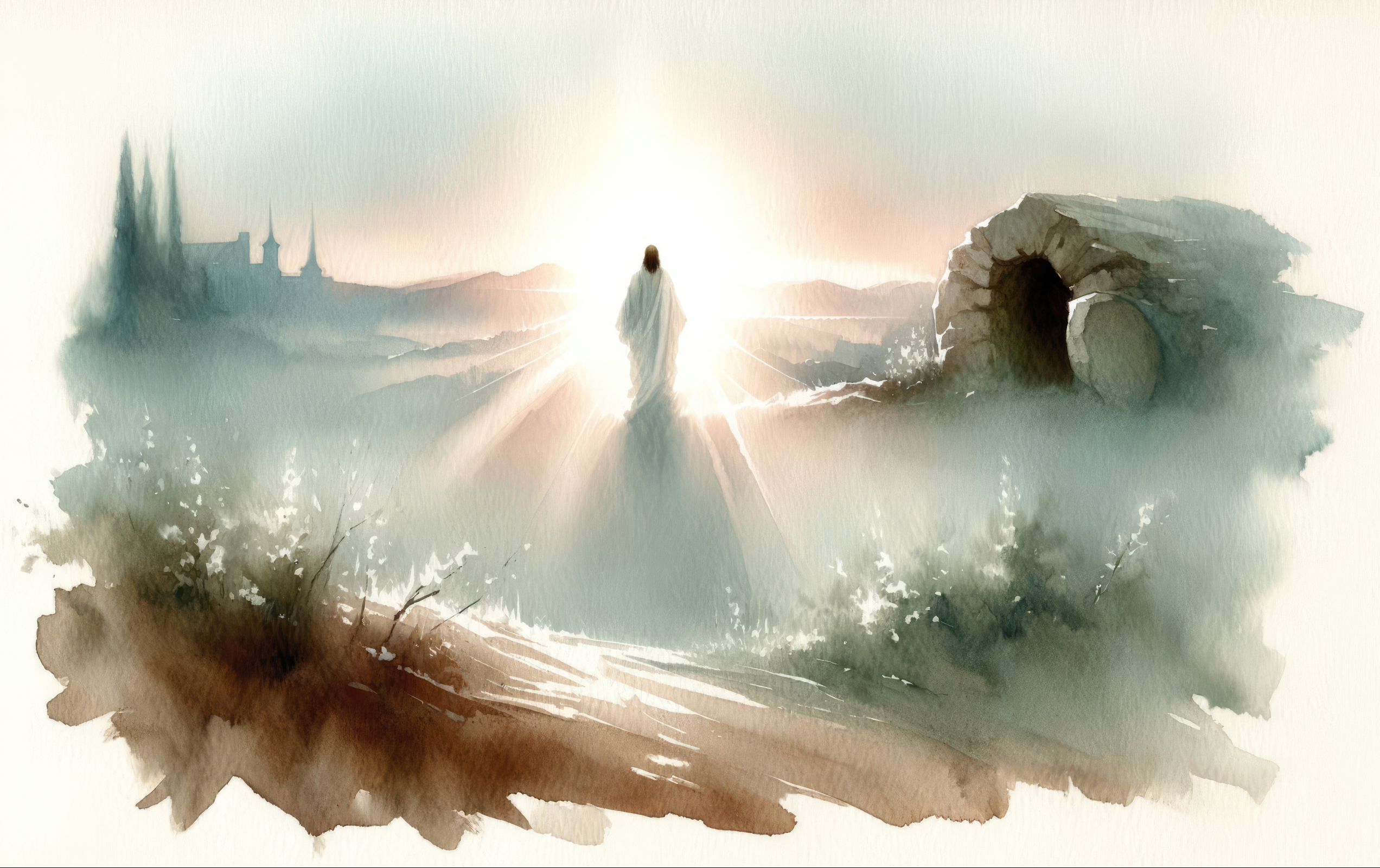
That’s why John doesn’t say what all the signs are pointing to until after Jesus’ death and resurrection. Those seven signs point to the most important, eighth sign – Jesus’ dying and rising. On the cross, Jesus’ glory shines brightest (Jn. 12:23-24). He takes your sin and your shame. And the empty tomb is what seals the deal. Christ died and raised Himself to life (Jn. 10:17-18) so you can know that all sickness, sin, death, and fear; all pain, sorrow, and sadness; all trouble, toil, and tribulation will be done away with forever. That’s the solid foundation.

Mary Magdalene sees the risen Jesus and worships (Jn. 20:11-18). The fearful disciples see and rejoice (Jn. 20:19-20). Unbelieving Thomas has his disbelief melt into the declaration, “My Lord and my God!” (Jn. 20:28). Christ’s resurrection proves more than every other sign because it shows that Jesus is where you find far more than temporary blessings. Jesus is where God gives you grace upon grace (Jn. 1:16) and manifests God’s saving love for you (Jn. 1:18).

The signs John writes down to strengthen and encourage your faith weren’t tricks. They aren’t fables or nice stories. They’re evidence. Faith in Christ isn’t a blind leap. John’s signs are rooted in history, witnessed by real people. Their initial doubts actually bolster our faith. Most of the eyewitnesses of Jesus chose to die rather than denying Him and the things He did because Jesus proved that He is the Son of God.

Believe, and have life in Jesus’ name (Jn. 20:31). Jesus has defeated sin, death, and the devil. He is the sure, sturdy foundation on which you can build your entire life. Jesus is the Christ. In a crumbling world, you have a Savior who has come to restore all things and make them new (Rev. 21:5).

You can build your entire life on the foundation of Christ. The cross and resurrection are the sure cornerstone. A life built on that is no flimsy shed. It’s a fortress. Trust Jesus because, in Him and in Him alone, you have life – eternal, abundant life in His almighty name. Amen.

Alleluia! Christ is risen! 
He is risen indeed! Alleluia!

The peace of God, which surpasses all understanding, will guard your hearts and minds in Christ Jesus. Amen.
Living Redeemer – Sermon on Job 19:23-27 & Mark 16:1-8 for the Resurrection of Our Lord

Job 19:23-27 & Mark 16:1-8 

Alleluia! Christ is risen! He is risen indeed! Alleluia!

In the name of Jesus. Amen.

Imagine someone plopped a thousand piece puzzle in front of you – not the box with the picture of the final product, just the thousand pieces. Those pieces sit in front of you, and the person says, “Put it together.” Sure, it would be daunting at first, but you’d start using your brain and logic. Maybe, you’d start searching for the corner and edge pieces. Once they’re sorted out, you start to fit all the boarder together. Then, you’d start looking at the colors. You continue to sort the pieces out, match the ones with the same color, find the right fits. You’d start to see that this matches with this and that matches with that. You’d see how this one piece has blue on one side and green on the other side and, yup, it fits with that one.

So long as you kept at it, there’s nothing that would stop you from eventually solving that puzzle. Sure, it might take really long time, but you’d figure it out. All puzzles are solvable when you have enough determination, information, and time.

Too often, we approach life as though it’s all a big puzzle to be solved, and we don’t have a picture of the final product. But we still think that if we can just figure out this then that will fall in place. We imagine that finishing this thing will make that portion easier. We try arranging the pieces of finances and family, school and career, the busy schedule and the need to rest. Sometimes, it feels like you make progress; sometimes, you’re completely stuck and confounded. A new problem pops up over here, and the pieces doesn’t seem to fit in quite the right way. 

That’s the wrong approach to life. Life is not a puzzle for you to figure out and solve with enough logic and time and effort. Instead, your life is a mystery. Mysteries are different from puzzles. Mysteries are things that you can’t figure out. It doesn’t matter how much information you have, how many details you know, or how much you piece together. Mysteries can’t be solved with logic. We can’t use our reason to get everything to fit nice and neat into a complete picture. With mysteries, you might get periodic glimpses of potential solutions, but final solution always seems to be just beyond your grasp.

When Job was suffering all the horrible things that did, he approached his life as a puzzle. He thought that if he could just get enough information that everything would make sense and fit together. But the information Job needed wasn’t available to him. It was hidden in what was taking place in the heavenly council (Job 1:6-122:1-6Jer. 23:18-22).

When we read the book of Job, we get information that wasn’t available to Job. We have the 30,000 ft. overview of what is happening. We get to know what’s going on behind the curtain. We have a window into all the things that God is doing. The whole time of his suffering, we know why Job had all these crosses placed on him. But Job – he never knows. He never gets told. He just trudges through his pain and suffering. He is simply experiencing a life that is filled with trouble, and all Job can do is slog through it.

Even though we might not suffer the same things Job suffers or to the same degree or for the same reasons that Job suffers, we are like Job. We can only live our lives one moment at a time. You can only go through the experiences of this life by living in them. And you don’t always get to know why certain things happen. You don’t get to know why the one you love died. Why you lost our job. Why your kids are misbehaving. Why your parents are so unreasonable and unbending. You don’t get to know why everything happens. And the book of Job is a great reminder that God doesn’t owe us an answer to the why. God isn’t obligated to show us the picture on the box of a puzzle. He doesn’t need to precisely because He hasn’t given you the responsibility of piecing all the parts of your life neatly together. That’s nor your job. It’s not what God has called you to do.

Instead, God has given you something far, far better. God has given you the assurance that He’s given you a Redeemer, and not just any redeemer. God has given you a living Redeemer who can place all the jagged corners and complex pieces of your broken life into one big, grand masterpiece.

Dear saints, God has given you His promise that, at the last, you will stand upon the earth with your Living Redeemer, Jesus Christ, in the new heavens and earth. You will stand resurrected in the kingdom of God when all sorrow and sighing have been put away for eternity.

That’s God’s promise, and His promise is worth believing. Job had that faith as he was going through all the things that he suffered. God gave Job the faith to know and believe that his Redeemer lives.

Those verses you heard from Job’s lips today (Job 19:23-27) have become so connected to Jesus’ resurrection – probably because of the hymn. And, yes, we’ll sing it near the end of the service. But the fact that these words are so connected to Easter makes it easy to forget that Job spoke those words thousands of years before the eternal Son of God took on flesh.

Even then, Job knew that he had a Redeemer, and that faith was what carried Job through his horrible suffering. But what Job believed back then is even more true now than when Job confessed it.

You have a Redeemer who not only lives, but who died and now lives again and forevermore. You have a Redeemer who marched straight, right into the jaws of death and the grave. And He has come out on the other side alive. Your Living Redeemer is the same Redeemer that Job confessed. That Redeemer was living when Job confessed and trusted and He lives even more assuredly now.

So, when life seems like a puzzle, when it seems like you have to figure all sorts of things out and piece it all together in just the right way, forget about it. Instead, listen to what the angel says to the women on the morning of the resurrection. “Do not be alarmed. You seek Jesus of Nazareth, who was crucified. He has risen” (Mk. 16:6). In other words, “Your Redeemer lives. He is not here. And your Living Redeemer is going before you” (Mk. 16:7). This is still true.

Your Living Redeemer has gone before you to death and the grave. He has also gone before you to the resurrection and life eternal. And your Living Redeemer continues to go before you each and every day of your life.

So, no matter what you go through, no matter what puzzling trials, tribulations, and sufferings you face, Jesus has already gone before you through all of them. Your living Redeemer is the first fruits of the resurrection (1 Co. 15:20). He stepped before you and did what was needed. He bore all of your sins upon His cross. He went to His grave to sanctify your grave. He walked out of that grave alive. And you will too.

Jesus has won and purchased your forgiveness. All your sins – all of your envy, malice, and laziness; all of your unwillingness to help others, all of your attempts to dodge responsibilities, and all of your attempts to make excuses for your failures and the pain you have caused others – all of it is forgiven. All of it can be blotted out.

None of that sin can stand next to your Living Redeemer, but you can. You can stand with Him because all of that sin has been dealt with and laid aside by His perfect forgiveness.

Faith in Jesus, your Living Redeemer doesn’t just give you the picture on the lid of a thousand piece puzzle so you can put it all together yourself. Instead, it makes you see further, beyond the puzzle.

The confusing, dark, and evil complexities of this life, they’re all fading away, because the light is coming. The sun of a new, eternal day is rising. Your Redeemer lives. And at the last, so will you. Amen.

Alleluia! Christ is risen! He is risen indeed! Alleluia!

The peace of God, which surpasses all understanding, will guard your hearts and minds in Christ Jesus. Amen.

No Nonsense – Sermon on Luke 24:1-11 for the Vigil of Easter

The bulletin for tonight’s service can be found here.

Luke 24:1-11

1 But on the first day of the week, at early dawn, they went to the tomb, taking the spices they had prepared. 2 And they found the stone rolled away from the tomb, 3 but when they went in they did not find the body of the Lord Jesus. 4 While they were perplexed about this, behold, two men stood by them in dazzling apparel. 5 And as they were frightened and bowed their faces to the ground, the men said to them, “Why do you seek the living among the dead? 6 He is not here, but has risen. Remember how he told you, while he was still in Galilee, 7 that the Son of Man must be delivered into the hands of sinful men and be crucified and on the third day rise.” 8 And they remembered his words, 9 and returning from the tomb they told all these things to the eleven and to all the rest. 10 Now it was Mary Magdalene and Joanna and Mary the mother of James and the other women with them who told these things to the apostles, 11 but these words seemed to them an idle tale, and they did not believe them.

Alleluia! Christ is risen! 
He is risen indeed! Alleluia!

In the name of Jesus. Amen.

With all the reverence and respect that I can give to them, the angels that appear the morning of the resurrection are a bit sassy. These women had left early, even before the sun had started to peek over the horizon. So, they probably hadn’t gotten themselves ready like they would on any other morning. They just tossed on some clothes and grabbed the bundles of spices as they went out the door to walk through that dewy, morning air. They went intending to finish the job of burying Jesus. But when they arrived at the tomb, they find it. The stone – rolled away. The body of Jesus – gone. So, they stand there totally disheveled and utterly perplexed.

These two angels that stand in front of them look completely different. The angels are clothed in dazzling apparel. They look at these tired women with their bundles, and it’s almost like the angels are thinking, “Oh, for cute. These women with their bundles of spices. What do they think they are going to do here?”

And one of those angels asks his sassy question, “Why do you seek the Living One among the dead? He’s not here. He is risen. Remember what He told you while He was still with you in Galilee? The Son of Man had to be delivered into the hands of sinful men, crucified, and on the third day rise. By the way, ladies, that’s today.” It’s like that angel is saying, “This shouldn’t be too difficult for you. He told you all about this.”

And it’s at that point that these women – Mary and Mary and Mary and Mary (there were lots of Marys) and Joanna and Salome – they remember that Jesus had said that He would rise. Only then did they remember those words of Jesus.

So, they ran back to tell these things to the eleven apostles and all the others who were gathered together. Luke doesn’t record the conversation between the women and the rest, but he makes it very clear (it doesn’t come out in our translation) that there was an ongoing conversation. “As they were speaking about these things to the apostles” (Lk. 24:10). 

Luke only leaves us to imagine what this conversation would have sounded like. But the women probably told them all about the angels and their dazzling apparel and about the other sassy angel who had come down to sit on the stone and dance on the grave of death (Mt. 28:2-3). They would have told them how the angel reminded them what Jesus had said about that dying and rising stuff.

But the words of these disheveled, frantic, crazy women sounded delirious. The apostles figured it was nothing more than an idle tale and a bunch of nonsense. What they had seen on Good Friday was too devastating. They figured the women hadn’t gotten enough sleep and should have set their alarm clocks for a little later.

And that reaction to the women’s report is a huge comfort to us today. They should have believed the whole time, even as Christ hung on the cross. But the fact they initially thought it was all nonsense bolsters our faith.

Because as that day rolled on, Jesus would appear to two of them on the road to Emmaus (Lk. 24:13-32). Jesus would appear to Peter (Lk. 24:34). That evening, Jesus would appear to all of them as they sat locked in the upper room (Jn. 20:19-22). Jesus would eat in front of them and show them His pierced hands and side (Lk. 24:38-43).

The women weren’t spewing a bunch of nonsense. It wasn’t an idle tale. As that day wore on, their disbelief melted away into belief. And that belief would strengthen into boldness. And that boldness would mature into courage.

What first had sounded like an idle tale and a bunch of nonsense to the apostles slowly became an undeniable certainty. Jesus died but lives. And now, because He lives, death would have no hold on them because it had no hold on Jesus. Death was no longer their enemy, because their Savior, their Lord, their Jesus, had defeated death.

As the years passed, almost all of those – who, initially, thought that the Resurrection was just a bunch of nonsense, just an idle tale of tired and confused women – they would, one by one, refuse to deny the fact that Jesus had risen. They would not deny that the One who had died is now living. They would rather give up their own lives because it wasn’t nonsense. Jesus is the Living One who gives everlasting life to all who believe in Him.

Dear saints, the day is coming when all the perplexities of this world and of your life will not be perplexing anymore. In that day, this fact will remain certain, firm, and sure – Jesus is risen. It is no nonsense. Amen.

Alleluia! Christ is risen! 
He is risen indeed! Alleluia!

The peace of God, which surpasses all understanding, will guard your hearts and minds in Christ Jesus. Amen.

Forsaken – Sermon on Mark 15:33-35 for Good Friday

Mark 15:33-35

33 And when the sixth hour had come, there was darkness over the whole land until the ninth hour. 34 And at the ninth hour Jesus cried with a loud voice, “Eloi, Eloi, lema sabachthani?” which means, “My God, my God, why have you forsaken me?” 35 And some of the bystanders hearing it said, “Behold, he is calling Elijah.”

In the name of Jesus. Amen.

On Good Friday, our Lord Jesus Christ suffered in three distinct ways. And it’s helpful to distinguish and contrast them. The three kinds of suffering are 1) physical suffering, 2) suffering the shame, and 3) the suffering of forsakenness.

We know what it is to have physical pain. We’ve all experienced it. Maybe not to the extent that Jesus did, but we’ve all had physical pain. You scrape your knee, get your finger caught in a door, or just sleep or sit wrong. Physical pain is something we naturally try to avoid. The physical pain of the cross was, without a doubt, excruciating for Jesus. But His physical pain was not what won your redemption and salvation. Physical pain was not the price that Jesus had to pay.

If Jesus’ physical pain won your salvation, then you and I have the same capacity to suffer physically as Jesus did. Plenty of people were beaten, whipped, and crucified in Jesus’ day, but their physical suffering didn’t save them.

We also know what it is to experience shame. The shame Jesus endures in His Passion is also horrible. He was spit on. The soldiers placed robes on Him, put a crown of thorns on Him, and bowed down to Him as they mocked, “Hail, King of the Jews.”

He was blindfolded and punched as people asked Him to prophesy, “Who was it that hit you?” People walked by the cross wagging their heads, saying, “You saved others. You don’t seem to be able to do anything now. You trusted in God, where is He now?” That’s the shame of the cross. And yet, the shame Jesus suffered is also not what wins your salvation. Other people have suffered similar shame.

But there’s that third suffering. It’s a hidden suffering, but it is the one that’s most profound of all. We get a glimpse of it in this fourth word of Jesus, “My God, My God, why have You forsaken Me?” That’s the greatest suffering of the cross.

In that moment, Jesus is suffering all the wrath of God over sin. He’s suffering all of God’s anger that you and I deserve. 2 Corinthians 5:21 says that Jesus, who knew no sin, was made to be sin for us, so that in Him we could become the righteousness of God.

In other words, all of the anger, all of the wrath, all of the punishment, and the separation from God that you and I deserve – it all falls on Jesus. He suffers all of that as our sins are laid on Him. In that moment, God is looking down at Jesus, and God does not see the Son whom He loves. Instead, God only sees sin and all the things that He hates and abhors.

In that moment, God the Father forsakes Jesus and pours out all of His wrath onto Christ. This why Isaiah says that Jesus is smitten, stricken by God, and afflicted (Is. 53:4). All of God’s righteous anger falls on Jesus. When Jesus says these words, “My God, My God, why have You forsaken Me?” that is what is taking place.

The most profound word of that prayer from Jesus’ lips is, “Why?”Christ doesn’t pray, “My God, My God, You have forsaken Me.” Instead, it’s, “Why? Why have You forsaken Me?” And this is a real, honest question. Several times throughout His life Jesus denies using His divine knowledge and omnipotence. This is one of those times. For those moments, even the purpose of Jesus’ suffering is hidden from Him.

This wasn’t always the case. When He was nailed to the cross, Jesus knew what He was doing there. That’s why He said, “Father, forgive them.” God can’t forgive without the cross. Jesus knew what He was doing on the cross when He told the thief, “Today you’ll be with Me in paradise.” And in just a few minutes Jesus shows that He knows again why He’s there when He says, “It is finished.”

But here, right in the middle of the crucifixion as Jesus cries out, “Why have You forsaken Me?” He temporarily denies His knowledge of what He is doing there. The point of it all is hidden from Him.

In that moment Jesus has nothing. Nothing to cling to. No hope. No comfort at all. He doesn’t have the comfort of knowing that He’ll be raised on the third day. He doesn’t have the comfort that this is happening for your salvation. In that moment, all Jesus knows is that He’s suffering all of God’s wrath against sin even though He’s done nothing wrong or sinful.

That is the suffering that wins your salvation. That suffering of being forsaken by God that Jesus is enduring here is beyond our comprehension.

We can see the beating and the whip. We can see the crown of thorns. We can see the shame and hear all the mockery. We can see the nails. But what you can’t see is the thing that matters most. The vengeance and wrath of God towards sinners is all poured out on Christ.

That’s the reason. That’s why Jesus goes to the cross. He goes there so that you will never see this wrath. So that you will never know this suffering under God’s righteous judgment. So that you will never know what it is to be forsaken by God. 

Jesus says, “My God, My God, why have You forsaken Me?” so that you never have to.

Dear saints, you will never have to say that because God will not forsake you. He has promised (Heb. 13:5-6). He will not leave you alone in your sin. He doesn’t let your sin and guilt remain because Jesus has taken it and has suffered for it in your place.

That’s the suffering that wins and accomplishes your salvation. It is a suffering that we can’t imagine. And, Christian, because of Jesus, you never will. Jesus is your substitute. He pushes you out of the way of God’s wrath so that wrath hits Him and not you.

“My God, My God, why have You forsaken Me?” As He said that, Jesus didn’t know. But, dear saints, you do. You know the answer. He was forsaken by God so that you will be not only accepted, but also loved as God’s redeemed child for all eternity. Amen.

The peace of God, which surpasses all understanding, will guard your hearts and minds in Christ Jesus. Amen. 

The Medicine – Sermon for Maundy Thursday

The Scripture readings for tonight’s service are Exodus 12:1-141 Corinthians 11:23-32; and John 13:1-1534-35.

In the name of Jesus. Amen.

When a doctor gives you a prescription for medicine, it doesn’t really matter if you understand how the medicine works. It doesn’t matter if you understand how that medicine is made. You don’t need to know exactly what that medicine does in your body. The only thing that matters is that the doctor who says, “Take this. It will heal you,” is right and that you actually take it.

Tonight, your Savior, Jesus Christ, the Great Physician, has a prescription for you, and it is the medicine of immortality.

So, we have to ask, “Is Jesus’ Word trustworthy?” Yes; absolutely yes! The power of Jesus’ Word is seen when He created everything (Jn. 1:3). In the beginning, God spoke, “Let there be light,” and there was light (Gen. 1:3). The power of Jesus’ Word is on full display throughout His life. When Jesus says something, it happens – always. When He speaks to paralytics, “Take up your bed and walk,” that powerful Word heals limbs that didn’t work (Mk. 2:11-12Jn. 5:8-9), and it happens. When Jesus says to the wind and waves, “Peace, be still,” (Mk. 4:39), it happens. When Jesus hands the disciples five loaves of bread and two fish to the disciples and says, “Use this to feed thousands of people,”(Lk. 9:16), it happens. When Lazarus has been dead in his tomb for four days and Jesus tells him, “Lazarus, come out,” (Jn. 11:43-44), he does. There’s no question that Jesus’ Word is powerful and does exactly what Jesus says.

So, when Jesus says to you tonight, “Take eat; take drink. This is for you for the forgiveness of sin,” does His Word have the power to forgive? Yes. When Jesus says, “This is My Body; this is My Blood,” does His Word have the power to make the bread and wine His Body and Blood? Yes. Do we have to understand how it works? No. Not at all. If Jesus wanted us to understand the how, He would’ve told us. But He didn’t, so we simply believe His Word.

Sure, it seems strange that eating and drinking the elements of Communion would do something spiritual like forgiving sin. Most of the things we eat are for physical benefits. We eat to fuel our body and give it the nutrients, vitamins, and minerals it needs. But eating food and having it do something spiritual sounds strange. But it shouldn’t. Remember how sin and death entered the world? Through eating the forbidden fruit. That eating was the sin that brought about both physical and spiritual sickness, death, and separation from God that has spread like a virus to all humanity (Ro. 5:12). God had warned Adam that would happen (Gen. 2:17), and God’s Word proved true (Gen. 3:6-7). So, when Jesus, the Son of God, promises that this meal will forgive sin (Mt. 26:28), His Word is also trustworthy and true.

A quick disclaimer before I go on here: I’m not a doctor, so what I’m about to say isn’t intended to be medical advice. Talk to your own healthcare professional.

When you get an ear infection, a doctor will prescribe an antibiotic to target and kill the bad bacteria. But those antibiotics will also kill the good bacteria in your gut that you need to properly digest food. When a doctor prescribes an antibiotic, he might also advise you to take a probiotic to keep all the biotics [sic.] in your body in balance. So, when you have a bacterial infection, you might end up taking two things – a prescription of antibiotics and a supplement of probiotics. Again, that’s not medical advice; talk to your healthcare provider.

Tonight, your Great Physician gives you one medicine, but it does two things. First, it fights off and rids you of the infection of sin through forgiveness. And second, it bestows, grants, and gives life. This one medicine of Jesus’ Body and Blood does both.

Listen to what Jesus says about this medicine in John 6. Jesus says that He is the living bread that comes down from heaven, so that you may eat of it and not die (Jn. 6:50). Christ says that when you eat this bread, you will live forever(Jn. 6:51). Jesus says that whoever eats His flesh and drinks His blood has eternal life (Jn. 6:54) because His flesh is true food, and His blood is true drink (Jn. 6:55). Christ says that by this eating and drinking, you abide in Him and He abides in you (Jn. 6:56).

In other words, this medicine kills your sin through forgiveness, and it nourishes and strengthens you so you love others in the same way as Jesus did. One of the prayers we use to thank God for what He gives in Communion highlights this. It goes, “We give thanks to You, Almighty God, that You have refreshed us through this gracious gift, and we ask that in Your mercy You would strengthen us through [this meal] in faith toward You and in fervent love toward one another.”

Holy Communion strengthens your love for others because it joins you to Jesus and Him to you. And this joining of you and Jesus results in love for others. And the love that Jesus has for His disciples, which is beautifully demonstrated in our Gospel reading (Jn. 13:1-1534-35) is a humble, sacrificial, self-giving kind of love. Think of it. The One who had shaped Adam from the soil (Gen. 2:7) now stoops to wash the soil from the feet Adam’s sons (Jn. 13:5). The One who powerfully yet intricately placed all the galaxies, stars, and planets into orbit now kneels with a water basin and a rag. The medicine of the Lord’s Supper pours that kind of love into you and strengthens you to give that same love to others. And by you having that same kind of love, Jesus says that all people will know that you are His disciples (Jn. 13:35). 

So, whenever you feel your sin, come. Receive this medicine. Whenever your love grows cold, come. Receive this medicine. 

Medicine always has a cost, and so does this medicine. But Jesus, your Great Physician, foots the bill. He absorbs the entire cost. Christ fully pays for it so you can receive it gratis. Tomorrow, you’ll hear Jesus cry out on the cross, “My God, my God, why have You forsaken Me?” (Mk. 14:34). That was the cost, and it is completely covered by Jesus.

Dear saints, you have a Great Physician who heals, who forgives, who strengthens, who increases your love, and who gives you the medicine you need to lead you unto life everlasting. Amen.

The peace of God, which surpasses all understanding, will guard your hearts and minds in Christ Jesus. Amen.

Follow – Sermon on Matthew 26:1-27:66 for Palm Sunday

Matthew 26:1-27:66 & John 12:12-19

In the name of Jesus. Amen.

Most of you here today have known the story of Jesus’ life for as long as you can remember. For that, God be praised! You know that the Palm Sunday welcome will quickly move to the bitter account of Jesus’ Passion that we just finished reading.

But imagine that you didn’t know. Imagine attending our service and hearing all of this for the first time. Imagine all of it was new. You hear about Jesus being welcomed into Jerusalem with the shouts of, “Hosanna,” as He rides into Jerusalem on a donkey. Then, not even half an hour later, you hear about Jesus’ crucifixion. You might wonder, “What changed? How did this turn around so quickly? Why are the people who were shouting, ‘Hosanna, blessed is he who comes in the name of the Lord,’ now shouting for Jesus to be crucified?”

Hearing all of this for the first time would probably be shocking to you. But, again, you know the story of Jesus’ life. You know how it begins with Jesus being born in Bethlehem. You know how it ends with Jesus’ resurrection and ascension. Jesus knew this too.

As He rode into Jerusalem on that day nearly 2,000 years ago, Jesus knew. He knew that the palm branches that were being waved to welcome Him as the king would be followed by the whip that would be waved across His back. Jesus knew that the shouts of, “Hosanna,” would soon turn to shouts of, “Crucify.” Jesus knew that the jackets across the road would morph into the soldiers, gambling for His clothes. Riding into Jerusalem on a donkey, Jesus knew that He would ride out of Jerusalem lifeless and laid on a bier. We don’t know if Jesus heard the Pharisees saying, “The whole world is going after him.” But Jesus knew that, in a few short days, almost everyone would turn their back on Him. Christ knew that, soon, it would be just a couple of men – Joseph of Arimathea and Nicodemus (Jn. 19:38-40) – and a few women who would lay Him in the tomb.

Jesus knew all of this as He triumphantly went into Jerusalem. He wasn’t surprised by anything that happened the following Thursday or Friday. That was the reason He went into Jerusalem. Christ wasn’t surprised by the change between that Sunday and Friday. He went knowing exactly what was going to happen, knowing exactly what was going to take place, knowing that He would be betrayed, knowing that Judas mark Him as the one the soldiers should arrest, knowing that Peter would deny Him, knowing that His disciples would flee.

Jesus knew all of it. He knew that he would suffer. He knew that He would be mocked. He knew that He would be ridiculed and beaten. He knew that He would be stripped. He knew the crown of thorns would be pressed onto His head and nails driven through His hands and feet. Jesus knew all of this. Christ knew that the reason He was going to Jerusalem was so that He could suffer, die, and rise again for you (Lk. 18:31-33).

Jesus knew that He was going to bear all of humanity’s sins before God, the Judge. Jesus – the perfect, sinless Son of God, who knew no sin – He became sin so that you, through faith, might become the righteousness of God (2 Co. 5:21). And Jesus followed through with His Father’s plan to save you.

Conceivably, we could plead innocent of all the injustices that Jesus faced – the betrayal, the denial, the false accusations, the beating, the whipping, the mocking, the scorning. We weren’t there. We didn’t do those things to Him. We would probably not be convicted of killing of Jesus before any earthly judge and jury. We could honestly say that we weren’t shouting, “Crucify, crucify Him!” We weren’t calling for Barabbas to be released and innocent Jesus be crucified. We weren’t daring God by calling for the guilt Christ’s blood to be upon us and upon our children.

Dear saints, we could say Jesus did not die because of us, but please believe that He dies for us. He goes to the cross on our behalf and in our place. Isaiah says that the Lord laid on Jesus the iniquity of us all (Is. 53:6). That leaves no doubt, no question, we – you and I – are why Jesus is on the cross.

Yet, that isn’t the entire story either, is it? Out of His love for you, Jesus willingly went to the cross. He went for the joy that was set before Him (Heb. 12:2) – the joy of winning you as His own.

The eternal Son of God did not count equality with God a thing to grasp at all costs. Instead, He emptied Himself and took the form of a servant. He was born in the likeness of men. In other words, God Himself was willing to be seen in your flesh and blood. But Jesus went lower. He humbled Himself by becoming obedient to the point of death, even a cursed (Gal. 3:13) cross kind of death (Php. 2:5-8) so that you could be reconciled to Him. Dear saints, have that same mind of Christ.

Even as the whip followed the palm branches; the shouts of, “Crucify,” followed the, “Hosannas”; the gambling for Jesus’ clothes followed the coats laid out on the road; let us also follow Jesus this Holy Week.

Follow Him to the upper room, where He gives His Body and Blood for the forgiveness of sins (Mt. 26:26-28). Follow Him to His trial, where He is falsely accused. Follow Jesus out to the hill of Golgotha, where He is forsaken by God (Mt. 27:46). Follow Jesus as He goes to the tomb, but let’s not stop there either.

Continue to follow Jesus out of the tomb, out of death, out of all that we deserve because of our sins. Follow Jesus, having His mind, having His humble attitude, having received His gracious love and mercy by faith. Follow Him and extend His humble, sacrificial love to others until that great day when every knee shall bow and every tongue confess that Jesus Christ is Lord. Amen.

The peace of God, which surpasses all understanding, will guard your hearts and minds in Christ Jesus. Amen.

Telos (Why We Exist) – Sermon on Ecclesiastes 12:1-14 for Midweek Lent 5

The Scripture readings for tonight’s service are Psalm 111:1073:24-2619:14Ecclesiastes 12:1-142 Corinthians 5:6-8; and John 6:28-29.

In the name of Jesus. Amen.

Throughout your life you will have different goals at different times. When you return home from the grocery store, your goal is to bring all the groceries into the house. And even that goal gets subdivided. You have to get everything that needs to go in the refrigerator or freezer or cupboards in their proper places. At work, you have different goals. You have to finish that task, talk to that client, meet that deadline. In school, your goal might be to finish that assignment, read that chapter, and study for the test or quiz. After you eat, the goal is to put all the leftovers away, do the dishes, and tidy up.

When I started this Lenten series, I had a goal of introducing you to Ecclesiastes and the Holy Spirit-inspired wisdom contained in it. The goal was never to exhaust and cover everything there is to learn from the book. Now that we’re in our final week of it, I’ve done the best I could to give you a taste. The thing about goals on this side of eternity is that there’s always more to do – more things to be completed, more tasks to be done, more goals to reach.

Hopefully through this series, you’ve seen some of the ways that God delivers joy – both in your work and in your leisure. This life is fleeting. It’s like a breath – not ‘vain,’ as it’s often translated. Life like a breath. It’s here one moment and gone the next, and you can’t put the various moments of life in your pocket only to deal with them when you decide. So, take the moments God gives you to work and let your goal be to do what God gives you to do. Take the moments God gives you leisure and let your goal be to enjoy His blessings.

Tonight, we come to the end of Ecclesiastes, Solomon talks about “the end of the matter” (Ecc. 12:13). He says, “Everything has been heard,” and this is the conclusion, “Fear God and keep His commandments, for this is (lit.) the all of man” [sic.].

The Greek translation of that phrase, “the end of the matter,” uses a word that is really useful (and that I would like to popularize). The word is ‘telos.’ It’s the final thing Jesus says on the cross when He cries out, “It is finished”(Jn. 19:30). The word ‘telos’ simply means ‘the end, the purpose, or the goal.’ An Olympic athlete’s telos would be to win a gold medal. To reach or attain that telos, that athlete is going to work really, really hard. They’re going to train hard, eat right, get enough rest, and all the other things that an athlete needs to do to reach that telos of winning a gold medal.

Throughout Ecclesiastes, Solomon described all the different ways he tried to find joy, the ways he tried to find pleasure, the ways he tried to find fulfillment, but those things did not give him joy because simply squeezing pleasure out of life isn’t why God created him or you. Accumulating pleasure isn’t the telos of mankind. Instead, the end goal, the purpose of life, the reason you exist, your telos is 1) to fear God and 2) to keep, guard, or observe His commandments. Without that, you are not what God intended you to be. You might have some fleeting, pleasurable experiences along the way, but those pleasures won’t last because they can’t, not without the fear of God.

Now, when the Bible talks about ‘fearing God,’ it is often a synonym for faith, for rightly believing and trusting in God. A right fear of God is to believe that what God has said is good and right and true. To fear God is to believe that God is the One who will judge us for what we have done. To fear God is to believe that God is working on us to make us what He wants us to be.

But we sinners didn’t want that. Instead of fearing and believing God, we chose our own way. We decided to rebel against Him. We decided to try to be more than God’s creatures. We tried to be like God. In that sinful idolatry, we broke God’s good creation. The good news is that God did not leave us in that brokenness. Instead, He sent Jesus to be our Redeemer and atone for the sin of the world. God gave His only begotten Son to bring us back into harmony with Him and with creation. And the Holy Spirit now uses God’s Word to make us holy. He continues to shape us into Christ’s image. The Holy Spirit leads and guides us on the way to our telos, to be God’s creatures. In other words, He brings us back into alignment with what God had intended for us from the beginning of creation.

Your telos is that God wants you to receive from His hand all the blessings that He gives to you and to receive those things with a good, right, clean conscience. That’s the summary of the book of Ecclesiastes and, ultimately, all of Scripture.

Look at our Gospel reading (Jn. 6:28-29) again. The crowd who had eaten their fill of the five loaves and two fish asks Jesus, “What must we do to be doing (or ‘working’) the works of God?” They want to know the things that God requires of them so that they can do those things and please God. But Jesus’ answer isn’t a long list of things for them to do. Instead, it’s singular. Jesus says that there is only one work of God. That one work of God is to believe in Jesus whom He has sent (Jn. 6:29). And that work is something that God does.

Faith is God’s gift. Ephesians 2:8-10 says, “For by grace you have been saved through faith. And this is not your own doing; it is the gift of God, not a result of works, so that no one may boast. For we are his workmanship, created in Christ Jesus for good works, which God prepared beforehand, that we should walk in them.”

So, when Solomon says here that the telos of humanity is to fear God and keep His commandments, he is saying nothing more than what Jesus says. To be doing the work that God wants us to do is to believe in Jesus, and receive what God gives us. We hear from God’s Word, and we believe as the Holy Spirit works faith within us. This, and only this, makes us right with God and with God’s creation. 1 John 3:23 says, “This is His commandment that we believe in the name of His Son Jesus Christ, and love one another, just as He has commanded us.”

Dear saints, your telos, your goal, your purpose is nothing more than to 1) believe in Christ and 2) to open your hands to receive everything else God gives you.

The only way to reach your telos and be rightly ordered is to believe and trust that Jesus has redeemed you. Next week, Holy Week, we will hear how He has paid the price for all of your sins. You will hear how He can rightly and justly remove you sins from you as far as the east is from the west (Ps. 103:12). Only Jesus can make you righteous before God. And Jesus then sends you back into the world so you can live righteous in relation to the rest of creation as you order your life according to God’s will as it is expressed in the Ten Commandments.

Through faith in God’s goodness, fully and freely given to you in Jesus, you reach your telos. Through faith in Christ, you are exactly what God intended you to be, rightly oriented toward your Creator and toward the rest of His creation. Amen.

The peace of God, which surpasses all understanding, will guard your hearts and minds in Christ Jesus. Amen.

A Good Day – Sermon on Genesis 22:1-14 for the Fifth Sunday of Lent

Genesis 22:1-14

1 After these things God tested Abraham and said to him, “Abraham!” And he said, “Here I am.” 2 He said, “Take your son, your only son Isaac, whom you love, and go to the land of Moriah, and offer him there as a burnt offering on one of the mountains of which I shall tell you.” 3 So Abraham rose early in the morning, saddled his donkey, and took two of his young men with him, and his son Isaac. And he cut the wood for the burnt offering and arose and went to the place of which God had told him. 4 On the third day Abraham lifted up his eyes and saw the place from afar. 5 Then Abraham said to his young men, “Stay here with the donkey; I and the boy will go over there and worship and come again to you.” 6And Abraham took the wood of the burnt offering and laid it on Isaac his son. And he took in his hand the fire and the knife. So they went both of them together. 7 And Isaac said to his father Abraham, “My father!” And he said, “Here I am, my son.” He said, “Behold, the fire and the wood, but where is the lamb for a burnt offering?” 8 Abraham said, “God will provide for himself the lamb for a burnt offering, my son.” So they went both of them together. 

9 When they came to the place of which God had told him, Abraham built the altar there and laid the wood in order and bound Isaac his son and laid him on the altar, on top of the wood. 10 Then Abraham reached out his hand and took the knife to slaughter his son. 11 But the angel of the Lord called to him from heaven and said, “Abraham, Abraham!” And he said, “Here I am.” 12 He said, “Do not lay your hand on the boy or do anything to him, for now I know that you fear God, seeing you have not withheld your son, your only son, from me.” 13 And Abraham lifted up his eyes and looked, and behold, behind him was a ram, caught in a thicket by his horns. And Abraham went and took the ram and offered it up as a burnt offering instead of his son. 14 So Abraham called the name of that place, “The Lord will provide”; as it is said to this day, “On the mount of the Lord it shall be provided.”

In the name of Jesus. Amen.

In most of our interactions with people, we typically give more weight to their commands than we do to their promises. In other words, we take commands seriously but promises, not so much. We’ve grown accustomed to people who over-promise but under-perform.

When your boss tells you he wants a certain task completed by the end of the day, that carries a lot of weight. But when your boss promises that he’ll consider your request for a new chair as soon as possible, you anticipate that there will be delays and excuses and figure you’ll probably have to ask several more times. Sadly, even children learn this. Parents will command their children to do certain things, but then when a child asks their parents to consider getting a puppy, a parent responds, “Sure, I’ll think about it,” but that may or may not happen.

The worst part of this is how it clouds how we consider God’s Word. God’s Word is consistent. His promises carry same weight as His commands. What God promises always happens. You can count on it. He is the Lord; He has spoken, and He will do it (Ezk. 24:14).

That helps us understand a little better what’s going on in this text. The biggest hurdle we have to understanding this text is the question, why is God commanding Abraham to do this? Why command the human sacrifice of Isaac? Last week we talked about the tests that God gives, and this is clearly a test. God is testing Abraham here, and this is probably the most difficult test recorded in Scripture. (Who knows? Maybe Job would argue with that statement.) 

The reason God tests always to strengthen faith. He doesn’t test you to see if you have enough willpower or inner strength. Instead, God tests faith to make it stronger. God’s tests increase steadfastness (Jam. 1:2-4), endurance, character, and hope (Ro. 5:3-5). One pastor put it nicely when he said that God gives tests to strengthen our “givable-to-ness.” His tests open us up so we can receive from God’s hands the abundance He wants to give us.

God had been making promises to Abraham for years prior to this. God called Abraham to leave his land and people (Gen. 12:1-3) so God could make a great nation out of him (Gen. 15:1-6). When Abraham was 99 years old, God promised to give Abraham a son through his wife Sarah – even though she was 90 and past the age of having children (Gen. 17:15-16). God kept giving promises. Just before this reading, God promised that Isaac would have children, and through Isaac’s children all the families of the earth would be blessed (Gen. 21:1218:18).

But now, God commands Abraham to offer Isaac as a burnt offering. God’s promise that Isaac would have children is in direct contradiction to God’s command that Isaac be sacrificed. So, what is Abraham to do? Should he believe God’s command or God’s promise? The answer is to believe both, and Abraham does. Hebrews 11:19 says, that Abraham believed that God would raise Isaac from the dead. Abraham believed God’s promises and commands – even when God’s promise and command appeared contradictory.

Now, to the text. God doesn’t just say, “Go sacrifice Isaac.” No. God lays it on thick. “Take your son, your only son Isaac, whom you love.” That, dear saints, is the first time the word ‘love’ is used in the Bible. “Take your son, your only son Isaac, whom you love, and go to the land of Moriah, and offer him there as a burnt offering on one of the mountains which I will show you.”

Abraham knew that all the animal sacrifices in the Old Testament pointed to the fact that God would accept the death of another in the place of the sinner. Abraham and all the believers in the Old Testament believed that those sacrifices were pointing forward to the Savior God had promised (Gen. 3:15) who would die in their place (Heb. 9:12).

This sacrifice (or ‘near sacrifice’) of Isaac might be the clearest portrayal of what God would do through Christ. The whole thing is parallel to what Jesus would do. Abraham is to offer his son, just like God the Father, is to offer up His beloved son, Jesus (Jn. 3:16). It takes three days for the thing to take place (Gen. 22:4Lk. 24:46). Isaac, like Jesus, carries the wood to the place where he is to be the sacrifice (Gen. 22:6Jn. 19:17). The ram that gets offered in place of Isaac is crowned with thorns (Gen. 22:13Mt. 27:19). 

When Abraham sees that ram caught in the thicket by its horns, which doesn’t happen to rams, Abraham recognizes that ram is to be sacrificed instead of Isaac. God has put that ram there, and God will accept the death of that ram in the place of Isaac. But the ram is not the actual substitute. That ram points to Jesus as the sacrifice in place of Isaac and Abraham and the whole world and for you.

Through this whole thing, God is giving Abraham an insight into what God will go through when He offers up Jesus as the sacrifice for the sin of the world.

Dear saints, as we move into Holy Week, we’re going to hear a lot of sad things. Next week, Palm Sunday, we’ll hear the Passion of Christ from Matthew. We’ll hear about the betrayal, beating, whipping, crucifying, and dying of the eternal, beloved Son of God. There will be no substitute for Jesus. He will die, and this is serious and sad like this offering of Isaac was for Abraham. But notice how Jesus talks about all of this. When Jesus spoke of Abraham in our Gospel reading today, our Lord says, “Abraham saw my day and was glad” (Jn. 8:56). Abraham rejoiced.

Abraham saw what God would do in giving His only begotten Son on the cross, and he rejoiced. Dear saints, in the days that are coming up, you’ll hear all that Christ did. Yes, it’s sad and somber, but the greatest expression of faith is that you would be glad and happy about this. Receive it all with a thankful and joyful heart. God loves you, so He loves to do this for you.

Tenali, today you are Baptized. Jesus is the one who has taken your place. This is reason to rejoice all the days of your life. Live a life filled with rejoicing in the fact that Jesus is your substitute. Tenali, and all you saints, remember that Jesus endured all His suffering with joy. It was for the joy that was set before Him that Jesus endured the cross, despising the shame (Heb. 12:2).

Joy isn’t only for Easter. Joy is found in all Christ has done for you. You have a substitute. You have a Savior. Good Friday, a glad day, indeed. Amen.

The peace of God, which surpasses all understanding, will guard your hearts and minds in Christ Jesus. Amen.

The Joy of Life with a Clean Conscience – Sermon on Ecclesiastes 9:1-10a for Midweek Lent 4

The Scripture readings for tonight’s service are Psalm 32:1-511Ecclesiastes 9:1-10aTitus 3:3-7; and John 10:7-10.

In the name of Jesus. Amen.

I know we’re making a big jump forward in the book of Ecclesiastes. Last week was Ecc. 3 and we’re leaping all the way to Ecc. 9. But the wisdom here in Ecc. 9 continues what we covered last week. Again, to briefly recap from last week, God makes all things beautiful (‘pleasant, right, fitting’) in their given time (Ecc. 3:11). In last week’s sermon, I intended to spend a little time on what we had in last week’s Gospel reading (Mk. 12:41-44) about the widow and her offering. I didn’t get to it last week. I know it isn’t in front of you tonight, but that text sets up tonight very well.

Jesus and His disciples go to the Temple. The impression Mark gives is that they basically go there to watch people put their offering into the box. A widow comes and puts in two small copper coins, and Jesus says that widow put in more than everyone else because she put in everything she had to live on (Mk. 12:44).

Normally, those two copper coins wouldn’t catch anyone’s attention. They were the lowest valued coins used in Jesus’ day. Each of them was just over a half inch in diameter, and they aren’t even as pleasant-looking as our pennies today. They didn’t have a person’s profile stamped on them, just a simple design. (If you’re interested in seeing what they looked like, I can show you a picture of them after the service.) Those coins aren’t flashy and made of gold or silver. They were just a couple slivers of copper. But even though those coins weren’t anything to look at, they became beautiful in their time as the widow put them in to offering box.

Again, everything is beautiful, pleasant, right, fitting in its proper time time (Ecc. 3:11-12). The fact that everything is beautiful in its time sets up these verses tonight. Christian, this text is the key to unlock a life filled with joy.

Look again at Ecc. 9:7, “Go, eat your bread with joy, and drink your wine with a merry heart (or that could be translated ‘a good conscience’), for God has already approved what you do.” Does anything about that verse surprise you? “God has already approved what you do” (or ‘your works’). Christian, this is only true for you who have a cleansed conscience (Heb. 9:14). This is not the case for unbelievers. They do not have a pure or cleansed conscience. They do not have God’s approval. Only those who have faith in Christ have God’s approval. As our Psalm said, “Blessed is the one whose transgression is forgiven, whose sin is covered. Blessed is the man against whom the Lord counts no iniquity, and in whose spirit there is no deceit” (Ps. 32:1-2).

Christian you are blessed because, when the goodness and loving kindness of God your Savior appeared, He saved you, not because of your works, but according to His own mercy as He washed you in holy Baptism and renewed you by the Holy Spirit. Now, justified by that grace of God, you are an heir of God (Tit. 3:3-7). 

Dear saints, you are part of the royal family of God and an heir of all that belongs to God, which is… everything! And as heirs, you receive all the royal gifts that God gives, and those gifts are 1) your work and 2) your leisure. This verse (Ecc. 9:7) is an application of Ro. 8:1, “There is therefore now no condemnation for those who are in Christ Jesus.” So, “Go, eat your bread with joy, and drink your wine with a merry heart, for God has already approved your works.”

Dear saints in Christ, God approves of your work even before you start doing it. Back in college, I had a good friend who was always stressed, always trying to figure out God’s will for his life. He wanted to make sure he was pursuing a career that would be pleasing to God. But if an opportunity didn’t open up right away, he would get frustrated and try another thing and another thing and another. Every time he’d switch paths, he had to start from scratch – new schooling, new training, new job, etc. It was hard to watch. Sadly, I didn’t understand this verse well enough to tell him, “Look, buddy. You are in Christ. You belong to Him. You are His child and His heir. God already approves what you do.” Since I couldn’t tell him this back then, I’m telling you now.

You don’t need work that is more meaningful or prestigious or powerful. You don’t need to seek out some secret plan God hasn’t revealed to you. God isn’t up in heaven watching your every step and throwing up His hands in frustration when you miss some imaginary, unmarked path that He’s set out for you. No! Whatever God puts in front of you to do, do it. Do it, and know that God approves of it, or He wouldn’t have given you that opportunity in the first place. Also know that, in Christ, God absolves, He forgives, He wipes away any of your failures you will commit in that work even before you begin it because He already approves what you do. In other words, the stakes are really, really low!

Creation doesn’t hang on how well you do your work. So, no. You don’t need to be stressed out all the time trying to figure out God’s secret will or plan for your life. God’s will for you is that you do the thing He gives you to do. And know that He is already pleased with your work, even before you begin it. This fact gives you joy as you work and as you have those God-given moments of leisure.

Moving on to Ecc. 9:8, “Let your garments be always white. Let not oil be lacking on your head.” This isn’t literal. It isn’t as though God is giving you a dress code and a grooming routine. Think of it this way: generally, when do people wear white garments? Usually, at some festive celebration. Brides wear white on their wedding day. White is the color of joy and celebration. The same thing is true for oil on your head. You can think of this as perfume. When would a woman put on her special perfume, or when would a man put on expensive cologne? Only on special occasions. Especially in Solomon’s days, you’d wear white and don special perfume at the high points of life.

Here Solomon says, “Go ahead. Let your garments always be white and wear perfume. Don’t just wait for special occasions to rejoice. Treat each day – whether you’re working, eating, or drinking – as a reason to rejoice.” Or, at Paul puts it, “Rejoice always” (Php. 4:41 Th. 5:16). Because of the forgiveness you have in Christ, every moment (whether you’re working or relaxing or celebrating something) it’s all a time to rejoice.

And Ecc. 9:9, “Enjoy life with the wife (you can think ‘spouse’) whom you love, all the days of your [not ‘vain’ but] fleeting life.” When you enjoy something by yourself, that’s good. But it’s even better to enjoy the blessings of this life with the one you love. Beauty and joy are multiplied by sharing them with someone else. Shared enjoyment is enhanced enjoyment. 

Finally, Ecc. 9:10a, “Whatever your hand finds to do, do it with all your might.” Whatever God gives you to do today, right now, is worth doing with all your might. Give it all you’ve got. Go full-throttle. Do it with enthusiasm and gusto. It’s energizing to be around people who have a zest for living. That enthusiasm is infectious – in a good way. When people complain and whine and slack off, it drags everyone down to their level of misery. But when even one person enjoys what they’re doing, it spreads.

All of this joy that comes from eating and drinking, from constantly celebrating, from enjoying life with your spouse, and from working zealously – it can only come from a good conscience.

You have that, believer. Dear saints, God has forgiven you in Christ. God-given joy comes from being given a merry heart which, again, could be translated as a ‘clean’ or ‘good conscience.’ This clean conscience comes only from your Savior, Jesus Christ. And in Christ, God already approves your works because He approves of and delights in you. That confidence is your joy. Amen.

The peace of God, which surpasses all understanding, will guard your hearts and minds in Christ Jesus. Amen.