Serving the Body – Sermon on Romans 12:6-16 for the Second Sunday after Epiphany

Romans 12:6–16

6 Having gifts that differ according to the grace given to us, let us use them: if prophecy, in proportion to our faith; 7 if service, in our serving; the one who teaches, in his teaching; 8 the one who exhorts, in his exhortation; the one who contributes, in generosity; the one who leads, with zeal; the one who does acts of mercy, with cheerfulness. 

9 Let love be genuine. Abhor what is evil; hold fast to what is good. 10 Love one another with brotherly affection. Outdo one another in showing honor. 11 Do not be slothful in zeal, be fervent in spirit, serve the Lord. 12 Rejoice in hope, be patient in tribulation, be constant in prayer. 13 Contribute to the needs of the saints and seek to show hospitality. 

14 Bless those who persecute you; bless and do not curse them. 15 Rejoice with those who rejoice, weep with those who weep. 16 Live in harmony with one another. Do not be haughty, but associate with the lowly. Never be wise in your own sight.

In the name of Jesus. Amen.

When you stub a toe, your whole body reacts. Your face scrunches and grimaces in pain. Your arms and hands reach down to clasp the toe. Your throat groans, shrieks, or shouts. All of that happens naturally and instinctively. When you stub your toe, the rest of the parts of your body don’t say, “Who cares? That’s the toe’s problem.” I’ve never heard someone with knee, hip, or neck pain say, “The knee that is attached to me hurts,” or, “The neck that holds up this head hurts.” Instead, people say, “My knee hurts. My neck hurts.” And the whole body does what it can to help the part that hurts.

Dear saints, the Body of Christ is no different. When one part of the body suffers, the whole body is involved in that suffering. When one part rejoices, the whole body is involved (see also 1 Cor. 12:26). Being part of this congregation isn’t just about coming to hear the sermon. It’s about being a body, Christ’s Body. No one here is free to consider yourself separate or independent from anyone else here.

The reason I mention the Body of Christ is that today’s reading continues from last week’s. One time, Martin Luther preached on this text, and he said that starting the reading at v. 6 was the idea of someone who doesn’t understand the Bible. I think that’s an overstatement, but it is unfortunate to start at v. 6. Let me reread the final couple verses of last week’s Epistle, which lead up to this text but you didn’t hear today. Starting back at Ro. 12:4-5, “For as in one body we have many members, and the members do not all have the same function, so we, though many, are one body in Christ, and individually members one of another.” Then, our text continues, “Having gifts that differ according to the grace given to us, let us use them….”

The context of today’s text is that you are a member of a body – that’s what Christ intends for you. Yes, the whole Christian Church throughout the world and throughout time is the Body of Christ. Jesus is the One Head, and all Christians are the Body. But there’s no way this matters unless there is a local, in-person group of members. In other words, a congregation. Yes, there are Christians in Australia, Uganda, Brazil, and even Iowa. But you aren’t close enough to them geographically to do much for them. I know for a fact that there are Christians in Papua New Guinea because I know missionaries who have been there. But I haven’t met a single one of those believers. For them, I can’t do most of the things this text calls for. I can’t exhort, teach, or honor them. I can’t rejoice with them when they rejoice or weep with them when they weep. It’s just not possible.

This text wants each believer to focus on the parts of the Body of Christ that God has gathered around them. In other words, care for the people here, in this congregation. That’s why this is written to the Christian church in Rome. It’s why Paul uses the same analogy in his letter to the church in Corinth (1 Cor. 12). And God wants this same arrangement for us here and in every Christian congregation. That’s why it has been preserved for us in the Bible. God wanted this in Rome and Corinth 2,000 years ago, and He wants it here, now, among us.

And I have to say: You do a good job of this. When I teach new member classes, one of the most common things I hear is, “This place just feels like family.” So, please know that I’m not preaching this text to get on your case. I’m not rebuking you. Instead, just like a sprinter will keep training to get a faster time, there is always room for improvement.

We can improve at serving, contributing, leading, being merciful, loving, abhorring evil, holding fast to the good, honoring, and showing hospitality. Let’s consider one area where we can improve today from v. 15, “Rejoice with those who rejoice, weep with those who weep.” The reason for diving into this is that I recognize my own shortcomings in this. So, yes, your preacher today is preaching to himself. This is a, “Do as I say,” because it is what Scripture says, “not as I do,” because I fall short here.

Again, “Rejoice with those who rejoice, weep with those who weep.” First off, notice the prepositions there – with. God calls you to take on the joy and sadness of others. You aren’t called to fix people’s emotions or make them feel certain things. Instead, you join them in those emotions. As a poor example of this, think of Job’s friends; they got it half right. Job is sitting there in his horrific suffering, and his friends come to him. They were exactly right to do that. That’s where they should be. But their problem, which becomes a problem for Job, is that they try to fix everything, and they do an incredibly bad job at it.

Sure, there are times to rebuke, exhort, and encourage people. Scripture does call for that too (1 Tim. 5:20; 2 Tim. 4:2; Tit. 1:13; 2:15). But, dear saints, there are also times where you are to simply close your mouth, sit with others, cry and mourn with them if they’re sad, or jump and sing with them if they’re joyful.

This can be really hard, and for a variety of reasons. Again, we might be too quick to give advice, but another trap we easily fall into is comparing. When someone is struggling with something, it can be easy to share about a past struggle we had and make sure the other person knows how much worse we had it. Sometimes, just being there and listening to a person pour out their heart in sadness is exactly that that person needs.

As a good example of weeping with others, think about Jesus in Jn. 11. On Wednesday night, I taught through Jn. 11 where Jesus raises Lazarus from the dead. We won’t go through the whole thing, and I’m sorry to those of you who already heard this. But it’s worth hearing again. Jesus’ approach to Lazarus’ two sisters, Martha and Mary, and their grief is so interesting. Each sister talks to Jesus separately (Jn. 11:20-27, 32-34). Both of them say the same thing to Jesus when they see Him, “Lord, of You had been here, my brother wouldn’t have died.” But Jesus’ interaction with each of them is completely different.

So, the two sisters are dealing with the exact same problem – the sorrow for over the death of a brother. They both begin interacting with Jesus the exact same way. But Jesus comforts each of these sisters differently. For Martha, Jesus has words of consolation. “Your brother will rise again. I am the Resurrection and the Life” and so on (Jn. 11:23, 23, 25-26). But just a few verses later when Jesus consoles Mary, all He does is go to the tomb with her and weep with her (Jn. 11:33-35). Yes, Jesus calls Lazarus from the tomb and restores his life. But it’s that initial consoling Jesus has for each sister has a lot to teach us.

Here’s the lesson: get to know the different parts of Christ’s Body well enough so you know how to weep with them when they weep. If they’re already weeping, just be there for them. Join them in their sorrow. But when they aren’t weeping, make the effort to get to know them well enough so that, when they are weeping, you have a better idea of how to console them.

Finally, when you are weeping, know that people might not be able to do this well. But also know that Jesus does. Christ knows how to give you exactly what you need exactly when you need it. Jesus is here now. He invites you to His table to receive His Body and Blood. Here, Christ, the Great Consoler, continues to unite you as His Body and strengthen you in faith toward Him and in love toward one another. Amen.

The peace of God, which surpasses all understanding, will guard your hearts and minds in Christ Jesus. Amen.

Discern – Sermon on Romans 12:1-5 for the First Sunday after Epiphany

Romans 12:1–5

1 I appeal to you therefore, brothers, by the mercies of God, to present your bodies as a living sacrifice, holy and acceptable to God, which is your spiritual worship. 2 Do not be conformed to this world, but be transformed by the renewal of your mind, that by testing you may discern what is the will of God, what is good and acceptable and perfect. 

3 For by the grace given to me I say to everyone among you not to think of himself more highly than he ought to think, but to think with sober judgment, each according to the measure of faith that God has assigned. 4 For as in one body we have many members, and the members do not all have the same function, 5 so we, though many, are one body in Christ, and individually members one of another.

In the name of Jesus. Amen.

You will be changed. Please note how that was worded. It isn’t, “You will change,” even though that’s true. It wasn’t, “You must change,” as though this is all up to you. According to this text, you will be (passively) changed. Here, you are given a passive command, which we can’t really translate well into English. What we have there in v. 2 could be translated, “Do not become conformed to this world, rather become transformed by the renewal of your mind.”

In other words, there are things that are going to mold, shape, and change you. But there are some things that should not do that, and there are some things that should.

First, don’t allow the world to change you. The word there is, actually, ‘age.’ “Do not become conformed to this age.” This age isn’t only this world; it’s also the demons, forces of evil, and the culture that pull on you. Our age seeks to conform you to itself. We’ll talk about things like peer pressure and, maybe, even societal pressure. We are to resist those. But we are also to resist the demonic pressure and self-imposed pressure to fit in with this evil age. All those things of this age try to press, pull, form, and mold you like you’re Silly Putty. 

Hopefully, enough of you have played with Silly Putty for this analogy to work. You can easily make Silly Putty do all sorts of things. My siblings, cousins, and I would play with Silly Putty at my grandparents’ home in Faith, SD. We’d take it out of the red egg container and roll it into a bouncy-ball and play catch. When we got tired of that, we’d smoosh the puddy into a flat oval, press it onto the newspaper ink, peel it off, and stretch out the letters and pictures left on the putty. You can make Charlie Brown’s head look even more ridiculous with a blob of Silly Putty. When we got tired of manipulating a particular smudge of ink, all we had to do was simply push, roll, and re-flatten the putty, and it was ready to do another one. The ink from each image never actually left the putty; instead, it just got absorbed into it.

A lot of Christians have allowed this age to work on them like putty. And there are all sorts of reasons they allow it. Maybe they don’t want to be laughed at, so they’ll go along with the theory of evolution and try to make it fit with the account of creation. It doesn’t. It can’t, but they try anyway. Maybe they don’t want to be considered a fundamentalist, so they will compromise on all sorts of things like marriage, sexuality, abortion, and whatever. Here, Paul says, “Don’t. Don’t do that!”

When you allow this age to press and pull and stretch you in different ways, you are in a dangerous place. Just like I’d get bored bouncing a Silly Putty ball around, this age will try to conform you into all sorts of things for all sorts of uses. And just like the ink never really leaves a blob of putty, some of the ways this age will play around with you will stick with you your entire life. Christian, don’t let this age play around with you as though you’re a blob of Silly Putty.

I just need to add here: This world does change you in ways that are fine. There are plenty of lessons to learn from people and organizations that aren’t necessarily Christian, but be careful with them. Have your filter up. Keep in mind what Php. 4:8 says, “Finally, brothers, whatever is true, whatever is honorable, whatever is just, whatever is pure, whatever is lovely, whatever is commendable, if there is any excellence, if there is anything worthy of praise, think about these things.”

All that being said, you are to allow change to come from other places. “Be transformed by the renewal of your mind.” What does that mean? We might wish that Paul had said, “Be transformed by keeping the Ten Commandments,” or, “Be transformed by praying at such-and-such a time.” That would be a lot easier to understand and do. But that’s not what Scripture says here. You aren’t given a set of instructions to do or accomplish. Instead, you’re given the result of this transforming. This transforming results in the renewal of your mind, and it results in an ability to discern the will of God. God wants you, as time goes by, to get better and better at testing and figuring out His will, which is good, acceptable, and perfect/complete.

Sometimes, we’ll talk about the Ten Commandments as God’s will, what He desires us to do. And that is true. God’s will is that you have no other gods, use His name rightly, keep the Sabbath, honor your parents, not kill, not commit adultery or steal or lie or covet. That’s God’s will – plain as day. But none of that takes discernment to figure out. God has clearly said it. “Thou shalt not murder.” When you get angry at someone and want to harm them, you don’t have to discern if you should or not. Don’t do it!

When Scripture says here that you should allow yourself to be transformed so that you can discern God’s will, it’s saying that there are times when God’s will is for you to do something or not do something, but He hasn’t clearly, explicitly said what His will is. Instead, you’re going to have to discern what you should do. Yes, the Commandments are there to help and guide you, but the Commandments don’t address every decision you have to make day by day.

For example. Let’s say your kids are behaving poorly. What should you do? There isn’t a Commandment that definitively addresses that. So, should you discipline them and make sure they feel your wrath? Do you go by Pro. 13:14, “Whoever spares the rod hates his son, but he who loves him is diligent to discipline him”? Maybe. That might be the most godly, loving thing you can do. Or, should you be patient with your kids? Should you follow Col. 3:21, “Do not exasperate your children, lest they become discouraged”? Should you pause, take a step back, patiently talk with them, try to understand what’s going on? Again, maybe. That might the godly, right thing to do.

How do you know which to pick – discipline or patience? The Bible says both are good. How do you navigate it? God has a will for that situation, but He hasn’t explicitly spelled it out in the Bible. God hasn’t said, “When thy child flips out after you deny their request for candy at Hugo’s in East Grand at 12:34 PM on Jan. 12th, 2025, here’s how you handle it. But if it’s at Ace Hardware, here’s how you handle it.” God has ways He wants you to live, but it might be difficult to know how to handle each particular situation that comes up moment by moment, day by day.

Should you give money to that person on the corner by Sam’s Club? Should you watch that show or movie? Here’s a good one: Should you engage with that comment on social media? Ha! Proverbs 26:4 says, “Answer not a fool according to his folly, lest you be like him yourself.” But in the very next verse, the Bible says, “Answer a fool according to his folly, lest he be wise in his own eyes.” You’ve got two verses back-to-back saying, “Don’t do it,” and, “Do it.” So, how do you know what to do?

I can’t tell you. No one can. In His wisdom, God has made these decisions challenging for us and require us to grapple and test and discern what we are to do. In other words, God wants us to do the difficult work of gaining and growing in wisdom. This is what it is to be transformed by the renewal of your mind. This renewal of your mind happens as you read the Bible. The Holy Spirit takes God’s Word and works on you, renewing and transforming you into what He wants you to be.

2 Tim. 3:16-17 says that all Scripture is inspired by God and is there to train you in righteousness that you may be complete, equipped for every good work. In other words, the Bible trains you and renews your thinking and mind. It transforms you. More and more, as time goes on, you are to be filled with God’s Word and bring it to bear in the decisions that are constantly coming at you each day.

This doesn’t mean you have to listen for a voice from heaven and have God directly speak to you. No. Don’t expect God to spell it out like that because that doesn’t take any work. Again, in His wisdom, God has made this more difficult, but that struggle is good for you and for me.

God wants this to be the rhythm of your life. Go about your life, make those decisions, and read the Scriptures. Evaluate how you made those decisions. Maybe, you’ll realize that you did poorly and didn’t do God’s will. Then, repent. Receive God’s forgiveness for that sin. Learn from your mistake. Do better the next time.

Maybe, you’ll realize you did well and that experience will make you better equipped to handle an even tougher decision in the future.

Then, armed with that experience and filled with wisdom from God’s Word, go, live a bit more. Make more decisions, and return again to the Scriptures. Live. Read the Bible. Live. Read. Constantly weave your life and God’s Word together. That work leads to godly discernment. It transforms and renews your mind.

Know that this transforming doesn’t happen very well if the only time you hear the Scriptures is when you’re here at church. Discerning God’s will is a life-long process. It takes work. But don’t forget that this is good work, and it is how God wants to be about His business of continually transforming you. And He isn’t treating you like a blob of Silly Putty. He’s sculpting you, or, even better, He’s metamorphosizing (that’s the word here translated ‘transform’) you into a living sacrifice that is holy and acceptable to God (Ro. 12:1).

Finally, I want to make sure we anchor all of this to the context – both of this passage and the whole book of Romans. Remember this is an appeal, an appeal that is based on the mercies of God. In other words, only Christians who have been freely and completely forgiven of their sins because of what Christ has done – only they can be transformed in this way.

Even with all the discernment you gain from God’s Word, even with a mind that is filled with biblical wisdom, there will be times where you fail to do God’s good, acceptable, perfect will. That’s when you flee again to His mercies, which are new every morning (Lam. 3:22-23). And remember what Scripture said just a few chapters earlier in Ro. 8:1, “There is therefore now no condemnation for those who are in Christ Jesus.” None. Zip. Zilch. Nada. No condemnation.

Yes, grow and be changed by God’s Word. Don’t be conformed to this age. Instead, grow in wisdom, be metamorphosized, and discern. And always know and trust that Christ’s mercy covers you, now and forever. Amen.

The peace of God, which surpasses all understanding, will guard your hearts and minds in Christ Jesus. Amen.
Pleased – Sermon on Luke 2:1-20 for Christmas Eve 2024

Luke 2:1–20

1 In those days a decree went out from Caesar Augustus that all the world should be registered. 2 This was the first registration when Quirinius was governor of Syria. 3 And all went to be registered, each to his own town. 4 And Joseph also went up from Galilee, from the town of Nazareth, to Judea, to the city of David, which is called Bethlehem, because he was of the house and lineage of David, 5 to be registered with Mary, his betrothed, who was with child. 6 And while they were there, the time came for her to give birth. 7 And she gave birth to her firstborn son and wrapped him in swaddling cloths and laid him in a manger, because there was no place for them in the inn. 

8 And in the same region there were shepherds out in the field, keeping watch over their flock by night. 9 And an angel of the Lord appeared to them, and the glory of the Lord shone around them, and they were filled with great fear. 10 And the angel said to them, “Fear not, for behold, I bring you good news of great joy that will be for all the people. 11 For unto you is born this day in the city of David a Savior, who is Christ the Lord. 12 And this will be a sign for you: you will find a baby wrapped in swaddling cloths and lying in a manger.” 13 And suddenly there was with the angel a multitude of the heavenly host praising God and saying, 

14 “Glory to God in the highest, 
and on earth peace among men, with whom he is pleased!” 

15 When the angels went away from them into heaven, the shepherds said to one another, “Let us go over to Bethlehem and see this thing that has happened, which the Lord has made known to us.” 16 And they went with haste and found Mary and Joseph, and the baby lying in a manger. 17 And when they saw it, they made known the saying that had been told them concerning this child. 18 And all who heard it wondered at what the shepherds told them. 19 But Mary treasured up all these things, pondering them in her heart. 20 And the shepherds returned, glorifying and praising God for all they had heard and seen, as it had been told them.

Grace, mercy, and peace is yours this night from God our Father and from our Lord, Jesus Christ. Amen.

The one thing you should learn from Christmas is that God’s greatest, most earnest desire and purpose is to be with you. That’s the “true meaning of Christmas.” Hollywood will give all sorts of other answers about what the “true meaning of Christmas” is – hope, joy, giving, family togetherness, whatever. To one degree or another, those are only related to God’s desire to be with you. Each of those things is only on the fringe of the purpose of Christmas. The birth of Jesus proves that God doesn’t want to be far away or disconnected from you. He wants to be with you. Each day. Every day. God wants to be with you, as close as possible – even within your own heart (2 Co. 1:22).

I say that because of how Luke records the event. The actual birth of Jesus only takes up a tiny fraction of the reading from Luke 2:1-20. In the first five verses, Luke tells us about the census that Caesar Augustus decreed. All the details in those verses – about Augusts, the fact that it was the first registration while Quirinius was governor in Syria, the fact that Joseph was from Nazareth but had to go to Bethlehem, etc. – all of that seems to be there because Luke wants you to know that what he records has been carefully researched. He’s paid attention to the details. He wants you to know that he got all of this exactly right.

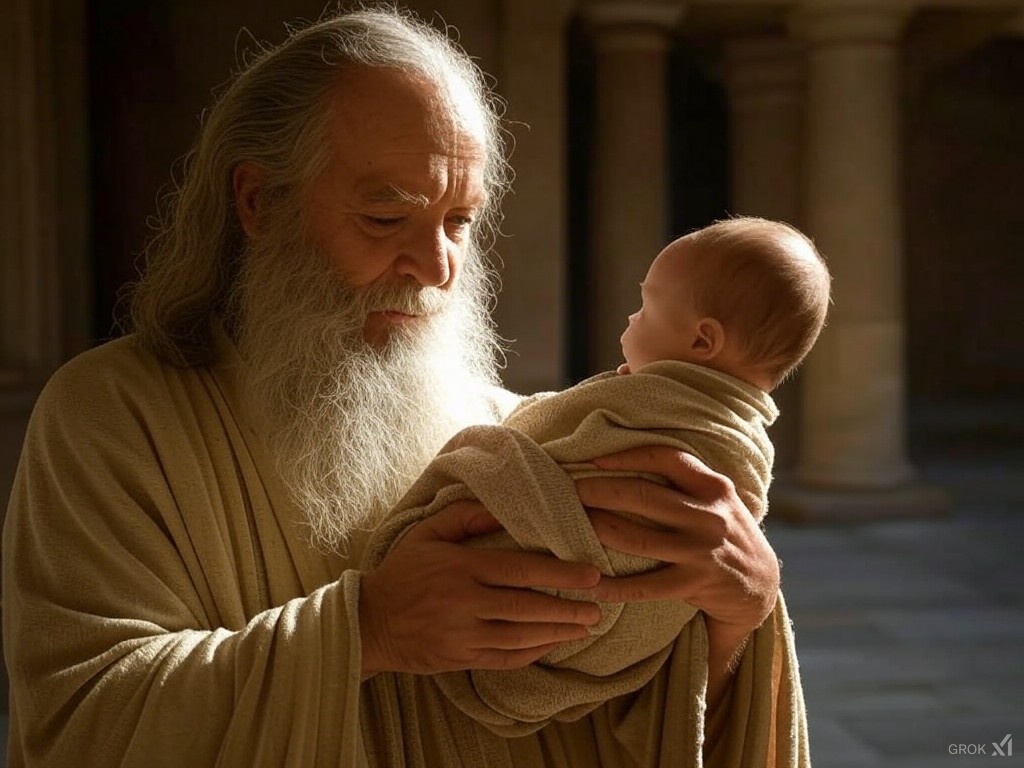
Then, Luke simply records Christ’s birth. It is while Joseph and Mary are in Bethlehem that the time came for her to give birth. She gave birth, wrapped the Infant Jesus in swaddling cloths, and laid Him in the only place available – a manger – because there was no other place for them to be, except in that stable.

It’s remarkable, the way God inspired Luke to write this. The most important thing that has ever happened or will ever happen in all of history – the birth of Jesus – is simply stated. “She gave birth.” That’s it. The thing that gets the most focus, and what we will focus on tonight, is the announcement Jesus’ birth, which starts at v. 8.

Some shepherds are nearby watching over their flocks that night. It was an otherwise normal night for these shepherds. We don’t know how many shepherds there are, but we do know the number of angels that appear to them. At first, it’s one. One angel appears, but that angel isn’t the only thing that appears. The “glory of the Lord” also shines around the shepherds. And because of this, the shepherds are afraid. They are filled with a great (the word in Greek is μέγας), a mega fear. Why?

The source of their fear wasn’t that single angel. No, they are afraid because the glory of the Lord was shining around them. That’s the closest reference to their fear. Why would they be so afraid of God’s glory shining around them? Well, they’re afraid because even though God’s glory is a beautiful and wonderful thing, but it is only wonderful if sin isn’t part of the equation. When there is sin, we can’t stand in God’s presence. In Scripture, sinners are always terrified when they find themselves in God’s presence (Ex. 20:18; Jdg. 13:22; Is. 6:5).

Now, I’ll admit that the text doesn’t mention sin. God didn’t inspire Luke to tell us that the shepherds were filled with mega fear because they remembered that they were sinners. Sure enough. But Luke didn’t need to tell us they were afraid on account of their sin because he records what the angel tells them.

“Fear not, for behold, I bring you good news of great (there’s that word μέγας again). Good news of mega joy that will be for all people. For unto you is born this day in the city of David a Savior, who is Christ the Lord” (Lk. 2:10). 

This angel gives two reasons for the shepherds to not be afraid – the two “for” statements. The first because the angel gives to not be afraid is, “Because I bring you good news of great joy that will be for all people.” The source of this great joy is now (present tense) for these shepherds, but it’s not for the shepherds alone.

The angel makes it clear that this great joy that will be (future tense) for all people. That includes you! The good news was given to those five or ten or however many shepherds then, but the good news of mega joy continues to be given throughout the millennia. What the angel said then still echoes to all mankind, even right now, even as you are hearing it.

The second reason the angel tells them to not be afraid is, “Unto you is born this day a Savior, who is Christ the Lord.” Remember that the shepherds fear because God’s glorious presence makes them keenly aware of their sin, but the angel is quick to announce to them that there is a Savior from sin. So, let’s shorten the entire message from the angel. “Don’t be afraid; you have a Savior. He’s just been born.”

That proclamation is the solution to the shepherds’ fear. For the shepherds, the message was that very night that their Savior is born. For you here tonight, you also have nothing to fear because your Savior was born, about 2,021 years ago.

Every one of you here has a Savior. Maybe, you have believed that as long as you can remember. God be praised! Maybe, you used to believe that, but don’t believe it anymore. Maybe, you’ve never believed it. Your belief or unbelief doesn’t change the fact that your Savior is born, and I’m here tonight to tell you to believe it. Believe it because that’s how it benefits you.

Next, this one angel gives the shepherds a sign as proof that their Savior is born. They’ll find a Baby swaddled up and lying in a manger. And at the end of the text (Lk. 2:16-17), the shepherds find exactly that. There, swaddled up in a feeding trough, was the Savior of the whole world. What the angel announced to those shepherds and what that angel is announcing to you now is true. The sign proves it.

We need to go back, though, to what happens just after the shepherds hear this good news of mega joy. Right after the angel’s announcement, there appears with that one angel a huge army of the heavenly host.

The text doesn’t say that they this angel army came, arranged themselves into a choir, and began to sing. Instead, this army of angels appeared to the shepherds. From this, we are to understand that that massive troop of angels was there in that field the whole time. They just weren’t visible to the shepherds for a period, but now they are. This angelic host was present because they wanted to be there and listen to that one angel announce to the shepherds this good news of mega joy.

Angels aren’t like God. God is everywhere all the time. But angels aren’t; they aren’t omnipresent. But it is true that there are angels all around us even though we can’t see them. The Bible has all sorts of examples of angels being around people, but those people can’t see them (Num. 22:31; 1 Kg. 6:17). The night of Jesus’ birth, that angelic army choir wanted to watch as all humanity receives her King.

That angel army sings, “Glory to God in the highest, and on earth peace among men, with whom He is pleased!”

This song reveals that God is pleased with all mankind. The Greek word there for ‘pleased’ is εὐδοκία. It’s two words combined together. The first part is εὐ, which means ‘good,’ and δοκία, which means ‘thinking.’ In other words, the birth of Jesus proves that God is thinking good toward all humanity – every man, every woman, every boy, every girl. You. Everyone. God is pleased with you, and you can know this because He has sent a Savior to become one of you. That is your peace. Your peace is that you have the goodwill, the good-thinking of God in heaven.

Now, I don’t know all of you here tonight. I don’t know if all of you believe this or not. But I’m here tonight to tell you from God’s Word, from the mouth of God Himself, this message: The eternal, almighty, holy, all-powerful, all-knowing God has come to dwell among you in your flesh and blood to save you from your sin. You can believe it without a doubt.

God thinks good things about you. Even though you have sinned against Him and others whom He loves, God isn’t disappointed with you. God should be. Without a doubt He should be, but He isn’t. He isn’t shaking His head and regretting that He created you. No! He is pleased with you. He loves you. That’s why He comes to save you.

Jesus, God in the flesh, your Savior, has come to you, and that is why the angel choir sings.

Again, each one of you here tonight, if you know anything, know this: God doesn’t want to be far away or disconnected from you. He wants to be with you. Each day. Every day.

Your Savior is born. He is born to shed His blood, to redeem, to ransom, and to rescue you from your sin. God is pleased to save you, to remove your sin and my sin. He has come to remove your guilt and my guilt. That is why and how you can know that God is pleased with you. Amen.

The peace of God, which surpasses all understanding, will guard your hearts and minds in Christ Jesus. Amen.
The Bearing Lamb – Sermon on John 1:19-29 for the Fourth Sunday of Advent

John 1:19–29

19 And this is the testimony of John, when the Jews sent priests and Levites from Jerusalem to ask him, “Who are you?” 20 He confessed, and did not deny, but confessed, “I am not the Christ.” 21 And they asked him, “What then? Are you Elijah?” He said, “I am not.” “Are you the Prophet?” And he answered, “No.” 22 So they said to him, “Who are you? We need to give an answer to those who sent us. What do you say about yourself?” 23 He said, “I am the voice of one crying out in the wilderness, ‘Make straight the way of the Lord,’ as the prophet Isaiah said.” 

24 (Now they had been sent from the Pharisees.) 25 They asked him, “Then why are you baptizing, if you are neither the Christ, nor Elijah, nor the Prophet?” 26 John answered them, “I baptize with water, but among you stands one you do not know, 27 even he who comes after me, the strap of whose sandal I am not worthy to untie.” 28 These things took place in Bethany across the Jordan, where John was baptizing. 

29 The next day he saw Jesus coming toward him, and said, “Behold, the Lamb of God, who takes away the sin of the world!

In the name of Jesus. Amen.

The first few verses of this text are a little frustrating. A bunch of priests and Levites come to John the Baptizer and ask him, “Who are you?” John answers with a negative statement, “I am not the Christ.” I don’t think I’ve ever had a conversation similar to this.

Imagine you’re at, say, your spouse’s company Christmas party. You don’t know many of the people there. You know a lot of names because your spouse talks about all those coworkers, but you don’t really know them. Imagine your spouse is off in a corner talking to those coworkers leaving you with the other spouses of those coworkers. Things are a little awkward, so you try to strike up a conversation with someone. You lean over and ask, “What do you do for a living?” and get the reply, “I’m not the President of the USA.” You’d probably be looking for another conversation. 

That is how John replies. But these priests and Levites have come on a mission. They’ve been sent to figure out just who John is. So, they start aiming at all sorts of targets. “Are you Elijah?” “I am not.” “Ok. Are you the prophet?” “Nope.” “Argh. Who are you? Give us something. We have to give a report.”

Finally, John opens up, “I am the voice of one crying out in the wilderness, ‘Make straight the way of the Lord,’ as the prophet Isaiah said” (Is. 40:3). There, John is doing what he was sent to do; he points people to Jesus. And John keeps talking about Jesus like an excited kid, “Among you stands One you do not know, even He who comes after me, the strap of whose sandal I am not worthy to untie.” Then, the next day, John really gets going. He sees Jesus coming toward him and says, “Behold, the Lamb of God, who takes away the sin of the world.”

That is the most beautiful sermon you could ever hear, but I want to press in on it a little bit more. The words are familiar, but just like all the words of Scripture, there is always more to learn, more glean from those simple words. Today, focus on two of those words “takes away” (in Greek is actually only one word). That translation is a bit vague and nebulous.

You might think that is referring to what Jesus does on the cross, and in a sense, that is right. Jesus brings your sins to the cross and buries them by His death. But what John the Baptizer says here is a lot more specific than our translation makes it sound.

Nearly every English translation uses the phrase, “takes away.” The word there is a common one, and in a lot of places it’s a slam dunk that it means “take away.” In Luke 6:29-30, Jesus uses this word twice. He says if someone ‘takes away’ (same word) your coat, give him your shirt as well, and if someone ‘takes away’ your goods do not demand them back. In the parable of the Sower and the Seed, Jesus talks about the seed that falls along the path and the birds come and take it away (Lk. 8:12).

But this word also can clearly mean ‘to carry’ or ‘bear’ something. Jesus uses it in that way in Mt. 16:24 where He says, “If anyone would come after Me, let him deny himself and take up (there’s the word) his cross and follow Me.” There, Jesus isn’t saying that you should first take away your cross and then follow Him. He means that you pick up your cross, that you bear the weight and load of your cross, and you follow Him. That’s the idea of what John is saying here.

And John uses this word in the present tense. John points to Jesus and says, “Behold, the Lamb of God, who is bearing the sin of the world.” Jesus is the sin-bearing Lamb of God. For about three and a half years, starting at His Baptism and ending on Good Friday, Jesus bore and carried the weight and load of the guilt and sin of humanity.

The Bible talks about your sin and my sin in a lot of different ways: darkness, death, blindness, slavery, debt, alienation from and animosity toward God. The Bible talks about your sin being dirty, stinky, rotten. But here sin is described as heavy, as a weight bearing down on your soul (see also Heb. 12:1). The sins you and I have committed and the sins that have been committed against you, Jesus bears and carries them all.

Maybe, you remember the third verse of the hymn “It Came Upon a Midnight Clear.” 
“And ye, beneath life’s crushing load
whose forms are bending low,
who walk along the climbing way,
with painful steps and slow,
look now, for glad and golden hours
come swiftly on the wing;
O rest beside the weary road,
and hear the angels sing.” 

I just wish that verse was a little more clear about why those glad and golden hours come. They come because Jesus, the Lamb of God who bears the sin of the world, has lifted that crushing load. He has taken those sins and carried them.

That load of sin, that crushing burden, is taken from you by Christ. If you read on after our text, you’ll hear why John can say this. John saw the Spirit descend like a dove and remain on Jesus at His Baptism (Jn. 1:32). From that experience of being the one who Baptized Jesus, John knew that Jesus was the One whom God had promised would crush the serpent’s head (Gen. 3:15). John knew that Jesus was the scapegoat who would bear and carry the sins of all humanity into His grave (Lev. 16:21-22), which is now and forever empty.

John knew Isaiah’s message that God would send One who would bear our griefs, carry our sorrows, and have the iniquity of us all laid on Him (Is. 53:4-5). That One is Jesus. He is the Lamb of God who bears and carries the sins of the whole world.

This call from John is for all of you, for your hears to hear, “Behold the Lamb of God who bears the sin of the world.”

You see, your sin, my sin, all sin, has a place, a location. Sin is either on you, and you have to bear and carry its guilt for all eternity, or that sin is on Christ, the Lamb of God, who has already borne it for you. Why, why, would you keep carrying it? You can, sadly, you can continue to carry your sin. If you refuse to believe in Christ, that burden can remain on you. But that would be, frankly, foolish. Jesus has carried it for you. Believe that, and be unburdened. Through faith, your sin is on Christ, and you are saved.

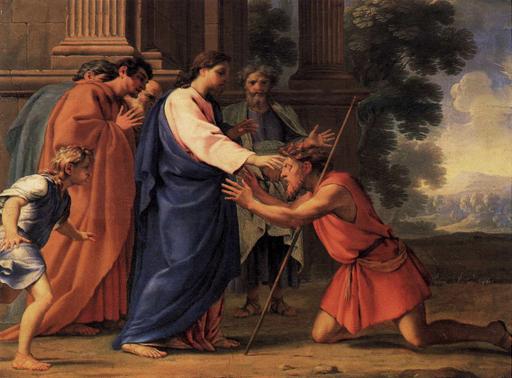
Dear Iris, today you are Baptized. Today, Jesus has joined you to Himself by placing His name upon you (Mt. 28:19). Iris, Jesus, the sin-bearing Lamb of God, has lifted that burden and has now clothed you in His righteousness (Gal. 3:27), and you have been born of God (Jn. 3:3, 5). Iris, continue believing that.

Iris and all you here, know and believe that God is for you. He is on your side. Christ has done what you could not do for yourself. He has borne your sins. He bore, carried, and dealt with them once for all, for you. 

So, be unburdened, Jesus has come to save you by being the sin-bearing Lamb for you. Amen.

The peace of God, which surpasses all understanding, will guard your hearts and minds in Christ Jesus. Amen.

The Fruit of Liberty – Sermon on Isaiah 11:1-5; Romans 1:1-7; and Luke 4:16-21 for Midweek Advent 3

Isaiah 11:1-5; Romans 1:1-7; and Luke 4:16-21

In the name of Jesus. Amen.

Our text from Isaiah 11 tonight (Is. 11:1-5) refers to a shoot, a root, and fruit that will come from a branch rising from an unexpected place – the stump of Jesse. Then, the verses that come immediately after this text (Is. 11:6-10) talk about predators lying down with things that are normally their prey, but none will be hurt or destroyed. Instead, that root of Jesse will be a glorious resting place for all nations. Now, if that portion of Isaiah makes it sound like creation will be restored, you’re hearing it right. All creation will be restored. A harvest of the fruit of liberty will spring from the stump of Jesse.

Our Epistle reading (Ro. 1:1-7) talks about this same Shoot, Jesus, being descended from David. It says that He was declared to be the Son of God in power by His resurrection (Ro. 1:3-4). So, in our reading from Is. 11, we have a picture of hope rising from barrenness, and in our reading from Ro. 1, we have a picture of power from an ancient, kingly line. Now, it might not seem like it at first, but these two pictures are completely compatible.

Many of you know this, but in case you don’t: the Jesse mentioned here in Isaiah was the father of King David. Jesse only does two things in the Bible. In 1 Sam. 16:1-11, Jesse is there when David is anointed to be king after Saul, and he is briefly mentioned in 1 Sam. 17:17-20 when he sends David to see how the fighting is going against the Philistines. David, Jesse’s son, far eclipses his father in the Bible.

That’s why that reading from Isaiah mentions the stump of Jesse and not the stump of David. Isaiah is prophesying that there will be a new David – One who is like David but who will far surpass even what David did. That One is Jesus, who will come and make all things new. The Spirit of God will rest upon Him. The Spirit of wisdom and understanding, the Spirit of counsel and might, the Spirit of knowledge and fear of Yahweh. This Jesus will be a new and greater King, greater even than David was.

King Jesus will judge the poor “with righteousness” (Is. 11:4a). Normally, when we hear about judging, it means to condemn, but here it means that King Jesus will come to make things right for the poor. King Jesus will, “decide with equity for the meek of the earth” (Is. 11:4b). Unlike the ‘equity’ we hear about today, the kind of equity Isaiah speaks about is a good thing. For the meek and powerless – King Jesus will use His power to make things right.

To summarize what Isaiah is saying in that passage: King Jesus is going to do a whole lot more than simply make the world a little bit better. He is going to defeat death and all violence. He will put an end to suffering. He will restore everything to the way it was in the unshattered bliss of the Garden of Eden.

In Luke 2, we see just how far King Jesus will go to rescue the poor. The Son of God was born not like the son of a powerful general in a mansion, or like a prince in a palace. He was born into the family of a poor carpenter in the tiny village of Bethlehem. He will preach, teach, heal, and die. But from the darkness and gloom of His grave, King Jesus will powerfully rise again (Ro. 1:4).

Now, we’re going to change gears a little bit because we have to consider the Gospel reading (Lk. 4:16-21). One Sabbath, Jesus comes to His hometown of Nazareth, where He had been raised as a Child, and He enters the synagogue. Back in those days, they used a lectionary like we do in church. Certain passages of Scripture were read at different times during the year. That day, the reading was from the prophet Isaiah, and it was Jesus’ turn to read. So, the attendant hands Jesus the scroll.

The way Luke records this, it seems like the attendant had unrolled that scroll to the reading for that day, but Jesus turned the page (I know that’s not how it works with a scroll, but you get the idea), and Jesus reads from a different passage. What He reads is mostly from Isaiah 61:1-2, which was understood to be about the Messiah. The themes of what Jesus reads are very similar to our text from Isaiah 11 tonight, but they are different.

Now, if you read Is. 61:1-2, you’ll see that Jesus does something very interesting. He reads, “The Spirit of Yahweh God is upon Me.” Remember that’s what happened at Jesus’ Baptism. The Holy Spirit descended like a dove and rested upon Him (Mt. 3:16; Jn. 1:33). He continues, “Because [Yahweh] has anointed Me.” The Hebrew word there is the where get our word ‘Messiah,’ and in Greek it would be ‘Christ.’ They both mean ‘anointed one.’ For what purpose did God anoint Jesus?

Jesus keeps reading, “To proclaim good news to the poor. He has sent Me to proclaim liberty to the captives and recovering of sight to the blind.” That part about the blind is actually from Is. 42:7 which is a few inches above what He was already reading. Then, Jesus goes back to Is. 61, “To set at liberty those who are oppressed, to proclaim the year of Yahweh’s favor.”

Then, with the reading finished, Jesus rolls up the scroll, hands it back to the attendant, and sits down, which is how they would preach in those days. (When I get older and more frail, we’ll remember this and get a preaching chair for me.) The eyes of everyone in the synagogue were fixed on Him. They’re holding their breath to hear what He will preach. But before we consider what He preached, we need to realize something.

This likely took place about one year into Jesus’ ministry. The people had heard that He had been Baptized in the Jordan. They knew that He had turned water into wine, cleansed the Temple, and had done many miracles. They hoped that He would do some of those miracles now, here in His hometown (Lk. 4:23). But Jesus doesn’t. He just sits and preaches this message: “Today this Scripture has been fulfilled in your hearing.”

There’s more interaction that takes place between the congregation and Jesus that we didn’t hear tonight. But, when Jesus is done preaching, the people drive Him out of the synagogue, out of the town, out to a cliff, and are ready to toss Him over the edge to kill Him. Now, I know I’ve preached some bad sermons in my fifteen years here, but no one has tried to throw me off a cliff afterward – not yet. Maybe, it’s just because we don’t have cliffs in this part of the world. Why do these people want to kill Jesus for His sermon?

Without a doubt, part of the reason was they recognized that Jesus was claiming to be the Messiah. But I think there was more to it than that. It was more personal. When Luke says that Jesus “began to say to them, ‘Today this Scripture has been fulfilled in your hearing’” (Lk. 4:21), that’s Luke’s shorthand way of saying he’s summarizing Jesus’ sermon. So, if it was true that the Scripture was fulfilled and good news was being proclaimed to the poor, liberty was being proclaimed to the captives, the recovering of sight was being proclaimed to the blind, and liberty being given to those who are oppressed, do you see what Jesus is calling His hearers through His sermon? He’s saying that they are the poor; they are the captive; they are the blind and the oppressed. They don’t like hearing that, so they want to get rid of Jesus.

Let’s take all of this and apply it to us. First, as we share the Gospel with others, we should be ready for the proclamation that Jesus is the Savior for the poor, captive, blind, meek, and oppressed, we should be ready for that to be rejected simply because all sinners, including us, don’t want to hear that they are those things. If you walked up to a stranger and said, “Jesus forgives you all of your sins,” yes, you are sharing the Gospel with them, but they’re probably going to be offended. They’ll probably respond, “Listen, I’m a good person. Why are you calling me a sinner? Get away from me.”

It’s better to let Christ’s light and love shine through you by being kind, gentle, and merciful and be ready to share why you are those things. Tell them, “God has been kind, loving, and forgiving to me.” With people you know better, just be patient. Eventually, they’ll tell you about their sins, even though they probably won’t use the word ‘sin.’ They’ll talk about their failures, shortcomings, or mistakes. And be ready to share how Christ covers all of those for you.

And as we wrap up this Advent series, that leads to the second way this text applies to us. When God advents (i.e. when He comes), He comes to restore you (Gen. 3:9). They day is soon coming when Christ will return to judge the living and the dead. Until then, you be humble. Be quick to repent. Be quick to believe all that God says to you. When God calls you a sinner, believe Him. When God says that He is faithful and just to forgive sinners and to cleanse them from all unrighteousness (1 Jn. 1:9), believe that too.

Dear saints, the abundant fruit of liberty, forgiveness, and life comes from a place where we would not expect it to come. From the stump of Jesse, from that seemingly dead root, God caused Jesus to sprout, grow, blossom, and bear fruit. Through Jesus, and through Him alone, you have good news. You have liberty. And you have the Lord’s favor. All of that is yours because Jesus has come and defeated sin and death by His cross and resurrection. And He is coming again to bring you to the fullness of His salvation and to eternal life. Amen.

The peace of God, which surpasses all understanding, will guard your hearts and minds in Christ Jesus. Amen.

Successful Steward – Sermon on 1 Corinthians 4:1-5 for the Third Sunday of Advent

1 Corinthians 4:1–5

1 This is how one should regard us, as servants of Christ and stewards of the mysteries of God. 2 Moreover, it is required of stewards that they be found faithful. 3 But with me it is a very small thing that I should be judged by you or by any human court. In fact, I do not even judge myself. 4 For I am not aware of anything against myself, but I am not thereby acquitted. It is the Lord who judges me. 5 Therefore do not pronounce judgment before the time, before the Lord comes, who will bring to light the things now hidden in darkness and will disclose the purposes of the heart. Then each one will receive his commendation from God.

In the name of Jesus. Amen.

In these days leading up to Christmas, gifts are probably taking a lot of your time, energy, and mental space. Maybe, you’re still looking for that perfect present that evens out the number of gifts and the amount you’ve spent on each individual. You might be struggling to find a spot to hide everything until you can get it all wrapped, or you’re closely following the tracking information so you can intercept the packages before they are discovered on your front step.

In this season of giving gifts, it’s good to remember that everything you have is a gift. Just two verses after this reading (1 Cor. 4:7), Paul rhetorically asks, “What do you have that you did not receive?” Everything we possess has been graciously given to us by our God and Father (Jn. 3:27). Our houses and vehicles, our food and clothing, our families and jobs are all good gifts freely given by the hand of God. He has given you your time, your talents, your body, your energy, and strength. Don’t fool yourself into thinking that you have earned anything you have. God has given it. The epistle of James says, “Every good and every perfect gift is from above coming down from the Father of lights” (Jam. 1:17).

Because everything you have is a gift, that means you are a steward or manager of those gifts. It all belongs to God, and God wants and expects you to use everything He has given you to love Him by loving your neighbor (Mk. 12:28-31). Stewards know that what they have will all eventually be returned to their Owner, and on the Last Day, you will give an account to God for how you have used those gifts (Heb. 4:13). The issue that Paul is dealing with here is about being a successful steward.

Here, Paul is specifically talking about his stewardship of his office, his vocation, of being an apostle. God made Paul a steward of the mysteries of God. That means that Paul is to preach God’s Word and write the sacred, Holy Spirit-inspired Scriptures. He recognizes that he needs to be faithful in that. But this text extends far beyond just Paul.

All stewards are required to be faithful with what they are given. Paul writes, “It is required of stewards that they be found faithful” (1 Cor. 4:2). In other words, faithfulness is the one standard by which stewards are judged. And there is great comfort in this. Stewards aren’t judged by numbers or growth or success or fame. Faithfulness is the one, and only, standard by which a stewards’ success will be determined. And the only One who can and does judge by that standard is God, the Giver of the good gifts that we have.

As Paul writes about himself here, he says, “with me it is a very small thing that I should be judged by you or by any human court” (v. 3a). It doesn’t matter how they judge him. And it doesn’t matter what anyone else thinks. In fact, Paul says that it doesn’t even matter what his own estimation is; he says, “I do not even judge myself” (v. 3b). The only thing that matters is what the Lord God judges (v. 4). In God’s timing, He will bring to light the things that are now hidden in darkness and disclose the purposes and intentions of the heart. Then, and only then, will each one receive his commendation and praise from God (v. 5).

Dear saints, there is such freedom for you here. It can be incredibly easy to get discouraged in life. We make our plans, and they don’t pan out. We struggle through our tasks at work and don’t seem to make any progress. We do our best to teach our kids and train them how they should act, but they keep disobeying. We try to provide financially for ourselves and our families, but we always seem to be behind. In all those moments, we start judging ourselves and our work by metrics that – honestly, in the end – don’t really matter.

Now, that does not mean that we shouldn’t use those metrics to improve and do better as stewards. I’m not saying that. We should always strive to be better stewards of what God has given us.

What I am saying, though, is this: At the end of the day, at the completion of a task, when we consider how well we’ve done at anything, the question we should ask is, “Have I been faithful?” In other words, “Did I do what God has given me to do? Did I use the resources and means that God provided in the best way I could?” If the answer to that is, “Yes,” then that is enough. But remember that your estimation doesn’t matter. Only God’s does.

This standard of success for stewards applies to all areas of your life. It applies to your schooling, your marriage, your career, your time, talents, and treasures because, again, all of it is a gift from God. Some of you think far worse of yourself than you really are. And, yes, some of you think far better of yourself than you actually are. The day will come when God will reveal all sorts of hidden obstacles and struggles – as well as blessings and gifts – that we didn’t have any idea were there. And then, He will be the Judge who commends or condemns. So, don’t you go jump the gun. Don’t bother with rating or grading yourself. God will take care of it when He comes.

Another pastor put it well when he said that this text gives us a “blessed uncertainty” as it concerns our success, our failure, our progress, or our lack of progress. And there are at least two reasons God wants you to have this uncertainty.

First, God wants you to be uncertain about your success because if you were confident in either direction – either how well or how poorly you had done – that becomes a distraction to you remaining faithful. If you’re always looking around to see how well or how poorly you’re doing, you’re probably not paying enough attention to what you are actually doing. God wants you to be focused on the thing He has given you to do. All you have to do is to be faithful.

Second, and more importantly, God wants you to be uncertain about your success because He wants you to be certain of only one thing – just one thing. And that is the certainty of your position in Christ alone. God wants you to be certain that you are justified because Christ Jesus has died for you. Through faith in Him, your sins are not and will not be counted against you. You have a future and a hope in Christ that is immovable. Keep your focus and attention on that because, again, that is certain.

Dear saints, the Lord, and the Lord Jesus Christ alone, judges you. And, through faith, you already know what that judgment is. You heard it in the Absolution. Jesus Himself says, “I entirely forgive you all of your sins because I have died for them.” Rejoice in that, my fellow stewards of God’s gifts. Amen.

The peace of God, which surpasses all understanding, will guard your hearts and minds in Christ Jesus. Amen.
Dominion – Sermon on Isaiah 9:2-7; 1 John 2:7-14; & Matthew 4:12-17 for Midweek Advent 2

Isaiah 9:2-7; 1 John 2:7-14; and Matthew 4:12-17

In the name of Jesus. Amen.

When Isaiah tells us that “the people who walked in darkness have seen a great light,” what is the darkness he is referring to? The context of tonight’s passage from Isaiah 9 is the same as last week’s from Isaiah 7. Judah is being attacked by the armies of Syria and Israel, but instead of being firm in faith that God will deliver (Is. 7:9b), King Ahaz is buying help from the evil Assyrian empire (2 Kgs. 16:5-8). In other words, the days were definitely dark because of the enemies they faced.

But because of how the Holy Spirit inspired Matthew to mark the fulfillment of that Isaiah passage in our Gospel reading (Mt. 4:12-17), we know that this darkness is referring to a greater darkness than what covered Judah about 2,700 years ago. The darkness God is promising to deliver His people from is the darkness of sin and death. The light that shines even through that deep darkness is the light Christ brought when He began His ministry calling people to, “Repent for the kingdom of God is at hand” (Mt. 4:17).

Isaiah here was inspired by God to write about something that would happen 700 years later as though the hour of light and redemption had already come. Isaiah spoke as though he was standing before Jesus’ manger, “For to us a Child is born, to us a Son is given.” 

A Child, a Son, who will defeat the blackest darkness, becomes a humble, lowly Infant born and laid in a manger.

We love underdog stories. Whether it’s Rudolph the red-nosed reindeer getting the lead spot on Santa’s sleigh, Cinderella or Ariel marrying the handsome prince, Charlie getting the title to Wonka’s chocolate factory, the Mighty Ducks beating the Hawks, Kevin Malone repeatedly booby-trapping the Wet Bandits, or two hobbits destroying the Ring of Power. Even though those are all very different stories, they have the common theme: the outcast(s) overcome their sorrow, pain, and deficiencies to come out on top. The reason those stories captivate us is that they are echoes of the reality of our redemption and salvation that come through the Child who is born and the Son who is given.

This Child and Son Isaiah foretold is born and given for and to you. The Christ-child belongs to you. You are His, and He is yours. Your life depends on Him.

Unlike other under-dogs, He was powerful even from His birth, though it didn’t look like it. Our translation read, “The government shall be upon His shoulder.” I used to misunderstand this phrase. The summer between 3rd and 4th grade, my family drove out to visit my aunt and uncle who were stationed at an Air Force base near Washington D.C. We got to visit the Capitol, White House, and Supreme Court; we saw the Pentagon and the FBI headquarters. All of them are big, impressive buildings where I knew powerful people were making important decisions. After that trip, I would hear these verses from Isaiah and imagine those buildings actually situated on Jesus’ shoulder. Because of that, Jesus was big in my mind, not an infant.

“The government will be on [this Child’s] shoulder.” Each of us probably has a slightly different opinion of the ‘government.’ According to current polls, the government isn’t viewed favorably. Depending on which branch of government people are asked about, the government only has between a 20-40% favorably rating. (That isn’t intended to offene politicians here; it just is what it is.) Because of those different opinions of ‘government,’ probably a better translation of that word for us today would be ‘authority’ or ‘dominion.’ The authority and dominion of all the earth shall be upon this Child’s shoulder. Imagine that. All the authority and all the dominion of all the world (Mt. 28:18) – past, present, and future – is on the shoulder of the Infant in the manger.

The shoulders of the Christ-Child will also bear the entire weight of the world’s sin. He will bear that load to the cross, replacing the darkness of sin and death with His magnificent light. By His coming, spiritual oppression, slavery to sin, wrath, punishment, and judgment are ended, once and for all bringing a perfect and everlasting salvation.

Who is this Child? Isaiah gives us four names: Wonderful Counselor, Mighty God, Everlasting Father, Prince of Peace. Each of these names is worthy of a library of sermons, but let’s briefly consider each one:

First, Wonderful Counselor. In this Child, the wonder of all wonders has taken place. In the eternal council of God, a Savior for humanity has taken on flesh to be born. This wonderful, unfathomable, wise counsel of God saves us. Even before the infant Jesus can open His lips, He is full of wonders and counsel.

Second, Mighty God. The Child in the manger is none other than God Himself. God became a Child. That is the greatest thing that could ever be said. Because of Jesus, a human being of flesh and blood is where God dwells among you. The Baby is your God, your Strength, and your Might.

Third, Everlasting Father. This might be the strangest name for a child. The fatherly love of God is demonstrated in this Child who desires to bring God’s love earth. Yes, this name demonstrates the unity between the Father and the Son (Jn. 14:9; Col. 1:15; Heb. 1:3), but even better than that is the fact that this name reveals that the Son of God takes all the love of His Father in heaven and delivers that love down to you here on earth.

Fourth, Prince of Peace. When this Child is born and this Son is given, peace is secured between you and God as well as between you and others. When you have conflict and strife with others, remember how God has become your brother out of His love for you. In a world filled with violence, the Prince of Peace brings His perfect peace that surpasses all understanding.

After giving these four names, Isaiah goes on to tell us about what kind of kingdom and dominion Jesus will have. His kingdom and dominion will continually increase until it fills all creation (2 Pet. 3:13). It doesn’t matter how great, mighty, and powerful this world appears. It is nothing compared to the dominion of justice and righteousness that Christ brings to you.

Jesus doesn’t fight and advance His dominion with weapons. He conquers and expands His dominion through words. His preaching is the iron rod which shatters the nations and the double-edged sword (Heb. 4:12) that converts hearts. And His dominion will last forever. He guarantees it. “The zeal of the Lord of hosts will do this.”

Dear saints, God brings His plans to completion either with us or despite us, and He desires for you to be with Him. Children of God, your sins are forgiven for His name’s sake. Because of Him, you know Him who is from the beginning. Through Him, you overcome the darkness of the evil one. In Him, you know the Father and are made strong because His Word abides in you (1 Jn. 2:12-14).

For you, this Child – who is your Wonderful Counselor, your Mighty God, your Everlasting Father, your Prince of Peace – is given and born. Isaiah foretold it, and you live in its fullness. Amen.

The peace of God, which surpasses all understanding, will guard your hearts and minds in Christ Jesus. Amen.
Shaken & Stirred – Sermon on Luke 21:25-36 for the Second Sunday of Advent

Luke 21:25–36

25 “And there will be signs in sun and moon and stars, and on the earth distress of nations in perplexity because of the roaring of the sea and the waves, 26 people fainting with fear and with foreboding of what is coming on the world. For the powers of the heavens will be shaken. 27 And then they will see the Son of Man coming in a cloud with power and great glory. 28 Now when these things begin to take place, straighten up and raise your heads, because your redemption is drawing near.”

29 And he told them a parable: “Look at the fig tree, and all the trees. 30 As soon as they come out in leaf, you see for yourselves and know that the summer is already near. 31 So also, when you see these things taking place, you know that the kingdom of God is near. 32 Truly, I say to you, this generation will not pass away until all has taken place. 33 Heaven and earth will pass away, but my words will not pass away.

34 “But watch yourselves lest your hearts be weighed down with dissipation and drunkenness and cares of this life, and that day come upon you suddenly like a trap. 35 For it will come upon all who dwell on the face of the whole earth. 36 But stay awake at all times, praying that you may have strength to escape all these things that are going to take place, and to stand before the Son of Man.”

In the name of Jesus. Amen.

We’ll get to this text, I promise. But first, I want to make a quick comment on our liturgy. Right away, the term or word “liturgy” might seem dull or dry. But the word ‘liturgy’ is a biblical word that simply means ‘public service.’ It seems less common now, but people used to talk about a church either being ‘liturgical’ or ‘contemporary.’ But that isn’t a helpful distinction because every church has a liturgy. In some churches, that order looks like singing for a long time, hearing a sermon, singing again, and leaving the building. You know what the service looks like here. And in other churches you may have attended, it looks different. When Christians gather together in church, they do things in a particular order, and that order is the liturgy.

I’m not sure when, but sometime in the not-too-distant future I’m going to take the time during a Sunday morning service to explain the different parts of our service and why we do what we do when we do it. But that’s for another time.

‌Today, I want to highlight one of the parts of our liturgy which is the Collect. It’s that short prayer that is offered right after the Confession and Absolution and before the Scripture readings. The Collect changes every week, because it takes the different Scripture readings we hear during the service and collects (hence the name) them into a prayer that we offer to God. What the Collect does is it sets the theme for what we will hear from God’s Word each week. People have traced the origins of these prayers far back through Church history. They have been used by Christians since the 400-500’s.

‌I printed the main part of today’s Collect there for you in the Scripture insert, and I want to draw your attention to it again right now. “Stir up our hearts, O Lord, to make ready the way of Your only-begotten Son, that by His coming we may be enabled to serve You with pure minds.” It’s a good prayer because we need to have our hearts stirred up by God, and Jesus certainly does that in this Gospel reading. Jesus says that the day is coming when, “The powers of the heavens will be shaken” (Lk. 21:26).

‌Shaking the heavens is no problem for God. God created all the celestial bodies on the fourth day of creation by simply speaking (Gen. 1:14-19). All the planets, solar systems, stars, and galaxies didn’t get where they are by accident. God did it with precision. Earth is about 91.6 million miles from the sun. If it were a tiny fraction closer to the sun, the whole planet would fry; a tiny fraction further, and it would freeze. And it isn’t just Earth’s proximity to the sun that sustains life. It is tilted in just the right way as well. Also, God created the other planets of our solar system in the right sizes and set them at the right distances to keep our orbit just right and protect us from asteroids. Our moon is just the right size and distance to sustain life on the planet by causing the high and low tides. And I wouldn’t be at all surprised if the Milky Way galaxy is the perfect distance from other galaxies and black holes too.

‌You probably know the rule In carpentry, “Measure twice; cut once.” I’m not sure how to state a similar rule for creating the universe. Maybe, “Measure twice; carefully place all the powers of the heavens in their positions once.”

‌Well, Jesus tells us that all of it is going to be shaken. Normally, when things are shaken, it’s a violent and chaotic thing. You shake something and stuff goes all over the place and ends up in random positions when the shaking stops. But the same precision that God used in creating the heavens will also be used when God shakes them. Yes, everything is going to be shaken, but that doesn’t mean God isn’t in control of what’s happening.

‌Shaking the heavens is no problem for God. The bigger problem is stirring our stubborn hearts. That’s why Jesus tells us to “stay awake at all times, praying that you may have strength to escape all these things that are going to take place, and to stand before the Son of Man” (Lk. 21:36). In other words, don’t get in a tizzy when the powers of the heavens are shaken. Instead, pray that as the universe shakes that God would strengthen you to stand before Him when He returns.

‌This past Thursday, a news alert came on my phone that there had been an earthquake off the coast of central California and a tsunami warning had been issued. I said a quick prayer for the people and cities. (I’d encourage you, when you get an alert like that or when you hear sirens, the first thing to do is pray. At least send up a, “Lord, have mercy.”) About half an hour after I saw that alert, I took a break to check Twitter – I still can’t call it ‘X’ – to see if there was a tsunami since I know people who live in that area. I found a bunch of posts from people who lived in that area, and most of them were saying that they were more startled by the alert from their phone than they were worried about being swept away. I was fairly shocked. Even though a tsunami could still have been coming, people were complaining that the buzzing and noise from their phone was too loud.

‌Now, I know those emergency alerts are very shocking, but they’re supposed so they grab our immediate attention. But I found it remarkably interesting that people were scared more by their phones than they were about the possibility of their cars, houses, workplaces, and city being completely swept away in an instant.

‌But then, I realized that all those comments of misdirected fear is what I and, probably, most of us do. We get riled up about all sorts of things, but the things that get us riled up aren’t what is most important. Especially this time of year, we focus more on what gifts to buy, how much money we are spending, rushing around for all the parties and get-togethers, and the final exams or papers. But are we preparing to stand before Christ, the Son of Man? Our concern for temporary tings often leads to complacency about eternal things. Remember what Jesus says, “Heaven and earth will pass away, but My Words will not pass away” (Lk. 21:33).

When you listen to the world, what do you hear them talking about? You hear about wars and rumors of wars. They talk about the atmosphere and “catastrophic global climate change.” And they’re definitely perplexed about all of it. Many of the signs Jesus speaks about in this text are the constant chatter of our day and age.

‌Dear saints, God would have you speak differently than the world speaks. You can see the different calamities happening in our world and use them as an opportunity to share the joy and hope you have of the Savior’s return. Yes, it is clear that creation isn’t going to last forever. This world will not endure because of the sin we have brought into it. But you know that Christ is risen. You know that His death and resurrection was to save the world. You know that your Redeemer promises to make all things new, and again, His words will not pass away. What He has promised will surely happen.

‌Jesus, your Savior, is coming again for your redemption. That puts a new perspective on all the evil and chaos of this world. You have Christ’s promise that the things you struggle with and have to endure in this world will cease and be replaced with the joy of living in God’s eternal kingdom.

‌Even as the powers of the heavens are shaken, we pray that God would stir up our hearts to be ready for Jesus’ coming. The cares of this life are certainly real, but they are nothing compared to the redemption that is coming and drawing near.

Dear saints, in the midst of the evil of this broken world, straighten up. Raise your heads. Your redemption is coming, and it is drawing near. Amen.

The peace of God, which surpasses all understanding, will guard your hearts and minds in Christ Jesus. Amen.

The Sign – Sermon on Isaiah 7:10-14; Galatians 4:4-7; & Luke 1:26-38 for Midweek Advent 1 2024

Isaiah 7:10-14; Galatians 4:4-7; Luke 1:26-38

In the name of Jesus. Amen.

God’s Word always works. Sometimes, it’s instantaneous. At creation, God said, “Let there be…” and whatever God said on each of the six days of creation simply was (Gen. 1). We see this same thing in many of Jesus’ miracles. Our Lord would say, “Receive your sight,” to blind eyes (Mt. 9:28-29); “Be opened,” to deaf ears (Mk. 7:34); “Your son lives,” to a frantic father (Jn. 4:50, 53); and “Come out,” in front of the grave of dead-as-a-doornail Lazarus (Jn. 11:43). And all of things happened immediately.

However, it’s also true that God will say something, and time passes. The thing God says still happens. It just takes a while. God told Moses to go back to Egypt, deliver His people out of slavery, and bring all of them to worship Him on Mt. Sinai (Ex. 3:10-12). It happened, but it took a while (Ex. 19:1-2). God told Noah that He would send a flood to destroy all flesh (Gen. 6:13-22). That happened too, but only when enough time elapsed for Noah to build the ark and herd the animals onto it – possibly about 100 years (Gen. 5:32; 7:6). Ultimately, It doesn’t matter if God’s Word is delayed. What God says happens.

But we are impatient people. Even though time after time God has proven His faithfulness to His Word, we wrongly start to doubt and take matters into our own hands. Abraham believed God’s Word that he would be the father of many nations (Gen. 12:1-3; 15:1-6), but the delay in the fulfillment of that promise led Abraham to have a son with his wife’s servant, Hagar (Gen. 16:1-4). That momentary unbelief of Abraham, though forgiven, still has devastating repercussions to this day. You can wait and trust that God will come through on His Word (Hab. 2:3).

In our text tonight from Isaiah, King Ahaz of Judah is facing a problem. Neighboring countries are attacking Judah. The king of Israel and the king of Syria joined forces and invaded his land, they have besieged Jerusalem, but they hadn’t been able to destroy it. So, Ahaz devises a plan, but it’s a stupid plan. He asks for help from another one of his enemies, the king of Assyria, to fight against Israel and Syria. Ahaz even takes the gold out of the Temple to buy Assyria’s help (2 Kgs. 16:5-8). But God sends the prophet Isaiah to tell Ahaz that He’s in control and that Ahaz doesn’t need to fear Israel and Syria because they are nothing more than smoldering stumps (Is. 7:1-9).

That Isaiah text (Is. 7:10-14) begins when God invites Ahaz to request a sign for proof that He will deliver Judah from her enemies, and it is an open-ended invitation. Ahaz could ask for a sign as deep as Sheol or as high as heaven. In other words, Ahaz could have asked for anything. He could have been selfish and asked God for a million tons of gold to put in his treasury. But Ahaz refuses in a pious sounding way, “I will not put the Lord to the test.” Ahaz preferred to forge ahead with his own plans. He fancied the formidable Assyrian army over God’s invitation to simply trust and be firm in faith that God would deliver (Is. 7:9b). Bad idea. By rejecting that sign, Ahaz also rejected God’s Word and promise. He treated God’s Word as though it was meaningless and impractical. Ahaz had his own plans, and he didn’t want God to interfere with them.

God wasn’t fooled by Ahaz’s fake piety. But still God is merciful and will give Ahaz not just one but two signs of deliverance. One of them, which we didn’t hear, would be fulfilled in Ahaz’s lifetime (Is. 7:15-17). But the sign we did hear is more wonderful because it isn’t only a sign that Judah would be delivered from her enemies. Instead, the promise is that God would deliver all humanity because God would come and dwell among us.

“Behold, the virgin shall conceive and bear a son, and shall call His name Immanuel,” which means ‘God with us’ (Mt. 1:23). God promises that He is coming. And when He comes, He comes to deliver and save. But when God’s acts of salvation are met with unbelief, those acts become a judgment to the one who disbelieves. So, for Ahaz, Immanuel means judgment.

About 700 years later, God came through on His promise of Immanuel. In our Gospel text (Lk. 1:26-38), God sends the angel Gabriel to Mary. Gabriel announces to her that the time to fulfill that promise given to Ahaz has come. Though she is a virgin, she will conceive and bear a Son who will be the fulfillment of God’s promise to dwell with His people as well as all the other promises God had given to save His fallen creation. Mary’s response is completely different than Ahaz’s response. She seems to be filled with surprise and curiosity, “How will this be?” Gabriel simply reassures her that nothing is impossible for God (Lk. 1:37), and Mary simply trusts. “Behold, I am the servant of the Lord; let it be to me according to your word” (Lk. 1:38).

Sure, God’s promise that the virgin would conceive took a while – 700 years. But it happened at exactly the right time. God sent forth His Son, born of a woman. Born with your flesh and bone. Born to bear your sins to the cross. Born to redeem you. Born so that you could be adopted, chosen, selected into God’s family. Born so that you would be an heir of God (Gal. 4:4-7).

Dear saints, because God has already given you what is most precious to Him and most needful for you, you can believe that He won’t go back on any of His other promises to you. All of God’s promises find their ‘yes’ in Christ, in Immanuel (2 Cor. 1:20).

Jesus is God with you. And even more than that – Jesus is God for you. God is on your side. You can take His Word to the bank. Amen.

The peace of God, which surpasses all understanding, will guard your hearts and minds in Christ Jesus. Amen.

Determined – Sermon on Job 14:1-6 for the Twenty-fifth Sunday after Trinity

Job 14:1–6

1 “Man who is born of a woman 
is few of days and full of trouble. 
2 He comes out like a flower and withers; 
he flees like a shadow and continues not. 
3 And do you open your eyes on such a one 
and bring me into judgment with you? 
4 Who can bring a clean thing out of an unclean? 
There is not one. 
5 Since his days are determined, 
and the number of his months is with you, 
and you have appointed his limits that he cannot pass, 
6 look away from him and leave him alone, 
that he may enjoy, like a hired hand, his day.

In the name of Jesus. Amen.

Seasons change. This year, we’re having a particularly long Fall. We’ve been hitting 50°F regularly. The forecast says we’ve got a couple more days of that, but it’s definitely Fall. The sun is lower in the sky, and it’s getting dark earlier and earlier each day. Your grass might still have some green in it, but the brown is steadily progressing. Most of the leaves have fallen off of the trees, and you’re probably ahead of me in getting them off the lawn.

We’re used to these seasonal changes in this part of the world. During the months that end with ‘-ber,’ we start smelling autumn in the air. And I know some of you are already eagerly waiting for March and April when you get those first, faint scents of Spring. This portion of Job is like those brief whiffs of new life. But, because of his suffering, Job is deep in the declining days of autumn, and yet he is determined to smell the sweetness of Spring again.

To get the context of where we are in Job 14, remember: Three times in the first two chapters, Job is described as a man who is blameless, upright, one who fears God, and turns away from evil (Job 1:1, 8; 2:3). In other words, Job is a Christian. But God allows Satan to cause him all sorts of suffering, both in material and physical ways. Job’s suffering puts him in this autumn season of death.

As he suffers, Job’s three friends come to talk with him. Well, we call them “friends,” but that’s using that word extremely liberally because, honestly, they’re really, really bad friends. Each of them thinks he’s wise enough to know why Job is suffering and tries to explain it. The problem is that their ideas of why Job is suffering only make Job’s suffering worse. In fact, the conversation Job’s friends have with him is, basically, a third round of suffering inflicted on Job.

The first friend, Eliphaz, basically tells Job, “You’re suffering because you are being punished for some sin. But you should be thankful because this suffering is going to make you a better person” (Job 4-5). The second one, Bildad, basically says, “You’re getting what you deserve. Just repent, and your pain will go away” (Job 8). The third, Zophar, basically says, “Actually, Job, you deserve a lot worse. Make yourself worthy to stand before God and then your life will get better” (Job 11). It’s almost like each one of those friends is actively trying to be worse than the previous at explaining why Job is suffering.

Job had responded to each of those friends’ claims, but our text today is the second part of Job’s reply to the three of them collectively. The summary of what Job says in Job 13 is, “This suffering isn’t because God is punishing me for some particular sin. You guys can say whatever you want, but I have no problem insisting that I am righteous before God.” And remember, Job is right when he says that. Job hadn’t heard it, but God Himself declared Job to be blameless and upright. And even though Job is in the autumn of suffering, he stands righteous before God through faith (Hab. 2:4; Gen. 15:6).

Now, here in Job 14, Job longs for Spring and the season of new life. But he speaks about it in ways where we only get the faintest whiff of it. He’s still deep in the autumn of his suffering. That’s why Job talks about the few, troubled days of all mankind (Job 14:1). Job rightly says that all of us are like a flower that sprouts up but then withers (Job 14:2).

Look again at in v. 5. Job says, “[Man’s] days are determined, and the number of his months is with You, [God]. You have appointed his limits that he cannot pass.” Yes, Job is in a very dark place. He’s enduring a suffering that is hard for us to fathom. He’s lost his all of his income, and his children have died. But Job still recognizes that God is the One in control of all his days. Job knows that God determines both the beginning and end of a person. Because of sin, all of us are mortals. We all die, and each person has a God-determined number of days (Ps. 39:4, 139:16).

But then, in the verses that follow immediately after our text (Job 14:7-9), Job says that he longs for Fall to be over and Spring to come again. He says that there is still hope for a tree that is cut down because it can sprout again. Job acknowledges that roots grow old in the earth and the stump dies in the soil, but it will still put out branches at the first scent of water.

In other words, Job believes that, in spite of his current condition, God hasn’t and won’t abandon him – even after Job has breathed his last. Job believes in the Resurrection. In spite of his suffering, Job knows that he will rise again, and his own eyes will see his Redeemer standing victorious on the earth. That will become crystal clear in what Job says in ch. 19:25-27. But here in ch. 14, Job is still mostly in his “Fall funk.”

Now, I want to dig into v. 6 here a little bit. Listen to it again, “look away from him and leave him alone, that he may enjoy, like a hired hand, his day.” When I was initially reading this text to prepare for this sermon, that verse reminded me of other verses of Scripture like Ecc. 2:24 which says, “There is nothing better for a person than that he should eat and drink and find enjoyment in his toil.” The way I understood it was that Job was asking God to look away from him and leave him alone so he could just enjoy the rest of his days. But after doing more study on the text, I realized that’s not what is going on here. Not at all!

If you look in your pew Bible, you’ll see that the ESV (which is what is printed for you) has a footnote that says the way we should probably read that first line of v. 6 is, “Look away from him that he may cease.” In other words, Job isn’t asking God to leave him alone. Instead, Job is saying that, as soon as God looks away from us, we die. Now, it might not seem like it at first, but there are actually two bits of comfort there.

The first comfort is that Job recognizes God is not ignoring him or looking the other direction. Even though Job is suffering, God is looking at him and is aware of his situation. Since God knows Job’s suffering, He also knows your suffering. God sees. God is alert to all the causes of your pain. That’s precisely why He sent Jesus to rescue and deliver you.

The second comfort is a little harder to recognize – like the first scent of Spring. What Job is saying here is basically, “Look away from me so I can come to the end of my days and die because I know there is a resurrection where there will be no more suffering.” Now, Job isn’t suicidal here. Instead, Job recognizes that his life is like the changing of seasons. He’s in the Fall of suffering and decay. The cold, dead of winter will come when God decides it will come. But after winter comes the new life of Spring and resurrection. That’s what Job is longing for.

In context, that first line of v. 6 is Job saying, “God, I know that I’m not going to live forever. I know that this suffering is temporary. Eventually, I will die, but You will raise me again. Even now in this suffering, my life is in Your hands. But I also know that my eternal future is in Your hands. And my preference right now is to move on and get to the resurrection stuff.”

That understanding gives us a better picture of what the second line of v. 6 says where Job talks about a hired hand enjoying his day. During the sweat and toil of work, a hired hand looks to the end of the day when he will rest and receive his wages. That’s what Job longs for. Through faith, Job knows that God will reward him when his life has ended, and he will have eternal rest.

So, dear saints, let’s apply all of this to you. You aren’t suffering like Job is here, and may God grant that none of you ever do. But everyone suffers to one degree or another in this broken world. Like Job, you can confidently place yourself in God’s hands. Yes, you are a sinner, but God can bring a clean thing out of an unclean thing (Job 14:4). Your God brings life out of death. God cleanses, restores, and forgives. No matter what you suffer in this life, God still and always loves you because of what Christ has done on the cross for you.

We suffer many things in this broken, sinful world. Whatever we suffer points to the fact that this world is ending. Throughout the Gospels, Jesus will mention several signs of the end of the world, and they are all some form of suffering. But Jesus wants you to take courage. Every war and rumor of war; every earthquake and hurricane; every corrupt government and politician; every sickness, disease, death, and threat – all of them are only signs that this world is broken and will not last. But know that even in the midst of all those signs, God hasn’t forgotten you.

Jesus lives, and He is returning for you. You belong to Him. Through Jesus, God has delivered you and declared that you are His people. Christ is determined to rescue you. He brings life out of death, and He will lead you in green pastures and beside still waters (Ps. 23:2).

Jesus is your God and Savior, and He is absolutely determined to bring you safely through the autumn of this broken world into the eternal Spring of the New Creation. Amen.

The peace of God, which surpasses all understanding, will guard your hearts and minds in Christ Jesus. Amen.