Confidence, Glory, Boldness, & Freedom – Sermon on 2 Corinthians 3:4-18 for the Twelfth Sunday after Trinity

2 Corinthians 3:4-18

4 Such is the confidence that we have through Christ toward God. 5 Not that we are sufficient in ourselves to claim anything as coming from us, but our sufficiency is from God, 6 who has made us sufficient to be ministers of a new covenant, not of the letter but of the Spirit. For the letter kills, but the Spirit gives life. 

7 Now if the ministry of death, carved in letters on stone, came with such glory that the Israelites could not gaze at Moses’ face because of its glory, which was being brought to an end, 8 will not the ministry of the Spirit have even more glory? 9 For if there was glory in the ministry of condemnation, the ministry of righteousness must far exceed it in glory. 10 Indeed, in this case, what once had glory has come to have no glory at all, because of the glory that surpasses it. 11 For if what was being brought to an end came with glory, much more will what is permanent have glory.

12 Since we have such a hope, we are very bold, 13 not like Moses, who would put a veil over his face so that the Israelites might not gaze at the outcome of what was being brought to an end. 14 But their minds were hardened. For to this day, when they read the old covenant, that same veil remains unlifted, because only through Christ is it taken away. 15 Yes, to this day whenever Moses is read a veil lies over their hearts. 16But when one turns to the Lord, the veil is removed. 17 Now the Lord is the Spirit, and where the Spirit of the Lord is, there is freedom. 18 And we all, with unveiled face, beholding the glory of the Lord, are being transformed into the same image from one degree of glory to another. For this comes from the Lord who is the Spirit.

In the name of Jesus. Amen.

This text is all about the two main doctrines (or teachings) of Scripture: the Law and the Gospel. Whenever you read the Scriptures, Law and Gospel is what you should be looking for. Put simply, the Law tells you what you must do or be judged and condemned by God. The Gospel tells you what God has done for you in Christ to forgive you for all your sins against God’s Law. Luther once put it beautifully, “The Law says, ‘Do this,’ and it is never done. [The Gospel] says, ‘Believe this,’ and everything is already done.”

Now, this text doesn’t specifically call these two doctrines ‘Law’ and ‘Gospel.’ No, this text is a lot more colorful using other terms for Law and Gospel to describe what they do and are. So, look through the verses quickly again. In v. 6, Paul calls the Law ‘the letter’ that ‘kills.’ In v. 7, Paul calls the Law ‘the ministry of death, carved in letters on stone.’ In v. 8, the Law is called ‘the ministry of condemnation.’ In v. 14, the Law is called ‘the old covenant.’ All of these terms for the Law give us a picture and understanding of what the Law does to us. In short, the Law is exposes that we are sinners who deserve nothing but death, judgment, and condemnation from God who is our holy and just Creator.

But now, listen to the terms Paul uses to for the Gospel. In v. 6, Paul calls the Gospel ‘the new covenant… of the Spirit who gives life.’ In v. 8, it is called the ‘ministry of the [Holy] Spirit.’ In v. 9, Paul says that the Gospel is ‘the ministry of righteousness.’ So, if you want life, righteousness, and freedom from sin, you don’t look to the Law. You look only to the Gospel.

But the main thing this text is showing us is just how glorious the Gospel is by comparing the glory of the Law with the glory of the Gospel.

With that in mind, let’s consider what happened when God gave the Law on Mt. Sinai (Ex. 20). Back in Exodus 19, we hear how God instructed His people to prepare themselves for the giving of the Ten Commandments. Around three months after the people had left Egypt (v. 1), God had the people consecrate themselves for three days (v. 11). God instructed the people to set up a fence around Mt. Sinai so that no one – neither man nor beast – could touch the mountain (v. 12). The third day came with glory. There was thunder and lightning. A thick cloud descended on Mt. Sinai. There was a loud trumpet blast that caused all the Israelites to tremble (v. 16). God descended on the mountain in fire, and smoke went up like a kiln. The ground was trembling, and the sound of the trumpet kept getting louder and louder (v. 19). Moses went to the top of the mountain, and God spoke all these words:

“I am the Lord your God, who brought you out of the land of Egypt, out of the house of slavery.

“Thou shalt have no other gods before Me….

“Thou shalt not take the Name of the Lord thy God in vain; for the Lord will not hold him guiltless that taketh His Name in vain.

“Remember the Sabbath day, to keep it holy….

“Honor thy father and thy mother, that thy days may be long upon the land which the Lord thy God giveth thee.

“Thou shalt not kill.

“Thou shalt not commit adultery.

“Thou shalt not steal.

“Thou shalt not bear false witness against thy neighbor.

“Thou shalt not covet thy neighbor’s house.

“Thou shalt not covet thy neighbor’s wife, nor his manservant, nor his maidservant, nor his cattle, nor anything that is thy neighbor’s” (Ex. 20:2-17).

In this way, God spoke His perfect will for His people, and the people responded to that glory with fear and terror. They asked that Moses would speak with them instead of God (Ex. 20:18-20Dt. 5:22-33; and 18:15-22). When God gave the Law, His people, who were sinners, were terrified in their conscience. They were confronted with the sins they had committed. And they understood that they were under the curse of death.

When Moses came down with the Ten Commandments written by God’s finger on stone tablets, the people saw that Moses’ face was shining. Exodus 34:29-35 tells us that his face was shining was because he had been talking with God. Whenever Moses would speak with God, he would remove the veil, and after Moses told the people what God had spoken, he would put the veil back over his face again.

So, the Law came with a glory and that glory continued to radiate from Moses’ face, but that Law brought fear and terror. It brought knowledge of God’s wrath. The Law commands and forbids, terrifies and threatens, curses and condemns.

Now, you have called me here, and God has sent me, to be your pastor. Part of that calling is for me to proclaim the Law to you. That means I have to tell you, people whom I love, things that you probably don’t want to hear. I’ve been called here to tell you that the way you handled yourself in that argument with your spouse was wrong. That you are making mistakes raising your children. That skipping church for your kid’s tournament is making an idol out of your kid and making that sport an idol for your kid. God has sent me here to tell you that you are sinfully disrespectful and rude toward your parents. That even though other people laugh, your jokes are inappropriate. That the way you talk about others when they aren’t around is sinful. That you drank too much. That you should have looked away from that show, that movie, that image. That your desires are wrong. And all these sins bring nothing but misery, destruction, and God’s wrath and judgment (Ro. 3:10-18). And I need to hear that as much as you do.

Now, we need to be absolutely clear here. The Law doesn’t condemn and judge us because the Law is bad. No. The Law is good. The Law is the perfect expression of God’s holy will for your life and for my life. The reason the Law brings condemnation and death is your sinful nature – yours and mine. The Law doesn’t causeyour condemnation; instead, it simply reveals it. Yes, the Law came with glory, but it is a glory that consumes and undoes us, like it did to the prophet Isaiah (Is. 6:5).

But there is hope for us sinners because there is something more glorious than the Law. Peter, James, and John saw the glory of the Gospel as it was manifested on the mountain of transfiguration. As those three heard Jesus talk with Moses and Elijah about His exodus the disciples were afraid, but Peter understood and confessed, “Lord, it is good to be here” (Lk. 9:30-33). The Gospel came with glory as Jesus was enthroned upon the cross. The earth trembled as Christ breathed His last and gave up His spirit. The tombs were opened and the dead were restored to life (Mt. 27:50-52). The Gospel came with glory when Christ rose from the grave as the angels proclaimed His victory over death and hell (Mt. 28:1-6). The Gospel came with glory when it spread to all nations on the day of Pentecost. The Holy Spirit was given, and people saw tongues of fire on the disciples and heard the mighty, glorious acts of God – the forgiveness of sins in Jesus’ name, salvation, and eternal life (Act. 2). 

Again, the Law tells you exactly what you must do to have eternal life (Mt. 10:17-1919:16-19), but the Law doesn’t lift a finger to help you do it. That is why, as your pastor, I am here to proclaim the Law and the Gospel. Because while the Law only condemns and accuses, the Gospel runs to you with rescue and help from heaven. The Law leaves you sinking in your sins, but the Gospel takes hold of you and lifts you to firm, solid ground. The Law leaves you naked and cold, but the Gospel clothes you with the glorious robes of Christ.

The Gospel is higher and more glorious than the Law. The Gospel declares that Jesus has finished His work to save you, and His work can’t be undone. He has taken upon Himself all the burden, all the punishment, all the wrath of God that your sins deserve. Yes, you still feel the burden of your sin, but your sin doesn’t belong to you anymore. It belongs to Christ. He is the Lamb of God who takes away the sin of the world (Jn. 1:29) – that includes your sin as well. Now, you belong to Jesus. You are safe in Christ, and you are sufficient as you stand before God. You are not in yourself but in the sufficiency that Christ has won for you. Yes, the Gospel is higher and more glorious than the Law, and we can see that in how each was given.

But what might be the greatest and most glorious distinction between the Law and the Gospel is what Paul says in v. 11 – that the Law passes away while the Gospel remains forever. “For if what was being brought to an end came with glory,” and I can’t for the life of me figure out why our text uses the word ‘was’ there. It is in the present tense. And let me paraphrase v. 11 to make it absolutely clear, “For if [the Law, which] is being brought to an end came with glory, much more will [the Gospel which] is permanent have glory.”

Dear saints, once the Law has done its work to show you what you deserve from God, you can flee from the Law to the light of Jesus who gives you what you do not deserve – mercy, forgiveness, freedom, and eternal life. God gave the Law to chase you to Jesus, who is your refuge and strength. And safe in Christ, the Law cannot touch you. You are free, totally and absolutely free, from the Law’s judgment and condemnation.

Dear saints, because of the Gospel, you are in Christ. You now behold your Savior in His glory with unveiled face. You stand in awe of your God (Is. 29:23). You have freedom. You are being transformed into the image of Christ. Because of Jesus, and Him alone, you can be confident. You share the glory of Christ. Live boldly because of what He has done for you. Live in the freedom you have as a child of God. Amen.

The peace of God, which surpasses all understanding, will guard your hearts and minds in Christ Jesus. Amen.

Justified – Sermon on Luke 18:9-14 for the Eleventh Sunday after Trinity

This sermon was preached at the 2021 East Grand Forks’ Heritage Days community church service.
Because the service was held outdoors, the audio quality is sub-par.

Luke 18:9-14

9 [Jesus] also told this parable to some who trusted in themselves that they were righteous, and treated others with contempt: 10 “Two men went up into the temple to pray, one a Pharisee and the other a tax collector. 11 The Pharisee, standing by himself, prayed thus: ‘God, I thank you that I am not like other men, extortioners, unjust, adulterers, or even like this tax collector. 12 I fast twice a week; I give tithes of all that I get.’ 13 But the tax collector, standing far off, would not even lift up his eyes to heaven, but beat his breast, saying, ‘God, be merciful to me, a sinner!’ 14 I tell you, this man went down to his house justified, rather than the other. For everyone who exalts himself will be humbled, but the one who humbles himself will be exalted.”

In the name of Jesus. Amen.

A Pharisee and a tax collector go up to the Temple to pray. The Pharisee assumes a posture that we would recognize as prayer. He stands off by himself. He is likely looking up in thankfulness to God, but his eyes are busy scanning the other worshipers in the Temple, and his eyes look down in contempt for those who are there.

Now, we need to be careful about our animosity toward the Pharisee because he is simply doing what you and I do all the time. Remember, Jesus repeatedly warns against becoming like the Pharisees (Mt. 16:6-12Mk. 8:15Lk. 12:1), and Jesus wouldn’t give these warnings unless it is actually easy to become like them. But why is it easy? Why are we in danger of becoming like Pharisees?

Well, when we see others sin and when we notice the results of those sins, it confirms that good, upright behavior is beneficial to us and those around us. The stuff God calls us to do in the Ten Commandments is really good stuff, and your life is much better if you live according to God’s Commands. Think about it. When people commit adultery, do their lives get better or worse? Of course, they get worse. When people steal, they are more likely have their things stolen. If you deal drugs, your odds of getting shot, robbed, or thrown in prison are much higher.

The reality is that God didn’t just come up with a set of ten arbitrary rules. Instead, the Ten Commandments are written into the fabric of creation. When you go against the natural laws that God has woven into creation, it isn’t going to go well for you or for those around you.

And just a little side note here: Christians, we need to stand firm on the truths of the Commandments – especially that it is good to live in obedience to them. It is not loving to condone or promote the sins of others. When there is sin, we should speak of it as sin. We need to lovingly show how it hurts the individual committing that sin and how it harms those around that person.

But when you do that, you will face hostility. The world is likely going to throw Jesus’ words in your face about the speck in your neighbor’s eye and log in your own eye (Mt. 7:3-5). But don’t let them take those verses out of context! Remember, Jesus says to first remove the log in your eye so that you can see clearly and remove the speck in your neighbor’s eye. Jesus wants eyes to be free from both logs and specks. And Christ, in His mercy, has purchased forgiveness through His death and resurrection. In other words, when you point out someone’s sin, always do it in a way that points them to the freedom from and forgiveness of sin that comes only through Jesus. Amen?

Back to the Pharisee: He is there in the Temple praising himself and his own good works rather than praising God. This is so ludicrous! The Temple is the very place where God said that He would dwell with His people in order to forgive their sins. When King Solomon prayed at the dedication of the Temple, he said six times that when God’s people prayed toward the Temple that God would hear their pleas and, in His mercy, would forgive (2 Chr. 6:12-42).

But there, in the place of forgiveness, this Pharisee doesn’t want forgiveness because, in his mind, he doesn’t need forgiveness. Instead, he wants recognition, he wants accolades, he wants God’s applause. His prayer is nothing less than, “Hey, God. Look at how great I am.” Not even, “Hey, God. Look at how great You have made me.” God gets none of the credit from this Pharisee. His prayer is one of the most self-centered, self-interested, self-idolizing statements in the Scriptures.

Now, let’s consider the tax collector. The tax collector, when he looks at himself, sees nothing good, nothing worthy, nothing laudable. So, there is nothing for this tax collector to ask God for except mercy. Our translation records his prayer as, “God be merciful to me, a sinner!” But this translation is weak on two points. First, it is not just ‘a sinner’; in the original Greek he says, ‘the sinner.’ The tax collector doesn’t know about any sins except his own. Second, the translation of his prayer, ‘be merciful,’ falls a bit short here.

Throughout the Gospels, many people call to Jesus, “Lord, have mercy” (Mt. 9:2715:22Mk. 10:47Lk. 17:13). That is always an excellent prayer. Praying, “Lord, have mercy,” is asking Jesus to do exactly what He has come to do. But what the tax collector in this parable actually prays is something similar but importantly different. The tax collector prays to God (lit.), “Be propitiated to me, the sinner.”

You get to have a little vocabulary lesson today. The noun ‘propitiation’ and the verb ‘propitiate’ have never been commonly used in English, but it is an extremely important Scriptural word and concept. To ‘propitiate’ means to make an atoning sacrifice. And the tax collector prays that God would be made the atoning sacrifice for him.

Remember again, this tax collector is praying in the Temple courtyard. In the Greek translation of the Old Testament, this word, ‘propitiation,’ was also used for the mercy seat on the Ark of the Covenant – the place where the high priest would sprinkle the blood on the Day of Atonement and where God promised to meet with His people (Ex. 25:22Lev. 16). The tax collector prays that God would do that forgiveness, that mercy, that cleansing to him.

Scripture goes on to teach us that Jesus is the place where God makes the atoning sacrifice. Christ is the real mercy seat. 1 John 2:2 says, “[Jesus] is the propitiation for our sins, and not for ours only but also for the sins of the whole world.” So, when the tax collector prays, “God, be propitiated to me, the sinner,” he is praying that God would be reconciled to him by the blood of Jesus. And that is why the tax collector, who is the far greater sinner, goes home justified rather than the well-behaved Pharisee. He looks to God in faith and asks God to be exactly who God has promised to be – a merciful, forgiving God.

So, what should we learn from this parable? Of course, this parable teaches that the worst of sinners can go to heaven. We know this, but unfortunately, we can grow a little numb to it. But the main reason Jesus tells this parable is to destroy any self-righteousness and contempt we would have against other sinners.

Christ wants us to recognize are not better than other people, but, because of our sinful nature, we are always tempted to be like the Pharisee thinking the worst of others and imposing our conceived motivations behind others’ actions so we can look down on them. Stop it. Repent.

Maybe that waitress who seems to be annoyed with you was in court fighting to keep custody of her children and away from her abusive boyfriend. Maybe that driver who is completely incompetent behind the wheel is on his way home after watching his mother die. Maybe that rude, intrusive, foul-mouthed kid on the playground hasn’t gotten any love or attention from his parents in months. Don’t look down on them and treat them with contempt.

But we should also take this a step further. Remember, Jesus told this parable to those who trusted in themselves and treated others with contempt. We are so sinfully arrogant that we often take pride in being humble like the tax collector. We are mistaken if think, since the Pharisee’s pride condemns him, that it is the tax collector’s humility that sends him home justified. Too easily we switch out the good works that the Pharisee mentions – his upright living, his fasting, his tithing – with the tax collector’s humility.

When we do that, humility becomes just another good work, and we begin boasting about our humility. We quickly swap the Pharisees’ prayer with our own version, “God, I thank You that I am not like other men, self-righteous, pretentious, holier-than-thou types, or even like this Pharisee. I’ve given You my heart, dedicated my life to You, and made You my Lord.” Stop that too! A person’s humility is not what merits or earns justification.

The point Jesus is making in this parable is to not look to yourself at all. Don’t try to find some super spirituality inside of yourself – whether it’s good works or humility. The thing, the only thing, that the tax collector looks to is the mercy of Christ.

Dear saint, you look there too. Look to the cross. Look to the blood of Jesus shed for you on Calvary. Look to His death. Look to His resurrection. Look to His ascension. And know that Jesus promises that all of that is for you. Through Christ – and through Him alone – you are redeemed, forgiven, and sent to your home justified. Amen.

The peace of God, which surpasses all understanding, will guard your hearts and minds in Christ Jesus. Amen.

This sermon is a reworked, revised, and merging from sermons preached in 2019 & 2020.

Instructions for the End of the Ages – Sermon on 1 Corinthians 10:1-13 for the Ninth Sunday after Trinity

1 Corinthians 10:1-13

1 For I do not want you to be unaware, brothers, that our fathers were all under the cloud, and all passed through the sea, 2 and all were baptized into Moses in the cloud and in the sea, 3 and all ate the same spiritual food, 4 and all drank the same spiritual drink. For they drank from the spiritual Rock that followed them, and the Rock was Christ. 5 Nevertheless, with most of them God was not pleased, for they were overthrown in the wilderness.

6 Now these things took place as examples for us, that we might not desire evil as they did. 7 Do not be idolaters as some of them were; as it is written, “The people sat down to eat and drink and rose up to play.” 8 We must not indulge in sexual immorality as some of them did, and twenty-three thousand fell in a single day. 9 We must not put Christ to the test, as some of them did and were destroyed by serpents, 10 nor grumble, as some of them did and were destroyed by the Destroyer. 11 Now these things happened to them as an example, but they were written down for our instruction, on whom the end of the ages has come. 12 Therefore let anyone who thinks that he stands take heed lest he fall. 13 No temptation has overtaken you that is not common to man. God is faithful, and he will not let you be tempted beyond your ability, but with the temptation he will also provide the way of escape, that you may be able to endure it.

In the name of Jesus. Amen.

The first five verses of this text remind us that God is gracious to sinners. Paul invites us to think back to when God delivered His people out of slavery in Egypt. God protected His people from the scorching heat with the cloud. God Baptized His people in the Red Sea as He delivers them out of slavery and destroyed their enemies. And, just as an aside, please, note that. Paul calls the crossing of the Red Sea the Baptism of God’s people, and God didn’t demand that the infants be left out of that Baptism. A whole lot more could be said about v. 2, but we’ll leave that for another time.

God provided mana for His people after He delivered them from slavery. That heavenly bread provided for their physical bodies, but it also provided for them spiritually, teaching them to trust that God would provide for them each day. During the Exodus, God provided physical water for His people to drink, but it was also a spiritual refreshing. God does all these things, but then we come to a shocking statement in v. 5, “Nevertheless, with most of them God was not pleased.”

Do you remember how many of the people who passed through and the Red Sea actually reached the Promised Land? Only Joshua, Caleb, and those who were under twenty years old when they first spied out the land (Num. 14:20-35). The rest died in the wilderness as they were forced to wander for 40 years because they didn’t believe that God would bring them into the land of Canaan. But even before that happened, there were problems. In this text, Paul refers to five different times the people were tempted and rebelled against God.

The first temptation Paul mentions is in v. 6 when the people “desired evil.” It is a reference to what happened right after the people left Mt. Sinai, there were some who were tempted to go back to Egypt so they could eat meat and cucumbers (Num. 11:4-5, 31-34). I mean, seriously, cucumbers? Those foods were not evil in and of themselves. The problem was the people’s desire to go back to Egypt which meant slavery. They preferred going back to slavery over continuing to eat the food God was daily providing for them in freedom.

The second temptation to rebel that Paul refers to is the idolatry of the golden calf. The people made sacrifices to the idol and “sat down to eat and drink rose up to play” (1 Cor. 10:7, quoting Ex. 32:6). God came close to wiping out all the people, but Moses interceded for them. And God heard Moses prayer (Ex. 32:9-14).

The third temptation to rebel that Paul mentions involves sexual immorality. In Num. 25:1-18, God’s people tangled themselves up in the pagan, idolatrous, and adulterous practices with the people of Moab, and God struck down 23,000.

The fourth and fifth rebellions Paul mentions come in v. 9. The people put God to the test at the waters of Massah and Meribah (see Ex. 17:7; Dt. 16:16) when they complained that God had simply delivered them from slavery in order to kill them with thirst. And, finally, when the people complained about food again and God sent fiery serpents among them (Num. 21:4-6).

In each of those five instances, we are to see how God deals with His people who sin when they face temptation. In each of those instances, God responds with both judgment and salvation. Paul says that all five of these temptations and failings of God’s people are included in Scripture “for our instruction” and are an example for us so we are warned against falling into sin when tempted.

Because we live at the end of the ages, we need to take care that we do not become complacent or arrogant like they did. When we face the same temptations that God’s people faced during the Exodus, we need to remember that God does not let sin go unpunished. Dear saints, we can fall from grace, and we do not know when Christ will return. Because the Last Day is immanent and because we can fall from grace, we need to resist and fight against the same temptations that the Israelites faced during the Exodus.

Dear saints, this text doesn’t really have any Gospel. Don’t get me wrong, there is comfort for us here. But this text is mainly instruction for us who live at the end of the ages. So, what instructions and encouragements are here to prepare us to fight against temptation and our fallen flesh?

First, we see in all five examples of temptation, rebellion, and sin, many Israelites fell, but God always kept some from falling. In each instance, God, in His mercy, tried to save all. The only ones who fell were those who despised God’s Word and promises.

Everyone faces the same types of temptations that the Israelites faced in the Exodus. Everyone lusts – maybe not after the exact same woman or man – but everyone in this fallen flesh lusts. Everyone is tempted with anger; everyone is tempted with being untruthful; everyone is tempted with evil desires, covetousness, and idolatry; etc.

“No temptation has overtaken you that is not common to man. God is faithful, and He will not let you be tempted beyond your ability.” Ultimately, every temptation would be unbearable apart from God’s grace. But the ability to resist those temptations and the ways to escape sinning when tempted comes from God when we ask Him for it. That’s why v. 12 precedes v. 13. “Let anyone who thinks that he stands take heed lest he fall.”

Because everyone is tempted, be empathetic to those who are struggling with temptations. They are being tempted by some sin you are also inclined toward, and a little bit of sympathy can go a long way to help them resist falling into sin. Everybody is suffering and struggling with sin and temptation. All Christians are bearing crosses and pain as they struggle along in this life.

The second lesson we have here is that God knows exactly what temptations you face, and He always provides a way of escape from those temptations. There is sort of backwards comfort in the fact that God knows how disgusting and selfish you are, but He loves you anyway. You can be comforted with the knowledge that you aren’t really worse than anyone else. And the best comfort this text offers us is that God always provides ways of escape.

The third lesson in these verses is that you do not have to sin when you are being tempted. You can resist your temptations and overcome them. Temptations are going to come. Jesus says in Lk. 17:1, “Temptations to sin are sure to come.” Luther was once talked about how temptations are inevitable and offered a helpful analogy. He said, “You can’t stop the birds from flying over your head, but you can stop them from making a nest in your hair.”

In light of that, let me give you a bit of advice. Think of it as a friendly suggestion. Don’t make a law of this. If it’s helpful, great; if it isn’t, don’t worry about it. Here’s the advice:

Know what your sins are and do your best to confess them individually. And please, don’t misunderstand me here. You can’t confess every sin; that’s impossible. Ps. 19:12 says, “Who can discern his errors? Declare me innocent from hidden faults.” In other words, you are not able to recognize absolutely every sin you commit, but God hears your pleas for mercy and answers with more grace than you have confession. Please hear that again. God gives more grace (Jam. 4:6) than what you individually confess. But the sins you know and feel in your conscience, confess them individually.

Doing this will help you recognize the moments you face the greatest temptations and fail. When you do let the bird build a nest in your hair. Confessing individual sins can help you recognize if there is a pattern of being in a situation and falling into sin. Whe you see those patterns, avoid those situations. This is good and holy work that God has given you to do.

Those are the instructions and comforts. First, God deals with both judgment and mercy with those who fall into temptation, and we should too. Second, God provides ways of escape from temptations. Third, you do not have to sin; you can fight against it.

Now, it’s time for Gospel. Remember how Jesus has taught you to pray. In the Lord’s Prayer, Jesus teaches you to first pray for forgiveness then immediately pray that your Heavenly Father would not lead you into temptation. Jesus teaches you to pray this because you cannot do it yourself. Remember, Christ has been tempted in every way that you are – except without sin (Heb. 4:15). And because of the cross, God recons Christ’s righteousness and obedience as your righteousness and obedience.

Dear saints, the temptations you face are real. The sins you continually fall into are damning. Yet, God’s grace covers a multitude of sins.

Your heavenly Father does lead you, and He will never lead you into temptation (Jam. 1:13). Today, He has led you here to hear His Word. He has led to you confess your sins. God has led you to trust His forgiveness proclaimed to you for every one of your sins in the Absolution. And Your heavenly Father is leading you now to His table where He provides you Jesus’ Body and Christ’s Blood shed for you for the forgiveness of all your sins.

Dear saints, the end of the ages has come upon us. You and I cannot stand on our own. Let us all approach God’s throne of grace and believe Him when He says that His steadfast love never ceases and His mercies never come to an end. That love and mercy of God is new for you each and every morning (Lam. 3:22-23). And soon Jesus will return and deliver you to live forever with Him. Amen.

The peace of God, which surpasses all understanding, will guard your hearts and minds in Christ Jesus. Amen.

Beware – Sermon on Matthew 7:15-23 for the Eighth Sunday after Trinity

Matthew 7:15-23

15 [Jesus says,] “Beware of false prophets, who come to you in sheep’s clothing but inwardly are ravenous wolves. 16 You will recognize them by their fruits. Are grapes gathered from thornbushes, or figs from thistles? 17 So, every healthy tree bears good fruit, but the diseased tree bears bad fruit. 18 A healthy tree cannot bear bad fruit, nor can a diseased tree bear good fruit. 19 Every tree that does not bear good fruit is cut down and thrown into the fire. 20 Thus you will recognize them by their fruits.

21 “Not everyone who says to me, ‘Lord, Lord,’ will enter the kingdom of heaven, but the one who does the will of my Father who is in heaven. 22 On that day many will say to me, ‘Lord, Lord, did we not prophesy in your name, and cast out demons in your name, and do many mighty works in your name?’ 23 And then will I declare to them, ‘I never knew you; depart from me, you workers of lawlessness.’”

In the name of Jesus. Amen.

Christian, the greatest danger you face is not a virus, riots, or any natural or manmade disaster. The greatest danger to a Christian is not politicians, persecution, or even martyrdom. The greatest danger you face, dear Christian, is false teaching. The worst any of those other things could do is send you to be with your Savior. But false teaching from false prophets, who are ravenous wolves, can lead you to eternal hell.

I came across an illustration that is based on a true story: There was a train operating during a severe blizzard, and the spaces between the stops for this train were empty, barren country. A woman was on that train with her infant child and was very nervous about the whiteout conditions. Whenever the train would stop, she would ask the conductor if she was supposed to get off. She couldn’t tell by looking out the window because it was storming too hard.

This happened several times. The train would stop, and the woman would ask the conductor, “Are you sure this isn’t my stop?” “No, mam. This isn’t it.” After this happened a couple more times, and the conductor reassured the woman, “No, this still isn’t your stop, but when we do get to your stop, I’ll come and let you know. I’ll make sure you get off when it’s time.” The train went on and stopped a few more times, when a man in a seat near the woman leaned over to her and said, “We’re at your stop.” And the woman hesitated, “But, the conductor told me he would come and let me know.” The man replied, “It’s ok. He must have had to take care of something else. I’ve been riding this train for years. I heard where we were two stops ago, and trust me, this is your stop.” So, the woman grabbed her things, carried her infant to the door, and stepped off into the blizzard.

The train started again and eventually came to another stop. The conductor walked to the seat where the woman had been, but as he looked around the woman wasn’t there. So, the conductor asked the man, “Where’s the woman and her baby?” The man said, “Don’t worry. I took care of it for you. Even though you missed it, I let her know the last stop was hers. She got to her destination.”

The conductor shouted, “You told her to get off! The last time the train stopped wasn’t at a station. We had to stop in the middle of nowhere because of snow on the tracks!” They immediately threw the train in reverse and went back. But when they got there it was too late. They found the woman holding her baby, and both were frozen to death. That woman and her child needlessly died because of bad information from a well-intentioned individual who was simply wrong.

Dear saints, that story has a lot to say about the last paragraph of this Gospel text. According to Jesus, there are those who have all the appearances of being genuine and biblically informed. They will refer to Jesus as Lord. They will teach and prophesy in Jesus’ name. They will do many mighty works claiming the power of Jesus. But when they stand before Christ on the Last Day, they will hear Jesus say, “I never knew you; depart from me, you workers of lawlessness.”

On that day, many will be shown to be false teachers and false prophets. Even though they seem to be knowledgeable and can to point to a high worship attendance, their impressive buildings, and their many podcast downloads and views of YouTube, it won’t matter. Numbers and statistics are meaningless to Christ. The only thing that matters is if that teacher faithfully preached Jesus Christ and Him crucified.

Now, good intentions but bad information is one thing. But Jesus also warns us about false prophets who come in sheep’s clothing but inwardly are ravenous wolves. Dear saints, Jesus cautions us that there are those who intentionally lead people astray into false theology and doctrine.

It has been said that the most common command in Scripture is to not fear, and that’s probably true. There is nothing that we need to fear except God alone. But the Scriptures do a lot of warning when it comes to false doctrine and teaching. And you have heard some of that in our readings today. This Gospel text is filled with Jesus’ own words warning against false, misleading teaching. Our Old Testament lesson (Jer. 23:16-29) was also a lengthy diatribe on the dangers of false prophets and the ruin that they bring instead of the preaching of repentance that God wants His people to hear. And the Scriptural warnings don’t stop there.

1 Timothy 4:1 says, “Now the Spirit expressly says that in later times some will depart from the faith by devoting themselves to deceitful spirits and teachings of demons.” Did you catch that? Some “will depart from the faith” – that means Christians will stop believing in Jesus for the forgiveness of their sins. And in the place of the Gospel, those people will devote themselves to deceitful spirits and the teachings of demons.

In 2 Peter 2:1, Peter recounts how false prophets arose in the past and goes on to say, “[T]here will be,” notice this isn’t just a hypothetical, “there will be false teachers among you, who will secretly bring in destructive heresies, even denying the Master who bought them, bringing upon themselves swift destruction.”

In Acts 20:17-35, Paul says his final goodbye to the leaders of the church in Ephesus. Paul had been pastor there for three years (Act. 20:31), but he knows that he won’t see them again. So, Paul spends his last moments with these believers warning them about the danger of false teachers. He says, “I know that after my departure fierce wolves will come in among you, not sparing the flock; and from among your own selves will arise men speaking twisted things, to draw away the disciples after them. Therefore be alert” (Act. 20:29-31).

Dear saints, you need to be alert. When Jesus says, “Beware of false prophets,” Your Savior is giving you a command. Again, there is no need to fear but you do need to beware, and Jesus gives you a sure way to detect when ravenous wolves and even good-intended people teach falsely in His name. You will know them by the fruit of their teaching. Any teaching that does not ultimately point you to Jesus’ work of purchasing your forgiveness by His death and resurrection is bad fruit that comes from the thorns, thistles, and bad trees of false doctrine.

The best way to recognize the bad fruit of ravenous wolves and those who are well-intentioned but misguided is to know good theology yourself. That means – know your Bible. Be in the Word. Read it. Study it. Immerse yourself in it every chance you get. Check the sermons and theology you hear – even from this pulpit and this mouth – with what the Bible says. If you hear me preach or teach something that doesn’t line up with what Scripture says, call me out. And if I can’t back it up from the Bible, run me out of here.

And, parents, train your children in the Word of God. Teach them the Bible stories. Constantly point them to Jesus for the forgiveness of sins. Help them memorize the Catechism. It teaches the main doctrinal truths of the Bible and has stood the Scriptural test for 500 years. We will be starting Sunday School and Confirmation again in a little more than a month, and, as a congregation, we are to help you teach the Bible to your children. But don’t think for one second that coming to church and Sunday School for two hours a week is enough Bible for your kids. Your kids need to see you model the importance of studying the Scriptures.

Dear saints, Jesus is everything. Without Christ’s death, resurrection, and forgiveness, nothing else matters. In Jesus is life, eternal life. He has done what was necessary to deliver you from sin, death, and the devil. Because of what He has done, you can walk through the valley of the shadow of death fearing no evil because He promises to be with you (Ps. 23:4).

And, ultimately, take comfort. Jesus tells us to beware false teachers and their hellish doctrines, but He also makes a promise. Just after this text, Jesus concludes the Sermon on the Mount by saying, “Everyone then who hears these words of mine and does them will be like a wise man who built his house on the rock. And the rain fell, and the floods came, and the winds blew and beat on that house, but it did not fall, because it had been founded on the rock” (Mt. 7:24-25).

May this be true of us all as we stand firm upon the sure and certain promises of our Lord. Amen.

The peace of God, which surpasses all understanding, will guard your hearts and minds in Christ Jesus. Amen.

Paradise, Provision, & Protection – Sermon on Genesis 2:7-25 for the Seventh Sunday after Trinity

Genesis 2:7-25

7 Then the Lord God formed the man of dust from the ground and breathed into his nostrils the breath of life, and the man became a living creature. 8 And the Lord God planted a garden in Eden, in the east, and there he put the man whom he had formed. 9 And out of the ground the Lord God made to spring up every tree that is pleasant to the sight and good for food. The tree of life was in the midst of the garden, and the tree of the knowledge of good and evil.

10 A river flowed out of Eden to water the garden, and there it divided and became four rivers. 11 The name of the first is the Pishon. It is the one that flowed around the whole land of Havilah, where there is gold. 12 And the gold of that land is good; bdellium and onyx stone are there. 13 The name of the second river is the Gihon. It is the one that flowed around the whole land of Cush. 14 And the name of the third river is the Tigris, which flows east of Assyria. And the fourth river is the Euphrates.

15 The Lord God took the man and put him in the garden of Eden to work it and keep it. 16 And the Lord God commanded the man, saying, “You may surely eat of every tree of the garden, 17 but of the tree of the knowledge of good and evil you shall not eat, for in the day that you eat of it you shall surely die.”

18 Then the Lord God said, “It is not good that the man should be alone; I will make him a helper fit for him.” 19 Now out of the ground the Lord God had formed every beast of the field and every bird of the heavens and brought them to the man to see what he would call them. And whatever the man called every living creature, that was its name. 20 The man gave names to all livestock and to the birds of the heavens and to every beast of the field. But for Adam there was not found a helper fit for him. 21 So the Lord God caused a deep sleep to fall upon the man, and while he slept took one of his ribs and closed up its place with flesh. 22 And the rib that the Lord God had taken from the man he made into a woman and brought her to the man. 23 Then the man said,

“This at last is bone of my bones
and flesh of my flesh;

she shall be called Woman,
because she was taken out of Man.”

24 Therefore a man shall leave his father and his mother and hold fast to his wife, and they shall become one flesh. 25 And the man and his wife were both naked and were not ashamed.

In the name of Jesus. Amen.

In our Gospel lesson today (Mk. 8:1-9), we heard how Jesus fed 4,000 men plus women and children (see Mt. 15:38). In that desolate place, Jesus provided a little taste of the paradise He had created mankind to enjoy. Those crowds had been listening to Jesus teach for three days and now had nothing to eat. So, Jesus temporarily removes the curse of sin. Without having to sweat and toil for their food (Gen. 3:19), Jesus provided bread and fish so the people could eat and be satisfied. Now, this text from Genesis 2 shows how God created Adam and Eve to enjoy life before they brought the curse of sin to every aspect of our lives.

In full disclosure, I extended this lesson (originally it stops at Gen. 2:17) so we can see how God ordered creation in paradise to include two of the Three Estates. First is the Estate of the Church, second is the Estate of the Family (both of those are instituted before the Fall), and the third Estate is the Estate of the State (which was instituted after the Fall). I’ve preached on the Three Estates in the past and, if you’re interested, I can point you to some resources on this topic. But I wanted to take a little time today to focus on the second Estate, the Estate of the Family, and specifically consider the center of the family which is husband and wife living together in holy marriage.

To just briefly recall what the Three Estates are: In this lesson, we heard how God instituted the Estate of the Church when He told Adam to not eat of the Tree of the Knowledge of Good and Evil or he would die. This statement from God established the Church because you cannot be righteous without faith. Scripture repeatedly says, “the righteous shall live by faith” (Hab. 2:4; Ro. 1:17; Gal. 3:11).

Before they sinned, Adam and Eve had everything good from God because of the perfection of creation, so, to be righteous, they needed a promise of God to believe. That promise was implied when God gave the command to not eat from the Tree of the Knowledge of Good and Evil. In other words, God’s command there also included a promise which was, “Evil is bad. Trust Me on this.” So, with this command and promise, Adam and Eve could have by faith what God never intended them to have by experience. God didn’t want humanity to experience evil and death by sight, only by faith. Through the Estate of the Church, God provides eternal life. And even now, after the Fall, God provides eternal life through the Estate of the Church through faith in Christ.

The second Estate, the Estate of the Family, was also instituted by God before the Fall when God took Adam’s rib and formed Eve. God told Adam and Eve, “Be fruitful and multiply and fill the earth and subdue it” (Gen. 1:28). Even after we became sinners through the Fall, we know that God blesses and wants the Estate of the Family to continue because God repeats this command to Noah and his descendants after the Flood (Gen. 9:1). Through the Estate of the Family, God provides physical life as husbands and wives have children.

Just very briefly, the third Estate, the Estate of the State, was instituted only because of and after the Fall. There isn’t a direct passage of Scripture where God establishes the State; however, Scripture does plainly teach that the State is a good gift from God in both Romans 13:1-7 and 1 Peter 2:13-17. In those passages, Scripture teaches that the State is not a terror to good conduct but to bad and that the State carries out God’s wrath on the wrongdoer. The Estate of the State is limited in what it can do. The State cannot give life; it can only preserve and protect life through the threat of punishment.

And this means that the Estate of the State is the only one of the three that is temporary. When Christ returns, there will be no more need of the State because there will be no more sin. So much of our time today is, frankly, wasted focusing on politics and what is going on in our government. Don’t get me wrong, the State is important. The State and the authorities God has placed over us matter, and they are good gifts from God to protect life in a fallen world. But what is going on in your Family is vastly more important than anything that happens in the State. So, let’s put more of our focus and attention there.

With all of that in mind, we’ll focus now on the center of the Estate of the Family – marriage.

In Genesis 1, Scripture gives an overview of the entire creation. We see how, in six days, God created the heavens and earth – sun, moon, stars, galaxies, planets, oceans, continents, plants, birds, fish, animals, and humanity. The conclusion of each day of creation notes that there was evening and morning. Then, God rests on the seventh day, blessing and sanctifying it. The interesting thing about the seventh day is that there is no mention of evening and morning. In a very real way, the picture is that the day of blessing and rest doesn’t end. Now, in Gen. 2, the clock rewinds, and the focus shifts. Here in our text, we move from the big picture of all creation to the little world that we experience – human life. And we see that human life is centered around marriage.

Now, I want to be clear at the outset here. When I say that all human life is centered around marriage, that doesn’t mean that all people grow up in a home where a perfect husband and perfect wife have perfect kids. To be sure, sin has brought a brokenness to the Estate of the Family. God be praised if you grew up in a family with a father and mother and siblings. But even when that isn’t the case, marriage is still the center of human life. If you aren’t married or never will be married, you are here because of a marriage. Yes, some of you have been adopted into a family and are blessed through God’s invention of marriage with a father and mother. But even when that isn’t the case and you grew up without a father or a mother, your parents engaged in sex which an act of marriage. And even when someone is conceived through rape – in other words, someone has committed a grievous sin and stolen an act intended for marriage – that child is a blessing from God (Ps. 127:3). And, please, if you would like a fuller explanation on that statement or need any pastoral or professional psychiatric care if, please, please, please let me know. The many ways that family exists apart from God’s design for marriage just shows how sin has utterly broken what God designed for us.

The second half of this text (v. 18-25) is where God establishes the Estate of the Family and holy marriage. Again, in Gen. 1 we get the big picture of creation, God creates man and woman in His image (Gen. 1:26-30). But in Gen. 2:18, we get the detailed creation of man and woman and family, God creates the man first. Then, God says something totally unexpected. Over and over in the larger picture of creation, God sees what He has made and says, “It is good.” But in v. 18, God says, “It is not good that the man should be alone.” God created Adam first, and knew that Adam needed a helper compatible, complementary, and harmonizing for him.

Man alone is not good. So, God brings all the animals to Adam, and Adam gives them names. But still no suitable helper is found. God puts Adam to sleep and takes part of Adam’s side. Our translation which reads ‘rib’ is a bit polite and sterile. The Hebrew word there means ‘side’ or ‘rib cage.’ The teaching of Jewish rabbis can help explain the significance of this. God didn’t take Adam’s hair to create Eve. Then, she would have been over him. God didn’t use Adam’s feet or toes to create Eve. Then, she would have been below him. Instead, God took Adam’s side, or rib cage, so she would be next to him, beside him, and near his heart.

Take special note, please, of v. 19. God formed every beast of the field and bird of the heavens out of the ground. But Adam was created differently. Look back at Gen. 2:7. Adam, like the animals, was formed out of the dust of the ground, but God added to that dust the breath, or spirit, of life. Now, when God creates the woman, He doesn’t just gather up another bit of earth, form the woman, and breathe life into her. Instead, God takes a part of Adam and forms the woman.

So, follow me here. I know this sounds like repetition, but it isn’t, it’s building: Man alone is not good. That doesn’t mean that man alone is bad, he just isn’t good. To make mankind good, God creates a woman from man’s side to be man’s helper. By the creation of the woman, Adam is less than he was before God put him to sleep. But when Adam wakes up, he is more than he was before. After the creation of the woman, man is good. And this goodness comes about because as a married man, Adam is more than he was before. Now, he is complete, but this complementary, completeness comes from outside of himself. Only after this marriage is creation “very good” (Gen. 1:31).

All this action of God is why Jesus says that every marriage is a union that God arranges. When Jesus is asked about divorce by the Pharisees, He quotes Gen. 2:24 and says, “What God has joined together, let not man separate” (Mt. 19:6). And here is why this is important for you. To those of you who are married, and to those of you who will, one day (God willing) be married, you don’t ever have to wonder if you made a mistake along the way. When you are married and look at your spouse, you can always know that your marriage is God’s will for you. God is the One who joined you together as husband and wife. And this is also why being widowed is so painful. When a spouse dies, part of the living spouse is gone. So, God be praised that Christ has come to undo the curse of sin and death.

Also, because God joins husband and wife together, you can know that your marriage is good in the eyes of God. He joined you together, and everything that God does is good. Even when things are hard, this is a sign that your marriage is good because the devil attacks all good things that God has given. In our day, marriage is viewed cynically as some sort of outdated, antiquated institution. Sadly, a lot of people think marriage is restrictive, boring, and painful.

But study after study after study shows that marriage is much more likely to lead to fulfillment and happiness than any other alternative. All the surveys indicate that the number of couples who are happy in their marriage is extremely high. Studies also show that, even of those who are not happy in their marriage, two-thirds of them will become happy if they stay together. There’s a lot of talk today about believing science. Well, the science clearly shows that marriage is much more fulfilling, rewarding, and joy-bringing than what most people think.

Marriage is hard work, but even that is good. Any married couple can tell you this. Sometimes people think that the best marriages happen without any work or effort and when the couple is perfect and completely compatible with each other. And this leads people to think that the best marriages allow each person in that marriage be simply be themself and never change. But love, true love, doesn’t come naturally or easily. Love is work. Love is effort.

If we were perfect, sure, love would be easy. But every husband is an imperfect man, and every wife is an imperfect woman. Everyone here, including myself, we are all imperfect. Each of us is self-centered and self-absorbed. And this isn’t good. Our selfish nature hurts ourselves and those around us, and our self-centeredness never leads to more happiness for ourselves. It leads only to more pain and misery.

But know this: we are most fulfilled when we are emptied of ourselves and pour ourselves out in love and service to another person. People are happiest when they are serving and giving. And God has given no better setting to serve someone else than in marriage.

Yes, marriage is hard. The sinful self revolts against the changes and sacrifices that marriage requires. No two sinners are compatible. Any parent knows that when you put two kids together in a room, it only takes a while for the self-centeredness of each to take over. So, don’t despair if your marriage gets hard. Instead, rejoice because God loves you and has put you into the institution of marriage so you can have Him working on you through your marriage.

Finally, no consideration of marriage would be complete without the truest picture of marriage – Christ and the Church. At the end of Ephesians 5, Paul quotes v. 24 of our text, “Therefore a man shall leave his father and his mother and hold fast to his wife, and they shall become one flesh.” Then, Paul says something absolutely wonderful. He writes, “This mystery is profound, and I am saying that it refers to Christ and the Church” (Eph 5:32).

Dear saints, you are the Bride of Christ. You were formed from what Christ did on the cross. God put Jesus, your Savior, into the sleep of death. And from His pierced side, came water and blood. From that water, you are given the new birth from above, and from that innocent, forgiving blood, you are saved. God has made you to be bone of Christ’s bone, and flesh of Jesus’ flesh. Because of what Jesus has done, you can and do stand before the holy God unashamed, righteous, holy, blameless, and innocent. God be praised! Amen.

The peace of God, which surpasses all understanding, will guard your hearts and minds in Christ Jesus. Amen.

Dead to Sin, Alive to God – Sermon on Romans 6:1-11 for the Sixth Sunday after Trinity

Romans 6:1-11

1 What shall we say then? Are we to continue in sin that grace may abound? 2 By no means! How can we who died to sin still live in it? 3 Do you not know that all of us who have been baptized into Christ Jesus were baptized into his death? 4 We were buried therefore with him by baptism into death, in order that, just as Christ was raised from the dead by the glory of the Father, we too might walk in newness of life.

5 For if we have been united with him in a death like his, we shall certainly be united with him in a resurrection like his. 6 We know that our old self was crucified with him in order that the body of sin might be brought to nothing, so that we would no longer be enslaved to sin. 7 For one who has died has been set free from sin. 8 Now if we have died with Christ, we believe that we will also live with him. 9 We know that Christ, being raised from the dead, will never die again; death no longer has dominion over him. 10 For the death he died he died to sin, once for all, but the life he lives he lives to God. 11 So you also must consider yourselves dead to sin and alive to God in Christ Jesus.

In the name of Jesus. Amen.

This epistle text is dropping us near the middle of Paul’s letter to the church in Rome. Because that is the case, I want to quickly summarize what Romans says up until this point: In Ro. 1-2, Paul lays out everyone’s state under God’s Law. We’re all in trouble. We have all sinned and fall short of the glory of God (Ro. 3:23). And there is nothing you or I can do about it. Your works and my works cannot save. The Ten Commandments shut our mouths before the right and just judgment of God. Then, at the end of Ro. 3, we are given hope. In Ro. 3:21-24, Paul says that the righteousness God requires has been manifested apart from the Law through faith in Christ.

When he gets to Ro. 4, Paul uses the example of Abraham who was declared to be righteous not because he was such a good person but because he believed God’s promise to him (Ro. 4:3 see also Gen. 15:6). In Gen. 15, God promised old, childless Abraham that He would bless him with a son. God brought Abraham outside, told him to try to count the stars, and promised that his offspring would be as numerous as the stars. God made a direct promise to Abraham there under that night sky, and Gen. 15:6 says, “[Abraham] believed the Lord, and He counted it to him as righteousness.”

And notice how God connected His promise to Abraham to something physical, the stars. Think about how the nights were for old Abraham after that. Imagine him going out on a clear, cloudless night and seeing all the stars. How many nights, do you suppose, Abraham would remember God’s promise and start trying to count the stars? How long would he count before he would give up, realizing it wasn’t possible? And then Abraham would get tired, yawn, smile to himself, go to his bed, and fall asleep thinking, “Well, God made a promise to me. It’s hard to imagine and believe, but God promised.”

Back to Romans. When we get to Ro. 5, Paul changes gears and compares Jesus to Adam by saying that Jesus is the second Adam and new head of humanity. The first Adam brought sin and death to all humanity, but Christ, the second Adam, brings forgiveness, justification, salvation, and life. Paul writes in Ro. 5:18-19, and listen carefully to these verses, “Therefore, as one trespass led to condemnation for all men, so one act of righteousness leads to justification and life for all men. For as by the one man’s disobedience the many were made sinners, so by the one Man’s obedience the many will be made righteous.”

Through Jesus’ righteousness and obedience, you, believer, are made righteous. Eternal life has been secured for you – not by your works, efforts, and achievements but solely by the work of Christ, which is yours through faith. God be praised!

All that brings us to our text. In this first part of Ro. 6, Paul deals with a question even before it is allowed to enter a forgiven sinner’s mind. When we hear the Gospel, that we are forgiven and reconciled to God for Christ’s sake, the old Adam in us wants to go wild. “If God loves to forgive, let’s give Him lots to forgive!” Paul says, “Not a chance; may the possibility of that thought never come to be! How can you live in sin when you are dead to it?”

“Don’t you know that all of us who have been Baptized into Christ Jesus were Baptized into His death?” (Ro. 6:3). Just like He did for Abraham, God has made a promise to you that is connected to something physical, the water of your Baptism. You who are Baptized have been picked up from where and when you are and joined to Jesus’ death and resurrection. In your Baptism, God joined you to Jesus’ death so that you have a Jesus-kind of death. In other words, a death that doesn’t last very long, and a death concludes with resurrection. That means that sin and death no longer have a say in your life. You are dead to them. You are alive to God in Christ Jesus. The day you were Baptized was both your death day and the day you were begotten from above (Jn. 3:3-5).

But Paul goes on to say that this truth is something you have to take on faith. “You must consider yourself dead to sin and alive to God in Christ Jesus” (Ro. 6:11). This is why we don’t believe that everyone who is Baptized will be saved. Yes, Baptism is where and how God saves you (1 Pet. 3:21) and delivers what Jesus has done for you by His death and resurrection (Ro. 6:3-11). But you can walk away from the promises God gives you in Baptism.

“Consider yourself dead to sin and alive to God in Christ Jesus.” Believer, you have two identities at once – one in Adam and another in Christ. You must reckon yourself as dead and alive at the same time. By your birth into this world, you are a sinner. By your new birth from above (Jn. 3:3-5), you are a child of God.

This means something for you each day of your life. It means that sin is no longer your master because sin has been dethroned by Jesus. He’s your Lord now, not sin. So, don’t put sin back on the throne. Fight against it. Don’t use your body as an instrument of unrighteousness. Sin and death will have no dominion over you because they have no dominion over Jesus, which is what Paul says in the next few verses after our text (Ro. 6:12-14).

Dear saints, you are, right now, dead to sin and alive to God. That fact might seem strange because you know that you still sin. The old Adam still clings closely to you. At times, you feel that old Adam and know the guilt and shame of your sin. You recognize that you are not what God intended you to be. The wages of sin is death (which is what you earn by yourself) but the free gift of God is eternal life in Christ Jesus our Lord (Ro. 6:23). That’s why considering and reckoning yourself dead to sin and alive to God is so important. You are simultaneously righteous and sinner.

So, when you are inclined to sin and cave into temptation, you have all the proof you need that the old Adam is still hanging around and you need repentance. So, repent. Repenting is saying and believing what God says about sin. Confessing that you do not deserve anything good from God, but don’t stop there. Keep going! Confessing your sin also means saying what God says, that those sins have been died for and are forgiven because of Christ.

And when you are upset, discouraged, and appalled that you have sinned, when you resist and fight back against your wicked thoughts, words, and deeds, you can know for certain that you are alive to God.

Through your Baptism you are truly forgiven, regenerated, and made holy. That is how God looks at you, Christian. But we also recognize from both Scripture and our experience that this new life has only begun. It is not yet complete. But know that the God who began a good work in you, He will be faithful to bring it to completion (Php. 1:6).

What occurred in your Baptism – the drowning and rising, the death and resurrection – isn’t something that is merely in the past, but neither is it something will only come later in the future. Your Baptism is your present life, believer. Daily you repent of your sins, daily you believe in Christ crucified for your forgiveness, and daily you walk in newness of life until that great day when your Old Adam finally perishes, and you are perfectly and eternally renewed.

In other words, because your Baptism has joined you to Christ’s death and resurrection, live that out. Sin now has no dominion over you. You are dead to sin and alive to God. Amen.

The peace of God, which surpasses all understanding, will guard your hearts and minds in Christ Jesus. Amen.

Know-It-All Jesus – Sermon on Luke 5:1-11 for the Fifth Sunday after Trinity

Luke 5:1-11

1 On one occasion, while the crowd was pressing in on him to hear the word of God, he was standing by the lake of Gennesaret, 2 and he saw two boats by the lake, but the fishermen had gone out of them and were washing their nets. 3 Getting into one of the boats, which was Simon’s, he asked him to put out a little from the land. And he sat down and taught the people from the boat.

4 And when he had finished speaking, he said to Simon, “Put out into the deep and let down your nets for a catch.” 5 And Simon answered, “Master, we toiled all night and took nothing! But at your word I will let down the nets.” 6 And when they had done this, they enclosed a large number of fish, and their nets were breaking. 7 They signaled to their partners in the other boat to come and help them. And they came and filled both the boats, so that they began to sink. 8 But when Simon Peter saw it, he fell down at Jesus’ knees, saying, “Depart from me, for I am a sinful man, O Lord.” 9 For he and all who were with him were astonished at the catch of fish that they had taken, 10 and so also were James and John, sons of Zebedee, who were partners with Simon. And Jesus said to Simon, “Do not be afraid; from now on you will be catching men.” 11 And when they had brought their boats to land, they left everything and followed him.

In the name of Jesus. Amen.

How many miracles do you see in this text? Obviously, the huge catch of fish is one. Peter, James, and John leaving everything to follow Jesus is probably a second. But some of you might see a third miracle. How often does a man get told to go fishing and doesn’t jump at the opportunity? It’s a miracle!

One thing we need to understand when considering this text is that this is not Jesus and Peter’s first encounter – not even close. Somehow, we have gotten a view of the disciples that they just jump right on the Jesus bandwagon and follow Him wherever He goes from the start. But actually, this is the third time Jesus calls Peter to follow Him. We have to consider the other Gospels to realize this. Back in John 1, John the Baptizer sees Jesus and proclaims Him to be the Lamb of God who takes away the sin of the world (Jn. 1:29). Peter’s brother, Andrew, had been one of John’s disciples, but after John says this Andrew starts following Jesus. Andrew went and found Peter and said, “We have found the Messiah” (Jn. 1:41), so Peter also started following Jesus. The second call comes at the beginning of Mark’s Gospel where Jesus is walking along the shore of the Sea of Galilee and says to Andrew and Peter, “Follow Me, and I will make you fishers of men” (Mk. 1:17).

Now, when we come to this text, we see another different scene. Crowds are pressing in on Jesus to hear Him preach. Jesus asks Peter to help Him get a little space for preaching. (Maybe, this is the precedence for Lutherans sitting in the back rows. Give the preacher enough room to preach!) Peter stops cleaning his nets and puts the boat out a little from the land so Jesus can preach while sitting on the boat and not get trampled by the crowds.

When Jesus’ sermon is over, He tells Peter to grab his freshly cleaned nets, put the boat out into the deep waters, and have a catch. But Peter isn’t too keen on the idea. That previous night of fishing had been frustrating. All his work had led to zero fish, and now this Son of a carpenter is telling him to go out in the middle of the day and have a catch. No! Peter knows fishing. He thinks Jesus should stick to making tables and chairs and preaching. Daytime is not the time to fish, and the deep waters aren’t where you find fish. But Peter relents; he does as Jesus says almost like he is humoring this know-it-all Jesus.

Peter and Andrew row out into the deep, drop the nets, and enclose such a large number of fish that the nets begin to break. Even though this text is just twelve verses, we have to understand that it would have taken a long time of tugging and pulling and grunting to load up their boat with all these fish, and there still isn’t enough room. So, Peter and Andrew signal to their partners, James and John, to bring their boat out into the deep water and fill that second boat up until both boats begin to sink because there are so many fish.

Again, this is clearly a miracle which, you would think, would excite Peter and have him try to sign Jesus to a contract as a full partner in his fishing business. But that isn’t Peter’s reaction. He says, “Depart from me, for I am a sinful man, O Lord.”

Now, Peter had seen Jesus do miracles before this. We know that Peter had been at the wedding in Cana when Jesus turned water into wine in Jn. 2:1-11. That text tells us that when Peter and the other disciples saw the miracle they believed in Jesus. And, if you look back to Luke 4, you see that Jesus had done several other miracles. It is very possible that Peter was in the synagogue when Jesus cast out a demon (Lk. 4:31-37). After that, Jesus goes to Peter’s house and healed Peter’s mother-in-law of a fever (Lk. 4:38-39). Peter would have been there for that miracle. It’s likely that Peter was with Jesus later that same evening while Jesus healed all sorts of people who were sick (Lk. 4:40-41). Never after any of those miracles does Peter ask Jesus to leave. So, why does Peter ask Jesus to go away after this catch of fish?

Probably, it is because this miracle is taylor-made to teach Peter that he doesn’t know it all. Sure, Peter is a successful fisherman, but his knowledge and wisdom and expertise has its limits. And Peter is going to have to learn to simply trust Jesus’ word, especially when Peter enters the new vocation that Jesus is about to call him to.

With this miracle, Jesus is teaching Peter something very important about preaching. You might be wondering, “What does a massive catch of fish that nearly sinks two boats have to do with preaching?” Well, you notice at the end of this text Jesus says to Peter, “Do not be afraid; from now on you will be catching men.” In other words, this catch of fish is a set up. It is a preview of what is going to happen when Peter begins his new calling and vocation of preaching the Gospel. From this point forward, Peter is going to learn from Jesus how to be a minister of the Word.

We heard in our Epistle lesson (1 Cor. 1:18-25) that the message that Jesus is going to have Peter preach is called “the word of the cross” and is folly to those who are perishing. That Epistle text goes on to say, “Jews demand signs and Greeks seek wisdom, but we preach Christ crucified, a stumbling block to Jews and folly to Gentiles.” In other words, this new vocation that Jesus is calling Peter into – catching men with the preaching of the Gospel – it isn’t going to be flashy and impressive. It isn’t going to sound wise and knowledgeable. Instead, it’s going to sound as silly as trying to catch fish at the wrong time of day in the wrong spot when everything you would expect to work will fail. But the results, the results will be unimaginable.

And that’s what we see at Peter’s first opportunity to proclaim the Gospel after Jesus’ resurrection. On the day of Pentecost, Peter preaches a sermon that isn’t overly profound or insightful or persuasive. He simply preaches Christ crucified and risen, and 3,000 souls are saved (Act. 2:14-41). God worked through His Word on that day of Pentecost to bring in a large catch of men through the net of the Gospel, just as Jesus worked through His Word to Peter here with the catch of fish.

Dear saints, God will continue to work through that the proclamation of that Word. He has promised! While we see our country slide into greater and greater sin and unbelief, we don’t need to start figuring out how to make the Gospel more appealing to people. Again, the message of the Gospel is folly to those who are perishing. The Gospel we preach and believe is that sin separates you from God and is damnable. But God Himself has taken the punishment you deserve, and you get off scot free. And if we try to repackage the Gospel so that it doesn’t sound so foolish, it will cease being the Gospel. As a congregation, we need to do nothing more than to be faithful in proclaiming Christ crucified for sinners, and God will use that net of the Gospel (Mt. 13:47-50) to do His work.

Dear saints, you aren’t called to be like Peter in this text. I know there are a lot of sermons on this account that conclude with a challenge to leave everything behind and follow Christ. And because Peter is a towering figure in the Christian church, a lot of people have the idea that they should do as Peter does here. But honestly, the only thing Peter does in this text that all Christians should emulate is listen to Jesus – even when Jesus seems to be a know-it-all and calls you to do something that seems as ridiculous as fishing at the wrong time in the wrong place. Otherwise, there’s nothing that Peter does in this text for you to mimic.

Honestly, Peter is kind of a mess in this text. Even when he confesses his sin, he is only half right. He recognizes his sinfulness which is good, but then he asks Jesus to depart which is silly. Dear saints, when you recognize your sin, that is when you ask Jesus to come and wash away your sin.

And, no. You aren’t called to be like Peter and leave everything to follow Jesus. It is an amazing thing that Peter does this, but Jesus hasn’t called you to do that. God has put you into particular relationships where He uses you as His hands and feet to minister to the needs of your neighbor. Don’t leave those vocations and relationships. Instead, serve Jesus where you are.

Scripture is clear on this. 1 Corinthians 7:20-24 says, “Each one should remain in the condition in which he was called. Were you a bondservant when called? Do not be concerned about it. (But if you can gain your freedom, avail yourself of the opportunity.)… So, brothers, in whatever condition each was called, there let him remain with God.”

Dear saints, God needs you in the stations and vocations where He has placed you. Jesus knows how He can use you best in the kingdom of God. Jesus knew what He was doing when He placed you into your family, into this congregation, in your job, in your neighborhood. He has placed you there to be a faithful husband, wife, child, employer, worker, and neighbor. You don’t need to leave that in order to serve God more faithfully. God has placed you there to serve Him by serving those neighbors He has given you. Even if you think Jesus has made a mistake by putting you there, just trust that Jesus actually does know it all. And He will use you in the way that He sees fit.

Finally, if you want to see yourself in this text, you are the fish caught up in the net of the Gospel. You have been brought safely into the boat of the holy Christian Church by Jesus who went to the cross and shed His blood so you could be forgiven and saved. And Jesus Your Savior now calls and invites you to come to this altar and receive His Body and Blood given and shed for you for the forgiveness of your sins.

So, come. Receive. The holy Son of God does know it all, and He is here for you now and forever. Amen.

The peace of God, which surpasses all understanding, will guard your hearts and minds in Christ Jesus. Amen.
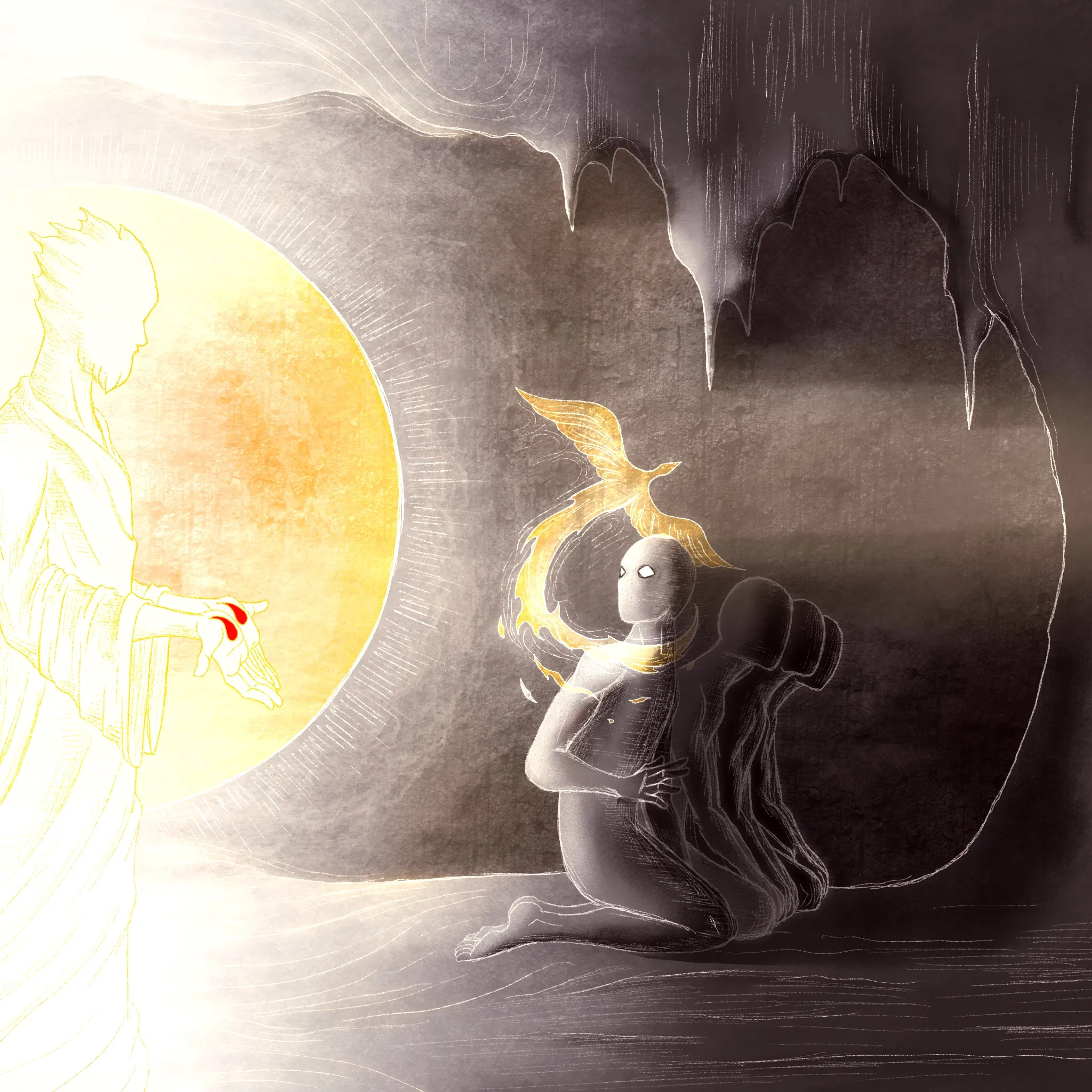
Fear & Forgiveness – Sermon on Genesis 50:15-21 for the Fourth Sunday after Trinity

Genesis 50:15-21

15 When Joseph’s brothers saw that their father was dead, they said, “It may be that Joseph will hate us and pay us back for all the evil that we did to him.” 16 So they sent a message to Joseph, saying, “Your father gave this command before he died: 17 ‘Say to Joseph, “Please forgive the transgression of your brothers and their sin, because they did evil to you.” ’ And now, please forgive the transgression of the servants of the God of your father.” Joseph wept when they spoke to him. 18 His brothers also came and fell down before him and said, “Behold, we are your servants.” 19 But Joseph said to them, “Do not fear, for am I in the place of God? 20 As for you, you meant evil against me, but God meant it for good, to bring it about that many people should be kept alive, as they are today. 21 So do not fear; I will provide for you and your little ones.” Thus he comforted them and spoke kindly to them.

In the name of Jesus. Amen.

This is a phenomenal text and a beautiful conclusion to a long story of Joseph and his brothers. I know you’re familiar with it, but I still want to review it to highlight some details that are often overlooked so we can see just how dramatic this scene is.

Joseph’s father, Jacob, had two wives (which Scripture repeatedly shows is a bad idea), and his wives were sisters, Leah and Rachel, and this family arrangement poisoned the relationship of these two sisters. Because Jacob loved Rachel but not Leah (Gen. 29:31), God made it so Leah is able to have children, but Rachel isn’t. Without getting too much into the seedy details, only after Jacob has ten sons does Rachel conceive and bear Jacob’s two youngest sons, Joseph then Benjamin. So, of his twelve sons, Joseph was Jacob’s hands-down favorite, and Jacob didn’t hide that fact (Gen. 37:3).

When Joseph was seventeen years old (Gen. 37:2), he started telling his brothers about his dreams where they bow down to him and serve him (Gen 37:5-8). What can you say? He’s the spoiled-rotten, favorite child. Sometime shortly after this, Joseph’s brothers concoct a plan to murder Joseph (Gen. 37:19). But Joseph’s oldest brother, Reuben, convinces his brothers to simply throw Joseph in a pit, and Joseph ends up being sold to a caravan of slave traders. Joseph’s brothers lead their father to believe that Joseph has been attacked by a wild animal and is dead (Gen. 37:31-35). The slave traders take Joseph to Egypt where he is sold to a man named Potiphar who is an officer of Pharaoh and his title is the captain of the guard (Gen. 39:1). Joseph works hard and eventually becomes the overseer of everything in Potiphar’s house.

Potiphar’s wife finds Joseph attractive and tries to seduce him, but Joseph refuses to sin against God and his master. So, Potiphar’s wife makes false accusations against Joseph (Gen. 39:1-19). And just quickly – I’ve mentioned this before – I think there is good reason to believe that Potiphar doesn’t believe the accusations of his wife against Joseph because if he had Joseph would have been executed immediately. Instead, Potiphar puts Joseph into the same prison where Pharaoh’s prisoners are kept (Gen. 39:20), and Scripture tells us that the keeper of that prison is Pharaoh’s captain of the guard (Gen. 40:3), which you remember is Potiphar’s title. This helps explain why Joseph quickly gets put in charge of basically running the prison (Gen. 39:22-23).

While Joseph is there, Pharaoh’s chief baker and cupbearer anger Pharaoh and get thrown into the same prison where Joseph is. They each have a dream that troubles them, and Joseph notices they are down in the dumps. The cupbearer tells Joseph his dream, and God gives Joseph insight to interpret the dream. The cupbearer’s dream means that he will be restored to his position in three days, and Joseph asks the cupbearer to remember him when he gets back to serving Pharaoh his wine (or whatever Pharaohs drink). The chief baker hears that the cupbearer’s dream means something good will happen, so the baker wants Joseph to interpret his dream. The baker, however, doesn’t get good news about his dream. Joseph interprets his dream to mean that Pharaoh will have him executed in three days. The baker is probably even more disappointed when the interpretation of both dreams comes true (Gen. 40:1-22). The only problem for Joseph is that the cupbearer forgets all about Joseph for two whole years (Gen. 40:23-41:1).

After those two years, Pharaoh himself has a couple of dreams that none of his magicians can interpret. Only then does the cupbearer remember about Joseph and the interpretation that God had given him about those two dreams (Gen. 40:8, 41:16). So, Joseph is brought before Pharaoh and hears his dreams about fat cows getting eaten by skinny cows and bad crops eating good crops. Joseph says that God is telling Pharaoh (Gen. 41:25, 28, 32) that seven years of plenty are coming, but those good years will be followed by seven years of severe famine. Joseph suggests that Pharaoh tax one-fifth of the produce during the years of plenty so there will be enough food stored up for when the famine comes (Gen. 41:33-38). Pharaoh basically says, “You’re my guy. You’ve got the Spirit of God in you. You’ll be in charge of implementing this plan.” So, Pharaoh puts Joseph in charge of all Egypt, has everyone bow down to Joseph wherever he goes, and even gives Joseph one of his daughters as a wife (Gen. 41:37-45). And at this time, Joseph is thirty years old (Gen. 41:46).

Now, just to sum up: Joseph was 17 when he was sold into slavery (Gen. 37:2). His first 13 years in Egypt are spent partly as a slave in Potiphar’s house and at least two (but probably more) years in prison before he becomes, basically, the prime minister of Egypt at age 30 (Gen. 41:46). For the next seven years, Joseph oversees the storing up of so much food and grain that they stopped keeping track of how much extra they had (Gen. 41:49). So, at this point, Joseph has been in Egypt for 20 years and is 37 when the famine starts. And the famine was so bad people from all over the earth came to Egypt to buy grain (Gen. 41:57).

Joseph’s father and brothers are still living in Canaan, and they have no food. So, Jacob sends Joseph’s brothers to go and buy grain in Egypt. All of Joseph’s brothers except his only full brother, Benjamin, go down to Egypt to buy food. But if you want to buy food in Egypt during this time, the guy you have to see is Joseph. So, when Joseph’s brothers arrive at the checkout counter, Joseph is the one taking the money (Gen. 42:1-6).  And when your life and the lives of everyone in your entire family is in the hands of the prime minister of the only country that has grain and when that prime minister is the clerk, you don’t ask if there are any sales, specials, or coupons. You don’t want to get him upset with you. You show him respect. So, Joseph’s brothers bow down to him fulfilling Joseph’s dream that he had twenty years before (Gen. 37:5-8). But Joseph’s brothers don’t recognize him after twenty years, and they figured he was dead. However, Joseph recognizes his brothers and remembers his dream (Gen. 42:9a).

Now, we need to pick up the pace. Joseph puts his brothers through the ringer for the next 3 chapters of Scripture which span two years. Joseph throws them in jail for three days (Gen. 42:9b-17). He sets them up to think that they didn’t pay for their food (Gen. 42:25, 35). Two years into the famine, Joseph’s brothers return to Egypt a second time to buy more food (Gen. 45:6). And Joseph shows favoritism to his only full brother Benjamin whom Joseph forced to come on this second trip (Gen. 43:34). And Joseph concocts a plan to make it appear that Benjamin has stolen Joseph’s silver cup (Gen. 44:1-2). When his brothers are confronted with this, the brothers all go back to try and save Benjamin from punishment because they know their father will die if they don’t return with Benjamin (Gen. 43:1-14; 44:18-29) whom Jacob thinks is the only living son of Rebekah (Gen. 35:16-20).

Now, before the brothers had left Canaan the second time to buy food, Reuben tried to make a deal with their father Jacob by saying, “We’re not going to get food in Egypt unless Benjamin comes with us, and if he doesn’t come back, you can kill my two sons” (Gen. 42:37-38). But Jacob doesn’t agree to this pagan-like, child sacrifice arrangement. But then Judah says, “Listen, dad, I’ll be responsible for Benjamin. If he doesn’t come back, you can kill me” (Gen. 43:8-10). So, when Judah sees that Joseph is going to punish Benjamin for stealing his cup, Judah gives a beautiful speech, which I’d encourage you to read later today (you can find it in Gen. 44:18-34). In that speech, Judah basically repeats the Gospel promises that Joseph had grown up hearing. Judah says, “I didn’t commit this sin, but treat me as the one who did.” In other words, Judah says, “Let the guilty one go free. Give me the punishment that one deserves, so he can return to the arms of his father.”

And you have to realize how impactful this is. Joseph has been the only Christian in Egypt for 22 years now. He didn’t have any fellowship with fellow believers. He had to be content simply remembering the Gospel promises his father had taught him up until he was sold into slavery at age 17. Now, at age 39 he gets to hear his brother Judah preaching that Gospel to him. Judah is living out the Gospel promise that he failed to live out 22 years before when he had a hand in selling Joseph into slavery.

Joseph is so overcome with emotion that he reveals himself to his brothers. He tells them to get Jacob and the whole family and move to Egypt because there are still five years of famine left (Gen 45:6). The family arrives in Egypt and lives in the best land of Egypt. And Joseph takes care of them for the next seventeen years in Egypt until Jacob dies (Gen. 47:28). Which, finally, brings us to our text.

Even though Joseph had forgiven his brothers (Gen. 45:4-15) and provided for them during those seventeen years, they still fear that Joseph is going to punish them now that their father had died. Joseph’s brothers make up this story, “Hey, bro, right before he died, dad totally told us that you can’t punish us for our sin against you 39 years ago.” You see, through those 39 years, Joseph’s brothers are repeatedly haunted by their guilt of sinning against Joseph (Gen. 42:21-22, 28; 43:18; 44:16). And even after living for 17 years under Joseph’s care and forgiveness, they are still afraid that their sin is going to be punished by Joseph.

But look how beautifully Joseph replies (Gen. 50:19-20), “Do not fear, for am I in the place of God? As for you, you meant evil against me, but God meant it for good, to bring it about that many people should be kept alive, as they are today.” In other words, Joseph is saying, “Listen, I wasn’t just taking care of you because I loved dad, and now I’m going to get back at you because he’s gone. I have truly forgiven you. I love you, and will continue to care for you.” And please notice carefully what Joseph said there, “You meant evil against me, but God meant it for good.”

Think back to our Gospel reading today (Lk. 6:36-42). Those verses contain every non-Christian’s favorite saying of Jesus, “Judge not.” If any atheist knows a lick of Scripture, it’s probably those two words of Jesus. But the way unbelievers (and even some Christians) twist those words is abhorrent. In fact, the words of Jesus in our Gospel reading today are probably the most misunderstood, taken-out-of-context words of all Scripture. Sinners love to say, “Jesus told you not to judge.”

But when our Lord says, “Judge not,” Christ isn’t saying that Christians are never allowed to point out the sin of others and call them to repentance. Instead, Jesus wants us to not be hypocrites. Christ doesn’t want us judging others unless we recognize that we need repentance too. So, Jesus gives the analogy of the logs and specks in eyes. In short, Jesus wants you to repent of and remove your timbers of sin in your eye so that you can see clearly and help remove the specks of sin in your neighbor’s eye. Jesus is clear that He wants everyone’s eyes to be free of logs and specks.

Now, all of that brings us back to Joseph and his brothers. The brothers feared that the only reason Joseph was being nice to them was because of their father Jacob. Now, their dad is gone, and they figure the hammer is about to fall, so they fear. So, see how Joseph, in such a godly way, addresses the seriousness of their sin by rightly acknowledging that they meant evil against him. He doesn’t say that their sin didn’t matter. But then, Joseph immediately comforts them with the Gospel and forgiveness.

Dear Christians, if we identify ourselves as any of the characters in this story, it should be Joseph’s brothers. We follow their pattern. We sin and fear that our punishment is just waiting to fall, but our brother, Jesus, comforts us with His forgiveness and cares for us for all eternity.

Jesus teaches us that we sinners are right to fear God. Jesus says in Mt. 10:28, “Do not fear those who kill the body but cannot kill the soul. Rather fear Him who can destroy both soul and body in hell.” According to Christ, we should fear God. And when we do, God comforts us and kindly speaks His absolution over us. Psalm 130:3-4 says, “If you, O Lord, should mark iniquities, O Lord, who could stand? But with you there is forgiveness, that you may be feared.” Because Jesus, the sinless One, has died in your place, God forgives you and cares for you. Because Jesus went to the cross to shed His blood providing everything you need for eternal life, you are set free to run back to the arms of your Heavenly Father.

When you rightly fear God because of your sin, He smiles back at you and says, “Yes, your sin is terrible, but I have taken care of it. I love and forgive you.” When you fear, love, and trust in God above all else, God says to you, “Fear not, my beloved child.” And when God, the only One who is worthy of your fear does that for you, you are set free from all fears because His perfect love casts out your fear (1 Jn. 4:18) now and forever. Amen.

The peace of God, which surpasses all understanding, will guard your hearts and minds in Christ Jesus. Amen.

Invited – Sermon on Proverbs 9:1-10 for the Second Sunday after Trinity

Proverbs 9:1-10

1   Wisdom has built her house;
she has hewn her seven pillars.

2   She has slaughtered her beasts; she has mixed her wine;
she has also set her table.

3   She has sent out her young women to call
from the highest places in the town,

4   “Whoever is simple, let him turn in here!”
To him who lacks sense she says,

5   “Come, eat of my bread
and drink of the wine I have mixed.

6   Leave your simple ways, and live,
and walk in the way of insight.”

7   Whoever corrects a scoffer gets himself abuse,
and he who reproves a wicked man incurs injury.

8   Do not reprove a scoffer, or he will hate you;
reprove a wise man, and he will love you.

9   Give instruction to a wise man, and he will be still wiser;
teach a righteous man, and he will increase in learning.

10 The fear of the Lord is the beginning of wisdom,
and the knowledge of the Holy One is insight.

In the name of Jesus. Amen.

Today, we’re diving right in. Jesus is Wisdom who speaks in this text. Jesus is the one who has prepared this banquet and invites the simple (probably best understood as ‘gullible’) and those who lack sense to a feast He has prepared. Don’t be offended by that interpretation just because Wisdom here is given feminine pronouns. “Wisdom has built her house, hewn her pillars, slaughtered her beasts, mixed her wine…” etc. The word “wisdom” in both Hebrew and Greek is a feminine noun, so don’t let that confuse you. This text is not teaching that God is a woman. Wisdom is the everlasting, eternal, infinite, almighty Son of God.

A bit of context helps cement this interpretation. Back in Pro. 8:22-23, 27-31, Wisdom says of Himself,

“The Lord possessed me at the beginning of his work, the first of his acts of old.
Ages ago I was set up, at the first, before the beginning of the earth….
When he established the heavens, I was there; when he drew a circle on the face of the deep,
when he made firm the skies above, when he established the fountains of the deep,
when he assigned to the sea its limit, so that the waters might not transgress his command,
when he marked out the foundations of the earth, then I was beside him, like a master workman.”

In other words, God created with and through Wisdom, and all of that echoes the opening of the Gospel of John. “In the beginning was the Word, and the Word was with God, and the Word was God. He was in the beginning with God. All things were made through him, and without him was not any thing made that was made…. And the Word became flesh and dwelt among us, and we have seen his glory, glory as of the only Son from the Father, full of grace and truth” (Jn. 1:1-3, 14). And if that isn’t enough to prove that Jesus is Wisdom who is speaking here, in Lk. 11:31 Jesus calls Himself the Wisdom greater than Solomon. And in 1 Cor. 1:30, Paul says that Jesus is the wisdom from God.

Jesus, the eternal Son of God and wisdom of God, is the Father’s voice to the world. Jesus reveals God’s heart. And Christ gives us true wisdom that remains when everything else is gone. And look at this beautiful invitation:

He prepares the food, sets the table, and calls all people – even the gullible and senseless – to come to the banquet. This feast is free by grace. God charges no admission fee, and the guests have no bill at the end of the meal. They don’t even have to cover the tip. Those who have no money are invited to come and have their fill. This beautiful picture is also what we saw in our Gospel lesson (Lk. 14:15-23). There, the king doesn’t care if the guests are poor, crippled, blind, or lame. He doesn’t even care if they are citizens of his kingdom. He tells his servants, “Go out to the highways and hedges and compel people to come in that My house may be filled.” God has a banquet. He wants His tables to be filled with guests. He desires that all be saved and come to a knowledge of the truth.

The past three times these readings have come up, I’ve preached on that Gospel text and highlighted the importance of coming to church because the riches of the feast that God gives us right here, in this sanctuary, are so grand, elaborate, and infinitely valuable. But I’m not preaching on the Gospel lesson today. The main overlap of the Gospel lesson and this lesson from Proverbs is the invitation and how we are commissioned by God to spread that invitation to the divine feast far and wide. So, for the rest of this sermon, let’s consider evangelism and witnessing.

Honestly, there is a lot of bad theology when it comes to evangelism and sharing the Gospel. I want to consider three truths about evangelism today. There are more, but these three are central. And I want to be very clear at the outset here. I’m going to criticize some of the common trends and ideas about evangelism. Just because I criticize them doesn’t mean that those things have never worked to share the Gospel.  Instead, I hope that as we consider what the Scriptures have to say about salvation and how we see that Christianity spread in the book of Acts, you are encouraged and emboldened to simply be who you are in Christ. Be a sinner who has been washed in Christ’s forgiveness. That is all the equipping you need to be a faithful inviter to God’s eternal feast.

The first truth about sharing the Gospel is that evangelism is nothing more than simply announcing that there is a feast that is ready and free to any who will come. As v. 4 of our text said, Wisdom sends us to proclaim, “Whoever is simple, let him turn in here.” And as they arrive at the banquet, Wisdom – in other words Jesus – says to them, “Come, eat of my bread and drink of the wine I have mixed. Leave your simple ways, and live, and walk in the way of insight” (v. 5-6).

God gives us opportunities to invite to a banquet; He doesn’t call us to scare people into heaven. Plays like “Heaven’s Gates, Hell’s Flames” and fire-and-brimstone-street-corner preaching aren’t what Christians are about. Christians are about the free Gospel, the abundant mercy of Christ, and the joy of the eternal banquet. Yes, the horrors of hell are real. But if people are scared into believing in God, they are more slaves than children. And God wants children to love and cherish. Christian, you have the Gospel – the greatest news ever. Jesus has died and shed His blood for the forgiveness of your sins. That message is for all people. Out of His pure mercy, Jesus says, “Fear not, little flock for it is your Father’s good pleasure to give you the kingdom” (Lk. 12:32). God’s greatest delight is to give sinners His kingdom and have them as His guests at His banquet.

The second truth about evangelism is that you don’t have to go out and find people to evangelize. I’ve been through (and even taught) evangelism models that encourage you to seek people out, strike up a conversation, and then turn that conversation to spiritual matters so you can share about Jesus. First off, not a lot of people are comfortable doing that. And very few people who are comfortable doing that can do it naturally – especially when the person they are trying to evangelize tries to change the subject away from spiritual matters. I’ve been a victim (and I’m using that word a little sarcastically) of people who are part of pyramid schemes. Of course, they don’t call it a pyramid scheme – it’s ‘multi-level-marketing.’ At first, they are very friendly and outgoing, but then comes the moment when they try to feel me out about their great, wonderful product. When they realize I’m not interested in purchasing or selling their product, they aren’t interested in me anymore. And you know what that does to my opinion of them? Yeah.

Dear saints, you don’t have to seek out potential converts to Christianity. Repeatedly in the book of Acts, the apostles would proclaim the Gospel in the synagogues – to the people who were already familiar with God’s Word. In those synagogues, some would believe in Christ, but many would reject. The interesting thing is that the apostles never sought out people who were unfamiliar with God’s Word. They never made cold calls. God would simply bring people to the apostles, they would preach, point to Jesus, and people would believe.

Just a few examples: At Pentecost, God brought people together by the sound of the rushing wind (Act. 2:5-6) and the apostles pointed them to Jesus. In Acts 3, Peter and John go to the Temple for prayer one afternoon and encounter a paralyzed man who was begging. Peter tells the guy, “I don’t have any silver or gold for you, but in the name of Jesus Christ of Nazareth, rise up and walk.” The guy does, and whole crowds get drawn to Peter and John to hear more about Jesus (Act. 3:1-4:37). God dropped the Ethiopian eunuch into Phillip’s life (Act. 8:26-38). And when Phillip was done baptizing the eunuch, God teleported him somewhere else to share the Gospel (Act. 8:39-40). God told Cornelius to send for Peter (Act. 10:1-8). We could go on and on. But I’d encourage you, read the book of Acts this week, and notice how God just drops people into the lives of the apostles. Then they simply share the Gospel and point the people whom God put in their lives to Jesus.

Dear saints, you don’t have to seek people out. Be faithful in the vocations and callings that God has given you. Be a good spouse, parent, child, worker, student, neighbor, whatever. Have the best, most genuine relationship possible with the people God brings into your life. Be an authentic person and be ready to give an answer for the reason for the hope that is in you (1 Pet. 3:15-16). As you have opportunity, point them to Jesus, and invite them here where Jesus has prepared His banquet. The most recent survey I saw showed that 86% of people who attend a church go to that congregation because a friend invited them. Be friendly to people not in an effort to convert them – that isn’t true friendship. Just be a friend, and be ready for God to open doors to sharing the Gospel. Like Phillip did for Nathaniel, invite people to come and see Jesus (Jn. 1:46).

Finally, the third truth about evangelism is this: Rest in the fact that you can’t mess it up. Dear saints, Scripture is clear on this. No one will go to hell because you failed in sharing the Gospel with them. It isn’t possible. Jesus promises in Jn. 10:27-29, “My sheep hear my voice, and I know them, and they follow me. I give them eternal life, and they will never perish, and no one will snatch them out of my hand. My Father, who has given them to me, is greater than all, and no one is able to snatch them out of the Father’s hand.”

There is a fascinating verse in Acts 13 about this. Just to give a bit of the context here: Paul and his companions arrive in the city of Antioch (Act 13:13ff). As was their custom, they go to the synagogue and are asked by the rulers if they have a word of encouragement. Paul preaches a little sermon about Jesus (Act. 13:16-41). Some believe, and Paul and Barnabas are invited to come again the next Sabbath. When they do, the whole city of Antioch gathered together to hear the Word of the Lord (Act. 13:44). Paul and Barnabas again share about Jesus. Some were filled with jealousy and were contradicting what Paul was preaching and reviling him (Act. 13:45). But then (and this might be the most important verse you can memorize to encourage you as you think about evangelism), Acts 13:48b, “As many as were appointed to eternal life believed.”

Dear saints, salvation belongs to God (Jon. 2:9; Ps. 3:8; Rev. 7:10). You and all Christians are saved by grace (Eph. 2:8-9). Since you aren’t the source of either salvation or grace, the work of saving people belongs exclusively to God. God can and does use you to be His salt and light (Mt. 5:13-16), and when He does, God be praised! But know that no one, not a single soul, will end up in hell because you have failed. You aren’t that powerful. You cannot erase someone’s name from the book of life (Rev. 3:5). Romans 8:38-39 says, “Neither death nor life, nor angels nor rulers, nor things present nor things to come, nor powers, nor height nor depth, nor anything else in all creation, will be able to separate us from the love of God in Christ Jesus our Lord.”

Dear saints, evangelism, inviting anyone to Jesus’ banquet is zero risk, infinite reward.

Dear saints, there is a banquet. It is free to you and to all. You are invited, and you have the privilege and joy of inviting others. So, invite them. Invite them because of the joy of being part of that feast yourself.

The banquet is prepared. The gifts are ready. Jesus calls you, “Come, eat of my bread and drink of the wine I have mixed. Leave your simple ways, and live, and walk in the way of insight.” Because the fear of the Lord is the beginning of wisdom, and the knowledge of the Holy One is insight. Amen.

The peace of God, which surpasses all understanding, will guard your hearts and minds in Christ Jesus. Amen.

Carried – Sermon on Luke 16:19-31 for the First Sunday after Trinity

Luke 16:19-31

19 “There was a rich man who was clothed in purple and fine linen and who feasted sumptuously every day. 20 And at his gate was laid a poor man named Lazarus, covered with sores, 21 who desired to be fed with what fell from the rich man’s table. Moreover, even the dogs came and licked his sores. 22 The poor man died and was carried by the angels to Abraham’s side. The rich man also died and was buried, 23 and in Hades, being in torment, he lifted up his eyes and saw Abraham far off and Lazarus at his side. 24 And he called out, ‘Father Abraham, have mercy on me, and send Lazarus to dip the end of his finger in water and cool my tongue, for I am in anguish in this flame.’ 25 But Abraham said, ‘Child, remember that you in your lifetime received your good things, and Lazarus in like manner bad things; but now he is comforted here, and you are in anguish. 26 And besides all this, between us and you a great chasm has been fixed, in order that those who would pass from here to you may not be able, and none may cross from there to us.’ 27 And he said, ‘Then I beg you, father, to send him to my father’s house— 28 for I have five brothers—so that he may warn them, lest they also come into this place of torment.’ 29 But Abraham said, ‘They have Moses and the Prophets; let them hear them.’ 30 And he said, ‘No, father Abraham, but if someone goes to them from the dead, they will repent.’ 31 He said to him, ‘If they do not hear Moses and the Prophets, neither will they be convinced if someone should rise from the dead.’”

In the name of Jesus. Amen.

Right off the bat, this text confirms that there are things much worse than being poor, hungry, covered with sores, and having dogs as your only friends and caretakers. There is eternal life after this life, and after you die, there are only two destinations. Heaven and hell are real. You will spend eternity either in bliss with God your Creator, Redeemer, and Sanctifier, or in eternal damnation and torment.

Because that truth stares you in the face when hearing this text, I want us to focus for a moment on a rich man in this text.

There was a rich man who was adorned with the finest garb. This man daily feasted on the best food. Wherever he went, he was chauffeured around in decadence. This rich man had the most precious things in all creation and was truly blessed. And this rich man’s name was… Lazarus.

Now, I can hear what you’re thinking: “Pastor, Lazarus didn’t have anything good in this life. Abraham even said that Lazarus received bad things in his lifetime.” Absolutely, I’ll concede that point. But with this parable, Jesus is trying to fix our hearts where true joys are found. Both in this life and the next, true joy is to be found in the promises of God’s Word.

Too often, we Christians are tempted to think that if things aren’t going a certain way that God is mad at us. I often hear testimonies of Christians who will say things like, “I thought I was saved, but…” Then, they’ll recount some difficulty or hardship they have gone through. Then they will continue, “But then, I truly gave my life to Jesus, and everything got so much better. And now I’m really saved.” Honestly, that is sad to hear.

Dear saints, beware that kind of thinking and mentality. The devil wants us to tie our assurance of salvation to how things are going in this life. Honestly, that type of thinking is precisely what the book of Job is teaching against. God says that Job is righteous and upright (Job 1:8, 2:3), but the devil says, “Hey God, let me have a crack at him. Let me take everything from him – his wealth, family, possessions, and health. And Job will curse You to Your face, God” (Job 1:9-11, 2:4-5). And even when Job’s friends try to get Job to confess that he must have done something sinful to cause all the evil he endured, Job clung to faith in God’s promises.

Considering our life and judging what God thinks of us based on our blessings or lack of blessings is a dangerous place to be. Jesus Himself says that the life of faith is going to be difficult. Remember, Jesus promises that if the world persecuted Him, believers will be persecuted too (Jn. 15:20). Jesus calls Christians to follow Him which means picking up a cross – not a lazy boy (Lk. 9:23). If we are always stuck looking at how our lives are going, we’ll never be at rest as Christians. In fact, we will easily fall away. All the devil will have to do is keep bouncing us between highs and lows, and eventually, we will break.

Now, there are all sorts of ways we can go wrong when we consider this parable about Lazarus and the rich man unless we understand Jesus when He says, “Blessed are those who hear the Word of God and keep it” (Lk. 11:28). Those who hear God’s Word and believe it live blessed lives despite all appearances to the contrary. And that is the main difference between Lazarus and the rich man.

So, back to the idea that Lazarus was the truly rich man in this parable: Yes, absolutely. Lazarus was poor in this life, but when we consider what God’s Word says, we see that Lazarus was rich. In the parable, Jesus doesn’t say what kind of rags Lazarus wore, but Scripture does say that all believers are clothed with Christ (Gal. 3:27). In fact, Ephesians 5:25-27 says that Christ loved the Church and gave Himself up for her, that He might sanctify her and cleanse her by the washing of water with the Word, so that He might present the Church to Himself in splendor, without spot or wrinkle or any such thing, holy and without blemish. Because Lazarus was a Christian, that is how he was clothed – despite the appearance of his beggarly clothes.

In the parable, Jesus says that Lazarus was hungry and desired to be fed with what fell from the rich man’s table. But because Lazarus was a Christian, he did not live on bread alone, but on every Word that proceeds from the mouth of God (Mt. 4:4). Lazarus knew the mercy of Christ, the Word made flesh (Jn. 1:14), who is the living bread that comes down from heaven (Jn. 6:50-51). That Word of God was sweet to Lazarus’ taste, sweeter than honey (Ps. 119:103).

And Lazarus had the finest chauffeurs who, when he died, carried him to Abraham’s side. The angels took care of all his transportation needs. Yes, despite all the suffering Lazarus had in this life, he was truly blessed.

And when we consider the rich man in the parable, we see the opposite. For all the temporal blessings the rich man had in this life, he did not have the most important thing – faith in God’s Word. Even as he is tormented in hell, the rich man continues to reject God’s Word. In damnation, he has the audacity to tell Abraham that God’s Word isn’t enough to warn his five living brothers about the peril of their sins. He demands that Lazarus be raised from the dead and warn them. But Abraham responds, “If they do not hear Moses and the Prophets (in other words, the Scriptures), neither will they be convinced if someone should rise from the dead.” In other words, to hold fast to God’s Word is to be truly rich through faith in Christ. Blessed are those who hear the Work of God and keep it.

Don’t trip up on v. 25 where Abraham says, “Child, remember that you in your lifetime received your good things, and Lazarus in like manner bad things.” Some will say that statement teaches that the poor in this life go to heaven and the rich in this life go hell. That can’t be the case. Instead that again teaches us to not look at our blessings in this life, whether they be many or few.

Just think about the other rich man you heard about today in our Old Testament lesson (Gen. 15:1-6) – Abraham himself. In his day, Abraham was one of the wealthiest men in the world. One night, the Lord promised Abraham that His reward would be very great. But when Abraham looked at himself, he saw an old, wrinkled man. When Abraham looked at his wife, he saw an old woman who was past the age of bearing children. Abraham looked over at his servant Eliezer who was going to get all Abraham’s stuff when he died because Abraham had no heir. So God took Abraham outside, told him to look at the stars and try to number them. And God promised, “So shall your offspring be.” And Abraham stopped looking at his temporal blessings, and he looked past the limitations that seemed to contradict God’s promise. Instead, Abraham believed the Lord, and God counted it to him as righteousness.

Lazarus had that same faith. The name “Lazarus” means “one whom God helps.” Even with his beggarly status in life, Lazarus rested on the promises of God for forgiveness, life, and salvation despite all appearances to the contrary. Those promises carried Lazarus throughout his life, so when he died, the angels carried Lazarus to paradise. Yes, the rich man had earthly treasures in this life, but once he died, those treasures were gone forever. Because he didn’t have faith in God’s Word, he had nothing and was truly poor.

So, parents, this is mainly directed at you, but it is also for all of us Christians: We need to reconsider how we encourage our children and young people. Too often, we urge kids to grow up to be like the unnamed rich man in the parable. Obviously, he was wildly successful financially. He was a family man who cared about his siblings. He was probably a very generous man. Why else would Lazarus be begging at this man’s gate each day? The unnamed rich man was independent, successful, and a model, upstanding citizen. But he lacked the faith and fear of God. And without that, he had nothing.

And don’t get me wrong here. It is good to teach, instruct, and encourage our children to work hard, be independent, earn an honest living, and take pride in their accomplishments. It is important to do that. But never to the neglect of faith in God’s Word. Above all else, let us train our children and encourage one another to be dependent upon God and rest in His promises.

Those promises of God’s love, mercy, and forgiveness carry us through this life. And when our time comes, may we be found faithful to Christ and like Lazarus be carried by the angels to the side of our crucified, risen, and ascended Savior, Jesus Christ. Amen.

The peace of God, which surpasses all understanding, will guard your hearts and minds in Christ Jesus. Amen.