
In the name of Jesus. Amen.
No one expects infants to be able to speak from the moment they are born. They cry and fuss and make noises. After a while they start to babble and eventually are able to say “Mama” or “Dada.” For most, it takes more than a year before they are able to say words, and months more before they can put those words together into a sentence. Even then, most people outside the family can’t understand a toddler and need parents to translate. Learning to speak is a long, slow process. That’s not what happens to this man.
Jesus is far from His normal stomping grounds and is in Gentile territory. He has just healed the Canaanite woman’s daughter near Tyre and Sidon and is returning to Galilee, but He takes an odd route. Instead of traveling straight south, He turns east and goes through the region of the Decapolis. That would be like traveling from here to Fargo by way of Bemidji. It appears that Jesus goes out of His way to be at this precise place at this precise time. Even though He’s far from where He spent most of His life, the people there know that Jesus can heal. So, they bring this man who was deaf and mute to Him.
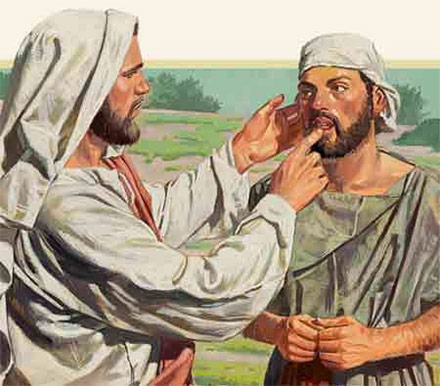
Jesus takes the man away from the crowd and does this little liturgy. He stuffs His fingers into the man’s ears, spits, touches his tongue, looks up to heaven, sighs (lit. ‘groans’), and says one word, “Ephphatha,”which means “Be opened.” Jesus isn’t just acting like a magician with some sleight of hand. His power is displayed through His one-word command to deaf ears. He’s the One who spoke creation into existence (Jn. 1:3). This miracle shows us that the Creator has come down into His creation to undo the Fall. And this comes at a cost to Him.
Mark wants us to ponder that last part where Jesus looked up into heaven and sighed. ‘Sighed’ is a fine translation so long as we see it as a heavy sigh. The word is normally translated ‘groan’ (Ro. 8:23, 26; 2 Co. 5:2, 4). We should see that Jesus is pained and burdened when He sees what sin and death have done to this man and to all creation. Also, see that these miracles come at a cost to Jesus. They take something out of Him. With this groan, it’s like Jesus is taking the man’s deafness and muteness into His Own body, and it weighs on Him.
And the word Jesus speaks, “Ephphatha,” is interesting. He’s speaking a command to deaf ears, but He doesn’t demand them to open. (Sometimes, I’ll try to open a jar for my wife and command the lid, “Open.” Spoiler alert: lids don’t care about my commands.) That isn’t what Jesus says here. Instead, it’s a passive command, “Be opened.” And they are. (Maybe I should try that next time I come across a stubborn lid.) Immediately, the man’s ears are opened, his tongue is released, and he spoke plainly. The word Mark uses for plainly is orthōs, which is where we get the word ‘orthodox’ and means rightly or correctly.
The remarkable thing is how thoroughly the man is healed. Even though this guy had never spoken, he doesn’t start in the same place as a newborn. He didn’t have to go through the long process of learning words; learning how to manipulate his tongue, lips, and mouth to speak them; and then combining those words into sentences. He spoke as though he had been speaking correctly his entire life. Jesus opened his ears and lips wholly and completely. This is the same kind of power Jesus demonstrates when He rebuked the wind and waves. Jesus simply says, “Peace! Be still!” (Mk. 4:39). The wind didn’t slowly die down. It ceased. The white caps didn’t turn to rolling waves then ripples. The sea turned to glass. The same thing happens here. The results are immediate and complete. He opened this man the same way—wholly.
This is what Isaiah had promised in our Old Testament reading (Is. 29:17-24), “In that day the deaf shall hear the words of a book, and out of their gloom and darkness the eyes of the blind shall see” (Is. 29:18). The man had been closed in the gloom and darkness of silence, but the word of Jesus reaches him and does its work. The man hears and speaks the way he was created to hear and speak. Our Lord opens his lips, and his mouth declares God’s praise (Ps. 51:15).
God created our ears to hear His Word and our lips to respond in worship. Faith comes from hearing, and hearing through the Word of Christ (Ro. 10:17). With the heart one believes and is justified, and with the mouth one confesses and is saved (Ro. 10:10). Now, this man can do both. He hears the Word and speaks it rightly.
Throughout the Gospels, Jesus often heals immediately. This man. The woman who had been bleeding for twelve years is made well the moment she touches His garment (Mk. 5:25-34). Lazarus (Jn. 11:43-44). The blind, the sick, the lame, and the leprous are all made whole at His word (Mk. 1:34).
We often pray and desire those immediate results. We want the diagnosis reversed now. We want the relationship fixed now. The grief gone now. The wandering soul to repent and be saved now. We pray for all sorts of things and want God to have it done before we finish with our “Amen.”
Sometimes, God will do that. More often, He makes us wait. But in that waiting, He is doing something more. So, what should we do when we have to wait? We remember and retreat to His promises.
God is not slow to deliver on His promises (2 Pet. 3:9). He is not reluctant or limited in giving us what is good. The same Jesus who immediately and wholly opened this man is the One who hears your prayers. If the full restoration is delayed, it is not because He cannot do it. Instead, it is because God knows what He is doing. He is working a better opening than the one we have imagined. He is teaching us to live by every word that comes from His mouth (Dt. 8:3), and not only by the kind of answers we can see and hear right now.
So, when you have to wait, you can groan with Jesus at the fallen state of creation. But you do not groan without hope (Ro. 8:23-24). Christ has given you the Holy Spirit to open your ears to the Gospel. Let His promises drown out the noise of the rest of this broken world. Your tongue has been loosed. Use it to confess that He has defeated death by His death and resurrection and that He now reigns.
Even as you live through things that are not as God intended them to be, you know that Christ’s return is coming. Jesus Himself will descend from heaven with another word—a cry of command (1 Th. 4:16). That cry will be another “Ephphatha.” The graves will open. Ears that have been closed by death will hear. Tongues that have decayed will speak correctly. The meek shall obtain fresh joy, and the poor shall exult in the Holy One of Israel (Is. 29:19). He will make all things new (Rev. 21:5). Until that day, you wait. But you wait with Christ’s Word in your ears and the confession of His Gospel on your tongue.
Dear saints, your Savior has done all things well, He does all things well, and He will do all things well. He knows what He is doing. The One who spoke “Ephphatha” to this man will speak again over all creation. And in that day, nothing will remain closed. It will all be wholly opened. Amen.
The peace of God, which surpasses all understanding, will guard your hearts and minds in Christ Jesus (Php. 4:7). Amen.



 31 Then he returned from the region of Tyre and went through Sidon to the Sea of Galilee, in the region of the Decapolis. 32 And they brought to him a man who was deaf and had a speech impediment, and they begged him to lay his hand on him. 33 And taking him aside from the crowd privately, he put his fingers into his ears, and after spitting touched his tongue. 34 And looking up to heaven, he sighed and said to him, “Ephphatha,” that is, “Be opened.” 35 And his ears were opened, his tongue was released, and he spoke plainly. 36 And Jesus charged them to tell no one. But the more he charged them, the more zealously they proclaimed it. 37 And they were astonished beyond measure, saying, “He has done all things well. He even makes the deaf hear and the mute speak.”
 I’ve seen a picture several times this last week floating around social media. It is Jesus leaning against a tree with His eyes closed. Christ looks exhausted. The caption says, “He must be so tired of the mess we’ve made. Forgive us, Lord, don’t give up on us!” On the one hand, I don’t like the picture combined with the caption because it implies that Jesus didn’t know and is surprised by the mess we’ve made. However, there is something very true with that picture of the weary Jesus.
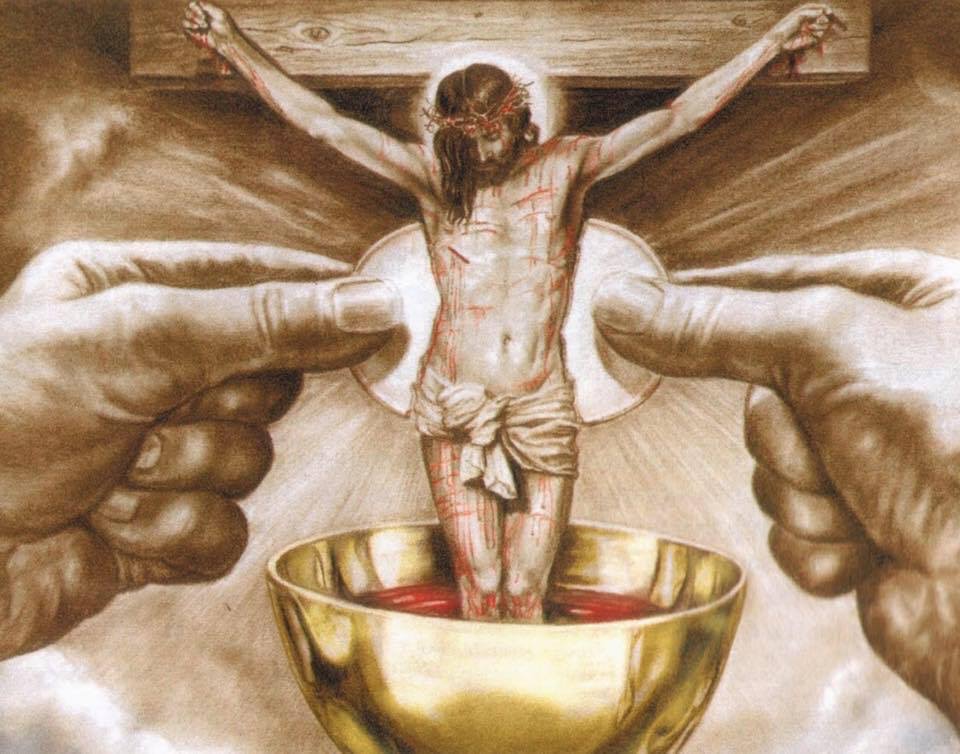 He has bought you for Himself through His death. And now He is risen and alive for your justification (Ro. 4:25).
 32 And they brought to him a man who was deaf and had a speech impediment, and they begged him to lay his hand on him. 33 And taking him aside from the crowd privately, he put his fingers into his ears, and after spitting touched his tongue. 34 And looking up to heaven, he sighed and said to him, “Ephphatha,”that is, “Be opened.” 35 And his ears were opened, his tongue was released, and he spoke plainly. 36 And Jesus charged them to tell no one. But the more he charged them, the more zealously they proclaimed it. 37 And they were astonished beyond measure, saying, “He has done all things well. He even makes the deaf hear and the mute speak.”
 Groaning, however, is an involuntary response to being hurt or wounded. Every time the New Testament uses this word ‘groan’ it is from sorrow or suffering because of sin. And, in the New Testament, only four things groan – creation groans, believers groan, the Holy Spirit groans, and Jesus groans twice.
 And He no longer groans in pain when He does it. The price has been paid. Your forgiveness has been purchased and won on the cross.
 This miracle, on the other hand, is odd. It’s dirty. Maybe, you even find it disgusting. Jesus takes a deaf man who has a speech impediment off to the side. He sticks His fingers into wax-filled ears. God in the flesh spits (apparently, Jesus wasn’t taught how to give a proper wet-Willy). Christ literally seizes, not just ‘touches,’ the man’s tongue. And then, Jesus looks up to heaven. Sighs. And says, “Ephphatha,” which means,“Be opened.”
 Jesus had come to be the Lamb of God who takes away the sin of the world, not to be the audiologist who takes away the deafness of the world. Jesus had come to give eternal life through His death and resurrection, not to give a voice to the voiceless.
 Yes, Jesus sighs and acts. He gets involved with us even though it hurts Him. He cannot help Himself. In His love and mercy, He gets bound up in the mess we make and that others have made for us. He gets entangled in our sin. In fact, He becomes sin so that we might become the righteousness of God (2 Cor. 5:21).

You must be logged in to post a comment.