Don’t Settle – Sermon on Matthew 17:1-9 for the Transfiguration of our Lord

Matthew 17:1-9

1 And after six days Jesus took with him Peter and James, and John his brother, and led them up a high mountain by themselves. 2 And he was transfigured before them, and his face shone like the sun, and his clothes became white as light. 3 And behold, there appeared to them Moses and Elijah, talking with him. 4 And Peter said to Jesus, “Lord, it is good that we are here. If you wish, I will make three tents here, one for you and one for Moses and one for Elijah.” 5 He was still speaking when, behold, a bright cloud overshadowed them, and a voice from the cloud said, “This is my beloved Son, with whom I am well pleased; listen to him.” 

6 When the disciples heard this, they fell on their faces and were terrified. 7 But Jesus came and touched them, saying, “Rise, and have no fear.” 8 And when they lifted up their eyes, they saw no one but Jesus only. 9 And as they were coming down the mountain, Jesus commanded them, “Tell no one the vision, until the Son of Man is raised from the dead.”

In the name of Jesus. Amen.

Change is often difficult because we have to adjust. We prefer consistency over fluctuation and variation. This past Thursday morning, the temperature in East Grand Forks bottomed out at -30°F; the forecast for Tuesday indicates we’ll reach 36°F. If that prediction holds out, we will experience a 66° swing in five days. That 36°F is going to feel glorious. Kids will be begging parents to go around without coats and wearing shorts. I can already hear several of you thinking, “I can’t wait for a change in this bitterly cold weather. I’ll adjust just fine, thank you.” But the change I’m thinking of will happen next Fall. What will happen then? When October rolls around and we dip back down into the 30’s, the coats and shivers will be back because we will have gotten accustomed to 80-90° weather through the summer. Change can be rough. Those mid 30’s will feel glorious if we get there in the next couple of days, but not so much in October.

Now, I bring all of this up to set the stage for what happens at the Transfiguration of Jesus. Our text begins with a time marker, “And after six days…”, so we need a bit of context. If you look back to Mt. 16, you see that Jesus has just told His disciples that He must go to Jerusalem, suffer, be killed, and rise on the third day, and this prediction would have been about six months before the crucifixion. The disciples had been following Jesus for about two and a half years. They had gotten comfortable being around Him, seeing His miracles, listening to His teaching, and enjoying His company.

The impression we get is that Peter does not hear everything Jesus says. Peter hears the suffering and dying part, and I imagine Peter is so shocked that he doesn’t hear Jesus say He would rise again on the third day. So, when Jesus says that He is going to suffer and die, Peter doesn’t like it – not one bit. Jesus getting killed would be a very unwelcome change. So, Peter scolds Jesus for saying that He was going to die by saying, “Far be it from You, Lord! This shall never happen to you” (Mt. 16:22). And Jesus utterly rebukes Peter with His harshest words recorded in the Gospels, “Get behind me, Satan! You are a hindrance to Me. For you are not setting your mind on the things of God, but on the things of man” (Mt. 16:23).

So now, to our text. The Transfiguration takes place six days after this exchange between Jesus and Peter. Jesus brings Peter, James, and John up a high mountain by themselves, and suddenly, Jesus is transfigured. His face shines like the sun, and His clothes become dazzlingly bright and white as light. Then, Old Testament celebrities start showing up as Moses and Elijah crash the party.

Peter sees all of this and is scared (Mk. 9:6) but probably in a thrilling way. He wants to remain there with Jesus, Moses, and Elijah. Peter likes how things are there, up on that glorious mountain. Seeing the Transfiguration is probably in the top three highlights of Peter’s time with Jesus. Shiny Jesus is fantastic stuff, and it definitely beats the suffering and death Jesus predicted six days earlier. But as Moses and Elijah are there talking with Jesus, the Gospel of Luke tells us that Jesus, Moses, and Elijah are speaking about Jesus’ exodus which He was about to accomplish in Jerusalem (Lk. 9:31). Even in the shining glory of the Transfiguration, there is this talk about Jesus’ suffering and death. So, Peter says (and listen to how he focuses on location), “Lord, it is good that we are here. If you wish, I will make three tents here, one for you and one for Moses and one for Elijah.” It’s almost like Peter is saying, “Hey, things are good here! Why don’t we all just hang out here on this glorious mountain and forget about all that stuff in Jerusalem?”

But God the Father interrupts Peter’s plan. The cloud of God’s glory overshadowed them, and God said, “This is My beloved Son, with whom I am well pleased; listen to Him” (Mt. 17:5). Now, I don’t think we should only take this in the broad, general sense that Jesus’ words are important to listen to. That is, of course, true. Every Word of Christ is important, and Peter even makes that point in our Epistle lesson (2 Pet. 1:16-21). The Bible, God’s Word, is a lamp shining in the darkness of this world, and we do well to pay attention to it. But I would suggest that God’s command to listen to Jesus here is much more specific and pointed.

When God the Father interrupts Peter’s plan to make tents and remain on the mountain by saying, “Listen to My beloved Son,” God is reinforcing to Peter the fact that Jesus must go to Jerusalem, be crucified, and rise again. Peter is right that the glory on that mountain is good, but if Jesus doesn’t descend from the summit, if He doesn’t go down to Jerusalem, down to suffer, down to the cross, and down to the grave, then Jesus’ truest glory would never be revealed. The glory of the Transfiguration is good but remaining there would have been settling for something far less than the glory that Jesus revealed upon the cross.

We don’t understand the glory of Jesus’ Transfiguration until we see the crucifixion because by His cross Jesus elevates us to share in His glory. And those two events closely parallel each other. Here in the Transfiguration, Jesus’ clothes are shining white; on Calvary, they have been stripped off and soldiers gambled for them (Mt. 27:35). Today, Jesus was surrounded by Moses and Elijah. At the cross, Jesus is flanked by criminals (Mt. 27:38). At the Transfiguration, the bright cloud of God’s glory illumines everything; at Calvary darkness fills the land (Mt. 27:45). Here, God’s voice thunders from heaven declaring Jesus to be His beloved Son. There, the Roman soldier confesses that Jesus truly was the Son of God (Mk. 15:39).

While the two scenes are strikingly different, they help us understand each other. Because it was on the cross that Christ delivered you from the power of sin, death, and the devil so that you could share in His glory. Because of what Jesus has done for you by shedding His blood, you are being transfigured from one degree of glory to another (2 Cor. 3:18).

Dear saints, this life is filled with ups and downs and all the changes that come with them. We can certainly thank God for the moments where we have mountaintop experiences. They are good and glorious, but we don’t remain in them in this life. Don’t settle for those temporary moments. Another glory, a greater and eternal glory, awaits you. As it was with Jesus, so it is with you. You follow Jesus through suffering in this world and await the glory that is yours because of what Christ has done (Mt. 16:24-25).

And so, Christ comes to you now to strengthen you and assure you that He will never leave you nor forsake you. He comes now to give you His Body to eat and His Blood to drink and make full satisfaction for all of your sins. Jesus invites you to come to His altar and His table. Remove the veil over your face. Behold the glory of the Lord. And go back into the world with God’s glory radiating from you (Mt. 5:14-16) so that others may see your good works and give glory to your Father who is in heaven. Amen.

The peace of God, which surpasses all understanding, will guard your hearts and minds in Christ Jesus. Amen.

The God Who Never Gives Up – Sermon on Jonah 1:1-17 for the Fourth Sunday after Epiphany

Jonah 1:1-17

1 Now the word of the Lord came to Jonah the son of Amittai, saying, 2 “Arise, go to Nineveh, that great city, and call out against it, for their evil has come up before me.” 3 But Jonah rose to flee to Tarshish from the presence of the Lord. He went down to Joppa and found a ship going to Tarshish. So he paid the fare and went down into it, to go with them to Tarshish, away from the presence of the Lord. 4 But the Lord hurled a great wind upon the sea, and there was a mighty tempest on the sea, so that the ship threatened to break up. 5 Then the mariners were afraid, and each cried out to his god. And they hurled the cargo that was in the ship into the sea to lighten it for them. But Jonah had gone down into the inner part of the ship and had lain down and was fast asleep. 6 So the captain came and said to him, “What do you mean, you sleeper? Arise, call out to your god! Perhaps the god will give a thought to us, that we may not perish.” 

7 And they said to one another, “Come, let us cast lots, that we may know on whose account this evil has come upon us.” So they cast lots, and the lot fell on Jonah. 8 Then they said to him, “Tell us on whose account this evil has come upon us. What is your occupation? And where do you come from? What is your country? And of what people are you?” 9 And he said to them, “I am a Hebrew, and I fear the Lord, the God of heaven, who made the sea and the dry land.” 10 Then the men were exceedingly afraid and said to him, “What is this that you have done!” For the men knew that he was fleeing from the presence of the Lord, because he had told them. 

 11 Then they said to him, “What shall we do to you, that the sea may quiet down for us?” For the sea grew more and more tempestuous. 12 He said to them, “Pick me up and hurl me into the sea; then the sea will quiet down for you, for I know it is because of me that this great tempest has come upon you.” 13Nevertheless, the men rowed hard to get back to dry land, but they could not, for the sea grew more and more tempestuous against them. 14 Therefore they called out to the Lord, “O Lord, let us not perish for this man’s life, and lay not on us innocent blood, for you, O Lord, have done as it pleased you.” 

15 So they picked up Jonah and hurled him into the sea, and the sea ceased from its raging. 16 Then the men feared the Lord exceedingly, and they offered a sacrifice to the Lord and made vows. 17 And the Lordappointed a great fish to swallow up Jonah. And Jonah was in the belly of the fish three days and three nights.

In the name of Jesus. Amen.

You are familiar with the account of Jonah, but some ironic details of this chapter are often missed because of that familiarity. So, let’s walk through the text and try to catch several of those details.

God calls Jonah to go and preach. The surprising thing is that Jonah is called to preach outsiders, to the pagan sinners in Nineveh, the capitol city of Assyria, Israel’s fiercest enemy. God says to Jonah, “Arise, go to Nineveh, that great city, and call out against it, for their evil has come up before Me.” The picture that God gives is that the evil and sin of Nineveh has piled up so high that it is surrounding God’s feet.

So, God calls Jonah to arise, and Jonah rose. But that is as far as his obedience to God’s call goes. Instead of arising to go to Nineveh, Jonah flees. Notice that Jonah is fleeing from God’s presence (v. 3a) and goes down. Down to Joppa. In Joppa, Jonah finds a ship going to Tarshish. He boards the boat and again goes down into it. And Scripture repeats itself by reminding us again that Jonah is trying to go away from the presence of the Lord (v. 3b).

Yeah. It doesn’t work. God hurls a great wind and tempest on the sea. In other words, God goes with Jonah by the means of this storm. God would have been totally just to simply send a wave to crash over this boat filled with His disobedient, fleeing prophet and these idolatrous, pagan sailors, but God is merciful.

But still, Jonah repeatedly and unrepentedly continues his downward track, but God doesn’t give up. As the storm intensifies, the sailors begin to put Jonah to shame, religiously speaking. They are fervently praying. The sailors are also hurling the cargo of the ship into the sea. Now, our translation makes it sound like they were tossing a bunch of freight overboard to make the ship lighter, but Ezk. 27:12 talks about all the precious metals that went in and out of Tarshish. It is likely the sailors are throwing gold, silver, bronze, and ivory into the sea. And the Hebrew grammar indicates that the sailors were trying to lighten something but not the boat. They were trying to lighten the wrath and anger of the sea. The text gives us a picture that the sailors are trying to appease the angry god of the sea by throwing the precious cargo overboard as an offering and sacrifice to the sea itself.

But their prayers and sacrifices aren’t heard. The storm continues to rage. And through all of this, Jonah has continued his downward spiral. There he is in the bottom of the ship and lying down. Jonah is as low as he can physically get by himself. And beyond that Jonah is sleeping, but this isn’t the normal sleep you get at night. The word for sleep there is the same “deep sleep” that God caused to fall upon Adam when God removed Adam’s rib to create the woman (Gen. 2:21). Jonah has done everything he can to flee from God’s presence.

But God still hasn’t given up.

The unbelieving captain of the ship wakes Jonah up and urges him to pray. Again, Jonah here is just getting put to shame, religiously speaking, by these pagans. The captain tells Jonah, “Arise, call out,” which are the same two commands God originally gave to Jonah regarding Nineveh. The captain says to Jonah, “Arise, call out to your god. Perhaps the god will give a thought to us, that we may not perish.” Again, God hasn’t given up, and Jonah hasn’t successfully fled from God’s presence. God opens this unbelieving captain’s mouth to continue to call Jonah back to Himself.

The sailors cast lots to figure out who is to blame for this storm, and God causes the lot to fall to Jonah (Pro. 16:33). The crew interrogates Jonah, and he tells the sailors that he is fleeing from the presence of the Lord. We’re only ten verses into the chapter, but this is now the third time we are told that Jonah is fleeing the presence of the Lord. And we need to chew on this a bit.

Jonah isn’t just trying to get away from God’s call to preach to Nineveh. Jonah is fleeing God’s presence, which is exactly what believers desire. Believers long to be in the gracious presence of God, but that is the very thing Jonah is running from. God’s merciful, abiding presence with His people was the whole point of the Tabernacle and Temple. And the irony here is that Jonah can only run away from God because of his intimacy with God.

And here is the ironic thing that I can’t delay saying any longer. God had called Jonah to preach a message of judgment to Nineveh (Jon. 1:2). It’s obvious that Jonah doesn’t like the Ninevites, so we would expect that he would jump at the chance to go with the message that these wicked heathens are about to get God’s wrath. But when we get to the end of the story, after the whole city of Nineveh has repented and turned God (Jon. 3), Jonah tells God why he didn’t want to go to Nineveh. Jonah says, “I made haste to flee… for I knew that you are a gracious God and merciful, slow to anger and abounding in steadfast love, and relenting from disaster” (Jon. 4:2). Jonah fled because he knew God’s Word of judgment would cause the Ninevites to repent and believe. And Jonah doesn’t like that. He doesn’t want to be in the presence of a God who gives mercy and grace to people Jonah doesn’t like because that means the people Jonah doesn’t like will be in God’s presence with him.

All of this is to say that Jonah wouldn’t make a good pastor. Jonah doesn’t want God to be merciful to people Jonah doesn’t like. He doesn’t want the Ninevites to be forgiven. God knew this about Jonah, but God still didn’t give up on Jonah.

Ok. Back to the boat and the storm. Jonah tells the sailors to throw him overboard and the storm will cease. They do that while asking the Lord to forgive them. You have to love these sailors. Jonah hits the water, the tempest ceases, and the sailors believe in God (Jon. 1:15-16). God hadn’t given up on the sailors, even after they have prayed and sacrificed to all their pagan gods.

And God still hasn’t given up either on Jonah or the people of Nineveh. We don’t know how far from land the ship had gotten at this point, but it was likely a long way off since the sailors were so frantic in their actions. Jonah wouldn’t have had any hope of swimming to shore or having another ship find him. But God appointed a great fish to swallow up Jonah. Some lifeboat! Jonah had gone down as far as he could physically get by himself, but God will bring him down even further. (This afternoon, read Jon. 2 where Jonah prays to God from the belly of the fish and see how low Jonah got. But even from those depths, Jonah’s prayer reaches up to heaven.) Jonah was swallowed and in the belly of the fish three days and three nights (Jon. 1:17) so he would be rescued and later preach God’s Word to the Ninevites and so they would repent.

Now, the whole book of Jonah is about God not giving up on sinners. He desires that all would be saved and come to the knowledge of the truth (1 Tim. 2:4).

Dear saints, you worship the true God who never gives up, and He never gives up on you – even when your sin has piled up into heaven. That is why Jesus has come. Jesus is the greater Jonah. Christ left God’s presence to bring God’s love, salvation, forgiveness, grace, and mercy to you. Christ has come down from heaven. He came down to earth – down into your sin and mess. He humbled Himself to the point of death – even death on a cross. And Jesus went even further down, He was swallowed into the belly of the grave. And just as Jonah was three days and nights in the belly of the fish, Christ was three days and nights in the belly of the earth (Mt. 12:39-41).

Jonah is a type of Jesus. What Jonah did unwillingly and unwittingly, Jesus has done intentionally out of His great love for you. Jesus dived down into the depths of your sin and evil to bring you His peace and forgiveness. Dear saints, through Christ, the world is redeemed (1 Jn. 2:2). The storms of this world may rage and threaten you, but Christ brings you His love, mercy, forgiveness, salvation, peace, and joy. The sacrifice has been made. Our ship is saved. The waves have stopped their raging. The storm is passed, and the God of heaven and earth is pleased to bring you safely into His gracious presence in the heavenly harbor. Amen.

The peace of God, which surpasses all understanding, will guard your hearts and minds in Christ Jesus. Amen.

A Strange Thing about Love – Sermon on Romans 12:6-16 for the Second Sunday after Epiphany and Life Sunday

Romans 12:6-6

6 Having gifts that differ according to the grace given to us, let us use them: if prophecy, in proportion to our faith; 7 if service, in our serving; the one who teaches, in his teaching; 8 the one who exhorts, in his exhortation; the one who contributes, in generosity; the one who leads, with zeal; the one who does acts of mercy, with cheerfulness. 

9 Let love be genuine. Abhor what is evil; hold fast to what is good. 10 Love one another with brotherly affection. Outdo one another in showing honor. 11 Do not be slothful in zeal, be fervent in spirit, serve the Lord. 12 Rejoice in hope, be patient in tribulation, be constant in prayer. 13 Contribute to the needs of the saints and seek to show hospitality. 14 Bless those who persecute you; bless and do not curse them. 15 Rejoice with those who rejoice, weep with those who weep. 16 Live in harmony with one another. Do not be haughty, but associate with the lowly. Never be wise in your own sight.

In the name of Jesus. Amen.

On January 22nd 1973, the United States Supreme Court issued its ruling on the case Roe vs. Wadewhich legalized on-demand abortion in all fifty states of our country. It remains a sad day for our nation. Eleven years after that ruling, President Regan made January 22nd National Sanctity of Human Life Day. Many churches in our country have made the third Sunday of January, which is today, Life Sunday. So today, we are going to do that in the sermon by mainly focusing on v. 9 of this text.

Our translation makes it sound like v.9 has three commands, “Let love be genuine. Abhor what is evil; hold fast to what is good.” But actually, in the Greek, there aren’t any commands or imperatives. In fact, there isn’t even a single verb in v. 9. It is fairly common for Greek to not include a verb, especially when the verb is ‘is.’ When that happens, a verb needs to be supplied. The translators of the ESV have decided to translate participles as imperative verbs or commands, but there is a more natural way to translate the sentence and keep the sense truer to the original Greek. If we were using the Wellumson translation, v. 9 would read, “Love without hypocrisy is abhorring what is evil, holding fast to what is good.” What Paul seems to be doing here is giving a description of love similar to how he does in 1 Cor. 13. And how he describes love gives us a lot to consider.

First of all, hypocritical love is not really love. There are times when someone puts on a show of care and compassion for others, but they are doing it simply in an effort to make themselves look good. The term that often gets used for that today is “virtue signaling.” If the only reason you are being kind to someone is to make yourself look good, it is not loving. It is motivated by selfish ambition. So, Paul here tells us what unhypocritical love looks like.

The strange thing about love that this text teaches is that true, unhypocritical love is that it abhors what is evil. That’s the first description of love – it hates evil. Normally, we think love and hatred are opposites, but Scripture teaches us that genuine love must hate evil. So, I ask you, “Is there evil in this world?” Ok. Then to be a loving person, you must hate what is evil. Now, if there was a universe where there was no evil, then there would be no need for love to hate anything. But to really love means abhorring and hating evil things. That means you can’t be a wishy-washy person and be a loving person. That isn’t possible. Love isn’t always smooth and easy.

Hating and abhorring evil is the way that God has loved us. God’s love has a holy hatred of evil and sin. God be praised that His hatred of evil is perfectly coupled with His mercy. God could have hated evil and simply wiped out the whole human race at any point. But because of His mercy God hasn’t done that. And because of what Christ has done, He will not. Not ever. Because of Jesus’ sacrifice on the cross, God has hated evil; poured out His complete wrath and abhorrence of evil; and still forgiven you of all your sin. And that – that is true love. Love in its purest form. God’s hatred of evil is what has put a stop to evil and still delivered us from evil and sin. And, dear saints, we are called by Scripture to love as God loves (Jn. 13:3415:9). And if we are to love as God loves, that means we are to hate and abhor evil things.

But also, if we love as God loves, we cannot only hate the things that are evil. Love also must hold fast and cling to what is good. What that means for today as we recognize Life Sunday is this: As Christians, we hold fast to the goodness and sacredness of life that God gives. Life is a good gift from God. Life is a good gift of God in the womb and throughout the life of each individual, for the pre-born, infants, children, teenagers, adults, the elderly, and those receiving hospice care. Life is a good gift from God for those with Down Syndrome, cancer, and ALS. And Christians affirm that. We stand for life from conception to natural death because God is the author and giver of life. We hold fast to God’s good gift of life as we abhor and hate abortion, doctor-assisted suicide, and euthanasia.

Satan attacks life. Jesus Himself says that the devil was a murderer from the beginning (Jn. 8:44). The devil has always hated human life because humans are created in the image of God, but Satan hates humans even more now because God has become one of us in Christ. In every fetus, the devil is reminded of the Christ Child. That is why Satan loves abortion. Through abortion, the devil attacks God’s gift of life. So, we need to say it as plainly as possible. Christians abhor abortion, and Christians love God’s good gift of life.

Now, all of this means, Christian, that you have been called by God to walk a tightrope, so to speak. You are to love the single mother, the pregnant teenager, the woman who has had an abortion, the abortionist, and the politicians and judges who enable and further the culture of death. You are to love each of them unhypocritically. And Eph. 6:12 gives us insight into this calling. Eph. 6:12 says that our struggle is not against flesh and blood but against the cosmic powers over this present darkness, against the spiritual forces of evil in the heavenly places.

Our struggle is not against any people who have flesh and blood. God Himself did not hate people; instead, He sent Jesus to die for the sins of all people. By Jesus’ work on the cross, God has dealt with the evil within every person. If a person has flesh and blood, your struggle is not against them. You are to love them. And that does mean calling sin what it is. But you show every person love every chance you get. Paul will go on to say at the end of Ro. 12, “If your enemy is hungry, feed him; if he is thirsty, give him something to drink…. Do not be overcome by evil, but overcome evil with good.” Dietrich Bonhoeffer was absolutely right when he said, “The will of God is that men should defeat their enemies by loving them.”

Again, this is what Christ has done for you. Christ is your Savior and has identified with you in every area of your life (Heb. 2:1517). And while you were still a sinner and enemy of God, Christ died for you (Ro. 5:8). He shed His holy and precious blood to forgive you of all your sin, and He is about to give His forgiving, life-giving blood to you once again.

So, dear saints, God would have us hate and abhor abortion. We pray for an end to it. Pray for the Supreme Court today as they prepare to make another ruling on abortion. Pray that they would recognize God’s gift of life. But even beyond that, we don’t simply pray for an end to abortion in our nation. We pray that even the thought of abortion would be abhorrent to every person in the world. We pray that every heart would be changed to honor and hold fast to God’s good gift of life. And while we pray, we rejoice in hope, contribute to the needs of the saints, show hospitality to all, and we bless. Bless those who persecute you. And we pray for God’s love to shine through us every moment. Amen.

The peace of God, which surpasses all understanding, will guard your hearts and minds in Christ Jesus. Amen.

The Holy Family – Sermon on Luke 2:41-52 for the First Sunday after Epiphany

Luke 2:41-52

41 Now his parents went to Jerusalem every year at the Feast of the Passover. 42 And when he was twelve years old, they went up according to custom. 43 And when the feast was ended, as they were returning, the boy Jesus stayed behind in Jerusalem. His parents did not know it, 44 but supposing him to be in the group they went a day’s journey, but then they began to search for him among their relatives and acquaintances, 45and when they did not find him, they returned to Jerusalem, searching for him. 46 After three days they found him in the temple, sitting among the teachers, listening to them and asking them questions. 47 And all who heard him were amazed at his understanding and his answers. 48 And when his parents saw him, they were astonished. And his mother said to him, “Son, why have you treated us so? Behold, your father and I have been searching for you in great distress.” 49 And he said to them, “Why were you looking for me? Did you not know that I must be in my Father’s house?” 50 And they did not understand the saying that he spoke to them. 51 And he went down with them and came to Nazareth and was submissive to them. And his mother treasured up all these things in her heart. 52 And Jesus increased in wisdom and in stature and in favor with God and man.

In the name of Jesus. Amen.

The Gospels, of course, tell us about the life of Jesus, our Savior. But other than the first two chapters of Luke, the Gospels mainly focus on the three-and-a-half-year public ministry of Jesus which Luke tells us began when He was about 30 years old (Lk. 3:23). And about one-third of the content of each of the Gospels deal with the week of Jesus’ crucifixion. Every last word of the Gospels is holy, inspired, and given to us by the Holy Spirit to learn about Jesus, but this text is unique. It is the only account we have of our Savior as a youth. All of that is to say that this text is precious and has a lot to teach us.

Today, we are going to focus on the holy family of Jesus, Joseph, and Mary. And please don’t be offended that I call them ‘the holy family.’ I’m using that term 1) because it’s more efficient that saying, ‘Jesus, Mary, and Joseph,’ and 2) because they truly are a holy family. Jesus is holy, and Joseph and Mary are also holy because they believed in Jesus and through faith in Him received the holiness and forgiveness He won for them. So, as we consider the holy family, we want to see God’s good and gracious gift of the families He has given us.

First, we have to start with the simple, obvious fact that God provided Jesus with a family during His time on earth. When God comes in the flesh to save us, He had a mother, Mary; an earthly, adopted stepfather, Joseph; and brothers and sisters. (Whether those brothers and sisters were children of Joseph and Mary after Jesus is up for debate, but we’ll leave that for another time because, in the end, it doesn’t really matter to our salvation.)

Through His parents, Jesus, the eternal Son of God, was provided for and protected. God warned Joseph in a dream that the wicked King Herod was seeking to destroy Jesus shortly after His birth, so Joseph and Mary were directed to take Jesus to live safely in Egypt (Mt. 2:13-23). After Herod’s death, Joseph and Mary moved Jesus back to Israel and lived in the city of Nazareth where they did the godly work of raising Jesus so that He grew and became strong. They also taught Jesus so that He grew in wisdom (Lk. 2:40).

You fathers and mothers, just as God called Joseph and Mary to do this for Jesus, He has given you the high and holy calling to do this for your children. You can know that this is holy work because the first Commandment that God gives us regarding other people is the 4th Commandment, “Honor thy father and thy mother.” Parents, you work and provide for the children God has given you. You put food on the table and in the cupboards. You maintain a roof over your children and provide a safe, warm place for them to grow and mature. You teach them at home and give them an education so they can grow up and become productive adults. All of this is your God-given, holy calling as parents.

Do you always do this perfectly? Of course not! Not every meal has the ideal balance of fruits, vegetables, and a proper protein. Not every room in your house is clean and decluttered. At times, you might discipline your kids too harshly. There have probably been times when your child needed you in the middle of the night and you regret the fact that you are a parent. But still, in each of those situations – when you throw a bunch of frozen fish sticks or a pizza into the oven; when your house is a mess but still intact; when you correct your children; and when you change the wet, soiled sheets and pajamas and clean up the vomit in the middle of the night while grumbling under your breath – in each of those moments, you are still serving the one God has given you to serve. Outward obedience, even when it is soiled by a sinful heart and selfish attitude, meets the needs of your children and is still pleasing in the sight of God. It is holy work. And there is forgiveness for your sinful attitude while doing it. So, be absolved, forgiven, and freed.

And children, recognize the gift God has given you in your parents. You know your parents aren’t perfect, and they know they aren’t perfect. So, kids, give your parents grace, and parents, give your kids grace. When you sin against each other, ask for forgiveness, and when forgiveness is requested, extend it. To live in this world is to constantly need and constantly extend forgiveness. Because God has forgiven you of all your sins, you are free to spread that forgiveness to others.

So, the first thing is to recognize that a family is a good gift from God, and God has given you incredibly holy callings within your family.

The second thing to consider about families comes from how this text begins. “[Jesus’] parents went to Jerusalem every year at the Feast of the Passover.” Joseph and Mary placed a high priority on Jesus’ spiritual care and nurturing by going to the Temple in Jerusalem each year to celebrate the Passover. Even though Luke doesn’t explicitly say this, I don’t think there is any reason to doubt that even while they lived in Egypt the holy family would make the trip each Passover to be in Jerusalem despite the danger.

Again, King Herod had issued the demonic decree that all the infant boys of Bethlehem be killed. So God had the holy family flee to Egypt where their ancestors had been enslaved centuries before. But each year, for the Passover, the holy family would come up, out the land of slavery to return to the Promised Land which was ruled by people who were seeking to kill Jesus. They went to celebrate God delivering His people.

Parents, of all the things God has called you to provide for your children, their spiritual care is first and foremost. God has called you to teach your children the Word of God. The church is here to help and assist you in teaching your children the faith, but the task is your responsibility. According to Dt. 6:7, parents are to teach their children God’s Word as you sit in your house, as you walk by the way, and when you lie down and when you rise. Don’t be so foolish as to think that bringing your children here for Sunday School and service for two hours each week is enough.

Fathers, according to Scripture, this responsibility mainly falls to you (Eph. 6:4). God has called you to be doing this not only daily, but throughout the day. Scripture’s clear teaching on this is enough, but the most recent surveys show how important your involvement is as well. Studies show that when both parents are involved in the church, 72% of children will remain involved in the church when they are grown. When only the father is involved, the total drops to 55%. When only the mother is involved, it plunges to 15%, and when neither parent is involved, it drops to 6%. So, mothers, support your husband in this.

Children, this is the one area where you have God’s permission to boss your parents around. If you are getting made fun of at school, are worried about something, or are afraid, ask your parents to pray for you. Tell them to teach you Bible stories and point you to Jesus. Ask them questions about the Scriptures. If your parents are sleeping in on a Sunday morning, wake them up so your whole family can go to church together.

To build up your family, continually be pointed to what Jesus, your Messiah, has done. That is likely the conversation that Jesus was having with the teachers that day in the Temple.

Jesus is true God and true man. As true God, Jesus has always been omniscient (which means He knows everything). But Jesus chose to humble Himself, so even though He possessed all His divine attributes that He had as true God, He did not always take full advantage of them. Jesus chose to learn and grow. He chose to live the life that the Law required of us. That means that Jesus would learn from God’s Word as He was in the Temple.

When Joseph and Mary found Jesus in the Temple, He was sitting among the teachers, listening to them and asking them questions. Since it was the time of the Passover, it isn’t far-fetched to conclude that some of that questioning revolved around the Passover – about the enslavement of God’s people, about the judgment of wicked Pharaoh, about the lambs, and about the blood covering the doorposts that delivered from the angel of death. Because Jesus and those teachers were in the Temple, some of the questioning might have revolved around the things and practices of the Temple – about sacrifices, the incense, the bread of the presence, the holy and most holy place, and the Ark of the Covenant. All these were things God had given His people to point them to the Messiah.

And even though Jesus didn’t do any miracle there in the Temple, everyone was amazed at His understanding and answers. He had come to be that Messiah. He had come to shed His blood to cover the door of your heart. He had come to deliver you from slavery to sin. He had come to earth and bring God’s gracious presence to fallen humanity.

In our Old Testament lesson (1 Kgs. 8:6-13), you heard what happened when God’s glory entered the Temple after it was built by Solomon. The cloud and thick darkness was so holy and awesome that it drove the priests away. Then, God’s glory was threatening, but it served a buffer between God and man. But God’s truest glory appeared that day in the Temple in the flesh of a twelve-year-old boy, and that glory drew people near to Him.

That same glory is here now. Jesus is here with us in this place. All the fullness of God was pleased to dwell in Jesus, and He dwells with you, His people. His holiness comes to you and makes you holy by His grace. So may that same holiness fill your homes and bless your families today and every day as you grow in holiness as a family. Amen.

The peace of God, which surpasses all understanding, will guard your hearts and minds in Christ Jesus. Amen.

The Child Who Is the Lord – Sermon on Luke 2:1-20 for Christmas Eve 2021

In the name of Jesus. Amen.

Dear saints, merry Christmas!

The first few verses recording Jesus’ birth are nothing spectacular quite honestly. It begins with a government that wanted more taxes. So, Joseph and the very pregnant Mary travel to Bethlehem, Joseph’s hometown, to be numbered and provide a list of their property so Rome would know how much they owed. While they are there, Mary gives birth to her Son and wraps Him is swaddling clothes. Again, nothing extraordinary there.

The only thing that is peculiar is that Mary lays her Newborn in a manger, a feeding trough, because there wasn’t a more hospitable place for the infant Jesus. Quite honestly, if v. 1-7 was all that was recorded concerning Jesus’ birth, there wouldn’t be much to say. Sure, for Joseph and Mary it would have been a very anxious, fretful time, but even today all over the world poor women give birth in unusual and unsanitary conditions.

So, a baby Boy is born and laid in a manger. The only ones to notice in those first seven verses are His father and mother. The people of Bethlehem continue to sleep, and the night would have remained silent and undisturbed, but then comes the rest of the text, and v. 8-20 tell us very clearly that something extraordinary has happened.

The birth of this Child has ushered in a cosmic shift and is the most significant thing that has ever happened. The host of angels suddenly appear to shepherds. The glory of God shines, not in the Most Holy Place in the Temple, but out in the fields surrounding the little town of Bethlehem. All of it reveals that what happened that night was God joining heaven to earth.

The host of holy angels mingle with lowly shepherds. The music of heaven is now heard by men, and they are invited to join in the song. At first, the shepherds are too stunned and afraid to speak. But the angel quiets their fear saying, “Fear not, for behold, I bring you good news of great joy that will be for all the people. For unto you is born this day in the city of David a Savior, who is Christ the Lord.”

In other words, the eternal God who created heaven and earth has been born on earth as a Child to be your Savior. God is powerful enough that His voice breaks the mighty cedar trees (Ps. 29:5), and now He softly coos in His mother’s arms. The Child is the same God who appeared to the shepherd Moses in the burning bush warning Moses to not come close because His presence was too holy (Ex. 3:1-6). But now He invites shepherds to come in as close as possible and see Him lying in a manger as a helpless Child.

The incarnation and birth of Jesus isn’t about God becoming small; instead, it is about mankind becoming big. God made mankind in His own image, but here God becomes what you are – a Child of a woman – in order to make you what He is – a child of the heavenly Father. Even though the people of Bethlehem don’t take notice, heaven itself does. With one foot in heaven and another foot on earth, the company of angels sing, “Glory to God in the highest, and on earth peace among those with whom He is pleased!”

The angels are happy because the Savior of mankind has been born, and we are going to be reconciled to them. There is an interesting verse in 1 Peter 1:12 that says the Gospel, the fact that God comes to save us, is something into which angels long to look. I heard a thought this week about the joy that the angels have because of Christ’s birth that I think is really insightful and deeply rooted in Scripture. The thought is that when the angels see how God forgives, redeems, and saves mankind in Christ’s birth, death, and resurrection, the angels get to witness what love is.

You see, the angels never fell into sin or were corrupted, so they are not redeemed because they don’t need to be. They constantly experience God’s perfect love. So, when the angels see how God loves us in Christ, they see the love God has for them in action. They know how far we have fallen, and in Christ, they see the lengths to which God goes to save us. So the birth of Christ gives the angels a fuller picture of how much God loves them, and it brings them great joy.

Beloved of God, Jesus is born, and He is born to save you. God almighty sucks His thumb. His arms were tucked tightly into that manger as an infant so those same arms could be stretched out upon the cross. His head is surrounded by hay in a feeding trough so it can later be crowned with thorns. His body is swaddled and laid in a manger, so that same body could eventually be wrapped in linen cloths and laid in a tomb. And just as He did not remain the manger, neither did He remain in the grave.

In the birth of Jesus, the grace of God has appeared bringing salvation for all people. That includes you. We sinners cannot be in the presence of a holy God, but God has become a man to welcome and forgive sinners. For those willing to receive it, peace has arrived. The war is over. There is now peace between God and man. Because of what Christ has done, God is well pleased with you.

If you have ever wondered how far God would go to make you His own, first look down into the manger then look up to the cross. There is your answer.

Our next hymn asks, “What Child is this?” Well, we have the answer. This Child is Christ the King. This Child is the Word made flesh. This Child is the Christ. This Child is the Lord God Almighty who comes to forgive you, to save you, to rescue you, to deliver you, and to give you eternal life with Him.

Dear saints, Jesus is born, and He brings you His eternal peace. So, again, merry Christmas. Unto you is born this day a Savior who is Christ the Lord. Amen.

The peace of God, which surpasses all understanding, will guard your hearts and minds in Christ Jesus. Amen.

The Lamb – Sermon on John 1:19-29 for the Fourth Sunday of Advent

John 1:19-29

19 And this is the testimony of John, when the Jews sent priests and Levites from Jerusalem to ask him, “Who are you?” 20 He confessed, and did not deny, but confessed, “I am not the Christ.” 21 And they asked him, “What then? Are you Elijah?” He said, “I am not.” “Are you the Prophet?” And he answered, “No.” 22 So they said to him, “Who are you? We need to give an answer to those who sent us. What do you say about yourself?” 23 He said, 

“I am the voice of one crying out in the wilderness, 
‘Make straight the way of the Lord,’ 

as the prophet Isaiah said.” 

24 (Now they had been sent from the Pharisees.) 25 They asked him, “Then why are you baptizing, if you are neither the Christ, nor Elijah, nor the Prophet?” 26 John answered them, “I baptize with water, but among you stands one you do not know, 27 even he who comes after me, the strap of whose sandal I am not worthy to untie.” 28 These things took place in Bethany across the Jordan, where John was baptizing.

29 The next day he saw Jesus coming toward him, and said, “Behold, the Lamb of God, who takes away the sin of the world!”

In the name of Jesus. Amen.

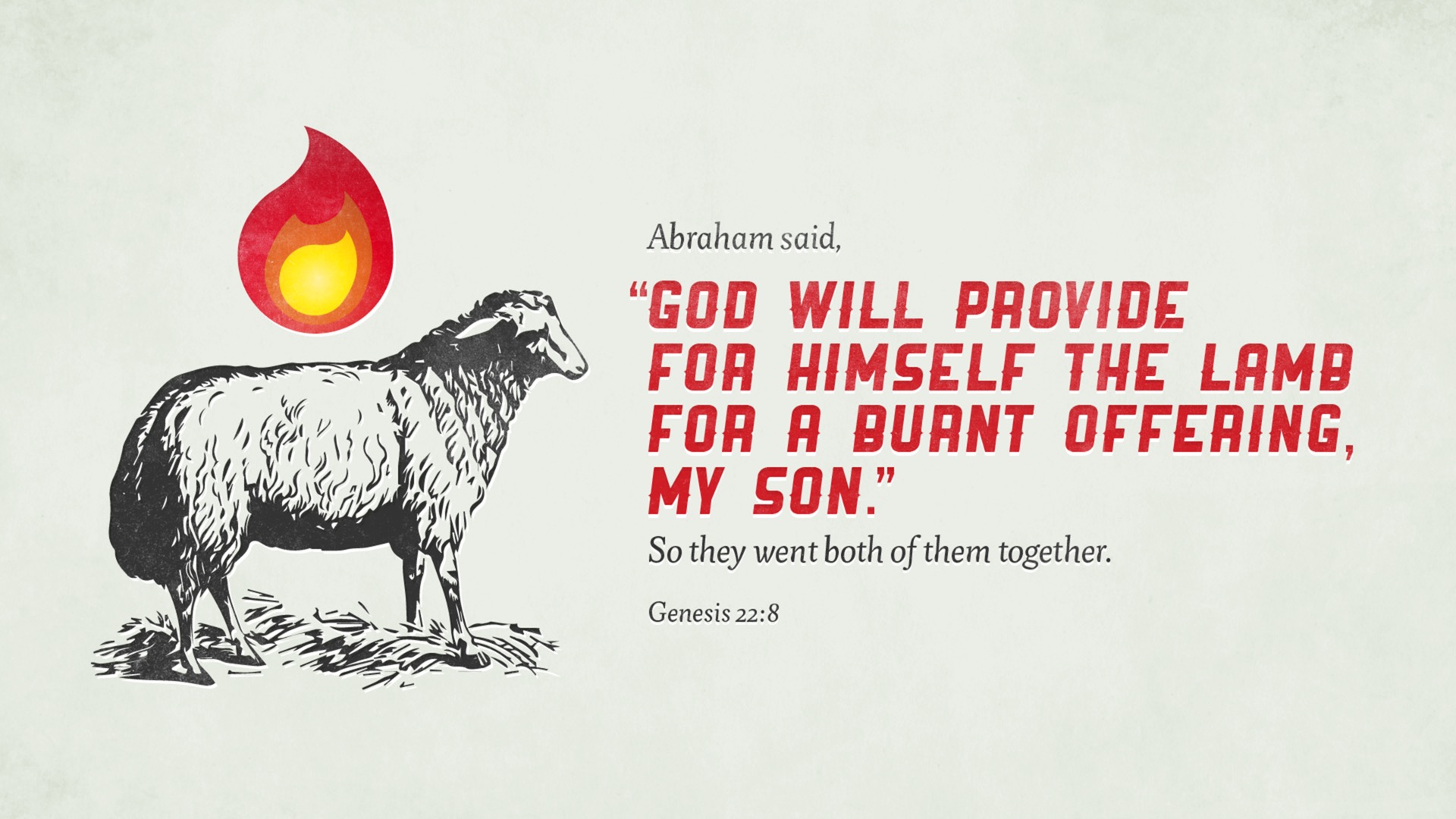
Nativity sets always include Joseph, Mary, and, of course, baby Jesus in the manger. Most will have figures that depict the shepherds and wise men (even though the wise men almost certainly did not arrive the night of Jesus’ birth). A lot of nativity sets will also incorporate animals. There might be a donkey because of the idea that Mary rode on a donkey. It very well might be that she did ride on a donkey from Nazareth to Bethlehem, but that is not recorded for us in Scripture. Nativity sets might include camels that the wise men supposedly rode, but again, even if they were there that night, Scripture doesn’t tell us if they rode on camels. But if there is one animal in a nativity set, it is probably a lamb. Of all the animals that should be part of our imagery of Christ’s birth, a lamb is at the top of the list.

Now, Jesus’ birth took place in Bethlehem which is located about five miles south of the Temple where God commanded that sacrifices be made. And the requirements for the sacrificial system at the Temple would have been immense. Each day, two lambs would be sacrificed – one in the morning and one in the evening. On top of that there were the sin offerings, peace offerings, and freewill offerings that individuals and families would bring at various times all would have required animals for sacrifice. And even beyond that, there were the animals needed for the extra sacrifices on festival days. So, all around Jerusalem, there would have been a large industry of raising animals that would be sacrificed at the Temple.

It is not a stretch to think that at least some if not most of the lambs the shepherds were tending the night of Jesus’ birth were destined to be sacrificed. It’s even possible that some of the animals who fed from the manger where Jesus was laid would also end up on the altar at the Temple. But there, in the center of it all, is Jesus – God in the flesh, the One who was born to be the one-time, forever sacrifice for your sins.

“Behold the Lamb of God who takes away the sin of the world.”

In this Gospel reading, the priests and Levites were sent to ask John the Baptizer, “Who are you?” John had been attracting massive crowds who were going out to hear his preaching and to be baptized. So, the big shot Pharisees back in Jerusalem wanted to know why John was doing what he was doing out there in the wilderness beyond the Jordan.

“Who are you, John?”

John confessed, “I am not the Christ. I am not Elijah. I am not the Prophet. I am the voice of one crying out in the wilderness, ‘Make straight the way of the Lord.’” Everything John does and says in this text points people away from himself and to Jesus, to the Savior, to the Lamb of God who takes away the sin of the world.

Dear saints, as we approach the birth of our Lord, there are all sorts of things that would grab our attention. Parties, pageants, and programs. Decorating, shopping, and wrapping. Cleaning, baking, and cooking. In the midst of the hustle and busyness of this season, don’t let your attention be grabbed only by the peripherals. Don’t be like the Pharisees, priests, and Levites who are only interested the stuff that is flashy and popular. One thing and one thing only is important this Christmas season: May you behold the Lamb of God who takes away the sin of the world.

He comes to you to take away your sin, to restore you into a right relationship with God, and to give you eternal life. Jesus comes to take away the sin of the world. That means your sin – every last bit of it – is taken away by Jesus.

This Christmas, may you be surrounded by God’s blessings – family, friends, food, gifts, and celebration. But in the midst of all of that, remember that you are secure for all eternity because of what Christ has done. He is your Savior, your Lamb of God who takes away the sin of the world. Amen.

The peace of God, which surpasses all understanding, will guard your hearts and minds in Christ Jesus. Amen.

The Child Who Is John’s Joy – Sermon on 2 Samuel 6:12-23 and Luke 1:39-45 for Midweek Advent 3

In the name of Jesus. Amen.

We expect kings to behave differently than we do. Kings don’t walk; they strut. Kings don’t just throw on some clothes; they are robed. And kings don’t eat; they dine. Kings are dignified and distinguished. That’s why David’s wife, Michal, was so disgusted by her husband’s behavior in our Old Testament reading (2 Sam. 6:12-23). He wasn’t acting very kingly.

The Ark of the Covenant had been stolen by the Philistines and had been held for about seven months (1 Sam. 6:1). When the Israelites initially recovered the Ark, things didn’t go so well. Hundreds of years before, when God had given instructions on how to build the Ark, He commanded that the Ark have golden rings on its corners so that poles overlaid with gold could be placed through those rings (Ex. 25:12-15). The priests were instructed to carry the Ark by those poles on their shoulders (Nu. 7:9). But a guy named Uzzah and those with him put the Ark on a cart. When one of the oxen pulling the cart stumbled, Uzzah reached out to stabilize the Ark and was killed when he touched it. This made David afraid to move the Ark any further. So, the Ark stayed at the house of Obed-edom for three months (2 Sam. 6:11) while he and his whole household were blessed. That is where our Old Testament lesson picks up.

David hears how Obed-edom was blessed and decides to finish the job of bringing the Ark back to Jerusalem. This time, the proper procedure for carrying the Ark was followed to the letter (1 Ch. 15:13-15). The “proper” behavior for a king, however, was thrown out the window. King David is part of the procession, but he doesn’t wear his royal robes. Instead, David puts on a linen ephod which was a humble garment for a priest. David doesn’t stride like a king before the Ark; instead, David leaped and danced like nobody was watching.

But David’s wife, Michal, was watching, and she wasn’t at all impressed by her husband’s behavior. Instead, she sarcastically nags him for it. But God was watching David too, and God judged David’s celebration and joy to be very befitting for His king. So, God made Michal barren for the rest of her life because she mocked David’s joy.

At the beginning of our service this past Sunday, the first words of Scripture you heard in our Call to Worship were the same words from our Epistle lesson tonight (Php. 4:4-7), “Rejoice in the Lord always; again I will say, rejoice.” (And, in fact, you’ll hear those verses again in this coming Sunday’s epistle lesson.) The reason for so much rejoicing this week is, according to the text, that “the Lord is at hand.” Rejoice. You don’t have to climb up to heaven to the presence of God. No. He comes to you. He comes to bring His love, mercy, forgiveness, and grace. And this good news should make us throw away any sense pride or dignity we might think we possess in ourselves and cause our hearts to leap for joy like David.

Our problem is that we are too much like Michal and not enough like King David. Our hearts are pulled from the joy of God’s presence. Like Adam and Eve in the garden after they ate the forbidden fruit, we avoid God’s presence. Usually, it isn’t because we are afraid of punishment but because we are too busy running after worldly things that we imagine will bring joy. But when we attain those things, we don’t find joy or even fulfillment. At best, we are amused for a while and then get bored. Even though God knows this about us, He still graciously desires to dwell with us.

That is why Christ came. He draws near to save a world that is in love with sin instead of Him. God comes to remove our hearts of stone and give us new hearts of flesh so that we can truly rejoice in His presence with us.

We can learn a lot both from King David and from the pre-born John the Baptizer in our Gospel text (Lk. 1:39-45). King David was so overcome with joy that he dropped all sense of decorum a king should have and danced and leapt for joy at the return of the Ark because the Ark of the Covenant was where God promised to dwell with His people. In other words, when David brought the Ark back to Jerusalem, God was returning to His people. And in a more important way, when Mary, who was pregnant with Jesus, visited her older relative (Lk. 1:36) Elizabeth, unborn John leapt when he heard the voice of the woman carrying the world’s Savior. John leapt because something even more wonderful than the Ark had arrived at his house. Mary was, in a very real way, the new Ark of the Covenant because she carried in her womb God in human flesh.

It is absolutely true that our Roman Catholic brothers and sisters in Christ say way more about Mary than what Scripture does. But we overreact and push back against the false Roman Catholic teaching harder than we should. That isn’t good either because it ends up diminishing what Scripture says about Jesus. And if we say anything less about Jesus, our salvation is in doubt. Now, if you have any questions regarding what I’m about to say here, please let me know. I’m happy to answer them. Trust me; I’m not starting to lean toward Rome.

To have a proper understanding of Mary and her place in the story of God saving mankind, it is good to start with a Scriptural understanding of who we are and who Jesus is. So, Adam was created by God without a man or woman. Eve was created by God from a man without a woman. We are created by God from both a man and a woman. But Jesus, the God-man, is the only one who comes into human flesh solely from a woman, and that woman is Mary.

The Son of God, the second Person of the Trinity, existed from all eternity. But when He took on flesh, He did so through Mary. That means every bit of Jesus’ human nature comes from Mary. She was chosen by God to carry out a unique role in the salvation of mankind. According to our Gospel text, she is the mother of Elizabeth’s Lord and your Lord as well. God chose her to be Jesus’ earthly mother.

Now, in no way does that mean that Mary was sinless herself. We have at least one example from Scripture where Mary sins (and possibly others [Mk. 3:21, 31Jn. 2:3-47:5]). The easiest example is when Mary wrongly chides twelve-year-old Jesus when He stays in Jerusalem (Lk. 2:48). Mary sins at least twice there. First, she neglected her responsibility as a parent to protect her Son, and second, she blames Jesus for her sin, which is the same thing Adam did when he blamed God for giving him a wife who gave him the forbidden fruit. Also, no, we don’t and shouldn’t worship Mary or pray to her. But, again, we shouldn’t diminish her unique part in the story of salvation. Doing so robs us of the wonder and joy of our salvation. God became man to save us.

In our Gospel text tonight, God was drawing near not just to Jerusalem, but to the whole world through the pre-born Jesus in Mary’s womb. And that is why the unborn John the Baptizer leaps in Elizabeth’s womb. God had come to earth in order to redeem sinful mankind.

This good news brought joy to John even before he was born, but it also brought joy to Jesus Himself. Hebrews 12:2 says that enduring the cross to save mankind was the joy that was set before Jesus. God had come born of a woman, born under the Law, to redeem you who were under the Law, so that you might receive adoption as sons (Gal. 4:4-5).

So, when the hymn we sang earlier asks, “What Child is This?” the answer is enough to make our hearts leap just like King David and John the Baptizer. The Child is Christ the King, God in the flesh come to save us. The eternal Son of God comes brings forgiveness, eternal life, and joy to the world.

And right now, through His Word, He comes even nearer to you than He came to John in this Gospel text (Mt. 18:20). He comes and takes up residence in your heart. His love fills you and that love spills over to others. Jesus comes near and makes you a new creation (2 Cor. 5:17). And the day is coming soon when Jesus will come to dwell with you again. He will come from His eternal throne one final time to bring you out of this world of sin and sorrow to His eternal joys.

So, “Rejoice in the Lord always; again I will say, rejoice. The Lord is at hand.” He has come, and He is coming again. Amen.[1]The peace of God, which surpasses all understanding, will guard your hearts and minds in Christ Jesus. Amen.


[1] The idea for connecting David’s joy at the return of the Ark to the leaping of John the Baptizer was adapted from a sermon by Pr. Ralph Tausz.

Even the Greatest Struggle – Sermon on Matthew 11:2-11 for the Third Sunday of Advent

Matthew 11:2-11

2 Now when John heard in prison about the deeds of the Christ, he sent word by his disciples 3 and said to him, “Are you the one who is to come, or shall we look for another?” 4 And Jesus answered them, “Go and tell John what you hear and see: 5 the blind receive their sight and the lame walk, lepers are cleansed and the deaf hear, and the dead are raised up, and the poor have good news preached to them. 6 And blessed is the one who is not offended by me.”

7 As they went away, Jesus began to speak to the crowds concerning John: “What did you go out into the wilderness to see? A reed shaken by the wind? 8 What then did you go out to see? A man dressed in soft clothing? Behold, those who wear soft clothing are in kings’ houses. 9 What then did you go out to see? A prophet? Yes, I tell you, and more than a prophet. 10 This is he of whom it is written,

“‘Behold, I send my messenger before your face, 
who will prepare your way before you.’

11 Truly, I say to you, among those born of women there has arisen no one greater than John the Baptist. Yet the one who is least in the kingdom of heaven is greater than he.”

In the name of Jesus. Amen.

John the Baptizer, you know him. You love him. That camel hair wearing, locust eating, outspoken prophet in the wilderness is a combination of a biker gang member, wilderness survivalist, and street-corner preacher. John preached, “Repent for the kingdom of heaven is at hand.” He announced that Jesus was coming after him, and John said he wasn’t worthy to stoop down and untie Christ’s sandals (Mk. 1:7). Scripture tells us that the people of Jerusalem, all Judea, and all the region around the Jordan were going to be baptized by John (Mt. 3:5). John came to bear witness to Jesus as the true Light who gives light to everyone (Jn. 1:6-9). And he pointed people to Jesus as the Lamb of God who takes away the sin of the world (Jn. 1:29ff).

John preached the Gospel, but he also preached the Law. He would call out the Pharisees and Sadducees, calling them a brood of vipers (Mt. 3:7). And when Herod the tetrarch married his brother’s wife, John spoke out against this evil thing (Lk. 3:19-20). That is why John is in prison when we meet him here. (Just a side note: Yes, there are times that a preacher should call out the evil things politicians do.) For his whole life, John had been a faithful steward of the mysteries of God’s Word (1 Cor. 4:1-2).

But here, in this text, John is nearing the end of his life and is soon to be executed. He is in a dank, dark prison cell. He probably had no heat or light, wasn’t being fed well, and was shackled in some way. But even though he is in prison, John was able to visit with his disciples. From that dark place, John sends his disciples to ask Jesus an important but surprising question, “Are You the one who is to come, or should we look for another?”

The question, in and of itself, is a great question, but we should be surprised and utterly shocked at the source and originator of this question. John already knew the answer. On top of everything I’ve already mentioned about him, John is the one who baptized Jesus. After that baptism, John saw the Holy Spirit descend and remain on Jesus (Jn. 1:31-33). John heard God the Father say, “This is My beloved Son, with whom I am well pleased” (Mt. 3:17). And John publicly proclaimed that Jesus is the Son of God (Jn. 1:34).

But now, John asks Jesus, “Are You really the Messiah?” It’s shocking. So shocking, in fact, that after Jesus answers the question with all the proofs – the blind see, the lame walk, lepers are cleansed, the deaf hear, and the dead are raised up – Jesus then turns to the crowds and defends John for even asking this question and talks him up a bit. Christ basically says, “Listen, you didn’t go out in the wilderness to listen to a reed shaken by the wind or to see a guy dressed up funny clothes.” And, quite honestly, what Jesus says there is at least PG-13, just ask me after the service. Jesus goes on to say that John the Baptist is a prophet, and more than a prophet. He is the long-promised messenger who would prepare the way of the Messiah (Mal. 3:1). On top of that, Jesus says that John the Baptizer is the greatest of all men ever born. This is absolutely stunning.

Just think about this. According to Jesus, John is greater than Noah, Abraham, Moses, David, Solomon, Elijah, Isaiah, Jeremiah, Ezekiel. So, the question before us this morning is why does John ask Jesus, “Are You he one who is to come, or should we look for another?”?

Now, there are two schools of thought as to why John would ask this question. Some say that John is having legitimate doubts and is second-guessing his entire ministry of pointing people to Jesus, but others completely dismiss that possibility and say that John is asking this question to get his disciples to follow Jesus. But I don’t think we can simply dismiss the theory that John doubted. Here’s why.

Everything we know about John is that is he was direct and doesn’t beat around the bush. If he wanted his disciples to follow Jesus, he would have told them straight out, and we have passages of Scripture where John does exactly that (Jn. 1:26-30). Another reason to reject the theory that John is trying to get his disciples to follow Jesus is that Jesus doesn’t go along with the plan. Christ sends those disciples back to John to report what they hear and see. If John was trying to get his disciples to follow Jesus, you would think that Jesus would invite them to follow Him. But Jesus takes John’s question seriously. Finally, the speculation that John is trying to get his disciples to follow Jesus typically works under the assumption that Christians cannot or should not ever have serious doubts or difficulties. And that assumption is wrong.

All sorts of strong believers in Scripture went through times of struggle and doubt. Abraham, Jacob, Job, Moses, David, Elijah, Peter, and Paul all faced serious doubts – some of them more than once. Why wouldn’t John, even though he is the greatest man ever born, face that too?

Dear saints, even the greatest struggle in the faith. Just consider, for a moment: how many people did John minister to? How many did he point to Jesus when they faced temptation, guilt, pain, suffering, and struggles? But, now, as John is sitting in prison, he is the one who needs the ministry of the Gospel. He needs to be reminded. He needs to be pointed to the same Jesus he pointed others to as he travels down his own dark road. If John the Baptizer gets to that place, so will you, if you haven’t already.

So, I want to leave you with two thoughts, which should also be encouraging. First of all, there is a difference between John’s question here, where he is struggling and panicking a bit (I think we can categorize his question that way), there is a difference between that and real intellectual questions about Christianity, God, the resurrection, and other aspects of our faith. None of us are immune to the struggle that John is going through here. If even the greatest man ever born struggles in this way, expect that you will as well. So, when (not if but when) you face these spiritually dark times, don’t panic. Do as John does here and bring those questions to Jesus. Dive into Scripture and hear God’s promises again. Pull out the Psalms and see how often they deal with these spiritually low places. And know that I am here to help. I’m here to minister to you in those times, and so are all your brothers and sisters in Christ.

Now, there might be times where you have intellectual questions about the faith. That is a different thing entirely. If that’s the case, if you have a question about creation because of what you have heard in a science class that is teaching the theory of evolution, or a question about if the Resurrection of Jesus actually happened, or about Christianity in general, ask someone who knows more than you do. I can help answer a lot of those questions or I can help you search for and find the answers. Don’t be a fool and think there aren’t answers for those types of questions. You aren’t so smart that you have found a hole in our faith that hasn’t already been answered. Christianity is intellectually rigorous and can answer even your most difficult questions. So don’t be afraid to ask them. But remember that is a different thing than going through a dark, difficult time spiritually.

The second thing I want you to observe is how gently Jesus answers John’s question. Consider this question from Jesus’ perspective. Throughout the Gospels, Jesus hardly gets a break. He’s always teaching, healing, ministering. Even when Christ does try to get away from the crowds for a bit, He ends up being found and having to do more (Mk. 6:30-34), or Jesus will try to sit down to rest but ends up ministering to another lost soul (Jn. 4:6-26), or Christ tries to catch a quick nap and His disciples will wake Him up with their problems (Mt. 8:23-27). When this question comes from John, Jesus doesn’t throw up His hands, groan, and say, “What! John needs help too? Isn’t he supposed to be the greatest? I don’t have time for this.” No, Jesus answers John’s question kindly, softly, and without a single, solitary shred of impatience.

Jesus doesn’t rebuke John. He doesn’t complain about how busy and tired He is. Jesus simply says exactly what John needs to hear. Jesus is patient and gentle with John, and He is with you too.

I know this text of John the Baptizer sitting in prison and struggling in his faith doesn’t sound very Christmassy, but it is very practical, real life, and down to earth stuff. This can be a dark and lonely time of year. But the same Lord who loved John and gave him the encouragement he needed in the moment he needed it is here for you to speak peace to you and encourage you. Rejoice! He will see you through because He has promised. Amen.

The peace of God, which surpasses all understanding, will guard your hearts and minds in Christ Jesus. Amen.

The Child Who Is Zechariah’s Hope – Sermon on Luke 1:5-15 for Midweek Advent 1

Luke 1:5-25

5 In the days of Herod, king of Judea, there was a priest named Zechariah, of the division of Abijah. And he had a wife from the daughters of Aaron, and her name was Elizabeth. 6 And they were both righteous before God, walking blamelessly in all the commandments and statutes of the Lord. 7 But they had no child, because Elizabeth was barren, and both were advanced in years. 

8 Now while he was serving as priest before God when his division was on duty, 9 according to the custom of the priesthood, he was chosen by lot to enter the temple of the Lord and burn incense. 10 And the whole multitude of the people were praying outside at the hour of incense. 11 And there appeared to him an angel of the Lord standing on the right side of the altar of incense. 12 And Zechariah was troubled when he saw him, and fear fell upon him. 13 But the angel said to him, “Do not be afraid, Zechariah, for your prayer has been heard, and your wife Elizabeth will bear you a son, and you shall call his name John. 14 And you will have joy and gladness, and many will rejoice at his birth, 15 for he will be great before the Lord. And he must not drink wine or strong drink, and he will be filled with the Holy Spirit, even from his mother’s womb. 16 And he will turn many of the children of Israel to the Lord their God, 17 and he will go before him in the spirit and power of Elijah, to turn the hearts of the fathers to the children, and the disobedient to the wisdom of the just, to make ready for the Lord a people prepared.” 

18 And Zechariah said to the angel, “How shall I know this? For I am an old man, and my wife is advanced in years.” 19 And the angel answered him, “I am Gabriel. I stand in the presence of God, and I was sent to speak to you and to bring you this good news. 20 And behold, you will be silent and unable to speak until the day that these things take place, because you did not believe my words, which will be fulfilled in their time.” 21 And the people were waiting for Zechariah, and they were wondering at his delay in the temple. 22And when he came out, he was unable to speak to them, and they realized that he had seen a vision in the temple. And he kept making signs to them and remained mute. 23 And when his time of service was ended, he went to his home. 

24 After these days his wife Elizabeth conceived, and for five months she kept herself hidden, saying, 25“Thus the Lord has done for me in the days when he looked on me, to take away my reproach among people.”

In the name of Jesus. Amen.

Zechariah and Elizabeth were an ideal couple. They were both righteous before God. In other words, they both had faith in God’s promises to send the Messiah who would crush the serpent’s head and deliver all God’s people (Gen. 3:15Is. 9:14). They both walked blamelessly in keeping the commandments and statues of the Lord. But this dear couple had to walk the sad road of infertility. They had no child.

It is interesting how often Scripture will introduce a new era of salvation history with a barren womb. The beginning of God’s chosen people who would be the lineage of the Messiah begins with Sarah’s barren womb which would bring forth Isaac. In the age of the kings, the focus is on Hannah’s barren womb which would bring forth the prophet and king-anointer, Samuel. Now here, at the time of the Messiah, God will bring the forerunner and proclaimer of the Messiah from Elizabeth’s barren womb. And the Messiah Himself will come from the virgin womb of Mary.

As Zechariah is serving in the Temple, he is given all these wonderful promises about the child he and Elizabeth will bear, but he doubts. “How shall I know this? For I am an old man, and my wife is advanced in years.” It’s ironic that Zechariah doubts like this. After all, Zechariah’s name means, “God remembers.” Apparently, Zechariah didn’t live up to his name. He didn’t remember that God remembers. Somehow, this righteous and blameless man didn’t remember how God had acted for Abraham and Sarah with the birth of Isaac and for Elkanah and Hannah with the birth of Samuel. Zechariah didn’t remember, but God did. God remembered His merciful promises to deliver mankind from sin and death. God remembered His mercy and steadfast love (Ps. 25:6-7). Whenever Scripture talks about God remembering, it isn’t simply that a bit of information had been momentarily lost in God’s mind and suddenly found. No. When God remembers, He acts.

God sent the angel Gabriel to Zechariah that day in the Temple to announce that God was going to act and bring about the long-promised salvation. God was about to send John the Baptizer, the one whom God promised would come in the spirit and power of Elijah to prepare God’s people for the coming of the Savior (Mal. 4:5-6). But Zechariah, God’s priest, doubted and was made silent for his unbelief.

Dear saints, too often we are like Zechariah. We have been made God’s royal priests (1 Pet. 2:9). In His mercy, God has chosen you to do priestly work – to pray, to train your children in the Scriptures, and to proclaim God’s goodness and mercy to everyone you meet. You and I have every reason to be bold and confident in everything we do because of God’s promises to us. But too often we find ourselves doubting. Doubting that God has and will deliver us. Doubting that we have been justified by grace through faith. Doubting that we have peace with God. Doubting that we have access to God’s grace. All of this doubt grieves the Holy Spirit. And our doubt mutes us from proclaiming God’s love to others.

Like Zechariah, we may forget, but God does not forget. Instead, God continues to act. He has sent Jesus, the Messiah who is our Great High Priest (Heb. 4:14) and the Lamb of God who takes away the sin of the world (Jn. 1:29).

Jesus came and used His voice to bless, to pray, to teach, and the gather sinners. Our guiltless Christ was silent before His accusers and went to an unjust death in your place. There, from the cross, Jesus uttered the greatest blessing any priest could speak, “Father, forgive them, for they know not what they do” (Lk. 23:34). Now, Jesus sits at God’s right hand as your intercessor and advocate.

In Advent, we focus on Jesus’ coming. He came in humility at His birth in Bethlehem. He comes in humility now in His Word and Sacraments. And He will come again in glory on the Last Day. So, as we wait, let us remember His mercy never comes to an end but is new each and every morning. And He gives us better than we ask or think.

We ask for comfort from our wounded consciences, and He gives comfort on top of comfort (Is. 40:2). We ask Him to help is in our earthly trials, and He gives us an eternal Kingdom. We ask for help to endure pain, disease, and sickness, and He gives us the promise of full and complete healing in the resurrection on the Last Day.

Dear saints, whenever we consider the Child whose birth we will soon celebrate, let the answer to “What Child is this?” always be, “This is Christ the King whom angels sing.” And may our voices join with theirs now and for all eternity because He who has promised is faithful and He will surely do it. Amen.

The peace of God, which surpasses all understanding, will guard your hearts and minds in Christ Jesus. Amen.

A King for the Stubborn – Sermon on Matthew 21:1-9 for the First Sunday of Advent

Matthew 21:1-9

1 Now when they drew near to Jerusalem and came to Bethphage, to the Mount of Olives, then Jesus sent two disciples, 2 saying to them, “Go into the village in front of you, and immediately you will find a donkey tied, and a colt with her. Untie them and bring them to me. 3 If anyone says anything to you, you shall say, ‘The Lord needs them,’ and he will send them at once.” 4 This took place to fulfill what was spoken by the prophet, saying, 

5   “Say to the daughter of Zion, 

     ‘Behold, your king is coming to you, 
humble, and mounted on a donkey, 
on a colt, the foal of a beast of burden.’” 

6 The disciples went and did as Jesus had directed them. 7 They brought the donkey and the colt and put on them their cloaks, and he sat on them. 8 Most of the crowd spread their cloaks on the road, and others cut branches from the trees and spread them on the road. 9 And the crowds that went before him and that followed him were shouting, 

     “Hosanna to the Son of David! 
Blessed is he who comes in the name of the Lord! 

Hosanna in the highest!”

In the name of Jesus. Amen.

Imagine that you are on the gameshow Family Feud. I’ll pretend to be the host, Steve Harvey. “We asked 100 people: What word would you use to describe a donkey?” Yeah, I bet “stubborn” would be worth 97 points. This past week, I did a lot of reading on donkeys and found an article titled, “Fourteen Reasons a Donkey Is an Ideal Hiking Companion.”[1] A few of my favorite sarcastic reasons: They don’t engage in chit-chat but are very good listeners. Big ears. They kick really hard and are, basically, the Chuck Norris of the equine family. They aren’t interested in social media, so you won’t freeze at the summit while you wait for them to try and get the perfect shot to post in Instagram.

But some of the more serious reasons are: They will carry your stuff for you. They have great endurance. They are focused and surefooted in all types of terrain. Donkeys have great memories and can remember areas they have been up to 25 years previously. They are a good judge as to whether or not a path or situation is potentially dangerous, and it’s nearly impossible to persuade a donkey to take a path that it considers sus (sic.). (For you old, out-of-tough folks, that means ‘suspicious.’) And that last reason is why most people consider them to be stubborn. If a donkey senses danger, it won’t budge.

Remember Balaam’s donkey? Balaam was riding his donkey to go curse the people of Israel on behalf of the king of Moab (1 Kgs. 22). God was angry at Balaam for going and sent the angel of the Lord to stand on the road with a drawn sword. The donkey saw the danger, but Balaam didn’t. The donkey went off the road and into a field, so Balaam struck his donkey. Then, the angel stood in a narrow path with a wall on both sides. The donkey moved to the side, right against the wall, which smushed Balaam’s foot, so he struck her again. Then, the angel went to another narrow place. This time donkey lay down, and Balaam struck her again.

So, God opened the donkey’s mouth to speak to Balaam, “What have I done to you, that you have struck me these three times?” Balaam complains to his donkey that she has made him look like… well, another word for ‘donkey.’ And the donkey responded, “You have ridden me your whole life. Do I normally treat you this way?” Balaam answered, “No.” Finally, God opened Balaam’s eyes to see the angel of the Lord with his sword drawn, and Balaam fell on his face.

Balaam’s donkey was being stubborn and refusing to walk near the angel of the Lord because it was good for the donkey, but it was also good for her rider. The stubbornness of donkeys is one of their best qualities. It protects them and their companions.

It’s interesting that the donkey Jesus rode in our text didn’t sense the danger ahead for its Rider and dig in its heels. Maybe, that donkey didn’t realize that sinful man is even more stubborn than a donkey.

Donkeys are supposed to be stubborn, but we aren’t. Quite honestly, when it comes to being stubborn, we sinners are far more guilty than donkeys. The Old Testament prophets – especially Jeremiah – talk about how we stubbornly refuse to listen to God. Our old nature is a wild, unmanageable donkey (Jer. 2:23-24). We have stubborn hearts that turn us aside from God’s way (Jer. 5:23). Too often, we allow our stubborn, sinful hearts to lead us in gratifying our fleshly desires. We are not loving toward God or our neighbor. Instead, we dig our heels into the ground and demand our own way. And when we do run, it is generally toward sin and away from God. Repent.

There’s no way to know if the donkey Jesus rode into Jerusalem knew about the danger that lay ahead for its Rider, but Christ certainly knew. And that is why He rode forward. Christ came to be the King for stubborn sinners. He knew the suffering He would endure for you, and your stubborn heart is no match for your King’s loving and merciful heart. Today, you hear how He comes to save you, humble and mounted on a donkey.

And for us stubborn sinners, that is good news. He doesn’t come as a conquering king on a war horse or elephant. He comes humble and mounted on a beast of burden. Jesus comes to carry your burden of sin on His shoulders to the cross where He will be even more humble and lowly and die for your sins.

And now, Christ does for you just what He did for that donkey He rode into Jerusalem. In the Absolution, Jesus has sent His disciple with authority to come and untie you from your sin (Jn. 20:22-23). He has loosed you from your stubbornness in sin and freed you to go with Him bearing your cross as His willing disciple.

As we begin the season of Advent (which means ‘coming’), we want to remember all the comings of Christ, our King and Savior. He came in Bethlehem: born of a woman, born under the Law to redeem you who were under the Law (Gal. 4:4). On the Last Day, He will dome again in glory with all the angels to judge the living and the dead.

But we don’t want to forget that Christ still repeatedly comes now in humility in His Word and Sacraments. He comes to give you what you could never earn or deserve – a place in His eternal kingdom. He washes away your stubborn stains of sin and makes you clean, righteous, and holy. For that, God be praised. Amen.

The peace of God, which surpasses all understanding, will guard your hearts and minds in Christ Jesus. Amen.



[1] https://www.thehikinglife.com/2020/02/14-reasons-why-a-donkey-is-the-ideal-hiking-companion/