Matthew 22:1-14 – I’m Serious. Come. Eat, Drink, & Be Merry

Listen here.

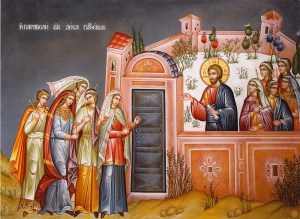
Matthew 22:1-141 And again Jesus spoke to them in parables, saying, 2 “The kingdom of heaven may be compared to a king who gave a wedding feast for his son, 3 and sent his servants to call those who had been called to the wedding feast, but they would not come. 4 Again he sent other servants, saying, ‘Tell those who have been called, “See, I have prepared my dinner, my oxen and my fat calves have been slaughtered, and everything is ready. Come to the wedding feast.”’ 5 But they paid no attention and went off, one to his farm, another to his business, 6 while the rest seized his servants, treated them shamefully, and killed them. 7 The king was angry, and he sent his troops and destroyed those murderers and torched their city. Matthew 22 Wedding Garment Parable8 Then he says to his servants, ‘The wedding feast is ready, but those who had been called were not worthy. 9 Go therefore to the main roads and call to the wedding feast as many as you find.’ 10 And those servants went out into the roads and gathered all whom they found, both bad and good. So the wedding hall was filled with guests. 11 But when the king came in to look at the guests, he saw there a man who had no wedding garment. 12 And he says to him, ‘Friend, how did you get in here even though you do not have a wedding garment?’ And he was speechless. 13 Then the king said to the attendants, ‘Bind him hand and foot and cast him into the outer darkness. In that place there will be weeping and gnashing of teeth.’ 14 For many are called, but few are chosen.”

In the name of Jesus. Amen.

You have a God who wants to, “prepare a table before you in the presence of your enemies” (Ps. 23:5). You have a God who has made for you “a feast of rich food, a feast of well-aged wine, of rich food full or marrow, of aged wine well refined” (Is. 25:6). But most of the time, we sinners look at God as though He is a blood-thirsty deity that we are fed to rather than a loving heavenly Father we are fed by (Capon). But a God full of wrath and anger is not the kind of God you have.

Jesus depicts God’s reign, His saving action in the world, as a king who gave a wedding feast. The king sends out invitations, and then he sends out his servants to call those who had already been called. But after these two calls, the guests still do not come. The king eagerly sends out other servants tempting the guests to come, “The feast is ready. Listen to this tasty menu; I’ve killed my best animals and barbequed them. The table is set. The wine is poured. Come to my palace. Let’s have a hand-clappin’, foot-stompin’, side-splinnin’ good ol’ time.”

The guests still make light of it all. They ignore the call and go about their regular business. One goes off to his farm, and another goes off to his business. Some of the other invitees make it clear what they think of the king and his party. They seize the king’s servants who were simply inviting them to come to a feast, treat the servants disgracefully, and kill them. This is no way to run a social life.

Pause here for a moment. Notice, the two types of people here. First, there are those who think that the king’s gracious attitude will absolve them from the bother having to sit through his feast (notice the sarcasm). These people say, “Oh, I have so much stuff to do, I can’t be interrupted to go to a boring party at the palace.” Second, there are those who think that they are too good, too fancy, too high-brow to be seen at the feast. Maybe they see the guest list and say, “Oh, I couldn’t be seen with the likes of those people. It would ruin my reputation.” But what is common to both of these groups is that they are lacking in faith that the king’s feast is the place to be. And by rejecting the king and his feast, the people are left with nothing because outside of this party, there is no life at all.

The palace is decorated, and the music has started. But the town is filled with indifference and violence towards the king and his party causing the streets flow with the blood of the king’s servants.violent-men (1)

So before he can preside over the party, the king has to oversee a slaughter. He sends out his armies shooting up cars, throwing grenades, launching missiles, and dropping napalm on the very people the king wanted at his feast. The king wanted to give them the best food and wine. But because of their violent refusal, the king takes their lives crosses them off of his list for good.

After this “shock and awe” display of wrath, the king dusts off his hands and determines to go on with the party. He sends out his servants, “Go into the main streets of the city and invite as many as you find.” So the servants go out and gather all the people they could find – both bad [πονηρός where we get our word ‘pornography’] and good.

Pause again. The king will stop at nothing to have his party. Evil is not a problem for God. Evil has already been dealt with on the cross, in the death and resurrection of Jesus. God does not invite the good and snub the bad. He invites everyone – the good, the bad, the ugly, and the evil. The eternal Marriage Supper of the Lamb is open to all sorts of evil people – to drunkards, druggies, prostitutes, murderers – and even to you.

The only thing that can possibly hinder you from getting into the feast of God’s reign is rejection of the invitation. While you were yet a sinner, Christ died for you making you acceptable to God. Trust that provision and nothing else.

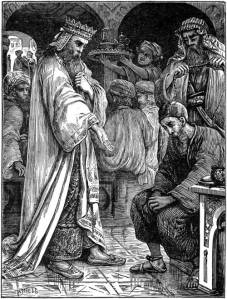
Back to the parable: The servants bring in everyone they can find, both the bad and the good. All these people are dragged off the street dressed just as they are – business casual, sweaty workout cloths, and even filthy rags – and are marched right into the palace. But before they are ushered to their chairs, the king’s servants give everyone something splendid to wear. The men get expensive Italian suits by Armani and Brioni while the women get evening gowns by Dolce & Gabbana and Prada. So, finally, the wedding hall was filled with guests.

The king comes in to have a look at the splendor. But he sees one glaring defect marring the whole scene. One character stands out like a monstrous, puss-oozing zit smack in the middle of an otherwise flawless face. There he is, a guy with no wedding cloths. The king walks right up to him and asks, “Hey buster, how did you get in here without a wedding garment?” And the man was speechless.

I think Jesus makes the man speechless just to get to the point of the parable. Stories, even good stories, have to end sometime. Seeing the lengths to which the king goes to get anyone in his feast, I’m sure any excuse would have done. If the guy had just said, “I didn’t want to get your fancy schmancy suit dirty. And I’ve been working all day getting sweaty and dirty cleaning the manure out of my barn. And I’m still bleeding from when I tried to jump over my barbed-wire fence when I heard about your invitation.” I’m sure the king would have laughed and said, “Don’t worry about it. The cloths are just for fun. Here’s a nice $50,000 Kiton suit. The color will distract from the poo in your hair! Here’s a nice Rolex watch. It will work as a Band-Aid for your cut.”

But this guy doesn’t even offer an excuse, and by doing so, he excludes himself from a relationship with the king. The king wanted a relationship with this guy and was willing to go to whatever lengths to make it happen. But by not believing and accepting the king’s provision and acceptance, this sorry dude brought judgment upon himself. “Bind him hand and foot, and throw him into the outer darkness – where there is nothing but weeping and gnashing of teeth.”

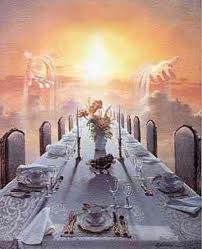
Eschatological Lord's SupperYou see, God has prepared a table for you. He accepts you. He accepts you not because of who you are or what you have done. He accepts you because of what Jesus Christ has done. God simply wants you at His party. He has laid it all out with the best food, the most expensive china, and the finest wine. He will dress you in the righteousness of His Son.

Ephesians 2:4–7 4 God, being rich in mercy, because of the great love with which he loved [you], 5 even when [you] were dead in [your] trespasses, made [you] alive together with Christ—by grace you have been saved— 6 and raised [you] up with him and seated [you] with him in the heavenly places in Christ Jesus, 7 so that in the coming ages he might show the immeasurable riches of his grace in kindness toward [you] in Christ Jesus.

God invites you, “I’m serious. Come. Eat, drink, and be merry. This is My feast, and I want you here.” Amen.

The peace of God, which surpasses all understanding, will guard your hearts and minds in Christ Jesus. Amen.
Matthew 21:33-46 – The Seemingly-Absent, Gracious-to-a-Fault God

Listen here.

Matthew 21:33-4633 “Hear another parable. There was a master of a house who planted a vineyard and put a fence around it and dug a winepress in it and built a tower and leased it to tenants, and went into another country. 34 When the season for fruit drew near, he sent his servants to the tenants to get his fruit. 35 And the tenants took his servants and beat one, killed another, and stoned another. 36 Again he sent other servants, more than the first. And they did the same to them. 37 Finally he sent his son to them, saying, ‘They will respect my son.’ 38 But when the tenants saw the son, they said to themselves, ‘This is the heir. Come, let us kill him and have his inheritance.’ 39 And they took him and threw him out of the vineyard and killed him. 40 When therefore the owner of the vineyard comes, what will he do to those tenants?” 41 They said to him, “He will put those wretches to a miserable death and let out the vineyard to other tenants who will give him the fruits in their seasons.”

42 Jesus said to them, “Have you never read in the Scriptures:

“‘The stone that the builders rejected
has become the cornerstone;

this was the Lord’s doing,
and it is marvelous in our eyes’?

43 Therefore I tell you, the kingdom of God will be taken away from you and given to a people producing its fruits. 44 And the one who falls on this stone will be broken to pieces; and when it falls on anyone, it will crush him.”

45 When the chief priests and the Pharisees heard his parables, they perceived that he was speaking about them. 46 And although they were seeking to arrest him, they feared the crowds, because they held him to be a prophet.

In the name of Jesus. Amen.

Jesus keeps singing Isaiah’s love song about Yahweh’s vineyard (Is. 5:1-7). God wants to supply everything necessary for a feast – a time of wining and dining. He plants a vineyard, sets a hedge around it, digs out a winepress, and builds a watchtower to protect against marauding invaders.

But then, in our eyes, God made a mistake. “He leased the vineyard out to tenants.” Think of all the trouble God could have saved if He had simply had kept the vineyard with all of its grapes and wine for Himself. But, then, God does something even more silly, “He went into another country.”

Parable of the Vineyard“If you want it done right, you have to do it yourself,” we say. But that is not God’s way. He doesn’t set Himself up in the watchtower and manage the vineyard Himself. He lets the tenants figure it out for themselves. When the harvest is over and the wine is made, He expects those tenants to give Him His portion so that He and His tenants can eat, drink, and be merry together.

But the tenants see the Owner as remote and distant. So when the Owner’s servants show up asking for the Owner’s portion the tenants respond, “Yeah, good luck with that.” They think that whatever they send back to the Owner will mean less for them. So they beat one of the servants, kill another, and stone another.

If you don’t think the Owner is foolish yet, look at what He does next. “He sent other servants, more than the first. And they did the same to them.”

Finally, the Owner decides to do something so foolish it’s pathetic. He sent His Son saying, “They will respect My Son.” It looks as though the vineyard Owner underestimated how evil and opportunistic His tenants were. Why, why, would the vineyard Owner be so foolish as to send His Son while His vineyard is stained with the blood of His servants? But He does, and the Son goes willingly.

The tenants see the Son coming and figure this is their chance to make it big. “Come, let us kill the Heir and we will have His inheritance. And they threw [the Son] out of the vineyard and killed Him.”

Then Jesus asks the big question, “When the Owner of the vineyard comes, what will He do to those tenants?” There is no doubt that He will clobber and destroy them. The chief priests and elders, the leaders of the Temple, said to Jesus (lit.), “He will put those wretches to a wretched death.” You would too. You certainly wouldn’t have let things get this far. You absolutely wouldn’t have sent your own child. You probably wouldn’t have sent a second delegation of servants. You likely wouldn’t have gone to a far off country. And maybe you wouldn’t have even lent your vineyard out to anyone.

Parable of the Wicked TennantsBy acting with evil towards the vineyard Owner, His servants, and His Son, the tenants show that they viewed the Owner as evil.

Luther famously said, “As you believe, so it is.” If you treat God as a kill-joy who deprives you of good things, then that is the God you have. If you treat God as a threat to you and your well-being, then that is the God you have. If you think God is the kind of God who demands His rights and pays back evil for evil, then that is the God you have. If you treat God as a threat and enemy, then that is the God you have.

“The evil you think of God, you will receive from Him” (Nagel). Because the tenants are wretched, they get a wretched end. “As you believe, so it is.” If you insist that God give you what you deserve, that is all you will get. If you treat God as a threat and enemy, then that is what He will be (Nagel). But that is not what God wants.

God wants a vineyard, grapes, wine, and the joy that comes from it all (Ps. 104:14-15). God wants what is His to flow from Himself to you and to Himself again – back and forth, back and forth. That is God’s love for you.

God has set us as His tenants in His vineyard, but we have returned His kindness with sin and murder. It was at your hands and my hands that Jesus was thrown out of the vineyard to suffer, bleed, and die. The Father sent Jesus knowing we would treat Him with dishonor, and Jesus willingly came. He came and let His body be broken for you. He let His blood be shed for you. And He does not return your violence upon your heads. He gives and gives more.

Eschatological Lord's SupperToday, He willingly gives you His body and blood – in, with, and under the bread and the wine. He gives His body and blood for the forgiveness of your sins.

You can believe God is a tyrant stealing all your hard work and all your joy from you, and He will certainly do that if that is what you believe. But He doesn’t want to. God wants the joy of the harvest. He wants us to join Him in the celebration, and He calls you to play your part in furnishing the fruit and wine for the festivity (Nagel). Amen.[1]

The peace of God, which surpasses all understanding, will guard your hearts and minds in Christ Jesus. Amen.

[1] I am indebted to Norman Nagel’s sermon on this text as inspiration for this sermon.

Matthew 21:23-32 – Change of Mind

Listen here.

Matthew 21:23-3223 And when he entered the temple, the chief priests and the elders of the people came up to him as he was teaching, and said, “By what authority are you doing these things, and who gave you this authority?” 24 Jesus answered them, “I also will ask you one question, and if you tell me the answer, then I also will tell you by what authority I do these things. 25 The baptism of John, from where did it come? From heaven or from man?” And they discussed it among themselves, saying, “If we say, ‘From heaven,’ he will say to us, ‘Why then did you not believe him?’ 26 But if we say, ‘From man,’ we are afraid of the crowd, for they all hold that John was a prophet.” 27 So they answered Jesus, “We do not know.” And he said to them, “Neither will I tell you by what authority I do these things.

Parable of the Two Sons28 “What do you think? A man had two sons. And he went to the first and said, ‘Son, go and work in the vineyard today.’ 29 And he answered, ‘I will not,’ but afterward he changed his mind and went. 30 And he went to the other son and said the same. And he answered, ‘I go, sir,’ but did not go. 31 Which of the two did the will of his father?” They said, “The first.” Jesus said to them, “Truly, I say to you, the tax collectors and the prostitutes go into the kingdom of God before you. 32 For John came to you in the way of righteousness, and you did not believe him, but the tax collectors and the prostitutes believed him. And even when you saw it, you did not afterward change your minds and believe him.

In the name of Jesus. Amen.

“What gives You the right? Where do You get Your authority?” The chief priests and elders want to know why Jesus thinks He can do all the things He has been doing.

Well, what has Jesus been doing? In last week’s text, Jesus was teaching in parables, but today’s text moves Jesus’ story late into the 4th quarter. We have jumped ahead to Tuesday of Holy Week – in three days Jesus will be hanging on the cross. So what has Jesus done in the last few days that has the chief priests and elders upset? If you look at Matthew and Mark together you get a sense of the timeline. Mark (11:1-27) gives us a sense of how time has passed (Matthew, as he writes, isn’t as concerned about letting us know what happened on what day).

Jesus entered Jerusalem on Sunday riding a donkey while the crowds welcomed Him waving palm branches, laying their cloaks on the road before Him, and shouting, “Hosanna! Save us now, Lord! Blessed is He who comes in the name of the Lord! Hosanna in the highest!”

On Monday, Jesus enters the Temple again and causes quite a scene. He drives out the people who are selling and buying animals with a whip, and He overturns the tables of the money changers. You might think after causing such a scene, Jesus would want to abscond, to slip out to a quiet alley. But instead He stays in the Temple healing the blind and lame while children cry out, “Hosanna to the Son of David!” And Jesus doesn’t tell the kids to be quiet and reverent. Instead, He accepts their praise. None of this goes over well with the leaders. They don’t like it one bit and are trying to figure out how to destroy Jesus.

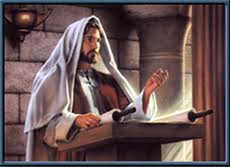
Jesus Teaching in the SynogagueNow our text picks up on Tuesday. Jesus is in the Temple again. The chief priests and elders of the people, the spiritual leaders, walk up to Jesus and ask Him, “What gives Jesus? Who do You think You are? Why are You doing all these things? This is our turf. We get to say how things are supposed to be done here. We told the money changers and sellers they could be here. Why do You think you can drive them out and change how we do things? By what authority do You do all this?”

Jesus responds, “I also will ask you one question, and if you tell me the answer, then I also will tell you by what authority I do these things.” Jesus asks, “The baptism of John, from where did it come? From heaven or from man?”

The answer to the leaders’ question is the answer to Jesus’ question. The source of John’s authority was the source of Jesus’ authority. If they answer Jesus’ question right, then they will have answered their own question.

But these spiritual leaders huddle up and discuss how to respond, and they realize they have a problem. If they answer, “From heaven,” Jesus will say, “If John’s message was from heaven, why didn’t you believe John? He told people to believe in Me. John himself said that I was the one mightier than he was. He said that I am the Lamb of God who takes away the sin of the world. If John came from God, why don’t you believe Me?” But these leaders also realize that if they answer, “From man,” the crowds will be upset because they believed that John was a prophet. Gobs of people from all over the country believed John’s preaching which called for repentance, and they went to him to be baptized (Mk. 1:5). If the leaders say that John’s baptism was only from man, the crowds will hate them.

So they decide to answer with a humble-sounding lie, “We don’t know.” So Jesus tells them, “Than neither will I tell you by what authority I do these things.”

But Jesus doesn’t let them off the hook. Jesus traps the leaders with another question. But He doesn’t trap them to condemn them; instead, He traps them to bring them to repentance. Jesus asks a question with a mini-parable, “What do you think? A man had two sons. He said to them both, ‘Son, go and work in the vineyard today.’ The first son said, ‘I will not go,’ but later changed his mind (lit. ‘repented’) and went. The second son said, ‘I will go,’ but he did not go. Which of the two sons did the will of his father?”

The leaders know the answer – it’s elementary, it’s obvious. “The first. The one who said he would not go but then repented and went.” With this right answer, Jesus has them right where He wants them. He says, “Truly, I say to you, the tax collectors and the prostitutes go into the kingdom of God before you. John came to you in the way of righteousness preaching repentance. But you did not believe him – you did not repent. But the tax collectors and the prostitutes believed him and repented. And even when you saw it, you did not afterward change your minds (lit. ‘repent’) and believe him.”

Let’s leave Jesus and the leaders for now. What does this mean for you?

Crying to GodWho do the characters in the parable represent? The father is God, the two sons are believers and unbelievers. To work in the vineyard is to do the will of God. That doesn’t mean to fly straight and obey all of God’s commandments. To do the will of God is to repent of everything you do because what you do always falls short of God’s command. God sent John and Jesus preaching telling people what His will was – “Repent.” Jesus said that God’s will is that everyone look to Jesus and believe in Him for eternal life (Jn. 6:40). Without repentance and faith you will never do the will of the Father. Instead, you will watch as tax collectors and prostitutes, as all sinners, enter the reign of heaven ahead of you.

It doesn’t matter how good you are, you are still a sinner. And sinners, all sinners, the worst of the worst sinners, enter the reign of God only because of repentance and faith in Jesus. Abandoning your works and efforts is the only way into the reign of God. Jesus is the Lamb of God who has taken away the sin of the world.

Jesus has authority from God. And Christ used His authority to take your sins and make them His own (2 Cor. 5:21; 1 Pet. 2:24). He suffered, bled, and died for those sins. As far as God is concerned, you have never sinned at all because of Jesus’ sacrifice.

So, repent, believe. Enter the reign of God on the basis of Jesus’ authority to forgive you because He has forgiven you. All of you. Amen.

The peace of God, which surpasses all understanding, will guard your hearts and minds in Christ Jesus. Amen

Matthew 20:1-16 – The Despot Who Employed Workers.

Listen here.

Matthew 20:1-161 “For the kingdom of heaven is like a master of a house who went out early in the morning to hire laborers for his vineyard. 2 After agreeing with the laborers for a denarius a day, he sent them into his vineyard. 3 And going out about the third hour he saw others standing idle in the marketplace, 4 and to them he said, ‘You go into the vineyard too, and whatever is right I will give you.’ 5 So they went. Going out again about the sixth hour and the ninth hour, he did the same. 6 And about the eleventh hour he went out and found others standing. And he said to them, ‘Why do you stand here idle all day?’ 7 They said to him, ‘Because no one has hired us.’ He said to them, ‘You go into the vineyard too.’ 8 And when evening came, the owner of the vineyard said to his foreman, ‘Call the laborers and pay them their wages, beginning with the last, up to the first.’ 9 And when those hired about the eleventh hour came, each of them received a denarius. 10 Now when those hired first came, they thought they would receive more, but each of them also received a denarius. 11 And on receiving it they grumbled at the master of the house, 12 saying, ‘These last worked only one hour, and you have made them equal to us who have borne the burden of the day and the scorching heat.’ 13 But he replied to one of them, ‘Friend, I am doing you no wrong. Did you not agree with me for a denarius? 14 Take what belongs to you and go. I choose to give to this last worker as I give to you. 15 Am I not allowed to do what I choose with what belongs to me? Or do you begrudge my generosity?’ 16 So the last will be first, and the first last.”

In the name of Jesus. Amen.

Out of curiosity, how many of you hate this parable? Be honest.

The reason we don’t like this parable is not because it is hard to understand. We don’t like this parable precisely because we do understand it. We understand it all too well and we don’t like it.

This parable is about the reign of heaven. It is not telling you how to run a business. If you ran your business like this, you’d get sued for all you are worth. But Jesus isn’t speaking about how the economics of the world should work. In this world, a fair day’s work should be paid with a fair wage. But as Jesus speaks about the economics of heaven, He says that everyone gets the same. Everyone, even bums like you and me, everyone gets rewarded for the work of others.

Hiring the Laborers in the VineyardJesus depicts God as the Master (lit. ‘despot’) of a vineyard. The Despot needs workers in His vineyard, so He goes out early in the morning to the marketplace to hire laborers. Notice how He goes about hiring: The first workers agreed (lit. ‘symphonized’) with the Despot for one denarius (a denarius = 1 day’s wage; let’s call it $120). But notice, the workers hired at the third hour, the sixth hour, and the ninth hour are only given the Master’s promise, “Whatever is (lit.) just, I will give you.” They go out to work trusting the Master.

But, notice, those hired at the eleventh hour don’t even get a promise, they are just told, “You go into the vineyard too,” and they go. The workers hired at the beginning of the day know what to expect, but nobody else does. They simply go out in faith trusting the Despot because they know He is a decent fellow.

Now imagine the workers. The ones who started at the beginning of the day watch as more and more workers come later and later. You can imagine that the ones who were hired at the third hour ask their coworkers how much they are getting paid. “We agreed with the Despot for $120 for the day,” the newbies figure out the math. “Ok. That works out to $10/hr. We’ll be working for nine hours; that’s $90.” The later workers all do the same.

Imagine the surprise of all the employees when the last group of workers come. They got hired at the eleventh hour, so when they finally show up and are told what to do, they only work about fifteen minutes.

The sun sets, and it’s time to get paid. The Despot realizes things are looking pretty good. The vineyard is producing a bumper crop, so the Despot decides to have a little fun. He tells the foreman to divvy out the checks and pay the last first. The idle bums who were hired at the eleventh hour get a pleasant surprise – they open their envelope and find a check for $120. I’m sure they didn’t tell the Despot that he had made a mistake. They just chuckle to themselves and figure they should work for this guy again.

The way Jesus tells the parable, you can see the workers who were hired first licking their chops thinking that the Master has decided to pay $120 per hour. They start trying to do the math and figure out how much they are going to get.

But then, those who worked three hours get $120, and they are still happy as all get out, but they might be a little curious why they didn’t get a little more. Those who worked six and nine hours get their $120, and they are pleased, but probably more than a little jealous of those who came later. And when those who were hired at the beginning of the day see their $120, they choke. The Laborers in the Vineyard are PaidThey are outraged. All they can think about is their hard work and how hot the day was. They march up to the Despot and give their little speech, “Hey, those punks only worked one hour while we worked all day long. How dare you make them equal to us?”

But the voice of the Despot puts them back in their place. “Liston, buddy, I’m doing you no wrong. We had an agreement, and I paid you according to our deal. If anyone is being cheated here, it’s Me. I’m the One who is overpaying for one hour of work.”

The Despot’s response should sock our prideful souls right between the eyes. He says, “Take what belongs to you and go. I chose to give to this last worker as I give to you. Do you begrudge My generosity?” Literally, He says, “Is your eye evil because I am good?”

In other words, the Despot says, “Listen, pal. If you don’t like the way I run things in My vineyard, if you don’t like that I give – not pay, but give – everybody the same, than get out of here. If you don’t like seeing Me be gracious and merciful, you’d better go and work yourself sweaty somewhere else because ‘Mercy’ is My middle name. But let me tell you something, buster, there’s no better place to be than in My vineyard. Maybe you should stick around and learn to enjoy living in My mercy.”

In the mercy-filled reign of God, it doesn’t matter if you work twelve hours or nine hours or six hours or three hours or one measly hour. In the reign of heaven what you receive is based solely on the mercy and generosity of God. In the reign of heaven, you get what you get because of the work of Another.

Jesus is using this parable to teach that the reign of heaven isn’t about rewarding the rewardable. This is good news; this is Gospel. God simply won’t pay you according to what you earn, and all you have earned is eternal death and separation from God. If you demand God give you what you earned, God will tell you, “If you don’t like My mercy, take what is yours. Take your sin and death and misery and go, get out of here.”

Jesus takes and becomes sinYou see, you have already received God’s mercy. Jesus worked a full day under the heat and wrath of God’s fury over your sin. He dug in the muck and mire of sin pulling out the weeds of sickness and disease. He watered the whole field with forgiveness and life. If anyone could complain that God’s method of payment is unfair, it is Jesus. He lived the perfect life under God’s commandments, and what did He get? A beating. A whip-scarred back. A crown of thorns. Nails driven through His hands and feet. And a spear-torn gash in His side. He got a cross and a tomb.

But Jesus rose again and is now sitting at the right hand of the Father. And that, dear saint, is where you are as well. You were buried with Christ in your baptism so that you may also be raised with Him at the right hand of God (Ro. 6:4-5; Col. 2:12-13). And Jesus loves the Father’s little game of giving you everything. Jesus loves that the Father has not paid you according to your work but according to His grace. Amen.

The peace of God, which surpasses all understanding, will guard your hearts and minds in Christ Jesus. Amen.
Matthew 18:21-35 – Refusing Unrequested Forgiveness

Listen here.

Matthew 18:21-3521 Then Peter came up and said to him, “Lord, how often will my brother sin against me, and I forgive him? As many as seven times?” 22 Jesus said to him, “I do not say to you seven times, but seventy-seven times.

23 “Therefore the kingdom of heaven may be compared to a king who wished to settle accounts with his servants. 24 When he began to settle, one was brought to him who owed him ten thousand talents. 25 And since he could not pay, his master ordered him to be sold, with his wife and children and all that he had, and payment to be made. 26 So the servant fell on his knees, imploring him, ‘Have patience with me, and I will pay you everything.’ 27 And out of pity for him, the master of that servant released him and forgave him the debt. 28 But when that same servant went out, he found one of his fellow servants who owed him a hundred denarii, and seizing him, he began to choke him, saying, ‘Pay what you owe.’ 29 So his fellow servant fell down and pleaded with him, ‘Have patience with me, and I will pay you.’ 30 He refused and went and put him in prison until he should pay the debt. 31 When his fellow servants saw what had taken place, they were greatly distressed, and they went and reported to their master all that had taken place. 32 Then his master summoned him and said to him, ‘You wicked servant! I forgave you all that debt because you pleaded with me. 33 Wasn’t it necessary that you should have mercy on your fellow servant, as I had mercy on you?’ 34 And in anger his master delivered him to the jailers, until he should pay all his debt. 35 So also my heavenly Father will do to every one of you, if you do not forgive your brother from your heart.”

In the name of Jesus. Amen.

He got waaaay more than he asked for. This was even better than the time he asked the dealer to knock a couple hundred off the sticker price of that Mercedes S-Class, and the dealer just said, “Nah. No charge. Just take it. Here’s the keys.”

The Unforgiving Servant needs a name. Let’s call him Vinnie – that’s a fitting name for such a disgusting individual.

Vinnie’s day began badly. His breakfast had been interrupted by the king’s two brutes who hauled him off to see the creditor. From the second they burst into the door, Vinnie pretty much knew what exactly was going to happen. He didn’t know the names of the two lugs, but he was sure they had come at the command of the king.

The king had lent Vinnie some money – a lot of money. Ok an exorbitant amount of money. Vinnie owed the king more than a king’s ransom. Vinnie owed the king 10,000 talents – that’s 60 million days (164,383 years) of work. To put this in perspective: If you worked every day of the year earning a measly $10.00 per hour that would translate to $4,800,000,000,000.

Obviously, Vinnie could not pay. So the king ordered Vinnie to be sold with his wife and children and all that he had. Vinnie didn’t like the sound of this. He fell on his knees and said, “Be patient with me, and I will pay you everything.”

Yeah, right.The Unforgiving Servant

Notice that Vinnie is simply asking for patience and more time. But the king doesn’t give Vinnie patience or time. The king gives Vinnie more than patience or time. The king gives him mercy. Vinnie didn’t ask for the debt to be forgiven; the king simply wipes it out. A simple word from the king, and *POOF* Vinnie’s $4.8 trillion debt just gets erased – it’s gone.

Vinnie had to be feeling pretty good. What had begun as a terrible day was turning out to be an excellent day, a superb day. This was the type of day that should have been remembered by Vinnie’s children, grandchildren, and great-great-great-great grandchildren. And it would have been. But, then, Vinnie left the king’s hall.

You would think Vinnie would be so deliriously happy that he would be telling everyone about the mercy and grace of the king. Everyone had to know that Vinnie had been lent a large amount of money. Maybe they didn’t know how much, but you don’t rack up $4.8 trillion in debt without someone noticing that something’s going on. But Vinnie leaves the king’s hall and sees one of his fellow servants.

Vinnie sees Chuck (let’s call this fellow servant ‘Chuck’), and Vinnie remembers that Chuck owed him 100 denarii. One denarii is one day’s wage. Doing the same math at $10 per hour, Chuck owed Vinnie $8,000. Now, $8,000 is a significant amount, but it isn’t even chump change compared to $4.8 trillion – not by a long shot. Vinnie walks up to Chuck and without even a, “Hello,” Vinnie begins to choke Chuck saying, “Pay what you owe me.”

Pause here for a minute. Think about this: Where do kings get their money? That’s right, from taxing their subjects. Vinnie just got his debt of $4.8 trillion forgiven by the king. How much of that $4.8 trillion do you suppose was Chuck’s tax money? Chew on that later today.

Anyway, Chuck pulls the same stunt that Vinnie had just pulled with the king. Chuck pleaded, “Have patience with me, Vinnie, and I will pay you,” echoing Vinnie’s words almost exactly. But Vinnie refuses to have patience. He had Chuck thrown in prison until the debt would be paid.

Naturally, this grieved the other servants that saw it, so they went and told the king. The king summoned Vinnie back into his chambers. Vinnie entered the hall and saw the brutes standing along the wall. The king starts in on Vinnie the moment he entered the room, “You wicked servant! I forgave you all that debt because you pleaded with me. Wasn’t it necessary for you to have mercy on your fellow slave as I had mercy on you?”

Then the king ordered his lugs to haul Vinnie off to the torturers until he repaid everything he owed.

Jesus concludes His parable and tells us what it means. “My heavenly Father will do the same thing to every one of you if you do not forgive your brother from your heart.”

Peter thought that forgiving his brother seven times was pretty good. And Peter was right. How many people would forgive someone seven times? Probably no one. We have the saying, “Fool me once, shame on you. Fool me twice, shame on me.” If someone lies to you, you might forgive them, but you make sure that you don’t let them pull the wool over your eyes again. Forgive someone seven times, and people will call you a fool. But Jesus tells Peter to forgive 70 x 7 times. Four-hundred ninety times, but Jesus doesn’t intend for you to stop at 491. Forgiveness is unlimited, and Jesus explains this with the parable.

But this parable is so extreme, so unthinkable. And yet the situation Jesus puts forward is, in a terrifying way, more real and true than we will ever understand. Every last one of you here has an unimaginable debt just like Vinnie.

Sin – all sin – is against God. Every time you break God’s law, you rack up debt with your God and King. Jesus summarizes the entire Law of God as, “Love the Lord your God with all year heart, soul, mind, and strength. And love your neighbor as yourself.” So when you don’t love your neighbor as yourself, you aren’t loving God with all your heart, soul, mind, and strength because you aren’t doing what He had commanded. So, you can see how quickly your debt of sin multiplies exponentially. Every week, you rack up a debt like Vinnie’s. You constantly owe God an incalculable debt of sin. And what does He do? Because of Jesus’ death on the cross, He simply wipes it out. Because of Jesus, your debt is gone. Because of Jesus, as far as God’s concerned, your sin never existed.

So, when someone sins against you, what are you to do? The words of the king tell us, ”Isn’t it necessary that you should have mercy on your fellow servant, as I had mercy on you?” The answer is, “Yes. Yes of course it is necessary.”

Blessings from the CrossMercy is two things. Mercy is both not getting what you deserve and getting what you don’t deserve. Vinnie got mercy. He didn’t get the punishment that he deserved, and he got his debt forgiven which he didn’t deserve. But Vinnie showed that he refused the king’s mercy because Vinnie demanded what he deserved from Chuck. By demanding his rights from Chuck, Vinnie was refusing his undeserved gift from the king.

This parable makes it all so clear. Mercy isn’t meant to be held on to. Mercy is meant to be passed on. The mercy that flows from God to you is designed to flow to others as well. It doesn’t matter what someone else has done to you, forgive them.

Now, that doesn’t mean that you won’t feel pain. People who have sinned against you can cause you hurt and scars that may never go away. The emotional pain of sin against you may last your entire life – even when you have forgiven them.

But know this for sure: God has forgiven you in Christ. His mercies are new every morning. Jesus is the Lamb of God who has taken away your sin – even your sins of unforgiveness. So comfort each another with the mercy that God has given to you. Your neighbor is dependent upon it. Amen.

The peace of God, which surpasses all understanding, will guard your hearts and minds in Christ Jesus. Amen.

Matthew 18:1-20 – Greatness in the Reign

Listen here.

Matthew 18:1-201 At that time the disciples came to Jesus, saying, “Who is the greatest in the kingdom of heaven?” 2 And calling to him a child, he put him in the midst of them 3 and said, “Truly, I say to you, unless you turn and become like children, you will never enter the kingdom of heaven. 4 Whoever humbles himself like this child is the greatest in the kingdom of heaven. 5 Whoever receives one such child in my name receives me.

6 ”But whoever causes one of these little ones who believe in me to sin, it would be better for him to have a great millstone fastened around his neck and to be drowned in the depth of the sea. 7 Woe to the world for temptations to sin! For it is necessary that temptations come, but woe to the one by whom the temptation comes! 8 And if your hand or your foot causes you to sin, cut it off and throw it away. It is better for you to enter life crippled or lame than with two hands or two feet to be thrown into the eternal fire. 9 And if your eye causes you to sin, tear it out and throw it away. It is better for you to enter life with one eye than with two eyes to be thrown into the hell of fire.

10 “See that you do not despise one of these little ones. For I tell you that in heaven their angels always see the face of my Father who is in heaven.

12 ”What do you think? If a man has a hundred sheep, and one of them has gone astray, does he not leave the ninety-nine on the mountains and go in search of the one that went astray? 13 And if he finds it, truly, I say to you, he rejoices over it more than over the ninety-nine that never went astray. 14 So it is not the will of my Father who is in heaven that one of these little ones should perish.

15 “If your brother sins against you, go and tell him his fault, between you and him alone. If he listens to you, you have gained your brother. 16 But if he does not listen, take one or two others along with you, that every charge may be established by the evidence of two or three witnesses. 17 If he refuses to listen to them, tell it to the church. And if he refuses to listen even to the church, let him be to you as a Gentile and a tax collector. 18 Truly, I say to you, whatever you bind on earth shall be bound in heaven, and whatever you loose on earth shall be loosed in heaven.

19 ”Again I say to you, if two of you agree on earth about anything they ask, it will be done for them by my Father in heaven. 20 For where two or three are gathered in my name, there am I among them.”

In the name of Jesus. Amen.

The disciples ask, “Who is the greatest in the reign of heaven?” but Jesus doesn’t answer their question right away. While the disciples are curious about who is the greatest, Jesus is more interested in telling them about getting into the reign of heaven. Jesus called a child over, placed the child in the midst of the disciples, and said, “Truly, I say to you, unless you turn and become like children, you will never enter the reign of heaven.”Jesus and a Child

You’ve probably heard the saying, “Everything I needed to know, I learned in kindergarten.” You do learn a lot of important things in kindergarten, but you certainly didn’t learn everything you need to know. If the world were run by people who stopped learning after kindergarten (and, maybe, sometimes it appears that is the case) we would lament the day that we stopped sending people on to 1st grade and beyond.

It is important for us to understand what Jesus is saying here because if we don’t we will misunderstand what Jesus says in the rest of ch. 18 (which we’ll continue looking at next week).

For Jesus to tell His disciples that they have to “become like children” was an absolutely radical statement in His day. In Jesus’ day, children were considered weak and inferior. In Jesus’ day, children were praised only because they had the potential to become something in the future. It’s still true in our day too. Maybe we aren’t that blunt about it. But when someone tells you that you are being childish, they aren’t giving you a compliment.

Children are weak, and children don’t plan ahead. We didn’t hire a kindergarten class to pave our parking lot and for good reason. Children don’t know how to do many tasks correctly or efficiently – they need patience as they learn how to do things. As a parent, I am grateful when my kids ask if they can help me do something, but if I decline their offer to help, it is usually because I know I can get the job done in half the time when I do it myself.

Children do have a lot of good qualities that it would be good for adults to emulate, but we don’t want a world full of children. Sometimes we think Jesus wants us to be like children because they are happy. But for every time a child is happy they are also whining, complaining twerps. We maybe think Jesus wants us to be like children because children are innocent, but we all know children aren’t innocent. Parents know that when one of their children has been hurt by one of their siblings, there is probably no innocent party. A child crying out, “She hit me,” probably means that the child who was hit did something to deserve it. We maybe think Jesus wants us to be like children because they are trusting. But children are trusting to a fault which is why they have to be taught to avoid strangers.

So what does Jesus mean when He tells the disciples they must become like children?  What quality do children have that we and the disciples need to become like them? Dependence.

When Jesus says, “You must become like children to enter the kingdom of heaven. And whoever humbles himself like this child is the greatest in the kingdom of heaven,” He is redefining greatness. Children, whether they recognize it or not, depend and rely upon their parents for everything. Children rely on their parents for food, shelter, clothing, education, and everything they need for life.

Children are even dependent upon their parents for their independence. In our culture, children are considered independent adults when they turn 18. But the level of independence they have rests on how well the parents have prepared them for being independent. For example, if you don’t teach your kids how to spend money wisely, they will be slaves to debt.

In this whole text, Jesus is teaching that dependence equals greatness in the reign of heaven. Now, that’s backward thinking. But Jesus is so insistent on this point that He spends the rest of ch. 18 fleshing this out.

Jesus says, “Ok, disciples. You want to be great in the reign of heaven? Depend upon Me for everything. Humble yourself and know that you need to receive everything from Me and you will be great. When you receive a child like this one in My name, you receive Me. But if you cause one of these children to sin (lit. ‘be scandalized’ as in ‘fall away’), it would be better for you if you were dragged to the bottom of the sea by a huge stone.”

Jesus continues to be deadly serious about this. He says, “Woe to the world for its scandals. Because of sin scandals will come, but woe to the one by whom they come. You would be better off lopping off hands and limbs and plucking out eyes rather than causing scandals for those who are dependent upon Me.”Child Praying

Jesus shows His care and concern for those who are dependent on Him in the parable about the Lost Sheep to drive this point home. “If one of my sheep is lost, they need Me. And I will leave the ninety-nine to search out the one that went astray. I don’t groan about that sheep that is lost. I weep. I will do everything to restore that one lost, dependent sheep. And I will rejoice over that one lost sheep that I restore more than over the ninety-nine that never went astray.”

And Jesus wants you to have this same concern for a dependent brother or sister. Jesus says, “If someone sins against you, don’t go around telling everyone. Go to the person alone and restore them. If that doesn’t work, bring others with you to try to restore that person. But if that doesn’t work tell the church. And if they still refuse to listen, make it clear to them that they are outside the church, outside My protection. Tell them that they are outside so that they will see their danger and come back in.”

And Jesus says, “Even when only two of my people are gathered in My name, I am there among them.”

Communion Cross with JesusBrothers and sisters, we are in a great place because Jesus is here among us. Here we are, a small little flock of sheep gathered at our Shepherd’s feet. We have all gone astray. This past week we have all sinned and wandered from our Shepherd’s pen. And yet He has gathered us together once again. And heaven rejoices. Heaven rejoices as our Savior throws us a feast in His Supper giving us His body to eat and His blood to drink. In this meal, Jesus is present with us, forgiving our sins. Amen.

The peace of God, which surpasses all understanding, will guard your hearts and minds in Christ Jesus. Amen.

Matthew 16:21-28 – A Dying, Rising Messiah

Listen here.

Matthew 16:21-2821 From that time Jesus began to show his disciples that he must go to Jerusalem and suffer many things from the elders and chief priests and scribes, and be killed, and on the third day be raised. 22 And Peter took him aside and began to rebuke him, saying, “Far be it from you, Lord! This shall never happen to you.” 23 But he turned and said to Peter, “Get behind me, Satan! You are a stumbling block to me. For you are not setting your mind on the things of God, but on the things of man.”

24 Then Jesus told his disciples, “If anyone would come after me, let him deny himself and take up his cross and follow me. 25 For whoever would save his life will lose it, but whoever loses his life for my sake will find it. 26 For what will it profit a man if he gains the whole world and forfeits his soul? Or what shall a man give in return for his soul? 27 For the Son of Man is going to come with his angels in the glory of his Father, and then he will repay each person according to what he has done. 28 Truly, I say to you, there are some standing here who will not taste death until they see that the Son of Man is coming with his kingdom.”

In the name of Jesus, the Son of the living God. Amen.

Poor old Peter. What had he done to get wiped out like that from Jesus? He had just confessed about Jesus to Jesus, “You are the Christ, the Son of the living God.” You can’t get a better confession than that. Jesus even said so, “Blessed are you Simon Bar-Jonah! For flesh and blood has not revealed this to you, but My Father who is in heaven.”

Peter’s confession was so solid that Jesus said He would build His church on it. I wonder how Peter was feeling as Jesus said, “On [the rock of this confession] I will build my church, and the gates of hell shall not prevail against it. I will give you the keys of the kingdom of heaven, and whatever you bind on earth shall be bound in heaven, and whatever you loose on earth shall be loosed in heaven.”

But Peter went wrong – diabolically wrong, satanically wrong. Peter went wrong when he decided that he knew better than God how things should go for the Christ, the Messiah. Jesus, the Son of the living God, says the way He should go as Messiah is to Jerusalem to suffer, to be killed, and to rise again after three days. Peter didn’t like all that, not one bit. In Peter’s mind, that is not what the “living God” should do. The living God should not die. The living God should not be killed by the hands of men. No way. Peter confessed that Jesus was the Christ, but when Jesus says that He isn’t going to be the type of Christ Peter wants, Peter says as much. “God have mercy on You, Lord. This shall never happen to You.”

Jesus Rebukes Peter Behind Me SatanBut what does Jesus say? “Get behind me, Satan!” Jesus certainly doesn’t beat around the bush.

Peter wanted a Christ who doesn’t do Maundy Thursday or Good Friday or Holy Saturday – the sort of Christ who doesn’t do the Passion. And Jesus wanted nothing to do with that sort of Peter.

As Matthew records this, there were only a few minutes between Peter’s good, faithful confession and his denial, his anti-Christ. Where did it all go wrong? Jesus’ words offer us the answer. When Peter confesses, “You are the Christ, the Son of the living God,” Jesus says, “Flesh and blood has not revealed this to you, but my Father who is in heaven.” But when Peter says, “God have mercy on You, Jesus. You will never suffer and die. That will never happen to You.” Jesus responds, “You are not setting your mind on the things of God, but on the things of man.”

Do you see what flesh and blood does? Do you see where the things of man get you? Left to yourself, you end up in your own devilish design, your own satanic scheme. The fallen thoughts of man and flesh and blood leave you in your sin. Without a Christ who does the Passion, Peter is still lost in his sin. And so are you, so is everyone. You fallen sons of Adam and fallen daughters of Eve, “To set the mind on the flesh is death…. The mind that is set on the flesh is hostile to God, for it does not submit to God’s law; indeed, it cannot. Those who are in the flesh cannot please God” (Ro. 8:6-8).

We are all like Peter. We think we can tell God how things ought to go. It is called sin. We think we can do a better job of being God than God can. We place ourselves above God in all we think, say, and do. We see the most selfless act of love, the crucifixion, and say that it isn’t necessary because we can’t be all that bad. Could it really be that we are so evil that God would have to die for us to make us right? Yes! Absolutely, yes! We are that bad. We are that evil. We are that rotten. There is no limit to our wicked thoughts and actions. Because of that, we deserve God’s temporal and eternal punishment.

And yet God simply does not want that to happen. God has chosen to take our sin from us. Jesus took our sin – your sin – and the punishment we deserve – that you deserve – and placed it upon His only-begotten Son, killing your sin and His Son.

You cannot doubt that Peter loved Jesus, but love can certainly get things wrong. Probably, Peter’s love for Jesus led Peter to not want Jesus to have the rough road of the crucifixion that Jesus said was before Him. And Peter let his love for Jesus get in the way of his faith in Jesus. You can confess using all the right words and have a heart full of love and still be the mouthpiece of Satan (Nagel). Your misguided love for Jesus can bring you to place where you stand with the crowds saying to Jesus, “Come down from the cross, if You are the Son of God” (Mt. 27:42). But out of His love for you, Jesus simply will not.

Jesus says that He must go to Jerusalem, suffer, be killed, and rise again, there is no getting around it. And He has done all of that for you. And you, believer, follow after Him.

To follow after Jesus is to deny yourself, to turn away from your lives of trying to be your own god. When you try to save your own sinful life, you lose everything, but when you lose your life of sin, you will find a life, an eternal life, with God. Only when you lose your life do you find another. A new life of taking up your cross and following after Jesus. Following Him through suffering. Following Him to His death and to His tomb. But also following Him to the resurrection and eternal life.Glory of the Cross

The disciples did not taste death, they did not die, until they saw the Christ come in His glory. The cross, that humiliating place of pain and death, is the place of Christ’s glory. And the cross is the place of your glory. For on that cross, you were made a child of God. Amen.[1]

The peace of God, which surpasses all understanding, will guard your hearts and minds in Christ Jesus. Amen.

[1] I am thankful for a sermon by the Rev. Dr. Norman Nagel on this text as inspiration for this sermon.

Matthew 16:13-20 – Flesh & Blood Will Not Avail You

Listen here.

Matthew 16:13-2013 Now when Jesus came into the district of Caesarea Philippi, he asked his disciples, “Who do people say that the Son of Man is?” 14 And they said, “Some say John the Baptist, others say Elijah, and others Jeremiah or one of the prophets.” 15 He said to them, “But who do you say that I am?” 16 Simon Peter replied, “You are the Christ, the Son of the living God.” 17 And Jesus answered him, “Blessed are you, Simon Bar-Jonah! For flesh and blood has not revealed this to you, but my Father who is in heaven. 18 And I tell you, you are Peter, and on this rock I will build my church, and the gates of hell shall not prevail against it. 19 I will give you the keys of the kingdom of heaven, and whatever you bind on earth shall be bound in heaven, and whatever you loose on earth shall be loosed in heaven.” 20 Then he strictly charged the disciples to tell no one that he was the Christ.

In the name of Jesus, the Son of the living God. Amen.

Jesus decides to take an opinion poll while in the district of Caesarea Philippi, “Who do people say that the Son of Man is?” The results vary: some say John the Baptist, some say Elijah, some Jeremiah, or others one of the prophets. All of those answers are flattering, very complimentary, but are they right? Flattering and complimentary are fine and dandy, but in this question only the right answer counts.

Jesus & the DisciplesJesus asks the disciples, “Who do you say that I am?” Peter answers for the disciples and, ultimately, for the whole Christian Church, “You are the Christ, the Son of the living God.” If Peter is right (and he is), notice what this means. It means that Jesus is the fulfillment of the promise Adam and Eve heard from God, that the seed of the woman will crush Satan’s head (Gen. 3:15). It means that Jesus is the fulfillment of God’s promise to Abraham, “I will bless you. And your seed will possess the gate of his enemies, and in your seed shall all the nations of the earth be blessed” (Gen. 22:17-18). Jesus is the fulfillment of all the promises God gave to Moses, Isaiah, Ezekiel, and Daniel.

To confess that Jesus is the Christ, the Son of the living God is a big confession to make. But Peter didn’t make this up on his own. He’s not as good a theologian as that – no one is. Jesus says, “Flesh and blood has not revealed this to you, Peter, but my Father who is in heaven.” Flesh and blood does not avail you. You cannot, by your own reason or strength, believe in Jesus Christ or come to Him (SC Art. 3).

Our epistle text (Ro. 11:34-12:8) says, “Who has known the mind of the Lord, or who has been His counselor? Or who has given a gift to Him that he might be repaid? For from Him and through Him and to Him are all things. To Him be glory forever. Amen.”

Peter’s confession – that Jesus is the Christ, the Son of the living God – came from God, was made through God, and gives glory to God. So does your confession, believer. And flesh and blood does not reveal who Jesus is to you. Only the Father who is in heaven can reveal this through the Holy Spirit.

Jesus Body of Christ DiscipleshipJesus makes three promises to those who confess this. Jesus promises first to build His Church upon this confession. “On this rock I will build My church.” God builds the Church. I know many of you here put your hands to the very hammers and saws that built this building. You have your own blood, sweat, and tears in this building. But someday this building will fall. It will crumble. But the holy Christian Church is not a building. And some of you, many of you, have brought others into this building to hear the Gospel of Christ, and that Gospel has been heard and believed. But you still have not built this Church. God has. You are the living stones which “are being built up as a spiritual house, to be a holy priesthood, to offer spiritual sacrifices acceptable to God through Jesus Christ” (1 Pet. 2:5).

Jesus’ second promise is that on the rock of the confession that He is the Christ, the Son of the living God, God will build the Church so firmly that “the gates of hell will not prevail against it.” Now that is quite a promise, but it is difficult to tell the ‘direction’ of this promise – is it offensive or defensive? Some commentators focus on the defensive nature of this. They say that the evil hosts of Satan that issue from the stronghold of hell’s gates will attack the Church but will always be thwarted. If this is the direction of the promise, then hell can send out host after host, but the Church will stand.

violent-men (1)However, other commentators view this in the opposite direction, as offensive. Gates don’t move – they protect. Rocks can be loaded into catapults and hurled against gates. As Jesus ministered, He fought against the devil and his kingdom, and Jesus, the Son of the living God, prevailed. Casting out demons, healing diseases, and overcoming the fallen creation was Jesus’ cup of tea. Jesus’ Church is still on the offensive side of the ball. Sins are forgiven and the rule of Satan is overthrown through Jesus’ continued ministry in the Church. The Church, which stands on  the solid rock of the confession that Jesus is the Messiah, demolishes hell’s gates every time.

Whether this promise is defensive or offensive, doesn’t really matter. Believer, you along with the rest of the Christian Church will always overcome the strongest onslaught of hell.

Jesus’ third promise is, “I will give you the keys of the reign of heaven.” If you give keys to someone, it means you trust them with whatever is behind the door. Jesus gave His Church the keys to the reign of heaven. Those who do not confess that Jesus is the promised Messiah are eternally locked out of the reign of heaven. Those who do confess, who have this revelation from the Father, enter into the door of the reign of heaven.

Luther Preaching ChristYes. God is so reckless that He will entrust the opening and closing of the reign of heaven to His Church. He has given His Church the authority to forgive sins because of what Jesus has done on the cross. Jesus Himself told the Church to disciple all nations opening the reign of heaven to them so that all can enter. However, those who stubbornly refuse Jesus’ call to enter into the reign of heaven through His sacrifice are to be shut out. The Church is to make it clear that they are outside of God’s love – in order that they desire to receive the love of God already poured out for them in Christ’s blood.

And that is precisely what Jesus will do in next week’s Gospel lesson (Mt. 16:21-28); Jesus will close the doors to the reign of heaven in Peter’s face. We’ll see how quickly things fall apart when the Church moves away from its confession of Christ being the Messiah. There is only one Messiah, and He has come to be a specific type of Messiah. Peter will be told by Christ, the Son of the living God, that is necessary for Him as Messiah to suffer, die, and rise again. Peter decides he doesn’t want that type of Messiah. He will tell Jesus, “Far be it from You, Lord! This shall never happen to You.” Jesus says to Peter, “Get behind Me, Satan.” But we’ll leave that for next week.

For now, know the truth of this confession – Jesus is the Christ, the Son of the living God. This confession, this faith comes only from God. And this faith is unconquerable. Amen.

The peace of God, which surpasses all understanding, will guard your hearts and minds in Christ Jesus. Amen.

Matthew 15:21-28 – Table Scraps

Listen here.

Matthew 15:21-2821 And Jesus went away from there and withdrew to the district of Tyre and Sidon. 22 And behold, a Canaanite woman from that region came out and was crying, “Have mercy on me, O Lord, Son of David; my daughter is severely oppressed by a demon.” 23 But he did not answer her a word. And his disciples came and begged him, saying, “Send her away, for she is crying out after us.” 24 He answered, “I was sent only to the lost sheep of the house of Israel.” 25 But she came and knelt before him, saying, “Lord, help me.” 26 And he answered, “It is not right to take the children’s bread and throw it to the dogs.” 27 She said, “Yes, Lord, for even the dogs eat the crumbs that fall from their masters’ table.” 28 Then Jesus answered her, “O woman, great is your faith! Be it done for you as you desire.” And her daughter was healed instantly.

In the name of Jesus. Amen.

Several places in the Gospels, Jesus does or says things that make us uncomfortable. Matthew 13:58 is one: “[Jesus] could not do many mighty works [in Nazareth], because of their unbelief.” Mark 8:22-26 is another; Jesus lays His hands on a blind man to restore his sight. But when Jesus asks the blind man if he can see, he responds, “I see people, but they look like trees walking.”

Today’s text is a big one. You can’t get around the fact that in this text, Jesus is rude, racist, and just downright mean and insulting. This is one of those texts that can make us uncomfortable in a society where “tolerance” is the chief virtue. If you will allow me a baseball analogy, Jesus strikes this woman out on three pitches.

This Canaanite woman comes to Jesus for help – and not for herself. She cries out, “Kyrie Eleison! Have mercy on me, O Lord, Son of David; my daughter is severely oppressed by a demon.” What problem could she have that is more compelling? She’s not coming for her husband or even for her son; she is making a request on behalf of her poor daughter. Her daughter doesn’t need help because she’s done something wrong. A demon is oppressing her and oppressing her wickedly.

But what does Jesus do? Jesus gives her the silent treatment. “He did not answer her a word.”

Strike one.

The disciples come to Jesus, “Send her away, for she is crying out after us.” The disciples seem to want Jesus to give this Canaanite woman what she wants so they can get rid of her. Jesus responds with a quick response that, frankly, sounds racist. “I was sent only to the lost sheep of the house of Israel.” In other words, Jesus directly tells the disciples (and indirectly tells the woman), “I’m not here to help the likes of her.”

Strike two.Jesus and the Syrophoenician Woman

Down in the count, the woman falls on her knees before Jesus. “Lord, help me.” If Jesus sounded apathetic before, His next words are downright mean. Jesus winds up and throws a killer screwball, “It is not right to take the children’s bread and throw it to the dogs.” You heard it right. Jesus just called her a dog – a dog unworthy of His help. Ok, it’s time to be offended. Time to slap Jesus in the face. Time to get on social media and ruin Jesus’ reputation.

It’s strike three, and she’s out in humiliating fashion.

But notice, she’s not offended. In fact, she agrees with Jesus. She says, “Yes, Lord. It is not right to take the children’s bread and throw it to the dogs. Give the bread to Your children. But when the children eat, they get sloppy. And their sloppiness means we dogs eat too. Your bread is so good that even the crumbs are more than enough for me and my daughter. I’m not asking for their bread, all I need is one of their crumbs that carelessly falls on the floor.”

Not many things impress Jesus in the Gospels, but listen to what Jesus says, “O woman, great is your faith!” Great faith. What makes this woman’s faith great? There are two things about this woman’s faith that are a lesson for us.[1]

First, great faith knows who Jesus is. This woman is a foreigner – she is a Canaanite. As a Canaanite, she is outside of the promise God made through David’s Son. Jesus is Israel’s Messiah whom God had promised to send through David’s line. You see, “God doesn’t keep every promise [you] can think of. He only keeps the promises that He has made” (Gibbs). And, through faith, this woman knows that Jesus was sent to the lost sheep of Israel. It is not right to interrupt God’s plan by taking the children’s bread and throw it to the dogs. But she doesn’t ask Jesus to do that. Because she knows who He is, she says, “Yes, Lord. For even the dogs eat the crumbs,” which brings us to the second thing that makes faith great.

Great faith knows that Jesus has something for you. That doesn’t mean that God will give you whatever you want. In fact, God may give you something you don’t want. Jesus is Lord, and you are not. Jesus has something for you, but it may not be what you want. If presented with the choice between bread and crumbs which would you chose? Yeah, bread every time.

Who here would chose to be saved by a God who sacrifices Himself in weakness and shame by dying on a cross? That way of salvation is silly; it is foolish. But, believer, that is the only salvation there is. That is the only salvation from sin, death, and the devil available to anyone.

You see, Jesus is Lord, and He does have something for you. He has given Himself, all of Himself, His body crucified and His blood shed – for you. To believe this is saving faith, and saving faith is always a gift of God.

And remember what Scripture says about faith – what this faith does for you – it makes you a child of God. John 1:12–13 12 But to all who did receive Him, who believed in His name, He gave the right to become children of God, 13 who were born, not of blood nor of the will of the flesh nor of the will of man, but of God.

Remember who Jesus is. Remember that you were separated from Christ, alienated from the commonwealth of Israel and strangers to the covenants of promise, having no hope and without God in the world. But remember that He has something for you. Christ Jesus, the Son of David, has brought, even you who were far off, He has brought you near by His blood. You are no longer strangers and aliens, but fellow citizens with the saints and members of the household of God (Eph. 2:12-13, 19). Amen.

The peace of God, which surpasses all understanding, will guard your hearts and minds in Christ Jesus. Amen.

[1] For these two things that faith believes, I am indebted to Dr. Jeffrey Gibbs’ commentary and a sermon he preached on this text.

Matthew 14:22-33 – More Trauma, More Jesus

Listen here.

Matthew 14:22-33—Immediately he made the disciples get into the boat and go before him to the other side, while he dismissed the crowds. 23 And after he had dismissed the crowds, he went up on the mountain by himself to pray.

When evening came, he was there alone, 24 but the boat by this time was a long way from the land, beaten by the waves, for the wind was against them. 25 And in the fourth watch of the night he came to them, walking on the sea. 26 But when the disciples saw him walking on the sea, they were terrified, and said, “It is a ghost!” and they cried out in fear. 27 But immediately Jesus spoke to them, saying, “Take heart; it is I. Do not be afraid.”

28 And Peter answered him, “Lord, if it is you, command me to come to you on the water.” 29 He said, “Come.” So Peter got out of the boat and walked on the water and came to Jesus. 30 But when he saw the wind, he was afraid, and beginning to sink he cried out, “Lord, save me.” 31 Jesus immediately reached out his hand and took hold of him, saying to him, “O you of little faith, why did you doubt?” 32 And when they got into the boat, the wind ceased. 33 And those in the boat worshiped him, saying, “Truly you are the Son of God.”

In the name of Jesus. Amen.

Approaching a text like this, it is easy to make a mistake and think it is about the disciples. But this text is not primarily about the disciples – it is about Jesus. We wrongly think this text is about the disciples because of the distance St. Matthew, as he writes this account, creates between Jesus and the disciples. Last week, we saw how the disciples wanted Jesus to dismiss the crowds so the crowds could go get something to eat. But Jesus wanted the disciples to feed them. So He provided.

Just hours later, Jesus sends the disciples away in their boat to go to the other side of the sea. As they row and sail away, Jesus dismisses the crowds and hikes up the mountain to pray. Remember, Jesus created this separation between Himself and the disciples sending them into the middle of the sea even though a storm was approaching.

Remember who has sent them: this is Jesus, God-in-the-flesh who created the waters. He is the God who shut in the sea with bars told the waters, “Thus far you shall come, and no farther, and here shall your proud waves be stayed” (Job 38:8, 11). This is the very Jesus who sends the disciples out into the middle of the storm.

Does that sound just like God to you? Have you ever sensed that you have been guided by God to go and do something, but then things falls apart? What do you do in those situations? It is easy to doubt. It is easy to assume that you have gone outside of God’s will or done something wrong that has made God is angry.

But that is not case. God can and does send you out into situations that are bigger than you. God can and does send you out into danger and trouble.

Well, these experienced sailors and fishermen are separated from their Master stuck fighting the wind and the waves on their home turf – well, surf would probably be more appropriate. This day just isn’t going their way.

Jesus Walking on Water 1Notice, though, that even though they are having trouble, there is no mention of the disciples being afraid. The disciples are not scared – until they see Jesus. Jesus advances towards them, but all they see is a phantasm. They see a figure emerging from the darkness walking on top of the very same waves that are inhibiting their progress.

The Man who had taught them and explained parables to them, the Man who handed them bread to feed the throng, the Man who they had left everything to follow after nears – and they don’t recognize Him! They see Jesus pealing back the curtain revealing His divinity, and they think He is a ghost. Their Teacher, their God, and their Savior comes to them, but they only see something to fear. Granted, Jesus is appearing in an odd way; He was doing something that no man can do walking across those stormy waves as though they are just wet pavement. Even though the Old Testament speaks about God as the one who walks on the waters (Job 9:8; Hab. 3:15), seeing it causes the disciples to fear.

Remember though, this text isn’t about the disciples. Jesus doesn’t give the disciples tips on how to get out of their precarious situation. He doesn’t say, “Row harder. Put your backs into it. Think positive. You can do it.” He simply speaks words. But in these words, Jesus gives Himself to the disciples. And He doesn’t wait. Immediately (notice ‘immediately’) He says, “Take heart; it is I. Fear not.”

But sometimes, for us, that isn’t enough. Even though Jesus has given Himself to the disciples through His Word, Peter wants more.

Another wrong approach to this text is that we make it about Peter. This text isn’t about Peter; it’s about Jesus.

Peter wants more. “Lord, if it is You, command me to come to You on the water.” Always gracious, Jesus invites Peter, “Come.” Things go well – at first. Peter steps out of the boat, walks across the water, and comes to Jesus. But then Peter allows himself to get distracted by the wind. Standing out there on the water, Peter fears what he did not fear before, and begins to sink. The way Matthew words this makes me wonder: How did Peter sink? Did Peter immediately fall into the water just like he was dropped? Did he slowly sink like the sea was quicksand? We don’t know.

Walking on WaterAnyway, Peter cries out, “Lord, save me.” If I were Jesus, I’d have lost my patience. I would have let Peter sink down to the bottom of the sea. But how long does Jesus wait to rescue this braggadocios disciple? He doesn’t wait one second. “Immediately, Jesus reached out His hand and took hold of [Peter] saying to him, ‘O you of little faith, why did you doubt?’”

Peter has no excuse; neither do you. Why would you doubt the God who is so powerful, He could create the universe with a simple word? Why would you doubt the loving nature of God when He is willing to sacrifice His own Son to save the likes of you? You who doubt – you who are also a little faith, there is no excuse for unbelief. Unbelief and doubt only creates trauma.

Peter doubted twice. He doubted that it really was Jesus approaching the boat walking on the water, “Lord if it is you…” then Peter doubted when he saw the wind. Peter should have believed Jesus the first time, and Peter should have believed Jesus the second time. But all this self-induced trauma doesn’t stop Jesus. He keeps saving. He keeps giving Himself.

This text is about Jesus. Believer, even when you too are a little-faith, Jesus continues to do what He came to do. He came to save you. While you were dead in sin and an enemy of God, Jesus came to save you. When you look at this text, see the gracious nature and attitude of your Savior. Truly, He is the Son of God. Truly, He has come to save you. Amen.

The peace of God, which surpasses all understanding, will guard your hearts and minds in Christ Jesus. Amen.