Encouragement – Sermon on Romans 15:4-13 for the Second Sunday of Advent

Romans 15:4-13

4 For whatever was written in former days was written for our instruction, that through endurance and through the encouragement of the Scriptures we might have hope. 5 May the God of endurance and encouragement grant you to live in such harmony with one another, in accord with Christ Jesus, 6 that together you may with one voice glorify the God and Father of our Lord Jesus Christ. 7 Therefore welcome one another as Christ has welcomed you, for the glory of God. 

8 For I tell you that Christ became a servant to the circumcised to show God’s truthfulness, in order to confirm the promises given to the patriarchs, 9 and in order that the Gentiles might glorify God for his mercy. As it is written, 

“Therefore I will praise you among the Gentiles, 
and sing to your name.” 

10 And again it is said, 

“Rejoice, O Gentiles, with his people.” 

11 And again, 

“Praise the Lord, all you Gentiles, 
and let all the peoples extol him.” 

12 And again Isaiah says, 

“The root of Jesse will come, 
even he who arises to rule the Gentiles;
in him will the Gentiles hope.” 

13 May the God of hope fill you with all joy and peace in believing, so that by the power of the Holy Spirit you may abound in hope.

In the name of Jesus. Amen.

If your mailbox is anything like ours, you’ve noticed it being fuller than normal over the last couple weeks. It happens each year – usually beginning sometime around Thanksgiving. You start getting advertisements for Black Friday sales. Different organizations and charities send requests for end of the year gifts. If you live in Polk County, you receive your estimate for next year’s property tax. Packages arrive with gifts that will be wrapped and placed under the tree. Family and friends start sending out their Christmas cards and newsletters. Some of this extra mail makes you excited; some of it makes you mad or, even, overwhelmed. You’re more likely to be excited to open a package or read a Christmas card than you are to open your property tax assessment. And you might be frustrated with how quickly some of that mail fills up your garbage can.

In these verses, Paul is talking about God’s mail to you. He’s referring to the Bible. And all of it has a purpose. He says, “Whatever was written in former days was written for our instruction, that through endurance and through the encouragement of the Scriptures we might have hope.” This verse (Ro. 15:4) is an extremely important verse for preachers. It and 2 Tim. 3:16-17 are where Scripture itself tells us what the purpose of Scripture is. Scripture teaches that there are five different ‘uses’ or ‘purposes’ of God’s Word. 2 Tim. 3:16-17 gives the first four when it says, “All Scripture is breathed out,” or ‘inspired,’ “by God and is profitable for 1) teaching, 2) reproof, 3) correction, and 4) training in righteousness, that the man of God may be complete, equipped for every good work.”

The fifth use/purpose of Scripture is here in Ro. 15:4 – encouragement. When preachers are taught this five-fold use/purpose of Scripture, the two that float to the top as the most important uses of Scripture, the ones that should probably always be in a sermon, are teaching and encouragement. The other three – reproof, correction, and training in righteousness – yes, they are important, but they don’t need to be part of every sermon. The text that’s being preached is what should guide the preacher as to which of the five ‘uses’ make it into the sermon because each text has a different focus. But teaching and encouragement are something that should happen in every sermon – at least, to some degree.

Dear saints, according to Scripture itself, God is encouraging us whenever we read the Scriptures. The Bible wasn’t written for the benefit of the authors so they could write a best-seller and earn a living. Neither are the Scriptures merely personal notes or stories or genealogical records. No. The Scriptures were inspired, written, recorded, and preserved by God to teach you and to give you hope, comfort, and encouragement.

The Holy Spirit inspired each author to write what they wrote to give you encouragement. God Himself is the author of all Scripture. So, He inspired Moses to write Genesis-Deuteronomy for you. He had David write the Psalms for you. The Holy Spirit inspired Isaiah and Jeremiah and Malachi to write so that you – along with all the saints who have come before you and will come after you – could learn and be encouraged. The Scriptures are God’s Word. The contain God’s promises that He gave to our brothers and sisters in Christ who came before us. But they are written and recorded for your sake. In other words, we all benefit from them. Every line of Scripture is written for your benefit.

Sadly, many think that the Bible is nothing more than an old book with dead authors and dead audiences. That wrong idea leads them to conclude that the contents and the subjects that Scripture addresses are dead as well. But they aren’t. The Bible is not a bunch of words for a former time that are intended for former people. As Christ’s children, you know better.

The Bible is God’s Word for you and to you. The Scriptures are written for your learning and mine. The applications that can be made from the Scriptures are for us – even when the things that occur in them happened to somebody else. The Scriptures are for your learning, reproof, correction, training in righteousness, and for your encouragement.

The word that Paul uses here for ‘encouragement’ is the same word that Jesus uses to refer to the Holy Spirit in Jn. 14-16. The Holy Spirit is the Comforter, the Helper, the Advocate of God’s people. The Holy Spirit uses that Word to point you to Jesus (Jn. 15:26), who is also your Comforter and Advocate (1 Jn. 2:1). And the Spirit uses that Word to bring you to faith in what is firm, certain, strong, and unchanging. Christian, you don’t have to speculate about God or wonder what He thinks about you. The Scriptures tell you exactly what God thinks and what He promises to give to you and to do for you. That is the source of your encouragement.

Comfort and encouragement is always for those who are troubled. There are all sorts of things in this world that might cause you to be troubled, but the Scriptures seem to divide the trouble you face into two main categories 1) a troubled conscience and 2) a troubled heart. And it’s helpful to keep a distinction between those two.

When we think about the encouragement that the Bible gives, we might think mostly about the comfort that has to do with our sin, which is probably good. Scripture is where God tells us all the things that we must do, all the things we must notdo. And as we hear that, we recognize that we are sinners because our conscience is troubled by our sin. Then, of course, God’s Word comes and tells us that for the sake of Jesus Christ, God removes our sin as far from us as the east is from the west (Ps. 103:12) because Christ is the Lamb of God who takes away the sin of the world (Jn. 1:29). Jesus died for those sins, bearing them to His now-empty tomb. All of us need the encouragement that our sins are forgiven so we would be comforted in our conscience.

But Scripture also wants to encourage your troubled heart, which is different from a troubled conscience. In Jn. 14:1, Jesus tells the disciples, “Let not your hearts be troubled.” There, Jesus isn’t addressing the disciples’ sin. Instead, He’s comforting and encouraging them because of what’s about to happen. He’s about to go to the cross and be parted from them. He’ll be in the tomb for three days. That fact is going to give the disciples troubled hearts.

So, the distinction between a troubled conscience and a troubled heart is the root cause. A troubled conscience is caused by sin. But a troubled heart is caused when you see the things going on in this dark, fallen, sinful world and recognize that things are not as they should be. They are not as God created and intended them to be.

This is why all of Scripture – every book, chapter, paragraph, verse, and word – all of it is for your encouragement. Sure, you might gravitate to certain comforting and reassuring passages. That is natural. It’s fine and, even, good. But all of it is for your encouragement. Even the Law portions of Scripture, the parts that tell you what you must do and must not do, even those are encouraging.

Think back to the idea of the different kinds of mail you receive this time of the year. You’d probably rather read the Christmas cards than open your property tax assessment for the upcoming year. Just like you’d probably prefer to read Ps. 23 about God being your Shepherd than, say, Lev. 14 about the laws for a person with leprosy. But both are for your encouragement.

Even God’s Law and Commands are comforting because you are clearly told what is required of you. God doesn’t hide anything from you. There will be no surprises on the Last Day when it comes to what God demands. He’s not shifty. He is open and clear. So, whenever you read Scripture, look for the encouragement. Sure, there are portions of Scripture that you might – at least not initially – think of as comforting, but that’s not a problem with the Scriptures. That’s a problem with our perspective of the Scriptures. In His holy Word, God has laid everything out on the table. Everything He wants you to know, He has told you in His Word. He hasn’t held anything back.

One of the most encouraging things in the Scriptures that should always be on your mind is that Jesus is coming back to rescue you. Our Gospel reading today (Lk. 21:25-36) makes that clear. Sure, some of the language in that reading is troubling. Jesus mentions all sorts of things that can cause a troubled heart – signs in the sun, moon, and stars; distress of nations; the roaring of the sea and waves; and the powers of the heavens being shaken. People will be fainting with fear and foreboding for all the things that are coming on in the world. And we see a lot of that going on today. We see the wars and hear rumors of wars. We see violence and division. We see evil people doing evil things. We hear reports and speculations of all sorts of bad things that might happen in the future. And all of this can cause our hearts to be troubled. But be encouraged. Jesus has plainly told you that these things will happen. So, He’s not surprised when they do. And because He’s not surprised, be encouraged because Christ is still on the throne, and He knows how to deal with all those things.

Your crucified and risen Savior, Jesus Christ, has ascended into heaven and now rules and reigns over all things for your benefit, believer. And He is coming back to rescue and deliver you from every trouble and every evil. That is your hope, that is your comfort, that is your encouragement each and every time your heart is troubled. Open the Scriptures and be reminded that Christ is coming to deliver and rescue you. 

When your heart is troubled because of all the evil that surrounds you, remember that Jesus promises that evil is the sign that His return is drawing closer. He says, “When these [troubling] things begin to take place, straighten up, raise your heads, because your redemption is drawing near” (Lk. 21:28). Not only is it drawing near, but it is here as our Savior comes and invites us to His table. Amen.

The peace of God, which surpasses all understanding, will guard your hearts and minds in Christ Jesus (Php. 4:7). Amen.

The Joy of Life with a Clean Conscience – Sermon on Ecclesiastes 9:1-10a for Midweek Lent 4

The Scripture readings for tonight’s service are Psalm 32:1-511Ecclesiastes 9:1-10aTitus 3:3-7; and John 10:7-10.

In the name of Jesus. Amen.

I know we’re making a big jump forward in the book of Ecclesiastes. Last week was Ecc. 3 and we’re leaping all the way to Ecc. 9. But the wisdom here in Ecc. 9 continues what we covered last week. Again, to briefly recap from last week, God makes all things beautiful (‘pleasant, right, fitting’) in their given time (Ecc. 3:11). In last week’s sermon, I intended to spend a little time on what we had in last week’s Gospel reading (Mk. 12:41-44) about the widow and her offering. I didn’t get to it last week. I know it isn’t in front of you tonight, but that text sets up tonight very well.

Jesus and His disciples go to the Temple. The impression Mark gives is that they basically go there to watch people put their offering into the box. A widow comes and puts in two small copper coins, and Jesus says that widow put in more than everyone else because she put in everything she had to live on (Mk. 12:44).

Normally, those two copper coins wouldn’t catch anyone’s attention. They were the lowest valued coins used in Jesus’ day. Each of them was just over a half inch in diameter, and they aren’t even as pleasant-looking as our pennies today. They didn’t have a person’s profile stamped on them, just a simple design. (If you’re interested in seeing what they looked like, I can show you a picture of them after the service.) Those coins aren’t flashy and made of gold or silver. They were just a couple slivers of copper. But even though those coins weren’t anything to look at, they became beautiful in their time as the widow put them in to offering box.

Again, everything is beautiful, pleasant, right, fitting in its proper time time (Ecc. 3:11-12). The fact that everything is beautiful in its time sets up these verses tonight. Christian, this text is the key to unlock a life filled with joy.

Look again at Ecc. 9:7, “Go, eat your bread with joy, and drink your wine with a merry heart (or that could be translated ‘a good conscience’), for God has already approved what you do.” Does anything about that verse surprise you? “God has already approved what you do” (or ‘your works’). Christian, this is only true for you who have a cleansed conscience (Heb. 9:14). This is not the case for unbelievers. They do not have a pure or cleansed conscience. They do not have God’s approval. Only those who have faith in Christ have God’s approval. As our Psalm said, “Blessed is the one whose transgression is forgiven, whose sin is covered. Blessed is the man against whom the Lord counts no iniquity, and in whose spirit there is no deceit” (Ps. 32:1-2).

Christian you are blessed because, when the goodness and loving kindness of God your Savior appeared, He saved you, not because of your works, but according to His own mercy as He washed you in holy Baptism and renewed you by the Holy Spirit. Now, justified by that grace of God, you are an heir of God (Tit. 3:3-7). 

Dear saints, you are part of the royal family of God and an heir of all that belongs to God, which is… everything! And as heirs, you receive all the royal gifts that God gives, and those gifts are 1) your work and 2) your leisure. This verse (Ecc. 9:7) is an application of Ro. 8:1, “There is therefore now no condemnation for those who are in Christ Jesus.” So, “Go, eat your bread with joy, and drink your wine with a merry heart, for God has already approved your works.”

Dear saints in Christ, God approves of your work even before you start doing it. Back in college, I had a good friend who was always stressed, always trying to figure out God’s will for his life. He wanted to make sure he was pursuing a career that would be pleasing to God. But if an opportunity didn’t open up right away, he would get frustrated and try another thing and another thing and another. Every time he’d switch paths, he had to start from scratch – new schooling, new training, new job, etc. It was hard to watch. Sadly, I didn’t understand this verse well enough to tell him, “Look, buddy. You are in Christ. You belong to Him. You are His child and His heir. God already approves what you do.” Since I couldn’t tell him this back then, I’m telling you now.

You don’t need work that is more meaningful or prestigious or powerful. You don’t need to seek out some secret plan God hasn’t revealed to you. God isn’t up in heaven watching your every step and throwing up His hands in frustration when you miss some imaginary, unmarked path that He’s set out for you. No! Whatever God puts in front of you to do, do it. Do it, and know that God approves of it, or He wouldn’t have given you that opportunity in the first place. Also know that, in Christ, God absolves, He forgives, He wipes away any of your failures you will commit in that work even before you begin it because He already approves what you do. In other words, the stakes are really, really low!

Creation doesn’t hang on how well you do your work. So, no. You don’t need to be stressed out all the time trying to figure out God’s secret will or plan for your life. God’s will for you is that you do the thing He gives you to do. And know that He is already pleased with your work, even before you begin it. This fact gives you joy as you work and as you have those God-given moments of leisure.

Moving on to Ecc. 9:8, “Let your garments be always white. Let not oil be lacking on your head.” This isn’t literal. It isn’t as though God is giving you a dress code and a grooming routine. Think of it this way: generally, when do people wear white garments? Usually, at some festive celebration. Brides wear white on their wedding day. White is the color of joy and celebration. The same thing is true for oil on your head. You can think of this as perfume. When would a woman put on her special perfume, or when would a man put on expensive cologne? Only on special occasions. Especially in Solomon’s days, you’d wear white and don special perfume at the high points of life.

Here Solomon says, “Go ahead. Let your garments always be white and wear perfume. Don’t just wait for special occasions to rejoice. Treat each day – whether you’re working, eating, or drinking – as a reason to rejoice.” Or, at Paul puts it, “Rejoice always” (Php. 4:41 Th. 5:16). Because of the forgiveness you have in Christ, every moment (whether you’re working or relaxing or celebrating something) it’s all a time to rejoice.

And Ecc. 9:9, “Enjoy life with the wife (you can think ‘spouse’) whom you love, all the days of your [not ‘vain’ but] fleeting life.” When you enjoy something by yourself, that’s good. But it’s even better to enjoy the blessings of this life with the one you love. Beauty and joy are multiplied by sharing them with someone else. Shared enjoyment is enhanced enjoyment. 

Finally, Ecc. 9:10a, “Whatever your hand finds to do, do it with all your might.” Whatever God gives you to do today, right now, is worth doing with all your might. Give it all you’ve got. Go full-throttle. Do it with enthusiasm and gusto. It’s energizing to be around people who have a zest for living. That enthusiasm is infectious – in a good way. When people complain and whine and slack off, it drags everyone down to their level of misery. But when even one person enjoys what they’re doing, it spreads.

All of this joy that comes from eating and drinking, from constantly celebrating, from enjoying life with your spouse, and from working zealously – it can only come from a good conscience.

You have that, believer. Dear saints, God has forgiven you in Christ. God-given joy comes from being given a merry heart which, again, could be translated as a ‘clean’ or ‘good conscience.’ This clean conscience comes only from your Savior, Jesus Christ. And in Christ, God already approves your works because He approves of and delights in you. That confidence is your joy. Amen.

The peace of God, which surpasses all understanding, will guard your hearts and minds in Christ Jesus. Amen.

Return – Sermon on Isaiah 55:6-13 for Sexagesima Sunday

Isaiah 55:6-13

6 “Seek the Lord while he may be found; 
call upon him while he is near; 
7 let the wicked forsake his way, 
and the unrighteous man his thoughts; 
let him return to the Lord, that he may have compassion on him, 
and to our God, for he will abundantly pardon. 
8 For my thoughts are not your thoughts,
neither are your ways my ways, declares the Lord. 
9 For as the heavens are higher than the earth, 
so are my ways higher than your ways 
and my thoughts than your thoughts. 

10 “For as the rain and the snow come down from heaven 
and do not return there but water the earth, 
making it bring forth and sprout, 
giving seed to the sower and bread to the eater, 
11 so shall my word be that goes out from my mouth; 
it shall not return to me empty, 
but it shall accomplish that which I purpose, 
and shall succeed in the thing for which I sent it. 

12 “For you shall go out in joy 
and be led forth in peace; 
the mountains and the hills before you
shall break forth into singing, 
and all the trees of the field shall clap their hands. 
13 Instead of the thorn shall come up the cypress; 
instead of the brier shall come up the myrtle; and it shall make a name for the Lord, 
an everlasting sign that shall not be cut off.”

In the name of Jesus. Amen.

A lot of decisions you make in life are based on the recommendation(s) of others. But you rank and evaluate those recommendations based on several factors. For example, if you need to replace the windows on your house, you’ll probably ask someone who just remodeled, “What kind of windows did you get? What brand? Who installed them? Were they punctual?” Depending on their experience, you might get the same brand and kind of windows but have another contractor install them. Or, if you find out that person has only had those windows for a few months, you might try to find someone who got new windows in the past two years because they know how those windows work in the hot and cold. Just one positive or negative recommendation might be all you need to make your decision.

But even when you can’t ask someone you know personally, you might look for recommendations. You shop online, and you’ll read through the reviews of complete strangers. If you see a couple hundred variations of, “Five stars! Works exactly as described. Would definitely buy again.” You’re more likely to buy that product rather than another one that only has a dozen reviews.

Sometimes, you don’t seek recommendations, but they’re offered to you anyway. You meet a friend for coffee, and she tells you that you “have to” try this drink or see this movie or meet Sally because she’s just so great. You might really like that friend. But, depending on how much you trust her taste in those things, you might follow her recommendations or not.

Here, Isaiah is giving you an unsolicited recommendation. “Seek the Lord while He may be found; call upon Him while He is near.” And it’s a recommendation you can trust because it’s backed by Isaiah’s own personal experience. Of all the prophets the Holy Spirit could have inspired to give this recommendation, of course it comes from Isaiah.

When Isaiah was called to be a prophet (Is. 6:1-7), God was very findable and extremely near. Isaiah was in the Temple, the place where God had promised to dwell among His people. But by God’s design, the Temple had all sorts of separation. There was smoke and walls and curtains to maintain a safe distance between the holy God and sinners.

As Isaiah was in the Temple that day, all of the protection of the smoke of the incense, the walls, and the curtain was stripped away. Isaiah doesn’t just see the ark of the covenant, which represented the throne of God; instead, he sees the actual throne where God sits. Isaiah sees the angels flying and hears them singing, “Holy, Holy, Holy is the Lord of armies.” Again, God was very findable and near. But in that moment, Isaiah would not have recommended that you seek God or call upon Him. Instead, Isaiah wished he wasn’t there. He called down a curse upon himself: “Woe is me! For I am lost; for I am a man of unclean lips, and I dwell in the midst of a people of unclean lips” (Is. 6:5).

Now, think about that for a minute. When Isaiah woke up that morning, he had unclean lips. He had those unclean lips as he walked to the Temple. Isaiah lived among people of unclean lips long before he saw God on the throne. So, what was it that made Isaiah despair? What caused his conscience to go into overdrive? It was God’s nearness. It was the fact that the holy God had found him, and that terrified Isaiah.

I heard a distinction from another pastor, and I think it’s helpful: There is a difference between a troubled conscience and a terrified conscience. A troubled conscience is aware of sin. A troubled conscience will say things like, “I’ve made some mistakes, but nobody’s perfect. At least I’m better than that guy.” When you have a troubled conscience, you know that there’s something wrong with you and something wrong with the world.

A terrified conscience recognizes more. A terrified conscience recognizes that God is mad because I’ve sinned and that He has promised to punish sin. Think back to the Garden of Eden. Adam and Eve had a troubled conscience when they sewed fig leaves together to cover their shame. But then, when God showed up, they had a terrified conscience and tried to hide behind some bushes or trees.

Neither a troubled conscience nor a terrified conscience is going to seek God when He can be found or call upon Him when He is near. If your conscience is merely troubled, you won’t think that you need Him. You’ll wrongly think, “I’ll just make up for my mistakes.” And if your conscience is terrified, you’re going be as silent as possible when God gets close because you don’t want to draw attention to yourself. 

Before I go on, I need to make something crystal clear: God doesn’t want you to remain in the state of having either a troubled or terrified conscience. God wants to forgive you and give you a pure, clean conscience (Heb. 10:21-22). But because you and I are sinners, we are going to have a conscience that is either troubled or terrified. And frankly, it’s much, much better to have a terrified conscience. If your conscience is merely troubled, or if you think you will fix your conscience by trying to do better, I have no good news for you. None whatsoever. All I can say to you is that you will always be troubled until you stand before God’s judgment throne. Then you will be terrified, but it will be too late. God will condemn you, and you will spend an eternity in hell and terror. Repent now. Return to God now, now while He is near and may be found.

But if the Holy Spirit has worked a terrified conscience in you, then I do have good news. To you who know you can’t fix your own guilt and shame, to you who know that you cannot hide from the Holy, Almighty, and Just God – know that God is near to you now. And this is a good thing.

When Isaiah’s conscience was terrified to the point that he thought he was finished, God sent one of those angels to touch Isaiah’s lips with a burning coal. That act took away Isaiah’s guilt and atoned for his sin (Is. 6:7). That compassion and abundant pardon from God brought Isaiah even closer to God. But now he had a new, cleansed, and purified conscience.

Because of that merciful, gracious, forgiving, atoning act of God, Isaiah makes this recommendation from his own experience. “Seek the Lord while He may be found; call upon Him while He is near.”

When v. 7 of this text says, “let the wicked forsake his way, and the unrighteous man his thoughts,” that wickedness and unrighteousness includes all the sinful things you do with our lips, hands, feet, and mind. Sure. But take particular notice of the last half of v. 7, “let him return to the Lord, that He may have compassion on him.” In other words, the wickedness and unrighteousness you are to forsake is failing to seek the Lord while He may be found and your unwillingness to call upon Him when He is near.

Instead, dear saints, return. Return to your God because He will abundantly pardon. Catch that – abundantly pardon. Your God pardons because His thoughts and ways are not like your thoughts and ways; God’s are infinitely higher. That doesn’t only mean God’s IQ is way up here and ours is way down here. While that’s true, that isn’t the context of Is. 55:8-9. Instead, God’s ways are the high, heavenly ways of compassion and abundant pardon, while our ways, frankly, aren’t. That’s even more reason for you to listen to Isaiah recommendation and return to God.

When God’s Word of abundant pardon goes out, that Word does not return empty. It accomplishes exactly what God sends it to do. In other words, when God says, “I forgive you,” what God actually means is, “I forgive you.” That very word of your high, compassionate, pardoning God removes your sin from you as far as the east is from the west (Ps. 103:12). Because of that you will go forth in joy and be lead in God’s peace. The mountains and hills and trees and all creation will rejoice with you.

Dear saints, return to God. Return to Him for His mercy, for His grace, and for His abundant pardon. He is near. Seek Him now. Return to Him now. Amen.

The peace of God, which surpasses all understanding, will guard your hearts and minds in Christ Jesus. Amen.

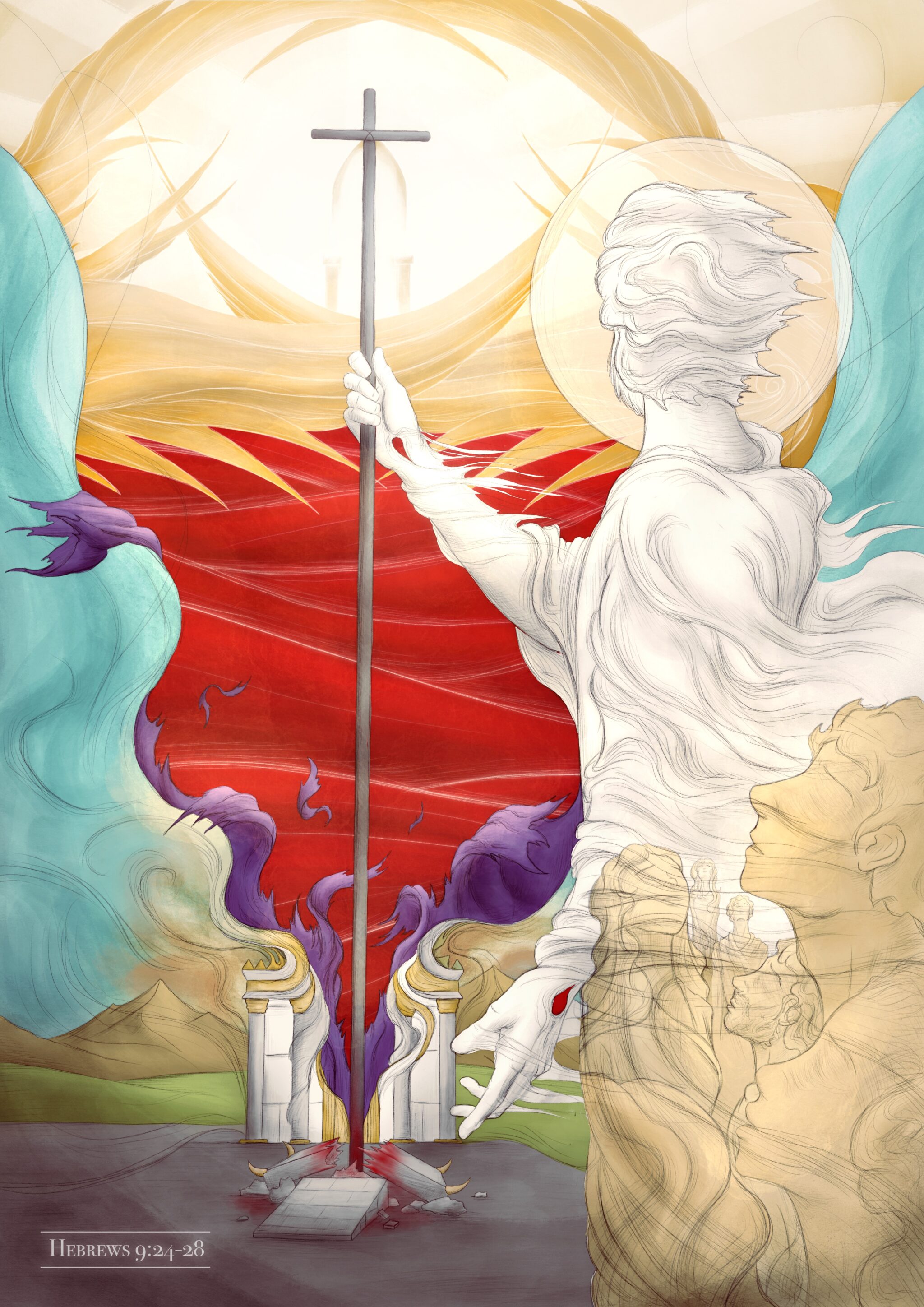
Purified & Redeemed – Sermon on Hebrews 9:11-15 for the Fifth Sunday of Lent

Hebrews 9:11–15

11 But when Christ appeared as a high priest of the good things that have come, then through the greater and more perfect tent (not made with hands, that is, not of this creation) 12 he entered once for all into the holy places, not by means of the blood of goats and calves but by means of his own blood, thus securing an eternal redemption. 13 For if the blood of goats and bulls, and the sprinkling of defiled persons with the ashes of a heifer, sanctify for the purification of the flesh, 14how much more will the blood of Christ, who through the eternal Spirit offered himself without blemish to God, purify our conscience from dead works to serve the living God. 

15 Therefore he is the mediator of a new covenant, so that those who are called may receive the promised eternal inheritance, since a death has occurred that redeems them from the transgressions committed under the first covenant.

The Fight – Sermon on Matthew 4:1-11 for the First Sunday of Lent

Matthew 4:1–11

1 Then Jesus was led up by the Spirit into the wilderness to be tempted by the devil. 2 And after fasting forty days and forty nights, he was hungry. 3 And the tempter came and said to him, “If you are the Son of God, command these stones to become loaves of bread.” 4 But he answered, “It is written,

“‘Man shall not live by bread alone, 
but by every word that comes from the mouth of God.’”

5 Then the devil took him to the holy city and set him on the pinnacle of the temple 6 and said to him, “If you are the Son of God, throw yourself down, for it is written, 

“‘He will command his angels concerning you,’ 

and 

“‘On their hands they will bear you up, 
lest you strike your foot against a stone.’” 

7 Jesus said to him, “Again it is written, ‘You shall not put the Lord your God to the test.’” 8 Again, the devil took him to a very high mountain and showed him all the kingdoms of the world and their glory. 9 And he said to him, “All these I will give you, if you will fall down and worship me.” 10 Then Jesus said to him, “Be gone, Satan! For it is written,

“‘You shall worship the Lord your God 
and him only shall you serve.’”

11 Then the devil left him, and behold, angels came and were ministering to him.

In the name of Jesus. Amen.

Our Old Testament and Gospel readings today both record the devil coming to tempt. The first temptation was in the perfection of Eden and was aimed at Eve and Adam. The second was aimed at Jesus who was alone in the wilderness. In the Garden, Satan succeeded, and in the wilderness, he failed – and failed miserably. Now, in the past, we’ve considered how both of those temptations are similar and follow the pattern that the devil uses with us.

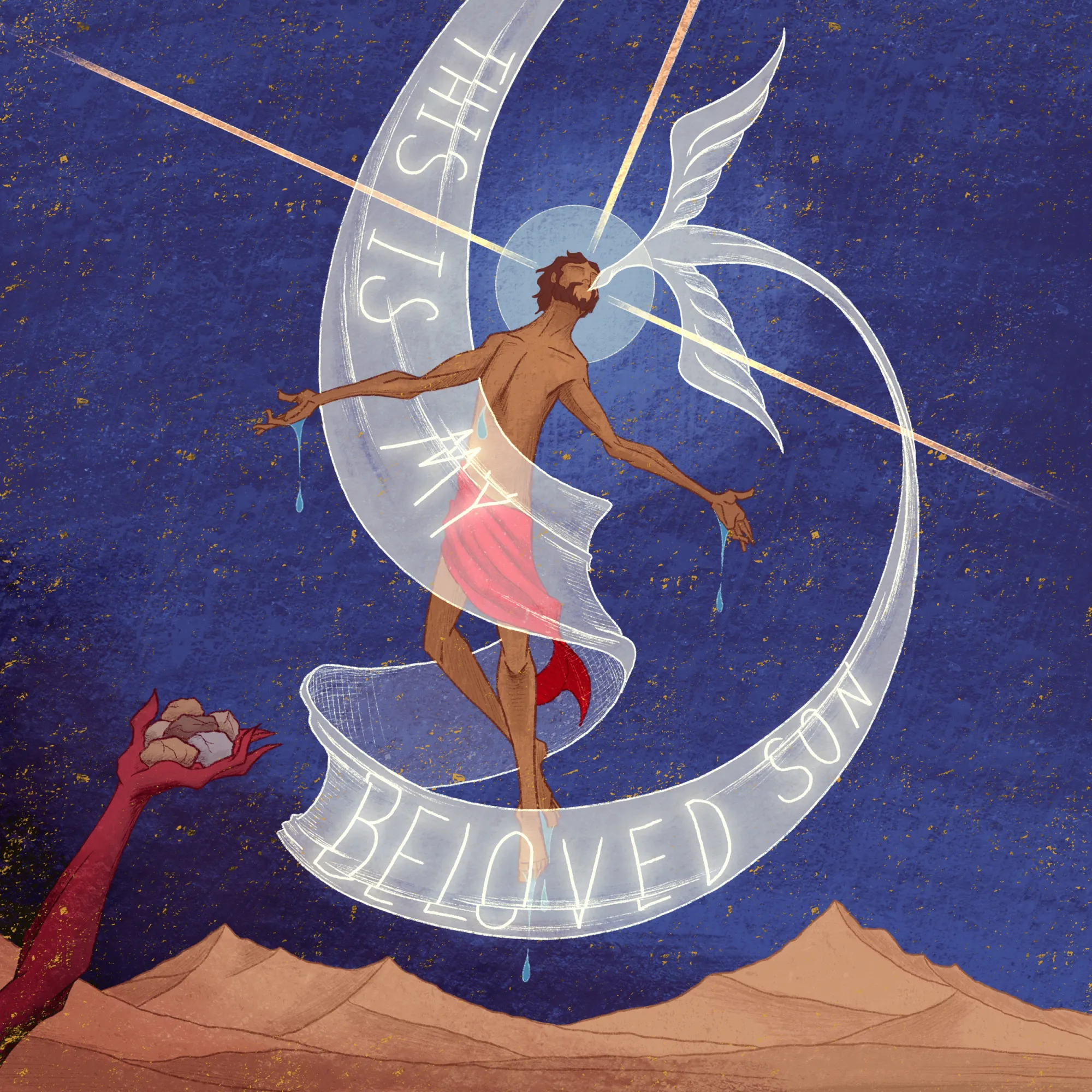
The devil is a one trick pony who tries to get Eve, Adam, Jesus, and you to doubt God’s Word. In the Garden, the devil asks, “Did God really say?” And when he is in the wilderness with Jesus, the devil starts his temptations with, “If you are the Son of God…” Remember, at Jesus’ Baptism, God the Father clearly said, “This is My beloved Son,” so the devil is trying to cast doubt on God’s Word again. He does the same thing In the temptations he throws at you. Now, this is extremely helpful to know and helps us fight against sin. But there is a very important difference between the temptations Satan lobs at Adam, Eve, and Jesus and the temptations he hurls at you. The difference, mainly, lies in the devil’s goal. Think through this for a minute.

In the Garden, the devil only needed to get Adam and Eve to sin once. One sin would rip all of humanity them from perfection and holiness and plunge them into fallenness and corruption. One sin and Satan figured he could stop working and retire to Arizona or Florida. But he was wrong. God completely upended the devil’s plan and promised to send the Seed of the woman to crush Satan’s head (Gen. 3:15). So, with his plans thwarted, the devil had to continue to tempt all people while he waited for that Savior to be born.

When Jesus entered creation, the devil again saw his chance for an early retirement. Here was that long-promised Seed of the woman. If he could just get Christ to commit one sin, then Jesus couldn’t be the Savior of all humanity. So, the devil waited until he thought the moment was ripe. After Jesus had fasted for forty days and nights, the devil came with these three temptations that he aimed at the second Adam (Ro. 5:14; 1 Cor. 15:45).

Do you see the difference? In the Garden with Adam and Eve but especially in the wilderness with Jesus, all it would take is one sin and the devil’s goal would be accomplished. Now, it wasn’t possible for Jesus to sin; He’s God and God cannot sin. But, hypothetically, if Jesus had sinned, there would be no Savior and no reconciliation with God. No mercy. No grace. No forgiveness. But, dear saints, that is not Satan’s goal when he tempts you. The devil’s goal is not to get you to sin once. No, he has to keep coming after you.

Because Jesus did not sin, the devil needs to continually tempt you – day after day, moment after moment. He can’t leave you alone; he has to keep pestering and tempting you. Even though you were born into the sin of your first parents, Jesus has rescued you by His perfect obedience. Now through faith, the devil does not own you; Jesus does. Christ has lived perfectly and has been tempted in every way as you are, but He did it without sin (Heb. 4:15). Jesus kept the Commandments in your place and credits His obedience to you through faith.

The day is coming when the devil will no longer be able to tempt you, but that day is not yet. So, the devil continues to work on you with his temptations, and you have to fight with all the resources God has given to you. Eph. 6:10-18 details the armor that God has provided for you – the belt of truth, the breastplate of righteousness, the shoes of the Gospel of peace, the shield of faith, the helmet of salvation, and the sword of the Spirit which is the Word of God. And remember when you read that passage, you are called to take up that armor and pray. Stand protected and call in the heavenly reinforcements to fight for you. God will send His holy angels to fight back against the devil on your behalf.

This is just an aside, but that is another difference between Jesus’ temptation and yours. Our Lord faced those temptations completely on His own. The angels only came to minister to Him after He resists the temptations and wins. You always have the holy angels assisting you in every moment and temptation. 

Today, you should recognize that the devil is going to be after you constantly to try to get you to fall into temptation and sin to draw you away from Jesus. But even knowing this offers a key strategy to help you in the fight.

Adam and Eve’s fall was instant. But because you are saved and bought by the blood of Jesus, the devil is going to try, little by little, to get you to slowly slip away from the faith. For example, the devil isn’t going to tempt you to blaspheme God; he knows better than that. You aren’t going to just curse God. But the serpent will tempt you to skip church or your family devotions. Satan is going to work, little by little, to harden your conscience toward sin. And this means, dear saints, you need to be actively working to soften your conscience. This is difficult, painful work, but it is work you need to do. Here’s how you go about that.

We’ll use the 5th Commandment as an example. The 5th Commandment, “Thou shalt not kill,” and the Small Catechism’s explanation, “We should fear and love God so that we do our neighbor no bodily harm nor cause him any suffering but help and befriend him in every need.” Now imagine your conscience has a 5thCommandment thermometer. There are degrees by which the 5th Commandment is broken. Genocide would be way up at the boiling point. A little below that would be mass murder, then murder, then hitting and physically harming your neighbor. Way down at the bottom would be anger because when Jesus explains the 5th Commandment, He equates anger with murder (Mt. 5:21-22). But anger doesn’t physically harm others like murdering or even hitting them does. Let me be clear, both are sin; both need repentance and forgiveness because they both break the 5th Commandment.

Now think about where your conscience registers guilt because of your thoughts, words, and deeds somewhere on that 5th Commandment thermometer. Maybe you don’t think twice about being angry in your heart because you figure everyone does it and that guy really was a jerk. But you wouldn’t go grab a baseball bat and hit him. So, the devil isn’t going to tempt you to do that sort of thing. Instead, what the devil is going to do is try to raise the temperature of your conscience just a bit. He’s going to try to get you to break the 5thCommandment with more anger or holding on to that grudge a little harder. Once the temperature of your conscience acclimates to that level of sin, Satan can graduate you to the baseball bat.

What you need to do, dear saints, is stop excusing your anger. Recognize and confess it for the sin that it is. Let go of that anger and continually soften your conscience to the working of the Holy Spirit. Think through all of the Commandments like this. Recognize where your conscience registers sin and take that sin to Jesus. Confess it for the sin that it is and hand it over to the Lamb of God who takes away that sin and nails it to the cross.

And know this. The softer your conscience becomes, the more you will feel your sin. Real sanctification and actually growing in holiness is going to make you feel more and more sinful and cry out like Paul does in Ro. 7:24, “Wretched man that I am! Who will deliver me from this body of death?” The one who will rescue you is your great high priest. He can sympathize with your weakness because He was tempted in every way as you are, yet without sin (Heb. 4:14). He invites you now to come with confidence, right here, to His throne of grace. Here you will find mercy and grace freely given to you in Jesus’ Body and Blood which will continue to strengthen you for the fight against the devil’s temptations. And as you fight, remember that God is faithful and will not let you be tempted beyond what you can bear. He has promised to provide the way of escape (1 Cor. 10:13). Amen.

The peace of God, which surpasses all understanding, will guard your hearts and minds in Christ Jesus. Amen.

Greater & More Perfect – Sermon on Hebrews 9:11-15 for the Fifth Sunday of Lent

Listen here.

Hebrews 9:11–15

11 But when Christ appeared as a high priest of the good things that have come, then through the greater and more perfect tent (not made with hands, that is, not of this creation) 12 he entered once for all into the holy places, not by means of the blood of goats and calves but by means of his own blood, thus securing an eternal redemption. 13 For if the blood of goats and bulls, and the sprinkling of defiled persons with the ashes of a heifer, sanctify for the purification of the flesh, 14 how much more will the blood of Christ, who through the eternal Spirit offered himself without blemish to God, purify our conscience from dead works to serve the living God. 15 Therefore he is the mediator of a new covenant, so that those who are called may receive the promised eternal inheritance, since a death has occurred that redeems them from the transgressions committed under the first covenant.

In the name of Jesus, our great High Priest. Amen.

In the name of Jesus, our great High Priest. Amen.

Jesus has shed His blood for you. He offered Himself without blemish to the Father to purify your conscience from dead works to serve the living God. Because Christ has shed His blood for you, you have been called to be God’s children and receive the promised eternal inheritance. God be praised!

Imagine for a moment that you made plans to take your family to Great Wolf Lodge in Bloomington. (In case you don’t know, that’s a hotel with a huge indoor water park similar to what we have at the CanAd Inn and Splashers, but many, many times bigger.) You show your kids the pictures of the water park and all the waterslides and splash pads, and your kids are raring to go. But then, when you arrive, instead of wanting to go to the water park, your kids say they would rather splash around in the bathtub of your hotel room. You plead and urge them to put on their swimsuits, try the waterslides, the lazy river, and all the different attractions. But your kids insist they would rather sit in the tub with their rubber duck.

Well, there was a similar thing going on when this text was written.

The letter of Hebrews was basically a sermon written to a largely Jewish congregation. The way that the book is written, it seems as though some of these Jewish believers were beginning to wonder if they had made a mistake by becoming Christians. It appears as though they were wondering if they should return to their old, Jewish religion with the high priest, the Temple, the altar overlaid with gold, the festivals, the sacrifices, and the blood of goats and bulls. They were wondering if they had left the true worship of God for a much humbler, simpler religion of Christianity.

The whole book of Hebrews, but especially these verses and the surrounding context, serves as a resounding, “No! Don’t do it!” Throughout the book of Hebrews, these Christians are pointed to the fact that what they had in Jesus, and what we have today is better, greater, and more perfect.

Hebrews 9_24 Great High Priest Holy PlacesIn fact, if you go back to Hebrews 8[:5], we are told that all the instructions that Moses received about the services, sacrifices, and festivals even the Tabernacle itself all served as copies and shadows of the heavenly things. A few verses after our text here (Heb. 9:23), we are told that the earthly copies of the heavenly things were given by God, but they needed to be purified with all those rites and rituals that God gave to Moses and Aaron.

So, here’s the picture this text is painting for us. The purpose of all the Old Testament ritual and ceremony – the daily sacrifices, the buildings, the furniture, the washings – all of it served, for a time, as a copy and shadow of the heavenly things. The earthly tabernacle was given to God’s people as a picture of what is going on in heaven. God’s people could see the details going on before them, but they were to know that it was just a shadow of the reality of what is going on in heaven before God.

And now, because of Jesus, the shadow of the Tabernacle and Temple is no longer needed. Still today, we Christians, we people of God, have the reality. I hope and pray that this results in two things for you.

First, I hope that when you read those passages from Exodus and Leviticus, when you read about the construction of the Tabernacle with the vessels and different colors of fine twined linen, when you read about the priests and their vestments and their activities, when you read about the feasts and the sacrifices, I hope that you now read them with a little more interest because, again, they are copies and shadows of the heavenly reality.

But second, and more importantly, I hope you see that all of it points you to what Jesus, your Savior and Great High Priest, has done and accomplished once for all and once for you! Because now the reality in heaven has been perfected by the blood of Jesus, your Savior.

In the Tabernacle, the altar of incense served as a copy. The people were to look at the smoke of the incense rising into heaven and know that the prayers they made on earth were also rising up to God. In the Tabernacle, the bread of the presence served as an earthly shadow reminding the people that God was present with them. In the Tabernacle, the curtain that separated the Holy of Holies served as an earthly copy and shadow that preached to the people 364 days each year that access to the holy God was closed. And on the Day of Atonement, when the high priest could enter into the Holy of Holies, that curtain preached that access to God was possible when the blood of atonement was sprinkled there.

Hebrews 9-14 - Christ Offered HimselfAnd now that Jesus, our Savior and Great High Priest, has come, all the shadows and copies are done away with. Now, because of Christ’s death and resurrection, we know that our prayers are acceptable and rise up to God. Now, when we don’t know how to pray as we ought, the Holy Spirit intercedes for us with groanings too deep for words (Ro. 8:26). Now that Jesus has come, we don’t need the bread of the presence because the Holy Spirit has taken up residence and dwells in your heart (1 Cor. 6:19). Now that Christ has come and shed His blood and brought His blood into the heavenly Holy of Holies, your conscience has been cleansed and purified to serve the living God (Heb. 9:14).

This book of Hebrews is telling the people who are tempted to go back to the earthly copy of the heavenly reality to forget shadow and look at Jesus, who is the real thing! To go back to the Tabernacle and priests and sacrifices would be like choosing to play in the hotel bathtub instead of spending the afternoon at the water park. Brady and Leah, I know you’re watching, you wouldn’t do that, would you? Of course not! It would be foolish! It would be like driving to visit the Grand Canyon, but instead of looking around at the beautiful scenery and take it all in, you look at a couple pictures of the Grand Canyon. Sure, the pictures may be wonderful and beautiful, but you’re there at the real thing! Experience it! Take it in!

So, dear saints, I have two closing thoughts.

First, as we gather together at church (and even as we gather together virtually), we have the fulfillment. We have the purification and holiness that God delivers through Christ. Yes, it is best when we can gather together and receive the blessings of God’s purifying Word and Sacrament in person together, but we can still receive it now in this way. This is also why we use the liturgy (the order of our service). All of it is taken from Scripture to deliver to you the promises that Christ has won and given. And I am so excited for the time when we can again receive those things in this house of God together.

And second, know that everything Christ has done as your High Priest is to deliver to you His redemption from your sins. Because of Jesus, you have a pure conscience.

So, pay attention. Look at me because I want to ask you something right now:

What is troubling your conscience? Is it something you have done in the past? Is it some new sin? Is it your fears? Is it your worry about the future? Is it some sin against God or against your neighbor? What is troubling your conscience right now?

Whatever it is, know that Jesus has carried that sin that is bothering your conscience to the cross. He suffered. He bled. He died for that sin. And He has risen again to present His atoning blood in the courtroom of heaven as the unassailable, unquestionable evidence of your innocence. And in that courtroom of heaven, the verdict has been spoken. You have been declared by God, the righteous Judge in heaven, to be not guilty because of Jesus.

So, what has been spoken by God in heaven, I speak to you now on earth. You have, right now, an eternal redemption. Your guilt is taken away, and your sin atoned for (Is. 6:7) by Jesus. Christ has removed your sin from you as far as the east is from the west (Ps. 103:12). Because of Christ, your Greater and more Perfect High Priest, you have the entire forgiveness of all your sins. Amen.

The peace of God, which surpasses all understanding, will guard your hearts and minds in Christ Jesus. Amen.

The Last State – Sermon on Luke 11:14-28 for the Third Sunday in Lent

Listen here.
[Apologies for the poor quality of this recording, we had some known technical issues.]

Luke 11:14-28

14 Now he was casting out a demon that was mute. When the demon had gone out, the mute man spoke, and the people marveled. 15 But some of them said, “He casts out demons by Beelzebul, the prince of demons,” 16 while others, to test him, kept seeking from him a sign from heaven. 17 But he, knowing their thoughts, said to them, “Every kingdom divided against itself is laid waste, and a divided household falls.18 And if Satan also is divided against himself, how will his kingdom stand? For you say that I cast out demons by Beelzebul. 19 And if I cast out demons by Beelzebul, by whom do your sons cast them out? Therefore they will be your judges. 20 But if it is by the finger of God that I cast out demons, then the kingdom of God has come upon you. 21 When a strong man, fully armed, guards his own palace, his goods are safe; 22 but when one stronger than he attacks him and overcomes him, he takes away his armor in which he trusted and divides his spoil. 23 Whoever is not with me is against me, and whoever does not gather with me scatters.

24 “When the unclean spirit has gone out of a person, it passes through waterless places seeking rest, and finding none it says, ‘I will return to my house from which I came.’ 25 And when it comes, it finds the house swept and put in order. 26 Then it goes and brings seven other spirits more evil than itself, and they enter and dwell there. And the last state of that person is worse than the first.”

27 As he said these things, a woman in the crowd raised her voice and said to him, “Blessed is the womb that bore you, and the breasts at which you nursed!” 28 But he said, “Blessed rather are those who hear the word of God and keep it!”

In the name of the Father and of the Son and of the Holy Spirit. Amen.

These first few Sundays in Lent have a strong focus on spiritual warfare. And here Jesus is teaching us very pointedly that there is no neutral ground spiritually – there is no spiritual Switzerland. Christ says, “Whoever is not with Me is against Me, and whoever does not gather with Me scatters.”In other words, if you are not in league with Jesus and fighting againstthe devil, you are fighting with the devil.

To strengthen and encourage us in the battle, Jesus tells two short parables in this text. The first parable (in v. 21-22) describes the new reality in this world. And we have to understand this first parable because it lets us know the playing field. Jesus says, “When a strong man, fully armed, guards his own palace, his goods are safe; but when one stronger than he attacks him and overcomes him, he takes away his armor in which he trusted and divides the spoil.”

We heard about the Fall a few weeks ago. Adam and Eve brought sin into the world by rebelling against God and believing the devil rather than their Creator. When Adam and Eve fell, the devil entered his palace and the kingdom of darkness began. Satan now owned them and everyone who would be born from them – that is all of us. The armor of the devil that Jesus talks about is our sin, our guilt, and our shame. And, according to Jesus, the devil trusts in that armor. Satan thinks that because your sin and guilt is so great that he is immune from invasion and attack. He thinks his palace is impenetrable and that you are safely in his possession forever.

But Satan is wrong. Jesus, the stronger man, has stormed the devil’s castle. Christ attacked him and overcome him. Your Savior has taken away the armor that the devil thought protected him, what the devil trusted, what he thought would always be there – this is the most important part of the parable. Jesus has removed your sin, guilt, and shame which was the devil’s armor. And the devil is now weak and extremely vulnerable.

But the spiritual battle is still ongoing. The demons are defeated but they still fight against us even though they have no power and no armor. And this is what Jesus addresses in the second parable (v. 24-26). Jesus says that when a demon has gone out of a person – in other words, when someone becomes a Christian, when a person is Baptized, when they are given the gift of faith in Christ and have the Holy Spirit – that demon passes through waterless places seeking rest because it has been expelled. The demon doesn’t like that. The demon would rather be connected to that person.

Now, I need to make a quick distinction between demon possession and demon oppression. In the Gospels, we often see people who are actually possessed by demons. In cases of demonic possession, demons live inside that person and can make them mute (like in this text), throw people into fires (Mk. 9:22), or cut themselves and make them live among the tombs (Mk. 5:2-5). That is demonic possession. But just because someone isn’t possessed by a demon does not mean that they are not influenced or oppressed by demons. The main point is that you are either going to be influenced by a demon or the Holy Spirit.

So, most of you became Christians when you were baptized. The Holy Spirit came and removed the demons and their oppression from you. And those demons wander around seeking rest, but they find none. So, they come back to you, the house from which they were cast out. If that demon finds you swept and put in order, it will come back and bring seven more demons even more evil than itself and the last state is worse than the first.

So, here is the picture Jesus gives, Christian. When you came to faith, Christ drove the demons away from you, but those demons have had their eye on you ever since. They have been watching you to seek reentry. If the demon comes back and finds your house clean and (as Jesus says in the same context in Mt. 12:44) empty, it moves back in and throws an evil, sinister party, and again the last state is worse than the first.

Remember, you are either with Jesus or with the devil and demons. There is no neutral ground. Christian, as you live out your faith and devote yourself to God’s Word, Satan and the demons have no power over you. Jesus, the stronger man is with you. The Holy Spirit has filled you and the demons cannot stand the presence of His holiness. But, if you stop filling yourself with God’s Word, if you neglect the work of the Holy Spirit, you can evict Him. You can fall away. Beware and repent.

The most effective strategy, in fact the only strategy, the devil has against you is to make you think that you don’t need Jesus and His blood shed for the forgiveness of your sins. And the way that the devil does this is to harden your conscience against God’s Word. So, guard your conscience, and actively work to soften your conscience so that when you hear God’s Word, you are driven to your Savior’s mercy and grace.

Let me give you an analogy to make this point. The last few weeks, we’ve finally had temperatures above freezing. Compared to the temperatures that we had in January and February what were in the -20’s, it feels really nice. So now, when the thermometer hits 38°, our bodies are ready go out without coats, or at least much lighter coats. In the Spring 38° is glorious. But when August comes and we are used to the heat of summer, 38° makes bodies feel bitterly cold. Your conscience is similar.

Imagine each of the Commandments as a thermometer, and for this example, let’s take the 5thCommandment, “Thou shalt not murder.” Instead of numbers marking the side of the 5thCommandment thermometer, there are different sins that all fall under the 5thCommandment. Way up at the top you have a mark for genocide. A little blow that is a mark for mass murder. A little below that you have a mark for murder, then punching. And because Jesus teaches us that hatred for our neighbor is the same as murder (Mt. 5:21-22) you have a mark for that way down toward the bottom. You get the idea?

Now, all of those sins – from genocide all the way down to anger – all of them make us guilty before God. We need the shed blood of Jesus to cover all of those sins, and know, Christian, that you have that. But you still have to fight against your sinful nature in this life.

So, just think with me here, where does your conscience register on the 5thCommandment thermometer? Maybe, you are somewhere between the marks of punching and anger. The devil and the demons are at work tempting you to harden your conscience. But they don’t tempt you straight to commit genocide. Instead, they tempt you just a little higher than you already are. They tempt you to more anger. They tempt you to punching and violence. And once they have you there, they tempt you to harden yourself a little more, to go up another little step. And they do this with all the Commandments – with adultery and lust, with stealing, and lying.

But you, Christian, you need to be constantly working to soften your conscience. Let me switch to the 3rdCommandment about keeping the Sabbath holy. You’re a Christian, so going to church is simply what you do each Sunday morning. The devil isn’t going to come straight at you and say that going to church isn’t important at all. Instead, the devil will work like this:

Let’s say that one Sunday you were very legitimately sick, so you don’t go to church, but you feel bad about it in your conscience. The devil is right there telling you, “You don’t need to feel bad. You were sick, and it’s better to not risk getting other people sick. So, don’t feel bad. You listened to the sermon later, and it was boring anyway.” And so, you decide to put that little feeling of guilt and loss away. The devil has just hardened you a little bit. So, when a couple of months go by, and you wake up with a headache – something that isn’t going to get passed around to anyone else – the devil will tempt you to skip church again. A little more hardened. Then, you have that family reunion and nothing bad happened when you skipped church because of your headache – God didn’t send a bolt of lightning to smite you. And the Bible says that family is important, so you skip for that. Hardened again. The devil’s goal is to make going to church seem like one option among many options so that being in God’s house becomes nothing more than a matter of choice so that your last state is worse than the first.

Repent. Now, I do have to say that it’s not as though you should carry around guilt for missing church when you have the flu and try to do penance or something like that. No. Jesus loves you. He has disarmed the devil. He has removed your guilt, and Christ forgives you all of your sin. He remembers your sin no more. What I am saying is this: don’t give the devil a foothold. Resist his temptations to harden your conscience.

You do that by memorizing the Ten Commandments and meditating on them. Consider each of them and what Jesus says about them in the Sermon on the Mount (Mt. 5-7). In this way, your house, which is your heart, does not remain empty. Rather you are filled with the Holy Spirit through the study, consideration, and meditation of God’s Word. In this way, may your last state be better than the first. Amen.

The peace of God, which surpasses all understanding, will guard your hearts and minds in Christ Jesus. Amen.