Father, into Your Hands I Commit My Spirit – Sermon on Luke 23:46 & Psalm 31:5 for Good Friday

In the name of Jesus. Amen.

“Then Jesus, calling out with a loud voice, said, ’Father, into Your hands I commit My Spirit.’ And having said this [Jesus] breathed His last” (Lk. 23:46).

Hebrews 10:31 tells us, “It is a fearful thing to fall into the hands of the living God.” The majority of times that the Bible talks about God stretching out His hand, it means destruction. This is why death is a fearful thing for us. The wages of sin is death (Ro. 6:23). It is appointed for a man to die once, and after that comes judgment (Heb. 9:27). Deep down, everyone knows this (Ro. 1:18-21).

Even the most hardcore atheist who wrongly thinks we are nothing more than a glob of atoms who randomly evolved knows that death is something to be avoided. Over the past few years, we have watched the absurd and, even, the evil things people will do in an attempt to avoid death. But unless Jesus returns first, we will all die (1 Thess. 4:17). And Satan uses the fact that sinners die to his advantage. Hebrews 2:14-15 says that the devil is able to hold all of humanity in bondage and slavery using only one tool, the fear of death. People try to stay alive at all costs and put even the thought of death as far away as possible. Death reminds us that we are not in control and are not in charge.

So, we have to learn from Jesus how to die. Jesus does not go into death as though He is falling into the hands of an enemy, but safely into the hands of His Father. These words of Jesus, “Father, into Your hands I commit My Spirit,” are a quote from Psalm 31:5, and by quoting it, Jesus wants us to consider the entire Psalm. Just like when you hear a line from a song or a movie and, so long as you are familiar with it, the whole song or scene comes to mind, this one line Psalm 31 would have brought the whole Psalm to the minds of those who were there at the cross.

I would encourage you to read all of Psalm 31 tonight with your family and have the crucifixion in mind. For now, hear the first five verses:

1 In You, O Lord, do I take refuge; 
let me never be put to shame; 
in Your righteousness deliver me! 
2 Incline Your ear to me; 
rescue me speedily! 
Be a rock of refuge for me, 
a strong fortress to save me! 
3 For You are my rock and my fortress; 
and for Your name’s sake You lead me and guide me; 
4 You take me out of the net they have hidden for me, 
for You are my refuge. 
5 Into Your hand I commit my spirit; 
You have redeemed me, O Lord, faithful God. 

Psalm 31:1-5 ESV

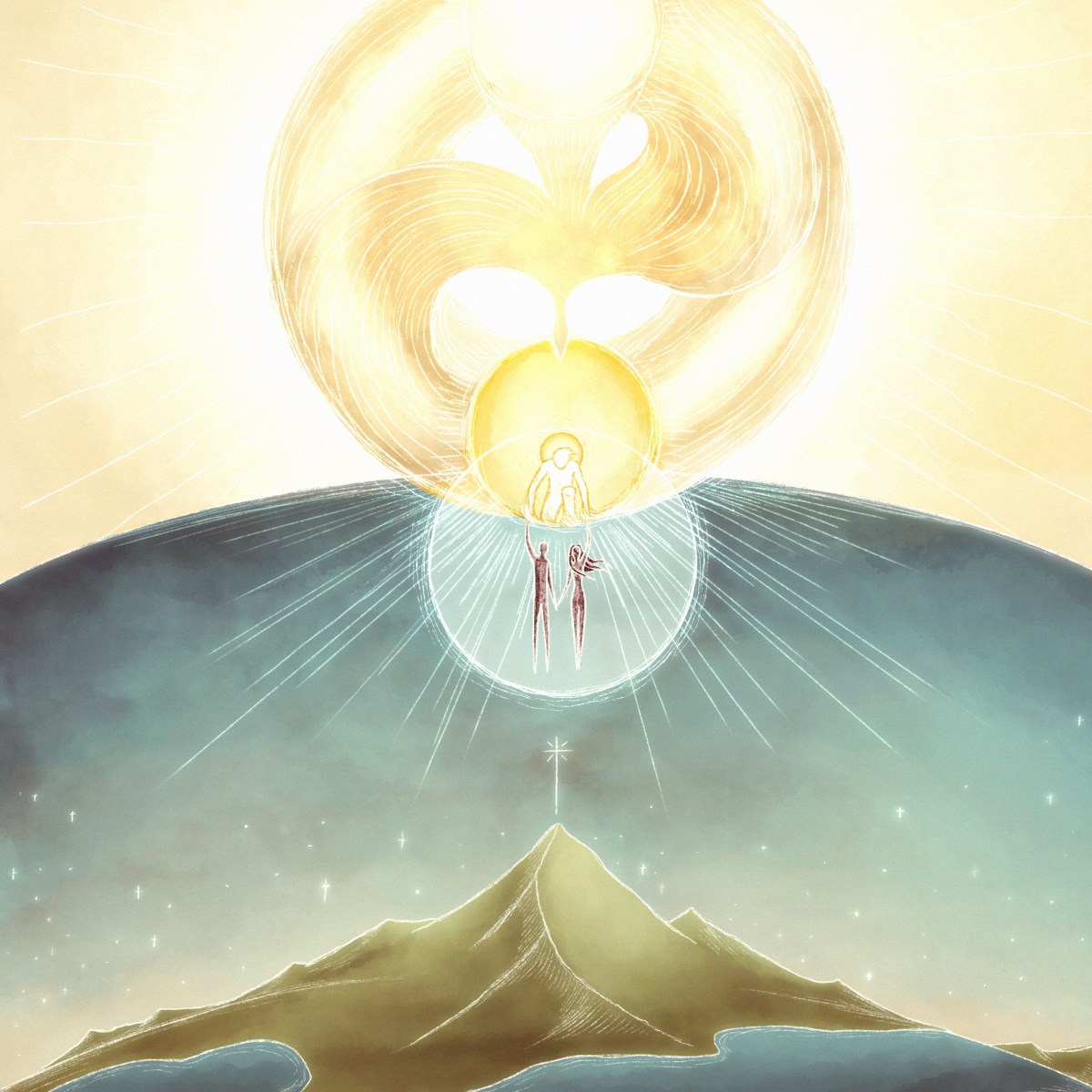
With His dying breath, Jesus commits Himself into the hands of the Father, and Christ can do this because He knows God is not angry with Him. And you, when you come to the end of your life, when you are breathing your last, you need to know this as well.

God is not angry with you. His anger over your sin has been satisfied. He has redeemed you through Jesus’ death. He has purchased and won you. Christ has paid the price for your sins. Unless you stubbornly hold on to your sins and refuse to believe that Christ has taken your place, there is no wrath, no judgment from God for you. You, Christian, you are a child of God, a child of the heavenly Father because Jesus has paid the price for your sins. You are no longer a sinner, but a one who has been redeemed and purchased by Jesus, the only-begotten Son of God.

By His blood, Jesus has washed away all your sin. You stand before God in the robe of Christ’s righteousness (Is. 61:10). For you, Christian, it is no longer a fearful thing to fall into the hands of a living God because God’s hands were nailed to the cross for you. Those are the hands that you commit yourself to.

There is therefore now no condemnation for you who are in Christ Jesus (Ro. 8:1) because your condemnation is in the past. It has already happened as Jesus died on the cross for you.

Jesus died after praying Psalm 31:5a, “Into your hands I commit my spirit.” And it is important to notice that Jesus only prays the first line because He could not pray the second line, “You have redeemed me, O Lord, faithful God.” Jesus couldn’t pray the second line because He was not redeemed; instead, He was redeeming. He was redeeming you. He was there on the cross paying the price; winning your salvation; forgiving your sins; overcoming sin, death, and the grave. He was doing all of that so you can pray all of Psalm 31:5. The entire thing. Because of what your Lord and Savior has done, you can rightly pray, “Father, into Your hands I commit my spirit; You have redeemed me, O Lord, faithful God.”

You belong to Jesus. He is your Brother and God is your Father. At the end of every day, take up these words, “Almighty God, my heavenly Father, like Jesus did before me, into Your hands I commit my spirit, for You have redeemed me, O Lord, faithful God.” And as you pray that, know that Jesus, who committed Himself into the hands of God the Father, has gone and prepared a place for you so that where Jesus is, you may be also (Jn. 14:3). Amen.[1]The peace of God, which surpasses all understanding, will guard your hearts and minds in Christ Jesus. Amen.

[1] This sermon was adapted from a sermon by Pr. Bryan Wolfmueller.

See No Death, Taste No Death – Sermon on John 8:42-59 for the Fifth Sunday of Lent

John 8:42–59

42 Jesus said to them, “If God were your Father, you would love me, for I came from God and I am here. I came not of my own accord, but he sent me. 43 Why do you not understand what I say? It is because you cannot bear to hear my word. 44You are of your father the devil, and your will is to do your father’s desires. He was a murderer from the beginning, and does not stand in the truth, because there is no truth in him. When he lies, he speaks out of his own character, for he is a liar and the father of lies. 45 But because I tell the truth, you do not believe me. 46 Which one of you convicts me of sin? If I tell the truth, why do you not believe me? 47 Whoever is of God hears the words of God. The reason why you do not hear them is that you are not of God.”

48 The Jews answered him, “Are we not right in saying that you are a Samaritan and have a demon?” 49 Jesus answered, “I do not have a demon, but I honor my Father, and you dishonor me. 50 Yet I do not seek my own glory; there is One who seeks it, and he is the judge. 51 Truly, truly, I say to you, if anyone keeps my word, he will never see death.”52 The Jews said to him, “Now we know that you have a demon! Abraham died, as did the prophets, yet you say, ‘If anyone keeps my word, he will never taste death.’ 53 Are you greater than our father Abraham, who died? And the prophets died! Who do you make yourself out to be?” 54 Jesus answered, “If I glorify myself, my glory is nothing. It is my Father who glorifies me, of whom you say, ‘He is our God.’ 55 But you have not known him. I know him. If I were to say that I do not know him, I would be a liar like you, but I do know him and I keep his word. 56 Your father Abraham rejoiced that he would see my day. He saw it and was glad.” 57 So the Jews said to him, “You are not yet fifty years old, and have you seen Abraham?” 58 Jesus said to them, “Truly, truly, I say to you, before Abraham was, I am.” 59 So they picked up stones to throw at him, but Jesus hid himself and went out of the temple.

In the name of Jesus. Amen.

Today we hear Jesus give one of the clearest, most comforting promises He ever spoke. “Truly, truly I say to you, if anyone keeps My Word, he will never see death.” As comforting as this already is, it is even more comforting when we consider the context of when Jesus says this. Jesus is having an argument with some of the Jews in the Temple (Jn. 8:20, 24), and this argument is heated.

Earlier, in part of the argument that isn’t in our text, Jesus told them, “You will die in your sin.” He calls them slaves to sin (Jn. 8:31-34). In this reading, you heard Jesus call these hostile people children of the devil (Jn. 8:44) who do not listen to the voice of God (Jn. 8:47).

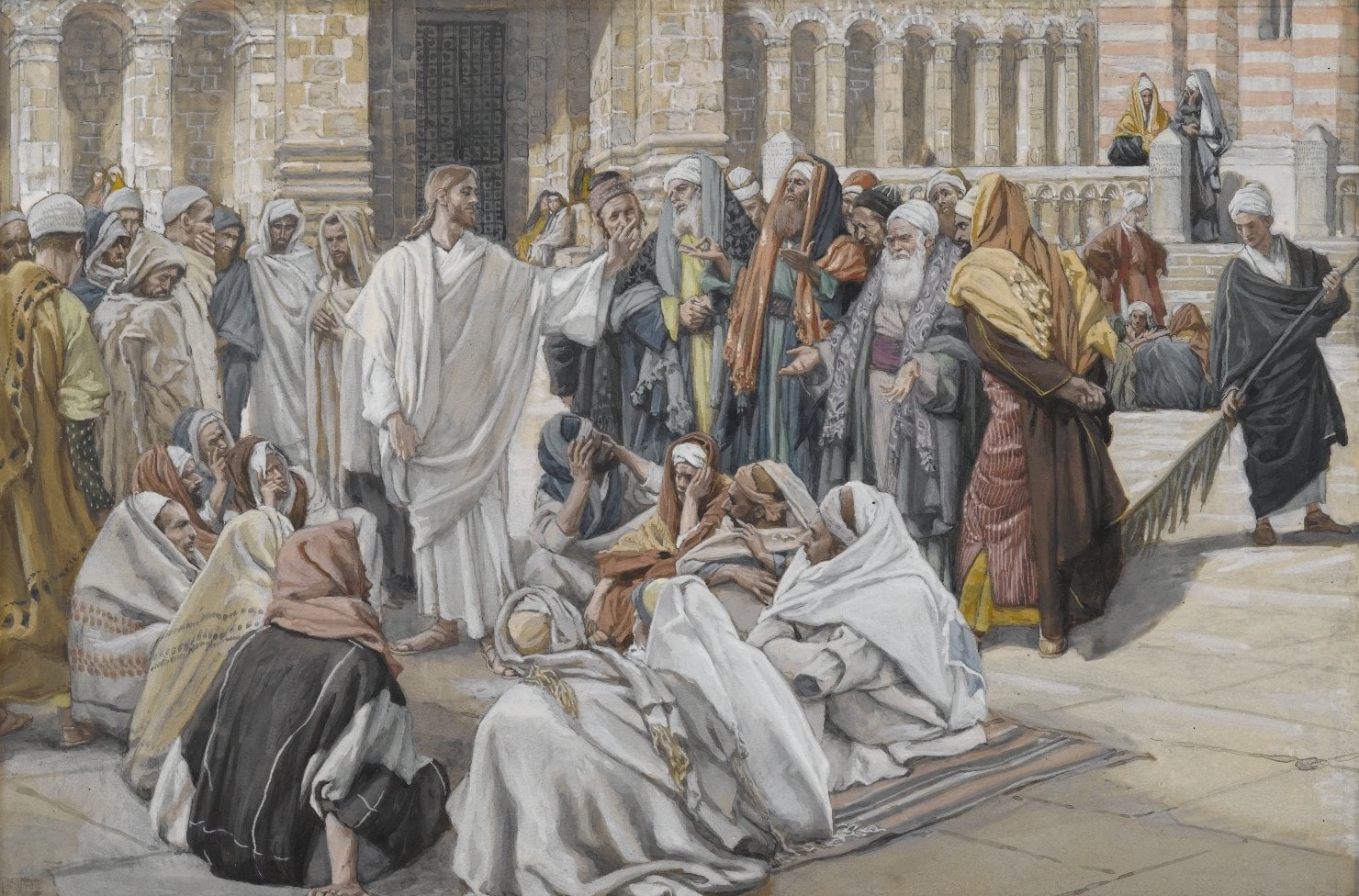
Now, these are not tactics you will hear in an evangelism class, but it is all true. Of course, Jesus is telling them the truth. Everything He says is absolutely true, clear, and direct. Jesus isn’t beating around the bush or sugarcoating anything. He isn’t worried about tiptoeing around touchy topics in order to maintain His relationship with them just in case they eventually come around to see things His way. Christ tells them what they need to hear even though it is offensive.

Dear saints, there are times when you simply tell someone the truth, and they will get mad. But the truth remains the truth no matter how people respond to it. Yes, speak the truth in love (Eph. 4:15), but remember that the truth is always loving. And know that there are times people will get angry when they hear the truth. And it isn’t a matter of you needing to speak the truth in a better way or be more loving. You are not smarter, gentler, or more loving than Jesus. Even though He speaks the hard truth to them, Jesus loves these people. About six months after this argument, Jesus will go the cross and be their substitute under God’s wrath, but here they get angry with Him. And if people got angry with Jesus for telling the truth, then, Christian, there are times when people will be angry with you for telling the truth. Sometimes, showing love will get people angry with you.

That’s all important to know, but we are trying to see how great a promise Jesus makes to these people who are arguing with Him when He tells them that if they keep His Word they will never see or taste death. He starts with the hard but loving truth, but listen to how they respond. They throw two accusations at Jesus, “Are we not right is saying that You are a Samaritan and have a demon?” Now, calling Jesus a Samaritan was, at least, a racial slur. Today, people’s lives get ruined if they use this type of language. But this might have been more than just a racial slur.

Remember, Jesus had just called them children of the devil (Jn. 8:42), and when they call Jesus a Samaritan, it appears that they are responding to Jesus calling them Satan’s spawn. They are saying that Jesus’ mom was adulterous and promiscuous. They are calling Jesus is an illegitimate child.

They also accuse Jesus of having a demon. Here is God in the flesh warning people and calling them to repentance and faith, and they accuse Him of trying to pull them down into hell. If I were in Jesus’ sandals and had to listen to people saying awful things like this, the best I could hope to do is walk away from them. But Jesus doesn’t walk away. Instead, this is the context where He gives them the promise, “Truly, truly, I say to you, if anyone keeps My Word, He will never see death.” He is calling them to faith and life. Despite their horrific statements, Jesus still loves them and wants to rescue them from death. That Jesus would give this promise to these people – in fact, that He is even speaking to them at all – is tremendous, remarkable mercy. Jesus had come to rescue them.

But, again, they respond to this promise, “Now we know you have a demon!” They are hearing are the very words of God, but they think it is the voice of Satan. Jesus had come to His own, but they did not receive Him (Jn. 1:11); they loved the darkness rather than the light (Jn. 3:19).

So, what does Jesus mean when He says, “Truly, truly, I say to you, if anyone keeps My Word, He will never see death”? First, what does it mean to keep His Word?

To keep Jesus’ Word is to believe what He says. Keeping Jesus’ Word does mean to do the things He commands, but it also means that when you fail to obey what He says, you also keep Jesus’ promises. It means believing that because of what God has done for you in Christ, you are forgiven (Jn. 6:28-29). Keeping Jesus’ Word means to believe what He says when He calls you a sinner, and keeping Jesus’ Word means believing what He says when He declares that you are forgiven.

Anyone who keeps Jesus’ Word will never see death. And what does that mean? Well, most of you have heard me preach at a funeral, so this is something you have heard before. But even if we heard this a thousand times, we still need to be reminded of it – even if it isn’t at a funeral.

To the one who keeps Jesus’ Word, to anyone who believes the Gospel, in other words you, Christian, you will never see death. You won’t die. And this isn’t the only time Jesus says something like this. In John 10:28, Jesus says that His sheep will never perish. In John 11:26, Jesus plainly says, “Everyone who lives and believes in Me shall never die.”

It is true that one day you will breathe your last and your heart will stop beating – unless Jesus comes first. Christ might return before that happens (1 Thess. 4:15). Let’s imagine that Jesus does come back before you die, you are simply given your new body and are eternally with the Lord. If you went and found your loved ones who did die and asked them, “What was that like? What happened when you died?”

Their response would be, “I don’t know. I didn’t die. Jesus was simply with me the entire time.”

“Even though I walk through the valley of the shadow of death, I will fear no evil, for You are with me” (Ps. 23:4) – all the way through. Jesus has died for you. Christ has taken away your sin, your guilt, your shame, and even your death.

That is why Scripture will regularly use different terms when a believer dies. Abraham didn’t die, he was “gathered to his people (Gen. 25:8). Simeon, after he sees forty-day-old Jesus in the Temple says that now he can depart in peace (Lk. 2:29). The Bible talks about death being sleep (Mt. 9:24; Jn. 11:11, 13-14; 1 Thess. 4:13) from which Jesus will simply wake us. Paul talks about death as “departing and being with Christ” (Php. 1:23), being “delivered from evil” (2 Tim. 4:18), and even death being gain (Php. 1:21).

Dear saints, Jesus is the God of the living (Lk. 20:38) and He promises that, “neither death nor life, nor angels nor rulers, nor things present nor things to come, nor powers, nor height nor depth, nor anything else in all creation, will be able to separate [you] from the love of God in Christ Jesus [your] Lord” (Ro. 8:38-39). Dear saints, keep Jesus’ Word, believe, and you will never see and never taste death. Amen.

The peace of God, which surpasses all understanding, will guard your hearts and minds in Christ Jesus. Amen.

Slavery to the Promised Land – Sermon on Exodus 14:13-31 and Mark 1:9-13

Exodus 14:13-31; Mark 1:9-13

In the name of Jesus. Amen.

Scripture repeatedly connects water with death and life. At creation, there was chaos and darkness as the Spirit of God hovered over the face of the waters. But then God spoke, and life was brought forth (Gen. 1:2). In the Flood, God sent judgment and death upon sinful mankind by raining water on the earth for 40 days and nights, but those same waters were life-giving as they lifted Noah and his family safely in the ark above God’s judgment (1 Pet. 3:21). When Moses was born, the Hebrew baby boys were to be drowned in the waters of the Nile, but Moses was placed in a basket – his own personal ark – and saved by those waters to be found by Pharaoh’s daughter (Ex. 1:22-2:10).

After wandering in the desert for forty years, God’s people passed out of the deathly, barren wilderness and into the Promised Land by passing through the waters of the Jordan River (Jos. 3). Naaman came to the prophet, Elijah, as a man with deadly leprosy, but he washed himself in the waters of the Jordan River and came out with the skin of a newborn (2 Kg. 5:1-14). Jonah was swallowed by the great fish and brought down to the depths of the sea, but was vomited up again on dry land with new life (Jon. 1:17:2-10, Mt. 12:40). 

Last but not least, in tonight’s Old Testament lesson (Ex. 14:13-31), God’s people are departing Egypt and leaving the land of slavery, leaving the brutal taskmasters, whips, despair, hopelessness, and death behind. Initially, Israel had gone to Egypt to stay alive and find a place of refuge and rescue from a severe famine (Gen. 45:4-15). In those days, Egypt was a land that offered a good home while the world was filled with desperation (Ex. 1:1-7). But things had taken a bad turn. A new pharaoh came to power and saw God’s people as a source of cheap labor. The Hebrews ended up groaning under his cruelty. The land that had provided for them became the place of pain and sorrow. The country that had been a place of life became a place of death.

God heard the cries of His people and sent Moses to deliver them out of slavery and death. It wasn’t an easy departure. It took ten terrible plagues to convince Pharaoh to let them leave and go to the land that God had promised to give to Abraham and his offspring. But the Hebrews only got as far as the Red Sea when Pharaoh had another change of heart. Now, God’s people were stuck between a big body of water on one side and Pharaoh and his army on the other. 

God told Moses to lift his staff over the sea, and the waters parted so God’s people could pass through on dry ground. Through the water, God’s people left slavery and death and begin their journey from their exile in Egypt back to the Promised Land. The Egyptian army pursued them through those waters, but it didn’t work. The walls of the sea collapsed on Pharaoh’s army. The Lord did, indeed, fight for His people, and they had only to be silent (Ex. 14:14). The evil tormentors of God’s people were all washed away. The waters of the Red Sea were an instrument of both life and death. The same waters that destroyed the enemies of God’s people are the waters that save them. The waters that killed also delivered.

Dear saints, the world around is is getting very bleak. Yes, we live in the land of the free, but the darkness of evil is gathering around us. Like the Hebrews when they initially entered Egypt, we’ve had remarkably blessed days, but that is changing daily before our eyes. The novelist, G. David Hopf wrote, “Hard times create strong men. Strong men create good times. Good times create weak men. And, weak men create hard times.” The good times that have been a blessing from God, have created weak men. We are watching inflation soar. We see the potential for horrific wars. The holocaust of abortion continues to rage around us. And our culture has become so open-minded that brains are falling out. For example, yesterday, the supreme court nominee said that she was unable to define what a woman is during her confirmation hearing. Stating simple truths are now considered “hate speech.” It may be that hard times and persecution are looming large before us. Dear Christian, be ready. Our beloved country might turn into a land of slavery. Lord, have mercy.

But even if that isn’t the case and we enjoy more good days, it doesn’t change the fact that we are all slaves of sin and death. We continually sin in thought, word, and deed. We do not love God with our whole heart or our neighbors as ourselves. We need a Savior and deliverer. We need to be rescued from the demons. And, God be praised, God has come and fought for us to deliver us from every oppression.

In our Gospel lesson tonight (Mk. 1:9-13), Jesus came to the Jordan River. Scripture tells us that in those same waters, the people of Jerusalem, all Judea, and all the region around the Jordan were going to John to be baptized as they confessed their sins (Mt. 3:5-6). Jesus also went into that water to be baptized. But Christ didn’t need to be washed clean of sin because He didn’t have any. Instead, Jesus went down into those waters, and like a sponge, He absorbed those sins into Himself. After Jesus was baptized, He was driven by the Holy Spirit to go into the wilderness bringing those sins back to Satan, the father of sin.

In His baptism, Jesus began to take upon Himself the sins of the whole world (2 Cor. 5:21, Jn. 1:29). In Jesus, God has condemned sin in the flesh (Ro. 8:3). By taking our sin, going to the cross, and suffering God’s wrath against your sin, Jesus prepared you for your own journey into and through the waters of Baptism. In your Baptism, your old, sinful nature was drowned (Ro. 6:3-8), and your sin, all your sin, is washed away. God promises that in your Baptism, you have everlasting life and are delivered from your exile. Dear saints, continue to believe what God has promised you. Because of what Jesus has done for you, heaven has been torn open so you can pass safely through this world of sin and into the promised land of the kingdom of heaven. Amen.

The peace of God, which surpasses all understanding, will guard your hearts and minds in Christ Jesus. Amen.

Dead to Sin, Alive to God – Sermon on Romans 6:1-11 for the Sixth Sunday after Trinity

Romans 6:1-11

1 What shall we say then? Are we to continue in sin that grace may abound? 2 By no means! How can we who died to sin still live in it? 3 Do you not know that all of us who have been baptized into Christ Jesus were baptized into his death? 4 We were buried therefore with him by baptism into death, in order that, just as Christ was raised from the dead by the glory of the Father, we too might walk in newness of life.

5 For if we have been united with him in a death like his, we shall certainly be united with him in a resurrection like his. 6 We know that our old self was crucified with him in order that the body of sin might be brought to nothing, so that we would no longer be enslaved to sin. 7 For one who has died has been set free from sin. 8 Now if we have died with Christ, we believe that we will also live with him. 9 We know that Christ, being raised from the dead, will never die again; death no longer has dominion over him. 10 For the death he died he died to sin, once for all, but the life he lives he lives to God. 11 So you also must consider yourselves dead to sin and alive to God in Christ Jesus.

In the name of Jesus. Amen.

This epistle text is dropping us near the middle of Paul’s letter to the church in Rome. Because that is the case, I want to quickly summarize what Romans says up until this point: In Ro. 1-2, Paul lays out everyone’s state under God’s Law. We’re all in trouble. We have all sinned and fall short of the glory of God (Ro. 3:23). And there is nothing you or I can do about it. Your works and my works cannot save. The Ten Commandments shut our mouths before the right and just judgment of God. Then, at the end of Ro. 3, we are given hope. In Ro. 3:21-24, Paul says that the righteousness God requires has been manifested apart from the Law through faith in Christ.

When he gets to Ro. 4, Paul uses the example of Abraham who was declared to be righteous not because he was such a good person but because he believed God’s promise to him (Ro. 4:3 see also Gen. 15:6). In Gen. 15, God promised old, childless Abraham that He would bless him with a son. God brought Abraham outside, told him to try to count the stars, and promised that his offspring would be as numerous as the stars. God made a direct promise to Abraham there under that night sky, and Gen. 15:6 says, “[Abraham] believed the Lord, and He counted it to him as righteousness.”

And notice how God connected His promise to Abraham to something physical, the stars. Think about how the nights were for old Abraham after that. Imagine him going out on a clear, cloudless night and seeing all the stars. How many nights, do you suppose, Abraham would remember God’s promise and start trying to count the stars? How long would he count before he would give up, realizing it wasn’t possible? And then Abraham would get tired, yawn, smile to himself, go to his bed, and fall asleep thinking, “Well, God made a promise to me. It’s hard to imagine and believe, but God promised.”

Back to Romans. When we get to Ro. 5, Paul changes gears and compares Jesus to Adam by saying that Jesus is the second Adam and new head of humanity. The first Adam brought sin and death to all humanity, but Christ, the second Adam, brings forgiveness, justification, salvation, and life. Paul writes in Ro. 5:18-19, and listen carefully to these verses, “Therefore, as one trespass led to condemnation for all men, so one act of righteousness leads to justification and life for all men. For as by the one man’s disobedience the many were made sinners, so by the one Man’s obedience the many will be made righteous.”

Through Jesus’ righteousness and obedience, you, believer, are made righteous. Eternal life has been secured for you – not by your works, efforts, and achievements but solely by the work of Christ, which is yours through faith. God be praised!

All that brings us to our text. In this first part of Ro. 6, Paul deals with a question even before it is allowed to enter a forgiven sinner’s mind. When we hear the Gospel, that we are forgiven and reconciled to God for Christ’s sake, the old Adam in us wants to go wild. “If God loves to forgive, let’s give Him lots to forgive!” Paul says, “Not a chance; may the possibility of that thought never come to be! How can you live in sin when you are dead to it?”

“Don’t you know that all of us who have been Baptized into Christ Jesus were Baptized into His death?” (Ro. 6:3). Just like He did for Abraham, God has made a promise to you that is connected to something physical, the water of your Baptism. You who are Baptized have been picked up from where and when you are and joined to Jesus’ death and resurrection. In your Baptism, God joined you to Jesus’ death so that you have a Jesus-kind of death. In other words, a death that doesn’t last very long, and a death concludes with resurrection. That means that sin and death no longer have a say in your life. You are dead to them. You are alive to God in Christ Jesus. The day you were Baptized was both your death day and the day you were begotten from above (Jn. 3:3-5).

But Paul goes on to say that this truth is something you have to take on faith. “You must consider yourself dead to sin and alive to God in Christ Jesus” (Ro. 6:11). This is why we don’t believe that everyone who is Baptized will be saved. Yes, Baptism is where and how God saves you (1 Pet. 3:21) and delivers what Jesus has done for you by His death and resurrection (Ro. 6:3-11). But you can walk away from the promises God gives you in Baptism.

“Consider yourself dead to sin and alive to God in Christ Jesus.” Believer, you have two identities at once – one in Adam and another in Christ. You must reckon yourself as dead and alive at the same time. By your birth into this world, you are a sinner. By your new birth from above (Jn. 3:3-5), you are a child of God.

This means something for you each day of your life. It means that sin is no longer your master because sin has been dethroned by Jesus. He’s your Lord now, not sin. So, don’t put sin back on the throne. Fight against it. Don’t use your body as an instrument of unrighteousness. Sin and death will have no dominion over you because they have no dominion over Jesus, which is what Paul says in the next few verses after our text (Ro. 6:12-14).

Dear saints, you are, right now, dead to sin and alive to God. That fact might seem strange because you know that you still sin. The old Adam still clings closely to you. At times, you feel that old Adam and know the guilt and shame of your sin. You recognize that you are not what God intended you to be. The wages of sin is death (which is what you earn by yourself) but the free gift of God is eternal life in Christ Jesus our Lord (Ro. 6:23). That’s why considering and reckoning yourself dead to sin and alive to God is so important. You are simultaneously righteous and sinner.

So, when you are inclined to sin and cave into temptation, you have all the proof you need that the old Adam is still hanging around and you need repentance. So, repent. Repenting is saying and believing what God says about sin. Confessing that you do not deserve anything good from God, but don’t stop there. Keep going! Confessing your sin also means saying what God says, that those sins have been died for and are forgiven because of Christ.

And when you are upset, discouraged, and appalled that you have sinned, when you resist and fight back against your wicked thoughts, words, and deeds, you can know for certain that you are alive to God.

Through your Baptism you are truly forgiven, regenerated, and made holy. That is how God looks at you, Christian. But we also recognize from both Scripture and our experience that this new life has only begun. It is not yet complete. But know that the God who began a good work in you, He will be faithful to bring it to completion (Php. 1:6).

What occurred in your Baptism – the drowning and rising, the death and resurrection – isn’t something that is merely in the past, but neither is it something will only come later in the future. Your Baptism is your present life, believer. Daily you repent of your sins, daily you believe in Christ crucified for your forgiveness, and daily you walk in newness of life until that great day when your Old Adam finally perishes, and you are perfectly and eternally renewed.

In other words, because your Baptism has joined you to Christ’s death and resurrection, live that out. Sin now has no dominion over you. You are dead to sin and alive to God. Amen.

The peace of God, which surpasses all understanding, will guard your hearts and minds in Christ Jesus. Amen.
I Thirst – Sermon on John 19:28 for Good Friday

Listen here.

In the name of Jesus. Amen.

In Hosea 11:1, God says, “When Israel was a child, I loved him, and out of Egypt I called My son.” But it didn’t take long for that beloved child to start whining. Even though God had displayed His might and power to protect and deliver His people through the plagues He sent upon Egypt, three days after crossing the Red Sea the people came to the bitter waters of Marah (Ex. 15:22-26). They grumbled against Moses saying, “I thirst! What are we going to drink?”

Well, God acted for His son, Israel. God showed Moses a log and told him to toss it into those bitter waters. Moses did, the bitter water became sweet, and the thirst of Israel, God’s son, was quenched.

About one month later, God’s son, Israel, again said, “I thirst.” They had come to a place where there was no water. This time the whining was worse. The son grumbled again saying to Moses, “Why did you bring us up out of Egypt, to kill us and our children and our livestock with thirst?” But God, their loving Father, still provided. He told Moses to take his staff and strike a rock. And from that rock came water for God’s son, and his thirst was quenched again.

Tonight, Jesus, on the verge of death, cries out, “I thirst.” Jesus is God’s true, beloved, faithful, obedient Son. Jesus is the true Israel. Christ had never whined or complained no matter how hard or bitter things got for Him. He was everything that the nation of Israel wasn’t. Yet, when Jesus, the only-begotten Son of God, cries out to His Father, “I thirst,” God doesn’t move a muscle. God doesn’t jump to action.

You remember the parable of the rich man and Lazarus (Lk. 16:19-31). As he is there in torment, the rich man begs for a drop of water from Lazarus’ finger. Like that rich man, Jesus gets nothing to drink. Not even one drop.

When Jesus cries, “I thirst,” it is because He is truly parched. Jesus is true God and also true Man. He actually was thirsty. But even more than needing water for His dehydrated mouth, Jesus’ thirst is to do His Father’s will (Jn. 4:34). Christ thirsted for your salvation so that you can be God’s child. Only Jesus can truly say, “As a deer pants for flowing streams, so pants my soul for You, O God. My soul thirsts for God, for the living God” (Ps. 42:1-2a). Jesus thirsted in your place.

We thirst for things that are momentary and trivial. We thirst for the attention and approval of others. We thirst for our own glory, our own wealth, our own safety, our own selfish desires. But no matter how much we drink from the cup of our sins, our thirst is never satisfied there. That is why Jesus went to the cross. He went there because of your sin. He went to the cross to atone for your sinful thirsts.

That is why, it pleased God to do nothing for Jesus as He thirsted on the cross. It was God’s will for Jesus to drink from the bitter cup of wrath so that you could drink the sweet, living waters that Jesus gives which well up to eternal life (Jn. 4:14).

There was no water from the rock for Jesus because He was the Rock. According to 1 Cor. 10:4, Christ was the Rock that was struck in the wilderness for God’s people to drink. It happened in the wilderness for Israel, God’s son, and it still happens for you today, believer. Jesus was struck with a spear and out of that dead Rock hanging on the cross came the water and blood which give eternal life.

Jesus thirsted. He died. He rose again. And He is ascended and is now seated at God’s right hand. But Christ still thirsts. Even today He thirsts, and His thirst is for your salvation. He thirsts for you to be forgiven and receive His righteousness. Jesus’ thirst is to eternally satisfy your thirst.

So, Jesus, your Savior, invites you, “If anyone thirsts, let him come to me and drink. Whoever believes in me, as the Scripture has said, ‘Out of his heart will flow rivers of living water’” (Jn. 7:37-38).

May we drink from Him, our crucified and risen Lord and Savior. Amen.The peace of God, which surpasses all understanding, will guard your hearts and minds in Christ Jesus. Amen.

Passion Miracles – Sermon on Matthew 26:1-27:66 for Palm Sunday

Listen here.

Matthew 26:1-27:66

In the name of Jesus. Amen.

The seven sayings of Jesus on the cross are the most important words spoken in all history. We have considered them in the past, and we will hear them again on Friday. But Jesus isn’t the only member of the Trinity speaking during the crucifixion. God the Father speaks too, but not audibly. Instead, the Father speaks through the miracles that take place while Jesus is on the cross, and we are going to give our attention to those today.

The first miracle is the darkness. In the Gospel of Mark, we are told that Jesus was crucified, nailed to the cross, at the third hour (Mk. 15:25), which would be about 9 AM. Then, the Gospels tell us that there was darkness from sixth hour until the ninth hour. In other words, that darkness lasted from noon until 3 PM when Jesus died.

Now, Matthew says this darkness was over “all the land” (Mt. 27:45). The interesting thing there is that the word ‘land’ can mean portions of a country. But most of the time, the word there means the entire earth. Matthew uses it in both senses throughout his Gospel. It could be that this darkness was localized to the region surrounding Jerusalem where Jesus was crucified, but it could have been much more than just that – even the entire earth.

This darkness was not a solar eclipse. Jesus was crucified at the time of the Passover which means there would have been a full moon, and a solar eclipse can only happen at a new moon. Plus an eclipse only lasts minutes, not hours. We also know that this darkness wasn’t the result a bunch of thick, dark clouds gathering. A Greek historian named Phlegon of Tralles, who was born shortly after Jesus’ death, records what he calls an eclipse. He wrote that it became night at noon so that the stars even appeared in the heavens. Now, Phlegon wasn’t a Christian. He might not have even been aware of the Gospels recording this same event. But the dating of his account matches up precisely with the timing of the crucifixion. Today, secular scholars have tried to come up with an explanation for this darkness Phlegon mentions, but they can’t. No astronomical or meteorological explanation can be made, but the historical accounts aren’t denied either.

This darkness happened because of God. God has the authority to turn off the sun if He wants to. Over and over in Scriptures, darkness is a sign connected with God’s judgment and anger over sin. Remember the ninth plague of darkness over the land of Egypt (Ex. 10:21-22). For three hours during the crucifixion, this darkness covered the land.

So, what was going on here; what was God the Father saying with this darkness? Well, Jesus had taken upon Himself the sins of all humanity, and God’s judgment was laid upon Christ (Is. 53:6). Think of all the sins you just heard about: treachery of Judas, the cowardice of Pilate, the blasphemy of the chief priests, the malice of the crowds. All those heinous sins were all placed upon Jesus.

But it was more than that too. The murder committed by Cain, the hard-heartedness of Pharaoh, the continual unbelief of the Israelites, the pagan practices of the inhabitants of Canaan, the adultery of David, every bit of sin in the world up to that point was all placed on Jesus. All the sins that have happened since: the sins of Nero, Hitler, Stalin, bin Ladin, and every other wicked, evil person were laid upon Jesus. Your sins were there too: your anger, lust, pride, gossip, lies, and covetousness. And all the sins that are still to happen in the future. All of it was there in that moment on Christ as He hung on the cross.

All of those sins angered God. He noticed them and was angry because of them. But know this. God only let the darkness of judgment fall when those sins were laid upon Christ and were no longer yours. So, between noon and three on that Good Friday, Jesus took all of those sins. Christ Himself bore your sins in His body on the cross, and by His wounds you are healed (1 Pet. 2:24). That’s why Jesus says from the cross, “It is finished” (Jn. 19:30). His redemption for every sin of every person who has ever lived and will ever live was paid in full. Jesus suffered the punishment of God for it all.

The second miracle was the tearing of the curtain in the Temple. The curtain was thick and heavy, so it was no coincidence that it tore from top to bottom. For hundreds of years, that curtain stood as a barrier between God and all of humanity. Only the priest could go behind that curtain into God’s presence on the Day of Atonement. Remember that both the Tabernacle and the Temple served as copies of heaven (Heb. 8:59:23; Ex. 25:9). So, for generations, that curtain preached a sermon to God’s people that said, “Heaven is off limits to you.” But when the high priest would go in behind the curtain on the Day of Atonement, that yearly event preached another sermon. A very different sermon. That sermon preached that access to heaven would come, but only through a substitute.

So, when that Temple curtain tore from top to bottom, what was God saying? God was saying that you who were once far off have been brought near by the blood of Christ (Eph. 2:13). God is pleased with you now. He loves you, and heaven is open to you because of Jesus’ death.

The third miracle was the earthquake. The same historian I mentioned earlier, Phlegon, he wrote about this earthquake too. And he wrote about it in Nicaea which is almost 700 miles away from Jerusalem. It’s hard to say for certain what this earthquake means – especially because there is another earthquake Easter morning (Mt. 28:2). But remember how the Pharisees wanted Jesus to rebuke the people who were crying out, “Hosanna,” as He rode into Jerusalem? Jesus answers them, “If these were silent, the very stones would cry out” (Lk. 19:36-40) It could be related to that. It could be a sign that God had redeemed all creation by the death of Jesus (Ro. 8:21-23). We can’t say for sure why the earthquake happened. But creation noticed and responded to both the death and resurrection of Jesus.

Finally, the fourth miracle is that many of the saints were raised. We heard how Matthew mentions that these risen saints walked around after Jesus’ resurrection and appeared to many (Mt. 27:52-53). What this shows us is that death is no longer the enemy it was before the death of Jesus. God can raise the dead in an instant. Jesus has paid the price. Disease, death, violence, virus, plague, and pandemic are no longer your enemy. They are all defeated by Christ. 

Dear saints, these miracles prove that you have nothing to fear. Christ has paid the price for your sins. God is on your side. He is risen, and so will you. Your King has come with righteousness and salvation (Zech. 9:9). He has spoken peace to you (Zech. 9:10). Return, you prisoners of hope; return to God, your stronghold (Zech. 9:12).

Christ has humbled Himself for you to death – even death on a cross (Php. 2:8). At the name of Jesus every knee will bow and every tongue confess that He is Lord.

So, yes, “Hosanna! Hosanna to the Son of David! Hosanna in the highest!” Ride on Jesus. Ride on and save us. Welcome to Holy Week. Amen.

The peace of God, which surpasses all understanding, will guard your hearts and minds in Christ Jesus. Amen.

What Does Such Baptizing with Water Signify? – Sermon for Midweek Lent 4

Listen here.

IV. What Does Such Baptizing with Water Signify?

It signifies that the old Adam in us, together with all sins and evil lusts, would be drowned by daily sorrow and repentance and be put to death; and that the new man should daily come forth and rise to live before God in righteousness and holiness forever.

Where is it so written?

St. Paul writes in the sixth chapter of the Epistle to the Romans: “Therefore we have been buried with Him through baptism into death, so that as Christ was raised from the dead through the glory of the Father, so we too might walk in newness of life.”

Martin Luther Small Catechism

In the name of Jesus. Amen.

Baptism saves (1 Pe. 3:21), forgives sins (Act. 2:38), delivers from death and the devil (Col. 1:13), and gives the new begetting from above (Jn. 3:35-6). Still, one of the most common objections people have to those Scriptural teachings is they will say, “Baptism doesn’t save. Only Jesus saves by His death and resurrection.” Well, they’re half right. We agree with the second part of that statement.

Jesus alone saves us by His death and resurrection. Colossians 1:20 says that Jesus reconciled all things by making peace through the blood of His cross. Ephesians 2:13 says that we who were far off have been brought near by the blood of Christ. In 1 Corinthians 2:2, Paul says that he decided to know nothing among the Corinthian Christians except Christ and Him crucified. And, finally, Galatians 6:14 says, “Far be it from me to boast except in the cross of our Lord Jesus Christ.” By His death and resurrection, Jesus, the eternal Son of God, won our salvation. Period.

But that leaves us with a problem. We weren’t there. Jesus was crucified 1,998 years ago and 6,185.425 miles away (as the crow flies between East Grand Forks and Jerusalem). So how does Jesus’ victory over sin, death, and the devil get to us who live nearly 2,000 years later? How do we get the benefits of Jesus’ blood which was shed half the world away from here? According to Romans 6:3-4, it happens through your Baptism.

Your salvation was won and purchased on the cross, but it isn’t distributed there. The only one we know was saved on Mt. Calvary on that Good Friday was the thief on the cross, the one to whom Jesus said, “Truly, I say to you, today you will be with Me in paradise” (Lk. 23:43).

Think back to all the sporting competitions you have watched. The team that wins the Super Bowl might win the game on a play that happens in the 2nd quarter, but they don’t get the Lombardi Trophy until after the game clock runs out, and probably on a different part of the field than where the winning play occurred. In the Olympics, the person who wins the 100m dash doesn’t get their gold medal as they cross the finish line in first place. It wouldn’t be safe. Just imagine what would happen if the officials tried to hang the gold medal on the winner at the finish line of downhill skiing or the luge. Talk about an epic clotheslining. I can’t think of any instance where the prize is awarded at the exact moment and location of where the victory is won.

The same is true of salvation. Your salvation is won by Christ on the cross, but it isn’t delivered there. Your salvation is delivered to you in your Baptism.

I know that this final question from the Catechism asks, “What does Baptizing with water signify?” We’ll get to what it signifies, but first Romans 6 says that Baptism actually does something. All of us who have been Baptized into Christ Jesus were Baptized into His death. We were buried therefore with Him by Baptism into death, in order that, just as Christ was raised from the dead by the glory of the Father, we too might walk in newness of life.

Your Baptism actually joined you to Jesus’ death. It isn’t just that it was a sign or some symbology (sic.). It actually picked you up from wherever you were when you were Baptized, brought you back in time to 33 AD, and joined you to Christ’s death on the cross.

Being joined to Jesus’ death is a good thing because that means you have a Jesus-kind of death – a death that doesn’t last very long. Christ was in the tomb for three days before He rose again, and since you have been Baptized into Christ and joined to Jesus’ death you can know that your time in the grave will not last either. Being joined to Jesus’ death means that you will certainly be united with Him in a resurrection like His (Ro. 6:5).

Your Baptism is where God delivered your justification. It is where God declares you to be not guilty of your sins. Beyond that, your Baptism is where God calls you to think of yourself differently – to think of yourself as one who is and is being sanctified. In other words, your Baptism allows you to say that you are no longer defined by your sins, but by God’s righteousness.

Because of that, Baptism signifies that you daily die to sin and live before God in righteousness. That’s why our Epistle text (Ro. 6:1-14) closes by calling us to not let sin reign in our mortal bodies and make us obey our sinful passions. 

Through your Baptism you are truly forgiven, regenerated, and made holy. That is how God looks at you, Baptized Christian. But we also recognize from Scripture and our experience that this new life has only begun. It is not yet complete. You recognize that the Old Adam still dwells in you despite the fact that he was drowned in your Baptismal waters. Also, you recognize that the devil and the world still remain around you pestering you, trying to deceive you and lead you astray. The devil, the world, and your own sinful flesh want you to continue in those sins which were drowned and return to slavery to sin.

What occurred in your Baptism, the drowning and rising, the death and resurrection, isn’t something that is merely in the past, but neither is it something to come later in the future. Your Baptism is your present life, believer. Daily you repent of your sins, daily you believe in Christ crucified for your forgiveness, and daily you walk in newness of life until that great day when your Old Adam finally perishes, and you are perfectly and eternally renewed.

In other words, because your Baptism has actually joined you to Christ’s death and resurrection, live that out. Sin now has no dominion over you, since you are not under law but under grace.

So, each night, as you go to your bed, let it be a practice run at your death. Over and over, Scripture speaks about the death of believers as them falling asleep (Mt. 9:24Jn. 11:4141 Cor. 15:61 Thess. 4:13). As you go to bed, confess your sins and read a passage of absolution. Hear how God has cast all your sins behind His back (Is. 38:17). How God blots out your transgressions for His own sake and will not remember your sins (Is. 43:25) Know that God promises that He removes your sins from you as far as the east is from the west (Ps. 103:12) and that He tread your sins under His foot and cast them into the depths of the sea (Mic. 7:19). And as you sleep, die to those sins knowing that God’s steadfast love never ceases, His mercies never come to an end, they are new every morning, great is His faithfulness (Lam. 3:22-23) to you.

Then, each morning think of your getting out of bed as a dress rehearsal for the Resurrection. Let your new, forgiven self come forth daily to rise and live before God in righteousness and holiness. Dear Baptized Christian, let each day of your forgiven life be a day where you take up your cross and follow after your Savior trusting in Him as you live and wait for your eternal inheritance with Him. Amen.

The peace of God, which surpasses all understanding, will guard your hearts and minds in Christ Jesus. Amen.

Resurrection Mode – Sermon on Matthew 17:1-9 for the Transfiguration of Our Lord

Listen here.

Matthew 17:1-9

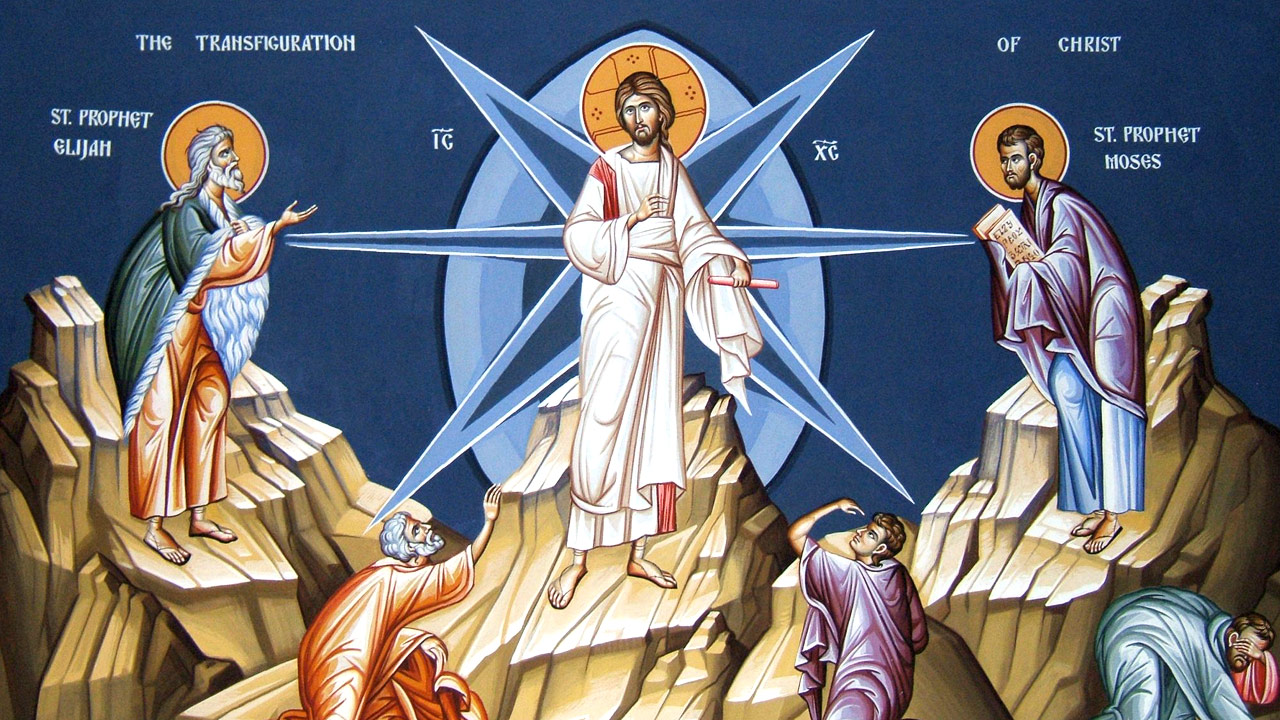
1 And after six days Jesus took with him Peter and James, and John his brother, and led them up a high mountain by themselves. 2 And he was transfigured before them, and his face shone like the sun, and his clothes became white as light. 3 And behold, there appeared to them Moses and Elijah, talking with him. 4 And Peter said to Jesus, “Lord, it is good that we are here. If you wish, I will make three tents here, one for you and one for Moses and one for Elijah.” 5 He was still speaking when, behold, a bright cloud overshadowed them, and a voice from the cloud said, “This is my beloved Son, with whom I am well pleased; listen to him.”

6 When the disciples heard this, they fell on their faces and were terrified. 7 But Jesus came and touched them, saying, “Rise, and have no fear.” 8 And when they lifted up their eyes, they saw no one but Jesus only. 9 And as they were coming down the mountain, Jesus commanded them, “Tell no one the vision, until the Son of Man is raised from the dead.”transfiguration-icon

In the name of Jesus. Amen.

Chapter and verse breaks are helpful for us to find the same passage of Scripture, but they can also get in the way of important context. Our text, which begins a new chapter of Matthew, starts with the phrase “And after six days….” So, before we get to the Transfiguration, we need to see what was happening that week prior to Jesus getting shiny up on the mountain.

Matthew’ context for the Transfiguration starts back in Matthew 16[:13ff]. Jesus asks the disciples, “Who do people say that the Son of Man is?” The disciples report that some say that the Son of Man is John the Baptist, Elijah, Jeremiah, or one of the prophets. But then Jesus turns the question to them, “But who do you say that I am?” and Peter has his great confession, “You are the Christ, the Son of the living God.” Jesus had been proving that all along with His miracles and teaching. So, Jesus praises and blesses Peter even while He states that Peter didn’t come up with this confession on his own. Instead, God the Father had revealed this to Peter.

Then, Matthew tells us from that time Jesus began to show His disciples that He must go to Jerusalem and suffer many things, be killed, and on the third day be raised (Mt. 16:21). Transfiguration & Christ ForsakenAnd from this point, things get a little crazy and awkward. It is almost as though Peter didn’t hear Jesus say that He would rise from the dead because Peter rebukes Jesus – the very one he just confessed is the Son of the living God. Peter says, “Far be it from You, Lord! This shall never happen to You.” It would be easy to sling mud at Peter here for telling God that what He says is going to happen won’t ever happen. But you do it all the time – more on that in a bit.

Now, when Peter confessed that Jesus is the Messiah, it meant something for him. What exactly Peter had in mind that Jesus would do as the Messiah is a bit hard to pin down. But basically, Peter figured that Jesus, the Messiah, had come to fix problems. Exactly what those problems were we can’t say with certainty. But whatever Peter had in mind, one thing is sure, it would be difficult for Jesus the Messiah and Great Problem Solver to fix those problems if He was dead.

So, Peter rebukes Jesus, and Jesus rebukes Peter. “Get behind Me, Satan! You are a hindrance to Me. For you are not setting your mind on the things of God, but on the things of man” (Mt. 16:23). And this is the sharpest rebuke Jesus ever gave an individual.

You know how it can be after you have an argument with someone. You try to avoid the other person for fear that a fight will break out at any moment. When you have to talk with them, you feel uncomfortable during every conversation. You carefully word everything in order to avoid the issue flaring up again. Imagine how Peter must have felt during those six days between this rebuke and the Transfiguration.

Now, let’s ascend the mountain. Jesus invites Peter, James, and John to come up the mountain with Him. Maybe this summons made Peter figure the whole issue was over and done with. Anyway, while they are there, Jesus is transfigured. Christ’s face shines like the sun. His clothes become white as light. Moses and Elijah appear and talk with Jesus. Luke tells us that conversation centered around Jesus’ exodus (usually translated as “departure” but the word is ἔξοδος) which Jesus was about to accomplish at Jerusalem (Lk. 9:30). In other words, they were discussing the very thing that Peter said should never happen just a week ago.

To summarize: Six days prior, Jesus told the disciples about His suffering, death, and resurrection. And Peter didn’t like it then, and Peter doesn’t like it now even in the presence of shiny Jesus. Instead, Peter likes being there on the mountain basking in Jesus’ unveiled glory. But even more than that, Peter doesn’t want Jesus to walk down that mountain, down to Jerusalem, down to be arrested, down to be tried, down to suffer, and down to die on a cross – which would appear to be a complete waste. So, Peter pips up and says, “Lord, it is good that we are here.” And the word that receives the most emphasis in Peter’s statement is ‘here.’ It is nice to be there on the mountain away from where Jesus says He will die, so Peter says, “Let’s stay here. I can build some tents so we can stay here!”

In a few weeks, we are going to hear the account of Jesus’ temptation. After Jesus resists the devil’s temptations in the wilderness, Luke tells us that the devil left Jesus to tempt Him at a more opportune time (Lk. 4:13). This, right here, is a more opportune time. In other words, this statement by Peter is a real temptation for Jesus to stay there with Peter, James, John, Moses, and Elijah on that mountain of glory.

But while Peter was still speaking, a bright cloud overshadowed them, and God the Father speaks the same words He spoke over Jesus at His Baptism, “This is my beloved Son, with whom I am well pleased.” But then the Father has one more thing to say – a command to give – “Listen to Him.” That’s not just friendly advice. The previous week, Peter had been rebuked by Jesus Himself for saying that Jesus shouldn’t die, “Get behind me Satan.” Now, Peter is rebuked again by God the Father for telling Jesus to stay away from Jerusalem and death. God says, “Listen to Him!” And the disciples hear this and are terrified.

Now, which of us does not have the same kind of weakness that Peter had? How often do you think you know better than God? You sin, but instead of confessing it for the rebellion that it is, you try to self-justify your actions. You judge God for being hard-nosed because of the things He has declared are evil. You think you know better than God how to raise your children, run your bank account, drive your car, and what to look at on the internet. Every time you complain, covet, and get angry, you are bucking God’s commands and setting yourself above God. It’s all idolatry, and we are all guilty. Stay in your lane. You don’t know better than God. You don’t get to tell God how things should be. Stay in your lane, and repent.

The voice of the Father from heaven says, “Listen to Him,” and crushes Peter’s conscience along with yours and mine.

Transfiguration - Rise and Have No FearBut here is where all of this is leading: Jesus comes to Peter, James, and John cowering in their sins and touches them. And notice what He says. He doesn’t continue to rebuke Peter. Jesus doesn’t say, “See I told you so.” Instead, Jesus says, “Rise,” the same word Jesus used when He spoke about His resurrection.“Rise, and have no fear.” Of all the things our Lord could have said, He says, “Rise, and have no fear.” Jesus is resurrecting Peter from his sin.

And Jesus stays in resurrection mode. As they are coming down the mountain, Jesus says, “Don’t tell anyone about what you saw until I rise from the dead.” There, Jesus speaks about His death. But it almost seems as though this is the first time the disciples realize Jesus says that as the Messiah that He will die and rise again. Christ will rise again.

Despite your objections; despite your idolatrous thinking that you know better than God; despite your continual, obstinate, insubordination against God; Jesus knows what you need. You need His suffering, the shedding of His blood, His death, and His resurrection. You need exactly what Jesus is here to provide for you right now. Here is His body, given for you. Here is His blood, shed for the forgiveness of all your sins. Here, Jesus gives you Himself to be your Savior. Amen.

The peace of God, which surpasses all understanding, will guard your hearts and minds in Christ Jesus. Amen.

Saving the Savior – Sermon on Matthew 2:13-23 for the Second Sunday of Christmas

Listen here.

Matthew 2:13-23

13 Now when they had departed, behold, an angel of the Lord appeared to Joseph in a dream and said, “Rise, take the child and his mother, and flee to Egypt, and remain there until I tell you, for Herod is about to search for the child, to destroy him.” 14 And he rose and took the child and his mother by night and departed to Egypt 15 and remained there until the death of Herod. This was to fulfill what the Lord had spoken by the prophet, “Out of Egypt I called my son.”

The Slaughter of the Innocents of Bethlehem Matthew 2 1616 Then Herod, when he saw that he had been tricked by the wise men, became furious, and he sent and killed all the male children in Bethlehem and in all that region who were two years old or under, according to the time that he had ascertained from the wise men. 17 Then was fulfilled what was spoken by the prophet Jeremiah:

18 “A voice was heard in Ramah,
weeping and loud lamentation,
Rachel weeping for her children;
she refused to be comforted, because they are no more.”

19 But when Herod died, behold, an angel of the Lord appeared in a dream to Joseph in Egypt, 20saying, “Rise, take the child and his mother and go to the land of Israel, for those who sought the child’s life are dead.” 21 And he rose and took the child and his mother and went to the land of Israel. 22 But when he heard that Archelaus was reigning over Judea in place of his father Herod, he was afraid to go there, and being warned in a dream he withdrew to the district of Galilee. 23 And he went and lived in a city called Nazareth, so that what was spoken by the prophets might be fulfilled, that he would be called a Nazarene.

In the name of Jesus. Amen.

Merry Christmas and happy New Year! Today is the twelfth and last day of the Christmas season. Maybe you began celebrating Christmas when the Hallmark Channel began their “Countdown to Christmas” way back on October 26th. And, no, I’m not going to mock their movies today. Finally, after ten years of being your pastor, I’ve learned to not do that anymore – at least not in a sermon.

Maybe you have taken down your tree and lights and have stored all the decorations in your garage and shed. Remember for Christians, every Sunday is Christmas and Easter – even if your house or this sanctuary isn’t decorated accordingly. So, before we take everything down today after the service, God would remind us of why Jesus came. And this reminder comes in a sobering way with a sad text. The reminder is this: Jesus entered this world to bring life and salvation to people who are obsessed with death.

The birth of Jesus wasn’t the soft, cleaned up picture that we so often have in our minds. Joseph and Mary didn’t lay baby Jesus in a warm, comfortable, well-kept barn. It was a normal barn – cold, dirty, and stinky. They weren’t surrounded by well-groomed animals. Instead, the Scriptures make sure we know that things were much humbler and more dangerous for the holy family. After the birth of Jesus announced by gruff shepherds, the families of Bethlehem wondered at the news (Lk. 2:18) but soon returned to their normal lives. Then at the beginning of Matthew 2, King Herod heard from the magi about the birth of the One who had been born King of the Jews. And Herod did not think this was good news at all.

A little background on King Herod. This Herod was known as Herod the Great, probably because of the many building projects he completed. Herod wasn’t an Israelite; he was an Edomite, a descendent of Esau. But Caesar had given him the title king of the Jews. Herod was utterly and completely wicked and would do whatever he thought necessary to protect his power. He had nine or ten wives, most of whom were murdered because he suspected of them plotting against him. Herod was so bad that Caesar Augustus, who was his friend, said that it was better to be Herod’s pig than Herod’s son.

Five days before Herod’s death, he murdered his oldest son to keep him from gaining his throne. As Herod lay on his death bed, he called all his advisors and all the influential men of Jerusalem and Judea to gather together and had them locked in the Hippodrome which was a horse racing track. Herod ordered his armies to surround the stadium and kill everyone inside after he died so that the city cry when he died – even if they weren’t crying for him. Apparently, the order wasn’t carried out.

So, when the magi come to Jerusalem asking, “Where is he who is born King of the Jews?” you can imagine how troubled Herod was. King of the Jews is his job, his title, his office. herod and the magiThe guy who didn’t even want his own children to be king after him hears that someone else has been born to be King of the Jews. Well, Herod isn’t going to let that stand. And when Herod is troubled about this, the rest of Jerusalem is also quaking as they wonder what will happen next.

So, Herod learns from the chief priests and scribes that the Christ was to be born in Bethlehem, he sends the magi to find the Child and let him know where the infant Jesus is. But God tells the magi to not return to Herod, and they depart to their own country. And God sends an angel to warn Joseph to take the infant Jesus to Egypt, the land of slavery and infanticide (Ex. 1:8-21), to save the life of the Savior. As the soldiers marched south from Herod’s castle toward Bethlehem to carry out their murderous orders, the holy family fled ahead of them to Egypt.

Again, the first Christmas was not a tranquil, picturesque scene. Lord, have mercy.

The slaughter of all those boys two years old and younger in Bethlehem is one of the saddest, most horrific things recorded in all of the Scriptures. And yet, it is not so different in our time and culture today.

In 2018, the number of abortions performed in the US passed 60 million since the Roe v. Wade decision. Worldwide, the numbers are much more devastating. In our country, the killing of these pre-born children isn’t to protect a title of a king. Instead, these children are killed for the sake of convenience and independence. And it is all done in the name of choice. Politicians used to defend abortion saying that it should be safe, legal, and rare, but many of them are pushing to expand access to abortion and even suggesting that babies who survive attempts at abortion can be left to die on a table. And now, the leading provider of abortion in our country encourages women to shout their abortions and celebrate them.

Dear saints, there is a modern-day holocaust going on in our country, and it should daily drive us to our knees in prayer. Thomas Jefferson, the third president of our country, a man who published his own version of the Gospels that removed all of Jesus’ miracles, all the claims of His divinity, and even the Resurrection, Jefferson said, “A single human being is of infinite worth.” Even this secular principle is right and is enough to peacefully (and notice I said peacefully) oppose abortion with every ounce of our strength. But the coming of the Son of God in the flesh has raised the sacredness of all human life to an even higher dimension (Dr. Rev. David Scaer). In Jesus is life which gives light to everyone (Jn. 1:4, 9).

BaptismIn the incarnation, the eternal Son of God shares in the life of every man, woman, and child – born and unborn. We human beings are all taken out of the flesh of Adam which means that we are all part of one another. But even more importantly, by His conception, the eternal Son of God has permeated all of humanity. This is why the devil loves abortion. Satan loves abortion because every unborn child reminds him of the fact that the Son of God came in the flesh, took up residence in His mother’s womb, and defeated him. The fact that your Savior was once a pre-born child is primary the reason Christians oppose abortion.

Because we are descended from Adam, we all stand before God under the just verdict of guilty and deserving of hell (Ps. 51:5). But again, more importantly, because Jesus has taken on our flesh, we can stand in faith before God with Jesus, the second Adam, to hear a verdict of innocent, holy, and righteous because this Jesus has taken your place. On the cross, He become your sin (2 Cor. 6:21) so that He is the Lamb of God who takes away your sin (Jn. 1:29) and buries it into the emptiness of His tomb.

The young boys of Bethlehem died that night so Jesus could escape death as an infant but not escape death forever. Jesus grew up and died for them and for you upon the cross. Jesus died for them and for the evil Herod’s, Hitler’s, Stalin’s, bin Laden’s, and Soleimani’s of the world. Christ paid for the sins of every abortionist, every woman who has had an abortion, and every man who has pressured a woman to get an abortion. Your Savior died for those sins just as much as He died for yours.

Today, you have heard how your Savior was saved from death so that, at the right time Christ could die for you (Ro. 5:6). So, yes – rejoice because of Christmas while you remember why Jesus came. He came to bring salvation and life to a world obsessed with death. He came to make you – yes you, sinner – His own. Amen.

The peace of God, which surpasses all understanding, will guard your hearts and minds in Christ Jesus. Amen.

Easter in October – Sermon on Luke 7:11-17 for the Sixteenth Sunday after Trinity

Listen here.

Luke 7:11-17

11 Soon afterward he went to a town called Nain, and his disciples and a great crowd went with him. 12 As he drew near to the gate of the town, behold, a man who had died was being carried out, the only son of his mother, and she was a widow, and a considerable crowd from the town was with her. 13 And when the Lord saw her, he had compassion on her and said to her, “Do not weep.” 14 Then he came up and touched the bier, and the bearers stood still. And he said, “Young man, I say to you, arise.” 15 And the dead man sat up and began to speak, and Jesus gave him to his mother. 16 Fear seized them all, and they glorified God, saying, “A great prophet has arisen among us!” and “God has visited his people!” 17 And this report about him spread through the whole of Judea and all the surrounding country.

Alleluia! Christ is risen!
He is risen indeed. Alleluia!

In the name of Jesus. Amen.

The Resurrection of the Widow's Son at NainIf Menards can have Christmas decorations out already and if the Hallmark Channel can do nonstop Christmas movies in July, then the Church can certainly have Easter in October. In fact, we have to celebrate Easter because this text screams Easter – loud and clear. But always before Easter, there is Good Friday. Before resurrection, there must be death. Good Friday sadness is a prerequisite to Easter joy. We have to see that first.

Yes, Easter joy is the climax of this text, but Good Friday sadness gets more words. Yes, the young son of this woman is raised, but Luke spends much more time telling us about the sad estate of his mother. She was a widow, but now she is really alone. This son of hers that has died is her only-begotten (μονογενής same word used in Jn. 3:16) son. A great crowd follows her sharing in her grief. Jesus sees her and speaks to her first. This woman is drowning in Good Friday grief. But Jesus He won’t allow it.

Jesus isn’t very good at funerals. He always ruins them. Remember when Jairus’ little girl died (Mt. 9:18-26; Mk. 5:22-43; Lk. 8:41-56), Jesus sees all the mourners weeping and wailing and tells them, “Go away, for the girl is not dead but sleeping,” and everyone laughs at Him. But then Jesus goes into the house, takes the girl by the hand, and says, “Little girl, get up” (Mk. 541:). And she does. Or, remember when Lazarus died. Jesus came when Lazarus’ corpse would have been ripe and stinky. Then, Christ tells them to roll the stone away from the entrance of the tomb and says, “Lazarus, come out” (Jn. 11:43). And out He comes. Finally, remember Jesus’ own funeral. Our Lord didn’t behave properly then either. Jesus leaves before His funeral is finished. He didn’t stick around in the grave long enough to have a proper burial.

Well, here in this text, Jesus ruins another funeral. Jesus is leading a great crowd. And as they reach the city of Nain, they meet another crowd who were going out of the city to bury the boy. These two throngs of people meet at the gate. Imagine this. One crowd is leaving the city and following death, and another crowd is entering the city lead by the Life of the world (Jn. 11:25, 14:6). And these two crowds get mixed up together in this bottle neck.

Proper etiquette and manners would dictate that Jesus and His crowd would step aside and allow the funeral procession to pass by. But, remember, Jesus is no good at funerals. Instead, Jesus marches right up to the front of the funeral procession. He does this, Luke tells us, because when He saw the mother He had compassion on her. Literally, Jesus’ guts were being wrenched and all twisted up inside.

He walks up to the woman and says, “Do not weep.” This sounds absolutely callous. Weeping is the right thing for this woman to be doing – her son has died. When you are saddened by the death of someone and find yourself weeping, you are doing what is right. Your actions line up with how God feels about death. Jesus, who never sinned, Himself cried when He was at the tomb of Lazarus (Jn. 11:35). Now, the text doesn’t tell us this, but I wouldn’t be surprised if Jesus had tears in His eyes as He approached the widow. Remember His guts are wrenched. But He tells her to stop crying because He is about to intervene. Jesus could have reversed the order. He could have raised the young man first, then told the mother to stop crying. But He doesn’t. He tells her to stop crying because it isn’t going to be necessary in a moment. This command to stop crying is a call for her to trust in Him.

H-70 Trinity 16 (Lu 7.11-17)Then, Jesus walks past the pallbearers, straight up to the bier, touches it, and says, “Young man, I say to you, arise,” as though He was waking up a sleepy teenager late on a Saturday morning. The boy gets up and begins to speak. I wonder what he said.

Jesus gives the boy back to his mother and everyone glorifies God saying, “A great prophet has arisen among us!” And, “God has visited His people!” They were right. God had visited His people. God had taken on flesh to deliver His people from death and sin, the sting of death (1 Cor. 15:54-56).

Dear saints, today is October 6th, but today we celebrate Easter; we celebrate the resurrection. Yes, we await the resurrection on the final day when Christ returns and raises up the dead and grants eternal life to all who believe in Him. But the resurrection has already begun. Jesus, your Savior died, but He lives. He is the first fruits of those who have fallen asleep (1 Cor. 15:20). Whenever Jesus contends with death, death looses.

And that is what you need because this morning, you were part of a funeral procession. Because you are a sinner, the stink of death hangs around you. Young and old – man, woman, and child – we all dragged some dead thing here with us today.

Is it your relationship with your spouse that is slowly dying? Is it the skeleton of disobedience to parents? What dead thing have you brought with you?

Is it the rotting remains of your finances that cause you to worry and doubt, or simply discontentment with what God has given you? Is it the cadaver of lust that flames within you? Is it the carcass of pride that is so inwardly focused that you do not notice the needs of others? What dead thing have you brought here with you?

Maybe it isn’t even your fault. Maybe it is just the fear of what might happen in the future. Maybe it is anger for how you have been wronged in the past. Maybe your dead thing is your own sick, crumbling body. What dead thing have you brought here with you?

Body of Christ CommunionJesus marches toward your funeral procession, and He does not stop or yield. Jesus does not give way or defer to death. Instead, Jesus defeats death with His death and resurrection, each and every time He meets it. Jesus meets you here today as you plod along in your personal funeral procession and gives you life. Jesus meets you at this altar to give you His living Body and His life-giving Blood.

Alleluia! Christ is risen!
He is risen indeed. Alleluia!

Amen.

The peace of God, which surpasses all understanding, will guard your hearts and minds in Christ Jesus. Amen.