IV. What Does Such Baptizing with Water Signify?
It signifies that the old Adam in us, together with all sins and evil lusts, would be drowned by daily sorrow and repentance and be put to death; and that the new man should daily come forth and rise to live before God in righteousness and holiness forever.
Where is it so written?
St. Paul writes in the sixth chapter of the Epistle to the Romans: “Therefore we have been buried with Him through baptism into death, so that as Christ was raised from the dead through the glory of the Father, so we too might walk in newness of life.”
Martin Luther Small Catechism
In the name of Jesus. Amen.
Baptism saves (1 Pe. 3:21), forgives sins (Act. 2:38), delivers from death and the devil (Col. 1:13), and gives the new begetting from above (Jn. 3:3, 5-6). Still, one of the most common objections people have to those Scriptural teachings is they will say, “Baptism doesn’t save. Only Jesus saves by His death and resurrection.” Well, they’re half right. We agree with the second part of that statement.
Jesus alone saves us by His death and resurrection. Colossians 1:20 says that Jesus reconciled all things by making peace through the blood of His cross. Ephesians 2:13 says that we who were far off have been brought near by the blood of Christ. In 1 Corinthians 2:2, Paul says that he decided to know nothing among the Corinthian Christians except Christ and Him crucified. And, finally, Galatians 6:14 says, “Far be it from me to boast except in the cross of our Lord Jesus Christ.” By His death and resurrection, Jesus, the eternal Son of God, won our salvation. Period.
But that leaves us with a problem. We weren’t there. Jesus was crucified 1,998 years ago and 6,185.425 miles away (as the crow flies between East Grand Forks and Jerusalem). So how does Jesus’ victory over sin, death, and the devil get to us who live nearly 2,000 years later? How do we get the benefits of Jesus’ blood which was shed half the world away from here? According to Romans 6:3-4, it happens through your Baptism.
Your salvation was won and purchased on the cross, but it isn’t distributed there. The only one we know was saved on Mt. Calvary on that Good Friday was the thief on the cross, the one to whom Jesus said, “Truly, I say to you, today you will be with Me in paradise” (Lk. 23:43).
Think back to all the sporting competitions you have watched. The team that wins the Super Bowl might win the game on a play that happens in the 2nd quarter, but they don’t get the Lombardi Trophy until after the game clock runs out, and probably on a different part of the field than where the winning play occurred. In the Olympics, the person who wins the 100m dash doesn’t get their gold medal as they cross the finish line in first place. It wouldn’t be safe. Just imagine what would happen if the officials tried to hang the gold medal on the winner at the finish line of downhill skiing or the luge. Talk about an epic clotheslining. I can’t think of any instance where the prize is awarded at the exact moment and location of where the victory is won.
The same is true of salvation. Your salvation is won by Christ on the cross, but it isn’t delivered there. Your salvation is delivered to you in your Baptism.
I know that this final question from the Catechism asks, “What does Baptizing with water signify?” We’ll get to what it signifies, but first Romans 6 says that Baptism actually does something. All of us who have been Baptized into Christ Jesus were Baptized into His death. We were buried therefore with Him by Baptism into death, in order that, just as Christ was raised from the dead by the glory of the Father, we too might walk in newness of life.
Your Baptism actually joined you to Jesus’ death. It isn’t just that it was a sign or some symbology (sic.). It actually picked you up from wherever you were when you were Baptized, brought you back in time to 33 AD, and joined you to Christ’s death on the cross.
Being joined to Jesus’ death is a good thing because that means you have a Jesus-kind of death – a death that doesn’t last very long. Christ was in the tomb for three days before He rose again, and since you have been Baptized into Christ and joined to Jesus’ death you can know that your time in the grave will not last either. Being joined to Jesus’ death means that you will certainly be united with Him in a resurrection like His (Ro. 6:5).
Your Baptism is where God delivered your justification. It is where God declares you to be not guilty of your sins. Beyond that, your Baptism is where God calls you to think of yourself differently – to think of yourself as one who is and is being sanctified. In other words, your Baptism allows you to say that you are no longer defined by your sins, but by God’s righteousness.
Because of that, Baptism signifies that you daily die to sin and live before God in righteousness. That’s why our Epistle text (Ro. 6:1-14) closes by calling us to not let sin reign in our mortal bodies and make us obey our sinful passions.
Through your Baptism you are truly forgiven, regenerated, and made holy. That is how God looks at you, Baptized Christian. But we also recognize from Scripture and our experience that this new life has only begun. It is not yet complete. You recognize that the Old Adam still dwells in you despite the fact that he was drowned in your Baptismal waters. Also, you recognize that the devil and the world still remain around you pestering you, trying to deceive you and lead you astray. The devil, the world, and your own sinful flesh want you to continue in those sins which were drowned and return to slavery to sin.
What occurred in your Baptism, the drowning and rising, the death and resurrection, isn’t something that is merely in the past, but neither is it something to come later in the future. Your Baptism is your present life, believer. Daily you repent of your sins, daily you believe in Christ crucified for your forgiveness, and daily you walk in newness of life until that great day when your Old Adam finally perishes, and you are perfectly and eternally renewed.
In other words, because your Baptism has actually joined you to Christ’s death and resurrection, live that out. Sin now has no dominion over you, since you are not under law but under grace.
So, each night, as you go to your bed, let it be a practice run at your death. Over and over, Scripture speaks about the death of believers as them falling asleep (Mt. 9:24; Jn. 11:4, 14; 1 Cor. 15:6; 1 Thess. 4:13). As you go to bed, confess your sins and read a passage of absolution. Hear how God has cast all your sins behind His back (Is. 38:17). How God blots out your transgressions for His own sake and will not remember your sins (Is. 43:25) Know that God promises that He removes your sins from you as far as the east is from the west (Ps. 103:12) and that He tread your sins under His foot and cast them into the depths of the sea (Mic. 7:19). And as you sleep, die to those sins knowing that God’s steadfast love never ceases, His mercies never come to an end, they are new every morning, great is His faithfulness (Lam. 3:22-23) to you.
Then, each morning think of your getting out of bed as a dress rehearsal for the Resurrection. Let your new, forgiven self come forth daily to rise and live before God in righteousness and holiness. Dear Baptized Christian, let each day of your forgiven life be a day where you take up your cross and follow after your Savior trusting in Him as you live and wait for your eternal inheritance with Him. Amen.
The peace of God, which surpasses all understanding, will guard your hearts and minds in Christ Jesus. Amen.
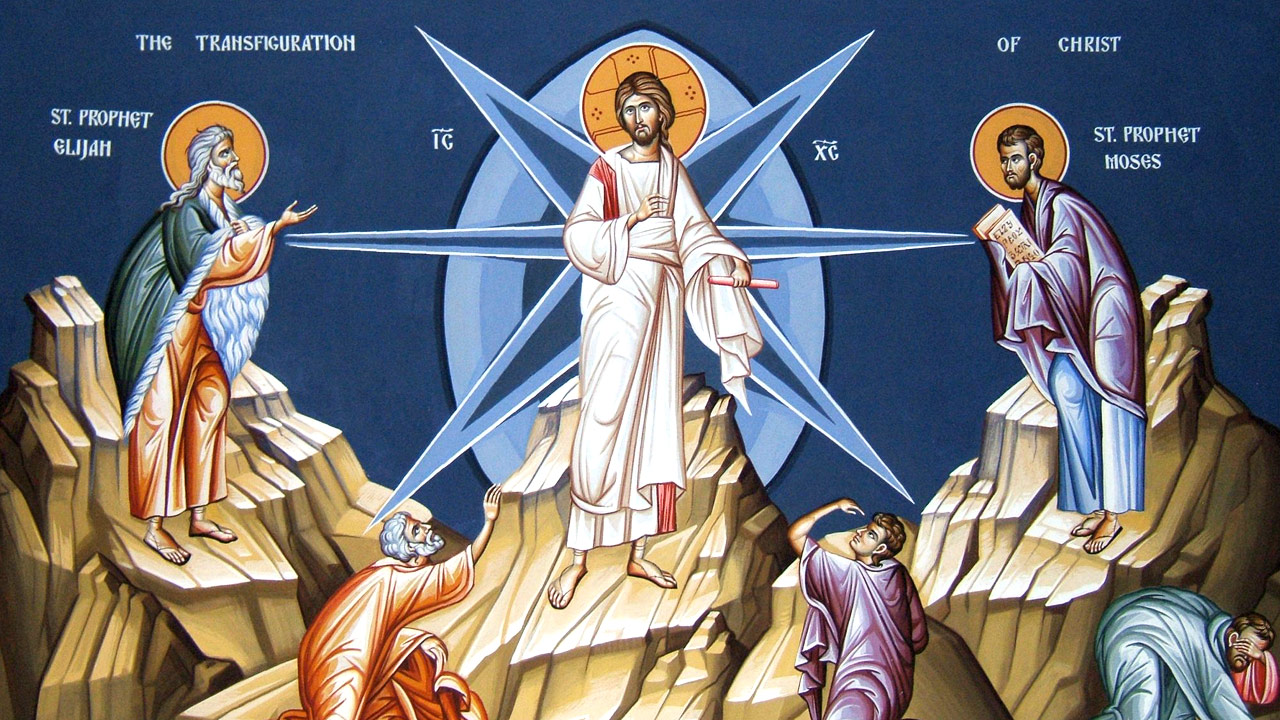
 And from this point, things get a little crazy and awkward. It is almost as though Peter didn’t hear Jesus say that He would rise from the dead because Peter rebukes Jesus – the very one he just confessed is the Son of the living God. Peter says, “Far be it from You, Lord! This shall never happen to You.” It would be easy to sling mud at Peter here for telling God that what He says is going to happen won’t ever happen. But you do it all the time – more on that in a bit.
 But here is where all of this is leading: Jesus comes to Peter, James, and John cowering in their sins and touches them. And notice what He says. He doesn’t continue to rebuke Peter. Jesus doesn’t say, “See I told you so.” Instead, Jesus says, “Rise,” the same word Jesus used when He spoke about His resurrection.“Rise, and have no fear.” Of all the things our Lord could have said, He says, “Rise, and have no fear.” Jesus is resurrecting Peter from his sin.
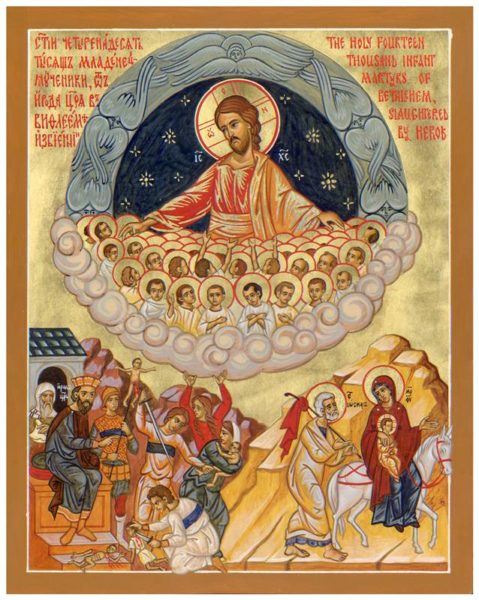 16 Then Herod, when he saw that he had been tricked by the wise men, became furious, and he sent and killed all the male children in Bethlehem and in all that region who were two years old or under, according to the time that he had ascertained from the wise men. 17 Then was fulfilled what was spoken by the prophet Jeremiah:
 The guy who didn’t even want his own children to be king after him hears that someone else has been born to be King of the Jews. Well, Herod isn’t going to let that stand. And when Herod is troubled about this, the rest of Jerusalem is also quaking as they wonder what will happen next.
 In the incarnation, the eternal Son of God shares in the life of every man, woman, and child – born and unborn. We human beings are all taken out of the flesh of Adam which means that we are all part of one another. But even more importantly, by His conception, the eternal Son of God has permeated all of humanity. This is why the devil loves abortion. Satan loves abortion because every unborn child reminds him of the fact that the Son of God came in the flesh, took up residence in His mother’s womb, and defeated him. The fact that your Savior was once a pre-born child is primary the reason Christians oppose abortion.
 If Menards can have Christmas decorations out already and if the Hallmark Channel can do nonstop Christmas movies in July, then the Church can certainly have Easter in October. In fact, we have to celebrate Easter because this text screams Easter – loud and clear. But always before Easter, there is Good Friday. Before resurrection, there must be death. Good Friday sadness is a prerequisite to Easter joy. We have to see that first.
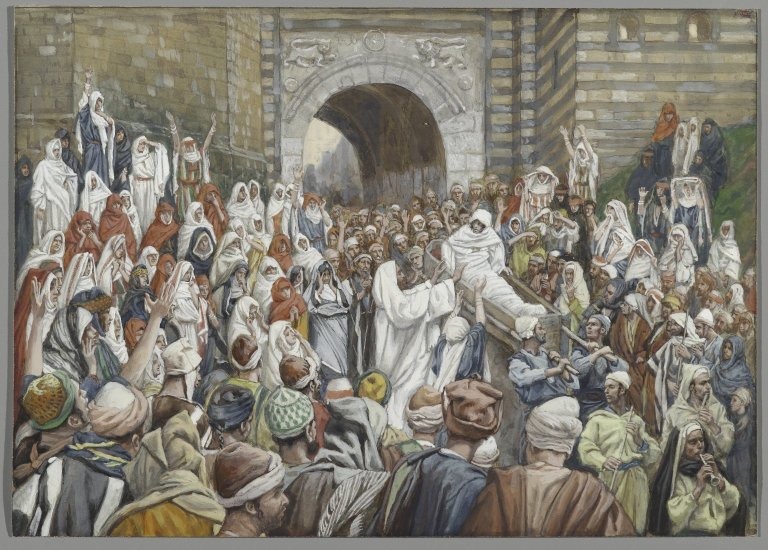
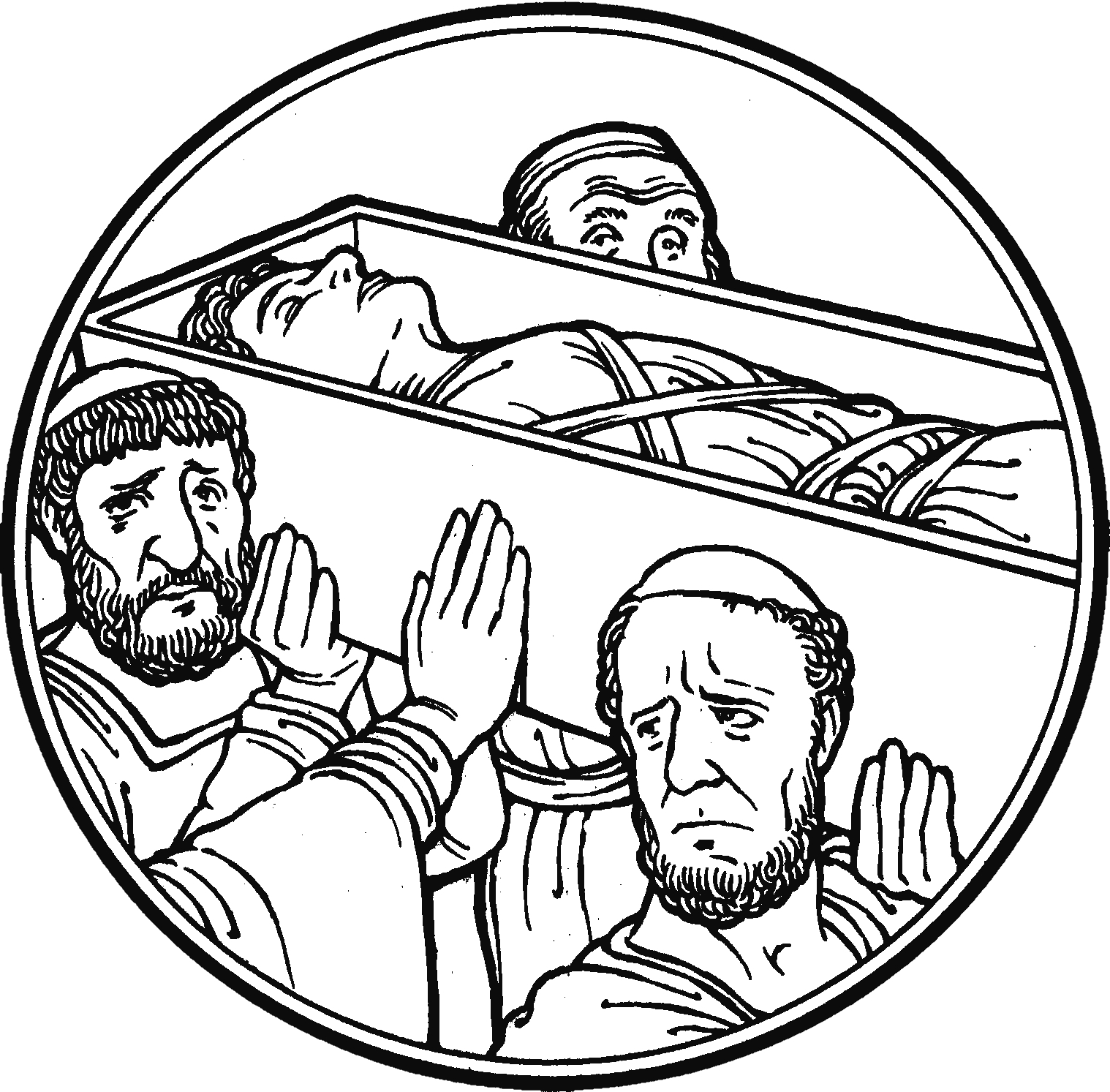 Then, Jesus walks past the pallbearers, straight up to the bier, touches it, and says, “Young man, I say to you, arise,” as though He was waking up a sleepy teenager late on a Saturday morning. The boy gets up and begins to speak. I wonder what he said.
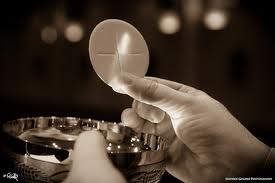 Jesus marches toward your funeral procession, and He does not stop or yield. Jesus does not give way or defer to death. Instead, Jesus defeats death with His death and resurrection, each and every time He meets it. Jesus meets you here today as you plod along in your personal funeral procession and gives you life. Jesus meets you at this altar to give you His living Body and His life-giving Blood.
 And you can smile in his face, “Yes, death, you used your sting, didn’t you? You should have used your sting on me. The sting would have stuck on me. But you didn’t. Instead, death, you used your sting on my Savior, my God, and my Lord. You used your sting on Jesus, didn’t you? You had Jesus pinned tightly on the cross, and you stuck Him with your stinger and buried it into Him. Death, you were a fool that day. You stung God Himself. You stung Jesus who is the Resurrection and the Life (Jn. 11:25). But when you went to the tomb to find your stinger and get it back, Jesus wasn’t there. And guess what, death, Christ has taken my sin as He hung on the cross. And, death, you will not ever get your sting back. Never. That empty tomb means that your sting is lost forever. Death, I don’t fear you any longer.”
 But Satan comes along and puts a question into the mind of the woman. “Did God actually say?” This is the one attack of the devil. He always is trying to get us to doubt the Word and promise of God. “Did God actually say, you should not eat of any tree in the garden?” And notice that the woman adds to God’s promise. She says, “We may eat of the fruit of the trees in the garden, but God said, ‘You shall not eat of the fruit of the tree that is in the middle of the garden, neither shall you touch it, less you die.’” God had never said anything about not touching the tree of the knowledge of good and evil (at least, it isn’t recorded for us). Satan is attacking God’s Word, but Adam and the woman have not fallen yet. The serpent sees his opening and tells an outright lie, “You will not surely die! For God knows that when you eat of it your eyes will be opened, and you will be like God, knowing good and evil.”
 But even as God does this, we will see the horrific consequences that sin and evil has brought into God’s good creation. God calls to Adam, “Where are you?” God still wants to have fellowship with Adam and the woman even though they have sinned, broken His commandment, and lost their faith. But rather than confessing and repenting of his sin, Adam dodges the opportunity saying, “I hid from You because I was naked and afraid.” So, God gives Adam a second chance to repent, “Who told you that you were naked? Have you eaten of the tree of which I commanded you not to eat?”
 gives her the name Eve. She wasn’t called this at any point before in Scripture. Adam gives her the name ‘Eve’ which means ‘life-giver.’ Here’s how we know faith is restored. Eve was already going to be the mother of everyone who would be born. But Adam, the father of faith, changes her name to Eve because she is the mother of all who would believe in the promised Seed who would crush the serpent’s head.
 The funeral procession began at the sentencing as crowds shouted out, “Crucify, crucify Him.” In that funeral procession, Jesus carried His own bier, His own cross, until He could carry it no more. A great crowd of people followed Jesus mourning and lamenting for Him. But even in the midst of that funeral procession, Jesus’ words are the same, “Weep not”(Lk. 23:26-28).
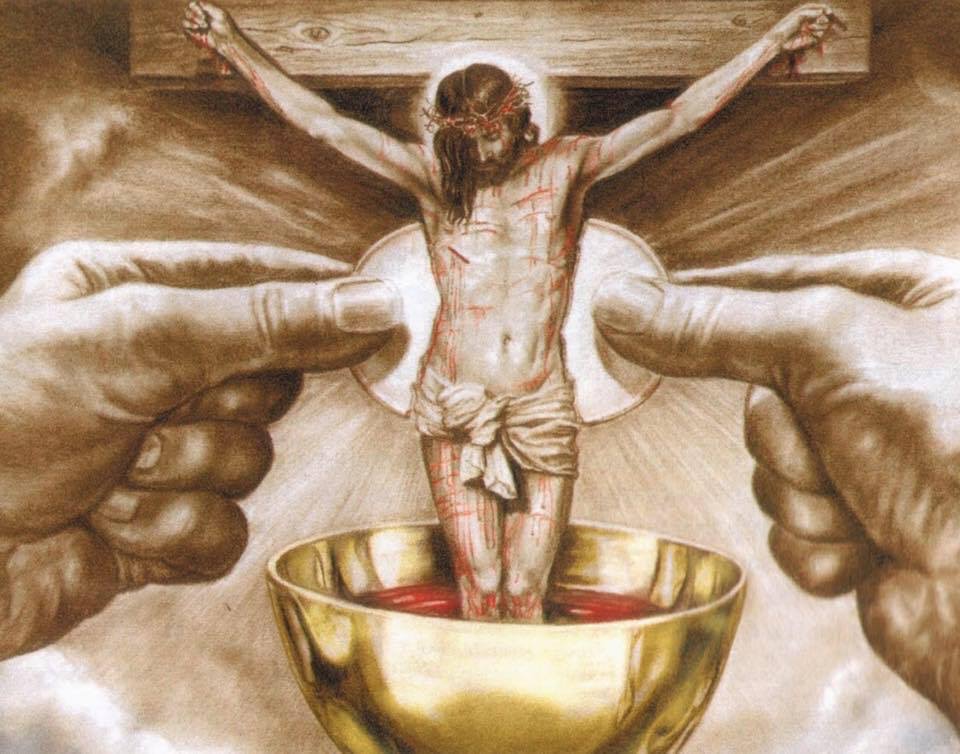 Instead, Jesus defeats death, each and every time He meets it.

You must be logged in to post a comment.