Confidence – Sermon on Esther 4:7-16 for the Seventeenth Sunday after Trinity

Esther 4:7–16

7 And Mordecai told him all that had happened to him, and the exact sum of money that Haman had promised to pay into the king’s treasuries for the destruction of the Jews. 8 Mordecai also gave him a copy of the written decree issued in Susa for their destruction, that he might show it to Esther and explain it to her and command her to go to the king to beg his favor and plead with him on behalf of her people. 9 And Hathach went and told Esther what Mordecai had said. 10 Then Esther spoke to Hathach and commanded him to go to Mordecai and say, 11 “All the king’s servants and the people of the king’s provinces know that if any man or woman goes to the king inside the inner court without being called, there is but one law—to be put to death, except the one to whom the king holds out the golden scepter so that he may live. But as for me, I have not been called to come in to the king these thirty days.” 

12 And they told Mordecai what Esther had said. 13 Then Mordecai told them to reply to Esther, “Do not think to yourself that in the king’s palace you will escape any more than all the other Jews. 14 For if you keep silent at this time, relief and deliverance will rise for the Jews from another place, but you and your father’s house will perish. And who knows whether you have not come to the kingdom for such a time as this?” 15 Then Esther told them to reply to Mordecai, 16 “Go, gather all the Jews to be found in Susa, and hold a fast on my behalf, and do not eat or drink for three days, night or day. I and my young women will also fast as you do. Then I will go to the king, though it is against the law, and if I perish, I perish.”

Esther 4:7-16

In the name of Jesus. Amen.

In our Gospel lesson (Lk. 14:1-11), Jesus warns about taking a place of honor at a banquet because someone more distinguished might come and you’ll get relegated and downgraded to the kids’ table. Well, Esther is facing a much more dire situation. Even though she is the queen, if she puts herself in front of the king without him extending his golden scepter, she could face immediate execution. But before we get too far ahead of ourselves, it is good to recap what has happened up to this point in the story of Esther.

A man named Mordecai grew up in Jerusalem, but when the Babylonian armies came and destroyed his city, he was taken into captivity and now lives in Susa (Est. 2:5-6). Mordecai had taken it upon himself to raise his cousin, Esther, who had been orphaned (Est. 2:7). We aren’t sure how her parents had died, but it is likely they died when Jerusalem fell. Mordecai was a Christian man. He had the Bible, read it, and trusted the promises God made in it. The main promise that Mordecai trusted and believed was that God would send a Messiah who would save His people from their sin by sacrificing Himself. 

Esther grew up to be very beautiful. She was chosen by King Ahasuerus (aka. King Xerxes) to be the queen in place of his former wife, Vashti who had disobeyed one of his commands. There’s a lot more to that story, but for our purposes today, it’s enough to know that Xerxes had no hesitation to toss aside even his own wife if she does something he doesn’t like (Est. 1).

Even though Esther had become the Queen, she wasn’t living in a ‘happily ever after’ situation. The reason for that brings us to the main villain in the story, who is a man named Haman. Haman was a prominent advisor and official – he was Xerxes’ right-hand man (Est. 3:1). Xerxes had commanded that all the servants at his gate must bow down to Haman when he walked by, but Mordecai, who was one of those servants, refused, and Haman didn’t like that one bit (Est. 3:2-5). So, Haman found out that Mordecai was a Jew, and he told Xerxes that all the Jews in the land despised Xerxes’ commands and laws. Haman offered a huge sum of money (Est. 3:9) to Xerxes if he would sign an order that every Jew living in the kingdom be killed on a certain day. Haman wanted to have Mordecai and all his people destroyed – a holocaust. And Xerxes agreed. He had the order sent throughout the kingdom, but when Xerxes signed the order, he didn’t know that Esther, his wife and Queen, was a Jew herself (Est. 2:20).

That brings us to our text. As soon as Mordecai learns about the plan, he sends a message to Queen Esther in the palace through this guy Hathach telling Esther, “You’ve got to do something about this.” And Esther responds to Mordecai, “Listen, if I go to the king without being called and summoned, I’m probably going to be killed. Xerxes hasn’t called me to come before him for a whole month.” In other words, “This is really risky. If I try your plan, Mordecai, I’ll be executed.”

Mordecai replies to Esther – and this is where I want to spend the rest of this sermon – saying, “Listen Esther, just because you live in the king’s palace don’t think that you are going to escape the fate of the rest of us Jews living out here.” Then in v. 14, Mordecai says, and this is so beautiful, “If you keep silent at this time, relief and deliverance will rise for the Jews from another place, but you and your father’s house will perish.”

Did you catch what Mordecai is saying there? Remember, Mordecai is a Christian. He has confidence and faith in God’s promise. He says, “If you don’t do this, we’re all going to die. But even if we die now, relief and deliverance will rise for us. I have no idea where it might come from, but God has promised. He will deliver. He will send the Messiah someway, somehow.” Mordecai knew his Bible. He knew God would send the Savior, the promised offspring of David and Abraham. Mordecai is completely certain that God will come through on that promise. His faith and confidence here is remarkable.

But note the change in Mordecai’s tone when he talks about the current situation with Esther. “Who knows whether or not you have been made the Queen for such a time as this.” I know that’s currently the famous line from Esther, but the whole thing is so important. Mordecai is not telling Esther, “Just go to Xerxes. God will keep you safe. Everything will be fine.” Mordecai doesn’t say that. He might wish he could say that, but he can’t say that because there is no promise in the Bible that Esther will be safe in this particular situation.

All Mordecai can say is, “Esther, know that God loves you. He is going to send the Savior. Yes, if you go and stand before the king, you might die. But I’m asking you to do it out of love for your people.” And this isn’t lost on Esther. She asks Mordecai to have everyone pray and fast for her. She will break the law; she’ll take the risk and go to the king. And she says, “If I perish, I perish.” In other words, even though she doesn’t know how all of this will all turn out, out of love for Mordecai and her people, she uses her sanctified reason and decides to take the risk and go to the king.

Dear saints, the Christian life is marked by two things – faith and love. Faith lays hold of God’s clear, certain promises and puts full and complete confidence in them, and God is pleased with that faith. Love ventures out into what is uncertain and, sometimes, risky to serve the neighbor, and God is pleased with that. God was pleased with Esther’s decision to take the risk, and God uses her action to deliver the Jews in a remarkable way. I’ll just encourage you to read the whole book of Esther to see how God uses Esther’s risk-taking to deliver her and her people.

Here’s the point: In this life, safety is an illusion, and it is an illusion that can become a horrible idol. Think of the Israelites in the wilderness. God had made clear promises to bring them into the land of Canaan, but when the twelve spies returned from checking out the land and ten of them told the people about the huge giants they would have to fight (Num. 13:25-14:4), what did the people do? Did they take the risk, or did they choose safety? They chose safety, and how did that go for them? Did they get safety? Sort of. Every day for the next forty years, God provided them with food, but they wandered. For forty years they walked around in the sand and dust while every one of the adults – except the two faithful spies, Joshua and Caleb, who had tried to remind the people of God’s promise – all the other adults died without a homeland. Forty years wasted with wandering and death.

Now, I say all of that stuff about safety being an idol, but this can be taken too far. For example, wear a seatbelt in a car. A seatbelt doesn’t guarantee your safety if you get in in an accident, but it is not a sin to wear a seatbelt. You aren’t worshiping that strap by wearing it, so it isn’t idolatry. And wearing a seat belt doesn’t keep or hinder you from loving your neighbor. In fact, God might use that seatbelt to help you love your neighbor in the future by protecting you so you can love your neighbor instead of being paralyzed. Basically, what I’m trying to get across with this sermon is that God wants you to quit being like the cowardly lion in the Wizard of Oz and, instead, have courage and confidence. The point of the sermon is not to turn you into the scarecrow with no brain.

Dear saints, there are times when God calls you to step out in love for your neighbor, but that love is going to require you to take a risk. It might mean risking your perception of financial stability or your reputation or your comfort. Again, use your God-given brain, but more importantly, have the confidence to love your neighbor in a way that seems risky because God loves you. And He loves it when you step out in faith to love and serve your neighbor.

And this same God and King of all creation now invites you to come and have a seat at His table. He invites you, not by extending a golden scepter, but something far more precious. He extends to you His very Body and Blood. He gives you this meal to forgive you of all your sins, and He will use this meal to strengthen your trust and confidence in Him as you go from here to love and serve your neighbor. Amen.[1]

The peace of God, which surpasses all understanding, will guard your hearts and minds in Christ Jesus. Amen.

Not used:

Remember Shadrach, Meshach, and Abednego (Dan. 3). They were in a situation where they had to make a choice between safety, which would come at the cost of bowing down to an idol. Or they could take a risk and not bow down but they will be thrown into the burning fiery furnace. They ended up placing their confidence in God saying to the king, “Our God whom we serve is able to deliver us from the burning fiery furnace.” Notice, they have confidence in God’s ability to deliver from that particular threat, and they continue with even more confidence, “He will deliver us out of your hand.”  But even if God doesn’t deliver them from the immediate threat of the furnace, they say, “We will not serve your gods or bow down to worship this idol you have set up” (Dan. 3:16-17).


[1] This sermon was adapted from a sermon by Pr. Jared Melius.

The Ten Words – Sermon on Exodus 20:1-17 for the Sixth Sunday after Trinity

Exodus 20:1-17

1 And God spoke all these words, saying, 

2 “I am the Lord your God, who brought you out of the land of Egypt, out of the house of slavery. 

3 “You shall have no other gods before me. 4 You shall not make for yourself a carved image, or any likeness of anything that is in heaven above, or that is in the earth beneath, or that is in the water under the earth. 5 You shall not bow down to them or serve them, for I the Lord your God am a jealous God, visiting the iniquity of the fathers on the children to the third and the fourth generation of those who hate me, 6 but showing steadfast love to thousands of those who love me and keep my commandments. 

7 “You shall not take the name of the Lord your God in vain, for the Lord will not hold him guiltless who takes his name in vain. 

8 “Remember the Sabbath day, to keep it holy. 9 Six days you shall labor, and do all your work, 10 but the seventh day is a Sabbath to the Lord your God. On it you shall not do any work, you, or your son, or your daughter, your male servant, or your female servant, or your livestock, or the sojourner who is within your gates. 11 For in six days the Lord made heaven and earth, the sea, and all that is in them, and rested on the seventh day. Therefore the Lord blessed the Sabbath day and made it holy. 

12 “Honor your father and your mother, that your days may be long in the land that the Lord your God is giving you. 

13 “You shall not murder. 

14 “You shall not commit adultery. 

15 “You shall not steal. 

16 “You shall not bear false witness against your neighbor. 

17 “You shall not covet your neighbor’s house.“You shall not covet your neighbor’s wife, or his male servant, or his female servant, or his ox, or his donkey, or anything that is your neighbor’s.”

In the name of Jesus. Amen.

Dear saints, you are familiar with this text – or, at least, you should be. We know these verses as “the Ten Commandments” – even though Scripture itself never refers to them as the Ten Commandments. (More on that in just a bit.)

We have grown used to thinking that God only gave the Ten Commandments to show us our sin so that we repent and believe in Jesus for the forgiveness of our sin. Saying that isn’t wrong – not in the least! Scripture says that one of the reasons God gave us the Law is to tell us what we must and have failed to do (Ro. 7:7-12). That’s how Luther uses them in his Small Catechism, and in his hymn on the Ten Commandments that we just sang, he does the same thing, “You have this Law to see therein / that you have not been free from sin, / but also that you clearly see / how pure toward God your life should be.” But God gave the Ten Commandments to do more than simply show us our sin.

Scripture calls this text “the Ten Words” (Ex. 34:28; Dt. 4:13, 10:4). The Bible refers to them as “the Ten Words” because only one of them is actually an imperative (command) – “Honor your father and mother.” All the rest are indicative (statements). A perfectly legitimate – and, admittedly, shorthand – way to understand these verses would be, “You will have no other gods before Me…. You will not misuse My Name…. You will keep the Sabbath holy…. Honor your parents. You will not murder, commit adultery, steal, lie, covet.”

As God’s people heard these words at the base of Mt. Sinai, they would have understood three distinct things at the same time. First, they would have understood that this is what God demands they do, which is how we normally understand them. Second, they would have heard them as a description of who they are and how God sees them. Third, they would have heard these as God’s promise to work in them to make them all these things (Php. 1:6).

Think of it this way: A boy might be pestered and bullied by a girl at school so much that he finally retaliates and shoves her to the ground. (You boys, don’t do that because that’s wrong.) They boy’s parents get called to the principal’s office and learn about the altercation. When they get home, the parents send the boy to his room as punishment. Afterwards, the father goes into his son’s room for ‘the talk’ and says, “We do not shove, hit, or be mean to girls.”

Notice what that speech from the father does. First, by saying, “we,” the father is still showing his son that they are in a relationship. The son hasn’t been abandoned or disowned; they belong together and are identified together as a unit. Second, the father is also saying that as a unit, they act and behave a certain way – they don’t use physical force against girls. Also, the boy knows that his dad is forbidding him to use physical force against a girl. All three of those things get communicated at the same time. The Ten Words here work just like that.

Let’s stick with that analogy about the boy and the girl bully to get one more thing about the Ten Words across. As soon as the boy pushed the girl to the ground and saw that she was dirty, dusty, and hurt, the boy’s conscience kicked in because he knew what he had done was wrong even before he pushed her. That rule or command, “Don’t hurt girls,” was already known by the boy even if he had never been taught it. The girl’s pain simply awakened his conscience. The same thing is true for these Ten Words (Ro. 7:7-8).

Cain knew it was wrong to kill Abel (Gen. 4:1-9) even though God hadn’t given the commandment, “Thou shalt not murder,” yet. Joseph knew not lie with Potiphar’s wife (Gen. 39:7-9) even though God hadn’t given the command, “Thou shalt not commit adultery.” Esau accused Jacob of cheating him (Gen. 27:36), and Jacob accused his father-in-law, Laban, of cheating him (Gen. 31:7) even though God hadn’t given the commandment, “Thou shalt not steal.” Abraham knew it was wrong to lie about Sarah being his sister (Gen. 12:11-20, 20:1-14) even though God hadn’t given the commandment, “Thou shalt not bear false witness.”

Everyone knows to not break the commandments because God has written them into the fabric of creation and on the heart of every person (Ro. 2:15). Everyone, even atheists (Ro. 1:21-25), know that we should love God with all our heart, soul, mind, and strength (Mt. 22:37). Everyone knows that we should love our neighbor as ourselves (Mt. 22:39).

God didn’t give the Ten Words so that we would know right from wrong. People knew (and still know) right from wrong already. Some think God gave the Ten Words to limit our freedom. Not at all. They are given in the context of God having set His people free, bringing them out of Egypt and slavery (Ex. 20:2). Instead, the Ten Words show God’s people what it looks like to be the free people He has created us to be. In the world that God has made, we aren’t free to do or be anything we please. We are free when we become what we are. A caterpillar is free to become a butterfly not a walrus. The Ten Words guide us to grow up to be what we are, and what we are is the very children of God (1 Jn. 3:2; Gal. 4:1-7).

Now, in an effort to assist with that growth, here’s some advice from Luther. Take each of the Ten Words with you into prayer and ask yourself these four questions: 1. What does this teach me? 2. What does this give me? 3. What does this show me to confess? And 4. What does this teach me to pray for?

For the first, “You shall have no other gods before Me,” you could pray something like this: “Father, thank you that You teach me that You are my God. Thank you that, as my God, You give me all good things. Forgive me for the times I do not trust You to be my God. Grant me Your Holy Spirit so I would love You with all my heart, soul, mind, and strength.”

For the seventh, “Thou shalt not steal,” you could pray: “Heavenly Father thank You for giving me so many good things. Everything I have is a gift from You. Forgive me for loving and pursuing stuff more than You. Help me to use what You have given me to serve my neighbor.”

Now, all of this is to say that what is most important with regard to the Ten Words is to believe them. Romans 14:23 says, “Whatever does not proceed from faith is sin.” As you believe the Ten Words, you see that God demands that you avoid certain sins and that you do certain good works. But you also see that God is accomplishing these things in you through faith. He has begun that good work in you when you were joined to Jesus’ death and resurrection in your Baptism (Ro. 6:1-11), and, again, He will complete that good work in you (Php. 1:6).

Dear saints, God promises that He is your God who has brought you out of slavery to sin by sending Jesus, who did not abolish the Law but fulfilled it. Through faith in Him, you have a righteousness that exceeds that of the scribes and Pharisees. Because of Him and His work, you will enter the kingdom of heaven, and He invites you now to a seat at His table. Amen.

The peace of God, which surpasses all understanding, will guard your hearts and minds in Christ Jesus. Amen.

The Sidewalk of Faith – Sermon on John 20:19-31 for the Second Sunday of Easter

John 20:19–31

19 On the evening of that day, the first day of the week, the doors being locked where the disciples were for fear of the Jews, Jesus came and stood among them and said to them, “Peace be with you.” 20 When he had said this, he showed them his hands and his side. Then the disciples were glad when they saw the Lord. 21 Jesus said to them again, “Peace be with you. As the Father has sent me, even so I am sending you.” 22 And when he had said this, he breathed on them and said to them, “Receive the Holy Spirit. 23 If you forgive the sins of any, they are forgiven them; if you withhold forgiveness from any, it is withheld.”

24 Now Thomas, one of the twelve, called the Twin, was not with them when Jesus came. 25 So the other disciples told him, “We have seen the Lord.” But he said to them, “Unless I see in his hands the mark of the nails, and place my finger into the mark of the nails, and place my hand into his side, I will never believe.” 

26 Eight days later, his disciples were inside again, and Thomas was with them. Although the doors were locked, Jesus came and stood among them and said, “Peace be with you.” 27 Then he said to Thomas, “Put your finger here, and see my hands; and put out your hand, and place it in my side. Do not disbelieve, but believe.” 28 Thomas answered him, “My Lord and my God!” 29 Jesus said to him, “Have you believed because you have seen me? Blessed are those who have not seen and yet have believed.”

30 Now Jesus did many other signs in the presence of the disciples, which are not written in this book; 31 but these are written so that you may believe that Jesus is the Christ, the Son of God, and that by believing you may have life in his name.

Alleluia! Christ is risen!
He is risen indeed! Alleluia!

In the name of Jesus. Amen.

The Bible says our faith depends on Jesus’ resurrection. If it was proven that Jesus did not rise from the dead, Scripture says that you can forget everything else in the Bible. In 1 Cor. 15:14, Paul writes, “If Christ has not been raised, then our preaching is in vain and your faith is in vain.”

The work of the Holy Spirit is not to convert reasonable, sensible people to believe wild stories. Instead, the Holy Spirit converts stubborn, obstinate hearts to believe reasonable things. The resurrection of Jesus is completely reasonable and historical. If you find it reasonable that Shakespeare wrote Romeo and Juliet – even though you didn’t see him write it with your own eyes – there is just as much evidence that Jesus rose from the dead. If Jesus rose from the dead, which He did, then you have to take Him seriously. And if you take Jesus seriously, you have to take the entire Bible seriously because Jesus took the Bible seriously.

To demonstrate that the Holy Spirit works on stubborn hearts to believe reasonable things, consider Thomas here. Our text starts the evening of Jesus’ resurrection. The ten disciples (minus Thomas) are sitting in a locked room in Jerusalem because they were afraid (Jn. 20:19), and Jesus appears to them. He forgives them of their sinful fear by saying, “Peace be with you.” And Christ restores them by sending them out with the authority to forgive sins. Then, Jesus leaves. Thomas arrives and hears the ten tell him about seeing Jesus, but he refuses to believe. There is no reason whatsoever for the ten to lie about this, and yet Thomas refuses to believe what they tell him. Unless he can thrust his fingers and hand in Jesus’ hands and side, he’s not going to believe. Thomas was being stubborn – sinfully, hard-heartedly stubborn. He doesn’t believe what is perfectly reasonable to believe.

The same can be said about those who refuse to believe in Jesus’ resurrection today. Christ’s resurrection is one of the most verifiable historical facts. Still, some make excuses to not believe. They will say the disciples just wanted to become rich and famous. Sure, they’re famous today, but they weren’t during their lives. The disciples had nothing to gain from lying about the resurrection. In fact, their lives would have been better if they had gone back to their fishing businesses or tax collecting. Through their entire lives, they were poor, arrested, persecuted, beaten, and all of them, except John, died for preaching that Jesus had risen. You don’t die for something you know is a lie. A modern atheist philosopher has said that when you consider the disciples’ lives after the resurrection, something must have happened for them to live the way they did. I don’t know what his conclusion ultimately is, but he admits there is no doubt that they had nothing to gain for what they preached.

Some doubters will say that the Gospel accounts are too different to be reliable. One gospel says two angels are at the tomb, another only has one, another doesn’t mention any. The number and names of the women vary between the Gospels. Well, the response to that is that each Gospel was written by different individuals to different audiences for different reasons. Certain details are more important to each writer, and each author doesn’t have to mention every detail. When you consider the resurrection accounts of the four Gospels, the details all fit together. And the differences are, actually, further evidence that the accounts are not made up or fabricated. A doctor of law, who teaches lawyers how to evaluate witness testimony, says that slight differences between the four Gospels are actually further evidence to their reliability. Perfectly harmonized testimony indicates that witnesses are trying to hide or distort something. But that is not what we have in the Gospels. We have varied but consistent, compatible testimony to the resurrection.

Beyond all that, there is evidence outside the Bible that points to the resurrection. A Roman emperor talks about how surprised he is that the first Christians all testified to Jesus’ resurrection and would rather die than deny it. A reliable Jewish historian, who wasn’t a Christian that lived shortly after Christ’s resurrection, says the same. All of this is to say that believing in the resurrection of Jesus is perfectly reasonable and sensible. Again, Christianity is not believing in myths or fairy tales. Christianity is believing that the Son of God came into human history to save and forgive sinners. If someone doesn’t believe that, it is only because of their own stubborn hard-heartedness, and the Holy Spirit must come and remove that heart of stone.

Faith in Jesus is always a work of the Holy Spirit. But what we believe is completely reasonable. The Christian faith isn’t a thoughtless dependence on something unknowable. Faith is grounded in Jesus’ death and resurrection. Another thing about this is that the Holy Spirit uses the fact of Christ’s resurrection to help us fight against sin because sin is nothing more than unbelief. Romans 14:23 says, “whatever does not proceed from faith is sin.”

Let’s use an analogy to get this across. When was the last time you had to concentrate to walk on a sidewalk? A normal sidewalk – clear, clean, flat, straight, no cracks or bumps. It’s three feet across – maybe wider – so it isn’t like walking on a tightrope. You’ve probably never had to think about it. You just walk straight. Almost everyone can do that successfully. Congratulations, you can all pat yourselves on the back. 

 Now, let’s change one thing. What if that sidewalk was suspended between two skyscrapers hundreds of feet in the air.[1] Everything else about that sidewalk is exactly the same. Completely firm, straight, and level. There’s no wind. (I know that’s hard to imagine living here in the Red River Valley, but the air is perfectly still.) There are still no guardrails, and you don’t have a harness that connects you to anything. If you fall off that sidewalk, you will plummet to your death. In that situation, you’d probably be stressed about taking that stroll. Your pace might be cut in half. You might be crawling on your belly. You might not be willing to take one step out on that sidewalk – even though you know you’re perfectly capable of doing it. You can walk straight, but being way up in the air like that is going to make it a completely different, terrifying experience. You would have to fight your doubts to believe you can do it because the consequences of not doing it right are fatal.

This is how it is living the Christian faith. The Holy Spirit persuades you about the truth of Jesus’ resurrection, and because Jesus is risen from the dead, everything He says is true – both Law and Gospel. What He says is sinful is sinful and separates you from God. What He promises is also true – that His death delivers you from sin, that He forgives you, that He is coming back for you. And because Jesus’ resurrection is so historically verifiable, none of that hard to believe intellectually. It’s as simple as walking on a normal sidewalk on the ground. But some still refuse to do it because the stakes are high. There are times when believing in Jesus is like walking on that sidewalk hung hundreds of feet in the air. There’s no question we can do it, but we have to fight against our fears and actually do it.

For example, you are tempted to twist the truth so your reputation isn’t ruined. You are tempted to get something without working for it and earning it. You are tempted to have an inappropriate relationship with someone who isn’t your spouse. Whatever sin it is, it doesn’t matter. In each of those moments, it’s like the sidewalk has been suspended between those skyscrapers and faith begins to waver and falter. In those moments of temptation, you realize that what the Bible says is inconvenient to what your sinful nature wants to do. You just need to keep walking straight and stay on the sidewalk. And it is precisely in those moments you need to remember that Jesus is risen, and everything He has said and done matters. And your faith needs to fight against those sinful urges and desires.

It isn’t that you need to be stronger in your own discipline and strength. Instead, you need to be stronger in your faith that Christ is risen, and the fact that Christ is risen changes everything. When you face temptations, ask yourself, “Is Jesus risen?” Because the answer is, “Yes,” you need to fight against those temptations and continue to believe that Jesus forgives you even though it is difficult. That’s when the Holy Spirit will come and continue to strengthen and encourage you to resist falling into those sins, whatever they are.

Like Thomas in this text, you have no good reason to disbelieve. Yet, our faith is often weak and shallow. To you, Jesus says what He said to Thomas, “Do not be unbelieving, but believe.” Get over yourself and believe what is obviously true. Jesus is risen from the dead and loves you. He has forgiven you of your sins and will return to bring you to Himself. And be encouraged because Jesus was thinking of you when He blessed you and spoke of you one week after His resurrection. You are in the Bible from Jesus’ own lips. Jesus says of you, “Blessed are those who have not seen,” and that’s you, “Blessed are those who have not seen and yet have believed.”

You have everything you need to fight against the temptations that you face (1 Cor. 10:13). The Holy Spirit continues to work on you, strengthening your faith about the facts of Jesus’ resurrection. And when you sin and fail and falter, Jesus’ death and resurrection has you covered. Because of what Jesus has done, you are forgiven, redeemed, and equipped to live in a fallen, broken world. And, dear saints, through that Holy Spirit-wrought faith, you overcome the world (1 Jn. 5:4).

Alleluia! Christ is risen!
He is risen indeed! Alleluia!

Amen.

The peace of God, which surpasses all understanding, will guard your hearts and minds in Christ Jesus. Amen.


[1] This analogy is borrowed and adapted from Pr. Jared Melius from Denver, CO.

See No Death, Taste No Death – Sermon on John 8:42-59 for the Fifth Sunday of Lent

John 8:42–59

42 Jesus said to them, “If God were your Father, you would love me, for I came from God and I am here. I came not of my own accord, but he sent me. 43 Why do you not understand what I say? It is because you cannot bear to hear my word. 44You are of your father the devil, and your will is to do your father’s desires. He was a murderer from the beginning, and does not stand in the truth, because there is no truth in him. When he lies, he speaks out of his own character, for he is a liar and the father of lies. 45 But because I tell the truth, you do not believe me. 46 Which one of you convicts me of sin? If I tell the truth, why do you not believe me? 47 Whoever is of God hears the words of God. The reason why you do not hear them is that you are not of God.”

48 The Jews answered him, “Are we not right in saying that you are a Samaritan and have a demon?” 49 Jesus answered, “I do not have a demon, but I honor my Father, and you dishonor me. 50 Yet I do not seek my own glory; there is One who seeks it, and he is the judge. 51 Truly, truly, I say to you, if anyone keeps my word, he will never see death.”52 The Jews said to him, “Now we know that you have a demon! Abraham died, as did the prophets, yet you say, ‘If anyone keeps my word, he will never taste death.’ 53 Are you greater than our father Abraham, who died? And the prophets died! Who do you make yourself out to be?” 54 Jesus answered, “If I glorify myself, my glory is nothing. It is my Father who glorifies me, of whom you say, ‘He is our God.’ 55 But you have not known him. I know him. If I were to say that I do not know him, I would be a liar like you, but I do know him and I keep his word. 56 Your father Abraham rejoiced that he would see my day. He saw it and was glad.” 57 So the Jews said to him, “You are not yet fifty years old, and have you seen Abraham?” 58 Jesus said to them, “Truly, truly, I say to you, before Abraham was, I am.” 59 So they picked up stones to throw at him, but Jesus hid himself and went out of the temple.

In the name of Jesus. Amen.

Today we hear Jesus give one of the clearest, most comforting promises He ever spoke. “Truly, truly I say to you, if anyone keeps My Word, he will never see death.” As comforting as this already is, it is even more comforting when we consider the context of when Jesus says this. Jesus is having an argument with some of the Jews in the Temple (Jn. 8:20, 24), and this argument is heated.

Earlier, in part of the argument that isn’t in our text, Jesus told them, “You will die in your sin.” He calls them slaves to sin (Jn. 8:31-34). In this reading, you heard Jesus call these hostile people children of the devil (Jn. 8:44) who do not listen to the voice of God (Jn. 8:47).

Now, these are not tactics you will hear in an evangelism class, but it is all true. Of course, Jesus is telling them the truth. Everything He says is absolutely true, clear, and direct. Jesus isn’t beating around the bush or sugarcoating anything. He isn’t worried about tiptoeing around touchy topics in order to maintain His relationship with them just in case they eventually come around to see things His way. Christ tells them what they need to hear even though it is offensive.

Dear saints, there are times when you simply tell someone the truth, and they will get mad. But the truth remains the truth no matter how people respond to it. Yes, speak the truth in love (Eph. 4:15), but remember that the truth is always loving. And know that there are times people will get angry when they hear the truth. And it isn’t a matter of you needing to speak the truth in a better way or be more loving. You are not smarter, gentler, or more loving than Jesus. Even though He speaks the hard truth to them, Jesus loves these people. About six months after this argument, Jesus will go the cross and be their substitute under God’s wrath, but here they get angry with Him. And if people got angry with Jesus for telling the truth, then, Christian, there are times when people will be angry with you for telling the truth. Sometimes, showing love will get people angry with you.

That’s all important to know, but we are trying to see how great a promise Jesus makes to these people who are arguing with Him when He tells them that if they keep His Word they will never see or taste death. He starts with the hard but loving truth, but listen to how they respond. They throw two accusations at Jesus, “Are we not right is saying that You are a Samaritan and have a demon?” Now, calling Jesus a Samaritan was, at least, a racial slur. Today, people’s lives get ruined if they use this type of language. But this might have been more than just a racial slur.

Remember, Jesus had just called them children of the devil (Jn. 8:42), and when they call Jesus a Samaritan, it appears that they are responding to Jesus calling them Satan’s spawn. They are saying that Jesus’ mom was adulterous and promiscuous. They are calling Jesus is an illegitimate child.

They also accuse Jesus of having a demon. Here is God in the flesh warning people and calling them to repentance and faith, and they accuse Him of trying to pull them down into hell. If I were in Jesus’ sandals and had to listen to people saying awful things like this, the best I could hope to do is walk away from them. But Jesus doesn’t walk away. Instead, this is the context where He gives them the promise, “Truly, truly, I say to you, if anyone keeps My Word, He will never see death.” He is calling them to faith and life. Despite their horrific statements, Jesus still loves them and wants to rescue them from death. That Jesus would give this promise to these people – in fact, that He is even speaking to them at all – is tremendous, remarkable mercy. Jesus had come to rescue them.

But, again, they respond to this promise, “Now we know you have a demon!” They are hearing are the very words of God, but they think it is the voice of Satan. Jesus had come to His own, but they did not receive Him (Jn. 1:11); they loved the darkness rather than the light (Jn. 3:19).

So, what does Jesus mean when He says, “Truly, truly, I say to you, if anyone keeps My Word, He will never see death”? First, what does it mean to keep His Word?

To keep Jesus’ Word is to believe what He says. Keeping Jesus’ Word does mean to do the things He commands, but it also means that when you fail to obey what He says, you also keep Jesus’ promises. It means believing that because of what God has done for you in Christ, you are forgiven (Jn. 6:28-29). Keeping Jesus’ Word means to believe what He says when He calls you a sinner, and keeping Jesus’ Word means believing what He says when He declares that you are forgiven.

Anyone who keeps Jesus’ Word will never see death. And what does that mean? Well, most of you have heard me preach at a funeral, so this is something you have heard before. But even if we heard this a thousand times, we still need to be reminded of it – even if it isn’t at a funeral.

To the one who keeps Jesus’ Word, to anyone who believes the Gospel, in other words you, Christian, you will never see death. You won’t die. And this isn’t the only time Jesus says something like this. In John 10:28, Jesus says that His sheep will never perish. In John 11:26, Jesus plainly says, “Everyone who lives and believes in Me shall never die.”

It is true that one day you will breathe your last and your heart will stop beating – unless Jesus comes first. Christ might return before that happens (1 Thess. 4:15). Let’s imagine that Jesus does come back before you die, you are simply given your new body and are eternally with the Lord. If you went and found your loved ones who did die and asked them, “What was that like? What happened when you died?”

Their response would be, “I don’t know. I didn’t die. Jesus was simply with me the entire time.”

“Even though I walk through the valley of the shadow of death, I will fear no evil, for You are with me” (Ps. 23:4) – all the way through. Jesus has died for you. Christ has taken away your sin, your guilt, your shame, and even your death.

That is why Scripture will regularly use different terms when a believer dies. Abraham didn’t die, he was “gathered to his people (Gen. 25:8). Simeon, after he sees forty-day-old Jesus in the Temple says that now he can depart in peace (Lk. 2:29). The Bible talks about death being sleep (Mt. 9:24; Jn. 11:11, 13-14; 1 Thess. 4:13) from which Jesus will simply wake us. Paul talks about death as “departing and being with Christ” (Php. 1:23), being “delivered from evil” (2 Tim. 4:18), and even death being gain (Php. 1:21).

Dear saints, Jesus is the God of the living (Lk. 20:38) and He promises that, “neither death nor life, nor angels nor rulers, nor things present nor things to come, nor powers, nor height nor depth, nor anything else in all creation, will be able to separate [you] from the love of God in Christ Jesus [your] Lord” (Ro. 8:38-39). Dear saints, keep Jesus’ Word, believe, and you will never see and never taste death. Amen.

The peace of God, which surpasses all understanding, will guard your hearts and minds in Christ Jesus. Amen.
The King’s Test – Sermon on John 6:1-15 for the Fourth Sunday of Lent

John 6:1-15

1 After this Jesus went away to the other side of the Sea of Galilee, which is the Sea of Tiberias. 2 And a large crowd was following him, because they saw the signs that he was doing on the sick. 3 Jesus went up on the mountain, and there he sat down with his disciples. 4 Now the Passover, the feast of the Jews, was at hand. 5 Lifting up his eyes, then, and seeing that a large crowd was coming toward him, Jesus said to Philip, “Where are we to buy bread, so that these people may eat?” 6He said this to test him, for he himself knew what he would do. 7 Philip answered him, “Two hundred denarii worth of bread would not be enough for each of them to get a little.” 8 One of his disciples, Andrew, Simon Peter’s brother, said to him, 9 “There is a boy here who has five barley loaves and two fish, but what are they for so many?” 10 Jesus said, “Have the people sit down.” Now there was much grass in the place. So the men sat down, about five thousand in number. 11Jesus then took the loaves, and when he had given thanks, he distributed them to those who were seated. So also the fish, as much as they wanted. 12 And when they had eaten their fill, he told his disciples, “Gather up the leftover fragments, that nothing may be lost.” 13 So they gathered them up and filled twelve baskets with fragments from the five barley loaves left by those who had eaten. 14 When the people saw the sign that he had done, they said, “This is indeed the Prophet who is to come into the world!” 

15 Perceiving then that they were about to come and take him by force to make him king, Jesus withdrew again to the mountain by himself.

In the name of Jesus. Amen.

Jesus asks Philip, “Where are we to buy bread, so that these people may eat?” And John gives us insight as to why Jesus asks the question. It was to test Philip. Now, Jesus didn’t just find Himself in the midst of the wilderness surrounded 5,000 men plus women and children – in all likelihood a crowd of ten to twenty thousand people – with no food and sees an opportunity for a test. No, Christ sets the entire thing up.

The feeding of the 5,000 is one of the few events recorded in all four Gospels (Mt. 14:13-21; Mk. 6:30-44; Lk. 9:10-17; and Jn. 6:1-15). The picture the texts collectively paint is that Jesus intentionally draws this crowd out into the wilderness (Mk. 6:31). He takes the time to heal many of them (Mt. 14:14) and preaches late into the evening (Mk. 6:34-35). In other words, Jesus means to bring them to that desolate place where there is no food, but food is needed. On top of that, He is the King who created everything (Jn. 1:1-2, 14). Jesus can cause rain to fall in one place but not another (Am. 4:7). Throughout the entire world, Jesus was the One providing bread and food for all mankind (Ps. 145:15-16), but Christ brought this massive crowd out into the wilderness to this particular mountain in order to set this test up for Philip. And the test has one question, “Where are we to buy bread, so that these people may eat?” Jesus isn’t looking for information. He’s not asking Philip to devise a plan or order something through Door Dash. The text tells us, “[Jesus] knew what He would do” (Jn. 6:6).

Now, put yourself in Philip’s position. It isn’t hard to imagine. When was the last time you were in a seemingly impossible situation? Your bank account got low, and suddenly your car needs significant, expensive repairs. You wonder, “Where’s the money going to come from?” Your kid or your spouse gets sick, and while you are doing everything you can to care for them, you get sick too. You don’t know where you will get the strength care for yourself much less your kid. You’re in a really busy time at work, then there is a blizzard, so you have to dig yourself out and help your aging parents clear out their driveway too. You don’t know where you will find the time to do everything that needs to be done. How often do you look at your calendar or think through all the things you need to accomplish and have no idea how you are going to make it through the week? Whether it is resources and money, strength and endurance, time and skills, there are moments in your life where you are buried under the expenses, responsibilities, and tasks, and all you can see is what you don’t have.

That is why Philip fails Jesus’ test. He sees what they have, and he concludes it isn’t enough. His response is, basically, “You’re jumping the gun, Jesus. Look around. We’re in the wilderness, not the marketplace. Even if we were surrounded by stores fully stocked with bread, we don’t have enough money. Two-hundred denarii wouldn’t be enough for all of them to even get a bite.”

The test was for Philip, but Andrew, Peter’s brother, takes a shot at the exam. This is just an aside, but this text really shows how similar Andrew and Peter are. Peter will jump into situations like a madman (Mt. 14:28-29) and will speak when he should just be silent (Mk. 9:5-6). Andrew does the same when he says, “This boy has five barley loaves and two fish, but that’s not going to cut it with this crowd.”

Both Philip and Andrew fail the test even though they knew the answer. The correct answer was, “I don’t know where we will buy bread, Jesus. But I do know You are here. You have provided food in bleaker situations than this, so You’ve got it all under control.” Philip and Andrew knew that Jesus was the Messiah (Jn. 1:41). They knew He was the fulfillment of what Moses and the prophets wrote (Jn. 1:45). In other words, they both knew that Jesus was the one who rained bread from heaven and sent quail in abundance for His people in the wilderness (Ex. 16:4, 13). They knew Jesus was the one who sent the ravens to feed Elijah by the brook (1 Kgs. 17:3-7) and through the widow’s jars of oil and flour that never ran out during the drought (1 Kgs. 17:14-16). They know that God promises in Psalm 34:10 which says, “Those who seek the Lord lack no good thing.”

Both Philip and Andrew know all of this, but they still fail the test, just like you and I do. They fail, notbecause they don’t know enough, weren’t taught well, or needed to go back to Sunday School. They fail for the same reasons we do – because we are sinners. All of us sinners fail to trust God’s promises to provide everything we need. Instead, we fall into despair, weakness, unbelief, and a ‘woe-is-me’ attitude.

Dear saints, repent and then rejoice.

When God brings tests and trials your way, remember that He is with you. And because He is with you, it doesn’t matter what you have or don’t have. Jesus doesn’t need soil and seed and rain and time and the right weather conditions and combines and grain elevators and flour mills and factories and bakers and truck drivers and grocers to give people bread. Jesus doesn’t need boats and bait and poles and nets and processing plants or even water to feed people fish. Just because those are the normal methods God delivers bread and meat to us, that doesn’t mean that is the only way He does it. Jesus is always free and able to cut all of that out and give exactly what is needed when it is needed – just like He does here.

Christ provides what Philip, Andrew, and all the disciples could not buy, bake, grow, earn, catch, or deserve. He provides this meal to the crowds and enough to last His flunked disciples for days afterward.

But most importantly, Jesus lavishly pours out His mercy and grace on His sinful disciples. We see it here as He doesn’t scold them for their unbelief and sin. In fact after this, Jesus will feed another crowd – four thousand that time (Mk. 8:1-10). And right after that the disciples are with Jesus in a boat, and they realize they only have one loaf of bread, and they will worry about their lack of food again (Mk. 8:14-21).

Jesus is always in control of every situation. The crowds here are about to try and take Christ by force to make Him king, but Jesus simply withdraws. And one year later, at the next Passover, the crowds will come with force to arrest Jesus, but He will not withdraw. They will put a royal purple robe on Him, crown Him with thorns (Jn. 19:2-3), crucify Him, and place a placard above His head that says, “Jesus of Nazareth, King of the Jews” (Jn. 19:19). There, on the cross, He will give and shed His blood for the forgiveness of sinners who fail the tests.

But the cross is no test. Instead, it is where Jesus, your Savior and King, demonstrated and proved His love and mercy for you, and for all us failures. Here and now, He delivers that mercy to you as He gives you His kingly Body and His royal Blood given and shed for the forgiveness of all your sins and failures.

Dear saints, come and receive. Amen.

The peace of God, which surpasses all understanding, will guard your hearts and minds in Christ Jesus. Amen.
The Devil’s Playbook – Sermon on Matthew 4:1-11 for the First Sunday of Lent

Matthew 4:1–11

1 Then Jesus was led up by the Spirit into the wilderness to be tempted by the devil. 2 And after fasting forty days and forty nights, he was hungry. 3 And the tempter came and said to him, “If you are the Son of God, command these stones to become loaves of bread.” 4 But he answered, “It is written,

“‘Man shall not live by bread alone, 
but by every word that comes from the mouth of God.’ ”

5 Then the devil took him to the holy city and set him on the pinnacle of the temple 6 and said to him, “If you are the Son of God, throw yourself down, for it is written, 

“‘He will command his angels concerning you,’ 

and 

“‘On their hands they will bear you up, 
lest you strike your foot against a stone.’” 

7 Jesus said to him, “Again it is written, ‘You shall not put the Lord your God to the test.’ ” 8 Again, the devil took him to a very high mountain and showed him all the kingdoms of the world and their glory. 9 And he said to him, “All these I will give you, if you will fall down and worship me.” 10 Then Jesus said to him, “Be gone, Satan! For it is written,

“‘You shall worship the Lord your God 
and him only shall you serve.’”

11 Then the devil left him, and behold, angels came and were ministering to him.

In the name of Jesus. Amen.

For years now, you’ve heard me say that the devil has one trick up his sleeve and that is to get you to doubt God’s Word. In the luscious perfection of the Garden of Eden, the devil began his temptation by asking the woman, “Did God really say?” And in the temptation of Jesus, the devil takes the exact same approach. He begins the first two temptations with, “If you are the Son of God…” Remember, this came immediately after God the Father declared at Jesus’ Baptism, “You are My beloved Son, in whom I am well pleased” (Mk. 1:11; Mt. 3:17). So, when Satan begins, “If you are the Son of God,” he’s trying the exact same tactic he used in the Garden, “Did God really say?” Trying to cast doubt on God’s Word is the only play in the devil’s playbook, and this is helpful to know. But we need to consider this scheme of the devil more closely because he is so skilled at running this play.

Enough of you enjoy football that I’m going to try this analogy. Even if you don’t care about football, I think the analogy is still helpful, so please stick with me. Some teams will primarily use just one play called an ‘option.’ In this play, the quarterback sees where the defense is and how they move at the beginning of the play, and that will determine what he does with the ball – pass, hand it off, or keep it himself. It’s one play that has several options for success, and a skilled quarterback simply choses the best option available. This one play can be extremely effective. So, when we understand how Satan runs his one play to utilize the options he has before him, we can better defend against each of those options.

When the devil tempts us with his, “Did God really say?” he wants us to start speculating, “Why doesn’t God want me to have this thing?” whatever that thing is. There are three main answers to that speculation. One, God doesn’t actually know what I need. Two, God doesn’t want me to be happy. And three, God doesn’t have the power or ability to give that thing to me.

If any of those things are true (which, of course, they aren’t), then God isn’t worthy of our obedience or worship. And when we start speculating on those false possibilities, we begin to think that God either can’t or won’t help us. Then, we assume that we have to help ourselves, but doing that put us in the place of God which means that we fall into idolatry and sin. So, when we recognize what those temptations are doing, we can better defend against the temptation. Because the truth is: God does know what you need. He knows what you need before you ask Him (Mt. 6:8). And He promises to give it to you (Mt. 6:32). God does want you to be happy – happier than you can possibly imagine – just not necessarily in the way or in the timing you might have in mind. He doesn’t withhold any good thing from those who walk uprightly (Ps. 84:11), and He knows how to give good gifts to His children (Mt. 7:11; Ps. 85:12). And God is able and pleased to give you everything that is good for you (Lk. 12:32).

Our problem is that we don’t always recognize how simple and shortsighted we are. We don’t always know what is and isn’t good for us. Too often, we are like spoiled children who think things that are harmful to us would make us happy. God knows better than we do, and He won’t ever hold back when it comes to giving us things that are beneficial for us (1 Cor. 1:7).

With all of that in mind, let’s consider these three temptations. Jesus is starving because He hasn’t eaten for forty days. The devil runs his play, “If you are the Son of God, command these stones to become loaves of bread.” Notice how insidious this is. The devil wants Jesus to speculate, “Why doesn’t God want Me to have bread?” At that very moment, the heavenly Father was providing bread for everyone in the world. Christ is the only one who actually loves and obeys God. So, why is He starving? The devil is tempting Jesus to think that His heavenly Father either: 1) doesn’t know what He needs; 2) doesn’t want to give Jesus what He needs; or 3) isn’t able to give Jesus what He needs. Again, all of those things are false.

But Jesus doesn’t fall for the play; He doesn’t speculate. He simply responds, “Man shall not live by bread alone, but by every word that proceeds from the mouth of God” (Dt. 8:3). Jesus trusts that God can and will provide what is needed when it is needed. He doesn’t fall into the temptation.

If we stick with the football analogy, it’s second down, and the devil goes back to his same play. He takes Jesus to the pinnacle of the Temple and says, “If you are the Son of God, jump off. God has promised to send the angels to protect you.” Satan wants Jesus to test God’s ability to keep Him safe. The devil is, basically, saying, “Let’s see if God will notice when you are in danger and if he can help you when you need it.” But Jesus doesn’t need to test drive God’s protection. God has promised He will care for Him, and that is enough. So, our Lord responds, “You shall not put the Lord your God to the test” (Dt. 6:16).

Now, it’s third down, and the devil is in a bad spot. But he still runs the same play trying to get Jesus to think that God is holding out on Him. Satan shows Jesus all the kingdoms of the world and all their glory and offers them to Jesus if He will worship him. Jesus will, and does, receive all the kingdoms of the world but only after He has redeemed them by dying and rising again. But the devil wants Jesus to take that authority early. But our Lord doesn’t fall for the trick. Jesus quickly responds with Scripture again, “Be gone, Satan! For it is written, ‘You shall worship the Lord your God, and Him only shall you serve’” (Dt. 6:13). Now that He is ascended to the throne of all creation, Christ has all authority in heaven and on earth (Mt. 28:18) with all things placed under His feet (Eph. 1:21-22).

Now, let’s bring this to you. Again, the one play in the devil’s playbook is for the devil to get you to question God’s Word which leads you to speculate that God is holding out on you. Dear saints, God does not and will not ever deny you anything that is good for you. Psalm 84:11 says, “The Lord God is a sun and shield; the Lord bestows favor and honor. No good thing does He withhold from those who walk uprightly.”

Recognizing that God promises to provide and care for us is the best weapon we have to defend against temptation. The last verse of this text is so important for our fight against temptation because it clearly shows us that God wasn’t withholding anything from Jesus. At the right and proper time, God did give Jesus the bread, protection, and authority He needed and desired. “The devil left [Jesus], and behold, angels came and were ministering to Him.” And don’t think for one second that God only does this for Jesus because He does it for us sinners too.

We saw God do the same thing for Adam and Eve in our Old Testament text (Gen. 3:1-24) even after they had fallen into temptation and sinned. God gave them chance after chance to repent. Every question God asks in Gen. 3:9-13 is a merciful call to repentance because God knows that they need confession and absolution. Even when they don’t repent and confess their sins, God still gives them what they need. He gives them a promise that He will send Jesus, the Seed of the woman, to crush the head of the serpent (Gen. 3:15). Then, God instructs both the woman and Adam what life will be like now that they have brought sin into the world (Gen. 3:16-19) which will help them face the challenges ahead. There, God still promises to provide food for them. After that, God covers their nakedness and shame with animal skins (Gen. 3:21). And finally, God sends His cherubim with a flaming sword, to protect them from the horror of eating from the tree of life and living forever in sin (Gen. 3:22-24).

In all of that, God is protecting them, providing for them, loving them, and giving them everything they need for life and salvation. Dear saints, if God will do that for Adam and Eve immediately after they sinned, how much more will God do for you now that He has sent Jesus to die and rise again to redeem and purchase you?

Because of what Christ has done, you are His beloved children. Jesus, your great High Priest has been tempted in every way as you are, yet without sin. Christ knows the difficulty of facing the temptations the devil throws at you, so He has sympathy for you. And even when you fall into temptation and sin, you can draw near to His throne where you will find mercy and grace to help in time of need (Heb. 4:14-16). Amen.

The peace of God, which surpasses all understanding, will guard your hearts and minds in Christ Jesus. Amen.

No Question – Sermon on Jonah 3:1-10 for Ash Wednesday

Jonah 3:1-10

1 Then the word of the Lord came to Jonah the second time, saying, 2 “Arise, go to Nineveh, that great city, and call out against it the message that I tell you.” 3 So Jonah arose and went to Nineveh, according to the word of the Lord. Now Nineveh was an exceedingly great city, three days’ journey in breadth. 4 Jonah began to go into the city, going a day’s journey. And he called out, “Yet forty days, and Nineveh shall be overthrown!” 5 And the people of Nineveh believed God. They called for a fast and put on sackcloth, from the greatest of them to the least of them. 

6 The word reached the king of Nineveh, and he arose from his throne, removed his robe, covered himself with sackcloth, and sat in ashes. 7 And he issued a proclamation and published through Nineveh, “By the decree of the king and his nobles: Let neither man nor beast, herd nor flock, taste anything. Let them not feed or drink water, 8 but let man and beast be covered with sackcloth, and let them call out mightily to God. Let everyone turn from his evil way and from the violence that is in his hands. 9 Who knows? God may turn and relent and turn from his fierce anger, so that we may not perish.” 10 When God saw what they did, how they turned from their evil way, God relented of the disaster that he had said he would do to them, and he did not do it.

In the name of Jesus. Amen.

For several reasons, I don’t preach with props, but if I did tonight’s sermon would begin the sermon with a ‘clapperboard’ – one of those things used during the filming of movies and TV shows. “Jonah called to preach to Nineveh; take two.” “Action!”

We know about the ‘out-take.’ Instead of going to preach to Nineveh, Jonah ran the other direction. He was thrown overboard in a stormy sea, swallowed by a great sea creature, and submerged to the depths of the sea to be digested and die. It looked like Jonah’s refusal to preach to Nineveh would be his own undoing. But from the depths, Jonah prayed to God for mercy, and God heard. God answered from heaven and sent out His steadfast love and faithfulness (Ps. 51:3). God is merciful, but His mercy takes different forms in different situations. In Jonah’s case, mercy looked like being whale vomit instead of becoming whale poo.

God gave Jonah a second chance, “Arise, go to Nineveh, that great city, and call out against it the message that I tell you.” Jonah preached a one-course sermon of Law, “Yet forty days, and Nineveh shall be overthrown!” Notice what the sermon doesn’t do. It does not accuse the people of specific sins. It doesn’t name any of Nineveh’s many evils (Jon 1:2). The sermon only does one thing – it calls Nineveh’s future into question. This is just an aside: In your conversations with unbelievers, be on the lookout for opportunities to point people to the return of Christ, the final judgment, and end of the world (Act. 17:31). Those may be the windows where God will shine the light of the Gospel into the darkness of people’s hearts.

Well, Jonah’s doomsday sermon was used by the Holy Spirit to change the hearts of the Ninevites. From the greatest to the least of them, they called for a fast. Even the king of Nineveh descended from his throne to sit in sackcloth and ashes. He gave a command to all the people of Nineveh, “Fast. Don’t eat or drink. Call out mightily to God. Turn from evil and violence. Who knows? God may turn from His fierce anger against us, so we may not perish.” This wasn’t a revival, it wasn’t a reawakening, it was an initial awakening. But also notice that for the Ninevites this was a shot in the dark. At best it was a, “Maybe,” a “Let’s give this a try,” a, “What if?”

Well, their blind shot at repentance paid off. “God saw what they did, how they turned from their evil way, God relented of the disaster that He said He would do to them, and He did not do it” (Jon. 3:10).

Dear saints, as we begin this repentant season of Lent, you have something better than the preaching of Jonah. You have God’s sure and certain promise forever etched in the Scriptures, “If we confess our sins, He is faithful and just to forgive us our sins and to cleanse us from all unrighteousness” (1 Jn. 1:9). That verse is so important because it contains a promise. We can, and probably should, understand it as, “When we confess our sins, God is faithful and just to forgive us and cleanse us.” Whenever you bring your sins to God, He responds with His forgiveness and mercy.

In Greek, the word ‘confess’ is two words smashed together – ‘same’ and ‘words.’ So, when you confess something, you have the same words as someone or something else. This means that biblical confession of sins has two parts. To confess your sins, you say what God says about those sins. First, you say that those sins are horrible, they are deserving of death, they separate you from God, they harm your neighbor, they earn eternal damnation. That’s what God says about your sins, and when we confess our sins, we have those same words. That’s the first part of confession. But don’t ever stop there!

Keep saying the same words about your sin that God clearly says in His Word. Those sins have been removed from you by Jesus who became sin (2 Cor. 5:21), and God has laid your sin on Christ (Is. 53:4, 6). Those sins are died for by Christ who bore them to the grave which is now empty (Col. 2:14). Those sins are removed from you as far as the east is from the west (Ps. 103:12).

Dear saints, there is no question whatsoever about how God will respond when you confess and cry out to Him for mercy. The answer is the cross and the empty grave. Because of what Christ has done, you, sinner, are forgiven (1 Jn. 2:2). Amen.

The peace of God, which surpasses all understanding, will guard your hearts and minds in Christ Jesus. Amen.
Calling Friends & Family to See Jesus – Sermon on John 1:43-51 for Midweek Advent 2

John 1:43-51

43 The next day Jesus decided to go to Galilee. He found Philip and said to him, “Follow me.” 44 Now Philip was from Bethsaida, the city of Andrew and Peter. 45 Philip found Nathanael and said to him, “We have found him of whom Moses in the Law and also the prophets wrote, Jesus of Nazareth, the son of Joseph.” 46Nathanael said to him, “Can anything good come out of Nazareth?” Philip said to him, “Come and see.” 47Jesus saw Nathanael coming toward him and said of him, “Behold, an Israelite indeed, in whom there is no deceit!” 48 Nathanael said to him, “How do you know me?” Jesus answered him, “Before Philip called you, when you were under the fig tree, I saw you.” 49 Nathanael answered him, “Rabbi, you are the Son of God! You are the King of Israel!” 50 Jesus answered him, “Because I said to you, ‘I saw you under the fig tree,’ do you believe? You will see greater things than these.” 51 And he said to him, “Truly, truly, I say to you, you will see heaven opened, and the angels of God ascending and descending on the Son of Man.”

In the name of Jesus. Amen.

As is often the case, we have to remember where we’ve been, so we can see where we’re going.

Last Wednesday, we heard how Andrew became a disciple of Jesus. Andrew heard John the Baptizer declare Jesus to be the Lamb of God. Andrew asked where Jesus was teaching so he could learn more, and Jesus invited him, “Come and see.” As Andrew listened to Jesus teach, his eyes were opened by the Holy Spirit to see that Jesus was indeed the Messiah. So, Andrew ran and found his brother Simon Peter and brought him to Jesus.

That’s where we’ve been, now here’s where we’re going.

The day after that, Jesus finds Philip, and calls him, “Follow Me.” We don’t know how long Philip was with Jesus or what happened while they were together, but Philip comes to believe the same thing Andrew believed the day before. This Jesus dude is the fulfillment of everything Moses and the prophets (i.e. the entire Old Testament) wrote about.

Growing up as a pastor’s kid, I learned to moderately despise the puns that pastors would make; they were just so bad. So, I’m going to need your advanced forgiveness for this pun I’m about to use. Philip’s name means (of all things) ‘lover of horses.’ Philip is so excited about finding the Messiah that he gallops off to find his buddy, Nathanael to tell him about Jesus. When a person hears good news, they naturally want to share it with others – especially with people who are close to them.

Dear saints, you too have found the Messiah, the Savior and Lamb of God who takes away the sin of the world. Well, probably more accurately (like Philip) you have been found by Him. Jesus came and found you lost and dead in your sin. He has raised you to new life, given you the forgiveness of all your sins, and gifted you with the Holy Spirit so that you are now God’s temple (1 Cor. 6:19). Maybe the excitement and joy of that fact has worn off a bit. Well, it’s time for God to restore to you the joy of His salvation (Ps. 51:12).

Just think what your life and existence would be like without Jesus. You would have no real purpose or meaning for life. You would have no hope. You would be destined for an eternity in hell. All the pain and suffering you experience in this life would be nothing more than signs that you are living in a cold, meaningless world.

But with Jesus, everything is different. All your sins are forgiven. You are a child of your heavenly Father. You know that for all eternity, you are safe and secure in God’s eternal, almighty hands. You know that the suffering and tribulation you experience in this world is known by Jesus, but He has overcome the world (Jn. 16:33). He is causing all things to work together for your good because loves you, you love Him, and He has called you according to His purpose (Ro. 8:28). That is what it is to be found by Jesus who calls you to follow Him, just like He did with Philip.

And Philip wants nothing more than to share this good news with his friend Nathanael, but Nathanael doesn’t jump on board right away. He’s more interested to stay in the shade of his fig tree than meeting someone from Nazareth. I don’t know what Nathanael’s beef with Nazareth is. Maybe his childhood rival was from there. Maybe Nathanael is skeptical about the Messiah being from Nazareth because he knew his Bible well enough to know that Nazareth had no connections to the Messiah. Bethlehem, sure (Mic. 5:2), but not Nazareth. I think we can all empathize with Nathanael to a degree. If you came to me all excited about something in/from Mandan, I’d echo Nathanael, “Can anything good come from Mandan?”

But Philip doesn’t give up. He doesn’t argue with Nathanael or try to remind him about the really good doughnut shop in downtown Nazareth. Nope. Philip simply says, “Come and see.” And Nathanael saw.

Without any pleasantries exchanged between them, Jesus knows Nathanael and who he is. As Nathanael walks up to Him, Jesus says, “Behold, an Israelite indeed, in whom there is no deceit!” In other words, Nathanael is a straight-shooter and doesn’t mince words, not when he expresses his thoughts about Nazareth or anything else. Nathanael is dumbfounded and maybe a little convicted, “How do you know me?” Jesus answered, “Before Philip called you, when you were under the fig tree, I saw you.” That’s all it took. “Rabbi, you are the Son of God! You are the King of Israel!” Nathanael believed.

Dear saints, that’s the power of Jesus working through His Word. Philip doesn’t have to do a whole bunch of convincing and arguing with Nathanael. Philip doesn’t even have to share his personal testimony or anything like that. Nathanael is called to be one of Jesus’ disciples simply because of Philip sharing his joy of being found by Jesus, the Messiah. Jesus does the rest (i.e. Jesus does it all).

Maybe you know people who are skeptical and even have animosity toward God. You might think that nothing will ever get through to them. Take heart. Jesus works through His Word to do things far beyond our imagination. Two sentences from Jesus changed Nathanael’s heart toward this carpenter’s Son from backwards Nazareth.

Now, I can’t say that Jesus will convert your skeptical friends or family as quickly, but Jesus will work on them through His Word. As surely as rain and snow make the ground wet, God will use His Word to accomplish the purpose for which He sends it (Is. 55:10-11).

It all comes down to sharing good news with others. You share good news all the time. You find a trusty mechanic, a good burger, a nice cup of coffee, you see a good movie, read a good book, or even find a funny meme on social media, and you find yourself telling others about and introducing them to it. Pretty much the only time we keep good news to ourselves is if/when we think sharing it with others would mean that we get less of it. 

Repent of that, and remember you don’t get any less Gospel when you share it with others. Instead, you gain new brothers and sisters in Christ. Feel free, absolutely and joyfully free, to share the best thing in the history of the world – the Good News that Jesus is the Savior of all mankind.

Luther (supposedly) once said, “Christians are simply beggars telling other beggars where to find bread.” Maybe when you invite people to come here to God’s house, they will be skeptical like Nathanael was at first. Don’t worry about it. Keep telling them. Keep inviting them. At least those beggars will have heard where the bread is. You don’t need to be eloquent. Simply invite those whom you love to, “Come and see.” Amen.

The peace of God, which surpasses all understanding, will guard your hearts and minds in Christ Jesus. Amen.

The Door – Sermon on Matthew 25:1-13 for the Last Sunday of the Church Year

Matthew 25:1-13

1 [Jesus says,] “Then the kingdom of heaven will be like ten virgins who took their lamps and went to meet the bridegroom. 2 Five of them were foolish, and five were wise. 3 For when the foolish took their lamps, they took no oil with them, 4 but the wise took flasks of oil with their lamps. 5 As the bridegroom was delayed, they all became drowsy and slept. 6 But at midnight there was a cry, ‘Here is the bridegroom! Come out to meet him.’ 7 Then all those virgins rose and trimmed their lamps. 8 And the foolish said to the wise, ‘Give us some of your oil, for our lamps are going out.’ 9 But the wise answered, saying, ‘Since there will not be enough for us and for you, go rather to the dealers and buy for yourselves.’ 10 And while they were going to buy, the bridegroom came, and those who were ready went in with him to the marriage feast, and the door was shut. 11Afterward the other virgins came also, saying, ‘Lord, lord, open to us.’ 12 But he answered, ‘Truly, I say to you, I do not know you.’ 13 Watch therefore, for you know neither the day nor the hour.”

In the name of Jesus. Amen.

One year ago, I preached on this text. After that service, we decorated the sanctuary for the Advent and Christmas season just like we will today. The following Sunday, Lindsay, Siobhan, and Stephanie came up to do our Advent candle lighting. After they did the readings and prayer, Lindsay went to light the first candle. The wick held the flame for a fraction of a second then went out because… there was no oil in that candle. And the wick would not hold a flame.

I bring that up for two reasons: First, whoever brings out the Advent candles today, please check the oil levels so we don’t repeat that this year. The second reason I bring that up is that this parable can seem so trivial. Last year, we were perfectly capable of having our worship service without that candle being lit. We didn’t need its light or the heat created by it. We just moved on. Not having oil seems like such a minor thing. In the parable, five girls are unable to light lamps because they didn’t have oil. Did all ten virgins need to have lit lamps? Was it really that important?

Apparently, yes. In the parable, not having oil to keep a lamp lit makes the difference between being in the feast and being left out. In fact, according to Jesus, having oil makes a person wise, while not having oil makes a person a moron. That’s literally the word Jesus uses; the word translated ‘foolish’ in our text is the Greek word μωρός where we get our word ‘moron.’

Now, we don’t know enough about wedding customs in Jesus’ day to know why it was so important for all the ten virgins to have enough oil to keep a lamp lit. The groom didn’t need those lamps to be able to see his way into the marriage feast. He had already made his way through the town to get to the location. All we know is that once the groom arrives, the lamp must be lit.

Jesus teaches that there will be a final cut off point. There is a moment when your status of being in or out will not and can not change. While the five morons are off trying to buy oil from the sellers – and remember this is at midnight, so those sellers would have closed up their shops and had probably gone to bed hours earlier – while the five morons are off on their futile errand, the groom arrives. The feast starts. The door is shut. And that door will not open again. Those who aren’t ready will be left outside forever.

The coming of the groom made a division. Those who were prepared poured oil in their lamps and went into the wedding feast with him. But the morons start scrambling around trying to find oil, and when they return, they find they are out in the darkness where there is only weeping and gnashing of teeth. And the last words they hear from their Savior, the groom, are, “I don’t know you.”

Let’s consider a few things about that door that gives entrance to the wise and excludes the morons.

First, notice that when the groom arrives, those who were ready go through that door immediately (v. 10). When Jesus returns, you won’t have to do any convincing or proving of yourself. You won’t have to go somewhere to be purified. Your worthiness to enter is established. There is nothing left for you to do. Christian, your entrance is immediate. If you die today, you will be escorted by the angels directly into Jesus’ presence where your soul will await the resurrection. And if Jesus comes before you die, you will go straight into the banquet of the eternal wedding feast.

That brings me to the second thought about the door. Remember what is behind that door. It’s a wedding feast. Wedding feasts are fun. At your wedding feast, you had family, friends, classmates, and coworkers – a bunch of people who are special and important to you – they all were in the same room mingling, eating, laughing, dancing, and celebrating with you. Your wedding reception was filled with people who will probably never be in the same room again – at least not in this life. Your cousin from Nebraska, your college roommate from California, and your boss will never be in the same room again, but at your wedding feast, they all enjoyed each other’s company. Now imagine that laughter, joy, and merriment times infinity.

The third thought about this door is that it gets shut. Normally, we think about this as a horrifying thing, and for the unbeliever it is. Absolutely, it is. For those outside there will be no entering once the door is shut. But you, Christian, are not left outside. You are inside. How do you suppose Noah and his family felt about God shutting the door and closing them in the ark as the rains came down and the floods went up? They would have felt safe and secure. It’s the same for you. When God shuts that door, He will close out any bit of danger or evil so that it will never touch you.

Finally, the door being shut means that you, Christian, will be forever with Jesus. In the parable, how many entered into the wedding feast? It wasn’t just the five wise virgins. There are six. The bridegroom is inside with them, with the five wise virgins. The groom doesn’t say, “Go on in.” No, they go in with him. It’s so obvious, but don’t miss that.

Dear saints, now is the time to fill your flasks with oil! You do not know how much you will need. The five morons knew they needed oil all along. As soon as the cry went out, that was their only focus, but it was too late. Everyone knows they need oil. Get it now. Why, why would you ever think you have enough oil? 

The oil isn’t expensive – in fact it’s free! But you don’t have eternity to get the oil. There is a deadline, and you do not know when that deadline will come. Don’t procrastinate. Receive the gift of faith through the ways God has promised to give it. Go ahead and hoard it. Why would you become complacent and think you don’t need more of God’s Word, God’s mercy, God’s grace, and God’s Sacraments? 

Jesus is coming. The Bridegroom said He would return to take you to where He is. But you do not know when. Today feels like a lot like yesterday, and yesterday felt like the day before. And because Jesus didn’t come yesterday or the day before, it can be easy to think that Christ is not coming today. Don’t become a moron, repent! It is easy to fall asleep. It is easy to get distracted with many things and think the time to get oil will last forever. But it won’t.

Yes, this parable is a warning. Yes, it is a call to endure and persevere because being left outside would be horrific. But. But at the same time let’s all take a deep breath and laugh because we are waiting for a party where there is gladness, peace, and joy.

When Jesus warns about His coming, He doesn’t tell a parable about ten soldiers – five wise who always kept their swords within reach and five morons who couldn’t remember where they set their weapons down. Then, the enemy attacked, and the five morons were utterly defeated. No. It’s the parable of the ten virgins waiting for a party.

Jesus is coming, and we wait for that day with expectation, hope, and joy. And, now, Jesus your Savior comes to you to meet you at this altar to have a feast of forgiveness and mercy. Communion is the closest we will get to the party before Jesus returns. It’s a foretaste of the feast to come.

So, dear saints, come. Your bridegroom is here with you now. Trim your lamps because you have the oil of salvation. Amen.

The peace of God, which surpasses all understanding, will guard your hearts and minds in Christ Jesus. Amen.
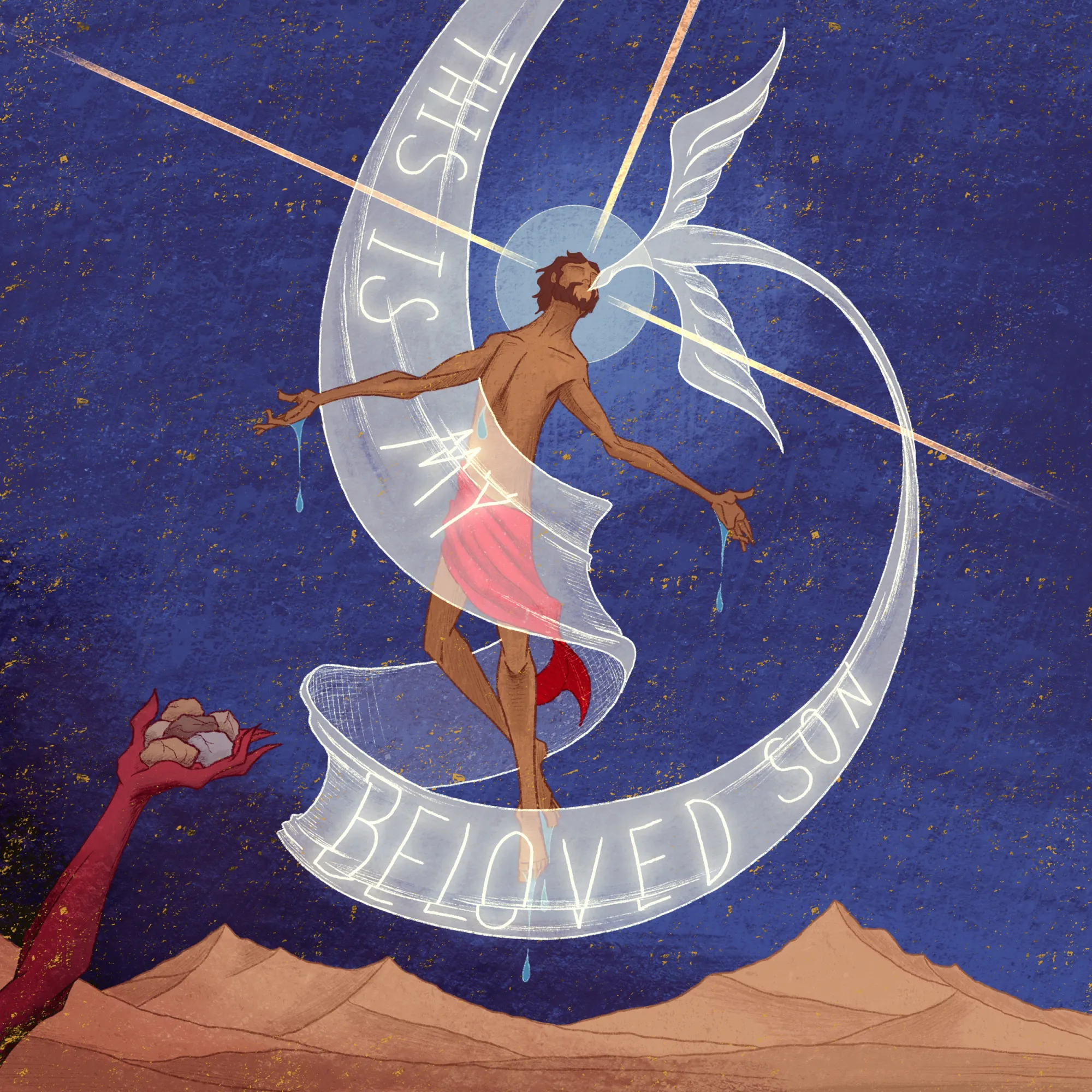
One – Sermon on Ephesians 4:1-6 for the Seventeenth Sunday after Trinity

Ephesians 4:1-6

1 I therefore, a prisoner for the Lord, urge you to walk in a manner worthy of the calling to which you have been called, 2 with all humility and gentleness, with patience, bearing with one another in love, 3 eager to maintain the unity of the Spirit in the bond of peace. 4 There is one body and one Spirit—just as you were called to the one hope that belongs to your call— 5 one Lord, one faith, one baptism, 6 one God and Father of all, who is over all and through all and in all.

In the name of Jesus. Amen.

What is your impression of or reaction to the following words: unity; inclusion; oneness; togetherness?

They are all good words and concepts, but those words probably throw up some red flags for you. Who doesn’t want unity? Wouldn’t it be great if our country was really the United States of America? No one wants to be excluded and left on the outside. It’s true that the team that plays together wins together. But would you say that we live in a time of unity? Probably not. We’ve gotten used to hearing that we are more divided now than at almost any other point in our nation’s brief history. Some even speculate that we may be on the verge of another civil war. Who knows?

But the more divided, fractured, and fragmented we become, the higher the desire there is for unity. The biggest obstacle to unity in this world, though, just might be the desire and calls for unity. For there to be unity, there needs to be something people are united on. And because the world is full of sinners who all want our own way, we are going to have a difficult time finding a point of unity. The selfishness, pride, and greed around and within us – yes, even in us Christians who still wrestle with our old Adam – will continue to cause division.

Well, this text doesn’t give us any suggestions for bringing unity to our culture or nation. There is nothing here to help us mend the political, economic, racial, and other divisions that we face in our society and culture today. Sorry. There are other passages of Scripture deal with that. Hebrews 12:14 says, “Strive for peace with everyone.” Romans 12:18 says, “If possible, so far as it depends on you, live peaceably with all.” And Philippians 2:4 probably gives us the best advice in achieving peace in our culture when it says to not look only to your own interest but to the interest of others.

Our text today, when it talks about unity and being one, refers to the unity that exists between Christians, and this unity between Christians is twofold.

First, there is a unity that all Christians simply have. We could call this a ‘vertical unity,’ and this unity consists of how sinners are made one with God. All Christians are sinners who by nature were children of wrath (Eph. 2:3). Christians of all time and in all places are united by the one faith in Jesus who is our Savior, the only Savior. Because Jesus is the only Savior, we are united in Christ who is the Way, the Truth, the Life, and the only access we have to God the Father (Jn. 14:6). When the Holy Spirit works faith in us, this unity simply exists.

All Christians believe that Jesus is the Lamb of God who takes away the sin of the world (Jn. 1:29). Through Him, every Christian of every tribe, language, race, and even denomination is united on the confession that Jesus is the Christ, the Son of the living God (Mt. 16:16). Through that Holy Spirit-wrought faith, every Christian is joined to the one holy Christian Church confessing the one hope of forgiveness and eternal life. That means that every Christian is part of the one body with Christ as the head (Eph. 4:15). This unity exists, but we also recognize that this unity is invisible.

This brings us to the second unity, and that is the unity that all Christians are to strive for. We can call this a ‘horizontal unity’ of how we as Christians are united with one another. This unity is of conviction and true confession. We rejoice in the unity we have here in our congregation, and we have been rejoicing in the unity we have with our sister congregation on the other side of the river as we gather together on Wednesdays. But we also rejoice in the unity we have with Christians of other denominations: Lutheran Brethren, AALC, Missouri Synod, ELS, ELCA, Evangelical Free, Covenant, Baptist, Methodist, Presbyterian, Assembly of God, Catholic, and I could go on and on.

Now, even as I mention all those different church bodies, you are probably thinking, “Pastor, aren’t all the different denominations a sign that we Christians are not united?” To a degree, yes. But there is also something counterintuitive about all the different denominations is actually a sign of our unity. 

Now, please bear with me as I flesh this out. Go back to the first unity, our vertical unity. All Christians have one Lord, one faith, one Baptism. But one of the things that divides the various Christian denominations and disrupts that horizontal unity is what the different church bodies believe and teach about Baptism. Here at Christ the King, we teach that Baptism is God’s work where He forgives sins (Act. 2:38), joins us to Jesus’ death and resurrection (Ro. 6:3-11), gives us the new birth (Jn. 3:5), and saves us (1 Pet. 3:21). Many Christians (and please note that I am calling them ‘Christians’) who attend other churches do not believe that is what the Bible teaches about Baptism. They will say that Baptism is something a believer does for God as an outward expression of an inward change.

The Bible does not teach both of those things. Those two doctrines cannot both be true. One is right, and the other is wrong. And it would be wrong and even sinful for either us or other Christians who believe differently to say, “Well, it doesn’t really matter what we believe about Baptism.” It does matter. What we believe about Baptism matters because Scriptures teach us about Baptism. And Jesus tells Christians to keep and observe all that He has said to us in and through the Scriptures (Mt. 28:20). Just a few verses after our text, Paul tells us to “not be tossed to and fro by the waves and carried about by every wind of doctrine” (Eph. 4:14). God wants us to be rooted and grounded so that we rightly handle His Word of truth (2 Tim. 2:15).

Christians want to stay true to what the Scriptures teach. The only way we can stay true to what the Scriptures teach is to continue to grow in our knowledge of the Scriptures. That is why it is important for you, Christian, to keep learning and diving into the Scriptures that are inspired by God and profitable for teaching, for reproof, for correction, and for training in righteousness that the man of God may be complete, equipped for every good work (2 Tim. 3:16). So, dear saints, be in the Scriptures. Read and meditate on them daily. Come to Bible study and Sunday School to continue being equipped by and through God’s Word. The best way to maintain and strengthen the horizontal unity between Christians is to be grounded in the Bible.

This brings us back around to the differences between Christian church bodies: The silver lining in the doctrinal differences that exist between the various denominations is that we are all trying to be true to what the Bible teaches. In other words, we are taking what Jesus teaches in the Bible seriously. We take it seriously enough that we recognize when those differences exist and when we are not united in doctrine. We don’t rejoice in that horizontal disunity, but we love each other enough to be honest about it because what the Bible teaches is important. That is why we – with humility, gentleness, and patience – point those who believe differently than we do to what Jesus has said. We don’t pridefully lambast them saying, “You aren’t a Christian if you don’t believe just like I do.” No!

Instead, we do what our text calls us to do. We work to maintain the unity of the Spirit in the bond of peace. We can’t maintain or keep the unity of the Spirit unless that unity already exists, and it does. The unity of the one holy Christian Church is a gift given by God Himself through faith in Christ.

The unity of the Spirit in the bond of peace, the oneness that God has given all Christians, is a precious thing. We hold on to this unity as we hold onto Christ and His Word in humility. Jesus was glorified after He humbled Himself by being obedient to His death on the cross (Php. 2:8). That act of humiliation was rewarded by God the Father. And because of Christ’s obedience, the entire Christian Church is washed clean of sin. Christ’s humiliation is the glory of every Christian. So, let us imitate His humility by bearing with our brothers and sisters in Christ in love and forgiving as we have been forgiven. And we rejoice in God’s promise that we are now, right now, united in Him and are one with all our fellow Christians in a unity that is real whether or not we see of feel it.

And we patiently await the day when Christ will return and bring His one holy Christian and apostolic Church to live forever with Him as one. Amen.

The peace of God, which surpasses all understanding, will guard your hearts and minds in Christ Jesus. Amen.