See No Death, Taste No Death – Sermon on John 8:42-59 for the Fifth Sunday of Lent

John 8:42–59

42 Jesus said to them, “If God were your Father, you would love me, for I came from God and I am here. I came not of my own accord, but he sent me. 43 Why do you not understand what I say? It is because you cannot bear to hear my word. 44You are of your father the devil, and your will is to do your father’s desires. He was a murderer from the beginning, and does not stand in the truth, because there is no truth in him. When he lies, he speaks out of his own character, for he is a liar and the father of lies. 45 But because I tell the truth, you do not believe me. 46 Which one of you convicts me of sin? If I tell the truth, why do you not believe me? 47 Whoever is of God hears the words of God. The reason why you do not hear them is that you are not of God.”

48 The Jews answered him, “Are we not right in saying that you are a Samaritan and have a demon?” 49 Jesus answered, “I do not have a demon, but I honor my Father, and you dishonor me. 50 Yet I do not seek my own glory; there is One who seeks it, and he is the judge. 51 Truly, truly, I say to you, if anyone keeps my word, he will never see death.”52 The Jews said to him, “Now we know that you have a demon! Abraham died, as did the prophets, yet you say, ‘If anyone keeps my word, he will never taste death.’ 53 Are you greater than our father Abraham, who died? And the prophets died! Who do you make yourself out to be?” 54 Jesus answered, “If I glorify myself, my glory is nothing. It is my Father who glorifies me, of whom you say, ‘He is our God.’ 55 But you have not known him. I know him. If I were to say that I do not know him, I would be a liar like you, but I do know him and I keep his word. 56 Your father Abraham rejoiced that he would see my day. He saw it and was glad.” 57 So the Jews said to him, “You are not yet fifty years old, and have you seen Abraham?” 58 Jesus said to them, “Truly, truly, I say to you, before Abraham was, I am.” 59 So they picked up stones to throw at him, but Jesus hid himself and went out of the temple.

In the name of Jesus. Amen.

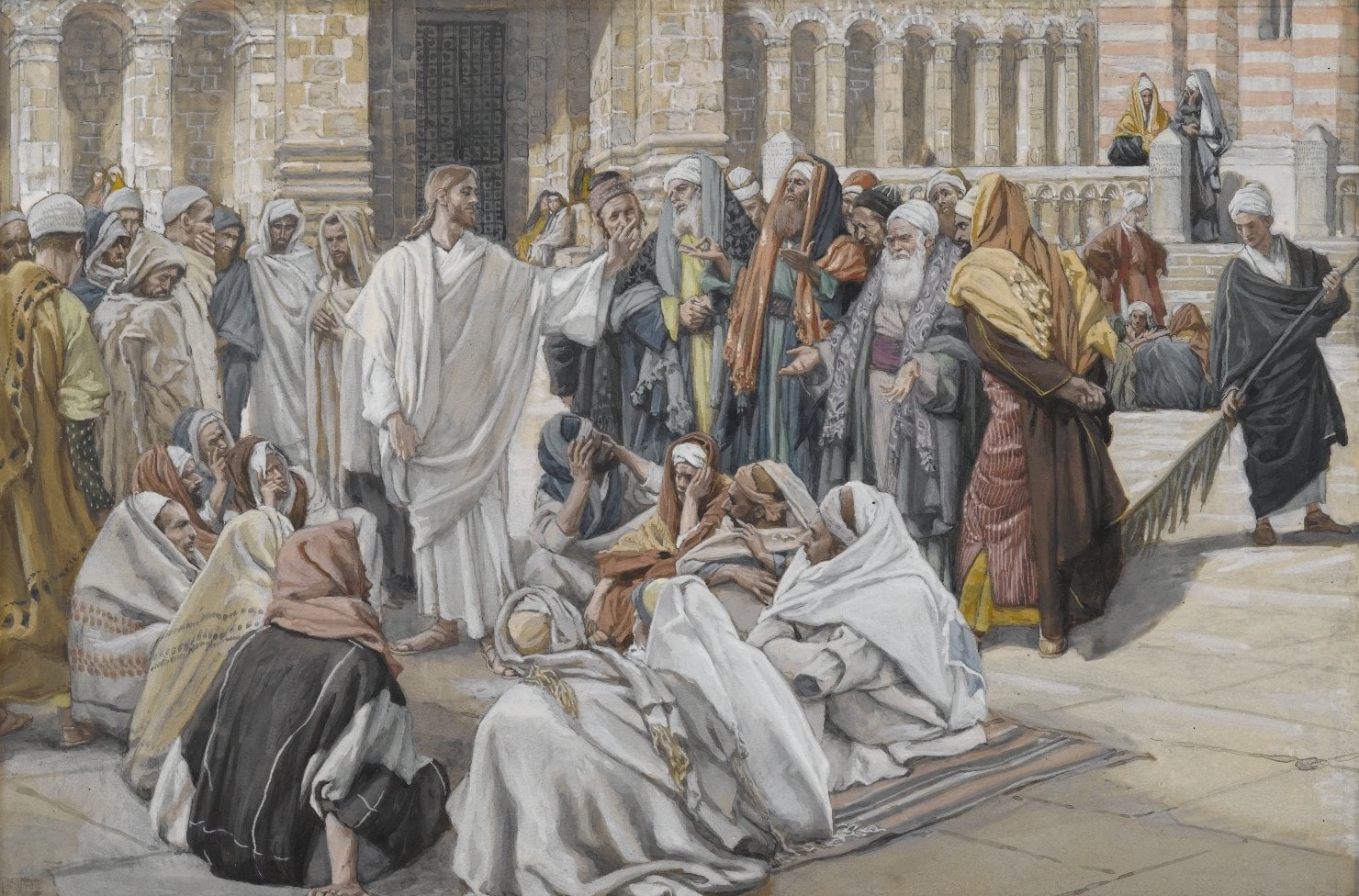
Today we hear Jesus give one of the clearest, most comforting promises He ever spoke. “Truly, truly I say to you, if anyone keeps My Word, he will never see death.” As comforting as this already is, it is even more comforting when we consider the context of when Jesus says this. Jesus is having an argument with some of the Jews in the Temple (Jn. 8:20, 24), and this argument is heated.

Earlier, in part of the argument that isn’t in our text, Jesus told them, “You will die in your sin.” He calls them slaves to sin (Jn. 8:31-34). In this reading, you heard Jesus call these hostile people children of the devil (Jn. 8:44) who do not listen to the voice of God (Jn. 8:47).

Now, these are not tactics you will hear in an evangelism class, but it is all true. Of course, Jesus is telling them the truth. Everything He says is absolutely true, clear, and direct. Jesus isn’t beating around the bush or sugarcoating anything. He isn’t worried about tiptoeing around touchy topics in order to maintain His relationship with them just in case they eventually come around to see things His way. Christ tells them what they need to hear even though it is offensive.

Dear saints, there are times when you simply tell someone the truth, and they will get mad. But the truth remains the truth no matter how people respond to it. Yes, speak the truth in love (Eph. 4:15), but remember that the truth is always loving. And know that there are times people will get angry when they hear the truth. And it isn’t a matter of you needing to speak the truth in a better way or be more loving. You are not smarter, gentler, or more loving than Jesus. Even though He speaks the hard truth to them, Jesus loves these people. About six months after this argument, Jesus will go the cross and be their substitute under God’s wrath, but here they get angry with Him. And if people got angry with Jesus for telling the truth, then, Christian, there are times when people will be angry with you for telling the truth. Sometimes, showing love will get people angry with you.

That’s all important to know, but we are trying to see how great a promise Jesus makes to these people who are arguing with Him when He tells them that if they keep His Word they will never see or taste death. He starts with the hard but loving truth, but listen to how they respond. They throw two accusations at Jesus, “Are we not right is saying that You are a Samaritan and have a demon?” Now, calling Jesus a Samaritan was, at least, a racial slur. Today, people’s lives get ruined if they use this type of language. But this might have been more than just a racial slur.

Remember, Jesus had just called them children of the devil (Jn. 8:42), and when they call Jesus a Samaritan, it appears that they are responding to Jesus calling them Satan’s spawn. They are saying that Jesus’ mom was adulterous and promiscuous. They are calling Jesus is an illegitimate child.

They also accuse Jesus of having a demon. Here is God in the flesh warning people and calling them to repentance and faith, and they accuse Him of trying to pull them down into hell. If I were in Jesus’ sandals and had to listen to people saying awful things like this, the best I could hope to do is walk away from them. But Jesus doesn’t walk away. Instead, this is the context where He gives them the promise, “Truly, truly, I say to you, if anyone keeps My Word, He will never see death.” He is calling them to faith and life. Despite their horrific statements, Jesus still loves them and wants to rescue them from death. That Jesus would give this promise to these people – in fact, that He is even speaking to them at all – is tremendous, remarkable mercy. Jesus had come to rescue them.

But, again, they respond to this promise, “Now we know you have a demon!” They are hearing are the very words of God, but they think it is the voice of Satan. Jesus had come to His own, but they did not receive Him (Jn. 1:11); they loved the darkness rather than the light (Jn. 3:19).

So, what does Jesus mean when He says, “Truly, truly, I say to you, if anyone keeps My Word, He will never see death”? First, what does it mean to keep His Word?

To keep Jesus’ Word is to believe what He says. Keeping Jesus’ Word does mean to do the things He commands, but it also means that when you fail to obey what He says, you also keep Jesus’ promises. It means believing that because of what God has done for you in Christ, you are forgiven (Jn. 6:28-29). Keeping Jesus’ Word means to believe what He says when He calls you a sinner, and keeping Jesus’ Word means believing what He says when He declares that you are forgiven.

Anyone who keeps Jesus’ Word will never see death. And what does that mean? Well, most of you have heard me preach at a funeral, so this is something you have heard before. But even if we heard this a thousand times, we still need to be reminded of it – even if it isn’t at a funeral.

To the one who keeps Jesus’ Word, to anyone who believes the Gospel, in other words you, Christian, you will never see death. You won’t die. And this isn’t the only time Jesus says something like this. In John 10:28, Jesus says that His sheep will never perish. In John 11:26, Jesus plainly says, “Everyone who lives and believes in Me shall never die.”

It is true that one day you will breathe your last and your heart will stop beating – unless Jesus comes first. Christ might return before that happens (1 Thess. 4:15). Let’s imagine that Jesus does come back before you die, you are simply given your new body and are eternally with the Lord. If you went and found your loved ones who did die and asked them, “What was that like? What happened when you died?”

Their response would be, “I don’t know. I didn’t die. Jesus was simply with me the entire time.”

“Even though I walk through the valley of the shadow of death, I will fear no evil, for You are with me” (Ps. 23:4) – all the way through. Jesus has died for you. Christ has taken away your sin, your guilt, your shame, and even your death.

That is why Scripture will regularly use different terms when a believer dies. Abraham didn’t die, he was “gathered to his people (Gen. 25:8). Simeon, after he sees forty-day-old Jesus in the Temple says that now he can depart in peace (Lk. 2:29). The Bible talks about death being sleep (Mt. 9:24; Jn. 11:11, 13-14; 1 Thess. 4:13) from which Jesus will simply wake us. Paul talks about death as “departing and being with Christ” (Php. 1:23), being “delivered from evil” (2 Tim. 4:18), and even death being gain (Php. 1:21).

Dear saints, Jesus is the God of the living (Lk. 20:38) and He promises that, “neither death nor life, nor angels nor rulers, nor things present nor things to come, nor powers, nor height nor depth, nor anything else in all creation, will be able to separate [you] from the love of God in Christ Jesus [your] Lord” (Ro. 8:38-39). Dear saints, keep Jesus’ Word, believe, and you will never see and never taste death. Amen.

The peace of God, which surpasses all understanding, will guard your hearts and minds in Christ Jesus. Amen.

The King’s Test – Sermon on John 6:1-15 for the Fourth Sunday of Lent

John 6:1-15

1 After this Jesus went away to the other side of the Sea of Galilee, which is the Sea of Tiberias. 2 And a large crowd was following him, because they saw the signs that he was doing on the sick. 3 Jesus went up on the mountain, and there he sat down with his disciples. 4 Now the Passover, the feast of the Jews, was at hand. 5 Lifting up his eyes, then, and seeing that a large crowd was coming toward him, Jesus said to Philip, “Where are we to buy bread, so that these people may eat?” 6He said this to test him, for he himself knew what he would do. 7 Philip answered him, “Two hundred denarii worth of bread would not be enough for each of them to get a little.” 8 One of his disciples, Andrew, Simon Peter’s brother, said to him, 9 “There is a boy here who has five barley loaves and two fish, but what are they for so many?” 10 Jesus said, “Have the people sit down.” Now there was much grass in the place. So the men sat down, about five thousand in number. 11Jesus then took the loaves, and when he had given thanks, he distributed them to those who were seated. So also the fish, as much as they wanted. 12 And when they had eaten their fill, he told his disciples, “Gather up the leftover fragments, that nothing may be lost.” 13 So they gathered them up and filled twelve baskets with fragments from the five barley loaves left by those who had eaten. 14 When the people saw the sign that he had done, they said, “This is indeed the Prophet who is to come into the world!” 

15 Perceiving then that they were about to come and take him by force to make him king, Jesus withdrew again to the mountain by himself.

In the name of Jesus. Amen.

Jesus asks Philip, “Where are we to buy bread, so that these people may eat?” And John gives us insight as to why Jesus asks the question. It was to test Philip. Now, Jesus didn’t just find Himself in the midst of the wilderness surrounded 5,000 men plus women and children – in all likelihood a crowd of ten to twenty thousand people – with no food and sees an opportunity for a test. No, Christ sets the entire thing up.

The feeding of the 5,000 is one of the few events recorded in all four Gospels (Mt. 14:13-21; Mk. 6:30-44; Lk. 9:10-17; and Jn. 6:1-15). The picture the texts collectively paint is that Jesus intentionally draws this crowd out into the wilderness (Mk. 6:31). He takes the time to heal many of them (Mt. 14:14) and preaches late into the evening (Mk. 6:34-35). In other words, Jesus means to bring them to that desolate place where there is no food, but food is needed. On top of that, He is the King who created everything (Jn. 1:1-2, 14). Jesus can cause rain to fall in one place but not another (Am. 4:7). Throughout the entire world, Jesus was the One providing bread and food for all mankind (Ps. 145:15-16), but Christ brought this massive crowd out into the wilderness to this particular mountain in order to set this test up for Philip. And the test has one question, “Where are we to buy bread, so that these people may eat?” Jesus isn’t looking for information. He’s not asking Philip to devise a plan or order something through Door Dash. The text tells us, “[Jesus] knew what He would do” (Jn. 6:6).

Now, put yourself in Philip’s position. It isn’t hard to imagine. When was the last time you were in a seemingly impossible situation? Your bank account got low, and suddenly your car needs significant, expensive repairs. You wonder, “Where’s the money going to come from?” Your kid or your spouse gets sick, and while you are doing everything you can to care for them, you get sick too. You don’t know where you will get the strength care for yourself much less your kid. You’re in a really busy time at work, then there is a blizzard, so you have to dig yourself out and help your aging parents clear out their driveway too. You don’t know where you will find the time to do everything that needs to be done. How often do you look at your calendar or think through all the things you need to accomplish and have no idea how you are going to make it through the week? Whether it is resources and money, strength and endurance, time and skills, there are moments in your life where you are buried under the expenses, responsibilities, and tasks, and all you can see is what you don’t have.

That is why Philip fails Jesus’ test. He sees what they have, and he concludes it isn’t enough. His response is, basically, “You’re jumping the gun, Jesus. Look around. We’re in the wilderness, not the marketplace. Even if we were surrounded by stores fully stocked with bread, we don’t have enough money. Two-hundred denarii wouldn’t be enough for all of them to even get a bite.”

The test was for Philip, but Andrew, Peter’s brother, takes a shot at the exam. This is just an aside, but this text really shows how similar Andrew and Peter are. Peter will jump into situations like a madman (Mt. 14:28-29) and will speak when he should just be silent (Mk. 9:5-6). Andrew does the same when he says, “This boy has five barley loaves and two fish, but that’s not going to cut it with this crowd.”

Both Philip and Andrew fail the test even though they knew the answer. The correct answer was, “I don’t know where we will buy bread, Jesus. But I do know You are here. You have provided food in bleaker situations than this, so You’ve got it all under control.” Philip and Andrew knew that Jesus was the Messiah (Jn. 1:41). They knew He was the fulfillment of what Moses and the prophets wrote (Jn. 1:45). In other words, they both knew that Jesus was the one who rained bread from heaven and sent quail in abundance for His people in the wilderness (Ex. 16:4, 13). They knew Jesus was the one who sent the ravens to feed Elijah by the brook (1 Kgs. 17:3-7) and through the widow’s jars of oil and flour that never ran out during the drought (1 Kgs. 17:14-16). They know that God promises in Psalm 34:10 which says, “Those who seek the Lord lack no good thing.”

Both Philip and Andrew know all of this, but they still fail the test, just like you and I do. They fail, notbecause they don’t know enough, weren’t taught well, or needed to go back to Sunday School. They fail for the same reasons we do – because we are sinners. All of us sinners fail to trust God’s promises to provide everything we need. Instead, we fall into despair, weakness, unbelief, and a ‘woe-is-me’ attitude.

Dear saints, repent and then rejoice.

When God brings tests and trials your way, remember that He is with you. And because He is with you, it doesn’t matter what you have or don’t have. Jesus doesn’t need soil and seed and rain and time and the right weather conditions and combines and grain elevators and flour mills and factories and bakers and truck drivers and grocers to give people bread. Jesus doesn’t need boats and bait and poles and nets and processing plants or even water to feed people fish. Just because those are the normal methods God delivers bread and meat to us, that doesn’t mean that is the only way He does it. Jesus is always free and able to cut all of that out and give exactly what is needed when it is needed – just like He does here.

Christ provides what Philip, Andrew, and all the disciples could not buy, bake, grow, earn, catch, or deserve. He provides this meal to the crowds and enough to last His flunked disciples for days afterward.

But most importantly, Jesus lavishly pours out His mercy and grace on His sinful disciples. We see it here as He doesn’t scold them for their unbelief and sin. In fact after this, Jesus will feed another crowd – four thousand that time (Mk. 8:1-10). And right after that the disciples are with Jesus in a boat, and they realize they only have one loaf of bread, and they will worry about their lack of food again (Mk. 8:14-21).

Jesus is always in control of every situation. The crowds here are about to try and take Christ by force to make Him king, but Jesus simply withdraws. And one year later, at the next Passover, the crowds will come with force to arrest Jesus, but He will not withdraw. They will put a royal purple robe on Him, crown Him with thorns (Jn. 19:2-3), crucify Him, and place a placard above His head that says, “Jesus of Nazareth, King of the Jews” (Jn. 19:19). There, on the cross, He will give and shed His blood for the forgiveness of sinners who fail the tests.

But the cross is no test. Instead, it is where Jesus, your Savior and King, demonstrated and proved His love and mercy for you, and for all us failures. Here and now, He delivers that mercy to you as He gives you His kingly Body and His royal Blood given and shed for the forgiveness of all your sins and failures.

Dear saints, come and receive. Amen.

The peace of God, which surpasses all understanding, will guard your hearts and minds in Christ Jesus. Amen.

The Devil’s Playbook – Sermon on Matthew 4:1-11 for the First Sunday of Lent

Matthew 4:1–11

1 Then Jesus was led up by the Spirit into the wilderness to be tempted by the devil. 2 And after fasting forty days and forty nights, he was hungry. 3 And the tempter came and said to him, “If you are the Son of God, command these stones to become loaves of bread.” 4 But he answered, “It is written,

“‘Man shall not live by bread alone, 
but by every word that comes from the mouth of God.’ ”

5 Then the devil took him to the holy city and set him on the pinnacle of the temple 6 and said to him, “If you are the Son of God, throw yourself down, for it is written, 

“‘He will command his angels concerning you,’ 

and 

“‘On their hands they will bear you up, 
lest you strike your foot against a stone.’” 

7 Jesus said to him, “Again it is written, ‘You shall not put the Lord your God to the test.’ ” 8 Again, the devil took him to a very high mountain and showed him all the kingdoms of the world and their glory. 9 And he said to him, “All these I will give you, if you will fall down and worship me.” 10 Then Jesus said to him, “Be gone, Satan! For it is written,

“‘You shall worship the Lord your God 
and him only shall you serve.’”

11 Then the devil left him, and behold, angels came and were ministering to him.

In the name of Jesus. Amen.

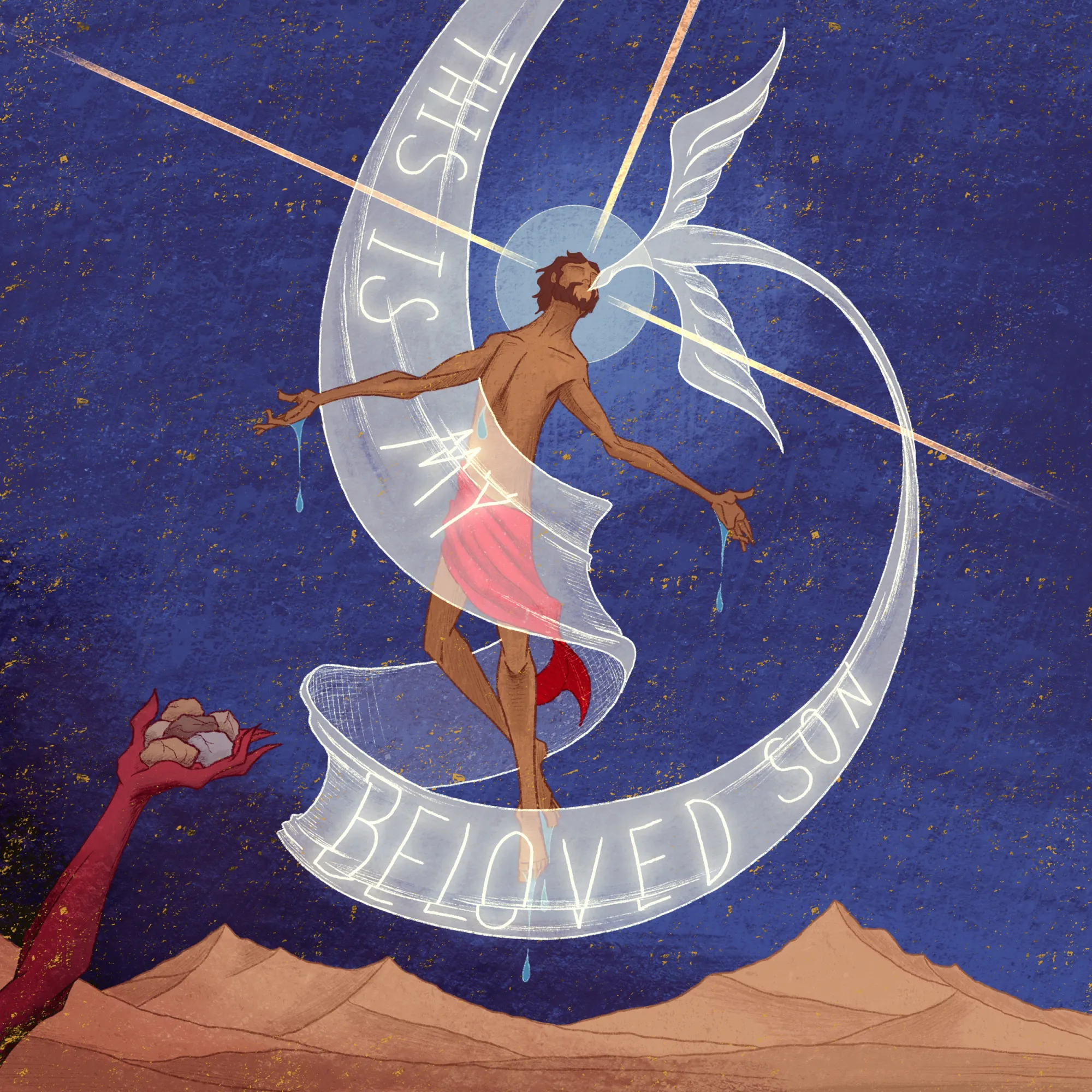
For years now, you’ve heard me say that the devil has one trick up his sleeve and that is to get you to doubt God’s Word. In the luscious perfection of the Garden of Eden, the devil began his temptation by asking the woman, “Did God really say?” And in the temptation of Jesus, the devil takes the exact same approach. He begins the first two temptations with, “If you are the Son of God…” Remember, this came immediately after God the Father declared at Jesus’ Baptism, “You are My beloved Son, in whom I am well pleased” (Mk. 1:11; Mt. 3:17). So, when Satan begins, “If you are the Son of God,” he’s trying the exact same tactic he used in the Garden, “Did God really say?” Trying to cast doubt on God’s Word is the only play in the devil’s playbook, and this is helpful to know. But we need to consider this scheme of the devil more closely because he is so skilled at running this play.

Enough of you enjoy football that I’m going to try this analogy. Even if you don’t care about football, I think the analogy is still helpful, so please stick with me. Some teams will primarily use just one play called an ‘option.’ In this play, the quarterback sees where the defense is and how they move at the beginning of the play, and that will determine what he does with the ball – pass, hand it off, or keep it himself. It’s one play that has several options for success, and a skilled quarterback simply choses the best option available. This one play can be extremely effective. So, when we understand how Satan runs his one play to utilize the options he has before him, we can better defend against each of those options.

When the devil tempts us with his, “Did God really say?” he wants us to start speculating, “Why doesn’t God want me to have this thing?” whatever that thing is. There are three main answers to that speculation. One, God doesn’t actually know what I need. Two, God doesn’t want me to be happy. And three, God doesn’t have the power or ability to give that thing to me.

If any of those things are true (which, of course, they aren’t), then God isn’t worthy of our obedience or worship. And when we start speculating on those false possibilities, we begin to think that God either can’t or won’t help us. Then, we assume that we have to help ourselves, but doing that put us in the place of God which means that we fall into idolatry and sin. So, when we recognize what those temptations are doing, we can better defend against the temptation. Because the truth is: God does know what you need. He knows what you need before you ask Him (Mt. 6:8). And He promises to give it to you (Mt. 6:32). God does want you to be happy – happier than you can possibly imagine – just not necessarily in the way or in the timing you might have in mind. He doesn’t withhold any good thing from those who walk uprightly (Ps. 84:11), and He knows how to give good gifts to His children (Mt. 7:11; Ps. 85:12). And God is able and pleased to give you everything that is good for you (Lk. 12:32).

Our problem is that we don’t always recognize how simple and shortsighted we are. We don’t always know what is and isn’t good for us. Too often, we are like spoiled children who think things that are harmful to us would make us happy. God knows better than we do, and He won’t ever hold back when it comes to giving us things that are beneficial for us (1 Cor. 1:7).

With all of that in mind, let’s consider these three temptations. Jesus is starving because He hasn’t eaten for forty days. The devil runs his play, “If you are the Son of God, command these stones to become loaves of bread.” Notice how insidious this is. The devil wants Jesus to speculate, “Why doesn’t God want Me to have bread?” At that very moment, the heavenly Father was providing bread for everyone in the world. Christ is the only one who actually loves and obeys God. So, why is He starving? The devil is tempting Jesus to think that His heavenly Father either: 1) doesn’t know what He needs; 2) doesn’t want to give Jesus what He needs; or 3) isn’t able to give Jesus what He needs. Again, all of those things are false.

But Jesus doesn’t fall for the play; He doesn’t speculate. He simply responds, “Man shall not live by bread alone, but by every word that proceeds from the mouth of God” (Dt. 8:3). Jesus trusts that God can and will provide what is needed when it is needed. He doesn’t fall into the temptation.

If we stick with the football analogy, it’s second down, and the devil goes back to his same play. He takes Jesus to the pinnacle of the Temple and says, “If you are the Son of God, jump off. God has promised to send the angels to protect you.” Satan wants Jesus to test God’s ability to keep Him safe. The devil is, basically, saying, “Let’s see if God will notice when you are in danger and if he can help you when you need it.” But Jesus doesn’t need to test drive God’s protection. God has promised He will care for Him, and that is enough. So, our Lord responds, “You shall not put the Lord your God to the test” (Dt. 6:16).

Now, it’s third down, and the devil is in a bad spot. But he still runs the same play trying to get Jesus to think that God is holding out on Him. Satan shows Jesus all the kingdoms of the world and all their glory and offers them to Jesus if He will worship him. Jesus will, and does, receive all the kingdoms of the world but only after He has redeemed them by dying and rising again. But the devil wants Jesus to take that authority early. But our Lord doesn’t fall for the trick. Jesus quickly responds with Scripture again, “Be gone, Satan! For it is written, ‘You shall worship the Lord your God, and Him only shall you serve’” (Dt. 6:13). Now that He is ascended to the throne of all creation, Christ has all authority in heaven and on earth (Mt. 28:18) with all things placed under His feet (Eph. 1:21-22).

Now, let’s bring this to you. Again, the one play in the devil’s playbook is for the devil to get you to question God’s Word which leads you to speculate that God is holding out on you. Dear saints, God does not and will not ever deny you anything that is good for you. Psalm 84:11 says, “The Lord God is a sun and shield; the Lord bestows favor and honor. No good thing does He withhold from those who walk uprightly.”

Recognizing that God promises to provide and care for us is the best weapon we have to defend against temptation. The last verse of this text is so important for our fight against temptation because it clearly shows us that God wasn’t withholding anything from Jesus. At the right and proper time, God did give Jesus the bread, protection, and authority He needed and desired. “The devil left [Jesus], and behold, angels came and were ministering to Him.” And don’t think for one second that God only does this for Jesus because He does it for us sinners too.

We saw God do the same thing for Adam and Eve in our Old Testament text (Gen. 3:1-24) even after they had fallen into temptation and sinned. God gave them chance after chance to repent. Every question God asks in Gen. 3:9-13 is a merciful call to repentance because God knows that they need confession and absolution. Even when they don’t repent and confess their sins, God still gives them what they need. He gives them a promise that He will send Jesus, the Seed of the woman, to crush the head of the serpent (Gen. 3:15). Then, God instructs both the woman and Adam what life will be like now that they have brought sin into the world (Gen. 3:16-19) which will help them face the challenges ahead. There, God still promises to provide food for them. After that, God covers their nakedness and shame with animal skins (Gen. 3:21). And finally, God sends His cherubim with a flaming sword, to protect them from the horror of eating from the tree of life and living forever in sin (Gen. 3:22-24).

In all of that, God is protecting them, providing for them, loving them, and giving them everything they need for life and salvation. Dear saints, if God will do that for Adam and Eve immediately after they sinned, how much more will God do for you now that He has sent Jesus to die and rise again to redeem and purchase you?

Because of what Christ has done, you are His beloved children. Jesus, your great High Priest has been tempted in every way as you are, yet without sin. Christ knows the difficulty of facing the temptations the devil throws at you, so He has sympathy for you. And even when you fall into temptation and sin, you can draw near to His throne where you will find mercy and grace to help in time of need (Heb. 4:14-16). Amen.

The peace of God, which surpasses all understanding, will guard your hearts and minds in Christ Jesus. Amen.

No Question – Sermon on Jonah 3:1-10 for Ash Wednesday

Jonah 3:1-10

1 Then the word of the Lord came to Jonah the second time, saying, 2 “Arise, go to Nineveh, that great city, and call out against it the message that I tell you.” 3 So Jonah arose and went to Nineveh, according to the word of the Lord. Now Nineveh was an exceedingly great city, three days’ journey in breadth. 4 Jonah began to go into the city, going a day’s journey. And he called out, “Yet forty days, and Nineveh shall be overthrown!” 5 And the people of Nineveh believed God. They called for a fast and put on sackcloth, from the greatest of them to the least of them. 

6 The word reached the king of Nineveh, and he arose from his throne, removed his robe, covered himself with sackcloth, and sat in ashes. 7 And he issued a proclamation and published through Nineveh, “By the decree of the king and his nobles: Let neither man nor beast, herd nor flock, taste anything. Let them not feed or drink water, 8 but let man and beast be covered with sackcloth, and let them call out mightily to God. Let everyone turn from his evil way and from the violence that is in his hands. 9 Who knows? God may turn and relent and turn from his fierce anger, so that we may not perish.” 10 When God saw what they did, how they turned from their evil way, God relented of the disaster that he had said he would do to them, and he did not do it.

In the name of Jesus. Amen.

For several reasons, I don’t preach with props, but if I did tonight’s sermon would begin the sermon with a ‘clapperboard’ – one of those things used during the filming of movies and TV shows. “Jonah called to preach to Nineveh; take two.” “Action!”

We know about the ‘out-take.’ Instead of going to preach to Nineveh, Jonah ran the other direction. He was thrown overboard in a stormy sea, swallowed by a great sea creature, and submerged to the depths of the sea to be digested and die. It looked like Jonah’s refusal to preach to Nineveh would be his own undoing. But from the depths, Jonah prayed to God for mercy, and God heard. God answered from heaven and sent out His steadfast love and faithfulness (Ps. 51:3). God is merciful, but His mercy takes different forms in different situations. In Jonah’s case, mercy looked like being whale vomit instead of becoming whale poo.

God gave Jonah a second chance, “Arise, go to Nineveh, that great city, and call out against it the message that I tell you.” Jonah preached a one-course sermon of Law, “Yet forty days, and Nineveh shall be overthrown!” Notice what the sermon doesn’t do. It does not accuse the people of specific sins. It doesn’t name any of Nineveh’s many evils (Jon 1:2). The sermon only does one thing – it calls Nineveh’s future into question. This is just an aside: In your conversations with unbelievers, be on the lookout for opportunities to point people to the return of Christ, the final judgment, and end of the world (Act. 17:31). Those may be the windows where God will shine the light of the Gospel into the darkness of people’s hearts.

Well, Jonah’s doomsday sermon was used by the Holy Spirit to change the hearts of the Ninevites. From the greatest to the least of them, they called for a fast. Even the king of Nineveh descended from his throne to sit in sackcloth and ashes. He gave a command to all the people of Nineveh, “Fast. Don’t eat or drink. Call out mightily to God. Turn from evil and violence. Who knows? God may turn from His fierce anger against us, so we may not perish.” This wasn’t a revival, it wasn’t a reawakening, it was an initial awakening. But also notice that for the Ninevites this was a shot in the dark. At best it was a, “Maybe,” a “Let’s give this a try,” a, “What if?”

Well, their blind shot at repentance paid off. “God saw what they did, how they turned from their evil way, God relented of the disaster that He said He would do to them, and He did not do it” (Jon. 3:10).

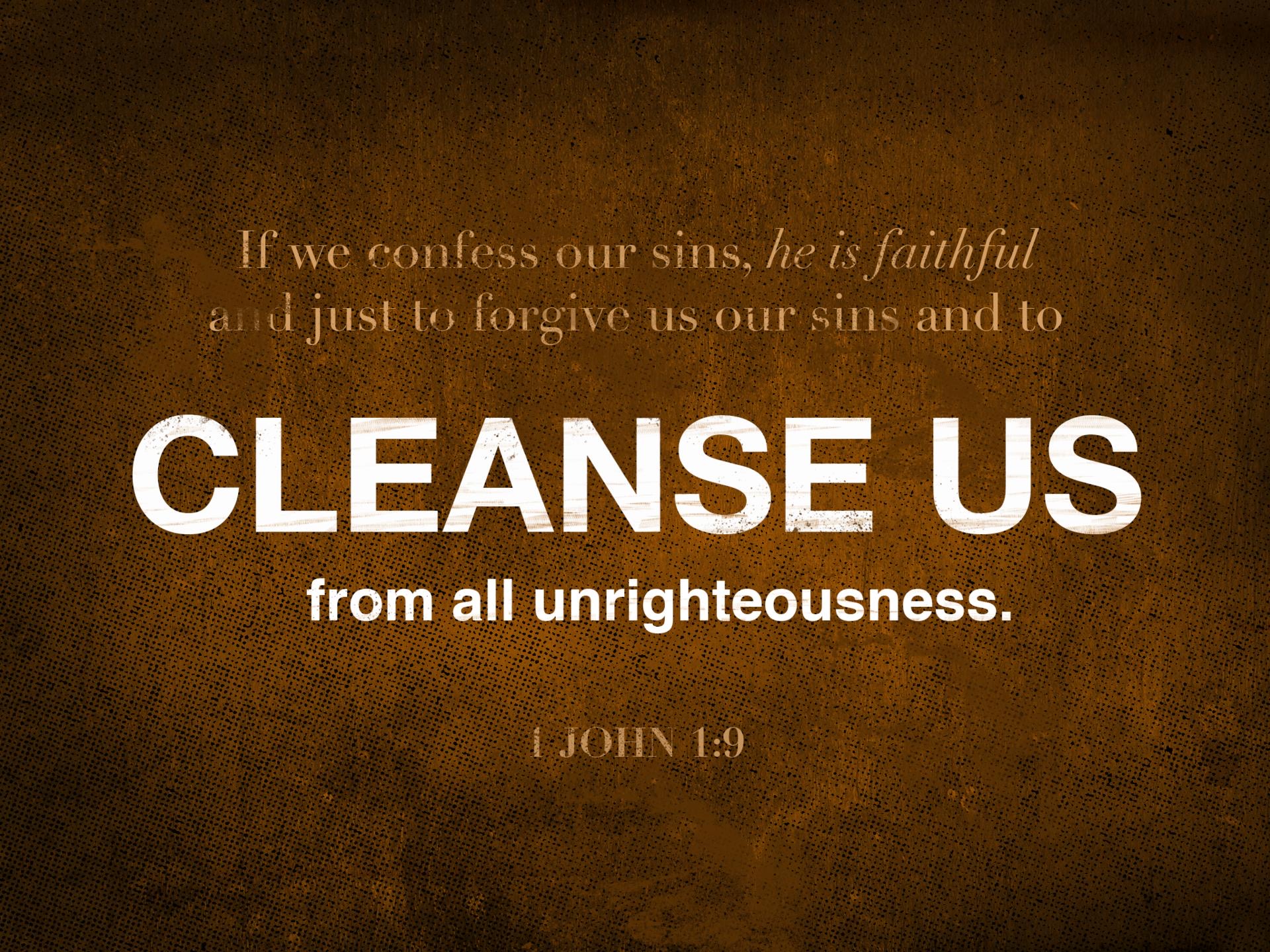
Dear saints, as we begin this repentant season of Lent, you have something better than the preaching of Jonah. You have God’s sure and certain promise forever etched in the Scriptures, “If we confess our sins, He is faithful and just to forgive us our sins and to cleanse us from all unrighteousness” (1 Jn. 1:9). That verse is so important because it contains a promise. We can, and probably should, understand it as, “When we confess our sins, God is faithful and just to forgive us and cleanse us.” Whenever you bring your sins to God, He responds with His forgiveness and mercy.

In Greek, the word ‘confess’ is two words smashed together – ‘same’ and ‘words.’ So, when you confess something, you have the same words as someone or something else. This means that biblical confession of sins has two parts. To confess your sins, you say what God says about those sins. First, you say that those sins are horrible, they are deserving of death, they separate you from God, they harm your neighbor, they earn eternal damnation. That’s what God says about your sins, and when we confess our sins, we have those same words. That’s the first part of confession. But don’t ever stop there!

Keep saying the same words about your sin that God clearly says in His Word. Those sins have been removed from you by Jesus who became sin (2 Cor. 5:21), and God has laid your sin on Christ (Is. 53:4, 6). Those sins are died for by Christ who bore them to the grave which is now empty (Col. 2:14). Those sins are removed from you as far as the east is from the west (Ps. 103:12).

Dear saints, there is no question whatsoever about how God will respond when you confess and cry out to Him for mercy. The answer is the cross and the empty grave. Because of what Christ has done, you, sinner, are forgiven (1 Jn. 2:2). Amen.

The peace of God, which surpasses all understanding, will guard your hearts and minds in Christ Jesus. Amen.

Calling Friends & Family to See Jesus – Sermon on John 1:43-51 for Midweek Advent 2

John 1:43-51

43 The next day Jesus decided to go to Galilee. He found Philip and said to him, “Follow me.” 44 Now Philip was from Bethsaida, the city of Andrew and Peter. 45 Philip found Nathanael and said to him, “We have found him of whom Moses in the Law and also the prophets wrote, Jesus of Nazareth, the son of Joseph.” 46Nathanael said to him, “Can anything good come out of Nazareth?” Philip said to him, “Come and see.” 47Jesus saw Nathanael coming toward him and said of him, “Behold, an Israelite indeed, in whom there is no deceit!” 48 Nathanael said to him, “How do you know me?” Jesus answered him, “Before Philip called you, when you were under the fig tree, I saw you.” 49 Nathanael answered him, “Rabbi, you are the Son of God! You are the King of Israel!” 50 Jesus answered him, “Because I said to you, ‘I saw you under the fig tree,’ do you believe? You will see greater things than these.” 51 And he said to him, “Truly, truly, I say to you, you will see heaven opened, and the angels of God ascending and descending on the Son of Man.”

In the name of Jesus. Amen.

As is often the case, we have to remember where we’ve been, so we can see where we’re going.

Last Wednesday, we heard how Andrew became a disciple of Jesus. Andrew heard John the Baptizer declare Jesus to be the Lamb of God. Andrew asked where Jesus was teaching so he could learn more, and Jesus invited him, “Come and see.” As Andrew listened to Jesus teach, his eyes were opened by the Holy Spirit to see that Jesus was indeed the Messiah. So, Andrew ran and found his brother Simon Peter and brought him to Jesus.

That’s where we’ve been, now here’s where we’re going.

The day after that, Jesus finds Philip, and calls him, “Follow Me.” We don’t know how long Philip was with Jesus or what happened while they were together, but Philip comes to believe the same thing Andrew believed the day before. This Jesus dude is the fulfillment of everything Moses and the prophets (i.e. the entire Old Testament) wrote about.

Growing up as a pastor’s kid, I learned to moderately despise the puns that pastors would make; they were just so bad. So, I’m going to need your advanced forgiveness for this pun I’m about to use. Philip’s name means (of all things) ‘lover of horses.’ Philip is so excited about finding the Messiah that he gallops off to find his buddy, Nathanael to tell him about Jesus. When a person hears good news, they naturally want to share it with others – especially with people who are close to them.

Dear saints, you too have found the Messiah, the Savior and Lamb of God who takes away the sin of the world. Well, probably more accurately (like Philip) you have been found by Him. Jesus came and found you lost and dead in your sin. He has raised you to new life, given you the forgiveness of all your sins, and gifted you with the Holy Spirit so that you are now God’s temple (1 Cor. 6:19). Maybe the excitement and joy of that fact has worn off a bit. Well, it’s time for God to restore to you the joy of His salvation (Ps. 51:12).

Just think what your life and existence would be like without Jesus. You would have no real purpose or meaning for life. You would have no hope. You would be destined for an eternity in hell. All the pain and suffering you experience in this life would be nothing more than signs that you are living in a cold, meaningless world.

But with Jesus, everything is different. All your sins are forgiven. You are a child of your heavenly Father. You know that for all eternity, you are safe and secure in God’s eternal, almighty hands. You know that the suffering and tribulation you experience in this world is known by Jesus, but He has overcome the world (Jn. 16:33). He is causing all things to work together for your good because loves you, you love Him, and He has called you according to His purpose (Ro. 8:28). That is what it is to be found by Jesus who calls you to follow Him, just like He did with Philip.

And Philip wants nothing more than to share this good news with his friend Nathanael, but Nathanael doesn’t jump on board right away. He’s more interested to stay in the shade of his fig tree than meeting someone from Nazareth. I don’t know what Nathanael’s beef with Nazareth is. Maybe his childhood rival was from there. Maybe Nathanael is skeptical about the Messiah being from Nazareth because he knew his Bible well enough to know that Nazareth had no connections to the Messiah. Bethlehem, sure (Mic. 5:2), but not Nazareth. I think we can all empathize with Nathanael to a degree. If you came to me all excited about something in/from Mandan, I’d echo Nathanael, “Can anything good come from Mandan?”

But Philip doesn’t give up. He doesn’t argue with Nathanael or try to remind him about the really good doughnut shop in downtown Nazareth. Nope. Philip simply says, “Come and see.” And Nathanael saw.

Without any pleasantries exchanged between them, Jesus knows Nathanael and who he is. As Nathanael walks up to Him, Jesus says, “Behold, an Israelite indeed, in whom there is no deceit!” In other words, Nathanael is a straight-shooter and doesn’t mince words, not when he expresses his thoughts about Nazareth or anything else. Nathanael is dumbfounded and maybe a little convicted, “How do you know me?” Jesus answered, “Before Philip called you, when you were under the fig tree, I saw you.” That’s all it took. “Rabbi, you are the Son of God! You are the King of Israel!” Nathanael believed.

Dear saints, that’s the power of Jesus working through His Word. Philip doesn’t have to do a whole bunch of convincing and arguing with Nathanael. Philip doesn’t even have to share his personal testimony or anything like that. Nathanael is called to be one of Jesus’ disciples simply because of Philip sharing his joy of being found by Jesus, the Messiah. Jesus does the rest (i.e. Jesus does it all).

Maybe you know people who are skeptical and even have animosity toward God. You might think that nothing will ever get through to them. Take heart. Jesus works through His Word to do things far beyond our imagination. Two sentences from Jesus changed Nathanael’s heart toward this carpenter’s Son from backwards Nazareth.

Now, I can’t say that Jesus will convert your skeptical friends or family as quickly, but Jesus will work on them through His Word. As surely as rain and snow make the ground wet, God will use His Word to accomplish the purpose for which He sends it (Is. 55:10-11).

It all comes down to sharing good news with others. You share good news all the time. You find a trusty mechanic, a good burger, a nice cup of coffee, you see a good movie, read a good book, or even find a funny meme on social media, and you find yourself telling others about and introducing them to it. Pretty much the only time we keep good news to ourselves is if/when we think sharing it with others would mean that we get less of it. 

Repent of that, and remember you don’t get any less Gospel when you share it with others. Instead, you gain new brothers and sisters in Christ. Feel free, absolutely and joyfully free, to share the best thing in the history of the world – the Good News that Jesus is the Savior of all mankind.

Luther (supposedly) once said, “Christians are simply beggars telling other beggars where to find bread.” Maybe when you invite people to come here to God’s house, they will be skeptical like Nathanael was at first. Don’t worry about it. Keep telling them. Keep inviting them. At least those beggars will have heard where the bread is. You don’t need to be eloquent. Simply invite those whom you love to, “Come and see.” Amen.

The peace of God, which surpasses all understanding, will guard your hearts and minds in Christ Jesus. Amen.

The Door – Sermon on Matthew 25:1-13 for the Last Sunday of the Church Year

Matthew 25:1-13

1 [Jesus says,] “Then the kingdom of heaven will be like ten virgins who took their lamps and went to meet the bridegroom. 2 Five of them were foolish, and five were wise. 3 For when the foolish took their lamps, they took no oil with them, 4 but the wise took flasks of oil with their lamps. 5 As the bridegroom was delayed, they all became drowsy and slept. 6 But at midnight there was a cry, ‘Here is the bridegroom! Come out to meet him.’ 7 Then all those virgins rose and trimmed their lamps. 8 And the foolish said to the wise, ‘Give us some of your oil, for our lamps are going out.’ 9 But the wise answered, saying, ‘Since there will not be enough for us and for you, go rather to the dealers and buy for yourselves.’ 10 And while they were going to buy, the bridegroom came, and those who were ready went in with him to the marriage feast, and the door was shut. 11Afterward the other virgins came also, saying, ‘Lord, lord, open to us.’ 12 But he answered, ‘Truly, I say to you, I do not know you.’ 13 Watch therefore, for you know neither the day nor the hour.”

In the name of Jesus. Amen.

One year ago, I preached on this text. After that service, we decorated the sanctuary for the Advent and Christmas season just like we will today. The following Sunday, Lindsay, Siobhan, and Stephanie came up to do our Advent candle lighting. After they did the readings and prayer, Lindsay went to light the first candle. The wick held the flame for a fraction of a second then went out because… there was no oil in that candle. And the wick would not hold a flame.

I bring that up for two reasons: First, whoever brings out the Advent candles today, please check the oil levels so we don’t repeat that this year. The second reason I bring that up is that this parable can seem so trivial. Last year, we were perfectly capable of having our worship service without that candle being lit. We didn’t need its light or the heat created by it. We just moved on. Not having oil seems like such a minor thing. In the parable, five girls are unable to light lamps because they didn’t have oil. Did all ten virgins need to have lit lamps? Was it really that important?

Apparently, yes. In the parable, not having oil to keep a lamp lit makes the difference between being in the feast and being left out. In fact, according to Jesus, having oil makes a person wise, while not having oil makes a person a moron. That’s literally the word Jesus uses; the word translated ‘foolish’ in our text is the Greek word μωρός where we get our word ‘moron.’

Now, we don’t know enough about wedding customs in Jesus’ day to know why it was so important for all the ten virgins to have enough oil to keep a lamp lit. The groom didn’t need those lamps to be able to see his way into the marriage feast. He had already made his way through the town to get to the location. All we know is that once the groom arrives, the lamp must be lit.

Jesus teaches that there will be a final cut off point. There is a moment when your status of being in or out will not and can not change. While the five morons are off trying to buy oil from the sellers – and remember this is at midnight, so those sellers would have closed up their shops and had probably gone to bed hours earlier – while the five morons are off on their futile errand, the groom arrives. The feast starts. The door is shut. And that door will not open again. Those who aren’t ready will be left outside forever.

The coming of the groom made a division. Those who were prepared poured oil in their lamps and went into the wedding feast with him. But the morons start scrambling around trying to find oil, and when they return, they find they are out in the darkness where there is only weeping and gnashing of teeth. And the last words they hear from their Savior, the groom, are, “I don’t know you.”

Let’s consider a few things about that door that gives entrance to the wise and excludes the morons.

First, notice that when the groom arrives, those who were ready go through that door immediately (v. 10). When Jesus returns, you won’t have to do any convincing or proving of yourself. You won’t have to go somewhere to be purified. Your worthiness to enter is established. There is nothing left for you to do. Christian, your entrance is immediate. If you die today, you will be escorted by the angels directly into Jesus’ presence where your soul will await the resurrection. And if Jesus comes before you die, you will go straight into the banquet of the eternal wedding feast.

That brings me to the second thought about the door. Remember what is behind that door. It’s a wedding feast. Wedding feasts are fun. At your wedding feast, you had family, friends, classmates, and coworkers – a bunch of people who are special and important to you – they all were in the same room mingling, eating, laughing, dancing, and celebrating with you. Your wedding reception was filled with people who will probably never be in the same room again – at least not in this life. Your cousin from Nebraska, your college roommate from California, and your boss will never be in the same room again, but at your wedding feast, they all enjoyed each other’s company. Now imagine that laughter, joy, and merriment times infinity.

The third thought about this door is that it gets shut. Normally, we think about this as a horrifying thing, and for the unbeliever it is. Absolutely, it is. For those outside there will be no entering once the door is shut. But you, Christian, are not left outside. You are inside. How do you suppose Noah and his family felt about God shutting the door and closing them in the ark as the rains came down and the floods went up? They would have felt safe and secure. It’s the same for you. When God shuts that door, He will close out any bit of danger or evil so that it will never touch you.

Finally, the door being shut means that you, Christian, will be forever with Jesus. In the parable, how many entered into the wedding feast? It wasn’t just the five wise virgins. There are six. The bridegroom is inside with them, with the five wise virgins. The groom doesn’t say, “Go on in.” No, they go in with him. It’s so obvious, but don’t miss that.

Dear saints, now is the time to fill your flasks with oil! You do not know how much you will need. The five morons knew they needed oil all along. As soon as the cry went out, that was their only focus, but it was too late. Everyone knows they need oil. Get it now. Why, why would you ever think you have enough oil? 

The oil isn’t expensive – in fact it’s free! But you don’t have eternity to get the oil. There is a deadline, and you do not know when that deadline will come. Don’t procrastinate. Receive the gift of faith through the ways God has promised to give it. Go ahead and hoard it. Why would you become complacent and think you don’t need more of God’s Word, God’s mercy, God’s grace, and God’s Sacraments? 

Jesus is coming. The Bridegroom said He would return to take you to where He is. But you do not know when. Today feels like a lot like yesterday, and yesterday felt like the day before. And because Jesus didn’t come yesterday or the day before, it can be easy to think that Christ is not coming today. Don’t become a moron, repent! It is easy to fall asleep. It is easy to get distracted with many things and think the time to get oil will last forever. But it won’t.

Yes, this parable is a warning. Yes, it is a call to endure and persevere because being left outside would be horrific. But. But at the same time let’s all take a deep breath and laugh because we are waiting for a party where there is gladness, peace, and joy.

When Jesus warns about His coming, He doesn’t tell a parable about ten soldiers – five wise who always kept their swords within reach and five morons who couldn’t remember where they set their weapons down. Then, the enemy attacked, and the five morons were utterly defeated. No. It’s the parable of the ten virgins waiting for a party.

Jesus is coming, and we wait for that day with expectation, hope, and joy. And, now, Jesus your Savior comes to you to meet you at this altar to have a feast of forgiveness and mercy. Communion is the closest we will get to the party before Jesus returns. It’s a foretaste of the feast to come.

So, dear saints, come. Your bridegroom is here with you now. Trim your lamps because you have the oil of salvation. Amen.

The peace of God, which surpasses all understanding, will guard your hearts and minds in Christ Jesus. Amen.

One – Sermon on Ephesians 4:1-6 for the Seventeenth Sunday after Trinity

Ephesians 4:1-6

1 I therefore, a prisoner for the Lord, urge you to walk in a manner worthy of the calling to which you have been called, 2 with all humility and gentleness, with patience, bearing with one another in love, 3 eager to maintain the unity of the Spirit in the bond of peace. 4 There is one body and one Spirit—just as you were called to the one hope that belongs to your call— 5 one Lord, one faith, one baptism, 6 one God and Father of all, who is over all and through all and in all.

In the name of Jesus. Amen.

What is your impression of or reaction to the following words: unity; inclusion; oneness; togetherness?

They are all good words and concepts, but those words probably throw up some red flags for you. Who doesn’t want unity? Wouldn’t it be great if our country was really the United States of America? No one wants to be excluded and left on the outside. It’s true that the team that plays together wins together. But would you say that we live in a time of unity? Probably not. We’ve gotten used to hearing that we are more divided now than at almost any other point in our nation’s brief history. Some even speculate that we may be on the verge of another civil war. Who knows?

But the more divided, fractured, and fragmented we become, the higher the desire there is for unity. The biggest obstacle to unity in this world, though, just might be the desire and calls for unity. For there to be unity, there needs to be something people are united on. And because the world is full of sinners who all want our own way, we are going to have a difficult time finding a point of unity. The selfishness, pride, and greed around and within us – yes, even in us Christians who still wrestle with our old Adam – will continue to cause division.

Well, this text doesn’t give us any suggestions for bringing unity to our culture or nation. There is nothing here to help us mend the political, economic, racial, and other divisions that we face in our society and culture today. Sorry. There are other passages of Scripture deal with that. Hebrews 12:14 says, “Strive for peace with everyone.” Romans 12:18 says, “If possible, so far as it depends on you, live peaceably with all.” And Philippians 2:4 probably gives us the best advice in achieving peace in our culture when it says to not look only to your own interest but to the interest of others.

Our text today, when it talks about unity and being one, refers to the unity that exists between Christians, and this unity between Christians is twofold.

First, there is a unity that all Christians simply have. We could call this a ‘vertical unity,’ and this unity consists of how sinners are made one with God. All Christians are sinners who by nature were children of wrath (Eph. 2:3). Christians of all time and in all places are united by the one faith in Jesus who is our Savior, the only Savior. Because Jesus is the only Savior, we are united in Christ who is the Way, the Truth, the Life, and the only access we have to God the Father (Jn. 14:6). When the Holy Spirit works faith in us, this unity simply exists.

All Christians believe that Jesus is the Lamb of God who takes away the sin of the world (Jn. 1:29). Through Him, every Christian of every tribe, language, race, and even denomination is united on the confession that Jesus is the Christ, the Son of the living God (Mt. 16:16). Through that Holy Spirit-wrought faith, every Christian is joined to the one holy Christian Church confessing the one hope of forgiveness and eternal life. That means that every Christian is part of the one body with Christ as the head (Eph. 4:15). This unity exists, but we also recognize that this unity is invisible.

This brings us to the second unity, and that is the unity that all Christians are to strive for. We can call this a ‘horizontal unity’ of how we as Christians are united with one another. This unity is of conviction and true confession. We rejoice in the unity we have here in our congregation, and we have been rejoicing in the unity we have with our sister congregation on the other side of the river as we gather together on Wednesdays. But we also rejoice in the unity we have with Christians of other denominations: Lutheran Brethren, AALC, Missouri Synod, ELS, ELCA, Evangelical Free, Covenant, Baptist, Methodist, Presbyterian, Assembly of God, Catholic, and I could go on and on.

Now, even as I mention all those different church bodies, you are probably thinking, “Pastor, aren’t all the different denominations a sign that we Christians are not united?” To a degree, yes. But there is also something counterintuitive about all the different denominations is actually a sign of our unity. 

Now, please bear with me as I flesh this out. Go back to the first unity, our vertical unity. All Christians have one Lord, one faith, one Baptism. But one of the things that divides the various Christian denominations and disrupts that horizontal unity is what the different church bodies believe and teach about Baptism. Here at Christ the King, we teach that Baptism is God’s work where He forgives sins (Act. 2:38), joins us to Jesus’ death and resurrection (Ro. 6:3-11), gives us the new birth (Jn. 3:5), and saves us (1 Pet. 3:21). Many Christians (and please note that I am calling them ‘Christians’) who attend other churches do not believe that is what the Bible teaches about Baptism. They will say that Baptism is something a believer does for God as an outward expression of an inward change.

The Bible does not teach both of those things. Those two doctrines cannot both be true. One is right, and the other is wrong. And it would be wrong and even sinful for either us or other Christians who believe differently to say, “Well, it doesn’t really matter what we believe about Baptism.” It does matter. What we believe about Baptism matters because Scriptures teach us about Baptism. And Jesus tells Christians to keep and observe all that He has said to us in and through the Scriptures (Mt. 28:20). Just a few verses after our text, Paul tells us to “not be tossed to and fro by the waves and carried about by every wind of doctrine” (Eph. 4:14). God wants us to be rooted and grounded so that we rightly handle His Word of truth (2 Tim. 2:15).

Christians want to stay true to what the Scriptures teach. The only way we can stay true to what the Scriptures teach is to continue to grow in our knowledge of the Scriptures. That is why it is important for you, Christian, to keep learning and diving into the Scriptures that are inspired by God and profitable for teaching, for reproof, for correction, and for training in righteousness that the man of God may be complete, equipped for every good work (2 Tim. 3:16). So, dear saints, be in the Scriptures. Read and meditate on them daily. Come to Bible study and Sunday School to continue being equipped by and through God’s Word. The best way to maintain and strengthen the horizontal unity between Christians is to be grounded in the Bible.

This brings us back around to the differences between Christian church bodies: The silver lining in the doctrinal differences that exist between the various denominations is that we are all trying to be true to what the Bible teaches. In other words, we are taking what Jesus teaches in the Bible seriously. We take it seriously enough that we recognize when those differences exist and when we are not united in doctrine. We don’t rejoice in that horizontal disunity, but we love each other enough to be honest about it because what the Bible teaches is important. That is why we – with humility, gentleness, and patience – point those who believe differently than we do to what Jesus has said. We don’t pridefully lambast them saying, “You aren’t a Christian if you don’t believe just like I do.” No!

Instead, we do what our text calls us to do. We work to maintain the unity of the Spirit in the bond of peace. We can’t maintain or keep the unity of the Spirit unless that unity already exists, and it does. The unity of the one holy Christian Church is a gift given by God Himself through faith in Christ.

The unity of the Spirit in the bond of peace, the oneness that God has given all Christians, is a precious thing. We hold on to this unity as we hold onto Christ and His Word in humility. Jesus was glorified after He humbled Himself by being obedient to His death on the cross (Php. 2:8). That act of humiliation was rewarded by God the Father. And because of Christ’s obedience, the entire Christian Church is washed clean of sin. Christ’s humiliation is the glory of every Christian. So, let us imitate His humility by bearing with our brothers and sisters in Christ in love and forgiving as we have been forgiven. And we rejoice in God’s promise that we are now, right now, united in Him and are one with all our fellow Christians in a unity that is real whether or not we see of feel it.

And we patiently await the day when Christ will return and bring His one holy Christian and apostolic Church to live forever with Him as one. Amen.

The peace of God, which surpasses all understanding, will guard your hearts and minds in Christ Jesus. Amen.

The Line – Sermon on Matthew 6:24-34 for the Fifteenth Sunday after Trinity

Matthew 6:24-34

24 “No one can serve two masters, for either he will hate the one and love the other, or he will be devoted to the one and despise the other. You cannot serve God and money.

25 “Therefore I tell you, do not be anxious about your life, what you will eat or what you will drink, nor about your body, what you will put on. Is not life more than food, and the body more than clothing? 26 Look at the birds of the air: they neither sow nor reap nor gather into barns, and yet your heavenly Father feeds them. Are you not of more value than they? 27 And which of you by being anxious can add a single hour to his span of life? 28 And why are you anxious about clothing? Consider the lilies of the field, how they grow: they neither toil nor spin, 29 yet I tell you, even Solomon in all his glory was not arrayed like one of these. 30 But if God so clothes the grass of the field, which today is alive and tomorrow is thrown into the oven, will he not much more clothe you, O you of little faith? 31 Therefore do not be anxious, saying, ‘What shall we eat?’ or ‘What shall we drink?’ or ‘What shall we wear?’ 32 For the Gentiles seek after all these things, and your heavenly Father knows that you need them all. 33 But seek first the kingdom of God and his righteousness, and all these things will be added to you.

34 “Therefore do not be anxious about tomorrow, for tomorrow will be anxious for itself. Sufficient for the day is its own trouble.”

In the name of Jesus. Amen.

The things Jesus tells us to not be worried about in this text are, typically, not the things that we are actually worried about. The last time you didn’t have a meal was probably because you chose not to eat, either you are on a diet, you chose to do something other than eat, or you didn’t like the food you had on hand. You probably aren’t worried about clothing either. Your dressers and closets are likely full of clothes. Even if they are last year’s styles, they would still do what clothes are meant to do. Yes, clothes wear out, but in a pinch you could stitch together something to keep you warm and covered. You have food and clothing. And here Jesus promises that He will give you everything you need for this life as long as He wants to keep you in this life. And Jesus wants you to trust that He will do this. 

That is why Jesus harps on all of us for our worry over and over in this text. Even though we don’t typically worry about food, drink, and clothing, we certainly do worry about other things. The economy. Gas prices. Inflation. Cancer. Heart disease. The upheaval and unrest in our country and throughout the world. Those things and things like it are the things we worry about, and we try to excuse our worry about those things. But  today, Jesus says, “Do not be anxious, saying, ‘What shall we eat?’ or ‘What shall we drink?’ or ‘What shall we wear?’ For the Gentiles,” in other words, the pagans and unbelievers, “the Gentiles seek after all these things.” According to Jesus here, one of the marks of the unbeliever is worry. Yet, you and I still worry. This text gives us all ample reasons to repent. 

Notice how Jesus draws a line in the last verse. After telling us not to worry about food, drink, or clothing or anything else we need for this life, Jesus adds, “Do not be anxious about tomorrow, for tomorrow will be anxious for itself. Sufficient for the day is its own trouble.” Last week, we considered how thankfulness looks back to the good gifts of God in the past. Well, worry does the opposite. Worry looks at the unknown, bad things in the future and has a wrong belief that we have to face that future alone. Tomorrow is clouded in the unknown, but tomorrow is also clothed with the promises of God to be with us, to never leave or forsake us, to provide all that we need, and to protect us with His power and might. God will care for us. Now, that doesn’t mean that we get to be lazy or idle. But too often we sinfully think that worry is the work we need to do to face the troubles of tomorrow.

That is why Jesus draws this line for us. The things that God sets before us today are the things that should have our attention. We are to do everything God gives us to do to confront and combat those evils and troubles that we face each day. Jesus wants us to go about our business and exert our efforts while God promises to give us the strength we need for every moment of today. But when Jesus says, “Do not worry about tomorrow,” He draws a line at the end of today. Anything past that line, we are to leave in His gracious hands.

With all of Jesus’ talk about not worrying, we can fall off the other side of the horse and become sinfully passive and idle. We might be tempted to think we don’t ever have to work or do anything to combat the evils we face and think God will just take care of everything as we can just back and do nothing. Well, that isn’t right either. For example, it is a sin to pray for a hole when God has given you a shovel. God uses you as His hands and feet to combat the evils of the day, and He promises to give you the strength you need as you face those evils. And since each day has enough evil of its own, don’t let tomorrow’s evil distract you with worry from what God has given you to face today. Jesus promises that He will give you everything you need to meet the evil, ugly troubles of today. And, if He gives you another day tomorrow, He will do it again.

Our Old Testament lesson (1 Kgs. 17:8-16) is a great example of God giving what is needed to face the troubles of today. In Elijah’s days, things were bad. God’s own people had given up the faith and were worshipping Baal, the false god of fertility. So many had abandoned the faith that Elijah worries that he was the only believer left (1 Kgs. 19:10). God had sent a drought to punish Israel, but God told Elijah to live by the brook Cherith promising, “I have commanded the ravens to feed you there” (1 Kgs. 17:4). We don’t know exactly how long Elijah lived by that stream with the crows waiting on him, but as the drought went on, the brook dried out, and that is where our text picks up. God tells Elijah to go the city of Zarephath because, “I have commanded a widow there to feed you” (1 Kgs. 17:9).

For however long he lived at Cherith, Elijah had become accustomed to the ravens flying to him and providing his food because God had commanded them to feed him. Now, Elijah gets to Zarephath, but this widow isn’t like the crows who just delivered his food to him. She doesn’t come up to him and say, “There you are. Diner is at my place. God commanded me to feed you.” Not even close! Elijah watches this widow picking up a couple of sticks, asks her for a drink of water, and as the woman heads off to get it Elijah adds a bite of bread to his order. The widow doesn’t say, “No way! I can’t give you anything.” Instead, her response is, basically, “I’ve only got enough ingredients for my son and I to have a bite. I’m grabbing these sticks so we can bake it, eat, and die.” But Elijah gives her a promise from God that the flour and oil will not run out until God would send rain and provide relief from the drought (1 Kgs. 17:14, 16). For the entire three and a half years of the drought, God gave Elijah what he needed to face the evil of each of those days. Dear saints, God will provide all you need for this life until He calls you out of this veil of tears. So don’t worry.

Some of you have watched the pain that a family endures while their child is being treated for cancer. Some of you have gone through this, but for those of you who haven’t, you might think, “I could never handle that the way they handled that. I don’t have the strength.” You were right. You don’t have the strength to handle that because God hasn’t called you to face that – at least not yet. But here’s the thing. When Jesus says, “Do not worry about tomorrow,” Jesus is saying that He doesn’t want you to worry about that diagnosis coming tomorrow because it distracts you from meeting the troubles that God has called you to face today. If the day comes when God calls you to meet that evil (or any other evil), Jesus promises to give you the strength to meet that evil each and every day it is yours to endure.

You see, when you get to the end of the day and are completely worn out, remember, God designed your tank to be empty at the end of the day. So, go to sleep in peace (Ps. 4:8). And when you wake up again, be ready to face the trouble that comes your way that day because God will give you His strength to meet it then.

Dear saints, work and strive and face the evil, troubling that are before you. But draw a line at the end of the day, and don’t worry about anything past that line since you can’t do anything about it anyway. God promises that He will give you the strength to meet the evil things that come your way each and every day of your life, and He is faithful.

Above all, remember what Christ has done by taking on our flesh. Jesus Himself got hungry and thirsty and tired and hot and cold, so He knows the struggles you face. Christ endured it all without a shred of worry because He trusted that God the Father would provide the strength He needed to endure it. Even as He went to the cross, carrying all your sin of doubt and anxiety, Christ entrusted Himself to God (1 Pet. 2:23), and there on the cross Jesus provided what you needed most – His forgiving blood shed for you. On the cross, Christ overcame and defeated all the evils of every day that you face and has now opened the kingdom of heaven to you.

This means that you can face the evils of each day of your life knowing that God will give you the strength to meet those evils, and you don’t need to help Him with your worry. Without fail, Christ will give you everything you need until the day He calls you into His gracious presence. Amen.

The peace of God, which surpasses all understanding, will guard your hearts and minds in Christ Jesus. Amen.

As You Believe, So It Is – Sermon on 2 Samuel 22:26-34 for the Ninth Sunday after Trinity

2 Samuel 22:26-34

26 With the merciful you show yourself merciful; 
with the blameless man you show yourself blameless; 

27 with the purified you deal purely, 
and with the crooked you make yourself seem tortuous. 

28 You save a humble people, 
but your eyes are on the haughty to bring them down. 

29 For you are my lamp, O Lord, 
and my God lightens my darkness. 

30 For by you I can run against a troop, 
and by my God I can leap over a wall. 

31 This God—his way is perfect; 
the word of the Lord proves true; 
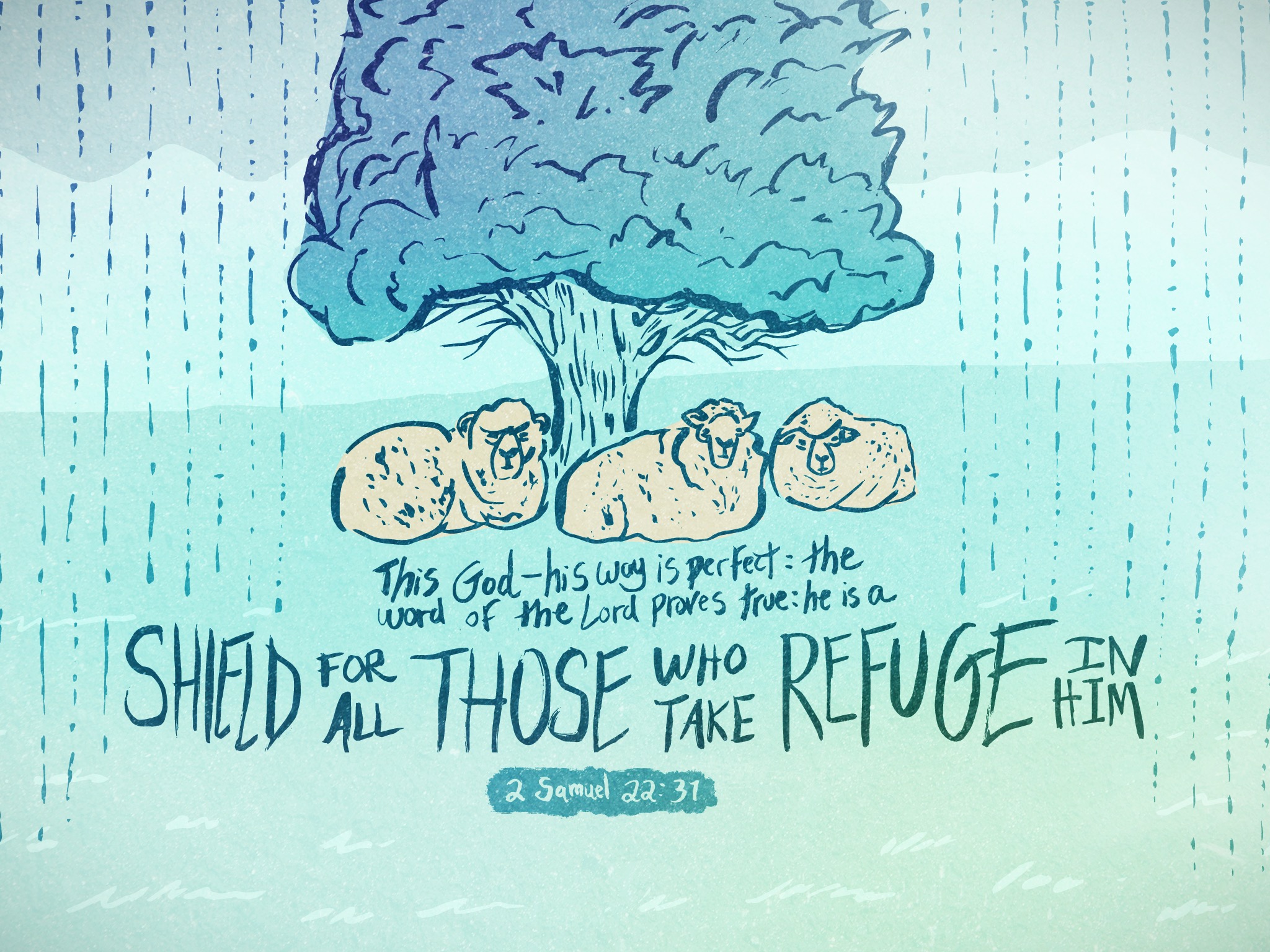
he is a shield for all those who take refuge in him. 

32 “For who is God, but the Lord? 
And who is a rock, except our God? 

33 This God is my strong refuge 
and has made my way blameless. 

34 He made my feet like the feet of a deer 
and set me secure on the heights.

In the name of Jesus. Amen.

If this text feels like a Psalm, you are a good student of Scripture. 2 Samuel 22 is actually the same as Psalm 18. David wrote at least 74 of the 150 Psalms, and it’s interesting (at least, I think it’s interesting) that this is the only place in the story of David’s life where a Psalm recorded. We don’t know exactly when the Psalm was written. But this is placed here in 2 Samuel 22 at the end of David’s life, and v. 1 tells us that this was David’s song, “when the Lord delivered [David] from the hand of all his enemies, and from the hand of Saul.” And the contents of the Psalm are a very fitting way to wrap up David’s story.

David had fought his last war. He had faced the lions and bears as a shepherd. He had killed the giant, Goliath. He was rescued from the spears of King Saul. David had been saved from the Philistines. David was reestablished as king even after his own son, Absalom, had dethroned and hunted him. And, maybe, most importantly, God had rescued David from himself. God forgave David for his adultery with Bathsheba. God absolved David from the sin of murdering Bathsheba’s husband, Uriah. Through it all, God was faithful to David in the face of David’s enemies of the devil, the world, and David’s own sinful flesh. From a humble shepherd who was the youngest of the eight sons of Jesse to the conquering King of Israel, David’s life is a rags to riches story. But morally, David started out better than he ended. The tail end of David’s life was disappointing to say the least, but that is what makes this passage so interesting.

The verses you just heard are the middle of the Psalm where David is reflecting on all of God’s gracious acts throughout his life. David addresses God, “With the merciful You show Yourself merciful; with the blameless man You show Yourself blameless; with the purified You deal purely.” God does show us all these things about Himself, but it sounds as though David is bragging that he was those things – merciful, blameless, and pure. How could such a great sinner like David say something like that?

Well, look again at v. 33. “God is my strong refuge and [He] has made my way blameless.” It was God who made David all those things. By God’s declaration, by God’s mercy, and by God’s absolution, David was merciful, blameless, and pure.

Now, whenever we hear passages like this, we need to recognize God’s actions come first and then God’s attributes shine through God’s children. The text does not say that God is merciful to the merciful, blameless to those who are blameless, and pure to those who are pure. If that were the case, God’s mercy, blamelessness, and purity would never be revealed because we are all sinners. Instead, we need to recognize that God is the one who makes us blameless, makes us merciful, and makes us pure, and all of that shines through us. We are not the light of the world. Jesus is, and His light shines through us for all the world to see. God is merciful, blameless, and pure according to His nature, and God works on us and in us to make us like He is. Colossians 3:10 says that we are being renewed after the image of God, and Romans 8:29 says we are being conformed to the image of Christ. As Christians, God is renewing us in His image.

So, again, with the merciful God shows Himself merciful; with the blameless God shows Himself blameless; with the purified God deals purely. But then notice how v. 27 changes gears, “with the crooked You make Yourself seem tortuous.” Big change there. Just quickly, the translation there is tortuous not torturous. Torturous is related to torture and causing extreme pain and suffering. That’s not the translation here. Instead it is tortuous (remove the second ‘r’) which means full of twists and turns or shifty. It isn’t as though God is shifty toward crooked, bent sinners. Notice very carefully, shifty and complex is simply how God seems to the crooked.

Dear saints, we don’t and can’t change the nature or character of God, but what you believe about God does shape how God will appear to you. In short, as you believe, so it is (Mt. 8:13, 9:29). If you believe God is merciful, and He is, you have no trouble seeing God’s mercy. If you believe God is blameless, and He is, His blamelessness is apparent. If you believe God is pure, and He is, you will see and receive His purity. But if you wrongly believe that God isn’t those things, if you believe God is a as crooked as you are, it will seem and appear as though God is twisted, convoluted, and out to get you even though God by His nature and character is direct and straight; He is merciful and gracious, slow to anger and abounding in steadfast love and faithfulness (Ex. 34:6) toward you.

We can see this in how Jesus deals with the scribes and Pharisees. They were always out to get Jesus and trap Him in His teaching, and Jesus will respond in a similar way. Remember when they were trying to trap Jesus by asking Him a question about divorce (Mt. 19:1-9), and Jesus responds to this Law question in a similar fashion by asking them what the Law says. The Pharisees wanted to live by the Law, which isn’t possible, so Jesus lovingly points them back to the Law in an effort to mercifully show them that life does not come through the Law (Ro. 7:5-12). But rather than fleeing to Jesus to receive God’s mercy, the Pharisees stubbornly reject Jesus and are left under the torture of needing to keep the Law perfectly. Because of this, God seems tortuous.

Dear saints, the way you view God will affect the way you interpret all reality. Lord, have mercy on us, and deliver us from believing wrongly about You.

When life gets tough and bad things happen, when we feel the weight of the burdens and crosses we bear, one of the first things we sinners do is blame God. We ask questions like, “What have I done to deserve this?” “How could You do this to me, God?” Or, even, “What kind of God would allow this evil?” In those moments of grief, sorrow, and despair, God does seem absent, uncaring, and tortuous, but remember that your feelings do not dictate reality.

I’ve said it before, but it bears repeating. Your feelings are a good and important gift from God. But your feelings are also fallen and infected with sin and don’t always match up with reality. So, when God seems to be absent, when God seems to be uncaring, when God seems tortuous, that is not the time to reject or abandon God. That is the time to run to Him.

God loves you with the purest love. He has demonstrated His love for you in that while you were a sinner and enemy of God, rebelling against Him, God gave Jesus, His Son, to die for you and restore you (Ro. 5:8). So, when you feel forsaken, abandoned, and even cheated by God, ask yourself, “Did God send Jesus as the Lamb of God who takes away the sin of the world to die for my sins?” The answer to that question is always, “Yes.” Then, be honest with God about your feelings. Cling to His promises that He gives you in His Word. Run back to Him in prayer, and ask Him to be true to those promises. That is what faith does.

Dear saints, God has given you His mercy by sending His blameless Son to redeem you and make you pure. That is how He is toward you now and for all eternity. Believe that, and watch how God’s mercy, blamelessness, and purity flow freely to you. Believe that and God will always be your rock, your strong refuge, and your shield as you take refuge in Him. Amen.

The peace of God, which surpasses all understanding, will guard your hearts and minds in Christ Jesus. Amen.

If you have a heart that can expect of Him nothing but what is good—especially in need and distress—and a heart that also renounces and forsakes everything that is not God, then you have the only true God. If, on the contrary, your heart clings to anything else from which it expects more good and help than from God, and if your heart does not take refuge in Him but flees from Him when in trouble, then you have an idol, another god.[1]


[1] LC. 1st Commandment, par. 28.

Standards – Sermon on Matthew 5:17-26 for the Sixth Sunday after Trinity

Matthew 5:17-26

17 [Jesus says,] “Do not think that I have come to abolish the Law or the Prophets; I have not come to abolish them but to fulfill them. 18 For truly, I say to you, until heaven and earth pass away, not an iota, not a dot, will pass from the Law until all is accomplished. 19 Therefore whoever relaxes one of the least of these commandments and teaches others to do the same will be called least in the kingdom of heaven, but whoever does them and teaches them will be called great in the kingdom of heaven.

20 “For I tell you, unless your righteousness exceeds that of the scribes and Pharisees, you will never enter the kingdom of heaven.

21 “You have heard that it was said to those of old, ‘You shall not murder; and whoever murders will be liable to judgment.’ 22 But I say to you that everyone who is angry with his brother will be liable to judgment; whoever insults his brother will be liable to the council; and whoever says, ‘You fool!’ will be liable to the hell of fire. 23 So if you are offering your gift at the altar and there remember that your brother has something against you, 24 leave your gift there before the altar and go. First be reconciled to your brother, and then come and offer your gift. 25 Come to terms quickly with your accuser while you are going with him to court, lest your accuser hand you over to the judge, and the judge to the guard, and you be put in prison. 26 Truly, I say to you, you will never get out until you have paid the last penny.”

In the name of Jesus. Amen.

I don’t know how well this analogy will work, but I’m going with it. Imagine you are riding a horse up a mountain. Everyone knows the shortest distance between two points is a straight line, but paths up mountains rarely go in a straight line. (I have to say that to you Red River Valley-ers because some of you might not have any idea how to get up a mountain, or even what a mountain is.) This path you are on traverses back and forth, back and forth. The incline of the path is steep, but you’re riding a horse, so that doesn’t bother you too much.

After riding for a while and navigating the switchbacks, you’ve gotten fairly high up the mountain, and you start to get a little nervous because the path is only a little wider than your horse. You took to the left, and you can see hundreds and hundreds of feet below you. If you fell off your horse to the left, you’d fall to your death. But when you look to your right, you see the mountain slope and a fall that way would result in some bumps and bruises, so you decide to lean to the right. This leaning does result in a fall now and then, but you figure the scrapes and bruises are an acceptable alternative compared to certain death. But then you come to one of the switchbacks. Now, when you look to your right, you see a deadly fall, and when you look to your left, you see the slope and a fall of only a few feet. So, you decide to lean a little bit to the left. Your leaning still means falling now and then. More bumps and more bruises. Still much preferrable to falling off a mountain. This keeps happening. Lean right. Switchback. Lean left. Switchback. Right. Left. You’re always trying to avoid the big fall, but the fall keeps changing sides. And those little falls are now leaving you bruised and bloodied.

After hours of riding, leaning, and falling, you’re nearing the top of the mountain, but you aren’t to the summit yet. You’re at the highest ridge, and there’s still a long way to the top. Now, the path is only as wide as the horse. You look to your right, and you see that a fall means death. You look to your left, same thing. Now, you have to stay directly on top of the horse. But you’ve spent hours leaning – right, left, right, left. You’ve also gotten used to falling, and you’re absolutely terrified. 

Today, Jesus is teaching us about God’s Law. (Obvious statement of the day, there.) Whenever we consider the Law of God, we Christians can quickly and easily fall into one of two errors; both are dangerous and harmful. But at times we think falling to one side is going to be less deadly than falling off the other side. But a fall is a fall. Even though those falls don’t necessarily mean death, they still harm us. And the more we fall, the more difficult it is to stay on the horse. In this text, Jesus is teaching us about the Law and our relationship to it in a way that helps us stay on the horse.

When it comes to God’s Law, staying on the horse means that you take it seriously and fear to break God’s Commandments, but it also means that you never, never ever, trust in your Commandment keeping to save you.

As you live the life of faith, there will be times when you will put more trust in your keeping of the Law. You think that by doing righteous things, God is more and more pleased with you. This was the error of the Pharisees and is called ‘legalism.’ Legalism will have varying degrees. Some legalists will figure so long as they do one more good thing than bad thing that God is obligated to save them. Other legalists think that God’s grace saves them, but once they are saved, they have to make sure they live a certain way to stay saved. Legalists take the Law seriously, and figure that not taking the Law seriously is the bigger danger. Legalists would rather fall of the horse on the side of self-justification figuring it is less dangerous. But, again, falling off the horse is always harmful.

At other times in your life of faith, you might think that because Jesus has died for and forgiven you of all your sins that the Law doesn’t apply to you anymore. And because the Law doesn’t apply anymore, you are free to do whatever you want. This error is called ‘antinomianism’ (i.e. no-law-ism). Some antinomians will go so far as to say, “You don’t know what grace is until you have done some really sinful thing and been forgiven.” They will think that the worse past you had before being saved will make you a stronger or more thankful Christian.

Sometimes, antinomians aren’t that extreme. Instead, they will hear passages of Scripture similar to the portion of this Gospel text where Jesus teaches the full meaning of, “Thou shalt not kill,” where He says that anger and name-calling is the same as murder. Antinomians will justify breaking the 5th Commandment about murder saying that their anger toward someone else is justified because, “Look what they did.” Antinomians will justify breaking the 8th Commandment about lying by pointing to the fact that the gossip they spread is true. The Small Catechism rightly teaches that to keep the 8th Commandment, we must defend our neighbor, speak well of our neighbor, and put the most charitable construction on all our neighbor does. Would you want someone sharing an embarrassing truth about you to other people? Do you like it when people assume your motives when you have done something questionable? When you gossip, you either assign false motives to someone else’s actions or you invite the person you are sharing that gossip with to assign false motives to someone else’s actions. In other words, you are being an antinomian thinking that the 8th Commandment doesn’t apply to you. And every one of us does this from time to time with all the Commandments. Repent. 

Both legalism and antinomianism are errors and false doctrine. Both are poison to the soul. It is easy to think that legalism and antinomianism are opposite errors because legalism leads to a strict keeping of the Law and antinomianism leads to ignoring or belittling the Law. But these two errors are not opposites. The two share the same basic problem. Both legalism and antinomianism lower the standard of God’s Law. Legalism lowers the standard by saying that the Law is doable, followable, attainable, and achievable. Antinomianism lowers the standard by saying that the Law doesn’t matter, that the Law doesn’t actually demand what it demands. And, again, we fall into both of these errors. Sometimes, it is in our attitude to the whole Law. Or, we might fall into legalism when it comes to certain Commandments and into antinomianism when it comes to other commandments. But every one of us, at certain times, thinks that falling into one of those errors is preferable to falling into the other error, but that is always a deception. Again, repent.

Dear saints, when it comes to the Law, God doesn’t ever lower the standard. God doesn’t smile and wink at antinomians. God’s grace and mercy does not mean that God doesn’t care about sin. Yes, Jesus welcomed sinners, but not because He overlooked their sin. He welcomed them because He forgave their sin.

And your Pharisaic, legalistic good works and piety don’t impress God. God doesn’t watch your good works and respond. “Great job. I owe you for that.” No, His standards are higher than yours. Your righteousness must, it absolutely must, exceed the best of the best, or you will never enter the kingdom of heaven.

So, where does this righteousness come from? It only comes through Christ. The righteous do not live by the Law; the righteous live by faith (Ro. 1:17). Romans 10:4 says, “Christ is the end of the law for righteousness to everyone who believes.”

Dear saints, stay squarely on the horse. Don’t lean either toward antinomianism or legalism. God does require you to be perfect as He is perfect (Mt. 5:48; Lev. 19:2; 1 Pet. 1:16). And Jesus freely gives you His perfect obedience to every iota and dot of the Law. Christ has filled and fulfilled the Law in your place. His death removes your sin, and His perfection is credited to you through faith. Jesus has attained the righteous, perfect obedience to the Law that God requires, and Jesus freely gives you the righteousness that guarantees your entrance into the kingdom of heaven.

Jesus has come, not to take away the requirements and demands of the Law. He has come to take away the guilt of the Law. On the one hand, don’t imagine you are performing before God to gain His applause, and on the other hand, don’t think God doesn’t care about how you regard His Commands. Instead, God desires to freely give you His gifts of mercy, pardon, grace, and forgiveness which He gives, not through the Law, but through the Gospel.

Dear saints, you are not righteous because you do much. You are righteous when you believe much in Christ. There is a righteousness that exceeds the righteousness of the scribes, Pharisees, and every other moral person you can think of – that is the righteousness given to you by Christ. And, through God-given faith, that righteousness belongs to you. Amen.

The peace of God, which surpasses all understanding, will guard your hearts and minds in Christ Jesus. Amen.