The Word Among Us – Sermon on John 1:14-18 for Midweek Advent 3

John 1:14-18

In the name of Jesus. Amen.

Moses saw some amazing, glorious things during his lifetime. It began when he was an 80-year-old shepherd for his father-in-law. Moses saw and talked with God at the bush that burned but wasn’t consumed (Ex. 3:1-2). When Moses approached the bush, God told him to remove his sandals because he was standing on holy ground (Ex. 3:5), so Moses hid his face because he was afraid to look at God. Rightly so.

Later, as we heard in tonight’s Old Testament reading (Ex. 33:18-34:8), Moses got a lot bolder than he was back at the burning bush. He asked to see God’s glory. God agreed but with a big caveat. “Ok, Moses, I’ll let you see all My goodness and will proclaim My name, Yahweh, before you. But you cannot see My face, for man shall not see Me and live.” In short, God’s presence is dangerous for fallen mankind. God has to hide His glory from sinners. So, God put Moses in the cleft of a rock and shielded Moses with His hand. And God only removed His hand after He had passed by so Moses could see His back.

There in the cleft of the mountain, God revealed Himself. But even better than that, God proclaimed and defined what His name means, “Yahweh, a God merciful and gracious, slow to anger, and abounding in steadfast love and faithfulness.” Moses was the only human on the mountain when he saw God’s glory (Ex. 34:3) because God had something better in mind for how to reveal Himself to His people.

Shortly after God appeared to Moses, God’s people constructed the Tabernacle. God had told them build the Tabernacle so He could dwell among them (Ex. 29:45-46Lev. 26:11-12). God needed to contain His holiness and glory in a way that His people could approach Him without being destroyed. That is why the Tabernacle was constructed the way it was. For God to dwell among His people, the priesthood, the sacrifices, the blood, the incense, and all sorts of offerings were required.

Even with all the safeguards of the Tabernacle, it was only on one day out of the year, the Day of Atonement, that the high priest, and only the high priest, could enter the Holy of Holies where God dwelled. And even then, the high priest would have to change his clothes fourteen times, wash himself almost 10 times, and offer dozens of sacrifices to safely approach the awesome, holy glory of God. That’s the theology of the Tabernacle. Yes, God wanted to dwell with His people, but they needed protection from His holiness and glory so they wouldn’t be consumed.

But now, here in John 1:14, John says, “the Word became Flesh and dwelt among us.” Now, the Greek word translated ‘dwelt’ is skēnē, which literally means ‘tabernacled.’ “The Word became flesh and tabernacled among us.” Because of this fact, we can truthfully sing, “Veiled in flesh the Godhead see; / Hail th’ incarnate Deity, / Pleased as Man with man to dwell; / Jesus, our Immanuel.” And this is the wonder of all wonders.

The Incarnation, the fact that God became one of us, is how God reveals Himself and His glory to us. Yes, God wraps Himself in flesh, but He wraps Himself in a different way than how you use wrapping paper. When you wrap your gifts, you are trying to keep the gift a secret from the person you are giving it to until he or she opens it. Once they tear the wrapping paper off the gift, the gift isn’t a secret anymore. The Incarnation isn’t like that – it isn’t a secret. Instead, it’s a mystery. And the difference between a secret and a mystery is that a secret is no longer a secret once it is revealed. A mystery is different. A mystery remains a mystery even after it is revealed, and the more you think about a mystery the more mysterious it becomes.

The Eternal Word wraps Himself in flesh so He can tabernacle and dwell with you. In Col. 2:9, Scripture says, “In [Christ] the whole fullness of the Deity dwells bodily.” Jesus does this so you can see and behold His glory, glory as of the only Son from the Father. And this Eternal Word who tabernacles with you is full of grace and truth.

Back in our Old Testament reading, God proclaimed that He is the God who abounds “in steadfast love and faithfulness.” Without getting into too much grammar and vocabulary stuff, that is very phrase – ‘steadfast love and faithfulness’ – that John is picking up when he says that Jesus is “full of grace and truth.” But notice the difference here in Jn. 1. Jesus doesn’t just proclaim that He abounds in grace and truth like He did when Moses was safely nestled in the cleft of the rock. No. Now in Christ, God reveals it.

The Eternal Word humbled and emptied Himself by being born in the likeness of men. God came in human form and became obedient to the point of death, even death on a cross (Php. 2:8). And from the fullness of Christ’s grace and truth, you receive grace on top of grace (Jn. 1:16).

Dear saints, Jesus makes God known. He reveals what God thinks of you. He gives you His grace, and on top of that, He gives you more grace, and more grace, and more grace…

I want to close these Advent services pondering that:

In our normal, human lives, growing up and maturing is a gradual shift from dependence to independence. When you’re born you are totally dependent on others doing things for you – feeding, cleaning, clothing, sheltering, protecting, etc. And as you grow, you become more independent. You don’t need others as much because you can do it yourself.

Spiritual growth is the opposite. Growing and maturing in faith is becoming more and more like a child (Mt. 18:3-4). Being a stronger Christian is learning that you are needy, learning that you need to borrow all that you are and all that you have from Jesus. Dependent upon Him, you receive grace upon grace from His fullness. That is how you mature as a believer. You receive from Him more and more.

That is precisely why the Eternal Word became flesh. He did it so He could dwell with you. So He could live for you. So He could die for you. So He could rise again for you. So He could ascend into heaven and rule over all creation for you. So He could forgive you. So He could give you His mercy. So He can give you grace upon grace. And so you could live and reign forever and ever with Him. Amen.

The peace of God, which surpasses all understanding, will guard your hearts and minds in Christ Jesus (Php. 4:7). Amen.

Enoughness – Sermon on 2 Corinthians 3:4-11 for the Twelfth Sunday after Trinity

2 Corinthians 3:4-11

4 Such is the confidence that we have through Christ toward God. 5 Not that we are sufficient in ourselves to claim anything as coming from us, but our sufficiency is from God, 6 who has made us sufficient to be ministers of a new covenant, not of the letter but of the Spirit. For the letter kills, but the Spirit gives life. 

7 Now if the ministry of death, carved in letters on stone, came with such glory that the Israelites could not gaze at Moses’ face because of its glory, which was being brought to an end, 8 will not the ministry of the Spirit have even more glory? 9 For if there was glory in the ministry of condemnation, the ministry of righteousness must far exceed it in glory. 10 Indeed, in this case, what once had glory has come to have no glory at all, because of the glory that surpasses it. 11 For if what was being brought to an end came with glory, much more will what is permanent have glory.

In the name of Jesus. Amen.

Imagine that you received an invitation to a banquet. You get yourself ready and put on your best suit or dress. You drive to the location and enter the building to find that this banquet is a lot fancier and way more formal than you realized. The crystal chandeliers and candles cast a golden light over an exquisitely decorated room. The tables are set with fine china and crystal flutes. You look at all the other guests and discover that they are wearing either designer tuxedos with cufflinks and cummerbunds or sparkling gowns and jewelry. There you are sticking out like a pigeon in a peacock parade.

You try to mingle with the glittering guests, but they mostly ignore you. The only acknowledgement you get are cold smiles and people saying, “Oh, I love your outfit,” as they turn away laughing and asking each other, “Who’s that guy?” You pull out the invitation, and, sure enough, it’s got your name and address. But you’ve had it. It must have been a mistake. So, you start looking for an exit, one that will allow you to avoid as many people as possible.

As you’re leaving, the host of the gala approaches and calls you out by name saying, “I’m so glad you’re here. I’ve got all sorts of people I want to introduce you to.” You try to explain that you should probably leave because you don’t fit in. You point out that you aren’t as polished as everyone else there and mention how the crowd has already rejected and made fun of you. But the host simply says, “You aren’t here to be fancy. You’re here because I invited you. My choice is enough to make you belong. Just stick with me.” The rest of the evening, he takes you around the room showing you off, bragging about you, and highlighting how important you are to him. He seats you next to himself at the head table. The rest of the evening, your confidence grows. Now, you are treated with respect and honor by everyone else – not because you’ve won them over. Your importance is rooted in the host’s attitude toward you, and his opinion carries a weight that no one can challenge. It is enough.

Dear saints, such is the confidence you have through Christ toward God.

In this text, Paul is defending his office of being an apostle. There were some false teachers in the congregation at Corinth who were saying that Paul didn’t have the authority to say anything in the church. They questioned the sufficiency of Paul’s preaching. They were saying that Paul’s preaching of God’s grace through Christ was not enough. That’s why he says that God had made him sufficient to be a minister of the ‘new covenant’ of the Gospel that points people to Jesus as the Messiah (2 Cor. 3:6). And that’s why Paul goes on in v. 7-11 of this text to compare his ministry of the Gospel to Moses’ ministry under the old covenant.

Now, this would be a really good text to preach at an ordination service as a man is called by God to be a pastor. All pastors, myself included, need to recognize that when they preach, they aren’t doing it by their own authority but by the authority that God has given (1 Pet. 4:11). When God puts a pastor into a congregation, he is there to deliver God’s gifts to God’s purchased and redeemed people.

Pastors are called to speak two different words to their congregations. First, pastors are to preach ‘the letter that kills’ also called here ‘the ministry of condemnation.’ In other words, pastors are to preach the Law. And second, pastors are to preach ‘the ministry of righteousness,’ the Gospel. God sends pastors to declare that people are sinners so they can be pointed to repentance and faith in Christ. That’s the main point of this passage. But what Paul says here can be applied to other callings and vocations as well.

Dear saints, you have been called out of the darkness of your sin into God’s kingdom. You are called to be God’s hands and feet to the people around you so you can render service to them. And you can have confidence as you serve and carry out those vocations. You are not sufficient on your own. God Himself has made you sufficient. In this text, the word translated ‘sufficient’ means enough.

There are all sorts of places we might look to build confidence and find our enoughness, but there is only one legitimate source of confidence. Any other source will lead to bad outcomes. The most common place we look is inside ourselves – our abilities, our eloquence, our strengths or skills. There are certainly productive, able people who are successful at many things. The problem is that when those moments of success come and we think it’s because we’re sufficient in ourselves, pride sneaks in. We start comparing ourselves to others and look down on them. We get puffed up, and when that happens, we’re setting ourselves up for a big fall. Even when you are successful and humble, the devil will attempt to draw your attention back to yourself and your humility, and again, pride sprouts up.

If you to think that you are strong and capable on our own, you will start to think that you can handle the challenges in life by yourself. When that happens, you’ll quickly find that your own strengths and abilities fade and fail. And when you fail, it’s easy to fall into despair.  The devil wants you to be constantly looking at yourself because there you’ll see that your strength and ability isn’t enough to do all that God has called you to do. Any setback or misstep can be used by the demons to paralyze you.

But when God is the source of your confidence, and He is, then, you lack in nothing. Look at the sheer holiness and privilege of your callings – spouses, parents, children, teachers, friends. When you first recognize the massive, holy responsibilities that God has given you, you realize that these things are beyond you. And you aren’t adequate to carry those vocations out. You can’t claim anything – any ability, any strength, any eloquence, any skill – as coming from you. But God Himself has given you everything. He has won and purchased you by giving His Son, Jesus to die on the cross as your Savior. Everything you are, everything you have, every calling and responsibility has been given to you as a gift. And what God has given you is enough.

As citizens of God’s kingdom, recognize that God has given you more than enough, more you can imagine. He has given His gifts in full measure, pressed those gifts down into you to make room for more and His gifts are always running over (Lk. 6:38).

The same Holy Spirit who blew through the upper room at Pentecost now fills you with everything you need to carry out the tasks entrusted to you. The Holy Spirit who abides in and with you is like that host at the gala. He accompanies you and makes you worthy to be in His kingdom. Anyone who questions that worthiness insults Him directly and isn’t worth listening to. God Himself has made you sufficient and enough. 

By His calling, His redeeming, His grace, His sanctifying, He has made you enough. And that is enough. Dear saints, your enoughness is from God, and from God alone. So, go; boldly carry out the tasks that He has given you. Amen.

The peace of God, which surpasses all understanding, will guard your hearts and minds in Christ Jesus (Php. 4:7). Amen.

Eager Waiting – Sermon on Romans 8:18-23 for the Fourth Sunday after Trinity

Romans 8:18–23

18 For I consider that the sufferings of this present time are not worth comparing with the glory that is to be revealed to us. 19 For the creation waits with eager longing for the revealing of the sons of God. 20 For the creation was subjected to futility, not willingly, but because of him who subjected it, in hope 21 that the creation itself will be set free from its bondage to corruption and obtain the freedom of the glory of the children of God. 22 For we know that the whole creation has been groaning together in the pains of childbirth until now. 23 And not only the creation, but we ourselves, who have the firstfruits of the Spirit, groan inwardly as we wait eagerly for adoption as sons, the redemption of our bodies.

In the name of Jesus. Amen.

Christian, the Bible never says that you will escape suffering. In fact, Jesus promises that you will suffer. Jesus says that everyone who follows Him will take up a cross (Mt. 16:24). Jesus says that since the world persecuted Him, it will persecute you (Jn. 15:20). Jesus says that in this world you will have tribulation (Jn. 16:33). Jesus even says that the one who kills you will think he is offering service to God (Jn. 16:2). 

Christian, you should expect to encounter suffering in this world. 1 Peter 4:12 tells us to not be surprised at the fiery trial when it comes upon you to test you, as though something strange were happening to you. Whether or not we will experience suffering is not the question. Instead, our text here would have us consider how we endure the suffering because our typical response to suffering is not what Scripture would have us do.

Often, your initial response to suffering is to look to the time when your suffering will be over. Your kids keep getting up at night, so you look forward to when they finally stay asleep, and you can rest. Your checking account gets low, so you look to your next payday. You get sick, so you look forward to when you will feel better. Even though all of those things are welcome pauses to your suffering, they are only temporary moments of slight relief. And if that is all you hope for, you are setting your sights way too low. Paul writes in 1 Cor. 15:19, “If in Christ we have hope in this life only, we are of all people most to be pitied.”

Christian, this text is telling you that there is something even better in store for you than the end of your suffering. When you suffer, look past the end of your suffering and raise your eyes to the glory that is to be revealed to you (Rom. 8:18). It is a glory that you have even now, but a glory that you cannot see right now.

Look carefully at v. 19-21 of our text. “The creation waits with eager longing for the revealing of the sons of God. For the creation was subjected to futility, not willingly, but because of Him who subjected it in hope that the creation itself will be set free from its bondage to corruption and obtain the freedom of the glory of the children of God.”

Paul here is inviting us to look at our present suffering from the perspective of the rest of God’s creation, so let’s do that. Jesus helps us get that perspective In Matthew 5:45 where He says that God, “Makes His sun to rise on the evil and the good.” Imagine the suffering that the sun has had to endure since the Fall.

Because of God’s mercy, He has commanded the sun to serve idolators, adulterers, thieves, liars, and murderers. The sun was created to shine on the righteous, but God has commanded it to keep shining on both the evil and the good. God has called the sun to serve all people – including the unrighteous. The sun’s work of shining on the evil is wasted, but the sun does it gladly because it is obeying God’s merciful command. The same could be said about the clouds with their rain, the crops with their fruit, and the water with its nourishment. All creation would much rather only serve only you, Christian. As the sun and the rest of creation serves the evil and the good, the righteous and the unrighteous, it waits with eager longing for you to be revealed as the sons of God (Ro. 8:19).

Catch that. Creation longs for “the revealing” of the sons of God. It will take a “revealing” for creation to recognize you as the sons of God.

Some of you have told me that you don’t recognize how loved and valued you are by God. You don’t see yourselves as God’s children. But listen to what 1 John 3:2 says, “Beloved, we are God’s children now, and what we will be has not yet appeared; but we know that when He appears we shall be like Him, because we shall see Him as He is.” 

Here’s the truth. God sees you as His beloved child – holy, blameless, and righteous. Even though you can’t see that, and even though the rest of creation can’t see that, it’s true. But the day will come when you will be revealed as God’s children. All of creation will see it, and you will also see it.

Until then, live like the sun. Shine the light of Christ upon the righteous and the unrighteous as you eagerly wait for the time when you will be revealed before all creation as a beloved, holy, righteous child of God. Sure, you don’t see the glory God has given you yet. That’s fine. That day will come. God has promised. Jesus will return. Your body will be redeemed. You will rise, and all your suffering will fade away.

Dear saints, all suffering in this world is temporary. That doesn’t mean that your suffering doesn’t matter. Suffering can cause deep wounds that leave painful scars. Even though that is very true, the sufferings of this present time are all – every one of them – temporary. In fact, there is only one type of suffering that is nottemporary, and that is the eternal torment of hell. But that is not your destiny, Christian.

Brothers and sisters in Christ, you have God’s promise that the sufferings of this present time are not even worth comparing to the glory that will be revealed to you. And as you eagerly wait for your adoption as sons, as you eagerly await the redemption of your bodies, come to God’s table. Receive Jesus’ resurrected Body and Blood given and shed for the forgiveness of your sins. Be fed with His mercy and grace which strengthens you to serve the rest of creation as you eagerly await His return. Amen.

The peace of God, which surpasses all understanding, will guard your hearts and minds in Christ Jesus. Amen.

Unveiled – Sermon on Exodus 34:29-35; Matthew 17:1-9; and 2 Peter 1:16-21 for the Transfiguration of Our Lord

Exodus 34:29-35; Matthew 17:1-9; & 2 Peter 1:16-21

In the name of Jesus. Amen.

This is a glorious text, but even more glorious is that the beloved Son of God would give His life for you on the cross. Because Jesus has died for you, you, dear saints, will also shine like the sun (Mt. 13:43). To make that point, we’re going to consider all three of our Scripture readings and two other passages, 2 Cor. 3:4-18 and Mt. 13:43. A figure skater or a competitive diver will do a routine with a high degree of difficulty to get a higher score. Hopefully, my execution of the sermon will be good enough that the payoff will be worth it in the end.

A person’s face can tell you a lot. Just to be clear, I’m not talking about the mouth part of a person’s face – of course, the mouth can tell you a lot too. I’m talking about a person’s facial demeanor. Someone could be talking to you in a normal tone, but if you watch their face, you can tell if they are sad or happy, discouraged or excited, heartbroken or twitterpated. Sometimes you just enter a room, and a family member will ask, “What’s wrong?” or, “Why are you so happy?” Your word hole doesn’t have to be operating for your face to say a lot.

Between our Old Testament and Gospel readings today (Ex. 34:29-35 & Mt. 17:1-9), we heard about two different shining faces – Moses’ and Jesus’. And those two shining faces produced two very different responses.

Right before our OT text, Scripture says that Moses had been on Mt. Sinai for forty days and forty nights, and during that time he neither ate bread nor drank water (Ex. 34:28). How Moses survived that, I don’t know. Somehow, God miraculously kept Moses going. After being on a mountain for forty days and nights with nothing to eat or drink, you would expect Moses’ face to be weathered, worn, and weary. But when he arrives back in the camp, Moses’ face was shining because he had been talking with God. This made the people so afraid that they wouldn’t even approach Moses. Now, Moses admits here (because he wrote Exodus) that he had no idea that his face was shining. And this gives us a glimpse into what Moses must have seen and heard during those forty days and nights. Being in God’s presence and talking directly to God was so grand and glorious that the glory Moses saw continued to radiate from his face. And Moses was so used to being in that glory that he didn’t realize his face was shining.

In 2 Cor. 3:4-18, Paul contemplates on this. I would encourage you to read that passage later today, and you might want to turn there because we’re going to come back to it. In 2 Cor. 3:4-18, Paul says that the Law came with such splendor and glory that people were afraid to come near because of Moses’ shining face. Paul goes on to say how much more glorious is the ministry of the Gospel, and we see that glory on the Mount of Transfiguration.

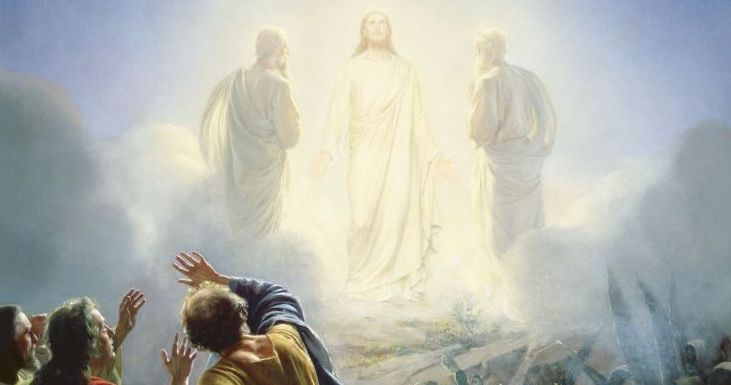
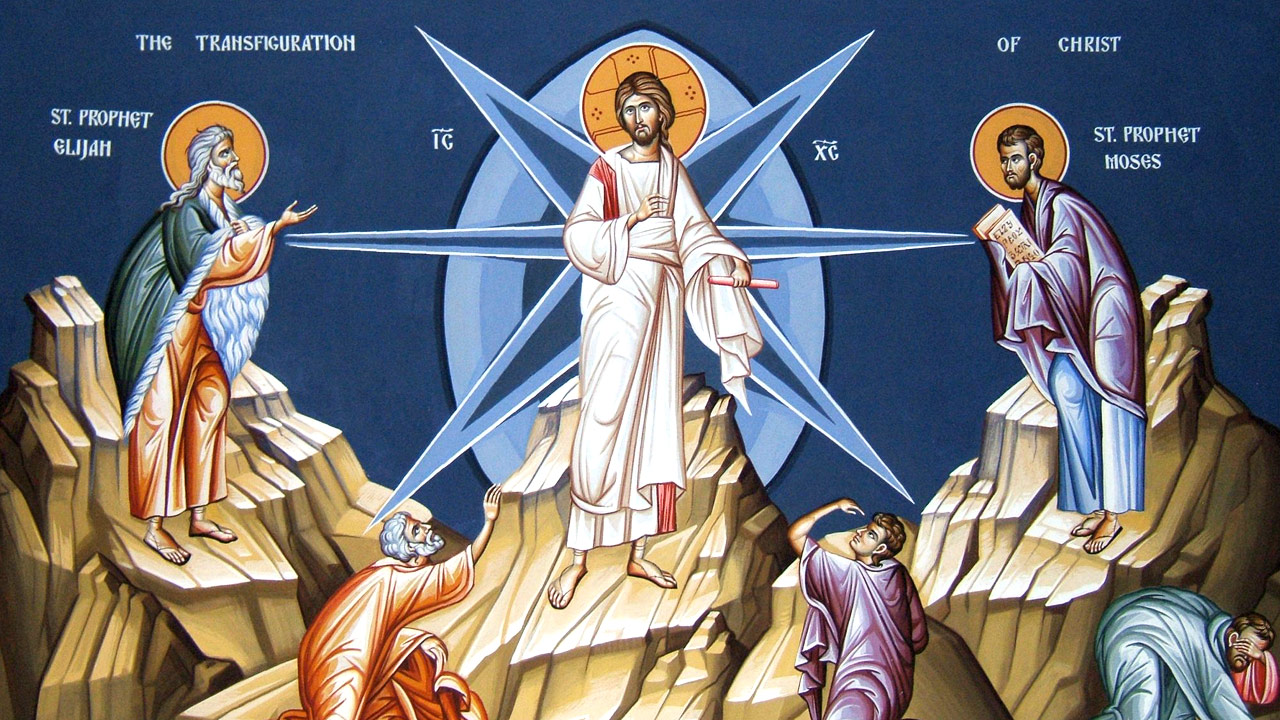
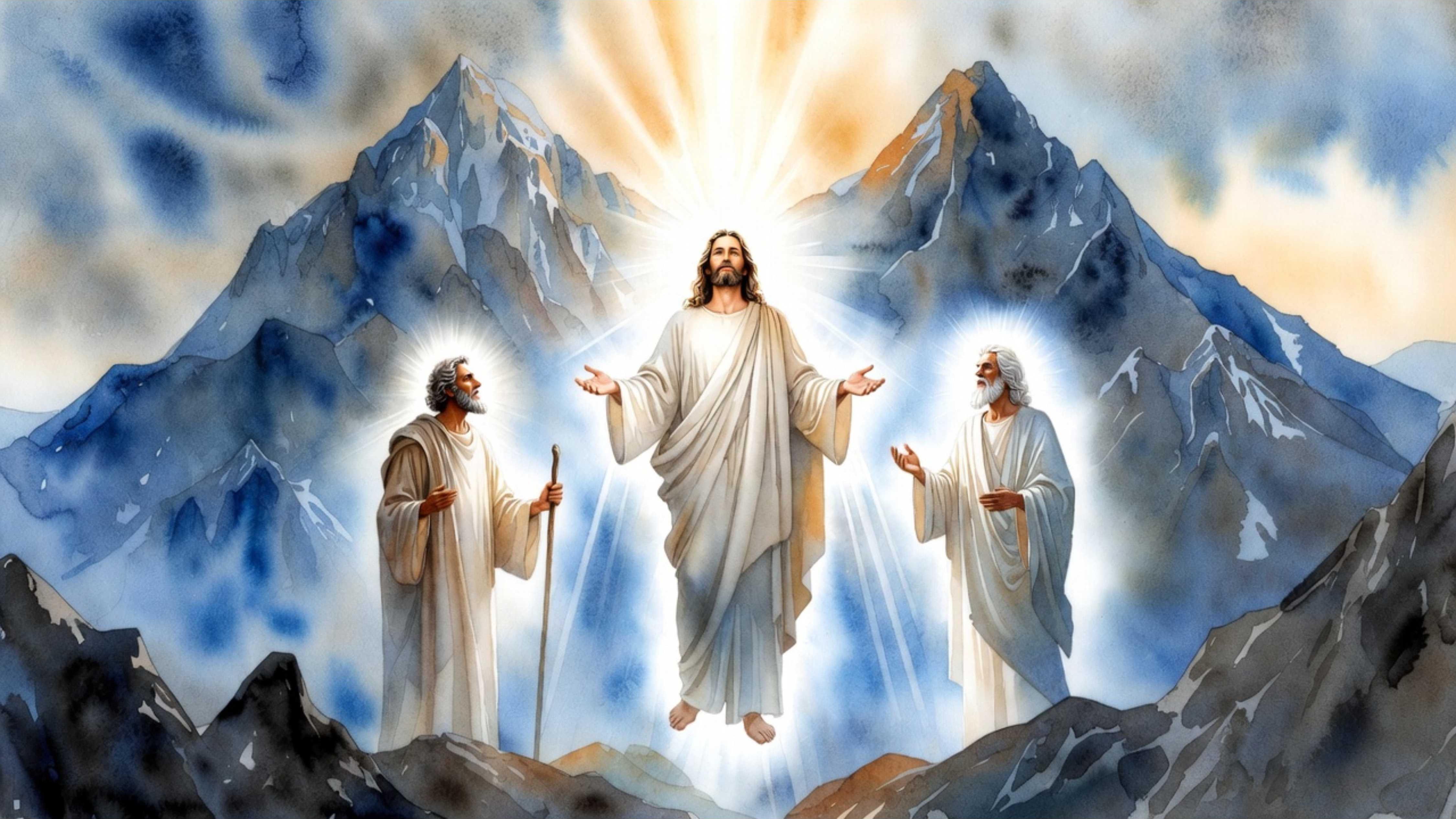
Jesus goes up a high mountain with Peter, James, and John and is transfigured. His clothes become white as light. Moses and Elijah appear and are talking with Jesus. And Jesus’ face shone like the sun. Now, Scripture doesn’t give us the total lumens of Moses’ face compared to Jesus’ face. It is interesting to note that the Greek translation of our Old Testament text uses a word that means ‘glow’ to refer Moses’ face while Matthew here uses the word λάμπω (lampō) which means ‘shine’ to refer to Jesus’ face. So, Moses’ face glowed with a radiant, reflected glory, but Jesus’ face shines like the sun with its own glory.

We do know that Moses’ face was bright enough that people could see it and were afraid, but a thin veil was enough to calm their fears. But here Jesus’ face shines like the sun, and I’m pretty sure a little veil wasn’t going to do much to dim that shining. Despite the brightness and glory, notice that Peter, James, and John don’t ask Jesus to veil His face. Instead, the reaction is completely different. Peter says, “Lord, it is good that we are here. In fact, let’s stay here. I’ll make three tents – one for You, one for Moses, and one for Elijah.” But while Peter is still speaking, the bright cloud of God’s glory overshadowed them, and God the Father said, “This is My beloved Son, with whom I am well pleased; listen to Him.” This terrifies the three disciples, but Jesus came and touched them saying, “Rise, and have no fear.”

In our Epistle text (2 Pet. 1:16-21), Peter reflects on the Transfiguration about thirty years later. There, Peter says that the Transfiguration does show Jesus’ glory, but even more so, it unveils the glory of the Bible. Peter says that it is better for you to have the Scriptures than for you to have witnessed the Transfiguration because every verse of the Scriptures unveils God’s great love for you. The shining face of Jesus points us to the bright lamp of the Scriptures that shines in a dark place. But what is this dark place?

Your initial thought is probably that the lamp of the Scriptures shines in the darkness of this world. The Bible certainly does talk about the world being full of darkness and sin. Psalm 119:105 says, “Your Word is a lamp to my feet and a light to my path.” God’s Word does enlighten this dark world so that we don’t stumble or go the wrong way. But here Peter is talking about a different dark place. He says to pay careful attention to the Scriptures as “a lamp shining in a dark place until the day dawns and the morning star rises” – and catch this – “the morning star rises in your hearts.”

You see, it’s not just the world and things outside of you that are a dark place. Your heart also has a darkness that needs the light of God’s Word. Peter doesn’t use the normal word for ‘dark’ here. The word Peter uses means, “foul and repulsive from a lack of care; neglected and filthy.” Here is the picture: Our sinful hearts are a filthy, murky, dark place. And we do well to pay attention to the Word of God shining in the dirty, neglected, dark place of our heart. When we pay attention to them, the lamp of the Scriptures shines in the darkness of our heart and pierces through the filth inside us. And the Gospel also changes us.

Even though you weren’t a witness to Jesus’ Transfiguration (lit. His ‘metamorphosis’), you have something better. Back to 2 Cor. 3:18, “And we all, with unveiled face, beholding the glory of the Lord, are being transfigured (same word used for Jesus’ transfiguration though the ESV translates it as ‘transformed’) we are being transfigured into the same image from one degree of glory to another.” Even now, already in this life, Christian, you are being transfigured into the same glory that Jesus had on the mountain. God brings about that transfiguration through His Word. By God’s gracious working through His Word, you are slowly being transfigured and metamorphosized into Jesus’ glory.

God has promised that you are being transfigured. And the picture of Jesus on the mountain today is what you are heading toward by the grace of God. In Mt. 13:43, Jesus says that you who are righteous through faith in Him will shine like the sun, just like Jesus did.

So that you could shine like the sun and be like Him, Jesus went down from the mount of Transfiguration. He descended from that glorious peak, so He could ascend another mountain, Mt. Calvary, where He laid down His life for Peter, for Moses and Elijah, and for you. He did this because He loves you and wants you to be transfigured and share in His unveiled glory. Lord Jesus, come soon and bring us to that glory. Amen.

The peace of God, which surpasses all understanding, will guard your hearts and minds in Christ Jesus. Amen.

Don’t Settle – Sermon on Matthew 17:1-9 for the Transfiguration of our Lord

Matthew 17:1-9

1 And after six days Jesus took with him Peter and James, and John his brother, and led them up a high mountain by themselves. 2 And he was transfigured before them, and his face shone like the sun, and his clothes became white as light. 3 And behold, there appeared to them Moses and Elijah, talking with him. 4 And Peter said to Jesus, “Lord, it is good that we are here. If you wish, I will make three tents here, one for you and one for Moses and one for Elijah.” 5 He was still speaking when, behold, a bright cloud overshadowed them, and a voice from the cloud said, “This is my beloved Son, with whom I am well pleased; listen to him.” 

6 When the disciples heard this, they fell on their faces and were terrified. 7 But Jesus came and touched them, saying, “Rise, and have no fear.” 8 And when they lifted up their eyes, they saw no one but Jesus only. 9 And as they were coming down the mountain, Jesus commanded them, “Tell no one the vision, until the Son of Man is raised from the dead.”

In the name of Jesus. Amen.

Change is often difficult because we have to adjust. We prefer consistency over fluctuation and variation. This past Thursday morning, the temperature in East Grand Forks bottomed out at -30°F; the forecast for Tuesday indicates we’ll reach 36°F. If that prediction holds out, we will experience a 66° swing in five days. That 36°F is going to feel glorious. Kids will be begging parents to go around without coats and wearing shorts. I can already hear several of you thinking, “I can’t wait for a change in this bitterly cold weather. I’ll adjust just fine, thank you.” But the change I’m thinking of will happen next Fall. What will happen then? When October rolls around and we dip back down into the 30’s, the coats and shivers will be back because we will have gotten accustomed to 80-90° weather through the summer. Change can be rough. Those mid 30’s will feel glorious if we get there in the next couple of days, but not so much in October.

Now, I bring all of this up to set the stage for what happens at the Transfiguration of Jesus. Our text begins with a time marker, “And after six days…”, so we need a bit of context. If you look back to Mt. 16, you see that Jesus has just told His disciples that He must go to Jerusalem, suffer, be killed, and rise on the third day, and this prediction would have been about six months before the crucifixion. The disciples had been following Jesus for about two and a half years. They had gotten comfortable being around Him, seeing His miracles, listening to His teaching, and enjoying His company.

The impression we get is that Peter does not hear everything Jesus says. Peter hears the suffering and dying part, and I imagine Peter is so shocked that he doesn’t hear Jesus say He would rise again on the third day. So, when Jesus says that He is going to suffer and die, Peter doesn’t like it – not one bit. Jesus getting killed would be a very unwelcome change. So, Peter scolds Jesus for saying that He was going to die by saying, “Far be it from You, Lord! This shall never happen to you” (Mt. 16:22). And Jesus utterly rebukes Peter with His harshest words recorded in the Gospels, “Get behind me, Satan! You are a hindrance to Me. For you are not setting your mind on the things of God, but on the things of man” (Mt. 16:23).

So now, to our text. The Transfiguration takes place six days after this exchange between Jesus and Peter. Jesus brings Peter, James, and John up a high mountain by themselves, and suddenly, Jesus is transfigured. His face shines like the sun, and His clothes become dazzlingly bright and white as light. Then, Old Testament celebrities start showing up as Moses and Elijah crash the party.

Peter sees all of this and is scared (Mk. 9:6) but probably in a thrilling way. He wants to remain there with Jesus, Moses, and Elijah. Peter likes how things are there, up on that glorious mountain. Seeing the Transfiguration is probably in the top three highlights of Peter’s time with Jesus. Shiny Jesus is fantastic stuff, and it definitely beats the suffering and death Jesus predicted six days earlier. But as Moses and Elijah are there talking with Jesus, the Gospel of Luke tells us that Jesus, Moses, and Elijah are speaking about Jesus’ exodus which He was about to accomplish in Jerusalem (Lk. 9:31). Even in the shining glory of the Transfiguration, there is this talk about Jesus’ suffering and death. So, Peter says (and listen to how he focuses on location), “Lord, it is good that we are here. If you wish, I will make three tents here, one for you and one for Moses and one for Elijah.” It’s almost like Peter is saying, “Hey, things are good here! Why don’t we all just hang out here on this glorious mountain and forget about all that stuff in Jerusalem?”

But God the Father interrupts Peter’s plan. The cloud of God’s glory overshadowed them, and God said, “This is My beloved Son, with whom I am well pleased; listen to Him” (Mt. 17:5). Now, I don’t think we should only take this in the broad, general sense that Jesus’ words are important to listen to. That is, of course, true. Every Word of Christ is important, and Peter even makes that point in our Epistle lesson (2 Pet. 1:16-21). The Bible, God’s Word, is a lamp shining in the darkness of this world, and we do well to pay attention to it. But I would suggest that God’s command to listen to Jesus here is much more specific and pointed.

When God the Father interrupts Peter’s plan to make tents and remain on the mountain by saying, “Listen to My beloved Son,” God is reinforcing to Peter the fact that Jesus must go to Jerusalem, be crucified, and rise again. Peter is right that the glory on that mountain is good, but if Jesus doesn’t descend from the summit, if He doesn’t go down to Jerusalem, down to suffer, down to the cross, and down to the grave, then Jesus’ truest glory would never be revealed. The glory of the Transfiguration is good but remaining there would have been settling for something far less than the glory that Jesus revealed upon the cross.

We don’t understand the glory of Jesus’ Transfiguration until we see the crucifixion because by His cross Jesus elevates us to share in His glory. And those two events closely parallel each other. Here in the Transfiguration, Jesus’ clothes are shining white; on Calvary, they have been stripped off and soldiers gambled for them (Mt. 27:35). Today, Jesus was surrounded by Moses and Elijah. At the cross, Jesus is flanked by criminals (Mt. 27:38). At the Transfiguration, the bright cloud of God’s glory illumines everything; at Calvary darkness fills the land (Mt. 27:45). Here, God’s voice thunders from heaven declaring Jesus to be His beloved Son. There, the Roman soldier confesses that Jesus truly was the Son of God (Mk. 15:39).

While the two scenes are strikingly different, they help us understand each other. Because it was on the cross that Christ delivered you from the power of sin, death, and the devil so that you could share in His glory. Because of what Jesus has done for you by shedding His blood, you are being transfigured from one degree of glory to another (2 Cor. 3:18).

Dear saints, this life is filled with ups and downs and all the changes that come with them. We can certainly thank God for the moments where we have mountaintop experiences. They are good and glorious, but we don’t remain in them in this life. Don’t settle for those temporary moments. Another glory, a greater and eternal glory, awaits you. As it was with Jesus, so it is with you. You follow Jesus through suffering in this world and await the glory that is yours because of what Christ has done (Mt. 16:24-25).

And so, Christ comes to you now to strengthen you and assure you that He will never leave you nor forsake you. He comes now to give you His Body to eat and His Blood to drink and make full satisfaction for all of your sins. Jesus invites you to come to His altar and His table. Remove the veil over your face. Behold the glory of the Lord. And go back into the world with God’s glory radiating from you (Mt. 5:14-16) so that others may see your good works and give glory to your Father who is in heaven. Amen.

The peace of God, which surpasses all understanding, will guard your hearts and minds in Christ Jesus. Amen.

Confidence, Glory, Boldness, & Freedom – Sermon on 2 Corinthians 3:4-18 for the Twelfth Sunday after Trinity

2 Corinthians 3:4-18

4 Such is the confidence that we have through Christ toward God. 5 Not that we are sufficient in ourselves to claim anything as coming from us, but our sufficiency is from God, 6 who has made us sufficient to be ministers of a new covenant, not of the letter but of the Spirit. For the letter kills, but the Spirit gives life. 

7 Now if the ministry of death, carved in letters on stone, came with such glory that the Israelites could not gaze at Moses’ face because of its glory, which was being brought to an end, 8 will not the ministry of the Spirit have even more glory? 9 For if there was glory in the ministry of condemnation, the ministry of righteousness must far exceed it in glory. 10 Indeed, in this case, what once had glory has come to have no glory at all, because of the glory that surpasses it. 11 For if what was being brought to an end came with glory, much more will what is permanent have glory.

12 Since we have such a hope, we are very bold, 13 not like Moses, who would put a veil over his face so that the Israelites might not gaze at the outcome of what was being brought to an end. 14 But their minds were hardened. For to this day, when they read the old covenant, that same veil remains unlifted, because only through Christ is it taken away. 15 Yes, to this day whenever Moses is read a veil lies over their hearts. 16But when one turns to the Lord, the veil is removed. 17 Now the Lord is the Spirit, and where the Spirit of the Lord is, there is freedom. 18 And we all, with unveiled face, beholding the glory of the Lord, are being transformed into the same image from one degree of glory to another. For this comes from the Lord who is the Spirit.

In the name of Jesus. Amen.

This text is all about the two main doctrines (or teachings) of Scripture: the Law and the Gospel. Whenever you read the Scriptures, Law and Gospel is what you should be looking for. Put simply, the Law tells you what you must do or be judged and condemned by God. The Gospel tells you what God has done for you in Christ to forgive you for all your sins against God’s Law. Luther once put it beautifully, “The Law says, ‘Do this,’ and it is never done. [The Gospel] says, ‘Believe this,’ and everything is already done.”

Now, this text doesn’t specifically call these two doctrines ‘Law’ and ‘Gospel.’ No, this text is a lot more colorful using other terms for Law and Gospel to describe what they do and are. So, look through the verses quickly again. In v. 6, Paul calls the Law ‘the letter’ that ‘kills.’ In v. 7, Paul calls the Law ‘the ministry of death, carved in letters on stone.’ In v. 8, the Law is called ‘the ministry of condemnation.’ In v. 14, the Law is called ‘the old covenant.’ All of these terms for the Law give us a picture and understanding of what the Law does to us. In short, the Law is exposes that we are sinners who deserve nothing but death, judgment, and condemnation from God who is our holy and just Creator.

But now, listen to the terms Paul uses to for the Gospel. In v. 6, Paul calls the Gospel ‘the new covenant… of the Spirit who gives life.’ In v. 8, it is called the ‘ministry of the [Holy] Spirit.’ In v. 9, Paul says that the Gospel is ‘the ministry of righteousness.’ So, if you want life, righteousness, and freedom from sin, you don’t look to the Law. You look only to the Gospel.

But the main thing this text is showing us is just how glorious the Gospel is by comparing the glory of the Law with the glory of the Gospel.

With that in mind, let’s consider what happened when God gave the Law on Mt. Sinai (Ex. 20). Back in Exodus 19, we hear how God instructed His people to prepare themselves for the giving of the Ten Commandments. Around three months after the people had left Egypt (v. 1), God had the people consecrate themselves for three days (v. 11). God instructed the people to set up a fence around Mt. Sinai so that no one – neither man nor beast – could touch the mountain (v. 12). The third day came with glory. There was thunder and lightning. A thick cloud descended on Mt. Sinai. There was a loud trumpet blast that caused all the Israelites to tremble (v. 16). God descended on the mountain in fire, and smoke went up like a kiln. The ground was trembling, and the sound of the trumpet kept getting louder and louder (v. 19). Moses went to the top of the mountain, and God spoke all these words:

“I am the Lord your God, who brought you out of the land of Egypt, out of the house of slavery.

“Thou shalt have no other gods before Me….

“Thou shalt not take the Name of the Lord thy God in vain; for the Lord will not hold him guiltless that taketh His Name in vain.

“Remember the Sabbath day, to keep it holy….

“Honor thy father and thy mother, that thy days may be long upon the land which the Lord thy God giveth thee.

“Thou shalt not kill.

“Thou shalt not commit adultery.

“Thou shalt not steal.

“Thou shalt not bear false witness against thy neighbor.

“Thou shalt not covet thy neighbor’s house.

“Thou shalt not covet thy neighbor’s wife, nor his manservant, nor his maidservant, nor his cattle, nor anything that is thy neighbor’s” (Ex. 20:2-17).

In this way, God spoke His perfect will for His people, and the people responded to that glory with fear and terror. They asked that Moses would speak with them instead of God (Ex. 20:18-20Dt. 5:22-33; and 18:15-22). When God gave the Law, His people, who were sinners, were terrified in their conscience. They were confronted with the sins they had committed. And they understood that they were under the curse of death.

When Moses came down with the Ten Commandments written by God’s finger on stone tablets, the people saw that Moses’ face was shining. Exodus 34:29-35 tells us that his face was shining was because he had been talking with God. Whenever Moses would speak with God, he would remove the veil, and after Moses told the people what God had spoken, he would put the veil back over his face again.

So, the Law came with a glory and that glory continued to radiate from Moses’ face, but that Law brought fear and terror. It brought knowledge of God’s wrath. The Law commands and forbids, terrifies and threatens, curses and condemns.

Now, you have called me here, and God has sent me, to be your pastor. Part of that calling is for me to proclaim the Law to you. That means I have to tell you, people whom I love, things that you probably don’t want to hear. I’ve been called here to tell you that the way you handled yourself in that argument with your spouse was wrong. That you are making mistakes raising your children. That skipping church for your kid’s tournament is making an idol out of your kid and making that sport an idol for your kid. God has sent me here to tell you that you are sinfully disrespectful and rude toward your parents. That even though other people laugh, your jokes are inappropriate. That the way you talk about others when they aren’t around is sinful. That you drank too much. That you should have looked away from that show, that movie, that image. That your desires are wrong. And all these sins bring nothing but misery, destruction, and God’s wrath and judgment (Ro. 3:10-18). And I need to hear that as much as you do.

Now, we need to be absolutely clear here. The Law doesn’t condemn and judge us because the Law is bad. No. The Law is good. The Law is the perfect expression of God’s holy will for your life and for my life. The reason the Law brings condemnation and death is your sinful nature – yours and mine. The Law doesn’t causeyour condemnation; instead, it simply reveals it. Yes, the Law came with glory, but it is a glory that consumes and undoes us, like it did to the prophet Isaiah (Is. 6:5).

But there is hope for us sinners because there is something more glorious than the Law. Peter, James, and John saw the glory of the Gospel as it was manifested on the mountain of transfiguration. As those three heard Jesus talk with Moses and Elijah about His exodus the disciples were afraid, but Peter understood and confessed, “Lord, it is good to be here” (Lk. 9:30-33). The Gospel came with glory as Jesus was enthroned upon the cross. The earth trembled as Christ breathed His last and gave up His spirit. The tombs were opened and the dead were restored to life (Mt. 27:50-52). The Gospel came with glory when Christ rose from the grave as the angels proclaimed His victory over death and hell (Mt. 28:1-6). The Gospel came with glory when it spread to all nations on the day of Pentecost. The Holy Spirit was given, and people saw tongues of fire on the disciples and heard the mighty, glorious acts of God – the forgiveness of sins in Jesus’ name, salvation, and eternal life (Act. 2). 

Again, the Law tells you exactly what you must do to have eternal life (Mt. 10:17-1919:16-19), but the Law doesn’t lift a finger to help you do it. That is why, as your pastor, I am here to proclaim the Law and the Gospel. Because while the Law only condemns and accuses, the Gospel runs to you with rescue and help from heaven. The Law leaves you sinking in your sins, but the Gospel takes hold of you and lifts you to firm, solid ground. The Law leaves you naked and cold, but the Gospel clothes you with the glorious robes of Christ.

The Gospel is higher and more glorious than the Law. The Gospel declares that Jesus has finished His work to save you, and His work can’t be undone. He has taken upon Himself all the burden, all the punishment, all the wrath of God that your sins deserve. Yes, you still feel the burden of your sin, but your sin doesn’t belong to you anymore. It belongs to Christ. He is the Lamb of God who takes away the sin of the world (Jn. 1:29) – that includes your sin as well. Now, you belong to Jesus. You are safe in Christ, and you are sufficient as you stand before God. You are not in yourself but in the sufficiency that Christ has won for you. Yes, the Gospel is higher and more glorious than the Law, and we can see that in how each was given.

But what might be the greatest and most glorious distinction between the Law and the Gospel is what Paul says in v. 11 – that the Law passes away while the Gospel remains forever. “For if what was being brought to an end came with glory,” and I can’t for the life of me figure out why our text uses the word ‘was’ there. It is in the present tense. And let me paraphrase v. 11 to make it absolutely clear, “For if [the Law, which] is being brought to an end came with glory, much more will [the Gospel which] is permanent have glory.”

Dear saints, once the Law has done its work to show you what you deserve from God, you can flee from the Law to the light of Jesus who gives you what you do not deserve – mercy, forgiveness, freedom, and eternal life. God gave the Law to chase you to Jesus, who is your refuge and strength. And safe in Christ, the Law cannot touch you. You are free, totally and absolutely free, from the Law’s judgment and condemnation.

Dear saints, because of the Gospel, you are in Christ. You now behold your Savior in His glory with unveiled face. You stand in awe of your God (Is. 29:23). You have freedom. You are being transformed into the image of Christ. Because of Jesus, and Him alone, you can be confident. You share the glory of Christ. Live boldly because of what He has done for you. Live in the freedom you have as a child of God. Amen.

The peace of God, which surpasses all understanding, will guard your hearts and minds in Christ Jesus. Amen.

Just a Glimpse – Sermon on Matthew 17:1-9 for the Transfiguration of our Lord

Listen here.

Matthew 17:1-9

1 And after six days Jesus took with him Peter and James, and John his brother, and led them up a high mountain by themselves. 2 And he was transfigured before them, and his face shone like the sun, and his clothes became white as light. 3 And behold, there appeared to them Moses and Elijah, talking with him. 4 And Peter said to Jesus, “Lord, it is good that we are here. If you wish, I will make three tents here, one for you and one for Moses and one for Elijah.” 5 He was still speaking when, behold, a bright cloud overshadowed them, and a voice from the cloud said, “This is my beloved Son, with whom I am well pleased; listen to him.” 

6 When the disciples heard this, they fell on their faces and were terrified. 7 But Jesus came and touched them, saying, “Rise, and have no fear.” 8 And when they lifted up their eyes, they saw no one but Jesus only. 9 And as they were coming down the mountain, Jesus commanded them, “Tell no one the vision, until the Son of Man is raised from the dead.”

In the name of Jesus. Amen.

In the Transfiguration of our Lord, we see a glimpse of Jesus’ divinity. His face shines like the sun, and His clothes become white as light. At no other moment during His time on earth, does Jesus become as gloriously dazzling and bright as at the Transfiguration. In the Transfiguration, we absolutely see that Jesus is divine. God the Father declares so from heaven, “This is My beloved Son with whom I am well pleased.” But all that being said, we do need to be a careful with equating Jesus’ brightness with His divinity. Just because Jesus is shiny doesn’t mean that He is God.

Here’s why we need to be careful. Jesus isn’t the only one shining at the Transfiguration. Luke’s gospel tells us that Moses and Elijah were both shiny as they stood with Jesus on the mountain (Lk. 9:30-31). Also, in our Old Testament lesson (Ex. 34:29-35), we heard how Moses’ face would shine after he talked with God. Moses’ shining appearance made the people afraid to come near him. We don’t say that Moses and Elijah are divine because they were shiny too. They are normal, human men. They are Christians, but they aren’t divine. Yet, both of them also radiate a splendid light.

There are other examples of this too. In the book of Acts, we are told about Stephen (Act. 6:8-7:60). He had been chosen to be one of the first deacons. Acts tells us that he was full of faith and the Holy Spirit and would constantly point people to Christ. The Jewish council didn’t like this, so they had some false witnesses accuse Stephen of blasphemy. When Stephen was on trial, we are told that the council saw that Stephen’s face was like the face of an angel (Act. 6:15).

Now, this makes us wonder: how did they know what an angel looked like? Would they regularly see angles? Probably not. It’s likely that they thought Stephen looked like an angel because of how the Scriptures regularly describe angles. In Is. 6:1-8, the angels are called seraphim which means ‘burning ones.’ Or in Ezk. 1:13-14, Ezekiel sees angels and describes them as “burning coals of fire” that had “the appearance of torches.” So, the book of Acts doesn’t say this for sure, but it is likely that Stephen had a bright, shiny appearance as well. Many suggest that the glory that Stephen was about to receive when he was martyred in a few verses began to shine through Stephen’s face a little early.

All of this is to say that it is possible for ordinary humans to have the that bright, shiny countenance that Jesus has in His Transfiguration. Maybe it isn’t the same number of Kelvins, but you get the point. In short, when Jesus undergoes this beautiful, majestic, bright metamorphosis (that’s the Greek word that gets translated as ‘transfigured’ in our text), that’s not just because He is God, but it is also because He is a perfect, sinless, holy Man. Jesus was Man as God intended all mankind to be. In other words, at the Transfiguration, Jesus gives us just a glimpse of how all humanity is supposed to look. Here, Christ bears the unstained, true image of God. And one day, dear Christian, you will have this glory as well.

Try this picture: Imagine that your whole life, you had the flu. Every day of your life you have had body aches, fever, vomiting, diarrhea. Your hair is always disheveled, and you can hardly walk straight because you are so weak and miserable. But, again, this is all you have ever known, all you’ve ever experienced. So, if someone came up to you to you on any given day and said, “You look horrible. You should go get some rest.” You would probably respond, “What do you mean, I look horrible? I feel totally normal.”

Now, expand that out. Let’s say everyone in the entire world is sick every day of their lives. Everyone is in misery, and all everyone experiences is pain and sickness. But no one would complain that much because nobody knows anything different.

But then imagine that one day, you woke up, and your fever and flu were gone. You aren’t running to the toilet every twenty minutes to explode out one end or the other. You have a new appetite and a new strength and vitality that you never knew was possible. You are filled with so much energy, vigor, and liveliness that you don’t know what to do with yourself. You’d feel like Superman, and everyone who saw you would be amazed at how strong and alive you are because they are still sick and miserable.

What Peter saw in the Transfiguration was glorious, but what he saw is what it is to be normal human being. Peter saw in Jesus how God created us to be. The only reason it was so foreign and different was because of how sick we sinners have become and how deeply we have fallen into sin. And this vision was so wonderful that Peter doesn’t want to leave. Just to behold Jesus in that glorious state was enough for Peter, so he wants to make some tents and gaze upon Christ.

I hadn’t thought of the Transfiguration and how it reveals what humanity is supposed to look like before writing this sermon, but it’s important for us to do that because the testimony of Scripture bears all this out. Romans 8[:19-23] talks about how creation waits with eager longing for the revealing of the sons of God. And the creation will be set free from its bondage to corruption (think of the sickness) and obtain the freedom of the glory of the children of God. Don’t miss that. Creation itself is watching and waiting for the full glory of you children of God to be revealed.

But as wonderful as that text from Romans is, there is another one that is even more fitting as we consider the Transfiguration of our Lord. It’s 2 Cor. 3:18, which I included in your Scripture insert. To briefly put it in its context, Paul there is talking about what our Old Testament lesson (Ex. 34:29-35) considered about Moses’ face shining and the veil he had to wear because of the glory that made his face bright. Remember that when Moses went to speak with God, he would remove the veil, and when he would speak to the people, Moses would put a veil over his face. Then, 2 Cor. 3:18 says, “And we all, with unveiled face, beholding the glory of the Lord, are being transfigured (same word used for Jesus’ transfiguration lit. the Greek word is ‘metamorphosized’ though the ESV translates it as ‘transformed’) we are being transfigured into the same image from one degree of glory to another.”

So, did you catch that? Already in this life, Christian, you are being transfigured into the same glory that Jesus had on the mountain. God brings about that transfiguration through His Word, through Him continually working on you through His Sacraments, and through Christian fellowship. Through these things, God is working on you to mold, shape, and metamorphosize you. We aren’t perfect like Jesus, not by a long shot. But we are, by the grace of God which we behold when we gather together in Jesus’ presence (Mt. 18:20), we are slowly being transfigured and metamorphosized into His glory.

Dear Christian, all you know is this life of sin, and so you think what you now are and how you see others is normal. But it isn’t. When we confess our sins, it is right – absolutely right – to call ourselves “a poor, miserable sinner.” And here’s the sad part, because we are so sin-sick, we set our hopes much too low. For, what, ten months now, we’ve been thinking how wonderful it will be to get past this pandemic and be able to spend time with family and friends, shake hands, give each other hugs, go on a trip, or walk into a store without having to wear a stinky mask. Sure, that will be nice, but you will still be in this fallen, broken world. A world full of sin and death, where you are still surrounded selfish, self-centered, narcissistic people just like yourself and myself.

Or we think, life will be so much better when my kids are older and can take care of themselves, when my preferred political party is back in positions of power, or when I retire and get to do what I want. Dear saints, that’s setting your hopes far, far, far too low. That’s like a person with the flu saying, “Won’t it be great when I only have to run to the toilet every 30 minutes instead of every 20 minutes.” No matter how good things get in this life, it’s not normal. Because of your sin, this life is not what God intended you to experience.

But there is a higher hope because God has promised in His eternal, abiding Word that you are being transfigured. And the picture of Jesus on the mountain today is what you are heading toward by the grace of God. That glimpse of Jesus’ glory is a preview of what lies ahead for you, believer. In Mt. 13[:42-43], Jesus says that the righteous – and that’s you, baptized Christian – the righteous will shine like the sun. And even now, Jesus declares you to be the light of the world (Mt. 5:14-16). May that light shine from you and radiate into this dark, fallen world.

This brief glimpse of Jesus’ glory is small taste of what is to come, and it made Peter want to remain there in tents. But Jesus wanted more for Peter, and He wanted more for you. It’s almost though Peter’s enjoyment of and desire to stay in this moment is what drives Jesus to set His face towards Jerusalem so that you with Peter can share in that glory without having to go through the trouble making a tent.

So, Christ went down from that mountain. He descended from that peak of glory. Jesus did it to ascend another mountain, Mt. Calvary, where He laid down His life for Peter, for Moses and Elijah, for me, for you, and for the whole poor, fallen, miserable, sin-sick world. He did this because He loves you and wants you to be fully transfigured to share in this glory. 

Jesus did all of this so that you wouldn’t have just a glimpse, but the fullness of the glory and splendor that God created you for. May He come soon and bring us to that glory. Amen.

The peace of God, which surpasses all understanding, will guard your hearts and minds in Christ Jesus. Amen.

Holy Peace Dwelling with Us – Sermon on Luke 2:1-20 for Christmas Eve 2019

Listen here.

Grace, mercy, and peace be to you from God our Father and from our Lord and Savior, Jesus Christ. Amen.

Dear saints, merry Christmas!Incarnation Icon Tonight, and all the days of your life, you can celebrate the fact that Jesus is born. God has taken on your flesh to save you. He has come in your likeness, born of a woman, in order to deliver you from your sin.

This Gospel text is one of the most familiar passages for Christians. As it was read, you could probably finish most of the phrases from memory, and that is good. But that familiarity can bring with it a loss of the wonder, awe, peace, power, and glory that this text has for us.

Whenever we read the Scriptures, we should be looking for the unexpected. But our familiarity with the text means that almost nothing is unexpected, at least not anymore. We’re so familiar with it that we aren’t surprised even though there are surprises at every turn. It’s surprising that God uses something as normal as a census and taxes to bring Joseph and Mary to Bethlehem to fulfill His promise that the Messiah would be born in the city of David (Mic. 5:2). It is surprising, and saddening, that none of Joseph’s relatives had a place for him and his laboring wife to stay which meant they ended up delivering their Son in a barn. Though those things are familiar to us, they are still shocking, unexpected, and are worthy to have us to pause and consider them more closely. However, tonight we are going to focus on what happens outside of Bethlehem in the fields so that we get a fuller picture of what happened in Bethlehem.

Glory appears to the ShepherdsLuke tells us that those shepherds, who were minding their own business, suddenly found themselves surrounded by the shining, dazzling glory of the Lord. The surprising, unexpected thing is not the existence of God’s glory. God’s glory shining is something that happens throughout the Scriptures.

The glory of God led Israel out of Egypt, but God’s glory was veiled and hidden in a pillar of cloud by day and a pillar of fire by night (Ex. 13:21-22). That same glory, veiled in a cloud, descended on Mt. Sinai when God spoke to the people to give them the Ten Commandments (Ex. 19:9, 16-17). Even though God’s glory was hidden behind the cloud, the people were so afraid of God’s glory that they asked Moses to tell God to not speak directly to them anymore (Dt. 18:15-19). God’s voice along with His glory, even when it was concealed by the cloud, was too much for them to behold.

But God’s glory continued to be with His people. When they built the Tabernacle, that same cloud entered the Tabernacle. And it was this glory of God that led the people through the wilderness during the Exodus. Whenever the cloud would stop, the people would set up their camp and stay there until the cloud was taken up and led them further (Num. 9:17-22).

Every time the people set up their camp, the cloud would enter into the most holy place in the Tabernacle. And God gave strict instructions to Aaron, the high priest, that he wasn’t to enter the holy of holies any time he wanted or else he would die (Lev. 16:2). And even when Aaron, and the high priests after him, were allowed to enter the holy of holies on the Day of Atonement, those high priests were told to burn incense and make a cloud of smoke to serve as an additional barrier between them and the holy presence of God (Lev. 16:12-13).

Glory in Solomon's TempleThis went on for centuries until the King Solomon finished construction of the Temple. When the Ark of the Covenant was brought into the Temple, the cloud descended into the most Holy Place, and the priests had to leave because God’s glory filled the Temple (1 Kgs. 8:10-11; 2 Chron. 5:13-14). God no longer dwelt in the tent of the Tabernacle; now, He dwelled in the house of the Temple which was where heaven and earth intersected. And still, year after year, the high priest would enter the most holy place be the representative of the people and meet with God behind the smoke made by the incense and the cloud that subdued God’s glory (Ex. 25:21-22).

But year after year, God’s people kept serving other pagan gods which defiled them and God’s Temple. And though God repeatedly warned them about their sin, they refused to trust in God alone. So, God sent His people into exile in Babylon. And it was in Babylon that Ezekiel had a vision of the Temple. In that vision, Ezekiel saw the glory of God in that cloud leave the Temple (Ezek. 10:1-19). And shortly after this, Jerusalem was destroyed along with the Temple.

God did bring His people back to their land. They rebuilt Jerusalem and the Temple, but when the second Temple was completed, God’s people had a problem. The cloud of God’s glory didn’t return to dwell there (Ezra 3:10-15; 6:16-18). God did not enter that second, rebuilt Temple. For several hundred years, it went on like this. God’s people had the Temple, but God’s glory wasn’t seen. So, the people didn’t know if God was there for them as He had been with them in the past. Because God’s glory had not entered the Temple, there was confusion and doubt. The people wondered, “Has God forsaken us forever?” And this was a legitimate question.

But now here in Luke 2, outside of the Temple, away from Jerusalem, out in a field, the glory of the Lord reappears. But notice, there is no cloud to veil God’s glory. Why was there no cloud? Well, the cloud was no longer necessary.

The cloud had been there to hide the full glory of God so the people wouldn’t be destroyed by God’s holy presence. Now in the birth of Jesus, the full glory of God is still hidden, but not in a cloud. Now, the glory of God is hidden in the infant Jesus lying in a manger.

Dear saints, tonight we celebrate the fact that God has hidden Himself in your flesh. This is the miracle of Christmas. God hides Himself in your humanity so that He can be with you, dwell with you, and reveal Himself to you. God veils His glory in the body of Jesus so that He can appear as your Savior. God hides Himself so that He can reveal Himself as your Redeemer.

We are sinners. To be found by God in His glory and majesty would be our eternal destruction. But there in Bethlehem is God wrapped in swaddling clothes. Empty Manger With Cross ShadowHe is there so He can grow up and walk among us in the towns and streets of Galilee, Judea, and Jerusalem. He is there so He can be betrayed, arrested, beaten, tried, crucified, loaded up with your sin, die, and rise again.

This is how your God is for you. God does not approach you with His consuming holiness. He hides His holy glory, and He comes in peace so that He can clothe you in His holiness. And clothed in that holiness, you are now the temple of the Holy Spirit who dwells within you (1 Cor. 6:19). God continues to reveal His glory to all creation through you, Christian (Ro. 8:21). Because of what Christ has done for you by making you holy, heaven and earth continue to overlap as God’s glory shines through you (Mt. 5:14-16).

So tonight, we join our voices with the heavenly choir. “Glory to God in the highest, and on earth peace to you.” Behold Christ’s glory which is full of grace and truth. From this Jesus, you receive grace upon grace. For your God is pleased to well with you now and forever. Amen.

The peace of God, which surpasses all understanding, will guard your hearts and minds in Christ Jesus. Amen.

Glory – Sermon Romans 8:18-23 for the Fourth Sunday after Trinity

Listen here.

Romans 8:18-23

18 For I consider that the sufferings of this present time are not worth comparing with the glory that is to be revealed to us. 19 For the creation waits with eager longing for the revealing of the sons of God. 20 For the creation was subjected to futility, not willingly, but because of him who subjected it, in hope 21 that the creation itself will be set free from its bondage to corruption and obtain the freedom of the glory of the children of God. 22 For we know that the whole creation has been groaning together in the pains of childbirth until now. 23 And not only the creation, but we ourselves, who have the firstfruits of the Spirit, groan inwardly as we wait eagerly for adoption as sons, the redemption of our bodies.

In the name of Jesus. Amen.

This text from Romans is intended to encourage us as we go through suffering. And these verses tell us where to set our eyes, where we are to focus, in the midst of suffering. It is very important that we focus on the right things when we suffer because, too often, we focus on the wrong things. Especially, we focus on the time when our suffering will end, and everything will be back to normal. But this is not where we should focus.

Joseph Forgives his BrothersTo get an understanding of this, we are going to start by considering what happened in our Old Testament text (Gen 50:15-21) where we heard about what happened between Joseph and his brothers after their father has died. Joseph’s brothers were afraid that Joseph would punish them because of all the wrong things they had done.

Joseph was the favorite son of his father Jacob (Gen. 37:3). Jacob had given Joseph that expensive, many-colored robe and made it clear that Joseph was his favorite son. Because of this, Joseph’s brothers hated him and could not speak peacefully to him (Gen. 37:4). Joseph would have dreams. One where he saw his brothers all bowing down to him and another one where he saw his whole family including his parents bowing down to him (Gen. 37:5-11). And his brothers hated him even more after he told them about these dreams.

One day, when he was seventeen years old (Gen. 37:2), Joseph was sent by Jacob to check on his brothers where were working the flocks a long way from home. Joseph’s brothers see him off in the distance and decide that now is their chance. They formulate a plan to kill Joseph and throw him in a pit. But instead of killing him, they figure it is more profitable for them to sell him to some slave-traders and earn some money (Gen. 37:18-28). So, Joseph gets taken to Egypt and is sold to a man named Potiphar who was a high-ranking officer of Pharaoh. And so, begins a roller coaster of ups and downs – of suffering and glory – for Joseph.

From depths of the waterless pit that his brothers had thrown him in, Joseph rises in prominence in Potiphar’s house so that Potiphar puts Joseph in charge of everything (Gen. 39:4-5). But then he gets thrown into prison after he is falsely accused of trying to sleep with Potiphar’s wife. While in prison, Joseph catches the eye of the jailor who put Joseph in charge of all the prisoners (Gen. 39:22-23). While God is granting Joseph this success, he correctly interprets the dreams of Pharaoh’s cupbearer and baker who had been thrown in prison. Joseph asked the cupbearer to remember him and mention him to Pharaoh so that his unjust suffering can end (Gen. 40:14-15). But for two whole years, (40:23-41:1), the cupbearer forgot about Joseph.

Finally, the cupbearer does remember Joseph when Pharaoh has a dream that none of his wise men or magicians can interpret (Gen. 41:6). So, Joseph is called to Pharaoh’s palace where Joseph interprets his dreams to mean there will be seven years of plenty followed by seven years of severe famine. And Pharaoh decides to make Joseph the overseer of storing up enough grain in the years of plenty so that there will be food in the seven years of famine.

Finally, we get to our Old Testament text, and Jacob, Joseph’s father, dies. Joseph’s brothers figure their dad was the only buffer they had that prevented Joseph from getting vengeance on them. So, they make up this lie and tell Joseph, “Dad totally said that you have to forgive us.” But Joseph’s view of things has changed from the time he was in prison. While he was in prison, he was just looking for an end to his suffering. But now, he has the hindsight to see that God was working everything out to provide, not only for his family, but for many others to save them.

Now, there is no Scriptural promise that God will give you the clarity of why you experience suffering in this life like He gave to Joseph. No. Instead, God has given you something better. He has given you the promise of heavenly bliss and perfection. He has promised you a future that isn’t worth comparing to the suffering that you experience in this fallen creation. So, dear saints, don’t set your sights too low.

When your checking account gets below a comfortable level, you focus on your next payday. When you get sunburned, you focus on the time when it won’t hurt your shoulders to wear a shirt, and then you focus on the time when you will stop itching from your peeling skin. When your kids can’t sleep and need attention in the middle of the night, you look forward to the time when they calm down and you can put your head back on your pillow. When you are sick, you focus on when your cough will go away, your sinuses opened, or when your stomach will be able to hold down food. When you go through chemotherapy treatments, you look forward to when they are done. When you experience pain and loss because of broken relationships or when friends and relatives die, you yearn for enough time to pass so the ache and agony subsides. All of that is like Joseph, when he was in prison, wanted his story to be told to Pharaoh so that he could get out of that pit of suffering (Gen. 40:15).

Wait Eagerly while we goran - Romans 8-23But, Christian, this passage of Scripture is telling you that there is something even better in store for you than the end of your suffering – whatever has caused it. Paul writes in 1 Cor. 15:19, “If in Christ we have hope in this life only, we are of all people most to be pitied.” Dear saint, when you suffer, you do not simply look to the end of your pain. Instead, you are to look to the glory that is to be revealed to you. And, in fact, all of creation is groaning for this as well.

All creation eagerly longs and desires for you to be revealed as God’s children. 1 John 3:1-2says something similar, “See what kind of love the Father has given to us, that we should be called children of God; and so we are…. Beloved, we are God’s children now, and what we will be has not yet appeared; but we know that when He appears we shall be like Him, because we shall see Him as He is.” But here, Paul takes it one step further and says that the sun, moon, and stars, the trees, the grass, and the dirt can’t wait to see the glory that God has given to you – and which you have now – but the glory which will be revealed when Christ returns.

You have this promise, but you do not experience it yet. You have this glory by faith in Christ even while you experience suffering here and now.

Some of you know this suffering better than I and others do. And some of you are even now suffering in ways that are incredibly painful, and you don’t know how you can go on. Listen to the first verse of our text again because it is a promise to you. “The sufferings of this present time are not worth comparing with the glory that is to be revealed to us.”

Dear Christian, following Jesus means that you will endure suffering. But hold fast to this promise. You have been joined to Christ. In your Baptism, God joined you to Jesus’ death upon the cross (Ro. 6:3-5). There on the cross, Jesus cried out as He suffered God’s punishment for your sin, “My God, My God, why have You forsaken Me?”But God has joined you to Jesus’ death so that you would also be joined to Jesus’ resurrection.

Yes, you do suffer now. But that suffering is not worth comparing to the glory that is to be revealed in you. The time will come that the revelation that you are a child of God will be clear to all the world. Even when it doesn’t feel like you are a child of God, remember that, when Christ returns, all of creation will see that you have been redeemed by His blood. What a joy that will be.

I want to close with what is probably a silly illustration, but I hope it drives this home a little bit. When a mom decides to style her daughter’s hair, there are times of suffering. All the tangled snarls need to be brushed out, and the daughter isn’t her mom’s biggest fan. But the mom persists. She twists and braids and ties off the daughter’s hair. Finally, everything is finished. The mom steps back, looks at her daughter, and says, “Look how beautiful you are.”

And the daughter looks in the mirror and smiles because she looks just like a princess. The daughter knows, of course, that she had nothing to do with the hair styling other than she endured it. But she happily receives the praise and adoration of the glory that her mother has created.

The ResurrectionDear saints, the same is true of you. In Christ, God has done all the work required to give you your glory. And the day is coming when you will hear your heavenly Father’s voice, praising you for the work He has done in you (Mt. 25:21).

Until then, press on. Look to the promises of Scripture as you wait for the time when Christ returns, when your bodies will be redeemed, and your God-given glory will be revealed. Amen.

The peace of God, which surpasses all understanding, will guard your hearts and minds in Christ Jesus. Amen.

Beautiful Savior – Sermon for the Transfiguration of Our Lord on Matthew 17:1-9

Listen here.

Matthew 17:1-9

1 And after six days Jesus took with him Peter and James, and John his brother, and led them up a high mountain by themselves. 2 And he was transfigured before them, and his face shone like the sun, and his clothes became white as light. 3 And behold, there appeared to them Moses and Elijah, talking with him. 4 And Peter said to Jesus, “Lord, it is good that we are here. If you wish, I will make three tents here, one for you and one for Moses and one for Elijah.” 5 He was still speaking when, behold, a bright cloud overshadowed them, and a voice from the cloud said, “This is my beloved Son, with whom I am well pleased; listen to him.”

6 When the disciples heard this, they fell on their faces and were terrified. 7 But Jesus came and touched them, saying, “Rise, and have no fear.” 8 And when they lifted up their eyes, they saw no one but Jesus only. 9 And as they were coming down the mountain, Jesus commanded them, “Tell no one the vision, until the Son of Man is raised from the dead.”

transfiguration-iconIn the name of Jesus. Amen.

Peter, James, and John get to see Jesus in His divine glory. They get to see the dazzling white clothes and Jesus’ face shine like the sun. Peter, James, and John are very blessed to see Jesus’ glory on the mountain of Transfiguration.

John wrote about the glory he saw in the opening verses to his Gospel. “We have seen His glory, glory as of the only Son from the Father, full of grace and truth” (Jn. 1:14b).

Peter wrote about it too in our Epistle lesson today (1 Pet. 1:16-21). “We were eyewitnesses of His majesty. For when He received glory from God the Father, and the voice was born to Him by the Majestic Glory, ‘This is My beloved Son, with whom I am well pleased,’ we ourselves heard this very voice was borne from heaven, for we were with Him on the holy mountain.”

In this text we see why we confess in the Nicene Creed that Jesus is, “God of God, Light of light, very God of very God.” And it is truly awesome.

There with Jesus are Moses and Elijah. We don’t know how the three disciples knew it was Moses and Elijah. Maybe Jesus greeted them by name. But these two pillars of the Old Testament are there talking with Jesus. And Peter rightly recognizes, “Lord it is good that we are here. I’d love to make three tabernacles here, one for You and one for Moses and one for Elijah.”

We like Peter’s idea. We want to hold on to certain pleasant or awesome moments and avoid others that make us uneasy or uncomfortable. There are times when we get caught up in an incredible experience and want it to last forever. We want the glory to stick around and the exhilaration to continue. But whenever we have a “mountaintop experience,” it does eventually go away. We are changed by those moments, but the time comes when the buzz starts to fade. The recollection dims, and we are left with only the memories.

Those feelings and emotions are good things. They are gifts from God, but they are not the most important things. Too often, those feelings become like a drug. Instead of enjoying them when we have them, we start to seek a new high. More adrenaline. More warmth. More rush.

As good as those feelings and emotions are, God gives us better gifts. And Peter tells us about the most important of those gifts, again in our Epistle lesson. After Peter reflects on the awesomeness of the Transfiguration, he says, “We have the prophetic word more fully confirmed, to which you will do well to pay attention as to a lamp shining in a dark place, until the day dawns and the morning star rises in your hearts.”

Peter tells us that the Scriptures, what we have right before us now, are more sure and certain than what he saw in the Transfiguration because those Scriptures show us more than simply who we are in relation to God. Those Scriptures show us who God is in relation to us. He is the God who comes to redeem and save us.

That is what Elijah and Moses were talking about with Jesus. They were talking about how God is toward us. Matthew doesn’t tell us what Elijah, Moses, and Jesus’ conversation covered, but Luke does (Lk. 9:31). Luke tells us that these three men spoke of Jesus’ “exodus which He was about to accomplish at Jerusalem.” In other words, they were talking about the crucifixion.

In the Transfiguration, Peter, James, and John got to see who they are in relation to God. They get to see that Jesus is truly God in the flesh. His divinity brilliantly shines through His humanity. And because they see who they are in relation to God, they fall on their faces and are terrified.

But Jesus reaches out and shows them who He is in relation to them. Jesus touches them. Every other time this word for ‘touch’ is used in the Gospels, someone is healed. Jesus heals these disciples of their fear saying, “Rise, and have no fear.” And as they lift up their eyes, they see no one but Jesus only.

They behold the Son of God in the flesh. They behold the One whom the Law and the prophets foretold. They beheld the Lamb of God who takes away the sin of the world. They behold the One who is their beautiful Savior.

Christ of St John on the Cross Salvador DaliIn the Transfiguration, Jesus is truly beautiful, divinely beautiful. But in there is another beauty that is better than the Transfiguration. The beauty of Jesus is what you see on the cross where God in the flesh dies for the disciples and for you to save you from your sin.

It is good for us to remember who we are in relation to God. Before God, we are unworthy, groveling worms who deserve nothing good and make silly suggestions about tents. But on the cross, we see who God is relation to us. He is the God who offers Himself even unto death to redeem, forgive, and save us.

Jesus’ Transfiguration beauty is great and awesome. But His better beauty is the fact that He is the Savior – your beautiful Savior. Amen.

The peace of God, which surpasses all understanding, will guard your hearts and minds in Christ Jesus. Amen.